Early Preview
Vol. 18 No. 3 (2026)
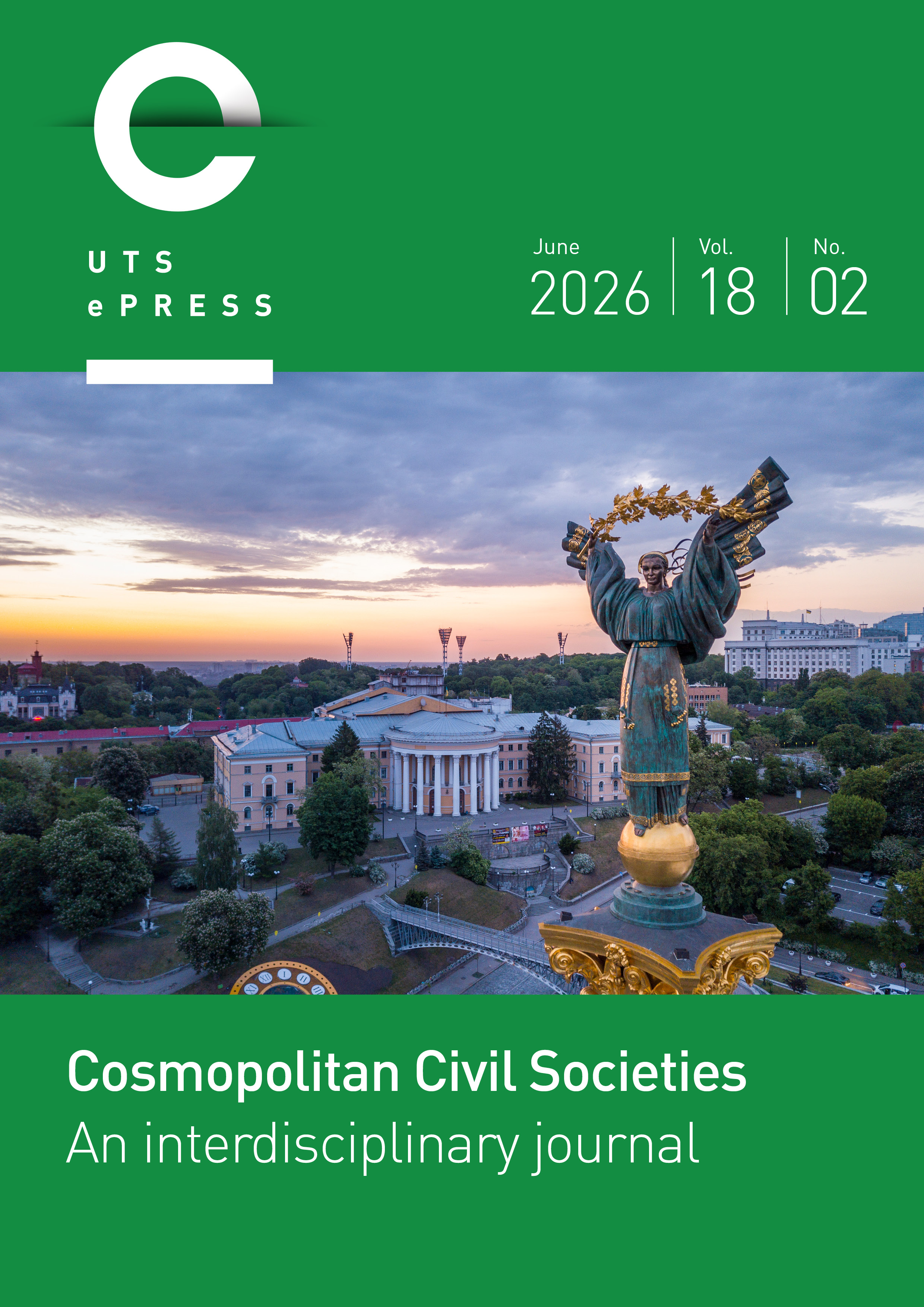
Ukraine in Wartime: Domestic Changes and Global Strategies
Vol. 18 No. 2 (2026)
This special issue of Cosmopolitan Civil Societies examines Ukraine's wartime transformation since 2022, exploring migration, displacement, education, cultural resilience, digital governance, and diplomacy; revealing how war has both disrupted and strengthened identity, solidarity, and institutional capacity.
Cover photograph: Kyiv, Ukraine - May 2018: Monument of Independence of Ukraine in Kyiv by Makysm. Source: Adobe Stock (licensed image).

Indigenous Knowledges and Cosmopolitanism
Vol. 17 No. 3 (2025)

Indigenous Responses to Climate Change: From Climate Colonialism to Indigenous Climate Justice
Vol. 17 No. 2 (2025)
This special issue of Cosmopolitan Civil Societies has been edited by James Goodman, Heidi Norman and Devleena Ghosh, and is focused on Indigenous responses to climate change. The five papers included here introduce key concepts that reframe climate action in terms of anti-colonialism, Indigenous sovereignty and futures on Country, and explain multiple ways that First Peoples in Australia are mobilising new and innovative approaches to the climate crisis.
The cover image for this special issue is Suzy Evans' ‘Dhinawan’, 2025 © Suzy Evans. The work is reproduced with permission.
Describing the work and their practice, Suzy explains: My art practice involves painting, print making, collaging and sculpture.
The artwork on the cover depicts the Dhinawan and wetlands. Dhinawan is central in Kamilaroi culture: it is mapped in the sky, on the land their eggs mark time. The Emu provides us with many resources: its oil is medicine, its food, feathers are used for clothing, warmth and ceremony and eggs for food and carving.
Where my traditional lands are, you would see a small mob of emus at daybreak near the washpool. You don’t see them as much today. My old Dad would often remind us of the importance of Indigenous Knowledges and the traditional practices involved in the management of country, all processes that keep our country balanced. Maintaining water for healthy country has been a big issue for Kamilaroi people as water has been allocated, damned and diverted across the plains country to support farming and mining interests. You can view Suzy’s ‘modernmurri’ portfolio, at https://www.suzyevans.com.au/.
Migration Research and Policy: Bridging the Divide in an Era of Complexity
Vol. 17 No. 1 (2025)

New Cosmopolitanisms
Vol. 15 No. 3 (2023)
Special Issue on New Extractivism
Vol. 15 No. 1 (2023)
This Special Issue of CCS Journal investigates this phenomenon of ‘new’ extractivism, focusing on its civil society dimensions. How is civil society re-patterned by extractivism? What social technologies are being developed by extractivist corporates to enable civil society participation in their projects? What tensions or contradictions emerge in this nexus? How may these tensions, understood dialectically, generate new constituencies in civil society, lead to failed extractivist projects, and open-up the potential for wider post-extractivist futures?
The issue is co-edited by (and in alphabetical order): Professor Fidelis Allen, Professor James Goodman and Professor Armindo dos Santos de SousaTeodósio.
Urban Art and Cosmopolitanism
Vol. 14 No. 2 (2022)
In this special issue on urban art and cosmopolitanism, we explore emergent inquiry and explorations into the role of arts, artists and the reception of arts in the urban public space as cosmopolitan articulations, interventions and methodologies. Based on case studies we demonstrate how the hybrid city can be re-imagined by art interventions. However given the unprecendented pace of changes in cities across the globle more empirical investigations and theoretical reflections are needed to address the multi-faceted role of artists, arts and the reception of arts in the urban space.
Phoenix from the fire? Civil Society, Covid-19, and a New Cosmopolitanism
Vol. 13 No. 2 (2021)
This special issue of Cosmopolitan Civil Societies addresses the question of how individuals, communities or countries have released new dynamics of sociality and social solidarity as well as new marginalisations as they face Covid-19. It raises the importance of the local, while hinting at new forms of globalisation. The papers published here give insights into the situations and concerns in countries not often presented together. We acknowledge the important work being done by the authors of these papers and by others concerned with these significant issues.
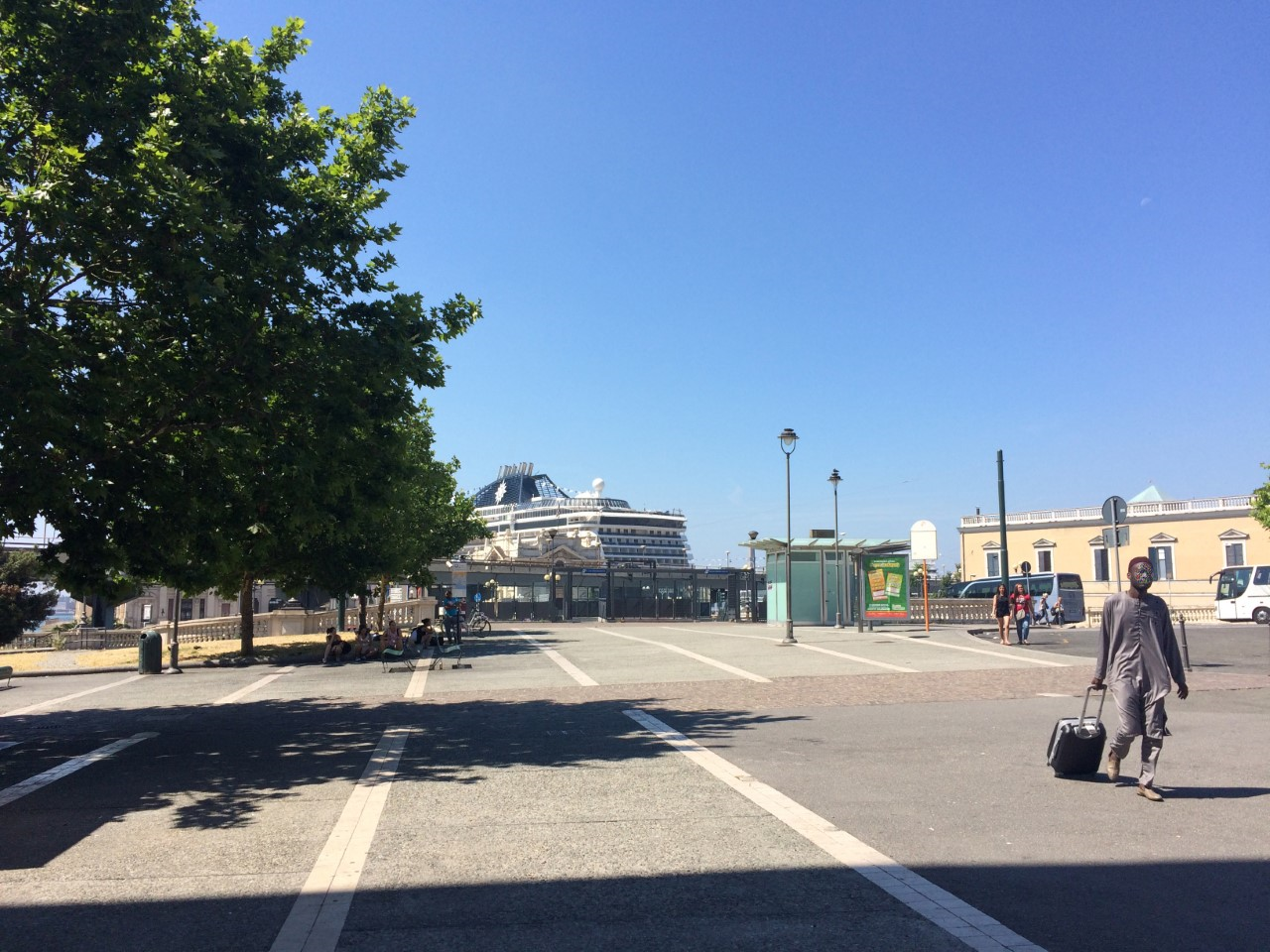
How come inequality is part of the new urban mix?
Vol. 12 No. 1 (2020)
This special issue presents explores the question of inequality from several different conceptual perspectives, using case study material from cities from a range of countries.
Vol. 11 No. 2 (2019)
From questions of national concern to conflict and inclusion at a local level, the papers in this issue explore the making and re-making of societal norms.
Vol. 11 No. 1 (2019)
This issue covers three contemporary issues: campaigns of disinformation, human trafficking and racism through bias crime.
Vol. 10 No. 3 (2018)
Social inclusion and social exclusion can take many forms. The papers in this issue of Cosmopolitan Civil Societies focus on examples which often may not receive wide coverage in the literature.
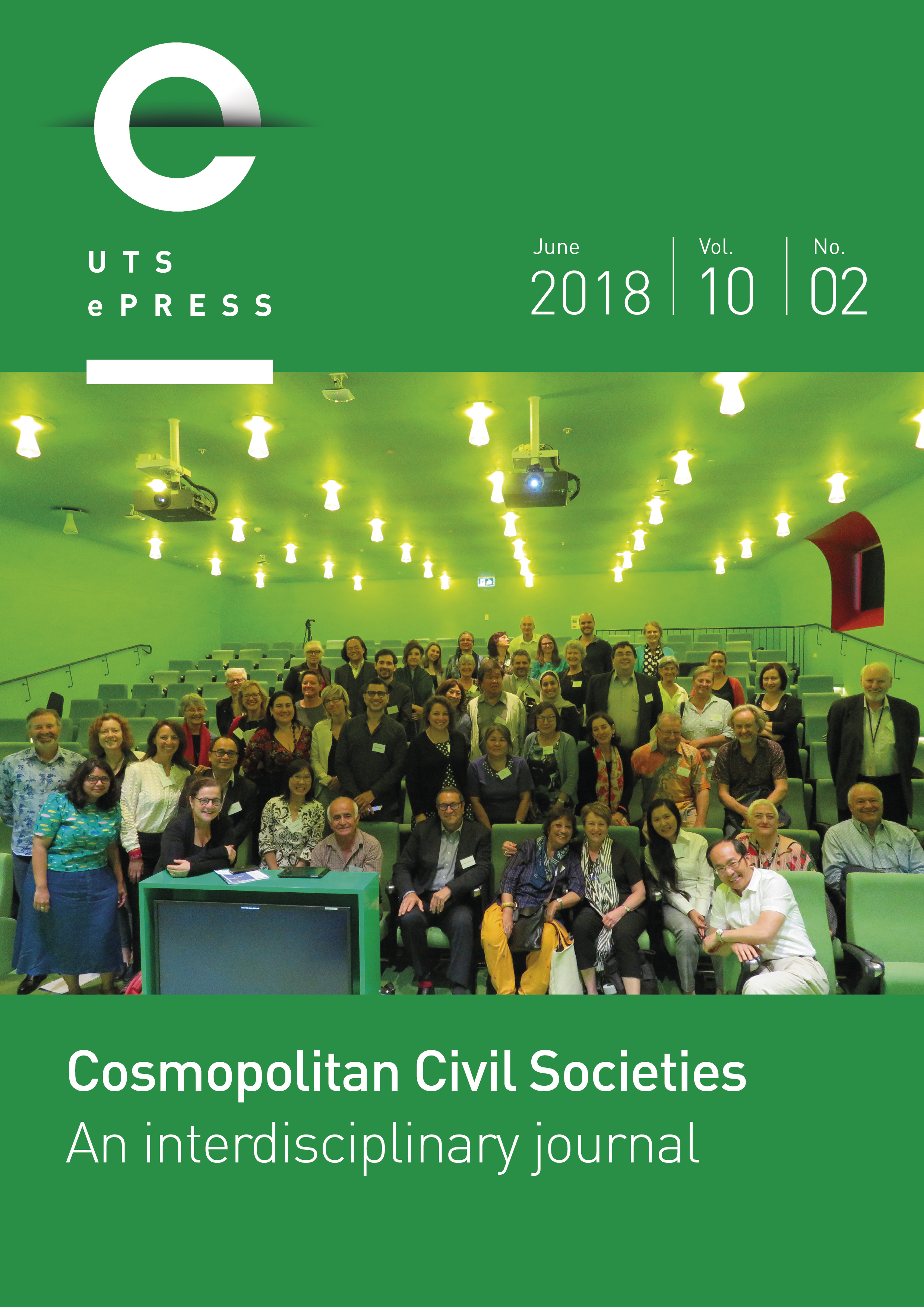
Vol. 10 No. 2 (2018)
Vol. 10 No. 1 (2018)
Vol. 9 No. 3 (2017)
Vol. 9 No. 2 (2017)