Extracts from the Novel Chiaroscuro
Article Sidebar
Main Article Content
Abstract
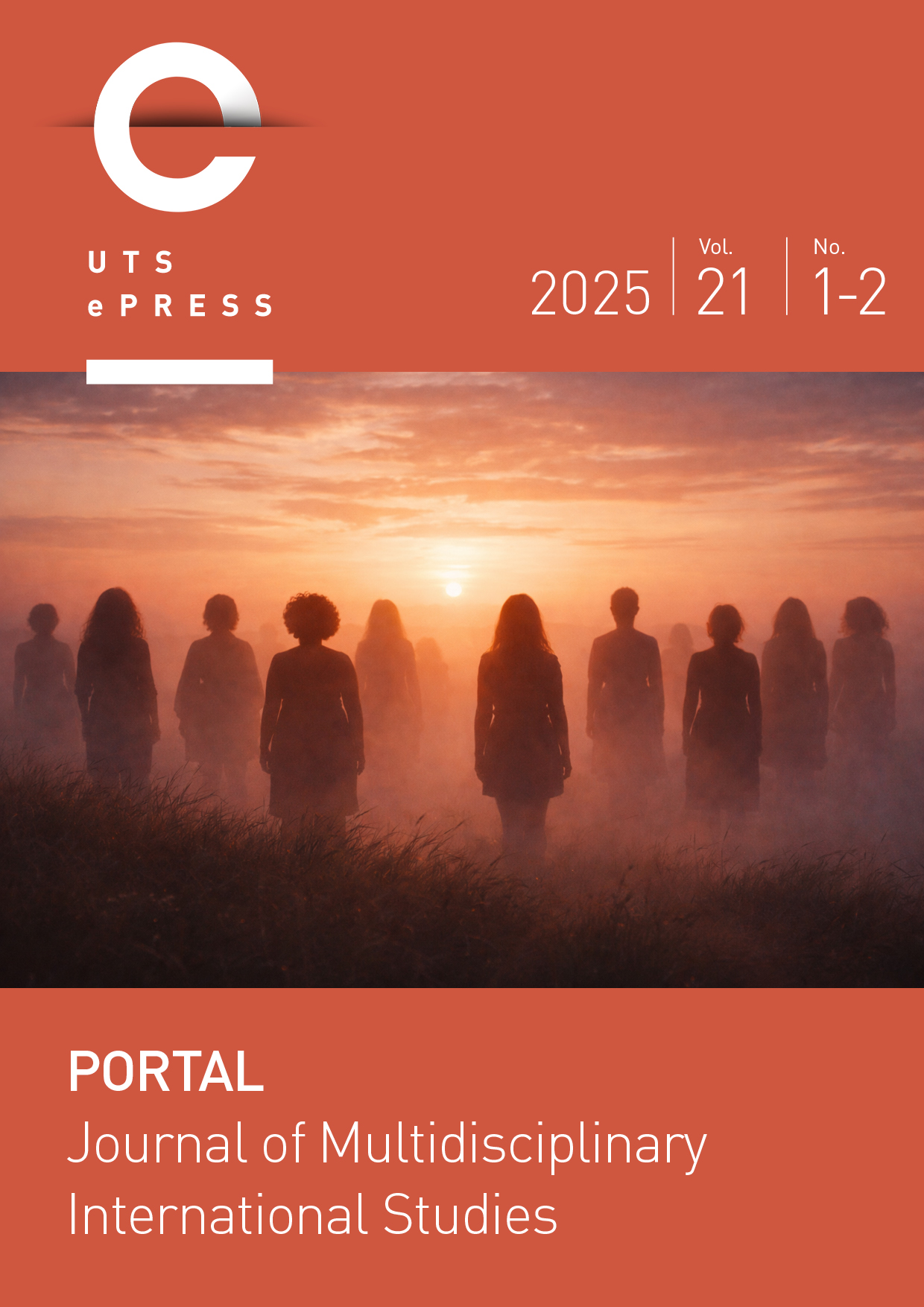
Chiaroscuro is a short novel that alternates between autobiographical narrative, myth, and queer hallucination. Its title invokes pictorial chiaroscuro — the play of light and shadow that structures both the text and the lived experience of its narrator. The story follows a young protagonist escaping suburban working-class precarity and family violence, carrying the haunting presence of a dead brother, a destructive father, and a mother transfigured into a glamorous, spectral figure. In his flight, queer survival in nocturnal spaces — clubs, prostitution, drugs — intertwines with visionary obsessions: apparitions of Salome as lover and ghost, the figure of Nefertiti, biblical echoes of Mary Magdalene, and apocalyptic prophecy. Structured in veils or fragments the novel unfolds as a mosaic of testimony and mythic parable. Religious and cultural iconographies are not ornamental but constitutive: Salome embodies seduction and threat; martyrs and virgins serve as doubles of the narrator; prophets and the disappeared converse with family histories of violence and silence. In this interplay, memory becomes unstable, queerness visionary, and myth a narrative technology for rewriting trauma. Chiaroscuro is thus a narrative of disappearance and survival that interlaces family archive, queer memory, and sacred myth. It illuminates how gendered life stories reveal structures of patriarchal violence while also re-imagining new forms of desire, identity, and survival. In the tradition of Jean Genet or Jeanette Winterson, the work merges narrative and poetic registers to show how the marginal becomes vision, and how the broken reinscribes itself as myth. Three extracts are included here.
Article Details
Section

This work is licensed under a Creative Commons Attribution 4.0 International License.
For submissions from 31st March 2014 onwards, authors who submit articles to this journal for publication agree to the following terms:
a) Retaining Copyright and Granting Rights:
Authors retain copyright and grant the journal the right of first publication. The work is simultaneously licensed under a Creative Commons Attribution License, allowing others to share and adapt the work. Acknowledgment of the work's authorship and initial publication in this journal is required.
b) Non-Exclusive Distribution:
Authors may enter into separate, additional contractual arrangements for the non-exclusive distribution of the journal's published version of the work (e.g., posting to an institutional repository or publishing in a book). Acknowledgment of its initial publication in this journal is required.
c) Online Posting and Citation Advantage:
Authors are encouraged to post their work online (e.g., in institutional repositories or on their website) prior to and during the submission process. This may lead to productive exchanges and earlier and greater citation of the published work (See The Open Access Citation Advantage Service). If authors include the work in an institutional repository or on their website, they must acknowledge the UTS ePRESS publication with relevant details.
d) Creative Commons Attribution (CC-BY) License Awareness:
Authors should note that the CC-BY License permits readers to share (copy and redistribute) and adapt (remix, transform, build upon) the work for any purpose, including commercial use. Proper credit, a link to the license, and indication of any changes made must be provided. The manner of doing so must not suggest endorsement by you or your publisher.
For Volume 10 No 2 (2013) and earlier, the following copyright applied:
Authors submitting a paper to UTSePress publications agree to assign a limited license to UTSePress if and when the manuscript is accepted for publication. This license allows UTSePress to publish the manuscript in a specific issue.
Articles published by UTSePress are protected by copyright, with rights retained by the authors, who assert their moral rights. Authors control translation and reproduction rights to their works published by UTSePress. All rights are reserved worldwide by UTSePress, and downloads of specific portions are permitted for personal use only, not commercial use or resale.
For reprint or usage permissions, please direct inquiries to UTSePress via the journal's main editor, Dr. Nicholas Manganas at [portal.scholarly.journal@gmail.com]. Reprint permission requires acknowledgment of both UTSePress and PORTAL in the format advised by the journal editor.