PAM Review: Energy Science & Technology, Vol. 6
ISSN 2205-5231 | Published by UTS ePRESS | https://epress.lib.uts.edu.au/student-journals/index.php/PAMR/index
Evaluating the efficiency of utilizing selectively optimized metamaterial nanostructures for passive radiative cooling of satellites and components
Federico Moreno1*, Swapnil Poudyal2, Otto Cranwell3, and Ben Andrew4
University of Technology Sydney, Faculty of Science, PO Box 123, Ultimo NSW 2019, Australia
1*Federico.Moreno@student.uts.edu.au
2Swapnil.Poudyal@student.uts.edu.au
3Otto.CranwellSchaeper@student.uts.edu.au
4Ben.Andrew@student.uts.edu.au
*Corresponding author: Federico Moreno, University of Technology Sydney, Faculty of Science, PO Box 123, Ultimo NSW 2019, Australia; Federico.Moreno@student.uts.edu.au
DOI: https://doi.org/10.5130/pamr.v6i0.1550
Citation: Moreno, F., Poudyal, S., Cranwell, O., and Andrew, B. 2019. Evaluating the efficiency of utilizing selectively optimized metamaterial. PAM Review: Energy Science & Technology, 6, Article ID 1550. https://doi.org/10.5130/pamr.v6i0.1550
© 2019 by the author(s). This is an Open Access article distributed under the terms of the Creative Commons Attribution 4.0 International (CC BY 4.0) License (https://creativecommons.org/licenses/by/4.0/), allowing third parties to copy and redistribute the material in any medium or format and to remix, transform, and build upon the material for any purpose, even commercially, provided the original work is properly cited and states its license.
Abstract
The need for efficient, smart radiators and thermal control technologies will be imperative to ensure the longevity of satellites and for carrying out temperature sensitive operations in space. Advancement in nanofabrication techniques has brought about the ability to create metamaterial nanostructures and selectively control their optical properties so that they reflect better in the visible spectrum and strongly emit in the infrared spectrum, which allows for better cooling. This meta-analysis looks at contemporary research that has utilised metamaterial nanostructures for passive radiative cooling attempting to identify the cooling trends among these structures. The absorbance, emissivity and reflection spectra of these structures are compared, and their effectiveness compared to conventional coolant coatings is critiqued upon. The defining thermodynamic parameters for this study were radiative cooling power and temperature reduction. Through inductive reasoning, we predict that the emissivity in the infrared of a pyramidal layered structure of Al2O3, TiO2 and SiO2 can outperform current material choices. Improving efficiency with the prediction outlined can provide increased radiative cooling.
Keywords
Passive radiative cooling; thermal radiation; metamaterials; broadband optical filters; selective absorption and emission; two-dimensional thin film coatings; nanophotonic structures
| Passive radiative cooling | Means of reducing the temperature, by emitting thermal radiation, without work being done on the system. |
| Thermal radiation | Radiation that is emitted from an object based on its thermal temperature. |
| Metamaterials | Synthetic, composite, lab-designed materials that exhibit special and tunable properties. |
| Broadband optical filters | Devices that can selectively transmit/filter relevant portions of the optical spectrum. |
| Selective absorption and emission | Greater absorption of electromagnetic radiation at some wavelength, exclusion or transmission at others. |
| Infrared Atmospheric Window | The spectrum of wavelengths where atmosphere is transparent and radiation from terrestrial objects is maximum. |
| Two-dimensional thin film coatings | Layers of a material ranging in thickness from a single atom to several nanometres. |
| Nanostructures | Materials or structures that have at least one dimension between 1 and 100 nm |
1. Introduction
Artificial satellites have been monumental in the modern world: they provide services ranging from entertainment broadcasting and wireless communication to weather mapping and navigation, and even facilitate space exploration and scientific research [2]. To achieve this, these satellites, along with their electrical components, must operate safely and continuously throughout their life span while being exposed to the high temperature extremities of space. These electrical components rely upon the thermal control mechanism of the satellites which they inhabit [3,4].
Both overheating and freezing can damage or completely break these temperature-sensitive microscopical components; this needs to be considered to ensure the longevity of the satellite. [1]. Non-optimised temperatures or fluctuating temperatures not only affect the measurement accuracy of these satellites, but it can also cause permanent damage [4]. Table 2 shows the typical operating temperatures, along with the ranges within which they remain functional, of several satellite sub-systems.
| Components/sub-systems | Operating Temperature (°K) | Safe-operation Temperatures (°K) |
|---|---|---|
| Digital Electronics | 273.15 – 323.15 | 253.15 - 343.15 |
| Analogue Electronics | 273.15 - 313.15 | 253.15 - 343.15 |
| Batteries | 283.15 - 293.15 | 273.15 - 308.15 |
| IR Detectors | 4.15 - 100.15 | 4.15 - 308.15 |
| Solid-state particle detectors | 238.15 - 273.15 | 238.15 - 308.15 |
| Solar panels | 173.15 – 398.15 | 173.15 – 398.15 |
There are several sources of heat that an orbiting satellite is exposed to at any given point in its orbit which include internally dissipated power, solar radiation, planetary IR radiation and reflected solar light as shown in Figure 1. The effect of lunar radiation can be ignored if the refrigerated components are kept at a temperature no lower than 50°K [6]. In this meta-study, we primarily focus on the solar infrared light emitted from the earth’s 8-13μm transparency window and solar light reflected from the Earth.
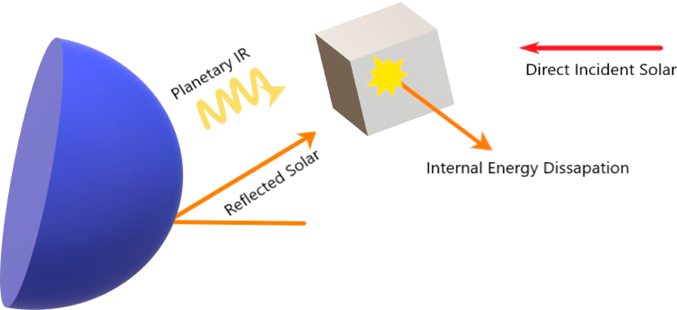
Figure 1 Depiction of energy balance of an orbiting spacecraft/satellite [Original].
Both active and passive cooling systems are utilized to cool satellites [2]. This meta-analysis will be focusing on the passive radiative cooling systems, specifically radiators. There are many different aspects that factor into what makes the best radiator. While a better efficiency is desirable, the mass and the volume of the radiator are also key considerations. This is because a higher mass comes with increased fuel requirement for transportation into space [7]. Reducing the volume of the radiator enables more components to be packed into the satellite, allowing for the satellite to provide more services. Better still, having a small payload would mean a decreased size for the rocket itself, which further reduces the required fuel and cost [7]. On the contrary, a larger radiator, which although increases both the mass and the volume, allows for a greater amount of thermal energy to be dissipated from the satellite, ensuring the accuracy and longevity of the systems on board [2]. Thus, it is important to strike a balance between the mass, the volume, and the amount of thermal dissipation possible.
1.1. Passive Radiative Cooling
Satellites orbit around the Earth outside the atmosphere, in the vacuum of space. The net radiative cooling power is what remains after subtracting the total sum of the power emitted by a radiator, power absorbed from the sun and power dissipated by the internal heating components from the gross power emitted by a radiator as shown in eq. (1) [7].

The sun emits a consistent spectrum of solar radiation, with differing intensities at each wavelength [8]. Therefore, the best way to reduce the power absorbed by the satellite is to have high reflectivity over the wavelengths that have the highest intensity. The highest intensity wavelengths are centred on the visible spectrum and they drop off quickly to the shorter end of the electromagnetic spectrum, and slowly to the longer end of the spectrum, due to the way that black body radiation functions [9].
1.2. Blackbody Radiation
The concepts of black bodies, emissivity and the Stefan-Boltzmann law all factor into how well an object could function as a radiator on a satellite [9]. A black body, which is often used interchangably with an ideal radiator, is an object that absorbs any radiation that hits its surface, regardless of the wavelength or incidence angle [9]. Emission of electromagnetic radiation is directly tied to the temperature of the object. As the temperature of an object increases, the peak of the blackbody radiation curves shifts to higher intensites and shorter wavelengths and the majority of the wavelengths falls in the infrared region. More explicitly, heat is the energy in transit from an object at a higher temperature to the one at the lower temperature. The reason why infrared light is produced and associated with heat is because when molecules go from a higher vibrational quantum state to a lower vibrational quantum state, they give off a photon of appropriate energy which happens to be in the infrared region [10].
All materials function as imperfect black bodies; no real materials can be perfect absorbers and perfect emitters [10]. This in fact works to benefit keeping the satellite cool, as explored in section 1.1. The sun emits radiation and by reflecting this radiation instead of absorbing it, the overall power in the system is reduced. The next factor that comes into play is emitting energy from the system. But the issue is that the better a material functions as a black body to emit thermal radiation, the higher absorbance it tends to have [9,10].
1.3. Emissivity
Emissivity is the measure of the effectiveness of a material at emitting energy as thermal radiation [1]. All materials emit thermal radiation, but they have an effectiveness ratio, which ranges in value from zero to one: zero being a material that does not emit any radiation and one being a material that is perfect at emitting radiation. As the focus of our paper is to achieve higher cooling rates, we will be focusing on materials with higher effectiveness ratios. No real materials have a ratio of one, but many materials have come close to this value [11]. The effectiveness of a material as an emitter is explained by the Stefan–Boltzmann law, which states that the amount of power radiated from an object is equal to the product of its surface area, emissivity , and temperature to the fourth power [12].

Here, σ is the Stephan-Boltzman constant, A is the surface area of the radiator, T is the temperature of the radiator measured in Kelvin and finally ε is the emissivity of the material used. As black bodies have very low insensity of electromagnetic radiation emitted at lower temperatures, the objective is to keep the temperature of a satellite low enough so that the internal components are functioning so the only variables that can be changed are the surface area, and the emissivity of the material [3,7].
1.4. Metamaterials
As dicussed in section 1.0, researchers and the industry are also seeking to reduce volume and mass, which would have to come at the sacrifice of surface area. Thus, a large amount of current research is focused into exploring metamaterials [13]. A metamaterial is a synthetic material, that its composed of multiple elements and compounds [13]. This allows the metamaterial to posess properties that are either generally not present under normal conditions or are totally non-existent in naturally occurring materials [14]. Thus, to fulfill their cooling requirments, researchers are constantly trying to create metamaterials that are, lightweight, easy to manufacture on a large scale, cheap, durable, and have a high emissive ratios [14].
2. Methodology
Prior to conducting this meta-study, an investigation was completed for improved understanding of the thermo-dynamic properties relating to radiative technologies and their behaviour in space. After this initial investigation, it was decided that passive radiative cooling would become the basis of this meta study as it would be ideal for orbiting satellites, compared to active cooling which requires constant maintenance and monitoring. An array of scientific journals and engineering papers were reviewed. The scientific articles helped to provide a first principles-based understanding of metamaterials could be tuned for radiative cooling while engineering papers helped to understand how they have been put into practise in satellites. Research into operational temperatures of satellite components was also conducted.
The year of publication was not restricted because of the limited availability of relevant papers but also to ensure that we got a holistic picture of the research at hand. However, the papers that had the highest importance were the ones published after 2010. These papers were extracted from major scientific journals such as Nature, Optical Society of America (OSA), Journal of Optics, Proceedings of the National Academy of Sciences of the United States of America (PNAS), Materials and Design, and Journal of Quantitative Spectroscopy & Radiative Transfer to name a few. Typical keywords used for searching included “passive radiative cooling” and “metamaterial-based cooling”. Research terms were further refined to include “nanophotonic structures” and “infrared transparency window” as these were found to be highly important in the development of space bound radiators.
Emissivity, reflectivity, and radiative cooling power were determined to be the most universal and comparable parameters for comparison amongst the papers. Their dependency upon variables such as choice and combination of metamaterials, thickness of layers and the geometry of these layers were analysed and critiqued upon.
3. Results and Discussion
From looking at past research, when a material has a higher ratio of absorbance to emissivity, it has worse performance as a radiator [15]. When this ratio is greater than one, the material will be better at absorbing energy than emitting energy. Conversely, as this ratio approaches zero, it can function better as a theoretical radiator as it can emit more radiation whilst absorbing less, but there are other variables that may hinder its actual usage.
One of these variables is how malleable a material is. As seen in table 3, there are many materials such as ice, glass, or rubber, that although possess a high emissivity ratio, are unsuitable to be used in radiators. This is because the physical properties of certain materials render them to be currently inept. This may change in the future due to advancements in technology, which would greatly benefit the field.
Gathering results from scientific articles about radiative cooling by means of specially designed nanostructures, one can compare the results from the previously discussed materials, with nanomaterial structures tested in labs but haven’t found their way yet into the engineering of space-bound objects. When examining this literature, we found that emissivity was more commonly presented as a function of wavelength. To validate that the results from the papers henceforth apply to the space environment, we must firstly examine the differences in the solar spectrum between the surface of the Earth, and outside the atmosphere in space. The sunlight without atmospheric absorption closely resembles the irradiance of a black body at 5778 K. The spectrum measured on Earth is less intense and is missing ranges of wavelengths of light which are blocked via interactions with particles of our atmosphere [18].
| Coating | Emissivity ratio (ε) | Absorbance ratio (a) | Ratio of a/ε |
|---|---|---|---|
| Polished Aluminium | 0.05 | 0.15 | 3.00 |
| Aluminium Anodised | 0.77 | - | - |
| Polished Stainless Steel | 0.11 | 0.42 | 3.82 |
| NASA/GSFC NS-53-B green paint | 0.87 | 0.52 | 0.6 |
| NASA/GSFC NS-55-F green paint | 0.91 | 0.57 | 0.63 |
| Black Anodize | 0.82 | 0.65 | 0.79 |
| Green Anodize | 0.88 | 0.66 | 0.75 |
| Fibreglass Epoxy | 0.89 | 0.72 | 0.81 |
| Asbestos | 0.96 | - | - |
| Graphite | 0.98 | - | - |
| Formica plastic | 0.94 | - | - |
| Glass frosted | 0.96 | - | - |
| Rubber | 0.97 | - | - |
| Ice | 0.97 | - | - |
| Polished Aluminium | 0.05 | 0.15 | 3.00 |
| Aluminium Anodised | 0.77 | - | - |
| Polished Stainless Steel | 0.11 | 0.42 | 3.82 |
| NASA/GSFC NS-53-B green paint | 0.87 | 0.52 | 0.6 |
| NASA/GSFC NS-55-F green paint | 0.91 | 0.57 | 0.63 |
| Black Anodize | 0.82 | 0.65 | 0.79 |
| Green Anodize | 0.88 | 0.66 | 0.75 |
| Fibreglass Epoxy | 0.89 | 0.72 | 0.81 |
| Asbestos | 0.96 | - | - |
| Graphite | 0.98 | - | - |
| Formica plastic | 0.94 | - | - |
| Glass frosted | 0.96 | - | - |
| Rubber | 0.97 | - | - |
| Ice | 0.97 | - | - |
There are many different nanomaterial structures which act as passive radiative coolers by having high emissivity in the 8 to 13 µm range and high reflection in the visible and UV. In this range, there are 3 absorption bands in the atmospheric spectrum, this must be considered, as in space more power will fall onto a material from the sun than on sea level.
A 2017 study considers a layered structure of TiO2 and SiO2 on top of an Ag substrate [19]. There is a 50 nm thick Ag substrate followed by four layers of the alternating structure each 60 nm thick. Finally, 3 layers are added each 300 nm thick. The absorbance of the material is then plotted against wavelength.

Figure 2 Layered nanomaterial structure. This structure has an approximate maximum emissivity of 0.99 [19].
The design is exceptional at reflecting visible light and absorbing/emitting infra-red. The width of the IR absorption peak is approximately 2.2 µm. The maximum emissivity can be approximated at 0.99. This paper was particularly useful to the meta-study because it explored a wide range of parameters, including thickness, number of layers, angle of incidence and an alternate design [19].
They have proposed two alternative designs for 2D thin film coatings, the first of which is a slightly modified reproduction of a structure from the literature, which used alternating layers of SiO2 and HfO2 [20]. The reformed structure, which included an added layer of Ag in complement to the TiO2 and SiO2 layers, it can achieve a better cooling performance even without optimizing the thickness.
With this design, a reflection of 97% was achieved in the 280 nm – 4000 nm spectrum, whereas an emission of about 45% was obtained in 8–13 μm spectrum. Using equation (1), the cooling power of the coating was calculated to be 35 W/m2, compared to 40.1 ±4.1 W/m2 which was achieved in A.P Raman’s design [20]. By using thickness optimization and by choosing a design configuration with periodic high-low index dielectric layers, the average reflectance and emission were further improved, which dramatically increased the cooling performance to 100 W/m2.
The idea of introducing alternative materials to the absorptive segments to further improve the emissivity was also tested by adding Al2O3 into the original metamaterial sandwich. It was selected because of its non-absorbance in the visible and near infrared but high absorbance/emissivity in the 8-13 μm window. Also, the thickness of the layers in the solar spectrum were decreased from 60 to 20 nm while keeping the number of layers’ constant.
The results showed that, consistent with the hypothesis, the design with Al2O3 and decreased layer of thickness improved the overall emission from 55% to 71% as illustrated in Figure 2.
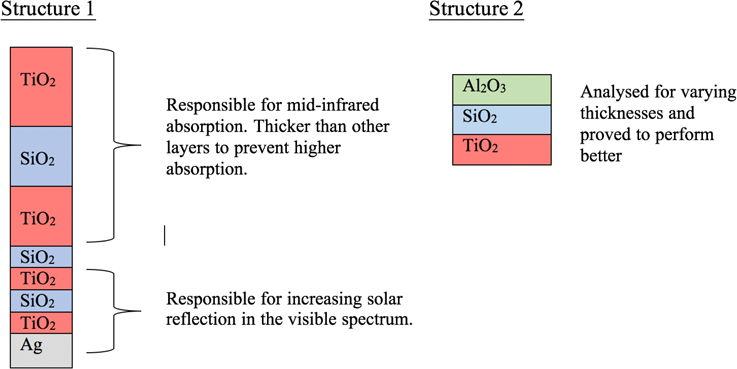
Figure 3 Scheme for the new design structure in which absorption segment is going to be modified by including Al 2 O3. Also, layer thicknesses in solar segment are decreased from 60 nm to 20 nm [19].
This study also tested the effect of changing the layer thicknesses, number of alternating triplets, and angle of incidence. It was found that increasing the former two parameters, increased the average emissivity in the mid-infrared spectrum to 78% while the angle of incidence did not have much of an impact. The effect of changing the layer thickness on the absorbance is caused by an increase in the optical path of the incident light and can be understood in terms of the light interference effects. –
It is evident from this study that the choice of material and the thickness of the film’s emissive layer are significant contributors to the radiative cooling power and are factors to be looked at in the future reproduction of these experiments.
A similar 2018 study present a similar structure for radiative cooling [21]. The data gathered displayed outstanding performance across a wide range of wavelengths. The pyramidal nanostructure is only comprised of alternating SiO2 and Al2O3. The Ag base is the layer responsible of reflecting the wavelengths in the visible range.
The emission region is approximately between 8 and 30 µm. This gives it a width of 22 µm at close to perfect emissivity. The emissivity does drop to approximately 0.8 on two occasions in the infra-red region, and the material still absorbs and emits left of the 8 µm cut off regarding the ‘ideal-radiator’. The literature misses the analysis to explain how this structure can operate closer to the ideal scenario.
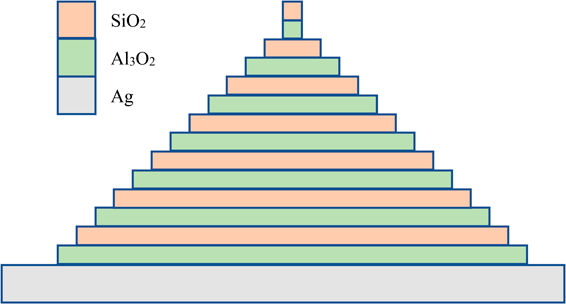
Figure 4 Layered nanomaterial structure. This design emits infrared close to perfectly in a 22 µm wide range [21].
A different study considered a glass-polymer hybrid metamaterial for radiative cooling [22].
This material also performs well in a wide range but doesn’t go as close to 1 as the previous example. We then extracted the reported cooling power values from each of the papers that we studied and plotted them onto a bar chart. From the comparison, D. Wu has the best performing nanostructure of the three. This is due to the three-dimensional pyramidal structure of the nano-layers, and the exceptional infra-red absorption of the Al2O3 layers. The pyramidal structured material transfers heat more efficiently via its surface area, making it an appropriate substitution for current satellite materials [19, 21, 22].
The idea of using engineered nanostructured photonic materials to enhance reflection in the sunlight-concentrated spectrum was first introduced by Rephaeli et al. The design comprised of a dielectric layer of Magnesium Fluoride (MgF2) and TiO2 with varying periods on an Ag substrate which acted as a reflector suppressing solar absorption and 2D photonic crystal layers of Silicon Carbide (SiC) and quartz which acted a selective emitter [23]. This design achieved a cooling of 5°C below ambient air temperature.
Zhu et.al tested this idea further with their own design which included a base structure composed of double-side polished crystalline silicon wafer, with silicon nitride antireflection layer on top and, aluminium reflector at the back [24]. Atop this, a square-lattice photonic crystal made of SiO2 was placed. Coherent with the previous research, silicon oxide was chosen because it exhibits a strong phonon-polariton resonance in the atmospheric window region [20]. When tested under direct sunlight, this design brought about a temperature reduction of 13°C from ambient.
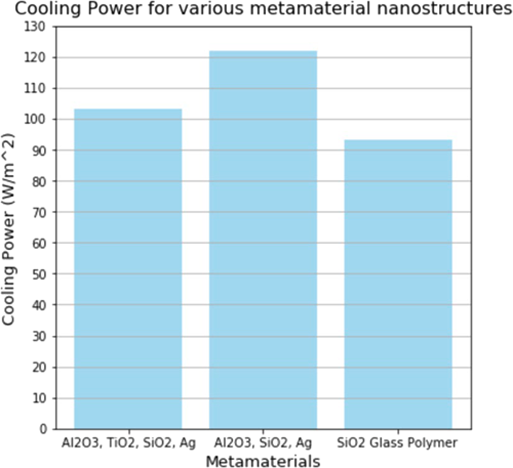
Figure 5 Cooling Powers from various examples discussed. [19, 21, 22] D. Wu’s material is the most efficient radiative cooler.
Another noteworthy nanostructure design, first introduced by Hossian et.al., utilizes antenna-type nanostructures [25]. These conical-shaped, anisotropic, multilayer metal dielectric metamaterial (CMM) pillars consisted of alternating layers of germanium (Ge) and Al on an Si substrate which made the pillars exhibit an absorption close to 1. Consequently, a reduction of 12°C below the ambient temperature under direct sunlight was achieved.
Wu.et.al also used 2D antenna structures but this time it was composed of low loss alternating layers of aluminium oxide (Al2O3) and SiO2. Their structure theoretically achieved a near-perfect emissivity in the IR and a net cooling of 47°C below ambient temperature.
The latest research looked at antenna structures which can achieve high emissivity and maintain it even over very-high temperatures. Tungsten (W) displayed such emissivity over a wide range of wavelengths even at 1300K. It was also found that increasing the aspect ratio (enlarging the light scattering cross-section) of the individual cones improved emission. This could be particularly useful for scenarios where extreme heat resistance is needed, such as space travel. [26].
| Metamaterial | Temperature Reduction (K) |
|---|---|
| Al2O3, SiO2 on Ag substrate(theoretical) | 47 |
| Al, N4Si3, SiO2 on silicon wafer | 13 |
| Ge, Al on a Si substrate | 12 |
| MgF2, TiO2 on Ag substrate, SiC, quartz | 5 |
If satellites are coated with metamaterials, they will effectively operate in their temperature range due to the radiative cooling power delivered by the material. Factors such as thickness and geometry aren’t optimized by some studies, and selection of materials aren’t explored by others [18, 20, 21]. It is evident that the properties observed in the metamaterial structures perform better than the values for bulk materials reported in Table 3 [19, 21, 22].
The results from this study strongly indicate that a 50 µm thick pyramidal layered structure of TiO2, SiO2, and Al2O3 on an Ag substrate will deliver 0.90 – 0.99 emissivity across a 22 µm wavelength range, this results in an excess of 122 W/m2 of radiative cooling power [21, 22]. Future studies must analyse the temperature dependency of this emissivity and cooling power to further warrant its application on a satellite body.
4. Conclusions
Passive radiative cooling systems are explored in this meta-analysis through a vast lens of parameter spaces. The emissivity spectra of multiple metamaterials are analyzed for viability for future space radiator technology. We discovered that integrated metamaterial structures can achieve high solar reflectance and strong infra-red emission, delivering a cooling power exceeding 122 W/m2. This is optimized by forming a 50 µm thick layered pyramidal structure of Al2O3, TiO2 and SiO2. We found that adopting these particular selective optimizations to metamaterials used as coatings for radiators, as has not previously been done, can increase the cooling power and overall performance of the radiator systems in satellites and other space-bound objects which might open avenues for exploration of environments in space with much higher temperatures.
Acknowledgments
We would like to express our sincere gratitude to the university for this opportunity and particularly our lecturer Dr. Jurgen Schulte and mentors Liam Martin, Blake Regan, and Joshua Pritchard for their invaluable guidance towards the development of this paper. Also, many thanks to our peers for providing constructive criticism and Ms. Jackie Edwards for familiarizing us with the resources available to us.
References
1. Ridpath I. A Dictionary of Astronomy, 2018.
2. Pelton J.N, Madry S, Camacho-Lara S. Handbook of Satellite Applications.; 2012.
3. Gilmore, D.G. Satellite Thermal Control Handbook, The Aerospace Corporation Press, El Segundo, CA. (Book).; 1994.
4. Wolpert D, Ampadu P. Temperature Effects in Semiconductors. In: Wolpert D, Ampadu P, editors. Managing Temperature Effects in Nanoscale Adaptive Systems New York, NY: Springer New York; 2012. p. 15-33
5. E. Keesee, J. Spacecraft Thermal Control Systems [unpublished lecture notes] .16.851: Satellite Engineering, Massachusetts: Massachusetts Institute of Technology; lecture given Fall 2003
6. J. R. Jenness. Radiative Cooling of Satellite-Borne Electronic Components. Proceedings of the IRE 1960;48(4):641-643 https://doi.org/10.1109/jrproc.1960.287441
7. Siegel R, HOWELL J. Thermal radiation heat transfer (3rd revised and enlarged edition) ((Book)); 199
8. Rogerson S. Escape velocity. Power Engineer 2004;18(6):16-21. https://doi.org/10.1049/pe:20040603
9. Yang X, Wei B. Exact research on the theory of the blackbody thermal radiation. Scientific Reports 2016; 6:37214. https://doi.org/10.1038/srep37214
10. Ranganath, G.S. Black-body radiation, Resonance, 2008;13;115-133. https://doi.org/10.1007/s12045-008-0028-7
11. Bossard JA, Werner DH. Metamaterials with custom emissivity polarization in the near infrared. Opt Express 2013;21(3):3872-3884. https://doi.org/10.1364/oe.21.003872
12. Montambaux G. Generalized Stefan–Boltzmann Law, Foundations of Physics, 2018;4;395-410. https://doi.org/10.1007/s10701-018-0153-4
13. Borja, A. L., Kelly, J. R., Zhang, F., Lheurette, E. Metamaterials, International Journal of Antennas and Propagation, 2013;4; https://doi.org/10.1155/2013/516939
14. Kim N, Yoon Y, Allen JB. Generalized metamaterials: Definitions and taxonomy. J Acoust Soc Am 2016;139(6):3412-3418. https://doi.org/10.1121/1.4950726
15. Vikhareva NA, Cherepanov VY. Radiation-Calorimetric Method of Measurements for the Thermal Emissivity of Heat Radiators. Measurement Techniques 2016;59(7):734-737. https://doi.org/10.1007/s11018-016-1038-6
16. Emissivity table. Available at: https://www.thermoworks.com/emissivity_table.
17. Silva DF da, Muraoka I, Sousa FL de, Garcia EC. Multi-objective and Multi-case Optimization of a Spacecraft Radiator. 2019 Jan 7;11
18. Solar Spectrum. Available at: http://www.greenrhinoenergy.com/solar/radiation/characteristics.php
19. Kecebas MA, Menguc MP, Kosar A, Sendur K. Passive radiative cooling design with broadband optical thin-film filters. 2017 Sep; 198:179–86 https://doi.org/10.1016/j.jqsrt.2017.03.046
20. Raman AP, Anoma MA, Zhu L, Rephaeli E, Fan S. Passive radiative cooling below ambient air temperature under direct sunlight. Nature 2014;515(7528):540-4 https://doi.org/10.1038/nature13883
21. Wu D, Liu Y, Liu C, Xu Z, Yu Z, Yu L, et al. The design of ultra-broadband selective near-perfect absorber based on photonic structures to achieve near-ideal daytime radiative cooling. 2018 Feb 5; 139:104–11 https://doi.org/10.1016/j.matdes.2017.10.077
22. Zhai Y, Ma Y, David SN, Zhao D, Lou R, Tan G, et al. Scalable-manufactured randomized glass-polymer hybrid metamaterial for daytime radiative cooling. 2017 Mar 10;355(6329):1062–6. https://doi.org/10.1126/science.aai7899
23. Rephaeli E, Raman A, Fan S. Ultrabroadband Photonic Structures to Achieve High-Performance Daytime Radiative Cooling. 2013 Apr 10;13(4):1457–61 https://doi.org/10.1021/nl4004283
24. Zhu L, Raman AP, Fan S. Radiative cooling of solar absorbers using a visibly transparent photonic crystal thermal blackbody. Proc Natl Acad Sci U S A 2015;112(40):12282-12287 https://doi.org/10.1073/pnas.1509453112
25. Hossain MM, Jia B, Gu M. A Metamaterial Emitter for Highly Efficient Radiative Cooling. Advanced Optical Materials 2015;3(8):1047-1051. https://doi.org/10.1002/adom.201500119
26. Ko B, Lee D, Badloe T, Rho J. Metamaterial-based radiative cooling: Towards energy-free all-day cooling. Energies 2019;12(1) https://doi.org/10.3390/en12010089