The Promise of Nuclear Fusion
Phillip Kite1 and Alexander Richardson2
1University of Technology, Sydney, PAM; E-Mail: philip.l.kite@student.uts.edu.au
2University of Technology, Sydney, PAM; E-Mail: alexander.richardson@student.uts.edu.au
Author to whom correspondence should be addressed; E-Mail: philip.l.kite@student.uts.edu.au
Received: 4 April 2014 / Accepted: 28 April 2014 / Published: 2 June 2014
Abstract: This paper is a meta-study exploring the progression of nuclear fusion technology from a thermodynamic perspective. Thermodynamic parameters such as power, temperature, volume, efficiency and the fusion triple product (nTτ) were analysed in order to investigate the progress that has been achieved and the challenges that lay ahead. Nuclear fusion reactor designs, confinement systems, advantages and disadvantages are discussed herein. The findings conclude that there has been significant progress made in nuclear fusion research and development, to the point of being merely one order of magnitude away from commercial reactor conditions. It was also concluded that there is very little correlation between reactor volume and the current bench mark of fusion reactor performance, the fusion triple product.
Keywords: Fusion; Reactors; Advantages; Disadvantages; Thermodynamics; Comparison;
Copyright: © 2014 by the authors. This article is distributed under the terms and conditions of the Creative Commons Attribution license (https://creativecommons.org/licenses/by/4.0/).
DOI: http://dx.doi.org/10.5130/pamr.v1i0.1385
1. Introduction
Nuclear fusion reactions, first conceptualized in 1929 by R. d’E. Atkinson and F.G. Houtermans [1], have been occurring naturally since the universe was about 1 second old [2] and are the driving force behind the Sun’s power. Power generation via the process of nuclear fusion has been a long sought after dream. Nuclear fusion reactors were first proposed soviet physicists in 1950 [3] and from that day on, a long and arduous journey of scientific research and discovery ensued.
Finding a way to harness the vast amounts of energy available from a fusion reaction has been a complex problem which has involved: many years of research, intense debate, and billions of dollars; with so far only modest returns. It is these modest returns that have prompted critics to describe this pursuit of fusion power as essentially fruitless and ‘wishful thinking’ [4]. Generally speaking the critics’ arguments are defeatist, morally myopic, and dismiss the idea of nuclear fusion as a pipe dream. However, valid criticism does exist, and the points of contention that hold merit must be considered if a realistic approach to energy production is to be taken.
Nuclear fusion power generation will be compared, in the context of thermodynamics, to different types of nuclear fusion reactors and then briefly to other power generation systems. Ultimately this paper will convey the data that is representative of the progress that has been achieved and potential that this technology holds.
Nuclear fusion may not be the all-encompassing single solution to humanity’s insatiable appetite for energy. Nuclear fusion reactors may not even be feasible for decades or more. However, its potential advantages are compelling enough to demand our attention when we approach the problem of meeting our growing energy demands in a responsible, green and sustainable way. In other words, it may not be a panacea to a global energy crisis, but rather a potentially significant part of the solution. In any case, the research into nuclear fusion reactors continues on inexorably and at our disposal for comparison are the plasma and design parameters. It is these parameters that give us our best understanding of what has been achieved and what lies ahead, and therefore will be the main focus of this meta-study. However, the meta-study will also include a comparison to other technologies for reasons of completeness and perspective.
2. Methods
To conduct the meta-study into fusion reactors, databases such as; the Institute of Physics journals archive, the Institute of Electronics and Electrical Engineers Xplore, and Science Direct (Elsevier) were consulted. Journal and scholarly articles that contained background information or the fundamental principles nuclear fusion processes were not restricted; however, a restriction was applied to articles that contained information regarding the thermodynamic achievements of recent test reactors, such that the data presented be no more than 10 years old.
The types of fusion processes and reactors compared were the two main areas of recent investigation, namely magnetic confinement and inertial confinement. In the context of a thermodynamic comparison, tokamaks were the main focus, as commercial inertial confinement reactors are still very much conceptual and while the approach holds great potential, a viable reactor design has not yet been demonstrated. Hybrid fusion-fission reactors were not considered, as they also remain largely conceptual.
3. Results and Discussion
3.0 Background of Nuclear Fusion Reactors
Historically, the first serious proposal for a controlled nuclear fusion reactor was in 1950 by a pair of soviet physicists named Andrei Sakharov and Igor Tamm [3]. Sakharov and Tamm are credited with being the first to create a tokamak, inspired by the ideas of Oleg A. Lavrentiev [5]. Tokamak is a word that was coined by the pair and is a shortened form of the Russian words for ‘Toroidal Chamber with Magnetic Coil’. Alongside tokamak development was the stellarator magnetic confinement system. Stellarators were simply geometrical variations on the toroidal magnetic confinement devices in use at the time. Configurations of the stellerators included a variety of different helical configurations, spherical configurations and some shaped in a ‘figure of eight’ configuration known as a Modular Stellarator [6]. Other forms of magnetic confinement also arose in the 1960’s such as reversed field pinch devices and magnetic mirrors. Magnetic confinement systems continue to be developed to this day, however other systems of confinement exist and it was in 1968 that the research into plasma confinement saw the advent of an entirely new approach called inertial confinement. In 1972 the construction for the first inertial confinement laser was finished at the Lawrence Livermore Nation Laboratory in Livermore, California [7]. Inertial confinement and Magnetic confinement continue to be the main fields of research 60 years on from the first proposals made in 1950.
3.1 Fundamentals of Nuclear Fusion
Nuclear fusion occurs when the nuclei of atoms are forced together in a highly energetic situation resulting in a heavier nucleus and a yield of net energy (if the reactant nuclei are lighter than iron). The two nuclei that are to be fused are required to have high velocities and hence kinetic energies in order to fuse, because they must overcome the electrostatic forces of repulsion due to the positive charges on the proton, commonly referred to as the Coulomb barrier. Once the nuclei possess enough energy to exceed the Coulomb barrier and achieve a critical proximity to the opposing nucleus, the strong nuclear force will take hold and be more powerfully attractive than the electrostatic repulsion forces, resulting in fusion and a release of binding energy.
To assist visualisation of where this liberated energy originates, one must think of the nucleus as a system. This system is at its lowest potential energy state when it is bound most tightly. The ‘nuclear binding energy’ is the energy that must be released from the system in order to attain a lower energy state or alternatively can be thought of as representing the work that must be done in order to unbind the system into individual nucleons. A low energy state is favourable for a nucleus as it is stable, and more tightly bound. The nucleus of Iron is an exemplar of a system in a low energy state and is reflected in a binding energy per nucleon curve (Figure 1).

Figure 1. Possible yields of energy for nuclear fusion and fission processes (Binding energy per nucleon versus mass number) [8]
Evident from the curve are the steep rises in the binding energies for the lighter elements. Each of these rises represents the amount of energy that would be released in the transition from element to element via fusion. Also evident from the curve, is that the possible energy yield of fusion reactions is much larger than that of fission reactions.
To understand how energy is liberated in this process, it is important to realise that when a nucleus is formed via fusion the resultant mass of the nucleus is less than the sum of its individual parts [8]. In other words, if you were to measure the mass of two nuclei and then the two nuclei underwent a nuclear fusion reaction, the resultant nucleus would not simply possess the addition of the two original masses, but rather it would possess a combined mass slightly less than the masses of the two original nuclei. This is because some of the mass is transferred out of the system in the form of photons (gamma ray) or kinetic energy (via an electron) [9] and the magnitude of that energy can be calculated from Einstein’s famous mass-energy relation E = mc2.
This release of energy from the system to its surroundings is by definition an exothermic process. The energy freed in the process is generally larger than the amount of energy required to initiate it, and given the right conditions a nuclear fusion reaction can be self-sustaining. The difficulty in achieving a controlled and self-sustaining nuclear fusion reaction that provides useful energy is highlighted by the Lawson criterion. This is a set of criteria that was developed in the 1950’s, published in 1957 by John D. Lawson, and describes the conditions that must be met (in addition to the nuclei overcoming the Coulomb barrier) in order for nuclear fusion to occur [10]. The criterion has been built upon since 1957, however, the triple product formula that remains today still bears Lawson’s name.
The criterion outlines the necessary plasma temperatures - T, the ion densities - n, and the confinement times - τE, for ‘ignition’ to occur for nuclear fusion reactions. Put simply, it says for any given nuclear fusion reaction; there will be a required plasma temperature, the plasma will have to be confined for a certain time, and the plasma will be required to have a certain ion density for a self sustaining nuclear fusion reaction [11]. Concepts for nuclear fusion reactors vary, however, for the majority of cases of confinement, the pressure within the plasma will be a constant and the Lawson criterion is an inequality that describes conditions that must be met (Equation 1).

where kB is Boltzman’s constant, ECH is the energy of the charged fusion products, T is the temperature, σ is the fusion cross section, v is the relative velocity, and the brackets indicate that the σv value is an average across the Maxwellian velocity distribution at a temperature T. [10]
Considering that many of the nuclear fusion reactions require plasma conditions that are much too extreme for today’s level of technology, it follows that the Deuterium-Deuterium or Deuterium-Tritium reactions are flagged as the most likely candidates for a fuel source for early nuclear fusion reactors [12]. The two most salient cases to be considered at the moment for nuclear fusion reactor fuels are Deuterium and Tritium[8].
| Reaction | Optimum Temperature | Lawson Criteria - nTτ |
| D-T | 5.8×10⁸K | 1.2×10²³ K.s.cm-3 |
| D-D | 5.8×10⁹K | 2.9×1025 K.s.cm-3 |
| D-3He | 1.2×10⁹K | 1.6×1025 K.s.cm-3 |
| p-6Li | 9.3×10⁹K | 5.0×1026 K.s.cm-3 |
It is clear from the table that the Deuterium-Tritium reaction has the most readily attainable optimum temperature, however it is only recently that JET (a European tokamak test reactor) has been equipped with the capabilities of reacting this fuel mixture. Previously all magnetic confinement systems were reacting Deuterium-Deuterium fuels [14].
3.2 Nuclear Fusion Reaction Types
Research into nuclear fusion reactions are split into two main categories: Magnetic confinement reactions and inertial confinement reactions. These two reactions originate from very different approaches and their differences need highlighting.
3.2.1 Inertial Confinement Fusion
In an inertial nuclear fusion reaction the inertia of the nuclei help facilitate an extremely fast fusion reaction. The inertia of the ions keeps them confined (i.e. close enough) for just enough time that they do not have time to move apart during the rapid fusion process. Such an approach means that confinement time – τE will be extremely small, typically in the range of 10-9s to 10-11s [8].
Inertial confinement fusion is achieved by either firing lasers or intense beams of high-energy particles at a fuel source from every direction. The fuel source is usually a very small pellet of fuel (hydrogen) which is compressed to an extreme degree by firing multiple lasers at it simultaneously. The pellet will experience a combination of very fast processes. Ablation will occur at the surface of the pellet and cause shock waves to travel through it resulting in energetic collisions, compressing the pellet in a implosive process. Conditions at the core of the pellet approach the pressures and densities required for fusion. At the point where implosion is arrested by these high pressure and densities, a hot spot in the pellet forms and PdV work is done on the hot spot. The hot spot is what is ultimately responsible for the ensuing nuclear fusion reactions [8,15,16].
3.2.2 Magnetic Confinement Fusion
The main dilemma for controlled nuclear fusion reactors is that the plasma temperatures required for such a reaction must be somehow contained and harnessed. There is no material capable of enduring such extreme conditions and thus the plasma must be contained in some other way. Magnetic confinement is one of the main approaches in tackling this issue. Magnetic confinement has a significantly longer confinement time compared to inertial confinement and is achieved by manipulating the electrically conductive plasma with superconducting magnets to produce a field in the order of 10 Tesla that will guide plasma away from any surface [17].
Within the magnetic field, plasma is heated by electromagnetic radiation or the injection of highly energetic hydrogen particles. Once the conditions are at a certain level the plasma begins to enter a self-sustaining phase where the fusion reaction heating takes over and externally supplied heating measures are no longer needed. Maintenance of the plasma is now all that is needed, for instance, the removal of ‘Helium ash’ and excess electrons. In other words, the products of the reaction must be removed in order to keep them from interfering with the reaction [17].
3.3.0 Nuclear Fusion Reactors – In General
The basic formula for power generation via a fuel source whether it be a coal fired power plant, nuclear fission or nuclear fusion reactor remains largely the same for all cases (Figure 2).

Figure 2. The basic thermodynamic setup for fusion reactors (Sketch adapted from an image courtesy of Princeton Plasma Physics Laboratory)[18]
In general power generation will follow the same thermodynamic setup. Once the fusion reactor has a self-sustained reaction occurring, excess heat will be dumped to a medium that surrounds the reaction chamber. This heat will then be transferred to a cooler reservoir, in specific, a water-cooling loop linked to a heat exchange where steam will be created. The steam will then be used to drive a turbine effectively forcing the heat to provide the work necessary to convert the kinetic energy of the steam into mechanical and ultimately electrical energy. The steam will then undergo a phase change and condense to liquid water to be used again by the reactor and the heat exchange mechanism [19].
3.3.1 Nuclear Fusion Reactors – Magnetic Confinement
A Magnetic Confinement Fusion Reactor (MCFR) uses toroidal field currents to induce a magnetic field that contains and squeezes plasma. It also uses poloidal field currents to heat ‘plasma’ through alternating induction currents. This ‘squeezing’ and intense heat causes the deuterium-tritium mixture to form in to a plasma state. Plasma is a 4th state of matter where atoms are heated to the point that the subatomic particles dissociate and become a ‘soup’ of ionised particles. In this plasma state, deuterium and tritium are supplied with enough energy to overcome the electrostatic repulsive force (the coulomb barrier) and fuse together to form helium. The energy production comes from the high-energy neutrinos, electrons and photons that are ejected from the fusion reaction. This hit a blanket surrounding the containment vessel, thus heating the blanket. The blanket is cooled by a liquid coolant which in turn transfers the heat to a steam turbine energy generator (Figure 3.)

Figure 3. Basic Design of a Magnetic Confinement Reactor [Part 1][20]
In the case of a reactor that is using the magnetic confinement of plasma approach, the blanket surrounding the tokamak can be filled with lithium. This lithium blanket is the first cool reservoir to be heated and has the added advantage of also being used as a production of tritium fuel needed for subsequent fusion reactions. This blanket is dubbed the ‘Breeding Blanket’ in deference to its production of the less abundant hydrogen isotope Tritium. This blanket will then heat the water in the aforementioned system which is connected to a heat exchange and turbine (Figure 4).
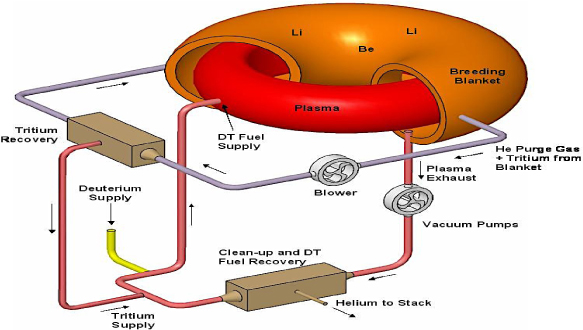
Figure 4. Basic Design of a Magnetic Confinement Reactor [Part 2] [19]
3.3.2 Nuclear Fusion Reactors – Inertial Confinement
An inertial confinement fusion reactor is very similar to the magnetic confinement system in that, an inertial confinement reactor would transmit heat to a cold reservoir heat exchange system in order to drive a turbine via steam. The difference between the two systems lies in the system for producing the plasma and subsequent fusion reaction. Another difference is in the amount of energy output versus the input of energy (theoretically achievable) which is estimated at 50-100 times that of magnetic confinement systems [19].
Direct Drive Inertial Confinement (DDIC) focuses high-intensity laser beams onto a deuterium-tritium fuel pellet. The lasers cause a point of extremely high temperature and density. This causes a rapid ‘blow off’ of the outer surface of the pellet that in turn compresses the inner deuterium-tritium fuel. This compression causes the inner fuel to ignite; the resulting explosion expands so rapidly that it is restricted by its own inertia, hence the name Inertial Confinement. This confinement results in an extremely high-density point; this high density finally causes the deuterium and tritium to undergo fusion.
Indirect Drive Inertial Confinement (IDIC) is essentially the same as DDIC in that it uses high-intensity lasers to ignite the exterior of the deuterium-tritium fuel pellet. However, instead of focusing the lasers directly onto the pellet, IDIC focuses lasers on the inner surface of a gold cavity, called a hohlraum. This creates superhot plasma that causes an even radiation of soft X-rays that rapidly heat the outer surface of the pellet which is contained within the hohlraum. The remainder of the process is almost identical to DDIC.
The main advantage of IDIC is that it is much easier to achieve an even pressure on the entire surface the fuel pellet. However, the gold containment vessel used, the hohlraum, is relatively costly and must be replaced each time as it is completely destroyed each time the fusion process occurs.
3.4 Nuclear Fusion Reactors – Current and Planned Research Reactors
3.4.1 JET - Joint European Torus
The Joint European Torus was designed in 1973 and the reactor has been in operation since 1983. The J.E.T. is a nuclear fusion reactor using a magnetic confinement system and holds the world record peak fusion power of 16 MW.
3.4.2 KSTAR
Completed in 2007, The Korean Superconducting Tokamak Advanced Research (KSTAR) project is considered South Korea’s contribution to the ITER project. KSTAR is one of the only magnetic confinement fusion reactors in the world to feature superconducting poloidal and toroidal magnets. This feature makes KSTAR’s research results integral to ITER due to the fact that ITER will be employing this same type of poloidal and toroidal conduction system. KSTAR is not intended to be a commercial energy production project and thus is limited in plasma volume size compared to ITER and DEMO.
3.4.3 Alcator C-Mod
The Alcator C-Mod is a tokamak magnetic confinement fusion reactor operating at the MIT plasma science and fusion centre. The Alcator C-Mod, completed in 1976, is based on two previous Alcator models. It currently has the strongest magnetic field and highest plasma pressure (two of the most important measures of performance in magnetic fusion according to the Lawson Criteria) of any fusion reactor [21]. The incredibly high performance of the Alcator C-Mod is surprising given its relatively small size.
3.4.4 IGNITOR
IGNITOR will be a tokamak magnetic confinement fusion reactor based on the smaller Alcator C-Mod. IGNITOR aims to achieve self-ignition while at the same time remaining vastly smaller than current projected reactors such as ITER and DEMO.
This idea that bigger may not be better could turn out to be a more viable strategy as it may minimise total costs to build and run the reactor as well as reduce construction times (it took 2 years to simply level the site needed for ITER) [22]. A reactor a fraction of the size would need a fraction of the area and thus take a fraction of the time. Once commercial energy production is achieved and construction of further reactors occurs, a smaller, cheaper reactor would be ideal for several reasons. Construction site requirements such as total area and soil composition would be drastically simpler due to the smaller size and weight of the reactor. In turn it would enable communities in areas with geography considered too difficult to build on, to use a fusion power generation system. Secondly, the smaller price tag would make it an option for less wealthy countries. Thirdly, the combination of price reduction, size reduction and an appropriately smaller energy output would also make it a viable energy option for smaller remote communities. Finally, the possibility of having many smaller reactors opposed to few large ones could reduce energy lost due to resistance in electrical wires over vast distances.
3.4.5 ITER- International Thermonuclear Experimental Reactor
The International Thermonuclear Experimental Reactor (ITER) is the combined effort of over 35 nations. It is a magnetic confinement tokamak style fusion reactor. ITER is currently under construction and is presently in the process of transporting the many vital components to the site as well as the construction of buildings that will be needed to assemble components that are too large and heavy to transport from offsite locations. ITER is intended to be the final stage before the construction of a full-scale commercial fusion reaction energy production facility that will be known as DEMO.
The main goals of ITER will be to produce 10 times more thermal energy than the auxiliary heat that it consumes, to produce a self-sustaining fusion reaction that can last for up to 480 seconds and to refine neutron shield technology that can produce tritium fuel as well as convert the high kinetic energy of the neutrons to thermal energy for energy production [22]. ITER aims to achieve these goals by employing groundbreaking designs such as; superconductive niobium-tin / niobium-titanium poloidal and toroidal magnetic coils, a three stage water cooling system and a liquid nitrogen / liquid helium cooling system, not to mention its vastly increased size.
3.4.6 DEMO
DEMO is set to be the final step to commercial fusion reaction energy production. Its realisation relies upon the success of ITER achieving its daunting goal set. There are limited design plans for DEMO, with no current agreements from any nations about the source of funding. But what is known is that DEMO will have an even larger plasma volume than ITER, a much greater thermal energy output, and most importantly, a steam turbine generator that will run off the thermal energy transferred from the cooling system producing electrical energy at a commercial scale.
3.4.7 NIF
The Lawrence Livermore National Ignition Facility, completed in March 2009, is the largest and most powerful inertial confinement system to date [23]. Most well known for the recent milestone in January 2014 of producing more thermal energy out of the system than energy absorbed by the fuel pellet [16]. However, a net gain in energy production overall is still a long way off, the latest milestone only achieving a 0.0077 net energy return [24]. Fusion reactors of this type will have to overcome some fundamental flaws in order to be considered as a realistic option for commercial energy production. These flaws, mentioned in section 3.3 include the destruction of the pellet containment device, designing an efficient reloading mechanism, and the inherent pulse nature of ICFR.
3.4.8 DIID
DIII-D has been in operation since 1986 and is currently operated by General Atomics. DIII-D is the successor to the DII and the DIII. DIII-D is a magnetic confinement fusion reactor and has been a major point of reference for reactor designs such as JET, TCV, Asdex, JT-60 and ITER.
3.4.9 Tore Supra
The Tore Supra is located in the nuclear research centre of Cadarache, Bouches-du-Rhône in France and is one of the only tokamak fusion reactors to have a superconducting toroidal and poloidal magnetic drive system. The Tore Supra began operation in 1988 and is the successor to Tokamak of Fontenay-aux-Roses. The research conducted at this facility is vitally important to the design of ITER as it is able to sustain a plasma discharge for up to 6 minutes [25]; making it possible to study the effects of sustained exposure to vital components such as the containment vessel.
3.4.10 TFTR
The Tokamak Fusion Test Reactor (TFTR) magnetic confinement fusion reactor facility operated from 1982 to 1997 at the Princeton Plasma Physics Laboratory in New Jersey, U.S.A.
3.4.11 JT-60u
The Japan Torus (JT-60u) magnetic confinement facility currently holds the record for the highest triple product achieved, 1.77×1028 K·s·m-3 = 1.53×10²¹ keV·s·m-3, as well as the highest microwave generator output power[26]. JT-60 has been in operation since 1985, however, is currently being upgraded with a superconductive magnetic field system which will enable it to achieve a higher triple product as well as reduce maintenance costs. Table 2 shows the highest fusion triple products that have been achieved for some of the older test reactors. These test reactors have undergone numerous upgrades since they started operation, and represent the pinnacle of what has been achieved to date.
| Reactor | Plasma at Ignition | |||||||||
| Parameter | Units | JET | DIIID | JT-60U | KSTAR | IGNITOR | ITER | DEMO | COM** | |
| Start Year of Operation | - | 1983 | 1985 | 1991 | 2004 | 2016* | 2020* | 2030* | 2050 ? |
- |
| n Av. Plasma Density |
1019 m-3 | 2 - 5 | 4 | 2 - 9 | 10 | - | - | - | - | 100 |
| T
Av. Plasma temp. |
keV | 1.7 | 4.0 | 2 - 10 | 7.4 | - | - | - | - | 10.5 |
| t
Av. Conf. t |
s | 1.2 | 10 | 4.5 | 20 | 0.6 - Steady# | 2 - Steady# | 1800 - Steady# | - | Variable |
| nTτ (Expected) |
1020 keV m-3 s | - | - | - | - | 70+ | 70+ | 100+ | 100+ | 51 |
| nTτ (Achieved) |
1020 keV m-3 s | 11 | 6.2 | 15 | 10 | - | - | - | - | - |
| V Torus Vol. |
m3 | 95 | 21 | 90 | 17 | 10 | 837 | ∼1000 | - | Variable |
| Pfus | 106 W | 16 | 0.03 | 4 | 12 | 25# | 410# | 1300- | - | Variable |
| Fusion Therm. | 1500# | |||||||||
| Poutput# Fusion output | 109 W | - | - | - | - | 0.5 | 0.5 | 2.5 - 5 | 5+ | Variable |
What is notable about these nTτ values (which represent the performance of the reactors) are that they are only one order of magnitude below what is required for a viable commercial fusion reactor, and even closer to what is referred to as ‘ignition’ (a self-sustaining fusion reaction). Another notable observation is the increase in temperatures achieved as reactors become more advanced, and the tendency for the torus of the reactors to be designed larger and larger. It should also be noted that despite the current test reactor being able to achieve a relatively large amount of power from the thermal power output of the fusion process, the actual power output in terms of electrical power is non-existent at this experimental stage.
3.5 Comparison of the Main Parameters of Magnetic Confinement Nuclear Fusion Reactors
To obtain a clearer picture of the progress of tokamak research, a more comprehensive set of data for parameters of interest was compiled for twelve test reactors (Table 3).
| Parameter | ||||
| Reactor | Start Year of Operation | T Plasma temp. (keV) |
nTτ Triple Product (Achieved) (1020 keV m-3 s) |
V Volume (m3) |
| T3 | 1962 | 0.3 | 0.0025 | 0.3 |
| Pulsator | 1973 | 0.22 | 0.0075 | 0.2 |
| T10 | 1975 | 0.75 | 0.0375 | 4.1 |
| ASDEX | 1980 | 2.3 | 0.2 | 4.9 |
| Tore Supra | 1988 | 2.6 | 0.3 | 25 |
| JT-60 | 1985 | 7.0 | 0.35 | 54 |
| Alcator | ||||
| C-mod | 1993 | 1.6 | 0.7 | 0.7 |
| Alcator | 1973 | 3.1 | 0.75 | 0.1 |
| DIIID | 1986 | 13 | 6.2 | 21 |
| TFTR (DT) | 1982 | 41 | 7 | 31 |
| JET (DT) | 1983 | 35 | 11 | 95 |
| JT-60U | 1991 | 48 | 15.3 | 90 |
| Ignition Conditions | - | - | <51* | - |
| *Not yet achieved | ||||
In particular temperature, volume and the performance indicator (nTτ) were chosen for comparison, and to investigate how these parameters are related, if at all. Once again it is notable from the table the steady increase of the three chosen parameters that the test reactors were able to attain over the time period.
As one would expect the fusion triple product increases as the plasma temperature increases (since nTτ is dependent on T) so long as the reactors are able to maintain the densities and confinement times that have previously been achieved. This general trend upwards is a good indicator of the progression that has occurred over the past 4 – 5 decades, and shows the proximity of the achievements to actual reactor conditions (Figure 5).
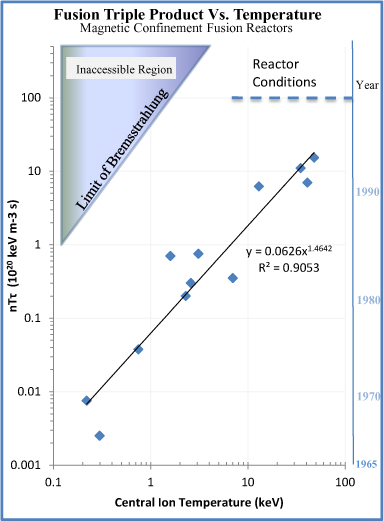
Figure 5. A graph of the data presented in table 3 (nTτ vs. T)
These results show that there is a close correlation between the temperature of plasma and the performance of the reactor. An R2 value that is close to one means that the difference between the observed values and the predicted (ie. the trend-line) are small and unbiased.
The rate at which the triple product is increasing can be calculated also, and was found to double every 1.8 years. This rate of increase is often compared to Moore’s law which describes the doubling of the number transistors that can fit on to computer chips every 2 years (Figure 6)
These results were as expected and have been calculate before [32-35]. However for reasons of contrast and However for reasons of contrast and comparison they were included to show the stark contrast this correlation has compared to following data analysis.

Figure 6. A graph triple product vs. Time (nTτ vs. t) [Courtesy of the EFDA]
Of particular interest to us during out meta-study was the possibility that the parameter of volume may not necessarily follow the trend of ‘bigger is better’. The question was posed; what if many small reactors could be produced more economically in favour of much larger and more expensive ones?
Results for the fusion triple product of the tokamaks were plotted against their volumes (Figure 7). The graphical representation of the data shows a slight but tenuous increase in the fusion triple product as the volume increases, however the linear regression analysis provided us with an R2 value of 0.459 which indicates the correlation between an increase in volume and an increase in the fusion triple product is at best a very weak one. It is more likely that there is no correlation between volume and the performance of the tokamak reactors.
This would seem to suggest that it is quite possible to achieve high performance in very small nuclear fusion reactors, and is a step towards answering the aforementioned question.
3.6 Challenges for the Realization of Working Nuclear Fusion Reactors
3.6.1 Funding
Ascertaining sufficient funds for the research needed to advance fusion technology has been arguably the most difficult hurdle. A modest estimate of The International Thermonuclear Experimental Reactor’s (I.T.E.R.) construction is set at 13 billion Euros (almost 20 billion AUD)
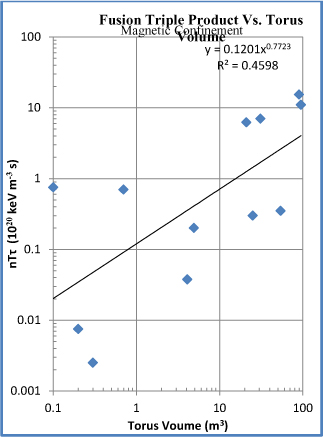
Figure 7. A graph of the data presented in Table 3 (nTτ vs. V)
For many people this appears an unfathomable amount of money, and when analysed without comparison, it is; however, when a comparison is present, one can see how small an investment of 13 billion Euros actually is, especially when the investment return will be almost unlimited energy. In 2010, the tally for money invested in fusion research for both magnetic and inertial confinement in the U.S.A. since 1953 was approximately 30 billion US [36] when inflation has been factored in. The tally in 2010 for the ‘war against terror’ on the other hand was $1,283 billion US [37]. This stark comparison gives perspective on how inexpensive fusion research comparatively (Figure 8).
3.6.2 Funding Sources
Another issue is the highly political nature behind funding for fusion research. When monetary assets are secured, it is almost always from government sources. This can be problematic when the current political power regards fusion as a waste of money, and makes policies to reduce funding in order to gain what at times can be the majority of voters support.
3.6.3 Inefficient Lasers
The lasers used for inertial confinement in such research centres as the Lawrence Livermore National Ignition Facility (NIF) consume massive amounts of power. At present, an efficiency of about 1 to 100 in respect to energy input to laser power output is possible [39]

Figure 8. U.S. Government expenditure for research and development. [38]
This massive loss in power makes it incredibly hard to produce a net gain in energy from the fusion reaction. Presently, institutes such as the Stanford Linear Accelerator Centre (SLAC) are conducting studies into diode lasers, which have proven to be up to 10% efficient, with 20% efficiency hopefully in the not too distant future.
3.6.4 Appropriate Materials
Finding the right materials for the construction of a self-sustaining fusion reaction containment vessel is also an area of intense investigation. The difficulty in finding appropriate materials arises due to the extremely harsh environment in which fusion occurs. Temperatures in excess of 1.5 × 10⁸ Kelvin [40] are achieved in magnetic confinement systems, and while not in direct contact, a significant number of ions from the plasma may gain enough energy to overcome the confinement measures and collide with the inner wall of the containment vessel, meaning that the material must be extremely heat tolerant.
More traditional materials such as stainless steel cannot be used due their high probability of atomic ejections when interacting with high-energy neutrinos, a product of a fusion reaction. A series of copper alloys such as copper-nickel-beryllium alloy (Cu-2 percent, Ni-0.3 percent) were hoped to be a possible solution due their extreme strength and conductivity, however, they have proven to become highly brittle at temperatures higher than 30°C [41].
3.7 Advantages and Disadvantages of Nuclear Fusion Reactors
3.7.1 Distance
If fusion reactors became a viable commercial source of technology, they will inevitably be few and far between. With increased distance between energy outlets comes greater loss of energy in power lines.
3.7.2 Variation in Power Demand:
An often-overlooked reality is that energy demand varies greatly over time. This can be over long periods of time, such as the changing of the seasons, population fluctuation and even the introduction of new technologies that require vast amounts of power that was previously sourced from other energy sources e.g. Electric cars. However on a drastically shorter timescale, and thus more concerning, is simply the variation of power demand during the passing of the day. The main reason this could be an issue for fusion reaction power supplies is that it is quite difficult to initiate the reaction, let alone control exactly how much power is produced.
3.7.3 Little to No Harmful waste
One of the most promising characteristics of fusion energy is that it produces almost no harmful waste products. In fact in the reaction itself, the only products are helium and high-energy neutrinos. Helium is a non-toxic element; it is so safe that it is used to fill children’s balloons. Furthermore, with Helium sources predicted to be completely consumed in 25 years [42], any form of synthetic helium production is a bonus. The high-energy neutrinos are mostly blocked by a sheet of lithium, which in turn yields the production of tritium that is used in the fusion reaction. A minor drawback is the irradiating effect that neutrinos have on materials, causing them to become brittle and weak. This issue is currently being addressed through research into advanced materials as mentioned earlier.
3.7.4 Time
The simple fact that estimates of the time that it will take for fusion technology to become commercially viable range up to 50 years is in itself a disadvantage as much harmful waste from fossil fuels and nuclear power plants will be produced in that time. Thus posing the question, even if fusion can become a commercially viable power source, how much more damage will humankind have caused by this time?
Table 5 when considered alongside the pro’s and con’s of Table 4, shows us that nuclear fusion is competitively efficient and yet a largely, almost completely untapped source of energy. It’s efficiency is only rivalled by somewhat unreliable tidal energy, almost totally exploited hydroelectric energy, or dangerously polluting coal and gas energy production methods.
3.7.5 Summary of advantages and disadvantages of fusion power and a comparison to that of other power generation systems
3.7.6 Efficiency comparison of fusion power with other power generation methods
| Energy Production Method | Net Efficiency | Thermodynamic Efficiency | Net cost (AUD per MW/h) |
| Nuclear Fusion | ** | 48% **** | ** |
| Nuclear Fission | 33% | 33-37% | 75-105 |
| Coal | 33% | 45% | 28-38 |
| Gas | 40% | 42% | 37-54 |
| Solar | *** | 7-22% | 120 |
| Biomass | *** | 34% | 88 |
| Hydroelectric | 85-93% * | 85-93% | 55 |
| Wind | 35% * | 35% | 63 |
| Tidal | ** | 90% | ** |
| *Negligible energy losses in overall process. | |||
| **Not enough data to calculate an accurate value. | |||
| ***Data vary too greatly to provide a clear insight. | |||
| ****Theoretically achievable with current methods. | |||
4. Conclusions
Considering the advantages and disadvantages of nuclear fusion power generations systems alongside their potential efficiency at 48%, we found that fusion power represents a very real and competitive possibility for our approach to a sustainable energy solution to meet future demands.
The fact that the fusion triple product doubles every 1.8 years and is currently only one order of magnitude away from commercial reactor condition (where the record stands at 15.3 x 10²⁰ keV m-3 s) means that commercial reactors are only decades away from being realised.
The finding that there is a lack of correlation between torus volume and the fusion triple product of reactors is significant from an economical perspective. It indicates that there is a possibility that fusion reactors need not be made on such titanic scales and further research into the idea of small scale advanced tokamaks is required.
Through reviewing the origins of nuclear fusion research, the mechanisms behind it and the technological breakthroughs that have been achieved, one can appreciate how far our knowledge and ability to manipulate fusion has truly come. This progression, although still not complete, holds promise for the eventual realisation of the vast advantages that commercial nuclear fusion energy production has over its harmful waste-producing counterparts, such as coal and nuclear fission. It is this steady progression and unfathomable benefits that make further funding for research in to fusion reaction energy production an absolute necessity.
Acknowledgments
The authors would like to acknowledge Dr. Jurgen Schulte for his helpful guidance and feedback during this meta-study, and the class for peer-reviewing our work.
References
1. Fowler, T.K. The fusion quest. https://www.nytimes.com/books/first/f/fowler-fusion.html (25/3/2014),
2. Weiss, A. Equilibrium and change: The physics behind big bang nucleosynthesis. Einstein Online 2006, 02.
3. Gorelik, G. Andrei sakharov - soviet physics, nuclear weapons and human rights. http://www.aip.org/history/sakharov/hbomb.htm (30/03/2014),
4. Finkbeiner, A. Sun in a bottle. http://www.nytimes.com/2008/12/14/books/review/Finkbeiner-t.html?_r=1& (March, 25),
5. Arnoux, R. The "kremlin letter" that started it all. http://www.iter.org/newsline/56/1186 (3/04/2014),
6. Wakatani, M. Stellarator and heliotron devices. Oxford University Press, 1998.
7. Obenschain, S. National academies committee on the prospects for inertial confinement fusion energy systems http://fire.pppl.gov/IFE_NAS5_NRL2_Obenschain.pdf (3/04/2014),
8. Nave, D.R. Hyperphysics. http://hyperphysics.phy-astr.gsu.edu/hbase/nucene/nucbin.html
http://hyperphysics.phy-astr.gsu.edu/hbase/nucene/lawson.html
http://hyperphysics.phy-astr.gsu.edu/hbase/nucene/coubar.html#c3
http://hyperphysics.phy-astr.gsu.edu/hbase/nucene/finert.html (30/3/2014),
9. Murphy, T. Nuclear fusion. http://physics.ucsd.edu/do-the-math/2012/01/nuclear-fusion/
10. Lawson, J.D. Some criteria for a power producing thermonuclear reactor. Proceedings of the Physical Society, B 1957, 70, 6.
11. Atzeni, S.; Meyer-ter-Vehn, J. The physics of inertial fusion: Beam plasma interaction, hydrodynamics, hot dense matter. Oxford: Clarendon, 2004.
12. Ragheb, M. Fusion concepts. http://mragheb.com/NPRE%20402%20ME%20405%20Nuclear%20Power%20Engineering/Fusion%20Concepts.pdf (2/04/2014),
13. Bolonkin, A. New ab-thermonuclear reactor for aerospace. http://arxiv.org/ftp/arxiv/papers/0706/0706.2182.pdf (11/05),
14. Mlynář, J. Focus on: Jet, the european centre of fusion research. EFDA website 2007.
15. Nuckolls, J.; Wood, L.; Thiessen, A.; Zimmerman, G. Laser compresion of matter to super-high densities: Thermonuclear (ctr) applications. Nature 1972, 239, 139-142.
16. O. A. Hurricane; D. A. Callahan; D. T. Casey; P. M. Celliers; C. Cerjan; E. L. Dewald; T. R. Dittrich; T. Döppner; D. E. Hinkel; L. F. Berzak Hopkins, et al. Fuel gain exceeding unity in an inertially confined fusion implosion. Nature 2014, 506, 343–348.
17. Wagner, F. Physics of magnetic confinement fusion. EPJ Web of Conferences 2013, 54.
18. Roche, J.; Lucibella, M.; Jacobsmeyer, B.; Riordon, J.; Orwig, J. Fusion machines. http://www.physicscentral.com/explore/action/fusion.cfm (4/4/2014),
19. Freudenrich, C. How nuclear fusion reactors work http://science.howstuffworks.com/fusion-reactor.htm (03 April).
20. ITER. Magnetic fusion. http://www-fusion-magnetique.cea.fr/gb/fusion/principes/reacteur_gb.gif https://www.iter.org/factsfigures (28/3/14),
21. Chandler, D.L. New project aims for fusion ignition. http://newsoffice.mit.edu/2010/fusion-ignition-0510 (20/5/2014),
22. ITER. Iter and beyond. http://www.iter.org/proj/iterandbeyond http://www.iter.org/factsfigures (21/5/2014),
23. science, F.N. World’s most powerful laser fires most powerful blast. http://news.discovery.com/tech/gear-and-gadgets/world-most-powerful-laser-120322.htm (15/5/2014),
24. Clery, D. Fusion "breakthrough" at nif? Uh, not really …. http://news.sciencemag.org/physics/2013/10/fusion-breakthrough-nif-uh-not-really-%E2%80%A6 (20/5/2014),
25. F. Saint-Laurent; Ph. Moreau; S. Bremond; J. Bucalo; Martin, G. Machine protection and advanced plasma control in tore supra tokamak. http://accelconf.web.cern.ch/accelconf/ica07/PAPERS/WPPB07.PDF (22/5/2014),
26. JAEA. World record output (1.5-times higher) achieved on microwave generator for fusion reactor -new method applicable to iter-. http://www.jaea.go.jp/english/news/p10020402/index.shtml (22/5/2014),
27. Griffith, S. Down to earth. https://www.iter.org/newsline/53/1589 (11/05/2014),
28. Mclean, A. The iter fusion reactor and its role in the development of a fusion power plant Radiation Protection Management 2005, 22.
29. Kenji Tobita; Gianfranco Federici; Kunihiko Okano. Research and development status on fusion demo reactor design under the broader approach. Fusion Engineering and Design 2014.
30. G. Federicia; R. Kempb; D. Wardb; C. Bachmanna; T. Frankea; S. Gonzaleza; C. Lowrya; M. Gadomskaa; J. Harmana; B. Meszarosa, et al. Overview of eu demo design and r&d activities. Fusion Engineering and Design 2014.
31. Ignitor. The ignitor experiment. http://www.frascati.enea.it/ignitor/default/ignitor/ignitor.htm (11/05),
32. Wesson, J.; Campbell, D.J. Tokamaks. OUP Oxford: 2011.
33. Hamacher, T.; Bradshaw, A. In Fusion as a future power source: Recent achievements and prospects, 18th World Energy Congress, Buenos Aires, World Energy Council, London, 2001.
34. Kadomtsev, B.B.; Troyon, F.S.; Watkins, M.L.; Rutherford, P.H.; Yoshikawa, M.; Mukhovatov, V.S. Tokamaks. Nuclear Fusion 1990, 30, 1675.
35. Hawryluk, R.J. Results from deuterium-tritium tokamak confinement experiments. Reviews of Modern Physics 1998, 70, 537-587.
36. (FPA), F.P.A. Us fusion budgets for mfe and icf. http://aries.ucsd.edu/FPA/OFESbudget.shtml (28/3/14),
37. Belasco, A. The cost of iraq, afghanistan, and other global war on terror operations since 9/11 2011.
38. FocusFusion.org. Have we spent too much on fusion? http://focusfusion.org/index.php/site/reframe/wasteful (29/3/14),
39. fusion-eur.org. Fusion by inertial confinement. http://www.fusion-eur.org/fusion_cd/inertial.htm (4/4/14),
40. efda.org. European fusion development agreement. http://www.efda.org/ (22/3/14),
41. Zinkle, S.J. Materials challenges for fusion energy Competitive Materials and Solutions 1998, 28, 4.
42. Connor, S. Why the world is running out of helium http://www.independent.co.uk/news/science/why-the-world-is-running-out-of-helium-2059357.html (25/3/14),
43. Administration, E.I. Average operating heat rate for selected energy sources. http://www.eia.gov/electricity/annual/html/epa_08_01.html (16/5),
44. Association, W.N. Nuclear power reactors. http://www.world-nuclear.org/info/nuclear-fuel-cycle/power-reactors/nuclear-power-reactors/ (16/5),
45. C.S.I.R.O. The heat is on. http://earthhour.web1.interactiveinvestor.com.au/CSIRO0702/The%20Heat%20Is%20On%20Report/EN/body.aspx?z=1&p=-1&v=1&uid= (16/5),
46. Electropaedia. Energy efficiency. http://www.mpoweruk.com/energy_efficiency.htm (17/5)