CURATED WORK
Tempe as Language—An Indonesian Village Revitalisation Mini-Project
Kirsten Bradley
Milkwood
PORTAL Journal of Multidisciplinary International Studies, Vol. 13, No. 2, July 2016.
Designing Futures in Indonesia, Curated Works Special Issue, Curated by Alexandra Crosby.
© 2016 by Kirsten Bradley. This is an Open Access article distributed under the terms of the Creative Commons Attribution 4.0 Unported (CC BY 4.0) License (https://creativecommons.org/licenses/by/4.0/), allowing third parties to copy and redistribute the material in any medium or format and to remix, transform, and build upon the material for any purpose, even commercially, provided the original work is properly cited and states its license.
Citation: Bradley, K. 2016. Tempe as Language—An Indonesian Village Revitalisation Mini-Project. PORTAL Journal of Multidisciplinary International Studies, 13:2, 1-9. http://dx.doi.org/10.5130/portal.v13i2.5066
ISSN 1449-2490 | Published by UTS ePRESS | http://portal.epress.lib.uts.edu.au
Corresponding author: Kirsten Bradley, Milkwood, PO Box 574, Daylesford Victoria 3460 Australia. https://www.milkwood.net; kirsten@milkwood.net
DOI: http://dx.doi.org/10.5130/portal.v13i2.5066
Article History: Received 20/06/2016; Revised 27/06/2016; Accepted 11/07/2016; Published 09/08/2016
Abstract
In Kandangan, a village in the Temmanggung Regency (Kabupaten Temanggung) in the Province of Central Java, tempe bunguk used to be a daily food—using locally grown bunguk beans—and made in many households. But imported blocks of tempe from China made with industrially grown soy beans have slowly crept in and replaced it. As part of her food skills mapping (a part of the Spedagi Project), Francisca Callista (Siska) went searching for what used to be eaten in her village, and for those who could remember how to make it.
Keywords
Indonesia; Java; Jawa; design; tempe bunguk; preserving; fermenting; permaculture; food cultures; food practices; food design; food tradition; slow food
In Kandangan, a village in the Temmanggung Regency (Kabupaten Temanggung) in the Province of Central Java, tempe bunguk used to be a daily food—using locally grown bunguk beans—which was made in most households. But imported blocks of tempe from China, made with industrially grown soy beans, have slowly crept in and replaced it.
As part of her food skills mapping—within the Spedagi Project, an Indonesian ‘movement in village revitalization’—Francisca Callista (Siska) went searching for what used to be eaten in her village, and for those who could remember how to make it.
She found Parni, who remembered how to make tempe bunguk as her mother did, so they went to the market and purchased two kilograms of dried bunguk beans. The resulting tempe worked, much to everyone’s delight and slight surprise, and it sold out in the first three households. And so more was made.
Following word that tempe bunguk was again being made in the village, after two months Subiyani came forward to tell Parni and Siska that he was growing bunguk just at the edge of the village—as a living fertiliser for his banana crops. One hundred percent ‘Kandangan tempe bunguk’ was born!
The husk and bean skins have traditionally been used as a batik dye, and so Siska has been passing them along to Yuni, a local batik artist, to begin experimenting with.
Parni and Mujiya now make about five kilograms of tempe bunguk a week, in small banana leaf wrapped parcels. The resulting tempe bunguk is intended primarily to supply the village, and any extra is sold at Pasa Papringan, the monthly no-waste market in Kandangan that focuses on traditional foods and crafts.
Siska describes the tempe bunguk mini-project as a language—a way to re-establish community connections. The project provides sustainable, environmental, economic and cultural glue for the families involved in its creation. And it results in lots of tasty tempe bunguk.
* * *
Kirsten Bradley visited Kandangan and the Spedagi Project as part of the IndoAust Design Futures Project.
* * *
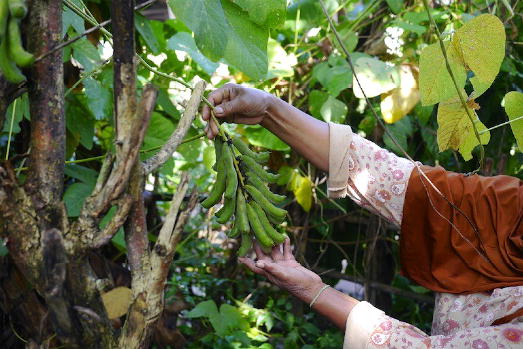
Figure 1 Bunguk beans (Mucuna pruriens) growing in Mujiyah’s garden, digital photograph, 2016 © Kirsten Bradley
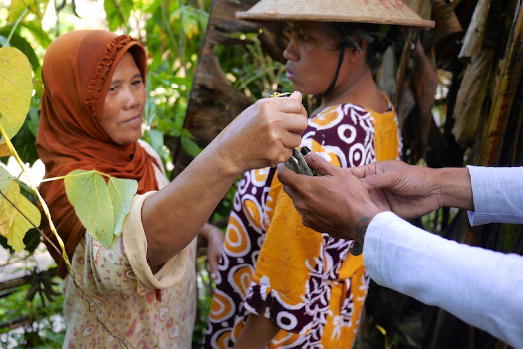
Figure 2 Parni handing across some Bunguk beans, digital photograph, 2016 © Kirsten Bradley
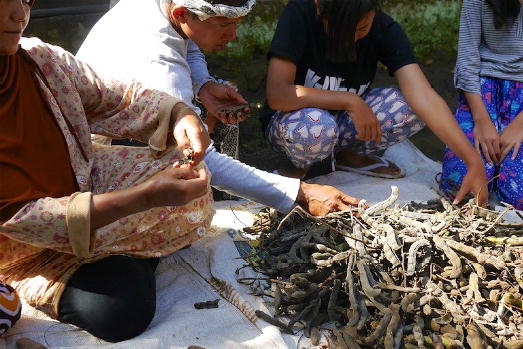
Figure 3 Dried Bunguk beanpods, ready to be shucked, digital photograph, 2016 © Kirsten Bradley
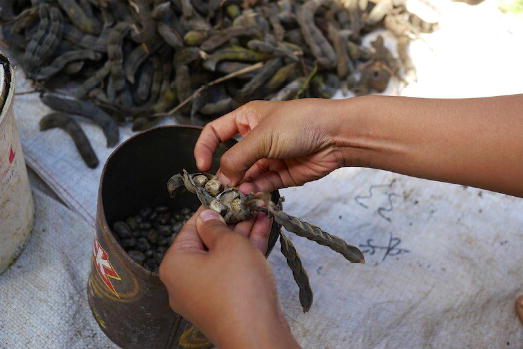
Figure 4 Shelling bunguk beans, digital photograph, 2016 © Kirsten Bradley
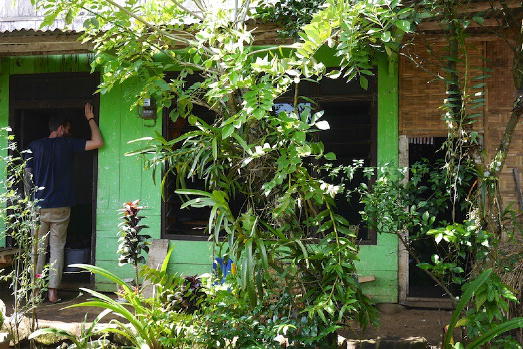
Figure 5 Mujiyah’s house—centre of tempe bunguk enterprise, digital photograph, 2016 © Kirsten Bradley
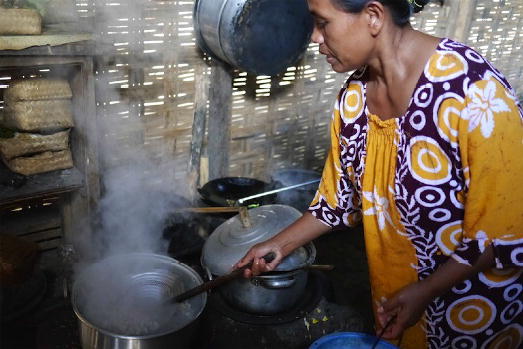
Figure 6 Mujiyah boiling bunguk beans, digital photograph, 2016 © Kirsten Bradley
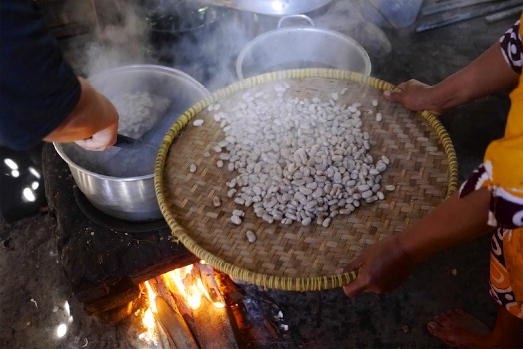
Figure 7 Removing boiled bunguk beans for cooling, digital photograph, 2016 © Kirsten Bradley
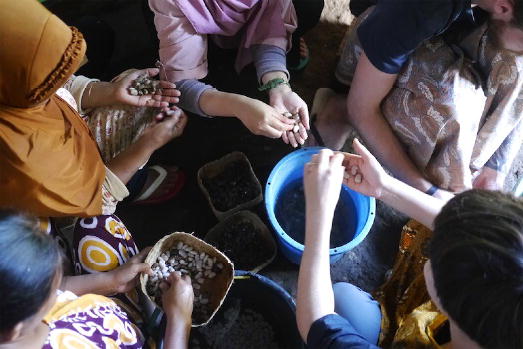
Figure 8 Slipping the skins off boiled bunguk beans, digital photograph, 2016 © Kirsten Bradley
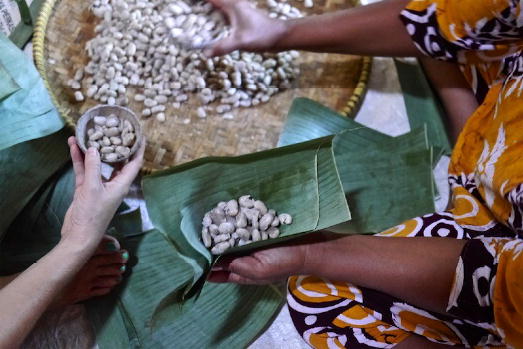
Figure 9 Mixed with starter, the beans are now ready to be packaged up, digital photograph, 2016 © Kirsten Bradley
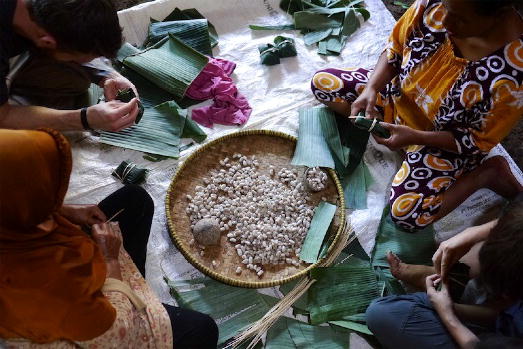
Figure 10 Wrapping bunguk in banana leaf, digital photograph, 2016 © Kirsten Bradley
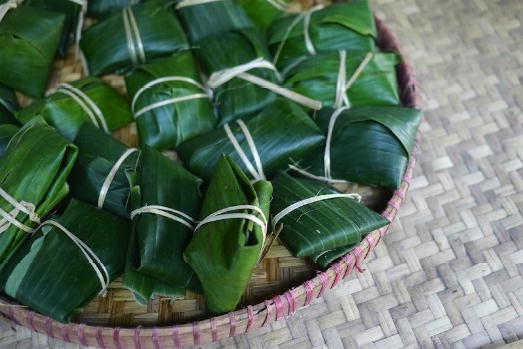
Figure 11 Tempe bunguk ready for fermentation, digital photograph, 2016 © Kirsten Bradley
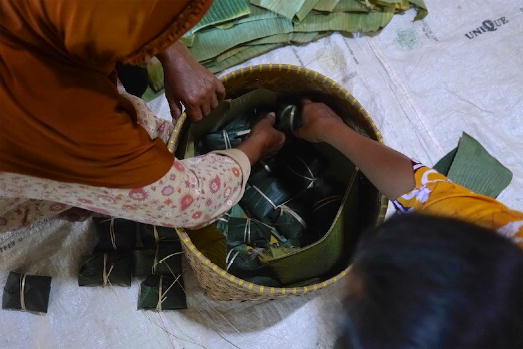
Figure 12 Parni and Mujiyah pack the tempe into it’s incubation chamber, digital photograph, 2016 © Kirsten Bradley
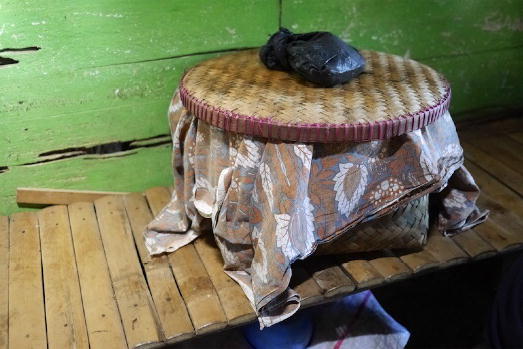
Figure 13 Tempe is then set aside for 2 days to ferment, digital photograph, 2016 © Kirsten Bradley
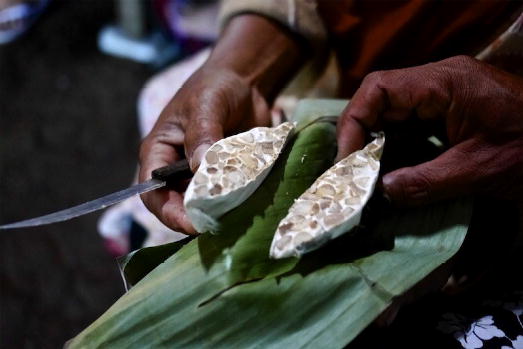
Figure 14 The finished product! Tempe bunguk ready for cooking, digital photograph, 2016 © Kirsten Bradley
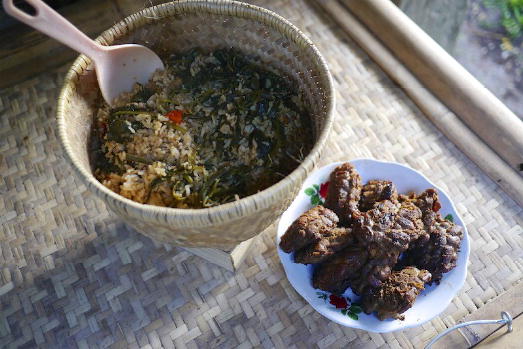
Figure 15 Tempe bunguk for breakfast, digital photograph, 2016 © Kirsten Bradley
DECLARATION OF CONFLICTING INTEREST The author(s) declared no potential conflicts of interest with respect to the research, authorship, and/or publication of this article. FUNDING The author(s) received no financial support for the research, authorship, and/or publication of this article.