Research Article
A study of project management knowledge and sustainable outcomes in Thailand's reproductive health projects
Jantanee Dumrak1, Bassam Baroudi2, Stephen Pullen2
1 Torrens University Australia
2 University of South Australia
DOI: http://dx.doi.org/10.5130/opm.v2i1.4274
Abstract
In Thailand, numerous reproductive health projects funded by both national and international agencies have been established in an attempt to mitigate reproductive health problems. Solving problems on reproductive health projects that only have temporary funding requires effective project management that hopefully leads to better long-term desired outcomes. This paper identifies the association between collaborative reproductive health (CRH) project management and sustainable outcomes. The Guide to the Project Management Body of Knowledge (PMBOK® Guide) is employed to benchmark project management practices on four CRH projects in Thailand. The research methodology presented in this paper comprises the content analysis of the CRH project plans and a questionnaire survey of project teams’ experience and expectations, as well as design and success in project management and sustainable outcome delivery. It is evident that limited use of certain project management knowledge areas (PMKAs) affects CRH project implementation and success. The association between the use of PMKAs and sustainable outcomes on these projects is also presented. Scope, integration and quality management were found to be the most influential PMKAs for sustainable outcomes on CRH projects. Nevertheless, the projects showed a shortage of project management processes for PMKAs that were required to attain the outcomes.
Keywords: Benchmarking, Donor-funded projects, Health projects, Project management, Project management knowledge, Sustainable outcomes, Reproductive health
© 2015 Jantanee Dumrak, Bassam Baroudi, Stephen Pullen. This is an Open Access article distributed under the terms of the Creative Commons Attribution 4.0 Unported (CC BY 4.0) License (https://creativecommons.org/licenses/by/4.0/), allowing third parties to copy and redistribute the material in any medium or format and to remix, transform and build upon the material for any purpose, even commercially, provided the original work is properly cited and states its license.
Citation: Organisational Project Management 2015, 2(1): 1-14,- http://dx.doi.org/10.5130/opm.v2i1.4274
Introduction
Projects are undertaken to serve particular purposes of organisations as they are used as vehicles for delivering a specifically defined value or benefits (Steinfort & Walker 2011). Many projects focus predominately on monetary benefits. Alternatively, some projects are non-profit oriented and funded by international or non-governmental organisations (NGOs) or donors to serve the development of communities. These funded projects can be found in many disciplines including health, environment, economics, education, social and human rights in countries where poor public welfare is common. In the healthcare sector, especially in low-income countries, one way to continuously implement public health interventions is by accepting foreign assistance (Leach-Kemon et al. 2012). It is believed that this form of funding for public health projects is a solution to the limited national monetary reserves of a country. The broad spectrum of contribution to health projects includes financial support, human resources, medical supplies, technical assistance and other supplies. Nevertheless, a mainstream issue has emerged to find the best solution when the funding of such projects is terminated. The funding or contribution to charitable health projects generally acts as a temporary support or drive toward health development, with the hope that the health services provided can be maintained (Edwards & Roelofs 2006).
This paper aims to investigate project management practices within collaborative reproductive health (CRH) projects in Thailand in respect to attaining sustainable outcomes. The Guide to the Project Management Body of Knowledge or PMBOK® Guide (PMI 2008) is used to benchmark CRH practices. However, the process of questionnaire design and as well as data distribution were planned and conducted prior to the release of the 5th edition of the PMBOK® Guide (PMI 2013). As a result, the research survey maintained the nine knowledge areas described in the 4th edition of PMBOK® Guide. The research identifies CRH sustainable outcomes and determines the extent of utilisation of project management knowledge. Further, the significance of project management knowledge in attaining desired sustainable outcomes is highlighted. This research will contribute to filling the knowledge gap in respect to project management within the reproductive health sector, particularly for developing countries such as Thailand.
Donor-funded projects in healthcare development
Health projects play a significant role in improving health disparity in developing countries (Aggarwal, Pandey & Talwar 2008; Brinkerhoff 2003). From the donor perspective, having a project-oriented approach allows more project control over available resources and expected outcomes. Moreover, well-tailored processes in projects could generate more transparency and accountability between donor countries and recipients (Ashwell & Barclay 2010). Having a project-style approach to deliver established donor goals allows practical strategic planning for countries participating in development projects (Sachs & McArthur 2005).
Many reproductive health (RH) development initiatives have been funded by governments and international agencies via collaborative schemes alongside of domestic NGOs. Some projects are structured to serve many RH elements within a single project life-span. Other projects can target RH problems within a specific area. In many developing countries the decision on integration is made on the basis of epidemiological data and priority setting in line with the level of resources. Despite the effectiveness of resources management derived from focusing on a specific RH element, it is argued that such a service is unlikely to meet client demand due to factors such as time, distance, costs and complications in obtaining separate services (Berer 2003). RH integration such as one-stop sexual and reproductive health (SRH) service delivery in Hope et al. (2014) and Lusti-Narasimhan, Collins and Hopkins (2014) is needed to create client-oriented care and to solve problems that form dependent relationships among the various elements. Hence, an effective integration strategy is required for developments with policy formulation and commitment from policymakers. Resources scarcity adds to the constraints of RH integration especially where cost recovery is a primary focus (Schuler, Bates & Islam 2002).
Project management practice in CRH projects
The Programme of Action (PoA) was developed after the International Conference on Population and Development (ICPD) in 1994. It was acknowledged as a framework for participating countries to accomplish RH development missions by 2015 (United Nations Population Fund 2004). The essence of the PoA is subdivided into 15 principles acting as guidelines for the implementation in 14 areas including 1) Interrelationships between population, sustained economic growth and sustainable development 2) Gender equality, equity and empowerment of women 3) The family, its roles, rights, composition and structure 4) Population growth and structure 5) Reproductive rights and reproductive health 6) Health, morbidity and mortality 7) Population distribution, urbanisation and internal migration 8) International migration 9) Population, development and education 10) Technology, research and development 11) National action 12) International cooperation 13) Partnership with the non-governmental sector and 14) Follow-up to the conference. Despite the statements on development issues, the PoA seems to exclude structural, manageable and evaluative frameworks of project management required in initiatives. Numerous studies claim that project management has been a significant element in RH project achievement (Freedman et al. 2007; Islam et al. 2006; Kayongo et al. 2006; Muturi & Donald 2006; Nugent, Bloom & Musinguzi 2011). Although project management methodologies may not always be explicitly mentioned in the studies of RH management, it can be detected within these initiatives through project activities or operational elements to project activities such as costs, implementation timeframes, stakeholder communication and involvement, and quality standards of RH services. It is worth looking at existing project management practices in relation to the deficiency of project management competencies of staff. This may result in unsuccessful project implementation and negative unexpected outcomes such as delays (Asian Development Bank 2001). Further, project quality management and assessment are significantly emphasised in health promotion projects implemented in many European countries. As a result, guidelines and tools to improve the quality of health promotion projects have been developed. However, any guidelines that may be available require unique multidisciplinary and multicultural approaches (Aro, Van den Broucke & Raty 2005).
To overcome the limitations of the PoA and to achieve reproductive health project success, knowing the true costs of RH implementation is not only part of effective program planning but also necessary especially when project resources are limited. Misconceptions of the actual cost of RH implementation might discredit the feasibility of RH development in poorer countries (DeJong 2000). Further, cost mismanagement could reduce collaboration between donor agencies and countries where high costs in CRH development are involved. Additionally, health projects seem to operate under internal and external influences. Reichenbach (2002) explains the significance of stakeholder analysis on perceptions and influences to priority setting in RH policy. Political influence plays an important role in prioritising RH funding, services and preventive campaigns. Therefore, strategic project or program management to increase political attention on RH issues, especially those with negative social perceptions, needs to be considered. Improved stakeholder understanding of RH could reduce barriers and promote long-term implementation.
Reproductive health projects and sustainable outcomes
AusAid (2000, p.1) uses the term “sustainability” to communicate sustainable outcomes intentions and focuses on the continuation of benefits after major assistance from a donor has been completed. Sustainable outcomes, according to Sarriot et al. (2004), are derived from the maintenance of health benefits generated from an initial program, the continuation of program activities within a new organisation, and the maintenance of health promotion by building community capacity. LaPelle, Zapka and Ockene (2006) focus on sustainable outcomes as program services maintained for ongoing prevention and treatment of a health problem after termination of funding and assistance from a donor. The later studies show that the term has been employed more broadly and holistically across public health development to stand for long-term existence of benefits, competency, practice, processes, projects and programs (Scheirer & Dearing 2011; Whelan et al. 2014).
In health development programs and projects, achieving sustainable outcomes is a mainstream issue. The focus is on finding the best solution when the donor's funding is withdrawn, with health problems still identified as one of a nation's major concerns (Scheirer, Hartling & Hagerman 2008). The funding or contribution from the project donor generally acts as a temporary support or drive toward health development, while the idea of sustainable outcomes in health programs emphasises maintaining the established intervention (Edwards & Roelofs 2006). The aim of delivering sustainable outcomes is to ensure that the benefits from implementing projects can be maintained and continued after an initial period of funding is terminated (Gruen et al. 2008; Scheirer 2013; Tango International 2009). There are some studies that attempt to identify the benefits of sustained health programs. Swidler and Watkins (2009) state that with sustainable outcomes, the country would not only benefit from the sustained products and services provided to the nation's population but would also gain from containing knowledge and skills. Previous studies on sustainable outcomes of health programs, especially in African regions, attempt to identify what happens if the major donor agencies stop funding the programs and the impacts to the program benefits and activities after the funding has ceased (Argaw, Fanthahun & Berhane 2007; LaPelle, Zapka & Ockene 2006). Most studies suggest that health benefits are difficult to sustain after funding termination.
RH issues require many years of intervention to obtain positive outcomes. Therefore, RH projects require strategies for long-term, on-going operation before the positive outcomes are delivered (Paine-Andrews et al. 2000). In the view of many international health and development agencies, assisting developing countries to become self-sufficient in meeting the reproductive health needs is important and challenging. That is because poor conditions in the sexual and reproductive health of a nation are a key indicator of a nation's level of development. Furthermore, RH needs are inherently varied because of diverse cultural, religious and economic factors, and are constantly changing throughout the reproductive life-span of an individual (World Health Organization 2009). The sustainable outcomes of RH programs are impacted by long-term and ongoing implementation that meets the needs of the community. This is especially so in countries where RH problems are recurrent and where the maintenance of services until overall problems are solved is crucial. Results from a health project conducted by the Asian Development Bank in Pakistan identified that the availability of quality public health care services demanded by the poor and socially disadvantaged rely on the introduction of alternative systems for improved sustainable outcomes (Asian Development Bank 2001). Hence, the sustainable outcome issue is of great importance to this discussion.
Research methodology
Research rationale and objectives
In developing countries, adequate RH severely lags behind the developed world. In Thailand, numerous RH projects funded by both national and international agencies have been established in an attempt to mitigate this problem. Problem solving on sensitive issues such as RH consume a vast amount of time and resources and sustainable outcomes are needed. Hence, it would seem appropriate that CRH projects in Thailand be investigated in respect to the effectiveness of existing project management practice in generating sustainable outcomes.
Research methods and data collection
In this research, four case studies of CRH projects in Thailand were used. The researchers attempted to show how CRH projects were planned and managed. The mixed methods design was most suitable as the use of different data collection methods under this approach contributes to the capture of multi-perspectives related to the research topic as well as enhances the credibility of research findings (Hesse-Biber 2010). Two research methods, document collection and questionnaire survey, were implemented.
In the document collection, the written project plans for CRH project implementation were assembled. In the survey, a self-administrated questionnaire was employed. The use of questionnaires in this research was limited to RH project management personnel within Thailand to identify the influencing factors within RH projects and sustainable outcomes in that country. Questionnaire data were obtained from the CRH project respondents using a CRH project participant list provided by the Thailand Department of Health, Ministry of Public Health. These respondents were CRH project team members delegated by Provincial Public Health Offices and the Thailand Bureau of Reproductive Health.
Data analysis
Content analysis has been recognised as an effective approach for analysing texts, images and symbols. The approach consists of scientific techniques for investigating particular phenomena and providing new insights (Krippendorff 2004). This research is conducted as actuality research where lived project experience and real project actors were analysed and presented. According to Cicmil et al. (2006, p.676), project actuality is defined as “the understanding of the lived experience of organisational members with work and life in their local project environments”. Therefore, this research attempted to describe actual project management practices that existed within the four CRH projects compared with recognised project management knowledge contained within the PMBOK® Guide. Descriptive information from the studied document was obtained by examining the project plans produced for the CRH projects. It assisted in highlighting the state of project management application and intention to deliver sustainable outcomes after the termination of the project funding. For the questionnaire survey, analysis was carried out with the assistance of the SPSS statistical analysis software package. This was employed to analyse survey questionnaires distributed to 75 project staff from the four selected CRH projects. These CRH project respondents were officially delegated to the project implementation. Descriptive statistics and chi-square (χ2) tests were employed to analyse the data obtained from the questionnaire survey in order to understand the association between sustainable outcomes of the studied CRH projects and their project management knowledge and practice.
Research results and discussion
The CRH project cases
From the content analysis employed in examining the CRH project plans, a summary of demographic information on the operations of the CRH projects are presented as follows:
Case study: CRH Project 1
CRH Project 1 was undertaken in a northern province of Thailand with a population of over five million. HIV/AIDS was identified as the most crucial problem of the province. The project was established in a collaborative structure between a key international development agent and the Thai Government. The project contained a total project life of three years. From the aspect of project management, the Logical Framework was found to be a main tool providing the construction of objective verifiable indicators (OVIs) and means of verification (MOVs) to achieve the project goal and purposes. RH elements targeted in the CRH implementation were family planning (FP), adolescent reproductive health (ARH), sex education, HIV/AIDS, maternal and child health, the empowerment of women and gender equality in RH. The project budget was derived by bilateral agreement between the Thai Government and the development agent, the United Nations Population Fund (UNFPA).
Case study: CRH Project 2
CRH Project 2 was established in a collaborative structure between an international development agency and Thailand Government. The aims of the project were to establish fully integrated RH Service Delivery Points (SDPs) that could deliver quality and gender-sensitive services to the target clients, increase access to RH services from youth, male and female clients, and achieve RH service and education satisfaction from the clients. A total project duration of two years was set to tackle RH situations within the provincial areas. The project aimed to deliver 50 main activities under an independent and NGO-collaborative implementation form. It served clients in two Contracting Units for Primary Care (CUP) at district level and four Primary Care Units (PCU) at sub-district level. The expected clients per CUP were 60,000-85,000 per year, while the expected number of clients per PCU was 4,000-5,000 per year. The implementation involved Community Primary Health Care Centres that functioned at the village level.
Case study: CRH Project 3
CRH Project 3 was another project established in a collaborative structure. Similar to CRH Project 2, which was established under the same program, CRH Project 3 aimed to provide greater and high quality accessibility to RH knowledge and services for youth, male and female clients within the target areas. The project implementation was undertaken at two CUPs and two PCUs. The estimated clients in a year were 20,000-40,000 per CUP and 3,500-5,000 per PCU. Community Primary Health Care Centres at the village level were collaboratively involved.
Case study: CRH Project 4
CRH Project 4 was a relief project undertaken in the most affected provinces caused by a tsunami that hit Thailand in December 2004. The project focused on four RH elements that were likely to have the most consequences due to the tsunami. The elements included maternal and child health, family planning, HIV prevention and adolescent health. According to the project plan, the project beneficiaries were forecasted to reach 35,000. The implementation period was approximately two years. The project was divided into three phases: post-emergency, transitional and the hand-over phase. The post-emergency phase aimed to assess the unmet needs and accessibility of RH healthcare services. The transitional phase was to develop and implement RH interventions following the assessment results. The hand-over phase focused on maintaining the established RH service system at the community level.
CRH project management knowledge and practice
The investigation into the CRH project plans revealed that all project plans were constructed in alignment with Logical Framework Approach (LFA) and Result-based Management (RBM). Regardless of their shortcomings in supressing innovative thinking and adaptive management, being unsuitable for projects with a lot of uncertainty and unintended consequences, and acting as control mechanisms rather than planning and scoping tools (Steinfort & Walker 2011), both methods were found dominant in managing the studied CRH projects. Understanding the existing practice of project management in the investigated CRH projects was an initiating part of this research. It was to examine the effectiveness of the practice in delivering the project, project management and sustainable outcomes of the projects. The questionnaire survey was conducted to shed some light on the relationship between the existing practice and the outcomes delivered by the studied projects as summarised in Table 1.
The research further investigated the level of project management knowledge and implementation processes inside the CRH projects. Using the ranking scale from low, moderate and high, the results indicated by health project teams showed that both project management knowledge and implementation were mainly ranked at moderate levels (reported by 38.7% and 30.7% of the respondents, respectively). The results indicated that approximately one-third of the respondents agreed that the project management knowledge and implementation had not been fully contained in and utilised by the project members. Moreover, 25.3% of team members admitted to a low level of fundamental knowledge of project management within their CRH project. The low competency of CRH projects on implementation was reported by 39.9% of the respondents. Nevertheless, the project teams were highly oriented to attain the project success. As a result, success of the CRH projects was mainly reported at a high level by 66.7% of the respondents. With the existing project management practice, the level of project team involvement in project modification and change management was at a low level (reported by 48.0% of respondents). In addition to project management and project success, the investigation was extended to cover the sustainable outcome aspect of the CRH projects. The projects intended to establish sustainable outcomes as a high level of the outcome expectation and design was reported (by 61.4% and 65.3% of the respondents). On the other hand, moderate to high use of project management was more than 95% associated with achievement in delivering sustainable outcomes in the CRH projects.
Sustainable outcomes within CRH projects
Understanding common definitions of sustainable outcomes from the view of CRH project members was a crucial process. Twelve concepts established from the review of literature were included in the survey questionnaire, with an opportunity provided to the respondents to address other definitions. A radar chart (Figure 1) was chosen to present the results as more than one choice to reflect definitions of sustainable outcomes in the CRH projects was available to the respondents. It was discovered that 70.7% of respondents selected Continuation of Project Outputs after the funding termination as a meaning to explain sustainable outcomes of CRH projects, whereas Integration of Project Activities to Organisational Routines and Increase in Knowledge and Service Competencies were ranked as subsequent meanings (agreed by 56.0% of respondents for both definitions). In contrast, Different Ultimate Outcomes Produced after Project Termination received the least support from respondents (13.3% of respondents). The main components in the sustainable outcome definitions referred to in the studied CRH project as in Figure 1 include prolonged project outputs and activities, alignment of project activities with organisational routine activities, and elevation of personal and organisational competencies.
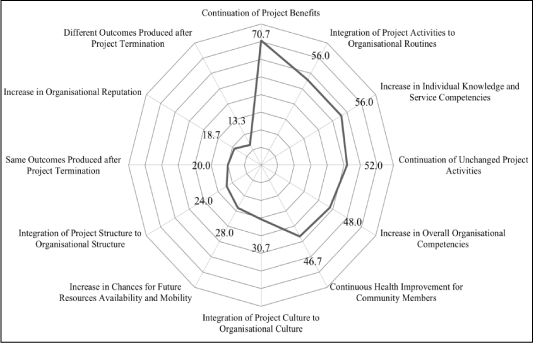
Figure 1 Sustainable outcome classification in Thailand CRH projects (% of respondents agreed to sustainable outcome definitions)
Constructing some order based on the available definitions of sustainable outcomes might help in planning long-term implementations to achieve the outcomes classified by CRH project staff. According to the definitions shown in Figure 1, it was also discovered that while some outcomes were well-pronounced, other elements of sustainable outcomes were not significantly agreed on.
Project management significance to sustainable outcome knowledge
The analysis in this section examined the relationship between aspects of project management knowledge and sustainable outcome knowledge of CRH project members (Table 2). The result of the analysis presented by the chi-square test indicated that project management knowledge was statistically associated to the level of sustainable outcome knowledge reported by the respondents (χ2 = 36.446, d.f. = 15, p-value = 0.002). The measures of Cramer's V association presented a relatively strong relationship between these two factors, which could be generalised (Cramer's V = 0.402; p-value = 0.002). The results obtained from the chi-square test indicated that the 42.9% of the respondents with high project management knowledge indicated high sustainable outcome knowledge. Similarly, the majority of the respondents with a moderate level of project management knowledge reported moderate sustainable outcome knowledge (47.2% of the respondents within this group). The respondents with low project management knowledge reported very low knowledge in sustainable outcomes (100% of the respondents in this group).
| Sustainable outcome knowledge (%), N = 75 | ||||||
| Very high | High | Moderate | Low | Very Low | ||
| Project management knowledge (χ2 = 36.446; d.f. = 15; *p-value = 0.002) |
Very high | 0.0 | 0.0 | 11.1 | 0.0 | 0.0 |
| High | 0.0 | 42.9 | 25.0 | 29.4 | 0.0 | |
| Moderate | 0.0 | 28.5 | 47.2 | 35.3 | 0.0 | |
| Low | 0.0 | 4.8 | 0.0 | 5.9 | 100.0 | |
| Very low | 0.0 | 0.0 | 0.0 | 5.9 | 0.0 | |
| Not at all | 0.0 | 23.8 | 16.7 | 23.5 | 0.0 | |
| 0.00 | 100.0 | 100.0 | 100.0 | 100.0 | ||
Benchmarking CRH project management practice with PMBOK® Guide for sustainable outcome attainment
The aim of this paper includes investigating the CRH projects through the lens of PMBOK® Guide (PMI 2008). The benefits of benchmarking the CRH projects do not only conclude that the projects were designed to meet the triple constraints which generally play important roles in project success, but also provide directions to future CRH project management. In the previous sections of this paper, an investigation of project management concepts in relation to project management that could elevate opportunities for CRH sustainable outcomes was conducted. Nine PMKAs were included in the examination for the respondents to rank priorities based on their perspective and experience in sustainable outcomes attainment. From Table 3 below, of the nine PMKAs, the most important PMKA to the CRH projects was scope management with a score of 541(X = 7.21, SD = 2.220) provided by respondents. On the other hand, procurement management was perceived as the least significant to CRH projects with a score of 192 (X = 2.56, SD = 1.912).
After the PMKAs ranked according to the significance in sustainable outcomes had been identified, the benchmarking process was conducted by investigating project management processes contained within the studied CRH project plans. In this stage, the research attempted to align the results of project management benchmarking with the perception of CRH project management teams in order to determine the project management improvement if future CRH projects aim to attain sustainable outcomes. The four CRH project plans were scrutinised using content analysis to study the existing project management practice as well as its processes.
Results of the benchmarking process in Table 4 showed that full employment of project management processes occurred only in cost management. Inclusion of the project management processes can be seen at a significant level in some knowledge areas such as integration, scope, quality and communication. In the remaining areas it was discovered that the inclusion of project management processes were at a minimal level. The study found no processes for procurement management in any studied CRH projects. Among these CRH projects, the CRH Project 4 contained the lowest level of project management processes employed during its implementation.
| Knowledge areas | Project management process | CRH 1 | CRH 2 | CRH 3 | CRH 4 |
| Integration Management | Develop project charter | * | * | * | * |
| Develop project management plan | |||||
| Direct and manage project execution | * | * | * | * | |
| Monitoring and controlling project | * | * | * | * | |
| Performing integrated change control | |||||
| Closing project | |||||
| Scope management | Collect requirements | * | * | * | * |
| Define scope | * | * | * | * | |
| Create work breakdown structure | * | * | * | * | |
| Verify scope | |||||
| Control scope | |||||
| Time management | Define activities | ||||
| Sequence activities | |||||
| Estimate activity resources | * | * | |||
| Estimate activity durations | |||||
| Develop schedule | |||||
| Control schedule | * | * | * | ||
| Cost management | Estimate costs | * | * | * | * |
| Determine budget | * | * | * | * | |
| Control costs | * | * | * | * | |
| Quality management | Plan quality | * | * | * | * |
| Perform quality assurance | * | * | * | ||
| Perform quality control | * | * | * | ||
| Human resource management | Develop human resource plan | ||||
| Acquire project team | * | * | * | * | |
| Develop project team | * | * | * | * | |
| Manage project team | |||||
| Communications management | Identify stakeholders | ||||
| Plan communications | * | * | * | * | |
| Distribute information | * | * | * | * | |
| Manage stakeholders expectations | * | * | * | * | |
| Report performance | * | * | * | * | |
| Risk management | Plan risk management | ||||
| Identify risks | * | * | * | ||
| Perform qualitative risk analysis | |||||
| Perform quantitative risk analysis | |||||
| Plan risk responses | |||||
| Monitor and control risks | |||||
| Procurement management | Plan procurements | ||||
| Conduct procurements | |||||
| Administer procurements | |||||
| Close procurements |
*Evidence of practice in PMKA processes stated in the project plans
The benchmarking results between project management processes established within the CRH projects and the PMBOK® Guide and the required project management knowledge to attain sustainable outcomes in the CRH projects disclosed the lack of alignment between the processes in PMKAs established to manage the projects and the needs for project management in delivering sustainable outcomes. The processes in the investigated project plans were completely fulfilled in cost management that was ranked as the fifth important PMKA to sustainable outcomes of the CRH projects. On the other hand, the processes of scope, integration and quality management that were ranked as the top three requirements to attain sustainable outcomes were partially established.
Conclusion
This study conducted an analysis of four CRH projects in Thailand. The research investigation allowed an in-depth understanding of the level of project management knowledge and implementation utilised within the CRH projects as well as the contribution of project management to long-term or sustainable outcomes. The PMBOK® Guide was used as a benchmark for the study due to its systematic project management processes and high global recognition in project management practice. The CRH project plans were examined and a questionnaire survey was conducted to obtain relevant information in respect to the CRH projects. Content and statistical analyses were employed to generate results from the data obtained via the CRH project plans and questionnaire survey. The chi-square test with Cramer's V and descriptive statistics were used to determine the association and its strength between project management and sustainable outcomes of CRH projects.
The findings showed that project management knowledge utilised on the surveyed CRH projects was unaligned with the practice based on the PMBOK® Guide. The limited use of project management knowledge in some areas appears to have affected CRH project implementation. Hence, it is suggested that improved project management knowledge could contribute to improved project implementation and possibly improve sustainable outcomes in CRH projects. Further, prioritisation of PMKAs highlighted the significance of various knowledge areas to sustainable outcomes. Scope, integration and quality management were the most highly regarded PMKAs; however, all listed PMKAs achieved some recognition towards sustainable outcome attainment. Also of interest were the varying definitions of sustainable outcome.
This research has highlighted the deficiencies of project management knowledge and implementation of CRH projects in Thailand. It has shown that the effective adoption of recognised project management knowledge could play a significant role in delivering CRH sustainable outcomes. The research undertaken has generated findings that could contribute to designing future CRH projects in Thailand and other developing countries with the hope that they can achieve long-term benefits. There are some limitations in this study. These include benchmarking against the current (5th) edition of the PMBOK® Guide (PMI 2013) and in-depth studies into all individual PMKAs in relation to sustainable outcomes. Future studies may wish to further investigate the relationship between PMKAs and sustainable outcomes to broaden the perspective. Additionally, investigation of other sustainable outcomes challenges may bring new understandings. Nevertheless, this research provides a starting point in respect to understanding project management implementation and sustainable outcome achievement on CRH projects.
References
Aggarwal, A, Pandey, A & Talwar, PP 2008, ‘Impact assessment of India Population Project (IPP-VIII) on child health in metropolitan cities of India’, Health and Population, vol. 31, no. 1, pp. 41-51.
Argaw, D, Fanthahun, M & Berhane, Y 2007, ‘Sustainability and factors affecting the success of community-based reproductive health programs in rural Northwest Ethiopia’, African Journal of Reproductive Health, vol. 11, no. No. 2, August 2007, pp. 70-79.
Aro, AA, Van den Broucke, S & Raty, S 2005, ‘Toward European consensus tools for reviewing the evidence and enhancing the quality of health promotion practice’, International Union for Health Promotion and Education, vol. 12, no. 10, pp. 10-14.
Ashwell, H & Barclay, L 2010, ‘Challenges to achieving sustainable community health development within a donor aid business model’, Australian and New Zealand Journal of Public Health, vol. 34, no. 3, pp. 320-325. doi: http://dx.doi.org/10.1111/j.1753-6405.2010.00534.x
Asian Development Bank 2001, Project Performance Audit Report on Third Health Project in Pakistan.
AusAID 2000, Promoting Practical Sustainability, Australian Agency for International Development (AusAID), Canberra.
Berer, M 2003, ‘Integration of Sexual and Reproductive Health Services: A Health Sector Priority’, Reproductive Health Matters, vol. 11, no. 21, pp. 6-15. doi: http://dx.doi.org/10.1016/S0968-8080(03)22108-X
Brinkerhoff, JM 2003, ‘Donor-funded government-NGO partnership for public service improvement: cases from India and Pakistan’, Voulntas: International Journal of Voluntary and Nonprofit Organizations, vol. 14, no. 1. doi: http://dx.doi.org/10.1023/A:1022997006704
Cicmil, S, Williams, T, Thomas, J & Hodgson, D 2006, ‘Rethinking Project Management: Researching the actuality of projects’, International Journal of Project Management, vol. 24, no. 8, pp. 675-686. doi: http://dx.doi.org/10.1016/j.ijproman.2006.08.006
DeJong, J 2000, ‘The role and limitations of the Cairo International Conference on Population and Development’, Social Science & Medicine, vol. 51, no. 6, pp. 941-953. doi: http://dx.doi.org/10.1016/S0277-9536(00)00073-3
Edwards, NC & Roelofs, SM 2006, ‘Sustainability: The Elusive Dimension of International Health Projects’, Canadian Journal of Public Health, January-February 2006, pp. 45-49.
Freedman, LP, Graham, WJ, Brazier, E, Smith, JM, Ensor, T, Fauveau, V, Themmen, E, Currie, S & Agarwal, K 2007, ‘Practical lessons from global safe motherhood initiatives: time for a new focus on implementation’, The Lancet, vol. 370, no. 9595, 2007/10/19/, pp. 1383-1391.
Gruen, RL, Elliott, JH, Nolan, ML, Lawton, PD, Parkhill, A, McLaren, CJ & Lavis, JN 2008, ‘Sustainability science: an integrated approach for health-programme planning’, The Lancet, vol. 372, no. 9649, pp. 1579-1589. doi: http://dx.doi.org/10.1016/S0140-6736(08)61659-1
Hesse-Biber, SN 2010, Mixed methods research: merging theory with practice, Guilford Press, New York.
Hope, R, Kendall, T, Langer, A & Bärnighausen, T 2014, ‘Health Systems Integration of Sexual and Reproductive Health and HIV Services in Sub-Saharan Africa: A Scoping Study’, Journal of acquired immune deficiency syndromes (1999), vol. 67, no. Suppl 4, p. S259.
Islam, MT, Haque, YA, Waxman, R & Bhuiyan, AB 2006, ‘Implemention of emergency obstetric care training in Bangladesh: lessons learned’, Reprod Health Matters, vol. 14, no. 27, pp. 61-72. doi: http://dx.doi.org/10.1016/S0968-8080(06)27229-X
Kayongo, M, Butera, J, Mboninyibuka, D, Nyiransabimana, B, Ntezimana, A & Mukangamuje, V 2006, ‘Improving availability of EmOC services in Rwanda: CARE's experiences and lessons learned at Kabgayi Referral Hospital’, International Journal of Gynecology and Obstetrics, vol. 92, pp. 291-298. doi: http://dx.doi.org/10.1016/j.ijgo.2005.10.030
Krippendorff, K 2004, Content Analysis: an introduction to its methodology, 2nd edn, Sage, Thousand Oaks.
LaPelle, NR, Zapka, J & Ockene, JK 2006, ‘Sustainability of Public Health Programs: The Example of Tobacco Treatment Services in Massachusetts’, American Journal of Public Health, vol. 96, no. 8, pp. 1363-1369. doi: http://dx.doi.org/10.2105/AJPH.2005.067124
Leach-Kemon, K, Chou, DP, Schneider, MT, Tardif, A, Dieleman, JL, Brooks, BP, Hanlon, M & Murray, CJ 2012, ‘The global financial crisis has led to a slowdown in growth of funding to improve health in many developing countries’, Health Affairs, vol. 31, no. 1, pp. 228-235. doi: http://dx.doi.org/10.1377/hlthaff.2011.1154
Lusti-Narasimhan, M, Collins, L & Hopkins, J 2014, ‘Lessons learnt from sexual and reproductive health and HIV linkages for multipurpose prevention technology service delivery’, BJOG: An International Journal of Obstetrics & Gynaecology, vol. 121, no. s5, pp. 87-91. doi: http://dx.doi.org/10.1111/1471-0528.12845
Muturi, N & Donald, P 2006, ‘Violence against Women and Girls in the Caribbean: An Intervention and Lessons Learned from Jamaica’, Caribbean Quarterly, vol. 52, no. 2/3, pp. 83-103.
Nugent, R, Bloom, DE & Musinguzi, J 2011, Focus UNFPA: four recommendations for action, The Center for Global Development, Washington, D.C.
Paine-Andrews, A, Fisher, J, Campuzano, M, Fawcett, S & Berkley-Patton, J 2000, ‘Promoting sustainability of community health initiatives: An empirical case study’, Health Promot Pract, pp. 248-258. doi: http://dx.doi.org/10.1177/152483990000100311
PMI 2008, A Guide to the Project Management Body of Knowledge, 4th edn, Project Management Institute, Pennsylvania.
PMI 2013, A guide to the project management body of knowledge, 5th edn, Project Management Institute, Newtown Square, Pennsylvania.
Reichenbach, L 2002, ‘The Politics of Priority Setting for Reproductive Health: Breast and Cervical Cancer in Ghana’, Reproductive Health Matters, vol. 10, no. 20, pp. 47-58. doi: http://dx.doi.org/10.1016/S0968-8080(02)00093-9
Sachs, JD & McArthur, JW 2005, ‘The Millennium Project: a plan for meeting the Millennium Development Goals’, Lancet, vol. 365, no. 9456, pp. 347-353. doi: http://dx.doi.org/10.1016/S0140-6736(05)70201-4
Sarriot, EG, Winch, PJ, Ryan, LJ, Bowie, J, Kouletio, M, Swedberg, E, LeBan, K, Edison, J, Welch, R & Pacque, MC 2004, ‘A methodological approach and framework for sustainability assessment in NGO-implemented primary health care programs’, International Journal of Helath Planning and Management, vol. 19, pp. 23-41. doi: http://dx.doi.org/10.1002/hpm.744
Scheirer, MA, Hartling, G & Hagerman, D 2008, ‘Defining sustainability outcomes of health programs: Illustrations from an on-line survey’, Evaluation and Program Planning, vol. 31, no. 4, pp. 335-346. doi: http://dx.doi.org/10.1016/j.evalprogplan.2008.08.004
Scheirer, MA & Dearing, JW 2011, ‘An agenda for research on the sustainability of public health programs’, American Journal of Public Health, vol. 101, no. 11, p. 2059. doi: http://dx.doi.org/10.2105/AJPH.2011.300193
Scheirer, MA 2013, ‘Linking Sustainability Research to Intervention Types’, American Journal of Public Health, vol. 103, no. 4, pp. e73-e80. doi: http://dx.doi.org/10.2105/AJPH.2012.300976
Schuler, SR, Bates, LM & Islam, MDK 2002, ‘Paying for reproductive health services in Bangladesh: intersections between cost, quality and culture’, Health Policy and Planning, vol. 17, no. 3, pp. 273-280. doi: http://dx.doi.org/10.1093/heapol/17.3.273
Steinfort, P & Walker, D 2011, What enables project success: lessons from aid relief projects, Project Management Institute, Newtown Square, PA.
Swidler, A & Watkins, SC 2009, ‘"Teach a Man to Fish": The Sustainability Doctrine and Its Social Consequences’, World Development, vol. 37, no. 7, pp. 1182-1196. doi: http://dx.doi.org/10.1016/j.worlddev.2008.11.002
Tango International 2009, Sustainability of rural development projects: Best practices and lessons learned by IFAD in Asia, Rome.
United Nations Population Fund 2004, Programme of Action: adoped at the International Conference on Population and Development, Cairo 5-13 September 1994, UNFPA, New York.
Whelan, J, Love, P, Pettman, T, Doyle, J, Booth, S, Smith, E & Waters, E 2014, ‘Cochrane Update: Predicting sustainability of intervention effects in public health evidence: identifying key elements to provide guidance’, Journal of Public Health, vol. 36, no. 2, pp. 347-351. doi: http://dx.doi.org/10.1093/pubmed/fdu027
World Health Organization 2009, Partner Brief: Department of Reproductive Health and Research, Geneva.
About the authors
Jantanee Dumrak has a Doctor of Project Management from University of South Australia. Her key research focus is on sustainability of development projects and programs. She teaches project management courses for Global Project Management Program at Torrens University Australia. The university is part of Laureate International Universities, the largest network of universities and higher education institutions in the world. Previously, Jantanee worked as a project coordinator for a collaborative reproductive health project funded by the United Nations Population Fund and the Government of Thailand.
Bassam (Sam) Baroudi has a Doctor of Project Management from University of South Australia. He is a senior lecturer and program director in Project Management at the School of Natural and Built Environments, University of South Australia. He has worked on many building projects throughout Australia. His professional career culminated in the founding and directing of commercial construction company Baroudi Zoina Pty Ltd. Since 2002 Sam has devoted his time to providing for the educational and research needs of industry. His research interests focus on applying project management concepts to various industries and fields.
Stephen Pullen has a PhD in Architecture from the University of Adelaide. He is an Associate Professor of Building/Construction Management at the School of Natural and Built Environments, University of South Australia. He has been the Program Director for undergraduate and postgraduate programs in Construction and Facilities Management and is currently the Head of the Construction & Project Management discipline. Stephen is involved in a number of research initiatives including the ARC Linkage project “Re-considering Sustainable Building and Design: A Cultural Change Approach” and the CRC project “Low Carbon Living”.