Cosmopolitan Civil Societies: An Interdisciplinary Journal
Vol. 18, No. 2
2026
ARTICLE (REFEREED)
Digital Transformation in Local Authorities in Ukraine: Challenges and Opportunities
Iryna Fyshchuk
University of Stavanger, Norway
Corresponding author: Iryna Fyshchuk, University of Stavanger, Kjell Arholms Gate 41, 4021 Stavanger, Norway, irafyshchuk@gmail.com
DOI: https://doi.org/10.5130/ccs.v18.i2.9851
Article History: Received 12/06/2025; Revised 22/11/2025; Accepted 16/01/2026; Published 01/07/2026
Citation: Fyshchuk, I. 2026. Digital Transformation in Local Authorities in Ukraine: Challenges and Opportunities. Cosmopolitan Civil Societies, 18:2, 66–82. https://doi.org/10.5130/ccs.v18.i2.9851
Abstract
Digital transformation in Ukrainian local authorities aims to enhance public services, strengthen citizen engagement, and improve transparency and efficiency. The United Nations E-Government Survey (2022) classified Ukraine within the ‘very high’ category of the Local Online Service Index, highlighting strong digital governance performance. However, this study reveals challenges related to uneven implementation in newly established communities (hromadas) due to lack of financial resources, cybersecurity issues, lack of personnel, mindset, lack of internet quality, digital skills gap, which hinder digital transformation in Ukraine’s local authorities. At the same time, platforms such as Diia application, a state-developed platform in Ukraine illustrate how digital tools can transform state - citizen interactions, making governance more inclusive and responsive. This study identifies potential opportunities for advancing digital transformation, including national educational programs for digital leaders (CDTO Campus), inter-municipal and international collaboration, veteran engagement, and incentives, such as utility discounts, tax stimulus, to attract digital specialists.
Keywords
Digital Transformation; Local Authorities; Public Administration; Cybersecurity; Ukraine
Introduction
Digital transformation in local government in Ukraine began to take shape after the successful decentralization reform that was launched in 2014 after the Revolution of Dignity by adoption of the Concept (Cabinet of Ministers of Ukraine 2014) and subsequently provided communities with greater financial autonomy and new opportunities for development. As observed by Matveieva et al. (2024), that decentralization reform created the ground for the next stage of democratic transformation of the state by implementing the digitization of its services. Moreover, as notes Fyshchuk (2024), decentralization and digitization go hand in hand in the Ukrainian context, providing local authorities with new opportunities for development and service delivery. Especially after a full-scale war, technology, modern infrastructure, and cyber resilience have only confirmed the benefits and importance of digital transformation as one of the foundations of Ukraine’s resilience (Omelianenko 2023). Additionally, the decentralized system of public administration has enabled citizens to actively participate in local governance and shape public policy and priorities, with digitization reforms further enhancing and strengthening this civic engagement (Matveieva et al. 2024).
Digital transformation required mechanisms to assess regional disparities and outcomes. In response, the Ministry of Digital Transformation of Ukraine (MDTU) has implemented an assessment framework known as the Regional Digital Transformation Index (OECD 2024), which captures multidimensional progress at the regional level. The index highlights how local communities differ in institutional capacity, internet infrastructure, digital literacy, availability of online and offline government services, adoption of basic e-services, industrial digitization, and overall business climate. Moreover, in November 2023 MDTU launched CDTO Campus – a national educational initiative aimed at developing digital transformation leaders, including Chief Digital Transformation Officers (CDTOs) and their teams for the local level and in the public sector in general (CDTO Campus 2023). These initiatives demonstrate support at the national level for digital transformation processes in local authorities. Municipal governance has become a key area where the implementation of digital technologies has significant potential to stimulate community development and, in turn, contribute to national progress (Demoshenko et al. 2022). Therefore, understanding the directions and priorities of digital transformation at the municipal level is important for shaping the broader digital progress of Ukraine (Semchyk et al. 2019). According to Belova et al. (2023), the leaders of the digital transformation process in 2023 were large cities such as Lviv, Vinnytsya and Khmelnytskyy, which were able to effectively use their resources and scientific potential to implement innovative solutions in governance, citizen service, and local infrastructure development. The digital transformation of local authorities in Ukraine during Russian full-scale invasion appears as an integral part of modern management and development processes, driven not only by global digitization trends, but also by specific challenges that have arisen against the backdrop of armed conflict. Digital transformation, in this context, acts not only as a tool for effective response to crisis situations, but also as a strategic direction for strengthening the resilience of Ukrainian local authorities and creating a foundation for their further sustainable development (Belova et al. 2023).
The basis of the digital transformation of hromadas1 or territorial communities is the introduction of modern information and communication technologies into all spheres of life (Fyshchuk et al. 2021) – from resource management and public service provision to public security and interaction with citizens. Under martial law imposed after a full-scale Russian invasion, Ukraine prioritizes digital solutions that are fast (Kniazieva et al. 2023), mobile, able to adapt to rapidly changing conditions, and that ensure the continuity of critical social and economic functions, including in local government (Belova et al. 2023). At the same time digital transformation serves as an important element of Ukraine’s resilience and development, ensuring its adaptation to modern challenges and fostering economic growth as an opportunity even in difficult conditions (Kubatko et al. 2025).
Taking a broader perspective, Demoshenko (2023) emphasizes how digital transformation increases the efficiency and transparency of municipal governance. Furthermore, Zvonar (2021) views smart communities as socio-economic systems that open new avenues for territorial development, while Piskokha (2022) outlines key directions for building digital communities through local government reforms. Thus, these studies deepen the transformative potential of digitization in local government, highlighting its importance in shaping adaptive, inclusive, and innovative public governance practices in Ukraine. At the same time, Khutkyy (2023) states that digitalization is a widespread trend in modern governance that takes many forms and while it is technically merely a tool that can be used for good, it can have bad consequences depending on its hidden intentions. As the use of digitization increases, so too does the vulnerability of local governments to cyber threats (Yurchyshyn et al. 2024). Cyber threats are increasing due to the growth of digitization, and local governments often lack sufficient resources, both financial and human, to be prepared for them (Frandell & Feeney 2022; Norris et al. 2024; Fyshchuk &Pintsch 2025; Fyshchuk et al. 2025). Thus, digital transformation at the local level in Ukraine faces a wide range of challenges and opportunities. As noted by De Mello and Ter-Minassian (2020), challenges include shortages of skills, equipment and physical infrastructure, and emerging problems in cyber security risk management and data protection.
Methods and Study Overview
The methodology outlines structured approaches: a mixed-methods approach combining qualitative analysis with semi-structured qualitative interviews conducted over a one-year period from May 2023 to May 2024 with representatives of local and central government, and document analysis that includes reports, strategies, EU policy documents, academic papers, published interviews, and observation of the Telegram channel ‘State Special Communications.’ Table 1 shows the overview of the sources of data.
The interviews were conducted and coordinated as part of the project ‘Digital transformation in Ukraine and EU integration’. Participation was voluntary, and written consent was obtained before each interview. In addition, participants were informed that they could withdraw from participation at any time without any consequences. The processing of personal data in this project was submitted to and approved by the Norwegian Agency for Shared Services in Education and Research (SIKT).
As a former national trainer for Ukraine for the EU-funded U-Lead with Europe program for public administration employees, I conducted 20 semi-structured interviews with relevant government officials, decision-makers, cyber specialists and digital transformation experts. Given the current difficult and sensitive situation in Ukraine, arranging interviews proved challenging, and the research encountered difficulties characteristic of studies addressing sensitive issues (Dickson-Swift et al. 2007). Many potential respondents declined due to the sensitivity of the topic, citing reasons such as restrictions on their duties as civil servants and military law. Others expressed fear of being interviewed; some simply did not have the time. A total of 150 potential participants were contacted via email, instant messaging and telephone, and most did not respond to the request. Thus, this approach was combined with a snowball method (Parker et al. 2019) to contact respondents who agreed to be interviewed. Through these interviews, this paper presents the key challenges identified by respondents. The responses were manually grouped into recurring themes to highlight common patterns.
Digital Transformation in Ukraine: From State to Local Level
Ukraine is improving multi-level governance through ambitious reforms (OECD 2022). Regarding digitization, the country is collecting valuable data on digital progress, including skills, across the country. Furthermore, digital transformation fundamentally involves the integration of digital technologies into public administration, changing the way institutions deliver high-quality public services and interact with citizens. This shift includes the use of electronic platforms to implement effective communication strategies that support and advance transformation processes (Fyshchuk & Evsyukova 2020). It enables change and accelerates the strategic integration of digital technologies, especially within the framework of building a service-oriented state (Fyshchuk & Evsyukova 2020), considering both current conditions and future development. Moreover, in the field of public administration, digital transformation should be understood as a fundamental shift in the way public authorities operate, focused on their ability to use digital technologies to create and support a modern, service-oriented government (Fyshchuk & Evsyukova 2020).
Despite the ongoing full-scale invasion by the Russian Federation, Ukraine has achieved significant progress in digital development. Indeed, the 42% increase in usage of the ‘Diia’app, which provides a variety of digital government services, clearly reflects the shift to digital tools during ongoing full-scale invasion (Kolodiziev et al. 2024). Briefly, Diia was initiated by President Volodymyr Zelensky and launched in 2020. Ukraine’s e-government services are delivered through the Diia application, which was built on the Trembita interoperability platform, and which offers low construction and maintenance costs, strong safeguards against corruption, and more efficient services for citizens with access to mobile devices or computers. At the beginning of 2025, Diia was recognized among the Best Inventions of 2024 in the Apps and Software category for its remarkable impact and bold innovations that have simplified life for millions who can now get married with just one click where one partner proposes and the second party says yes within 14 days through the app Diia. (Time 2024).
Kolodiziev et al. (2024), highlight that full-scale invasion conditions require rapid adoption of digital technologies to support essential services and governance across sectors. The increase in internet penetration from 62% in 2019 to 78% in 2023 further reinforces this trend, suggesting that the conflict has accelerated broader and more inclusive adoption of digital communications (Kolodiziev et al. 2024). However, more concerning is the amassing of information and personal data by the Diia app, which leads the user to a Telegram chat-bot where one can insert information whose further storage and use is unknown (Zarembo et al. 2025; Avdieieva 2022).
At the same time, the government has moved all public data and services to public cloud platforms abroad, ensuring digital resilience and the security and availability of critical information. Apart from this, satellite connections have maintained uninterrupted internet connectivity (UN E-Government Survey 2024). Indeed, public–private partnerships, including collaborations with leading tech companies such as Microsoft, Amazon and SpaceX, have played an important role in Ukraine’s digital transformation, empowering the country to harness advanced technologies and digital infrastructure. Additionally, Ukraine’s strategic digital approach ensures the protection of digital assets at the national and local levels for proving public services during the ongoing war, reinforcing its image as a resilient digital leader (UN E-Government Survey 2024). Despite the ongoing war, Ukraine’s E-Government Development Index (EDGI) ranking improved significantly from 46th place in 2022 to 30th in 2024.
This increase in the EGDI can be attributed to the advancement of technological initiatives, particularly the Diia platform, Diia.Business and Diia.Education that support local digitization efforts. However, during the January 2022 cyberattack on Ukrainian government systems, the Diia platform experienced temporary disruptions, though service interruptions were resolved within a single day (Lapatina 2022). Moreover, it is worth mentioning that the architecture of e-government in Ukraine includes a comprehensive suite of digital solutions and physical service centers. The overview of the e-government architecture in Ukraine is outlined in Figure 1.
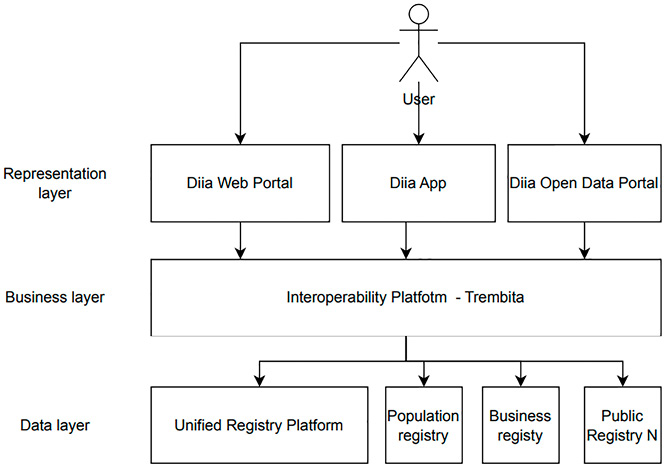
Figure 1. Overview of the high-level architecture of e-government in Ukraine
Source: Ingram & Vora, Ukraine: Digital resilience in a time of war (2024).
Ukraine’s digital transformation has resulted in an impressive 15.5 million users accessing the Diia app and its wide range of services. By December 2023, this number had grown by 27% to 19.8 million users (UNDP 2024). Importantly, this surge reflects strategic policy changes aimed at strengthening the system’s security and adapting Diia to better meet the demands of wartime conditions in Ukraine for both levels of governance.
The Local Online Service Index (LOSI) is a component of the EGDI that measures the availability, quality, and accessibility of online services provided by local or municipal governments. It reflects the level of development in e-government service delivery at the city level by evaluating comparable features across local administrations (United Nations 2022). The LOSI is a composite score based on an online assessment that evaluates 86 indicators. It serves as a multi-criteria index measuring e-government development at the local level by examining the accessibility of information and services offered by local governments through their official websites. The 2022 LOSI indicators relate to five criteria:
- institutional framework (8 indicators)
- content provision (25 indicators)
- services provision (18 indicators)
- participation and engagement (17 indicators)
- technology (18 indicators)
This multi-criteria index reflects the maturity of digital services and civic engagement tools made available by municipalities worldwide. In 2024, the assessment was conducted in193 Member States among the 42 cities in the very high LOSI group, 22 are in Europe, 11 are in Asia, 7 are in the Americas, and 2 are in Oceania. Notably, Ukraine was ranked in the ‘very high’ LOSI category, achieving an impressive score of 0.8542 according to the report in 2024, which underscores the country’s remarkable progress in enhancing local e-governance capacities – even under conditions of war (Table 2).
Source: United Nations (2024).
The results of the implemented Regional Digital Transformation Index (OECD 2024) indicate that the highest-performing regions include Dnipro, Lviv, Ternopil, Vinnytsia, Poltava, Kharkiv, and Odessa (see Figure 2). These regions are geographically dispersed across the country, demonstrating that digital transformation is not limited by location; there is no clear divide between eastern, western, northern, or southern Ukraine.
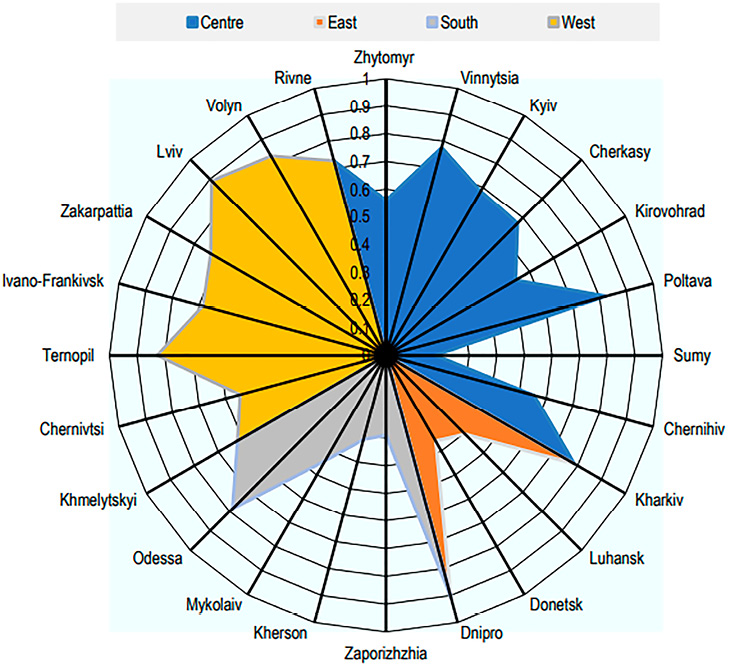
Figure 2. The Regional Digital Transformation Index in Ukraine 2023
Note: This index, developed by the MDTU, is measured on a scale from 0 to 1, where 0 represents the lowest level and 1 indicates the highest level of performance. The figure is based on 2023 data, with the exception of Luhansk Oblast, where the data is from 2022. The index does not cover the temporarily occupied territories (Source: based on Ionan, V. (2024), Dezentralisatsia (2023)).
Importantly, the index provides a valuable benchmark for comparing digital transformation across all 24 regions of Ukraine. It assists regional authorities in analyzing, planning, and implementing digital reforms (Ukraine’s index of digital transformation study reveals regional results (2022)). Moreover, the purpose of the index is to provide a foundation for analyzing the level of digital transformation within regional state administrations, and its results enable authorities, analysts, and other stakeholders to better understand and optimize digital transformation processes across the regions. Table 3 highlights the Dnipropetrovsk, Ivano-Frankivsk, and Odesa regions as leaders in overall digital transformation, demonstrating strong performance across most sub-indices. In contrast, despite notable progress in areas such as internet development, digital education, and the introduction of e-services, regions like Donetsk and Sumy continue to lag significantly. Consequently, this underscores the need for targeted government policies and increased investment in digital technologies to ensure balanced digital development across all regions of Ukraine.
Source: Compiled according to data from the Ministry of Digital Transformation of Ukraine (2024)
As observed by Dziura and Magdich (2024), digitization in Ukraine continues to develop rapidly, creating new opportunities for economic growth. However, there are challenges such as cybersecurity and internet accessibility that need attention and solutions if the full potential of digital transformation in Ukraine is to be achieved (Dziura & Magdich 2024). Additional obstacles include ensuring information security and achieving public support for state-led initiatives to digitize public administration (Filipchuk 2021). Despite its achievements, Ukraine’s digital transformation still faces significant constraints, including infrastructure deficiencies, personnel and financial limitations, and legal barriers (Kubatko et al. 2025). These challenges are often reflected at the local level, where municipalities face additional challenges in implementing digital tools due to limited financial and human resources, varying administrative capacities, and regional differences in access to technology.
Challenges of Digital Transformation in Ukrainian Local Authorities
Ukrainian local governments are constantly facing various challenges, and digital transformation is no exception. Based on the collected interview data, six challenges were identified during the interview period that Ukrainian local governments faced: (1) lack of financial resources; (2) cybersecurity and data protection issues; (3) lack of personnel; (4) mindset; (5) lack of internet quality; (6) digital skills gap. The challenges are ordered according to their frequency of mention. Figure 3 summarizes the six challenges. It is worth noting that they cannot always be clearly distinguished, as they partially overlap and are interconnected.
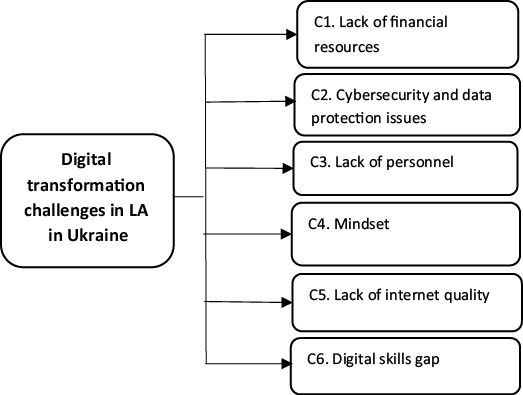
Figure 3. Digital transformation challenges in local authorities in Ukraine
Source: Author’s own elaboration
Lack of financial resources
Covering basic needs takes priority over digital innovations during the war in Ukraine. As noted by Matveieva et al. (2024), the war has made implementing the strategy of digital transformation in local communities more challenging as they were forced to concentrate efforts and resources on dealing with pressing issues such as compensating people’s losses and covering their basic needs instead of investing in development of digital infrastructure and digital skills in communities, especially rural ones.
This was highlighted by one representative from the southern region of Ukraine:
The procurement of expensive equipment is often met with public criticism, particularly when budgetary resources are not allocated to the community’s most urgent and basic needs. As of March 2023, 51 schools had been completely destroyed, along with extensive damage to residential buildings, infrastructure, and medical facilities – highlighting the pressing priorities in the context of ongoing full-scale war.
Another comment underscoring the critical importance of addressing basic needs relates to the allocation of public funds for military purposes. A representative from the central region noted the following:
At the moment, 90% of our budget is spent on military needs.
Also, about limited budget and the allocation of finances towards military needs, a representative from the eastern region said the following:
The budget is limited, since all funds are directed to military needs, and if funds are allocated for something else, it is very disapproved of and negatively perceived in society, there is a full-scale war going on in the country, and servers, for example, are very expensive.
Cybersecurity and data protection
These issues have become a top priority as digital community systems become targets for cyberattacks. An important aspect is protecting citizens’ personal data, and information about municipal services, from unauthorized access. ‘The main challenge for our community it is cyber attacks. We need to learn how to deal with them as we have everything digital, and our website had cyber incident’, noted a respondent from the northern region of Ukraine. Another aspect of data protection was mentioned by a different respondent: ‘Diia’s customer support offers communication via telegram, Facebook messenger, and Viber which creates uncertainty regarding where this correspondence data is stored’. Indeed, this raises potential concerns regarding cybersecurity and the protection of users’ personal information (Zarembo et al. 2025; Avdieieva 2022).
Lack of personnel
The need for personnel with more expertise in the digital field has already been identified by Norris et al. (2019), Fyshchuk and Pintsch (2025), and Frandell and Feeney (2022). Ukrainian local governments face a shortage of digital technology specialists, making them particularly vulnerable to cyberattacks. As the head of one Ukrainian NGO emphasized, ‘Many communities do not have enough personnel in the digital field. It is an insufficient number of personnel’.
Due to the ongoing war, public sector salaries are low, which diminishes the interest of potential employees in joining. A decision-maker from the center region explains:
There is a shortage of personnel in the digital sector. At present, only one person is responsible for all aspects of digitization. The community is trying to attract new employees, but few are willing to work for $300 USD per month.
Mindset
At the local level, a major challenge to digital transformation is the mindset barrier, encompassing the attitudes, perceptions, and beliefs that shape the community’s way of thinking. A politician from the eastern region of Ukraine expressed some concerns about the old-fashioned approach and digitization processes:
We have everything on paper. The site is not working properly. We have a problem with the mayor at the moment and it is difficult to implement the Digital Strategy in our Hromada. As our mayor had a Soviet Union mindset, and he did not think that digitization was necessary for the hromada’.
Additionally, a respondent from the southern region added, ‘The data can disappear, and it scares to use digital approach’. Many residents of rural communities feel doubts and distrust of digital technologies, linking them to the risk of errors when using online forms and insufficient awareness of existing electronic services, which complicates the adoption and use of the latest digital solutions in everyday life (Belova et al. 2023).
Lack of internet quality
This is one of the most significant obstacles, especially in areas where infrastructure has been damaged by fighting. Insufficient access or complete absence of high-speed internet seriously limits the ability of rural residents to use digital services, which creates significant challenges not only for personal use, but also for the development of local businesses and education (Belova et al. 2023). Moreover, Ivanova (2024) highlighted that Ukraine faces a low level of fiber-optic internet connectivity and availability of internet-enabled mobile devices, and that creates challenge in digital transformation mainly at the local level. Because the majority of residents use mobile internet services, insufficient mobile coverage and its poor quality reduce the population’s ability to seamlessly receive digital community services. ‘We have to go to a certain area to connect to the internet because there are problems with internet coverage in our district’, added a respondent from the northern region. Another comment provided by a respondent from a central region community was that ‘There are problems with internet quality in our place, and we need better infrastructure to improve this situation’.
Lack of digital skills
This problem is particularly relevant for elderly public servants at local level administrations, who often experience difficulties using online services due to a lack of the necessary skills and knowledge, which creates a barrier to the implementation of digital technologies and services, reducing their accessibility and effectiveness (Belova et al. 2023). As highlighted by a respondent from the western region, ‘There is a need to improve digital and cyber skills for elderly employees in the administration as it is very relevant nowadays’. Another respondent from a local authority in the northern region noted that:
There should be training for employees to improve their digital skills; however, this training should not be provided online. We already have numerous online courses, and employees often try to complete them in parallel with their daily tasks, which reduces their efficiency. In person training would be more beneficial.
Furthermore, many local government employees still lack basic digital literacy, which significantly increases institutional vulnerability. Basic practices such as activating two-factor authentication or avoiding the transmission of documents through unsecured messengers are important components in digital transformation at the local level. As a decision maker from an NGO mentioned, ‘At the local level, the lack of digital skills remains a significant challenge, including such as using two-factor authentication, avoiding opening unknown files, and refraining from transferring documents via Viber’.
Opportunities for Digital Transformation in Ukrainian Local Authorities
Solving these challenges requires a comprehensive approach that includes improving internet infrastructure, developing training programs, increasing the digital literacy of public servants and the population in general, and developing initiatives aimed at increasing trust in digital technologies and services. The CDTO Campus initiative provides digital skills to implement innovative technologies and promote digital transformation in public institutions. ‘This is a great opportunity to learn new digital tools with different local leaders from different regions of Ukraine during workshops on the CDTO Campus’, stated a respondent from the western region. Another respondent from the central region added, ‘The CDTO campus just started its work in the spring of 2024, and it is a good initiative that we can create a network to exchange knowledge and skills in our digital industry with other representatives from different parts of Ukraine’.
Apart from this, an important opportunity lies in the role of inter-municipal and international cooperation – combined with community engagement and security awareness – in strengthening digital transformation and cybersecurity at the local level. This includes city twinning and partnerships with EU municipalities to enhance cybersecurity, such as participation in initiatives like Cities4Cities, which is an inter-municipal partnership with municipalities in European countries launched in 2022 and promotes direct cooperation between local authorities in Ukraine and the EU, supporting knowledge exchange on digital service continuity, cyber resilience, and data protection standards (Cities4Cities). It also encompasses involvement in programs and projects like U-LEAD and EU4Digital, application for EU grants aimed at boosting local cyber resilience, and participation in inter-municipal cyber networks through workshops, seminars, and conferences. As examples of digital transformation of territorial communities outside regional centers, a number of initiatives can be highlighted: Hromada 4.0 – projects for digital transformation of communities in Ukraine with a population of up to 50,000. This program brought together representatives from 21 territorial communities, each of which presented its digital transformation projects aimed at optimizing municipal governance, improving cybersecurity, and addressing other important aspects of municipal operations. Among these initiatives, the following can be noted:
• the Hayvoronska community, Kropyvnytsky region, has developed a chatbot, Travel Hayvoronska, that helps residents and tourists find all the necessary information for a comfortable trip (Hayvoronsk urban territorial community).
• the Volodarska community, Kyiv region, has introduced a universal online platform for convenient and accessible public services (Volodar settlement territorial community).
• the Bereznyanska community, Chernihiv region, has implemented an e-document management system for modern routing and transparent work with documents (Berezna settlement community).
These and other projects demonstrate how rural territorial communities in Ukraine are integrating digital technologies to improve the quality of life for their residents, demonstrating proactive leadership and efficient management even in wartime. Participation in inter-municipal and international cooperation fosters new ways of thinking, broadens vision, and enhances the leadership mindset in the field of digital transformation at the local level.
To improve internet access and support digital service delivery during martial law and frequent power outages, territorial communities across Ukraine have actively procured Starlink terminals. These efforts aim to ensure stable communication for critical infrastructure such as public institutions and so-called Points of Invincibility, which are essential to sustaining community life under current conditions. Since spring 2022, following Russia’s full-scale invasion, many communities, public institutions, and budgetary organizations have acquired Starlink systems – either for free or using public funds. Notably, over 599 terminals valued at more than 28 million UAH have been purchased through the Prozorro public procurement system (Synytska 2023).
Regions such as Kyiv, Sumy, Dnipropetrovsk, Lviv, and Poltava led these procurements, reflecting the urgent need for reliable internet to coordinate wartime operations (Belova et al. 2023). However, significant price disparities – from 13,400 to nearly 70,000 UAH per terminal – highlight the challenge of setting a unified pricing policy and the necessity for case-by-case procurement strategies (Belova et al. 2023). Additionally, subscription payments pose administrative hurdles, as Starlink’s billing is designed for private users. As a result, public institutions often rely on intermediaries to manage payments, underscoring the need to adapt procurement and financing mechanisms to wartime realities while maintaining transparency, accountability, and efficient use of public resources.
Given the significantly lower salaries in the public sector compared to the private sector, IT professionals are often more inclined to seek employment in the private sector to ensure financial stability. However, implementing targeted incentives such as utility discounts or tax stimulus, as suggested by Carlberg (2015), could serve as a ‘carrot and stick’ approach to encourage IT professionals, especially those who work remotely and live in the community, to participate in local initiatives. One respondent, a cybersecurity specialist from an NGO, suggested a potential solution: ‘At the beginning of a full-scale invasion, IT professionals would join the IT front and work for free, but later return to their duties in private companies and perhaps continue their collaboration, for example with some utility discount for their residence or tax’. Another opportunity for the local authorities could be involvement of veterans in digital transformation at the local level that would provide veterans with a useful purpose, engaging their minds, and giving hromadas more support in the digital field. As mentioned by the cyber specialist from an NGO, ‘The best patriots who developed the IT industry in Ukraine and who worked for IT companies went to the war to defend our land. If they are injured, but minds of such veterans work well, then they can work on another front’. For example, in regions such as Chernivtsi, Zhytomyr, and Kirovohrad (Figure 2), where the lowest index scores were recorded, engaging veterans in digital skills can contribute to their social integration while providing tangible benefits to local authorities.
Conclusion
The period from May 2023 to May 2024, when the interviews were conducted, was marked by a full-scale Russian invasion of Ukraine, which created significant difficulties for Ukrainian communities in implementing digital transformation at the local level. While the growth of Ukraine’s EGDI and LOSI values even during ongoing war shows the success and efficiency of the digitization of Ukrainian local authorities, the interview data in this study shows that the problems of physical damage and the coverage of primary needs are becoming much more acute than digital transformation.
The country has lost many citizens, and there are fewer who can continue to work as digital specialists at the local level. Digital skills and literacy are increasingly essential in today’s digital age, especially as cyber threats continue to rise in Ukraine. This study identified six main problems of digital transformation at the local level in Ukraine: 1) lack of financial resources; 2) cybersecurity and data protection issues; 3) lack of personnel; 4) mindset; 5) lack of internet quality; and 6) digital skills gap. Overall, these findings align with issues highlighted in previous studies, though the full-scale war further exacerbates these challenges. Furthermore, the study identified potential opportunities to advance digital transformation, such as inter-municipal and international collaboration, active participation in national educational programs for digital leaders such as CDTO Campus, veteran engagement, and incentives such as utility discounts to attract digital specialists.
The results of this study may also be useful for other local governments around the world outside Ukraine, especially in the context of conflict, crisis, or structural transformation. Many municipalities around the world face similar challenges, including limited financial resources, lack of personnel, cybersecurity and data protection issues, lack of internet quality, mindset, and digital skills gap to balance the provision of urgent services with long-term sustainable development goals. Local governments are vital for service delivery and stability, and their vulnerability can have far-reaching consequences. It is crucial to support the development of digital transformation at the local level, as the country’s overall progress can be achieved more effectively from the bottom-up. At the same time, encouraging participation in networks and the sharing of knowledge and skills can accelerate digital initiatives in regions with lower development indicators. Additionally, international cooperation can create a favorable environment for long-term digital resilience. By addressing these structural and capacity-related challenges, local governments in Ukraine can become more adaptive, transparent, and service-oriented. Ultimately, effective use of digital transformation will not only improve local governance, but also contribute to national stability, resilience, and integration with broader European digital standards.
There are several limitations of this study that should be acknowledged. The research employed a qualitative approach during the period from May 2023 to May 2024 and focused specifically on that timeframe. Another limitation is that the information obtained from the interviews is based on data provided by the respondents themselves, and the perceptions of these government officials, decision makers, digital transformation experts, and cybersecurity specialists may be biased or inaccurate.
Acknowledgements
The author would like to express her sincere gratitude to the anonymous reviewers for their valuable comments, which significantly improved the scientific quality of this study. The author gratefully acknowledges Scholars at Risk Norway and the Department of Media and Social Sciences at the University of Stavanger for the opportunity to continue research. Finally, I profoundly appreciate all interview participants for their time and willingness to share their essential insights on digital transformation at the local level in Ukraine between May 2023 and May 2024.
Disclosure of AI Use
No AI tools were used in the development or presentation of this submission.
References
Avdieieva, T. 2022, ‘Non-star wars: Social media in the times of armed conflict’, Center for Democracy and Rule of Law. 27 September. Centre for Democracy and Rule of Law. https://cedem.org.ua/en/analytics/sotsmerezhi-zbroyni-konflikt
Belova, I., Homotiuk, A. & Yaroshchuk, O. 2023, ‘Digital transformation of territorial communities of Ukraine: Challenges and prospects in the conditions of martial law’, Economic Analysis, vol. 33, no. 4, pp. 182-191. https://doi.org/10.35774/econa2023.04.182
Berezna settlement community. Official web portal. https://berezna.cg.gov.ua/index [in Ukrainian].
Cabinet of Ministers of Ukraine 2014, On the approval of the Concept of reforming local self-government and territorial organization of power in Ukraine, Order of the Cabinet of Ministers of Ukraine, April 1, 2014, No. 333-r. https://zakon.rada.gov.ua/laws/show/333-2014-%D1%80#Text
Carlberg, K. 2015, ‘Tax stimulus: The third direction for US Government cybersecurity policy’, Journal of Homeland Security and Emergency Management, vol. 12, no. 4, pp. 801-808. https://doi.org/10.1515/jhsem-2015-0027
CDTO Campus 2023, Ministry of Digital Transformation of Ukraine https://thedigital.gov.ua/news/cdto-campus-v-ukraini-startue-natsionalniy-proekt-z-navchannya-lideriv-tsifrovoi-transformatsii
Cities4Cities: Municipal partnerships with Ukraine help to build more resilient future in Europe https://cities4cities.eu/
De Mello, L. & Ter-Minassian, T. 2020, ‘Digitalisation challenges and opportunities for subnational governments’, OECD Working Papers on Fiscal Federalism, No.31, OECD Publishing, Paris. https://doi.org/10.1787/9582594a-en
Demoshenko, G. 2022, ‘The impact of digital transformation on municipal management’, Aspects of Public Management, vol. 10, no. 1, pp, 36-42. https://doi.org/10.15421/152274
Dezentralisatsia 2023, The Ministry of Digital Transformation will annually assess the level of digitisation of municipalities, https://decentralization.ua/en/news/16894
Dickson-Swift, V., James, E., Kippen, S. & Liamputtong, P. 2007, ‘Doing sensitive research: What challenges do qualitative researchers face?’ Qualitative Research, vol.7, no. 3, pp. 327-53. https://doi.org/10.1177/1468794107078515
Dziura, B. & Magdich, A. 2024, ‘Digitalization trends and expectations in Ukraine from a European perspective’, Proceedings of the International Conference on Business Excellence, Bucharest University of Economic Studies, vol. 18, no. 1, pp. 3726-3736. https://doi.org/10.2478/picbe-2024-0303
Filipchuk, H. 2021 ‘Digital transformation in Ukraine’, Ubezpieczenia Społeczne. Teoria i praktyka, vol. 4, pp. 103-118.
Frandell, A. & Feeney, M. 2022, ‘Cybersecurity threats in local government: A sociotechnical perspective’, American Review of Public Administration, vol. 52, no. 8, pp. 558-572. https://doi.org/10.1177/02750740221125432
Fyshchuk, I. 2024, ‘Stronger together? EU support for Ukrainian local authorities facing cyber attacks (2022-2023)’, Applied Cybersecurity & Internet Governance, vol. 3, no. 1, pp. 204-226. https://doi.org/10.60097/ACIG/190344
Fyshchuk, I. & Evsyukova, O. 2020, ‘Effective communication in digital transformation of service state during change management processes in Ukraine’, Public Policy and Administration, vol. 19, no. 2, pp. 172-190. https://doi.org/10.13165/VPA-20-19-2-02
Fyshchuk, I., Evsyukova, O. & Smalskys, V. 2021, ‘The information and communication support of public authorities in Ukraine in the context of using knowledge management in human resources’, Public Policy and Administration, vol. 20, no. 2, pp. 260-270. https://doi.org/10.13165/VPA-21-20-2-09
Fyshchuk, I., Noesgaard, M. S. & Nielsen, J. A. 2025, ‘Managing cyberattacks in wartime: The case of Ukraine’, Public Administration Review, vol. 85, no. 3, pp. 619-627. https://doi.org/10.1111/puar.13895
Fyshchuk, I. & Pintsch, A. 2025, ‘Cyber‐attacks in Ukraine: Coping with the challenges at the local level in 2022–2024’, Risk, Hazards & Crisis in Public Policy, vol. 16, no. 3, e70025. https://doi.org/10.1002/rhc3.70025
Hayvoronsk urban territorial community, Official web portal. https://haivoron-miskrada.gov.ua [in Ukrainian].
Hromada 4.0. - Громада 4.0. https://www.hromada4.org/
Ingram, G. & Vora, P. 2024, Ukraine: Digital Resilience in a Time of War, Brookings Institution, Washington, D.C. https://www.brookings.edu/wp-content/uploads/2024/01/Digital-resilience-in-a-time-of-war-Final.pdf
Ionan, V. 2024, Ukraine’s Regional Digital Transformation Index 2023 https://www.linkedin.com/pulse/digitalisation-regions-2024-valeriya-ionan-8c6qf/
Ivanova, N. 2024 ‘Technological component of digital solutions in Ukraine: Development trends’, Modern Economics, vol. 45, pp. 41-48. https://doi.org/10.31521/modecon.V45(2024)-06
Khutkyy D. 2023, ‘Opportunities and dangers of digitalisation: Global and European dimensions’, European Digital Development Alliance, 19 February. https://www.researchgate.net/publication/368654475_Opportunities_and_dangers_of_digitalisation_Global_and_European_dimensions
Kniazieva, T. V., Kazanska, O. O., Orochovska, L. A., Tsymbalenko, Y. Y. & Dergach, A. V. 2023, ‘Analysis of the impact of digitalization on the quality and availability of public services in Ukraine–a comparative approach with insights from Estonia’, Statistics, Politics and Policy, vol. 14, no. 3, pp. 375-398. https://doi.org/10.1515/spp-2023-0012
Kolodiziev, O., Shcherbak, V., Kostyshyna, T., Krupka, M., Riabovolyk, T., Androshchuk, I. & Kravchuk, N. 2024, ‘Digital transformation as a tool for creating an inclusive economy in Ukraine during wartime’, Problems and Perspectives in Management, vol. 22, no. 3, pp. 440-457. https://doi.org/10.21511/ppm.22(3).2024.34
Kubatko, O. V., Lytvynenko, S. M. & Voronenko, V. I. 2025, ‘The specifics of digital transformations in Ukraine in emergency situations’, in Economic and social aspects of business development in cities and countries in general: collective monograph, Primedia eLaunch, Boston, pp. 38-47. https://isg-konf.com/economic-and-social-aspects-of-business-development-in-cities-and-countries-in-general/ https://doi.org/10.46299/ISG.2025.MONO.ECON.1.3.2
Lapatina A. 2022, ‘Major cyberattack hits Ukrainian government websites’, Kyiv Independent, 14 January 2022. https://kyivindependent.com/major-cyberattack-hits-ukrainian-government-websites/
Matveieva, O., Mamatova, T., Borodin, Y., Gustafsson, M., Wihlborg, E. & Kvitka, S. 2024, ‘Digital government in conditions of war: Governance challenges and revitalized collaboration between local authorities and civil society in provision of public services in Ukraine’, Proceedings of the 57th Hawaii International Conference on System Sciences, 2024, pp. 2002-2011. https://doi.org/10.24251/HICSS.2024.249
Ministry of Digital Transformation of Ukraine 2024, ‘Results of digital transformation in the regions of Ukraine for 2023’, Press Office, 11 January. https://thedigital.gov.ua/news/rezultati-tsifrovoi-transformatsii-v-regionakh-ukraini-za-2023-rik
Norris, D. F., Mateczun, L., Hatcher, W., Meares, W. L. & Heslen, J. 2024, ‘Local government cyber insecurity: Causes and recommendations for improvement’, Public Administration Review, vol. 84, no. 4, pp. 651-659. https://doi.org/10.1111/puar.13743
OECD 2022, Rebuilding Ukraine by Reinforcing Regional and Municipal Governance, OECD Publishing. https://www.oecd.org/en/publications/2022/12/rebuilding-ukraine-by-reinforcing-regional-and-municipal-governance_63099658.html
OECD 2024, Enhancing Resilience by Boosting Digital Business Transformation in Ukraine, OECD Publishing, Paris. https://doi.org/10.1787/4b13b0bb-en
Omelianenko V. 2023, EU’s and Ukraine’s Approaches to Digital Diplomacy in the Geopolitics of Technologies, International Renaissance Foundation and Ukrainian Prism. https://prismua.org/wp-content/uploads/2023/05/Digitalization_Ukraine_EU.pdf
Parker, C., Scott, S. & Geddes, A. 2019, ‘Snowball sampling’, In Atkinson, P., Delamont, S., Cernat, A. Sakshaug, J. W. & Williams, R. A. (eds.), SAGE Research Methods Foundations. https://doi.org/10.4135/9781526421036831710
Piskokha, N. 2021, ‘Digital transformation of local self-government: Defining the concept and directions of formation of digital communities’, Aspects of Public Management, vol. 9, no. 6, pp. 39-45. https://doi.org/10.15421/152168
Semchyk, O., Prykhodko, K., Sydorenko, P. & Petrukhin, F. 2019, ‘Promoting e-development of communities in Ukraine: Conceptual and legal foundations (regarding the municipal data-driven governance)’, Aspects of Public Administration, vol. 7, nos. 9-10, pp. 53-61. https://doi.org/10.15421/151948
Synytska, D. 2023, ‘How public servants order and pay for Starlink’, Economic Truth, 9 February. https://dozorro.org/blog/yak-byudzhetniki-zamovlyayut-ta-oplachuyut-starlink [in Ukrainian].
Time 2024, ‘Click here for “I Do”, The Best Inventions of 2024’, 30 October, Time https://time.com/collections/best-inventions-2024/7094556/diia/
Trembita https://trembita.gov.ua/about [In Ukrainian]
Ukraine’s index of digital transformation study reveals regional results 2022, EU4Digital, 17 April 2023. https://eufordigital.eu/ukraines-index-of-digital-transformation-study-reveals-regional-results/
United Nations 2022, E-Government Survey. The Future of Digital Government. https://desapublications.un.org/sites/default/files/publications/2022-09/Web%20version%20E-Government%202022.pdf
United Nations 2024, E-Government Survey 2024 Accelerating Digital Transformation for Sustainable Development. https://desapublications.un.org/publications/un-e-government-survey-2024?
United Nations Development Program (UNDP) 2024, ‘63% of Ukrainians Use State E-Services, User Numbers Grow for Third Year in Row: Survey’, UNDP Ukraine, 5 January. https://www.undp.org/ukraine/press-releases/63-ukrainians-use-state-e-services-user-numbers-grow-third-year-row-survey
Volodar settlement territorial community. Official web portal. https://volodarska-gromada.gov.ua. [in Ukrainian].
Yurchyshyn, O. Y., Stepanets, O. V. & Skorobogatova, N. Y. 2024, ‘Analysis of digital technologies in Ukraine: problems and prospects’, CEUR Workshop Proceedings, vol. 3781, pp. 114-131. https://ceur-ws.org/Vol-3781/paper15.pdf
Zarembo, K., Knodt, M. & Kachel, J. 2025, ‘Smartphone resilience: ICT in Ukrainian civic response to the Russian full-scale invasion’, Media, War & Conflict, vol. 18, no. 3, pp. 305-324. https://doi.org/10.1177/17506352241236449
Zvonar, V. P. 2017, ‘Smart community as a socio-economic phenomenon’, Demography and Social Economy, vol. 3, no. 31, pp. 76-88. https://doi.org/10.15407/dse2017.03.076
1 Hromada refers to the third level of government, that is, local government.