Cosmopolitan Civil Societies: An Interdisciplinary Journal
Vol. 18, No. 2
2026
ARTICLE (REFEREED)
Resilience, Collaboration, and Professional Growth: The Role of Teacher Communities of Practice in Ukraine
Anastasiia Syzenko1,*, Olha Pavlenko2
1 Taras Shevchenko National University of Kyiv, Ukraine
2 National Technical University of Ukraine “Igor Sikorsky Kyiv Polytechnic Institute”, Kyiv, Ukraine
Corresponding author: Anastasiia Syzenko, Taras Shevchenko National University of Kyiv, 60 Volodymyrska Street, Kyiv, 01033, Ukraine, anastasia.syzenko@gmail.com
DOI: https://doi.org/10.5130/ccs.v18.i2.9783
Article History: Received 08/05/2025; Revised 24/11/2025; Accepted 05/12/2025; Published 01/07/2026
Citation: Syzenko, A., Pavlenko, O. 2026. Resilience, Collaboration, and Professional Growth: The Role of Teacher Communities of Practice in Ukraine. Cosmopolitan Civil Societies, 18:2, 14–31. https://doi.org/10.5130/ccs.v18.i2.9783
Abstract
In the context of the ongoing Russian war of aggression in Ukraine, resilience has become a crucial attribute for educators striving to maintain quality education under adverse conditions. This paper examines teacher-led Communities of Practice (CoPs) as a practical tool for sustaining resilience and boosting collaboration and professional development. The paper explores how CoPs are supporting teachers by creating environments where they can collaborate, share resources, and support each other professionally and emotionally. The study investigates the role of CoPs in building a vital sense of community, reducing isolation and offering a space for collaborative problem-solving and sharing of best practices. The study draws on a convergent mixed-methods survey of 264 secondary-school English teachers from all 24 regions of Ukraine. The findings suggest that participation in CoPs not only helps to deal with the complexities of remote and disrupted teaching but also strengthens the emotional resilience needed to face the trauma of war.
Keywords
Community of Practice (CoP); Resilience; Collaboration; Teacher Professional Development; Teaching in Crisis
Introduction
In times of global crises, particularly those exacerbated by conflict and instability, resilience becomes an essential trait for educators to sustain quality education (Ghamrawi 2022; Bornstein & Gil 2023). Teachers often face unprecedented challenges that threaten both professional capabilities and personal well-being, such as disruptions to educational infrastructure, displacement, and psychological stress (Moriarty 2020; UNESCO 2023). Ukraine, experiencing prolonged instability and armed conflict, exemplifies these challenges vividly, with educators frequently navigating between crisis management and their teaching responsibilities. Amid such adversity, fostering resilience becomes not just beneficial but essential for the continuity and quality of education.
In Ukraine, the educational sector has experienced extensive disruption due to the ongoing war, resulting in considerable strain on educators and educational institutions (The World Bank 2025). Teachers have had to conduct lessons from bomb shelters, teach without electricity, and manage classes under conditions of uncertainty. Many teachers have been internally displaced, relocating to safer areas while confronting significant personal and professional challenges. These circumstances intensify emotional stress and diminish teachers’ capacities to provide stable, quality education (Global Communities 2023).
Faced with these severe disruptions to their professional and personal lives, teachers require support systems that can help sustain their practice and foster resilience. Communities of Practice (CoPs) have emerged as powerful mechanisms to address such challenges by providing collaborative environments that support continuous professional development and emotional resilience (Wenger 1998, Wenger et al. 2002). These communities create structured yet flexible frameworks allowing educators to engage in meaningful dialogue, share resources, and collaboratively problem-solve, thereby mitigating feelings of isolation and stress commonly associated with crisis scenarios (van den Boom-Muilenburg et al. 2024, Ciampa & Wolfe 2020).
In the Ukrainian context specifically, CoPs offer tailored support that addresses localized educational challenges and needs emerging from conflict-induced disruptions. They enable teachers from diverse regional, urban, rural, and war-affected settings to collaboratively navigate the complexities inherent in crisis situations, thus fostering systemic resilience within the education sector.
This paper explores the efficacy of Communities of Practice in strengthening teacher resilience. CoPs are teacher-led, practice-oriented groups formed around mutual professional interests and shared challenges (Mehdizadeh et al. 2024, Wenger-Trayner & Wenger-Trayner 2014). By investigating CoPs, this study aims to understand how collaborative professional learning communities contribute to resilience-building in contexts characterised by ongoing conflict and uncertainty. The exploration includes examining how these groups enable educators to cope with rapid transitions, including shifts to remote and hybrid teaching models, teaching under continued threat, teaching from shelters during air raids, displacement-induced stress, and broader systemic uncertainties. Insights from this research have potential to guide policy decisions and contribute to the development of sustainable resilience-building strategies for educators both within Ukraine and beyond. This study uses a convergent mixed-methods design, combining an online survey of 264 secondary-school English teachers (all 24 regions; June–September 2024) with thematic analysis of open-ended responses. The paper next reviews the literature and wartime context, details the instrument and procedures, presents quantitative and qualitative findings in tandem, and closes with implications, limitations, and future research.
Literature Review
Resilience in education often refers to educators’ abilities to effectively manage and adapt to challenges, maintaining both their well-being and instructional effectiveness in challenging circumstances. Our understanding of resilience is inspired by Ungar, who defines it as a set of behaviours that reflect the interactions between individuals and their environments, in particular, the opportunities for personal growth that are available and accessible (2012, p. 14). He asserts that the meaningfulness of these opportunities and the quality of the resources largely affect the individual’s capacity to cope with challenges and adversities.
Teacher resilience is a topic that gained importance in the world of education as teachers are confronted with multiple obstacles and pressures on a daily basis (Brouskeli et al. 2018, Hascher et al. 2021, López-Angulo et al. 2022). Recent global events, including the COVID-19 pandemic and numerous geopolitical conflicts, have significantly amplified the value of resilience in education, particularly in crisis-affected contexts (Dabrowski 2021, Sowton 2021, Bornstein & Gil 2023, Zhang & Luo 2023). Teachers in such scenarios face profound disruptions, including loss of educational infrastructure, forced displacement, heightened emotional stress, and the necessity to swiftly adapt to new pedagogical methods, such as remote or hybrid learning models.
In Ukraine, the educational landscape has been significantly disrupted by prolonged conflict, which has not only impacted educational infrastructures but also intensified psychological and emotional stress among teachers and learners (Raccanello et al. 2024, Lavrysh et al. 2025). Educators are frequently tasked with navigating new modes of teaching, such as online and hybrid education, amidst disruptions caused by displacement, infrastructural instability, and resource scarcity (The World Bank 2025). Such disruptions exacerbate educators’ stress and negatively affect their capacity to maintain high-quality instruction, calling for the introduction of effective support mechanisms.
As such support mechanism, Communities of Practice offer a robust response to these needs by emphasising collaborative learning and peer support (Wenger 1998, Wenger et al. 2002). In accordance with the broad definition suggested by Wenger and Wenger-Trayner (2014, p.1), CoPs ‘are groups of people who share a concern or a passion for something they do and learn how to do it better as they interact regularly’. In practice, CoPs can take different shapes and forms, they may be small and large, local and global, online and face-to-face (Wenger-Trayner & Wenger-Trayner 2014, p. 3). CoPs can be seen as an informal extension or an alternative to a professional learning community (PLC), which are also known to contribute to a fundamental shift in the habits of mind that teachers bring to their daily work in the classroom. (Vescio et al. 2008)
Communities of practice provide structured yet flexible platforms for teachers to collaborate, share experiences, and develop collective solutions to common challenges (Patton & Parker 2017, p. 358), and through egalitarian and collaborative approaches they help recognise the expertise and knowledge of practitioners on the front line (Boetto et al. 2022 p. 4831). These communities facilitate professional dialogue, peer mentorship, and resource-sharing, essential components for building resilience and coping effectively with crises (Wenger et al. 2002, Wenger-Trayner & Wenger-Trayner 2014). Most importantly, they enable educators to share best practices, collaboratively address pedagogical challenges, and support one another emotionally and professionally, significantly enhancing resilience (Mehdizadeh et al. 2024). According to Wenger-Trayner and Wenger-Trayner (2014), participation in CoPs helps educators construct shared identities, fostering a collective approach to overcoming obstacles inherent in crisis situations.
Research consistently indicates that CoPs effectively mitigate professional isolation, especially during crises when teachers may otherwise experience heightened vulnerability (van den Boom-Muilenburg et al. 2024; Ciampa & Wolfe 2020). CoPs create supportive spaces where teachers collaboratively engage in reflective practice, enabling them to navigate rapid educational transitions and respond to emerging pedagogical demands effectively. Studies suggest that these communities foster continuous learning, professional empowerment, and emotional support, essential for sustaining motivation and professional integrity in unstable environments (Kowalczuk-Walędziak & Underwood 2021, Bergmark 2023).
Communities of Practice have started to emerge in Ukraine over the last decade following an increased popularity of this professional development setup worldwide. Even though there are mentions of multiples CoPs across different disciplines, little research is available on their role and impact. Few attempts to explore this topic shed light on how CoPs started in foreign language teaching (Pidzamecky 2017) and how they have been used in diplomatic circles and international relations (Hofius, 2022, p. 210). Recently, CoPs have been given a significant boost with international organisations like the British Council supporting a more systemic approach to create CoPs for schoolteachers in Ukraine. In this study, we analyse the impact of more than 200 CoPs of English language schoolteachers operating across all the Ukrainian regions.
In Ukraine specifically, CoPs have significant potential to support educators facing unique challenges stemming from conflict-related displacement and infrastructural disruptions. By facilitating dialogue and peer mentoring among educators from various regions, including rural, urban, and conflict-affected areas, CoPs offer tailored support that addresses localised educational challenges. Such collaboration strengthens teachers’ adaptive capacities, ultimately enhancing the resilience of the broader educational system during times of uncertainty.
Research Methodology
Research Design
This study employed a convergent mixed-methods research design using quantitative and qualitative data obtained through an online survey to explore English language teachers’ perceptions of resilience-building within CoPs. This design was chosen to enable systematic data collection from a geographically diverse population while allowing deeper analysis of teacher experiences through responses to open-ended questions. A mixed-methods approach was chosen as it is well-suited for educational research, where exploring complex and context-dependent issues benefits from the combination of statistical trends and personal narratives (Creswell & Plano Clark 2017, p. 39). Whereas interviews were not conducted for the purpose of this study, responses to open-ended questions in the survey contained valuable insights into personal experiences of respondents.
Participants and Data Collection
A total of 264 English language secondary school teachers from all 24 regions of Ukraine participated in the study. The sample comprised 147 urban-based and 117 rural-based educators, with 45 identifying as internally displaced from conflict-affected regions such as Kherson, Zaporizhzhia, Donetsk, and Luhansk. Participants represented both major urban centres (Kyiv, Lviv, Kharkiv, Dnipro, Odesa) and smaller cities (Zhytomyr, Cherkasy, Ivano-Frankivsk, Poltava), alongside a wide range of rural communities.
Data were collected between June and September 2024 via an online survey platform, which remained open throughout this period and was completed voluntarily and anonymously. The survey was distributed through professional mailing lists linked to teacher development webinars and CoP social media channels, ensuring broad outreach across urban, rural, and displaced teacher populations. In the analysis, displacement was treated as an additional descriptor rather than a separate geographic group, reflecting the intersecting nature of participants’ contexts.
We deliberately focused on secondary-school English teachers. During 2022–2024, national and donor-supported CoPs for English were the most widespread and structured across regions, providing a consistent setting for sampling and meaningful comparison. Focusing on one subject teachers reduced curricular and assessment heterogeneity (e.g., task types, resource norms, collaboration routines), improving internal validity for our mixed-methods integration. At the same time, we recognise that subject cultures differ; therefore, the results should be interpreted as subject-specific, with future work needed to test transferability to other disciplines (e.g., STEAM, arts, primary).
The survey instrument consisted of 23 questions organised into six thematic sections: (1) demographic information; (2) participation in CoPs; (3) professional collaboration; (4) emotional support; (5) resilience-building and (6) adaptability to disruptions, followed by two open-ended questions. Likert-scale items (ranging from “strongly disagree” to “strongly agree”) were used to measure teachers’ perceptions of CoP-related support. Open-ended questions were included to elicit detailed personal reflections and illustrative examples that would complement the quantitative data.
Sample overview
The sample was predominantly female (82%, n = 217), with male participants comprising 18% (n = 47). The largest age cohorts were 31–40 (35%, n = 92) and 41–50 (31%, n = 82), followed by teachers aged 20–30 (22%, n = 58) and those over 51 (12%, n = 32). In terms of professional experience, 35% (n = 93) of respondents reported 11–20 years in the profession, 29% (n = 76) had 6–10 years, 20% (n = 53) had 0–5 years, and 16% (n = 42) had over 20 years.
Urban educators made up 56% (n = 147) of the sample, while rural-based teachers represented 44% (n = 117). Internally displaced teachers, primarily from conflict-affected regions such as Kherson, Zaporizhzhia, Donetsk, and Luhansk, accounted for 17% (n = 45). CoP participation was also well-established: nearly half (49%, n = 129) had been engaged in CoPs for 1–3 years, with 21% (n = 55) participating for over three years, and the remainder (30%) joining more recently. Frequency of engagement varied: 43% participated weekly, 38% monthly, 12% rarely, and 7% daily.
Data Analysis
Quantitative data were analysed using descriptive statistics, including mean scores to assess central tendency and standard deviations to assess variability in responses. These measures enabled interpretation of patterns related to collaboration, emotional support, resilience, and adaptability, and allowed for comparison across participant subgroups.
Qualitative data were analysed using thematic analysis, following an inductive coding approach. All open-ended responses were coded inductively in an open-source qualitative analysis tool Taguette, which allowed systematic tagging and identification of recurring ideas. The software highlighted frequently occurring themes across participants’ responses. These coded extracts were then exported to Excel, where a pivot table was used to group related codes, quantify theme frequency, and support the consolidation of final thematic categories.
Thematic analysis of the two open-ended questions led to ten main categories that show how teachers experienced CoPs. In the first question about support during times of crisis, four themes were identified: Peer Support and Connection, Adaptive Teaching Practices, Professional Confidence and Leadership, and Consistency and Professional Focus. These reflect how CoPs helped teachers feel supported, adapt their teaching, grow professionally, and stay focused. In the second question about meaningful experiences, six more themes appeared: Applied Pedagogical Exchange, Reflective Practice Development, Instructional Support in Crisis, Professional Growth and Leadership, Community and Peer Connection, and Collaborative Resource Creation. These show that CoPs helped teachers learn from each other, try new ideas, support one another emotionally, and work together on teaching materials. Together, the ten themes highlight how CoPs supported both the professional and emotional needs of teachers.
Findings
This section presents the main findings from the survey exploring how participation in CoPs contributes to resilience among English language secondary school teachers in Ukraine. Responses were analysed across thematic sections: professional collaboration, emotional support, resilience-building, and adaptability, revealing how teachers’ experiences vary across urban, rural, and conflict-affected contexts.
Geographic and demographic patterns
Patterns of CoP engagement and perceived impact varied across geographic and demographic groups. Urban-based teachers, who made up over a half of the sample, reported higher consistency in areas such as professional collaboration and adaptability to remote or hybrid teaching formats. This may reflect the stronger institutional support structures and more stable digital infrastructure in urban schools. Rural teachers, while showing more variability in their responses, often emphasised the value of CoPs as vital professional communities in contexts where isolation, limited training access, and infrastructural barriers were common.
Teachers who identified as internally displaced reported the highest levels of emotional support and perceived resilience. Many shared that CoPs were not only spaces for professional growth but also mechanisms for regaining a sense of continuity and identity in the wake of disruption. The quantitative data aligned closely with the qualitative themes, reinforcing patterns of adaptation, survival, and solidarity observed across responses. Higher mean scores in the areas of professional collaboration, emotional support, resilience-building, and adaptability corresponded with the ten thematic categories identified through qualitative analysis. For instance, items measuring collaboration and support reflected themes such as Peer Support and Connection, Community and Peer Connection, and Collaborative Resource Creation. Similarly, higher ratings on resilience and adaptability mirrored themes of Adaptive Teaching Practices, Instructional Support in Crisis, and Professional Confidence and Leadership.
Gender and functional engagement
Women comprised the vast majority (82%) of the teaching workforce in this study and appeared especially active in fostering emotional and collaborative dynamics within their CoPs. Female respondents consistently rated emotional support and resource-sharing highly, suggesting that they may play a central role in nurturing the interpersonal and reflective aspects of CoP participation. Male respondents, while fewer in number (18%), reported strong engagement with task-focused elements of CoPs, particularly around adaptability and content collaboration. This differentiation may reflect broader patterns in role perception or self-positioning within professional communities.
Age, experience, and CoP participation trends
Age and professional experience were found to influence both the nature and perceived outcomes of CoP engagement. Teachers in the 31–50 age bracket, who also accounted for the majority of mid-career professionals, reported the highest levels of perceived benefit. Their longer-term institutional engagement and pedagogical confidence may have enabled them to more fully leverage CoPs for leadership, innovation, and sustained development.
Conversely, early-career teachers (aged 20–30, or with 0–5 years of experience) were more likely to frame CoPs as spaces for mentorship, practical modelling, and emotional reassurance. This group appeared to rely on peer communities as an informal extension of teacher training, especially critical given the unstable conditions in which many of them entered the profession.
Duration and frequency of CoP engagement
Findings also suggest that the longevity and regularity of CoP participation directly correlate with its perceived impact. The majority of respondents had been active in CoPs for at least six months, with nearly half involved for 1–3 years. Participants with over three years of involvement, around 21% of the sample, were more likely to report having taken on facilitative or leadership roles.
Frequency of participation was also a strong predictor of benefit. Those who engaged on a weekly or monthly basis reported significantly higher levels of emotional support, adaptability, and collaboration compared to those who participated rarely. Daily participants, though a small subset, appeared to be core members or organisers. Teachers who reported infrequent engagement tended to perceive less impact overall, suggesting that consistent interaction is essential to unlocking the resilience-building potential of CoPs.
Perceived Impact of CoPs
Respondents’ experiences of CoPs, shaped by geography, gender, age, professional experience, and patterns of engagement, reflect a complex but coherent picture of how these communities supported teacher resilience during a time of national crisis. While variations exist across subgroups, the overall trend suggests that sustained, meaningful participation in CoPs is closely associated with both professional continuity and emotional well-being.
To further illustrate these patterns, Figure 1 presents the mean Likert-scale responses and associated standard deviations across twelve items grouped into four categories: professional collaboration, emotional support, resilience-building, and adaptability to disruptions. Respondents rated each item on a 5-point scale (1 = strongly disagree to 5 = strongly agree), reflecting their perceptions of the support provided by CoPs in relation to key dimensions of resilience.
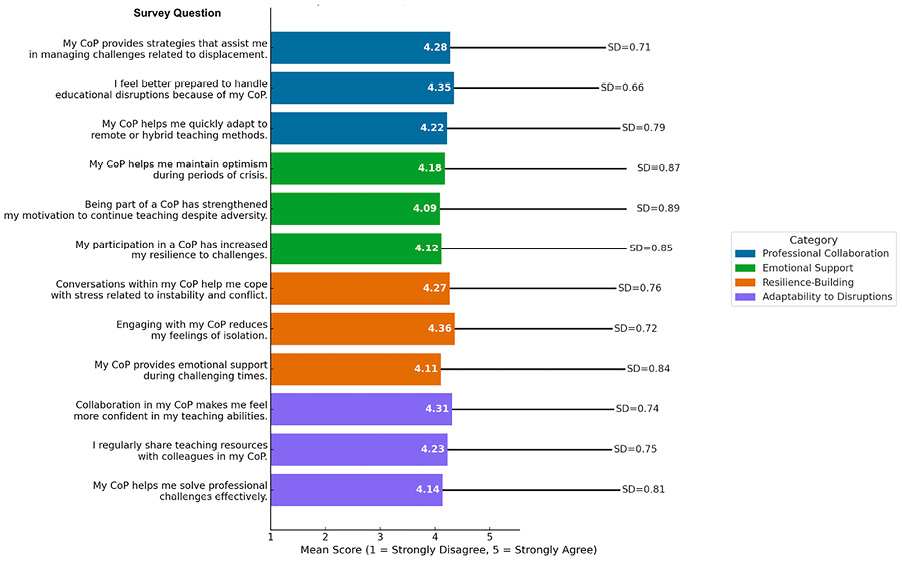
Figure 1. Summary of participant survey responses across four key dimensions of CoPs
Across all categories, participants reported high mean scores, ranging from 4.09 to 4.36, indicating a strong overall perception of the benefits of CoP participation. The highest rated item was ‘Being part of a CoP has strengthened my motivation to continue teaching despite adversity’ (M = 4.36, SD = 0.72), underscoring the motivational impact of peer networks in sustaining teacher commitment during crisis conditions.
Items within the professional collaboration category also received consistently high ratings, with ‘I share resources regularly with colleagues in my CoP’ scoring M = 4.35, SD = 0.66, and ‘My CoP helps me solve professional challenges’ scoring M = 4.28, SD = 0.71. This suggests that, in the perception of survey participants, CoPs serve as valuable platforms for pedagogical exchange and collaborative problem-solving.
Respondents also affirmed the emotional value of CoPs, with items such as ‘My CoP provides emotional support during challenging times’ (M = 4.18, SD = 0.87) and ‘Helps me cope with stress related to instability and conflict’ (M = 4.12, SD = 0.85) indicating substantial psychosocial benefits. However, standard deviations for emotional support items were slightly higher, reflecting more varied experiences among teachers in this domain.
In terms of resilience-building, participants agreed that CoP participation increased their resilience (M = 4.27, SD = 0.76) and optimism (M = 4.11, SD = 0.84), reinforcing the role of collective professional identity in managing adversity. Finally, the adaptability dimension was also strongly endorsed, with ‘Helps me adapt to remote/hybrid teaching’ receiving M = 4.31, SD = 0.74, and ‘Prepared to handle disruptions’ receiving M = 4.23, SD = 0.75.
Standard deviation values across items ranged from 0.66 to 0.89, suggesting moderate variability in experiences. Notably, higher variation was observed in items related to emotional and crisis-related support, possibly reflecting different institutional contexts, levels of access to CoPs, or differences between urban and rural teachers. These differences may reflect not only geographic location but also institutional resources, levels of collegial interaction, and access to professional networks.
Overall, the data illustrate that regular and sustained engagement in CoPs is positively associated with teachers’ sense of professional efficacy, emotional well-being, and adaptability, thereby supporting the hypothesis that CoPs contribute significantly to resilience-building among English teachers in Ukraine.
Experiences in CoPs: Teachers’ Voices
To complement the quantitative findings, two open-ended questions in the survey invited participants to reflect on how participation in a CoPs had supported their professional development during times of crisis. Responses were grouped into key thematic categories that reflect the lived experiences of teachers navigating disruption, uncertainty, and professional adaptation. Tables 2 and 3 present the themes that emerged in response to Questions 22 and 23, respectively, along with sample quotes that illustrate how CoPs supported teacher resilience, instructional practices, and peer collaboration during a period of national crisis.
Thematic analysis of responses to a first open-ended question, ‘Describe how participating in a CoP has specifically supported your professional development during times of crisis’ (Table 1) outlines four distinct yet interconnected themes that shed light on how CoPs supported teachers’ professional development during challenging time. These themes capture both the practical and emotional aspects of teacher resilience, providing a deeper insight into how CoP influence teachers beyond conventional training models.
The first theme, peer support and connection, highlights the centrality of emotional and collegial reassurance in times of disruption. Teachers repeatedly emphasised that CoPs mitigated feelings of professional isolation and provided a space where experiences could be shared openly and constructively. This finding aligns with prior research suggesting that community membership is a key driver of sustained engagement and emotional well-being among educators during crises (Vangrieken et al. 2015).
Secondly, adaptive teaching practices emerged as a critical outcome of CoP participation. Teachers described how regular exchanges with peers enabled them to trial and refine context-sensitive strategies, particularly those addressing the emotional and cognitive needs of learners affected by instability. Notably, this theme underscores the role of CoPs not only in knowledge dissemination but also in practical pedagogical innovation, reinforcing their value as a professional learning environment responsive to real-time challenges.
The third theme, professional confidence and leadership, speaks to the empowering effect of active participation in CoPs. Several respondents noted how leading sessions or sharing practices shifted their self-perception from passive recipients of support to capable contributors and facilitators. This transformation is particularly significant in conflict-affected contexts, where opportunities for formal advancement are often limited, and professional identity may be under strain.
Finally, the theme of consistency and professional focus was perceived by participants to reflect the stabilising function of CoPs. Amid widespread uncertainty and disruption, many respondents indicated that the routine of regular CoP meetings appeared to provide a sense of continuity and structure. In participants’ accounts, this aspect of CoPs often functioned as a motivational anchor and a planning scaffold, which may have helped educators maintain momentum in their professional growth despite shifting external conditions.
Taken together, these themes suggest that CoPs in Ukraine have functioned not merely as professional networks but as resilience systems – blending emotional support, collaborative problem-solving, and identity reinforcement. This multidimensional role positions CoPs as an essential feature of any long-term educational recovery and teacher development strategy in crisis-affected contexts.
Responses to a second open-ended question ‘Can you share an example of a particularly impactful experience you had within your CoP?’ (Table 2) represent experience-based insights into the practical and emotional aspects of teachers’ engagement in CoPs. The six themes highlight CoPs as active professional networks where knowledge-sharing, emotional support, and collaboration come together, especially in times of crisis.
The theme of applied pedagogical exchange reflects the immediate impact of peer-driven learning on classroom practice. Teachers described how concrete ideas shared within CoPs were trialled and adapted in real time, often with notable success. These accounts reveal that CoPs served as practical testing grounds, where strategies could be contextualised and swiftly integrated into practice, demonstrating the direct pedagogical value of community interaction.
Closely linked to this is reflective practice development, a theme highlighting deeper shifts in pedagogical awareness and mindset. Several participants noted how CoP discussions led to critical re-evaluation of their approaches, especially in areas such as trauma-informed pedagogy or inclusive planning. This theme reinforces the role of CoPs not only in knowledge sharing but in fostering sustained, reflective professional growth.
Instructional support in crisis emerged as a vital category, particularly among teachers affected by displacement or infrastructure loss. CoPs were described as essential sources of technical guidance and moral encouragement during transitions to remote or hybrid teaching. These findings underscore the capacity of CoPs to act as stabilising agents, especially when formal institutional support is limited or disrupted.
The fourth theme, professional growth and leadership, reflects a shift from participation to contribution. Several respondents shared how leading CoP sessions or receiving positive feedback reshaped their sense of professional value. This sense of empowerment, especially within a peer-led space, signals the importance of CoPs in cultivating distributed leadership and reinforcing teacher agency.
Community and peer connection represents the emotional core of CoP engagement. While not always planned, moments of informal exchange were often cited as the most meaningful, offering participants a rare space for vulnerability and mutual care. These relational dynamics enhanced the coherence of the group and provided a foundation for trust and openness in professional dialogue.
Finally, collaborative resource creation points to the tangible outputs of CoP activity. Teachers highlighted co-designed materials, shared lesson plans, and team-led projects that translated into improved classroom engagement. This theme speaks to the productive dimension of CoPs, where creativity is pooled, contextualised, and delivered with greater relevance and ownership.
One result that was not anticipated in the initial design of this study was the comparatively high levels of perceived benefit reported by early-career teachers (0–5 years of experience). While it was expected that this group would value practical guidance, the data revealed that their ratings for emotional support and adaptability were on par with, and in some cases higher than, those of mid-career colleagues. This trend was particularly pronounced among displaced novice teachers, many of whom joined the profession during or after the onset of war-related disruptions.
As researchers, this finding invites a consideration of how professional development shapes under crisis conditions. Rather than viewing novice teachers as solely dependent on more experienced colleagues, the data suggest that they are active agents in CoPs, both absorbing and contributing ideas. This may be because the crisis context reduced traditional hierarchies, creating urgency and mutual support; with everyone facing new challenges, even novice teachers felt empowered to contribute their ideas and experiences. Many also brought recent training and strong digital fluency, making their insights immediately useful. Their fresh perspectives and urgency to adapt may actually accelerate their integration into professional communities in ways not typically observed under stable conditions. Moreover, it suggests that in crisis contexts, CoPs may function not only as support systems but also as accelerators of professional growth, particularly for those entering the field amid instability. It also raises further research questions about how early-career teachers perceive their roles within CoPs over time, and whether their high initial engagement sustains as they transition into more experienced positions.
Taken together, the quantitative and qualitative findings provide compelling evidence that CoPs serve as essential mechanisms for fostering teacher resilience, promoting collaboration and advancing professional development in the Ukrainian education context. Across all demographic and geographic subgroups, sustained and regular participation in CoPs is strongly associated with enhanced collaboration, emotional support, professional identity, and adaptability. Whether offering mentorship for early-career teachers, leadership opportunities for experienced educators, or psychosocial support for displaced professionals, CoPs emerge not only as professional learning environments but as dynamic systems of care, continuity, and collective strength in times of crisis.
Discussion and Conclusion
Building on survey and thematic results from 264 secondary-school English teachers across all 24 regions of Ukraine, the discussion interprets how CoPs function as resilience systems i.e. linking collaboration, emotional support, professional identity, and adaptability under war-time disruption. We examine subgroup patterns (urban-rural differences and displacement as an intersecting descriptor), the role of participation intensity (duration/frequency), and an interesting finding that novice teachers acted as contributors rather than passive recipients. We then situate these insights within CoP and resilience literature, consider contextual constraints, and outline implications for policy, professional development design, and future research.
The findings of this study align with Wenger et al. (2002) and Wenger-Trayner and Wenger-Trayner (2014), who argue that CoPs significantly contribute to participants’ professional identity, emotional resilience, and collaborative learning capabilities. Ukrainian teacher activity groups exemplify effective CoPs, transforming crises into opportunities for professional growth and resilience-building. The CoPs fostered by teacher associations and internationally-supported efforts (Education Cannot Wait 2025, British Council Ukraine 2026) are becoming vital structures supporting continuous learning, emotional resilience, and professional empowerment amidst instability.
The findings of this study reinforce existing literature on the value of CoPs as essential spaces for teacher support, especially in fragile and conflict-affected settings. Ukrainian teachers who participated in CoPs report significant gains across professional, emotional, and adaptive dimensions, highlighting the multiple functions these communities serve. These findings echo Wenger et al. (2002) and Wenger-Trayner and Wenger-Trayner (2014), who emphasise the importance of mutual engagement, shared repertoire, and joint enterprise in cultivating collaborative learning and sustained participation. They are also in line with Bergmark’s findings (2023, p. 221) which highlight the value of community and shared collaboration pertaining to CoPs, and supported by the findings of Patton and Parker (2017, p.354) who identified that in CoPs ‘close association with like-minded colleagues or at least colleagues of similar interests served to provide a sounding board, combatting isolation and spawning professional growth and development’.
The professional development gains evident from the survey responses suggest that CoPs offer a sustainable and context-sensitive alternative to traditional top-down professional development models. Rather than being externally imposed, learning within CoPs is co-constructed and directly responsive to members’ immediate needs. This was particularly notable among displaced teachers from Kherson, Donetsk, and Zaporizhzhia, who found value in engaging with peers facing similar disruptions. Their feedback affirms research showing that peer-led learning communities can be especially empowering for educators working under stress (Bornstein and Gil 2023) and aligns with Zhang et al. (2024 p. 6) regarding the role of collaborative engagement in cultivating belonging and connectivity integral to resilience.
Emotional resilience also emerged as a central theme. Teachers frequently cited their CoP as a vital source of emotional support, often describing it as a ‘lifeline’ amidst chaos. These findings align with Mendenhall et al. (2024, p. 72), who found that teacher well-being and psychosocial safety are strongly influenced by access to peer support networks. This was also concluded by Sun et al (2025, p. 5), whose study suggests that peer support helps ‘enhance teachers’ own social and emotional competence’. In Ukraine, CoPs appear to reduce anxiety and foster a sense of solidarity and belonging, factors that are indispensable for emotional stability in challenging environments.
Moreover, the data illustrates the way CoPs enhance teachers’ agency. Educators in these communities feel that their voices matter and that their insights shape group decisions. This sense of ownership and co-leadership contributes to greater motivation and commitment, consistent with findings by Mehdizadeh et al. (2024, p. 345), who observed similar identity development trajectories in longitudinal studies of teacher CoPs.
Finally, adaptability to change, a key component of resilience, is another factor that was mentioned in relation to participation in CoPs. Participants reported greater confidence in managing transitions to remote or hybrid teaching, using digital tools collaboratively, and developing new instructional strategies in response to learners’ changing needs. This supports van den Boom-Muilenburg et al. (2024), who stress the role of CoPs in promoting sustainable innovation and flexibility. It also echoes Ghamrawi (2022, p. 5910), who explores the positive role CoPs have in times of crises.
In sum, this study provides evidence that CoPs serve not only as professional learning networks but also as emotional anchors and engines of innovation for teachers operating in challenging circumstances. In the Ukrainian context, these communities have become indispensable mechanisms for sustaining the morale, professional growth, and adaptability of teachers. Quantitative and qualitative data collected for this study provides insights into how CoPs contribute to resilience, collaboration and professional development among English teachers in Ukraine.
A limitation to this study is that it is based on a sample of 264 secondary English language teachers, which represents a small fraction of Ukraine’s 380,877 secondary education teachers across all subjects (State Statistics Service 2024). As such, the findings are not generalisable to the wider teaching population. While the study includes internally displaced teachers, it does not account for externally displaced educators who have left the country, whose experiences may differ significantly. These limitations highlight the need for broader, more inclusive research to fully understand the resilience-building role of CoPs across diverse teaching contexts.
In conclusion, the study contributes to the theoretical framework of existing research on COPs and highlights the transformational role that teacher-led Communities of Practice (CoPs) play in supporting educators operating in conflict-affected areas. Through a combination of quantitative data and qualitative reflections, the research demonstrates that CoPs are a highly effective mechanism for fostering professional growth, emotional well-being, and adaptability during times of crisis. Findings suggest that teacher CoPs significantly enhance resilience by providing professional and emotional support, fostering collaborative learning, and empowering educators. These communities mitigate isolation, support emotional well-being, and facilitate continuous professional development amidst crises. Policymakers’ active support and investment in CoPs can transform educational disruptions into opportunities for systemic resilience and growth.
Experiences shared by study participants provide evidence that in Ukraine CoPs are becoming a platform for teachers to engage in collaborative professional dialogue, share pedagogical strategies, and offer one another emotional and moral support. These aspects are particularly crucial for internally displaced teachers and those working in rural or war-affected areas, who often face heightened professional and personal challenges. The data also reinforce that participation in CoPs enhances teachers’ confidence, sense of agency, and capacity to respond constructively to disruptions such as the transition to remote or hybrid teaching. In this way, CoPs do not merely support individual teachers; they contribute to the resilience of the broader educational system. Finally, it is of great importance to maintain and sustain such communities of practice, so that they would be able to provide an immediate and effective solution whenever a crisis hits.
Recommendations
Firstly, communities of practice should be seen as a powerful and strategic tool in teacher professional development. Governments and educational institutions should formally embed CoPs into teacher professional development framework to maximize their impact. Recognising CoPs as legitimate and valuable forms of teacher learning will help ensure they receive the structural and financial support necessary to thrive. This integration can promote sustained peer collaboration, professional development, and a culture of collective problem-solving in education systems. Additionally, to ensure the sustainability and quality of CoPs, it is essential to develop the leadership capacities of teacher-facilitators. Leadership training and recognition can empower local educators to guide CoPs with confidence, build trust among participants, and promote inclusive practices. Encouraging bottom-up leadership also supports the organic spread of CoPs and reinforces teacher agency and ownership.
Secondly, communities of practice have great potential of becoming platforms of support for at-risk educators. CoPs can provide a critical support system for internally displaced teachers and those working in conflict-affected or high-risk regions. Governments and international donors should direct funding and resources to these groups to ensure adaptability and sustained educational quality amidst disruptions. This approach would help recognise the unique challenges faced by these educators and leverage CoPs as safe, empowering spaces for recovery and resilience. Moreover, in settings with mobility restrictions, safety concerns, or damaged infrastructure, virtual and hybrid CoPs offer an alternative. Investment in user-friendly digital platforms, internet access, and training in remote collaboration tools can ensure broad and sustained participation. Hybrid formats can also bridge the gap between teachers in urban centres and those in remote or underserved areas, contributing to greater equity in professional development.
Finally, encouraging partnerships between CoPs in diverse regions, including urban and rural, stable and crisis-affected areas, can create a more cohesive and innovative professional development network, and therefore contribute meaningfully to broader education reform. Cross-regional dialogue enhances empathy, stimulates new ideas, and builds solidarity among teachers facing different realities. Furthermore, continuous research is essential to understand and demonstrate the long-term impact of CoPs on teacher well-being, professional growth, and student learning. We also believe that the recommendations we drew from the study set a strong foundation for future research to examine the conditions that promote CoPs and further explore the efficacy of these communities in building teachers’ resilience in times of crisis.
Acknowledgments
The authors would like to acknowledge the University of Technology Sydney and personally Dr Olga Oleinikova, Associate Professor and Director of the Social Impact Technologies and Democracy Research Hub (SITADHub), for her support and inspiration that made this publication possible.
Disclosure of AI Use
No AI tools were used in the development or presentation of this submission.
References
Bergmark, U. 2023, Teachers’ professional learning when building a research-based education: context-specific, collaborative and teacher-driven professional development. Professional Development in Education, vol. 49, no. 2, 210–224. https://doi.org/10.1080/19415257.2020.1827011
Boetto, H., Närhi, K. & Bowles, W., 2022. ‘Creating ‘communities of practice’ to enhance ecosocial work: A comparison between Finland and Australia’, British Journal of Social Work, vol. 52, no. 8, pp.4815–4835. https://doi.org/10.1093/bjsw/bcac092
Bornstein, J. & Gil, E. 2023, ‘Virtual communities of practice as responses to the turbulence of 2020: developing equity and justice leadership’, Journal of Professional Capital and Community, vol. 8, no. 3, pp. 269–282. https://doi.org/10.1108/JPCC-07-2022-0036
British Council Ukraine 2026, Social Cohesion and Resilience Through Schools. https://www.britishcouncil.org.ua/en/programmes/society/social-cohesion-schools
Brouskeli, V., Kaltsi, V. & Loumakou, M. 2018, ‘Resilience and occupational well-being of secondary education teachers in Greece’, Issues in Educational Research, vol. 28, no. (1), pp. 43–60.
Ciampa, K. & Wolfe, Z.M. 2020, ‘From isolation to collaboration: Creating an intentional community of practice within the doctoral dissertation proposal writing process’, Teaching in Higher Education, vol. 28, no. 3, pp. 487–503. https://doi.org/10.1080/13562517.2020.1822313
Creswell, J.W. & Plano Clark, V.L., 2018, Designing and Conducting Mixed Methods Research, 3rd ed., Sage Publications, Thousand Oaks, CA.
Dabrowski, A. 2021, ‘Teacher wellbeing during a pandemic: Surviving or thriving?’, Social Education Research, vol. 2, no. 1, pp. 35–40. https://doi.org/10.37256/ser.212021588
Education Cannot Wait 2024, Multi-Year Resilience Programme (MYRP) Ukraine 2024-2026. [pdf] https://www.educationcannotwait.org/sites/default/files/2024-03/ecw_myrp_for_ukraine_2024-2026.pdf
Ghamrawi, N. 2022, Teachers’ virtual communities of practice: A strong response in times of crisis or just another fad?’, Education and Information Technologies vol. 27, pp. 5889–5915. https://doi.org/10.1007/s10639-021-10857-w
Global Communities 2023, Ukraine’s Resilience Strengthened by Grassroots Psychosocial Support and Civic Partnerships. https://globalcommunities.org/blog/ukraines-resilience-strengthened-by-grassroots-psychosocial-support-and-civic-partnerships/
Hascher, T., Beltman, S. & Mansfield, C. 2021, ‘Teacher wellbeing and resilience: towards an integrative model’, Educational Research, vol. 63, no. 4, pp. 416–439. https://doi.org/10.1080/00131881.2021.1980416
Hofius, M., 2022, European Union Communities of Practice: Diplomacy and Boundary Work in Ukraine, Routledge, London. https://doi.org/10.4324/9781003191643
Kowalczuk-Walędziak, M. & Underwood, J. M. 2021, ‘International communities of practice: what makes them successful vehicles for teachers’ professional development?’, Educational Studies, vol. 49, no. 6, pp. 973–990. https://doi.org/10.1080/03055698.2021.1927673
Lavrysh, Y., Lytovchenko, I., Lukianenko, V. & Golub, T. 2025, ‘Teaching during the wartime: Experience from Ukraine’, Educational Philosophy and Theory, vol. 57, no. 3, pp.197–204. https://doi.org/10.1080/00131857.2022.2098714
López-Angulo, Y., Mella-Norambuena, J., Sáez-Delgado, F., Portillo Peñuelas, S.A. & Reynoso González, O.U. 2022, ‘Association between teachers’ resilience and emotional intelligence during the COVID-19 outbreak’, Revista Latinoamericana de Psicología, vol. 54, pp. 51–59. https://doi.org/10.14349/rlp.2022.v54.6
Mehdizadeh, M., Pourhaji, M. & Derakhshan, A. 2024, ‘Evolution of communities of practice, realignment of possible selves, and repositionings in EFL teacher professional identity development: A longitudinal case study’, The Language Learning Journal, vol. 52, no. 3, pp. 336–348. https://doi.org/10.1080/09571736.2022.2163685
Mendenhall, M., Falk, D. & Shephard, D. 2024, ‘Teacher and learner well-being amidst displacement in South Sudan and Uganda’, In Mendenhall, M., Marchais, G., Sayed, Y. & Boothby, N. (eds.), Education and Resilience in Crisis, Bristol University Press, pp. 60–98. https://doi.org/10.1332/policypress/9781529234695.003.0003
Moriarty, K. 2020, ‘Collective impacts on a global education emergency: The power of network response’, Prospects, vol. 49, no. 1, pp. 81-85. https://doi.org/10.1007/s11125-020-09483-0
Patton K. & Parker M. 2017, ‘Teacher education communities of practice: More than a culture of collaboration’, Teaching and Teacher Education, vol. 67, pp. 351–360. https://doi.org/10.1016/j.tate.2017.06.013
Pidzamecky, U. 2017, Investigating the role of informal online communities of practice (CoPs) in professional learning: the experience of second/foreign language teachers. Master’s Thesis, University of Ontario Institute of Technology (Canada).
Raccanello, D., Burro, R., Aristovnik, A. et al. 2024, ‘Coping and emotions of global higher education students to the Ukraine war worldwide’, Scientific Reports, vol. 14, article no. 8561. https://doi.org/10.1038/s41598-024-59009-3
Sowton, C. 2021, Teaching in Challenging Circumstances, Cambridge University Press, Cambridge. https://doi.org/10.1017/9781108816151
State Statistics Service of Ukraine 2024, Official website. Available at: https://www.ukrstat.gov.ua/
Sun J., Kusumaningsih, S. & Yang, R. 2025, ‘Connection, resilience, and humility: Three educators’ stories of building adult social and emotional learning communities’, Social and Emotional Learning: Research, Practice, and Policy, vol. 5, article no. 100087. https://doi.org/10.1016/j.sel.2025.100087
UNESCO 2023, Ukraine: UNESCO Trains 50,000 Teachers on Digital Pedagogy, UNESCO News, 11 October. https://www.unesco.org/en/articles/ukraine-unesco-trains-50000-teachers-digital-pedagogy
Ungar, M. 2012, ‘Social ecologies and their contribution to resilience’. In Ungar, M. (ed.), The Social Ecology of Resilience: A Handbook of Theory and Practice, Springer, New York, pp. 13–31. https://doi.org/10.1007/978-1-4614-0586-3_2
van den Boom-Muilenburg, S.N., de Vries, S., van Veen, K., Poortman, C.L. & Schildkamp, K. 2024, ‘Understanding sustainable professional learning communities by considering school leaders’ interpretations and educational beliefs’, International Journal of Leadership in Education, vol. 27, no. 4, pp. 934–961. https://doi.org/10.1080/13603124.2021.1937705
Vangrieken, K., Dochy, F., Raes, E. & Kyndt, E., 2015, ‘Teacher collaboration: A systematic review’, Educational Research Review, vol. 15, pp.17–40. https://doi.org/10.1016/j.edurev.2015.04.002
Vescio, V., Ross, D. & Adams, A. 2008, ‘A review of research on the impact of professional learning communities on teaching practice and student learning’, Teaching and Teacher Education, vol. 24, no. 1, pp. 80–91. https://doi.org/10.1016/j.tate.2007.01.004
Wenger-Trayner, E. & Wenger-Trayner, B. 2014, ‘Learning in landscapes of practice’, in Wenger-Trayner, E., Fenton-O’Creevy, M., Hutchinson, S., Kubiak, C. & Wenger-Trayner, B. (eds.), Learning in Landscapes of Practice: Boundaries, Identity, and Knowledgeability in Practice-Based Learning, Part 1, Theory, Routledge, London. https://doi.org/10.4324/9781315777122
Wenger, E. 1998, Communities of Practice: Learning, Meaning, and Identity, Cambridge University Press, Cambridge. https://doi.org/10.1017/CBO9780511803932
Wenger, E., McDermott, R.A. & Snyder, W. 2002, Cultivating Communities of Practice: A Guide to Managing Knowledge, Harvard Business School Press, Boston.
The World Bank 2025, Learning and school reforms continue in Ukraine despite war challenges, World Bank, News, 25 March. https://www.worldbank.org/en/news/feature/2025/03/25/learning-and-school-reforms-continue-in-ukraine-despite-war-challenges
Zhang, J., Li, Y., Zeng, Y. et al. 2024, ‘Exploring the mediating role of teacher identity between professional learning community and teacher resilience: Evidence from Eastern China’, Humanities and Social Sciences Communications, vol. 11, article no. 1290. https://doi.org/10.1057/s41599-024-03800-0
Zhang, S. & Luo, Y. 2023, ‘Review on the conceptual framework of teacher resilience’, Frontiers in Psychology, vol. 14, article no. 1179984. https://doi.org/10.3389/fpsyg.2023.1179984