Cosmopolitan Civil Societies: An Interdisciplinary Journal
Vol. 18, No. 1
2026
ARTICLE (REFEREED)
‘A Consumer or Societal Indisposition?’ Pagtawad as a Determinant of Macroeconomic and Sociopolitical Issues
Arwen Alexis Gestoso, Pharell Allystaire Tacsuan, Leo Vicentino*
De La Salle University, Laguna, Philippines
Corresponding author: Leo Vicentino, De La Salle University, Laguna Boulevard, LTI Spine Road, Barangays Biñan and Malamig, Biñan City, Laguna, Philippines, leo.vicentino@dlsu.edu.ph
DOI: https://doi.org/10.5130/ccs.v18.i1.9492
Article History: Received 13/12/2024; Revised 27/02/2026; Accepted 09/03/2026; Published 06/04/2026
Citation: Gestoso, A. A., Tacsuan, P. A. Vicentino, L. 2026. ‘A Consumer or Societal Indisposition?’ Pagtawad as a Determinant of Macroeconomic and Sociopolitical Issues. Cosmopolitan Civil Societies: An Interdisciplinary Journal, 18:1, 94–107. https://doi.org/10.5130/ccs.v18.i1.9492
Abstract
Although relevant literature captured why pagtawad (haggling) is a cultural custom, previous studies downplay the sociopolitical and economic factors that explain the broader reasons why pagtawad becomes a buyer’s escape from crisis. To make this argument, through a phenomenological study of the Biñan local market known for its historical significance and low poverty incidence, informants were asked about why they think pagtawad is a market’s regular transaction. Several motivations for pagtawad emerged through the thematic analysis, including as a response to the high inflation rate, fixed pricing, consumer rights, cultural conformity, unemployment, underemployment, poverty, and budget maximization. Pagtawad in itself is a dyadic transaction between buyers and sellers; however, this microscale interaction points to a more nuanced link to decisions upheld by the local government and the nation-state. Ultimately, marketplaces are microcosms that reflect the nation-state’s anti-poor policies, ill-judged allocation processes, awry economic choices, and unethical structural maintenance.
Keywords
Pagtawad; Market; Decentralization; Economic Choices; State Crisis
Introduction
The inception of this study is rooted in an extensive concern ingrained in the socioeconomic landscape of the Philippines. Confronted with formidable challenges such as a substantial poverty rate of 51% in 2025 according to the Social Weather Station (SWS) (Mangahas 2026); escalating inflation at 2.4% in February 2026 (De Leon 2026); and a notable unemployment rate of 4.4% in the current year (Trading Economics n.d), both according to the Philippine Statistics Authority (PSA), the Filipino populace has had to adapt to these challenges in day-to-day budgeting, navigating the inevitable ebb and flow of the market, as demonstrated by Rivera (2015). This backdrop sets the stage for exploring the pivotal hub of economic transactions in the palengkes (the wet markets) (Reuters 2023; Diokno 2024; Statista 2024). This exploration, situated at the core of the Philippine market system, seeks to unveil intricacies within the daily complexities of local life in the markets. Filipino authors, Pe-pua and Protacio-Marcelino (2000), provide insights that delineate the palengke and underscore its significance in the Filipino narrative as a core platform for preserving Filipino culture. Their seminal work sheds light on deeply ingrained cultural elements molding the palengke system, accentuating the prominence of key Filipino values like pagtitipid (frugality), pakikipagpalagayang-loob (an act of mutual trust), and matalinong pamimili (smart consumerism). These values form a nuanced cultural interconnection defining the essence of palengkes within the Filipino social landscape (Cabilin 2019; Carmen et al. 2020).
It is imperative to acknowledge that palengkes transcend mere cultural and psychological dimensions within the market. The need for decentralization of market regulation arises from realizing that a centralized approach may not effectively address local markets’ diverse and unique conditions (David & Espiritu 1988). This study delves into the repercussions of decentralization on the palengke system, as broadly discussed by Canare (2020), necessitating an exhaustive understanding of the Local Government Code of 1991, as outlined by Dihan (1998). Enacted during the administration of President Corazon Aquino, the Local Government Code of 1991 significantly devolved powers and responsibilities to local government units (LGUs). The exploration examines the intricacies of the regulatory framework, shedding light on its impact on buyers and sellers. This examination underscores the pivotal role of these regulations in shaping individual experiences and reveals nuanced dynamics within the palengke ecosystem, influencing their respective behaviors and transactions in the market. Through a thorough analysis of on-ground narratives, a clearer understanding of the nation-state’s systemic changes through decentralization emerges, further fortifying the argument regarding its influence on the operational landscape of palengkes.
As the study explores the heart of the palengke system in the Philippines, attention must be drawn to the significance of market actors, the buyers and sellers who perpetuate the market. This study introduces the pivotal roles played by these actors, with insights gleaned from Intal and Largoza’s analysis (2004). The exploration of the conceptual culture of pagtawad, first introduced in the psychological field by Du & Paysu (1979), provides a practical understanding of negotiations influenced by external factors, such as dwindling circumstances caused by socioeconomic challenges (Lichauco 1986; Callanta 1988). There is recognition that prior studies have often portrayed pagtawad through a narrow cultural and psychological lens (Yee 1983; Du & Paysu 1979). This sets the stage for this study’s intention to break away from such limitations by exploring the links of pagtawad to meso- and macro-structures, offering a more comprehensive understanding of its presence in the Philippine landscape. This immersive view of the market system seeks to understand mutual interaction. It recognizes the pervasive mark of pagtawad as representative of the broader insinuation of government regulations on the market’s structural state.
The paper contends that pagtawad is not solely influenced by cultural traditions. Instead, it posits pagtawad as an outcome tied to sociopolitical and economic factors. Diokno’s insights (2012) stress historical and sociopolitical conditions, while recent contributions from Kanza and Mei (2022) reinforce the notion that pagtawad is a complex interplay influenced by economic forces and sociocultural contexts. Consequently, examining the macroeconomic dimensions, this study delves into the practices within the ever-significant pagtawad process through the lens of rational choice theory and self-interest. Building on the works of Venida (1998) and Foucault (1978), the researchers aim to illuminate the convoluted link between economic theories and the cultural palengke system, serving as a grassroots representation of how the country’s socioeconomic conditions evolve in contemporary times.
In essence, the study endeavors to bridge crucial gaps in understanding the palengke system by connecting the motivations behind pagtawad to the broad sociopolitical and economic context. Given the scarcity of research on pagtawad, this study aims to establish a foundational discourse, re-establishing and modernizing the discussions about market behavior. Reference selection reflects this challenge with its heavy reliance on old and foundational texts, mostly present in the local and national university library theses sections. To contribute effectively, the researchers correlate people’s narratives with the current local conditions, exploring the impact of high inflation rates, market behavior related to poverty, and constraints on purchasing power due to unemployment, underemployment, seniority, and anti-poor policies. Focusing on the basics of the economy, particularly market dynamics and buyer choices, the study aims to offer insights beyond cultural perspectives. This approach seeks to reveal clear links between individual economic decisions and the socioeconomic challenges faced in the Philippines. Through this concise and holistic approach, we aim to contribute to a better understanding of the palengke system and inform policies that address the root causes of economic disparities in the nation.
Conceptual Framework
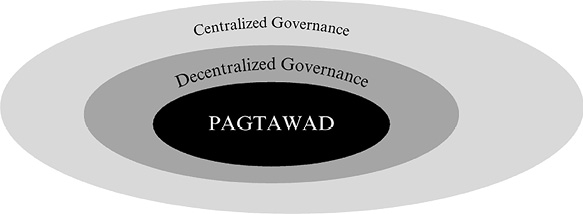
Figure 1. Power of Centralized and Decentralized Governments Motivating Market’s Pagtawad
Figure 1 underscores the significance of pagtawad as a cornerstone of market culture, defining it as the interactive negotiation and bargaining process between buyers and sellers. Within the context of the Biñan market, this cultural practice operates within the framework set forth by the Local Government Code of 1991, which entrusts the governance of markets to local government units (LGUs) (Diokno 2012). This regulatory structure highlights the authority of elected leaders in formulating and implementing policies and regulations that shape market dynamics. By unveiling this reality, the study sheds light on a previously overlooked dimension of Philippine society, revealing the intricate interplay between local governance, market operations, and broader macroeconomic issues. The regulations and policies that govern market operations in Biñan are not merely administrative measures; they are the outcome of a complex political process involving multiple stakeholders. Local government officials, influenced by various political and economic interests, craft policies that impact how markets function. These policies can determine the accessibility of markets to different segments of the population, the pricing of goods, and the overall economic environment. Therefore, understanding pagtawad in Biñan requires a comprehensive analysis of the regulatory framework that shapes market transactions and the political and economic contexts within which these regulations are developed and implemented.
The governance structure of the Biñan market serves as a microcosm illustrating the significant role of the nation-state in formulating policies that profoundly impact trade and industries. These policies, in turn, wield considerable influence on macroscale economic indicators such as inflation rates, employment levels, poverty indices, and population density. By virtue of its regulatory authority, the state’s interventions within market settings often shape the socioeconomic landscape, contributing to the perpetuation of challenges faced by ordinary citizens. The impact of these policies is far-reaching, influencing not only the immediate market environment but also the broader economic conditions within which markets operate. For instance, policies affecting inflation rates can alter the purchasing power of consumers, thereby affecting market dynamics. Similarly, employment levels and poverty indices, which are influenced by state policies, can determine the level of economic activity within markets. Therefore, the governance structure of the Biñan market is a reflection of the broader economic policies of the state, highlighting the interconnectedness between local market operations and national economic strategies.
In response to these systemic issues, buyers within the Biñan market are compelled to develop and employ adaptive techniques and strategies. These strategies are interconnectedly written to navigate the intricate and often turbulent terrain of market transactions. Such adaptive measures underscore the resilience and resourcefulness of individuals operating within the market ecosystem. Their ability to adapt and innovate reflects a steadfast determination to overcome the pervasive socioeconomic challenges that delineate their daily interactions and livelihoods. These adaptive strategies can range from negotiating prices and forming informal networks of mutual support to developing new ways of marketing and selling goods. The resilience displayed by market participants is not merely a reaction to economic pressures but also a proactive effort to secure their livelihoods and improve their economic conditions. This highlights the agency of individuals within the market, who, despite facing numerous challenges, continue to find ways to navigate and succeed within the market environment.
This intricate interplay between state policies, market dynamics, and individual agency highlights the complex nexus of forces at play within the Biñan market. It underscores the multifaceted nature of socioeconomic challenges and the diverse array of responses elicited from market participants. By elucidating these dynamics, one can gain a deeper understanding of the nuanced interactions shaping the lived experiences of individuals within the market ecosystem. Moreover, it underscores the imperative for policymakers to adopt a holistic approach in crafting interventions that address the underlying structural inequalities and empower market participants to thrive amidst adversity. The complexity of the market environment in Biñan cannot be overstated; it is shaped by myriad factors, including economic policies, local governance, individual actions, and broader socioeconomic conditions. Recognizing this complexity is essential for developing effective policies and interventions that can address the root causes of economic disparities and support the resilience and innovation of market participants.
In essence, this exploration addresses why pagtawad persists in the palengkes of Biñan, Philippines. Despite evolving socioeconomic conditions and regulatory changes, pagtawad, a cultural practice deeply embedded in the transactional processes of these markets, remains prevalent. By examining the historical, sociopolitical, and economic influences on the said practice within the magnified context of Biñan’s palengkes, this study seeks to uncover the underlying factors that sustain this custom (Du & Paysu 1979; Intal & Largoza 2004). Understanding why pagtawad endures in Biñan is crucial for grasping the intricate system of market transactions and their broader implications for the region’s economic behavior and policy formulation. The researchers aim to contribute to comprehending the socioeconomic landscape of Biñan’s palengkes and offer insights into strategies for addressing economic disparities within these markets. This persistence of pagtawad highlights the cultural continuity within the market and reflects the enduring importance of traditional practices in contemporary economic transactions. By exploring the various factors that sustain pagtawad, the study provides valuable insights into the economic and cultural dynamics of the Biñan market, offering a comprehensive understanding of the market’s role within the broader economic framework of the region.
Methodology
This qualitative study employed a phenomenological approach to unravel the intricacies of pagtawad in the Biñan market, seeking to comprehend its motivations, cultural beliefs, and social dynamics, with a focus on why pagtawad persists among locals in their economic interactions. Beginning with Du and Paysu’s (1979) concept of a controlled population, the study utilized semi-structured interviews and participant observations to capture subjective viewpoints and lived experiences of market vendors and customers. This method prioritized a holistic insight into pagtawad’s cultural, social, and economic dimensions, allowing for a deep exploration of how these factors intertwine in the marketplace. The semi-structured approach facilitated open-ended exploration, enabling participants to share their experiences and thoughts in a more natural and comprehensive manner. Purposive sampling ensured that the study captured a wide range of perspectives from individuals across diverse socioeconomic backgrounds, reflecting the market’s demographic diversity. Data collection took place from September 2023 to March 2024, involving at least six visits by researchers employing participant observation methods. To identify initial informants, researchers engaged with local vendors through casual conversations while purchasing goods, inquiring about the market’s sociopolitical context. Researchers also posed questions about policies and sought referrals from regular customers who were willing to participate in interviews. During market visits (1-2 hours), researchers approached potential participants for consent. The sample comprised two primary groups within Biñan Market: local consumers, aged 50+, residing in Biñan, frequenting the market for 5+ years, and long-standing sellers, 5+ years, consenting to interviews. The collection involved in-person interviews and active participation in the Biñan market, tailored to uncover the complexities of the custom by probing into negotiation habits, shopping behaviors, and the origins of bargaining practices. Participants provided rich insights into their relationships with market vendors, observed changes in market dynamics over time, and their perceptions of the fairness of current market prices. Through this systematic approach, the researchers aimed to gain an extensive understanding of the dynamics of pagtawad and consumer behavior in the Biñan market.
The thematic analysis followed Braun and Clarke’s six-level framework (2006). Researchers immersed themselves in the data, meticulously cross-checking related literature to illuminate nuanced facets of pagtawad. Initial codes were generated during the data collection phase by inferring projected themes from the responses and observations. A systematic search for overarching themes involved a thorough examination of literature and an exploration of the practice’s meso- and macro-structures within society. This dual approach ensured that the analysis was grounded in both empirical data and existing theoretical frameworks. The reliability of the themes was ensured through an in-depth review process, which included transcription scrutiny to validate the accuracy and consistency of the data. As the themes consolidated, a definitive definition emerged from organizing the transcriptions and analyzing narratives from market informants. This meticulous process ensured that the final themes were robust and reflective of the participants’ experiences. During the write-up phase, researchers reviewed each section and substantiated them with relevant literature, presenting a macro-level understanding of the customs’ dynamics in the Biñan market. This approach enriched the discourse on pagtawad by providing a comprehensive analysis of its cultural, social, and economic dimensions, thereby enhancing the understanding of this complex practice.
Lastly, in ensuring the ethical integrity of their research endeavor, the researchers adhered to established institutional protocols and ethical guidelines. This included strict adherence to the University’s Code of Study Ethics and Research Manual, as well as compliance with the study ethics review committee’s guidelines. The researchers exercised methodological rigor by employing purposive sampling techniques, which respected participants’ autonomy and privacy through informed consent procedures. They also demonstrated transparency and accountability by acknowledging potential limitations, biases, and conflicts of interest inherent in their study. Throughout the research process, the researchers pledged to uphold proper conduct, commit to disclosing any conflicts of interest, and strive for objective data outcomes. Furthermore, they addressed concerns related to socioeconomic classification with sensitivity, ensuring that all participants were treated with dignity and respect. This commitment to ethical standards was integral to maintaining the integrity and credibility of the study, ensuring that the findings were both trustworthy and respectful of the participants’ experiences and perspectives.
Results and Discussion
Twelve informants from the two-month-long data-gathering process had varying motivations and perceptions regarding the phenomenon of pagtawad. These were classified into several themes and categorized into large emergent categories: buyer and seller haggling motives driven by macroeconomic and sociopolitical factors. The primary emerging cluster, buyer haggling motives, conveys the direct motivations of informants regarding pagtawad in the face of high inflation, low purchasing power, poverty, and crises such as the pandemic. This is followed by the seller haggling motives surrounding the practice of pagtawad; the informants are well-versed in the power dynamics between buyers and sellers and can choose to assert their rights as consumers or refrain from pagtawad. They prioritize relationships within the marketplace, whether as consumers or sellers, using both their social skills and strategies. Other emerging themes, such as pagtawad, culture, and the unpronounced motivations of buyer or seller not to haggle, were also discussed.
The research revealed broad macroeconomic motivations for engaging in pagtawad. In addition to the economic motivations, there are a series of socio-political aspects that underpin reliance on pagtawad.
Buyer-centered Pagtawad Motives
The Prices of Goods Are High
Seven of the informants stressed exorbitant prices in the local market. Three out of these seven informants blamed the current head of state, Ferdinand Marcos Jr., commonly referred to as Bongbong Marcos, for booming inflation.
An informant stated, ‘I believe [President] BBM promised a 20-peso rice price; that he would lower the price of rice, but until now he hasn’t lowered the price for [the benefit of] families like us’. Another informant said, ‘Before, a thousand pesos was the exact amount for a weekly family meal budget. Today, your thousand can just reach at least 2-3 meals a week’. Lastly, an informant shared, ‘We cannot blame those people who haggle for the fact that price rises unjustifiably and consistently’.
Wong’s (1987) study found that consumers often perceived prices at the Divisoria market, a known local market in Metro Manila, to be lower compared to others. However, in the current escalating climate of inflation at 3.7% in 2024 (Statista 2024), this perception may no longer hold true. The first informant’s reference to Bongbong Marcos’s promise of lower prices highlights the frustration felt by many who had yet to see this promise of cheaper goods fulfilled. This leads consumers to resort to pagtawad as a means of coping with the high cost of living. Venida (1998) also recognized the problem of high pricing in the market, which further compounded the issue. Moreover, the big shift in pricing has been palpable, given that one thousand pesos almost holds no value in the current Philippine economic climate, as an informant noted.
Budget Is Tight or Insufficient
Three informants substantiated this claim. All of them belong to large families, having more than three children, resulting in managing multiple bills such as tuition fees, miscellaneous payables, and utility bills. They have to prioritize payments for such, consequently limiting their budget for food and choosing cheaper options over high-quality produce.
An informant stated, ‘I have four children. Thus, there is a need for me to budget effectively, so that even our long-time suki (trusted stores) are being avoided due to their high prices’. Another informant said, ‘Hardly surviving. We learned how to haggle because of our tight income’. A third informant shared, ‘We need to haggle because we want to save. And because our budget is very limited for what is needed’.
Callanta’s (1988) study underscores the impact of tight budgets on consumer-seller relationships. As resources diminish and costs escalate, individuals, particularly those with limited financial means, must navigate increasingly constrained budgets. This financial pressure compels them to explore alternative strategies to stretch their resources, such as negotiating prices through pagtawad. These individuals view pagtawad as necessary. Domingo (2022) supports this perspective, noting that market practices are often seen as an essential tool for consumers to manage their financial limitations and ensure their needs are met despite economic hardships.
Exercising Consumer Rights
One informant emphasized that pagtawad is a necessary and practical way of buying goods for consumers. She was taught this notion in school and employed it until she became a mother. This is also one of the reasons why she opts to buy from markets instead of supermarkets, and this allows her to bargain for her desired prices. This informant stated, ‘Of course, I haggle. If given the chance, I will haggle. But I experience sometimes sellers showing their frustration, but as the saying goes, the customer is always right!’
The informant’s practice of pagtawad, as long as it is habitually done in markets that reflect consumer rights, exemplifies consumer empowerment. Lichauco (1986) and Domingo (2022) underscore market inequities shaped by politics and self-interests. Consumers exercise their rights by negotiating for fair prices and challenging these inequities. Wong (1987) also discusses how hierarchy forms the fundamental rights to redress the protection policies and regulations in the market. This highlights the pivotal role of consumer awareness and negotiation in addressing market dynamics.
Seller-centered Pagtawad Motives
Unemployment or Underemployment
Three informants substantiated this claim; they are all senior citizens. Despite their age, they must constantly find minimum-wage jobs to sustain themselves. As they were all sharing their narratives, they expressed their distress and hopelessness that they still have to work for themselves and their families.
An informant stated, ‘We do not have permanent jobs, although sometimes we receive money to spend from our children’s income. Their permanent jobs have a lot of help, making us extra dependent on them’. Another informant said, ‘Before, my wife and I were farmers. Now, we usually go here in Binan to check for our own space in the market [as our main source of income]’. Lastly, an informant shared, ‘When my partner died, I transferred to Biñan [market] because of opportunities. Although selling in the market was not enough income, my children still sent money for additional money to spend’.
The informants’ stories illustrate the challenges of unemployment or underemployment among senior citizens, relying on sporadic income sources including temporary market stalls. Venida (1998) emphasizes how social orientation influences unemployment by shaping the societal attitudes of those conforming to the lack of job opportunities. With this, pagtawad becomes vital for survival. These narratives emphasize the urgency of systemic reforms to ensure dignified livelihoods for all.
Practicing Pagtawad to Save Money
Two informants empathized with buyers since they recognize how demanding it is to budget and buy for their families. One informant is the breadwinner and relates to others who want to get their items at the lowest price possible. The other informant sympathetically gives five- to ten-peso discounts to her buyers, especially her suki (regular customers).
An informant stated, ‘We know that the discount we give is a huge help for them’. The other informant shared, ‘This can be seen as our way of helping the customers. What is five or ten pesos that they can save from tawad, right?’
Pagtawad is often employed to assist consumers in saving, as noted by Callanta (1988), who observed that it forces sellers to assist the poorest residents in securing necessities through alternative means. Wong (1987) further explained that sellers, being consumers themselves, typically price their goods with the expectations of negotiated price reductions. This demonstrates the strategy for consumers to stretch their limited resources and obtain better deals.
Customer Relationship or Behavior
Four informants stressed the warmth and kindness offered to them by their buyers. These sellers feel elated when a customer respects them and courteously converses with them. They honor suki (regular/special customers) relationships over their fixed prices and offer special discounts for them.
An informant stated, ‘Suki will automatically get a discount. That’s for sure’. Another informant said, ‘There are regular customers who are very pleasing; thus, I give them a discount, or I give them free goods like tomatoes, pepper, or a pack of calamansi’. Lastly, an informant shared, ‘If respect is observed, experience becomes easier in the market. We do not need to be rigid in the prices’.
Pagtawad often reflects the relationship between sellers and buyers, in line with their behaviors. Intal & Largoza (2004) noted that the Filipino concept of pakikipagkapwa-tao (interpersonal relations) promotes trust and cooperation, impacting market interactions. Moreover, Wong (1987) suggests that this reflects dyadic interactions influenced by Filipino values, emphasizing emotional aspects and interpersonal relationships. These dynamics highlight how pagtawad is shaped by relational dynamics and cultural values, where both sellers and buyers negotiate to reach their optimal and relational budget utilization through interactions.
To Entice Buyers
One informant substantiated this theme. She initially approaches buyers by speaking to them in a lively manner or asking what they need to buy. Whenever she notices that they may not be entirely interested in buying, she will try to encourage them to purchase the same item at a lower value or add another item for free. This informant stated, ‘Similar to different sellers, I give my regular customers discounts even though they don’t ask. I initiate it [in the hope] to attract more customers’.
Sellers often employ pagtawad or offer additional products to encourage consumers to buy from them. David & Espiritu (1988) suggested that sellers develop stereotypes based on initial impressions and their worldview, influencing their sales tactics and strategies. This is in line with Domingo’s (2022) study, where she emphasized how market strategies like discounts shape consumer behavior and economic hierarchies. This implies that sellers may tailor their approach, including offering discounts or complementary items, to appeal to consumers and facilitate transactions.
Interjecting Pagtawad Motives for both Buyer and Seller
Life Is Difficult or the Current Situation Is Challenging
Three informants substantiated this theme. They shared their life stories, focusing on personal economic hardships. Most of their current misfortunes arose in the aftermath of the pandemic and the nation-state’s inability to respond to crises for ordinary citizens. An informant almost forced her son to stop studying due to their lack of funds. Another informant lost her husband during the pandemic and moved from the province to find a job. Lastly, an informant’s husband works as a bus driver, leaving her with an idea to add income, but she has no permanent stall in the market.
An informant stated, ‘Life is too hard for me. Especially during the COVID-19 pandemic. I am trying to understand this situation I am in’. Another informant said, ‘We almost decided to stop sending my youngest child to school because expenses are too much for us to handle’. Lastly, an informant shared, ‘I forced myself to sell kakanin (rice cakes) for extra income even though my husband keeps on stopping me because no one will look after our children. He is a bus driver, and his income is not enough for the family if we rely only on him’.
Lichauco (1986) highlights mass poverty as symptomatic of deeper societal issues. The informants’ stories reflect this, depicting economic hardships exacerbated by the pandemic and governmental failures. Their narratives underscore the harsh realities of life. Pagtawad emerges as one’s coping mechanism amidst these challenges, as expressed by one informant resigned to their circumstances. Wong (1987), too, highlights that consumers in financially strained environments often turn to price negotiation as a vital survival strategy. These narratives illustrate the deep impact of societal circumstances on individual struggles. These individuals are forced to weigh their needs, determining whether studying is better than eating properly daily and whether child rearing is better than earning money.
Negotiating the Prevailing Retail Price
Three informants, both sellers and smart consumers, employ strategies to lessen the price points given to them. These individuals also consider seasonal produce and suggested market prices displayed in the news. An informant stated, ‘I wait for the good season. Usually, during these times, I get more for a lesser price’. Another informant said, ‘In the market, you’ll lose if you don’t have diskarte (a strategy). You have to be determined and know how to adapt because those qualities can help you save’. Lastly, an informant shared, ‘When buying vegetables, fish, and meat, haggling is most likely possible because sometimes their prices are constantly changing’.
As supported by Callanta (1988), consumers negotiate prices through pagtawad when aware of suggested retail prices. Understanding equity in retail, they seek fair deals, leveraging market knowledge to ensure equitable transactions. Additionally, Lichauco (1986) highlighted private enterprise’s role in the economy, underscoring the importance of informed consumer behavior in shaping a fairer retail landscape. These individuals recognize their power as consumers and exercise it by systematically interacting with sellers and other consumers in order to know how to lessen their spending.
Haggling is Culture
Two informants substantiated this theme. These individuals have decades of experience in the Philippine market system, exposing them to the dynamism of market behaviors and cultures. Both of them perceive pagtawad as part of a shared identity for Filipinos. An informant stated, ‘In my opinion, it is important for me because pagtawad is part of our culture’. The other informant shared, ‘I do not regret haggling because it is normal. I was raised in the market, and pagtawad is a norm’.
These informants view pagtawad as ingrained in Filipino culture. They learned to negotiate within the marketplace, reflecting broader social behaviors. This aligns with Milne (1974), who notes common characteristics among urban institutions, including overlapping between government and economic entities, fostering greater social mobility. Moreover, David & Espiritu (1988) also share that devised stereotypes and initial impressions significantly influence the prominence of cultural behaviors in the market, affecting their purchasing decisions.
Motives not to Haggle
Prefers the Suggested Retail Price
Three informants disliked pagtawad, focusing on its disadvantages for the seller. Some stated that in pagtawad, one of the parties always loses. Two of these informants were sellers, and the third was the son of a seller. They empathize with other sellers, understanding how much time and effort it takes to communicate with suppliers, commute to and from other marketplaces, and calculate the appropriate amount for their goods. An informant stated, ‘I grew up seeing my mom selling. It’s good that she has regular customers; giving them at least a five to twenty peso discount is a huge help for them. Although sometimes I thought of reminding her not to, because she might not get any profits’. Another informant said, ‘I feel some discomfort because I am a seller, and because I understand them [being a customer myself too]. I feel what they feel, so I am not the seller who forces my expected price sometimes’. Lastly, an informant shared, ‘I almost grew up in the market, and if ever, I will avoid haggling because we know how hard it is to sell in the market’.
The informants, aware of pagtawad’s drawbacks for sellers, avoid it. They empathize with sellers’ challenges, such as communication with suppliers. This aligns with Callanta’s (1988) observation of shifting social relationships toward contractual arrangements amid dwindling resources. Lichauco (1986) noted a bias against state intervention, shaping perceptions of unjust treatment of sellers within the system, as supported by the study of David & Espiritu (1988). These individuals recognize how much effort the sellers put into their work, from waking up early, calculating the right price, coordinating with various people in order to offer products, and keeping a healthy relationship with buyers and sellers alike.
An Alternative to Fixed Prices
Two informants prefer to fix prices since they take into account all of their expenses, rent, and market fees. All of the sellers have to abide by the set market policies by paying rent, even going as high as Php 20,000. They also have a revolving fund in the market association and have to buy business permits yearly. Sellers have to be strict with their set prices because they do not get support from the LGU. An informant stated, ‘Trying to focus on modernization, they forget the conditions of the market sellers’. The other informant shared, ‘[Buyers and sellers] both lose in the market. Because of high prices, it’s hard to blame us, sellers, because there are so many things included in the last price’.
Sellers who refuse to engage in pagtawad due to fixed prices contribute to fostering norms of trust, cooperation, and civility in society, as emphasized by Intal & Largoza (2004). Callanta (1988) also highlights how obligatory contractual agreements often include fixed prices to ensure stability and predictability in the market. However, there is a bigger need to protect both parties from price fluctuations and foster fair trade practices. These fixed prices are intended to uphold these values within the marketplace. Additionally, this aligns with the market development plans being rooted in the value systems of societies, promoting consumer-based value pricing.
Conclusion
The study reveals that beyond cultural and psychological aspects, there are several sociopolitical and economic reasons why or why not market actors’ practices result in pagtawad. Comparatively, buyers and sellers show varying motives for practicing pagtawad. Buyers are practicing pagtawad due to high prices, tight budgets, and awareness of their rights as customers. While sellers practice pagtawad to empathize with buyers, attracting them to negotiate with them so they’ll not lose regular customers and gain continuous income. Some informants give the same reasons for setting aside pagtawad as a conscious effort to show their awareness of regulated prices and empathy due to state issues impacting them. Although when linking all these collected narratives from these involved actors interviewed within the market, their reasons for pagtawad show how Biñan market goers, both buyers and sellers, have been collectively affected and regulated by large nation-state movements, local government policies, and development projects. These bring us to how the pagtawad behavior of these market goers, whether they practice it or not, elucidates inherent sociopolitical and economic issues within the municipality and state, which both actors have unanimously shared in this research.
While analyzing pagtawad separately from both the buyer’s and seller’s perspectives, the common actors of the market may have differing motives of pagtawad from a surface-level perspective. One is to save, and the other is to gain regular customers for a constant income. However, the phenomenological nature of the exchange of conversations between the researchers and informants reveals the underlying motives and the similarities of why these actors both practice pagtawad—that is, to survive various adversities that are caused by macro-structural problems of the state: high-level inflation rate, low purchasing power, state policies in price regulation, and unemployment/underemployment. The data tells how pagtawad becomes a longtime market-goer’s action for survival, aside from the behavior being translated as a social norm and a cultural tradition being passed from generation to generation.
When looking at the deep level of the pagtawad as a social phenomenon, one will find the commonality of the vulnerabilities that buyers and sellers faced, that they are each affected by all these cited state concerns. These highlight the nuanced intersections of economic and cultural motives of market actors leading to pagtawad. While pagtawad can be seen as one’s individual choice, pressed to act or not by various sociopolitical and economic factors, data also support that pagtawad has become a consistent shared norm rooted in Filipinos’ pakikipagkapawa-tao (sense of community), which values kapwa (other’s humanity). With this recognized relevance of relational harmony between suki (regular consumers or sellers), superseding at some point financial or individual gain, these actors are subconsciously navigating the defined market inequities together, as it can be seen that the practice or not of pagtawad can potentially transform adversarial transactions into an act of communal support.
While buyer and seller narratives become the central part of establishing the paper’s position, it is suggested that to fully contextualize the market practice of pagtawad, it is best to review comprehensively the existing regulatory environment in the market as set out in this paper’s literature and conceptual review. One of the study’s informants emphasized the LGU’s role in strictly managing and implementing policies, projects, and modernization efforts, which significantly affect both market goers, with the sellers carrying the burden of large rents and annual permits, and buyers citing their shrinking purchasing power due to state economic conditions. These challenges suggest a push for actions from the decentralized government or the local government units to prioritize the needs of those who are more vulnerable in the situation over the business interests of elite trades and large industries. They are expected to become the ‘middle force’ in attaining balance from the viewed anti-poor policies, such as modernization projects, high rents, and annual permits, which are all mostly endorsed by the nation-state. As a result, pagtawad not only becomes a simple economic exchange but also the masses’ active participation and grounded response to the nation-state’s shortsighted policies and pro-development movements.
Future research efforts could benefit from employing various methodologies to enhance the understanding of pagtawad. Firstly, longitudinal studies (1) could track changes in pagtawad dynamics over extended periods, offering insights into its evolution amid policy changes and economic fluctuations. By examining how pagtawad adapts over time, researchers can uncover patterns that short-term studies might miss, providing a deeper understanding of its resilience and responsiveness to external influences. Moreover, expanding participant observation to include other relevant actors, such as middlemen and traders (2), could provide an exhaustive perspective on the entire marketplace. These additional viewpoints are crucial as these actors play significant roles in the supply chain and impact market negotiations, revealing the broader economic and social networks that underpin pagtawad. Investigating gender dynamics within pagtawad practices (3) also could elucidate the influence of gender roles and power dynamics, which are vital for understanding the social hierarchies and interactions that shape bargaining behavior. Additionally, supplementing qualitative findings with quantitative data through rigorous analysis (4) would offer statistical validation of pagtawad patterns, bridging the gap between anecdotal evidence and empirical data. This approach would enable a more robust and comprehensive analysis of the practice. Lastly, conducting comparative analyses across different markets or regions (5) could highlight variations in factors influencing pagtawad practices in market systems across differing local government units. Such comparison could reveal how local policies, cultural contexts, and economic conditions shape bargaining behaviors uniquely in each area. Overall, adopting these recommendations would contribute to a nuanced understanding of pagtawad and its significance, thus further stirring future research directions and informing more effective policy interventions.
Acknowledgement
Acknowledgments are extended to the Humanities and Social Sciences Department of the De La Salle University Integrated School for their invaluable support. We want to extend our utmost indebtedness to our informants who willfully contributed to this body of knowledge. We also express gratitude to all participants in our simulations, including mentors Ms. April Rose C. Gonzales and Dr. Christian P. Gopez, as well as proposal panelists Ms. Marie Valen N. Cortez and Sir Jeyson T. Taeza. This is also an appreciation to our friends and loved ones for their enduring presence and care throughout the research process. Lastly, heartfelt thanks are extended to our families, Norma, Jeng, JB, Miguel, Tessie, Len, Katherine, Marvin, and Luke, for their unwavering encouragement and support that allowed the completion of this manuscript.
References
Braun, V. and Clarke, V. 2006, ‘Using thematic analysis in psychology’, Qualitative Research in Psychology, vol. 3, no. 2, pp. 77–101. https://doi.org/10.1191/1478088706qp063oa
Cabilin, E. 2019, Palengkultura: Pagmamapa sa palengke ng San Andres sa Maynila bilang espasyo at institusyong kultural. Master’s thesis. De La Salle University, Manila. https://animorepository.dlsu.edu.ph/etd_masteral/5907/
Callanta, R.S. 1988, Poverty: The Philippine Scenario, Bookmark, Manila.
Canare, T. 2020, ‘Decentralization, local government fiscal independence, and poverty: Evidence from Philippine provinces’, Southeast Asian Journal of Economics, vol. 8, no. 2, pp. 77–108. https://so05.tci-thaijo.org/index.php/saje/article/view/248066
Carmen, J., Lima, E., Te, J., Toledo, A. & Hernando, C. 2020, ‘The public wet market system of Iloilo City, Philippines’, Journal of Public Affairs and Development, vol. 11, no. 1, pp. 45–60. https://www.ukdr.uplb.edu.ph/cgi/viewcontent.cgi?article=1044&context=jpad
David, K. & Espiritu, C. 1988, Isang pagsusuri sa konsepto ng pagkilatis mula sa pananaw ng mga tindera sa palengke. Bachelor’s thesis. De La Salle University, Manila. https://animorepository.dlsu.edu.ph/etd_bachelors/3420
De Leon, N.G.C. 2026, ‘Feb inflation quickens to 2.4%’, Philippine Daily Inquirer, 6 March. Available at: https://business.inquirer.net/577715/feb-inflation-quickens-to-2-4 (Accessed: 10 March 2026).
Dihan, R. 1998, Handbook on Local Legislation, Mary Jo Publishing House, Manila.
Diokno, B. 2012, ‘Fiscal decentralization after 20 years: What have we learned? Where do we go from here?’, The Philippine Review of Economics, vol. 49, no. 1, pp. 9–26. https://pre.econ.upd.edu.ph/index.php/pre/article/viewFile/670/776
Diokno, B. 2024, Philippines: Paving the way to a robust economic future, Department of Finance, Manila. https://www.dof.gov.ph/wp-content/uploads/2024/01/20231221-Article-on-Year-End-Assessment-OCE-PS-SBED2.pdf
Domingo, M.C. 2022, Tawaran ng kapangyarihan: Palengke bilang pampublikong espasyo ng negosasyon sa kapangyarihan. Bachelor’s thesis. De La Salle University, Manila. https://animorepository.dlsu.edu.ph/etdb_fil/4
Du, M.E. & Paysu, R. 1979, ‘Pagtawad: Haggling behavior’, Philippine Journal of Psychology, vol. 12, no. 2, pp. 25–35. https://www.pssc.org.ph/wp-content/pssc-archives/Philippine%20Journal%20of%20Psychology/1979/Num%202/07_Pagtawad_%20Haggling%20Behavior.pdf
Foucault, M. 1978, The History of Sexuality, Vintage Books, New York.
Intal, P. & Largoza, G. 2004, Society, Economy and Philippine Development: Towards a Social Market Economy Framework for Philippine Development, Angelo King Institute for Economic and Business Studies, De La Salle University, Manila
Kanza, U. & Mei, E. 2022, ‘‘Exploring socioeconomic vulnerability of traditional market sellers to Covid-19 pandemic’, Jurnal Universitas Sebelas Maret, vol. 12, no. 1, pp. 45–60. https://jurnal.uns.ac.id/GeoEco/article/view/59642. https://doi.org/10.20961/ge.v8i2.59642
Lichauco, A. 1986, Towards a New Economic Order and the Conquest of Mass Poverty, Bookmark, Manila.
Mangahas, M. 2026, ‘Persistent poverty’, Philippine Daily Inquirer, 10 January. Available at: https://opinion.inquirer.net/188915/persistent-poverty (Accessed: 10 March 2026).
Milne, F. 1974, ‘Corporate investment and finance theory in competitive equilibrium’, Economic Record, vol. 50, no. 4, pp. 511-533. https://doi.org/10.1111/j.1475-4932.1974.tb00204.x
Pe-Pua, R. & Protacio-Marcelino, E.A. 2000, ‘Sikolohiyang Pilipino (Filipino psychology): A legacy of Virgilio G. Enriquez’, Asian Journal of Social Psychology, vol. 3, no. 1, pp. 49–71. https://doi.org/10.1111/1467-839X.00054
Reuters 2023, ‘Philippine poverty rate drops to 22.4%, still far from Marcos’ target’, Nikkei Asia, 22 December. https://asia.nikkei.com/Economy/Philippine-poverty-rate-drops-to-22.4-still-far-from-Marcos-target
Rivera, J. 2015, ‘Breaking the chains of poverty among Filipino households: Will it be in this lifetime?’, DLSU-AKI Policy Brief, vol. 5, no. 7. Angelo King Institute for Economic and Business Studies (AKI), De La Salle University, Manila. https://animorepository.dlsu.edu.ph/res_aki/126
Statista 2024, Socioeconomic indicators – Philippines, Statista. https://www.statista.com/outlook/co/socioeconomic-indicators/philippines
Trading Economics (no date) Philippines unemployment rate. Available at: https://tradingeconomics.com/philippines/unemployment-rate (Accessed: 10 March 2026).
Venida, V.S. 2012, ‘The State and the Market: Essays on a Socially Oriented Philippine Economy edited by Filomeno S. Sta. Ana III’, Philippine Studies: Historical and Ethnographic Viewpoints, vol. 47, no. 1, Article 8. https://doi.org/10.13185/2244-1638.4371
Wong, C.P.W. 1987, ‘Between plan and market: The role of the local sector in post-Mao China’, Journal of Comparative Economics, vol. 11, no. 3, pp. 385–398. https://doi.org/10.1016/0147-5967(87)90062-X
Yee, W.Y. 1983, A descriptive study on the bargaining process between buyers and sellers in Divisoria. Bachelor’s thesis. De La Salle University, Manila. https://animorepository.dlsu.edu.ph/etd_bachelors/169