Cosmopolitan Civil Societies: An Interdisciplinary Journal
Vol. 18, No. 1
2026
ARTICLE (REFEREED)
Behind the ‘Coolest Neighbourhood’ Label: Urban Transformation in Arroios, Lisbon
Madalena Corte-Real1,2,*, João Pedro Nunes2
1 Institute of Education and Sciences (ISEC), Lisbon, Portugal
2 NOVA University, Lisbon, Portugal
Corresponding author: Madalena Corte-Real, Institute of Education and Sciences (ISEC), Alameda das Linhas de Torres 179, 1750-142 Lisbon, Portugal, mscortereal@gmail.com
DOI: https://doi.org/10.5130/ccs.v18.i1.9327
Article History: Received 07/09/2024; Revised 20/12/2025; Accepted 14/01/2025; Published 10/03/2026
Citation: Corte-Real, M., Nunes, J. P. 2026. Behind the ‘Coolest Neighbourhood’ Label: Urban Transformation in Arroios, Lisbon. Cosmopolitan Civil Societies: An Interdisciplinary Journal, 18:1, 39–59. https://doi.org/10.5130/ccs.v18.i1.9327
Abstract
The paper delves into the concept of ‘superdiversity’ within urban districts, using as a case study an area in Lisbon (Arroios), Portugal, which has been dubbed the coolest neighbourhood in the world. Based on case study methodology, using a variety of sources of data, the study examines the complex reality of a fast-changing area characterized by cultural and ethnic diversity, as well as socioeconomic disparities and different mobility patterns. Driven by neoliberal policies and a surge in housing prices, it shows the challenges and dynamics that are not always reflected in the broader narratives of urban success. The study concludes that used as an analytical tool, superdiversity has much to offer, but that its use as a concept may lead to a narrowing of the understanding of the concept through an emphasis on only some factors.
Keywords
Superdiversity; Lisbon; Multiculturalism; Urban Transformation; Neighbourhood
Introduction
In the context of increasing globalisation, territories are more and more marked by a rise in terms of cultural diversity with different mobility patterns like students, expatriates, and tourists so the challenge ‘is the sharing of the city by irreversibly distinct cultures and identities’ (Castells 2002, p.12).
City centres, in particular, have been subject to significant transformations in the last decades, considering neo-liberal measures to promote territories to attract financial and human capital as well as tourism, while at the same time heightening social disparities and divisions. Places are dynamic, the reflection of political decisions, of narratives and of people who use territories on a daily basis. In this sense, this paper looks at a case study in a fast-changing area in the inner city of Lisbon coined by the leisure guide Time Out ‘as the coolest neighbourhood in the world’ (Silva 2019). This media device is a powerful marketable representation of an area and its diverse populations. The territory is marked by cultural and ethnic diversity, but also by disparities in income, education, and occupations. An intensive methodology was used, including in-depth-interviews, and official statistical data in order to approach and explore the heterogenic reality of conjunctural dynamics much more complex and contradictory than the representations of success often projected.
The structure of the paper starts by considering the concept of ‘superdiversity’ (Vertovec 2007) intended to describe this multifaceted and constantly evolving nature in today’s globalized world of accelerated mobility and also increasing inequality (Hall 2015a). Studies tend to focus on mixed neighbourhoods and social dynamics in contemporary urban contexts, emphasizing in particular ethnicity and class. These processes are, however, much more intricate regarding different mobility patterns that are often organised around research related to gentrification, studentification, touristification, the housing market, poverty, and marginalisation, as well as around discourses and (urban)policies that mark particular inner cities. The paper claims that diversity encompasses all of these phenomena that shape local contexts. In this sense, it provides an overview of the urban context regarding the case study, connecting it with the development of the city of Lisbon in the last 15 years. The paper then teases out the perceptions of the interviewed regarding the territory and its diversity. The implications of these analyses are considered in the discussion.
Theoretical Background
Globalization and urbanization are turning urban spaces and populations more and more plural and diverse. Migration-led diversification is rapidly changing societies and cities of arrival. On the one hand, social categories such as ethnicity, race and nationality are increasingly varied. On the other hand, mundane practices are differentiating in cultural, social and political domains. To account for this diversification, that is expanding both within and between migrant social groups, the concept of super-diversity was put forward (Vertovec 2007). Specifically, superdiversity refers to intersectional and multidimensional social changes, and it conveys new patterns of migration and stratification based on ethnicity, race, religion, but also class, gender, and human capital, new patterns on which both migration channels and legal status engender more complexity and inequality (Vertovec 2023).
Superdiversity is used to describe and analyse a ‘dynamic interplay of variables among an increased number of new, small and scattered, multiple-origin, transnationally connected, socio-economically differentiated and legal stratified immigrants’ (Vertovec 2007, p. 1024). This interplay of variables influences changes in social positioning and layering of new migrants. And it also impacts on the ways social categorization works in different contexts, as well as on the perception of the other, deemed different. Ultimately, as Vertovec (2023 p. 11) puts it ‘superdiversity is a way of addressing emergent social complexities around globalization and migration’. As a concept, it is intended to ‘supersede’ (Vertovec 2023 p. 6) both theoretical and policy frameworks and programs that hinged on multiculturalism, taking it beyond ethnicity clustering and groupism (Berg & Sigona 2013).
As a theoretical and methodological lens (Wessendorf 2014a; Crul 2016; Aptekar 2019) superdiversity highlights interactions and practices that emerge or are reproduced by encounters with others, as well as changes on social structures and social relations (Bynner 2017). Both these outcomes of migration led-diversification manifest at a variety of scales – from nation to urban (Crul 2013), neighbourhood (Wessendorf 2014a, Nielsen & Winther 2020, Phillips, et al. 2013), public spaces (Vertovec 2015, Hall 2015b, Aptekar 2017), and social work practice and service delivery contexts (Williams & Mikola 2018). Consequently, locality and everyday settings, where different ways of engagement and forms of interacting occur, are key. In localities, old diversities criss-cross new diversities, to paraphrase Vertovec (2015), creating routes and routines, fleeting and enduring sociality, places of interaction but also sites of exclusion and practices of avoidance.
In superdiverse contexts, specifically in majority-minority cities and suburbs (e.g. Crul 2013) ethnicity, race, and religion, admixed with socioeconomic differences and inequalities, increase diversification and induce compositional effects (Bynner 2017). As Wessendorf (2014a) shows, in such contexts, diversity becomes commonplace, forms of streetcorner cosmopolitanism emerge and intergroup parochial realm practices and relations develop. Such relations, Padilla et al. (2015) suggest, can help break the cycle of reification of ethnic otherness, particularly in urban contexts where everyday differences are positively and varied viewed by locals and lines of conflict surpass race and ethnicity. Along the same lines, in an ethnographic study, Aptekar (2017) depicts sociality and interactions in superdiverse terms and conditions in both a community garden and a park, but her research underscores the structural effects of class, ethnicity, and race on the conditions of individuals’ mundane coexistence. Moreover, Hall (2015a 2017) shows and argues that forms of class and labour market segmentation, postcolonial and national status hierarchies and migrant legal status all contribute to stratify superdiverse contexts, social groups and individuals’ life chances and trajectories, increasing their marginal urban condition and their milieux. On the other hand, Duyvendak (2025), analyzing the Netherlands, argues for a macro-scale approach. By focusing essentially on short-term interactions among diverse groups, this oversight can lead to an overly optimistic view of diversity as a normal aspect of life, ignoring the realities of polarization and the anxieties of majority populations.
While superdiversity is mainly analyzed in contexts where no single ethnic, national, or cultural group forms a numerical majority (e.g., in highly diverse cities like London), the core of the concept, following Vertovec (2007), focuses on the complexity and multidimensionality in a dynamic interplay of variables regarding demographic and social patterns. In this sense, the concept challenges to examine how multiple axes of difference interact within a society, ‘a shift from an “ethnic lens” to a multidimensional lens’ (Crul 2016).
Eventually, in super-diverse urban settings, and specifically in neighbourhoods undergoing rapid diversification, understandings of social categories and group and biographic experiences are produced by means of a wide variety of criteria. Specifically, Nielsen and Winther (2020) show that ‘living with diversity is a diverse experience’ as different residents navigate differently superdiverse contexts in function of their attitudes, migration backgrounds, housing contexts and socioeconomic positions. These criteria are beyond ethno-racial ones and apply not only to those people pertaining to differing national origins, as age, social class, family forms, lifestyles, and beliefs also play a significant part in diversification of urban contexts (Vertovec 2023, p. 127).
Ways of navigating superdiversity and the social representation of diversification are, according to Vertovec (2023, p. 136), ‘often mingled in people’s minds with perceptions and reflections on other urban issues such as post-industrialization, gentrification, conflict, crime, housing shortages and local power relations’. Hence, questions concerning neighbouring in superdiversity, and the meaning of both propinquity and dwellings’ surroundings social life in such contexts, are of interest not only for interpreting and understanding how people navigate diversity and difference but also to understand the larger neighbourhood context on which diversification is progressing.
Methodology
The paper is part of a research project aimed to grasp neighbourhood practices, meanings and contexts in a territory in Lisbon. It emphasizes the importance of case studies in understanding the evolving of cities and urban life complexities. Sixty in-depth interviews were carried out from February 2021 to September 2022, mainly with residents but also shopkeepers, the president of the parish council and some associations. Residents interviewed were selected: from an age criteria to cover a wide age spectrum from 20-30 to 80-90; from national origin, taking into account 16 different countries of origin (from different parts of Portugal, Europe, South Asia, China, Japan, USA, Latin America and Africa); from recent to longtime residents1; and bearing in mind the diversity of the population to avoid endogamous bias and to reflect its multiplicity. In sum, the main criteria for interview selection were gender, age, residential length, life-cycle position and autochthony vs. ‘migrant’ condition, owners, or tenants2. Interviewees who did not feel comfortable speaking Portuguese were given the option to conduct the interview in English. With the exception of four interviews conducted in English, featuring participants from the US, France, Bangladesh, and Gambia, all other interviews were conducted in Portuguese and lasted from 30 minutes to two hours. Topics and probes were structured around neighbouring practices (cf van Eijk 2012), meanings and contexts.
Secondary data was used from the Portuguese Institute of Statistics, specifically information from the last two censuses (2011 and 2021). Additionally, the median sales value per square meter (€/m²) of family housing was included, from the fourth quarter of 2019 to the fourth quarter of 2023 focusing on the Lisbon Metropolitan Area, the city of Lisbon, and the parish of the case study.
An exploratory analysis was conducted in the press. A Time Out article published in 2019 served as a starting point for this discussion, while the first issue of the magazine launched by the parish of Arroios in 2014 highlighted the significance of a diverse context.
Case-Study
The case study concerns the analysis of a territory along a section of one of Lisbon’s main avenues (Figure 1). It is part of a peri-central district (Figure 2 and 3) with 33,307 inhabitants and to understand its rapid change, one must understand the recent dynamics of Lisbon. In the last decade, the city with half a million inhabitants, inserted in a metropolitan area with almost 2.9 million people has been in the international spotlight, seen as an interesting city to live in and to invest in, especially in the real estate market. This promotion emerged in the context of the financial crisis (that hit the country in 2011), where local authorities aimed to make Lisbon a more competitive city, trying to attract visitors and capital flows (Seixas & Guterres 2019). This was supported by public policies associated with tax benefits, changes in the lease law, as well as important dynamics of urban regeneration and cultural promotion (Tulumello 2015; Barata-Salgueiro 2017). All these measures have contributed to an exponential increase in real estate prices as well as accessible housing shortages (Allegra & Tulumello 2019; Seixas & Antunes 2019; Seixas & Guterres 2019). Both Lisbon, seen as attractive, safe and accessible, especially when compared to other European capitals, and the parish under analysis (Arroios) registered, in four years, an increase of almost 30% of median sales value per m² of family housing (Figure 4). Access to housing became major issue and has led to increased civic mobilization through movements and protests (Seixas et al. 2015; Seixas & Guterres 2019).
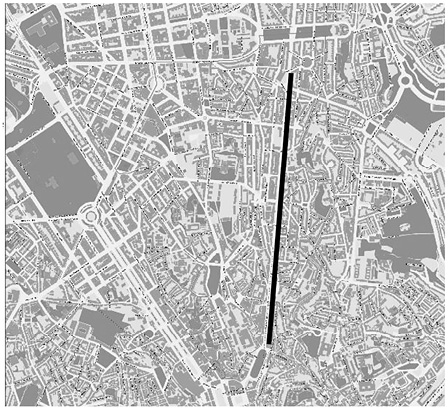
Figure 1. Definition of the Almirante Reis Avenue section, with its surrounding area selected as the case study
Source: Municipality of Lisbon (https://dados.cm-lisboa.pt/dataset/plantas-de-freguesia/resource/57cad344-4bb5-4fd9-bbe8-563df6c53dfa)
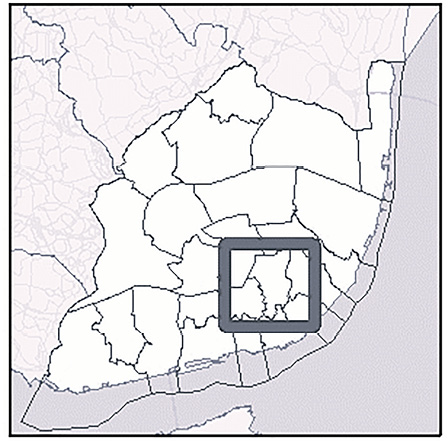
Figure 2. Parish in the context of the city of Lisbon
Source: Municipality of Lisbon (https://dados.cm-lisboa.pt/dataset/plantas-de-freguesia/resource/57cad344-4bb5-4fd9-bbe8-563df6c53dfa)
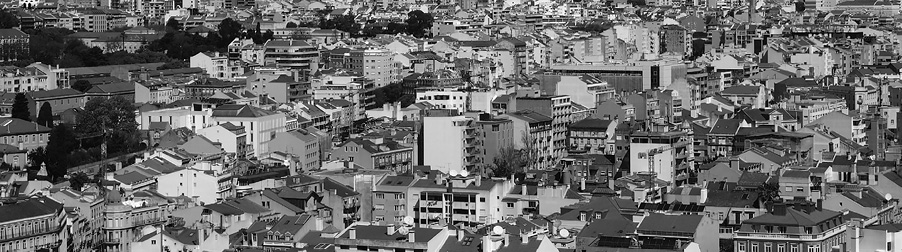
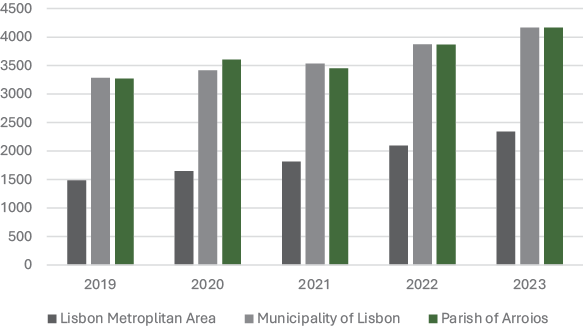
Figure 4. Median value of sales per m2 of family homes in the last 12 months (€/m²) between the 4th quarter of 2019 and the 4th quarter of 2023 in the Lisbon Metropolitan Area, Municipality of Lisbon and the parish of the case-study.
Source: Portuguese National Statistics Institute.
The territory falls into the category of ordinary places that provide settings for people’s daily lives being especially significant in terms of individual subjective social construction of place (Steigemann 2019). More than important landmarks or major symbolic structures (Steigemann 2019) and unlike neighbourhoods in the older part of the city that are now heavily touristified, the area was not in the spotlights until about 10 years ago as observed in a study carried out at that time (Frangella 2013). The focus on this area has changed radically and diversity is seen here as a feature of the area: the former parish executive (2013-2021) promoted the territory for its multiculturality, celebrating it in several communications sites from the web to a newspaper (Figure 5) in four different languages (Portuguese, English, French and Mandarin) and supporting several initiatives.
In 2019, the editors of Time Out (Silva 2019) voted the neighbourhood as the coolest in the world among a competition of 50 proposals (compared to what is Brooklyn in New York), considered the most heterogeneous of Lisbon, where diversity is everywhere, from people to places, a multicultural centre where urban art meets food from the four corners of the world, underground culture and historical treasures. In 2020, the parish council made a statement rejoicing at the issuance of 10 thousand residence permits. Currently, the acclaimed narrative of multiculturalism has vanished from the local political discourse. The new president of the parish (since 2021) claims the need to promote the local (Portuguese) identity and address several vulnerabilities, such as hidden poverty, and he is criticized for hampering access to resident permits.
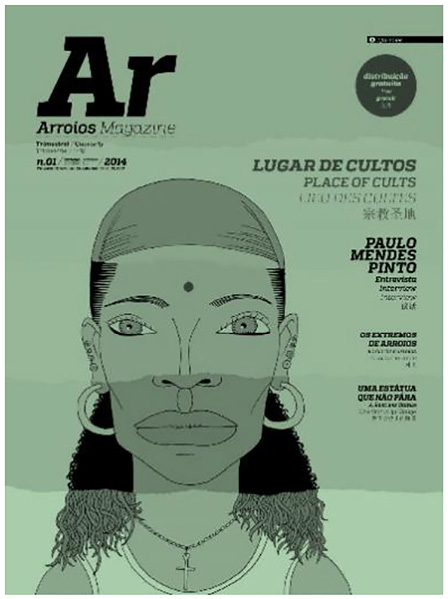
Figure 5. First issue of the magazine in 2014 launched by parish of Arroios
Meanwhile, the territory is also in the news due to the strong presence of homeless with people living in tents. Here, the debate between defensive or hostile architecture and the right of people experiencing homelessness to occupy public space, as well as the right of residents not to have people staying overnight at the entrance of their buildings and finally, the right to decent housing, is present in the press and social media.
After decades of urban sprawl, the parish has seen an influx of new residents in the past two censuses of 5%. The proportion of the resident population holding a higher education degree rose to 46.5% also with more people working in scientific and intellectual activities (Table 2).
The parish has, according to local authorities, around 90 nationalities. As in other countries (e.g. Vertovec 2007, referring to Britain; Góis & Marques 2010), the immigration patterns have conventionally been characterized as Portuguese-speaking communities of citizens originally from formerly colonial territories that in the metropolitan area are more present in the suburbs (Malheiros et al. 2011). In the European panorama, Portugal is, like the other Southern European countries, a country of relatively recent immigration (Góis & Marques 2010) showing lately the presence of ‘migrant urbanisms’ – that is, ways of life of organizing existence resulting from complex and diverse patterns of non-dominant economic and cultural globalization (Hall 2015a) in superdiverse terms.
As underlined by Hall (2015a, p. 454), ‘cities are altered by migration, and the everyday movement, mixing and exchange that saturates and transforms urban spaces’. Contrary to other areas with a long history of diversification where residents experience ethnic, religious and linguistic diversity as a normal part of everyday life (e.g. Wessendorf 2014b, writing about Hackney, in London) it is witnessing a rapid change in flows and residential patterns. In the last two censuses the proportion of the population of foreign nationality had a significant increase from 14% to 23% (Table 3), showing an over-representation compared to the Lisbon Metropolitan Area (9%), and the city of Lisbon (10%). The most significant resident population of foreign nationality is Brazilian, followed by Bengalis and Nepalis, in which this South Asian population is predominantly male. The precariousness to which many economic immigrants are exposed (with the official number of residents being very undervalued), in terms of working conditions (Mapril 2010) and housing market (e.g. Cachado & Frangella 2019; Malheiros et al. 2011) causes the proliferation of run-down hostels and overcrowded housing.
Source: Portuguese National Statistics Institute3
The territory serves as a key hub for migrant contact networks, residence, and work, functioning as a temporary host platform (Malheiros 2008, Frangella 2013). Due to its centrality and the fact that it has the most important engineering institute in the city, the area is also quite attractive for students and people from academia in general.
It has a strong associative character, from old collectivities closing to new ones, some of which develop left-wing political agendas and lead community-oriented actions (Rego 2023). Counterculture and politicization became particularly present, especially after the financial crisis. As gentrification became evident, the project of building a huge tower in the main avenue and the resistance to it highlighted the struggle between antagonistic ways of experiencing the city (Duarte 2019). This urban arena has a long history of support structures for vulnerable people (e.g. shelter for homeless people; social support centre; association that works with women in prostitution; several street outreach teams that cross this area). Recently, there has been news about migrants staying the night in tents in front of the Agency for Migration and Asylum Integration, seeking solutions to stay in the country involving actions and reactions from local authorities and social support structures. The avenue has been also a central symbolic territory of contestation where numerous demonstrations take place. One of the annual events that stands out is the celebration of Chinese New Year with decorative displays in public space, a parade, performances and stalls.
The area under analysis is divided into three sub-territories:
• The most downstream part is near Intendente Square (Table 8), that suffered a profound revitalization process between 2011 and 2014 led by the municipality.
• Another sub-territory is around (Figure 6), a small park with a huge rubber tree that hosts a variety of dynamics: parents or grandparents with children on the playground, a diversity of users in the café-kiosk terrace, a more vulnerable population, including homeless people occupying the benches, and elderly people playing cards on the tables. It also hosts a second-hand book market.
• Finally, the market area (Figure 7), established in 1942, that underwent a regeneration in 2017. The territory is experiencing an influx of new residents and tourists, rising rents, and changes in retail offerings. It features a mix of traditional Portuguese shops, newer establishments catering to specific interests (bars, bookshops, organic bakeries, vinyl stores, vegan restaurants, vintage and second-hand shops) and ‘loose infrastructures’ (Hall 2015a) in physical and temporal terms, with constant ongoing shifts in terms of tenure and activities (mainly Chinese shops, South Asian-run mobile phone shops, Brazilian food stores, and beauty salons).
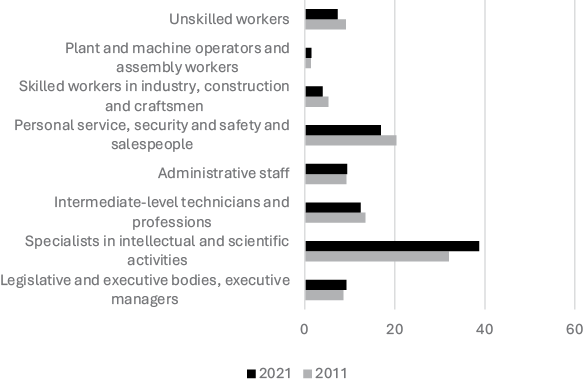
Figure 6. Professions of residents in the parish of Arroios (Census 2011 and 2021).
Source: Portuguese National Statistics Institute

Source: authors
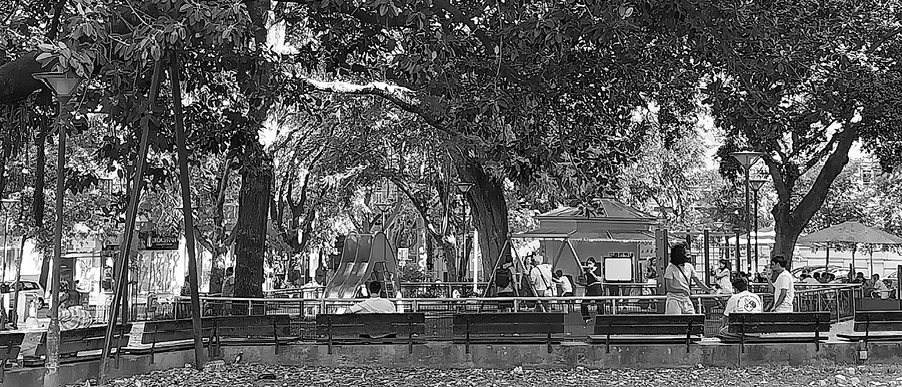
Source: authors
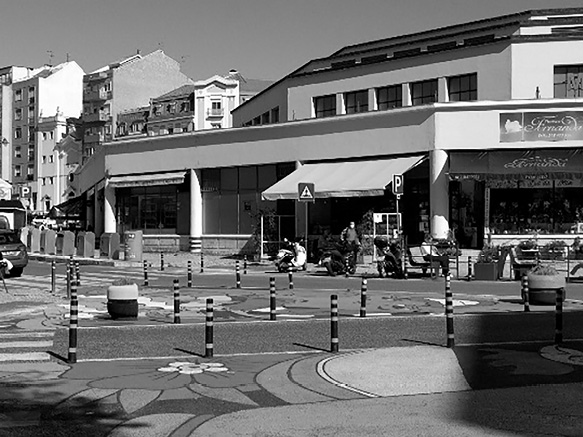
Source: authors
Analysis
Why move to the area?
Despite the increase in real estate prices, residents who opted to come in the last 15 years frequently indicate that price was an important option, more affordable than other areas in Lisbon, with more homogeneous and (upper)middle-class neighbourhoods often being highlighted as preferences. Reasons mentioned are aspects like the diversity, the housing flair, good transportation, centrality and the fact of having friends and acquaintances in the area. Specially for migrants, to be near work (namely interviewees engaged in commerce, restaurants and hotels) was a central concern.
Who lives in this area?
As referred to by residents,
Here you find everything. From the old people who always lived here, who got married or were born here or came here, and their children grew up here ... the hipsters (…) Portuguese students, but you also see a lot of Europeans who come to study or come to work (…) and then the entire community of immigrants: Africa, Brazil... East... more China, more India... (Interview 10, postgrad degree, works in arts, tenant, Portuguese, in her 50s, mid-time resident, came from another part of Portugal).
... there’s a mixture... now, in the last few years, there are probably more people involved in arts (…) a lot of people who had to leave the neighbourhood because of the rise in rents, people who had lived in the neighbourhood for many years, they had to leave. And in exchange, maybe more people with a higher socio-economic level have come, French people in particular, I think. But you also see many Indian families sharing a house too. Chinese... Pakistanis, Portuguese too (Interview 5, postgrad degree, call centre agent, rented room, Spanish, in her 30s, mid-time resident).
A shop owner and longtime resident from an eastern European country describes the changing demographic profile of a neighbourhood that was once predominantly inhabited by ‘educated and respectful middle-class people’. Now, with rising room rentals and the difficulty in buying apartments in the area, she refers a greater diversity of residents, including people of different ethnic backgrounds. She expresses discomfort with the lack of education and respect of some new residents.
Economic migrants did not necessarily settle in this area from their home countries. In addition to some having been in other European countries, reference is made to passing through other areas, namely in Greater Lisbon.
Regarding cohabitation, housing is characterized by various situations, from students to couples/families who sublet a room, individuals who share a house with strangers, and even a mixture of students and economic migrants. For instance, a girl from Chile shared a room with her boyfriend in a shared apartment with a German, a Venezuelan couple with a child, an Angolan and a Ghanaian. A Portuguese student shared a flat with an Italian and a Brazilian working in the gig economy, and the old landlady and her adult son lived in an annexe. A woman rented an apartment where she lives with her son and her daughter, who shares a room with her girlfriend and has another room sublet to a young man.
In spite of frequent changes, several interviewees are capable of describing how the different flats are occupied in their building and have some knowledge about the inhabitants:
So ground floor, it’s on one side, it’s a Portuguese couple (…) let’s say 45, really nice. She has like a beauty salon or something like that and he’s a foot doctor.
And the other apartment (…) it’s always like changing and it’s always more or less student age. Here it’s us and a very old grandma and she has, like, social help. (…) Next, (…) is one Portuguese guy, but he (…) is always in countries like Nigeria or whatever to do humanitarian work. Then it’s empty, the owner is a Swiss woman who lives somewhere in Lisbon. And before it was her mother that was living here but she went back to, I think, France for healthcare or whatever. And now sometimes they rent it as maybe Airbnb (…) Then the third floor it’s an old couple, they are probably like, I don’t know, 80 or something and it was Portuguese family, but they moved to Algarve (Interview 8, postgrad degree, IT job, tenant, French, in his 30s, recent resident).
The buildings house elderly people who have lived in the area for many decades. This population has worked mainly in administrative services and commerce. More permanent residents, share the building with people who are there temporarily, which generates some concern about not knowing who enters and leaves the building, as well as due to tenants who are evicted to make way for more profitable rentals (shared apartments and short-term rentals for tourism).
Pemberton and Philmore (2018) suggest that ideal places for migration are formed with a common neighbourhood identity based on diversity in contrast to rapid changes that cause some resistance, especially among long-time residents. There is a perception that those who are there temporarily do not care.
These are people who inhabit the space momentarily, so they do not respect the space. Those who live here regularly are not being respected (Interview 20, secondary school, does odd jobs, subtenant, Portuguese, in his 40s, born in the area).
For the development of the area, the importance of the presence of families with children is highlighted:
Young people, those young couples with children, I think that’s what’s disappearing (…) and it is these people or these types of people that make life better in these places (…) they are also the ones that bring the most critical mass, because they are people who have children, worry about security, worry about schools, worry about a series of things that they actually make neighbourhoods and cities come alive, and we are pulling people out of the city (…) And this multiplied by several people is what makes places better (…) they have different consumption habits that actually raise the level of cities (Interview 48,graduate, owner, Portuguese, in his 30s, long-time resident, came from another part of Portugal).
Perception of the territory
If I describe it to people in France or whatever, I would explain that I live in a neighbourhood (…) that was poor but it’s becoming trendy and lots of stuff is going on and it’s a good alternative. So that’s kind of my view of the neighbourhood. I think it’s really an interesting place because it has a lot of different facets…(Interview 8, postgrad degree, IT job, tenant, French, in his 30s, recent resident).
To the surprise of several arriving residents, there is a sense of neighbourliness, which some would not have expected in such a diverse district, with people in transition but also being a transit area.
I really liked the neighbourhood, in fact, it’s a whole real neighbourhood. Here we get to know each other. You walk anywhere here and they know you, greet you (Interview 22, degree, head baker, rented room, Chilean, in her 20s, mid-time resident).
A newly arrived resident reported that she went to the cafe, and the owner welcomed her, talked about the area and introduced her to neighbours. When the South Asians at the grocery store noticed that she was a new resident, they paid extra attention to her and gave her small discounts.
This territory, characterized by the highest density in Lisbon, has a large number of small shops and is widely used for residents’ daily needs. This physical proximity contributes to public familiarity (Blokland & Schultze 2017), which is recognized by the interviewees based on regular encounters:
I love living in the centre. I love seeing people (...) being able to go downstairs and be in the restaurants. So, we already know everyone, we pass by, we say hello. I like that, you know? This... movement (Interview 44, graduate, IT job, rented room, Brazilian, in her 20s, mid-time resident).
… For me, this is like what it means to be in a neighbourhood, which is where you go. You buy bread, you get your coffee from someone whose name you know and (…) you have a bond with them immediately because it’s a special place (…) I always feel like I see people. (Interview 3, graduate, IT job, owner, American, in her 30s, recent resident, moved from another part of the territory).
The American interviewee also underlines an ‘expat vibe’ that she finds specially in some parts of territory.
There were also reports of new contacts in the public space, as the case of a Gambian woman (living in a rented room provided by social security) who was speaking with her daughter at the park and was approached by three compatriots who heard her speaking.
In terms of security, the territory, in general, is perceived as safe, which contributes to the constant presence of people on the street, being avoidance more emphasized to specific cafes or certain ‘street corners’ e.g. associated with drug trafficking.
But three years ago it was still really full of drug addicts basically so we were wondering how is it a cool neighbourhood (…) we asked a cafe and the restaurants what they thought (…) this neighbourhood is starting cool stuff and it’s transforming and it’s getting better (…) at the beginning we were a bit frightened by this. And otherwise, I think we were just always more and more surprised on the good side because it’s for me now, I think it’s my favourite neighbourhood (Interview 8, postgrad degree, IT job, tenant, French, in his 30s, recent resident).
Regarding the strong presence of homelessness, there is an ambiguity in terms of consternation regarding their spending the night in public space in front of residential buildings and a certain normalization in terms of acceptance.
People complain with reason, it’s not that they complain indiscriminately (…). From year to year, you have more people on the street than you did before (Interview 55, graduate, activist, tenant, Portuguese, in his 50s, born in the area).
I also didn’t know if we were going to be ok with homelessness, right on our doorstep (…) it’s something that I think you learn to relativize. I’m not sure if this is the most correct exercise (Interview 7, postgrad degree, IT job and project manager, owners, Portuguese, couple in their 20s, recent residents, came from the suburbs).
Everyday Encounters and Sociability
As underlined by Hall (2015) multiculture, in the exchange on the street happens above all for pragmatic reasons in everyday encounters like shopping and where for the most parts congeniality prevails. The public realm is an important meeting space, the corner grocery store or the restaurant where residents are regular customers.
More parochial relationships are established here, like the case referred by a young Portuguese man who went to play football with South Asians from the grocery store and a shopkeeper from Nepal that was invited to a party. Some residents underline that this interaction provides communal relations (Lofland 1989; Wessendorf 2014b) namely a man of the newly arrived Portuguese family who helped the grocer from Bengal to recharge his car battery, claiming that there is ‘…a mutual help there that makes all the difference. It’s very important and it also makes us all feel closer, doesn’t it? We live in a small community and that’s how it has to work’ (Interview 29, graduate, businessman in bike tourism, owner, Portuguese, in his 40s, recent resident, came from another parish in Lisbon).
A Moldovan woman, a longtime resident that runs a sewing atelier highlights her friendship with the Portuguese (probably also related to the fact that her clients are mostly Portuguese) and the good reception received, being surprised with small gifts she gets at her shop and the support she received when her son was small.
Some recognize the difficulty in establishing friendships with the Portuguese:
It’s the hardest one because basically so Portuguese people don’t really have a reason to meet new people because (…) you already have your friends, your family, your work, whatever. Why would you want to meet expats? (Interview 8, postgrad degree, IT job, tenant, French, in his 30s, recent resident).
In this context, the interviewee’s connection to a cooperative, which focuses on ecologically and socially fair products, proves valuable for engaging with Portuguese people.
Conviviality is mentioned in the building, namely a quick chat at the entrance or small gestures like receiving an order (as underlined by a retired Portuguese resident referring to the Chinese and English neighbours) but can go beyond casual encounters to deeper friendships. What brings people together, namely neighbours, as mentioned, is a similar sociocultural level and common interests.
Our neighbours on the doorstep are excellent, they’re great people, and there’s this couple, who are foreigners, that we met recently, who we’ve also become friends with and we go out together, we have the same interests. (Interview 32, graduate, audiovisual production, owner, Brazilian, in her 30s, mid-time resident).
Closer relationships are established in the work context, namely by those who are in restaurants or hotel industry (contacting with different nationalities) which is generally perceived as positive:
I used to work with a boy who was from Pakistan, and the culture of Pakistan and mine and that of the Portuguese have nothing to do with each other. I know more immigrants, really, but I think that’s normal, why? (…) we’re looking for a family here. Portuguese people here already have a life. So it’s difficult (Interview 22, graduate, head baker, rented room, Chilean, in her 20s, mid-time resident).
A young woman from Bangladesh who works in a restaurant (speaks about her Brazilian colleagues in an amused way) reports that she is pleased to live in this area where she sublets a room in an apartment of a Bengali family. She refers to negative experiences in her building with Portuguese and foreign neighbours, attitudes that she considers antipathy, various criticisms of the way institutions operate (including an experience she had at a clinic), as well as forms of behaviour, making several comparisons with France, where she lived for two years and considered having more positive experiences.
Neighbourly Support and Connections
Support arises from different interactions between neighbours or shopkeepers:
we have a good... relationship with the neighbours, especially my husband. (…) A tap breaks, he goes over and helps (Interview 19, secondary school, beautician, tenant, Brazilian, in her 50s, longtime resident).
And also, the statement of a woman:
There in the square, there was a man who was Adir, who had the grocery store opposite, and little by little he began to win everyone’s hearts (…) his wife had postpartum depression and everyone helped, that is, when these opportunities are created on a daily basis, I think communities will become closer (Interview 40, graduate, head of an association and lecturer, tenant, Portuguese, in her 40s, mid-time resident, came from another parish in Lisbon).
People create support structures, as one interviewee said, ‘because I’ve been here for many years, I’ve already created networks of friends here, which help in day-to-day life’ (Interview 5, graduate, call centre agent, rented room, Spanish, in her 30s, mid-time resident).
In my building I’ve never had help from anyone because I’ve never needed it, but here in the market (…) I was very ill and (…) I’d only been here for a short time, so for a person who doesn’t know you at all to be kind and take you to hospital in particular, I think that’s a very nice thing to do (Interview 22, degree, head baker, rented room, Chilean, in her 20s, mid-time resident).
Religious communities (catholic church and mosque) were also highlighted as important support structures by two interviewees. And finally, the experience of an interviewee from Bangladesh who never found much support: ‘I never had opportunity, I never actually saw…, I don’t know, if I need anything I google, I search, I try to call, it is not directly in front of me by someone’ (Interview 35, secondary school, waiter, rented room, Bengali, in her 20s, recent resident).
The Complex Tapestry of Superdiversity in Arroios
In general, multiculturalism is not perceived negatively and is essentially related to commerce, in particular to the diversity of restaurants. In recent years, there has been a proliferation of new spaces in which the vast gastronomic offer is highlighted.
… being able to eat Indian, Nepalese, Chinese, Italian, Portuguese all of this in the same neighbourhood it’s really great (…) I think it’s also easier to probably integrate if it’s a lot of different people (Interview 8, postgrad degree, IT job, tenant, French, in his 30s, recent resident).
A woman from Bangladesh expressed her desire for more opportunities, particularly events that promote the sharing of the various cultures present (despite local associations consistently promoting multicultural events).
From an exchange in the neighbourhood but where everyone keeps their own cultural identity, a positive attitude towards diversity emerges.
They are people from different origins, who come to Portugal to build their lives, but who share their experiences and... and their culture and maintain their culture. I think that’s great (Interview 1, graduate, owner, Portuguese, in his 70s, was an advertising executive, recent resident, came from another parish in Lisbon).
Some people mention the need to respect those who live in the territory:
I also came from Africa, I came from a different culture and I came here, I integrated well, there has to be respect (…) If there is mutual respect, there is no problem (Interview 18, middle school, shop owner, from former Portuguese India, came from Mozambique, in his 40s).
Sometimes I feel that... that the immigrant people here, as there are so many of them, destroy your culture a little (Interview 22, graduate, head baker, rented room, Chilean, in her 20s, mid-time resident).
On the other hand, it is a fact that many are in transit and that there is no mix of cultures.
Arroios has people of many nationalities, but that doesn’t make the neighbourhood multicultural. There are people who come, they arrived here yesterday, they don’t even want to stay here (Interview 55, graduate, activist, tenant, Portuguese, in his 50s, born in the area).
In this context, settled migrants sometimes distance themselves from migrant newcomers, either because of the temporary nature of their status and their lack of concern with integration, or because of the quality of the businesses they run. They often consider themselves as part of the Portuguese residents: ‘If I don’t think about it, I usually say I’m Portuguese because I’ve been here for 24 years’ (Interview 43, graduate, seamstress, owner, Moldavian, in her 40s, long-time resident).
There is an ever-changing urban development with constant shifts in store management and even in the type of shop. Negative aspects include the perception of unfair competition and the repetition of the same kind of offer not considered particularly interesting for the development of a territory: ‘Apart from these little Indian, Pakistani and Chinese shops, there is nothing new anymore’ (Interview 42, graduate shop owner, Brazilian, in her 40s).
In the interviews, the impact and value added by specific stores and cultural presence are discussed:
I also don’t want [the area] to turn into an Islamic neighbourhood… I really like Turkey. Istanbul is one of my favourite capitals. I don’t want to be living in an Istanbul, do I? For me, I really like multiculturalism, but people who have something to give (…) (Interview 15, graduate, owner, Portuguese, in his 60s, born in the area).
Negative perceptions of migration are associated with exploitation (related to residence permits) and an example of terrorism was mentioned (a man who worked in a Syrian restaurant and whose story was reported in the news).
Authors highlight the importance of everyday interaction in different infrastructures like schools (Nast & Blokland 2013) and childcare centres (Small 2009) as spaces for negotiation and cultural transgression (Amin 2002; Wessendorf 2014b) and where resources are shared and social capital is built (Felder 2019). In the present case-study, associations, which are more than meeting spaces between different groups, tend to be parochial realms for particular target groups (cf Kusenbach 2006): a University of the Third Age, a workshop project for elderly, numerous places of worship (of different faiths), associations supporting migrants or homeless, a community cooperative, different cultural spaces and movements that struggle for the development of specific measures and that are relatively homogeneous. Several associations apply and promote socio-cultural programs and organize different cultural activities that aim to be meeting spaces and are sometimes criticized for not coming from the groups themselves.
In this sense, the importance of children and schools in engendering conviviality is recognized (e.g. a Portuguese family who was invited to dinner at the house of her son’s Indian school friend), namely regular contact with diverse cultures and different biographic paths.
There are people I may have known before... before I came to the neighbourhood, through friends, and others I met through school or through... being in the neighbourhood (…) if I meet them in the park we stay there chatting while the children play (Interview 5, graduate, call centre agent, tenant, Spanish, in her 30s, mid-term resident, came from another part of the parish).
An interviewee recounted, in an amused tone, a story about her son coming home upset.
Because we were very boring, his parents [both from the same city in Portugal]. (…) All the other colleagues had lots of stories, they had grandparents in India, they had parents in London, they flew on planes from time to time, they had a whole history that he didn’t have. He was one of the few who didn’t have stories to tell, he was dull (Interview 28, postgrad degree, architect, owner, Portuguese, in her 40s, mid-term resident, came from another parish in Lisbon).
Discussion
The paper addresses the concept of superdiversity in urban contexts, highlighting the increasing complexity beyond ethnic grouping. The case study captures the vast dynamics and heterogeneity that characterize, particularly, the inner core of cities, where urban political agendas and diverse mobility patterns converge most prominently. Individuals traversing varied paths, networks, positions, and access engage in multifaceted interactions within a territory undergoing rapid transformations, in a system itself fluid in terms of official strategic priorities, shaping the intricate dimensionality of urban life.
The area under analysis is marked by large population circulation, and the landscape not only mirrors more or less temporary movements but also underscores the unequal distribution of resources and opportunities. It underwent rapid changes, including rising property prices, gentrification, and aspects intersected by high inequality in work and housing precarity, as well as homelessness, alongside an increasing number of economic migrants, showing the tangled mechanisms of urban development that are anything but linear. Several factors influenced people’s decisions to move to the area, including financial considerations, lifestyle preferences, and transportation convenience. For many hipsters, the area is especially praised for its expat atmosphere and its trendy offerings. However, it is also essential for migrant populations who find support structures and fellow compatriots here. Despite a very significant number of nationalities, there is a large concentration of South Asians from Nepal and Bangladesh, and it is interesting to see how rapidly they have surpassed the previously larger Chinese community. The perception is that the territory is evolving in extreme directions, with vulnerable people on one side and those who can afford real estate prices on the other.
A word that came up several times was respect, including the need to respect each other’s cultures to respect those who are settled in the territory, namely Portuguese. On the other hand, many residents appreciate the multicultural environment, with the neighbourhood’s cultural richness primarily experienced in public spaces and through gastronomy, reflecting a sense of openness and acceptance that everyone maintains their cultural identity with a positive attitude towards diversity. Others, namely some longtime residents, range from indifference to keeping a distance. There are tensions related to rapid change and the difficulty in dealing with transformations, especially on the part of this group, with criticisms, especially towards a swelling population (which includes tourists, students, expats, and economic migrants) and aspects like noise and the ‘loose infrastructures’ run by migrants, questioning what positive aspects this fluidity brings to the development of the territory. Issues of exploitation within immigrant communities are also referred to, where individuals work and live under poor conditions and face challenges in legalizing their status.
While cultural diversity is generally accepted, the narrative of multiculturalism has shifted in the political agenda. The president of the parish elected in 2021acknowledged the challenges of managing such diversity, particularly in communication and cultural integration, and emphasized her focus on promoting Portuguese culture and addressing problems related to urbanism, noise, and social issues. The area faces several challenges, including affordable housing, social integration, and the management of public spaces. Urban policies and civic initiatives can play a significant role in promoting inclusion, recognizing the importance of meeting spaces and educational institutions in building more inclusive places.
Vertovec’s concept of superdiversity offers a multifaceted analytical framework that moves beyond ethnicity to examine the dynamic interplay of various demographic, social, and cultural factors, providing a comprehensive understanding of the complexities of urban life through intersecting categories. This is where its value lies. It enables the researcher to explore multiple aspects of urban life, and to acknowledge the co-existence of conflicting perspectives on what it means to live in a complex social environment.
The study also sheds light on our understanding of the concept of superdiversity. Portugal, and Arroios in particular, does not resemble the superdiversity found in major global cities, which have developed over a long period of time. The superdiversity experienced by inhabitants of Arroios stands out for the rapid pace at which its diversity has developed, which poses particular challenges. Some residents express discomfort with the rapid changes and the transient nature of many new inhabitants, which makes the notion of a cohesive multicultural community more complex. While superdiversity can be understood to foster positive interactions, it can also lead to fragmentation and social stratification.
Time Out’s claim that Arroios is the ‘coolest neighborhood in the world’ aligns with the idea that superdiversity encompasses a wide range of identities and experiences. The designation probably reflects a combination of factors that appeal to a diverse audience, including its cultural scene, varied food offerings, and a sense of community among residents. The neighbourhood is indeed characterized by its multicultural atmosphere, reflected in a range of events and diverse culinary offerings, making it attractive to both locals and tourists. This representation serves as a powerful marketing tool, promoting Arroios as a trendy and desirable place to live and visit. It emphasizes the desirability of a lifestyle that those with the financial, social and cultural means can lead.
The study’s findings support some aspects of this claim, particularly regarding the neighbourhood’s cultural richness and the positive experiences shared by many residents. Several interviews reveal a sense of neighbourliness and community engagement, with residents appreciating the diversity and the variety of social interactions available in public spaces. Newcomers express enjoyment of living in a dynamic area undergoing transformation and revitalization.
However, the shifting political discourse in Arroios, as noted in the study, reflects a move away from celebrating multiculturalism towards the complexities of managing a multicultural and heterogeneous urban environment. This change complicates the narrative of the ‘neighbourhood’, suggesting that perceptions of Arroios are varied and influenced by broader social and political dynamics.
While the ‘cool’ label can attract new residents and tourists, it also contributes to gentrification and rising property prices, which can displace long-term residents and exacerbate socioeconomic disparities. The narrative of a trendy neighbourhood may overshadow the challenges faced by vulnerable populations, such as the homeless and economically marginalized groups, who are often overlooked in broader discussions of urban success. Conversely, applying the concept of superdiversity to the ‘cool’ narrative underscores the need for policies that ensure inclusivity amid change, balancing celebration with equity.
Conclusion
The use of Vertovec’s concept of superdiversity as an analytical tool has shown the complexity of the concept. Our starting point was the article in Time Out, which announced the area as the coolest neighbourhood in the world. Time Out states in its website that the world’s coolest neighbourhoods are places where diversity is championed, that represent the soul of our cities, while maintaining their own unique local character that draws people in to live, work and play. Time Out’s emphasis is on the ‘play’ aspect, given its claim to be a guide to the best art and entertainment, food and drink, attractions, hotels and things to do in the world’s greatest cities. From this, we can see how Time Out uses some aspects of the area’s superdiversity as a marketing tool.
From the analysis presented here, it becomes clear that the reduction of the complexity of a neighbourhood such as Arroios to an area based around leisure pursuits is damaging to the development of the neighbourhood as a place to live and work, where those with means live alongside the vulnerable. The analysis shows how the emphasis given to one set of factors in a complex concept is potentially damaging to scholarship in the area as it runs the risk of crowding out other factors in the concept. The study also shows how substituting other concepts, such as multiculturalism and gentrification, are not appropriate for discussing the entirety of lived experiences of the residents of areas of superdiversity such as Arroios.
Acknowledgements
We would like to thank all the participants in the research for their availability; without them, this research would not be possible.
References
Allegra, M. & Tulumello, S. 2019, ‘O estado da habitação: introdução ao dossier’, Cidades: Comunidades e Territórios, vol. 38, pp. iii-ix. https://doi.org/10.15847/citiescommunitiesterritories.jun2019.038.doss-edit
Amin, A. 2002, ‘Ethnicity and the multicultural city: Living with diversity’, Environment and Planning A: Economy and Space, vol. 34, no. 6, pp. 959–980. https://doi.org/10.1068/a3537
Aptekar, S. 2017, ‘Super-diversity as a methodological lens: re-centring power and inequality’, Ethnic and Racial Studies, vol. 42, no. 1, pp.53–70. https://doi.org/10.1080/01419870.2017.1406124
Barata-Salgueiro, T. 2017, ‘Alojamentos turísticos em Lisboa’, Scripta Nova. Revista Electrónica de Geografía y Ciencias Sociales,, vol. 21, article no. 578. https://doi.org/10.1344/sn2017.21.18587
Berg, M.L. & Sigona, N. 2013, ‘Ethnography, diversity and urban space’, Identities, vol. 20, no. 4, pp. 347–360. https://doi.org/10.1080/1070289X.2013.822382
Blokland, T. & Schultze, H. 2017, ‘Belonging, conviviality or public familiarity? Making sense of urbanity in rapidly transforming neighbourhoods through the lens of Berlin and Rotterdam’, In: Smagacz-Poziemska, M., Frysztacki, K. & Bukowski, A. (Eds.), Re-Imagining the City. Municipality and Urbanity Today from a Sociological Perspective, Jagiellonian University Press, Krakow, pp. 243–264.
Bynner, C. 2017, ‘Intergroup relations in a super-diverse neighbourhood: The dynamics of population composition, context and community’, Urban Studies, vol. 56, no. 2, pp. 335–351. https://doi.org/10.1177/0042098017740287
Cachado, R. & Frangella, S. 2019, ‘House and mobility: Portuguese Hindus and Brazilians in Lisbon in face of housing constraints’, Archivio Antropologico Mediterraneo, vol. 21, no. 2. https://doi.org/10.4000/aam.2166
Castells, M. 2002, ‘Urban sociology in the twenty-first century’, Cidades, Comunidades e Territórios, no. 5, pp. 9-19. https://doi.org/10.7749/citiescommunitiesterritories.dez2002.005.art01
Crul, M. R. J., Schneider, J. & Lelie, F. 2013, Super-diversity. A new perspective on integration, VU University Press.
Crul, M. 2016, ‘Superdiversity vs. Assimilation: how complex diversity in majority-minority cities challenges the assumptions of assimilation’, Journal of Ethnic and Migration Studies, vol. 42, no. 1, pp. 54-68. https://doi.org/10.1080/1369183X.2015.1061425
Duarte, T-F. 2019, ‘A comuna de Arroios e a Torre da Portugália’, Punkto, no. 24. https://www.revistapunkto.com/2019/08/a-comuna-de-arroios-e-torre-da.html
Duyvendak, J. 2025, ‘Does ‘super-diversity’ address majority anxieties?’, Nations and Nationalism. https://doi.org/10.1111/nana.13123
Felder, M. 2019, ‘Who are the strangers? Neighbour relations in socially and ethnically heterogeneous residential buildings in Geneva’, In: Oosterlynck, S., Verschraegen & van Kempen, R. (Eds.), Divercities: Understanding super diversity in deprived and mixed neighbourhoods, Bristol University Press, Bristol, Chicago, pp. 25-46. https://doi.org/10.46692/9781447338192.002
Frangella, S. 2013, ‘ “Fomos conhecer um tal de Arroios”: construção de um lugar na imigração brasileira em Lisboa’, In Domingues, N. & Peralta, E. Cidade e império: dinâmicas coloniais e reconfigurações pós-coloniais, Edições 70, Lisboa, pp. 463-502.
Góis, P. & Marques, J-C. 2010, ‘Novos fluxos de imigração em Portugal: O novo posicionamento de Portugal no sistema migratório Europeu’, In Baganha, M., Marques, J. C. & Góis, P. (Eds.), Imigração Ucraniana em Portugal e no Sul da Europa: a emergência de uma ou mais comunidades?, ACIDI IP, Lisboa, pp. 13-23.
Hall, S. 2015a, ‘Migrant urbanisms: Ordinary cities and everyday resistance’, Sociology, vol. 49, no. 5, pp. 853–869. https://doi.org/10.1177/0038038515586680
Hall, S. 2015b, ‘Super-diverse street: a ‘trans-ethnography’ across migrant localities’, Ethnic and Racial Studies, vol. 38, no. 1, pp. 22-37. https://doi.org/10.1080/01419870.2013.858175
Hall, S. 2017, ‘Mooring “super-diversity” to a brutal migration milieu’, Ethnic and Racial Studies, vol. 40, no. 9, pp. 1562-1573. https://doi.org/10.1080/01419870.2017.1300296
Kusenbach, M. 2006, ‘Patterns of neighboring: Practicing community in the parochial realm’, Symbolic Interaction, vol. 29, no, 3, pp. 279–306. https://doi.org/10.1525/si.2006.29.3.279
Lofland, L. 1989, ‘Social life in the public realm. A review’, Journal of Contemporary Ethnography, vol. 17, no. 4, pp. 453–482. https://doi.org/10.1177/089124189017004004
Malheiros, J. 2008, ‘Comunidades de origem indiana na Área Metropolitana de Lisboa – iniciativas empresariais e estratégias sociais criativas na cidade’, Migrações, vol. 3, pp. 139-164.
Malheiros, J. & Fonseca, L. (coord.), Latoeira, C., Carmo, A., Esteves, A., Estevão, M. McGarrigle, J., Moreno, L., Pereira, S., Ramos, J-C., Serra, N. & Torres, J. 2011, Acesso à habitação e problemas residenciais dos imigrantes em Portugal, Observatório da Imigração no. 15, ACIME, Lisboa.
Mapril, J. 2010, ‘Banglapara: imigração, negócios e (in)formalidades em Lisboa1’, Etnografica, vol. 14, no. 2, pp. 243–263. https://doi.org/10.4000/etnografica.284
Nast, J. & Blokland, T. 2013, ‘Social mix revisited: Neighbourhood institutions as setting for boundary work and social capital’, Sociology, vol. 48, no. 3, pp. 482–499. https://doi.org/10.1177/0038038513500108
Nielsen, R.S. & Winther, A.H. 2020, ‘The complexity of diversity in reality: Perceptions of urban diversity’, Urban Studies, vol. 57, no. 14, pp. 2817–2832. https://doi.org/10.1177/0042098019886737
Padilla, B., Azevedo, J. & Olmos-Alcaraz, A. 2014, ‘Superdiversity and conviviality: exploring frameworks for doing ethnography in Southern European intercultural cities’, Ethnic and Racial Studies, vol. 38, no. 4, pp. 621–635. https://doi.org/10.1080/01419870.2015.980294
Phillips, D., Athwal, B., Robinson, D. & Harrison, M. 2013, ´Towards intercultural engagement: Building shared visions of neighbourhood and community in an era of new migration`, Journal of Ethnic and Migration Studies, vol. 40, no. 1, pp. 42–59. https://doi.org/10.1080/1369183X.2013.782146
Pemberton, S., & Phillimore, J. 2018, ‘Migrant place-making in superdiverse neighbourhoods’, Urban Studies, vol. 55, no. 4, pp. 733–750. https://doi.org/10.1177/0042098016656988
Rego, R. 2023, ‘Associations and cultural democracy: a proposal of two ideal-types’, Etnográfica, vol. 27, no. 1, pp. 193–209. https://doi.org/10.4000/etnografica.13460
Seixas, J. & Antunes, G. 2019, ‘Tendências recentes de segregação habitacional na Área Metropolitana de Lisboa’, Cidades, Comunidades e Territórios, no. 39. https://journals.openedition.org/cidades/1555. https://doi.org/10.15847/citiescommunitiesterritories.dec2019.039.art01
Seixas, J. & Guterres, A-B. 2019, ‘Political evolution in the Lisbon of the digital era. Fast urban changes, slow institutional restructuring and growing civic pressures’, Urban Research & Practice, vol. 12, no. 1, pp. 99–110. https://doi.org/10.1080/17535069.2018.1505272
Seixas, J, Tulumello, S, Corvelo, S & Drago, A. 2015, ‘Dinâmicas sociogeográficas e políticas na Área Metropolitana de Lisboa em tempos de crise e de austeridade’, Cadernos Metrópole, vol. 17, no. 34, pp. 371–399. https://doi.org/10.1590/2236-9996.2015-3404
Silva, R. D. 2019, ‘O bairro mais cool do mundo está em Lisboa: Arroios é o vencedor’, Time Out,17 September. https://www.timeout.pt/lisboa/pt/noticias/o-bairro-mais-cool-do-mundo-esta-em-lisboa-arroios-e-o-vencedor-091719
Small, M. L. 2009, Unanticipated Gains - Origins of Network Inequality in Everyday Life, Oxford University Press. https://doi.org/10.1093/acprof:oso/9780195384352.001.0001
Steigemann, A. 2019, The Places Where Community is Practiced: How Store Owners and Their Businesses Build Neighborhood Social Life, Springer, Wiesbaden. https://doi.org/10.1007/978-3-658-25393-6
Tulumello, S. 2015, ‘Reconsidering neoliberal urban planning in times of crisis: Urban regeneration policy in a “dense” space in Lisbon’, Urban Geography, vol. 37, no. 1, pp. 117–140. https://doi.org/10.1080/02723638.2015.1056605
van Eijk, G. 2012, ‘Good neighbours in bad neighbourhoods: narratives of dissociation and practices of neighbouring in a “problem” place’, Urban Studies, vol. 49, no. 14, pp. 3009-3026. https://doi.org/10.1177/0042098012439110
Vertovec, S. 2007, ‘Super-diversity and its implications’, Ethnic and Racial Studies, vol. 30, no. 6, pp. 1024–1054. https://doi.org/10.1080/01419870701599465
Vertovec, S. 2015, ‘Introduction: migration, cities, diversities “old” and “new”’, In Vertovec, S. (ed.) Diversities Old and New: Migration and Socio-Spatial Patterns in New York, Singapore and Johannesburg, Palgrave Macmillan, London, pp. 1-20. https://doi.org/10.1057/9781137495488_1
Vertovec, S. 2023, Superdiversity: Migration and social complexity, Routledge, New York. https://doi.org/10.4324/9780203503577
Wessendorf, S. 2014a, Commonplace Diversity: Social Relations in a Super-Diverse Context, Palgrave Macmillan, London. https://doi.org/10.1057/9781137033314
Wessendorf, S. 2014b, ‘“Being open, but sometimes closed”. Conviviality in a super-diverse London neighbourhood’, European Journal of Cultural Studies, vol. 17, no. 4, pp. 392–405. https://doi.org/10.1177/1367549413510415
Williams, C. F. & Mikola, M. 2018, ‘From multiculturalism to superdiversity? Narratives of health and wellbeing in an urban neighbourhood’, Social Work & Policy Studies: Social Justice, Practice and Theory, vol. 1, no. 1, pp. 1-24.
1 Recent residents – less than five years; mid-time residents – five to ten years; longtime residents – more than ten years.
2 All interviewees gave their written consent. To ensure anonymity, the names of the interviewees are not included in the quotes.
3 The data refer to the entire parish of Arroios, and the area under analysis is probably more diverse than other parts of the territory. Given, among other factors, the high number of residence permits issued by the parish council, official data most likely understate the actual foreign population. The high number of people in temporary situations also makes quantification difficult.