Cosmopolitan Civil Societies: An Interdisciplinary Journal
Vol. 16, No. 2
2024
ARTICLE (REFEREED)
The Socio-economic Transformation in Makassar Tribe Gift-giving Tradition: Reconstructing Social Welfare Strategy
Fatjri Nur Tajuddin1,*, Afidatul Asmar2
1 Institut Agama Islam Negeri Parepare, Indonesia, fatjrinurtajuddin@iainpare.ac.id
2 Institut Agama Islam Negeri Parepare, Indonesia, afidatulasmar@iainpare.ac.id
Corresponding author: Fatjri Nur Tajuddin, Institut Agama Islam Negeri Parepare, Jl. Amal Bhakti No.8, Bukit Harapan, Kec. Soreang, Kota Parepare, Sulawesi Selatan 91131, Indonesia, fatjrinurtajuddin@iainpare.ac.id
DOI: https://doi.org/10.5130/ccs.v16.i2.8847
Article History: Received 08/10/2023; Revised 26/05/2024; Accepted 07/06/2024; Published 27/08/2024
Citation: Tajuddin, F. N., Asmar, A. 2024. The Socio-economic Transformation in Makassar Tribe Gift-giving Tradition: Reconstructing Social Welfare Strategy. Cosmopolitan Civil Societies: An Interdisciplinary Journal, 16:2, 19–26. https://doi.org/10.5130/ccs.v16.i2.8847
Abstract
The gift-giving tradition in Jeneponto, the land of the Makassar Tribe, has undergone significant transformation over time, reflecting changes in socio-economic ethics within societies. This study explores the evolution of this tradition and its profound impact on contemporary socio-economic values. It examines how gift-giving has transitioned from a simple act of goodwill and cultural exchange to a complex phenomenon influenced by consumerism, status, and economic disparities. Drawing from ethnographic research analysis, this research delves into the cultural and social significance of gift-giving in various contexts. It sheds light on how traditional values, such as reciprocity and generosity, have been reshaped by commercialization and global consumer culture. Furthermore, it investigates the consequences of these changes on individuals and communities. The study also discusses the ethical dilemmas arising from the commodification of gift-giving, including issues of authenticity, social inequality, and environmental sustainability. It highlights the need for a more conscious and responsible approach to gift-giving in the current situation.
Keywords
Gift-giving; Transformation; Socio-economic Values; Makassar
Introduction
Gift-giving in society has now developed not only for each individual but also on the basis of social solidarity (Lee 2020). This activity can be seen in various social cultural and religious activities such as Eid holidays, weddings, birthdays both formal and informal. Gift giving has developed not only as a social activity of how every human being acts in order to fulfil their social desires to please the recipient of the gift but is now developing as an effort to establish a relationship at a later time or in the future (Otake & Hagenimana 2021). This is related to the symbolic value in building reciprocal relationships in order to fulfil the economic needs between the two (Elder-Vass 2015; Sherry 1983). Basically, gift giving is often found in society where the gifts given each have different meanings that are manifested in the form to whom the gift is given; the value of the goods given, as well as the way the gift is delivered. These differences are caused by various structures and patterns of relationship closeness between the giver and the recipient of the gift. Certain patterns of close relationship can result in differences in the type and value of gifts given. Gifts in this case have diverse functions and can deliver different messages as a way to strengthen relationships between individuals and social groups in society (Wulff 2022).
Gift giving has evolved not only as a process of strengthening social relations but has transformed into a pattern of reciprocal relations to the value of the objects given. Gift giving no longer takes place as a free gift without expecting a return according to the value of the item given (pure gift) (Trautmann 2017) but turns into a mandatory gift that must be returned when the recipient of the gift carries out a tradition of social or religious activities (Li & Luo 2020). This phenomenon can be seen in various social and religious activities in several regions in the Makassar Tribe. This study takes Jeneponto District, South Sulawesi, Indonesia as its focus. Previously, gift-giving was done as a means of strengthening social ties, binding community relationships together, and as a way of demonstrating good manners and etiquette among each other. But it is now transformed as a means of indirectly exchanging gifts of at least equal or greater value. It has become mandatory because it has been reconstructed by the community in Jeneponto. Although not in writing, every individual who has received a gift is obliged to return it when the recipient of the gift carries out social or religious activities.
In Jeneponto, the social and religious activities referred to include weddings, circumcisions, housewarming celebrations, memorial services (tahlilan), and the aqiqah ceremony (a ceremony to celebrate the birth of a child). As a predominantly agricultural area with rice as its main source of income, the customary gifts given during these occasions are typically in the form of rice, with the quantity reflecting the closeness of the family relationship. Additionally, other essential items such as sugar, flour, eggs, and other necessities may also be given as gifts during specific events. This practice has gained rapid popularity as it is seen as a way to support the execution of these events, even when individuals may not have sufficient funds. At the end of the event, all the gifts received are usually sold to cover various event-related expenses, including decorations and the main food item, such as horse meat, which can be quite costly, often amounting to millions of Indonesian Rupiah.
However, it has become apparent that the income of the Jeneponto community, particularly in the Turatea District, does not match the value of the gifts that must be prepared when there are numerous social and religious events taking place. Typically, after the rice harvest season, many residents host weddings and circumcision ceremonies. It is assumed that each individual will have enough goods or gifts to bring to these events. In a single season, every resident can receive dozens of invitations, and during this time, they are expected to reciprocate with gifts of equal value. This practice has had a significant effect on the economic situation of the community. During each harvest season, residents prepare gifts without considering their future financial stability. This irregular economic system, in turn, impacts other social activities and interpersonal relationships, which are no longer conducted for social or cultural reasons but are instead influenced by the need to reciprocate for previous gifts. Furthermore, every individual endeavors to hold weddings or circumcision ceremonies at a relatively high cost with minimal resources, as a means to elevate their social status and demonstrate prestige within the community. In some areas, the failure to reciprocate gifts is publicly announced if the recipient does not give gifts when they are hosting their own social or religious event.
The aforementioned reasons highlight the importance of conducting further research to explore the underlying motivations and consequences of the gift-giving tradition in this community. The lack of economic organization resulting from the ongoing tradition may lead to a decline in the welfare of the local population if not addressed through a socio-cultural and economic analysis. This research aims to provide recommendations and early insights for the local community and the government to address social behavior patterns that could have negative implications for the sustainability of life in the Turatea District.
Research Methods
This research was conducted in one of the areas inhabited by the Makassar ethnic group, specifically in the Jeneponto Regency, by focusing on the Turatea District. The distance from Makassar City to the research location is approximately 90 km, or about a 2-hour journey by land. The research area comprises lowland and highland regions, with the main location situated in the mountainous area of the Turatea District. The research was carried out for approximately four months from February to May 2023, during which I, as principal author, became a participant observer, closely monitoring the development of various social and religious activities throughout the research period. In this location, the tradition of gift-giving has developed with patterns of activities that can influence not only social life but also economic and religious activities. The resulting influences tend to revolve around the community’s inability to meet the gift-giving obligations among individuals or groups. Therefore, to delve deeper into this phenomenon, this research employed a qualitative research approach with a field research design, involving interviews and participant observation. The research utilized ethnographic methods to gain an in-depth understanding of the social lives of individuals and groups in the research location.
Traditions and social or religious activities such as weddings and circumcisions in the Turatea District are generally held after the rice harvest season, which falls between April and May each year, as noted above. During this time, the researcher selected three families that were organizing wedding and circumcision ceremonies, events in which gift-giving transactions took place. The researcher actively participated in each phase of these activities. Additionally, to gather information, both formal and informal interviews were conducted. These interviews involved local residents, religious figures, and local government officials who provided comprehensive and relevant information for the research objectives.
Data analysis in this research used descriptive analysis. Descriptive analysis was employed as a means to explain the significant findings gathered, allowing for a better understanding of the facts and interpretation of the phenomena present in Jeneponto. Throughout the descriptive analysis process, the researcher applied the triangulation principle to ensure the accuracy and reliability of the collected data. This involved cross-checking and rechecking the sources and evidence found during the research process.
Results and Discussion
Giving and Exchange/Reciprocity in Jeneponto
This research unveils various outcomes related to the gift-giving tradition that takes place in the Jeneponto Regency. The tradition has deep roots in human culture and has become an integral part of social interactions and interpersonal relationships. Gifts are often used as a means to express love, respect, or celebrate significant moments in someone’s life. Furthermore, this research indicates that the tradition of gift-giving can have strong emotional impacts on both the recipient and the giver. Recipients often feel appreciated and acknowledged, which can strengthen emotional bonds in relationships. On the other hand, gift givers may experience satisfaction and happiness when they witness a positive reaction from the recipient. Historically, the concept of the meaning of giving has been developing for a long time and was introduced by an anthropologist, Marcel Mauss, in 1925 in his work The Gift. This work has served as a reference in many recent studies on the evolving cultural phenomenon of giving in society. In general, as societies develop, gift-giving is considered an act of sincere generosity from the giver to the receiver. Furthermore, it is implied that gift givers expect reciprocity (Mauss 1992). Nevertheless, giving gifts is a way for individuals to convey or express their feelings and strengthen their friendships with others as an effort to build social and cultural relationships (Komter & Vollebergh 1997; Smith 2000).
Initially, this concept was called “silaturahmi,” with the intention of maintaining good relationships with others, which later led to individuals pleasing each other through gift-giving (Al Ghozali 2017). Humans always act with signs as symbols in conveying something (Safar 2017). This is interpreted as the body language of individuals through a symbolic or sign system. Every sign shown by someone does not appear without reason but has a specific purpose (Knight & Reed 2019). Anything done by humans without a sign will have no meaning, and therefore, it cannot be identified as a sign (Roth 2019) Thus, the act of giving is interpreted by some communities not just as a simple exchange of objects but as having a deeper meaning.
Several theories have shown the connection between gift-giving and the exchange theory with structural-functional theory. Structural-functionalism aims to develop theories about the system or social structure with functional relationship patterns between individuals, groups, or social institutions within a society at a particular time (Marzali 2006). Talking about the concept of structural-functional, societies have many diversities that have functions and can be seen in the social structure of society. The social structure referred to here is a series of organized social relationships that affect members of society or specific groups in specific ways, where in this social system, it will function for others but conversely, if the structure in the social system is no longer functional, this structure will disappear on its own. In this explanation, structural functionalism theory relates to the concept of giving to each other, which can be in the form of contributions or events (Ritzer 2012). Structural and functional theory is interpreted as an aspect of reciprocal relationships between the regularity established in the social system where humans are the key actors in realizing the consequences in the interest of a social system. The changes that occur ultimately become new guidelines in carrying out social life as part of the consequences of adopting changes in community communities (Tajuddin et al. 2022). As explained by Parsons, there are important components in structural-functional theory (Hisyam 2021), namely adaptation, which is a social system or society that always experiences changes so that it can adapt to changes that occur both from within and outside their group; goal attainment, which is that every social system in society will always have goals to be achieved in that social system; integration, which is that every part of the social system is integrated with each other and tends to survive in equilibrium; and latency, which is the social system in the community group always tries to maintain a stable or static form of interaction so that any deviant behavior can be accommodated through continuously updated agreements.
Jeneponto Society in the Structural-Functional Theory
It cannot be denied that in every community, there are specific interests. Roles in the social system are one of the political products that develop in society. Gift-giving or exchange can also be influenced by community roles in reconstructing a new culture in interpreting the concept of giving. The basic social pattern of a community is greatly influenced by social conditions that are economically interpreted as social determinants (Sanderson 2020). Gift-giving can serve as a latent means of conveying signs of wealth and luxury as well as social status to the community (Poloma 2013). Rapid changes in society tend to dominate religion over the roles of individuals and groups, especially in relation to community economics, which can influence the belief system in religious ethics that seem to liberate individuals from obedience to religious authorities (Henaff 2003).
This research also identifies that the tradition of gift-giving can reflect cultural values, social norms, and expectations within the community. Certain gifts may be used to express symbolism or specific messages that have special meanings in a cultural context. One prominent aspect of the gift-giving tradition in the Turatea District is the symbolism attached to the gifts themselves. Each gift is often filled with specific meanings that may vary depending on the culture and context. In general, gifts given by the local community are referred to as bungkusang (gift) for families hosting events, such as rice, sarongs, money, and basic necessities, which can be valued at millions of rupiahs. Usually, during one season, there will be dozens of families hosting such events. Nevertheless, the tradition of gift-giving is often intended as a means to strengthen social bonds and relationships between individuals or groups. In special moments such as weddings or other celebrations, these gifts become a way to express support, respect, and celebrate together. Gift-giving can also be a way to show appreciation for someone’s contribution in a relationship or within the community. The emotional impact of gift-giving is also an important aspect of this tradition. Gift recipients often feel appreciated, loved, and recognized, which can strengthen their emotional bonds with the gift giver. In turn, gift givers also experience happiness and satisfaction when they see a positive response from the gift recipient. This creates a positive cycle in their relationship.
Gift-giving is a complex and varied practice that can be influenced by various cultural, social, economic, and psychological factors. It reflects the richness of diversity in various cultures worldwide. In the social context of the Turatea District, the tradition of gift-giving functions as a way to strengthen social bonds, maintain relationships, and express love. The emotional impact of gift-giving also highlights the importance of symbolic actions in interpersonal communication. Gift recipients feel appreciated, which can strengthen the bond between individuals in that relationship. On the other hand, gift givers also benefit emotionally from giving gifts, especially when they see the happiness and appreciation from the gift recipient. The tradition of gift-giving reflects broader cultural and social dynamics. Specific gifts may have unique meanings in a particular cultural context and can reflect the values upheld by that community. Therefore, the tradition of gift-giving is not just an individual act but also reflects broader cultural aspects. This research highlights the importance of understanding the tradition of gift-giving in a broader context and its vital role in strengthening social relationships and expressing cultural values.
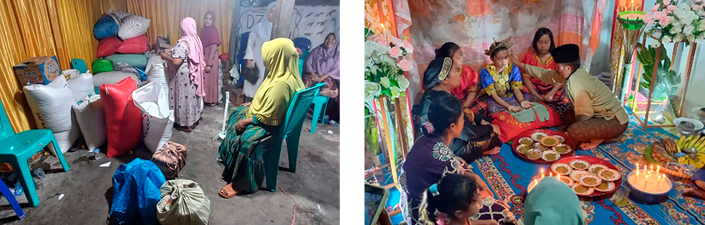
Figure 1. The ritual of the local party to which people bring their gifts.
Several meanings of the gift-giving tradition, although often considered a positive act, can also have negative impacts in some contexts. In the Turatea community, gift-giving is not just about sharing, it carries significant meaning, and it can lead to financial stress for both parties. For gift givers, it can result in significant financial pressure. People often feel compelled to buy expensive gifts or engage in spending beyond their means. This can lead to prolonged financial stress and even debt problems. Additionally, gift recipients must reciprocate when the gift giver also hosts an event. In one season, they may have to provide gifts to several families hosting events. This creates competition and high expectations, as the tradition of gift-giving sometimes fosters competition and high expectations among individuals. People often feel the need to give larger or more valuable gifts than they received, which can create discomfort and pressure. Ethical dilemmas can also arise from this tradition. Gift-giving can create ethical dilemmas, especially in business or political contexts. Gift recipients may face conflicts of interest or moral dilemmas related to accepting gifts that could potentially influence their decisions.
Social inequality is also a common occurrence in this region. Lavish or high-value gifts can reinforce social and economic inequality within the community. Those who can afford to give such gifts have an advantage, while those who cannot may feel marginalized or undervalued. Gift-giving that focuses on material values often leads to a distortion of values. The tradition of gift-giving that is closely related to material objects can divert attention from values such as empathy, compassion, and cooperation, thus causing communication failures. Sometimes, gifts fail to communicate the intended feelings or messages. Gift recipients may not fully understand the meaning or intentions behind the gift, which can lead to confusion or dissatisfaction.
Taken together, the financial stress experienced by some families in trying to meet their reciprocal obligations in gift-giving, and the potential breakdown in social relations because of the negative feelings experienced by the recipient and the impact of those on the giver, can lead to a breakdown in the social fabric of the community.
Developing a Social Welfare Reconstruction Strategy
Reconstructing social welfare as a response to the impacts of the gift-giving tradition is an important challenge in managing the social consequences of this practice. While the tradition of gift-giving has many positive aspects, such as a means to express love, strengthen social bonds, and celebrate important moments, the negative impacts should not be ignored. At the very least, based on the analysis of the occurring impacts, this study found a general community’s willingness to change the ongoing traditions, particularly in terms of awareness and the importance of education. In this regard, the reconstruction of social welfare can involve several steps aimed at balancing and reducing these negative impacts. The initial step in reconstruction is increasing awareness of the impacts of the gift-giving tradition. Public education and information campaigns can help individuals and communities understand the social, economic, and environmental consequences of this practice. This can involve campaigns to reduce pressure to give expensive or high-value gifts. In terms of the economy, planning to manage the financial pressure that arises from gift-giving can be a critical part of reconstruction. Individuals and families can be taught wise financial planning skills, including budgeting and debt management, to avoid financial stress.
Non-materialistic values are also important in the gift-giving tradition. These values can include focusing on shared experiences, quality time with family, or giving gifts that have deep emotional or symbolic meaning. The reconstruction of social welfare as a response to the impacts of the gift-giving tradition requires collaboration between individuals, families, communities, and governments. The goal is to minimize negative impacts, maintain positive benefits, and create a social environment that is more balanced, fair, and sustainable for everyone.
Conclusion
All in all, the practice of giving and receiving gifts has a significant role in maintaining social stability and strengthening community cohesion in Jeneponto, in line with the views of structural functionalism theory. In this context, gift-giving is not only considered an act of material exchange, but also a profound expression of social attachment, solidarity, and respect within the community. Structural functionalism theory highlights that every aspect of society has an important role in maintaining the balance and stability of the social system. In this case, gift-giving acts as one of the mechanisms that strengthen relationships between individuals and between groups. When one person gives a gift to another, it reflects positive and supportive social relationships in society. The gift becomes a symbol of a social exchange that goes deeper than just its material value. However, gift-giving theory adds an even deeper dimension. Gifts have not only material value, but also important symbolic and social value. For example, gifts given in a wedding ceremony not only symbolize material appreciation or support, but also express social symbolism of loyalty, commitment, and unity between the two families involved.
While the practice of gift-giving is generally considered positive, it is important to remember that it can also have complex impacts. The social expectations or obligations associated with gift-giving can create tension in social relationships. For example, if one is unable to give a gift that is deemed appropriate, it can lead to feelings of discomfort or even damage interpersonal relationships. Therefore, understanding the cultural, social, and economic context in which gift-giving occurs is key to keeping the practice positively beneficial. By understanding this context, individuals can adjust their gift-giving practices according to the values and norms present in their society. A high level of awareness of the possible consequences of gifting practices can help individuals and groups to be wiser in their participation, while considering more sustainable alternatives. This includes considering the financial and social impacts of gift giving, as well as maintaining a balance between expressions of affection and practical considerations.
Education programs that emphasize the importance of the traditional non-material values of gift-giving and reciprocity will have a significant role in this community. However, the community cannot be shielded from the wider societal values of consumerism and increased status. Thus, these education programs must also raise awareness of the longer-term damage to the community that occurs as the aspirations of individuals to present elaborate, costly, ceremonies setting off a chain of reciprocal gift-giving that is unsustainable.
Acknowledgements
I would like to extend my heartfelt gratitude to by Litapdimas under the Ministry of Religious Affairs of the Republic of Indonesia and LP2M Institut Agama Islam Negeri Parepare for their generous support of my research project. This financial assistance has been invaluable in enabling me to pursue this research and achieve its objectives. The commitment and investment of Litapdimas have not only provided essential resources but also served as a significant vote of confidence in the potential impact of this research. It is through their belief in the importance of advancing knowledge and innovation in this field that this project has been made possible. Furthermore, I am thankful to my colleagues and mentors who have offered their guidance, expertise, and encouragement throughout this research journey. Their support has been instrumental in shaping the direction and quality of this project. This research would not have been achievable without the collective efforts and contributions of all those involved. I am humbled and honored to have had the opportunity to conduct this research, and I am committed to delivering results that reflect the trust placed in me by Litapdimas, the Ministry of Religious Affairs of the Republic of Indonesia and LP2M Institut Agama Islam Negeri Parepare.
References
Al Ghozali, M. D. H. 2017, ‘Silaturrahim Perspektif Filsafat Islam (Ontologi, Epistemologi, Aksiologi)’, DINAMIKA: Jurnal Kajian Pendidikan Dan Keislaman, vol. 1, no. 1, pp. 51–66. https://doi.org/10.32764/dinamika.v1i1.104
Elder-Vass, D. 2015, ‘Free gifts and positional gifts: Beyond exchangism’, European Journal of Social Theory, vol. 18, no. 4, pp. 451–468. https://doi.org/10.1177/1368431014566562
Henaff, M. 2003, ‘Religious ethics, gift exchange and capitalism’, European Journal of Sociology/Archives Européennes de Sociologie/Europäisches Archiv Für Soziologie, vol. 44, no. 3, pp. 293–324. https://doi.org/10.1017/S0003975603001309
Hisyam, C. J. 2021, Sistem Sosial Budaya Indonesia, Bumi Aksara, Jakarta.
Knight, C. R. & Reed, I. A. 2019, ‘Meaning and modularity: The multivalence of “mechanism” in sociological explanation’, Sociological Theory, vol. 37, no. 3, pp. 234–256. https://doi.org/10.1177/0735275119869969
Komter, A. & Vollebergh, W. 1997, ‘Gift giving and the emotional significance of family and friends’, Journal of Marriage and the Family, vol. 59, no. 3, pp. 747-757. https://doi.org/10.2307/353958
Lee, S. C. 2020, ‘The (anti-)social gift? Mauss’s Paradox and the triad of the gift’, European Journal of Social Theory, vol. 23, no. 4, pp. 631–648. https://doi.org/10.1177/1368431020901853
Li, X. & Luo, M. 2020, ‘The analysis of the mystery of gift in human society—A case study of the flow of gift in the modern Yi People’s marriage’, Proceedings of the 2020 International Conference on Social Science, Economics and Education Research, Atlantis Press, Amsterdam, pp. 336–338. https://doi.org/10.2991/assehr.k.200801.081
Marzali, A. 2006, ‘Struktural-Fungsionalisme’, Jurnal Antropologi Indonesia, vol. 30, no. 2, pp. 127–137. https://doi.org/10.7454/ai.v30i2.3558
Mauss, M. 1992, Pemberian: Bentuk Dan Fungsi Pertukaran Di Masyarakat Kuno, Yayasan Obor Indonesia, Jakarta.
Otake, Y. & Hagenimana, F. 2021, ‘Gift economy and well-being: A mode of economy playing out in recovery from Rwandan tragedies’, Sustainable Development, vol. 29, no. 5, pp. 930–940. https://doi.org/10.1002/sd.2185
Poloma, M. 2013, Sosiologi Kontemporer, PT. Raja Grafindo Persada, Depok.
Ritzer, G. 2012, Teori Sosiologi: Dari Teori Sosiologi Klasik Sampai Perkembangan Mutahkir Teori Sosial Postmodern, 8th edn, Kreasi Wacana, Yogyakarta.
Roth, W.-M. 2019, ‘From meaning to sense-giving fields: Toward a strong version of the social’, In Transactional Psychology of Education, Springer, Cham, pp. 133–160. https://doi.org/10.1007/978-3-030-04242-4_6
Safar, J. 2017, ‘Translanguaging in Yucatec Maya Signing Communities’, Applied Linguistics Review, vol. 10, no. 1, pp. 133–160. https://doi.org/10.1515/applirev-2017-0082
Sanderson, S. K. 2020, Revolutions: A Worldwide Introduction to Political and Social Change, Taylor & Francis, New York, NY. https://doi.org/10.4324/9781315088693
Sherry, J. F., Jr. 1983, ‘Gift giving in anthropological perspective’, Journal of Consumer Research, vol. 10, no. 2, pp. 157–168. https://doi.org/10.1086/208956
Smith, C. J. 2000, China: In the Post-Utopian Age, Routledge, New York, NY. https://doi.org/10.4324/9780429039324
Tajuddin, F. N., Sabila, A. A., Nisa, A. K., & Rahman, F. A. 2022, ‘Decision making in adopting cultural changes during the Covid-19 pandemic’, Jurnal Pendidikan Ilmu Sosial, vol. 31, no. 1, pp. 1–11. https://doi.org/10.17509/jpis.v31i1.45488
Trautmann, T. R. 2017, ‘The gift in India’, Journal of Ethnographic Theory, vol. 7, no. 2, pp. 485–496. https://doi.org/10.14318/hau7.2.041
Wulff, H. 2022, ‘Gifts, unwanted and ungiven’, Anthropology and Humanism, vol. 47, no. 2, pp. 402-408. https://doi.org/10.1111/anhu.12394