Cosmopolitan Civil Societies: An Interdisciplinary Journal
Vol. 15, No. 3
2023
ARTICLE (REFEREED)
Climate Change, Identity Conflicts and the Politics of Cosmopolitanism in Nigeria
Kialee Nyiayaana, Kelechi Okoh*
University of Port Harcourt, Nigeria
Corresponding author: Kelechi Okoh, University of Port Harcourt, East/West Road, PMB 5323 Choba, Rivers State, Nigeria, kcokoh4christ@yahoo.com
DOI: https://doi.org/10.5130/ccs.v15.i3.8742
Article History: Received 29/07/2023; Revised 28/02/2024; Accepted 05/04/2024; Published 09/05/2024
Citation: Nyiayaana, K., Okoh, K. 2023. Climate Change, Identity Conflicts and the Politics of Cosmopolitanism in Nigeria. Cosmopolitan Civil Societies: An Interdisciplinary Journal, 15:3, 142–156. https://doi.org/10.5130/ccs.v15.i3.8742
Abstract
This article analyses how identity-based conflicts in Nigeria and national policy solutions to these conflicts affect the goals of cosmopolitanism. Cosmopolitanism refers to the idea of an individual defined as a citizen of a single global community. Marxist political economy theory guided the analysis. The article provides insights into the dynamics of indigene-settlers’ claims and contentions, and their causal linkages to climate change and herder-farmer conflicts, and argues that the politicisation of the conflict has implicated national policy solutions in such a way that they result in the devaluation of Nigerian citizenship and discriminatory tendencies that weaken solidarity between ethnic groups. Yet, building stronger ties amongst citizens and groups is a prerequisite for effective collective action against threats posed by climate change. The article concludes that climate solutions and policy responses to identity conflicts must be reconceptualised to re-enter the ideals of cosmopolitanism while recognising indigenous rights and identities.
Keywords
Climate Change; Citizenship; Cosmopolitanism; Farmer-herder; Identity Conflicts; Indigenous Rights
Introduction
Identity conflicts are key features of Nigeria’s politics of belonging and exclusion. These conflicts take different forms and expressions such as ethnoreligious contestations and indigene-settler confrontations that have been exacerbated by climate change and resource scarcity. The historical roots of identity politics and the dynamics of claims and counter claims by socio-political and ethnic groups lie in the nature of British colonial state formation process in Nigeria. The unification of the Northern and Southern Protectorates and Colony of Nigeria by the British in 1914 was decisive in creating ethnic particularism and ethnic animosity. All the different pre-existing ethnic groups were forced together by British fiat to form the Nigerian state. By the arbitrariness and politics of amalgamation, it was inevitable that some ethnic groups will emerge as majority while others as minority (Coleman 1958). Furthermore, complicated by the policy of indirect rule, colonial politics produced three main ethno-regional groups: Hausa-Fulani (North), Igbo (South-East), and Yoruba (South-West), which dominated political life in the country and has continued since political independence in 1960 (Ogunbode et al. 2023; Manby & Momoh 2020). This domination has been shaped by a number of factors including the emergence and ascendancy of the oil economy since the 1970s. For example, the exclusivist character of oil governance that emerged and defined relations between indigenous oil-producing minorities of the Niger Delta and the major ethnic groups marked an important feature of ethnic politics and ethnic domination in Nigeria.
Prior to political independence, precisely in 1958, the discovery of oil in exportable quantity in the oil-rich Niger Delta began to shape revenue sharing policy in Nigeria as effectively illustrated by the resolutions of the 1957/58 London Constitutional Conference. Although driven largely by the British economic and oil interests of Shell BP, the Conference agreed to set up a Commission headed by Sir Jeremy Raisman and Professor Ronald Tress to review the federal fiscal structure (Uche 2008). The Commission recommended that the practice of returning mining rents and royalties to the regions should be discontinued, thereby undermining the centrality of derivation as the major guiding principle in the distribution of national revenue (Uche 2008). The postcolonial ruling elites inherited this defective fiscal structure, which consolidated beginning from the 1970s when oil replaced agriculture as the mainstay of the national political economy. Moreover, as the dominant ethnic groups controlled central power to the detriment of the minority groups, minority consciousness and minority agitations began to evolve as a central feature of political and social life in postcolonial Nigeria. In the oil-rich Niger Delta, the economic and political alienation of the people from their oil and land rights constituted a major source of uprisings and protestations in the region. The 1967 Isaac Boro twelve-day revolution, which declared the Niger Delta a Republic, the Ogoni agitations in the 1990s and the Movement for the Emancipation of the Niger Delta (MEND) insurgency of 2006 are key examples of indigenous rights struggles in the Niger Delta. Indeed, the colonial origins of ethnic domination, compounded by the heterogeneous nature of Nigeria has instituted all forms ethnic discriminations including the indigene-settler dichotomy that denies full citizenship rights to Nigerians. For example, ownership of, and access to land and water have been central to indigene-settler claims and contentions in Nigeria with linkages to the evolution and virulence of farmer-herder conflicts in Nigeria (Nyiayaana 2022; Ogunbode et al. 2023).
The farmer-herder conflicts initially started in the North-East zone in the 1960s but have assumed national dimension with over 620,000 displacements being recorded in states such as Benue, Kaduna, Nasarawa and Plateau where the conflicts have been prevalent (Solomon 2020; Okoro 2018). The conflicts have escalated, acquiring an ethnic and religious dimension, with over 1,948 lives lost, recorded as a result in 2018 alone (Ogunbode et al. 2023; Takwa 2020). In June 2017, it was reported that the Mambillas, basically farmers, attacked Fulani communities who are primarily herders in Sardauna local government area of Taraba State with cutlasses, bows and arrows, spears and Dane guns as result of struggles over access to land and water resources (Amnesty International 2018, p. 18). Also, armed Fulani herders had attacked Godogodo village in Kaduna State killing at least 30 people and injuring 16 others, with more than 300 houses burnt down on 24-25 September and 15 October 2016. In all these cases, the security forces did little to prevent the attacks and killings (Amnesty International 2018). Today, the herd-farmer conflicts have escalated, acquiring an ethnic and religious dimension, with over 1,948 lives lost, recorded as a result in 2018 alone (Ogunbode et al. 2021; Takwa 2020).
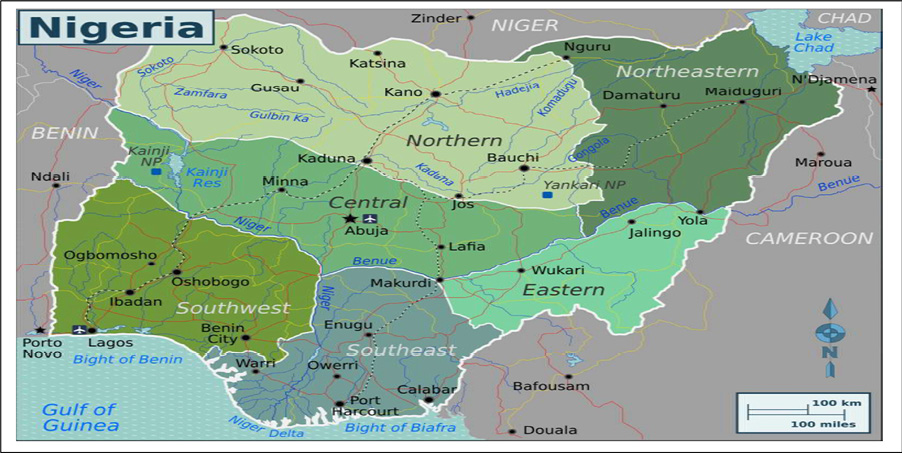
Source: Burmesedays 2010
As a major ex-colonial oil-exporting state, Nigeria is vulnerable to both the well-known political problems of the ‘resource curse’ (see eg Obeng-Odoom 2014) and the adverse impacts of climate change upon health, food production, human security, and inter-ethnic relations due to its fragile economy, the contested legitimacy of central government authority, weak resilience, and low adaptive capacity. Many Nigerians are dependent for their livelihoods upon climate-sensitive ecosystems and primary agricultural production, rather than industrial technology and manufacturing (Department of Climate Change, Federal Ministry of Environment, Nigeria 2021). And a cosmopolitan approach to dealing with the challenges of climate change offers is important.
The philosophy of cosmopolitanism raises questions about the significance of our common humanity, and the need to preserve, protect and advance it. At the core of the debate and literature on cosmopolitanism is the view that threats to our common humanity, at any level of the global society, are indivisible, and therefore policy responses to these threats should reflect and promote the ideals, sanctity and values of human and collective security. In other words, whether, at the subnational, national and global level, the ethical ideal of global citizenship should define our social existence and relationships (Nguyen 2021; Baban 2017).
Studies have addressed these ideas in relation to different issues. Bernstein (2019); Page (2011) and Hulme (2010) examine the link between cosmopolitanism and climate change (see also – Mušić 2018 and Paker 2017). Such authors convey a sense of humanity having common problems as a global community, and the importance of building inter-cultural and cross-ethnic solidarity for collective solutions. Baban (2017) examines the link between cosmopolitanism and identity conflicts; other studies examining the impacts of global heating upon identity-based conflicts find that the former intensifies such conflicts within the context of population pressure, migration, and its adverse impacts on livelihood (Nyiayaana 2022; Ebele & Emodi 2016). Tarif (2022) and Reiling & Brady (2015) examine the link between climate change and conflicts in developing countries, with a particular focus on West Africa, and show how drought and desertification lead to conflict within the context of responses and policy solution intensifying underlying stresses. Others point to the place of political interests in intensifying resources availability, population movements and economies, power relations and institutions (Solomon 2020; Levine, Peters, & Fan 2014; Raleigh 2010).
Few studies, however, have analysed climate change and identity conflicts and government policy responses according to whether or not they integrate cosmopolitan ideals and philosophies of universal human and citizen’s rights (Wakdok & Bleischwitz 2021).
This article fills this gap by offering a critical analysis of how identity-based conflicts in Nigeria and, how federal and state governments’ policies implicate the goals of cosmopolitanism. It focuses on the farmer-herder conflicts, which has causal linkages to climate change and ethnicity, and argues that the ethnicisation and politicisation of the conflicts affect national policy solutions in such a way that results in the devaluation of Nigerian citizenship through the social construction of indigenes and settlers and the discriminations that arise from these social constructions of identity. Therefore, rather than the policies to pursue the significance and triumph of human security and human survival, they enthrone particularisation of the ethnic. The National Livestock Transformation Programmes and the state Anti-grazing laws are key illustrations of this. In Benue State, for example, some provisions of its 2017 anti-Grazing Law insist that prospective ranchers who are not indigenes of the state must go through extra layers of stringent assessment such as obtaining approval by the landowner, head of the family, kindred head to be qualified to own as ranch. (Kwaja & Ademola-Adelehin 2017).
To attain its goals, the article is structured as follows: first, we outline the political economy framework that guides the article’s theoretical approach, and then conceptualise cosmopolitanism. This is then put to work to examine the Nigerian state’s responses to the issues of climate change and identity politics, followed by a discussion of the implications of the politics of cosmopolitanism for ameliorating the social tensions accompanying the deepening the crisis of climate change in Nigeria. Finally, the concluding section six offers a summary and the article’s key contentions and policy recommendations flowing from its analysis.
Theoretical Framework
The article adopts theoretical framework of analysis grounded in political economy. Many notable scholars have contributed to the ideas of political economy: the variant adopted in this study is class conflict theory, most famously articulated by Karl Marx in the 19th century. Class conflict theory is concerned with the complexity of social interests and how social hierarchies evolve. The theory posits that no society exists without experiencing change, and that such process of change takes place through conflicts based on the unequal class relations of people to the means of production in a given society (Jakee 2021; Akpan & Nnorom 2019). These relations highlight different livelihoods, positions and settlement patterns in the society with some people classed as owners or renters, capitalists or workers, mobile or settled in the course of production.
Whereas Marx focussed on the class relations of emergent industrial capitalism in modernising Europe and the US, the situation in ex-colonies in the developing nations reflects the imperial strategy of cultivating some ethnic groups as partners in (neo)colonial economic strategies whilst marginalising others. In this regard, the social relations between farmers and herders in Nigeria make the class conflict theory of political economy suitable as a tool to examine the adverse impacts of climate change on identity conflicts and the politics of cosmopolitanism in Nigeria.
Climate change driven by planetary heat accumulation has been identified as a global phenomenon caused primarily by human action. Describing how climate change occurs, Tsojon (2017) states that climate change occurs due to human (anthropogenic) and natural (biogeographical) factors, due to the emission of greenhouse gases, primarily due to the combustion of fossil fuels (GHGs) driving industrialisation, and also through agriculture and land clearance. In Nigeria, both farmers and herders are affected by climate change as they struggle for their livelihoods (Ejiofor 2022). These livelihood groups are both facing and reacting to the impacts of climate change through confrontations and contestations, so as to change their economic fortune and secure well-being (Akpan & Nnorom 2019; Odock 2012). Cosmopolitanism offers an answer to climate change and the ways different affected groups are reacting to it and relating with others (Ogwuche 2019).
Conceptualising Cosmopolitanism
The concept of cosmopolitanism conveys the notion of citizenship without borders, borders defined in terms of the constraints upon (and often denial of) fundamental human rights imposed by territoriality of national boundaries, ethnicity, racism and gender. Koukouzelis (2016) described cosmopolitanism as a social change, a transition from state-centred politics to the politics of the cosmos, an ongoing process rather than a fixed condition. Cosmopolitanism is a normative theory with varied forms. Koukouzelis (2016) classifies cosmopolitan into three main normative formats, specifically:
The first is moral cosmopolitanism. This version believes that human beings owe one another duties of humanitarian assistance or moral value beyond the borders of a given state. Second, institutional cosmopolitanism: This is a version that believes in a cosmopolitan order that ensures duty of justice from one person to the other. The third is political cosmopolitanism, which views cosmopolitanism as a normative idea to be applied not only in top-down pattern but also as having a cognitive and an epistemological dimension that defines the self-understanding of cosmopolitan community.
As a part of the cosmopolitan community, Nigeria acknowledges these normative demands of cosmopolitanism by ensuring that the 1999 Constitution of Nigeria upholds the philosophy of the inviolability of the rights, freedoms and dignity of the human person (Nigeria 1999). Chapter four of the Nigeria constitution states that every Nigerian citizen has right to freedom of movement, the right to residency in any part of the country, and the right to justice and fairness. The constitution also empowers the state to guarantee protection of rights of all people living in Nigeria without any form of discrimination irrespective of their citizenship (Nigeria 1999). Nigeria is a signatory to many international protocols, conventions and norms such as the 1948 United Nations Declarations of Human Rights and the 2005 norm on the Responsibility to Protect further affirming its formal commitment to the ideals of cosmopolitanism inherent in the UN charter (Jooji 2020). Nevertheless, the practical demonstration of these commitments to uphold universal human rights and the dignity of the human person in national policies and state responses to the issues of climate change and identity conflicts deserve to be critically examined.
The Nature of State Responses to Climate Change and the Dynamics of Farmer-Herder Conflicts
In order to effectively analyse the nature of state responses to the interactions of climate change crisis and farmer-herder conflicts in Nigeria, we need to define and explain further how climate change affects the livelihoods of Nigeria communities. Climate change has been defined as a pattern of change affecting global or regional climate as measured by rising average temperatures, and an alteration in the timing, intensity and frequency of extreme weather conditions such as droughts, heatwaves, storms and rainfall events (Fatile & Adejobi 2012). Global heating is the main driver of climate change: fossil combustion is therefore main driver of ecological and climate impacts. Odock (2012, pp. 98-99) has described climate change as ‘a wicked problem’, ‘a threat multiplier to health’ and an unfolding drama. This view is based on the various impacts of climate change on society as demonstrated by the relationship between climate change and the evolution of farmer-herder conflicts in Nigeria. The argument is that climate change induces depletion of natural resources, manifesting in the shrinkage of water formations (lakes), reduction of the productivity of grazing lands and losses of arable land to desertification (Ikyase & Iloh 2014). The drying up of Lake Chad has been identified as a major cause of the farmer-herder conflicts in Nigeria, leading to the forced migration of herding communities who depend on the Lake Chad Basin to the southern belt of Nigeria for pasture (Lamarche 2023). Areas of the basin less vulnerable to drought are becoming crowded, driving contestations between the farmers and the herders over access to and ownership of deteriorating land and water bodies for crop production and livestock feeding.
Given the multidimensionality of the impact of climate change and the diversity of actors involved in the farmer-herder conflicts, we argue that solutions to these problems are best negotiated within a cosmopolitan approach. For example, the herders are historically and mostly Muslims of the Hausa-Fulani ethnic group in Nigeria while the farmers are predominantly Christians of other ethnicities, like the Igbo, Yoruba and minority groups who live in the south. In other words, cultural attachments and the use of primordial fault lines have been implicated as key factors in the escalation and virulence of conflicts because of the impacts of climate change. The farmers claim indigenous rights blaming herders for trespassing in their territory, while the herders make claim or rights to move across the country as citizen and accusing the farmers of stopping them and their herds. Unfortunately, the government believed that farmer-herder conflicts were linked to late Libyan leader Muammar Gadaffi due to the influx of foreign arms and gunmen into Nigeria. The government has not addressed the climate burden of each group and there are serious failures of security forces (Amnesty International 2018). Okeke (2022) posits that the cultural attachments of those affected by climate change should be appropriately considered and steps taken to ensure that the goal of cosmopolitanism is not defeated. This is because identity conflict in a sense is a coping strategy to those affected by climate change. A cosmopolitan approach will therefore enable different identities to be open-minded in accepting one another as citizens of the world that can both individually take responsibility by ending fossil fuel industry and building clean energy infrastructure and the identity conflict it generates (Nguyen 2021).
Nigeria’s national policy responses to the farmer-herder conflicts as reflected in the 2017 Benue State Open Grazing Prohibition and Ranches Establishment Law (Ogunbode et al. 2023), and the National Livestock Transformation Programmes in 2019 (Wakdok & Bleischwitz 2021) have been at best contradictory to the ideals of cosmopolitanism. The grazing prohibition act of various states from Benue, Delta, to Rivers State have limited the rights of the herders and vice versa. Tied to indigene-settler phenomenon, citizenship rights of both groups of agriculturalists have been constrained.
The dynamics of the farmer-herder conflicts in Nigeria revolve around desertification; disappearing green pastures and drought caused by climate change influence and intensify migration of herders in search of new grazing opportunities that often lead them into conflict with farmers. The current policy environment can be traced to laws and policies that predate current public policies enacted with widespread knowledge of climate change. In order to settle earlier land disputes due to pastures for livestock, the Grazing Reserve Act of 1965 was enacted by the Nigerian government. The policy led to the establishment of over 400 grazing reserves across the northern region in the 1960s. Grazing reserves are areas designated for use by pastoralists with the aim of boosting livestock development. Nonetheless, the grazing reserve policy collapsed due to poor implementation. The reduction in access to and usage of grazing reserve meant that herders increasingly faced obstacles to their livelihood, leading to competitive struggles between the farmers and herders for scarce land resources as herders moved into the southern part of the country in search of greener pasture for their livestock with implications for farmer-herder conflicts (Nyiayaana 2022; Wakdok & Bleischwitz 2021).
To address the farmer-herder conflicts, governments at various levels have considered measures including the establishment of grazing reserves and routes policy, open grazing prohibitions, as well as proposal to create ranching and cattle colonies, such as the Rural Grazing Area (RUGA) policy of 2017 and the National Livestock Transformation Plan (NLTP) of 2019 (Wakdok & Bleischwitz 2021; Ogwuche 2019). Key to the cattle colony concept is that the state governments are to voluntarily donate a wide expanse of land measuring a minimum of 5,000 hectares to the Federal Government initiative for grazing by herders along with other ancillary services supporting dairies, fodder and tanner projects among others. A cattle colony proposal was announced by the Buhari administration in 2017, later renamed Rural Grazing Area (RUGA) Settlement scheme, to deal with the farmer-herder conflicts. Soon after, the Ministry of Agriculture reported that 16 states supported the colony policy (Nyiayaana 2022; Ogwuche 2019). Apart from contributing to ending the incessant farmer-herder conflicts, basic amenities, infrastructure and markets, were to be provided as part of the policy package. Similarly, the National Livestock Transformation Plan (NLTP) 2019 aimed to modernise livestock production using a mix of nomadic breeding and ranching that would serve a modernised dairy and meat processing industry in the country (Wakdok & Bleischwitz 2021).
In response, governments in almost all the southern states in Nigeria enacted laws banning open grazing of cattle to mitigate farmer-herder conflicts, while those in the north refused to do so. The northern governors perceive such laws as discriminatory against the Hausa-Fulani ethnic group (Nyiayaana 2022). The Ekiti and Benue states governments were the first states to introduce the anti-open grazing laws. The Ekiti State 2016 anti-grazing policy barred open grazing on any land which has not been authorised for ranching by the state government. The Benue state government, effective November 2017, also banned open grazing and requested the setting up of ranches. Open grazing allows herders to move their livestock freely in search of pasture and with the possibility of veering into and destroying farms. It is the opposite of ranching which confines livestock. Notably, the states where climate change has had the most impact like Plateau and Adamawa, have not enacted anti-grazing laws (Wakdok & Bleischwitz 2021).
A key provision of the contentious 2017 Benue State Open Grazing Prohibition and Ranches Establishment Law is that it imposes stringent conditions upon potential ranchers based on their indigenous status. Ranching is the practice of raising herds of animals or cattle on a large farm and ranchers are people who own or operate the ranch. Changing from traditional open grazing to ranching is promoted as a modernising process with the following benefits: healthy growth and development of the animals for meat and milk production; a less nomadic lifestyle will allow herding communities access to modern, formal education; and save farmers of the agony of crop or farm destruction by livestock (Ogunbode et al. 2023). The 2017 Benue State Law arguably further reinforced social and ethnic distinctions between indigenes and settlers, in a tense environment already volatile, creating feelings of unfair discrimination and failing to resolve pre-existing conflicts. Examples of this can be made with the resettling of Hausa-Fulani Muslims outside the political headquarters in Plateau State, as the indigenous Christian groups seek to control local access to the state and prevent political domination by non-Plateau groups (Nyiayaana 2022). This is a classic example of building borders of discrimination within and against the citizen of a single country.
The citizenship question is an unresolved issue in Nigeria central to the problem of farmer-herder conflicts. Officially ethnic genealogy is used to recognise individual as indigene and settler (or non-indigene). Indigeneity is one of the legal instruments designed to manage a heterogeneous society. However, as one moves out of their local government of origin, where they can lay claims to and authenticate their indigeneity of a state, the quality of indigeneity diminishes. On the other hand, a settler refers to a stranger, a sojourner, or an individual whose ethnic genealogy is elsewhere, and would ultimately go “home” even if such individual was born in a particular state or living there (Herbert & Husaini 2018; Alubo 2009).
Critical of the 1999 Constitution of Nigeria, Conroy (2014) remarked that due to the language in the constitution, certain identity groups who are termed settlers have their rights denied, while others who are termed indigenes have their rights allowed. This constitutional provision that erected borders of discrimination within the same country and encouraged identity conflicts needs to be critically reconsidered. In the same vein, Bouchat (2013) identifies within the constitution an ambiguous paradox that encourages identity conflicts in the country as some citizens have different rights at the local and national levels, which contravene other constitutional guarantees of freedom from discrimination and freedom of movement within the federation. The current Constitution has been argued to be ambiguous at best in regard to the indigene-settler question, as it espouses universal criteria for Nigerian citizenship but also creates a dichotomy between indigenes and settlers particularly by reinforcing that Nigerian citizens have no rights to indigeneity outside their ethnic state of origin. For example, Section 318 (1) of the Nigerian 1999 Constitution as amended declares that ‘a person either of whose parents or any of whose grandparents was a member of a community indigenous to that state’ is an indigene, whereas Section 15 (3) (b) provides that it shall be the duty of the State to ‘secure full residence rights for every citizen in all parts of the Federation’. In the same vein, Section 14 (3) and (4) talks about the federal character of Nigeria and the need to promote national unity, foster national loyalty and give every citizen of Nigeria a sense of belonging to the nation (Nigeria 1999). Though the Nigeria’s two-tier citizenship system aims to promote national unity whilst protecting ethnic minorities, scholars argue it has inadvertently undermined the enjoyment of universal human rights guaranteed by UN conventions (Manby & Momoh 2020). The ramification of this remains that being a settler or an indigene is a permanent identity as no provision is made within the current Constitution for the former to convert to the latter (Alubo 2009). The reality of this is during contention over access to resources like land, water or political power. Arguably, the current definitions of citizenship derived from the Nigerian constitution defeat solidarity building between groups within nations, that is, cosmopolitanism. It is therefore necessary for the judiciary and parliamentarians to give the Nigerian constitution necessary interpretations to reflect a cosmopolitan approach if national policy solutions for the sustainable management of the impacts of climate change and identity conflicts in Nigeria are to be effective.
The nature of state responses to climate change impacts and the dynamics of farmer-herder conflicts generated mixed reactions from people, depending on which side of the political divide they stood. The passage of the anti-grazing law in Benue State for example was implicated in the internal migration of thousands of herders to neighbouring Nasarawa state which does not have such laws (Solomon 2020). One thing that is very glaring is that these policies did not reflect a cosmopolitan approach and have failed to address the basic issue of accelerating climate change impacts. The policies sought a partisan solution to a land use problem in the short term, but undermined support for collective well-being in the long term. Indeed, proper analysis of climate as driver of conflict is key. The major lesson is that policies and practices that reflect cosmopolitan ideals could ultimately calm contestation and resistance and promote mutual-interest negotiations between different identity groups, both in the short and long run.
Politicised Cosmopolitanism, Climate Change and Identity Conflicts
One of the major implications of the politicisation of national citizenship rights in Nigeria is the deepening of the crisis of identity-based conflicts intensified by local environmental changes caused by global warming. In several states of the federation, for example in Benue and Delta States, herding communities have contested the constitutionality and legality of the anti-grazing laws. These contestations by herders encounter resistance from farming communities reflecting poor social cohesion and wider structural instabilities in the country. For example, in the Middle Belt and southern states where farmers and herders increasingly clash, the former have persistently rejected government initiatives like the Rural Grazing Area (RUGA) settlement policy and the National Livestock Transformation Plan (NLTP) which are geared toward reducing the farmer-herder conflicts because they perceive the policies as a strategy to favour the Fulanis and to institutionalise Fulani domination throughout Nigeria (Ejiofor 2022; Okibe 2022). The RUGA policy and the NLTP initiatives were fiercely resisted by the farmers for fears that a community or communities were being created or carved out to favour the herders only. Many people from the southern states shared in this fear and therefore portray the initiatives which favoured the herders in this manner as nothing but a subtle strategy for displacement, Fulani domination, land grabbing and ultimately to extend the Jihadist struggle of the 1800s in which non-Fulani ethnic groups were subjugated under the auspices of Usman dan Fodio (Nyiayaana 2022; Ejiofor 2022). Contestations and counter resistance are rooted in ethnicity and political fault lines between the two agriculturalist groups. More so, the initiatives of the Nigerian government did not reflect a cosmopolitan approach as they ignored the fact that different identities bear the burden of climate change differently and that the technical differences in the support giving to one identity while excluding the other would deepen the crisis between the two livelihood groups. Unfortunately, the NLTP was still controversial as many people believed that the NLTP was an alternate method of implementing the unpopular RUGA policy (Okibe 2022; Wakdok & Bleischwitz 2021).
In the same vein, herders organised within the ethno-cultural umbrella body, Miyetti Allah Cattle Breeders Association of Nigeria (MACBAN), have challenged the legality of open grazing prohibitions on the grounds that it contravenes the Nigerian constitution on freedom of movement and the right to settle anywhere in Nigeria. While MACBAN was still doing the legal work to prevent the enforcement of the law by the Benue state government, an attack occurred at Guma and Logo local governments of Benue state on 1st January 2018 where over 70 farmers were killed (Nyiayaana 2022; Okoro 2018). This suggests a defect in this law within cosmopolitan theories. In addition, the Open Grazing Prohibition Policy is facing criticism from the herders over constitutional rights including freedom of movement and ownership of movable property anywhere in Nigeria (Okeke 2022).
Ultimately, the politicisation of ethno-cultural versus citizen’s rights in Nigeria is the threat to national security. In an attempt to secure their specific modes of livelihood from the shared impacts of climate change and violent clashes, both farmers and herders tend to retreat into ethnic solidarity and polarisation. Herdsmen often now carry sophisticated weapons and ammunition with which they attack perceived threats to their livelihood like the farmers and sometimes the security forces, constituting a grave danger to national security. The attacks by herdsmen have targeted individuals, entire farming communities, religious buildings, and security agencies, resulting in looting and raping. These attacks intensify the farmer-herder conflicts whilst government agencies have done little to arrest the situation. Reprisal attacks by herders to avenge the killing of their 50 colleagues resulted in the killing of over 80 farming people on 4th December 2017 in Adamawa State. Most members of the affected communities now see government and security agencies in a bad light, as they feel that not enough was done by the government to ensure their safety, and therefore they take the law into their hands for self-defence (Nyiayaana 2022; Okoro 2018).
Mutual distrust and suspicion are another implication of the lack of cosmopolitan feeling and government in Nigeria. Farmers now see herdsmen as intruders and vice versa. Peace loving herders are largely viewed with distrust and suspicion by the farming communities on whose land they graze their cattle, largely as a result of the actions of herders that have become increasingly violent. With the transition from stick-wielding to AK-47s, herders are confronted by new realities of large-scale cattle rustling. The herdsmen have tended to vent their frustrations on anybody such as rape and killing of women in proximity when cattle theft or rustling occurs. While the cattle rustlers are becoming more professional in faking their true identity to cover up and confuse their victims, and perpetrate their criminality freely, farmers and herders are trapped in their accusations and counter-accusations due to mutual distrust and suspicion based on ethnic stereotypes, intensifying the conflicts between them. To highlight this mutual distrust and suspicion, the farming communities are increasingly resorting to community vigilantism and arming. Community vigilantism is rooted in ethnic protection against perceived invaders (Nyiayaana 2022; Okoro 2018).
The farmer-herder conflicts across Northern Nigeria especially in Jos and Kaduna have led to the death of hundreds of people (Fatile & Adejobi 2012). In 2018 alone, over 1,948 deaths (Takwa 2020), and 620,000 displacements in states such as Benue, Kaduna, Nasarawa and Plateau (Solomon 2020; Okoro 2018) were attributed to farmer-herder conflicts. The key issue here is the fight for economic and political control between the indigenes and settlers across the country. These targeted killings contradict cosmopolitan ideals of both national and global citizenship. The accusation that an ‘outsider’ or ‘settler’ is responsible for any provocative act may result in fatal violence, reinforcing a political fault line rooted in ethnicity. is treated as death sentence as a result of a political fault line rooted in ethnicity.
The lack of cosmopolitan (as opposed to ethnic) political identity in Nigeria reduces the adaptability of people to climate change impacts exacerbating environmental degradation. The report by ACAPS (2022) states that the ability of Nigerians affected by climate change to adapt is decreasing with the presence of non-state armed groups and the actions of official armed forces in different locations disrupting trade routes. These disruptions result in local shortages which further increase the competition for access to resources in an increasingly restricted space, further complicating peacefully negotiated responses to the prevailing climate change crisis. Around 90% of livelihoods in the Lake Chad region are climate-sensitive (ACAPS 2022) and the people there have, in the past, adapted to livelihood challenges based on seasonal abundance or decline of resources. The shortages and loss of means of livelihoods being experienced by such communities resulting from climate change and attending violent conflict have contributed to increase recruitments by armed groups (ACAPS 2022).
Nigerians now face a dual constraint in responding to existing governance challenges of insecurity and the suffering of people living in climate sensitive and risk-prone areas, which Akinola (2021) describes as negative coping practices, such as forced child marriage and early pregnancies for adolescent girls through adoptions of young girls by armed militias, which can, in turn, lead to recruitment into armed groups reinforcing inequalities and the cycle of insecurity (Magrin 2016). Similarly, Sayne (2011) has remarked on negative coping practices such as cattle rustling. In all, the social safety net that the government provides is weak to non-existent, and disaster management infrastructure is minimal (Sayne 2011). In the Niger Delta for example, citizens are vulnerable to periodic flood disasters, which became perennial since 2012. Yet, there are no strong and effective institutions and agencies in place to respond to those regularly displaced and affected by the floods. At the same time, the nature of oil governance in Nigeria reveals the politicised character of cosmopolitanism in which the Niger Delta people have remained chronic victims. By the Land Use Decree of 1978 and similar oil legislation, the Nigerian state owns all land and resources therein for the common good of Nigerian citizens. Dialectically, because the Nigerian state has been historically controlled by the majority ethnic groups in Nigeria, oil-producing minorities of the Niger Delta have been dispossessed of their land and environmental rights and a fair share of national revenues that oil extraction generates. For example, since the 1970s when oil gained ascendancy as the main revenue earner for Nigeria, the revenue sharing formula has deemphasized the derivation principle to the detriment of the Niger Delta people. A continuation of this practice is evident in the 2021 Petroleum Industry Act, which reserves only 3% of oil revenue for oil-producing communities and 30% for frontier Oil Exploration Fund in other parts of the country, thereby further marginalising the oil-producing communities and reinforcing their disempowerment. Yet, the Niger Delta people also suffer from the politics of extraction by dispossession by Multinational Oil Companies (MOCs) in the context of the long-term impact of environmental degradation. In contrast, the international oil companies and their partners, which have dominated the political economy of Nigeria since formal independence in 1960, have continued to become enriched, whilst the inhabitants of the oil-rich Niger Delta have been systematically disempowered and impoverished (Ukiwo 2018; Obi & Rustad 2011). Some inhabitants have been forced to engage in unwholesome economic activities such as oil theft, kidnapping and cultism because their means of livelihood were destroyed through oil exploration and environmental degradation. There has been little to no reciprocity or compensation from the oil and gas companies in the form of provision of social amenities to the people and communities in the region. Indeed, the lack of local social amenities and infrastructure has further facilitated social exploitation (Ebegbulem, Ekpe, & Adejumo 2013; Davidheiser & Nyiayaana 2011). The people of Niger Delta were overlooked on the national stage, alienated from their land and rights to oil resources within it. When non-violent resistance and demands produced few results, the resistance became increasingly violent. The State’s military response did not resolve the resistance, but rather dialectically fed into further militarisation of the region, a region contending with growing environmental crises (Obi & Rustad 2011; Davidheiser & Nyiayaana 2011). In fact, the region today risks becoming a disaster zone with the level of ecosystem depletion, constant flooding, and acid rains.
Conclusion
The thrust of this article was to examine the nature of the Nigerian state response to climate change and the dynamics of farmer-herder conflicts, and the implications of the politics of cosmopolitanism for deepening the crisis of climate change and identity conflicts, in Nigeria. The article indicates that state responses to the interactions of climate change crisis and farmer-herder conflicts in Nigeria do not reflect a cosmopolitan approach. Indeed, the current Nigerian constitution is implicated for promoting discrimination based on ethnicity and creating a division between indigenes and settlers and between farmers and herders, thereby undermining national citizenship and the ideals of cosmopolitanism. The implications of the politicisation of cosmopolitanism for deepening the crisis of climate change and identity conflicts include contestations by herders and counter resistance by the farmers that have engendered threats to social cohesion, structural instability and climate sustainability in the country.
Climate change as a global problem can exacerbate identity conflicts, while cosmopolitanism offers social harmony for collective response to global problems (Page 2011). The farmer-herder conflicts are structurally based on differing interests along a political fault line that has shaped their responses to the impacts of climate change on livelihood. The chain of impacts from climate change to resource shortages and the secondary impacts of shortages leading to identity conflicts will require the approach of cosmopolitanism to appropriately manage the problems.
The judiciary and the national legislature in Nigeria should give necessary interpretations to the current constitutional provisions on indigene and settler in order to facilitate the practical realisation of the philosophy of cosmopolitanism. The idea of national citizenship should be constructed in such a way that does not devalue or invalidate indigenous rights. Both are coterminous and should be strengthened by constitutional provisions and enforced by the state. Constitutional provisions or political considerations in Nigeria should not undermine citizenship in this age of global citizenship (Adesoji & Alao 2009). State of residency rather than state of ethnic origin is more favourable in promoting the ideals of cosmopolitanism. This will enable different identity groups in the country to be open-minded in accepting one another as citizens of a single Nigerian state and together take responsibility in the fight against the problems induced by climate change and identity conflicts. Conceivably, the ideals of cosmopolitanism in national policies should recentre harmonious relationships and collaboration amongst ethnic groups in their responses to the crisis of climate change and identity-based conflicts in Nigeria.
References
ACAPS 2022, Lake Chad Basin: Impact of extreme weather and climate events on livelihoods and food security, Thematic Report. https://www.acaps.org/sites/acaps/files/slides/files/20220816_acaps_thematic_report_global_analysis_team_lake_chad_basin_0.pdf
Adesoji, A. O. & Alao, A. 2009, ‘Indigeneship and citizenship in Nigeria: Myth and reality’, The Journal of Pan African Studies, vol. 2, no. 9, pp. 151-165. https://www.jpanafrican.org/docs/vol2no9/2.9_Indigeneship_and_Citizenship_in_Nigeria.pdf
Akinola, A. 2021, Climate Change in Lagos State, Nigeria: A Polycentric Governance Approach, Doctoral thesis, University of KwaZulu-Natal. https://researchspace.ukzn.ac.za/handle/10413/20054
Akpan, N. E. & Nnorom, K. 2019, ‘The political economy of resource conflicts in Nigeria’, Journal of Sustainable Development in Africa, vol. 21, no. 4, pp. 136-145. https://jsd-africa.com/Jsda/2019%20V21%20No4%20Winter/PDF/The%20Political%20Economy%20of%20Resource_Nse%20Etim%20Akpan.pdf
Alubo, O. 2009, Citizenship and Identity Politics in Nigeria, CLEEN Foundation, Lagos, pp. 1-18.
Amnesty International 2018, Harvest of Death: Three Years of Bloody Clashes between Farmers and Herders in Nigeria, AFR 44/9503/2018, Amnesty International Ltd, Abuja-FCT. https://www.amnesty.org/en/documents/afr44/9503/2018/en/
Baban, F. 2017, ‘Cultural plurality and radical cosmopolitanism’, In Paker, H. (ed), Cosmopolitan Democracy Revisited in a World of Rising Populism, Deepening Polarization and Rampant Neoliberalism, Istanbul Policy Center, Istanbul, pp. 22-24.
Bernstein, A. R. 2019, ‘Cosmopolitanism and the climate crisis’, International Journal of Philosophy, vol. 10, pp. 84-101. https://zenodo.org/doi/10.5281/zenodo.3583140
Bouchat, C. J. 2013, The Causes of Instability in Nigeria and Implications for the United States, Strategic Studies Institute and U.S. Army War College Press. https://press.armywarcollege.edu/monographs/519
Burmesedays 2010, Map Showing Nigeria, Wikimedia Commons. https://upload.wikimedia.org/wikipedia/commons/e/e8/Nigeria_Regions_map.png
Coleman, J. S. 1958, Nigeria: Background to Nationalism, Broburg and Wistrom, Benin City.
Conroy, S. 2014, Land Conflicts and Lethal Violence in Nigeria: Patterns, Mapping and Evolution (2006-2014), Working Papers Series 38, IFRA-Nigeria, pp. 1-38.
Davidheiser, M. & Nyiayaana, K. 2011, ‘Demobilization or remobilization? The Amnesty program and the search for peace in the Niger Delta’, African Security, vol. 4, no. 1, pp. 44-64. https://doi.org/10.1080/19392206.2011.551063
Department of Climate Change, Federal Ministry of Environment, Nigeria 2021, 2050 Long-Term Vision for Nigeria: Towards the Development of Nigeria’s Long-Term Low Emissions Development Strategy, United Nations Framework Convention on Climate Change. https://unfccc.int/documents/386681
Ebegbulem, J. C., Ekpe, D., & Adejumo, T. O. 2013, ‘Oil exploration and poverty in the Niger Delta Region of Nigeria: A critical analysis’, International Journal of Business and Social Science, vol. 4, no. 3, pp. 279-287. https://ijbssnet.com/journals/Vol_4_No_3_March_2013/30.pdf
Ebele, N. E. & Emodi, N. V. 2016, ‘Climate Change and its impact in Nigerian economy’, Journal of Scientific Research & Reports, vol. 10, no. 6, pp. 1-13. https://doi.org/10.9734/JSRR/2016/25162
Ejiofor, P. F. 2022, ‘Beyond ungoverned spaces: Connecting the dots between relative deprivation, banditry, and violence in Nigeria’, African Security, vol. 15, no. 2, pp. 111-141. https://doi.org/10.1080/19392206.2022.2061320
Fatile, O. J. & Adejobi, O. S. 2012, ‘Climate change, environment and conflicts in Nigeria’, British Journal of Arts and Social Sciences, vol. 6, no. 1, pp. 11-20. https://www.researchgate.net/publication/332877158_Climate_Change_Environment_and_Conflicts_in_Nigeria
Herbert, S. & Husaini, S. 2018, Conflict, Instability and Resilience in Nigeria, GSDRC, University of Birmingham, Birmingham. https://www.academia.edu/36714189/Conflict_instability_and_resilience_in_Nigeria_Rapid_Literature_Review
Hulme, M. 2010, ‘Cosmopolitan climates: Hybridity, foresight and meaning’, Theory, Culture & Society, vol. 27, no. 2-3, pp. 267-276. https://doi.org/10.1177/0263276409358730
Ikyase, J. T. & Iloh, J. O. 2014, ‘The implication of climate change on food security in Nigeria’, Journal of Good Governance and Sustainable Development in Africa, vol. 2, no. 3, pp. 33-41.
Jakee, K. 2021, ‘Modern political economy: A brief history and some applications’, CHOPE Working Paper No. 2021-22, pp. 1-44. https://doi.org/10.2139/ssrn.3956606
Jooji, I. T. 2020, ‘An assessment of the effect of the Benue State Open-Grazing Bill: A perspective from the Fulani herdsmen’, International Journal of Advanced Research in Social Sciences, Environmental Studies & Technology, vol. 5, no. 1, pp. 93-101. https://internationalpolicybrief.org/wp-content/uploads/2023/10/ARTICLE8-90.pdf
Koukouzelis, K. 2016, ‘Climate change social movements and cosmopolitanism’, Globalizations, vol. 14, no. 5, pp. 1-16. https://doi.org/10.1080/14747731.2016.1217621
Kwaja, C. M. & Ademola-Adelehin, B. I. 2017, The implications of the Open Grazing Prohibition and Ranches Establishment Law on farmer-herder relations in the middle belt of Nigeria, December, Search for Common Ground, Washington DC. https://documents.sfcg.org/wp-content/uploads/2018/02/Open-Grazing-Prohibition-Law-in-Benue-State-December-2017.pdf
Lamarche, A. 2023, Climate-fuelled Violence and Displacement in the Lake Chad Basin: Focus on Chad and Cameroon, Refugees International, January 19. https://www.refugeesinternational.org/reports-briefs/climate-fueled-violence-and-displacement-in-the-lake-chad-basin-focus-on-chad-and-cameroon/
Levine, S., Peters, K., & Fan, L. 2014, Conflict, Climate Change and Politics: Why a Techno-Centric Approach Fails the Resilience Challenge, Humanitarian Policy Group Working Paper February 2014, Overseas Development Institute, London. https://odi.cdn.ngo/media/documents/8825.pdf
Magrin, G. 2016, ‘The disappearance of Lake Chad: History of a myth’, Journal of Political Ecology, vol. 23, no. 1, pp. 204-222. https://doi.org/10.2458/v23i1.20191
Manby, B. & Momoh, S. O. 2020, Report on Citizenship Law: Nigeria, Country Report 2020/12, Robert Schuman Centre for Advanced Studies/Global Citizenship Observatory. https://dspace.library.uu.nl/handle/1874/415279
Mušić, L. 2018, ‘Cosmopolitan democracy and contemporary climate change system’, American Journal of Educational Research, vol. 6, no. 8, pp. 1146-1152. https://pubs.sciepub.com/education/6/8/13/index.html
Nguyen, J. M. 2021, Cosmopolitan Intergenerational Justice and Climate Change, Doctoral dissertation, University of California Irvine, Irvine, CA. https://escholarship.org/uc/item/2h50d7p0
Nigeria, 1999, 1999 Constitution of the Federal Republic of Nigeria (as Amended), Federal Government Printer, Abuja. https://nigeriarights.gov.ng/files/constitution.pdf
Nyiayaana, K. 2022, ‘Ethnicity, peacebuilding, and conflict transformation in Nigeria: The Case of herder-farmer conflict’, In Falola, T. & C. A. Jacquemin, C. A. (eds), Identity Transformation and Politicization in Africa: Shifting Mobilization, Rowman & Littlefield, Lanham, MD, pp. 127-148.
ObengOdoom, F. 2014, Oiling the Urban Economy: Land, Labour, capital, and the State in Sekondi-Takoradi, Ghana, Routledge, London. https://doi.org/10.4324/9781315773889
Obi, C. & Rustad, S. A. 2011, ‘Introduction: Petro-violence in the Niger Delta – the complex politics of an insurgency’, In Obi, C. & Rustad, S. A. (eds), Oil and Insurgency in the Niger Delta: Managing the Complex Politics of Petroviolence, Zed Books, New York, NY, pp. 1-14. https://doi.org/10.5040/9781350221598.0005
Odock, C. N. 2012, ‘The political economy of climate change in Nigeria’s South-South Zone’, American International Journal of Contemporary Research, vol. 2, no. 12, pp. 98-110.
Ogunbode, T. O., Ayodele, I.-O. A., Oyebamiji, V. O., & Faboro, O. O. 2023, ‘A Review of Farmers/Herders Clashes in Nigerian Environment: Consequences and the Way Forward’, Journal of African Conflicts and Peace Studies, vol. 5, no. 1, pp. 1-20. https://digitalcommons.usf.edu/jacaps/vol5/iss1/
Ogwuche, M. E. 2019, ‘Cattle ranching or cattle colonies as panacea to herders/farmers conflict in Nigeria: Challenges and prospects’, Journal of Social Sciences, vol. 3, no. 1&2, pp. 204-219.
Okeke, C. C. 2022, ‘Internal insecurity and national development in Nigeria: Problematizing herdsmen and farmers’ conflicts in Anambra State’, Asian Research Journal of Arts & Social Sciences, vol. 17, no. 1, pp. 1-21. https://doi.org/10.9734/arjass/2022/v17i130294
Okibe, H. B. 2022, Herder-Farmer Conflicts in South East Nigeria: Assessing the Danger, Southern Voices Network for Peacebuilding Policy Brief and Research Paper Series, Research Paper No. 34, Wilson Center, Washington DC. https://www.wilsoncenter.org/publication/svnp-research-paper-okibe
Okoro, J. P. 2018, ‘Herdsmen/farmers conflict and its effects on socio-economic development in Nigeria’, Journal of Peace, Security, and Development, vol. 4, no. 1, pp. 143-158. https://www.researchgate.net/publication/335778034_HERDSMENFARMERS_CONFLICT_AND_ITS_EFFECTS_ON_SOCIO-ECONOMIC_DEVELOPMENT_IN_NIGERIA
Page, E. A. 2011, ‘Cosmopolitanism, climate change, and greenhouse emissions trading’, International Theory, vol. 3, no. 1, pp. 37-69. https://doi.org/10.1017/S1752971910000333
Paker, H. 2017, ‘Cosmopolitan democracy revisited in a world of rising populism, Deeping polarisation and rampant neoliberalism’, In H. Paker (ed), Cosmopolitan Democracy Revisited in a World of Rising Populism, Deepening, Polarization and Rampant Neoliberalism, Istanbul Policy Center, Istanbul, pp. 7-11.
Raleigh, C. 2010, ‘Political marginalization, climate change, and conflict in African Sahel States’, International Studies Review, vol. 12, no. 1, pp. 69-86. https://www.jstor.org/stable/40730710. https://doi.org/10.1111/j.1468-2486.2009.00913.x
Reiling, K. & Brady, C. 2015, Climate Change and Conflict: An Annex to the USAID Climate-Resilient Development Framework, United States Agency for International Development, Washington DC. https://pdf.usaid.gov/pdf_docs/PA00KJWQ.pdf
Sayne, A. 2011, Climate Change Adaptation and Conflict in Nigeria, United States Institute of Peace, Washington DC. https://www.usip.org/publications/2011/06/climate-change-adaptation-and-conflict-nigeria
Solomon, W. 2020, Local Learning: Ideas for Reducing Farmer-Herder Conflicts in Nigeria, Centre for Democracy & Development West Africa, Abuja. https://www.cddwestafrica.org/reports/local-learning-ideas-for-reducing-farmer-herder-conflicts-in-nigeria/
Takwa, Z. S. 2020, Addressing the climate change insecurity challenge in Nigeria and the Lake Chad Basin, Issue 22/2020, United Nations Development Programme. https://www.undp.org/sites/g/files/zskgke326/files/migration/oslo_governance_centre/89e8d11e6b388f1174e625ebf8790f2c84c7bd0cead6164b91887972950117e9.pdf
Tarif, K. 2022, ‘Climate change and violent conflict in West Africa: Assessing the evidence’, SIPRI Insights on Peace and Security, February, no. 3, pp. 1-21. https://doi.org/10.55163/VHIY5372
Tsojon, J. D. 2017, ‘Impact of climate change on agricultural production by farmers in Taraba State, Nigeria’, International Journal of Entrepreneurial Development, Education and Science Research, vol. 4, no. 1, pp. 178-190. https://internationalpolicybrief.org/wp-content/uploads/2023/10/ARTICLE-14-12.pdf
Uche, C. 2008, ‘Oil, British interests and the Nigerian Civil War’, The Journal of African History, vol. 49, no. 1, pp. 111-135. https://doi.org/10.1017/S0021853708003393
Ukiwo, U. 2018, Governance Regimes of Oil in Nigeria: Issues and Challenges, CRPD Working Paper No. 69, Centre for Research on Peace and Development, Leuven. https://soc.kuleuven.be/crpd/files/working-papers/crpd-no-69-ukiwo-full.pdf
Wakdok, S. S. & Bleischwitz, R. 2021, ‘Climate change, security, and the resource nexus: Case study of Northern Nigeria and Lake Chad’, Sustainability, vol. 13, no. 19, pp. 1-18. https://doi.org/10.3390/su131910734