Cosmopolitan Civil Societies: An Interdisciplinary Journal
Vol. 15, No. 2
2023
ARTICLE (REFEREED)
The Eye4HK Meme and the Construction of an Injustice Frame
Steve Kwok-Leung Chan1,*, Woon-Taek Lim1, Gyun-Ho Lee1, Ngai-Chiu Wong2
1 Keimyung University, Daegu, South Korea
2 The Chinese University of Hong Kong, Hong Kong
Corresponding author: Steve Kwok-Leung Chan, Keimyung University, 1095 Dalgubeol-daero, Daegu 42601, South Korea, sklchan@gmail.com
DOI: https://doi.org/10.5130/ccs.v15.i2.8556
Article History: Received 17/02/2023; Revised 20/03/2023; Accepted 15/06/2023; Published 30/07/2023
Citation: Chan, S. K. L., Lim, W. T., Lee, G. H., Wong, N. C. 2023. The Eye4HK Meme and the Construction of an Injustice Frame. Cosmopolitan Civil Societies: An Interdisciplinary Journal, 15:2, 33–47. https://doi.org/10.5130/ccs.v15.i2.8556
Abstract
The territory-wide protest in Hong Kong in 2019, originated from a proposed amendment bill on the extradition of fugitives to China which triggered massive protests. In an incident, the police shot a female medic in the eye which outraged the public. A Korean celebrity initiated an online movement by uploading a selfie covering his right eye to Twitter showing solidarity with the victim. The eye-covered image signifies the girl who lost her eye as a political victim, gaining wide sympathy. The sub-campaign constructed an image of resistance against police brutality which strengthened the wider movement in Hong Kong and helped to win support in other parts of the world. The campaign also linked the emotions of the two places by recalling Koreans’ memory of their historical struggle for democracy. The sub-campaign generated symbolic resources accumulating through the production and reproduction process online and subsequently benefited the wider social movement for political change.
Keywords
Eye4hk; Internet Meme; Injustice Frame; Anti-Extradition Law Amendment Bill Movement; Hong Kong
Introduction
Cycles of protest have been continuously breaking out in East Asia. These are isolated campaigns mobilized for a local cause, but many activists are keen to learn the tactics and experiences online and then apply them locally. Common repertories are seen in these rallies across country borders although their organizers are not connected. Among these similarities, social movement organizations in East Asia follow the global trend of using the Internet, and in particular, social media which has become more and more popular, especially among young people. Everyone owns a mobile phone, making them content producers or even citizen journalists of social media. Content is no longer limited to text but includes images and videos in the form of internet memes which impress bystanders and sympathizers locally and globally. Online activism is seen as empowering vulnerable groups to attract public attention with memes uploaded onto Facebook, Instagram, Twitter and spreading via various instant message applications over mobile phones.
This empirical study investigates the Eye4HK campaign during the Anti-Extradition Law Amendment Bill Movement in 2019 (thereafter known as Anti-ELAB 2019), in Hong Kong. In one incident a female volunteer medic was shot in the eye by a police officer’s beanbag, a nonlethal round used for crowd control and dispersion of protesters. The moment caught the attention of a Korean actor who took a selfie, covering his right eye, and uploaded the photograph on his Twitter and Instagram pages. His eye-covering photograph was then reproduced into an internet meme of many variants and widespread in Hong Kong, South Korea and beyond. Young people, who are netizens increase their participation and play a leading role in social movements around the world. After all, the Eye4HK campaign connected Koreans to a home-grown movement in Hong Kong. The bitter memory of the past authoritarian rule was recalled, and Koreans’ struggle for democracy and suffering from military police brutality were associated with similar scenes in Hong Kong.
The study is an attempt to fill the theoretical gap of visualized activism using internet memes. Existing research on using internet memes in social movements is concerned with wider forms of participation in general. For example, their multimodality (Milner 2016) draws participation anytime, anywhere, and in various formats creatively through the memetic chain (Soh 2020). Guenther et al. (2020) explore the use of memes for framing in the German Identitarian Movement. Their findings help to categorize the effects of different frames, such as calls for action and evaluation, but provide few details of how. Drawing from Olesen’s (2013) findings on injustice frame construction using a victim’s photograph during the Egyptian up-rise a decade ago, Eye4HK an online sub-campaign of a large-scale Anti-ELAB 2019 in Hong Kong is examined in this paper. In a similar way, an injustice frame was constructed based on an eye-shooting incident which subsequently turned into a mobilizing frame for direct action. The findings of this study detail the process of symbolic resource production and accumulation. The authors take as a point of reference Whitworth and Li’s (2022) arguments on frame articulation and amplification in explaining symbolic resources transmission and accumulation, involving negative emotions. However, their research is about images and messages on Lennon Walls, the sticky notes campaign of Hong Kong, which neither happened online nor used internet memes. As such, this current paper adds new knowledge theoretically, by identifying the symbolic resource production and accumulation process in a visually-based campaign using memes. In particular, it draws on Benford and Snow’s (2000) framing strategy and Whitworth and Li’s (2022) frame amplification to explain this process. Empirically, the findings detail the understanding of how the Eye4HK sub-campaign emerged and strengthened the entire Anti-ELAB Movement in 2019 in terms of internet memes, emotion and framing.
Methodology
This research aimed to study the use of memes in strengthening a social movement. The sub-campaign of Eye4HK in the midst of the Anti-ELAB 2019 in Hong Kong was studied in an attempt to explore the process of symbolic resource production and accumulation in social movement by using internet memes in a campaign. Particularly, this research pays primary attention to activists and participants to make sense of resource enrichment for desired outcomes. It seeks to answer questions about why the incident of a female volunteer medic being shot in the eye outraged the people in Hong Kong and in the same instance, their counterparts in South Korea? How is the female injury justified as a focus for the Eye4HK sub-campaign in Korea and for protesters in Hong Kong? What are the meanings constructed in the political artefacts produced and reproduced in the Eye4HK sub-campaign? How does the campaign mobilize the emotions and participation of people in Korea, Hong Kong and many parts of the world?
This paper uses qualitative methods to understand the process of resource accumulation in a visually-based campaign using memes. An online sub-campaign within a social movement can be complicated, especially when it involves the use of images. How the memes drew public sympathy and participation; then subsequently helped to mobilize the public to join a direct action (such as occupying the airport on 12 August 2019 as a response to the eye-shooting incident) is explored. These interpretations emerge from the use of a micro-analytic lens to understand the entire process and its aspects.
Three inquiry methods were employed, namely newspaper and website portrayal, semiotic analysis of the internet memes and informant interviewing for triangularization. First of all, newspaper and website portrayal of the eye-shooting incident and the hashtag campaign is used to restructure the political resistance and the subsequent outcomes. Secondly, semiology is used to examine the memes used in the campaign (c.f. Tolbert & Rutherford 2009). It is used to interpret the iconic, indexed and symbolic signs of the core meme, to formulate symbolic resources for the practical outcomes of the campaign. Finally, in a minor part of the study, informant interviews explore the incentives and reasons for engaging in collective resistance which triangulates the findings from the two other methods. The informants are youth activists who took part actively either in the Anti-ELAB 2019 in Hong Kong or its supporting campaign in South Korea. Ten informants were interviewed. Two are Korean student activists and four Korean youth activists four are Hong Kong student activists. Unstructured questionnaires were used for the interviews, with open-ended questions covering 1) the initiation of the Eye4HK sub-campaign, 2) the content and process, 3) the transboundary connection between Korea and Hong Kong, and 4) the evaluation of the sub-campaign in Hong Kong.
Anti-ELAB Movement in Hong Kong
A cycle of protests broke out in Hong Kong in the summer of 2019. Hong Kong is a semi-autonomous city-state which used to be a British colony, with its governor appointed directly by the British Government in London. The colonial legislature used to be selected by appointment until 1985 when less than half of its members were chosen by indirect election method. The struggle for democracy was on the rise and rallies and protests were seen in the city. But the movements were by and large small scale and limited to the participation of educated middle-class elites. The Tiananmen Square massacre incident in 1989 changed the political mood. An estimated one million people took to the streets in Hong Kong in support of the occupation of Tiananmen Square by Chinese students and the general public in Beijing. Since then, the foundation for a mistrust between pro-democracy Hongkongers and the Communist regime in Beijing was laid.
The sovereignty of Hong Kong was transferred from the British to China in 1997 under a ‘one-country, two-systems’ formula. However, its autonomous status has been deteriorating as China has been stepping up its intervention in the domestic affairs of Hong Kong. China claimed to enforce ‘overall jurisdiction’ over Hong Kong in 2017 and declared publicly the Sino-British Joint Declaration on Hong Kong, the agreement between the two countries on the semi-autonomous rule of Hong Kong after the sovereignty transfer, to be a historical document that no longer had any practical significance (Wu 2017). The Hong Kong Government proposed an amendment to an existing Extradition Ordinance in 2019. Hongkongers generally distrust the legal system of China. Protests initially started in March 2019. The momentum subsequently grew from 9 June with a million protesters taking to the streets. The police opened fire at the protesters on 12 June, as they tried to block the entrance to the Legislative Council prior to a session for the final scrutiny of the bill. Though only nonlethal rounds were used, such as teargas, rubber bullets, pepper balls and beanbag rounds, the police officers pointed their guns horizontally at the protesters on purpose (NOPAID 2019).
Excessive force was seen to be used by the police. Gunfire, even with mainly nonlethal rounds, had rarely been used since the communist riot in 1967 under British colonial rule. The police were accused of using excessive violence and misconduct, including shooting teargas rounds at the protesters (Lomas 2019), firing multiple rounds of teargas at hundreds of protesters cornered by police, brutal beatings of protesters in the head with batons, beating compliant arrestees already subdued, aiming horizontally and targeting the heads of protesters (Amnesty International 2019a). The first blood was a secondary school teacher, who was shot in the eye at a protest on 12 June, possibly losing 70 percent of his eyesight (Cheung 2019). Significantly, the police covered up their identity during operations, with no identifying numbers and no displayed warrant cards on their uniform, in order to escape from the responsibility for their actions at the scene (Amnesty International 2019b). The protests went on even after the announcement of a temporary suspension of the E-LAB bill’s passing into legislation. A female volunteer medic at the scene of a protest on 16 August was injured in her right eye. Footage showed a beanbag round lodged in her goggles on the ground (Kilpatrick 2019). A foreign journalist nearby witnessed the incident and tweeted that ‘there was no protester in that direction, only a journalist and several volunteer first-aiders’ (Kilpatrick 2019). The female medic’s eye-shooting incident outraged not just the public of Hong Kong but it also spread internationally. A Korean actor, Kim Eui-Sung, well-known for his movie ‘The Train to Busan’ (in Korean, 보산한) posted an eye-covering selfie on his Twitter, Instagram and Facebook page.
The main part of this paper is about the Eye4HK sub-campaign as a response to this incident in Hong Kong. The reason to mention South Korea is that Kim Eui-Sung, the Korean celebrity and an ‘outsider’, indirectly initiated the campaign when he uploaded an eye-covering photo on his Twitter feed. Local activists utilized it in supporting the Anti-ELAB Movement.
Literature Review
Social movements have largely involved using the Internet, and in particular, social media for information diffusion, mobilization, and campaigning online. In the digital age, the way of communication has changed. Ordinary people become civil or mobile journalists (mojos) who can use their mobile phones to take pictures and record videos at the scene and then share them over social media anytime, anywhere. ‘Mojos as bearers of breaking news oftentimes beat the mainstream press to highly relevant stories that can have a political impact’ (Carty 2015, p. 11). In practice, as more and more people owned a smartphone, more images instead of texts, are shared on social media. These include photographs and videos which, under certain circumstances come to be known as ‘internet memes’. Memes are ‘multimodal texts that facilitate participation by reappropriation, by balancing a fixed premise with the novel expression’ (Milner 2016, p. 14). Its multimodality means the appearance of a meme can be in the form of, or a combination of text, images and videos. The contents and meanings are generated, changed, and distributed by users. ‘Meme instances are produced with an awareness of other instances’ (Shifman 2013). Shifman (2013) gives an example of the LOLCats memes where different captions can be added to the core photograph of the cat, thus enabling the meme to express a related but different message, emotion and value. Therefore, receivers are not passive readers; it is the common participatory subculture of an internet meme of reproduction by adding texts to the image or altering the image before forwarding it to others via social media. The process of participation forms a ‘memetic chain’ that interested netizens follow the theme and format to contribute their creation within a ‘family of memes’ (Soh 2020, p. 1121). Participants play different roles, namely animator, author, and principal, in transmitting the message, expressing their views and political stance, and adding texts to the memes respectively (Soh 2020, p. 1122). Internet memes have various substyles, including verbal, audial and visual (Shomova 2021) and most of them are humorous in general, containing ironic comments (Davison 2012).
Memes are widely seen in many worldwide digital activism campaigns, such as MeToo, Black Live Matter, Pro-Life, and the like. Some of these campaigns request sympathizers to participate, for example with selfie photographs holding a placard with the theme, like the hashtag #MeToo, printed on it. Or they are encouraged to change their avatar on Facebook, tweet on Twitter or share in chat apps. In cases where celebrities, athletes and other public figures join the campaign, the memes will be widely shared. #MeToo has been used more than one million times all over the world (Khomami 2017). The cluster analysis by Guenther et al. (2020) of the memes of the German Identitarian Movement, a right-wing group, on its Facebook, identifies six strategic frames, namely: debating, anti-migration, traditional values, recruiting members, criticizing society, and self-portrayal of the group. A two-dimensional matrix consisting of a ‘call for action’ (strong or weak) and ‘evaluation’ (positive or negative) is developed in explaining the effects of the six frames. This quantitative study has some insights into the way memes link to actions (or effects), the virtual space online to the real world offline. However, the limitations of the methodology make it hard to explore the process by which this happens, for example how to mobilize sympathy and support using these memes. Although these memes are categorized into ‘frames’, the focus is more on the number, not the texts and images on the memes.
Why do memes enhance digital campaigns? One of the reasons is our brains read audio-visual information faster than purely verbal information (Graber 1996). Also, images can generate a stronger emotional reaction than text (Barry 1997). A suddenly imposed grievance may trigger moral shock which translates public outrage into motivation for action (Jasper, 1998; Jasper & Poulsen 1995; Papacharissi 2014). For example, pictures of aborted fetuses used in Pro-life campaigns help to shock the reader and hence convince bystanders to join the action (Halfmann & Young 2010). The Arab Spring was among the large-scale social movements in which social media were widely used for recruitment and spreading the news of protests and #Egypt became the top hashtag on Twitter during the movement (Friedman 2011). Purposeful news consumption and political expression on these SNSs facilitated protest participation (Lee 2018). However, quantitative studies on the use of the Internet for social mobilization tell little about the process of materializing into actions, including how framing works, how the public are outraged, how is the momentum accumulated, and the like. For example, one of the incidents that outraged the public and strengthened the entire social movement in Egypt was when Khaled Said, a young Egyptian, was beaten to death by the police. One of the memes shared on social media is a combination of Said’s final photograph and a previous one taken when he was alive. The big contrast of the juxtaposed photograph exposed the injustice message (Olesen 2013). These photographs became ‘carriers and amplifiers’ of the message and values; and a Facebook page, called ‘We Are All Khaled Said’’ built a shared identity of the sympathizers with the victim of police brutality (Olesen 2013, p. 10). The juxtaposed photograph of Said was a carrier of a direct message that a normal young person was killed by brutal police officers. The effects were then amplified through associations, generalizations and emotions shared by the receivers or spectators of social media. The juxtaposition also facilitated amplifying effects.
It was a social construction process which involved the participation of various people. Said’s family took a photograph of Said’s dead body and made it public by uploading it onto the internet. Unorganized sympathizers had the chance to see the photograph without the censorship of pro-establishment mass media. Some converted the photograph by adding text to it or the most impressive was combining the before and after death photographs of Said; others simply shared the photograph and added a comment when sharing in communication apps. A ‘systematic juxtaposition’ of Said’s pre- and post-death photographs outraged the public following the discourse of moral shock in social movement (Jasper & Poulsen 1995; Jasper 1998). The ‘dual viewing situation’ presented the contrast between the ‘normality and innocence’ of Said, giving rise to emotion in the general public which mobilized them to take part in the protests later for a wider cause (Olesen 2013, p. 13). Thus, the memes and, in particular, juxtaposed photographs transformed into political resources or energy fueling up the entire social movement.
In Hong Kong, digital activism using social media is recorded in the early localist campaigns, including, to name a few, resistance against the demolition of Star Ferry and Queen’s Pier in 2006, the campaign against the proposed moral and national education curriculum by Scholarism, a secondary school students’ Social Media Optimization (SMO) in 2011 (Or & Lau 2014), as well as the Anti-Sino-Hongkong Express Rail Project (Chan 2017). During the Umbrella Movement in 2014, the occupy movement of Hong Kong for democracy was confronted with an iron-fist crackdown by the police. Lo’s (2016) study on camera-witnessing of the movement highlights its connection among political activists, ‘suffering others’ and the viewers of these photographs and videos. Regardless of intensive information-sharing and discussion on Facebook, online forums, and other mobile apps, especially WhatsApp, the occupy movement was less convincing to the general public or the silent majority of society at large (Agur & Frisch 2019).
Collective identity is believed to be the motivation for members of social groups to take part in social movements. The visual codes, such as clothing, symbol, color, and the like, serve as markers of identity to distinguish in-groups and out-groups. Group identity helps one to share common experiences of repression and unfair treatment in wider society (Chan 2017; Klandermans, van der Toorn & van Stekelenburg 2008). These visual codes embedded in images serve to connect activists, sympathizers, and prospective participants through rational deliberation and collective memory (Doerr & Teune 2013).
Some of the campaigns involved victims. The activists associate the victims, disaster or injustice event with the grievance or the campaign’s claim through framing. A frame is an interpretation schema, which works by selectively omitting and emphasizing various aspects as well as applying desire value to it, so as to construct a collective action frame for mobilization (Benford & Snow 2000). The process of framing in social movement involves building an alignment, bridging the frame with the target audiences, and amplification the influence on the target or the society as a whole (Carty 2015; Snow et al. 1986). An injustice frame is ‘an interpretation of what is happening that supports the conclusion that an authority system is violating the shared moral principles of the participants’ (Gamson, Fireman, & Rytina 1982, p. 123). Visual injustice symbols are created by activists to help them achieve political objectives (Schlegel 1995). Again, Jasper and Poulsen’s (1995) moral shock argument explains how the power of visual injustice symbols in political activism is inextricably linked with the capacity of memes to generate emotional resonance or knowledge in audiences. After all, in the aforementioned protest in Egypt, the juxtaposed photograph of the victim embedded with an injustice frame generated what Olesen (2013) called ‘political energy’ to catch awareness, gain more support and more importantly, mobilize the public to join direct actions.
To date, a vast volume of research has been concerned with the use of social media in social movements but visually-based campaigns and in particular, using internet memes are seldom associated with framing strategy, especially injustice frames. Olesen’s (2013) study on Egypt’s Arab Spring is sheds light on this. The juxtaposition of two photographs (alive and dead) of Said is a successful example of employing memes in social movement, building an injustice frame for provoking the emotion general public or bystanders, and finally turning them into political energy for the movement. However, details of how sympathizers participated in the meme, that is, the juxtaposed photograph of Said, was not highlighted, except insofar as they shared or forwarded it. The moral shock might have occurred but whether shared identity with the victim could be achieved as desired by the Facebook page ‘‘We Are All Khaled Said’’ remained unclear in Olesen’s research.
Soh’s (2020) research on using memes in the pragmatic resistance during the post-presidential election of Singapore in 2017 highlighted how a meme’s dispersal of authorship helped to avoid people being charged by the government for sedition. But the findings lack elaboration on how the online resistance exerts pressure on the actions of the state, such as accumulating political resources or mobilizing for further actions. The Eye4HK sub-campaign in the Anti-ELAB 2019 involves different levels of participation, including the use of images of the victim to evoke the frame of injustice and transnational support. The eye-covered image signifying a political victim constructed an injustice frame. The action of covering the right eye was performed in various protests during the Anti-ELAB, including the occupying of the airport. The sub-campaign initiated by a Korean actor, echoed by Hong Kong activists by setting up the #Eye4HK Facebook pages, helped to link up these two locations and brought more political energy.
Findings and Discussion
‘Semiotics decodes the meaning of an image through examination of signs’ (Tolbert & Rutherford 2019, p. 2). Signs consist of symbols and messages embedded in the image explicitly and implicitly. The decoding process involves the extraction of all three layers of the sign, namely the iconic sign, indexical sign and symbolic sign. For the initial eye-covering meme in this research, the iconic sign is Kim Eui-sung covered his right eye with a hand (Figure 1).
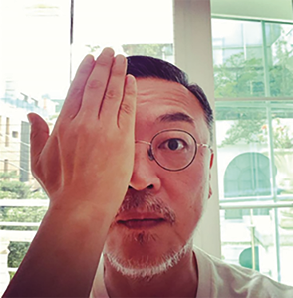
Figure 1. Selfie of a covered right eye
Source: Mr. Kim Eui-sung’s Twitter ‘#hanatheboy’
It is not the original photograph of the volunteer medic shot in the eye, and bleeding from her eye as she lay on the ground. The original photograph showed too much bloodshed and was more emotional. Kim’s eye-covering meme is a more abstract post which signifies the wound in an eye. The indexical sign can be the direct consequences for the victim, like pain, bleeding, loss of eyesight and psychological impacts that are subject to the imagination of different audiences.
Kim Eui-sung the Korean actor is a third party, unrelated to the incident either at the scene of protest or through the wider Anti-ELAB 2019. The meme is a post imitating the fact and the consequence of losing an eye. It aims at drawing sympathy for the female victim who lost her right eye (Cheng 2019). It is victim appeal which constructs an injustice frame of police brutality in suppressing a peaceful protest. Finally, the symbolic sign consists of the meaning beyond the boundary of the image itself. The interpretation should be connected to the situation and cultural context of the audience. Mr Kim neither mentioned a word of the Anti-ELAB Movement, nor the democratic movement of Hong Kong. But the meme pin-pointed the direction for the audiences to associate the eye-shooting incident with the wider happenings on the streets of Hong Kong.
It should be noted that it was not Kim Eui-Sung himself, but a group of Hongkongers who saw the photograph and responded by setting up Facebook pages using the hashtags, #Eye4HK and #EyeforHK that created the meme. Netizens created memes of different forms by adding text to their selfies and cartoons, all followed by one eye being covered. under the title ‘Eye for Hong Kong Global Campaign’1. All encourage supporters to take a selfie with their right eye covered and upload it to SNS sites. One of the Facebook pages, ‘Eye for Hong Kong’, posted the slogan, ‘Hong Kong police, please stop shooting our eyes!’ (Figure 2).
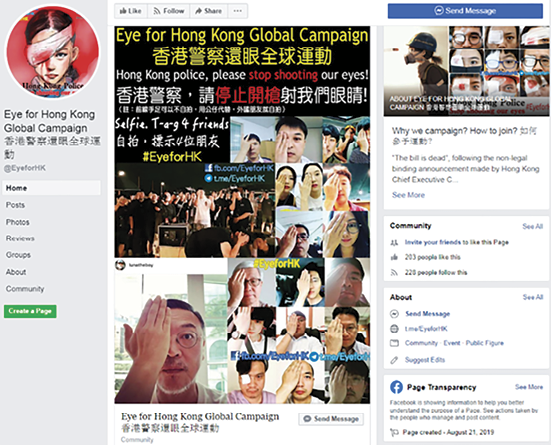
Figure 2. Screenshot of the Facebook page of ‘Eye For Hong Kong Global Campaign’
Source: Screenshot of the Facebook page https://www.facebook.com/EyeforHK/
The Eye4HK is a visually-based campaign using internet memes, which requires the participants to respond to the eye-shot incident and ‘do something’. The action is more than an act of clicktivism. The campaign initially catches the attention of bystanders and sympathizers of the incident and the victim. The participation process makes the participants think more about the issue, its claims and the related meaning behind it.
‘When I saw the picture, I felt angry and believed that she was innocent. The feeling was different when I saw some protesters get beaten […] All these [eye-shooting] incidents are serious. These protesters did not pose a threat to them [the police officers].’ (A university student from Hong Kong, 18-20 years old, male)
This student activist was not at the scene of the incident, but the incident gave him a sense of connection to the victim, cognitively and emotionally, and made him more concerned about the anti-ELAB movement and the injustice of police brutality. As he said, ‘Things [police bullying] happen day after day … The police dressed as terrorists [with their faces and eyes covered up] … I felt afraid of them.’ The student then revealed that he used to be a conservative and non-participant in political rallies. The sub-campaign drew him to take part in the wider Anti-ELAB 2019.
The meme in this campaign can be the original photograph of the victim being shot and bloodshed at the scene. However, the authors observed that the original photograph appeared on news media and the campaign’s social media sites only. For the case of Eye4HK, the image of eye-covering is central to the campaign, with text used depending on the creativity of the participants. Once the memetic chain was initiated, the spread of protest messages was not limited to selfie images. During the sharing process, each participant might contribute some text to express their sympathy for the victim and solidarity with the movement. The process kept on going with other rounds of reproduction of internet memes of other figures, and comics, sketches and posters being created. The deliberative process facilitates the participants’ creativity. This reproduction of images or memes gathered symbolic resources to strengthen the movement online and offline. For example, the posters used a comic of the victim drawn from disgruntled people’s engagement in a sustained collective resistance. The overwhelming diffusion of the incident – on social media platforms as profile avatars, on Lennon Walls, and in newspapers – draws diversified societal attention to the case on the one hand2. On the other hand, the association between the act of shooting in the eye and social others reinforced the negative feeling of police brutality and a justified rebellion of society.
Koreans can be seen as ‘distant others’ (Lo 2016). They are, geographically, outsiders to the social movement happening in Hong Kong. However, some Korean activists tried to link the supporting actions to local and historical issues, which as the Gwangju incident in 1980 and against the revitalization of the dictatorship at present. The link-up provides that campaign, which is irrelevant in Hong Kong, with somewhat local meanings and political functions in Korea. The shared memory of Koreans during their bitter struggle for democracy drew wider concerns about the campaign. It helped to build a transboundary identity between Hongkongers and Koreans over the historical process of democratization. Collective identity offers activists and bystanders in both places the motivation to take part. It helps to share common experiences of repression and unfair treatment in wider society (Chan 2017; Klandermans, van der Toorn & van Stekelenburg 2008). The visual codes embedded in images serve to connect activists, sympathizers and prospective participants through rational deliberation and collective memory (Doerr & Teune 2013). The authors argue that collective identity for democracy and memory of repression and state brutality contribute to the formulation of political resources in both Hong Kong and South Korea. The democratization in the latter demonstrates a successful role model for the present resistance in Hong Kong. An internet meme combining the images of riot police attacking Yonsei University in 1987 and the police’s siege of the Chinese University of Hong Kong in 2019 was spread on social media in Hong Kong and shared by Kim Eui-sun on his Twitter3. The meme connects both the military suppression in the history of South Korea and police brutality recently in Hong Kong
It should be noted that participants are not mobilized by a positive subject such as heroic justification or experience. Rather, the authors seek to argue that a negative subject also provides the impetus for engagement. The hashtag and selfie may draw initial attention, but the tag and tug on the ground help to build up momentum to strengthen the campaign.
‘I fully sympathize with the social movement in Hong Kong. […] When Korean activists set up a ‘Lennon Wall’ at a Korean university in support of the social movement, Chinese Government organizations sent some Chinese students to tear papers off the wall and threaten the activists. So, I asked Korean students in that university to protect the wall. I also participated in discussions about the social movement in Hong Kong and joined the rallies here in Korea to show our support.’ (A male student activist, 20-30 years old, interviewed at a university in South Korea)
The interaction between Korean and Mainland Chinese students inside a Korean university is understood as both an insistence on supporting the resistance in Hong Kong, as well as upholding the freedom of expression in Korea against a growing hegemonic China. Political bullying of Mainland Chinese students was prevalent in many universities in Western countries which rely on their tuition fees. The clashes happened in many overseas universities when Chinese students attempted to tear down protest signs, destroy Lennon walls, and attack overseas Hongkong students and their local supporters (Carrico 2019).
Meme Reproduction and Resource Accumulation
This paper argues that symbolic resources can be reproduced and accumulated in a way that allows desired outcomes to be achieved. The three-step process of resource accumulation consists of 1) the original incident and image of the victim, 2) the production of selfie images, and 3) the reproduction of internet memes. The original image in this case was a female medic shot in the eye by a police officer in Hong Kong. The Korean actor, Kim Eni-sun, stepped in to initiate the eye-covering selfie campaign. As a well-known actor and foreigner (for Hongkongers), his high-profile participation echoed widely locally and somewhat in Korea. Moral shock and outrage of the general public triggered immediate protests in response.
Subsequently, a production and reproduction process took place. Production is the basic step to participate in the meme sub-campaign. In this case, it was taking a selfie of covering one’s right eye and following the uploading steps suggested by Kim Eui-sun or other campaigners. The Eye4HK sub-campaign drew local celebrities, sympathetic Hongkongers, and people in many countries to upload their selfies onto social media which subsequently connected Hongkongers, Koreans and many people around the world. The injustice frame employed in this initial stage articulated a diagnostic frame (Whitworth & Li 2022) which identified the cause (i.e. police bullying) without exploring a solution.
The image and selfie can also be reproduced into internet memes. Comics, drawings, posters of eye-covering, and images of cats and dogs as well as cartoon figures were reproduced. Visual and text messages were added to these memes and uploaded to social media performs. The reproduction process draws a wider readership and accumulates resources from diverse backgrounds.
‘The feeling of seeing an eye-covering selfie and other cartoons or with a pet differs significantly […] hand-drawing images are more impressive […] the authors manifest specific emotions; compared with seeing it from a news photograph which is just a straightforward narrative of the happenings, a drawing can express the figure’s eye-sight which is the creative feature of art and design.’ (A postgraduate student from Hong Kong, 26-28 years old, female, pointed out her feeling about the memes.)
Kim Eui-sun himself convinced his film production crew to take an eye-covering group photograph at the scene of filming. Once again, he uploaded this photo onto his Twitter. Many Hong Kong protesters followed this reproduction act by taking photographs of eye-covering collectively in subway stations, during airport occupying, and in their workplaces. Some of them used yellow color and put images of a yellow umbrella in the memes to recall the color code adopted in Umbrella Movement (Whitworth & Li 2022). Since the Umbrella Movement in 2014, yellow represents Hongkongers’ resistance against the state and blue color represents pro-China and the establishment. Other memes consisted of images of yellow helmets, and goggles, with protesters wearing black (not yellow) which is associated with the appearance of those who protested in 2019. The adoption of color codes, symbols and appearance demonstrates a share of Hongkongers’ identity and resistance.
The following table (Table 1) summarizes the method of symbolic resource production and accumulation.
Source: Produced by the authors
The further production and reproduction, in Soh’s (2020) term is a ‘memetic chain’ of participation and contribution. Netizens were able to participate and followed the theme to add meanings as well as accumulate resources to the memes. The reproduction contributed to frame amplification (Whitworth & Li 2022), not only spreading the memes to more people but also strengthening the symbolic resources through association, share identity and emotion. The association linked up events and people; Kim Eui-Sung and other Korean students as distant others were connected to a campaign in Hong Kong transnationally, helping to strengthen the confidence mobilization of Hong Kongers.
Finally, the production and reproduction was not restricted to the diagnostic frame, but shifted towards the prognostic frame and especially the motivational frame (Benford & Snow 2000, Whitworth & Li 2022). The frame amplification and articulation shifting were justified by the massive turnout of the occupying the airport on 12 August 2019 and a mass demonstration on 18 August 2019 against police brutality later.
Concluding Remarks
The Anti-ELAB 2019 was one of the many movements in the protest cycle for the democratization of Hong Kong. In the post-colonial period (after 1997), the struggle has been more about the failed promise of a ‘One-country, Two-systems’ by China, hence a resistance against the intervention of the authoritarianism of China in Hong Kong. The shooting in the eye incident triggered the sub-campaign Eye4HK which was initiated by a ‘distant other’, the Korean actor, Kim Eui-Sung. Although the organizers and activists of Hong Kong were eager to gain foreign support throughout the movement, the movement was fundamentally simultaneous and leaderless. Kim’s stepping in was unplanned and his advocacy of one eye-covering selfie was not discussed with anyone in Hong Kong. Local campaigners began to host relevant Facebook and Instagram pages about Eye4HK in response and they flourished but, in fact, have no personal connection with Mr Kim. The sub-campaign went on and drew quite wide participation in Hong Kong online and also strengthened the entire social movement on the ground.
When compared with Olesen’s (2013) study on Said’s juxtaposed photograph of the Arab Spring in Egypt, Kim used his own selfie instead of the victim’s photograph. The authors understand that using a photo of the victim is more likely to outrage the public, including bystanders of the social movement; but the latter, a selfie, opens more space for audiences to join and perform which better utilizes the participatory subculture of a meme (Shomova 2021). The act is not just forwarding the meme, which becomes an act of clicktivism, but takes as the first step, to do your own eye-covering selfie. The act of a selfie and the meme produced is an action that goes beyond holding a placard like #MeToo. The act illuminates the shared identity with the victim, better than forwarding a static photograph, as happened with people’s association with the ‘We are all Said’ in Egypt’s campaign.
More importantly, the eye-covering images carried emotion. The meme did convey the incident of police brutality shooting a female medic volunteer in the eye. The moral shock (Jasper & Poulsen 1995; Jasper 1998) outraged the public. The pain embedded in the image together with anger, fear and sadness diffused rapidly through social media. The victim’s appeal helped to gain sympathy from diverse backgrounds (Walgrave & Verhulst 2006). As a female, the vulnerability of the victim won public compassion. As a volunteer medic, her participation in the protest was more about humanitarian relief; opening fire on an innocent person, even though with non-lethal rounds, is morally unacceptable. Emotions do not have a language barrier so can reach people of different cultures. The injustice of police brutality also generated support for the entire social movement against the state’s violence, which was coherent with the wider claim of the Anti-ELAB 2019 for political change (also not limited to opposition to the Extradition Bill). Finally, the juxtaposed meme of universities under siege in Hong Kong and South Korea recalled the historical memory of state repression later. The suffering of others (Lo 2016) in Hong Kong became relevant in South Korea with this injustice of police brutality and the shared democratization history in both South Korea and Hong Kong. This juxtaposition implies transboundary collective identity building which extended an eye-shooting incident to a broader context for attention and moral support from South Koreans who are the distant others (Lo 2016). The shared emotion, the sympathy towards the victim and transnational concern echoed the juxtaposed photograph of the victim as ‘carriers and amplifiers’ of the message and values in Egypt during the Arab Spring (Olesen 2013, p. 10).
With the consideration of the complexity of a visually-based campaign, the authors explored the production and reproduction of the memes which detail our understanding of the process of taking part in a memetic chain (Soh 2020). The study helps to explain the formulation and accumulation of resources in supporting and strengthening the entire Anti-ELAB 2019. The production was to take an eye-covering selfie and upload it onto social media. The reproduction was to make anything related to the eye-covering theme into an internet meme and disseminate it, which echoes the multimodality nature of memes (Milner 2016). The analysis showed that different captions and forms can be added to the core photographs. The detailing of the production and reproduction process extends the knowledge of the process of symbolic source production and accumulation in a visually-based campaign using memes which are more than a ‘carrier’, but also a powerful ‘amplifier’ of the messages and values as Olesen (2013) proposed.
References
Agur, C. & Frisch, N. 2019, ‘Digital disobedience and the limits of persuasion: Social media activism in Hong Kong’s 2014 Umbrella Movement’, Social Media + Society, vol. 5, no. 1, pp. 1-12. https://doi.org/10.1177/2056305119827002
Amnesty International, 2019a, How not to Police a Protest: Unlawful Use of Force by Hong Kong Police, ASA 17/0576/2019, Amnesty International, London. https://www.amnesty.org/en/documents/asa17/0576/2019/en/
Amnesty International, 2019b, Verified: Hong Kong Police Violence Against Peaceful Protesters, June 21. https://www.amnesty.org/en/latest/news/2019/06/hong-kong-police-violence-verified/
Barry, A. M. S. 1997, Visual Intelligence: Perception, Image, and Manipulation in Visual Communication, State University of New York Press, Albany, NY
Benford, R. D. & Snow, D. A. 2000, ‘Framing processes and social movements: An overview and assessment’, Annual Review of Sociology, vol. 26, pp. 611–639. https://doi.org/10.1146/annurev.soc.26.1.611
Carrico, K. 2019, ‘Universities Are Turning a Blind Eye to Chinese Bullies: Mainland thuggery against Hong Kongers is being extended to foreign campuses’, Foreign Policy, August 9. https://foreignpolicy.com/2019/08/09/universities-are-turning-a-blind-eye-to-chinese-bullies/
Carty, V. 2015, Social Movements and New Technology, Westview Press, Boulder, CO.
Chan, S. K. L. 2017, ‘Prostrating walk in the campaign against Sino-Hong Kong Express Railway: Collective identity of native social movement’, Cosmopolitan Civil Societies: An Interdisciplinary Journal, vol. 9, no. 1, pp. 20-41. https://doi.org/10.5130/ccs.v9i1.4986
Cheng, K. 2019, ‘#Eye4HK Campaign in Support of Hong Kong Protesters Gains International Momentum’, Hong Kong Free Press, August 22. https://www.hongkongfp.com/2019/08/22/eye4hk-campaign-support-hong-kong-protesters-gains-international-momentum/
Cheung, J. 2019, ‘Teacher Claiming Right Eye Hit by Rubber Bullet Chases Raptors’, Hong Kong Standard, Sep 13. http://www.thestandard.com.hk/section-news.php?id=211655&sid=11
Davison, P. (2012), ‘The language of internet memes’, In: Mandiberg, M. (ed.) The Social Media Reader, New York University Press, New York, pp. 120-134. https://doi.org/10.18574/nyu/9780814763025.003.0013
Doerr, N. & Teune, S. 2013, ‘Visual analysis of social movements’, In: Klandermans, B., Snow, D. A., della Porta, D., & McAdam, D. (eds), The Wiley-Blackwell Encyclopaedia of Social and Political Movements, Wiley-Blackwell, Hoboken, NJ. https://doi.org/10.1002/9780470674871.wbespm495.pub2
Friedman, U. 2011, ‘The Egyptian revolution dominated Twitter this year’, Foreign Policy, December 5. https://foreignpolicy.com/2011/12/05/the-egyptian-revolution-dominated-twitter-this-year/
Gallagher, R. J., Reagan, A. J., Danforth, C. M. & Dodds, P. S. 2018, ‘Divergent Discourse between Protests and Counter-protests: #BlackLivesMatter and #AllLivesMatter’, pLoS ONE, vol. 13, no. 4, article e0195644. https://doi.org/10.1371/journal.pone.0195644
Gamson, W. A., Fireman, B. & Rytina, S. 1982, Encounters with Unjust Authority, Dorsey, Homewood, IL.
Graber, D. 1996, ‘Dissecting the audio-visual language of political television’, Research in Micropolitics, vol. 5, pp. 3-31.
Guenther, L., Ruhrmann, G., Bischof, J., Penzel, T. & Weber, A. 2020, ‘Strategic framing and social media engagement: Analyzing memes posted by the German Identitarian Movement on Facebook’, Social Media + Society, vol. 6, no. 1, pp. 1–13. https://doi.org/10.1177/2056305119898777
Halfmann, D. & Young, M. P. 2010, ‘War pictures: The grotesque as mobilizing tactic’, Mobilization: An International Quarterly, vol. 15, no.1, pp. 1–24. https://doi.org/10.17813/maiq.15.1.y561981851788672
Jasper, J. M. & Poulsen, J. D. 1995, ‘Recruiting strangers and friends: Moral shocks and social networks in animal rights and anti-nuclear protest’, Social Forces, vol. 42, no. 4, pp. 493-512. https://doi.org/10.2307/3097043
Jasper, J. M. 1998, ‘The emotions of protest: Affective and reactive emotions in and around social movements’, Sociological Forum, vol. 13, no. 3, pp. 397-424. https://doi.org/10.1023/A:1022175308081
Khomami, N. 2017, ‘#MeToo: How a hashtag became a rallying cry against sexual harassment’, The Guardian, 21 October. https://www.theguardian.com/world/2017/oct/20/women-worldwide-use-hashtag-metoo-against-sexual-harassment
Kilpatrick, R. H. 2019, ‘“An Eye for an Eye”: Hong Kong protests get figurehead in woman injured by police’, The Guardian, 16 August. https://www.theguardian.com/world/2019/aug/16/an-eye-for-an-eye-hong-kong-protests-get-figurehead-in-woman-injured-by-police
Klandermans, B., van der Toorn, J., & van Stekelenburg, J. 2008, ‘Embeddedness and identity: How immigrants turn grievances into action’, American Sociological Review, vol. 73, no. 6, pp. 992-1012. https://doi.org/10.1177/000312240807300606
Lee, S. 2018, ‘The role of social media in protest participation: The case of candlelight vigils in South Korea’, International Journal of Communication, vol. 12, pp. 1523–1540. https://ijoc.org/index.php/ijoc/article/view/7767
Lo, W. H., 2016, ‘Citizen camera-witnessing: A case study of the Umbrella Movement’, Contemporary Chinese Political Economy and Strategic Relations: An International Journal, vol. 2, no. 2, pp. 795-815. http://icaps.nsysu.edu.tw/p/412-1131-13594.php?Lang=en
Lomas, C. 2019, ‘Hong Kong protests: Police accused of shooting at journalists amid demonstration over China extradition bill’, The Independent, July 16. https://www.independent.co.uk/news/world/asia/hong-kong-protests-video-police-journalists-china-extradition-bill-a8957471.html
Milner, R. M. 2016, The World Made Meme: Public Conversations and Participatory Media, MIT Press, Cambridge, MA. https://doi.org/10.7551/mitpress/9780262034999.001.0001
Netizens Organizing Police Abuse Investigation Data (NOPAID) 2019, Statutory Powers and Monitoring of the Hong Kong Police Force: Investigation Report (Final Report, Public Version), Report no. LG2019/002. https://www.hkpfreport.org/full-report
Olesen, T. 2013, ‘“We are all Khaled Said”: Visual Injustice Symbols in the Egyptian Revolution, 2010–2011’, In: Doerr, N., Mattoni, A. & Teune, S. (eds.), Advances in the Visual Analysis of Social Movements, Emerald, Bingley, pp. 3-25. https://doi.org/10.1108/S0163-786X(2013)0000035005
Or, N. H. K. & Lau, C. H. M. 2014, ‘The rise of transgressive contention by young activists: The recent cases in Hong Kong’, Journal of Youth Studies, vol. 17, no.1, pp. 57-77. https://www.researchgate.net/publication/269129010_The_Rise_of_Transgressive_Contention_by_Young_Activists_Recent_Cases_in_Hong_Kong
Papacharissi, Z. 2014, Affective Publics: Sentiment, Technology, and Politics, Oxford University Press, Oxford. https://doi.org/10.1093/acprof:oso/9780199999736.001.0001
Schlegel, A., 1995, ‘My Lai: “We lie, they die” or, a small history of an “atrocious” photograph’, Third Text, vol. 9, no. 31, pp. 47–66. https://doi.org/10.1080/09528829508576544
Shifman, L. 2019, ‘Internet memes and the twofold articulation of values’, In: Rainie, M. & Dutton, W. H. (eds), Society and the Internet: How Networks of Information and Communication are Changing Our Lives, 2nd edn, Oxford University Press, Oxford, pp. 43-57. https://doi.org/10.1093/oso/9780198843498.003.0003
Shomova, S. 2021, ‘“Hieroglyphs of protest”: Internet memes and the protest movement in Russia’, Problems of Post-Communism, vol. 69, no. 3, pp. 232-241. https://doi.org/10.1080/10758216.2020.1864217
Snow, D. A., Rochford, Jr., E. B., Worden, S. K., & Benford, R. D. 1986, ‘Frame alignment processes, micromobilization, and movement participation’, American Sociological Review, vol. 51 no. 4, pp. 464-481. https://doi.org/10.2307/2095581
Soh, W. Y. 2020, ‘Digital protests in Singapore: The pragmatics of political internet memes’, Media Culture & Society, vol. 42 no. 7-8, pp. 1115-1132. https://doi.org/10.1177/0163443720904603
Tolbert, J. N. & Rutherford, T. 2019, A semiotic analysis of biotechnology and food safety images in Time, Newsweek, and U.S. News & World Report, Journal of Applied Communications, vol. 93, no. 1, pp. 1-15. https://doi.org/10.4148/1051-0834.1199
Walgrave, S. & Verhulst, J. 2006, ‘Social movement studies, towards “new emotional movements”? A comparative exploration into a specific movement type’, Social Movement Studies, vol. 5, no. 3, pp. 275–304. https://doi.org/10.1080/14742830600991651
Whitworth, K. & Li, Y. T. 2022, ‘Visual framing: The use of COVID-19 in the mobilization of Hong Kong protest’, The China Quarterly, vol. 253, pp. 19-34. https://doi.org/10.1017/S0305741022001564
Wu, D.D. 2017, ‘China Says Sino-British Joint Declaration on Hong Kong Is Void’, The Diplomat, July 1. https://thediplomat.com/2017/07/%EF%BB%BFchina-says-sino-british-joint-declaration-on-hong-kong-is-void/
1 For details, please refer to ‘Eye for Hong Kong Global Campaign’ sites at Telegram: https://t.me/EyeforHK, and Facebook: https://facebook.com/EyeforHK
2 Lennon Walls are public notice boards for sympathizers to stick post-it notes with text and drawings to show their support for the movement.
3 Kim neither used any text to explain this meme, nor associated it directly with the eye-covered selfie uploaded on his SNS pages a month before.