ARTICLE
Reshaping the economic landscape in the Santiago river basin, Jalisco, Mexico: An ecological economics perspective of regional integration

Salvador Peniche Camps
University of Guadalajara, Mexico
International Journal of Rural Law and Policy, No. 2 2017
© 2017 The Author(s). This is an Open Access article distributed under the terms of the Creative Commons Attribution 4.0 Unported (CC BY 4.0) License (https://creativecommons.org/licenses/by/4.0/), allowing third parties to copy and redistribute the material in any medium or format and to remix, transform, and build upon the material for any purpose, even commercially, provided the original work is properly cited and states its license.
Citation: Salvador Peniche Camps, ‘Reshaping the Economic Landscape in the Santiago River Basin, Jalisco, Mexico: An Ecological Economics Perspective of Regional Integration’ 2017 2 International Journal of Rural Law and Policy, Article ID 5001. http://dx.doi.org/10.5130/ijrlp.i2.2017.5001
ISSN 1839-745x | Published by UTS ePRESS | http://ijrlp.epress.lib.uts.edu.au
Corresponding author: Salvador Peniche Camps, University of Guadalajara, Mexico, peniche@hotmail.com
DOI: http://dx.doi.org/10.5130/ijrlp.i2.2017.5001
ABSTRACT
Ecological Economics studies social metabolism; that is, the material and energy flow into and out of the economy. Using the ecological economics perspective, we analyse the transformation of the economic landscape of the Santiago river basin, Mexico. We discuss why the appropriation of water resources is one of the most important drivers of North American economic integration. We argue that the theoretical model of neoextractivism can explain the dynamics of social metabolism behind the North American Free Trade Agreement (NAFTA).
Keywords
social metabolism; regional integration; neo-extractivism; NAFTA
Introduction
In this paper, we explore the transformation of the productive space in Mexico from the perspective of the economic specialisation of globalisation. We premise our arguments on the idea that the prevailing capitalist system is experiencing a crisis of a structural nature. The paper discusses the thesis of authors such as Harvey,1 Klein,2, Farley et al3 Foster4 and Toledo,5 which argues that the distinguishing feature of the current stage of globalisation is the synergy between environmental degradation and recurrent economic crises.
The main focus of this paper’s discussion is the scarcity of water resources from the Santiago river basin in western Mexico. Recent developments in the region show how the North American Free Trade Agreement (NAFTA) has impaired the life support systems of the river basin. Local and federal efforts related to the promotion of Mexican exports do not consider environmental externalities, even though such externalities are significant enough to call into question the very premises of economic efficiency and the legitimacy of capitalism as an appropriate operating system for Mexico.
NAFTA caused a fundamental transformation of the economic structure of Mexico, transforming economic regions and impacting local economic agents. Most traditional sectors disappeared or were absorbed by foreign capital. In effect, only a few economic activities, such as maquiladoras (exporting assembling plants) and high value agricultural commodities exports, benefited from access to the US market enabled by NAFTA.
In recent years, the emergence of the Chinese economy as a global force has greatly impacted the Latin American economy and NAFTA, generally, by changing market conditions in the US and thus the market conditions for Mexican exports. The effect has been an increase in the exploitation rate of Mexico’s natural resources.
This paper focuses on the developments related to the transformation of the Santiago river basin as a result of the implementation of a new model of participation in hemispheric integration, called neo-extractivist policies. These policies have reshaped the local economy and the environment. We analyse the concept of neo-extractivism in relation to the exploitation of water resources as a source of competitive advantage in hemispheric markets.
Methods
The context of this paper is the theory of the systemic crisis of capitalism. For Amin,6 the distinguishing feature of the current situation is the increasing hegemony of transnational corporations which control the investment and trade policies of nation states. Using the logic of capital accumulation, the current rate of exploitation of the natural environment exceeds its limit of resiliency. Therefore, the depletion of natural resources has become the main factor in the recurrent financial and economic crises.
The current systemic crisis has its roots in old-style capitalism. As authors such as Soddy,7 Boulding8 and Polanyi9 note, the dynamics of sustained growth of the world economy inevitably leads to a metabolic rift; that is, ‘a rift of the interdependence process of the social metabolism, a metabolism prescribed by the natural laws of life itself’.10
The current stage of the systemic crisis has found expression in the instability of the global economy and the realignment of world powers, in particular, the rise of China’s economy. In the first decade of the twenty-first century, the Chinese economy became one of the leading importers of most raw materials in the world. For Latin America, the important consequence of the shift in world economy was the implementation of a new strategy for the region: neo-extractivism.11
‘Neo-extractivism’ is defined as the abandonment of former strategies aimed at achieving industrial development through regional integration, to strategies aimed at specialising in the exploitation of natural resources. Revenues from exports as a result of the implementation of neo-extractivist policies in countries with progressive governments (Bolivia, Venezuela, Argentina and Brazil) were used for the development of social programs and alleviation of poverty. In countries with conservative governments (Mexico and Columbia), however, the revenues from extraction of natural resources were not used in social policies but as incentives for foreign investment; that is, neo-extractivism served as a tool for foreign companies to obtain access for the purposes of exploiting minerals, energy and water.
The economies of both progressive and conservative states have been negatively impacted by the deceleration of the Chinese economy in the second decade of the twenty-first century, and the resultant slowdown of Chinese demand for raw materials from Latin America. Reduced demand has affected social programs, exacerbated the struggle for markets and raw materials, and has intensified the pressure for control of natural resources.
The Mexican economy was differently impacted because of its participation in NAFTA; the influence of the China factor for Mexico must be interpreted in the context of the economic disputes between the US and China. This situation has led to a reorientation of trade and investment flows in Mexico and to a new configuration of productive space (ie, special distribution and organisation of production). Such is the case of the Santiago river basin and the exploitation of its water resources.
One of the main forms in which North American economic integration reshapes the productive space in Mexico is through water resources relocation. This relocation occurs though real water transfers and through virtual water exports. Both real and virtual water relocation occurs because water has been used as a competitive factor for Mexican exports due to its apparent low price relative to water prices around the world. In Mexico, water is free in the agricultural sector and priced extremely low for industry and domestic use (less than US$0.50 per cubic metre).
Access to high quality water resources is one of the main factors necessary for regional development, and the main driver for their economic organisation.
The Santiago river region is an extremely important socio-economic and environmental area in the country. Our research examined the new geo-economic configuration in the upper basin of the Santiago River; that is, the region that stretches from Chapala Lake to the city of Guadalajara, in the state of Jalisco (see Map 1). Following Mesclier’s methodology,12 we describe how changes to the socioeconomic space have been driven by structural changes in the regional economy. According to Mesclier, the new organisation of the space results from a combination of international and local factors. In order to understand the logic of the new organisation of the space, we analyse changes in the social metabolism of the area; that is, the allocation of production areas and the economic and water resources flows.
Results
Eden describes the logic of the economic integration of Mexico with the US as a process in which Mexico and the US went ‘from silent integration to strategic alliance’.13 The main impact of the integration strategies is expressed in the transformation of the economic landscape. Because of Mexico’s economic policy orientation to the American market as a result of NAFTA, local Mexican producers focused on export-oriented activities and, by doing so, modified land use patterns and the exploitation of natural resources, particularly the exploitation of water resources.
Disputes over the allocation of water resources have now become a significant political and economic factor in the region. Water scarcity has become the major limiting factor of economic growth in the Santiago river basin as well as a risk factor for the stability of major local cities of the state, such as the capital, Guadalajara.14 The state of Guanajuato, which borders the Santiago basin and is the home to an industrial cluster, also suffers from significant water limitations. Tagle states that the water deficit in Guanajuato has reached 128 million cubic metres.15 To solve the water deficit problem, a decision was taken to construct a 140 kilometre aqueduct to carry 3.8 cubic metres per second of water from the Santiago River to the industrial districts and the development of urban areas in Guanajuato.
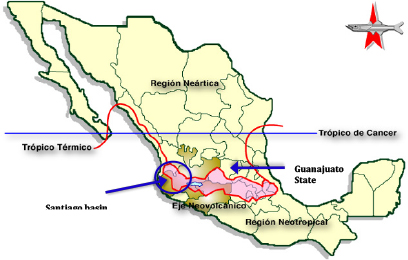
Map 1: Mexico, showing the study area: Santiago basin16
The change of water allocations, especially the transfer (export) of water17 from the basin, has resulted in a demise of traditional agriculture, a growth of high value agricultural exports, an increase in numbers of firms that subcontract to the US industry (maquiladoras), a growth of export oriented industries and the acceleration of urban sprawl.
Changes in agriculture
Agricultural production has transformed significantly as a result of NAFTA. The production and total harvested area of traditional crops, such as maize, has greatly reduced and Mexico currently imports 43 per cent of its food.18 Simultaneously, there has been a boom in the agro industrial sector, particularly in high-value commodities such as berries and vegetables. These agricultural products use great quantities of water. The low costs of water in Mexico give Mexican berries and vegetables an important comparative advantage in the US market. Therefore, virtual water exports play an important role in the boom of Mexican agricultural commodities.19
Industrial policy
The maquiladora industry is considered the most important success story of the Mexican integration policy. In 2015, 83 per cent of Mexican export sales came from the maquiladora sector.20 The figure in the state of Jalisco is similar. In 2013, 203 plants were active in the state, most in the Santiago river basin. The ‘Mexican silicon valley’, which contains the maquiladoras’ productive clusters, is located in the suburban area of Tlajomulco in Guadalajara. In 2012, maquiladoras generated sales of more than US$17 520 million.21
Initially, the creation of the free trade region enabled Mexican producers to compete with relative success against Chinese producers. However, Chinese producers have steadily gained a higher competitive edge, necessitating a profound transformation in Mexico’s development strategy. The main elements of the new strategy were the opening of the energy sector to foreign direct investment and the realignment of the economic policy on export oriented infrastructure. This is particularly visible in the case of policies aimed at developing the auto industry.22 The industrial development policy of the Mexican Federal Government specifies special ‘dynamic areas’ as ‘appropriate’ regions for the export auto industry.23
Figure 1 shows the increased performance of exports from the automobile sector since the 2008 global financial crisis.
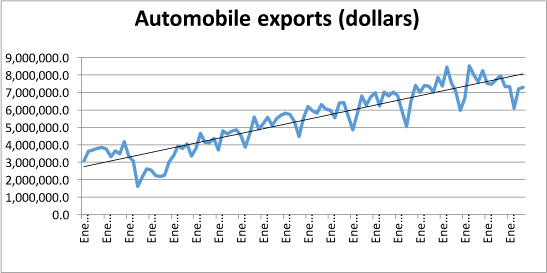
Figure 1: Fuente: Banco de México (source: Banco de México, Balanza de pagos (March 2016))
Urban sprawl
In addition to the changes in the pattern of economic exploitation of water resources, the new industrialisation model caused an increase in urban populations, particularly in Guadalajara. According to the state statistics agency, in 2010, 83 per cent of the states’ 4 434 878 inhabitants lived in urban areas, with 60.33 per cent in Guadalajara.24 In all, in the 22 years of NAFTA, a new organisation of space was created in the Santiago river basin, and it was access to cheap water that played a significant role in the reshaping of the socio-economic landscape.
Conclusion
There is evidence to suggest a close relationship between the instability of the world economy and the problems of over-exploitation of natural resources. The new developments in the world economy continue to deepen the metabolic rift, especially in Latin America. One expression of this process is the creation of a new development strategy called neo-extractivism. With the decline in the demand for natural resources in industrialised countries, the strategy for gaining revenue from the export of raw materials is at a crossroads. In most Latin American countries with liberal governments the revenues from natural resource exports have been the main source of most social programs; the decline in the foreign sales of these commodities has therefore caused serious structural consequences, threatening long-term growth strategies.
In the case of western Mexico, the overexploitation of water reserves through trade in virtual water from the upper basin of the Santiago River has been a central element in the realignment of the productive space. Because water is a ‘free’ resource for Mexican peasants, it has been used as a subsidy for Mexican export sales. Changes in water use patterns, the virtual export of water and water relocation strategies have caused important regional disparities, threatening the future basis of water as central to the economic development model.
The new economic context can be seen as an area of challenge for the Mexican economy. The viability of the country’s economy will depend on the implementation of proper integration strategies. It is necessary to reverse the neo-extractivist model and start a new national project that aims to protect and develop scarce natural resources.
DECLARATION OF CONFLICTING INTEREST The author(s) declared no potential conflicts of interest with respect to the research, authorship, and/or publication of this article. FUNDING The author(s) received no financial support for the research, authorship, and/or publication of this article.
References
Amin, Samir, Escritos para la Transición (Oxfam, 2010).
Boulding, Kenneth E, ‘The Economics of the Coming Spaceship Earth’ in H Jarrett (ed) Environmental Quality in a Growing Economy (MD: Resources for the Future/John Hopkins University Press, 1966), 3 <http://arachnid.biosci.utexas.edu/courses/THOC/Readings/Boulding_SpaceshipEarth.pdf>.
Eden, Lorraine, and Maureen Appel Molotov, ‘From Silent Integration to Strategic Alliance: The Political Economy of North American Free Trade’ in Gustavo Vega, Liberalización Económica y Libre Comercio en América del Norte (COLMEX, 1993) 23.
Esquivel, Anilu, ‘Industria Maquiladora de Exportación: La Joya de la Corona’ (2015) 283 Manufactura <http://www.manufactura.mx/industria/2015/07/01/industria-maquiladora-de-exportacion-la-joya-de-la-corona>.
Farley, Joshua et al, ‘Monetary and Fiscal Policies for a Finite Planet’ (2013) 5(6), Sustainability, DOI 10.3389/su5062802.
Foster, John Bellamy, ‘The Epochal Crisis’ (2013) 65(05) Monthly Review <http://monthlyreview.org/2013/10/01/epochal-crisis/>.
Gutiérrez, Laura, La Industria Maquiladora de Exportación, Importante en el Desarrollo Económico de Jalisco (12 September 2013) Axopolis <http://www.axopolis.com/organismos-ip/8060-la-industria-maquiladora-de-exportacion-importante-en-el-desarrollo-economico-de-jalisco-jose-palacios.html>.
Guzmán, Manuel, Chapala una Crisis Programada (Grupo Parlamentario del Partido Verde, 2003).
Harvey, David, Diecisiete Contradicciones y el Fin del Capitalismo (IAEN, 2014).
IIEG (Instituto de IEstadística y Geográfica), (March 2016) <http://iieg.gob.mx/index.php>.
Klein, Naomi, This Changes Everything: Capitalism vs the Climate (Penguin, 2014).
Marx, Karl, Capital (Vintage, vol 3, 1981), 949.
Medez, Ernesto, ‘Es Hora de Ir al Grano; México Importa 43% de los Alimentos’, Excelsior, 17 de Mayo 2013 <http://www.excelsior.com.mx/nacional/2013/05/05/897514>.
Mesclier, Evelyne, ‘Por Qué y Cómo Estudiar y Comparar las Evoluciones de los Territorios Locales en un Mundo Globalizado’ (2013) 25 Espacio y Desarrollo <http://www.documentation.ird.fr/hor/fdi:010065656>.
Peniche, Salvador, Agua y Economía Fresera en la Cuenca del Río Duero. La Trasformación del Modelo Hidroagrícola Mexicano (Guadalajara UDG, 2005).
Polanyi, Karl, La Gran Transformación. Los Orígenes Políticos y Económicos de Nuestro Tiempo (Fondo de Cultura Económica, 1992).
Soddy, Frederick, The Role of Money: What it Should be, Contrasted with What it has Become (Routledge, 1934).
Suarez, Jorge, Ahora o Nunca. La Gran Oportunidad de México para Crecer (Debate, 2012); Tonatiuh Moreno, ‘Plan Maestro del Corredor Logístico Industrial Automotriz del Bajío’ (2015) 17(1) Quivera 3.
Svampa, Maristella, ‘Consenso de los Comodities y Lenguajes de Valoración en América Latina’ (2013) 244 Nueva sociedad <http://nuso.org/articulo/consenso-de-los-commodities-y-lenguajes-de-valoracion-en-america-latina/>.
Tagle, Daniel, La Crisis Multidimensional del Agua en el Estado de Guanajuato (Porrúa, 2014).
Toledo, Victor M, ‘Diez Tesis Sobre la Crisis de la Modernidad’ (2012) 33 Polis, DOI: 10.4067/s0718-65682012000300014>.
FOOTNOTES
1 David Harvey, Diecisiete Contradicciones y el Fin del Capitalismo (IAEN, 2014).
2 Naomi Klein, This Changes Everything: Capitalism vs the Climate (Penguin, 2014).
3 Joshua Farley et al, ‘Monetary and Fiscal Policies for a Finite Planet’ (2013) 5(6), Sustainability, DOI 10.3389/su5062802.
4 John Bellamy Foster, ‘The Epochal Crisis’ (2013) 65(05) Monthly Review <http://monthlyreview.org/2013/10/01/epochal-crisis/>.
5 Víctor M Toledo, ‘Diez Tesis Sobre la Crisis de la Modernidad’ (2012) 33 Polis, DOI: 10.4067/s0718-65682012000300014>.
6 Samir Amin, Escritos para la Transición (Oxfam, 2010).
7 Frederick Soddy, The Role of Money: What it should be, Contrasted with what it has Become (Routledge, 1934).
8 Kenneth E Boulding, ‘The Economics of the Coming Spaceship Earth’ in H Jarrett (ed) Environmental Quality in a Growing Economy (MD: Resources for the Future/John Hopkins University Press, 1966), 3 <http://arachnid.biosci.utexas.edu/courses/THOC/Readings/Boulding_SpaceshipEarth.pdf>.
9 Karl Polanyi, La Gran Transformación. Los Orígenes Políticos y Económicos de Nuestro Tiempo (Fondo de Cultura Económica, 1992).
10 Karl Marx, Capital (Vintage, vol 3, 1981), 949.
11 Maristella Svampa, ‘Consenso de los Comodities y Lenguajes de Valoración en América Latina’ (2013) 244 Nueva sociedad <http://nuso.org/articulo/consenso-de-los-commodities-y-lenguajes-de-valoracion-en-america-latina/>.
12 Evelyne Mesclier, ‘Por Qué y Cómo Estudiar y Comparar las Evoluciones de los Territorios Locales en un Mundo Globalizado’ (2013) 25 Espacio y Desarrollo <http://www.documentation.ird.fr/hor/fdi:010065656>.
13 Lorraine Eden and Maureen Appel Molotov, ‘From Silent integration to strategic Alliance: The Political Economy of North American Free Trade’ in Gustavo Vega, Liberalización Económica y Libre Comercio en América del Norte (COLMEX, 1993) 23.
14 Daniel Tagle, La Crisis Multidimensional del Agua en el Estado de Guanajuato (Porrúa, 2014).
16 Manuel Guzmán, Chapala una Crisis Programada (Grupo Parlamentario del Partido Verde, 2003).
17 The quantity of water embedded in the production of commodities produced for international markets is termed ‘virtual water exports’. Virtual water is the water that loses its opportunity cost after being used in the production of commodities.
18 Ernesto Medez, ‘Es Hora de Ir al Grano; México Importa 43% de los Alimentos’, Excelsior, 17 de Mayo 2013 <http://www.excelsior.com.mx/nacional/2013/05/05/897514>.
19 Salvador Peniche, Agua y Economía Fresera en la Cuenca del Río Duero. La Trasformación del Modelo Hidroagrícola Mexicano (Guadalajara UDG, 2005).
20 Anilu Esquivel, ‘Industria Maquiladora de Exportación: La Joya de la Corona’ (2015) 283 Manufactura <http://www.manufactura.mx/industria/2015/07/01/industria-maquiladora-de-exportacion-la-joya-de-la-corona>.
21 Laura Gutiérrez, La Industria Maquiladora de Exportación, Importante en el Desarrollo Económico de Jalisco (12 September 2013) Axopolis <http://www.axopolis.com/organismos-ip/8060-la-industria-maquiladora-de-exportacion-importante-en-el-desarrollo-economico-de-jalisco-jose-palacios.html>.
22 Jorge Suarez, Ahora o Nunca. La Gran Oportunidad de México para Crecer (Debate, 2012); Tonatiuh Moreno, ‘Plan Maestro del Corredor Logístico Industrial Automotriz del Bajío’ (2015) 17(1) Quivera 3.
23 The focus on the automobile sector resulted from of the 2011 Wassennar Agreements, which established a strategic cooperation for the strengthening of the American economy under the new conditions of globalisation.
24 IIEG (Instituto de IEstadística y Geográfica), (March 2016) <http://iieg.gob.mx/index.php>.