Gateways: International Journal of Community Research and Engagement
Vol. 19, No. 1
March 2026
RESEARCH ARTICLE (PEER REVIEWED)
Hecho Para Llevar: Bridging Urban Divides Through Community-Based Food Delivery in San Juan, Puerto Rico
John-Michael Davis1, Iain Spearance1, Myrrh Khan1, Mena Youssif1, Jose Bauza2
1 Department of Integrative and Global Studies, Worcester Polytechnic Institute, Massachusetts, USA
2 Proyecto ENLACE del Caño Martín Peña, Puerto Rico
Corresponding author: John-Michael Davis, jdavis4@wpi.edu
DOI: https://doi.org/10.5130/b5bt1822
Article History: Received 16/07/2025; Revised 16/12/2025; Accepted 20/01/2026; Published 03/2026
Abstract
Urban economic inequality continues to challenge efforts towards inclusive and sustainable development. This article presents a case study of a participatory, community–university partnership that co-developed a culturally grounded food delivery initiative to promote economic opportunities in Caño Martín Peña (CMP), a historically marginalised community in San Juan, Puerto Rico. Anchored in a community economic development (CED) framework and guided by a shared action learning approach, the project connected CMP’s small, family-owned restaurants with the neighbouring financial district, Milla de Oro (MdO), through a locally designed lunch delivery system. The initiative, Hecho Para Llevar, emerged from a collaboration between Worcester Polytechnic Institute (WPI) and Proyecto ENLACE, a local community development corporation. Using mixed methods – including interviews, surveys and iterative participatory engagement – the project identified shared interests, logistical barriers and opportunities for mutual benefit. The resulting model leverages community assets such as culinary traditions and informal delivery networks, whilst addressing structural challenges like limited market access and digital infrastructure. Economic projections suggest that the initiative can generate sustainable income for restaurants and delivery workers, whilst offering affordable, culturally relevant meals to MdO employees. We underscore the ethical imperative that replication of this model must avoid placing disproportionate responsibility on marginalised communities and instead ensure shared accountability among institutional and systemic actors. This case contributes to the scholarship of engagement by demonstrating how participatory, cross-sector strategies can bridge spatial and economic divides, foster community agency and offer a replicable – and ethically grounded – model for equitable urban development.
Keywords
Community Economic Development; University–Community Engagement; Puerto Rico; Food Systems and Social Innovation; Participatory Action Research; Spatial Justice
Introduction
Urban economic inequality remains a pressing challenge that cities are facing today, particularly in contexts shaped by colonial legacies, environmental vulnerability and spatial segregation. In San Juan, Puerto Rico, the Caño Martín Peña (CMP) communities are adjacent to the city’s financial hub, Milla de Oro (MdO), yet they remain economically and infrastructurally isolated. Over 60 per cent of CMP residents live below the federal poverty line, and nearly half of adults lack a high school diploma, limiting access to stable employment and economic mobility (Rodríguez 2014). The community’s informal development has led to severe environmental degradation, including raw sewage contamination, clogged waterways and frequent flooding, which not only pose public health risks but also deter investment and economic activity (EPA 2024; Urban Waters Partnership 2019). Despite being less than 4.83 km (3 miles) from MdO, where multinational banks, corporate headquarters and high-end commercial spaces are concentrated, CMP residents face persistent barriers to economic inclusion. These disparities are compounded by decades of disinvestment and policy neglect, which have left the community without adequate infrastructure or reliable transportation (Algoed & Hernández Torrales 2019; Lincoln Institute of Land Policy 2018). This disparity reflects the spatial injustice inherent in many cities, where, according to Soja (2010), ‘the outer peripheries’ are disproportionately ‘starved of institutional resources and under-privileged compared to the core’.
This article presents Hecho Para Llevar (‘Made to Go’), a community–university initiative that connects small, family-owned restaurants in CMP with customers in MdO through a culturally rooted, community-based food delivery system. Developed through a partnership between Worcester Polytechnic Institute’s (WPI) Puerto Rico Project Center (PRPC) and Proyecto ENLACE, a community development corporation in Caño Martín Peña, the initiative exemplifies how participatory design, food systems innovation and shared action learning (SAL) can converge to promote equitable economic development. Whilst food systems have increasingly been recognised as vehicles for community economic development (CED), there is limited research on how culturally grounded food delivery models can serve as mechanisms for cross-community economic integration. Moreover, existing literature tends to focus on intra-community development; few studies have explored how economic models can be designed to strategically connect marginalised neighbourhoods with adjacent affluent districts in ways that foster mutual benefit (Rizzo et al. 2024). This article addresses these gaps by documenting the co-creation of a scalable, community-driven delivery system that bridges spatial and economic divides in San Juan.
This article is framed by two interrelated themes: (1) the role of university–community partnerships in advancing CED; and (2) the potential of local food systems to drive inclusive growth in marginalised communities. These themes inform our analysis of how participatory, cross-sector collaborations can bridge economic divides. We then provide context on the CMP communities and Proyecto ENLACE, outline our co-design methodology, present findings from both CMP and MdO stakeholders and reflect on the initiative’s broader implications and replicability.
Community Economic Development and University Partnerships
CED emerged in the United States during the 1960s and 1970s in response to urban decline, racial inequality and economic marginalisation in distressed communities (Clay & Jones 2008). CED is a participatory process in which communities assess their economic conditions and collaboratively design strategies that leverage social capital and sustainable practices for holistic improvement (Phillips & Besser 2013). Rooted in principles of grassroots empowerment, CED explicitly recognises the interconnected social, political and environmental factors shaping local economies (Diamond 2004). Unlike traditional top-down economic models, CED prioritises community agency, fostering inclusive decision-making that empowers residents to address systemic inequities whilst leveraging local assets (Phillips & Pittman 2009; Shaffer et al. 2004). CED strategies are often categorised by their focus on promoting growth, driving structural change or strengthening community relationships (Boothroyd & Davis 1993). Haughton (2013) argued that community-led initiatives can offer more sustainable, long-term benefits compared to traditional top-down economic regeneration efforts. Thus, CED aligns with asset-based community development (ABCD), which emphasises mobilising existing social, cultural and economic resources rather than relying on external interventions (Green & Haines 2011).
Community development corporations (CDCs) are non-profit, community-based organisations that play a central role in revitalising low- and moderate-income neighbourhoods through initiatives such as affordable housing, small business development and job creation (Glickman & Servon 1998; Krigman 2010). Their dual emphasis on physical infrastructure and social equity positions them as key actors in CED. Increasingly, CDCs collaborate with anchor institutions such as universities, hospitals and municipal governments to co-design programs that expand economic opportunities and address structural barriers. The literature identifies three primary models of university–CDC collaboration: (1) the anchor institution model, which leverages university procurement and hiring to support local economies; (2) participatory planning and co-governance models, which emphasise shared decision-making and long-term engagement; and (3) capacity-building partnerships that focus on workforce development, education and affordable housing (Healthcare Anchor Network n.d.; Lowe 2008; Nye & Glickman 2000). These models provide a useful framework for understanding how institutional partnerships can support inclusive, place-based development strategies.
University–CDC partnerships often face challenges such as power imbalances, short-term funding and conflicting success metrics. Scholars have critiqued early ‘paternalistic’ models for treating communities as passive recipients of academic expertise (Baum 2000). More recent approaches advocate for embedding engagement into institutional structures through shared governance, policy reform and alignment with regional development goals (Jongbloed et al. 2008; Soska 2015). These models emphasise mutual benefit, long-term commitment and community agency as essential to sustainable, equitable collaboration.
Local Food Systems: An Entry Point for Community Economic Development
Local food systems have become a central strategy within CED efforts aimed at fostering sustainable and equitable economic growth. CED initiatives enhance local food systems by supporting farmers’ markets and community-supported agriculture (CSA), which generate local employment, stimulate consumer spending and improve access to fresh produce (Hughes et al. 2007; O’Hara & Pirog 2013; Stickel & Deller 2014). Additional strategies include facilitating partnerships between local producers and restaurants, promoting food cooperatives and offering training programs that build entrepreneurial capacity and financial literacy (Curtis et al. 2013; Deller et al. 2017; Feenstra 1997). These interventions not only strengthen local economies but also contribute to food security and community resilience (Green & Phillips 2014).
Small food businesses – particularly restaurants in low-income communities – face persistent structural challenges that hinder their ability to grow and sustain broader community impact. Access to capital is limited, making it difficult to secure funding for renovations, equipment upgrades or marketing initiatives (Gatson & Brook 2019; Lepkowska‐White & Parsons 2019). They also face competition from chain restaurants, which often have greater brand recognition and marketing budgets. Regulatory burdens, such as permitting and licensing processes, can be particularly cumbersome. Finding and retaining good employees can be difficult, too (Dermody 2002). These challenges can trap restaurants in a cycle of limited growth, hindering their ability to expand beyond their immediate communities.
In response to these structural barriers, restaurant cooperatives and community-owned delivery services have emerged as innovative, locally driven solutions aimed at enhancing economic resilience and reducing dependence on extractive delivery platforms. Notable examples include Chomp Delivery in Iowa City, launched in 2017, and Delivery Co-op in Lexington, Kentucky, founded in 2021 (Cheves 2021; Morrison 2021). In these models, local restaurants collectively own and manage the delivery platform, sharing operational costs and decision-making authority. By pooling resources, participating restaurants can significantly reduce the high commission fees typically charged by national delivery apps, often lowering them from 25–30 per cent to under 15 per cent. This cooperative approach not only increases profit margins for independent restaurants but also keeps more money circulating within the community, thereby strengthening local economic resilience and fostering a collective sense of ownership among business owners (CoopCycle n.d.).
In addition to improving restaurant profitability, cooperative delivery models offer significant benefits to workers and the broader community. For example, Delivery Co-op in Lexington employs drivers as full-time staff with living wages and health insurance, directly addressing the precarious labour conditions common in the gig economy (Cheves 2021). These platforms also enhance customer trust by promoting fair labour practices and local ownership. Through cooperative governance structures, members participate in decisions about profit allocation and community investment, reinforcing bottom-up economic development and community empowerment (CoopCycle n.d.; Morrison 2021). By prioritising local control, equitable employment and reinvestment in underserved neighbourhoods, these models counter the extractive tendencies of national delivery platforms and contribute to more resilient, inclusive urban economies. Their emergence since the late 2010s reflects a broader movement towards community-owned infrastructure as a strategy for advancing economic justice and long-term prosperity in marginalised communities (Institute for Local Self-Reliance 2024).
Despite the emergence of restaurant cooperatives and community-owned delivery services in recent years, a significant knowledge gap remains regarding models that intentionally target and support restaurants in low-income neighbourhoods. Most existing literature and case studies have focused on cooperatives that retain value within a single community, improve labour conditions or enhance food access for local residents (CoopCycle n.d.; Morrison 2021; Wired 2022). However, there is limited research on initiatives that strategically connect under-resourced restaurant sectors with wealthier clients as a means of stimulating economic growth and fostering cross-community relationships. The Hecho Para Llevar initiative responds to a critical gap in the literature by co-designing a food delivery platform that not only supports local business development and employment in the CMP community but also strategically connects it with San Juan’s financial district to foster new revenue streams and cultural exchange. Developed through a participatory, community–university partnership, the project highlights how community-driven innovation can operate across socio-economic boundaries to advance spatial justice and inclusive urban development. By documenting the collaborative design process, implementation challenges and lessons learned, this case contributes to the scholarship of engagement and offers a replicable model for equitable food systems transformation.
The Caño Martín Peña Community
Caño Martín Peña is a 6.04-km (3.75-mile) tidal channel within the San Juan Bay National Estuary in Puerto Rico and home to eight informal settlements established in the early 20th century by rural migrants seeking economic opportunities in San Juan. These neighbourhoods, now housing approximately 12 000 residents, often lack basic infrastructure and economic support due to their informal status (Census Reporter 2022; Seguinot-Barbosa 1983). Systemic neglect and informal development have led to severe environmental degradation, including clogged waterways, raw sewage contamination and frequent flooding, which expose residents to health risks and perpetuate economic marginalisation (EPA 2024; Urban Waters Partnership 2019). These conditions have contributed to persistent socio-economic exclusion, with limited access to formal employment, education and public services – factors that continue to constrain upward mobility and community resilience (Rodríguez 2014).
Proyecto ENLACE, a community development corporation established in 2004, has been instrumental in addressing these challenges through participatory planning and economic development initiatives. Proyecto ENLACE works alongside the G-8 (a coalition of grassroots leaders from the eight communities) and the Community Land Trust (which manages 809 371 m2 (200 acres) of public land to prevent displacement) to implement projects that prioritise environmental restoration, affordable housing and economic equity (Algoed & Hernández Torrales 2019; Lincoln Institute of Land Policy 2018). For example, Proyecto ENLACE’s ‘Hecho en el Caño Martín Peña’ digital platform provides a business directory and resources for local entrepreneurs, fostering economic resilience by connecting small businesses with broader markets (Orensanz 2021). Proyecto ENLACE also collaborates with federal agencies like the U.S. Army Corps of Engineers on the Caño 3.7 initiative, which aims to dredge the channel, reduce flooding and restore mangrove ecosystems whilst ensuring community input in decision-making (USACE 2023).
Despite being adjacent to the Milla de Oro financial district, the CMP communities remain economically isolated. Proyecto ENLACE’s efforts to bridge this gap include job training programs, business incubators and initiatives like the proposed shared restaurant delivery system described in this article. These strategies engage with the concept of spatial justice (Soja 2010), which emphasises the equitable distribution of resources, services and opportunities across urban space. By leveraging geographic proximity and community-led governance, they aim to transform CMP into a hub of inclusive economic growth, demonstrating how marginalised communities can reclaim agency in urban development.
Methods
The goal of this project was to promote inclusive economic development in the CMP communities by establishing a sustainable food delivery initiative that connects small, family-owned restaurants with potential customers in the adjacent financial district of Milla de Oro. The initiative, Hecho Para Llevar (‘Made to Go’), was co-developed through a partnership between WPI’s PRPC and Proyecto ENLACE.
Community–University Partnership Model
This collaboration was facilitated between Proyecto ENLACE leadership and WPI through the Global Projects Program (GPP). The GPP is a core component of WPI’s curriculum, requiring all students to complete an Interactive Qualifying Project (IQP) that addresses real-world challenges at the intersection of science, technology and society. WPI’s PRPC has operated continuously since 1992 and now serves as a community-based research and action hub in Puerto Rico. Each year, two cohorts of student teams engage in intensive 2-month projects in Puerto Rico sponsored by local organisations, following a preparatory term that includes cultural awareness, background research and proposal development. The Hecho Para Llevar project was conceptualised and sponsored by Proyecto ENLACE, advised by WPI faculty and conducted by a team of students, although all project partners met at least weekly to discuss project advancements.
The project was guided by a SAL framework, which emphasises mutual learning, collaborative action and reflexive practice among students, faculty and community partners. SAL is similar to a capacity-building model for university–community collaboration but acknowledges the value that community partners provide to students and the research initiative in terms of cultural enrichment, learning opportunities, expertise and research access. The SAL framework encourages the sharing of knowledge, resources and inspiration, whilst fostering action that supports community growth and learning that emerges from both research and lived experience. This framework helps develop projects that are not only academically rigorous but also grounded in the needs and aspirations of community partners. Rather than mapping SAL principles to discrete phases, we embedded sharing, action and learning across the entire university–community collaboration, making them a continuous orientation rather than sequential steps. This fluid integration reflects our commitment to co-creation rather than rigid sequencing, and we believe that this approach better aligns with the realities of community-engaged research, where responsiveness and adaptability are essential.
The partnership between the PRPC and Proyecto ENLACE has spanned 5 years and has been built on a foundation of trust, mutual respect and shared goals (Davis et al. 2024). Before students begin their research project, PRPC faculty members and Proyecto ENLACE leadership engage in collaborative discussions to identify project opportunities that align with both Proyecto ENLACE’s mission and student learning goals and can be feasibly completed by a student team within a 2-month period. Through this dialogue, Proyecto ENLACE proposed a project concept aimed at boosting economic opportunities within the CMP community by linking local restaurants with businesses and customers in the neighbouring MdO financial district. Based on this concept, a team of WPI students, in collaboration with faculty and Proyecto ENLACE leadership, designed and conducted research to explore the feasibility of a community-based food delivery system that connected CMP restaurants with MdO customers.
The research process was structured into three interrelated phases: (1) engagement with CMP restaurants to understand their operations and interest in expanding business to MdO clients; (2) data collection from MdO businesses and employees to assess demand and preferences for purchasing food from CMP restaurants; and (3) synthesising findings to design a conceptual model and pilot initiative for the CMP–MdO food delivery system. Each phase was informed by participatory methods and iterative feedback with project stakeholders, ensuring that community voices were central to the research process.
Our team comprised community leaders from Proyecto ENLACE, faculty advisors affiliated with WPI’s PRPC (one Puerto Rican woman residing in Puerto Rico and one Canadian man) and four undergraduate student researchers (an all-male, ethnically diverse team). These identities shaped access and interpretation: the Puerto Rican faculty member and Proyecto ENLACE community leaders facilitated cultural and linguistic nuance, whilst the Canadian advisor and student team navigated outsider status through reflexive practices and guidance from Proyecto ENLACE. Faculty and students primarily entered as outsiders to the CMP community, whereas Proyecto ENLACE staff are insider partners with long-standing relationships and accountability to residents. Work was conducted bilingually (Spanish/English), with Proyecto ENLACE facilitating trust-building and interpretation when needed. We recognised the power differentials inherent in university–community collaborations, including control over research timelines, publication and institutional incentives, and we sought to mitigate these by co-setting project goals with Proyecto ENLACE, holding weekly joint meetings and prioritising low-burden engagement for restaurant owners. Reflexive practices included documenting researcher assumptions; noting how role/identity shaped access, rapport and interpretation; and revising our approach when community risks surfaced. This reflexive orientation was integral to our SAL framework, which centres mutual learning, action and accountability to community priorities. Our partnership approach sought to counter paternalistic tendencies by embedding reflexivity and shared governance, ensuring that community priorities drove decision-making.
Phase 1: Engagement with CMP Restaurants
The first phase explored the unique characteristics, challenges and aspirations of restaurants in the CMP communities, and interest in participating in a shared food delivery system. A core component of our method included student–community familiarisation through guided tours and participating in cultural events organised by Proyecto ENLACE. These activities provided valuable context and helped build rapport with community members.
We began by identifying all restaurants operating within the CMP communities. However, many of these establishments operate informally and lack a digital presence, making them difficult to locate through conventional means. To address this, we employed two complementary strategies: (1) a comprehensive search using Google Maps to identify restaurants tagged within the geographic boundaries of CMP; and (2) word-of-mouth referrals and discussions with Proyecto ENLACE staff and community members who helped identify additional establishments that were not visible online. Through this combined approach, we compiled a list of 49 restaurants operating in the CMP area.
From the list of 49 restaurants, we selected four establishments for in-depth engagement based on their existing relationships with Proyecto ENLACE and interest in participating in a collective food delivery initiative. These establishments included Ana’s Limber, Avi’s Pollo, La Esquina Sport Bar and Mama Carmín Café & Bar, which represented a cross-section of CMP’s culinary landscape and operational capacities. We conducted semi-structured interviews with the restaurant owners to explore their interest in expanding to the MdO market and to better understand the opportunities and constraints they faced in joining a shared delivery system. Topics included restaurant operations, menu offerings, pricing, delivery logistics, business management and aspirations for growth. We also revisited these restaurants several times informally, observing service quality and customer interactions, whilst building relationships of trust. We analysed interview transcripts and field notes to identify recurring themes, such as limited delivery infrastructure and digital marketing capacity, as well as a shared openness to collaboration. These insights informed the design of the delivery model and helped assess the restaurants’ readiness to engage with MdO customers.
Phase 2: Research with MdO Businesses and Employees
To assess the feasibility of connecting CMP restaurants with customers in the MdO financial district, we employed a mixed-methods approach that combined semi-structured interviews with targeted surveys. This dual strategy produced in-depth qualitative insights and broader quantitative data on dining preferences, logistical needs and potential interest in a community-based food delivery system.
The interview process began with support from Proyecto ENLACE’s Director of Citizen Participation, who facilitated connections with five MdO businesses, which led to two interviews. These interviews were conducted with individuals responsible for catering decisions or employee services, as they represented key stakeholders with the capacity to influence food purchasing at scale. In addition to these facilitated interviews, we conducted broader outreach through cold calling and in-person visits to businesses in the MdO district. This approach yielded two more interviews with employees and business representatives who were willing to share their perspectives. For businesses that declined to participate in interviews, we provided a QR code linking to an online survey. We received 32 completed surveys, offering a broader overview of individual employee preferences and behaviours.
The interviews and surveys explored several key themes. These included lunch budgets, preferred cuisines, ordering habits and openness to trying food from CMP restaurants. Participants were also asked about their perceptions of current food options in MdO, their priorities when selecting meals (for example, price, speed and quality) and their willingness to support a delivery initiative that benefits a neighbouring community. These data were analysed by coding interview transcripts and survey responses to identify recurring themes and stakeholder priorities. These findings were then compared with insights from CMP restaurant owners to identify areas of alignment, potential barriers and opportunities for mutual benefit in the proposed delivery system.
Through our data analysis approach, we reviewed interview transcripts, survey responses and field notes using a primarily inductive thematic approach, informed by our SAL orientation and the project’s CED focus. The team developed an initial codebook from a subset of transcripts and field notes (open coding) and then refined it iteratively through team discussion to incorporate deductive categories reflecting partnership processes (for example, ‘trust-building’ and ‘role negotiation’), operational constraints (for example, ‘delivery logistics’ and ‘payment systems’) and ethical considerations (for example, ‘risk mitigation’ and ‘community accountability’). Student researchers conducted first-cycle coding; faculty advisors and a Proyecto ENLACE partner reviewed a sample of coded segments. Field notes included two components: (1) descriptive observations (for example, restaurant operations and customer flows); and (2) reflexive memos (researcher assumptions, role influences and decision rationales). We integrated field notes with transcripts via memoing and triangulation to assess convergence/divergence across data sources, and we maintained an audit trail (meeting notes and prototype iterations) to enhance transparency and rigour. These steps informed theme generation and the co-design decisions.
Phase 3: Co-Design of the Delivery Model
The co-design of the CMP–MdO food delivery model was conceptualised as a phased approach that could begin with a small, manageable pilot and scale up over time. The initial phase focused on leveraging existing relationships with four CMP restaurants and identifying local delivery partners who could support a modest, lunchtime delivery service to MdO. This pilot was designed to test the feasibility of the model using existing infrastructure and community assets. At the same time, a strategy was developed for scaling the initiative by gradually incorporating additional restaurants and expanding the delivery network. This phased approach allowed for iterative learning and adaptation, ensuring that the model could grow sustainably whilst remaining rooted in the community’s capacities and needs.
To operationalise the delivery component, we explored existing delivery networks within the CMP community that could be expanded to accommodate a lunchtime delivery route to MdO. Through interviews and community engagement, we identified two potential partners. One was a fledgling delivery business operating informally within CMP, and the other was a part-time delivery driver affiliated with one of the interviewed restaurants. The decision to work with existing delivery providers was strategic: these individuals already possessed the infrastructure, local knowledge and logistical experience necessary to support a delivery service. Rather than building a new system from scratch, we aimed to strengthen and formalise existing networks. Interviews with both potential partners explored their interest in participating, the constraints they faced, their prior delivery experience and the types of payment structures that would be most feasible and attractive for them.
To complement the logistical planning, we developed a digital ordering system to visualise the customer interface. Using the Figma platform, we created a mobile-friendly ordering platform to simulate how MdO customers could browse menus, place orders and coordinate deliveries from CMP restaurants. The ordering platform was designed with user experience in mind and included features such as restaurant profiles, menu previews and integrated payment options. This prototype was shared with the developer of Proyecto ENLACE’s ‘Hecho en el Caño Martín Peña’ website, with the intention of incorporating the new food ordering section under the sub-brand Hecho Para Llevar. The digital interface served as both a planning tool and a communication asset, helping stakeholders visualise the potential of the delivery system and provide a foundation for future technical development.
Knowledge sharing was embedded in the research process rather than reserved for post-project dissemination. We held weekly meetings with Proyecto ENLACE leadership, students and faculty advisors to review emerging findings and co-decide next steps. For restaurant owners, we used low-burden formats such as brief verbal updates and short bilingual summaries during informal visits. We shared a mobile-friendly Figma prototype with Proyecto ENLACE’s platform developer to visualise ordering and payment flows, supporting integration under the ‘Hecho en el Caño Martín Peña’ site. Additionally, we prepared concise bilingual materials outlining projected delivery schedules, fee structures and payment options for community stakeholders, and we planned tasting/feedback sessions to sustain co-design beyond academic outputs.
The 2-month fieldwork posed practical and ethical challenges. Compressed timelines made it difficult to schedule interviews with small restaurant owners who balance family responsibilities and unpredictable service hours; several interviews occurred outside typical business hours and required multiple visits. The recruitment of MdO businesses relied on mixed outreach (warm introductions via Proyecto ENLACE and cold calls/walk-ins), which produced uneven participation and necessitated alternative survey distribution. Power dynamics were present across institutional boundaries: university timelines favoured rapid deliverables, whilst community partners prioritised continuity and relationship building. We addressed this using weekly co-planning sessions and by adjusting milestones to community cadence. During fieldwork, a U.S. Immigration and Customs Enforcement (ICE) raid heightened fear and distrust in CMP; the team paused engagement, worked exclusively through Proyecto ENLACE’s trusted networks and adopted non-intrusive methods to minimise risk. These contextual factors shaped our data collection, underscoring the ethical complexities of community-engaged research.
Results
The Hecho Para Llevar initiative was developed to address economic isolation in the CMP communities by connecting local restaurants with customers in the adjacent MDO financial district. The findings presented below highlight the diversity and readiness of CMP restaurants, the demand and preferences of MdO customers and the resulting design of a scalable delivery model that leverages local assets whilst addressing logistical and economic constraints.
CMP Restaurant Profiles: Assets, Constraints and Collaborative Potential
The four CMP restaurants engaged in this study reflected a range of business models, culinary offerings and operational capacities. Ana’s Limber, a home-based dessert shop, began as a part-time venture and has grown into a full-time family-run business specialising in frozen treats. Avi’s Pollo, focused on grilled chicken and traditional Puerto Rican sides, operates with minimal staff and tight margins. La Esquina Sport Bar offers a broader menu and dine-in services but lacks delivery infrastructure. Mama Carmín Café & Bar is the most formalised of the group, already offering limited delivery and working with external vendors. Despite these differences, all four establishments are small, family-owned businesses with deep roots in the CMP community. Their operations are shaped by shared experiences of economic disruption, including Hurricane Maria and the COVID-19 pandemic, which have fostered a cautious but resilient approach to growth.
Several key considerations emerged regarding the restaurants’ potential collaboration within the Hecho Para Llevar system. First, operational constraints, which include limited staffing, reliance on cash or ATH Móvil payments and the high fees of third-party delivery platforms, pose significant barriers to expansion. Second, the restaurants’ strong community embeddedness is both a strength and a limitation: whilst their loyal local customer base provides stability, it also means that expansion to external markets is not necessarily a top priority. Finally, there is clear collaborative potential. Restaurant owners expressed openness to working together, sharing resources and integrating offerings, for example, incorporating Ana’s Limber desserts into the menus of other participating restaurants or coordinating with local suppliers. This willingness to collaborate suggests a strong foundation for a shared delivery system that could reduce individual burdens whilst expanding to new customers.
These interviews directly informed the design of the Hecho Para Llevar system. The model was structured to accommodate the restaurants’ existing capacities, minimise upfront investment and build on informal delivery networks already present in the community. By centring the needs and aspirations of CMP restaurant owners and developing a conservative scaled strategy, the system reflects a grounded, community-driven approach to economic development.
Market Demand and MdO Stakeholder Insights
Interviews and surveys with businesses and employees in the MdO financial district revealed a strong interest in both individual lunch orders and corporate catering, along with clear expectations regarding pricing, delivery logistics and payment methods. All four corporations expressed enthusiasm for participating in the Hecho Para Llevar program to support the neighbouring communities. Two corporations (MassMutual and the G-8) had existing relationships with Proyecto ENLACE and viewed the initiative as an extension of their community engagement efforts, identifying recurring events such as monthly or biweekly meetings as opportunities for catering orders ranging from 20 to 60 people. Some businesses, like Fundación Banco Popular, noted that participation would require restaurants to complete a formal vetting process, whilst others, such as MassMutual, emphasised the importance of sampling food before committing to large orders, which highlighted the need for trust-building and quality assurance.
Individual MdO employees also showed strong interest in ordering from CMP restaurants, particularly due to the affordability and appeal of Puerto Rican cuisine. Survey data indicated that 84 per cent of respondents had a lunch budget under $15, with 44 per cent spending less than $10. Many expressed dissatisfaction with the high prices of nearby food options and welcomed the prospect of more affordable, hearty meals. Preferences leaned heavily towards dishes with large portions of protein and carbohydrates, like chicken and rice, which align well with the offerings of CMP restaurants. Convenience was a top priority: 42 per cent of respondents said they would only wait 10–15 minutes for delivery, and none were willing to wait more than 30 minutes. These expectations underscore the importance of a streamlined, punctual delivery system.
Payment preferences also emerged as a critical consideration. Whilst ATH Móvil was the most commonly used method among individual customers (88 per cent), credit card payments were required by all corporate clients and used by over half of individual respondents. Only 28 per cent reported using cash. This highlights the need for participating CMP restaurants to adopt flexible payment systems that accommodate both digital and card-based transactions to fully access the MdO market. Flexible payment systems were not only a logistical necessity but also an equity consideration, enabling restaurants to access MdO markets without prohibitive technological barriers.
Together, these insights confirmed a strong market opportunity for a community-based delivery system if it could meet expectations around reliability, speed and payment flexibility. These findings directly informed the design of the Hecho Para Llevar model, ensuring that it was responsive to the needs and preferences of MdO stakeholders.
The Hecho Para Llevar System
Drawing on insights from CMP restaurant owners and MdO stakeholders, the Hecho Para Llevar system was designed as a phased, community-based food delivery initiative that begins with a modest pilot and offers clear pathways for growth. The model is structured to align with the operational capacities of CMP restaurants and the logistical expectations of MdO customers, whilst leveraging existing community assets such as informal delivery networks and digital payment platforms.
The initial phase of the program will involve a small cohort of CMP restaurants that are ready and interested in offering lunch delivery to individual MdO customers. Orders will be placed through a mobile-friendly interface integrated into Proyecto ENLACE’s ‘Hecho en el Caño Martín Peña’ website (Figure 1). Customers will be required to submit orders by 10:30 AM, allowing restaurants sufficient time for preparation. Deliveries will occur at two set times, 12:00 PM and 1:30 PM, to minimise delivery trips but provide convenient lunchtime deliveries.
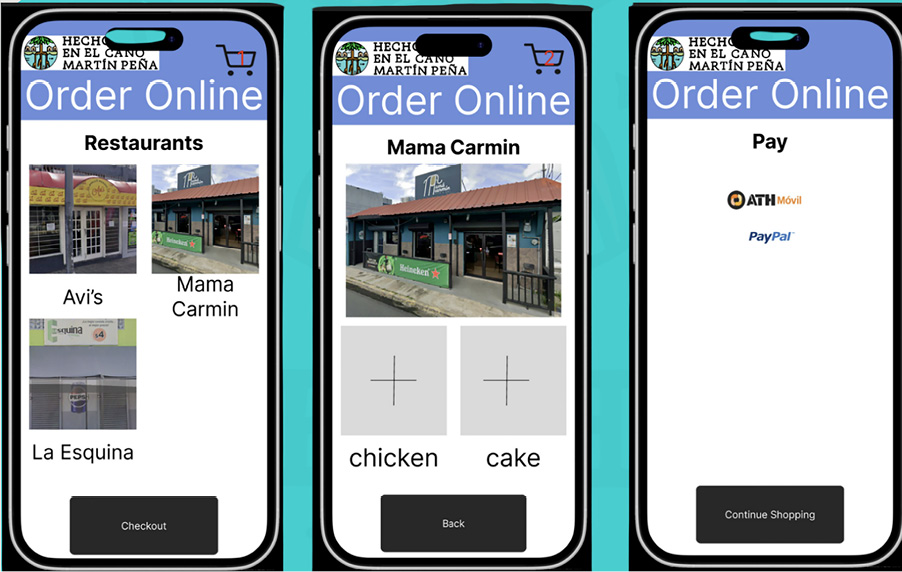
Figure 1. The Figma mock-up page that shows the customer home page, menu page and the payment page for Hecho Para Llevar lunchtime orders
The delivery component will be managed by a part-time delivery driver, who was the same driver who provided delivery for Mama Carmín Café & Bar and expressed a strong interest in participating in the initiative and gradually building it into a more robust business. This individual already possesses local knowledge and delivery experience, making him well-positioned to serve as the pilot program’s delivery manager. He will coordinate pickups from each participating restaurant and complete the delivery route to MdO, which spans approximately 3.70 km (2.3 miles) and is expected to take approximately 14 minutes (Figure 2).
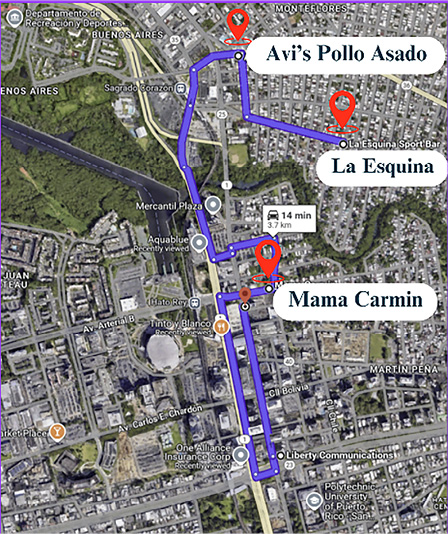
Figure 2. The Hecho Para Llevar delivery route that stops at participating CMP restaurants to pick up lunch orders and deliver them to a drop-off zone in MdO (Google Maps 2025). CMP, Caño Martín Peña; MdO, Milla de Oro
The compensation model for the delivery manager is designed to be both fair and competitive. Customers will pay a 15 per cent delivery fee based on the order subtotal, whilst restaurants will contribute a service fee of $0.50 for every $5 of food ordered. In addition, customers will be prompted to leave a tip (15, 18 or 20 per cent or a custom amount) through the ordering platform or in person. This structure ensures that the delivery manager is compensated through three revenue streams: customer-paid delivery fees, restaurant-paid service fees and customer tips. Compared to third-party platforms like Uber Eats or DoorDash, which often charge restaurants 20–30 per cent in commission and offer drivers inconsistent earnings, this model provides a more sustainable and community-centred alternative that keeps more value circulating locally.
The system is designed to scale gradually. As demand increases and restaurants build capacity, additional establishments can be integrated into the platform. The model also allows for the expansion of services to include corporate catering, which offers higher value but less frequent orders. This dual-track approach of daily lunch deliveries and periodic catering provides a flexible foundation for sustainable growth.
Economic Feasibility and Projections
To evaluate the financial viability of the Hecho Para Llevar initiative, we developed economic projections based on conservative and optimistic scenarios for both individual lunch deliveries (Table 1) and corporate catering (Table 2). These projections were informed by survey data, restaurant pricing and delivery logistics and illustrate the potential income streams for both participating restaurants and the delivery manager.
| Catering amount | Service fee ($0.50/$5 order) total | Delivery fee (15%) total | Expected tip (15%) | Delivery manager revenue | Restaurant revenue |
|---|---|---|---|---|---|
| $200 | $20.50 | $30.00 | $36.00 | $86.50 | $179.50 |
| $400 | $40.50 | $60.00 | $72.00 | $172.50 | $359.50 |
For individual lunch orders, the average meal price was estimated at $12 before tax. Under a conservative scenario of five orders per day per restaurant, each establishment could generate approximately $52.50 in daily revenue, totalling $1102.50 per month (based on 21 operating days). In an optimistic scenario of 15 orders per day, monthly revenue could reach $3307.50. These figures represent new income streams that supplement existing local sales, offering a meaningful boost to small businesses operating on tight margins.
The delivery manager’s earnings are derived from three sources: a 15 per cent delivery fee paid by the customer, a $0.50 service fee per $5 of food paid by the restaurant and customer tips (with a minimum expected rate of 15 per cent). Under the conservative scenario, the delivery manager would earn approximately $25.50 per day, or $535.50 per month. In the optimistic scenario, this could increase to $76.50 per day, or $1606.50 per month. Based on the estimated delivery route and order volume, the delivery manager would likely work between 1.5 and 2.5 hours per day, including time for order pickups, route completion and coordination. This translates to an hourly wage of approximately $10–$17 under the conservative scenario and $30 or more under the optimistic scenario, which are substantially higher than typical gig economy rates in Puerto Rico. Moreover, the estimated monthly fuel cost is under $10, and with vehicle maintenance factored in, the projected annual income of over $14 000 exceeds the average income in CMP, which is approximately $11 964.
Catering services offer an additional revenue stream with higher order values and larger tips. For example, a $200 catering order would yield $86.50 for the delivery manager (including delivery fee, service fee and gratuity) and $179.50 for the restaurant. Assuming two such orders per week, restaurants could earn an additional $1438 per month, whilst the delivery manager could earn an additional $692. These figures highlight the value of combining daily lunch deliveries with periodic catering to create a diversified and resilient income model.
Discussion
The Hecho Para Llevar initiative exemplifies how participatory, cross-sector partnerships can generate innovative, community-rooted economic models that bridge socio-economic divides. This discussion reflects on the broader implications of the project, focusing on its potential for replication, its contributions to the literature on community–university partnerships and CED, and the lessons learned from navigating complex institutional and cultural dynamics. In doing so, we position this initiative not only as a local intervention but also as a model with relevance for other urban contexts seeking inclusive development through food systems innovation.
Scalability and Replicability
The Hecho Para Llevar initiative was intentionally designed with scalability in mind, and several clear pathways exist for expansion within San Juan. An immediate opportunity involves increasing visibility and demand within the MdO financial district. Targeted marketing and advertising campaigns, particularly those that emphasise the cultural richness, affordability and community impact of meals, could attract a larger customer base among office workers and corporate clients. As awareness grows, the program could expand its delivery radius to include other affluent areas of San Juan, such as Condado, Hato Rey or Miramar, where there is likely to be similar demand for convenient, high-quality lunch options. This geographic expansion would not only increase revenue potential but also deepen the program’s impact by creating more consistent income streams for participating restaurants and delivery workers.
As the customer base grows, there will also be opportunities to onboard additional restaurants from the CMP community. This expansion must be approached with care to avoid diluting the market share of the original participants. A phased integration strategy, prioritising restaurants with distinct culinary offerings or those that fill specific gaps in the menu, could help maintain a healthy balance between growth and equity. Moreover, expanding the diversity of food options could enhance the appeal of the platform to a broader range of customers, further supporting its long-term viability.
Proyecto ENLACE has played a pivotal role in the current development and implementation of the Hecho Para Llevar system. Beyond facilitating community engagement and logistical coordination, Proyecto ENLACE is actively involved in training the delivery manager, equipping him with the skills and knowledge needed to eventually operate the business independently. This capacity-building approach is essential to the sustainability of the initiative. Whilst Proyecto ENLACE’s involvement has been instrumental in launching the program, a key long-term goal is to transition the operation into a self-sustaining enterprise. This will require not only technical and managerial training but also the gradual development of governance structures such as a cooperative or community-owned approach that can ensure accountability, equitable profit-sharing and continued alignment with community values.
Looking beyond San Juan, the Hecho Para Llevar model offers a promising framework for replication in other urban areas marked by stark socio-economic divides. The core concept of connecting under-resourced food businesses with nearby affluent markets through a community-based delivery system can be adapted to a variety of contexts. However, successful replication depends on several enabling conditions. First, there must be sufficient concentration of small, culturally rooted food businesses, along with a nearby population of potential customers with disposable income and unmet food service needs. Second, the presence of a trusted intermediary organisation, similar to Proyecto ENLACE, is critical for facilitating relationships, building trust and managing logistics during the early stages of implementation. Third, digital infrastructure plays a vital role. The availability of mobile payment systems, digital ordering platforms and basic internet access is essential for streamlining operations and ensuring customer convenience. Finally, replication efforts must be grounded in participatory design processes that centre community voices and prioritise local ownership. As the CED and food systems innovation literature suggests, externally imposed models often fail to gain traction or deliver lasting benefits (Feenstra 1997; Green & Haines 2011). By contrast, initiatives that emerge from within the community and are shaped through iterative, collaborative processes are more likely to succeed and endure. In sum, the Hecho Para Llevar initiative demonstrates that with the right mix of community assets, institutional support and strategic planning, it is possible to scale and replicate inclusive economic models that bridge urban inequalities.
Advancing Community Economic Development Through Food Systems and Shared Action Learning
The Hecho Para Llevar initiative illustrates how food systems innovation can serve as a powerful vehicle for advancing CED, particularly when embedded within a participatory, equity-centred partnership model. As the literature on CED emphasises, sustainable development in marginalised communities requires more than economic growth; it demands strategies that are rooted in local assets, responsive to community needs and capable of addressing structural inequities (Diamond 2004; Phillips & Besser 2013). By connecting small, culturally rooted restaurants in the CMP communities with customers in the adjacent MdO financial district, this project operationalises these principles. It leverages existing community strengths (that is, culinary traditions, informal delivery networks and social capital) whilst creating new pathways for income generation and cross-community engagement.
This approach aligns with and extends recent innovations in local food systems, such as restaurant cooperatives and community-owned delivery services (CoopCycle n.d.; Morrison 2021). However, unlike many models that focus on intra-community circulation of value, Hecho Para Llevar is explicitly designed to bridge socio-economic divides. It creates a platform for economic integration that benefits both communities: CMP restaurants gain access to new markets, whilst MdO customers access affordable, convenient and culturally meaningful meals. In doing so, the initiative contributes to a growing body of work that sees food not only as sustenance or culture but also as infrastructure for equity and resilience (Feenstra 1997; Green & Phillips 2014).
The conception of this initiative is inseparable from the partnership model that underpins it. Hecho Para Llevar was deeply rooted in the strength and structure of the partnership between Proyecto ENLACE and WPI’s PRPC. Whilst the SAL framework provided a foundation for mutual learning and co-creation, the partnership itself required ongoing negotiation of timelines, expectations and roles. The short-term nature of student projects (2 months) contrasted with the long-term vision of community development, making Proyecto ENLACE’s leadership essential in maintaining continuity and ensuring alignment with community priorities. Regular communication, flexibility and a commitment to transparency helped bridge institutional differences and foster a sense of co-ownership. This experience underscores the importance of trust, reciprocity and institutional support in sustaining equitable university–community collaborations, especially when navigating complex socio-political contexts.
The relational depth of this partnership was especially important given the socio-political context of CMP. For example, during the research period, an ICE raid heightened fear and distrust in the community, underscoring the need for culturally competent, politically aware engagement. The project team responded by working through Proyecto ENLACE’s trusted networks, using open-ended and non-intrusive methods and maintaining a posture of humility and respect, even pausing community engagement efforts when tensions were high. These practices reflect what Adsul et al. (2024) described as equity-based engagement, which represents an approach that centres community agency and acknowledges the broader systems of power in which research takes place.
At the same time, the project navigated the institutional constraints that often challenge university–community partnerships: short timelines, misaligned incentives and limited funding. The SAL model helped mitigate these tensions by embedding flexibility and emphasising process over product. Still, sustaining such partnerships requires more than good intentions; it demands structural support from academic institutions, including long-term commitments, policy alignment and recognition of community-engaged scholarship as legitimate and valuable work (Soska 2015; Strier 2014).
Conclusion
The Hecho Para Llevar initiative offers a compelling example of how participatory, cross-sector partnerships can generate inclusive, community-rooted economic models that address urban inequality. By connecting small, family-owned restaurants in the CMP community with customers in the adjacent MdO financial district, the project demonstrates how food systems innovation can bridge economically and spatially divided communities. Grounded in CED principles and enabled by a SAL framework, the initiative reflects a model of development that is not only economically viable but also socially and culturally responsive.
The broader relevance of this work lies in its adaptability. Whilst rooted in the specific context of San Juan, the model offers insights for other CDCs and cities grappling with similar challenges of economic marginalisation and spatial injustice. Comparable urban contexts – such as informal settlements near financial centres in cities like Nairobi, Mumbai or Rio de Janeiro – could adapt this model to connect under-resourced food entrepreneurs with nearby markets through community-driven delivery systems. It underscores the importance of trust-based partnerships, community leadership and iterative, co-designed solutions. Future research and practice may explore how such initiatives can evolve into cooperative enterprises, how digital infrastructure can support community ownership and how long-term impacts on income, resilience and social cohesion can be measured and sustained. Future replication should prioritise structural commitments – such as policy alignment and resource allocation – so that community-based innovation does not become a substitute for systemic reform.
Beyond feasibility and scalability, the project underscores an ethical imperative: food security is a basic human right, and initiatives like Hecho Para Llevar must not transfer responsibility for structural injustice to communities already carrying disproportionate burdens. Our approach positions institutions (corporate clients, universities and public agencies) as accountable partners – committing resources, adapting policies and supporting community-owned infrastructure – so that equitable outcomes are not contingent on community heroism alone. This stance guided our reflexive practice and design choices and should remain central in replication efforts.
References
Adsul, P, Sanchez‐Youngman, S, Dickson, E, Jacquez, B, Kuhlemeier, A, Muhammad, M et al. 2024, ‘Assessing the context within academic health institutions towards improving equity-based, community and patient engaged research’, Journal of Clinical and Translational Science, vol. 9, no. 1. https://doi.org/10.1017/cts.2024.675
Algoed, L & Hernández Torrales, M 2019, El Fideicomiso de la Tierra del Caño Martín Peña: Instrumento notable de regularización de suelo en asentamientos informales, Lincoln Institute of Land Policy, Cambridge, MA. https://www.lincolninst.edu/app/uploads/legacy-files/pubfiles/algoed_wp18la1sp.pdf. https://doi.org/10.54825/MOVK2096
Baum, HS 2000, ‘Fantasies and realities in university–community partnerships’, Journal of Planning Education and Research, vol. 20, no. 2, pp. 234–46. https://doi.org/10.1177/0739456X0002000208
Boothroyd, P & Davis, HC 1993, ‘Community economic development: Three approaches’, Journal of Planning Education and Research, vol. 12, no. 3, pp. 230–40. https://doi.org/10.1177/0739456X9301200307
Census Reporter 2022, Profile data: Caño Martín Peña, Puerto Rico, https://censusreporter.org/profiles/16000US7212806-cano-martin-pena-pr/
Cheves, J 2021, ‘Lexington restaurants launch their own delivery co-op to compete with DoorDash, Grubhub’, Lexington Herald-Leader, 17 June. https://www.kentucky.com/news/business/article252161743.html
Clay Jr, RA & Jones, SR 2008, ‘A brief history of community economic development’, Journal of Affordable Housing & Community Development Law, vol. 18, pp. 257–67.
CoopCycle n.d., CoopCycle: The federation of bicycle delivery co-ops, https://coopcycle.org/en/
Curtis, K, Chakreeyarat, V & Gumirakiza, JD 2013, Enhancing direct marketing opportunities for local foods, Utah State University Extension, https://digitalcommons.usu.edu/cgi/viewcontent.cgi?article=2016&context=extension_curall
Davis, JM, Bauza-Mora, J, Cain, D, Harnisch-Weidauer, L, Matthews, C & Sunil, P 2024, ‘An economically sustainable glass recycling business model in Puerto Rico: A conceptual solution for regions without government recycling programs’, Sustainability, vol. 16, no. 22, p. 9916. https://doi.org/10.3390/su16229916
Deller, SC, Lamie, D & Stickel, M 2017, ‘Local food systems and community economic development’, Community Development, vol. 48, no. 5, pp. 612–38. https://doi.org/10.1080/15575330.2017.1373136
Dermody, MB 2002, ‘Recruitment and retention practices in independent and chain restaurants’, International Journal of Hospitality & Tourism Administration, vol. 3, no. 1, pp. 107–17. https://doi.org/10.1300/J149v03n01_06
Diamond, MR 2004, ‘Community economic development: A reflection on community, power, and the law’, Journal of Small & Emerging Business Law, vol. 8, no. 2, pp. 151–71.
Environmental Protection Agency (EPA) 2024, Ongoing projects in Caño Martín Peña, https://www.epa.gov/urbanwaterspartners/ongoing-projects-cano-martin-pena
Feenstra, G 1997, ‘Local food systems and sustainable communities’, Renewable Agriculture and Food Systems, vol. 12, no. 1, pp. 28–36. https://doi.org/10.1017/S0889189300007165
Gatson, K & Brook, D 2019, Equity in access to capital for food entrepreneurship in Durham, master’s thesis, Duke University, Durham, North Carolina.
Glickman, NJ & Servon, LJ 1998, ‘More than bricks and sticks: Five components of community development corporation capacity’, Housing Policy Debate, vol. 9, no. 3, pp. 497–539. https://doi.org/10.1080/10511482.1998.9521306
Google Maps 2025, Caño Martín Peña to Milla de Oro delivery route, viewed 15 July 2025, https://www.google.com/maps
Green, GP & Haines, A 2011, Asset building and community development, 3rd edn, Sage, Thousand Oaks, CA.
Green, GP & Phillips, R 2014, Local food and community development, Routledge, London. https://doi.org/10.4324/9781315873107
Haughton, G 2013, ‘Community economic development: Challenges of theory, method and practice’, in Phillips, R & Besser, T (eds), Community economic development, Routledge, London, pp. 3–22.
Hughes, DW, Brown, C, Miller, S & McConnell, T 2007, ‘Evaluating the economic impact of farmers’ markets using an opportunity cost framework’, Journal of Agricultural and Applied Economics, vol. 39, no. 1, pp. 65–77. https://doi.org/10.1017/S1074070800028091
Institute for Local Self-Reliance 2024, How local restaurant delivery services are proving better alternatives to big apps, https://ilsr.org/articles/new-report-local-restaurant-delivery-services-proving-better-alternatives-big-apps/
Jongbloed, B, Enders, J & Salerno, C 2008, ‘Higher education and its communities: Interconnections, interdependencies and a research agenda’, Higher Education, vol. 56, no. 3, pp. 303–24. https://doi.org/10.1007/s10734-008-9128-2
Krigman, Y 2010, ‘The role of community development corporations in affordable housing’, Journal of Affordable Housing & Community Development Law, vol. 19, pp. 231–53.
Lepkowska‐White, E & Parsons, A 2019, ‘Strategies for monitoring social media for small restaurants’, Journal of Foodservice Business Research, vol. 22, no. 4, pp. 351–74. https://doi.org/10.1080/15378020.2019.1626207
Lincoln Institute of Land Policy 2018, El Fideicomiso de la Tierra del Caño Martín Peña, https://www.lincolninst.edu/app/uploads/legacy-files/pubfiles/algoed_wp18la1sp.pdf
Lowe, JS 2008, ‘A participatory planning approach to enhancing a Historically Black University–community partnership: The case of the e-City initiative’, Planning, Practice & Research, vol. 23, no. 4, pp. 549–58. https://doi.org/10.1080/02697450802522897
Morrison, G 2021, ‘Iowa City’s Chomp delivery service expands to Cedar Rapids’, The Gazette, 16 February. https://www.thegazette.com/business/iowa-citys-chomp-delivery-service-expands-to-cedar-rapids/
Nye, N & Glickman, NJ 2000, ‘Working together: Building capacity for community development’, Housing Policy Debate, vol. 11, no. 1, pp. 163–98. https://doi.org/10.1080/10511482.2000.9521366
O’Hara, JK & Pirog, R 2013, ‘Economic impacts of local food systems: Future research priorities’, Journal of Agriculture, Food Systems, and Community Development, vol. 3, no. 4, pp. 35–42. https://doi.org/10.5304/jafscd.2013.034.003
Orensanz, JL 2021, Social justice and environmental improvement in Caño Martín Peña, University of Puerto Rico Press, San Juan.
Phillips, R & Besser, T (eds) 2013, Community economic development, Routledge, London.
Phillips, R & Pittman, RH 2009, An introduction to community development, Routledge, London. https://doi.org/10.4324/9780203886939
Rizzo, G, Migliore, G, Schifani, G & Vecchio, R 2024, ‘Key factors influencing farmers’ adoption of sustainable innovations: A systematic literature review and research agenda’, Organic Agriculture, vol. 14, no. 1, pp. 57–84. https://doi.org/10.1007/s13165-023-00440-7
Rodríguez, M 2014, ‘Economic challenges and community resilience in Caño Martín Peña’, Journal of Urban Development, vol. 12, no. 3, pp. 45–60.
Seguinot-Barbosa, J 1983, ‘Historical ecology of the San Juan Bay Estuary’, Caribbean Journal of Environmental Science, vol. 8, no. 2, pp. 112–25.
Shaffer, R, Deller, SC & Marcouiller, DW 2004, Community economics: Linking theory and practice, Blackwell Publishing, Ames, IA.
Soja, EW 2010, Seeking spatial justice, University of Minnesota Press, Minneapolis. https://doi.org/10.5749/minnesota/9780816666676.001.0001
Soska, TM 2015, ‘University and communities in partnership’, in Jacob, WJ, Sutin, SE, Weidman, JC & Yeager, JL (eds), Community engagement in higher education: Policy reforms and practice, Springer, Dordrecht, pp. 105–25.
Stickel, M & Deller, SC 2014, Community level impacts of local food movements in the US, Canada and Western Europe: Annotated bibliography, https://econpapers.repec.org/paper/eclwisagr/576.htm
Strier, R 2014, ‘Fields of paradox: University–community partnerships’, Higher Education, vol. 68, no. 2, pp. 155–65. https://doi.org/10.1007/s10734-013-9698-5
U.S. Army Corps of Engineers (USACE) 2023, Caño Martín Peña ecosystem restoration project, https://www.saj.usace.army.mil/Media/News-Stories/Article/3286560/usace-holds-groundbreaking-ceremony-for-cao-martn-peas-ecosystem-restoration-pr/
Urban Waters Partnership 2019, Restoring ecosystems and building resilient communities in Caño Martín Peña, https://urbanwaterslearningnetwork.org/member-profile/la-corporacion-del-proyecto-enlace-del-cano-martin-pena/
Wired 2022, ‘Worker-owned apps are redefining the sharing economy’, Wired, 30 June. https://www.wired.com/story/gig-economy-worker-owned-apps/