Gateways: International Journal of Community Research and Engagement
Vol. 19, No. 1
March 2026
RESEARCH ARTICLE (PEER-REVIEWED)
‘Sawt al-Shifaa’ – Muslim Experiences of Music, Sound and Healing: A Short-Term Community Research Project in London, UK
Fatima Lahham
University of Manchester, UK
Corresponding author: Fatima Lahham, flahham993@gmail.com
DOI: https://doi.org/10.5130/jmt8sc40
Article History: Received 03/06/2025; Revised 26/11/2025; Accepted 01/12/2025; Published 03/2026
Abstract
Inspired by my work as a Muslim musician working in UK healthcare and community settings, ‘Sawt al-Shifaa’ (the sound of healing) was a research project I undertook during a 10-month postdoctoral research residency at a music conservatoire in London, UK. For three months, I worked with 16 participants who identified as Muslim/of Muslim heritage to explore how they were accessing music and sound for healing. I did this via six two-hour sessions held at a local community theatre, where we came together for discussions and music-making.
I applied a thematic analysis approach to my data, which consisted of detailed notes I took about music-making, participants’ own reflections and feedback, and messages in our WhatsApp group chat. This article explores five themes I constructed from the data. At the end of the project, I made a co-created zine alongside participants, combining creative writing, drawing and reflections about the project.
In keeping with the improvised nature of the music-making throughout the project, and the focus on Muslim people’s experiences, the article is grounded in participants’ words and includes links to music that they shared, alongside my own illustrations and handwritten notes from the zine. It is my hope that this work can enable more people from Muslim communities to access music for healing/health, as well as to feel empowered to do research in community about these topics.
Throughout the article, I explore what it might mean to activate a decolonial approach to community music making in Muslim community settings, thinking with healing justice frameworks to understand healing as something embodied, politicised, and inherently connected to liberatory anti-colonial practices. I explore what an Islamic ethics of hospitality might mean for music facilitation, as well as reflecting on the importance of sound and sonic practices alongside musical considerations.
Keywords
Music; Muslims; Improvisation; Health; Healing; Community
Introduction
In researcher and curator Attia Shiraz’s exhibition, Awaken: Ṣūfī Women and Music of South Asia, hosted at the Royal College of Music Museum in London (June to October 2024), a series of video interviews animated one wall. In one of these interviews, a Sindhi musician (from Sindh, a region in south-eastern Pakistan) reflected: ‘I listened to the sounds of Sufism since childhood. Once a human likes something, it sits in their mind, so it became present in my blood as a child listening to the music.’ This embodied way of relating to music is trans-historical and trans-geographical, with musicians all over the world and at different moments in history finding different metaphors and images to express how music relates to their bodies, often reflecting socio-cultural norms, beliefs and anxieties in the process (Varwig 2023).
Community music scholarship and work in adjacent fields have increasingly recognised the importance of embodied and culturally informed relationships to sound and music (Ansdell 2014; Bartleet & Higgins 2018; Stige & Aarø 2012). Yet, within this growing body of literature in English, little attention has been paid to Muslim ontologies of sound or to how Islamic frameworks of listening and healing might inform participatory music practices today. This project takes a step towards addressing that gap by connecting some historical and contemporary Muslim experiences of music, sound and healing.
The evocative image of sounds entering a musician’s bloodstream pulses through historical Arabic sources about music and healthcare. For example, the pre-eminent physician, Dāwūd al-Anṭākī (d. 1599) discussed eight rhythmical modes and their health applications in his medical encyclopedia (circa 1539). These rhythmical modes and their characteristics are described in embodied metaphors. For example, the fourth mode is called namlī (ant-like) because of the delicacy and speediness of its movements, and this mode corresponds to the state of a patient who has a high fever. The fifth mode is called dūdī (worm-like) and may be employed if the patient recovers strength but is weak and floppy (al-ʾAnṭākī & Samseddin 2006, p. 490).
Melodic modes were also employed regularly ‘on prescription’: many physicians and musicians such as the medieval philosopher and polymath, al-Fārābī (circa 870–950) prescribed a different melodic maqām for different times of day in relation to the sun/prayer times – rāst, for example, was for after sunrise because it offered feelings of happiness and calmness (Isgandarova 2015, p. 107).
These historical examples of Muslims experiencing embodied music and sound may be contextualised in Islamic beliefs around sound and its effects on the body. The importance of sound is emphasised in many Islamic texts. Sound and creation are fundamentally associated in the Qurʾān with Allāh’s utterance ‘kun’ (be!) acting as a sonic fiat that resulted in the ‘being’ of creation (Akkach 2005, p. 96). In a well-known ḥadīth qudsī (a saying of the Prophet Muḥammad peace be upon him (henceforth ‘PBUH’) believed to have been revealed to him by Allāh), Allāh speaks through the Prophet PBUH to say that when Allāh loves his servant, Allāh becomes the hearing with which Allāh’s servant is able to hear (Akkach 2005, p. 21).
Therapeutic music-making historically had an important role in Islam, and one fundamentally connected to the body. According to the well-known Ṣūfī scholar, al-Bayyūmī (circa 1696–1769), listening to singing has a bodily effect: ‘When the hands are affected, this is expressed through clapping. When the feet are involved, it results in dancing. When the heart and soul are touched, it elicits crying’ (Shiloah 2003, p. 50). In this project, these historical and embodied understandings are explored in a contemporary community setting, offering a critical discourse and approach to creative health. While reading this article, please see the Appendix for a glossary of Arabic terms.
Community music making and decolonial knowledge production
The intersections between decolonial knowledge production and creative health practices have begun to receive scholarly attention in adjacent fields such as that of music therapy (Castelo 2025). However, few studies have explored these intersections in Muslim contexts, where creative practices may be expressed and understood through spiritual frameworks of art and wellbeing.
In her chapter on decolonising knowledge production in research projects about health psychology for British Muslim service users, Aaliyah Shaikh reflects on the importance of studying the experiences of Muslims within an Islamic ontological framework (Shaikh 2023, p. 74). In response to her invitation ‘to explore non-Eurocentric ways of understanding and to think about the relevance of Islamic knowledge production about health, the self and the body’, in this project I mobilised a creative approach to understanding the experiences of Muslims in the UK with music and health, framing the research against a backdrop of some of these histories and the lived and carried histories of the participants in the project (Shaikh 2023, p. 76).
I also asked what these histories might have to offer to music-in-health practice in the UK more broadly. This is particularly relevant in a landscape where, according to Sufyan Dogra’s recent edited collection on British Muslims and health inequalities, British Muslims live with the worst health outcomes when compared with all social groups and ethnicities in the country (Dogra 2024, p. 3; Muslim Council of Britain 2025, pp. 9–10). One topic that Dogra’s edited collection does not address is arts or music in healthcare, despite creative expression offering an empowering way to reclaim healthcare narratives, understand structural marginalisation and maintain health and wellbeing (Heard & Bartleet 2025; National Centre for Creative Health 2023). Social groups that are most likely to experience health inequalities are often also those that have been historically under-represented in the arts (NHS Confederation 2020, p. 1). This project aimed not only to further research into the creative experiences of Muslims in the UK but also to offer creative musical opportunities to some members of that community.
The importance of history to decolonising knowledge production has been reflected upon recently by several scholars and was frequently brought up by the participants. For example, one person emailed me before the sessions started to ask if I knew of Oruç Güvenç (1948–2017), a Turkish music therapist who revived historical music therapeutic practices in Turkey. She mentioned that she knew a close friend of his and that he immediately came to mind when she heard about the project. Another participant mentioned in one of our sessions that the philosopher and polymath al-Kindī (circa 800–870 CE) was probably the first person to write about music therapy. Another participant expressed via their feedback form that they knew that music therapy was practised in historical Islamic contexts, and that they wanted to learn more about this. In a recent article, Rania Awaad and Merve Nursoy-Demir (2023) reflect on the importance of knowing and studying the history of music therapy in early modern Ottoman contexts, citing these histories as important for both practitioners and service users today.
By drawing these historical and contemporary perspectives together, this study contributes to the expanding discourse on community music as a site of social inquiry (Higgins & Willingham 2017) and to emerging efforts to decolonise music and health research (Loaiza, Timmers & Moran 2022). It explores how community-based musicking among Muslims in the UK might reframe dominant narratives about music, embodiment and wellbeing.
‘Community music’ refers to participatory music being done by communities and sits within a multiplicity of music and wellbeing practices. Community music also traditionally brings with it an ethos of DIY inclusivity and community-centred practice, which has often been mirrored in participatory research approaches to work about community music projects.
In his earlier writing, Lee Higgins (2012, pp. 133–43) proposed that the ‘community’ in ‘community music’ can be thought of as an ‘act of hospitality’ in the work of community musicians. In an article eight years later, Higgins (2020, p. 7) revisited the idea of community music as hospitality, examining the ways in which the relationships between host and guest that lie at the centre of many cultures and civilisations:
The relationship between hosts and guests also lies at the very basis of the Islamic ethical system, which sees hospitality as potentially leading to ‘ennobling and transformative moments’ … (Reynolds 2010, p. 184).
I am not aware of any narratives of community music that centre Islamic histories of musicking, yet Higgins’ allusion to situating community music practice within Islamic practices of hosting and hospitality offers a prompt to consider what it would mean to ‘do’ and research community music within an ‘Islamic ethical system’ (Rassool 2024, pp. 35–46).
In this project, the overarching research question was: ‘How are Muslims in London experiencing music and sound in relation to health and healing?’ The research question was purposely kept very broad and open to being shaped by the participants throughout the project. In this article, I focus on five themes constructed from re-occurring or significant topics discussed in the music sessions I facilitated with participants. The themes included issues of how family relationships and identity shaped relationships to music, cultural significance and differences in music-making, the importance of community, sounds and the natural world, care as musical improvisation and communal knowledge production. I also focus on the music-making itself, offering some close descriptions of the music was made and how it reflected interactions between participants. At the end of the project, I made a zine with the participants, and some of the story is told in this article via my illustrations taken from that zine.
The article demonstrates throughout how community music-making offered a space of imagination, reconnection and healing for many of the participants in the project, offering a container for participants to explore and create music together on their own terms. I also open conversations about community music’s relationship to health inequalities and the liberatory possibilities of a decolonial approach to knowledge production in this area.
Methodology
My methodology was inspired by several strands of community music literature, including Higgins’ invitation to think with hospitality. This resonated with my experience of running the sessions in this project, where offering tea and serving biscuits and food to participants created a space in which I became a host, extending invitations for social connectedness not only via food but also via music (Hammad et al. 2020, p. 24).
This idea of being ‘hospitable’ to my participants also came through in my choice to work in a participatory manner, inviting people to contribute in ways that they felt comfortable with and aiming to do research with rather than on my participants. This approach resonates with one of the recent research recommendations of Equi’s recent report (2024) on British Muslims’ role in UK Arts and Culture, which advocates for centring Muslims in research about them.
I also drew on aspects of participant action research as a framework, involving participants in a light reflection process each time we met about how the previous session had gone and implementing any actions that arose from these reflections in the following session (Kramer-Roy 2015, pp. 1207–24). This way, participants were offered opportunities to contribute to how the project was shaped and what happened in the music sessions (Young & Street 2010). After the project ended, we co-created a zine, resulting in a community-oriented public research output.
Positionality
My own position as a researcher and music facilitator on this project has shaped and influenced every aspect of the data I have collected. I am part of the data, and my experience as a member of the community I have done research alongside means that many of the participants knew me already through mutual acquaintances and friends. Figure 1 shows some of those community networks in action.
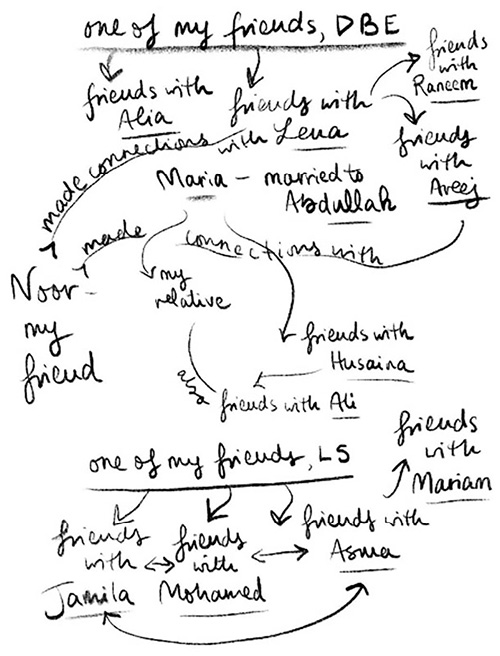
Figure 1. Community networks in action
I am a Muslim woman in my early 30s, born in the UK and of Arab and European heritage. Currently, I work as a freelance musician and postdoctoral research fellow. This project came about when I was employed on a temporary part-time contract in the research department of a music conservatoire. My encounters with the institution where I did this research revealed a variety of ways in which the Muslim community was perceived within this setting. In one of my first meetings, for example, a colleague asked me if I could speak about the ‘risks’ associated with my project and explained that they were concerned about the potential for ‘radicalised’ members of the community to interfere with the project in some way. On a separate occasion, a colleague questioned whether any Islamic musical traditions existed and suggested the project would be extremely controversial amongst Muslim communities.
Ethical compliance
I received ethical approval for this project from the Research Ethics Committee at the Guildhall School of Music and Drama (REA-2425-LAHHAM-01). To protect their privacy, I asked participants to pick a pseudonym to use when writing about them, or where they preferred, I assigned them a pseudonym. Responding to informal feedback, no recordings were made to ensure participants’ comfort (I discuss this more under the exploration of my fifth theme).
Recruitment and session structure
I started recruiting participants for the project in early January 2025, with the first session at the end of the month. The sessions were each around two hours long and there were six sessions in total. The sessions were held at a community theatre close to where I live, and consisted of a combination of music-making, improvising and talking about some of the ways music and sound have related to participants’ health experiences. I laid out the room with chairs arranged in a circle, and left instruments around the room. When people arrived, I would offer them refreshments and wait for about 15 minutes for people to get settled and start chatting. Usually, the topic would turn to music, and at some point, I would signal a move from talking about music to making music by offering prompts.
While I never specified or tried to influence the music making to be in any particular genre, the framing of the project being for Muslims and people of Muslim heritage led to a lot of the discussion and music making centring Islamic genres of music. On one occasion, Batool asked me explicitly, ‘Do we have to do … Muslim music?’ I replied that this space was for us to make any kind of music we wanted to, with no pressure for it to be ‘Islamic’.
There were 16 participants in total, who attended a variable number of sessions each. Additionally, two people signed the consent form but did not attend any sessions. The number of people who attended each session varied, ranging from four to 11 people.
For this project, I decided not to ask participants to share information about their ethnicity, age or gender, instead allowing some of this information to come through in the stories that people chose to share about themselves. My intention was to allow participants to share this information in an organic and contextual manner, using their own words, rather than asking them to try to fit family histories and migrations into a single tick box, or subject them to reductive practices of categorisation and labelling that carry violent histories. The table below summarises the information about ethnicity, age and musical background that participants spontaneously shared about themselves, where it exists. I also list the number of sessions each person attended.
Musical instruments
The room where the sessions took place had an upright piano in it, which I offered to participants as an instrument they might want to use. I also brought to each session a folding keyboard, a darabūka, a raq, two tambourines, some castanets and finger cymbals, a table, a plastic Tupperware box with rice inside and an ODD ball (a rubber ball that connects to an app and makes music out of physical movements such as throwing the ball). I also brought my alto recorder, which only I played. In addition, Noor brought a cajon and bass guitar, and Abdullah brought his electric guitar.
Data analysis
My data in this project consisted of:
1. My own detailed notes on the music-making and interactions that took place in the music sessions, including the transcribed speech of participants in the group (which I did not record using audio recording but instead wrote down verbatim);
2. Written feedback from participants gathered via anonymous feedback forms;
3. Artworks participants created in the sessions; and
4. Messages sent in the WhatsApp group chat, which I set up after the first session.
I applied a thematic analysis approach to the data, starting by going through the transcripts and labelling any topics that came up that were relevant to the over-arching research question. The labels used varied in level of detail (for example, ‘culture’ versus ‘need for community spaces for Muslims to make music’). A colour-coded visualisation of the 24 codes was created, where the size of each sphere was proportional to the number of times the code came up. The final image felt like the ‘universe’ of the project (see Figure 2).
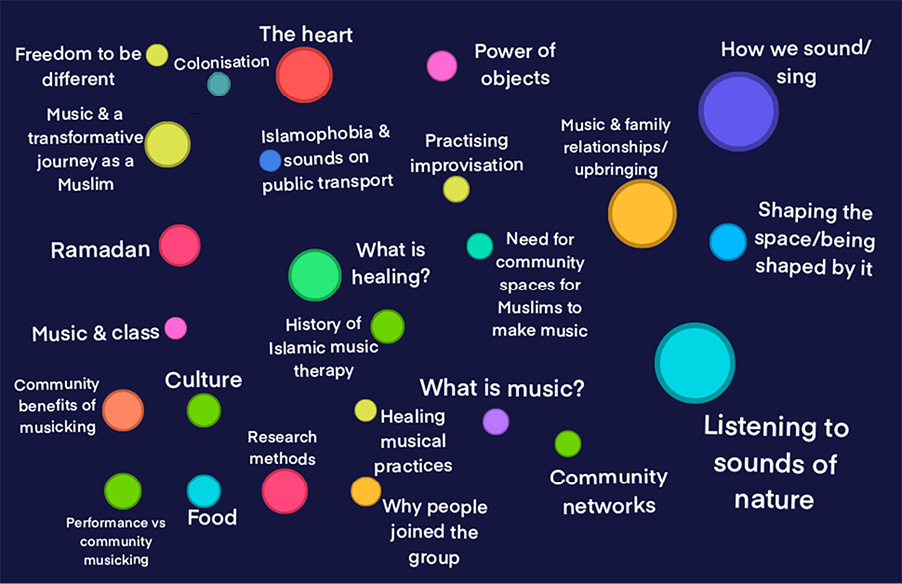
Figure 2. The ‘universe’ of the project
To generate themes, some of the bigger codes were selected (such as listening to sounds of nature, music and family relationships/upbringing, the heart) asking the question, ‘what is healing?’. This generated four themes, while another theme about community was identified from a few smaller codes. Figure 3 demonstrates the five final themes and their relationships to the codes that make them up. The remaining codes were woven through the discussion, rather than appearing within specific themes. To carry through visual representation into the themes I generated, I selected some concrete objects or songs for some of the themes and illustrated them.
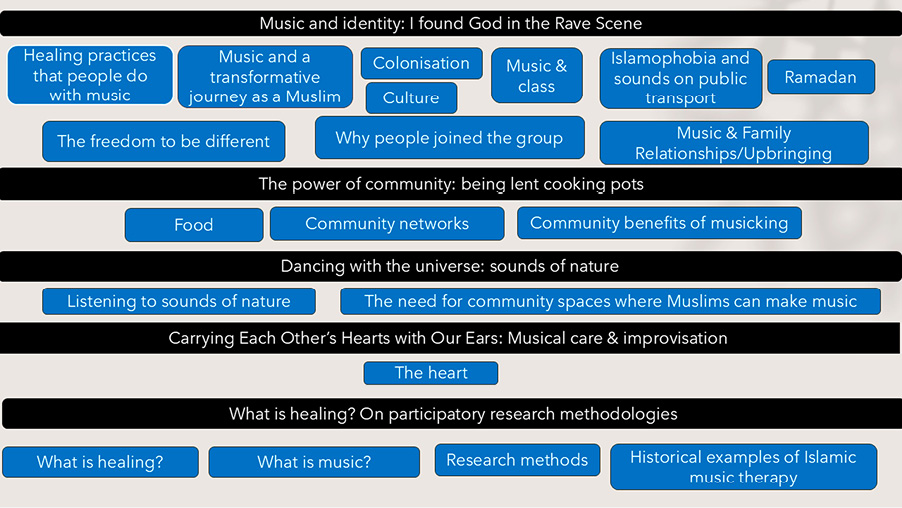
Since an illustrated zine was co-created alongside participants as the first research output for this project, I wanted this article to be read in conjunction with the zine so that readers could take in the images, read the notes in my handwriting and listen to the songs that participants had shared. However, while undertaking article revisions, I embraced Dr Margaret Malone’s suggestion of incorporating illustrations and music as part of the text of this article. (See, for example, Figure 4.)
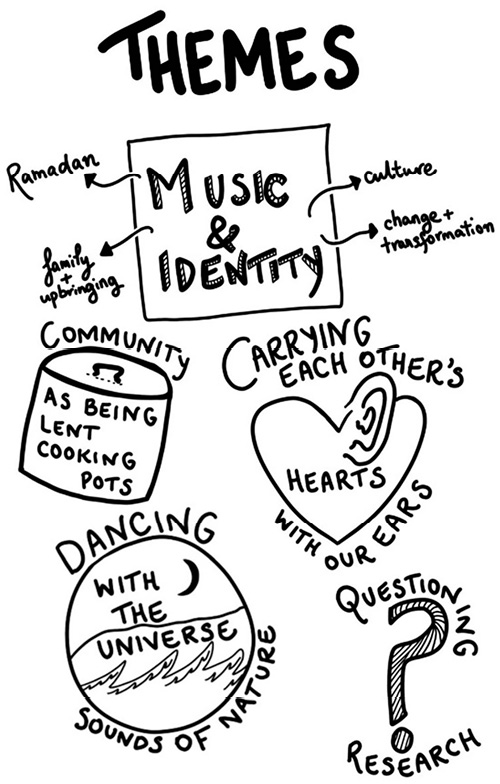
Figure 4. Themes (illustrated)
Theme 1: Music and identity – ‘I found God in the rave scene’
FAMILY
Muslim approaches to music exist on a broad spectrum, from people interpreting religious sources as forbidding (to varying degrees) listening to and making music, to the ways in which music is not just tolerated but embraced as a central part of daily ritual and experience in Ṣūfī traditions (Morris 2016). Many different factors influenced people’s early experiences of music in this project, including but not limited to their musical backgrounds, whether they were connected to Sufism, their cultural experiences, whether they were born Muslim or later converted and where they grew up.
In the first session, everyone was asked to say anything they felt comfortable to share about their relationship to music. For Siddiq, who shared that his family was from Afghanistan, music and singing was ‘how we bond in my family’. He mentioned that his sibling plays the rubāba (a bowed string instrument found in Central, South and South-West Asia) and that they have a harmonium (a small hand-pumped reed organ often played in South Asian music) and ṭabla (a percussion instrument consisting of a pair of small hand drums). He said: ‘Music takes you to another place.’
Batool spoke about coming from a Jewish family and experiencing a lot of music at home as a child. She recalled that she used to love listening to the Torah being read and enjoyed singing hymns at school. In contrast, Mohamed, who shared that he was from Pakistan but grew up in the UK, was brought up with no music at all. He quipped, ‘It was, like, music? How could you do this?!’ He said ever since he joined a Ṣūfī ṭarīqa (a specific branch or path of Sufism), he enjoys music very much and finds it very uplifting.
Other participants shared a more complicated picture. Mariam explained that her grandparents came from India but that her roots are Saudi, and she had grown up in the UK. She described herself as an ‘Islamic energy healer’ as well as ‘an Arabic devotional singer’. Mariam said that she grew up listening to Urdu songs but that came to a stop due to ‘certain movements in the UK’. This resonated with Jamila’s account; she grew up in the UK and shared that her parents had come to the UK from Pakistan in the 1970s. Jamila described how she was brought up singing praises of the Prophet PBUH in Urdu, but also that music was ḥarām (forbidden) in her household. She explained that in this context, the ‘music’ that was ḥarām was western pop music. She mentioned that the division between western and Islamic culture was very confusing and a source of conflict for her when she was growing up.
Alia is British Pakistani and holds a PhD in sound studies. She mentioned that she had been on a recent visit to Pakistan, where she visited the shrine of one of her ancestors, Baba Farid (circa 1188–1266), a mystic and saint who is buried in Pakpattan, Punjab. There she heard qawwali music and it was this connection with music that encouraged her to attend the group.
In the first session, Lena recalled growing up in Lebanon and having memories of being in ‘Muslim spaces’ there. She spoke about how her parents were religious but that they never pressed things on her. Later, in the fifth session, she recalled how her mother did not explicitly ban or put any restrictions on singing, but would say to her: ‘If only you memorised Qurʾān the way you do songs!’
In the second session, Noor shared that growing up, music was ‘a very strict no’ at home, yet as a teenager, they remembered sneakily playing guitar in their bedroom. Later in the fifth session, Maria recalled that she met up with a friend who attended an Islamic school with her, to watch ‘Shark Tale’ but that they had to watch it on mute to avoid listening to any of the songs due to their parents’ views on music. She joked, ‘We ended up missing most of the movie – there was nothing left!’ Maria also mentioned she was brought up believing that clapping and whistling were not allowed, something which Areej, who had introduced herself as a designer and artist from Libya, found very surprising.
CULTURE
Clapping drew us into another discussion around culture, as someone observed that different attitudes towards music are often related to cultural understandings.
Abdullah shared that in his opinion, religion should be separated from culture and explained: ‘Often things that we interpret today as prohibitions or rules without basis like clapping and whistling rules, may stem from an origin and wisdom that we have become disconnected from.’ Jamila replied, ‘You can’t separate your faith from culture.’
This discussion prompted Asma to share an experience about how perceptions of music’s appropriateness in Islamic settings are very culturally contingent. She explained that Jamila and she had attended a retreat recently where there was some nasheed (a genre of devotional Islamic song) singing:
There was a mixture of cultures in the room … and there was a universalism that everyone was okay with the religious songs, but we said, ‘Let’s hear some songs from everyone’s culture.’ And an Algerian lady … put on a song … an Urdu song … and she was trying to engage Pakistani people there and … two of the people from Pakistan absolutely … they were like, ‘Turn that off now!’ And the Algerian lady was like, ‘listen it’s so beautiful.’ And the Pakistani people left because they were so offended.
Jamila nodded emphatically, and Asma gestured to Jamila as she continued:
You were explaining that song had been appropriated by Bollywood. The Pakistani attendees associated it with Bollywood … and having that at a retreat was totally inappropriate.
The Pakistani musician Nusrat Fateh Ali Khan’s version of the Ṣūfī qawwali song ‘Dama Dam Mast Qalandar’ was remade in the Bollywood movie Mohra (1994) to produce the hit single ‘Tu Cheez Badi Hai Mast Mast’. By way of explanation, Jamila shared: ‘It was Nusrat Fateh Ali Khan. “Mast qalandar, mast qalandar” … That was the context they saw it.’ Asma elaborated: ‘One person said, “I listened to that in the car here but I’m not listening to it here [at the retreat]!”’
This anecdote illustrated not only the potential for completely different receptions and understandings of the same song due to cultural experiences, but also what Asma had called the ‘universalism that everyone was okay with the religious songs’ – an assumed universality to everyone’s shared faith that often did not actually translate into mutual understanding. It also highlighted some of the differences among everyone in the group – not only from different cultural backgrounds but also with different experiences of being raised Muslim versus converting later in life, and with a spectrum of ways of relating to being Muslim.
CHANGE AND TRANSFORMATION
Music was also often mentioned as a way to articulate identity, or to express yourself. In one session, Asma commented that she felt she was different every time she came to this space, referencing the different kinds of music and expression she shared every time. ‘What about me – I’m the same aren’t I?’ asked Jamila. Asma replied, ‘No, you’re different too!’
Music also came up as a part of participants’ journeys of transformation as Muslims – whether that was as a born Muslim rediscovering aspects of their faith again, or as someone who embraced Islam later in life. For example, Batool shared that when she became Muslim, she didn’t stop listening to sound and music; on the contrary, she loved the ʾadhān (call to prayer), the ward (a regular litany recited by members of Ṣūfī orders), the dhikr (remembrance invocations) and the Qurʾān. She spoke about how she found the ʾadhān so powerful: ‘It takes you over, and you have to listen.’
Jamila spoke of how she had experienced meditative music as part of a somatic healing experience, using verses from the Qurʾān and Allāh’s divine names. She described this as an integrative experience that brought all those parts of her together. Jamila also shared how she felt that music used to form a part of her life before she started practising: ‘There’s that part of me that’s like that’s the other me.’ She described how she is reconnecting with music again now as herself, and the connection is different now: ‘I think Whitney Houston songs are beautiful – but it’s like, where do they take me? They take me somewhere different now to where they did before.’ In this example, it is clear that for Jamila, it is not necessarily about what music she is listening to, or about selecting sacred over secular music, but more about how she is listening to it and where it takes her.
Abdullah shared that when he converted to Islam, he had been song writing for eight years: ‘It always felt like that’s what got me here.’ He described how he had suddenly been faced with anxiety about what others thought of him now as a Muslim making music. Asma also resonated with Abdullah’s comment of how song writing was what ‘got him here’, on the path to Islam, referencing raves and electronic music genres in the 1980s: ‘The acid house rave scene kicked off when I was 19,’ she shared, ‘and it was there I felt one with unity: I found God in the rave scene.’ Asma described her journey of discovering identity through sound: ‘I was trying to find my own sound … I wanted to find my own soul.’
For others, experiencing music in Muslim spaces was transformative. Mariam shared that she had joined a singing circle for Muslim women, and that once she did, something shifted in her: ‘I connected with the sacred, something multidimensional. Singing in that collective … they say something about softening the heart … Something changed in me after singing those praises of the Prophet PBUH …’
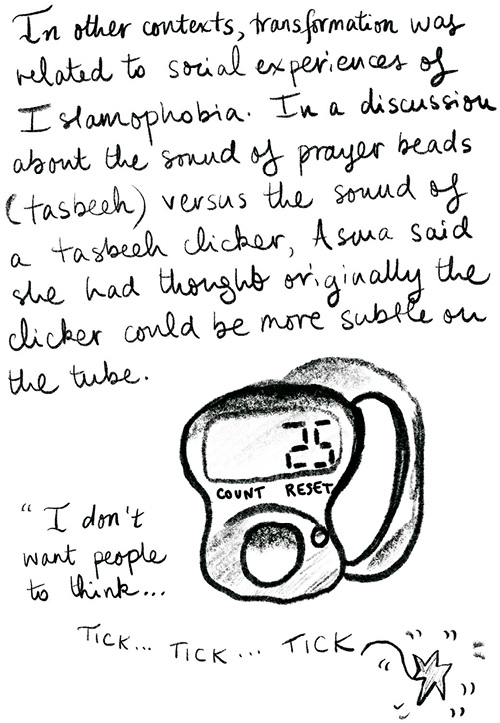
Figure 5. Politics of the tasbīḥ clicker
We laughed, but it brought to my mind vividly the politics of Muslims making sound on public transport: on the bus, tube, train, plane, reciting a ward (litany), a duʿāʾ (prayer), al-Fātiḥa (the opening chapter of the Qurʾān) and marking al-ḥamdu lillāh (‘thanks be to Allāh’) on our subḥa (prayer beads – the term tasbīḥ technically means the practice of glorifying God using a subḥa, but as seen in my illustration in Figures 5 and 10, is often used interchangeably to refer to the prayer beads themselves).
RAMAḌĀN
When I realised that two of our sessions would be in Ramaḍān, I was a little apprehensive as I was not sure how people would react to attending a music group during this month, given that many Muslims consider fasting to encompass all the senses and include listening to music. After breaking the fast, many Muslims choose to attend prayers at the mosque, so I was not sure if anyone would be available at the scheduled timings after work. My hope was that the group would offer a space for community gathering and discussion, and despite now including communal prayers and the eating of a meal, I did feel that the sessions yielded rich discussions and music making. There was a lot of discussion about how everyone related to listening to music in Ramaḍān; some people expressed that it made them feel guilty, or that they would avoid certain kinds of music (the American rapper and singer Doechii was cited) and embrace silence.
Lena expressed how she craves hearing a cannon firing to mark the end of the fasting day in Lebanon (a common Ramadan tradition in many countries with a high proportion of Muslims), and that she often will listen to a YouTube recording, to help her feel the Ramaḍān vibe. Maria shared that her ṭarīqa is from West Africa, and that they often sing all night on occasions such as Laylat al-Qadr (literally, ‘the night of power’), which occurs in the last ten days of Ramaḍān and is considered one of the holiest nights of the Islamic calendar: ‘When I was in Touba (Senegal) recently, people just erupt into song, it’s really joyful and free. I think about that in Ramaḍān. On laylat al-qadr they just sing all night … you’ll be like, “what do you have the next day?” and they’ll be like, “I have work at 6!”’
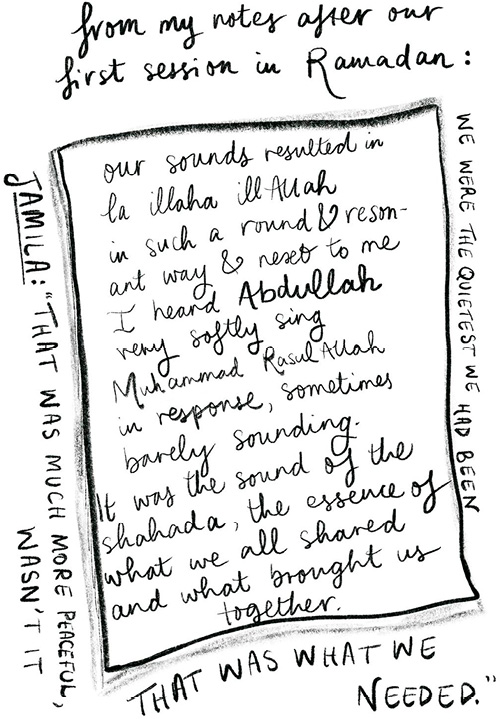
When we finally came to make music together for the first time in Ramaḍān, it was clear that this would be different, as described in Figure 6.
Theme 2: The power of community – Being lent cooking pots
Our fifth and sixth sessions fell during Ramaḍān, and I decided to make a big dish for everyone to eat at ʾifṭār (the meal that Muslims break their fast on at sunset).
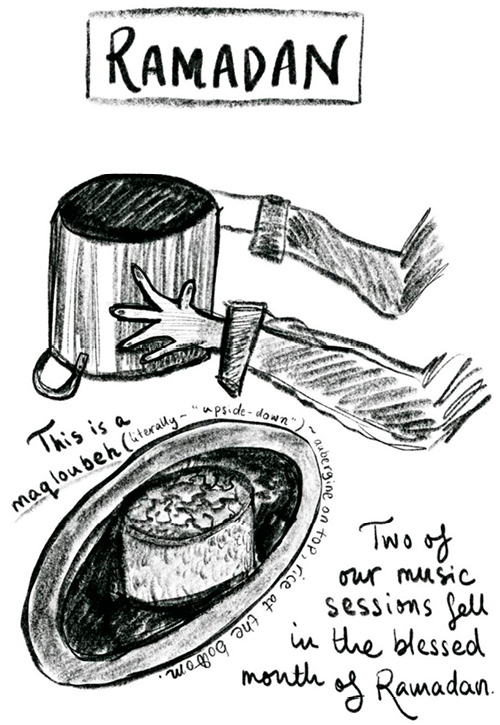
I decided to make maqlūba – a rice and aubergine dish that is flipped upside down when served (see Figure 7). Earlier in the week, I had realised I did not have a big enough cooking pot, so I had put out a call to my friends and community and borrowed one before the day of the session.
Later, Lena texted me a link to the track ‘Allāh is sufficient for me’ by the artist Rotana, a Saudi Arabian singer-songwriter. Referring to the ongoing genocide of Palestinians in Gaza, she wrote: ‘After the genocide, it’s been on repeat. And in someways the sessions with you felt like it takes me back to where this sound takes me.’ (See Figure 8.)
After this exercise, we started playing in quite a scattered way, with pockets of people trying music out in different ways (see Figure 9). Mohamed said, ‘So this is gigging is it … so this is a gig …’
‘It’s halal gigging!’ replied Ali.
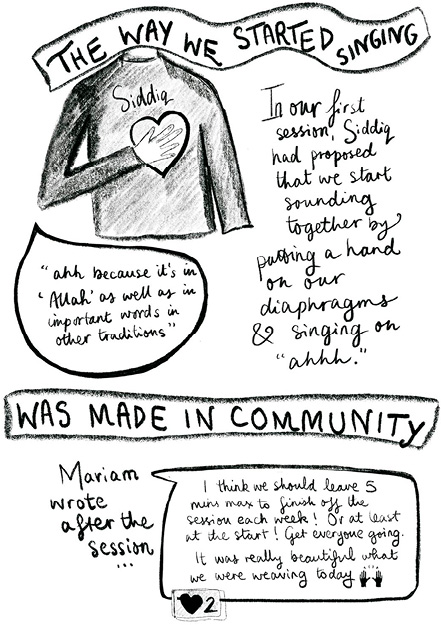
Figure 9. The way we started singing
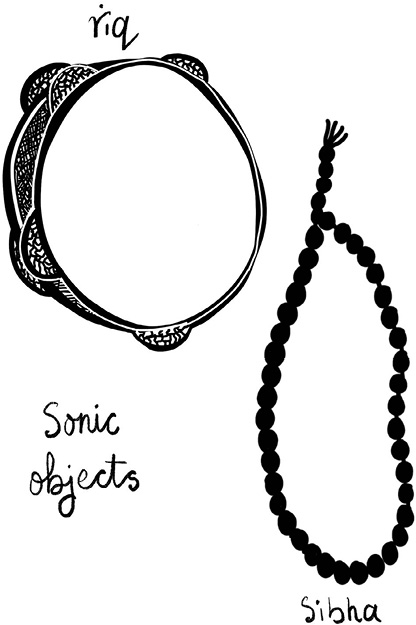
I started playing recorder, and bass and piano followed. Ali was playing the raq (frame drum with cymbals like a tambourine, illustrated above) by striking the skin very softly, and Husaina was playing my folding piano keyboard very intently but with no sound I could hear, since the other voices and instruments were so loud. We fell into a thick, tintinnabular sound with singing and pillowy chords, until at one point I heard someone sing ‘Allāh’. To me, it felt uniting and full of relief. I was singing ‘ya Allāh’ on a repeating bass line with Noor, harmonising with Abdullah, while the rest of the group were singing, ‘lā ʾilāha ʾillā Allāh’ (‘there is no God but Allāh’). The interweaving was so simple, but deeply beautiful. This section ended and then we moved into a new melody that Ali introduced, that sent us in a whole new direction, the piano offering rich harmonies with chords that punctuated through. I looked around and saw nodding heads, feet tapping, smiles.
When we finished, everyone just sat for a long time, hands on hearts, eyes closed. When we finally came out of it, someone said ‘thank you’.
‘Now THAT was a cool gig!’ exclaimed Mohamed, picking up on his comment earlier.
‘May I say, it was the only gig!’ replied Ali.
Mohamed agreed, and we all laughed.
Theme 3: Dancing with the Universe – Sounds of nature
After the first session, I had encouraged participants to share recordings of ‘soundscapes or natural sounds’ in the group chat, and Mohamed had shared a song called Dancing with the Universe by Faridah Busemann, which had the lyrics: ‘Nothing is said, nothing is heard, and my heart is dancing with the universe’ (see Figure 11).
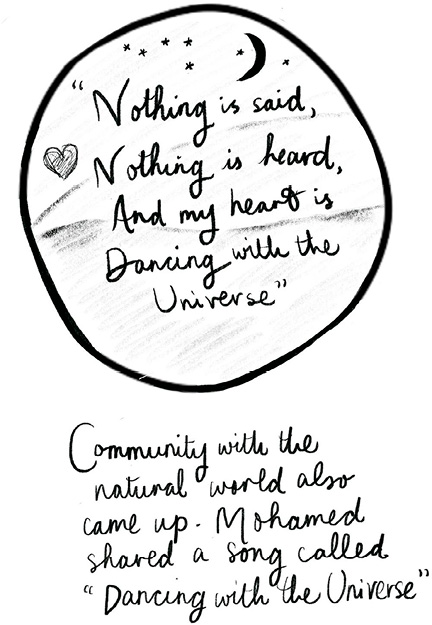
Figure 11. Dancing with the Universe
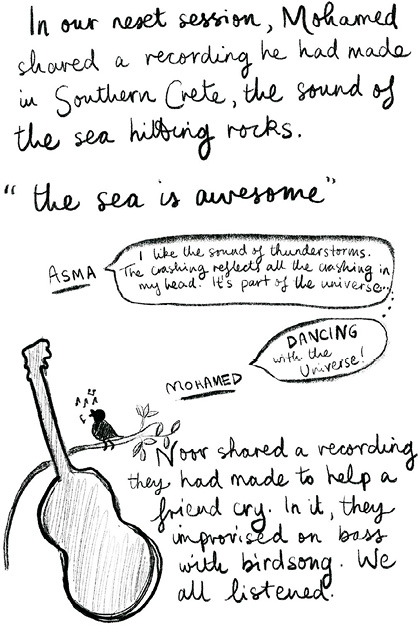
Figure 12. Improvising with nature
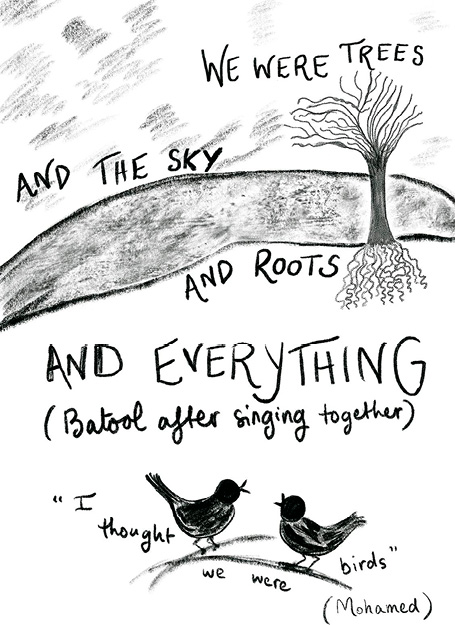
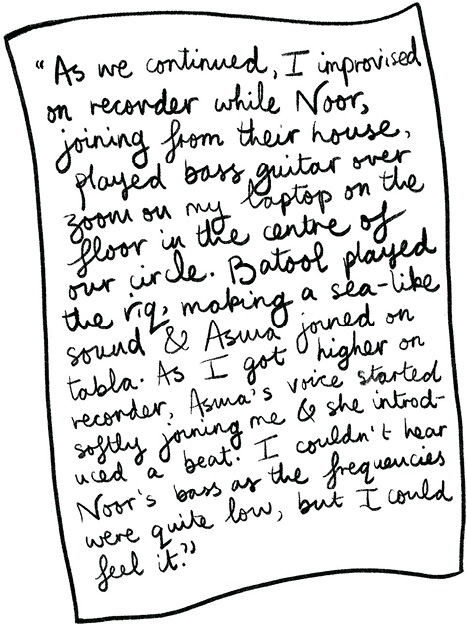
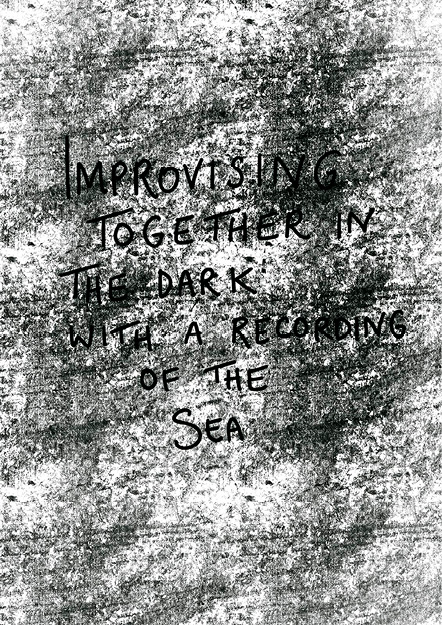
Figure 15. Improvising in the dark
This prompted Mariam to share a recording of Ḥizb al-Baḥr (Litany of the Sea), which is made of verses from the Qurʾān and supplications, and is an invocation read throughout the Muslim world. The recording Mariam shared had a recording of the sea in the background. She wrote in the group chat: ‘This version has the sound of the sea to it. It makes it not only healing but so powerful. Paired with the invocations you experience the might and power of the sea!’
Theme 4: Carrying each other’s hearts with our ears – Musical care and improvisation
In the last session, Mariam made the drawing shown in Figure 16, commenting: ‘It’s what happens here.’ As the process of data analysis began, I found myself returning to her image. I saw the eight of us who had been present that night in a close circle, connected by musical energy, each one of us a heart with multiple layers like the folds of an ear. The topic of hearts came up a lot in the sessions.
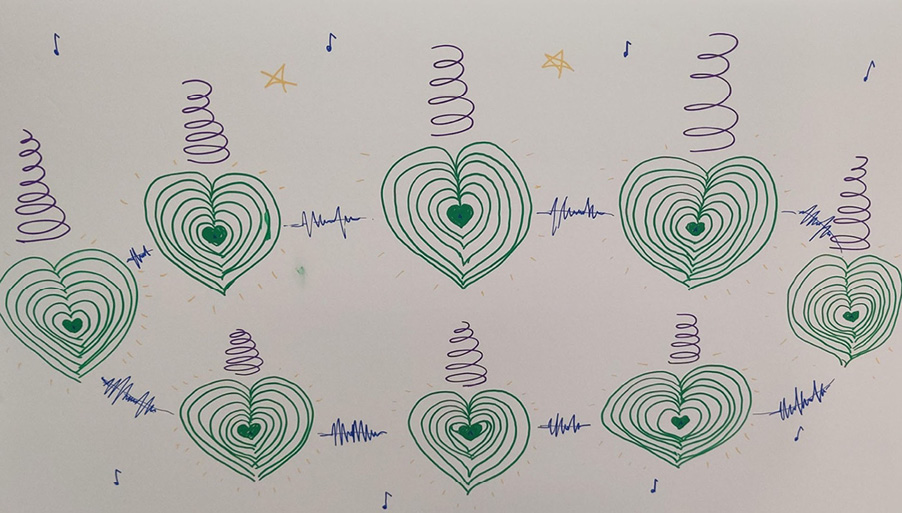
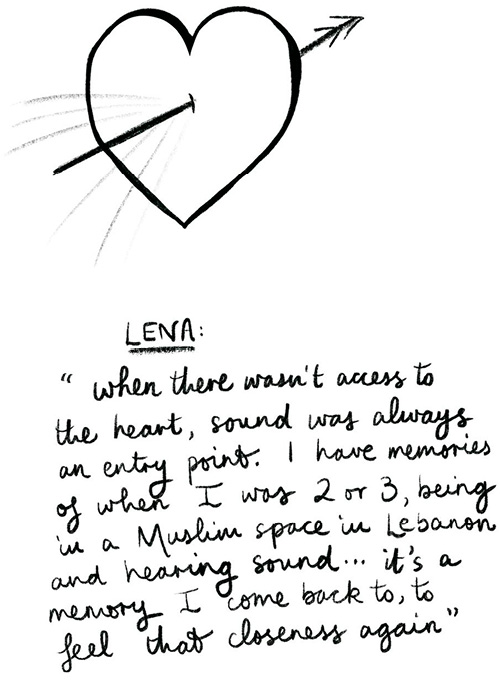
Figure 17. Access to the heart
‘Carrying each other’s hearts with our ears’ as a way of describing collective improvisation really struck me, as I recollected what we had improvised and how it had unfolded – searching for hearts being carried by ears. Asma’s comment had come in our fourth session, at the end of an extended improvisation using voices, darabūka, raq, piano and bass (see Figure 18). We had entered the improvisation following my invitation to explore a word, image or feeling that we had felt in our hearts that day.
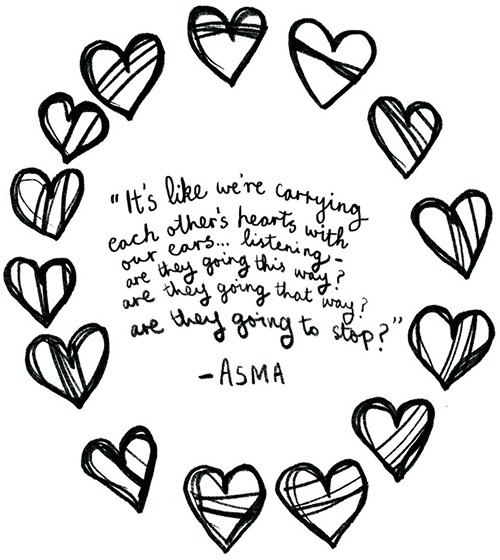
Figure 18. Carrying each other’s hearts with our ears
Abdullah at the piano was playing cluster chords in parallel movements, creating a repeated harmonic sway punctuated by the darabūka and raq, and anchored by the bass which underlined the piano’s harmonies and created a grounding container for the voices. ‘Allāhu! Allāhu!’ (‘God – himself!’) was sung by Mariam, who was then joined quickly by three other voices. Asma started to sing ‘Ḥayy!’ (‘the Living’ – one of the 99 names of Allāh) and Ḥaqq! (‘the Truth’ – another one of the 99 names) after ‘Allāh’ was uttered each time, rocking her head with each utterance. The intensity built and built, until Mariam stopped singing Allāhu and murmured and repeated ‘Yā Ḥabībī. Allāhummā ṣalli ʿalā Sayyidinā Muḥammad.’ (‘Oh my love. Allāh send his blessings to the Prophet Muḥammad.’) Later, Mariam commented: ‘Singing the name Allāh is burning, so we needed to say the name of the Prophet Muḥammad PBUH, it’s cooling …’
Mariam’s initiative to sing ṣalawāt (‘blessings’) on the Prophet PBUH seemed to me an extension of what Asma had described as ‘carrying each other’s hearts with our ears’. She was car(ry)ing all our hearts by listening out to what was burning, what was cooling and using her voice to sound accordingly.
Theme 5: What is healing? On participatory research methodologies
I tried to involve participants in planning the structure of the music sessions, which included responding to some informal feedback about feelings of discomfort regarding audio recordings of the sessions. This resonated with of my own feelings of discomfort around potentially making members of an over-surveilled community feel subject to more surveillance (Choudhury & Fenwick 2011; Manzoor-Khan 2023).
In response, I did not record anything during the sessions, instead making notes of what people said and scribbling down my memories of music making as soon as the sessions ended. However, by the end of the sessions, there was a consensus among the participants that recording the music-making would be okay in the future. This prompted the realisation that participatory projects must be open to change and transformation as trust grows and communities build. As we finished singing together for the last time, Batool expressed disappointment that this time had not been captured via audio recording. Asma replied that even though we did not have a recording, our bodies had been recording how we had sounded throughout the project.
Part of the process of involving the participants more fully was encouraging them to ask questions too, rather than only supplying answers to the research question. I told them that I wanted to do research alongside them rather than on them, and to incorporate their concerns and questions into the work (Coyne & Carter 2018; Hammad et al. 2020; Kramer-Roy 2015; Shaikh 2023).
One recurrent question was: ‘What is healing?’ In the second session, Batool shared her personal definition: ‘To heal you have to have knowledge of what needs to be healed. I think of healing as a miracle.’ Others reflected on healing as a practice. Noor spoke about how they use bass playing as a healing tool, and how it has been holding grief for them over the last year: ‘Keeping the bass really close to my heart, turning the vibrations all the way up … giving myself a sound bath.’ Asma shared, ‘If I’m really in sensory overload, the only thing that calms me down is submerging my ears under the water in the bath … Thank God I have a bath, part of my healing is being in the bath.’
Conclusion: A call to action
This article represents some preliminary thoughts about the process of implementing a short-term participatory music and research project about Muslim experiences of music, sound and healing. Participants interpreted the term ‘healing’ differently throughout the project as related to mental, physical, spiritual and emotional healing, and I tried to stay open to all of these different perspectives. The project’s short-term nature and openness regarding framing was designed for participants to develop and share their own understandings of what health and healing were to them, as well as what music-making could be in this context (Coyne & Carter 2018; Kramer-Roy 2015).
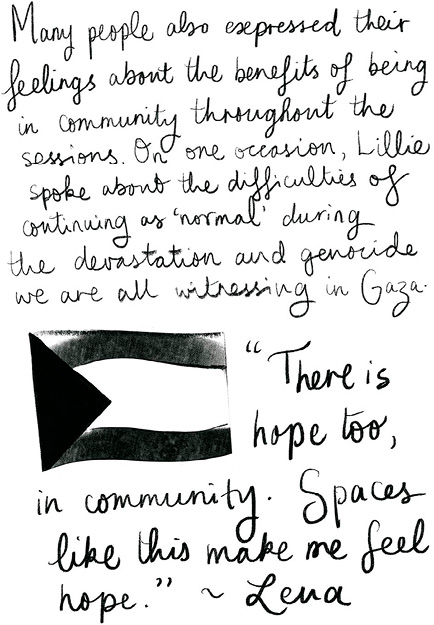
Participants’ emphases on community, togetherness and connection with cultural and faith traditions was often accompanied with co-existing struggles and traumas. For example, the discussion about community spaces offering hope came about in a conversation about the Israeli genocide in Gaza, and the discussion around using prayer beads for remembrance on the train was linked with fears of surveillance and Islamophobia.
This sense of social and political health mirroring mental, spiritual and physical wellbeing is at the heart of the Healing Justice movement, a political strategy developed in 2005 by Cara Page and the Kindred Southern Healing Justice Collective. Healing Justice works to disrupt and transform generational and structural oppressions by understanding health and healing to be interconnected with the spiritual and political liberation of Black and brown people (Page & Woodland 2023). This embodied and structural understanding of healing resonates with the multiplicity of ways in which participants engaged with music and sound and its effects: from playing the bass as a practice of holding grief, listening to the sound of a cannon firing to welcome Ramaḍān, bonding with family by making music together, finding community in the sessions through singing together or listening and improvising as a practice of care. Participants’ experiences of music, sound and the environment also spoke to an interconnectedness and relation with the natural world; in Batool’s words: ‘We were trees and the sky and roots and everything.’
One of the project’s aims was to reflect on how community music and discourses of healing could be woven with threads drawn directly from Islamic traditions, histories, cultures and beliefs. Although making music in community is a practice done by cultures all over the world, ‘community music’ is a very Western and secular discipline in the theory and literature that has been generated about it. Thus, I wanted to explore what form a decolonial knowledge production about community music making would take, centring Muslim perspectives and traditions. In this article, the importance of sound and sonic practices was of great significance, expanding the limits of ‘community music’.
Another important theme that emerged was that of ‘hospitality’ (ḍiyafa in Arabic) – an important ethical tenet found in (but not limited to) Islamic(ate) cultures and something which resonated deeply with my experiences as a facilitator ‘hosting’ participants to eat, make music and discuss (Siddiqui 2015). This was reciprocated and reflected in the generosity participants showed to me; for example, inviting me to eat with them outside of the sessions, bringing dishes to share for iftar, and sharing music, experiences and zine contributions with so much heart and vulnerability. An ethos of hospitality was also shown in inviting others to the group – an actor on a break in the theatre where we held the sessions came by and ate with us one evening, and a participant brought her daughter to the final session so we could all eat together. The centrality of breaking our fasts and praying at the start of the Ramadans sessions also transformed our temporal frames, orienting us around a different way to experience time that was tied to the sun setting (the time of breaking fast).
This article has highlighted several points of interest and richness in this topic area that I am continuing to work with, now broadening the focus from only Muslims/people of Muslim heritage to think more closely about relationships between musical/sonic practices and embodied and holistic understandings of health and healing.
My current research aims to work collaboratively to address questions around sounding together and its political and spiritual dimensions, through collaborations and partnerships with community organisations. Over the next three years, my project ‘Carrying Each Other’s Hearts with Our Ears’ (funded by the University of Manchester) will create spaces for participatory music-making and sound-mapping to explore these questions together. It is my hope that this work will be of some benefit to the communities I work with by offering spaces for creativity, knowledge production and more justice-centred approaches to creative health.
Acknowledgements
I would like to thank all the participants of Sawt al-Shifaa who made every aspect of this project and taught me so much with generosity, care and creativity.
Thank you also to Dr Margaret Malone (Executive Editor of Gateways journal) for the suggestion of incorporating illustrations from our zine into this article – a way to ‘write research differently’.
Finally, thank you to Dr Kate Jones at the Guildhall School of Music and Drama for supporting me throughout the project.
References
Akkach, S 2005, Cosmology and architecture in premodern Islam: An architectural reading of mystical ideas, State University of New York Press, Albany. https://doi.org/10.1353/book4930
al-ʾAnṭākī, D & Samseddin, A (eds) 2006, Tadhkira(t) ʿulā al-albāb wa-l-jāmiʿ li-l-ʿajab al-ʿujab, Dar al-Kotob al-Ilmiyah, Lebanon.
Ansdell, G 2014, How music helps: In music therapy and everyday life, Ashgate.
Awaad, R & Nursoy-Demir, M 2023, ‘Melodies in the hospital courtyard: A comparative history of Ottoman music therapy in the early modern period (c. 1400–1800)’, The Arts in Psychotherapy, vol. 86. https://doi.org/10.1016/j.aip.2023.102092
Bartleet, BL & Higgins, L (eds) 2018, The Oxford Handbook of Community Music, Oxford University Press. https://doi.org/10.1093/oxfordhb/9780190219505.001.0001
Castelo, G 2025, ‘Milestones in conversation: Between music therapy and the decolonial perspective’, Voices: A World Forum for Music Therapy, vol. 25, no. 3. https://doi.org/10.15845/voices.v25i3.4570
Choudhury, T & Fenwick, H 2011, The impact of counter-terrorism measures on Muslim communities, Equality and Human Rights Commission, Durham. https://doi.org/10.1080/13600869.2011.617491
Coyne, I & Carter, B 2018, Being participatory: Researching with children and young people: Co-constructing knowledge using creative techniques, Springer International Publishing, Switzerland. https://doi.org/10.1007/978-3-319-71228-4
Dogra, S (ed) 2024, British Muslims, ethnicity and health inequalities, Edinburgh University Press, Edinburgh.
Equi 2024, UK arts and culture and the role of British Muslims, viewed 6 March 2025, https://equi.org.uk/wp-content/uploads/2024/09/Equi-Arts-Culture-Report-FINAL.pdf
Hammad, J, El-Guenuni, A, Bouzir, I & El-Guenuni, F 2020, ‘The hand of hope: A coproduced culturally appropriate therapeutic intervention for Muslim communities affected by the Grenfell tower fire’, Journal of Muslim Mental Health, vol. 14, no. 2. https://doi.org/10.3998/jmmh.10381607.0014.202
Heard, E & Bartleet, BL 2025, ‘How can community music shape individual and collective well-being? A case study of a place-based initiative’, Health Promotion Journal of Australia, vol. 36, no. 2, p. e921. https://doi.org/10.1002/hpja.921
Higgins, L 2012, ‘Acts of hospitality’, in Community music: In theory and in practice, Oxford University Press, Oxford. https://doi.org/10.1093/acprof:oso/9780199777839.003.0008
Higgins, L 2020, ‘Note 57: Hospitable approaches to community music scholarship’, International Journal of Community Music, vol. 13, no. 3, pp. 223–33. https://doi.org/10.1386/ijcm_00022_1
Higgins, L & Willingham, L 2017, Engaging in community music: An introduction, Routledge. https://doi.org/10.4324/9781315637952
Isgandarova, N 2015, ‘Music in Islamic spiritual care: A review of classical sources’, Religious Studies and Theology, vol. 34, no. 1. https://doi.org/10.1558/rsth.v34i1.26326
Kramer-Roy, D 2015, ‘Using participatory and creative methods to facilitate emancipatory research with people facing multiple disadvantage: A role for health and care professionals’, Disability & Society, vol. 30, no. 8. https://doi.org/10.1080/09687599.2015.1090955
Loaiza, J, Timmers, R & Moran, N 2022, ‘Beyond WEIRD and towards the decolonisation of music for wellbeing and health’, in N Moran & Y Kim (eds), Conference on Interdisciplinary Musicology: 13th Conference on Interdisciplinary Music 22: ‘Participation’, 8–10 June, Edinburgh, UK. https://doi.org/10.2218/cim22.1a34
Manzoor-Khan, S 2023, Seeing for ourselves: And even stranger possibilities, Hajar Press London.
Morris, C 2016,‘“Look into the Book of Life”: Muslim musicians, Sufism, and postmodern spirituality in Britain’, Social Compass, vol. 63, no. 3. https://doi.org/10.1177/0037768616652333
Muslim Council of Britain 2025, British Muslims in numbers: Census report summary, viewed 11 July 2025, https://mcb.org.uk/wp-content/uploads/2025/03/Census-Report-Summary-2025-.pdf.
National Centre for Creative Health 2023, Creative health review: How policy can embrace creative health, viewed 4 November 2025, https://ncch.org.uk/creative-health-review.
NHS Confederation 2020, How the arts can help address health inequalities: Briefing for CPG on arts and health, viewed 2 October 2025, https://www.nhsconfed.org/system/files/media/Briefing%20for%20CPG%20on%20Arts%20and%20Health%208th%20October%202020%20v5%20PDF.pdf
Page, C & Woodland, E (eds) 2023, Healing justice lineages: Dreaming at the crossroads of liberation, collective care, and safety, North Atlantic Books.
Rassool, GH 2024, Integrated research methodologies in Islamic psychology, Routledge. https://doi.org/10.4324/9781003346241
Shaikh, A 2023, ‘Relevance of research methodologies used in health psychology for British Muslims: An epistemological critique on the colonisation of knowledge production’, in S Dogra (ed), British Muslims, ethnicity and health inequalities, Edinburgh University Press, Edinburgh, pp. 74–100. https://doi.org/10.1515/9781399502672-007
Shiloah, A 2003, The theory of music in Arabic writings (c. 900–1900): Descriptive catalogue of manuscripts in libraries of Eqypt, Israel, Morocco, Russia, Tunisia, Uzbekistan, and supplement to B X, G. Henle Verlag, Munich.
Siddiqui, M 2015. Hospitality and Islam: Welcoming in God’s name, Yale University Press. https://doi.org/10.12987/yale/9780300211863.001.0001
Stige, B & Aarø, LE 2012, Invitation to community music therapy, Routledge. https://doi.org/10.4324/9780203803547
Varwig, B 2023, Music in the flesh: An early modern musical physiology, University of Chicago Press, Chicago. https://doi.org/10.7208/chicago/9780226826899.001.0001
Young, S & Street, A 2010, ‘Time to play: Developing inter-culturally sensitive approaches to music in children’s centres serving predominantly Muslim communities’, Music Educators and Researchers of Young Children Conference paper, Music Educators and Researchers of Young Children.
Appendix
Glossary of Arabic terms
Allāh: the Arabic word for God.
al-Fātiḥa: the opening chapter of the Quran.
al-ḥamdu lillāh: thanks be to Allah.
ʾadhān: the Muslim call to prayer
darabūka: a goblet-shaped hand drum used often in Middle Eastern and North African music.
dhikr: a remembrance invocation, often sung or chanted.
duʿāʾ: prayer.
ḥadīth al-qudsī: a saying of the Prophet PBUH believed to have been revealed to him by Allah.
ḥarām: something that Muslims believe is forbidden to them.
īfṭār (ʾifṭār): the evening meal that Muslims break their fast on.
laylat al-qadr: literally, ‘the night of power’ – a night that occurs in the last 10 days of Ramaḍān and is considered one of the holiest nights of the Islamic calendar.
maqām: a melodic mode in Arabic music.
maqlūba: A traditional Middle Eastern dish whose name means upside down in Arabic, typically consisting of layers of rice, meat and vegetables cooked together and then flipped upside down when served.
nasheed: a genre of Islamic devotional song.
rāst: a principal melodic mode in Arabic music.
raq: a small frame drum with tambourine-like cymbals around the sides, often used in Middle Eastern and North African music.
rubāba: a bowed string instrument found in Central, South, and South-West Asia.
Ramaḍān: an important month of the Islamic calendar, when Muslims fast from water and food during daylight hours.
sawt al-shifāʾ (I transliterated it as ‘Sawt al-Shifaa’ in all the project’s paperwork): the title of my project, translated as ‘the sound of healing’.
subḥa: prayer beads.
Ṣūfī (adj.): describing a person or practice related to Sufism, a mystical path of Islam.
tasbīḥ: the practice of glorifying Allah using prayer beads.
ṭabla: a percussion instrument often used in South-Asian music, consisting of a pair of small hand drums.
ṭarīqa: a branch or path of sufism.
lā ʾilāha ʾillā Allāh: there is no God but Allah (this is part of the Shahāda, the Islamic declaration of faith).
ward (plural, awrad): a regular litany recited by members of Ṣūfī orders