Gateways: International Journal of Community Research and Engagement
Vol. 19, No. 1
March 2026
RESEARCH ARTICLE (PEER REVIEWED)
Community Participation in Ecotourism Project Development: Evidence from Menz-Guassa Community Conservation Area, Ethiopia
Shewandagne Alemayehu Dubale*, Kassegn Berhanu Melese
Department of Tourism and Hotel Management, Debre Berhan University, Debre Berhan, Ethiopia
Corresponding author: Shewandagne Alemayehu Dubale, shewa2921@gmail.com
DOI: https://doi.org/10.5130/z86qzp98
Article History: Received 24/04/2025; Revised 10/02/2026; Accepted 05/03/2026; Published 03/2026
Abstract
The present study focused on examining the community participation in ecotourism project development in the Menz-Guassa Community Conservation Area in Ethiopia. Methodologically, a descriptive design with a mixed-research approach through a cross-sectional survey was employed. Simple random, stratified and purposive methods were used. Descriptive statistics for quantitative data and thematic analysis for qualitative data were utilised. The data collected via questionnaires and interviews, and document review were employed to triangulate the results of this study and past studies. The study indicates that the current degree/level of community involvement in ecotourism project development leans towards a degree of citizen control (high level) as described by Arnstein’s model at all phases. This denotes that local communities have significant influence at the initiation, planning, implementation, and monitoring and evaluation phases of ecotourism projects. Generally, the positive development of an ecotourism project is not possible without the involvement of communities. This study contributed by demonstrating that Arnstein’s model is a vital tool for measuring the level of community involvement in the development of ecotourism projects, where communities play a significant role at each stage to ensure the establishment of well-organised ecotourism initiatives. This study proposes that collaborative efforts amongst all relevant stakeholders are crucial to fostering community participation for achieving impactful and successful ecotourism projects in the Menz-Guassa Community Conservation Area.
Keywords
Ecotourism; Community Participation; Menz-Guassa Community Conservation Area; Arnstein Model
Introduction
In this dynamic world, tourism is an industry that is growing at a phenomenal rate and is a global powerhouse for sociocultural, environmental and green economic sustainability (UNWTO 2024). Africa’s tourism business has recovered remarkably despite the global slowdown. The tremendous potential of tourism as a catalyst for development throughout the continent is demonstrated by this quick recovery (WTTC 2024). Ethiopia’s position as a top travel destination has been cemented by its diverse array of historical landmarks, natural wonders and cultural treasures. Thus, tourism has a significant impact on socio-economic growth (Pia 2023).
The idea of ecotourism emphasises sustainable practices to counter mass tourism, which exploits nature. Ecotourism gained popularity in the 1980s, but the concept of visiting natural settings dates back earlier (Bekele 2020). Over time, it has emerged as a key tactic for resource management and local economic development. It contributes to the accomplishment of sustainable development goals 12.2 and 15.2, which are centred on the promotion of forest preservation and sustainable management of natural resources (Sarah 2024). Moreover, it is possibly inspiring larger conservation efforts and increasing environmental consciousness amongst residents. This helps to empower residents to take ownership and responsibility for their natural resources without the need to consult the authorities. Additionally, it aims for a win–win–win strategy for the environment, biodiversity and societies (Alam et al. 2022; Noh 2020; Sarah 2024).
Community-based ecotourism (CBET) is a popular type of ecotourism initiative that places an emphasis on both environmental preservation and community empowerment by offering an environmentally sound remedy to environmental and climatic concerns (Tesfaye 2017). Communities serve as custodians of their natural heritage by generating financial incentives for the preservation of biodiversity (Alam et al. 2022; Arifianto et al. 2023; Sarah 2024). Due to their proximity to natural resources, locals constitute key stakeholders who are immediately affected by the success or failure of ecotourism. Thus, community involvement is crucial to the sustainable success of ecotourism projects (Alam et al. 2022; Arifianto et al. 2023; Kumi et al. 2018; Mensah 2017; Tesfaye 2017).
Ethiopia has marvellous ecotourism resources such as rich history, diverse cultures, stunning landscapes and unique wildlife (Tesfaye 2017). The Menz-Guassa Community Conservation Area (MGCCA) in the central highlands of Ethiopia is a region that is an example of magnificent tourism potential, which has been used by the community for thousands of years with unfettered access for gathering firewood, cattle grazing, fodder grass and medicinal plants (Aynalem & Afework 2018). The native Qero common property system has governed the grassland in the Menz region for more than 400 years. Traditionally, this system is administrated by the Abba Qera, an elder from the Asbo and Gera communities. This strategy also enhanced the region’s biodiversity by protecting native and endangered species. However, the Qero system ended during the 1974 revolution, which led to irresponsible overexploitation and degradation of land areas due to cattle grazing and grass cutting (Joseph et al. 2012; Mamo & Wube 2018). By 2003, the Guassa Committee, which was made up of representatives from local farmer/household groups, had been able to reinstall the traditional resource management system (Qero) and create the Guassa Conservation Council through funding from the Frankfurt Zoological Society, the UK-based Darwin Initiative and the Ethiopian Wolf Conservation Program. These entities also provide research on the scientific significance of the area, including exploring the biodiversity basis; conducting research about the population and threat of endemic species such as Ethiopian wolves, gelada baboons, and Ankober seedeater and spot-breasted plover bird species; assessing overexploitation of animal homes; and endorsing indigenous management schemes. In addition, they provide evidence about ensuring sustainability for local residents by enhancing their carrying capacity and incorporating indigenous ecological knowledge (Joseph et al. 2012; Teshome et al. 2021).
The council manages the area and supervises community scouts, comprising representatives from nine local kebele units (the lowest administration unit or area of region or state of Ethiopia), and creates opportunities for ecotourism (Joseph et al. 2012; Mamo & Wube 2018; Mandefero & Tilaye 2019; Teshome et al. 2021). The Menz-Guassa Community Conservation Area in Ethiopia was officially recognised as a community-based organisation in 2008 and became Ethiopia’s first community conservation area (CCA) in 2010. It has garnered national attention and enabled the Guassa community to resist pressures on their land. The area is crucial to the preservation of biodiversity and socio-economic well-being (Mamo & Wube 2018; Teshome et al. 2021).
Researchers around the world have examined a number of ecotourism-related issues. For instance, Garrod (2014), Sunu Sri Giriwati et al 2019) and Joy (2022) studied community participation in ecotourism initiatives. They concluded that strong leadership, empowered communities, the linking of conservation goals to economic gains and permitting the community to be involved at every stage of the ecotourism project are the ideal method, yet they did not examine the community’s role at every stage. Additionally, many researchers have highlighted economic, sociocultural and environmental elements that encourage and impede community participation in ecotourism projects. The motivating factors include boosting community economics and equitable growth (Kummitha & Osiako 2020); safeguarding indigenous cultures and traditions; advancing environmental sustainability; empowering residents (Afenyo & Amuquandoh 2014; Indiarti & Munir 2016; Rogos et al. 2021); and perceiving competence, social cohesion, collaboration, trust and common goals (Jaafar et al. 2020). Barriers and challenges include a lack of interest amongst younger groups, unfavourable marketing systems, rivalry from overseas investors and political unrest (Kunjuraman 2022); lack of capital resources (Kumi et al. 2018; Kunjuraman 2022); disputes over who actually owns the resource; and poor management (Kumi et al. 2018).
Within Ethiopia, scholars have mostly focused on current practice and potential for CBET, the benefits of ecotourism for wildlife conservation, influential factors associated with the development of CBET and natural resource management (Amare 2015; Asfaw 2014; Aynalem and Simane 2016; Bekele et al. 2017; Berhanu and Teshome 2016; Fentaw 2016; Gebreigziabher 2015; Meskele et al. 2016; Teshome & Asebe 2021; Teshome et al. 2021; Teshome & Demissie 2018; Tesfaye 2017). However, no scholars have studied the community’s role at each stage in the ecotourism project development occurring in the Menz-Guassa Community Conservation Area. Given that community participation is essential to the development of ecotourism projects in any destination, identifying their level of involvement and contributions at each phase is crucial to providing guidance that can be used to build an outstanding ecotourism scheme.
Therefore, the researchers were motivated to address these gaps to provide insights and recommendations that would help to build more impactful ecotourism initiatives in this protected area. This study, conducted by scholars from Debre Berhan University (Mr Shewandagne Alemayehu Dubale and Dr Kassegn Berhanu Melese (Associate Professor)), aimed to address gaps in the Menz-Guassa Community Conservation Area. This protected area is located close to Debre Berhan University, and currently, Debre Berhan University has established a branch around this protected area. The engagement of university scholars is deemed essential for developing a more impactful ecotourism venture in this protected area.
Literature Review: What is Community Participation in Ecotourism and Why Does it Matter?
Participation has different meanings, depending on the context. One popular definition, given by Arnstein (1969), states that participation is about the redistribution of power to people who are currently excluded from decision-making processes. It is about giving them a say in how information is shared, how goals and policies are set and how benefits are distributed. This is important because it helps to ensure that everyone has a voice and that everyone benefits from development projects and programs. Communities participate from the initiation phase to the monitoring and evaluation phase of ecotourism project development with various levels of influence (Wei et al. 2020). Local communities participate in ecotourism projects to empower themselves, improve their living standards and guard resources (Rogos et al. 2021). The appointment of the community at the initiation phase of an ecotourism project is key to patronage sustainability. Building capacity is crucial for beneficiary participation and endorsing the social pillar of sustainability in initiative growth. At planning, communities engage in consultation to address challenges in ecotourism development by integrating their knowledge, resources and team formation. This approach balances development with planning restraint whilst stressing environmental sensitivity (Barasa & Kikwatha 2020; Gizaw et al. 2018; Joy 2022).
Community participation at implementation is vital for the success of an ecotourism project, as it ensures sustainability, empowers residents and increases residents’ knowledge, skills and income. Residents provide raw materials, financial donations and support for community-based enterprises that are related to ecotourism projects (Annas et al. 2024). According to Obare et al 2016), Ojok and Basheka (2016) and Ofosu and Ntiamoah (2016), monitoring and evaluation are crucial for project achievement, sustainability and policy development. Resident participation in monitoring and evaluation has a known influence on ecotourism project lifetime by providing solutions for addressing problems. Community participation in ecotourism helps in identifying social and economic effects; strengthens the relationship between planning, management and beneficiaries; and increases beneficiaries’ accountability for sustainable development.
CBET is one of the most common types of ecotourism projects, and it is a relevant framework to describe the community’s involvement in ecotourism development because it encourages a bottom-up approach. It focuses on environmental protection and empowers locals near attractions (Afenyo-Agbe & Mensah 2021). This sustainable tourism method involves various stakeholders and promotes responsible practices (Alam et al. 2022; Arifianto et al. 2023). CBET has grown significantly (Wei et al. 2020), focusing on empowering residents to manage tourism sustainably for economic development and environmental conservation (Akbar et al. 2021). In this model, ecotourism success hinges on active community participation in the initiation, planning, implementation, monitoring and evaluation, and decision-making phases. This participation fosters collaboration and ownership. Leveraging local knowledge, it enhances project efficacy and capacity building for better livelihoods. Ultimately, prioritising community engagement ensures a balance between conservation, economic benefits and local well-being (Kummitha & Osiako 2020). This is indicated if high resident participation in ecotourism leads to the building of an equitable and impactful ecotourism project that is managed by communities in harmony with the environment; otherwise, it faces failure.
However, there are challenges with CBET. Although encouraging community ownership, the CBET framework frequently assumes a homogeneous community, disregarding internal disputes, which results in a disparity of advantages. Moreover, it struggles with the contradiction of capitalism, the burden of bureaucracy and its external reliance on donor finance, all of which put its long-term viability at risk when funding stops (Alam et al. 2022; Annas et al. 2024; Wei et al. 2020). Thus, to solve these challenges, assessment of CBET is vitally important.
Assessing Community Participation
There are a number of ways to assess participation, including Arnstein’s ladder of participation, the International Association for Public Participation spectrum theory (IAP2) and Pretty’s typology of participation. The level of community participation within tourism businesses is described by seven hierarchies in Pretty’s typology of participation theory, created in 1994. It is a suitable theory for agriculture, sustainable development and green tourism. It has the following phases from low to high: manipulative participation, passive participation, participation by consultation, participation for material incentives, functional participation, interactive participation and self-mobilisation (Adnan et al. 1992; Hart 1992; Pretty 1994; Satterthwaite 1995). This model is appropriate for ecotourism because of its emphasis on interdependency (working in collaboration). By nature, ecotourism needs collaborative engagement, where residents and other stakeholders work collaboratively to resolve environment-related difficulties in the destinations (Pretty 1994).
However, whilst Pretty’s typology of participation is very relevant in the growth of tourism, it has also been criticised due to its separation from the complexity of the real world. Although communities sometimes seek cooperation for survival, Pretty’s typology has flaws, such as being excessively linear and normative, implying that self-mobilisation is the ultimate objective. It provides a static perspective, omitting power disparity and elite capture as well as the shifting dynamics of participation (Hart 1992; Pretty 1994).
IAP2 Spectrum of Public Participation theory is a framework designed to guide civic involvement by clarifying the public’s role in engagement processes (IAP2 2007). It ranges from informing (one-way communication) to empowering (community decision-making). The IAP2 model allows for the assessment of community involvement in projects, particularly in ecotourism, by evaluating how communities are informed, provide feedback and influence decisions. The framework categorises five levels of public participation: inform (passive information sharing), consult (gathering feedback), involve (active participation), collaborate (equal partnerships) and empower (delegating decision-making authority). Whilst empowerment signifies the highest level of participation, challenges such as misrepresentation, manipulation and selective exclusion remain prevalent across all categories (IAP2 2007). However, the IAP2 theory has been criticised for only identifying engagement levels and not examining the power relations underlying them. Additionally, its descriptions are more general, which makes it challenging to identify the precise type of community involvement in the growth of ecotourism.
Arnstein’s Ladder of Participation for Assessing CBET
Arnstein developed the ladder of participation model to clearly understand the degree of participation needed to make decisions on several issues. It categorises resident engagement from non-participation (low power) to citizen control (highest power) (see Figure 1). It has three major levels with eight rungs, and this study used three major participation levels (degree of non-power, tokenism and citizen power). Degrees of non-participation include manipulation, in which citizens are misinformed into believing they have power, but decisions are predetermined; and therapy, in which public officials blame citizen pathologies for problems, using participation to fix them (Arnstein 1969). Degrees of tokenism include the following: informing, which infers one-way communication, whereby citizens receive information but lack channels for response or negotiation; consultation refers to citizen opinions being required, but there is no guarantee that they will be considered; and placation is token involvement to appease citizens, that is, decisions remain largely in the hands of powerholders, and there is some influence on the project. Degrees of citizen power include the following: partnership in which communities negotiate, have veto power, share resources and see their requests partly fulfilled; delegated power means residents manage programs or hold decision-making authority with some oversight; and the highest rung (citizen power) occurs when communities fully administer the project (Arnstein 1969).
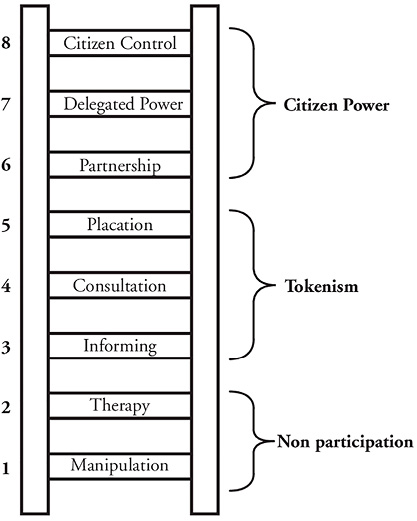
Figure 1. Arnstein’s ladder of participation model (Arnstein 1969)
The researchers employed Arnstein’s ladder of participation theory to describe and determine the current degree of community participation in ecotourism project development in the Menz-Guassa Community Conservation Area for a number of reasons. Firstly, Arnstein’s model focuses on power allocation between communities and decision-making entities, and it helps to identify three levels: non-participation, tokenism and citizen power. This is crucial for ecotourism projects because residents often prioritise cultural and environmental protection. For example, when developing an ecotourism project, the public may be notified (i.e. rung 1) about a new lodge project, but they may not be able to influence its environmental impact. This is not the same as citizen control (rung 8), where the communities determine how tourism will grow in a place. Secondly, Arnstein’s ladder of participation is easily adaptable to ecotourism concepts, which balance environmental and social concerns with economic development. This helps to determine the degree of community influence on ecotourism projects.
Thirdly, Arnstein’s ladder of participation model offers a more accurate framework for identifying power imbalances that restrict community involvement. The researcher may recognise challenges and provide solutions by evaluating the community’s status on the ladder. The researcher may suggest moving towards partnership (i.e. rung 6), where there are collaborative decision-making mechanisms, if community engagement is at the placation level (i.e. rung 5), where they have token representation on committees but no actual decision-making power. Therefore, Arnstein’s ladder of participation provides an insightful and power-focused analytical framework to describe the community involvement in ecotourism project growth. Generally, it has the following merits: realising the true extent of the resident influence on the ecotourism venture, creating a more sustainable and equitable ecotourism project, figuring out how to get the community more involved and making plans with the community to move towards a more realistic power-sharing consensus (Arnstein 1969).
Research Methodology
Description of Study Area
The Menz-Guassa Area is found in the central highlands of Ethiopia, which has been traditionally managed by an indigenous land use system in order to preserve its vital biodiversity and guarantee the long-term livelihoods of its inhabitants. It is a significant part of Ethiopia’s Afro-Alpine environment, spanning more than 110 km2 at an elevation of 3200–3700 m above sea level (Teshome et al. 2021) (see Figure 2). As noted, the Guassa region, which has been governed under the Qero system for more than 400 years, experienced deterioration following the 1974 revolution. The Guassa Conservation Council was founded in 2003 by the Guassa Committee, a coalition of local farmer/household organisations, and the old resource management system was reinstated. The Abba Qera is elected by the consent of dwellers, and they have the power to decide the closing and harvesting periods of the Festuca grass. People respect their instruction of the Qero system leader (Joseph et al. 2012). A 3-year embargo on the exploitation of natural resources from 2003 to 2006 was the first step in this process (Joseph et al. 2012). The council oversees community scouts, monitors the condition of the ecosystem and works with foreign partners to promote ecotourism. The stakeholders involved in the Menz-Guassa ecotourism initiative include both direct and indirect partners from abroad.
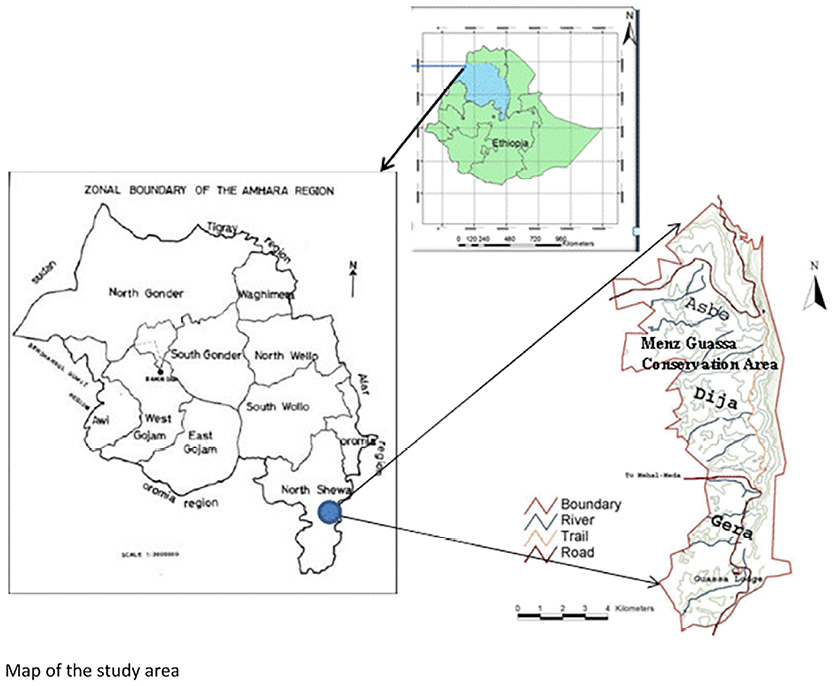
Figure 2. Map of the study area.
Adopted from FZS (2007)
In order to safeguard the ecological well-being of the region, the council instituted monitoring at the local level in 2003. Twenty community scouts with training in bylaw enforcement and conflict resolution are part of the council, which monitors a number of conservation area indicators. They monitor the markers of the ecological health of the protected area, such as animal species, vegetation cover and illicit use during the closed season. Community members who repeatedly illegally cut Festuca grass or graze cattle during the closed season may be fined up to 1500 Br (more than $100 USD) by local courts, and 1 month in jail is also a part of this penalty (Joseph et al. 2012; Mamo & Wube 2018).
The Guassa district initiatives have contributed to biodiversity conservation and socio-economic benefits. In terms of biodiversity, Ethiopian wolves, gelada baboons, bird species and guassa grass are amongst the distinctive and varied fauna and flora that have been preserved. The socio-economic advantages include the provision of ecosystem services, revenue streams, animal grazing, raw materials for the production of different goods and services, medicinal plants and the ability to diversify revenue streams through the growth of ecotourism and microbusinesses (handicrafts, horseback riding, scouting and guided walks). These businesses generate revenue for communities by providing employment opportunities. The money generated from these initiatives will go to community development initiatives (Joseph et al. 2012). One initiative is a microlending program for women in the area. In order to preserve grasslands and train community members, the Guassa project depends on community volunteers and the local judicial system for financial sustainability. The partners of the Menz-Guassa area include the U.K. Darwin Initiative, the Frankfurt Zoological Society, the Ethiopian Wildlife Conservation Authority, the Ethiopian Wolf Conservation Program, Addis Ababa University, regional and local government officials, and scholars (Aynalem and Afework 2018; Joseph et al. 2012).
Research Design and Approach
The study employed a cross-sectional descriptive research design, which uses a combination of quantitative and qualitative data-gathering strategies (mixed-method approach). This is attributed to the fact that when a study is conducted in natural environments, combining quantitative and qualitative methods aids in the investigation, interpretation and measurement of actual incidents, community participation in the ecotourism project (including handicrafts, tour guide, horseback riding, trekking, scouting and harvesting guassa grass for selling during the allowed time, and preparing traditional medicine) and intricate socio-cultural facets of the livelihoods in the study area.
Target Population of the Study
The study targeted 9835 household members who were benefitting from the Menz-Guassa Community Conservation Area’s ecotourism project (Teshome et al. 2021). Additionally, the Guassa tourism council, the Menz-Guassa Community Conservation Area professionals, and governmental and non-governmental groups were involved in the study.
Sampling Technique and Sample Size Determination
A mix of probability and non-probability sampling techniques was applied. Simple random, stratified and purposive sampling methods were employed. These techniques are considered to be viable for the complexity of the Menz-Guassa Community Conservation Area.
Sample Techniques for Quantitative Method
The study employed stratified sampling for selecting kebeles and simple random sampling for respondents who completed the questionnaires. In the case area, there are nine kebeles (Tesfomentir, Keyewula, Kuledeha, Gedenbo, Alfamder, Chare, Gragn, Dargegn and Yedi). The target population of the study area was 9835 heads of households (Tesfomentir 1043, Keyewula 1317, Kuledeha 1047, Gedenbo 1425, Alfamder 725, Chare 1176, Gragn 1195, Dargegn 1086 and Yedi 798). To ensure fair representation proportionate to the population of each chosen kebele, the study employed the proportional allocation method. From those selected kebeles, the study’s actual responders were selected randomly. According to Aboobakur and Samarakoon (2019), the sample size was determined based on the following formula if the population is less than 10 000.
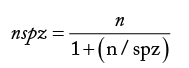
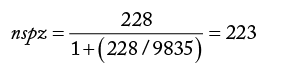
where nspz = minimum sample size when the population is small, n = minimum sample size when the population is large and spz = population size (small population).
Sampling Size in Selected Kebeles
The researchers applied the Kothari (2013) formula for calculating the sample size of each kebele:
n1 = (N1/N) n
where n1 = number of participants in each stratum, N1 = total population of each stratum, N = total population and n = sample size of total population (Table 1).
Source: Teshome et al (2021).
Sampling Technique for Qualitative Method
Instead of representative sampling, non-probability sampling was chosen due to its capacity to practically discover issues pertinent to the study. Key informants, including non-governmental organizations (NGOs) working in the Menz-Guassa conservation area, the Guassa tourism council and community conservation area professionals, were picked via the use of purposeful sampling. Three groups of key informants were selected in particular based on their expertise in community participation in ecotourism projects, their involvement in ecotourism project development and conservation initiatives, and their understanding of these issues. The interview sample selection placed a strong emphasis on the calibre of responders and their ability to give incisive and pertinent responses to the inquiries. However, these key informants did not complete the survey questionnaires; they were only interviewed.
Methods of Data Analysis
The study used descriptive statistics to analyse quantitative data collected via questionnaires using SPSS version 26. The researchers utilised a Likert scale with 5 points to measure respondents’ opinions or attitudes in surveys and provided a general interpretation of the mean score based on rule-of-thumb ranges. The numerical values of these options are strongly disagree (1.00–1.80), disagree (1.80–2.60), moderate (2.60–3.40), agree (3.40–4.20) and strongly agree (4.20–5.0). The researchers used the thematic method for analysing qualitative data obtained from interviews, which involves several key steps: firstly, familiarisation, where the researchers comprehensively review transcripts and notes to understand the content; secondly, coding, which involves assigning labels to segments of data to identify important features; thirdly, generating themes by grouping related codes to identify patterns; fourthly, reviewing themes to evaluate their clarity and definition; fifthly, defining and naming themes to ensure accurate representation; and finally, writing up the findings to present the analysis results. The qualitative data were analysed thematically in line with research questions.
Results and Discussion
Demographic Descriptions
The demographic features of key informants were as follows: the study involved six key informants selected from NGOs (one man and one woman), the Guassa tourism council (two men) and community conservation area professionals (one man and one woman). All respondents were at least college graduates, were aged between 35 and 60 and communicated in English. This indicated the key informants included both genders with high experience, education status and engagement in various organisations. Therefore, these key informants provided detailed evidence for questions that were asked by researchers about the area.
According to Table 2, most participants in the Menz-Guassa Community Conservation Area were aged 26 to 35, indicating a younger and more experienced demographic that was likely to contribute positively to the development of the ecotourism project. Most households have received adult and primary-level education, facilitating their understanding of ecotourism concepts when presented by professionals. Information was also collected from illiterate individuals through verbal reading of questionnaires. Agriculture, trade and tourism were the main three economic activities; this indicated that the residents who settled around the Menz-Guassa Community Conservation Area benefited from the tourism industry.
Source: Author survey 2024.
The Current Overall Degree of Community Participation in Ecotourism Project Development
The researchers used Arnstein’s ladder of participation model to assess the current level of community involvement in ecotourism project development using the mean value of participation level and the sum of rating scales of items. The model consists of three major levels (degree of non-participation, tokenism and citizen power). Respondents were asked to rate their level of participation using a 5-point Likert scale. Based on the mean score, the level that has a high mean value represents the current level of community participation in the destination. The analysis shows that the current level of community involvement in ecotourism project growth is high because the high mean value of the degree of citizen power (high level) (3.67) surpassed that of tokenism (2.7) and non-participation (2.16) (see Figure 3). Additionally, the study employed the sum of rating scales to assess community participation in ecotourism development.
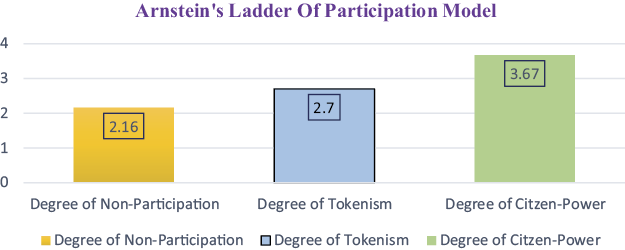
Figure 3. The variation of the mean value of each participation level.
Source: Author survey 2024
As illustrated in Table 3, 83 percent of communities that reside in and around the Menz-Guassa Community Conservation Area believed that their participation in ecotourism project development was at a high level (citizen power), and 9.4 and 7.6 percent identified low and moderate levels, respectively. In line with this result, the key informant stated, ‘the ecotourism venture in the case area is managed and run by the communities. With these findings, community participation in the Menz-Guassa Community Conservation Area ecotourism project was characterised by a high degree of citizen power, indicating that residents significantly influence final decisions regarding the CBET project. The model indicates that at this level, societies engage in partnership, delegated power and citizen control.
| Level of participation | Frequency | Percentage |
|---|---|---|
| Low (16–36) | 21 | 9.4 |
| Moderate (37–58) | 17 | 7.6 |
| High (59–80) | 185 | 83 |
| Total | 223 | 100.0 |
Source: Author survey 2024.
Note: Level of participation was measured using a Likert scale of 1 (strongly disagree) to 5 (strongly agree) for 16 items; the minimum rating was 16, and the maximum was 80.
Community Participation in Each Phase of Ecotourism Project Development
1. Initiation
Based on Table 4, the average mean and standard deviation values for each item that describes community role in ecotourism project growth at the initiation stage were 3.4–4.2 and close to 1, respectively. This implied that the communities that lived in and around the Menz-Guassa Community Conservation Area played a great role in the development of the CBET project by identifying potential resources, addressing social and economic needs, participating in initial discussions and raising awareness. These statistical findings are consistent with responses to the open-ended questions. Interviewees noted that the community discussed with government officials and NGO employees and amongst themselves via public meetings on important issues, such as the sustainability of economic, social and environmental aspects of the ecotourism project. For instance, government officials trained the residents to raise their awareness about ecotourism, and the community members also discussed with each other several issues related to the ecotourism initiatives (Interview, November 2024). It also concurs with the results of the Sunu et al (2019) study in Indonesia that the initiation phase of ecotourism development is crucial when stakeholders like beneficiaries and the host community participate. This helps the community understand the project and increases their commitment. Community can serve as a source of information and a resource for gathering information about the state of the resource base, existing tourism activities, protection measures and local concerns about ecotourism growth.
Source: Author survey 2024.
Note: CBET, community-based ecotourism.
2. Planning
According to Table 5, the mean and standard deviation values of the parameters that stated about the role of local residents in ecotourism project progress during the planning stage were 3.40–4.20 and close to 1, respectively. This inferred that the community that settled within and around Menz-Guassa Community Conservation Areas vigorously participated in shaping the ecotourism project, setting clear goals and objectives for the ecotourism project, evaluating ecotourism project plan whether it reflects the input and priorities of community, defining the roles and responsibilities of community members in project implementation and making decisions about the design and implementation of the ecotourism projects.
Source: Author survey 2024.
Note: CBET, community-based ecotourism.
The triangulated qualitative evidence obtained from key informants revealed that ‘residents were involved in the planning of ecotourism establishments by providing suggestions on the goals and objectives of ecotourism venture, identify responsibilities of the various stakeholders, and making decisions on the way of ecotourism practicing’ (Interview, November 2024). In line with this, Joy (2022) stated that communities participate in ecotourism programs in numerous ways by providing information or ideas that are utilised as planning input, such as tourism resource base, conservation, opportunity and main responsible bodies. Furthermore, Sunu et al (2019) concluded that incorporating communities’ viewpoints into ecotourism planning and development is a crucial component of sustainable ecotourism development. Communities have carried out several activities, such as providing evidence to the public regarding the planned development of the ecotourism project, shaping ecotourism project objectives with community priorities, formulating the development goal and defining the problem. In general, the engagement of the local community in the planning of the ecotourism project is vital.
3. Implementation
The average mean and standard deviation values of the statements that describe the resident role during the implementation of the CBET project were 3.40–5.00 and close to 1, respectively (see Table 6). This showed that the local people who reside in and around the Menz-Guassa Community Conservation Area were actively participating in ecotourism growth by providing voice in essential decisions throughout the operation of ecotourism, applying home-grown knowledge and skills to ecotourism operation and enthusiastically providing labour and other resources, in addition to managing the day-to-day operations and also promoting the community centre ecotourism initiatives to potential tourists.
Source: Author survey 2024.
Note: CBET, community-based ecotourism.
This finding aligns with the interview response that communities are actively engaged in the ecotourism project by collaborating with stakeholders, providing labour and materials, and contributing ideas. Communities also promote the project by selling local and traditional products at designated market sites like Menelik Window and address conflicts via traditional methods (Interview, November 2024). This finding also concurs with the findings of Wei et al 2020) and Afenyo-Agbe and Mensah (2021), which demonstrated that residents’ participation is necessary for the success of ecotourism initiatives throughout the implementation phase. Community members help by providing raw materials and monetary donations, handling possible conflicts of interest, ensuring equitable rewards, supplying skilled labour, creating community-based enterprises associated with ecotourism and providing moral support. Involving community members in planning and execution ensures sustainability, empowers people and boosts knowledge, skills and incomes.
4. Monitoring and Evaluation
As Table 7 shows, the average mean and standard deviation of parameters that describe resident responsibilities in the monitoring and evaluation of ecotourism were 3.4–5.00 and close to 1, respectively. This implied that the communities that resided around the Menz-Guassa Community Conservation Area highly contributed to the development of the ecotourism project by providing feedback on the progress and effectiveness of the project, identifying obstacles and proposing solutions to improve it and assessing the social, economic and environmental impacts of ecotourism. Similarly, qualitative data indicated that inhabitants were involved in conducting public meetings with professional bodies, as well as selecting their representatives from each kebele/district to meet with other responsible bodies. Furthermore, they discussed focusing on the outcome of the ecotourism project and providing suggestions about its prospects (Interview, November 2024).
Source: Author survey 2024.
Obare et al. (2016) also stated that local people’s involvement in the monitoring and evaluation phase of ecotourism growth is crucial for sustainable ecotourism development. Because they possess valuable knowledge and can be excellent information gatherers, this allows for better observation of wildlife and identifying economic and social impacts. This involvement strengthens the link between ecotourism planning and management and its beneficiaries, typically local residents. Involving locals in ecotourism monitoring and evaluation also gives them a stronger incentive to plan and manage activities sustainably. Community participation in this stage is crucial for the sustainable development of ecotourism projects in the destinations.
Conclusion
The study indicated that the current level of community involvement leans towards a degree of citizen control (high level), as described by Arnstein’s model. Therefore, communities were participating in ecotourism project development through partnership, delegated power or citizen control. This implies that most decisions about ecotourism projects are made by local communities. The residents were deeply involved at every phase of the ecotourism project via accomplished several activities. Generally, the community has played great roles in the development of ecotourism projects in the destinations.
As discussed above, community participation in the ecotourism project at the MGCCA is at a high level. The main reasons for this high degree of community involvement are fourfold. Firstly, the Qero system (traditional resource management system): this system has managed the region for more than 400 years via the Abba Qera, who is voted by the Asbo and Gera societies. This leader is elected by the consent of the dwellers, who have their respect (Joseph et al. 2012). Thus, the local people are committed and highly involved in keeping the area as their own resource. Secondly, there is a healthy legal ownership and administration system. By 2003, the Guassa Committee, comprising local peasant representatives, had established the Guassa Conservation Council. The council oversees the area, supervises community scouts from nine kebele units and fosters opportunities for ecotourism. This helps to uphold high community involvement because they know that they are owners and not merely participants, and also, they draft rules for tourists and other bodies regarding the regions. Furthermore, the MGCCA in Ethiopia was officially recognised as a community-based organisation in 2008 and became the country’s first CCA in 2010, helping the Guassa community withstand pressures on their land (Mamo & Wube 2018; Teshome et al. 2021).
Thirdly, community livelihood dependency: Guassa (Festuca) grass has multiple benefits for residents, including being a source of income through selling and roofing, being a source of food for their animals and for medicinal purposes. The tangible benefits directly flow to the communities; as a result, the protected area is a base for the survival of the community (it is used by the community as insurance when famine occurs). This has led to the community conserving and preserving the region, with high participation. Fourthly, the establishment of impactful and community-led ecotourism projects: when ecotourism is managed by locals, it ensures that benefits directly flow to the communities, improving livelihoods and promoting conservation goals (Arifianto et al. 2023). There is an equitable sharing of advantages that are generated from the ecotourism project, resulting in the residents preserving both endemic and non-endemic animals because they understand that these animals attract tourists (Mamo & Wube 2018; Mandefero & Tilaye 2019; Teshome et al. 2021). Due to these reasons, the community participation is found at a high level and used as a model for other destinations.
This study makes some insightful theoretical contributions. Firstly, it offers a comprehensive review of the existing body of knowledge about community participation in ecotourism development. This attempt was to help successfully identify research gaps that pave the way for future study. Secondly, its findings reinforce the existing evidence; that is, without the participation of the community, the CBET project cannot be achieved. Thirdly, the study indicated that Arnstein’s model is an essential instrument to describe and determine the participation level of the community in ecotourism project development. According to this model, the current status/degree of community involvement in ecotourism development leans towards the rung of citizen control in the Menz-Guassa Community Conservation Area; that is, communities are significantly engaged in ecotourism initiatives. By demonstrating community engagement from the initiation phase to the monitoring phase of ecotourism projects, Menz-Guassa Community Conservation provides an example of the highest level of citizen power in Arnstein’s ladder of participation model in action. Therefore, Arnstein’s model is a useful tool for clearly understanding the level of community participation in ecotourism development by providing understandable descriptions at each participation level.
The study highlighted the several roles and responsibilities of the community that are carried out at each stage of ecotourism project development, thereby bridging existing research gaps (Garrod 2014; Joy 2022; Sunu et al. 2019). This implies that community involvement at every phase of ecotourism development is crucial. Additionally, it also makes some insightful practical contributions by providing empirical evidence about the level and contribution of community participation in ecotourism project development.
Implications
The current level of community participation is found at a degree of citizen control (high level), as described by Arnstein’s model; that is, the ecotourism project in the MGCCA is managed by communities. Therefore, to maintain this momentum and even improve it, each stakeholder (communities, governments, tourism businesses, NGOs and academicians) should carry out their responsibilities and role successfully. Communities should hold regular meetings, feedback sessions and informal discussions to resolve issues and encourage information exchange. They also have imperative evidence about customs, culture and environment. They should take training courses that improve guiding, hospitality and sustainable practice capacities. The government should promote sustainable ecotourism by developing an optimal environment, offering resources and fast-tracking administrative processes, in addition to boosting investments in infrastructure like roads, bridges and electricity and assuring equitable benefit distribution amongst all responsible bodies. NGOs, especially the Frankfurt Zoological Society and the Ethiopian Wolf Conservation Program-University of Oxford Wildlife Conservation Research Unit (WildCRU), should train and aid communities in business management, marketing and conservation. Furthermore, they act as a bridge between communities, the government, tourism firms and other stakeholders.
Tourism businesses should contribute to the economic well-being of the community by respecting local ownership, ensuring equitable benefits, encouraging local businesses and responsible tourism, advising travellers about sustainable practices and respecting the environment and local culture. Academicians, particularly Debre Berhan University, should accomplish their duties by investigating studies that yield information and conducting analyses that aid in understanding the effects of ecotourism projects on the environment and community. They should develop educational programs by creating seminars and courses that empower communities. Additionally, in order to motivate and mentor others, they should share best practices and information about impactful community-based ecotourism projects that have been successful. Generally, all responsible bodies involved can help the ecotourism project succeed in the long run by cooperating and keeping these suggestions in mind.
References
Aboobakur, S and Samarakoon, MB 2019, ‘Solid waste management in Kulhudhuffushi, Maldives: Most suitable solution for the crisis’, International Journal of Environment, Agriculture and Biotechnology. https://doi.org/10.22161/ijeab.46.36
Adnan, S, Barrett, A, Nurul Alam, SM and Brustinow, A 1992, People’s participation: NGOs and the Flood Action Plan, Research and Advisory Services, Dhaka.
Afenyo-Agbe, E and Mensah, I 2021, ‘Principles, benefits, and barriers to community-based tourism’, in I Mensah and E Afenyo-Agbe, Prospects and challenges of community-based tourism and changing demographics, IGI Global. https://doi.org/10.4018/978-1-7998-7335-8.ch001
Akbar, I, Myrzaliyeva, ZK, Tazhekova, AZ, Saulembayev, AT and Kenzhebay, RN 2021, ‘Evaluation of the community-based ecotourism development status in the Aksu-Jabagly nature reserve, Kazakhstan’, GeoJournal of Tourism and Geosites, vol. 35, no. 2, pp. 381–389. https://doi.org/10.30892/gtg.35216-662
Alam, MK, Anis, M and Munira, IS 2022, ‘Variations and barriers of GPA and CGPA in the education system of Bangladesh’, ICRRD Quality Index Research Journal, vol. 3, no. 1, pp. 122–128. https://doi.org/10.53272/icrrd.v3i1.2
Amare, A 2015, ‘Wildlife resources of Ethiopia: Opportunities, challenges and future directions from an ecotourism perspective’, Natural Resources, vol. 6, pp. 405–422. https://doi.org/10.4236/nr.2015.66039
Annas, FB, Lubis, DP, Hapsari, DR and Sumardjo 2024, ‘Convergence communication in community-based ecotourism management’, Social Science and Humanities Journal, vol. 8, no. 7, pp. 4270–4283. https://doi.org/10.18535/sshj.v8i07.1193
Arifianto, A, Yudanto, MI and Sutriadi, R 2023, ‘Involvement of indigenous and non-indigenous societies through the development of community-based ecotourism concept in coastal areas’, IOP Conference Series: Earth and Environmental Science, vol. 1250, no. 1, 012016. https://doi.org/10.1088/1755-1315/1250/1/012016
Arnstein, SR 1969, ‘A ladder of citizen participation’, Journal of the American Planning Association, vol. 35, no. 4, pp. 216–224. https://doi.org/10.1080/01944366908977225
Asfaw, A 2014, ‘Ecotourism as a viable strategy for livelihood diversification and sustainable natural resource management in Ethiopia’, Journal of Environmental Science and Water Resources, vol. 3, no. 2, pp. 40–52.
Aynalem, Y and Afework, B 2018, ‘Diversity, distribution and habitat association of birds in Menze-Guassa community conservation area, central Ethiopia’, International Journal of Biodiversity and Conservation, vol. 10, no. 9, pp. 372–379. https://doi.org/10.5897/IJBC2018.1196
Aynalem, S and Simane, B 2016, ‘Development of community-based ecotourism: A case of Choke Mountain and its environs, Ethiopia’, Journal of Tourism, Hospitality and Sports, vol. 16, pp. 1–18.
Barasa, S and Kikwatha, R 2020, ‘Influence of project design factors on performance of green technology market projects in Meru County, Kenya’, European Journal of Business and Management, vol. 5, no. 6. https://doi.org/10.24018/ejbmr.2020.5.6.582
Bekele, T 2017, ‘Review on trends of ecotourism development in Ethiopia’, IISTE Journal of Tourism Hospitality and Sport, vol. 31. https://iiste.org/Journals/index.php/JTHS/article/view/38443
Bekele, H, Teshome, E and Asteray, M 2017, ‘Assessing protected areas for ecotourism development: The case of Maze National Park, Ethiopia’, Journal of Hospitality Management and Tourism, vol. 8, no. 3, pp. 25–31. https://doi.org/10.5897/JHMT2015.0159
Berhanu, K and Teshome, E 2016, ‘Opportunities and challenges for wildlife conservation: The case of Alatish National Park, northwest Ethiopia’, African Journal of Hospitality, Tourism and Leisure, vol. 7, no. 1.
Fentaw, T 2016, ‘Potentiality assessment for ecotourism development in Dida Hara conservation site of Borena National Park, Ethiopia’, International Journal of Tourism & Hospitality Reviews, vol. 3, no. 1, pp. 1–16. https://doi.org/10.18510/ijthr.2016.314
FZS 2007, The community-managed Guassa area, Menz: General management plan 2007–2012.
Garrod, B 2003, ‘Local participation in the planning and management of ecotourism: A revised model approach’, Journal of Ecotourism, vol. 2, no. 1, pp. 33-53. https://doi.org/10.1080/14724040308668132
Gebreigziabher, A 2015, ‘An assessment of potential resources of tourism development in Ethiopia: The case of Dejen Wereda’, African Journal of History and Culture, vol. 7, no. 4, pp. 1–15. https://doi.org/10.5897/AJHC2014.0217
Gizaw, S, Abebe, A, Bisrat, A, Zewdie, T and Tegegne, A 2018, ‘Defining smallholders’ sheep breeding objectives using farmers’ trait preferences versus bio-economic modelling’, Livestock Science, vol. 214, pp. 120–128. https://doi.org/10.1016/j.livsci.2018.05.021
Hart, RA 1992, Children’s participation: From tokenism to citizenship, UNICEF Innocenti Essays No. 4, UNICEF, Florence.
IAP2 2018, IAP2 spectrum of public participation, International Association for Public Participation.
Indiarti, W and Munir, A 2016, ‘The implementation of community-based ecotourism concept in Osing Tourism Village Development Strategy of Banyuwangi Regency, Indonesia’, Proceedings of the Asia Tourism Forum 2016, Atlantis Press, pp. 68–73. https://doi.org/10.2991/atf-16.2016.10
Jaafar, M, Md Noor, S, Mohamad, D, Jalali, A and Hashim, JB 2020, ‘Motivational factors impacting rural community participation in community-based tourism enterprise in Lenggong Valley, Malaysia’, Asia Pacific Journal of Tourism Research, vol. 25, no. 7, pp. 697–710. https://doi.org/10.1080/10941665.2020.1769696
Joseph, C, Hughes, O, Keegan, D, Konsa, M, Lewis, E and Wilding, W 2012, Guassa-Menz community conservation area, Ethiopia, Equator Initiative.
Joy, N 2022, Community participation in project cycle management and sustainability of ecotourism enterprise development projects in Meru County, Kenya. University of Nairobi Digital Repository.
Kothari, A 2013, ‘Communities, conservation and development’, Journal of Biodiversity, vol. 14, no. 4, pp. 223–226. https://doi.org/10.1080/14888386.2013.848101
Kumi, JN, Kumah, MS, Afetorgbor, SK and Apeamenyo, R 2018, ‘Factors that hinder local participation of ecotourism in Ghana’, International Journal of Applied Research, vol. 4, no. 12, pp. 180–186.
Kummitha, HR and Osiako, PO 2020, ‘Factors influencing the involvement of locals in community-based tourism in a migratory birds’ sanctuary’, African Journal of Hospitality, Tourism and Leisure, vol. 9, no. 1.
Kunjuraman, V 2022, ‘Local community participation challenges in community-based ecotourism development in Sabah, Malaysian Borneo’, Community Development Journal, vol. 57. no. 3, pp. 487–508. https://doi.org/10.1093/cdj/bsaa065
Mamo, G and Wube, T 2018, ‘Local people’s attitude and the impact of community-based conservation practice at Menz-Guassa community conservation area, Ethiopia’, Developing Country Studies.
Mandefero, M and Tilaye, W 2019, ‘Variability in group size and daily activity budget of gelada baboons at Guassa community conservation area’, Journal of Ecology and Environment, vol. 43. https://doi.org/10.1186/s41610-019-0124-5
Mensah, I 2017, ‘Benefits and challenges of community-based ecotourism in park-fringe communities’, Tourism Review International, vol. 21, no. 1, pp. 81–98. https://doi.org/10.3727/154427217X14866652018947
Meskele, TA, Woreta, LS and Gebrewold, E 2016, ‘Accessible tourism challenges and development issues in tourist facilities’, Journal of Tourism Challenges and Trends, vol. 9, no. 2.
Noh, M 2020, ‘Sustainable community-based ecotourism development’, PJAEE, vol. 17, no. 9.
Obare, JO, Kyalo, DN, Mulwa, AS and Mbugua, J 2016, ‘Implementation process of project control systems and performance of rural road construction projects in Kenya: Role of project team experience diversity’, European Scientific Journal, vol. 12, no. 29. https://doi.org/10.19044/esj.2016.v12n29p408
Ofosu, S and Ntiamoah, EB 2016, ‘Assessing community involvement in monitoring and evaluation of development projects: The case of the Kwahu West Municipal Assembly, Ghana’, Journal of Education, Society and Behavioural Science, vol. 14, no. 1, pp. 1-12. https://doi.org/10.9734/BJESBS/2016/22168
Ojok, J and Basheka, B 2016, ‘Measuring the role of public sector monitoring and evaluation in promoting good governance in Uganda’, Africa’s Public Service Delivery and Performance Review, vol. 4, no. 3. https://doi.org/10.4102/apsdpr.v4i3.122
Pretty, JN 1994, ‘Alternative systems of inquiry for sustainable agriculture’, IDS Bulletin, vol. 25, no. 2, pp. 37–48. https://doi.org/10.1111/j.1759-5436.1994.mp25002004.x
Rogos, E, Ngui, KS and Jee, TW 2021, ‘Factors influencing community participation in community-based ecotourism in Padawan, Sarawak’, SHS Web of Conferences, vol. 124. https://doi.org/10.1051/shsconf/202112403005
Satterthwaite, D, Bajracharya, D, Hart, R, Levy, C, Ross, D, Smit, J and Stephens, C 1995, Children, environment and sustainable development, UNICEF, New York.
Sunu Sri Giriwati, N, Hawa, LC, Pamungkas, ST, Iyati, W and Hidayat, ART 2019, ‘Local community participation in ecotourism development’, PEOPLE: International Journal of Social Sciences, vol. 5, no. 1.
Tesfaye, S 2017, ‘Challenges and opportunities for community-based ecotourism development in Ethiopia’, African Journal of Hospitality, Tourism and Leisure, vol. 6, no. 3.
Teshome, E and Asebe, B 2021, ‘Tourism Potentials of Wof-washa National Priority Forest Area, Ethiopia: Its significance to community-based ecotourism development’, Journal of Tourism, Hospitality and Sports, vol. 39.
Teshome, E, Shita, F and Abebe, F 2021, ‘Current community-based ecotourism practices in Menz-Guassa community conservation area, Ethiopia’, GeoJournal, vol. 86, no. 5, pp. 2135–2147. https://doi.org/10.1007/s10708-020-10179-3
Teshome, E and Demissie, E 2018, ‘Characteristics and motivation of foreign tourists visiting Simien Mountains National Park’, African Journal of Hospitality, Tourism and Leisure, vol. 7, no. 2.
United Nations World Tourism Organization (UNWTO) 2024, Community engagement guidelines on peacebuilding and sustainable peace.
Wei, LL, Johari, S, Bidin, S, Poh, T and Lee, Y 2020, ‘Local community participation in sustainable ecotourism development at Bagan Sungai Burung, Perak’, Universiti Putra Malaysia Institutional Repository.
World Travel & Tourism Council (WTTC) 2024, Travel & tourism economic impact: global trends.