Gateways: International Journal of Community Research and Engagement
Vol. 18, No. 2
July 2025
PRACTICE-BASED ARTICLE
International Brain Awareness Week 2023 in Uruguaiana, Brazil: Promoting Neuroscience Through Community Activities
Ana Luiza Trombini Tadielo1, Bruna Tarasuk Trein Crespo1, Priscila Marques Sosa2,*, Pâmela Billig Mello-Carpes3
1 Doctoral Student, Federal University of Pampa, Uruguaiana, Brazil
2 Franciscan University, Santa Maria, Brazil
3 Associate Professor, Federal University of Pampa, Uruguaiana, Brazil
Corresponding author: Priscila Marques Sosa, priscilasosa@hotmail.com
DOI: https://doi.org/10.5130/ijcre.v18i2.9469
Article History: Received 28/11/2024; Revised 11/04/2025; Accepted 05/06/2025; Published 07/2025
Abstract
Neuroscience, the study of the nervous system, is essential for understanding the human condition and informing societal decisions in healthcare, education and policymaking. The public’s interest in neuroscience highlights the need for effective scientific communication to bridge the gap between scientists and the public. This study describes the organisation, activities and evaluation of International Brain Awareness Week (IBAW) 2023 in Uruguaiana, Rio Grande do Sul, Brazil. It is a municipality that borders Argentina, led by the Physiology Research Group (GPFis) and POPNeuro Program at the Federal University of Pampa, located in the same state. Activities included neuroanatomy exhibitions, a night race for brain health, lectures on ageing and public neuroscience demonstrations. Over 700 people participated, and feedback indicated high satisfaction and increased understanding of neuroscience. The study emphasises the importance of public engagement in science to promote critical thinking and informed decision-making. It also highlights how the main activity proposed by our group for IBAW – a neuroanatomy exhibition – received a positive response from the target audience (school students from the municipality of Uruguaiana), and how these activities contributed to strengthening university-community integration. Additionally, the closing event, a race, was among the most recommended activities for future editions.
Keywords
Brain Health; Neuroscience Communication; Public Engagement
Introduction
Neuroscience – the study of the nervous system – has emerged as a field of profound societal importance, reaching well beyond academic boundaries. Its insights into the intricate workings of the human brain have illuminated our understanding of behavior, cognition and overall wellbeing (Hawrylycz & Zeng 2020). Over recent decades, neuroscience has experienced exponential growth, mirroring the broader acceleration of scientific advancement (Ekuni et al. 2014). One of its most notable contributions lies in its potential to deepen our understanding of the human condition. By investigating the neural basis of cognitive and behavioral processes, neuroscience offers valuable insights into the complexity of the human mind (Kragel & Voss 2022), with direct implications for public policy, healthcare, education and the development of technologies that can improve quality of life (Jia & Schumann 2022).
The growing public interest in neuroscience reflects a widespread curiosity about how the brain shapes our experiences and perceptions (Carboni et al. 2021). This enthusiasm highlights the need for effective science communication to bridge the gap between researchers and the public. Scientific dissemination is essential for fostering an informed and engaged society. When complex scientific knowledge is shared in an accessible way, it empowers individuals to make informed decisions and actively engage in public discourse (Broder et al. 2019). Furthermore, communicating scientific findings – particularly those related to neuroscience – helps cultivate a culture of curiosity, critical thinking and lifelong learning. Research has shown that engaging with science enhances cognitive skills such as critical analysis and problem-solving, which are crucial for democratic participation and informed citizenship (Carboni et al. 2021).
In this context, the integration of neuroscience – especially neuroanatomy, nervous system function and the debunking of neuromyths – into school curricula can significantly enrich what is taught in elementary and secondary education. Topics such as body systems, brain development, learning processes and behaviour, already present in science and biology classes, offer a natural context for introducing core neuroscience concepts. Exposing students to this knowledge helps them understand how their brains work, promotes healthy learning habits, and corrects common misconceptions about intelligence and brain use. Early contact with neuroscience encourages self-awareness, empathy, mental health understanding and critical thinking, which meaningfully contributes to personal growth and broader social development.
The societal implications of neuroscience are particularly evident in politics and public policy, where scientific evidence can influence decisions on pressing issues (Jia & Schumann 2022). However, scientific knowledge holds limited value if it remains confined to academic circles. It is essential that neuroscience be communicated in an accessible and engaging manner, allowing people to better understand their own brains, adopt healthier habits, apply beneficial techniques in daily life and debunk common neuromyths. In this regard, outreach activities play a vital role by linking universities to communities and fulfilling higher education’s core mission of generating social impact through knowledge exchange.
Scientific outreach is also crucial for sustainable development and social transformation. Through community engagement, educational institutions can identify specific needs and co-create effective solutions. The success of this endeavor, however, depends on the public’s ability to understand scientific concepts. Therefore, science dissemination must go beyond academic journals and become clear, inclusive and responsible, ensuring accuracy, respecting diverse learning processes and avoiding misinformation (Vargas, Silveira & Lannes 2014). Effective engagement strategies are key to fostering a scientifically literate society (Swords et al. 2023).
Within this framework, International Brain Awareness Week (IBAW) stands out as a global initiative aimed at promoting neuroscience and its applications to daily life. Held every March by the Dana Foundation – a philanthropic organisation focused on neuroscience – and the International Brain Research Organization (IBRO), the campaign brings together schools, universities and community groups to share brain-related knowledge through educational activities. In Uruguaiana, Brazil, the POPNeuro Program has hosted IBAW since 2013. Now in its seventh edition, the event is organised in collaboration with the Physiology Research Group (GPFis) and aims to democratise access to neuroscience. In 2023, the local edition of IBAW – known in Portuguese as ‘Semana Internacional do Cérebro’ (SIC) – took place from 13–19 March, aligning with the international effort to promote brain awareness and education.
This article has three main objectives: (1) to describe in detail the organisation and activities of the event; (2) to share key findings from a self-evaluation based on participant and team feedback; and (3) to reflect on lessons learned and offer recommendations for future outreach efforts.
Context
Uruguaiana is a Brazilian municipality located in the westernmost region of the state of Rio Grande do Sul, bordering Argentina, with a population of just over 120 000 inhabitants. Its geographic distance from major urban centres contributes to limited access to cultural opportunities and specialised healthcare services. Over the past 15 years, however, the establishment of a campus of the Federal University of Pampa (Unipampa) in the municipality has marked the beginning of a gradual but growing integration between academic production and the local community. As the only public university in the city, Unipampa has become a regional reference, particularly in the health sciences, playing a fundamental role in professional training and the dissemination of scientific knowledge throughout the region.
One example of this growing integration is the POPNeuro Program, which was established in 2013 at the Unipampa, on the Uruguaiana, RS campus, with the aim of promoting and disseminating neuroscience through extension activities. Its aim is to communicate neuroscience knowledge in a way that is accessible and understandable to the general public, with a special focus on students and teachers from public schools. Schoolchildren (aged 6–17) have been our primary target audience in various initiatives as they often lack access to accurate information about neuroscience, including the neuromyths that frequently influence their education. Teachers have also been a key focus of our initiatives as a deeper understanding of neuroanatomical aspects and the mechanisms of learning enables them to positively influence the teaching-learning process. To further advance this mission, POPNeuro has continued to organise a diverse range of activities each year, engaging both students and the community.
Materials and methods
In 2023, as in previous years, POPNeuro organised a comprehensive program of activities from 13–19 March in the city of Uruguaiana, RS. The POPNeuro team is composed of eight undergraduates and graduate students (two Masters and one PhD), one professor and an administrative technician from the university. The undergraduate students come from various university programs, such as physiotherapy, nursing, medicine and pharmacy. The team is led by a professor, who is the founder and creator of the program. See Figure 1 for the included activities.
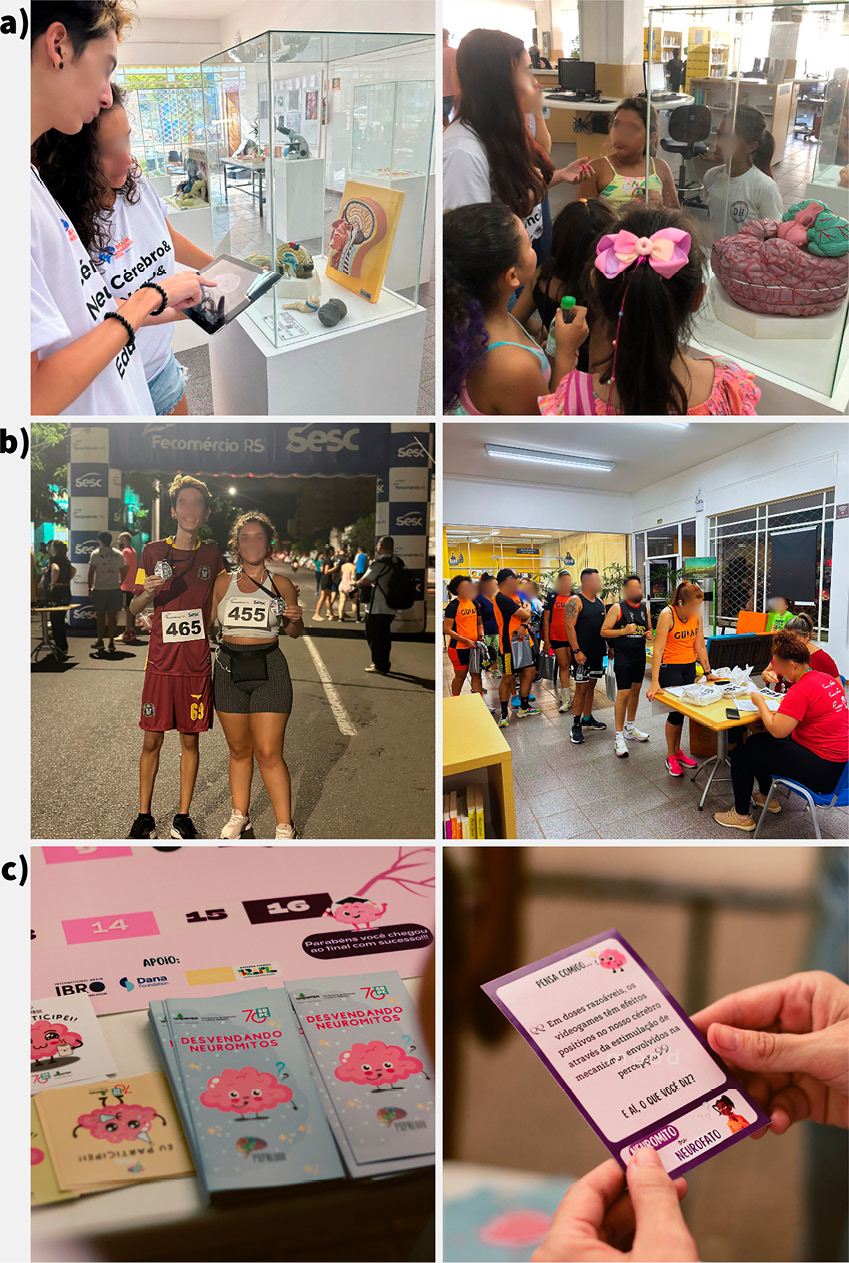
Figure 1. Activities developed during IBAW 2023 included: (a) neuroanatomy exhibition; (b) night race for a healthy brain; and (c) the brain goes to the park. (Source: Personal archive of the POPneuro program. Prepared by the authors in 2024.)
Neuroanatomy exhibition
This exhibition was held in the exhibition space of the Social Service of Commerce (Serviço Social do Comércio) (SESC), which is the institution created by businesspeople in the trade of goods, services and tourism, with headquarters in the most diverse municipalities in Brazil, Uruguaiana, RS. It featured anatomical pieces arranged on totems, making it easier for participants to see them. Information cards containing QR codes directed visitors to explanatory posts on POPNeuro’s Instagram. Folders on neuroanatomy were distributed and guided tours were organised by the team for groups of students from public schools. These visits were arranged by telephone with the SESC team. During these visits, the students were given a tour of the exhibition and received detailed information about the brain and nervous system. Due to the success of the exhibition, characterised by the number of participants and also by the public’s engagement, it was extended for another week at the request of SESC Uruguaiana.
Night race for a healthy brain
This activity, in partnership with SESC Uruguaiana, RS, aimed to promote the importance and benefits of physical activity for brain health. Participants signed up by donating school supplies, which were then distributed to POPNeuro’s partner public schools. Before the race, participants were given information from informative folders about the effects of physical exercise on the brain, including neuroplasticity, neurogenesis, improved blood circulation and oxidative balance. Physical and cognitive assessments, including reaction time tests, were also made available to runners. Those present at the activity received medals and took part in prize draws.
The brain goes to the park
During the weekend of Integration and IBAW, the POPNeuro team organised themed stations in the Barão do Rio Branco Square in Uruguaiana, RS, a place with a high frequency of visitors at weekends. Various neuroscience topics were covered, including neurodegenerative diseases, memory, attention, sleep and neuromyths, through practical tests and activities. Electronic attention and memory tests allowed the public to train their skills and better understand concepts such as working memory, short- and long-term memory and reaction time. A children’s area was set up with materials such as explanatory banners, anatomical parts, information cards with QR codes, folders on neuroanatomy, sleep and neuromyths, books, games and painting materials. This activity was open to the public. Visitor numbers were not recorded.
Brain health, memory and ageing lecture
Held for the Active Maturity (Maturidade Ativa) group at SESC Uruguaiana, RS, the lecture covered the differentiation of common physiological aspects and warning signs related to brain ageing. Topics included normal physiological changes in the brain during ageing, strategies to mitigate the impacts of these changes, healthy cognitive ageing, the United Nations Decade of Healthy Ageing (2021–2031), neurodegenerative diseases associated with ageing and tips for healthy ageing.
In addition, before and during the IBAW, the activities that would take place were publicised. Coverage by traditional media such as television and radio, as well as through social networks, plays a crucial role in disseminating POPNeuro’s activities and reaching a wider audience. To ensure effective coverage, the following strategies were implemented:
1. Contacting media outlets: Before the start of activities, the POPNeuro team contacted the local television and radio stations, such as RBS TV, Rádio Charrua and Rádio 96FM, providing detailed information about IBAW’s programming;
2. Interviews and reports: POPNeuro members took part in interviews on television and radio programs, discussing neuroscience, the benefits of physical activity for brain health and the importance of healthy cognitive ageing. These interviews were strategically scheduled before and during the week of the activities to maximise reach;
3. Promotion on Instagram: Instagram was an essential platform for publicising the activities and engaging the public. Regular posts were made on the official POPNeuro profile (@programapopneuro), including information about the planned activities, facts about neuroscience and highlights of the activities (Figure 2). The posts were accompanied by attractive images and short videos to increase engagement. During IBAW, stories showed behind-the-scenes activities and highlights of the events. This enabled real-time interaction with followers. The POPNeuro team maintained constant interaction with followers, answering questions, thanking them for their support and encouraging participation in the activities. This helped to create an engaged community interested in neuroscience topics; and
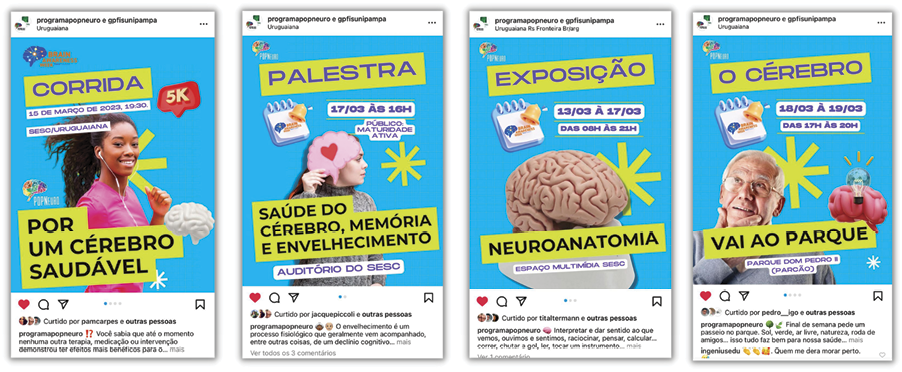
Figure 2. Examples of information cards posted on the Instagram @programapopneuro profile during the IBAW 2023 activities
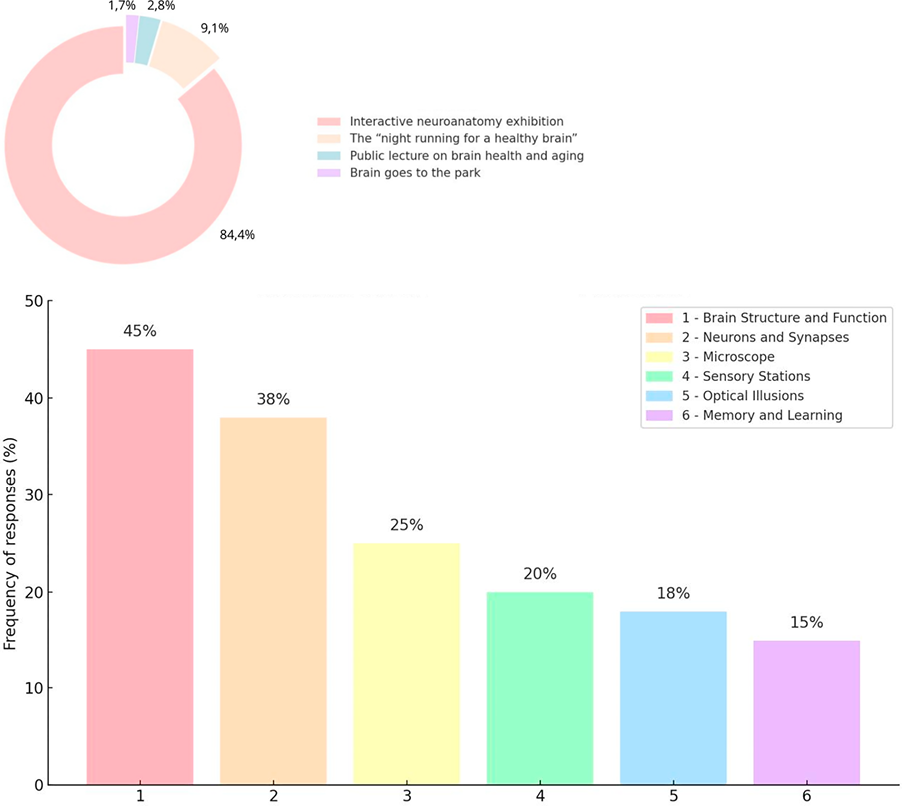
Figure 3. Evaluations from IBAW 2023
4. Evaluation: During the actions described in points 1–3 above, the POPNeuro team addressed the public at the end of the activities, asking them to evaluate the activities proposed during IBAW 2023. The procedure consisted of filling in an online form via Google Forms, without the need for identification. Below are the questions that made up the form, as well as the objectives and possible answers:
Table 1. IBAW 2023 evaluation response forms
| QUESTIONS | OBJECTIVE | POSSIBILITY OF RESPONSE |
|---|---|---|
| Which IBAW activity(s) did you take part in? | Check which activities students and the general public were involved in. | Neuroanatomy exhibition; Night run for a healthy brain; Lecture ‘Brain Health, Memory and Ageing’; ‘Brain Goes to the Park’. |
| Which activity did you enjoy the most? | To check whether, in the participants’ perceptions, the proposed activities aroused their interest in the functioning of the PN and neuroscience in general. | Neuroanatomy exhibition; Night run for a healthy brain; Lecture ‘Brain Health, Memory and Ageing’; ‘Brain Goes to the Park’. |
| What did you learn at IBAW 2023 that most caught your attention? Tell us about it! | To provide a space for participants to share their learning, thus creating a space to open up possibilities for improving future editions. | Descriptive |
| On a scale of 0 (zero) to 10 (ten), with 0 being very bad and 10 being excellent, how would you rate IBAW 2023? | Check the receptiveness of the proposed activities. | 0 to 10 |
Results
In 2023, POPNeuro held the seventh edition of IBAW. During this event, more than 700 people took part in the various activities on offer, including 88 runners and 30 elderly people from the Active Maturity group. All participants were invited to fill in an online evaluation questionnaire, which was available at the activity venues.
A total of 176 people answered the questionnaire. Of these, 100 were women, 73 men and three preferred not to declare. All the visitors who answered the questionnaire were from Uruguaiana, RS, the city where the event was held. Of the respondents, 140 were school students, and the rest were university students and professionals. Of these, 86.4 per cent (n=152) highlighted the anatomical parts exhibition as the activity they enjoyed the most, followed by the ‘race for a healthy brain’ with 9.1 per cent (n=16).
Figure 3 summarises the participants’ responses regarding their favorite activities and topics, expressed in percentages – preferences of activities during IBAW 2023 and frequency of responses mentioning each theme during IBAW 2023. Participants evaluated IBAW using a scale from 0 (very bad) to 10 (excellent). A total of 80.1 per cent (n=141) of respondents gave the activities a score of 10, resulting in an average score of 9.6 for IBAW. These data indicate that the participants considered the activities to be of high quality, which was reflected in the involvement and positive attitude shown during the event.
Discussion
Science communication plays a fundamental role in the educational and intellectual development of society. When well-structured, it encourages critical thinking, promotes interest in scientific disciplines and broadens students’ understanding of the world around them (Faber et al. 2024). Neuroscience, in particular, has captured public fascination due to the intriguing complexity of the brain. However, this fascination is often fueled by misconceptions – known as ‘neuromyths’ – that distort scientific facts and can negatively influence educational practices and social beliefs (Dekker et al. 2012).
In this context, IBAW (Semana Internacional do Cérebro – SIC), organised by the POPNeuro program, has played a crucial role in popularising neuroscience and actively contributing to the dismantling of neuromyths. Many participants reported that before attending the event, they believed common misconceptions, such as the idea that we only use 10% of our brain or that learning is only possible up to three years of age. The deconstruction of these myths was one of the most appreciated aspects of the event, emphasising the importance of evidence-based communication and the role of university students as approachable and effective science communicators.
Scientific outreach initiatives like IBAW not only improve public understanding of the brain but also have important implications for educational practice. As highlighted by Howard-Jones, when educators adopt neuromyths, they may implement ineffective or even harmful pedagogical strategies (Howard-Jones n.d.; Rousseau 2021). Therefore, IBAW promotes accurate and up-to-date neuroscience education, empowering both educators and the general public. This contributes to a culture of critical thinking and scientific literacy, which are essential for educational progress and informed citizenship.
In Brazil, the natural sciences curriculum in elementary and high school includes topics such as the human body, the nervous system, brain function and the five senses – content that is often addressed in a simplified and fragmented manner. Through initiatives like IBAW, students are exposed to neuroscience in a more integrated, dynamic and engaging way. By presenting accurate neuroanatomical models and clarifying common misconceptions – such as neuromyths – these activities reinforce and expand what is taught in the classroom. This exposure helps students build deeper scientific understanding, fosters curiosity and supports the development of critical thinking skills, which are fundamental for their academic progress and broader social development.
The impact of IBAW is further reinforced by the diversity and inclusivity of its activities. The 2023 edition, for instance, featured a lecture on Active Ageing, developed in response to a request from the local SESC unit. This highlights the program’s commitment to listening to the needs of the community and adapting its content accordingly. The participation of older adults from the Active Maturity group was another positive aspect, promoting intergenerational interaction and extending the benefits of science education to different age groups. Research shows that such intergenerational programs enhance social cohesion and generate cognitive and emotional benefits for both younger and older participants (Krzeczkowska et al. 2021).
Hands-on and interactive activities were among the most praised elements by participants. These practical experiences helped simplify complex concepts and improve information retention, aligning with studies that show active learning significantly enhances engagement and comprehension (Guy & Byrne 2013). IBAW’s approach makes science more tangible and accessible to a broader audience, effectively bridging the gap between academia and society.
A qualitative analysis of participant feedback revealed an overwhelmingly positive perception of IBAW’s relevance and organisation. Suggestions collected during the event are carefully considered and incorporated into future planning. For example, participant input has led to the expansion of the neuroanatomy exhibition and the inclusion of a histological slide (a thin, carefully prepared tissue sample used for microscopic analysis) of porcine brain tissue for microscopic analysis, thus offering a deeper educational experience.
This cycle of reflection and action demonstrates the event’s commitment to continuous improvement and innovation. The IBAW team evaluates each edition thoroughly, using audience feedback to refine and redesign its activities, ensuring they remain engaging and educational. Communication strategies are also diversified, including radio, social media and local television, to maximise outreach and accessibility (Hoffman et al. 2018).
It is also important to highlight the positive impact of this work on the university students involved. The integration of extension activities into the academic curriculum has become a well-established practice, and involvement in initiatives like POPNeuro significantly contributes to students’ professional and academic development. In addition to deepening their knowledge in neuroscience, students improve their communication skills and their ability to engage with the broader community.
Finally, IBAW 2023 underscored the importance of partnerships between universities, schools and community organisations. Such collaborations expand available resources and strengthen ties between academia and society, promoting a culture of mutual and continuous learning. Studies show that inter-institutional partnerships are effective in promoting inclusive and comprehensive science education (Sadykova et al. 2025).
Conclusion
The activities and actions promoted by POPNeuro for the dissemination and popularisation of neuroscience have had a significant impact on local society and inspired other laboratories and research groups in the dissemination and popularisation of neuroscience. This impact is evidenced not only by the quantitative results of the program’s evaluations, but also by the continued interest of individuals and organisations in the community in the group’s initiatives. In this way, the goal of bringing the scientific community and the university closer together, as well as disseminating knowledge on the various topics of neuroscience to the general public, has been achieved with great success. It is therefore essential that universities continue to provide opportunities for students to engage in science outreach and support their efforts to promote science in their communities. This support is essential to train future professionals who are better qualified and committed to disseminating scientific knowledge, thereby contributing to the advancement of science and improving the relationship between science and society.
Author contribution
PBM-C conceived and designed research; BTC, ALTT, PMS and PBM-C performed actions; ALTT analysed data; BTC, ALTT, PMS and PBM-C interpreted results of experiments; BTC, ALTT, PMS and PBM-C prepared tables; BTC, ALTT and PBM-C, PMS drafted manuscript; PMS and PBM-C edited and revised manuscript; BTC, ALTT, PMS and PBM-C approved final version of the manuscript.
References
Broder, ED, Guilbert, KE, Tinghitella, RM, Murphy, SM, Ghalambor, CK & Angeloni, LM 2019, ‘Authentic science with dissemination increases self-efficacy of middle school students’, Integrative and Comparative Biology, vol. 59, no. 6, pp. 1497–1508. https://doi.org/10.1093/icb/icz140
Carboni, A, Maiche, A & Valle-Lisboa, JC 2021, ‘Teaching the science in neuroscience to protect from neuromyths: From courses to fieldwork’, Frontiers in Human Neuroscience, vol. 15, pp. 1–11. https://doi.org/10.3389/fnhum.2021.718399
Dekker, S, Lee, NC, Howard-Jones, P & Jolles, J 2012, ‘Neuromyths in education: Prevalence and predictors of misconceptions among teachers’, Frontiers in Psychology, vol. 3, pp. 1–8. https://doi.org/10.3389/fpsyg.2012.00429
Ekuni, R, de Souza, BMN, da Costa, CL & Otomura, FH 2014, ‘Projeto de extensão “Grupo de Estudos em Neurociência”: Divulgando neurociência e despertando vocações’, Revista Brasileira de Extensão Universitária, vol. 5, no. 2, pp. 55–59. https://doi.org/10.36661/2358-0399.2014v5i2.1877
Faber, ESL, Colthorpe, K, Ainscough, L & Kibedi, J 2024, ‘Students’ approaches to developing scientific communication skills’, Advances in Physiology Education, vol. 48, no. 3, pp. 639–47. https://doi.org/10.1152/advan.00009.2024
Guy, R & Byrne, B 2013, ‘Neuroscience and learning: Implications for teaching practice’, Journal of Experimental Neuroscience, vol. 7. https://doi.org/10.4137/JEN.S10965
Hawrylycz, M & Zeng, H 2020, ‘Focus on neuroscience methods’, Nature Neuroscience, vol. 23, no. 12, p. 1455. https://doi.org/10.1038/s41593-020-00750-z
Hoffman, EA, Howlett, KD, Breslin, F & Dowling, GJ 2018, ‘Outreach and innovation: Communication strategies for the ABCD Study’, Development Cognitive Neuroscience, vol. 32, pp. 138–42. https://doi.org/10.1016/j.dcn.2018.04.001
Howard-Jones, P 2019, ‘What happens in the brain when a student grasps a new idea for the very first time – and what does this mean for teaching?’, Science of Learning Portal, viewed 4 July 2025. https://solportal.ibe-unesco.org/articles/building-knowledge-and-understanding/
Jia, T & Schumann, G 2022, ‘How cognitive neuroscience can enhance education and population mental health’, Science Bulletin, vol. 67, no. 15, pp. 1542–43. https://doi.org/10.1016/j.scib.2022.07.001
Kragel, JE & Voss, JL 2022, ‘Looking for the neural basis of memory’, Trends in Cognitive Sciences, vol. 26, no. 1, pp. 53–65. https://doi.org/10.1016/j.tics.2021.10.010
Krzeczkowska, A, Spalding, DM, McGeown, WJ, Gow, AJ, Carlson, MC & Nicholls, LAB 2021, ‘A systematic review of the impacts of intergenerational engagement on older adults’ cognitive, social, and health outcomes’, Ageing Research Reviews, vol. 71, 101400. https://doi.org/10.1016/j.arr.2021.101400
Organisation for Economic Co-operation and Development (OECD) 2002, Understanding the brain: Towards a new learning science, OECD Publications Service. https://www.oecd.org/content/dam/oecd/en/publications/reports/2002/09/understanding-the-brain_g1gh2391/9789264174986-en.pdf
Paliarin, F, Incrocci, RM & Nobre, MJ 2018, ‘Behavioral and auditory electrophysiological rebound as a compensatory response to the reinforcing effects of morphine’, Neuroscience, vol. 392, pp. 66–76. https://doi.org/10.1016/j.neuroscience.2018.09.025
Pontes, N 2019, ‘Science in new spaces’, Brazilian Dental Science, vol. 22, no. 3, pp. 295–96. https://doi.org/10.14295/bds.2019.v22i3.1825
Rousseau, L 2021, ‘Interventions to dispel neuromyths in educational settings – a review’, Frontiers in Psychology, vol. 12. https://doi.org/10.3389/fpsyg.2021.719692
Sadykova, A, Berikkhanova, A, Atabekova, B, Sholpankulova, G & Abdykhalykova, Z 2025, ‘Social partnerships among academia, industry, and government in education: A bibliometric analysis’, Frontiers in Education, vol. 10, pp. 1–9. https://doi.org/10.3389/feduc.2025.1516358
Sociedade Brasileira de Neurociências e Comportamento (SBNEC) 2019, Semana do Cérebro. http://www.sbnec.org.br/site/texto.php?id_texto=9.
Swords, CM, Porter, JS, Hawkins, AJ, Li, E, Rowland-Goldsmith, M, Koci, MD, Tansey, JT & Woitowich, NC 2023, ‘Science communication training imparts confidence and influences public engagement activity’, Journal of Microbiology & Biology Education, vol. 24, no. 2. https://doi.org/10.1128/jmbe.00037-23
Vargas, LS, Silveira, JRA & Lannes, D 2014, ‘Conhecendo o sistema nervoso: Ações de divulgação e popularização da neurociência junto a estudantes da rede pública de educação básica’, Ciências & Cognição, vol. 19, no. 2, pp. 233–41.
Ventura, DF 2010, ‘Um retrato da área de neurociência e comportamento no Brasil’, Psicologia: Teoria e Pesquisa, vol. 26, no. 2, pp. 123–30. https://doi.org/10.1590/S0102-37722010000500011