Gateways: International Journal of Community Research and Engagement
Vol. 17, No. 1
August 2024
RESEARCH ARTICLE (PEER REVIEWED)
Linkages with Practice for Higher-Education Curriculum Innovation
Paul Nampala1, Stephen W. Kalule2, Patience M. Mshenga3, Daniel M. Okello3, Anthony Egeru5, Adipala Ekwamu6
1 Department of Agriculture and Environmental Sciences, School of Agriculture and Applied Sciences, Bugema University, P.O. Box 6529, Kampala, Uganda
2 Department of Rural Development and Agribusiness, Faculty of Agriculture and Environment, Gulu University, P.O. Box 166, Gulu, Uganda
3 Department of Agribusiness and Natural Resource Economics, Faculty of Agriculture and Environmental Sciences, Kabale University, P.O. Box 317, Kabale, Uganda
4 Department of Agricultural Economics and Agribusiness Management, Egerton University, P.O. Box 536-20115, Egerton, Kenya
5 Regional Universities Forum for Capacity Building in Agriculture (RUFORUM), P.O. Box 16811, Wandegeya, Kampala, Uganda
6 Research and Education Agency, P.O. Box 29152, Kampala, Uganda
Corresponding author: Paul Nampala, nampalap@yahoo.co.uk; pnampala@bugemauniv.ac.ug
DOI: https://doi.org/10.5130/ijcre.v17i1.8913
Article History: Received 20/02/2019; Revised 14/11/2023; Accepted 23/07/2024; Published 08/2024
Abstract
This article is inspired by the debate on curriculum innovation for graduate training, emerging out of linkages between universities and agribusiness development actors, targeting entrepreneurial action and employability of graduates. Experiences from implementation of a three-year joint project are enriched by a desk review, stakeholder feedback and interpretative analysis of process documents during the development of the regional graduate curriculum on Agri-Enterprise Development for Egerton and Gulu Universities in Kenya and Uganda, respectively. The graduate curriculum at the two universities in East Africa integrated the approaches of roundtable engagement and research as well as value chain cluster mapping and development through interactive sharing with agribusiness development facilitators. Simultaneously, the two implementing universities showcased the feasibility of integrating community engagement and entrepreneurial skills into a new curriculum. They achieved this by adopting two training approaches from their previous, more limited curriculum, which lacked student entrepreneurial experiential learning. The outcome from the first cohort of students in the innovative programs demonstrates significant institutional change in teaching and learning approaches. These changes prioritize a blend of action research and theoretical exposure. At the university-wide level, a student-centered teaching and learning approach has been established, facilitated by models like Student Farm Attachment, Student Enterprise Scheme, and Student Community Engagement. Additionally, university-based research teams have honed their skills in community action research, leading to the identification of relevant challenges and plausible solutions. Furthermore, students’ skills sets have increasingly enhanced employability.
Strengthening linkages between universities and community development actors can enhance curriculum orientation toward problem-solving and entrepreneurial capacity building for young graduates. Purposeful engagement with communities by university faculty and students serves as a complementary extension approach and advisory service. Implementing an innovative curriculum has the potential to boost research uptake and foster innovation. This article demonstrates how university-industrial actors’ collaboration can be exploited for curriculum (re)design, review and up-dating for (a) enhanced relevance of universities to community needs and employability of graduates; and (b) improvements in the research uptake pathways that facilitate research-into-use for desired impacts at community level.
Keywords
Community Engagement; Entrepreneurial Action; Graduates; Employable Skills
Introduction
Despite much rhetoric on embedding community action research and entrepreneurship in university curricula, there is little research attention paid to systematically showing how the two aspects can be made integral to curricula of higher education. Community engagement in university education involves collaboration between higher education institutions and their broader communities (local, regional/state, national, global). It emphasises a mutually beneficial exchange of knowledge and resources, fostering partnerships and reciprocity. The goal is to bridge the gap between campus and community by addressing broader needs beyond individual boundaries. Activities may include research on community organisations, student service learning, and other initiatives connecting campuses and communities. Community engagement provides opportunities for entrepreneurship education, which in the context of higher education involves learners developing the mindset and skills to turn creative ideas into entrepreneurial action. Such competence is crucial to personal development, active citizenship, social inclusion and employability (Rodrigues 2023).
The integration of community engagement and entrepreneurship in curricula has gained interest globally in higher education. This has mostly been occasioned by the need to prepare learners for employability. There is consensus that for university students to fit into the world of work, they require a good blend of both technical (hard skills) and soft skills (commonly referred to as 21st Century skills) (Trilling & Fadel 2009). Entrepreneurship is considered a vital 21st Century skill because it combines creativity, business acumen and adaptability. Given the critical role of preparing fit for purposes graduates, most universities are faced with the challenge of striving to embed 21st century skills such as entrepreneurship in their program offerings. Thus, this article focuses on interrogation of connection of curricula to practice, that is, how practice-based approaches become integral to the training and learning of implementation of the practical approaches in the Agri-Enterprise Development (AED) curriculum. The AED is premised on interventions-to-impact of educational programs, as indicated in Fig. 1. A focused training program, such as the AED, secures promise of achieving the intended outputs, outcomes and impacts of profiles itemised in Figure 1.
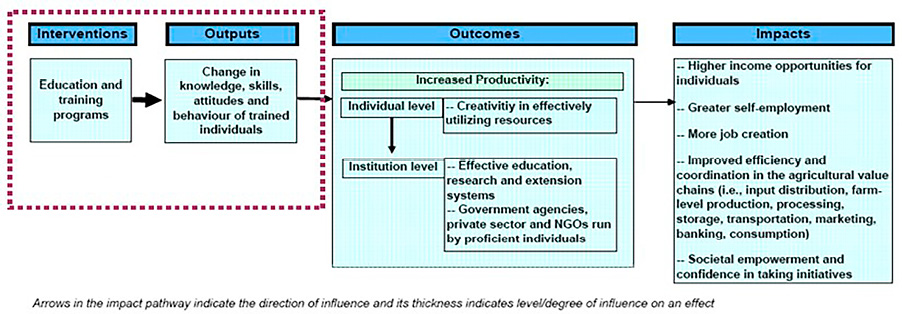
Figure 1. A generalised impact pathway for post-secondary education interventions. Adapted from Maredia (2007).
The participating universities that engaged in curricula development and implementation of practical training approaches for AED were desirous of achieving the outputs, outcomes and impacts presented in Fig. 1. Egerton University is the oldest institution of higher learning in Kenya. It is also the premier agriculture training institution. Founded as a Farm School in 1939, it was upgraded in 1950 to an Agricultural College offering diploma programs. After close to four decades as such, in 1987, Egerton Agricultural College was gazetted and established as Egerton University through an Act of Parliament. The university is headquartered at Njoro main campus in western Kenya and has several other campuses. The Njoro main campus houses the Faculty of Agriculture. Under the African Centers of Excellence Initiative, Egerton University won a World Bank grant to establish a Centre of Excellence in Sustainable Agriculture and Agribusiness Management. As a premier agricultural training institution in Kenya, Egerton University has maintained practical approaches to learning and teaching in the agricultural fields.
Unlike Egerton University, Gulu University was established more recently as one of the Public Universities in Uganda, under Statutory Instrument Number 31 of 2003. At the time of implementation of this project, from which this article stems (2012–2015), the university was undertaking only undergraduate programs. The project effort was thus very timely for Gulu University as it could work in partnership with an experienced university in the region, Egerton University, as part of a cohort of learning and peer support to strengthening existing programs, as well as study processes towards the establishment of curricula for postgraduate training. In line with its vision for community transformation, Gulu University has a strong linkage to rural communities, especially in Northern Uganda, as exhibited in the implementation of both undergraduate training and outreach engagements. For instance, all programs have a strong component of outreach and internships. Since 2016, Gulu University has expanded the portfolio of program offerings to include Masters and PhD, and has championed the integration of community engagement and entrepreneurship in practical training models for rural transformation. The Gulu University academic programs have a strong element of interdisciplinary and entrepreneurial skills development. For instance, four Programs (PhD in Agricultural and Rural Innovation, PhD in Agricultural and Applied Bioscience, MSc. Agri-Enterprises Development, MSc. Food Security and Community Nutrition) require students to conduct relevant community-engagement along selected nodes of value chains, and work with multi-stakeholder platforms and community food systems (Kalule et al. 2019; 2023).
We illustrate here how the partnerships between two East African universities (with varying and unique practical approaches), on one side, and development-oriented actors in agribusiness, on the other, resulted in curriculum innovations linked to practice, with a view to securing the desired outputs, outcomes and impacts in Fig. 1 above. Although universities strive to undertake community engagement, the practice has been that this is the preserve of faculty members with very limited, involved (if at all) students. It is therefore not part of the training program. This article serves to inform discussion as well as catalyze action towards reorienting training curricula for community engagement at African universities and linking university education with practice targeting employability of graduates. The thesis in this article derives from experiences attained through cohort learning and data mined from documents on the AED curriculum maintained at the two participating universities and accredited by the responsible bodies in Uganda and Kenya. Other resource materials used included reports from various curriculum-development workshops, discussion at convened events between and among agribusiness development attendees, and scoping study reports presented by GU and EGU as part of activities in the joint project implementation process.
Discourse on the relevance of higher education in Africa: Theoretical underpinnings
Higher education systems in Africa have witnessed an increased number of universities and student enrolment rates (Nakayiwa et al. 2016). This followed the structural adjustment programs that introduced private universities co-existing with public universities. Statistics show that up to 4.5 million students join either university or technical and vocational education annually (Nakayiwa et al. 2016). However, the increase in enrolment rates has not been matched by improved quality of education. Instead, Higher Education Institutions (HEIs) continue to experience enormous challenges, ranging from high student to instructor ratios (British Council 2014), inadequate or even dilapidated training facilities, and inadequate funding and curricula deficiencies in practical orientation (Hayward & Ncayiyana 2014). The growing deficiencies in practical orientation among graduates has put African universities, in particular, under immense pressure to show their relevance to society.
Considering this, the debate on higher education in Africa seems to be centred on three key issues. First, reviewing and orienting training curricula to ensure that graduates have employable competencies. Employable competencies are acquired through innovative training and are a critical measure of success in workplaces (Chain et al. 2019). However, perspectives on competency for employability vary amongst students, graduates, educators, employers and the policymakers. Morrison (2014) stressed that students and graduates assume that key competencies for their employability are leadership and work ethic, while lecturers expect employers to prefer critical thinking, communication skills and self-confidence. The concern of employers regarding graduates is inability to exhibit innovativeness and interpersonal skills. As such, in many non-African education systems, the involvement of non-educator stakeholders (particularly industry, private sector players and government agencies) in curriculum design processes is highly emphasised (Eurydice 2015). Currently, there are very few African universities that have up-to-date curricula or use training methods promoting innovation (Juma 2016). Second, examinations of university research activities against national or regional development priorities reveal a disconnect between the research work done by university staff and students and the policy aspirations (Eicher & Haggebad 2013). Third, engaging universities in community outreach or service learning is understood as a way to contribute to solving community problems (Preece 2013). Shortfalls inherent in the above three issues have positioned African universities to lag behind their counterparts in Europe, Asia, Latin and North America in the global knowledge economy and innovation indices (Larsen 2016).
Therefore, the position of African higher education systems in the global knowledge economy is of great concern to continental regulatory and policy frameworks. For example, as quoted in Nakayiwa et al. (2016), the African Agenda 2063 articulates a strong knowledge management system, experiential learning, cutting edge research and innovation. To accelerate the attainment of the ‘Africa We Want’ as envisaged in Agenda 2063, the Continental Education Strategy (CESA) emphasises acquisition of requisite knowledge and skills. Similarly, the East African Community (EAC)’s Vision 2050 articulates mainstreaming research and innovation in higher education institutions for economic transformation and development. This Vision specifically emphasises entrepreneurship and business skills training, professional, technical and vocational training, as well as lifelong learning, all geared towards bridging skills gaps for advancing the regional development agenda (EAC 2016).
Thus, the regional and continental agenda underpin the importance of higher education and research for socio-economic transformation. For such efforts, what matters is not just technologies and innovations generated through research but adapting them appropriately for local application. Inevitably, universities have an important role to play in achieving social legitimisation, cohesion and knowledge production, and a transfer agenda (Cloete & Maassen 2015). Pursuing the knowledge economy agenda in Africa implies that the policy and HEI actors have to reform the higher education systems to target enhanced delivery and efficiency. In order to catalyze development, African universities have to contend with the dual challenges of attending to substantially high numbers of students and producing graduates with significantly improved capabilities and entrepreneurial mind-sets (Larsen 2016). As such, improving the curricula of training alone may not be sufficient to solve the problem of inadequacy of employability skills amongst graduates. Very importantly, there are considerable limitations in the learning environment for students. Yet again, in many African universities, instructors are often not well motivated, lack the necessary facilitation and equipment, and in some instances, do not receive regular refresher training to upgrade their capabilities to match modern approaches to facilitating learning. All this happens amidst expectations of competing in global knowledge while responding to local development needs (Jowi 2012). In effect, what has had to give way is the quality of graduates (British Council2014). This is well evidenced in the outcome of a survey conducted in 2014 by the Inter-University Council for East Africa, which revealed that half of the graduates from Universities in the East African Community lacked employability skills. These graduates are widely criticised for lacking the competences that are sought after in the labour market namely problem-solving, critical thinking, innovativeness, creativity and communication skills (Ssebuwufu et al. 2012). While responding to the above concerns, African universities are increasingly repositioning themselves to integrate community engagement in their core business. These universities are also reviewing and/or designing curricula to integrate entrepreneurial training approaches within community-engagement undertakings. This renewed emphasis on community engagement (CE) and the entrepreneurial education in training curricula comes following the realisation that CE facilitates: (1) promoting university visibility in the community; (2) improving the quality of life in communities; and (3) enhancing soft and entrepreneurial skills amongst graduates (Sherrad 2016).
Entrepreneurial capacity building in real life situations does not only contribute to improved employment of graduates, but also the emergence of small businesses, a precursor to economic development (Jacob et al. 2015). However, key questions that keep re-occurring in this debate rotate around the kind of strategies universities should exploit to initiate and promote community-engagement and entrepreneurship in the communities in which they are located and how the curricula can be better placed to realise transformations.
Universities have students in addition to academic staff to utilise dissemination of researched technologies, triggering entrepreneurial action and innovation. However, Juma (2016) argued that many new businesses and technologies generated in universities do not mature into commercial enterprises able to exist beyond academic exercises. This is largely due to research management limitations and absence of supportive policy frameworks. Relatedly, some scholars suggest that these student-initiated businesses fail to grow owing to lack of risk capital to nurture them (Ben-Ari & Vonortas 2007; Bjørgum & Sørheim 2015;). Further, in many developing countries, the innovation ecosystems are not well developed to support the emergence and development of business incubates and knowledge-based industries (Lee & Tee 2009). Despite the challenges of nurturing business incubators and innovations, practical approaches in entrepreneurship and community engagement are gaining prominence in discussions about African higher education. However, there is a lack of documentation regarding the process and successful institutionalisation of change as part of the desired transformation within and among higher education institutions (HEIs). The interrogation of these issues extends to how community-engagement and entrepreneurship approaches can practically become integral in the curricula at HEIs. One such curriculum integrating the two approaches is the Masters’ program in Agri-Enterprise Development (AED). This academic program was collaboratively developed by two East African universities, namely Gulu University (GU) in Uganda and Egerton University (EGU) in Kenya with funding from the FORD Foundation. The AED program targets to produce graduates who are well-grounded and have the right mix of competencies in entrepreneurial knowledge, skills and mind-sets. These competencies are particularly essential for driving agribusiness development and policy research.
Philosophically, the AED program integrates three practice-derived approaches: (1) value chain cluster mapping and development; (2) roundtable engagements; and (3) entrepreneurial capacity building (student enterprise projects) in graduate training. Indeed, these three practical approaches bring experiential learning to graduate training. The AED curriculum envisions that graduates of entrepreneurial training would be able to identify business opportunities existing at different nodes of the agricultural value chains, namely inputs supply, production, processing, distribution and marketing, as well as support services, before turning them into viable agribusinesses. The orientation of experiential learning with entrepreneurial action is not only helpful to graduates, but also to the economy as a whole, since mind-sets of such graduates can be transformed from job seekers to job providers (Ssebuwufu et al. 2012). Therefore, the integration of practical entrepreneurship training in the AED curriculum sought to respond to the need for enhanced employability of graduates through business development.
Embedding Practice-based Approaches in Agri-Enterprises Development Curriculum
Process Analysis
Process analysis, as articulated in the literature (Ceravolo et al. 2023; Hall 2006), is a practice of examining processes to identify opportunities for improvement. By analysing how institutions deliver on their mandate and tasks, institutions can uncover inefficiencies, bottlenecks and areas where processes can be streamlined. It’s a way to gain insights into the steps and actions needed for institutions to attain their goals. Process analysis challenges the contention that statistical methods applied to large numbers of cases invariably provide better grounds for casual inference (Hall 2006). The process analysis in this article adopts the two approaches of routable engagements (Mahapatatra & Dash 2022) and cluster mapping (Ketels 2017) to foster collaborative discussion and attain consensus.
The idea of developing a graduate training curriculum in Agri-Enterprises Development was hatched in 2015, refined and launched within the framework of the project titled ‘Transforming Universities to Stimulate Pro-Poor Agri-Enterprise Development in Eastern Africa using Value Chain and the Round Table Approaches to Postgraduate Training’. This project (FED 2013/320-100) was funded by the FORD Foundation. The project brought together actors who exhibited synergies of complementarity. The actors included the two East African Universities, namely GU and EGU, whose expertise was essential for curriculum development as they were the ultimate target stakeholders with regard to implementation of the resultant curricula. Other actors were the Regional Universities Forum for Capacity Building in Agriculture (RUFORUM), a network of 170 Universities in 40 African countries with vast experience in supporting graduate training linked to smallholder community action-research (Nampala et al. 2016). The partnership also had the International Institute for Rural Reconstruction (IIRR) operating throughout the East African region and Round Table Africa (RTA), an organisation with a base at Maastricht University in the Netherlands and an outreach mission in Tanzania. The IIRR brought expertise to the team, providing capacity building and business development services to smallholder farmers, while RTA is renowned for developing the competitiveness of enterprises through cooperation and inter-linkages among related enterprise clusters.
The idea of the curriculum (re)design of AED was motivated by the fact that, despite the existence of graduate training programs in agribusiness in the Eastern and Southern African region, there was only a handful of Agricultural professionals and practising entrepreneurs engaged in farming as a business. Secondly, it was realised that there were only a few collaborative and regional-wide academic programs, a limitation that was derailing harnessing of educational and innovative networks amongst both universities and graduates. Such educational networks are relevant in facilitating cross-learning amongst HEIs, as well as enhancing cross-border technology transfer and employability of graduates (Banadda et al. 2016).
Those involved through a participatory engagement process that entailed convening events with higher education stakeholders worked out frames of reference for guiding the development and rolling out of the Agri-Enterprises Development curriculum, which included ingredients of community-engagement and entrepreneurship. These included: (1) building on experiences existing within the participating universities; (2) consultation with agribusiness sector players; (3) learning from existing models of best practice in graduate training and research; and (4) profiling the desired competencies of the graduate of agri-enterprises development.
The process was initiated by convening cohort-learning events that facilitated sharing of experiences between participating universities and drawing lessons from other HEIs, particularly the RUFORUM member universities and the EARTH University. In-depth scoping studies were undertaken at both GU and EGU that unearthed diverse training approaches, thus allowing cross-fertilisation in the curriculum under development. The scoping studies in both universities identified existing gaps in both delivery approaches and human resources (faculty staffing). Results of the scoping studies were disseminated as working documents, which were presented to an array of higher education stakeholders (academia, government, private sector and industry, and communities) by each of the two universities. The variations and similarities in the training approaches were considered particularly relevant, as they complemented and supported the process of developing a collaborative and regional-level graduate curriculum. While Egerton University had postgraduate training programs, Gulu University presented a working document showing that at the time there was no Masters or PhD training program in the Faculty of Agriculture and Environment (FAE).
The working document further presented two novel practical training approaches, which at the time were well-embedded in the undergraduate training curriculum for the Bachelor of Agriculture, namely the Student Farmer Attachment (SFA) program and the Supervised Student Enterprise Project (SSEP). As described in Kalule et al. (2016) and Odongo et al. (2017), the SFA, also known as the Student-Centred-Outreach (S-C-O), was designed in such a way that students spend a minimum of one year working with small-holder farmers for experiential learning. Under this approach, students operate within a radius of 10 kilometres from the University campus and regularly commute to and from farmsteads by riding bicycles or walking. The SSEP approach, also commonly referred to as the Student Enterprise Scheme (SES), described in Kalule 2017), involves students developing their own business ideas into fundable business plans. The business plans that meet the minimum criteria of technical feasibility, commercial soundness and economic viability are funded within the faculty on credit, with modest interest rates.
A prominent difference between GU and EGU is that the latter University had running graduate programs in Agricultural Economics and Agribusiness. In addition, EGU had participation experience in the regional level collaborative Masters’ program in Agricultural and Applied Economics (CMAAE), offered in universities in Eastern, Central and Southern Africa. This difference was attributable to the fact that EGU is a more well-established university (established as a Technical Farm School in 1939 and evolved into a comprehensive university in 1987) than GU (established in 2002); and its experience became valuable in the final stages of curriculum development. Further, the EGU working document highlighted a number of gaps, experiences and lessons learnt over time while delivering graduate training. The gaps enumerated included: Information and Communication Technologies (ICT) and e-learning, management skills, project management, personal skills and networking, conflict/disaster management, monitoring and evaluation, and inadequate integration of innovation concepts and systems thinking. A key lesson shared by EGU was the existence of limited attention in cultivating agri-enterprise development-based skills and attitudes within agricultural departments of African universities, especially at masters’ degree level, leading to a significant capacity gap for problem solving and rural development.
The working documents presented by GU and EGU revealed that the two universities were already inclined to embedding community engagement and student enterprise projects in training curricula. The combination of these two practical approaches was plausible in kick-starting innovation and the commercialisation orientation of universities, as articulated by Juma (2016). These practical approaches stood to benefit from lessons and experiences of other universities already practising them. As part of this effort, faculty members from the two universities and staff from the project actors, described above, participated in learning excursions at EARTH University. The EARTH University in Costa Rica is well known for its entrepreneurial capacity building of students linked to community-based projects (Sherrad 2016). The two working documents were, however, silent on how the two universities would embed in their curricula contemporary approaches to facilitating learning, namely problem-based learning (PBL) and e-learning platforms. The innovative PBL approach is credited with developing soft and intellectual skills of students, namely critical thinking, problem-solving, creativity and communication (Mohamedbhai 2013), while the e-platforms are increasingly becoming a necessary component of teaching and learning programs.
Still on graduate learning models, RUFORUM shared experiences and models of engaging African agricultural universities in graduate training and research, focusing on solving community-based problems. One model that stakeholders zeroed in on was the Community Action-Research Programme (CARP) (Nampala 2017). Notably, the guiding principle of the CARP is delivering training and research, with a focus on giving back to the community. Senior faculty members, in particular, who have vast research experience, bid for grants from RUFORUM. The winner is then meant to recruit graduate students at Masters or PhD level to undertake graduate training and research. The research tends to focus on community-based agri-enterprises, and to inherently solve community problems as identified by the research team (senior faculty member and the graduate students). Upon completion of the research, the students return to the community and share their findings on contributing to improvement of community life (Egeru et al. 2016).
Other stakeholders, apart from the academe, but including agribusiness development facilitators, shared their specialized knowledge in engaging the agribusiness actors for improving the competitiveness of the agri-enterprises. For example, IIRR shared their experience of capacity building in value chain approaches, mainly in developing countries, using action-research approaches. The IIRR also educated stakeholders in scholarly work that this organisation was engaged in and disseminated it globally. The publications included books, journal articles and case studies largely focusing on engendering value chains (Mayoux & Mackie 2008; KIT & IIR 2010). The idea of such action research was to enhance the competitiveness of agri-enterprises through functional, process and product upgrading of value chains. It was realised that if IIRR approaches were integrated within the graduate curriculum, this would permit positioning of students at various nodes of the value chains as practical training. Thus, during community attachment, students would interact and work with value chain actors, community influencers and supporters as they learnt and effectively contributed to upgrading of the value chains. The IIRR personnel were also identified as good partners in curriculum implementation in terms of facilitating writing of case studies, supplying resource persons for guest lectures, and offering placement opportunities for student community attachment. Relatedly, Round Table Africa enriched the process of curriculum discussion with yet another unique approach, that of integrating roundtable engagement and research in graduate training. The RTA mission emphasises linking research and education with sustainable business development in the areas of agriculture, mining and tourism through graduate training (at Masters and Doctoral Degree levels), applied research, roundtable engagement and projects. It also articulates that the philosophy of the roundtable approach has three core theoretical frameworks and educational courses, namely, competitiveness, value chain development, and) partnerships. As with the case of IIRR, Round Table Africa was identified as a useful partner in facilitating the re-tooling process of faculty staff and also supplying personnel for guest lectures in graduate training.
The collection of gaps in university training curricula, experience and lessons learnt, as well as the practices of agribusiness industry actors, culminated in brainstorming, synthesis and identification of competencies that defined the profile of the desired graduate to facilitate agri-enterprises development. The gaps were generally related to content, implementation and achievement, as described in Table 1. Specifically, these gaps in competency and desired capabilities were considered under knowledge, skills and attitudes. The desired knowledge competences of the graduate were identified as follows: financial management and accounting, team building, systems thinking, marketing, and agri-business information management system. Other knowledge competences included: business research methods, agri-business policy analysis and protocols, entrepreneurship and enterprise development, foresight, planning and quantitative analysis techniques. On prerequisite skills, the stakeholders zeroed in on the ability to set-=up agri-enterprises, provide consultancies to the community, business communication, facilitating agri-business planning and value addition processes, people skills/soft skills, analytical skills, leadership and influencing agri-business change processes. The desired attitudes and mind-sets were a positive attitude towards agriculture and demonstrating creativity, dedication, determination, flexibility, leadership and passion. Other attitudes included self-confidence, a competitive attitude and high-energy organisation.
An evaluation of the process confirmed that Bloom’s Taxonomy of Educational Objectives (Bloom et al. 1994; Goulund 1991) was the theoretical underpinning that the team used to re(design) an innovative curriculum. Bloom’s Taxonomy of Educational Objectives recognises three measurable outcomes that are interconnected and aligned to the impact pathway for post-secondary education (Maredia 2007). They are knowledge-based goals, skills-based goals and effective values, attitudes and interests. The AED mainly focuses on the knowledge-based goals, as indicated in Table 2.
| Level of Expertise | Description of Level |
|---|---|
| 1. Knowledge | Recall or recognition of terms, ideas, procedures, theories, etc. |
| 2. Comprehension | Translate, interpret, extrapolate, but not see full implications, or transfer to other situations closer to literal translation. |
| 3. Application | Apply abstractions, general principles or methods to specific concrete situations. |
| 4. Analysis | Separation of a complex idea into its constituent parts, and an understanding of organisation and relationship between the parts. Includes realising the distinction between hypothesis and fact as well as between relevant and extraneous variables. |
| 5. Synthesis | Creative mental construction of ideas and concepts from multiple sources to form complex ideas into a new, integrated and meaningful pattern subject to given constraints. |
| 6. Evaluation | To make a judgment of ideas or methods using external evidence or self-selected criteria substantiated by observations or informed rationalisations. |
Analysis of the profile of knowledge competencies of the desired graduate yielded program learning outcomes for the proposed curriculum. In summary, the learning outcomes defined a graduate capable of: (1) starting, owning and running an agri-enterprise; (2) managing agri-enterprises and agribusiness projects; and (3) undertaking research and policy analysis for agri-enterprise development. Further breakdown of the learning outcomes gave clues to the kinds of courses that would be included in the curriculum. Core courses and standards were generated as a way of facilitating credit transfer. The core courses ranged from areas of agribusiness, agricultural economics, finance and accounting, entrepreneurship, quantitative methods, research methods and statistical methods. However, variations in elective courses were allowed, along with course description details, so that individual universities could meet accreditation requirements as established by the countries of origin, and where the proposed Masters’ curriculum was to be implemented. Optional areas included human resource management, project management, and policy analysis. The learning outcomes also enabled visualisation of the employment sectors that graduates would be oriented to during training. These included owning agri-enterprise businesses, project management, and agribusiness policy analysis and research.
Curriculum Innovations
Curriculum outlook shows that university actors took lessons from community-based actors in the agribusiness sector and experiences from earlier curricula implementation. Key curricula features (see Fig. 2) with few variations between the two participating universities include: 1) course content generated in consultation with the agribusiness sector actors; 2) graduate research (including action-research and case studies); 3) value chain cluster mapping and development; 4) roundtable engagement; 5) community and/or farm attachment; and 6) the Student Enterprise Scheme. For instance, the curriculum document at GU, accredited by the National Council for Higher Education in Uganda, shows these features. This document articulates the philosophy underpinning this curriculum as ‘integrating value chain analysis, roundtable engagements and agri-entrepreneurial development approaches in graduate teaching and research’. Further still, the curriculum on Agri-Enterprises Development recognises the growing pedagogical shift in higher education from the lecture mode of facilitating learning to problem-based learning (PBL) approaches, with a view to empowering and equipping graduates with employable skills, as discussed in Mohamedbhai (2013). The integration of PBL as a delivery approach was a consequence of extensive dialogue and conversations at various convened events and was enriched to achieve consensus from the scoping data presented in working documents by GU and EGU on the need to develop intellectual skills amongst graduates. Many scholars of higher education systems (Altbach & Knight 2007; Margalef & Pareja 2008; Turcsanyi-Szabo 2012) have emphasised that it is these intellectual skills that enhance the employability of the graduate and entrepreneurial action. They include creativity, critical thinking, problem-solving, analytical and communication skills (Dabalen et al. 2001; Pitan & Adedeji 2012).
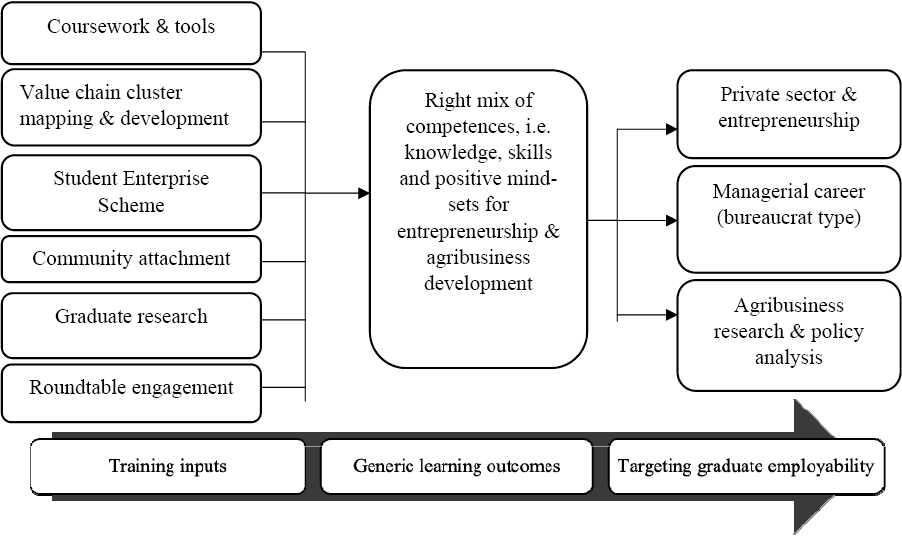
Figure 2. Schematic Representation of the Agri-Enterprises Development Curriculum
Upon enrolment, students begin with training inputs of course work, along with tools/ practicals, namely: value chain analysis, business plan development, and research methods which feed into field-based practicum/modules on CE and SES, undertaken in year two, together with research. These concurrent curricula activities ensure that students cover Master’s degree training within two years. Though its action-packed, students can still complete their studies through study extensions.
The involvement of industrial actors in the curriculum workshop and sharing of practices influenced considerably the final courses, theories and practical approaches that were incorporated within the curriculum. The actors’ contribution was clearly evident in the type of competences in knowledge, skills and mind-sets profiled for graduates. For example, the curriculum was well integrated with the following knowledge areas: agribusiness information systems management, value chains analysis and development (VCA), social organisation for agri-enterprises, and agri-entrepreneurship development.
The curriculum also had a practical training orientation towards skills development, which was linked to existing practices within the agribusiness sector. Training approaches in higher education institutions (HEIs) effectively support the entrepreneurial orientation of training. This alignment contributes to improved creativity and enhances the employability of graduates (Turcsanyi-Szabo 2012). The approaches included (1) the practicum on the VCA; and (2) roundtable engagement. The integration of VCA in the graduate curricula demonstrated learning and customisation of approaches that IIRR and RTA embrace and practise in development work. The curriculum also placed a significant focus on roundtable research and engagement, following the contribution from RTA. Roundtable engagements allowed for dissemination with a wide audience, such as value chain actors, financial institutions, farmer organizations, private sector and business development facilitators. Information shared included action-oriented research results, business models and unique practices.
Further still, previous experiences of university actors delivering training in earlier curricula were crucial to informing and refining practical approaches in the AED curriculum. Two practical approaches, in particular, that had been previously tested in training undergraduate students were brought forward in the AED curriculum. These approaches were: (1) the student enterprise scheme (SES); and (2) student community engagement. The SES would enable early entry into entrepreneurial action for students of agri-enterprise development while still at the university, so targeting the emergence of small and medium enterprises in agriculture. This line of thought was well aligned with the Juma argument of 2016, which suggested that universities, through their innovative action and entrepreneurship, should have an important role to play in the economic development of African countries.
In the SES, students prepare business plans and present them to an audience that is comprised largely of peers, instructors and other faculty staff. Students also develop and implement fundable business plans. Graduate seminars focusing on inculcating consulting skills in business development services are also provided for in the AED curriculum (see the course on graduate seminars). Integrating consulting skills and business development services in the curriculum is an indication of learning from the various approaches of IIRR. Key competencies include: (1) developing technical assistance skills in business development services; (2) evaluation of business plans; and (3) providing feedback to clients. These enable students to practise providing and receiving feedback in a competitive business environment. We consider this an opportunity to attain concrete experience that will take learners through the cycle of Kolb’s two continuums, thereby making them active doers who will put knowledge gained into practice (McLeod 2017).
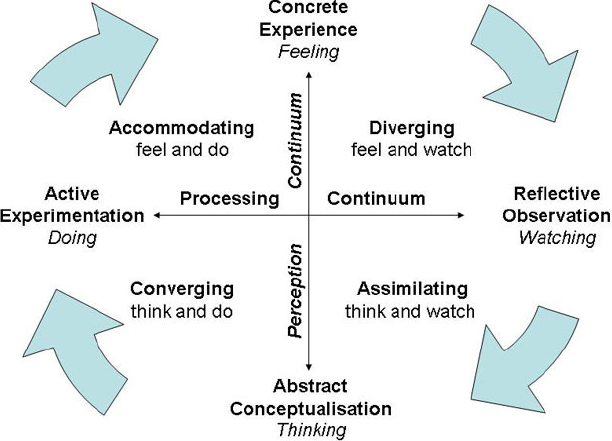
Figure 3. Kolb’s (1984) learning stages and cycle could be used by teachers to critically evaluate the learning provision typically available to students, and to develop more appropriate learning opportunities with concrete experience that transcends into action.
Similarly, CE in the AED curriculum was informed by experiences of earlier curriculum implementation and the widespread calls for African universities to re-orient their services and activities to be more relevant to community (Sherrad, 2016). In responding to this concern, the AED curriculum embedded CE, taking lessons from the SFA at GU (see Kalule et al. 2016; Odongo et al. 2017) and the Farm Attachment Program at EGU (see Mungai et al. 2016). A major variance, however, is that, unlike SFA and the Farm attachment, which are designed for undergraduate training, the focus is on working with smallholder farmers at farmsteads, the refined CE in the AED curriculum targeted mostly postgraduate students (Masters and PhD levels) working with farmer organisations (groups and associations), producer cooperative societies, and civil society organisations serving the farming community. As articulated in the report of the independent facilitator of the AED curriculum mid-term review of June 2016, universities have through the new curricula institutionalised SFA, SES and SCE (Kalule et al. 2016, 2017; Mungai et al. 2016) and in the process gained opportunities, including: (1) student experiential learning; (2) linking graduate research to solving community problems; and (3) increased visibility of the faculty and the universities in the community. Since then, EGU and GU have engaged in jointly pursuing, e.g. strengthening university outreach and the agri-entrepreneurship training grant from RUFORUM, which has enabled students through CE to impart a business planning mentality amongst farmers’ organisations (see Kalule et al. 2017).
One key challenge with innovations in curriculum design relates to the costs involved in the implementation of approved curricula. For the AED, the engagement with organisations for a given period of time, as part of the training period to impart skills through PBL, entails realignment outside the lecture room, with the farm/field as the appropriate context for teaching and learning. This attracts upkeep costs as well as other expenses. As observed in Ishengoma (2017), most universities in Africa depend on donor support for postgraduate training and research, and there is an urgent need for institutional transformation on the part of universities to accommodate financing models that garner resources for implementation of innovative curriculum. As highlighted in Kalule et al. (2017), the two universities involved in this undertaking have twined and worked together to mobilise resources and secure continuity of the initiated activities. Through this effort, the cohorts of students are beneficiaries of grant funding secured from the European Union’s EDULINK II (FED/2013/320-100-2016) and RUFORUM (RU 2014 NG 12; RU 2014 NG 15 and RU 2014 NG 18). Nonetheless, as highlighted in Ishengoma (2017), the implementation of curricula at HEIs necessitates sustained financing and this cannot rely entirely on donor support alone. The private scholarships of paying students are overtaking both the grants and government scholarships at most universities in Africa. It is hoped that in the long run the different available financing models will sustain students to enrol in innovative programs such as the AED as part of efforts to build the critical human capital needed to shape and implement the socio-economic transformation agenda for Africa.
As the gaps in university training curricula can vary, this study demonstrates the importance of conducting curriculum gap analysis so that there is alignment with expectations in the world of work, especially industry needs. This facilitates appropriate design of new curricula as well as revision of existing ones. It is only through such processes that Universities will (a) ensure comprehensive coverage of relevant subject matter; (b) explore opportunities to incorporate practical application and hands-on experience in teaching and learning; and (c) engage in assessing learning outcomes and addressing any disparities.
Conclusions and Recommendations
This study conducted in East Africa demonstrates how university-industrial actors’ collaboration can be exploited for curriculum (re)design, review and up-dating for (a) enhanced relevance of universities to community needs and employability of graduates; and (b) improvements in the research uptake pathways that facilitate research-into-use for desired impacts at community level through integration of community engagement and entrepreneurship in curricula. Our conviction is that the lessons learnt and recommendations arising from this study are applicable not only to higher education institutions and partners in teaching and learning but can be contextualised to apply elsewhere.
Strengthening linkages between universities and community-development actors can enhance curriculum orientation toward problem-solving and entrepreneurial capacity building for young graduates. Purposeful engagement with communities by university faculty and students serves as a complementary extension approach and advisory service. Implementing an innovative curriculum has the potential to boost research uptake and foster innovation. This demonstrates how university-industrial actors’ collaboration can be exploited for curriculum (re)design, review and updating for (a) enhanced relevance of universities to community needs and employability of graduates; and (b) improvements in the research uptake pathways that facilitate research-into-use for desired impacts at the community level.
Reorientating higher education with entrepreneurial and community-engagement approaches features prominently in knowledge economy-based development. In the same spirit, the AED curriculum was developed and launched at Gulu University in Uganda and Egerton University in Kenya, targeting community engagement and student enterprise projects (entrepreneurship) as practical approaches that respond to skills development, but also solve community problems. The AED curriculum integrates three practice-derived approaches: (1) value chain cluster mapping and development; (2) round table engagements; and (3) entrepreneurial capacity building (student enterprise projects) in graduate training. The process of curriculum development brought together university actors and agribusiness development facilitators, i.e. IIRR and RTA. As illustrated in this article, the interaction of these actors enabled cross-learning and cross-fertilisation of training and development-linked approaches in the new graduate curriculum of Agri-Enterprises Development. The engagement with RUFORUM, a network of 85 member universities in Africa, facilitated the two participating universities that are members of the Network to learn from other experiences in Africa and elsewhere (particularly EARTH University). Through the RUFORUM convening events, GU and EGU have shared widely the implementation of this effort, with a view to scaling out the proven model.
Important curriculum innovations that emerged from these interactions included: (1) integrating value chain approaches in graduate agri-enterprises development training; (2) roundtable research and engagement; and (3) the Student Enterprise Scheme. It is clear that involving community-based and industrial actors in curriculum development processes is critical in designing curricula that exhibit relevance to society needs. In addition, documented experiences and lessons from previous curriculum implementation are not only important for reviewing and improving existing curricula, but also informing new ones that are under development. All the AED programs seem destined to enhance employable skills amongst agricultural students, as well as achieving more university visibility in the community, and vice versa, i.e, more community visibility in the university.
We strongly recommend that universities always consult development-oriented actors and industry stakeholders when designing, reviewing and updating training curricula to achieve increased alignment and relevance to society needs. This is likely to enhance integration of practice-based approaches in the curricula of learning, as well as improving the employability of university graduates. Universities should also intensify cooperation during curricula development. This is not only crucial for cross-fertilisation of diverse approaches to training residents in different universities, but also in harnessing networks of industrial actors as long-term partners. Graduates also stand to benefit from such networks as they provide opportunities for multinational entry into commercial activities. For further research, we recommend examining the impacts of innovations inherent in the curriculum of Agri-Enterprises Development on the intentions, career choices and employability of graduates.
Acknowledgement
We thankfully acknowledge funding from the FORD Foundation through the project titled ‘Transforming Universities to Stimulate Pro-Poor Agri-Enterprise Development in Eastern Africa using Value Chain and the Roundtable Approaches to Postgraduate Training’. We also acknowledge the financial support from the European Union under the EDULINK II Program in the Project ‘FED 2013/320-100’, as well as RUFORUM funding for university outreach activities (grant No. RU 2014 NG 15). Last but not least, we thank the International Institute for Rural Reconstruction and the Round Table Africa for their ideas.
References
Altbach, P & Knight, J 2007, ‘The internationalization of higher education: Motivations and realities’, Journal of Studies in Higher Education, vol. 11, nos. 3/4, pp. 290–305. https://doi.org/10.1177/1028315307303542
Banadda, N, Dintwa, E, Oteyo, IN, Nampala, P, Vandepitte, L & Adipala, E 2016, ‘Academic mobility for engineering and technology graduates in Africa: Lessons and experiences from implementation’, International Journal of Sustainable Development & World Policy, vol. 5, no. 3, pp. 39–45. http://www.pakinsight.com/archive/26/09-2016/3. https://doi.org/10.18488/journal.26/2016.5.3/26.3.39.45
Ben-Ari, G & Vonortas, N 2007, ‘Risk financing for knowledge-based enterprises: Mechanisms and policy options’, Science & Public Policy, vol. 34, no. 7, pp. 475–488. https://doi.org/10.3152/030234207X244829
Bjørgum, Ø & Sørheim, R 2015, ‘The funding of new technology firms in a pre-commercial industry: The role of Smart Capital’, Technology Analysis & Strategic Management, vol. 27, no. 3, pp. 249–266. https://doi.org/10.1080/09537325.2014.971002
Bloom, B, Englehart, M, Furst, E, Hill, W & Krathwohl, D 1956, ‘The taxonomy of educational objectives’, Handbook I: The cognitive domain, David McKay Co., Inc., New York.
British Council 2014, ‘Can higher education solve Africa’s job crisis? Understanding graduate employability in Sub-Saharan Africa’, Going Global.
Ceravolo, P, Di Ciccio, C, Di Francescomarino, C, Gomez-Lopez, M, Maggi, F & Sindhgatta, R 2023, Editorial: ‘Recent advances in process analytics’, Journal of Intelligent Information Systems, vol. 61, pp. 1–3. https://doi.org/10.1007/s10844-023-00798-w
Chain, M, Bridges, S & Lo, E 2019, ‘The triple jump in problem-based learning: Unpacking principles and practices in designing assessment for curriculum alignment, Interdisciplinary Journal of Problem-Based Learning, vol. 13, no. 2. https://doi.org/10.7771/1541-5015.1813
Cloete, N, Bailey, T, Pillay, P, Bunting, I & Maassen, P 2011, ‘Universities and economic development in Africa’, Centre for Higher Education Transformation, African Minds, Cape Town.
Cloete, N & Maassen, P 2015, ‘Roles of universities and the African context: ‘Knowledge production and contradictory functions in African Higher Education’, African Minds, Cape Town. https://doi.org/10.47622/978-1-920677-85-5
Dabalen, A, Oni, B & Adekola, O 2001, ‘Labor market prospects for university graduates in Nigeria’, Higher Education Policy, vol. 14, no. 2, pp. 141–59. https://doi.org/10.1057/palgrave.hep.8390176
Darmody, J 2017, ‘Soft skills are critical for career success, even in technology’. https://www.siliconpublic.com/advice/soft-skills-career-success
East African Community 2016, Vision 2050: Regional vision for socio-economic transformation and Development, Arusha, Tanzania.
Egeru, A, Nampala, P, Massa-Makuma, H, Osiru, A & Adipala, E 2016, ‘Innovating for skills enhancement in agricultural sciences in Africa: The centrality of field attachment programmes’, Gateways: International Journal of Community Research and Engagement, vol. 9, no. 1, pp. 159 –71. https://doi.org/10.5130/ijcre.v9i1.4868
Eurydice 2015, ‘Structural indicators for monitoring Education and Training Systems in
Europe’, Eurydice Background Report to the Education and Training Monitor 2015, European Commission.
Fergie, D 2014, ‘University transitions in practice: Research-learning, fields and their communities of practice’, in Brook, H, Fergie, D, Maeorg, M & Michell, D (eds), Universities in Transition: Foregrounding social context of knowledge in the first year experience, University of Adelaide Press, Adelaide, pp. 41–74. https://doi.org/10.20851/universities-transition-02
Glewwe, P, Maiga, E & Zheng, H 2014, ‘The contribution of education to economic growth: A review of the evidence, with special attention and an application to Sub-Saharan Africa’, World Development, vol. 59, pp. 379–93. https://doi.org/10.1016/j.worlddev.2014.01.021
Gronlund, N 1991, How to write and use instructional objectives (4th edn), Macmillan Publishing Co., New York.
Hall, A 2006, ‘Systematic process analysis: when and how to use it’, European Management Review, vol. 3, pp. 24–31. https://doi.org/10.1057/palgrave.emr.1500050
Hayward, F & Ncayiyana, D 2014, ‘Confronting the challenges of Graduate Education in Sub-Saharan Africa and prospects for the future’, Chronicle of Higher Education. https://doi.org/10.6017/ijahe.v1i1.5647
Ishengoma, J 2017, ‘Financing public universities and research in sub-Saharan Africa: Challenges and prospects in the context of Sustainable Development Goals (SDGs), RUFORUM Working Document Series, vol. 15, pp. 51–62.
Jacob, W, Sutin, S, Weidman, J & Yeager, J (eds) 2015, Community engagement in Higher Education: Policy reforms and practice, Sense Publishers, Rotterdam, The Netherlands. https://doi.org/10.1007/978-94-6300-007-9
Jowi, J 2012, ‘African universities in the global knowledge economy: The good and ugly of internationalization’, Journal of Marketing for Higher Education, vol. 22, no. 1, pp. 153-65. https://doi.org/10.1080/08841241.2012.705799
Juma, C 2016, ‘Education, research and innovation in Africa: Forging strategic linkages for economic transformation’, Discussion paper 2016-01.
Kalule, W, Mugonola, B & Ongeng, D 2017, ‘The Student Enterprise Scheme for Agribusiness Innovation: A University-based Training Model for Nurturing Entrepreneurial Mind-sets amongst African Youths’, African Journal of Rural Development, vol. 2, no. 1, pp. 55–66.
Kalule, S, Odongo, W, Kule, E, Ndyomugyenyi, E, Omara, P & Ongeng, D 2016, ‘Conceptualizing the Student-Centered Outreach Model for experiential learning and community transformation’, African Journal of Rural Development, vol. 1, no. 3, pp. 219227.
Kalule, S, Sseguya, H, Ongeng, D & Karubanga, G 2019, ‘Facilitating conditions for farmer learning behaviour in the student-to-farmer university outreach’, The Journal of Agricultural Education and Extension, vol. 25, no. 3, pp. 211–25. https://doi.org/10.1080/1389224X.2019.1604389
Kalule, S, Sseguya, H, Ongeng, D & Karubanga, G 2023, ‘Motivational pathways for farmer learning behavior in the student-to-farmer university outreach’, International Journal of Training and Development, 2023, pp. 1–18. https://doi.org/10.1111/ijtd.12298
Ketels, C 2017, ‘Cluster Mapping as a tool for development’, Institute for Strategy and Competitiveness, Harvard Business School. www.isc.hbs.edu
KIT and IIRR 2010, ‘Beyond microfinance: Financing the rural value chain that presents innovative financing models from around the world’.
Larsen, C 2016, ‘Reflections on the incentive structures at African universities and their impact on the direction and performance of the continent’s development’, African Journal of Rural Development, vol. 1, no. 2, pp. 127–37.
Lee, Y & Tee, Y 2009, ‘Reprising the role of the Developmental State in Cluster Development: The Biomedical Industry in Singapore’, Singapore Journal of Tropical Geography, vol. 30, no.1, pp. 86–97. https://doi.org/10.1111/j.1467-9493.2008.00359.x
Magalef, L & Pareja, N 2008, ‘Innovation, research and professional development in higher education: Learning from our experience’, Teaching and Teacher Education, vol. 24, pp. 104–116. https://doi.org/10.1016/j.tate.2007.03.007
Mahapatra, G & Dash, S 2022, ‘Round Table: Talent development in a changing world of work’, IIMB Management Review, vol. 34, pp. 8391. https://doi.org/10.1016/j.iimb.2022.03.002
McLeod, S 2017, Kolb-learning Styles. Available from: www.simplypsychology.org/learning-kolb.html
Mayoux, L & Mackie, G 2008, ‘A practical guide to mainstreaming gender analysis in value chain development text’.
Mohamedbhai, G 2013, ‘Transforming African higher education for graduate employability’, The Association of Commonwealth Universities.
Morrison, A 2014, ‘A class act? Lecturers’ views on undergraduates’ employability’, British Journal of Sociology of Education, vol. 35, no. 4, pp. 487–505. https://doi.org/10.1080/01425692.2013.802420
Mungai, N, Ambula, M, Chege, N, Mberia, P, Ombati, M, Opiyo, M, Bebe, O, Ayuya, I & Wambua, J 2016, ‘Experiential learning for agricultural students in institutions of higher learning: The case of Egerton University’, African Journal of Rural Development, vol. 1, no. 3, pp. 229–237.
Nakayiwa, F, Osiru, M, Shibru, A, Sam-amoah, K., Ochuodho, J, Assogbadjo, A, Valeta, J, Sefasi, A & Kalizang’oma, R 2016, ‘Developing Higher Education systems in Africa – Selected country views’, African Journal of Rural Development, vol. 1, No. 2, pp. 205–217.
Nampala, P 2017, ‘Research on’ vs. ‘Research with’ communities: A critique on the importance of multi-disciplinary and inter-disciplinary research teams with regard to uptake of innovations’, African Journal of Rural Development, vol. 2, no. 3, pp. i–iv.
Nampala, P, Kityo, R & Adipala, E 2016, ‘Differentiated community engagement approaches but same mission: University outreach programs in Africa’, African Journal of Rural Development, vol. 1, no. 3, pp. i-v.
Odongo, W, Kalule, W, Kule, K, Ndyomugyenyi, E, Omara, P & Ongeng, D (2017), ‘Responsiveness of Agricultural Training Curricula in African Universities to Labour Market Needs: The case of Gulu University in Uganda’, African Journal of Rural Development, vol. 2 no. 1, pp. 67–76.
Pillay P 2010, ‘Linking higher education and economic development. Implications for Africa from three successful systems’, Center for Higher Education Transformation (CHET). www.compressdsl.com
Pitan, OS & Adedeji, S 2012, ‘Skills mismatch among University graduates in the Nigeria labor market’, US-China Education Review, vol. A, no. 1, pp. 90–98.
Preece, J 2013, ‘Service Learning and Community Engagement in South African Universities: Towards an “Adaptive Engagement’ Approach’, Alternation Special Edition, vol. 9, pp. 265– 291.
Rodrigues, AL 2023, ‘Entrepreneurship education pedagogical approaches in higher education’, Education Science, vol. 13, no. 9, p. 940. https://doi.org/10.3390/educsci13090940
Sherrard, D 2016, ‘Linking universities to communities: The case of EARTH University’, RUFORUM Working Document Series, vol. 14, no. 1, pp. 403–407.
Ssebuwufu, J, Ludwick, T & Béland, M 2012, ‘Strengthening university-industry linkages in Africa: A study on institutional capacities and gaps, Association of African Universities, Accra, Ghana.
Teferra, D 2013, ‘Funding Higher Education in Africa: State trends and perspectives’, JHEA/RESA, vol. 11, nos. 1 & 2, pp. 19–51. https://doi.org/10.57054/jhea.v11i1-2.1544
Trilling, B & Fadel, C 2009, 21st Century skills: Learning for life in our times, Jassey-Bass/Wiley, San Francisco.
Turcsanyi-Szabo, M 2012, ‘Aiming at sustainable innovation in teacher education – from theory to practice’, Informatics in Education, vol. 11, no. 1, pp. 115–130. https://doi.org/10.15388/infedu.2012.06
Ward, K 2020, ‘Community Engagement in Higher Education’, in: Teixeira, P & Shin, J (eds), The International Encyclopedia of Higher Education Systems and Institutions, Springer, Dordrecht. https://doi.org/10.1007/978-94-017-8905-9_340