PORTAL Journal of Multidisciplinary International Studies
Vol. 16, No.1
December 2023
PRACTICE-BASED ARTICLE
A Practice-Based Guide for Creating STEM Service Learning Courses
Genna Miller1, Minna Ng1,*
1 Duke University, Durham NC, USA
Corresponding author: Minna Ng, minna.ng@duke.edu
DOI: https://doi.org/10.5130/ijcre.v16i1.8697
Article History: Received 30/06/2023; Revised 24/10/2023; Accepted 30/11/2023; Published 12/2023
Abstract
This practice-based article describes two undergraduate service learning (SL) courses in STEM disciplines: economics and neuroscience. We share our experiences to encourage other instructors to develop their STEM SL courses. The top five majors by degree completion in order of popularity are computer science, economics, public policy, biology and engineering at our institution, Duke University, Durham, NC (Spicer 2023); four of these are STEM, yet they represent less than 20 percent of our SL courses (Whiteman 2023). This under-representation has resulted in fewer resources that are STEM SL-specific. The resources for SL in the social sciences are well established, but do not necessarily translate well to STEM SL courses.
There are many reasons to adopt SL for STEM courses. It offers students the opportunity to give back to the community and to learn in meaningful ways outside of the classroom. As described by the American Association of Colleges & Universities (AAC&U 2022a), ‘working with community partners is good preparation for citizenship, work, and life.’
We describe two basic models, the direct and indirect SL model, and how these were used in our courses. Based on our practice-based experiences, we developed four stages for our colleagues to follow when creating their STEM SL course: (1) identify course objectives; (2) build mutually beneficial partnerships; (3) design assignments; and (4) integrate reflections. Our goal was to share the course structures we developed using these stages so that others could adopt them in their STEM disciplines.
Keywords
STEM; Client-Based Service Learning Model; Direct Service Learning Model; Citizenship; Community
Introduction
At the end of the Spring 2023 semester, we (the authors) were each invited as guest speaker at the Service Learning Faculty Showcase at Duke University. The purpose of the showcase was for course instructors in the STEM fields to describe meaningful connections with community partners and creative projects that would enhance students’ learning experience. We each presented on the development and implementation of SL pedagogy in our own STEM courses on Neuroscience and Economics.
After this first meeting, we continued our conversation on the shared challenges encountered while aligning our SL to traditional STEM learning objectives, which emphasise quantitative skills and empirical methods for problem solving. We also shared our passion for working with the community and the students. To encourage and support other faculty in building STEM SL courses, we co-authored this article as a practice-based guide.
What is service learning?
Service learning, rooted in early 20th-century educational philosophy (Dewey 1938), is a pedagogical approach that applies classroom knowledge to real-world situations, fostering reflective discussion (Hatcher & Bringle 1997). This approach aims to break down subject-specific barriers and promote an educational approach that recognises the interconnectedness of various fields (Dewey 1916; Giles & Eyler 1994). SL courses provide students with the opportunity to apply theoretical concepts to practical situations and to use course content practically to address community needs through structured activities that also contribute to students’ academic development (Bringle & Hatcher 1995; Howard 1998).
For example, the ‘Introduction to Statistical Consulting’ SL course immerses students in real-world consulting through a campus-wide program. They work with researchers from diverse disciplines, providing recommendations for statistical methodologies relevant to their research. This course also explores research ethics, covering aspects such as data collection, model assumptions, analysis, reproducibility and results reporting (Iverson Jr n.d.). It blends practical application of academic knowledge and experiential knowledge, deepening students’ understanding of societal challenges in which community collaboration is an integral component of the course (Furco 1996; Jacoby 2003).
Furthermore, partnerships between universities and communities have the potential to go beyond a focus on students to providing services to the community while learning from community members. Within the critical service-learning model, identified by Mitchell (2008), students and community members engage with one another with a conscious focus on understanding the systemic structures that have resulted in social inequalities in society (2008). That is, students and community members turn a critical lens on the situations and root causes of the current social situations. For example, the students of the SL course, ‘Global Nutrition’, partner with many local and global emergency food assistance programs to provide meals and snacks to hungry children. Together, the partnership examines the social inequalities and infrastructure of food insecurity (Benjamin-Neelon n.d.).
The two main models of service-learning are described below and illustrated in Figure 1.
The Direct SL Model
In the direct service-learning model, students work directly with community members to address a need. The most common method is through educational services within schools, after-school programs, non-profits and community organisations. For example, students in a Spanish course strengthen their language skills by tutoring children for whom Spanish is their primary language and who are learning English in an after-school program. Through consistent communication and partnership, both the students and the children improve their language skills as well as learn about one another.
The Indirect/Client-based SL Model
In the indirect or client-based model, students take on the role of consultant to a client in the community to provide a service or to help solve a problem. Rather than working directly with community members, students assist clients who work on behalf of the community members. For this method, students are usually placed in groups and assigned a client who presents a problem that needs solving or a service that needs performing. After conducting research and analyses, the students suggest solutions or present findings to the client.
For example, students in a Sex & Gender course partner with the public library to investigate resources for the LGBTQ+ community. To service their clients’ needs, the students study the intersectionality of sex and gender within the context of the local social and cultural community. Based on their analysis of the local community, students develop recommendations for the library on additional books, programs and clubs that support the needs and strengths of the LGBTQ+ community. Students thus deepen their understanding around concepts of sex and gender. This indirect SL experience results in a shared deliverable for the course, the public library and the local community.
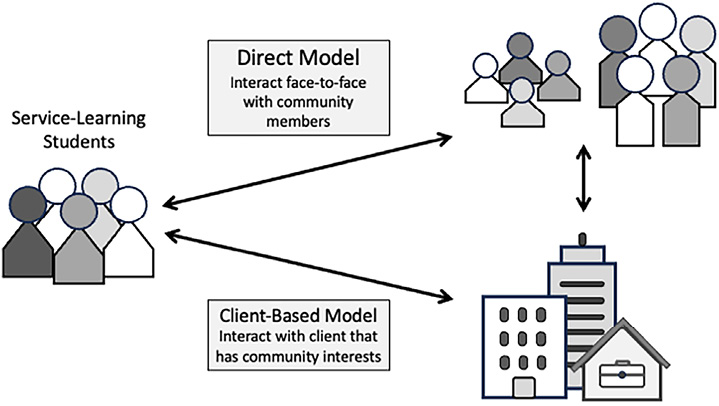
Figure 1. Direct and client-based models for service-learning courses.
Why adopt service learning in a STEM course?
The ability to intimately engage with the community is not readily available in science-based courses. Students struggle to connect the facts and theories from lectures to the real world. Applications are limited to lab experiences and recitation, which do not facilitate students’ ability to see how their knowledge fits into the bigger picture. SL facilitates this.
According to the National Science Foundation (NSF 2022), STEM education needs to evolve with real-time changes in society where citizenship is an integral component. The SL model supports many areas identified by NSF for exploration, including experiential learning in different environments and the effect of different contexts on learning (NSF 2022). SL also supports effective communication with the general public on science (Najmr et al. 2018). Using the SL pedagogy facilitates student exposure to a greater diversity of people, cultures, contexts and ideas outside of the classroom (Gross & Maloney 2012). This exposure to diversity and increased interactions with people from different contexts and backgrounds ‘is [an] essential part of the wonderful [scientific] creativity that can emerge when different people work alongside one another’ (Blackie 2021). In this way, service learning can act as a conduit to scientific advancement.
These meaningful experiences increase understanding of course concepts (Giles & Eyler 1994; Hayford, Blomstorm & DeBoer 2014) and students become better citizens when they engage in service (Daniel & Mishra 2017; Dewey 1916; Mitchell 2008). SL also improves interpersonal skills, communication skills and the capacity to engage in teamwork (Chittum, Enke & Finley 2022). These outcomes are beneficial for all disciplines (Cress et al. 2022), and particularly for problem-solving in the sciences (Bosman, Chelberg & Winn 2017).
To help incorporate SL components in STEM courses, we describe how we applied the SL models to our STEM courses in Economics and Neuroscience.
How do I create a STEM SL course?
In developing our guide for service learning courses, we first reflected on our personal experiences. This introspection, centring on both challenges and successes, served as the foundation for extracting practical insights. By stripping away extraneous elements, we aimed to provide a clear and concise framework for effective course design. The resulting guide is a practical resource grounded in direct engagement and personal experiences with STEM, emphasising simplicity and knowledge sharing.
It systematically navigates through four stages: (1) identify your course objectives; (2) build a mutually beneficial partnership; (3) design your assignments; and (4) integrate reflections. For a summary, see Table 1.
Stage 1: Identify course objectives
Identify course objectives focused on actualising STEM skills in the real world. These can include: develop an understanding of community needs and assets; apply knowledge to real-world issues; strengthen communication and collaboration with the community; promote reflection and self-awareness; cultivate civic responsibility; and evaluate ethical and social implications. Refine the objectives to offer immediate, intimate and engaging experiences that are relevant to students’ skills. For example, math students could partner with city planners to collect data and learn about models for planning efficient snow plow routes (Ng 2005).
Stage 2: Build mutually beneficial partnerships: A two-way street
A successful collaboration must recognise the two-way street that exists in the partnership for paving the way to a mutually beneficial relationship for both the students and the community partner. There are three essential requirements to consider in your search for a community partner, and a reciprocal understanding that the responsibility for a strong collaborative relationship is shared.
Firstly, it is crucial to select a community partner whose mission aligns with the core goals of your university (Furco 2001) and your course learning objectives (Jacoby 2014). This alignment underlies a mutually beneficial relationship, strengthening commitment on both sides and facilitating an authentic partnership (Jacoby 2003). Both parties need to clearly articulate their goals and values, and shared understanding of the collaborative mission. Being transparent about expectations and deliverables is critical in mitigating the false perception that higher education has greater authority and power over the community (White 2010).
Secondly, effective communication and the ability to demonstrate flexibility in accommodating one another’s needs are critical for a successful partnership (Jacoby 2014). You and your partner should evaluate the capacity for dedicating time to the partnership, ensuring effective communication through transparent and responsive interactions, and demonstrating reliability in fulfilling mutually agreed-upon commitments (White 2010). To facilitate clear communication channels, protocols need to be established that include meeting logistics as well as social norms. Interactions with community members should respect unique cultural, social and historical aspects that shape the community’s identity (Compare, Pieri & Albanesi 2022). It is also important to have a contact person on both sides. Ideally, these individuals should possess both authority and interpersonal sensitivity (White 2010).
Thirdly, select a partner whose organisational and operational structure is already in place. It can be useful to look for potential partners within your network. Additionally, you may find meaningful organisations at local events, talks, fundraisers, volunteer opportunities and social gatherings. Countless possibilities open up once we recognise the diverse forms of knowledge that exist beyond the academic realm (d’Arlach, Sánchez & Feuer 2009). A course may involve multiple community partners or instructors, and incorporate various models (Miller 2023), emphasising the need for flexibility and adaptability. We advise simplicity initially.
Stage 3: Design assignments
When designing assignments, there are two main goals: (1) meeting your partner’s needs, and (2) meeting your students’ needs. Assignments should address community needs and expand students’ understanding of the broader world (Kirkness & Barnhardt 1991). The SL partnership is an opportunity to create new assignments with shared goals. Keep this question in mind: What level of learning do you want your students to achieve through their service-learning experience? It may be helpful to think about the learning objectives from the point of view of Bloom’s Taxonomy of Educational Objectives (Bloom 1956).
The lower order cognitive skills in Bloom’s taxonomy are remembering and comprehension (Bloom 1956). An example of this would be assignments being structured to demonstrate a student’s ability to understand the definitions of concepts or recall facts, for example, recalling a mathematical formula or understanding the difference between two mathematical models. The higher order cognitive skills in Bloom’s taxonomy are application, analysis, synthesis and evaluation (Bloom 1956), for example, using a mathematical formula to analyse traffic patterns and propose rerouting plans. When incorporating higher order goals in your assignments, it is important to assure you meet your partner’s needs.
As with all courses, it is also important to design assignments with the skill being assessed in mind. Since part of SL occurs through students’ connections with, and analysis of, their community, assessments can be more qualitative in nature, allowing for reflection.
Stage 4: Integrate reflections
A key assessment in SL are reflections (AAC&U 2022b). Reflections are an integral way in which students process their experiences and explore relationships between the outer world and their own inner world (Kawai 2020). It is an ongoing process of self-assessment and examination of the university-community relationship in the context of their service learning activities (Jacoby 2014).
SL reflections are an analysis of students’ experiences in engaging in real-world settings and link to learning objectives (Bringle & Hatcher 1999). As Bringle & Hatcher (1999) state in their early work, ‘Reflection activities are a critical component of effective service learning because they connect the service activities to the course content, extending the educational agenda beyond rote learning.’ Reflections can enhance the quality of students’ critical thinking skills and learning (Ash & Clayton 2004; Hayford, Blomstorm & DeBoer 2014). Hatcher, Bringle & Muthiah (2004) suggest that reflections should (1) include activities that enable students to clarify their personal values; (2) occur as a regular part of the course; and (3) be structured with clear guidelines and direction. Furthermore, Frederickson, Peake & Hensler (2023) found evidence that, when service-learning is coupled with reflection, students are able to develop their self-authorship or inner voice, providing them with an opportunity for agency.
Structured evaluations (e.g. rubric) that align the service experience and learning objectives should be created and integrated throughout the course. A simple approach is to incorporate a reflection at the beginning, middle and end of the semester. For example, at the beginning of the semester, students should reflect on their initial expectations and goals, and what they have learned about the community and the partnership. In the middle of the semester, they may reflect on unanticipated challenges or successes, and how the partnership has evolved. At the end of the semester, students might reflect on the mutual impact of the partnership, their personal growth and future commitment to community engagement. Reflections might also be timed to occur after a major project milestone. Given their significance, we recommend that reflections be a component of the course work.
Two Example STEM SL Courses
Below are descriptions of two STEM SL courses illustrated according to the four stages of development. Each one was developed independently by a co-author. Both are undergraduate courses offered at Duke University, in Durham, North Carolina. It is a small private research university, which enrols approximately 6,400 undergraduate students and 10,100 graduate and professional students (Duke University 2023).
Course 1: Social Inequalities and Low-Wage Work
This is an upper-level, undergraduate economics course focusing on building students’ capacities to analyse, evaluate and implement community economic development tools and concepts. Although the main focus of the course is employment and labour markets, topics including transportation, housing, health and education are included.
The course material is divided into four sections, starting with an introduction to community economic development (CED) concepts. In this section, students review ways that economists measure economic growth and development. They consider different development models, including needs-based, which identifies what a community lacks and attempts to supply it, and asset-based models, which make use of a community’s readily available assets (Kretzmann & McKnight 1993). An asset-based model can be applied by defining, identifying and mapping the assets. An asset map shows the location of community assets in real space, often using geographic information systems (GIS) data (Burns et al. 2012). After mapping, assets are mobilised to be more efficiently used by the community members. Allen et al. (2002) explain that to mobilise assets means ‘to accomplish community goals by energising and activating community strengths and assets’, and that this is often accomplished by encouraging communication and partnerships within the community.
In the second section of the course, students examine labour markets and employment, review supply and demand graphs and highlight the human capital (HC) model (see Becker 1964 for more on this model). The third section of the course involves student groups choosing their own special topics in real-time social inequalities to research and then share their research with the class. Therefore, the topics differ each semester, but usually revolve around housing, healthcare, transportation, or education. In the last section of the course, students examine alternative models to the current supply and demand framework used in economics for the community.
Three case studies of community partnerships and service-learning projects are discussed below. The cases illustrate many of the logistical and pedagogical aspects that the authors encountered along the way, including working with more than one partner and progressing towards more critical analysis. Eighteen students were enrolled in the course and two different organisations were partnered with the community, as each partner indicated that they could not work with more than ten students at a time. To respect each community partner’s needs and capacities, it was decided that both organisations would be partnered during the same semester. The students worked with the partners in different capacities, some using a direct method and others using an indirect method.
The cases are described below in an order that sees a progression in the critical engagement with the community, as illustrated by the students’ involvement and reflection questions.
Cases A and B both describe a partnership with a workforce development organisation, Durham Economic Resource Center. Case A shows a direct method of service-learning with the community partner and Case B shows an indirect method of service-learning with the community partner. Case C describes an indirect method of service-learning with the Community Empowerment Fund, an organisation that provides financial services and advocacy.
Case A illustrates a direct method of service-learning. The community partner had previous experience in working with college students in this capacity.
Case Study A: Durham Economic Resource Center (DERC): Applying the Human Capital Model
1. Identify Course Objectives
1. Illustrate how the HC model can be applied to real-world situations.
2. Evaluate workforce development practices in the community.
3. Develop training tools for investing in the human capital of the local community.
2. Build a Partnership
Through connections within our university and through networking with a local group, Durham Congregations, Associations, and Neighborhoods (Durham CAN), an introduction was made to Durham Economic Resource Center (DERC). DERC worked with individuals who faced barriers to employment, including those who were previously incarcerated, recovering addicts and individuals who did not complete a High School diploma.
3. Design Assignments
DERC needed assistance in implementing their job talks program, which involved weekly sessions in which DERC’s members were supported in their job search efforts, engaged in career development and learned job skills. Students underwent training by a job talks facilitator at the organisation. They then worked in a direct service capacity, facilitating the weekly job talks. Additionally, students evaluated DERC’s current job talks curriculum and developed teaching modules for them, specifically in the area of technology.
4. Integrate Reflections
Throughout the semester, students reflected on their experiences with DERC’s members in relation to the HC model. Examples of their reflection questions are:
• Why might some individuals not be able to make investments in their HC?
• Why might someone even with a significant level of HC still find it difficult to get a job?
• What skills do members need?
• Why does DERC need assistance with their job talks?
• What resources does DERC have for developing workforce development tools?
• What should the role of the local government be?
Reflections accounted for 20 percent of the final grade, and were based on student participation, knowledge of concepts, and relating their experiences to themselves and the community.
Case Study B also describes a service experience with DERC, but with indirect service-learning. In this case, the executive director of DERC had reached out to request that students research specific issues that their members were experiencing in terms of barriers to employment. These issues included transportation access, illiteracy and professional skills. The students in the course worked with DERC regarding transportation access.
Case Study B. DERC: Analysing Transportation Barriers
1. Identify Course Objectives.
1. Apply the asset mapping technique.
2. Identify and evaluate patterns of asset allocation in the community.
3. Create suggestions for improved asset allocation.
2. Build a Partnership
DERC was the community partner for this service project. DERC requested that students analyse the transportation situation for their members. They expressed that public transportation was unavailable near where they lived and/or near where jobs were located, and that this served as a barrier to employment. DERC requested that ‘public transportation deserts’ be determined.
3. Design Assignments
Students were tasked with conducting an asset mapping project to indicate areas where transportation was needed. This involved locating all bus stops and routes in Durham. Using asset mapping software, students placed bus stops on a virtual map and determined where there were gaps. They then provided DERC with this asset map and indicated where there were ‘public transportation deserts’. Lastly, students made a presentation of the material to the Transportation Department of Durham County.
4. Integrate Reflections
Throughout the project, students discussed and reflected on different aspects of the project. Initially, they questioned why DERC was unable to complete the asset mapping on their own and asked:
• Did they have access to the resources needed to conduct the study?
• Who uses public transportation and why?
• What does it mean for people who do not have easy access to transportation?
• Who in Durham County decides where the bus routes will be located?
• How can people access jobs without proper transportation?
Reflections accounted for 20 percent of the final grade, and were based on student participation, knowledge of concepts, and relating their experiences to themselves and the community.
Since DERC did not have the space to work with all of the students in the course, the course also partnered with another organisation, Community Empowerment Fund. This partnership involved the indirect service-learning model, as requested by the community partner when they were contacted. This service-learning experience also involved a relatively higher degree of critical engagement than the previous two cases, as the community partner put an emphasis on this aspect themselves.
Case Study C. Community Empowerment Fund (CEF): Creating Affordable Housing Solutions
1. Identify Course Objectives
1. Understand and apply federal policy regarding affordable housing.
2. Use critical thinking skills to problem-solve and create suggestions regarding affordable housing and landlord behaviour.
2. Build a Partnership
A connection was made with CEF after viewing an email the organisation posted regarding their participation in a Landlords Roundtable, which was intended to discuss issues around affordable housing and serving low-income community members. The email message contained contact information for CEF and they were contacted to see if they would like to enter into a community partnership with the course. Serving Durham and Chapel Hill, CEF works to end the racial wealth gap by assisting members with advocacy and financial services related to employment, housing and finance goals. During the time that the students worked with them, CEF partnered with Durham’s Mayor, Bill Bell, to host several Landlords Roundtables to address affordable housing issues. Many CEF members explained that, although they had Section 8 Housing Choice Vouchers, landlords were not willing to rent to them. The Section 8 Housing Choice Voucher program is part of the federal housing program. The vouchers enable low-income households to interact directly with housing markets to locate and lease their own housing on the open market. The vouchers also subsidise the low-income households’ rent that they pay to landlords and owners, enabling households to afford to rent in the private market. Unfortunately, in Durham, many landlords perceive voucher holders as being too risky to lease to. Thus, based on the Landlords Roundtables, Durham’s Unlocking Doors Initiative was started.
3. Design Assignments
The students were asked to assist with research for the Unlocking Doors Initiative by examining possible solutions. Students used their quantitative, problem-solving and critical thinking skills based on discussions of the supply and demand framework and graphs from class. One group researched solutions that other similarly sized cities had used, and made comparisons which led to suggestions for Durham. The other group researched the use of a risk mitigation fund (RMF). They developed a cost-benefit analysis showing different scenarios. Ultimately, the Unlocking Doors Initiative adapted the RMF model to develop a landlord’s incentive program.
4. Integrate Reflections
Students considered the supply and demand framework for housing assistance, and the way the federal government moved from a supply-side to a demand-based approach. Students reflected on how these different policies had impacted low-income members of the community. Furthermore, they reflected on why landlords are hesitant to rent to voucher holders despite there being no evidence to support the notion of such renters being high risk. In addition, students reflected on the fact that most voucher holders are black, female headed households with children, and questioned why this demographic is being impacted the most. What is happening in the housing markets and federal housing policy that impacts the local community? How does Duke University impact the housing situation in Durham?
Course #2: Neuroscience Service Learning: Brain Connections
This was an upper-level, undergraduate neuroscience course that used both direct and client-based SL models. The direct model component required students to visit our partners off campus, over several weeks of the semester, where they interacted in-person with our partners. Each team of three to four students was assigned a location. For the client-based component, students researched and created a product for the corporate office.
1. Identify Course Objectives
1. Design, evaluate and deliver educational activities that are accessible, inclusive and considerate of context. Develop awareness of the community partner’s organisational structure and missions through reading, research and experiences. Apply this collective knowledge to creation and delivery of materials. This develops their active listening and scientific communication skills for a broad audience.
2. Draft a grant proposal to support the partner’s STEM education initiative. Develop collaborative and scientific communication skills in written form for a wide audience across different funding agencies. Translate direct service experiences into advocacy work.
2. Build a Partnership
This partnership emerged from leveraging personal connections, engaging with the local YMCA, and sharing a common goal of fostering equitable access to education for the well-being of young individuals. While the demand for K-12 education support in nearby communities was a persistent concern, the urgency intensified in the aftermath of the pandemic.
The partnership and course plans began in Summer 2020 with the hope that ‘life would return to normal’ in Spring 2021. We proceeded despite the ongoing pandemic because important goals would still need to be met even though communication with our partners was uncertain and on-site visits were not allowed (Ng 2021). The YMCA thus turned their gyms into spaces for students to undertake online schooling and receive meals and care as their families had to work.
After schools reopened, the YMCA established the ‘Y’ After School Program, which continues to expand. However, they needed educational materials to add to their STEM curriculum. Students interacted with the YMCA students and staff during their on-site visits, using these experiences to design the materials. Our contact person was a Director of the local YMCA Youth programs. We also worked with the regional YMCA office, which provided us with their annual report of needs and their goals for academic support programs. For this project, our contact was the Director of the corporate office. Students researched and drafted grant proposals to fund the STEM educational materials.
3. Design Assignments
The assignments designed for this course met both the needs of our partner and our learning objectives, and culminated in two projects:
(1) Interactive Educational Materials About Neuroscience
The first project required application of neuroscience concepts, background research and cross-referencing, while on site, students working in teams of three or four collected participant observational data. They observed behavioural interactions between program staff and Y students. Specifically, they observed levels of engagement and participation, and quality of communication, program structure and resources. This informed how they could design, evaluate and deliver their educational materials more effectively. This iterative process develops research skills, enhances critical thinking, builds teamwork skills, hones communication skills and fosters self-reflection.
Each neuroscience activity included a worksheet for the students, instruction sheet for staff, and a video that described the instructions and demonstrated the activity. The ultimate products reflected modifications made in response to input from peers, staff and students. Students evaluated the accessibility of communication and content accuracy, aspects that are frequently challenging to balance. They also factored in resource availability, including basic materials, staff ratios, room sizes, student ages, and groupings. This helped to optimise engagement, safety and resource efficiency while tailoring activities to different age groups.
(2) Grant Proposals to Fund STEM Educational Materials
The second project required a literature review, interpretation of scientific outcomes, effective writing, and organisational and collaborative skills. Students had to study their target audience, identify appropriate funding opportunities, and write persuasively and efficiently. Students completed peer reviews of grants and incorporated feedback. Their proposals integrated their direct SL experience. At the end of the semester, teams presented a sample of the finalised educational materials and four grant proposal summaries to our partners.
4. Integrate Reflections
Several reflection assignments were integrated throughout the course. Each linked to activities aligned with course objectives and involved reflection on their service experiences.
• Refer to your community assets map.
◦ How would you describe the asset base surrounding the YMCA? Think about the observations and interactions you’ve experienced while on site and in your development of educational materials thus far.
◦ How does your asset base compare to your assets map? This map is a sketch of the student’s assets at the individual (e.g. income, key individuals), association (e.g. churches, cultural groups) and institutional levels (e.g. hospitals, schools) (Kretzman & McKnight 1993). Note, at this point, students have had several on-site visits. They have also been developing and evolving their educational materials over several weeks based on their interactions and experiences.
• Describe how working with your teammates influenced your SL experience.
◦ Refer to interactions within the context of your on-site visits or one of your team projects (e.g. designing educational materials, grant writing project). How is independent work similar or different? Explain and be specific.
• Refer to the peer evaluations of your team’s grant proposal.
◦ Indicate and explain what sets apart helpful and less helpful feedback. Describe how you would incorporate this feedback to strengthen your team’s grant. Describe also what feedback on your grant you would like from your partners and why.
• Assess your performance and engagement while on-site and working with your teammates.
◦ Evaluate attendance and punctuality, active participation, ability to ask relevant questions, depth of knowledge and preparation, willingness to fill knowledge gaps, communication clarity, respect for others, and contributions to team activities and discussions.
For each reflection, students received individual written feedback from the instructor. Additionally, they were graded with a rubric evaluating (1) connections to experience, (2) effective communication, (3) self-assessment, (4) timeliness, and (5) writing mechanics. Reflection assignments were worth 20 percent of the course grade.
Final Thoughts
Developing a STEM SL course is challenging, but can be extremely rewarding. As faculty, we experienced great joy and meaning from our courses, as did our students and community partners, who provided us with deeper and broader learning experiences. Here are some thoughts from our students:
• ‘Often not accessible in typical STEM majors such as biology or neuroscience, this experience gave us the platform to strengthen our community through thoughtful discussions and collaborations.’
• ‘A key personal takeaway from this experience was the long-lasting impact it had on me as a scientist. The service-learning course extended beyond the classroom, where I learned how to foster a deeper, practical understanding of societal implications in STEM.’
• ‘I think it is crucial for all Duke students to explore the Durham community. Learning more about Durham and learning from people who live there has been a very rewarding part of my experience.’
The main challenges for us in designing the STEM SL courses were aligning learning objectives with service-learning appropriate assignments, and identifying community partners who could likewise benefit from these objectives. At the start of our courses, we struggled with finding resources to help us with this aspect. Our main resource at the time was talking to the few colleagues in STEM who also used the service-learning pedagogy. Several had written or co-authored peer-reviewed articles regarding their service-learning experiences (Clark & Capps 2020; MacDonald et al. 2022; Reynolds & Ahern-Dodson 2010), which led us to search for additional literature on service-learning in STEM fields. Our list of references below is indicative of the work done on STEM SL experiences as the majority of it concentrated on one field or discipline within STEM, such as engineering, chemistry or maths. We had hoped to find an overarching guide for SL that applies across STEM fields. However, this appeared unavailable. We note that our discussions with colleagues and learning about their personal journeys with STEM SL courses was valuable to us, because it illustrated specific ways to proceed, which we could emulate in our own fields. We felt like this was what was missing, a guide and template that also included the personal and specific examples that could be generalised and adapted to other STEM fields.
As previously mentioned, STEM fields have tended to lag behind other disciplines in adopting the SL pedagogy (Armstrong, Murck & Poë 2021). Based on a survey of peer institutions conducted by the US News & World Report (2023), the SL program at our university was ranked #3 in the US amongst colleges that offer SL courses. However, in Duke University’s SL program, approximately 15 percent of the courses fell within STEM across the last four years (Whiteman 2023). This has resulted in limited resources to use for developing STEM SL courses. There are some notable exceptions at other universities, such as Purdue University. Student enrolment in engineering service-learning courses through their EPICS (Engineering Projects in Community Service) Program has steadily increased over the last 15 years (EPICS Annual Report 2023). In efforts to expand this community, our university recently created the STEM SL Faculty Ambassador position, which was held by one of the authors previously and is currently held by the other author. The ambassador is tasked with promoting awareness, facilitating engagement, providing information about service learning opportunities, and advocating for recognition within the institution. A primary goal is to recruit and support faculty in the development of their service learning courses. In our discussions, faculty have expressed interest in service learning. A frequently asked question is, ‘Where would I start?’
It is our hope that more STEM courses adopt the SL pedagogy. It is rewarding and has been shown to improve learning outcomes (Daniel & Mishra 2017; Hayford et al. 2014). We offer this article as a resource for colleagues. Overall, our goal is to provide continued support and develop collaborations. Towards this end, we are happy to share additional information about our courses if requested. We wish you well in your endeavours to develop your STEM SL courses. You can do it!
Acknowledgements
The authors would like to thank the anonymous referees and editors who put in time and effort to improve this article and who enabled this guide to be shared with the community.
References
EPICS Purdue University 2023, EPICS Annual Report 2022–2023, viewed 9 October 2023. https://www.canva.com/design/DAFlXW9EZsg/z1ZoGyzJy4a4lOcc8LLEuw/view?utm_content=DAFlXW9EZsg&utm_campaign=designshare&utm_medium=link&utm_source=publishsharelink
American Association of Colleges & Universities 2022a, ‘High-impact practices’, viewed 19 June 2023. https://www.aacu.org/trending-topics/high-impact
American Association of Colleges & Universities 2022b, ‘The effects of community-based and civic engagement in higher education: What we know and what questions remain’, viewed 6 June 2023. https://www.aacu.org/research/the-effects-of-community-based-engagement-in-higher-education
Ash, S & Clayton, P 2004, ‘The articulated learning: An approach to Guided Reflection and Assessment’, Innovative Higher Education, vol. 29, pp. 137–54. https://doi.org/10.1023/B:IHIE.0000048795.84634.4a
Becker, G 1964, Human capital, a theoretical and empirical analysis, with special reference to Education, Columbia University Press, New York, NY.
Benjamin-Neelon, S (n.d.), Global nutrition, Duke University, Durham.
Blackie, M 2021, ‘Diversity is an asset to Science not a threat’, International Journal of Critical Diversity Studies, vol. 4, no. 2, pp. 96–113. https://www.jstor.org/stable/48687065. https://doi.org/10.13169/intecritdivestud.4.2.0096
Bloom, B 1956, Taxonomy of educational objectives: The classification of educational goals, Longman Group, London.
Bosman, L, Chelberg, K & Winn, R 2017, ‘How does Service Learning increase and sustain interest in engineering education for underrepresented pre-engineering college students?’, Journal of STEM Education: Innovations and Research, vol. 18, no. 2, pp. 5–8.
Bringle, R & Hatcher, J 1995, ‘A Service Learning Curriculum for Faculty’, Michigan Journal of Community Service Learning, vol. 1, pp. 112–22.
Burns, J, Pudrzynska, P & Paz, S 2012, ‘Participatory asset mapping’, viewed 20 June 2023. https://communityscience.com/wp-content/uploads/2021/04/AssetMappingToolkit.pdf
Clark, C & Capps, T 2020, ‘Synergy of the (campus) commons: Integrating campus-based team projects in an Introductory Sustainability Course’, Sustainability, vol. 12, p. 1224. https://doi.org/10.3390/su12031224
Compare, C, Albanesi, C & Pieri, P 2022, ‘Community-University partnership in Service-Learning: Voicing the community side’, Journal of Higher Education Outreach and Engagement, vol. 26, no. 2, pp. 76–100.
Cress, C, Stomakmer, S, Van Cleave, T & Kaufman, J 2022, ‘Faculty service-learning guidebook: Enacting equity-centered teaching, partnerships, and scholarship, Stylus Publishing, Sterling, VA.
d’Arlach, L, Sánchez, B & Feuer, R 2009, ‘Voices from the community: A case for reciprocity in service-learning’, Michigan Journal of Community Service Learning, vol. 16, no. 1, pp. 5–16.
Daniel, K & Mishra, C 2017, ‘Student outcomes from participating in an international STEM Service-Learning course’, SAGE Open, vol. 7, no. 1. https://doi.org/10.1177/2158244017697155
Dewey, J, 1916, Democracy and Education: An introduction to the philosophy of education, Macmillan Publishing, New York, NY, pp. 226–38)
Duke University 2023, Duke facts, viewed 25 November 2023. https://facts.duke.edu
Duke Service Learning 2023, STEM courses at Duke University, Fall 2018 to Fall 2023, Duke University, viewed 6 June 2023. Unpublished.
Frederickson, J, Peake, J & Hensler, M 2023, ‘Impact of Community-Based Service-Learning on undergraduate students self-authorship’, Journal of Service-Learning in Higher Education, vol. 17, pp. 57–79.
Furco, A 2001, ‘Advancing Service Learning at Research Universities’, New Directions for Higher Education, vol. 114, p. 67. https://doi.org/10.1002/he.15
Giles Jr, D & Eyler J 1994, ‘The theoretical roots of Service Learning in John Dewey: Toward a theory of Service-Learning’, Michigan Journal of Community Service Learning, vol. 150. https://digitalcommons.unomaha.edu/slceslgen/150
Hatcher, J & Bringle, R 1997, ‘Reflection: Bridging the gap between Service and Learning’, College Teaching, vol. 45, no. 4, pp. 153–58. https://doi.org/10.1080/87567559709596221
Hayford, B, Blomstorm, S & DeBoer, B 2014, ‘STEM and Service-Learning: Does Service- Learning increase STEM literacy?’, International Journal of Research on Service-Learning and Community Engagement, vol. 2, no. 1, pp. 32–43. https://doi.org/10.37333/001c.002001004
Iverson Jr, E (n.d.), Introduction to statistical consulting, Duke University, Durham, US.
Jacoby, B 2003, Building partnerships for Service-Learning, Jossey-Bass, San Francisco, CA.
Jacoby, B 2014, Service-Learning essentials: Questions, answers, and lessons learned, 1st edn, Jossey-Bass, San Francisco, CA.
Kirkness, V & Barnhardt, R 1991, ‘First Nations and higher education: The four Rs – respect, relevance, reciprocity, responsibility’, Journal of American Indian Education, vol. 30, no. 3, pp. 1–15.
Kretzman, J & McKnight, J 1993, Building communities from the inside out: A path toward finding and mobilizing a community’s assets, ACTA Publications, Chicago, IL.
MacDonald, L, Thomas, A, Javernick-Will, J, Austin-Breneman, I, Aranda, C, Salvinelli, R, Klees, R, Walters, J, Parmentier, M, Schaad, D et al. 2022, ‘Aligning learning objectives and approaches in global engineering graduate programs: Review and recommendations by an interdisciplinary working group’, Development Engineering 7. https://doi.org/10.1016/j.deveng.2022.100095
Miller, G 2023, ‘STEM Service Learning Models’, article presented at the Duke Service Learning Faculty Showcase, Duke University, NC, 13 April.
Mitchel, T 2008, ‘Traditional vs critical service learning: Engaging the literature to differentiate two models’, Michigan Journal of Community Service Learning, vol. 14, no. 2, pp. 50–65.
Najmr, S, Chae, J, Greenberg, M, Bowman, C, Harkavy, I & Maeyer, J 2018, ‘A service-learning chemistry course as a model to improve undergraduate scientific communication skills’, Journal of Chemical Education, vol. 95, no. 4, pp. 528–34. https://doi.org/10.1021/acs.jchemed.7b00679
National Science Foundation 2022, STEM Education: Education for the future: A visioning report, viewed 6 June 2023. https://www.nsf.gov/edu/Materials/STEM%20Education%20for%20the%20Future%20-%202020%20Visioning%20Report.pdf
Ng, P 2005, ‘Designing efficient snow plow routes: A Service-Learning Project’, in Mathematics in service to the community: concepts and models for service-learning in the mathematical sciences’, ed. Charles R Hadlock, The Mathematical Association of America (Incorporated), pp. 69–80.
Ng, M 2021, ‘Service-Learning during COVID-19: An opportunity for citizenship’, The Scholarly Teacher, vol. 26. https://www.scholarlyteacher.com/post/service-learning-during-covid-19
Reynolds, J & Ahern-Dodson, J 2010, ‘Promoting Science literacy through Research Service-Learning: A merging pedagogy with significant benefits for students, faculty, universities, and communities’, Journal of College Science Teaching, July/August.
Spicer, Z 2023, ‘Concerned about enrollments: As humanities lose numbers to STEM nationwide, Duke grapples with similar trends’, The Chronicle, 31 March. https://www.dukechronicle.com/article/2023/03/duke-university-majors-humanities-stem-enrollment-majors-data-decline-trinity-college-pratt-engineering
Steinke, P & Fitch, P 2007, ‘Assessing service-learning’, Research & Practice in Assessment, vol. 2, pp. 24–29.
Struyf, A, De Loof, H, Boeve-de Pauw, J & Van Petegem, P 2019, ‘Students’ engagement in different STEM learning environments: Integrated STEM education as promising practice?’, International Journal of Science Education, vol. 41, no. 10, pp. 1387–1407. https://doi.org/10.1080/09500693.2019.1607983
U.S. News & World Report 2023, Colleges with great Service Learning, 2022–2023, viewed 20 June 2023. https://www.usnews.com/best-colleges/rankings/service-learning-programs
‘What is Service Learning?’ (n.d.), viewed 6 June 2023. https://educationprogram.duke.edu/undergraduate/service-learning
White, B 2010, ‘Power, privilege, and the public: The dynamics of community-university collaboration’, New Directions for Higher Education, vol. 152, pp. 67–74. https://doi.org/10.1002/he.414