Gateways: International Journal of Community Research and Engagement
Vol. 16, No. 2
December 2023
RESEARCH ARTICLE (PEER-REVIEWED)
Partnership for Change: A Collaborative Framework for Transformative Engagement with the Communities
Purva Bhatt*, Manju Singh
Malaviya National Institute of Technology Jaipur, India
Corresponding author: Purva Bhatt, purvabhatt7@gmail.com
DOI: https://doi.org/10.5130/ijcre.v16i2.8512
Article History: Received 20/06/2023; Revised 29/10/2023; Accepted 05/11/2023; Published 12/2023
Abstract
Institutes of knowledge production, namely higher educational institutes, interpret their role in relation to engagement in various forms. This article focuses on one such collaboration between academia and a local rural community intended to address their socioeconomic problems through a technological intervention based on an integrated community engagement and asset-based community development framework. Whilst these collaborative partnerships between academic and community experts can themselves take a range of forms, this article argues that, to be effective, researchers have to deal with not just the practical issues of how the community participates in research, but also the sublime issues of knowledge and power, especially in places where colonial imprints still persist. Thus, drawing on empirical examples from two significant initiatives of Indian academia, namely the Unnat Bharat Abhiyan and the Rural Action Technology Group, this article, through a project initiative, highlights the significance of the relational dimensions to these collaborative partnerships and the significance of equitable partnership-based trust, reciprocity and mutual respect using case study analysis. Through ethnographic field experiences of a rural Indian village, it identifies what could produce epistemically just dynamics, critical to achieving transformative engagement. In doing so, the article makes a case for meaningful ways in which the efforts of the higher education institutes could be interlinked with assets of the community to help restore them to thriving and resilient communities, as witnessed in the pre-colonial rule of India. It further offers researchers and community-engagement practitioners a pragmatic way forward, along with caveats for achieving such transformation.
Keywords
Community Engagement; Asset-Based Community Development; Knowledge; Power; Participation; Decoloniality
Coloniality and Antiquity of Epistemic Traditions – The Indian Context
In various Indian epistemological traditions, increased gravitas is laid on Pramana, a valid source of knowledge acquisition and construal of reality (Ganeri 2010). Thus, in situations when one may struggle to find empirical evidence, seeking guidance from the oldest person in the village is considered valid Pramana. Their profound understanding of reality, gathered through their rich experience of the world, equips them to pass on their deep-rooted wisdom, astute acumen, erudition and Anubhav in the form of locally contextual transgenerational knowledge.
Indian knowledge culture spans both horizontal and vertical realms. With wide geographical spans, coupled with its civilisation antiquity, India sustains a multifaceted tapestry of knowledge systems, each rooted in the local context and often expandable to wider milieus. Such heterogeneous knowledge cultures are not limited to texts taught in academic temples, but reach far beyond, manifesting in the form of cultural assets (Andersen & Malone 2013), for example, community folklores, customs, mores, traditional knowledge, trans-generational knowledge, social sanctions, taboos, social incentives and mere everyday ways of living (Bhatt & Singh 2023).
The Resilient Indian Samaj
Throughout antiquity, India has maintained a distinct cultural identity, rooted in its community-centric way of life, placing increased gravitas on collective wellbeing and communal values. The cultural ethos of the land thus bolsters a social framework that prioritises the interdependence and welfare of communities, thus shaping various aspects of its social, political and economic structure, for example, familial and community relationships, governance structures and societal norms (Balagangadhara 2012). Further, the State evinces a deep reverence for the community’s autonomy by following restraint and abstaining from undue intervention in domains that justly lie within the authority of the Community (Hall & Tandon 2017; Paranjape 2017;). The underpinnings of such distribution of power and responsibility emanate from its philosophical tenets, which consider Samaj, the Community, a self-reliant and autonomous unit capable of leveraging its assets and knowledge of issues that affect it. This approach exemplifies a nuanced understanding and respect for the delicate equilibrium between the State and the autonomy of the community, thus cultivating an ecosystem that fosters community members as part of the knowledge episteme, thus allowing them to partner in knowledge production.
It is based on the postulate that the members of the community are capable of harnessing their own inherent assets, for example, their trans-generational knowledge, wisdom and contextual understanding, when discerning their preferred interests, and they also prefer locally relevant solutions (Balagangadhara 2012; Nye 2006; Rajan 2019). The Samaj, referred to as the ‘republic of selves’ (Paranjape 2017), thus were empowered to make informed decisions on matters relating to education, the environment, religion and welfare, and thus were able to shape their trajectory and elevate their overall well-being without being contingent on the State.
Nonetheless, during the colonial occupation in India, the activities that traditionally fell within the domain of the community, such as knowledge creation, were gradually encroached upon by the Colonial State and the markets. This self-reliant community thus transferred a portion of its freedom to the State, thereby making it dependent, vulnerable and contingent upon it (Bhatt & Singh 2023; Movsesian 2017); Tussman 1999. Even post-independence, the continued top–down dispensation governance model systematically grabbed the community’s right to participate in knowledge production, further diminishing its autonomy over matters that concerned it. Therefore, despite huge expenditure by the State on social justice, the policies proved to be poorly suited to addressing issues on the ground (Korkut 2007), especially those of the marginalised. This represented true loss of political and social freedom, rendering the community submissive after having been inertly contingent on the State’s pity.
The book, Aaj bhi Khare hai Talab (Mishra 2017), provides a comprehensive understanding of actionable traditional ecological knowledge locally possessed by various Indian communities. It also elaborates on pre-independence Indian water harvesting practices, communal construction and ownership of ponds by community members without being contingent upon the State. Community members acknowledge that they all possess innate resources, i.e. intellectual prowess, collective wisdom and actionable knowledge, to proactively safeguard themselves against potential calamity. It was also considered their own responsibility to ensure their members’ well-being, eschewing reliance on any external aid.
Only during colonial rule did the State strategically usurp the community’s autonomy on such vital issues. In the Indian State of Mysore, for instance, after colonial domination, community members were ridiculed for their traditional knowledge and were subsequently discouraged from the communal construction of ponds. Later, the colonial administration snatched ownership of such ponds from its people. Consequently, the place, which had long been shielded against the ravages of famine and drought throughout its entire history, was subjected to an incessant series of debilitating water shortages and thus became dependent upon the State’s grace. In this way, a self-reliant community transferred a portion of their freedom to the State by forsaking their belief in their own knowledge, competencies and power to make judicial decisions. Later, academics, policymakers and other community members recognised the urgency to reinstate the power of the communities usurped by the State by reverting power to them (Rajan 2019).
This article argues that the most effective way to correct such historical lapses is to reinstate the power of such communities by making them not just beneficiaries, but equitable partners.
Today India suffers from four-pronged epistemic discrimination. First are the colonial vestiges and their imprints in facile universalisation of academic discourse, which still today date forbids an alternative knowledge culture to permeate the academic temples. Secondly, the hegemony of Western scientific knowledge, wherein scientific nuisances are shelved as matters of esoteric conundrums requiring the scholarship of experts, thus remaining bereft from the pool of knowledge that the communities carry in the form of contextual experiences, alternative medicinal knowledge, traditional ecological knowledge and local techniques. Thirdly, the corporatisation of knowledge, whereby knowledge is discriminated at the behest of Benthamanian principles of cost–benefit analysis. Such epistemology ignores cultural assets, such as rituals, stories, folklore, festivities and collective wisdom (Andersen & Malone 2013) as sources of knowledge, and lastly, as a consequence of the aforementioned concerns, an inculcation of inferiority and lack of belief in its own locally contextual knowledge systems.
Thus, any attempt towards sustainable change in Indian communities needs to start with recognising epistemic follies that have led to severe immediate and long-term catastrophic effects. Among other impacts, this reality has resulted in the existing academic postulates being questioned, discarded or replaced, with alternative knowledge receiving increased attention (Singh, Bhatt & Singh 2021). Furthermore, post COVID society has witnessed the tumbling of archaic, antiquated structures, institutions and processes that have failed to solve complex issues of peace, hunger, extreme poverty, climate change and inequality, nudging the world community to rethink the philosophies and ideas that should guide humanity onwards (Holland & Malone 2019).
Rectifying the Epistemic Follies – The Present Indian Landscape
Due to the visible lapses caused by the inefficacy of present approaches, stakeholders are increasingly deliberating on the urgency of embracing alternative approaches that foster transformative impact by ensuring community participation in developmental processes, while recognising their unique strengths and resources. Such a collaborative framework, based on mutual trust, respect and benefit, between academic institutions and rural communities will ensure that community knowledge is acknowledged, its opinions are heard and its needs are met, resulting in long-term sustainable solutions, both at global and local levels. Against this background, the role of public institutions comes to the fore, as, historically, Higher Education Institutions (HEIs) have functioned as archetypal community institutions by orienting their mission as per the community’s needs (Iwanebel 2016; Kempers 2002; Sulanam, Naily & Iwanebel 2016). The ascendancy of colonialism, followed by neoliberalism and capitalism, has shaped a fundamental alteration in the way these institutions have altered their institutional reality (Olssen & Peters 2005). Consequently, this has resulted in the corporatisation of Higher Education (Giroux 2002; Skrtic 1991), which has led to the disengagement of HEIs from the community, thereby moving away from the historical aim of such institutes of contributing knowledge to ensure community development and social justice (Naily et al. 2023). Thus HEIs, by returning to their historical aim of fulfilling their ‘public service’ mission, can co-generate knowledge, solutions and processes that generate socially just solutions for a sustainable future.
In such a milieu, the policymakers of the government of India, in collaboration with various stakeholders, formulated two significant initiatives for their implementation at the level of Higher Educational Institutes. The two initiatives, namely Unnat Bharat Abhiyan (UBA) and Rural Technology Action Group (RuTAG) are fundamentally enveloped in the core values and guiding principles of community engagement (CE) and Asset-based Community Development (ABCD) approach respectively (Unnat Bharat Abhiyan n.d., Rural Technology Action Group (RuTAG), n.d.). These are construal upon the theoretical frameworks of engagement and asset-based approaches, which emphasise the deeper engagement of communities in developmental processes and recognise the inherent assets and competencies within their local contexts.
Unnat Bharat Abhiyan (UBA) and the Community Engagement Principles
UBA, a flagship program of the government of India, is an initiative that advances the vision for transformational change in rural development processes (Bhatt et al. 2023). It is inspired by the spirit of Hind Swaraj, a concept discussed by Mahatma Gandhi for promoting self-reliant villages (Gandhi 2014; Heredia 1999). The program is essentially based on the principles of CE, and promotes the idea of creating both mutually respectful and mutually beneficial partnerships between HEIs and the local rural communities through varied modalities to identify development challenges, thereby developing appropriate solutions for accelerating sustainable growth. Its intention is to create a virtuous cycle between rural communities and academia, whereby each benefit.
The UBA 2.0 in this way encourages HEIs to achieve the following goals (Unnat Bharat Abhiyan n.d.):
• To promote HEIs to enlarge their scope of work by encompassing development agenda within HEIs and developing their institutional capacities to promote rural development;
• To reorient the social responsibilities of HEIs by promoting them to incorporate techniques and methods, such as stakeholder consultations;
• To deliver to the rural communities in India increased access to the professional resources of HEIs, more particularly from science, engineering and technology, and management fields;
• To enhance research efficiency and the social relevance of research by creating novel professions and innovative processes that sustain and engage the research outcomes; and
• To utilise the advances of science, society and the environment in fostering a renewed dialogue within the larger community.
UBA acknowledges the significance of meaningful participation by the community in the decision-making, planning, implementation and monitoring processes, and thus envisions a collaborative approach to enable subalterns to articulate and determine their local needs, aspirations and priorities. This is aimed at bolstering community empowerment and ownership, guaranteeing that developmental initiatives are contextually relevant and socially valid, and ensuring that the community is given back the autonomy that the State once usurped. This is the essence of what is known as community- engagement in higher education.
Rural Technology Action Group (RuTAG) and the ABCD Approach
The current rate of technological development is dominated by private technological corporations, which are essentially guided by the virtues of economies of scale and thus ignore the development of locally relevant technologies due to thin profit margins. This has led to an uneven distribution of technological diffusion in rural India. With such hindsight, RuTAG aims to balance the excessive domination of market-led technological development with local technology action groups that leverage local technological knowledge and assets in developing local technological solutions (Saha & Ravi 2019). This program, targeted at local rural development through technological interventions, conforms to the ABCD paradigm in acknowledging and harnessing the existing assets of the rural community. RuTAG maps and leverages local knowledge, skills, competencies and resources through developing a robust network of partnerships, based on the values of cooperation, equality and mutual respect (Singh, SU & Saha 2020). As an attempt to rectify past epistemic follies, the initiative acknowledges that communities have a pool of knowledge and assets that can propel their own development. Like the ABCD approach, RuTAG facilitates community members to proactively participate in knowledge co-construction, problem-solving, innovation, and designing and deploying appropriate technologies by tapping into the community’s combined wisdom, intellectual prowess and creative expression. This approach fosters self-reliance, resilience, community-driven solutions, and a sense of ownership of developmental processes, using local actionable knowledge and assets.
RuTAG thus aims to do the following (Saha & Ravi 2019):
• Identify local rural technological knowledge and assets present in the villages, or have the potential to reach rural areas.
• Provide higher incomes or more employment to reduce the drudgery of the people in rural areas by leveraging village assets and knowledge.
• Collaborate with relevant R&D institutions on technology appropriate for local use, especially where there are problems with technology adoption in the villages.
In this way, RuTag points to problems and issues with the grassroots in rural and marginal areas, such as lack of livelihood generation in those areas, drudgery, unavailability of technology, need for enhancement of productivity or processes, and need for provision of higher incomes, knowledge generation and resource management.
Drawing insights from empirical examples from two prominent policy initiatives in Indian academia—Unnat Bharat Abhiyan (UBA) and the Rural Action Technology Group (RuTAG)—this article delves into a collaboration between academia and the local rural community of Khurampur village, aiming to address their socioeconomic challenges through a technological intervention grounded in an integrated community engagement and asset-based community development framework. The article examines field experiences from Khurampur village, identifying key factors conducive to establishing epistemically just dynamics, crucial for achieving transformative engagement. In doing so, it advocates for meaningful integration of HEI efforts with the community’s assets. It aims to contribute to the revival of thriving and resilient communities reminiscent of pre-colonial India. The article presents a pragmatic pathway for researchers and community esngagement practitioners and analyses possible hiccups in navigating this transformative journey.
Conceptual Framework
The theoretical postulates of the CE and ABCD approaches are exemplified in UBA and RuTAG programs. The overlapping commonalities and distinct attributes that the two approaches embrace may effectively fill each’s lacunae. UBA and RuTAG facilitate equitable partnerships among stakeholders, such as local communities, institutions of higher education and local governmental organisations, to establish rich collaborative networks that honour local knowledge and utilise existing assets and capacities (Chinyowa, Sirayi & Mokuku 2016). By embracing such principles, this integrated framework aims to foster inclusive and locally driven development, ultimately contributing to the empowerment of community and altering the existing epistemology of knowledge by enriching it with alternate knowledge traditions.
In hindsight, to leverage the benefits of both community engagement through UBA and asset-based community development approaches through RuTAG, this integrated conceptual framework was applied by a premier technical institute of national importance in India, IIT Delhi, to engage with a local rural village, Khurampur, on a technological intervention.
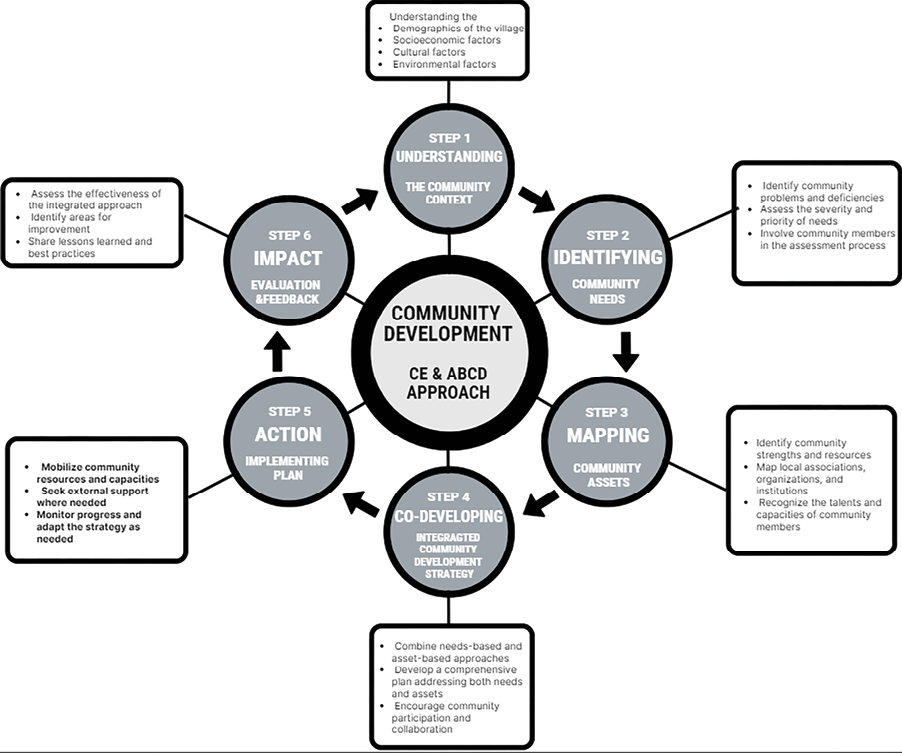
Figure 1. Integrated Conceptual Framework
This framework presents a methodology for facilitating community development by merging asset-based capacity development (RuTAG) and community engagement (UBA) approaches.
1. Understanding Community Context: This preliminary phase, common to both approaches, involves thoroughly understanding the rural community’s demographic and socioeconomic conditions, cultural nuances and environmental conditions. This analysis is imperative as it proffers a comprehensive understanding of the community’s distinctive attributes, essential for creating equitable partnerships.
2. Identification of Community Needs: This phase of assessing community needs is an essential component of the CE approach. It includes identification of the pressing needs and impending challenges of the community through stakeholder consultations (Tandon et al. 2016). It also involves evaluating the urgency and importance of various needs, in collaboration with the community members. This phase is crucial in ensuring that the development plan designed to address the community’s most critical needs is socially valid and relevant.
3. Mapping of Community Assets: This phase involves recognising the community’s assets and resources, locating local networks, associations and institutions, and further mapping the skills, competencies and capabilities of community members. This asset-oriented ABCD approach further complements CE efforts in assessing needs by placing increased gravitas on the local present knowledge, assets and resources, which can be used to co-create the development plan.
4. Co-developing an Integrated Community Development Strategy: This phase essentially focuses on integrating CE and ABCD strategies to design a comprehensive development plan that matches the community’s needs with its existing assets. It also involves stakeholders’ engagement to ensure the plan’s local relevance.
5. Action and Implementation of Plan: Implementation involves translating the community’s resources and assets into actionable knowledge for addressing the issue. It also encourages partnering with the community and other stakeholders, such as local self-help groups and non-governmental organisations, to track progress and tailor the plan as required. The team incorporates this step to ensure that the development plan is effectively executed and is in line with evolving circumstances.
6. Impact Evaluation and Feedback: This phase involves evaluating the validity and effectiveness of the proposed intervention at each of the levels and marking areas requiring change or improvement. It also involves disseminating findings to all stakeholders through various methods, as required. The impact assessment helps formulate generalised reflections to guide similar rural interventions.
Methodological Approach
The framework was fluid and iterative, which allowed for the recognition that engaging with the community would be a non-linear process of dealing with ever-evolving situations, necessitating a strategy that proposed open feedback loops and constant learning and unlearning. It conceded that the village community was not static and may have to change its needs and aspirations, thus mandating continuous evaluation, feedback and assessment (Collinson & Best 2019). It further allowed mending the strategy at each level by incorporating varied perceptions, new insights and emerging challenges.
The cyclical approach of the hierarchical method focused on equitable relationships and partnerships with the community at all levels, as well as evaluation, impact assessment and dissemination (Hall et al. 2016). It fostered proactive participation among the varied stakeholders, i.e. communities, institutes, non-governmental organisations and practitioners, by acknowledging the unique assets and resources each possessed in their own field.
Based on the integrated postulates of ABCD and CE, this participatory framework attempted to design a flexible and adaptive collaboration suited to the community’s changing needs (Chinyowa, Sirayi & Mokuku 2016; Tandon et al. 2016). It thus provided a pathway that enabled the community to identify their emergent needs, channel their assets into finding tailored solutions to their local challenges, and thus become a self-reliant community striking out towards sustainable development.
This conceptual framework, based on CE and ABCD approaches, offered a comprehensive and integrative methodology for introducing an intervention that would be adaptable to the community’s distinct context, needs and assets. In hindsight, IIT Delhi, under the UBA and RuTAG program, provided an integrated conceptual framework for steering the community development initiative with the local rural community of Khurampur village.
This article adopts a robust case study analysis methodology with the intention of exploring and extracting knowledge through immersive ethnographic field experiences in Khurampur, a rural Indian village. This analytical approach was deemed suitable for analysing the intricate nuances inherent in the relational dimensions of an integrated framework. Through an investigation in Khurampur, the study aimed to identify factors contributing to establishing epistemically just dynamics, which are critical for achieving transformative engagement. The approach is also suited to a comprehensive analysis of the synergistic potential of partnerships between higher education institutions (HEIs) and communities in attaining shared goals. Moreover, the in-depth examination of the intervention will provide valuable insights and practical guidance for researchers and engagement practitioners seeking to navigate a path towards meaningful and impactful community involvement, while highlighting essential considerations and potential caveats that must be addressed in this pursuit.
Ethical Considerations
For the study, stringent ethical considerations were paramount. Respect for the autonomy, dignity and rights of the all stakeholders, especially the members of the Khurampur village community, was upheld at all stages of the research. An informed consent was diligently obtained, including for the use of photographs, ensuring that all stakeholders fully understood the nature and purpose of the study before their involvement. Further, confidentiality measures were rigorously applied to safeguard the privacy of all stakeholders directly or indirectly involved in this study. The research team was committed to ensuring that the study benefited the community and respected their cultural norms and local values. The team made constant efforts to establish transparent and bi-directional communication channels, fostering trust, mutual understanding and respect.
Weaving Local and Technological Knowledge for Transforming the Rural Pottery Industry and Preserving Traditional Craftsmanship – A Case Study of Artisanal Potters of Khurampur Village
The community members of Khurampur village reached out to the National Cooperative Union of India (NCUI), the apex organisation of the Indian Cooperative Movement, to engage IIT Delhi as a partner for change. Under the flagship program of UBA and RuTAG, IIT expressed its willingness to collaborate with Khurampur village to achieve common goals. NCUI aims to foster a cooperative movement by mentoring and guiding the communities. NCUI is already engaging with Khurampur village in collaboration with another non-government organisation. This collaboration is unique as it incorporates values from both CE and ABCD approaches. IIT Delhi engaged with this village under its ambit of RuTAG, but later decided to include UBA missions to embrace sustainable development of the community by fostering robust bonds through deeper engagement. This collaboration further aimed at encouraging multi-stakeholder partnerships between diverse partners, Khurampur village community, IIT Delhi and NCUI, to embrace the unique assets and resources each brought to the cohort. While the village members had their own distinct knowledge, competencies and experiences, NCUI had rich experience in building bridges in the village based on trust, cooperation and mutual understanding. IIT Delhi furthered that academic prowess by leveraging existing assets to achieve sustainable outcomes.
Khurampur Village: Context and Dynamics
Villages are wrongly assumed to be monolithic blocs, but they have their own vibrancy, context and localised knowledge that the village community members may embody (Andersen & Malone 2013; Saha & Ravi 2019). The structure of Khurampur village is multifaceted. It comprises several complex institutions, cultural associations and socioeconomic systems. With such a background, any attempt to understand the village, its issues, needs, capacities and strengths without consulting its stakeholders would be in vain. Therefore, a team consulted most of the stakeholders in the village, for example, National Rural Livelihood Mission (NRLM) workers, village leaders, school principals and local artisans to assess the present state of Khurampur and its future possibilities. The team also developed a plan based on short- and long-term needs assessment, existing assets, and future scope for local capacity development.
Identification of Needs and Mapping the Assets
Pottery making is a traditional artisan craft in the village of Khurampur for making clay artifacts but, most importantly, earthen pots. The rural pottery industry is highly energy-intensive, and thus most of the rural potters are contingent upon the traditional kilns that are highly polluting and energy inefficient.
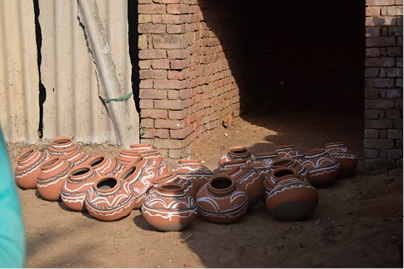
Figure 2. Pottery artefacts by the village artisans
Rural industrialisation has enabled an overhaul of rural India through local employment generation and cessation of migration, thus making villages self-sustainable. Technology and, therefore, technological institutes play a pivotal role in embracing such transformation. Technological interventions or downsizing a technology to suit the rural context can reduce costs and improve productivity and the quality of the products (Ravi, Dhar & Kohli 2007).
Pottery art in India, as a cultural asset, dates back several thousand years. According to archaeological evidence, pottery making in India may date back to the Indus Valley Civilization, which thrived in approximately 2500 BCE. Various cultures have enriched this artisanal craft through generations of artisans over the centuries.
Nonetheless, the village of Khurampur was witnessing a lack of involvement by the present generation in the pottery-making business due to its reducing profitability for the village artisans. The footprints of migration and change of profession were visible in the present generation of sculptors, locally termed Prajapatis, who were willing to leave this occupation for alternative jobs.
However, pottery making still offers a potential source of income generation due to its constant appeal in the urban markets. However, pottery is an energy-intensive technology. Like Khurampur, most rural villages are dependent upon traditional pottery kilns, which are energy inefficient, so after stakeholder consultations, it was concluded that the already available high-efficiency pottery kilns used in the organised sector were unaffordable for the small-scale rural pottery sector. Secondly, there was a lack of interest by private technology companies to invest in such low-cost, high-energy and cost-efficient pottery kilns as they would not promise returns to the economy. Thus, there was a need to improve the traditional pottery kilns used by the Khurampur Village artisans by making them efficient and affordable. This was seen as scope for intervention by IIT to co-design and adjust existing local kiln technology to meet the community’s needs.
Below are the major setbacks to using traditional kilns (Ravi, Dhar & Kohli 2007).
• The smoke from the furnace leads to objections from other families in the potters’ neighbourhood.
• Low firing temperatures lead to poor ware strength, colouration and quality, leading to low product prices and, thus, less income.
• Low furnace efficiency leads to high fuel consumption.
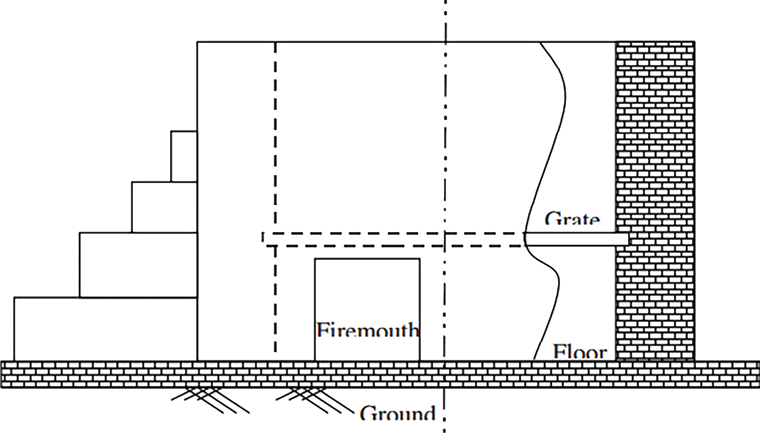
Figure 3. Schematic diagram of traditional potter’s kiln
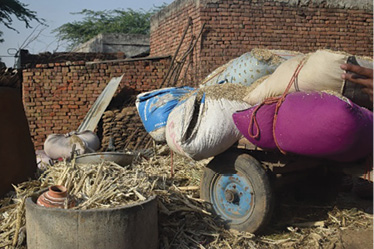
Figure 4. Raw material used for fuel by the potter community
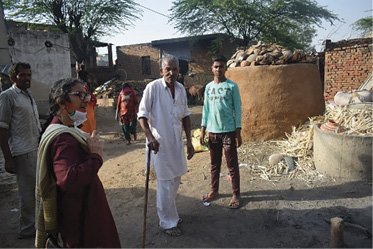
Figure 5. Stakeholder consultation with the potter community
Action – Implementing the Technological Intervention
After several rounds of stakeholder consultations and energy audits, the team co-designed and developed an energy-efficient and less polluting kiln for the potters of Khurampur. The team also carried out an energy audit of two up-draught kilns in the field to locate the possible causes of their low energy utilisation. Based on this assessment by the team of professors at IIT Delhi, along with the traditionally contextual knowledge of the community members, an improved kiln was developed for the potters of Khurampur. The improved kiln led to around 50 percent savings in fuel (Ravi, Dhar & Kohli 2007). Further, it resulted in a reduction in the capital cost of construction, and was thus more efficient and less polluting.
Iteration–Impact Assessment, Evaluation and Feedback
After installing the redeveloped energy-efficient pottery kiln in Khurampur, the team conducted an impact assessment in the village after six months to assess the post-machine installation. However, they faced a challenge. They were informed that the newly developed potters’ kilns had been damaged at the installation site by some individuals from the village. While the de jure responsibility for a linear community-development framework would seem to have halted with the design, development and installation of this technological artifact, adhering to the iterative and integrated framework, the academic team de facto assumed their responsibility as partners with the village community, to ensure smooth adaption to, and operation of, this co-developed technological artifact. In view of this, the team decided to conduct another round of stakeholder consultation to gauge their concerns and perceptions of these issues.
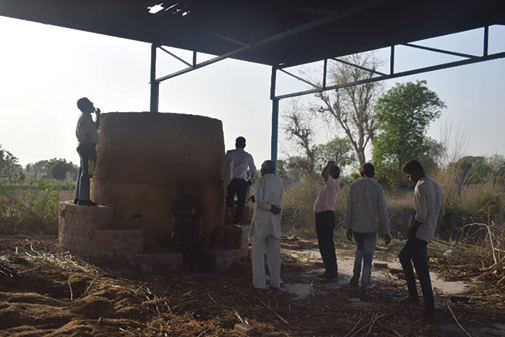
Figure 6. Inspection of newly developed kilns at the installation site
To ensure inclusive participation, the team involved all internal stakeholders from the village community and a few external ones, such as the NCUI community practitioners. The stakeholders came from various backgrounds, statuses and classes, and were engaged in the discussion to ensure a range of viewpoints. They included the village head, Sarpanch, village elders, local leaders, potters and their families. All participated in the stakeholder consultation process with a six-member team of academics from IIT Delhi. The IIT Delhi team also engaged and collaborated with the NCUI members. The intention behind this collaboration was to draw on the expertise of the NCUI, which has extensive experience working on the ground with the rural community, to gauge their perceptions and practices. As the issue at hand was not one requiring a technological solution, but rather a human solution, the team felt that partnering with community practitioners like NCUI, who had a knack for building bridges in the village and fostering participation, would be useful.
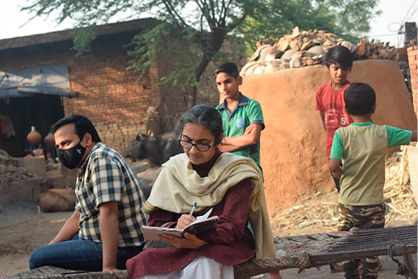
Figure 7. Stakeholder consultations with the village community
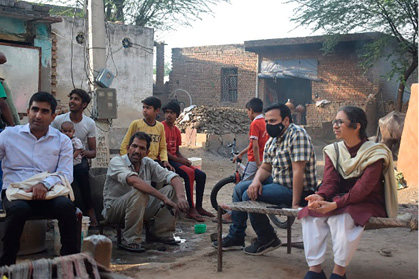
Figure 8. Stakeholder consultations with the village community
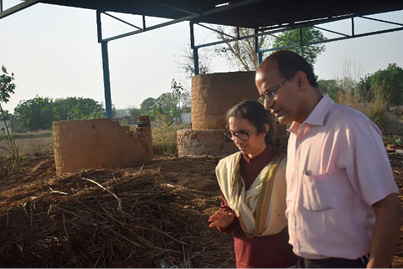
Figure 9. Stakeholder consultations with the village community
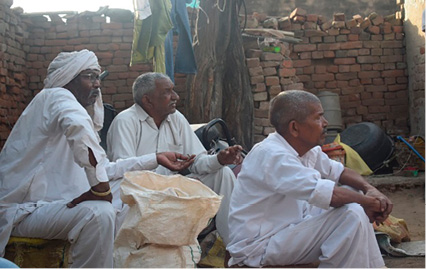
Figure 10. Inspection of the newly designed kiln
After the stakeholder consultation, the following points were identified as the hiccups that were leading to an inadequate adaption of the new, improved furnaces by the rural community:
• Village politics and dominant power. The team ascertained that the damage done to the new kilns could be due to the kilns’ location. As the kilns were installed on common village land (Panchyat Land), this could have brought resistance from other groups, especially those not involved in the pottery business.
• Financial constraints to building a shelter. The Potter family wanted monetary resources to build a shelter around the premises so that such incidents (breaking the kilns) were not repeated. The shelter would also help them to store and secure their pottery artifacts within the same premises.
• Human technology integration. The team gauged feedback from the potters related to machine usability. It was found that, despite the new kilns having more benefits than traditional kilns, potters tended to continue to use traditional kilns as they found it difficult to adapt to this behavioural change. As the potters had been acclimatised to traditional kiln usage, switching to a new, improved furnace required subtle behavioural changes.
In pursuit of an inclusive and collaborative resolution, the research team spearheaded extensive consultations that brought together non-potter families, potters, community leaders including the Sarpanch, and engaged the National Cooperative Union of India (NCUI) due to their rich experience in navigating complex dynamics within diverse communities. These deliberations aimed at fostering a collective understanding of the abovementioned concerns like the placement of kilns on common village land, financial constraints and acclimatisation of potters with the new furnace.
As a result of these inclusive dialogues, a consensus emerged, charting a path toward shared use of the common village land. This consensus was rooted in a commitment to equitable resource distribution, acknowledging the proportional rights of all community groups to the common land. The research team played a facilitating role, ensuring that academic insights were channelled toward promoting an amicable solution that prevented further destruction of the kilns.
This collaborative approach not only addressed the immediate challenges but also laid the groundwork for a sustainable framework that respects the differential power dynamics within the community. By actively involving all stakeholders, including the NCUI, the resolution exemplifies a commitment to community-driven decision-making and the prevention of further disruptions to the kilns.
Analysis and Interpretation
The matrix analyses the approach-specific benefits and immediate and long-term impacts offered by the collaborative framework of CE and ABCD approaches: deeper engagement with the village community of Khurampur, harnessing of their local assets, and the customising of technological intervention to fit their tailored needs, local context and available resources.
| Indicators for Epistemically Just Dynamics | Approach | ||
|---|---|---|---|
| Community Engagement (CE) Approach | Asset-Based Community Development (ABCD) Approach | Impact of the Collaborative (CE and ABCD) Framework | |
| Matching the needs with assets | CE allowed ease in the identification of community needs and aspirations of the community. In the case of Khurampur village, the economic distress from the rural pottery industry made nextgeneration artisanal potters forsake their traditional knowledge to become industrial labourers. | ABCD enabled recognising and leveraging of existing local assets, skills and resources to drive technological interventions. The academics acknowledged pottery making as a traditional, intergenerational knowledge, constituting the village’s cultural asset. Secondly, the local pottery kiln technology was recognised as a community asset; thus, academia downsized and modified the existing technological artifact. Technology, therefore, was used as an enabler and agent to foster economic sustainability in the village. | Democratisation of knowledge The comprehensive framework led to a nuanced matching of the community’s current needs with its assets without creating any dichotomies between both approaches. The result of such amalgamation was capacity building for the rural artisans in more energy and cost-efficient technology. It further proved to be a pedagogical innovation, allowing academics to apply their theoretical knowledge to bringing sustainable solutions to real on-ground issues. |
| Inter-cultural and contextual sensitivity | Community engagement facilitated tailoring of the intervention to the unique cultural, social and environmental context of the village community of Khurampur. | The ABCD approach enabled utilisation of intercultural knowledge in designing interventions that considered the community’s cultural practices, values and environmental ethos. | Balancing power dynamics Acknowledging intercultural and contextual sensitivity further led to a balance of power between all stakeholders and ensured that the resultant intervention wasn’t imposed, but rather communally built. |
| Engagement and empowerment of community | The approach led to engaging community members in all intervention processes, thus fostering ownership and active participation. Stakeholders’ perceptions, priorities and critical viewpoints were embraced at various stages, enabling them as co-partners. | Empowering community members to proactively participate in solving identified issues, promoted self-reliance and collective action. The village community’s involvement in the design and development of the technology proved to be crucial, as the modified technology was developed with the local context in mind (such as availability of locally available raw material for the furnace), the technicalities of pottery making (suitable temperatures, specific height and width of the furnace, and sequential processes). | Fostering technological diffusion through the co-development of technology The collaborative engagement and empowerment approach complemented the efforts in bringing a sustainable impact for change into the Khurampur village. This led to co-designing a technology that matched the local rural context and needs, which otherwise would have been ignored due to no economies of scale, and thus lack of profits for the markets. This itself spurred technological diffusion, contributing to rural communities reaping the benefits of technological advancements. |
| Co-construction of transdisciplinary knowledge | The CE approach allowed the co-construction of transdisciplinary knowledge as an engaged scholarship through varied teaching and learning modalities, research and service learning. | Further, the ABCD approach allowed the integration of traditional knowledge, cultural assets and skills of community members into the intervention, ensuring its contextual appropriateness. | Rectifying the epistemic follies The team valued the collective wisdom, intellectual capacity and contextual knowledge of the community members, which is evident in the honest attempt to involve them at each intervention stage. The team also valued the local cultural pottery-making asset and thus the intervention, which contributed to its enduring sustainability for the next generation of artisans. Further, the co-development of the technological artifact was interwoven around the locals’ academic and actionable knowledge. |
| Social Cohesion and Social Capital | Deeper engagements with the community strengthened community bonds and fostered collaboration among members for collective action. It also resulted in a positive perception of the academic community by community members. | The ABCD approach leveraged existing networks and new bonds by creating social capital and fostering collaboration among community members and stakeholders. The collective action further spurred a robust social spirit in all stakeholders. It also created social capital with the academic community, non-governmental organisations and cooperative societies. | Reviving the resilient Samaj/Community (i) The creation of social capital and increased social cohesion, along with the factors above, contributed towards the transfer of power back to the communities, which was (as earlier discussed) usurped by the state and the markets. By making contextually relevant decisions and leveraging its existing assets, the village gained self-reliance and autonomy in deciding the pathways towards equitable and inclusive development. (ii) Further, the increased trust built due to the values of reciprocity, mutual benefit, mutual respect, bi-directionality of communication, and reverence for each other’s unique knowledge, competencies and skills not only made communities more resilient, but also helped academia achieve their historical aim of contributing towards social well-being and serving as archetypical community institutions. This ultimately strengthened the third pillar, community, by balancing it against the dominant forces of the market and State. |
| Trust and collaboration | Building trust and fostering collaborative relationships among stakeholders led to effective implementation. | Encouraging collaboration and shared responsibility among community members, educational institutions and NGOs leads to project success. | |
| Self-reliant community | Nudging change based on locally relevant needs and emergent issues generated a ripple effect that promoted sustainable development in the village. | The ABCD approach led to acknowledging and revering community members’ adroitness, skills and capacities for harnessing the people’s power, referred to as Lok Shakti, to spur change. | Harnessing Lok Shakti or People’s Power As discussed in the earlier sections, ancient India embraced a community-centric life whereby dependence on the State for all matters was discouraged. Contemporary collaborative approaches, such as this one, in the Indian context can help restore the people’s power by fostering self-reliant and sustainable communities. |
Reflections
The following points are recognised as crucial to achieving the desired impact of intervention on the ground.
Building Bridges in the Village – Honest engagement efforts with all stakeholders in the village could have been the most daunting task. While the institute made enhanced efforts in this direction, it was recognised that the initiative’s success would require deeper engagement with the village community, and that this would require continuous engagement and dialogue with the rural community within smaller intervals.
Building Local Partnerships – This required establishing partnerships with local youth or community leaders who were socialised and acclimatised to village norms, traditions and values. This helped the Institute understand the village’s nitty-gritty and subtle nuances, and helped them make a more profound impact on the community. These local leaders could be provided with mentoring support from the Institution or through other partners (e.g. community practitioners, NGOs and cooperatives).
Localised Model – The success stories in rural intervention often become case-specific; thus, scalability and replicability might become an issue. This is so because each village has a specific local context and dynamic. Similar interventions have often met different fates due to different situations, so any straightjacket approach towards rural transformation is bound to fail. Thus, there is a need to conceptualise and design localised models of intervention, based on specific circumstances and issues. Contrary to the centralised approach, such a model needs to be democratised and suited to the local landscape.
Callon (1987), in Co-construction of transdisciplinary knowledge, asserts that ‘engineers who elaborate a new technology, as well as all those who participate at one time or another in its design, development, and diffusion, constantly construct hypotheses and forms of argument that pull these participants into the field of sociological analysis. Whether they want to or not, they are transformed into sociologists, or what I call engineer-sociologists.’ While identifying a problem, theorising a design, or implementing a technological intervention and gauging its feedback, the team must constantly blur the knowledge boundaries. They need to falsify the assumption that treating technological knowledge is strictly esoteric, and open the borders to other knowledge systems that may include local, traditional or Indigenous knowledge, skills, experience and community wisdom. In merging and meshing various knowledge systems, academics can create scholarship and technological artifacts that benefit academia and the community equally.
This approach critiques the colonial rationality of hierarchising academic knowledge at the top most stratum and treating other knowledge forms as inferior. The fact that villages are striving and sustaining in and of itself substantiates the pool of knowledge the village community embodies, in experiences, tales, mores, customs and traditions. Therefore, any attempt to ignore this in the mainstream academic discourse will lead to incompleteness of the scholarship. Therefore, any overhauling of such an approach requires decoloniality, which, as its first step, requires unlearning and shedding of academic biases. Bhatt & Singh (2023) assert that the limits and failures of liberal pluralism in achieving epistemic justice have been discussed widely by academic scholars (such as, Mignolo 2013), and thus decoloniality has attracted increased attention from practitioners. The triple helix model of decoloniality (Ndlovu‐Gatsheni 2015) proffers a conceptual framework to reclaim the usurped authority over being, power and knowledge from the colonisers. The pursuit of decoloniality therefore requires overhauling of the present knowledge and power discourse and laying the foundation of a pluriverse of knowledge. Its architecture should have the strength of steel, along with the agility of water, to absorb within it heterogeneous knowledge systems, plurality of worldviews and diverse methods (not just textual, but also beliefs, experiences and wisdom) as well as the capacity to inquire into any idea that may advance the idea of a socially just world. In such light, integrated community engagement and the asset-based community development framework have the ability to create a platform of ‘collaboration, engagement, mutual exchange and co-creation of knowledge’ with multiple stakeholders, including disenfranchised communities (Singh, Bhatt & Singh, 2021). This attempts to create knowledge equilibrium by bridging the gap between dominant knowledge and systematically repressed knowledge(s). In this way, these approaches can aid in decolonising knowledge and power, which will lead to decoloniality over time.
Deliberation by the three professors on identifying ways toward building bridges in Khurampur village will substantiate the above postulate. Despite the successful instalment of the potter’s kiln in the village and the subsequent damage to it by some individuals in the village, an academic may shift the blame onto the community. However, this did not happen. When the IIT Delhi team and Professor Saha were discussing this with Professor Sangeeta and Professor Ravi, they said, ‘Maybe we need to work harder to understand things from their point of view, maybe we need to keep our ears on the ground’, with which the other two professors humbly agreed. Such humility and respect towards other knowledge systems (indigenous, traditional, local beliefs, practices and knowledge) define the true spirit of community engagement and asset-based community development approaches.
Conclusion
As it exists in academia today, CE has been shaped through a series of developments, resulting in the increased importance it is presently accorded. HEIs in both the Global North and the Global South are at the forefront of advancing CE in higher education, albeit in distinctive ways. Here it is important to note that different countries are at varying maturity levels in integrating and mainstreaming CE practices in their higher education discourse. The same is true of India. While CE is not a new concept in Indian higher education, it has absorbed a fresh approach and perspective over the past decade owing to several factors. With India gradually emerging as a CE hub in the Global South, it has great potential to grow and advance in the future.
In this context, an amalgamation of Unnat Bharat Abhiyan (UBA) community-engagement principles and the RuTag program, which encompasses the Asset-Based Community Development (ABCD) framework, has proven to be a comprehensive participatory academic intervention in the rural village of Khurampur. This merger allows for active participation of community members in decision-making processes, thus recognising the group’s particular strengths and resources. The UBA program emphasises community engagement by building collaborative networks based on mutual trust, respect and benefits to academic institutions and rural communities. This engagement guarantees that community knowledge is acknowledged, its opinions are heard and its needs met, resulting in long-term sustainable solutions. The ABCD paradigm is used by the RuTag program to shift the focus from community deficiencies to assets and capacities. The intervention empowers the community members and encourages the virtue of self-reliance through mapping of assets and community resources.
Overall, this approach, while teaching manifold lessons from the ground, has also led to the achievement of immediate and long-term meaningful change. This includes democratisation of knowledge by fostering technological diffusion through the co-development of technological artifacts. It has further had an enduring impact on balancing power dynamics between the stakeholders, thus embracing decoloniality by rectifying the earlier committed epistemic follies. Additionally, as a larger aim, these incremental steps will contribute towards reviving the resilient samaj (community) by harnessing lok shakti or people’s power.
References
Andersen, L & Malone, M 2013, All culture is local: Good practice in regional cultural mapping and planning from local government, UTS ePRESS. https://doi.org/10.5130/978-1-86365-433-3
Balagangadhara 2012, Reconceptualizing India Studies, Oxford University Press. https://doi.org/10.1093/acprof:oso/9780198082965.001.0001
Bhatt, P & Singh, M 2023, ‘Decoloniality, Community Engaged Scholarship and Epistemic Justice’, in Community Engagement in Higher Education: From Theory to Practice, Routledge India, viewed 18 June 2023. https://www.routledge.com/Community-Engagement-in-Higher-Education-From-Theory-to-Practice/Singh-Bhatt-Singh-Pareek/p/book/9781032195773. https://doi.org/10.4324/9781003285670-3
Bhatt, P, Singh, W, Singh, M & Pareek, K 2023, ‘Community Engagement in the Indian Higher Education landscape’, in Community Engagement in Higher Education: From theory to practice, Routledge, India, pp. 45–66, viewed 18 June 2023. https://www.routledge.com/Community-Engagement-in-Higher-Education-From-Theory-to-Practice/Singh-Bhatt-Singh-Pareek/p/book/9781032195773. https://doi.org/10.4324/9781003285670-3
Callon, M 1987, ‘Society in the making: The study of technology as a tool for sociological analysis’, The social construction of technological systems: New directions in the sociology and history of technology, MIT Press, London, UK, pp. 83–103.
Chinyowa, K, Sirayi, M & Mokuku, S 2016, ‘Doing things differently: Using the ABCD method to negotiate with local leaders in Community Engagement projects’, Journal of International Education and Leadership, vol. 6, no. 1, p. n1, ERIC.
Collinson, B & Best, D 2019, ‘Promoting recovery from substance misuse through engagement with community assets: Asset based community engagement’, Substance Abuse: Research and Treatment, vol. 13, p. 1178221819876575, SAGE Publications, London, UK. https://doi.org/10.1177/1178221819876575
Gandhi, M 2014, Hind swaraj: Indian home rule, Sarva Seva Sangh, Prakashan.
Ganeri, J 2010, ‘The study of Indian epistemology: Questions of method: A reply to Matthew Dasti and Stephen H Phillips’, Philosophy East and West, vol. 60, no. 4, pp. 541–50, University of Hawai’i Press. https://doi.org/10.1353/pew.2010.0007
Giroux, H 2002, ‘Neoliberalism, corporate culture, and the promise of higher education: The university as a democratic public sphere’, Harvard Educational Review, vol. 72, no. 4, pp. 425–463, Harvard University. https://doi.org/10.17763/haer.72.4.0515nr62324n71p1
Hall, B, Tandon, R, Lepore, W, Singh, W, Easby, A & Tremblay, C 2016, ‘Theoretical pedagogical framework for community-based research’, Knowledge and engagement: Building capacity for the next generation of community-based researchers, pp. 7–39, Participatory Research in Asia (PRIA).
Hall, B & Tandon, R 2017, ‘Decolonization of knowledge, epistemicide, participatory research and higher education’, Research for All, vol. 1, no. 1, pp. 6–19, UCL IOE Press. https://doi.org/10.18546/RFA.01.1.02
Heredia, R 1999, ‘Interpreting Gandhi’s Hind Swaraj’, Economic and Political Weekly, pp. 1497–1502, JSTOR.
Holland, B & Malone, M 2019, ‘Institutional engagement – intentional, innovative and rigorous’, Gateways: International Journal of Community Research and Engagement. https://doi.org/10.5130/ijcre.v12i2.6984
Kempers, M 2002, Community matters: An exploration of theory and practice, Burnham Publishers.
Korkut, U 2007, ‘Participatory policy-making, participatory civil society: A key for dissolving elite rule in new democracies in the era of globalization’, World Futures, vol. 63, nos. 5–6, pp. 340–52, Routledge. https://doi.org/10.1080/02604020701402723
Mignolo, W 2013, Introduction: ‘Coloniality of power and de-colonial thinking’, Globalization and the Decolonial Option (1st edn), Routledge, London, pp. 1–21).
Movsesian, M 2018, ‘Markets and morals: The limits of Doux Commerce’, vol. 9, p. 449. https://scholarship.law.wm.edu/wmblr, vol. 9, issue 2/7,
Naily, N, Farisia, H, Umam, M & Wahyudi, N 2023, ‘University–Community Engagement within the Indonesian context: A Case Study of UINSA’, Community Engagement in Higher Education, Routledge, India, pp. 84–96. https://doi.org/10.4324/9781003285670-9
Ndlovu-Gatsheni, S 2015, ‘Decoloniality as the future of Africa’, History Compass, vol. 13, no. 10, pp. 485–96. https://doi.org/10.1111/hic3.12264
Nye, D 2006, Technology matters: Questions to live with, MIT Press, Cambridge. https://doi.org/10.1353/hsp.2006.0048
Olssen, M & Peters, M 2005, ‘Neoliberalism, higher education and the knowledge economy: From the free market to knowledge capitalism’, Journal of Education Policy, vol. 20, no. 3, pp. 313–45. https://doi.org/10.1080/02680930500108718
Paranjape, M 2017, ‘Tagore’s nation: Swadeshi Samaj and the political novel’, in K Tuteja & K Chakraborty (eds), Tagore and Nationalism, Springer, New Delhi, pp.77–94. https://doi.org/10.1007/978-81-322-3696-2_6
Rajan, R 2019, The third pillar: How markets and the state leave the community behind, Penguin.
Ravi, M, Dhar, P & Kohli, S 2007, ‘Energy audit and improvement of an updraught pottery kiln’, Department of Mechanical Engineering, Indian Institute of Technology, Delhi, India.
Rural Technology Action Group (RuTAG) n.d., viewed 18 June 2023. http://rutag.iitd.ac.in/rutag/?q=about
Saha, S & Ravi, M 2019, Rural technology development and delivery: RuTAG and its Synergy with other initiatives, Springer. https://doi.org/10.1007/978-981-13-6435-8
Singh, DP, SU, SL & Saha, S 2020, ‘Pursuit of inclusive and sustainable technology development for rural population: Role of RuTAG at IIT Delhi’, Scientific Voyage, vol. 1, no. 3, pp. 27–36.
Singh, W, Bhatt, P & Singh, M 2021, ‘Social capital creation by Higher Education Institutions: Fostering partnerships for common goals’, in, Social Capital: Issues, challenges and perspectives, Nova Science Publishers, viewed 9 November 2022. https://novapublishers.com/shop/social-capital-issues-challenges-and-perspectives/
Skrtic, T 1991, ‘The Special Education paradox: Equity as the way to excellence’, Harvard Educational Review, vol. 61, No. 2, pp. 148–207. https://doi.org/10.17763/haer.61.2.0q702751580h0617
Sulanam, S, Naily, N & Iwanebel, F 2016, ‘Proceedings of the International Conference on University-Community Engagement’, The Committee of International Conference on University-Community Engagement.
Tandon, R, Hall, B, Lepore, W & Singh, W 2016, ‘Training the next generation of community- based researchers’, vol. 20, p. 2021.
Tussman, J 1999, ‘The religion of the marketplace’, New Oxford Review, vol. 66, pp. 29–35.
Unnat Bharat Abhiyan n.d., viewed 18 June 2023. https://unnatbharatabhiyan.gov.in/view-themes