PORTAL Journal of Multidisciplinary International Studies
Vol. 17, No. 1
June 2024
Research article (peer reviewed)
Digital Tools for Knowledge Exchange and Sustainable Public Food Procurement in Community Kindergartens: A Case Study of Słupsk, Poland
Joanna Suchomska1,*, Wojciech Goszczyński2, Pia Laborgne3, Carlos Cámara-Menoyo4, Andrea Pierce5, Michał Wróblewski2, Joao Porto de Albuquerque6 and Simon Jirka7
1 Department of Human Ecology, Institute of Sociology, Nicolaus Copernicus University
2 Department of Sociology of Culture, Institute of Sociology, Nicolaus Copernicus University
3 Karlsruhe Transformation Center for Sustainability and Cultural Change (KAT) and European Institute for Energy Research (EIFER), Karlsruhe Institute of Technology (KIT)
4 Senior Research Software Engineer, Centre for Interdisciplinary Methodologies (CIM), University of Warwick
5 Biden School of Public Policy & Administration, University of Delaware
6 Deputy Director of the Urban Big Data Centre, University of Glasgow
7 52°North GmbH
Corresponding author: Joanna Suchomska, joanna.suchomska@umk.pl
DOI: https://doi.org/10.5130/ijcre.v17i1.8287
Article History: Received 27/07/2022; Revised 26/09/2023; Accepted 21/01/2024; Published 06/2024
Abstract
This article presents a case study on the experimental co-creation process of a digital platform supporting Sustainable Public Food Procurement (SPFP) in public kindergartens in a medium-sized city in Poland. The organisation of SPFP requires a dedicated technological infrastructure to ensure the information flow among food producers, kindergarten employees, children and parents. To this end, a digital platform was designed to enable contact, assessment of food quality and food procurement environmental impact, and the communication of needs and problems among all the actors involved in the food procurement system for kindergartens. The article also discusses the results of the field research and the method of Urban Living Labs, highlighting the key challenges faced by those seeking to combine knowledge about food and the natural environment with public food procurement. The principal difficulties include the availability, accessibility and possible application of data on the environmental costs of food production, the individualisation of needs and motivations related to public catering in educational facilities, and the specific nature of the public sector responsible for public food procurement.
Keywords
Sustainable Public Food Procurement (SPFP); Urban Living Labs (ULL); Knowledge Co-Creation; Technology; Innovation; Community Institutions; Hybridisation of Relationships
Introduction
This article presents critical findings from a process of building sustainable public food procurement at a local level. This seemingly simple image of a balanced meal that we tried to create in a kindergarten canteen represents the complex social processes of mediation among food, technology, people and a local community.
As a team of specialists in food studies, participatory action research, data gathering and visualisation, we used a digital platform of knowledge exchange to initiate discussion on the potential effects and possibilities of greening the public food procurement system in Słupsk’s kindergartens. Together with local residents and officials, we applied the ULL method to develop a space for the collection and exchange of knowledge about food.
The aim of this article was to present an analysis of the results of a social experiment conducted in two kindergartens in Słupsk, a medium-sized city in Poland, and to show the possibilities and limitations of using participatory processes, digital communication and knowledge sharing tools to create sustainable public food systems.
Sustainable Public Food Procurement
The theoretical axis for this article is underpinned by the concept of sustainable public food procurement (SPFP). The European Commission defines it as a process in which ‘public authorities seek to purchase goods, services and works with a reduced environmental impact throughout their life-cycle compared to goods, services and works with the same primary function which would otherwise be procured’ (https://ec.europa.eu/environment/gpp/versus_en.htm). This approach provides the public sector with an opportunity to find a balance between the economic efficiency of procurement and social and environmental sustainability when ordering and distributing goods such as food (Morgan 2008; Morley 2021).
Food plays a unique role in public procurement. It involves a critical procurement market for key institutions, such as kindergartens, schools, hospitals and other social institutions (Kevin & Morley 2014; Schutter et al. 2021). If designed carefully (i.e. with a focus on sustainable innovation), this market could serve as one of the supporting elements of a sustainable food system on a local or even larger scale. This could be achieved with the support of local producers by considering non-economic factors in the procurement guidelines, such as a carbon footprint, production of greenhouse gases, and methods of food processing and transportation. SPFP could also be used as an effective tool to build relationships among local authorities, food producers and consumers. Raising social awareness of the linkages between food and the natural environment is another important aspect of SPFP-based systems (Jones 2021). Its potential lies in the fact that SPFP extends beyond education and the activity of individual organisations. It would seek to be a catalyst for change by tapping into the market power of the public sector, and would be capable of shaping market behaviour through the size and stability of the procurement orders (Kevin & Morley 2016; Knutsson & Thomasson 2014).
Broadly defined, SPFP is a system of political tools intended to distribute sustainable food, support individual family farms, enable access to high-quality food to large groups of consumers, and implement sustainable development policies (Parsons & Barling 2022). It involves combining the top–down activities and development policies managed by public actors with the activities of individual farms, independent food processors and consumers. The important elements of SPFP worth exploring are outlined below:
1. Mode of governance: This is defined as a system of management and decision-making related to costs, decision-making methods, expected goals, and the division of responsibilities and roles.
2. Production, consumption and procurement practices: These are related to the available food production and processing methods, consumer expectations and behaviour, as well as food distribution and transport networks. SPFP systems are frequently based on short food-supply chains (SFSC) connecting local farmers and food processors with consumers, which have been recognised to offer an opportunity to develop sustainable local production and consumption (Galli & Brunori 2013).
3. Procurement infrastructure: This requires legal standards, regulations, available technological solutions, warehousing, storage, transport, and processing capabilities to manage the food supply chain. The importance of this component extends beyond mere legislative or technical frameworks. SPFP refers not only to the processing plants, warehouses and canteens, but also an ordering system and interactions between suppliers and consumers. This is where the formal infrastructure of the local procurement system blends, more or less, with the informal one that is more open and more focused on communication.
4. Relationships among SPFP actors: SPFP systems attract entire constellations of social networks connecting food producers, consumers, and intermediaries such as local government authorities, public institutions and catering companies. Points of contact may be varied. They may include direct contact between consumers and producers or be mediated by institutions responsible for the organisation of food procurement or distribution (e.g. school canteens).
SPFP is not limited to procurement and production procedures and technologies, but also has a social function. Its very nature requires interaction between actors operating in different areas and at different levels of local communities. It creates an institutionalised relationship between rural and urban areas, and among producers, officials, consumers, institutions and citizens.
According to Adrian Morley (2021), modern public procurement is essentially a democratically controlled process, and on the other hand is managed by the public sector, which moderates the relationship between production/supply and the social expectations of citizens. SPFP engages actors and becomes a platform for the socially embedded processes of knowledge co-creation – through communities of practice – and is limited by the space of a given community (Bleda & Chicot 2020; Uyarra et al. 2017; Walker & Brammer 2012 ). It provides an anchoring effect – a discussion space or a base that offers tools for social innovation governance (Felt & Fochler 2011). If it is to meet its objectives, SPFP cannot focus solely on the technical aspects of food production, but must enable discourse and activate engagement mechanisms, co-creation of knowledge, control and more generally, social governance of change. It should also be in line with the broadly defined Sustainable Development Goals, which, besides access to high-quality food, also call for increased transparency and greater influence of individuals on the food system (Preuss 2009; Prier et al. 2016).
This is hardly a simple process. Numerous problems have been highlighted regarding the legal framework, its impact on economic efficiency, the lack of management skills in the public sector, and its reluctance to take risks and implement actions beyond the existing, long-established and rather bureaucratic procedures (Eikelboom et al. 2018; Uyarra et al. 2014; Wahlen et al. 2012). Roberta Sonnino has described the challenges faced by SPFP. While discussing the role of inclusivity, integrated character and the dynamics of the entire process, she also stresses the importance of its perception, organisational skills and the technological solutions behind the initiative (Sonnino 2009; Sonnino et al. 2014; Sonino 2021). Organisation and facilitation of knowledge flows are emerging as critical elements in ensuring the open character of SPFP.
Given the aforementioned points, the tools used to manage such a network assume much significance. These tools can be based on norms and contracts, leaving no space for the activity of community members. They can also use more complex ways of building relationships among producers, network organisers and consumers. The growing popularity of digital technologies for SPFP is an interesting phenomenon (Lulio & Kovacs 2014). The use of shopping platforms, social media, dedicated applications and instant messaging carries a new dissemination potential, as well as new challenges in connecting food and community with digital worlds (Collison et al. 2019). Besides organising deliveries and reducing the significance of physical distance, the digital nature of the new tools contributes to the distribution of knowledge about food, its origin, and the environmental impact of its production. The use of digital tools allows the food value chain to meet within one foodscape, while showing how food supply (food security) connects to other vital processes in the community.
This further complicates the already complex sustainable food systems that connect the local (tacit) knowledge of food producers and processors with the knowledge of experts operating at different levels (Fonte 2008; Fonte & Papadopoulos 2016). The latter is highlighted in the analyses of popular programs for distributing local food to school canteens. Researchers highlight the importance of planning and personal relationships in the process of creating and consolidating SPFP (Triches et al. 2021), as well as improving food literacy regarding the importance of environmental and social costs in various types of food networks (Mikkelsen 2020).
SPFP and its interfaces become particularly important in food procurement systems for educational institutions, such as schools and kindergartens. They are the places where the habits, interests and exclusions of parents, children, public institutions and entrepreneurs can mix, and where there is a strong focus on public policies to educate and develop good eating practices by linking the activities of farmers and food processors with those of children (Dyg & Mikkelsen 2017).
On the other hand, kindergarten and school foodscapes can also be problematic (Boni 2014; 2015; 2018; Haden 2006; Hansen & Kristensen 2017, Harman et al. 2018). They carry the element of power relations, pressure, and frequently one-sided communication, and promote class-based nutrition standards. In this sense, the kindergarten canteen is a complex space of power, interests and influence, which can strengthen the local food system but exclude those whose eating practices do not conform to socially acceptable standards (Warin 2011). Hence, given its potential, SPFP is such a sensitive mechanism that it deserves attention. While offering the potential to localise activities, sustainable development goals, and community wellbeing (for example through its ability to strengthen local economic systems, choose solutions with the lowest environmental impact and improve the quality and value of the menu), it ventures beyond legal regulations to consciously shape the food flows, resources used, and relations among all actors involved (Vicovaro et al. 2021). SPFP emerges as a platform for social relations and dissemination of knowledge. This seemingly simple image of a balanced meal in a kindergarten canteen represents complex social processes of mediation among food, technology, people, and the local community.
Methodology
This article analyses an experiment, a social innovation, within which we developed SPFP-dedicated interfaces as part of socio-technological solutions. The experiment was conducted in Słupsk, a mid-sized city in Poland, where two public kindergartens served as the testing ground. The strengthening of the relations and the visibility of interdependencies among the actors of the local food system was to be achieved through a socio-technological tool, the task being to create a conversation space for food producers, the city, kindergarten staff, parents and children in Słupsk. The experiment was expected to trigger processes of knowledge co-creation concerning the sustainable impact of a locally functioning public food system.
Urban Living Lab as an experiment
The complexity of SPFP systems requires an approach that integrates knowledge and methods from different disciplines and actors involved in creating sustainable local food systems. Such methods can be developed in the form of ULLs, as an experimental governance approach (Voytenko Palgan et al. 2016). We used the ULL method to conduct our experiment.
According to McCormick and Hartmann (2017), Urban Living Labs can be considered both as an arena (geographically or institutionally bounded spaces), and as an approach for intentional collaborative experimentation by researchers, citizens, companies and local governments. Consequently, they provide a methodology and an environment for social and technical innovations (Veeckman et al. 2013). In practice, the ULLs use collaborative activities to test new approaches to the identification of problems and potential solutions, based on the needs of stakeholders and dispersed knowledge of actors other than the principal urban institutions. Consequently, the ULLs provide a framework to conduct an open and experimental process, analyse its results, and use the latter to permanently change certain aspects of the city’s functioning (Dańkowska et al. 2022). Rather than focus specifically on defining the solutions, the ULL process provides for their implementation on a micro-scale, evaluation and re-implementation, to enable the replication of the developed methods in other environments (Steen & van Bueren 2017).
1. The first stage in the ULL process, the initiation phase, focuses on the diagnosis and definition of the problem or challenge at hand and coming up with an innovative idea on how to respond to it and engage the necessary stakeholders.
2. In the subsequent stages, the implementation and testing of the innovation, stakeholders co-create their vision and agree on the direction in which the solution will be developed and the manner of its implementation. They are also involved in the test implementation and the ultimate implementation of the innovation in the real environment.
3. The final stage of the ULL process, the evaluation and replication planning, involves a joint evaluation of the functioning and implementation of the innovation to verify whether the intended aims and objectives have been achieved, how much the innovation has contributed to solving the original problem or challenge, and how it can be further developed.
The ULL approach does not determine the research techniques or tools used to maintain the involvement and cooperation of stakeholders, search for solutions, or manage and evaluate the implemented innovation. Researchers using this approach have a lot of freedom in choosing tools to work with stakeholders. The ULL method is part of an alternative research paradigm (the concept of ‘Mode 2 Science’, e.g. Gibbons 2000; Gustafsson 2013) that transforms the relationship between research and practice, science and society, making it the primary activity of researchers in establishing cooperative relationships to solve real-life problems. In this approach, researchers share the knowledge provision task with other stakeholders. Besides observation and analysis, it is also their role to initiate and catalyse the process of knowledge co-creation among stakeholders to develop solutions together (Laborgne et al. 2021). Hence, the ULL approach is based on a variety of workshop techniques complemented by research methods.
The Urban Living Lab in Słupsk
As mentioned earlier, the experiment was conducted in two public kindergartens in Słupsk between 2019 and 2022. Taking the general ULL methodology as a starting point, the design of a digital tool to support food information exchange and food system management in Słupsk’s kindergartens was a multi-stage process. Its specific components are described in the diagram below (Figure 1).
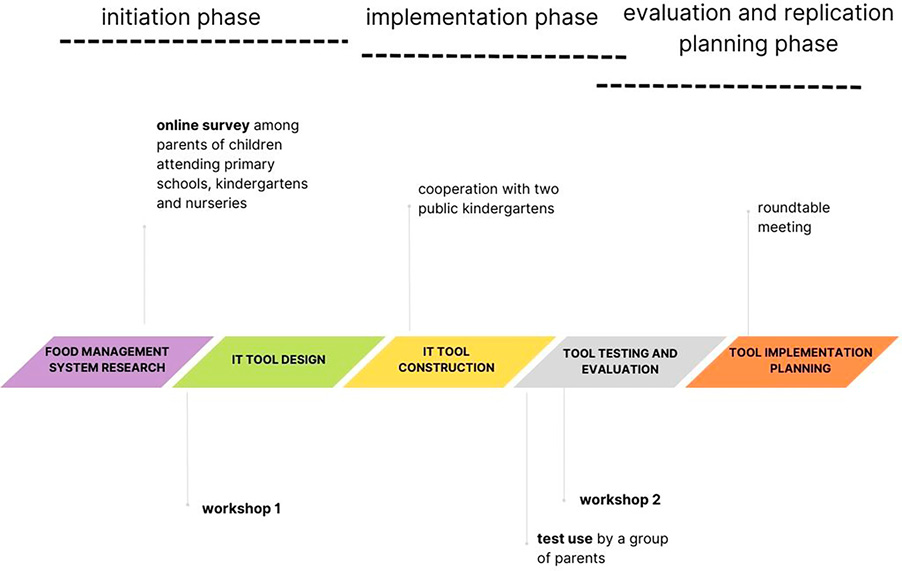
Figure 1. Local experiment – the co-creation of the food knowledge exchange platform. Source: Developed by the authors.
The initiation phase
The process started with the build-up of general interest in the topic of sustainable food at Słupsk’s educational institutions and the collection of data about the city’s food management system. Then we conducted anonline survey among parents of children from primary schools, kindergartens and nurseries. Data was collected through a total of 192 questionnaires. The study was not representative. Educational institutions, primarily city kindergartens and nurseries, helped us reach the respondents using their communication channels with parents. The survey aimed to explore the field and understand civic stakeholders’ needs and expectations regarding child nutrition in educational institutions.
The implementation phase
The next stage of the experiment was to design, test and evaluate a dedicated digital tool for the exchange of knowledge on food in kindergartens.
Using the ULL approach, we managed to implement the following:
1. IT tool design as part of Workshop 1. This workshop was attended by 14 participants: three mothers, a representative from a non-governmental organisation (NGO), three representatives from public nurseries, one representative from a public kindergarten, and six representatives from other public food procurement institutions. This workshop was organised to (a) identify the priorities related to the public food system and how to obtain information thereon, and (b) collect opinions about and determine the need for the information technology (IT) tool to be designed as part of the project. The focus of the group activities facilitated during the workshop was on the following two objectives: (a) gain an in-depth understanding of the problems concerning food procurement in Słupsk and (b) formulate a vision for the food system in Słupsk, define the needs regarding food in the city, and develop solutions for the IT tool that would address these needs.
2. The IT tool testing involved a group of 14 parents from two public kindergartens, and the IT tool evaluation was part of Workshop 2, attended by 17 participants: two directors of public kindergartens, three representatives from the Słupsk City Hall and 12 parents. At this stage of the ULL process, we worked closely with two public kindergartens interested in testing the digital tool in return for their experience-sharing concerning public food in their institutions, along with relevant inputs from the participating parents. This workshop enabled us to evaluate the IT tool in terms of its usability, the validity of the collected data and technical solutions, and the tool’s possible future use in Słupsk’s kindergartens and by parents. This workshop included group work (wherein the participants were given assignments to learn how to operate the IT tool) and discussions on the participants’ takeaway lessons from the group assignments.
The evaluation and replication planning phase
Besides the analysis and summary in the form of a report, the project results were processed using various workshop techniques. The process of the SPFP local experiment in Słupsk’s kindergartens concluded with a roundtable meeting. As the group of decision-making stakeholders, we discussed how the experience from our project and the constructed IT tool could be employed for the development of the SPFP policy in Słupsk, and explored the possibility of permanent implementation of the IT tool in Słupsk’s kindergartens.
Our most important findings, based on the data collected during the experiment, are presented in the results section.
Results
The initiation phase results: The diagnosis and expectations of the food systems in the kindergartens
There are 20 public kindergartens in Słupsk. They operate a loosely connected system of public food catering (each kindergarten orders and purchases food individually), which is financially and organisationally supported by the local authorities. All kindergartens but one have their own kitchens, so food is prepared on-site. Though kindergartens have some freedom in the choice of the products they buy, in practice, they largely use the same providers. In most cases, the purchase is primarily determined by product availability, priceand nutritional value. Local produce is served only rarely, while organic (certified) or fair-trade food is hardly ever available to the children. Kindergartens do not buy food from supermarkets, preferring the local wholesale distributors. Local products are most often purchased in spring and summer, in the form of fruits and juices from local orchards or fish directly purchased from local wholesalers. In 2015, some changes were attempted in Słupsk’s kindergartens, as part of the educational project ‘Fashion for Healthy Food’ (in Polish: Moda na zdrową żywność). The activities, implemented in collaboration with the Słupsk City Hall and kindergartens, aimed to promote local and organic food and the principles of healthy eating. Part of the food-related practices introduced under this initiative continue to this day.
Communication with the parents in kindergartens and their contribution to the menu is limited to informal conversations with them or ideas provided by the parents and children during their daily interactions with the kindergarten staff. All specific dietary requirements for children are complied with. Nevertheless, food is not a topic of a broader, deliberate and more organised debate with the parents; nor does it prompt a discussion about the role of local food in economic systems or the impact of the local food production and distribution system on the environment.
The survey among the parents and the workshop meeting conducted during the initiation phase of the ULL process helped us ascertain the specific character of attitudes and expectations regarding food in kindergartens. We were interested in issues related to the perceived quality of food in educational institutions, the importance of the criterion of local and organic food, and expectations regarding food access data in kindergartens. The data obtained in the process was to serve as the starting point for developing a technological solution to the environmental aspects of food in kindergartens and to make apparent the relevant linkages to the local food system.
Meals served to children in educational institutions were analysed in terms of characteristics sought by parents. The primary finding was that food in kindergartens was an important topic for parents: 81% of our respondents were interested in what children ate in kindergarten, and for 30%, whose children attended kindergarten, the quality of food was one of the most important aspects when choosing the facility. Interestingly, a similar number of respondents indicated their intention to consider this aspect if they had access to such information. Parents listed the menu, detailed meal composition, source of food products, and information about allergens as the most significant information for them about the food served in educational facilities (see Figure 2 below). Concerning expectations regarding food, parents indicated:
• healthy (84% of responses), varied (65%) and tasty (52%) meals as the most important characteristics;
• nutritious (37%) meals adapted to the child’s age (31%) as an important feature; and
• organic (10%), and cheap meals prepared from local produce (7%) as the least important characteristics of food served in the kindergarten.
For parents, food safety was a top priority. Besides a small group of progressive parents, most respondents did not recognise the significance of aspects related to food sustainability. The ecological nature of food production, the environmental footprint, and fair profit sharing proved to be secondary to food safety, taste and nutritional value.
This did not rule out space for the introduction of SPFP mechanisms in the kindergartens studied. In the following questions, respondents were asked to refer to the characteristics expected of a food distribution system in the local community. The majority of respondents indicated that the produce used in the meals prepared in kindergartens should be organic (although not necessarily certified) and purchased locally. The requirement for improved quality of meals served in educational institutions was correlated with the quality of food products and their local origin. In other words, parents believed in improving the quality of nutrition in the facility attended by their children by increasing the nutritional value of food and relying on local produce. Among the respondents convinced of the latter, most indicated healthy and varied meals as the most important characteristics.
The problem diagnosed by both parents and kindergarten employees concerned the ways of communication and the transfer of food-related knowledge among kindergartens, parents and their children. Representatives of kindergartens wanted parents to have better access to information about food served to children. From their viewpoint, greater data accessibility would strengthen the credibility of the institutions and perhaps also facilitate the adoption of these practices by children’s families. Parents too had their expectations regarding food-related knowledge and communication in kindergartens (see Figure 2).
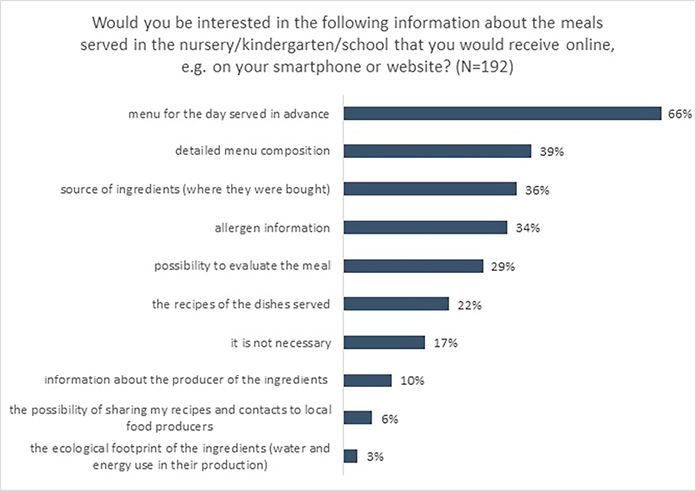
Figure 2. Parents’ expectations regarding information about food served in educational institutions in Słupsk. Source: Developed by the authors.
Concerning technology, the kindergartens included in the study already had various tools (websites, electronic communicators and specialist menu-making software). However, used principally for communication and knowledge exchange purposes, they were neither participatory nor a regular form of contact or information sharing. In most cases, kindergartens merely sent self-selected meal-related data. Parents had only a limited influence on this system. This status quo seemed to result from the highly technical nature of the infrastructure used by the public entities and local government for knowledge and data management.
Another obstacle was the clear institutionalisation of the participation processes initiated by the city and the general problem of involving citizens in the processes of data collection and use of non-expert knowledge as this would reflect negatively on the public food procurement systems. Technical and oriented towards control and regulation, they would leave no room for experimentation, and would engage a broader spectrum of actors in the process. What was needed was a two-way infrastructure, based on IT solutions, for management of knowledge about the city, including issues related to food. However, the City Hall, as the supervising body, realised the untapped potential of local producers. Organisationally, public institutions seemed capable of introducing changes, although the translation of these potentials into actual facilitation and organisational management of the food distribution system was missing so far. The focus was on the impact of food and nutrition on children’s health, with educational activities structured around it. The communication and environmental impacts of food had not yet been given much voice to public food procurement.
The implementation phase results: Construction of the IT tool to support SPFP
Knowledge of the local public food system, tools and technology used by management for communication with stakeholders, and expectations concerning food in kindergartens enabled us to move to the implementation phase. This was a participation-oriented and workshop-based process (Workshop 1) intended to co-design an IT tool (online platform) for communication and knowledge exchange regarding sustainable food procurement for selected kindergartens.
The results of Workshop 1 indicated the needs of stakeholders regarding the local food system, which were similar to those reported by parents in the survey questionnaire. The participants of Workshop 1 defined the following values (see Figure 3) as important to the local food system: food must be healthy and of local origin, and information about it must be verifiable. Access to local food emerged as an important aspect of supporting local producers and building a sense of local identity – ‘local food is good because it is ours’. However, doubts were raised about whether local food was indeed healthy and safe. Hence, the participants felt the need to control local producers and operate a verification system to ensure the quality of local market products.
Access to healthy food and verification of this knowledge also emerged as key topics during Workshop 1. Easy access to this information was reported by respondents as another important aspect, on par with the possibility of children and parents assessing meals as a form of data verification. As kindergarten children were too young to assess a meal, parents could do it only by proxy. At best, parents could monitor the nutritional value of the meal, based on the declared ingredients. Information about the ecological footprint of kindergarten food proved the least important.
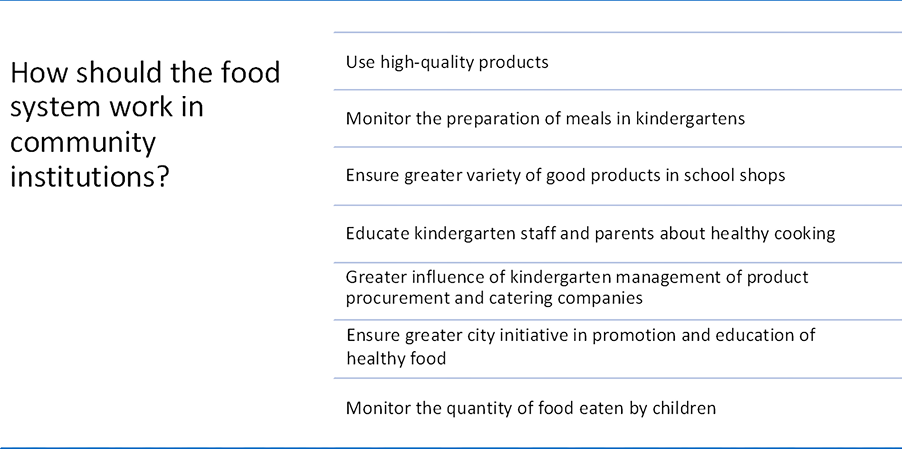
Figure 3. Collected needs related to food system operation in educational institutions determined by the participants in Workshop 1. Source: Developed by the authors.
At a particular stage in the workshop, the participants were asked to design a tool for communication and knowledge exchange on sustainable food in kindergartens. This phase was intended to define their expectations, technical functionalities and the scope of information provided by the IT tool. The participants proposed that the latter should contain:
• A database based on a map with information on local food and local food suppliers
• Information about the quality of food in local shops, markets and restaurants
• Information about places where people can leave food they do not need
• Data on food in kindergartens, e.g. menus, recipes, simple comparisons of food products (meat/fish/vegetables/fruit) and the quantities used per week/month/year, and transparency of the supply chain
• An educational section dedicated to healthy food
• A smartphone app as potential users would expect this tool.
The proposed functionalities of the IT tool would provide sufficient space and potential for co-creating knowledge about the local food system. For example, the database of local producers would be supplemented by citizens and the producers themselves in assessing local food, initiating food-sharing processes among citizens, exchanging recipes and information on healthy eating between educational institutions and citizens, as well as among citizens themselves. Using the collected data, the project partners responsible for the IT solutions developed tools for the collection and visualisation of food data in Słupsk’s kindergartens. A view of the data collection tool is shown in the graph below (Figure 4).
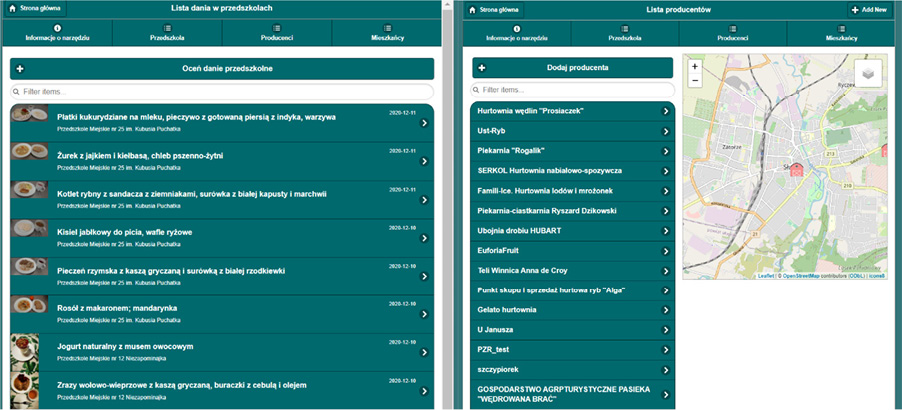
Figure 4. Menu in local kindergartens and the database of local producers. Source: Developed by the authors.
The following functions were available to respond to the needs expressed by the stakeholders:
• Information about meals served in the kindergarten (menu).
• Detailed information about the main products used in the preparation of meals (weight of the dish and main ingredients, calories, allergens, photo of the meal, the amount of waste generated during meal preparation, and the origin of the food – essential for our project purposes – labelled as local, regional, domestic and from abroad).
• Scoring of meals served in the kindergarten by children and parents.
• Map of local food producers, local wholesalers, and shops where kindergartens procure products, with an option for parents to add new vendors.
• Option for parents to share their ideas for meals – by adding photos and recipes.
The tool was supplemented by researchers with the relevant indices of sustainable food production and consumption, such as distance between the producer and the consumer, the local/national/global nature of the distribution network, the carbon and water footprints, and greenhouse gas emissions.
The data-gathering component of the tool was based on a graphical interface presenting the meal and detailed information thereof, a map to locate the places where kindergartens purchase food products, a graphical summary of meal assessments by parents, an analytical part for the visualisation of the carbon and water footprint, and the presentation of summary data sets. The view of the visualisation data tool is shown in the graph below (Figure 5). One of the most important elements of the tool for parents was the ability to assess the meals served in kindergartens. The resulting data was visualised using a simple system of star and heart symbols. The ratings of parents and children, as well as the average scores, could be compared. The tool also gathered information about perceived healthiness, apart from the sustainability of the meal, to emphasise the most important data.
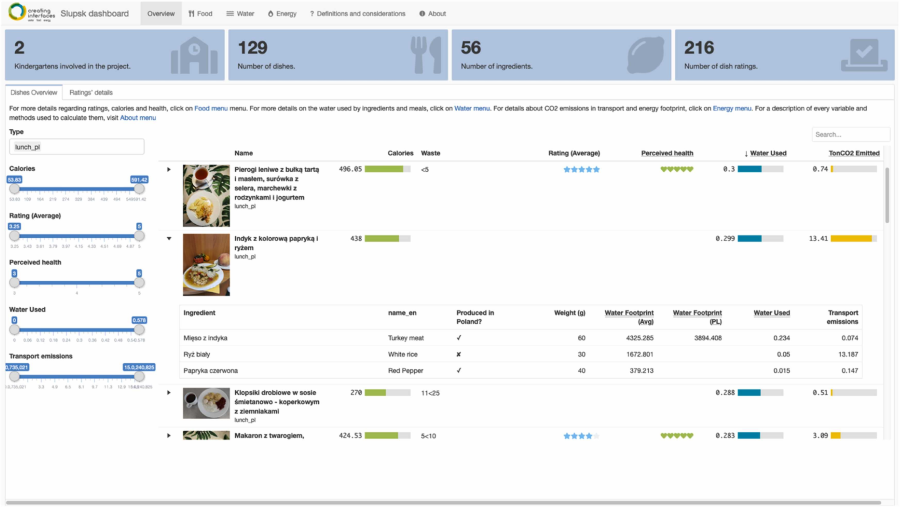
Figure 5. IT tool for data visualisation – presentation of detailed data on the meal and its assessment. Source: Developed by the authors.
The visualisation component (Cámara-Menoyo et al. 2022) displayed the data collected from the kindergartens and combined it with other data sources essential for sustainable community development, such as the water footprint and CO2 emissions, based on the ingredients’ location. Products were assigned a category based on their place of production, i.e. local, regional or national (Poland), from Europe or from outside Europe.
Data collection proved to be a significant challenge and a difficult barrier to making the public food procurement system more aligned with sustainable community development. This was due to the difficulty in visualising the strong linkages between community, food and environment (more specifically), and how all of these are impacted by food choices. To make that possible, products were assigned a category based on their place of production: local, regional, domestic (Polish), from Europe, and from outside Europe. Consequently, the comparisons of products processed by kindergartens could serve as the springboard for a discussion about the introduction of more sustainable catering or educational material. Attention was also paid to the meal scores, a vital element in making decisions about possible food changes. The first was related to the specificity of a food system. Even relatively simple factors, such as food miles, carbon or water footprint, can turn out to be difficult to measure in practice. There was also a lack of knowledge and specific data on places of origin and exact food production, processing and transport methods. Consequently, we were forced to rely on general data on global production.
The experiment revealed that it was easiest to obtain this data from local or regional food producers, as both their attitude and manufacturing processes were more transparent. Eventually, several direct food providers were tracked down, while the trail of other food suppliers, such as local food wholesale distributors, bakeries and shops, was quickly lost.
There were also technical problems. During the testing phase, the participants pointed out that the data collection process was not automated. At the stage of tool construction and testing, it turned out that the new IT solution did not communicate automatically with the current software used in kindergartens. Consequently, most of the work on data had to be carried out manually. This was one of the key reasons why representatives of kindergartens showed limited interest in further development of the tool and its potential for permanent implementation. Representatives of kindergartens felt uncomfortable about the tool being overtly open to feedback from parents and children. However, their major concern was that parents could seek changes in the child nutrition system, with which kindergartens may not be able to comply. Certain limitations were pointed out, arising from compliance with the internal rules and central legal regulations on child nutrition. Another potential risk related to the proposal to assess meals served in kindergartens. From the institutions’ perspective, it would be difficult to consider meal changes in response to negative assessments of the meals, due to their perceived nutritional value or children’s tastes.
Another challenge during the implementation phase was the involvement of local food system stakeholders in the processes of kindergartens. The task that the kindergartens and parents faced at the initiation stage (i.e. participation in the survey) was specific, set in time and not difficult. Given the requirement of more advanced forms of cooperation and greater involvement (e.g. participation in workshops, ongoing work on tool testing and implementation), the stakeholders’ participation and enthusiasm in the process decreased. Eventually, we continued our work with two public kindergartens and a dozen or so parents. This situation might have been due partially to the lack of a broader discussion of food in the city and in kindergartens, and the limited experience of the local community and institutions with similar practices. Insufficient legitimacy of the process by the city authorities, who have an impact on decisions made by public kindergartens, was probably another negative factor. Possibly, the very specificity of the process made it even more difficult for them to become more involved. Its experimental nature, general framework and lack of any way of knowing the result may not have been a sufficiently transparent or comfortable decision-making structure for most people. Although it covers the fundamental values of participation processes, based on developing solutions in cooperation with stakeholders and in response to their needs, possibilities and resources, it can be a challenge for local communities.
The evaluation and replication of planning phase results: A potential for knowledge-based decision-making in SPFP
Given the purpose of the experiment, it was important for us to evaluate the solutions for linking the community with food production and distribution. The data on the usability and functionality of the IT tool and the possibility of the latter’s future use in kindergartens in Słupsk was collected based on the IT tool’s evaluation with participants during Workshop 2 and the roundtable meeting. We thus obtained knowledge from the most important stakeholders in the experiment, who were directly involved in the activities and had an impact on decisions made by the city authorities and institutions.
The evaluation phase of the ULL process showed that parents were most interested in information from kindergartens (menus, detailed information about meals) and much less in the functionalities, allowing them to add information about local food producers or the meals prepared at home. This shows that users perceived the IT tool explicitly as a means of obtaining information, rather than sharing the information themselves. Initially, they focused on what constituted essential knowledge to them – the taste, quality and composition of the food. Food safety and the health of children in kindergartens were their priorities. Nevertheless, during the platform testing, we observed certain changes and the first signs of people focusing on the value of sustainable food systems. We thus assume that the hybridisation and creation of the SPFP system will be a long-term and gradual process. The platform attracts parents by allowing them to control meals served to children in kindergartens and, therefore, a feeling of safety. Parents start using the platform and, consequently, become involved in the cognitive process of knowledge exchange. The IT platform turns into a forum where parents, kindergarten staff, officials and food producers can learn about the complexity of the food chain, regardless of their initial motivations.
While the paramount status of knowledge about health and food safety remained beyond question, respondents highlighted the innovative input of the platform. Some directly expressed their surprise at the presented data – for example, carbon dioxide emissions for specific products. Some data worth presenting, according to the participants, concerned another environmental issue related to food – the amount of waste generated by leftovers after meals. This is an important factor, present in the public debate and consumer culture, to nclude in the tool. Playing the role of a gatekeeper, relevant information for consumers, producers and the public sector could be used to raise awareness of the linkages between food and the environmental costs of its production. The stakeholders recognised the potential for this IT tool in its possible future use. Users highlighted the role of the tool in increasing knowledge and raising residents’ awareness of food, and the possibility of creating local knowledge as a bottom-up movement, by adding information about local producers.
Conclusion
Our experiment aimed to use a digital platform for knowledge exchange to initiate a discussion about the potential effects and possibilities of greening the public food procurement system in Słupsk’s kindergartens. To this end, we applied the ULL method to develop, together with local residents and officials, a space for the collection and exchange of knowledge about food.
In the process, we identified primary challenges that may hinder or support the process of linking knowledge about food and the natural environment with the system of food ordering, preparation and distribution in public institutions:
1. Sustainable food systems cannot be limited to ensuring good quality, nutritional value and safety of food (all of which were crucial according to the stakeholders in our experiment). However, beyond onboarding these aspects, sustainable food systems must also ensure sustainable management of available resources, minimise the environmental costs of food production, and support the local economy. A strong consumer focus exclusively on health-related issues reduces the SPFP development potential and its impact on the local community. Even though food safety is a good starting point to inspire citizen participation, it took a lot of effort to expand our activities to include other aspects of food.
2. Our experiment showed the importance of technical design and data visualisation. The tool must be simple and user-friendly, and cannot generate an excessive workload for those responsible for platform management. Most importantly, the collection of data on meals must be automated. Graphic content also plays a crucial role. In our case, simple visualisations of environmental pollution made parents interested in food production costs, while photos of kindergarten meals inspired a discussion about food among parents.
3. Another important conclusion from our experiment was the necessity of having local entities and people managing the local community truly involved in the decision-making processes. Changes in the local system of sustainable food procurement must be preceded by work on the multilevel mode of community governance. The local community, its representatives and its institutions must join in the process. They should become an integral part of it and internalise the objectives of the activities.
The most important conclusion from our experiment concerns the fragility of the proposed solutions. Despite all limitations indicated at the individual stages of the process, what proved to be the biggest challenge was not the construction of the IT tool or securing the involvement of the parents and kindergarten representatives, but the consolidation of the experiment and the attempt to extend it beyond the timeframe of the project.
Engaging NGO and university activists, IT specialists, kindergarten staff, city officials and parents in the experimentation and co-creation process required complex, time-consuming and costly interventions, such as organising a series of workshops, having several meetings and putting in place a robust data collection system, not to mention the translation of decisions into the platform. In addition, the final form of the IT tool was just as much a product of technological limitations, food systems and their rules of operation, data (non)availability, public governance mode, and citizen profile. With all these constraints in mind, when designing a change based on socio-technological solutions, one needs to remember that it is not enough to create an efficient tool. Such a tool must always be adapted to the system capacity, the analysis of which should be a vital part of the design framework ab initio.
References
Bleda, M & Chicot, J 2020, ‘The role of public procurement in the formation of markets for innovation’, Journal of Business Research, vol. 107, pp. 186–96. https://doi.org/10.1016/j.jbusres.2018.11.032
Boni, Z 2014, ‘Contested interactions: School shops, children and food in Warsaw’, The International Journal of Sociology of Agriculture and Food, vol. 21, no. 3, Special Issue: Children’s food practices and school meals, pp. 309–25. https://doi.org/10.48416/IJSAF.V21I3,143
Boni, Z 2015, ‘Negotiating children’s food culture in Post-socialist Poland’. https://doi.org/10.4000/aof.7782
Boni, Z 2018, ‘It’s safe: Food as a way of expression for children in Warsaw’, Children’s Geographies, vol. 16, pp. 393–404. https://doi.org/10.1080/14733285.2017.1319045
Braun, C, Rombach, M, Häring, A & Bitsch, V 2018, ‘A local gap in Sustainable Food Procurement: Organic vegetables in Berlin’s school meals’, Sustainability, vol. 10, pp. 42–45. https://doi.org/10.3390/su10114245
Cámara-Menoyo, C, Porto de Albuquerque, J, McInerny, G & Tregonning, G 2022, ‘Visualisation tool for a grounded FEW Nexus’ (0.0.99). https://zenodo.org/record/6566159#.YtZL1R3yt60, https://doi.org/10.5281/zenodo.6566158
Cayolla Trindade, P, Antunes, P & Partidário, P 2018, ‘SPP Toolbox: Supporting sustainable public procurement in the context of Socio-Technical Transitions’, Sustainability, vol. 10, p. 67. https://doi.org/10.3390/su10010067
Collison, M, Collison, T, Myroniuk, I, Boyko, N & Pellegrini, G 2019, ‘Transformation trends in food logistics for short food supply chains – What is new?’, Student Agricultural Economics, vol. 121, pp. 102–110. https://doi.org/10.7896/j.1909
Dańkowska, A, Stasik, A, Strumińska-Kutra, M 2022, Building common urban futures: City Labs for urban energy transitions, Akademia Leona Koźmińskiego, viewed 18 July 2022. https://sonnetenergy.eu/wpcontent/uploads/2022/02/SONNET_CityLabGuide.pdf
Dyg, P & Mikkelsen, B 2017, ‘Cooperation models, motivation and objectives behind Farm School Collaboration: Case insights from Denmark’, The International Journal of Sociology of Agriculture and Food, vol. 23, no. 1. https://doi.org/10.48416/IJSAF.V23I1,128
Egberg M 2020, ‘Passive feeding or active learning in the kindergarten foodscape?’ The International Journal of Sociology of Agriculture and Food, vol. 26, no. 1. Regular Issue: Trends in Food and Agriculture, pp. 1–25. doi: 10.48416/IJSAF.V26I1.72
Eikelboom, M, Gelderman, C & Semeijn, J 2018, ‘Sustainable innovation in public procurement: the decisive role of the individual’, Journal of Public Procurement, vol. 18, pp. 190–201. https://doi.org/10.1108/JOPP-09-2018-012
Felt, U & Fochler, M 2011, ‘Slim futures and the Fat Pill: Civic imaginations of innovation and governance in an engagement setting’, Science as Culture, vol. 20, pp. 307–28. https://doi.org/10.1080/09505431.2010.524200
Flynn, A & Bailey, K 2014, ‘Sustainable food supply chains: the dynamics for change?’, in T Marsden & A Morley (eds), Sustainable food systems: Building a new paradigm, Routledge Taylor & Francis Group, London.
Fonte, M 2008, ‘Knowledge, food and place: A way of producing, a way of knowing’, Sociologia Ruralis, vol. 48, pp. 200–22. https://doi.org/10.1111/j.1467-9523.2008.00462.x
Fonte, M & Papadopoulos, A (eds) 2016, Naming food after places: Food relocalisation and knowledge dynamics in rural development, Routledge, London. https://doi.org/10.4324/9781315597195
Forssell, S & Lankoski, L 2015, ‘The sustainability promise of alternative food networks: An examination through “alternative” characteristics’, Agriculture & Human Values, vol. 32, pp. 63–75. https://doi.org/10.1007/s10460-014-9516-4
Galli, F & Brunori, G 2013, Short Food Supply Chains as drivers of sustainable development: Evidence Document, viewed 18 July 2022. https://orgprints.org/id/eprint/28858/1/evidence-document-sfsc-cop.pdf
Gelli, A & Aurino E, 2021, ‘School food procurement and making the links between agriculture, health and nutrition’, in Public Food Procurement for Sustainable Food Systems and Healthy Diets, vol. 2, eds. F Swennsson, D Hunter, S Schneider & F Tartanac, Food and Agriculture Organisation, Bioversity International.
Gibbons, M 2020, ‘Mode 2: Society and the emergence of context-sensitive science’, Science and Public Policy, vol. 27, no. 3, pp. 159–63. https://doi.org/10.3152/147154300781782011
Goodman, D, DuPuis, E & Goodman, M 2012, Alternative food networks: Knowledge, practice, and politics, Routledge, Abingdon, Oxon, New York. https://doi.org/10.4324/9780203804520
Goodman, D, Goodman, M & DuPuis, E 2014, Alternative food networks: Knowledge, practice and politics, Routledge, Taylor & Francis Group, London, New York.
Gustafsson, K 2013, The importance of trust: a study of knowledge production of biodiversity, Dissertation, Örebro University.
Haden, R 2006, ‘Pandora’s Lunchbox’, Food, Culture & Society, vol. 9, pp. 265–74. https://doi.org/10.2752/155280106778813242
Hansen, S & Kristensen, N 2017, ‘Food for kindergarten children: Who cares? Relations between food and care in everyday kindergarten mealtime’, Food, Culture & Society, vol. 20, pp. 485–502. https://doi.org/10.1080/15528014.2017.1288783
Harman, V, Cappellini, B & Faircloth, C (eds) 2018, Feeding children inside and outside the home: Critical perspectives, Routledge, Abingdon, Oxon, New York. https://doi.org/10.4324/9781315206974
Iulio, S & Kovacs, S 2014, ‘Between pleasures and risks: The circulation of knowledge about food in French Primary Schools’, The International Journal of Sociology of Agriculture and Food, vol. 21, no. 3: Special Issue: Children’s food practices and school meals, pp. 327–45. https://doi.org/10.48416/IJSAF.V21I3,144
Jones, M 2021, ‘Public food procurement and the Sustainable Development Goals’, in F Swennsson, F Hunter, D, Schneider, S & Tartanac, F (eds), Public food procurement for sustainable food systems and healthy diets – Volume 1, Bioversity International.
JPI URBAN EUROPE 2013, Urban Europe: Creating attractive, sustainable and economically viable urban areas, joint call for proposals, viewed 18.07.2022. https://www.ffg.at/sites/default/files/jpi_ue_pilot_call_2_-_call_text_final_2013-06-18.pdf
JPI URBAN EUROPE 2014, URB@EXP Second Call: Towards new forms of Urban Governance and City Development: Learning from URBan experiments with Living Labs & City Labs, Joint Programming Initiative Urban Europe, ‘Global Urban Challenges, Joint European Solutions’, viewed 18 July 2022, https://jpi-urbaneurope.eu/urbanlivinglabs/.
Kevin, M & Morley, A 2014, ‘The public plate: Harnessing the power of purchase’, in T Marsden & A Morley (eds), Sustainable food systems: Building a new paradigm, Routledge Taylor & Francis Group; Earthscan from Routledge: London, New York.
Kevin, M & Morley, A 2016, Re-localising the food chain: The role of creative public procurement, Cardiff, Wales.
Knutsson, H & Thomasson, A 2014, ‘Innovation in the Public Procurement Process: A study of the creation of innovation-friendly public procurement’, Public Management Review, vol. 16, pp. 242–255. https://doi.org/10.1080/14719037.2013.806574
Laborgne, P, Ekille, E, Pierce, A, Heyder, M, Suchomska, J, Balaican, D, Wendel, J, Ślebioda, K, Wróblewski, M & Goszczyński, W 2021, ‘Urban Living Labs: How to enable inclusive transdisciplinary research?’, Urban Transformations, vol. 3, no. 11. https://doi.org/10.1186/s42854-021-00026-0
Lewis, T 2018, ‘Digital food: From paddock to platform’, Communication Research and Practice, vol. 4, pp. 212–28. https://doi.org/10.1080/22041451.2018.1476795
Marsden, T & Morley, A (eds) 2014, Sustainable food systems: Building a new paradigm, Routledge Taylor & Francis Group: Earthscan from Routledge, London, New York. https://doi.org/10.4324/9780203083499
Maye, D 2013, ‘Moving alternative food networks beyond the niche’, International Journal of Sociology of Agriculture and Food, vol. 25, no. 1 (2019): January Issue, pp. 383–89.
McCormick, K & Hartmann, C 2017, The emerging landscape of Urban Living Labs: Characteristics, practices and examples, viewed 18 July, 2007; 2022. https://lup.lub.lu.se/search/ws/files/27224276/Urban_Living_Labs_Handbook.pdf
Michel-Villarreal, R, Vilalta-Perdomo, E, Canavari, M & Hingley, M 2021, ‘Resilience and digitalization in short food supply chains: A Case Study Approach’, Sustainability, vol. 13, no. 5913. https://doi.org/10.3390/su13115913
Moragues Faus, A, Morgan, K, Moschitz, H et al. 2013, Urban food strategies: The rough guide to sustainable food systems, viewed 18 July 2022. https://orgprints.org/id/eprint/28860/1/foodlinks-Urban_food_strategies.pdf. https://doi.org/10.4324/9781003055907-1
Morgan, K 2008, ‘Greening the realm: Sustainable food chains and the public plate’, Regional Studies, vol. 42, pp. 1237–1250. https://doi.org/10.1080/00343400802195154
Morley, A 2021, ‘Procuring for change: An exploration of the innovation potential of sustainable food procurement’, Journal of Cleaner Production, p. 279. https://doi.org/10.1016/j.jclepro.2020.123410
Parsons, K & Barling, D 2022, ‘Identifying the policy instrument interactions to enable the public procurement of sustainable food’, Agriculture 12. https://doi.org/10.3390/agriculture12040506
Preuss, L 2009, ‘Addressing sustainable development through public procurement: the case of local government’, Supply Chain Management, vol. 14, pp. 213–23. https://doi.org/10.1108/13598540910954557
Prier, E, Schwerin, E & McCue, C 2016, ‘Implementation of sustainable public procurement practices and policies: A sorting framework’, Journal of Public Procurement, vol. 16, pp. 312–346. https://doi.org/10.1108/JOPP-16-03-2016-B004
Schutter, O, de Quinot, G & Swensson, L 2021, ‘Food procurement as a development tool: The role of the regulatory framework’, in F Swennsson, D Hunter, S Schneider & F Tartanac (eds), Public food procurement for sustainable food systems and healthy diets, vol. 1, FAO: Bioversity International.
Sonino, R 2021, ‘Public procurement as a sustainable food and nutrition security strategy’, in F Swennsson, D Hunter, S Schneider & F Tartanac, (eds), Public food procurement for sustainable food systems and healthy diets, vol. 1, FAO: Bioversity International.
Sonnino, R 2009, ‘Quality food, public procurement, and sustainable development: The school meal revolution in Rome’, Environ Plan A, vol. 41, pp. 425–440. https://doi.org/10.1068/a40112
Sonnino, R, Faus, A & Maggio, A, 2014, ‘Sustainable food security: An emerging Research and Policy Agenda’, The International Journal of Sociology of Agriculture and Food, vol. 21. Special Issue: Global shocks, changing Agricultural Policy, and the viability of rural communities, pp. 173–88. https://doi.org/10.48416/IJSAF.V21I1,161
Sonnino, R & McWilliam, S 2011, ‘Food waste, catering practices and public procurement: A case study of hospital food systems in Wales’, Food Policy, vol. 36, pp. 823–29. https://doi.org/10.1016/j.foodpol.2011.09.003
Steen, K & Bueren, E 2017, ‘The defining characteristics of urban living labs’, Technology Innovation Management Review, vol. 7, pp. 21–33, viewed 18.07.2022. https://doi.org/10.22215/timreview1088
Steen, K & van Bueren, E 2017, Urban Living Labs: A living lab way of working, Amsterdam: Institute for Advanced Metropolitan Solutions, Delft University of Technology, viewed 18.07.2022. https://www.ams-institute.org/documents/28/AMS_Living_Lab_Way_of_Working-ed4.pdf
Swennsson, F Hunter, D, Schneider, S & Tartanac, F (eds) 2021, Public food procurement for sustainable food systems and healthy diets, Volume 2, FAO, Bioversity International.
Triches, R, Paz Arruda, T, Rosane C, Kirsten R 2021, ‘The acquisition of family farming products for school feeding programmes: Challenges and solutions’, in Public food procurement for sustainable food systems and healthy diets, Volume 2, eds F Swennsson, D Hunter, S Schneider & F Tartanac, FAO; Bioversity International.
Uyarra, E, Edler, J, Garcia-Estevez, J, Georghiou, L & Yeow, J 2014, ‘Barriers to innovation through public procurement: A supplier perspective’, Technovation, vol. 34, pp. 631–45. https://doi.org/10.1016/j.technovation.2014.04.003
Uyarra, E & Flanagan, K 2010, ‘Understanding the innovation impacts of public procurement’, European Planning Studies, vol. 18, pp. 123–43. https://doi.org/10.1080/09654310903343567
Uyarra, E, Flanagan, K, Magro, E & Zabala-Iturriagagoitia, J 2017, ‘Anchoring the innovation impacts of public procurement to place: The role of conversations’, Environment and Planning C: Politics and Space, vol. 35, pp. 828–48. https://doi.org/10.1177/2399654417694620
Veeckman, C, Schuurman, D, Leminen, S & Westerlund, M 2013, ‘Linking living lab characteristics and their outcomes: Towards a Conceptual Framework’, Technology Innovation Management Review, pp. 6–15. https://doi.org/10.22215/timreview748
Wahlen, S, Heiskanen, E & Aalto, K 2012, ‘Endorsing sustainable food consumption: Prospects from public catering’, Journal of Consumer Policy, vol. 35, no. 1, pp. 7–21. https://doi.org/10.1007/s10603-011-9183-4
Walker, H & Brammer, S 2012, ‘The relationship between sustainable procurement and e-procurement in the public sector’, International Journal of Production Economics, vol. 140, pp. 256–68. https://doi.org/10.1016/j.ijpe.2012.01.008
Warin, M 2011, ‘Foucault’s progeny: Jamie Oliver and the art of governing obesity’, Social Theory and Health, vol. 9, pp. 24–40. https://doi.org/10.1057/sth.2010.2
Vicovaro, M, Puhač, A & Scarpocchi, C 2021, ‘Localising sustainable development goals: Public food procurement in municipalities and local institutions’, in F Swennsson, D Hunter, S Schneider & F Tartanac, Public Food Procurement for Sustainable Food Systems and Healthy Diets, vol. 2 (Bioversity International, FAO).
Voytenko, P, McCormick, K, Evans, J & Schliwa, G 2016, ‘Urban living labs for sustainability and low carbon cities in Europe: Towards a research agenda’, Journal of Cle pro., 123, pp. 45–54. https://doi.org/10.1016/j.jclepro.2015.08.053