Gateways: International Journal of Community Research and Engagement
Vol. 19, No. 1
September 2026
RESEARCH ARTICLE (PEER REVIEWED)
When Community Lead, All Benefit (Including Less-Loved Species): Culturally Focused Community-Designed Outreach Activities Change Attitudes Towards Bats
Kerry M. Borkin1,*, Priscilla Wehi2,3, Ellen Cieraad4, Israel Maxwell5, Kylie McKay5, Tania Bagley5, Sophie Doyle6,7, and Tom Roa3,7,8
1 Terrestrial Biodiversity, Department of Conservation, Taupō, New Zealand 3330
2 Centre for Sustainability, University of Otago, Dunedin, New Zealand 9016
3 Te Pūnaha Matatini National Centre of Research Excellence in Complex Systems, University of Auckland, New Zealand 1142
4 Department of Conservation, Nelson, New Zealand 7011
5 Pekapekarau School, Te Awamutu, New Zealand 3800
6 Ngāti Kahu, Te Rarawa
7 University of Waikato, Hamilton, New Zealand 3240
8 Tārewanga Marae, Waikato-Maniapoto, Apakura
Corresponding author: Kerry Borkin, kborkin@doc.govt.nz
DOI: https://doi.org/10.5130/y6d54t85
Article History: Received 11/10/2025; Revised 30/04/2026; Accepted 24/08/2026; Published 09/2026
Abstract
Highlights
• Not all species are well-liked by all people. This can mean people don’t support their conservation.
• Well-designed outreach activities can increase how much people like some species.
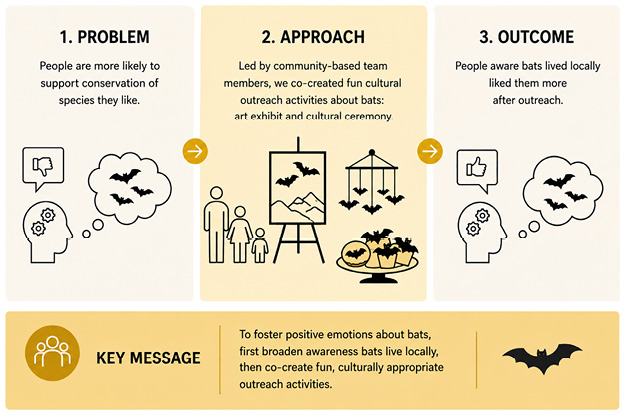
• Our partnership included Pekapekarau School teachers and researchers from universities and a government agency. We worked together to create fun, culturally focused outreach activities centred on bats: a renaming ceremony and art exhibition.
• We took turns leading. The teachers in the team led the design of activities, and the researchers tested whether people liked bats more afterwards.
• On average, people liked bats more afterwards; those who were most aware that bats were present locally had the greatest positive change.
• To foster positive emotions about bats, first, broaden awareness that bats live locally, and then co-create fun, culturally appropriate outreach activities.
Community partnerships are important because they enable successful conservation outcomes for many species. Although communities may support protective action when species are liked, engagement methods to increase support for other species are often ineffectual. Public attitudes about species such as bats can be particularly difficult to change because of entrenched misinformation. Trialling outreach activities designed to trigger positive emotions that might then be associated with bats has been recommended as a possible way forward. This community–researcher partnership in New Zealand used the process of correcting the previously shortened and misspelled name of Pekerau School to Pekapekarau School (meaning ‘multitudes of bats’ in the native Māori language) to co-create teacher- and child-led community activities focused on bats: a naming ceremony that centred Māori protocols and an art exhibition. Most of the school community is Māori. The teachers in our team led the creation of both community activities, along with the students. We considered that both activities were likely to evoke the positive emotion of ‘pride’ in their children, and potentially pride in their culture, as well as the feeling of ‘connectedness’ with their community. Together, teachers, students and researchers co-created a survey to understand how these activities influenced attitudes towards bats within the school community. Most of the 68 survey participants self-reported a change of attitude and an increase in positive feelings towards bats. People with higher levels of awareness that bats were present locally also reported greater changes in attitudes, highlighting the value and influence of outreach activities on attitudinal change, even to those already knowledgeable about the species.
These findings demonstrate how community partnerships can raise species awareness and foster a positive affinity that resonates culturally, which should encourage those who support and participate in outreach activities. We recommend further trialling of the co-creation, with communities, of outreach activities that evoke positive emotion in participants to increase positive attitudes towards threatened species. Attitude change may be greater if participants know the threatened species are present locally. Being familiar with the community and designing outreach activities that work for them, both in their setting and approach, were crucial to the success of the outreach activities. Enabling community members to lead when designing and delivering outreach activities, as our approach did, is likely to increase their effectiveness in fostering attitudinal change.
Visual abstract
Keywords
Community Engagement Activities; Conservation Partnerships; Cultural Salience; Indigenous Peoples; Māori; Outreach; Co-creation
Introduction
Best practice for successful conservation outcomes involves collaboration between many groups, including Indigenous and rural communities (Allen, McLean & Pessagno 2022). Indigenous and rural communities manage large land areas (Drescher & Warriner 2022), either alone or in partnership with governmental organisations. Here, effective, long-term protection of species and ecosystems requires collaboration between conservation professionals and community partners (Berkes 2004), and participation means the likelihood of long-term success of restoration projects increases (Wehi & Lord 2017). However, Indigenous and rural communities remain underrepresented in conservation organisations and programs (Drescher & Warriner 2022; Gerolemou, Russell & Stanley 2024).
Many factors influence conservation attitudes and priorities. Community attitudes – such as the degree to which people like an individual species – strongly influence how much communities support government actions to protect a species (Bruder et al. 2022). When community members value and treasure their connection to a species, they act in ways less likely to degrade these systems (Pooley & O’Connor 2000) and are more likely to support conservation actions (Taylor et al. 2021).
People can dislike species because they evoke fear, they harm people or their property, or they are associated with previous negative experiences or cultural connotations (Fern 2023). It can be difficult to change attitudes towards disliked species, and these can be the very species needing support to persist. Providing positive information about disliked species may have limited effect on attitudes (Kingston 2015), but changing attitudes is even harder when people know little about the species or have received misinformation. Kingston (2015) suggested that a better approach might be influencing attitudes towards disliked species by associating them with positive emotions (that is, ‘evaluative conditioning’, also known as emotion learning or affective conditioning; De Houwer et al. 2001). Evaluative conditioning targets emotions, beliefs or values, so it may be more likely to change attitudes towards species than positive information or knowledge (Kingston 2015). This conditioning’s effect is the strongest when groups know little about issues, topics or species (Kingston 2015).
Age may also play a role in attitude change. Two competing models theorise how age influences attitudinal change. The ‘impressionable years’ model of learning suggests that younger people are especially open to attitudinal change, whereas the ‘lifelong openness’ model suggests people are equally open to changing attitudes at any age (Tyler & Schuller, 1991). Older people often have more negative attitudes towards conservation than younger people, perhaps because of past socio-historical contexts when conservation concerns were less prominent (Drescher & Warriner 2022). Older people are also more likely to be involved in conservation decision-making due to seniority and community standing, so their support is crucial for conservation. In all cases, it is clear that influencing young people is crucial before negative attitudes become embedded.
Worldwide, bats (Chiroptera) are frequently disliked (Knight 2008). Whilst this varies by region (in the Asia Pacific, for example, Indigenous cultures have more positive associations than cultures elsewhere; Low et al. 2021), bats are most commonly linked to negative emotions and fear, and they may be persecuted (Kingston 2015). Bats are nocturnal, often rare, and infrequently, often fleetingly, encountered, so most people have limited knowledge and few personal positive experiences (Kingston 2015). So, personal attitudes are most likely influenced by negative experiences, attitudes of other people (Kingston 2015) or negative mainstream media messaging (Low et al. 2021). Intended or actual killing of bats has occurred in Peru, India, Australia and Indonesia in response to negative media messaging during the COVID-19 pandemic (see Rocha et al. 2021). By contrast, a recognition of bats as ancestors of humans, deeper symbolic meaning and characteristics attributed to bats, and historic and current harvesting traditions all mean that bats remain culturally important in some Indigenous communities (Low et al. 2021). Nonetheless, disconnection from nature and exposure to negative stories in the media mean many communities removed from their lands are now less likely to hold positive views towards bats (Low et al. 2021).
To address potentially low levels of support for bat conservation, Low et al. (2021) recommended a multi-pronged approach: building understanding of communities’ values, perceptions, beliefs and practices around bats; and developing outreach activities leveraging cultural values to increase positive attitudes. Importantly for bats, outreach activities can result in people liking them more (Kingston 2015). Outreach activities can be powerful motivators for community members to engage in conservation actions, particularly when activities are linked to community values or are the reasons for their participation (Taylor et al. 2021). Outreach activities can also inform communities, provide them with ‘ownership’ of management of a site or issue, and increase a volunteer workforce, resulting in increased support for species and ecosystems (Taylor et al. 2021). Outreach activities can motivate people to change opinions, feelings and attitudes by informing, identifying and highlighting topics, ideally triggering interest and encouraging action (Jacobson, McDuff & Monroe 2015).
Conservationists and environmental managers often work with communities to organise, support and increasingly co-create local conservation-based outreach activities, but to be effective, approaches must suit communities (Taylor et al. 2021). Outreach activities to increase knowledge and understanding of species are rarely designed to appeal to individuals’ emotions, despite these predicting attitudes towards the environment and species (Pooley & O’Connor 2000). Activities may have little appeal if they are designed with limited groups in mind (Falloon, Freeman & van Heezik 2021; Taylor et al. 2021), are not ‘fun’ (pleasurable; McAteer et al. 2021) or exclude social aspects that build community connections and encourage continued participation (Gerolemou, Russell & Stanley 2024; McAteer et al. 2021).
In addition to conservation benefits, perceived benefits of outreach, including improved physical and mental well-being and increased community connection, drive participation (Takase, Hadi & Furuya 2019). Feeling welcome in these spaces, and easy access, are also important. For Indigenous Māori people in Aotearoa New Zealand (henceforth Aotearoa), cultural connection to place and family relationships influence participation in conservation activities (Walker et al. 2024). Pākehā (New Zealand European) urban retirees with free daytime hours participate in activities in their local neighbourhoods (Heimann & Medvecky 2022; Wehi & Lord 2017). Nonetheless, social activities are often not included alongside conservation activities (Gerolemou, Russell & Stanley 2024). The absence of social activities or opportunities for social connection within conservation activities can discourage people from repeated participation or from taking part at all (McAteer et al. 2021; Taylor et al. 2021).
Location, and holding activities where people are comfortable, may also influence community members’ attendance at outreach activities. For example, urban retirees prefer to participate near their homes (Heimann & Medvecky 2022; Varona et al. 2021; Walker et al. 2024), whereas rural communities prefer places they regularly visit or can easily access without significant travel or time invested (Rong, Ristevski & Carroll 2023). Indigenous Māori people are most likely to participate in environmental activities organised by extended family groups near their marae (extended family gathering places; Varona et al. 2021).
Activity type can also drive participation. White, middle-class, urban dwellers with higher levels of education and higher incomes are more likely to attend science talks or visit places, such as zoos, that typically run science outreach activities (Dawson 2018). By contrast, low-income and ethnic minority groups often feel unwelcome in these places (Dawson 2018) and may find visits to these prohibitively expensive (Dawson 2014). Indigenous or rural communities may be marginalised in ecological restoration activities and outreach programs due to poor activity design, despite their long-standing connection to the place (Berkes 2004; Drescher & Warriner 2022). In short, activities often reach some sectors of a diverse community but not others (Falloon, Freeman & van Heezik 2021; Taylor et al. 2021), and unrecognised power imbalances or barriers influence attendance, uptake and enjoyment of activities (Dawson 2018).
Lastly, focusing conservation outreach and engagement on culturally important species in Indigenous and rural communities may result in greater attitude changes and engender increased support than focusing on species less connected with those communities (Garibaldi & Turner 2004). Species like bats are considered culturally significant when linked with local communities because they are/have been eaten, harvested, used or are connected spiritually with the community (Garibaldi and Turner, 2004) or their ancestors (Waitangi Tribunal 2011). Yet even when species are culturally significant, not all species are equally visible, charismatic or liked (Fern 2023). Bats are an example in many colonised cultures (Low et al. 2021); there is growing acknowledgement in some countries, for example, Aotearoa, that bats may be culturally significant and historically treasured (authors’ personal observation).
In Aotearoa, all bats (collectively known as pekapeka, the long-tailed bat Chalinolobus tuberculatus; the lesser short-tailed bat, Mystacina tuberculata; and the greater short-tailed bat, Mystacina robusta) are threatened with extinction to varying degrees (O’Donnell et al. 2023). Threats to their persistence include continuing habitat loss and degradation (particularly loss of old trees for roosting and replacement of forested areas with cities, towns and associated infrastructure) and high rates of depredation by introduced mammals (O’Donnell et al. 2023). All these threats need to be mitigated or managed to halt population declines, but often the tools to do so are not supported by the public, so they cannot be enacted (authors’ personal observation). Historically, bats were treasured (taonga) by Māori, but over time, this connection has frayed (Watkin 2025).
Bats and their conservation may therefore benefit from outreach activities designed to increase how much people, and particularly Indigenous and rural communities, like them (Low et al. 2021). Outreach activities using evaluative conditioning approaches to link positive emotions with bats, through fun activities that build connection within communities, may be most effective at changing attitudes (Kingston 2015). Incorporating conservation outreach activities into social occasions taking place where targeted communities feel at home is likely key to success when working with communities who do not usually engage with conservation. Despite feelings of connectedness, both between species and participants and amongst the participants themselves, influencing both participation rates and attitudes towards conservation (Garibaldi & Turner 2004; Gerolemou, Russell & Stanley 2024; Walker et al. 2024), these issues are often overlooked in conservation programs (Gerolemou, Russell & Stanley 2024).
Here, we describe one effort to increase positive attitudes towards bats (pekapeka) in Aotearoa: a partnership project between a semi-rural school in a predominantly Māori community, a governmental conservation agency and university researchers. Together, we developed and tested outreach activities. Based on our collective experience, we expected this community to report low levels of awareness that bats were present locally. We anticipated that after people participated in culturally focused affective outreach activities, they would self-report more positive attitudes towards bats. We expected older people to be less likely to have attitudinal change post-activities. We also expected people who reported bats were of more importance to them and those with higher levels of awareness of bats being present locally would have smaller changes in attitudes than those who knew less. We report on the effectiveness of our approach to improving conservation outcomes for less-loved species (Kingston 2015), both qualitatively and quantitatively, and we critically examine what best practice outreach can look like for rural and Indigenous communities.
Methods
This research was a partnership between researchers and the community, arising from a community’s aim to correct the name of Pekerau School, a shortened and incorrect spelling of Pekapekarau, a ‘multitude of bats’ in the Māori language, indicating the local cultural importance of bats to Māori. The school-based team led the design and organisation of activities to celebrate the name change and grow appreciation of bats and their cultural significance locally, whilst the research team led survey design to examine whether participation in species-related activities associated with the name change resulted in more positive attitudes towards bats.
Our Partnership Development and Approach
This collaboration was new for some, but not all, in our partnership. TR - senior researcher, kaumatua (elder) and advisor - was directly involved with the school and has high standing within the broader community for his cultural expertise. He was approached by the school’s ‘teaching team’ (IM, the teacher leading the bat curriculum development; KM, deputy principal; and TB, principal), who sought his understanding of the original school name, his advice on whether changing the current name back to the original name was appropriate and his insight into what that community process would look like. All the school team members are education experts with teaching experience and are an integral part of the local community. TR invited KB, PW and SD to assist and support curriculum development by providing information about bats. KB is a bat researcher, PW an ecologist and SD a Māori student intern working with TR. PW and KB have worked closely with TR on other projects and with other related local communities over many years, but working with this school was a new collaboration. EC joined the team later to assist with analyses.
After TR’s request to collaborate, the research team participated in introductions with the school team. Meeting in person is especially important when a collaboration such as this is new, so we were invited to a face-to-face meeting at the school; KB was able to participate. This was a pōwhiri – a formal Māori process of welcome, introduction and hospitality – in which speaking in Māori, formal singing and sharing food are the norm. We also worked online, which was particularly important during the COVID-19 travel restrictions of 2021 and 2022. The school team highlighted the goals and vision of the proposed project. In turn, the ‘non-school research team’ (TR, KB, PW and SD) reciprocated with various forms of support: they gave a talk to the entire school, were interviewed for a student-led podcast and connected teachers and students with information on key local bat sites and local community bat engagement leaders. Over time, this opened a discussion about this research.
All team members brought their expertise to the partnership and decided on all processes and outputs together. Teaching team members led the curriculum development with support from researchers. The school team also led the exhibition concept, processes for outreach, engagement with researchers from other institutes and the research itself. The university and government researchers led analyses; wrote original manuscript drafts; supported the provision of resources for the school; used personal connections to link the school with experts, places and local information on bats; and sought funding to support activities. The survey we describe later was co-designed by school students, teachers and researchers.
Pekapekarau Primary School and Community
Pekapekarau Primary School is in Te Awamutu (population 13,500), a service town for farming communities approximately 30 km south of Hamilton city, North Island, Aotearoa. At the time, it had a roll of about 210 students aged 5–11 years (Years 1–6); more than half were Māori. Most of the school community have family links to tribes of this area. Initially known as ‘Te Awamutu No. 2 School’, the school was officially opened on 3 February 1958. In April 1958, it was renamed ‘Pekerau’, an incorrect abbreviation of ‘Pekapekarau’, the early Māori name for the area and important pā site (fortified village). The name suggests pekapeka (bats) may once have been numerous and culturally significant here.
In October 2021, a community consultation meeting, including representatives of local tribal group Ngāti Apakura, voted unanimously to correct the school’s name. The school began an engagement process with the Ministry of Education to correct this, posting information around the process for the school community via their website.
Activities Supporting the Name Correction of Pekapekarau School
Teachers developed a curriculum focused on connecting students with the ‘Pekapekarau’ name and its meaning during the first half of 2022. Both teachers and students explored what they knew about bats and engaged with experts to learn more, presenting learning through arts, stories and technology. The team created two major activities to support the name change. The first was a ceremony officially unveiling the correct school name on 13 April 2022 at Pekapekarau School. It began with a pōwhiri – a traditional welcome and introduction – to re-introduce the school name to the community. This, as is traditional, began with waiata (songs), a specially written haka that celebrated pekapeka (bats) and formal speeches in te reo Māori (Māori language). It then focused on the unveiling of the name and concluded with sharing bat-themed food (Figure 1). The haka was performed with vigorous actions and loud chanting, asserting the importance (mana) of the theme – in this case, pekapeka. Attendees were limited to invited guests, school staff and tauira (students) because of national COVID-19 restrictions. The naming ceremony was live-streamed through the school’s Facebook feed so others could attend virtually.
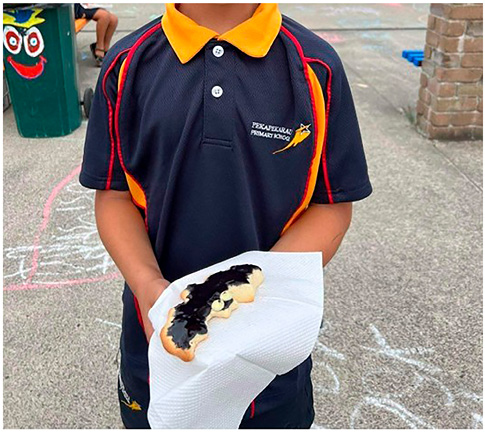
Figure 1. Sharing of bat-themed food took place at the conclusion of the renaming ceremony
The co-design of the second outreach activity, an exhibition, was also led by the teaching team. The in-person art exhibition celebrated an entire school term (10 weeks) of student learning, displaying artworks from students of all ages celebrating bats and other nocturnal animals (Figure 2). The exhibition in the school hall opened on 22 June 2022, timed to coincide with a national celebration of the culturally important star group Matariki (the Pleiades), and included bat mobiles, poems and stories, bringing multi-sensory engagement. People attended during the school day or evening after regular work hours. Food trucks were present during the evening, with food and drinks available for purchase. Most attendees were adults with some children. This took place after earlier COVID-19-related restrictions were lifted, so it may have been one of the first community events people attended post-restrictions. We expected that both the naming ceremony and exhibition activities would evoke positive emotions in family members who were able to attend, potentially ‘pride’ in their children’s accomplishments and culture, and ‘joy’ in connecting with others, particularly when opportunities to do so had been recently rare.
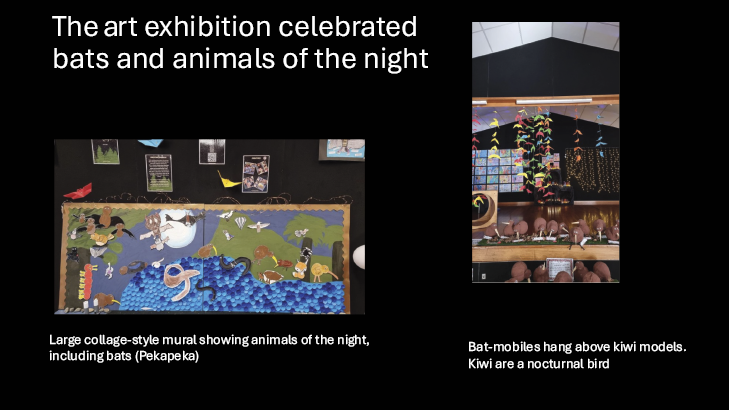
Figure 2. The art exhibition celebrated bats and other nocturnal animals, including kiwi. You can see here examples of bat mobiles and large collage-style murals that highlight nocturnal animals
We considered how best to approach ethics, given this was a joint community and local tribal project, and because mana motuhake (Māori self-determination) is an important underlying principle for the local tribal group. We privileged Māori processes and were supported by the University of Waikato to do so. The Ethics Committee of the Faculty of Māori and Indigenous Studies considered this research low-risk and agreed our approach was ethically sound. We followed the principles of the Declaration of Helsinki (https://www.wma.net/policies-post/wma-declaration-of-helsinki-ethical-principles-for-medical-research-involving-human-subjects/), particularly sections describing responsibilities of researchers in relation to risks, burdens and benefits, vulnerable groups and individuals, privacy and confidentiality, and informed consent. For the in-person survey, the teaching team decided to ask exhibition attendees ‘Would you like to do the survey?’ as they left. Tribal elders deemed the most culturally appropriate way forward was to first present the research proposal to the Pekerau School Board of Trustees for consideration and approval. It was approved on 30 March 2022 and documented in their minutes. We then submitted a written ethics application for the survey and other activities to the Tārewanga marae committee, and this was approved. Tribal elder TR and school principal TB were responsible for ensuring the overall ethical approach was followed.
Survey Methodology
We surveyed the Pekapekarau School community before and after activities. Here, ‘post-activities’ refer to surveys and responses that took place after completion of bat-focused school curriculum work, naming ceremony and exhibition. We first distributed an online survey to the school community via their Facebook page before the naming ceremony and exhibition. However, based on the lack of response (see Results), we switched to an in-person anonymised survey approach.
We administered the in-person survey post-activity on 22 June 2022; students asked exhibition attendees of all ages to participate right before they left. Survey participants provided verbal informed consent before beginning. Responses were recorded either on paper or on an iPad. For this survey, we amended the first survey’s questions to include demographic information (such as age in decadal groups, place of residence and occupation) and six bat-related questions focused on how exhibition attendees felt (their attitude) about bats both before and after the name change, renaming ceremony and exhibition; their awareness of bats in their area (a proxy for knowledge levels); and how important bats were to them (see Appendix). Questions were either open-ended or used unipolar and bipolar Likert scores for participants to rate their response from 1 to 5, with response anchors provided (Likert 1932). Likert-type scales have limitations, such as asking respondents to apply an ordinal scale to complex issues, prompting a tendency for respondents to pick middle scores and assuming intervals have equal weight (Jamieson 2004). We addressed these by applying appropriate statistics (South et al. 2022) and space for open-ended comments.
After the activities were completed, we discussed which engagement methods were most successful for student learning. We include the teaching team’s collective response.
Statistical Analyses
We explored associations with (1) attitude towards bats before the activities (‘Attitude before’); and (2) change in attitude towards bats after the activities (‘Attitude change’) using conditional inference trees (CTREEs; Zeileis, Hothorn & Hornik 2008). CTREEs are a simple non-parametric classification (or regression) approach: the space spanned by all predictor variables is recursively partitioned into groups of respondents with similar response values. CTREEs consider possible combinations, including non-linear associations and multiple splits in the same variable. At each node, the predictor most strongly associated with the response variable is selected for the next binary branch. CTREEs use permutation tests at each split to assess whether an added branch adds to prediction accuracy, thus reducing overfitting without the need for pruning or cross-validation (Strobl, Malley & Tutz 2009).
Our response variables were (1) attitude towards bats before the activities (‘Attitude before’); (2) attitude after the renaming activity (‘Attitude after’); and (3) self-reported change in attitude (i.e., the difference in ordinal ratings of ‘Attitude after’ − ‘Attitude before’. Attitudes (before and after) were recorded on a 5-point ordinal rating scale, where 1 indicated ‘I hate bats’ and 5 indicated ‘I love bats, and I would have them in my backyard’. We interpreted attitudes as negative if the score was less than 3 and positive if it was more than 3. For each response variable, we fitted a CTREE (further referred to as ‘tree’) using the ‘CTREE’ function in the partykit package in R (Hothorn & Zeileis 2015). Explanatory variables included respondent’s age (in 10-year brackets, as either ordinal or categorical), ‘importance’ of bats (‘How important are bats to you?’; ordinal 5-point scale, from not at all important to extremely important) and ‘awareness’ (extent of awareness of bats in the local area; ordinal scale, not at all to totally aware), as well as starting attitude (‘Attitude before’). We set minimum bucket size to 5 (each terminal node must contain at least five respondents) and did not constrain tree depth, nor complexity of interactions. Our variable selection was based on maximum absolute values of the standardised T-statistic (teststat = ‘max’), with a Bonferroni-corrected p-value accounting for multiple assessments of each branch addition. Univariate methods provided similar results (see Supplementary Information).
Results
Surveys
We received very few responses (n = 5, response rate 0.7 per cent) to the initial online survey, which was our intended baseline. Therefore, we present only results of the in-person survey here.
We received 68 responses to the in-person post-activity survey (64 completed on paper and 4 using an iPad). Of the 67 who entered their residence location, all but one lived within 30 km of Te Awamutu, with most in Te Awamutu (n = 56) or the nearby town of Kihikihi (n = 5). Most were 20–60 years old (age classes: <10 years, n = 12; 10–20 years, n = 5; 20–40 years, n = 31; 40–60 years, n = 14; and >60 years, n = 6). Forty-eight per cent of participants had stories about pekapeka (33/68), but only nine were willing to share them (9/68).
When surveyed, most initially reported themselves as ‘not at all aware’ or ‘slightly aware’ of bats in their area (57 and 21 per cent of 68 responses, respectively; Figure 3). Most (n = 59, 87 per cent) reported that they were more aware of bats post-activities.
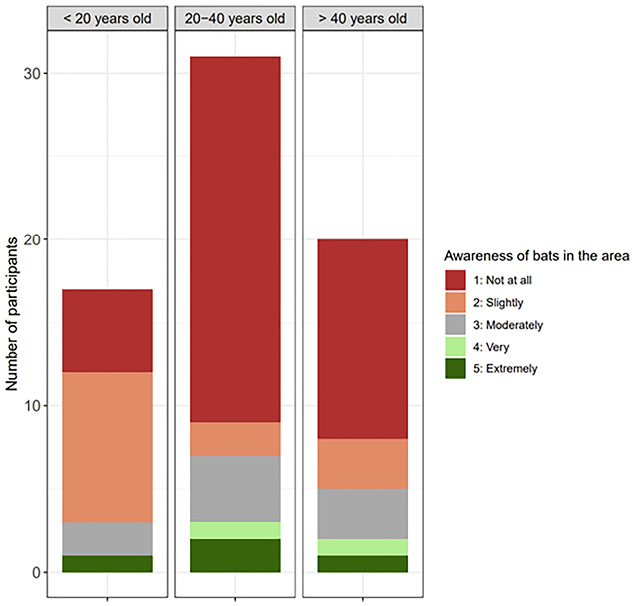
Figure 3. Awareness of bats amongst the school community was low across age groups
The CTREE analysis revealed that the importance of bats to people was the key predictor of self-reported attitude before the activities (Figure 4; p = 0.005). The greater the importance of bats to people, the more positive their attitude towards bats before the activities.
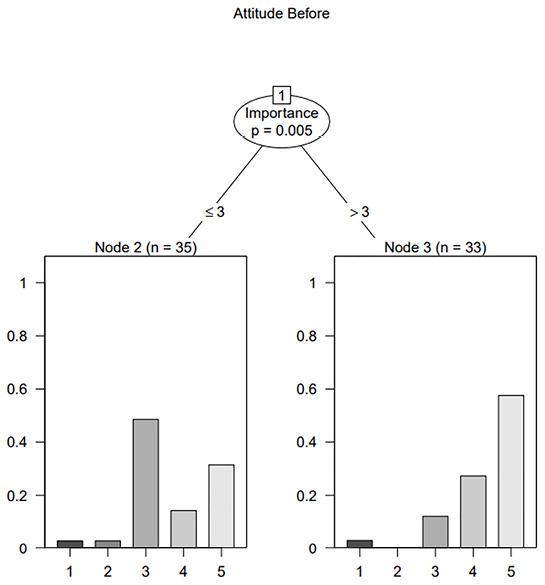
Figure 4. Conditional inference tree (CTREE) showing how participants’ self-reported attitudes towards bats before the activities (on a 1:5 ordinal scale) varied across different subgroups defined by the tree structure. The tree shows statistically significant binary splits based on covariates selected via permutation tests; in this case, the importance of bats to people most influenced attitudes before the activities. Terminal nodes show the empirical distribution of the observed response for all observations (indicated by ‘n’) reaching that node
The CTREE analysis revealed that starting attitude (‘Attitude before’, before the renaming activities) was the key predictor of self-reported change in attitude towards bats (Figure 5; p < 0.001). For those who did not begin with a highly positive attitude (<4 out of 5), awareness also predicted their final attitude (p < 0.004). Those respondents who were at least somewhat aware of bats in their area were predicted to improve in attitude, whereas those who reported not being aware at all did not show an attitudinal change. Other variables (including respondent age and importance of bats to respondents) did not contribute to explaining variation in the response variable. The tree for the ‘Attitude after’ response showed similar results (Supplementary Figure S3).
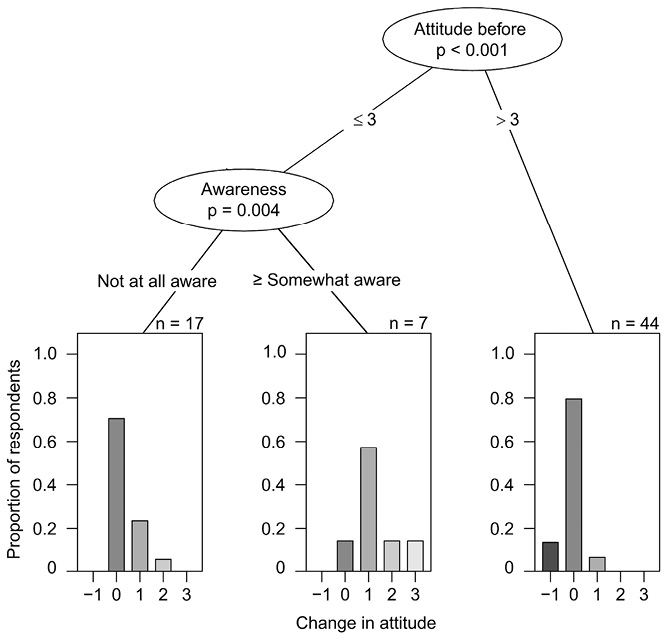
Figure 5. Conditional inference tree (CTREE) showing how participants’ self-reported change in attitude (attitude after renaming activities minus attitude before, each on a 1:5 ordinal scale) varied across different subgroups defined by the tree structure. The tree shows statistically significant binary splits based on covariates selected via permutation tests; in this case, participants’ awareness of bats in the area before outreach activities had the most influence on attitudinal change. Terminal nodes show the empirical distribution of observed responses for all observations (indicated by ‘n’) reaching that node
Teaching and Learning: Teacher Collective Response
The engaging, multi-sensory approach the teaching team (IM, TB and KM) found to be effective for tauira learning about bats aligns strongly with approaches that appeal to groups less frequently connected with conservation and other engagement (Chan et al. 2025; Jacobson, McDuff & Monroe 2007). We include it here:
Whanaungatanga [relationship development through shared experiences and working together which provides people with a sense of belonging] is crucial to the success of tamariki [children] at kura [school]. As tauira grow their knowledge of who they are, the history of our kura and where they fit, they feel more connected. Research says that knowing and feeling connected to their own whānau [family] and their kura enables success.
Tauira also learn through a process of inquiry where they can explore their own wonderings and develop curiosity about a kaupapa [topic]. We like to promote a multi-sensory approach, and kinesthetic learning opportunities also, to help engage our learners. The kaupapa around our name correction was a really authentic opportunity for our tauira to explore who we are, what pekapeka are and why this was relevant for the school name. They wondered, developed pātai [questions] to explore, and researched their questions and grew their knowledge. This was then represented through different media and art and writing which was engaging and helped consolidate their understanding about pekapeka. For some tauira, this has really sparked a passion in them.
The flip side of this, what doesn’t work, is having an overload of text-based information which ākonga [learners] need to be able to read and comprehend in order to grow their knowledge base. This can be a barrier.
Discussion
We used a co-design and co-production approach together with mana motuhake (self-determination) principles to assess changes in community attitudes towards a rare, cryptic species group – pekapeka – after the activities that, whilst building knowledge, strongly focused on celebrating connections the community had with pekapeka and depicting them artistically. Activities had a fun festival feel, were child-led, and incorporated food, as is culturally important, evoking positive emotions of ‘pride’, ‘joy’ and feelings of ‘connectedness’. As Kingston (2015) recommended, our team’s approach to outreach focused on linking these positive emotions with bats, a group of species often strongly disliked. This evaluative conditioning (De Houwer et al. 2001) was effective at influencing attitudes towards our focal species: pekapeka. We encourage other research teams considering community-based outreach activities to collaborate and co-produce projects and activities; this experience taught us that these are effective ways to create change. Many conservation researchers lean towards quantitative, evidence-based assessments and may be sceptical of the benefits of community engagement as a way to create or influence attitudes towards species or places they care about. So, we chose to analyse aspects of this work quantitatively, in addition to the reflective statement from the school team published here and other school and community discussion and assessment.
We found whilst initial attitudes were strongly linked to respondents’ views of how important pekapeka were to people, the extent of attitude change was unrelated to how respondents rated the importance of bats. Overall, attitudes towards pekapeka were more positive after the activities (Supplementary Information). Those who were less positive and who reported higher levels of awareness (or knowledge about bats) reported the greatest gains in positive attitude towards pekapeka after activities. Higher levels of awareness that pekapeka were present in the area, which could be interpreted as ‘knowledge of bats’, were not related to more positive attitudes, but rather to greater gains in attitudes post-activities. So, it appears the activities themselves – the name correction and exhibition – may have resulted in more positive attitudes towards pekapeka.
Elaboration likelihood models suggest people who do not already have strong pre-existing attitudes or feelings about something are more likely to be persuaded or affected by outreach activities and message framing (Petty & Cacioppo 1986). Researchers suggest this means affective outreach activities may be more effective when people know very little about a species or conservation issue than for more well-known topics (Niemiec et al. 2020). We found that some level of knowledge (or awareness) was needed for attitudes to change; the attitudes of people who knew nothing about the local presence of pekapeka did not change, while people who were most aware pekapeka live locally had the greatest increases in attitude scores. However, attitude change was unrelated to how important people said pekapeka were to them. We interpret our findings to mean that doing outreach that does not first focus on filling knowledge gaps may ‘energise the base’ (i.e., those who have at least some knowledge or awareness of bats) and result in the greatest gains, whilst being less effective at engaging people with no prior awareness of local bats. As a result, these approaches may do little to broaden support across the wider community. We observed greater gains when people were aware that the threatened species still live locally. This local connection appears to influence and intensify attitudinal change. We encourage first raising awareness that threatened species live locally before adopting our community-led outreach approach if conservationists wish to both broaden and increase support for their conservation.
Positive increases in attitude occurred across all age groups, unlike in some previous studies (Stern, Powell & Frensley 2022), so we did not find support for the ‘impressionable years’ theory (Tyler & Schuller 1991). However, at least one respondent in each age group self-reported a decrease in attitude. We note this decrease took place only for a small subset, all of whom had some of the highest initial attitude scores, i.e., 4 or 5 out of 5. Taking care to ensure people are not ‘put off’ the species or topics that are the focus of outreach (i.e., dislike them more because they have been the topic of outreach) is crucial. Knowing the audience and refining outreach – so it is not overly repetitive or frequent – may be key to maintaining positive attitudes and preventing message fatigue (Lin, Chang & Lu 2025).
Reflections on Our Partnership Approach
The collaborative co-design approach to conservation engagement was critical to our partnership. The type of partnership, design and delivery of outreach activities we delivered is more likely to be effective in achieving change in knowledge and attitudes towards species, ecosystems and environmental issues than an outreach program that ‘parachutes’ into a community (Ardoin, Bowers & Gaillard 2020). Further, the ethics permissions approach taken for this study reflects the partnership and co-design model, and the elder-endorsed mana motuhake (here, we mean, authority, self-government and determination) approach. Ethics permissions were sought from and granted by both school and tribal communities, although we also sought advice from the university ethics committee, who supported this approach. Honouring and privileging community processes is crucial when working with communities because doing otherwise can whakaiti (belittle) the very people researchers wish to engage with.
Our processes reflect our commitment to a socially just conservation practice. The deep cultural knowledge of elder TR and an agile, expert teaching team were essential to the team structure and enactment of culturally correct processes. Engagement, collaboration and partnership between Indigenous communities, researchers and government agencies, through culturally led processes, are crucial for conservation, not only because globally, Indigenous peoples manage or have tenure over about 40 per cent of terrestrial protected areas and ecologically intact landscapes (Garnett et al. 2018), but also so researchers can avoid inflicting cultural harm on local communities through imperialist processes. Careful management that speaks of and to traditional practices and knowledge can improve outcomes for society, species and the environment (McAllister et al. 2019).
The school staff knew both the community and students well, so could lead and deliver events that were culturally relevant, appealing and appropriate for their students and community. This included creating positive space for Māori students and families, who may not participate in the types of conservation or ecological restoration activities usually led by government agencies (Dawson 2018; Heimann & Medvecky 2022). The collective reflection of staff reveals the foundations of learning and cultural values of the school, which inspired activities aimed at engaging people in a place where participants were less likely to feel excluded – their children’s school. Holding activities where communities feel connected and welcome is key to success, as it overcomes one hurdle to participation: feeling excluded (Dawson 2018). When also led by people from within the community, as ours were, positive outcomes are even more likely (Stern, Powell & Frensley 2022). Research suggests well-considered collaboration with social scientists and engagement and community outreach specialists when designing outreach will also improve outcomes (Kingston 2015).
It is unlikely the same result – an increase in positive attitudes towards bats – would have been attained for as much of this community with a more traditional approach to outreach. A large portion of the community would have been less likely to attend an outreach event held in a museum, zoo or community hall remote from the school, as these are places they do not visit regularly (Rong, Ristevski & Carroll 2023). Likewise, we suspect people would be unlikely to attend without the promise of a fun social event (Gerolemou, Russell & Stanley 2024). Because family involvement influences participation, people might be more likely to visit or participate when their own child’s art is included, or when their child has led the exhibition’s design (Walker et al. 2024). The local museum appears aware of these nuances and involved school children and their art in the development of their follow-up bat-focused exhibition. This led to many families connected with the school visiting the museum’s exhibition. For some, we understand this was their first visit to the museum, despite the museum being established 90 years ago (authors’ personal observation). The local and cultural connection to bats inspired the school curriculum focus, art exhibition and name change. Without this connection, the outreach activities would have felt like an unusual focus for a school-led social occasion (authors’ personal observation). This local connection provided an opportunity for the outreach to take place. We recommend groups planning outreach activities think how cultural and local connections can be leveraged to increase interest and participation.
By letting the community lead, all benefit. Communities often do not have positive or recent experience of science and research (Hameleers & Van Der Meer 2021). With collaborations of this kind, where work is co-produced, people are allowed to step into this space with increased confidence and curiosity. All questions and ways of approaching a topic are respected, and this can drive research into new and previously unconsidered directions. This can open doors to science for communities in a way that engages their interest, highlighting what people who are interested in science can potentially offer their community, and that these can be people from their own community. It can break down perceived barriers to participation in science and research (Cargo & Mercer 2008).
Including members in a team with a range of ages, skills, experience and backgrounds exposes all members to new experiences, learning and opportunities, but can also influence perceived effectiveness, which requires careful management (Specht & Crowston 2022). The split of responsibilities across our team worked well, probably because we worked closely together and communicated frequently and honestly (particularly regarding our individual capacity and capabilities) and used a consensus approach to decision-making. We sought everyone’s perspectives before each action to ensure these were appropriate in both scale and approach.
Lessons Learnt
Building new partnerships takes time. Often, this can be overlooked by research teams. Four research team members had been working together co-producing other research in partnership with closely connected communities. One had been working with his community for his entire adult life. It took more than 6 months from initial introductions to the online evaluation of the process post-celebration. Although this short period is not unknown for community–researcher partnerships (Radonic et al. 2023), we consider it a relatively short time from the start of a relationship to project creation; in our experience, it often takes longer. Our timeframe may have been relatively quick because of several long-established relationships within our team. Our team also had detailed, complementary knowledge of the kaupapa (topic) because of our varying experiences. The time it takes to build relationships can vary depending on past experiences, current availability and willingness to engage with the kaupapa. Other examples of researcher–community partnerships have taken at least 1 year from initial engagement to research commencement (Brunet, Hickey & Humphries 2014). If shorter timeframes are necessary, high flexibility and an intensified workload need to be accepted by all (Radonic et al. 2023).
Our relationship has continued with in-person visits, project discussions, a museum exhibit led by the school team and supported by researchers from the other institutions, and a joint co-presentation of this project by the teaching team and research team, led by school students at a national bat meeting. Well-built relationships endure long past any funding timeline, and to maintain them, obligations to each partner must be met, regardless of funding. Although the school team was adept at working together daily, this is not always the norm for researchers. Similarly, researchers are often unfamiliar with moving between different cultural environments and need assistance. Our partnership was well supported by the entire team’s open orientation towards each other and the opportunity to participate in respectful listening and conversation.
Researchers became more aware of inequities in the schooling system in terms of contact with science teams, exposure to research, learning opportunities and learning resources (Wehi et al. 2014). In response, the research team took responsibility for directly providing or linking the school with educational resources, people who could offer talks to schools and information about local areas the school could visit for free or at a low cost. This meant researchers became increasingly aware many educational resources are not accessible to low-decile schools or community groups due to their high cost. Our team encourages those doing community engagement and science communication to design activities that are low-cost or preferably free to support accessibility for all.
Through this project, and beyond, the teaching team was exposed to a wide range of experiences traditionally part of the ‘western’ academic system. This included experiences with research processes such as peer review, developing and giving conference presentations, and being questioned by academics at conferences. Many of these took place long after the expected ‘project’ timeline, so the busy teaching team had to make themselves available longer than expected. Research teams that involve people from varied backgrounds and with differing employment situations need to communicate the extended timeframes often experienced in academia, and need to ensure their expectations do not unnecessarily burden people who may be supporting the research in their ‘spare time’, whilst still providing space for all voices to be heard.
The teaching team learnt they could ask partners with whom they had built trusted relationships for what they needed. We see this in action with our ongoing relationship and the desire for researchers to return to the school in the future.
Including exhibitions and visual arts in the toolbox for conservation engagement and outreach supports the ‘multi-sensory approach’ identified by the teachers as key to learning. Using a multisensory approach can enhance engagement with exhibits, improve recollection, foster deeper appreciation (Murillo & Williams 2025) and be effective at changing public perceptions and attitudes (Cardoso et al. 2011). As our teaching team suggested, text-heavy information packages may result in less learning and enthusiasm, whilst art-based approaches, such as billboards and murals, can be effective at supporting retention of accurate information, and are often preferred approaches by people not usually exposed to information about species (Qian et al. 2022). Activities also evoking emotion and emphasising values, as ours did, are memory-enhancing and more likely to support effective learning (Tyng et al. 2017) and change attitudes, particularly towards frequently disliked species groups such as bats (Kingston 2015).
We followed an emergent engagement design when faced with an almost complete lack of engagement in the online survey. Because the response rates for our online survey were extremely low, even when compared to those overseas (Wu et al. 2022), we switched to an in-person survey that incorporated self-assessments of attitudes towards bats before and after the activities. We are not alone in this; other teams have also reported pivoting to increase response rates (Denlinger-Apte et al. 2026). Paper surveys have the advantages of high completion rates and direct approaches to reach potential participants (Daikeler, Bošnjak & Lozar Manfreda 2020). Direct approaches are closely aligned with Māori cultural practice (for example, ‘kanohi ki te kanohi’ or face-to-face discussion); we support this for future research. However, this meant we could not sample community members who did not take part in the activities (i.e., a control group). It is also possible people anticipated some research questions and provided ‘desired’ answers.
When people are surveyed about bats, they commonly note they know little (Sexton & Stewart 2007). This means most information provided on pekapeka during activities was likely new to people. For our community, this included that bats had been present or were present locally, and why they may have disappeared (authors’ unpublished data). Therefore, a focus on local cultural significance of bats and their disappearance or local distribution could be important, that is, centring engagement activities on building local connection and knowledge, alongside developing activities that trigger positive emotions (Kingston 2015).
Our results tentatively suggest outreach activities connecting to people’s emotions and worldview and recalling cultural significance of a species may increase engagement and maximise enthusiasm for conservation. With our outreach activities, participants were reminded of the local cultural significance of pekapeka, with activities that appealed to emotion. Our research highlights the value of helping communities discover the species living around them, and creating community-led activities that foster cultural connection, positive social experiences, and local pride when aiming to increase how much species are liked. Future research could focus on whether such attitudinal change is long-term and results in behavioural change.
Acknowledgements
Hei whakakapi, tēnei te mihi kau atu ana ki te mana whenua o tēnei rohe, ngā uri o Pīrongia maunga, e Ngāti Apakura, otirā e Ngāti Maniapoto whānui. Mei kore ake koutou e tautoko ana i tēnei kaupapa rangatira me ēnei taonga o te taiao, ngā pekapeka o Pekapekarau. (In closing, we would like to acknowledge the people of this district, the descendants of Mt Pirongia – that is, Ngāti Apakura, and also Ngāti Maniapoto more widely. You have given the utmost support for this important project, and for the bats of Pekapekarau, who are treasures of our natural world). We thank tauira, kaiako, staff, whānau and the wider community of Pekapekarau School. We also thank Tārewanga marae for their support. We thank Margaret Malone, Paul Ashton, an anonymous reviewer and the Dance For Land review team, all of whose comments greatly improved this manuscript.
References
Allen, K E, McLean, S & Pessagno, S 2022, ‘Connecting Communities, Connecting Environments: The Role of Social Capital in Landscape-Scale Conservation’, Society & Natural Resources, vol. 35, pp. 763–783. https://doi.org/10.1080/08941920.2022.2078915
Ardoin, N M, Bowers, A W & Gaillard, E 2020, ‘Environmental education outcomes for conservation: A systematic review’, Biological Conservation, vol. 241, 108224. https://doi.org/10.1016/j.biocon.2019.108224
Berkes, F 2004, ‘Rethinking community-based conservation’, Conservation Biology, vol. 18, pp. 621–630. https://doi.org/10.1111/j.1523-1739.2004.00077.x
Bruder, J, Burakowski, L M, Park, T, Al-Haddad, R, Al-Hemaidi, S, Al-Korbi, A & Al-Naimi, A 2022, ‘Cross-cultural awareness and attitudes toward threatened animal species’, Frontiers in Psychology. https://doi.org/10.3389/fpsyg.2022.898503
Brunet, N D, Hickey, G M & Humphries, M M 2014, ‘Understanding community-researcher partnerships in the natural sciences: A case study from the Arctic’, Journal of Rural Studies, vol. 36, pp. 247–261. https://doi.org/10.1016/j.jrurstud.2014.09.001
Cardoso, P, Erwin, T L, Borges, P A V & New, T R 2011, ‘The seven impediments in invertebrate conservation and how to overcome them’, Biological Conservation, vol. 144, pp. 2647–2655. https://doi.org/10.1016/j.biocon.2011.07.024
Cargo, M & Mercer, S L 2008, ‘The value and challenges of participatory research: Strengthening its practice’, Annual Review of Public Health, vol. 29, pp. 325–350. https://doi.org/10.1146/annurev.publhealth.29.091307.083824
Chan, C-S, Shek, K F, Lu, Y & Wong, S Y 2025, ‘Narratives come alive: Enhancing cultural heritage experiences through sensorial narrative-based guiding tours’, Journal of Heritage Tourism, vol. 20, pp. 487–507. https://doi.org/10.1080/1743873X.2025.2478837
Daikeler, J, Bošnjak, M & Lozar Manfreda, K 2020, ‘Web versus other survey modes: An updated and extended meta-analysis comparing response rates’, Journal of Survey Statistics and Methodology, vol. 8, pp. 513–539. https://doi.org/10.1093/jssam/smz008
Dawson, E 2014, ‘“Not designed for us”: How science museums and science centers socially exclude low-income, minority ethnic groups’, Science Education, vol. 98, pp. 981–1008. https://doi.org/10.1002/sce.21133
Dawson, E 2018, ‘Reimagining publics and (non) participation: Exploring exclusion from science communication through the experiences of low-income, minority ethnic groups’, Public Understanding of Science, vol. 27, pp. 772–786. https://doi.org/10.1177/0963662517750072
De Houwer, J, Thomas, S & Baeyens, F 2001, ‘Association learning of likes and dislikes: A review of 25 years of research on human evaluative conditioning’, Psychological Bulletin, vol. 127, p. 853. https://doi.org/10.1037/0033-2909.127.6.853
Denlinger-Apte, R, Akinyemiju, T, Ammons, P, Bell, R, Chavis, L, Dial, R, Graham, C, Harwood, E, Heck, C, Herndon, S, Hicks, K, Hunt, C, Lockhart, D, Martin, J, McCraw, L, Raveendran, Y, Richardson, G, Salas, A & Wheeler, S 2026, ‘Implementation of the North Carolina American Indian Adult Tobacco Survey: A Community-Government-University Collaboration’, Gateways: International Journal of Community Research and Engagement, vol. 19, pp. 1–12. https://doi.org/10.5130/fx4kp415
Drescher, M & Warriner, G K 2022, ‘Environmental concerns and stewardship behaviors among rural landowners: What supports farmers and non-farmers in being good stewards?’, Frontiers in Sustainable Food Systems, vol. 6. https://doi.org/10.3389/fsufs.2022.758426
Falloon, A, Freeman, C & van Heezik, Y 2021, ‘Awareness, attitudes and the environmental engagement of young adults in New Zealand’, New Zealand Geographer, vol. 77, pp. 230–241. https://doi.org/10.1111/nzg.12309
Fern, S R 2023, Non-human charisma and its role in conservation in New Zealand, PhD thesis, University of Otago.
Garibaldi, A & Turner, N J 2004, ‘Cultural keystone species: Implications for ecological conservation and restoration’, Ecology and Society, vol. 9. https://doi.org/10.5751/ES-00669-090301
Garnett, S T, Burgess, N D, Fa, J E, Fernández-Llamazares, Á, Molnár, Z, Robinson, C J, Watson, J E M, Zander, K K, Austin, B, Brondizio, E S, Collier, N F, Duncan, T, Ellis, E, Geyle, H, Jackson, M V, Jonas, H, Malmer, P, McGowan, B, Sivongxay, A & Leiper, I 2018, ‘A spatial overview of the global importance of Indigenous lands for conservation’, Nature Sustainability, vol. 1, pp. 369–374. https://doi.org/10.1038/s41893-018-0100-6
Gerolemou, R V, Russell, J C & Stanley, M C 2024, ‘Community-led vertebrate pest management in urban areas: Barriers and motivations’, Ecology and Society, vol. 29. https://doi.org/10.5751/ES-15141-290311
Hameleers, M & van der Meer, T G L A 2021, ‘The scientists have betrayed us! The effects of anti-science communication on negative perceptions toward the scientific community’, International Journal of Communication, vol. 15, pp. 4709–4733.
Heimann, A & Medvecky, F 2022, ‘Attitudes and motivations of New Zealand conservation volunteers’, New Zealand Journal of Ecology, vol. 46. https://doi.org/10.20417/nzjecol.46.18
Hothorn, T & Zeileis, A 2015, ‘partykit: A modular toolkit for recursive partytioning in R’, The Journal of Machine Learning Research, vol. 16, no. 118, pp. 3905−3909.
Jacobson, S K, McDuff, M D & Monroe, M C 2007, ‘Promoting conservation through the arts: Outreach for hearts and minds’, Conservation Biology, vol. 21, pp. 7–10. https://doi.org/10.1111/j.1523-1739.2006.00596.x
Jacobson, S K, McDuff, M D & Monroe, M C 2015, Conservation education and outreach techniques, Oxford University Press. https://doi.org/10.1093/acprof:oso/9780198716686.001.0001
Jamieson, S 2004, ‘Likert scales: How to (ab)use them’, Medical Education, vol. 38, pp. 1217–1218. https://doi.org/10.1111/j.1365-2929.2004.02012.x
Kingston, T 2015, ‘Cute, creepy, or crispy—How values, attitudes, and norms shape human behavior toward bats’, in C Voigt & T Kingston (eds), Bats in the Anthropocene: Conservation of bats in a changing world, Springer. https://doi.org/10.1007/978-3-319-25220-9_18
Knight, A J 2008, ‘“Bats, snakes and spiders, oh my!” How aesthetic and negativistic attitudes, and other concepts predict support for species protection’, Journal of Environmental Psychology, vol. 28, pp. 94–103. https://doi.org/10.1016/j.jenvp.2007.10.001
Likert, R 1932, ‘A technique for the measurement of attitudes’, Archives of Psychology, vol. 22, p. 55.
Lin, C-H, Chang, Y-J & Lu, H-Y 2025, ‘Tailoring dengue health communication: Survey-based strategies to reduce message fatigue across risk areas’, PLOS Neglected Tropical Diseases, vol. 19, e0012723. https://doi.org/10.1371/journal.pntd.0012723
Low, M-R, Hoong, W Z, Shen, Z, Murugavel, B, Mariner, N, Paguntalan, L M, Tanalgo, K, Aung, M M, Sheherazade, Bansa, L A, Sritongchuay, T, Preble, J H & Aziz, S A 2021, ‘Bane or blessing? Reviewing cultural values of bats across the Asia-Pacific region’, Journal of Ethnobiology, vol. 41, pp. 18–34. https://doi.org/10.2993/0278-0771-41.1.18
McAllister, T G, Beggs, J R, Ogilvie, S, Kirikiri, R, Black, A & Wehi, P M 2019, ‘Kua takoto te mānuka: Mātauranga Māori in New Zealand ecology’, New Zealand Journal of Ecology, vol. 43, 3393. https://doi.org/10.20417/nzjecol.43.41
McAteer, B, Flannery, W & Murtagh, B 2021, ‘Linking the motivations and outcomes of volunteers to understand participation in marine community science’, Marine Policy, vol. 124, 104375. https://doi.org/10.1016/j.marpol.2020.104375
Murillo, A & Williams, M C 2025, ‘Visitors’ perception of the importance and performance of multisensory dimensions: The case of the Philippine National Museum of Natural History’, Journal of Interdisciplinary Perspectives, vol. 3, pp. 495–504. https://doi.org/10.69569/jip.2025.149
Niemiec, R M, Sekar, S, Gonzalez, M & Mertens, A 2020, ‘The influence of message framing on public beliefs and behaviors related to species reintroduction’, Biological Conservation, vol. 248, 108522. https://doi.org/10.1016/j.biocon.2020.108522
O’Donnell, C F J, Borkin, K M, Christie, J, Davidson-Watts, I, Dennis, G, Pryde, M & Michel, P 2023, Conservation status of bats in Aotearoa New Zealand, 2022, Department of Conservation, Wellington, New Zealand.
Petty, R E & Cacioppo, J T 1986, The elaboration likelihood model of persuasion, Springer. https://doi.org/10.1007/978-1-4612-4964-1_1
Pooley, J A & O’Connor, M 2000, ‘Environmental education and attitudes: Emotions and beliefs are what is needed’, Environment and Behavior, vol. 32, pp. 711–723. https://doi.org/10.1177/0013916500325007
Qian, J, Mills, M, Ma, H & Turvey, S T 2022, ‘Assessing the effectiveness of public awareness-raising initiatives for the Hainan gibbon Nomascus hainanus’, Oryx, vol. 56, pp. 249–259. https://doi.org/10.1017/S0030605320000599
Radonic, L, Jacob, C, Kalman, R & Lewis, E Y 2023, ‘It’s a sprint, not a marathon: A case for building short-term partnerships for community-based participatory research’, Qualitative Research, vol. 23, pp. 380–398. https://doi.org/10.1177/14687941211029477
Rocha, R, Aziz, S A, Brook, C E, Carvalho, W D, Cooper-Bohannon, R, Frick, W F, Huang, J C-C, Kingston, T, López-Baucells, A, Maas, B, Mathews, F, Medellin, R A, Olival, K J, Peel, A J, Plowright, R K, Razgour, O, Rebelo, H, Rodrigues, L, Rossiter, S J, Russo, D, Straka, T M, Teeling, E C, Treuer, T, Voigt, C C & Webala, P W 2021, ‘Bat conservation and zoonotic disease risk: A research agenda to prevent misguided persecution in the aftermath of COVID-19’, Animal Conservation, vol. 24, pp. 303–307. https://doi.org/10.1111/acv.12636
Rong, T, Ristevski, E & Carroll, M 2023, ‘Exploring community engagement in place-based approaches in areas of poor health and disadvantage: A scoping review’, Health & Place, vol. 81, 103026. https://doi.org/10.1016/j.healthplace.2023.103026
Sexton, N R & Stewart, S C 2007, Understanding knowledge and perceptions of bats among residents of Fort Collins, Colorado, U.S. Geological Survey. https://doi.org/10.3133/ofr20071245
South, L, Saffo, D, Vitek, O, Dunne, C & Borkin, M A 2022, ‘Effective use of Likert scales in visualization evaluations: A systematic review’, Computer Graphics Forum, vol. 41, pp. 43–55. https://doi.org/10.1111/cgf.14521
Specht, A & Crowston, K 2022, ‘Interdisciplinary collaboration from diverse science teams can produce significant outcomes’, PLOS ONE, vol. 17, e0278043. https://doi.org/10.1371/journal.pone.0278043
Stern, M J, Powell, R B & Frensley, B T 2022, ‘Environmental education, age, race, and socioeconomic class: An exploration of differential impacts of field trips on adolescent youth in the United States’, Environmental Education Research, vol. 28, pp. 197–215. https://doi.org/10.1080/13504622.2021.1990865
Strobl, C, Malley, J & Tutz, G 2009, ‘An introduction to recursive partitioning: Rationale, application, and characteristics of classification and regression trees, bagging, and random forests’, Psychological Methods, vol. 14, pp. 323–348. https://doi.org/10.1037/a0016973
Takase, Y, Hadi, A A & Furuya, K 2019, ‘The relationship between volunteer motivations and variation in frequency of participation in conservation activities’, Environmental Management, vol. 63, pp. 32–45. https://doi.org/10.1007/s00267-018-1106-6
Taylor, L, Maller, C J, Soanes, K, Ramalho, C E, Aiyer, A, Parris, K M & Threlfall, C G 2021, ‘Enablers and challenges when engaging local communities for urban biodiversity conservation in Australian cities’, Sustainability Science, vol. 17, pp. 779–792. https://doi.org/10.1007/s11625-021-01012-y
Tyler, T R & Schuller, R 1991, ‘Aging and attitude change’, Journal of Personality and Social Psychology, vol. 61, pp. 689–697. https://doi.org/10.1037/0022-3514.61.5.689
Tyng, C M, Amin, H U, Saad, M N M & Malik, A S 2017, ‘The influences of emotion on learning and memory’, Frontiers in Psychology, vol. 8. https://doi.org/10.3389/fpsyg.2017.01454
Varona, G, Ogilvie, D, Darbyshire, Z & Elumalai, V 2021, Te Pā Harakeke: Māori housing and wellbeing 2021, Stats NZ Tatauranga Aotearoa, viewed 23 June 2023, https://www.stats.govt.nz/reports/te-pa-harakeke-maori-housing-and-wellbeing-2021/
Waitangi Tribunal 2011, Ko Aotearoa Tēnei: A report into claims concerning New Zealand law and policy affecting Māori culture and identity. Te taumata tuatahi, Waitangi Tribunal Report, Legislation Direct, Wellington, New Zealand.
Walker, E, Jowett, T, Whaanga, H & Wehi, P M 2024, ‘Cultural stewardship in urban spaces: Reviving Indigenous knowledge for the restoration of nature’, People and Nature, vol. 6, pp. 1696–1712. https://doi.org/10.1002/pan3.10683
Watkin, J E 2025, Exploring mātauranga (Māori knowledge) to inform and support the conservation of pekapeka (bats of Aotearoa), MSc thesis, University of Otago.
Wehi, P, Anderson, B J & Haines, E 2014, ‘Participation in the Science Fair: A call for data’, New Zealand Science Review, vol. 71, pp. 104–107. https://doi.org/10.26686/nzsr.v71.8644
Wehi, P M & Lord, J M 2017, ‘Importance of including cultural practices in ecological restoration’, Conservation Biology, vol. 31, pp. 1109–1118. https://doi.org/10.1111/cobi.12915
Wu, M-J, Zhao, K & Fils-Aime, F 2022, ‘Response rates of online surveys in published research: A meta-analysis’, Computers in Human Behavior Reports, vol. 7. https://doi.org/10.1016/j.chbr.2022.100206
Zeileis, A, Hothorn, T & Hornik, K 2008, ‘Model-based recursive partitioning’, Journal of Computational and Graphical Statistics, vol. 17, pp. 492–514. https://doi.org/10.1198/106186008X319331
Appendix
Supporting information:
To examine whether there was an increase in positive attitude scores after the naming ceremony and exhibition, we analysed paired ‘before’ and ‘after’ Likert scores provided by each respondent using a one-sided exact Wilcoxon–Pratt signed-rank test (Sullivan and Artino 2013).
A conditional inference tree (CTREE) multivariate framework was also used to identify the primary predictors of self-reported attitude change towards bats after the activities. CTREEs are a simple non-parametric classification (or regression) approach, where the space spanned by all predictor variables is recursively partitioned into groups of respondents with similar response values. Classification trees consider the range of possible combinations, including non-linear associations and multiple splits in the same variable. At each node, the predictor that is most strongly associated with the response variable is selected for the next binary branch. CTREEs use permutation tests at each split to assess whether an added branch would add to the prediction accuracy, thus reducing overfitting without the need for pruning or cross-validation (Strobl et al. 2009).
To test for univariate relationships between attitude change (represented as the difference in attitudes reported before and after the school activities) and potential predictors (participant age, awareness of local bat presence and view of importance of bats), we conducted a one-sided linear-to-linear association test for each variable pair. This test is similar to a chi-square test, but conducted on a contingency table with ordered categories (Agresti 2007). Small sample sizes within different categories precluded more complex (e.g., multivariate) modelling of predictors. As we were interested in understanding whether the participation of younger survey participants, who were potentially students from the school that had participated in the wider curriculum, had unintentionally affected our results, we excluded those aged <10 and repeated the analyses. All analyses were undertaken in R version 4.2.2 (R Core Team 2022) using the ‘coin’ package (Hothorn et al. 2008).
Summaries of Results
Overall, there was a significant increase in positive attitude towards pekapeka post-activities (one-sided exact Wilcoxon-Pratt signed-rank test Z = −1.85, p = 0.03; with those aged <10 excluded, exact Wilcoxon–Pratt signed-rank test Z = −1.93, p = 0.03) (Figure S1), particularly in middle-age groups. Association tests showed no significant association between age groups and difference in attitude before and after the activities (<20, 20–40 and 40–60+ years of age; Z = −0.13, p = 0.45, Table S1a; with those aged <10 excluded, Z = −0.61, p = 0.27, Table S1b) (Figure S2).
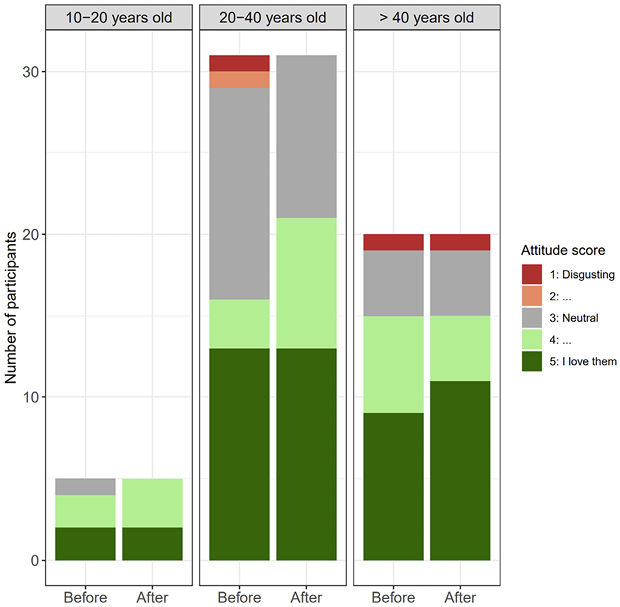
Figure S1. Attitude scores before and after the pekapeka activities across age groups. There was a significant increase in scores after the activities (p = 0.03)
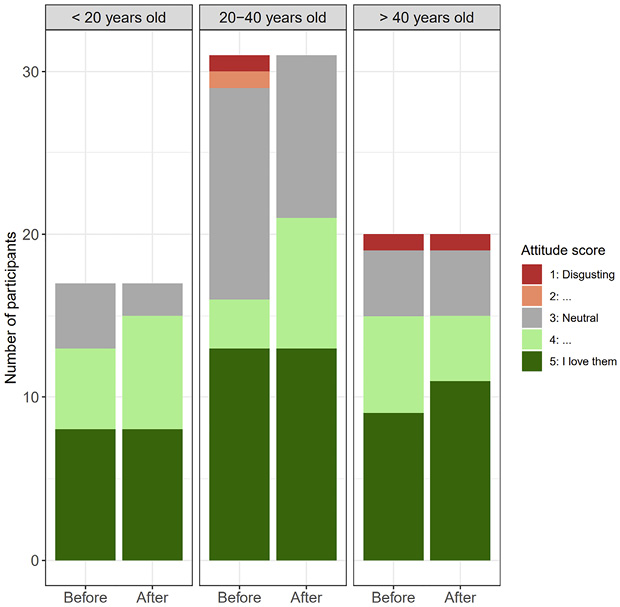
Figure S2. Attitude scores of members of the school community before and after the activities across age groups
Association tests showed no significant association between age groups and difference in attitude before and after the activities in decadal classes (all ages, Z = −0.14, p = 0.44; with those aged <10 excluded, Z = −0.72, p = 0.24) or in broader age classes (with those aged <10 excluded, Z = −0.61, p = 0.27).
The CTREE used to identify the primary predictors of self-reported attitude towards bats after the activities revealed that the starting attitude (‘Attitude before’, prior to the renaming the activities) was the key predictor (Figure S3, p < 0.001), and for those who did not already have a very positive attitude (≤4 out of 5), awareness predicted the final attitude as well (p < 0.014). Those respondents who were at least somewhat aware of bats in their area were predicted to improve in attitude, whereas those who reported not being aware at all did not show an attitudinal change. Other variables (including age and importance of bats to respondents) did not contribute to explaining the variation in the response variable.
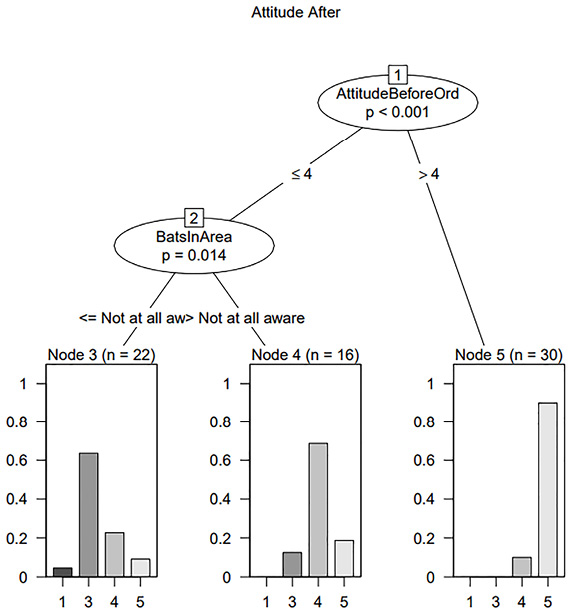
Figure S3. Self-reported attitude after the activities was influenced by the attitude before the activities, and the level of awareness that bats were in the area
There was no relationship between the level of awareness of bats in their area (‘knowledge about bats’) at the time of survey and an individual’s attitude towards bats either before (Z = 1.47, p = 0.93; with those aged <10 excluded, Z = 1.24, p = 0.89) or after the activities (Z = 2.78, p = 0.99; with those aged <10 excluded, Z = 2.72, p = 0.99). However, people who self-reported being more aware of (or ‘knowledgeable about’) bats at the time of survey were also more likely to report an increase in positive attitudes towards bats post-activities (Z = −1.86, p = 0.031). This seems to be driven by young respondents: when <10-year-old respondents were excluded, evidence for this relationship was weaker (Z = −1.35, p = 0.089).
On average, bats were of moderate importance to participants, with 32 per cent responding that bats were ‘extremely important’ to them, although 12 per cent (8/68) stated bats were ‘not at all important’ (Figure S4, with <10 years excluded in Figure S5). The importance of bats to participants was not associated with a change in attitude post-activity (Z = −0.53, p = 0.30; with those aged <10 excluded, Z = 0.72, p = 0.76, Figure S5).
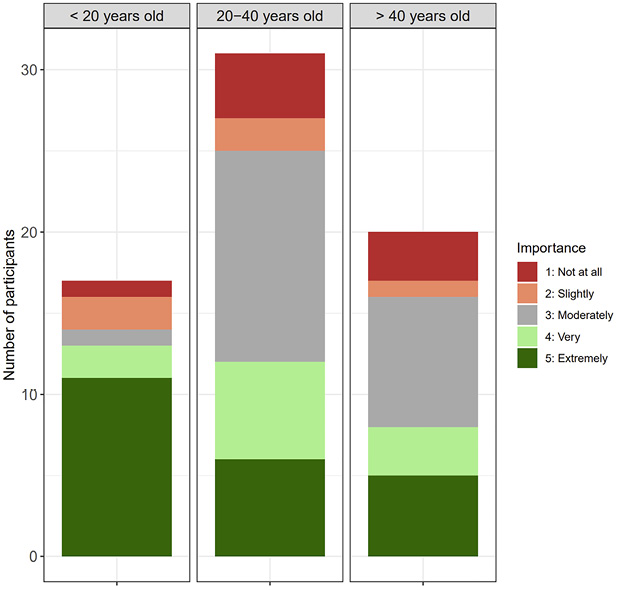
Figure S4. The importance of bats to members of the school community did not differ significantly by age group (p > 0.05), although older age groups had more participants who answered ‘not at all’
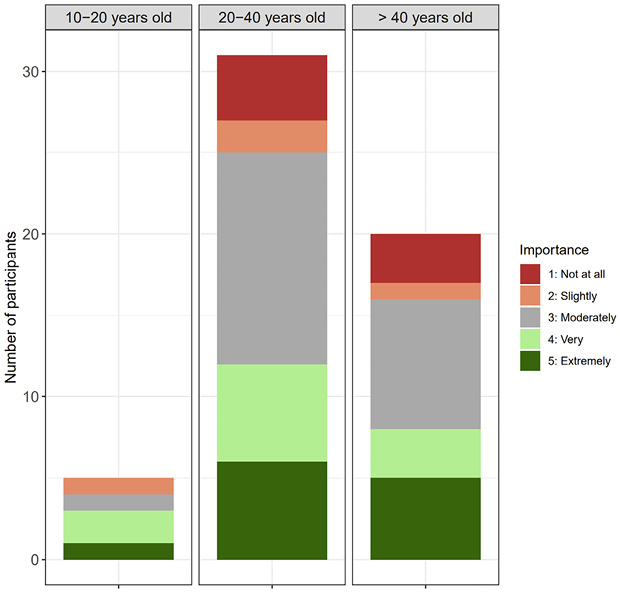
Figure S5. How important are bats to you? Responses categorised by age group; survey participants aged <10 years excluded
There was no relationship between the level of awareness of bats in their area at the time of survey and an individual’s attitude towards bats either before (with those aged <10 excluded, Z = 1.24, p = 0.89) or after the activities (with those aged <10 excluded, Z = 2.72, p = 0.99).
Survey 2 Questions
The survey questions below were completed either on an iPad or on paper immediately prior to people leaving the art exhibition. Texts in square brackets [ ] are included now for clarification but were not in the survey that was presented, as they are commonly used in this community.
This survey was designed to find out how much the whānau (extended family/familiar term of address to a number of people) community of Pekapekarau know about pekapeka/bats.
1. Prior to the name change of the kura [school], how did you feel about pekapeka?
Response options:
1. They are disgusting.
2. .
3. .
4. .
5. I love them; I would have them in my backyard.
2. Since the renaming ceremony of the kura (and being involved in an activity relating to pekapeka bats), how do you feel about pekapeka bats now?
Response options:
1. They are disgusting.
2. .
3. .
4. .
5. I love them; I would have them in my backyard.
3. Since the renaming ceremony of the kura (and being involved in an activity relating to pekapeka bats), are you more aware of pekapeka bats?
Response options:
Yes/No
4. Are you aware of any bats in your area?
Response options:
1. Not at all aware.
2. Slightly aware.
3. Moderately aware.
4. Very aware.
5. Extremely aware.
5. Do you have any stories about bats?
Response options:
Yes/No/If yes, are you happy to share this?
6. On a scale of 1–5, how important are bats to you?
Response options:
1. Not important at all.
2. .
3. .
4. .
5. Extremely important.
7. What school event did you attend?
Response options:
Name correction unveiling/art exhibition/both/none of the above.
8. Age
Response options:
1. 1–10.
2. 10–20.
3. 20–30.
4. 30–40.
5. 40–50.
6. 50–60.
7. 60 and over.
9. Where do you live/location?
Response option: open-ended
10. Occupation
Response option: open-ended
References
Agresti A. 2007. An Introduction to Categorical Data Analysis. 2nd ed. Wiley-Interscience. https://doi.org/10.1002/0470114754
Hothorn T, Hornik K, van de Wiel MA, Zieleis A. 2008. Implementing a Class of Permutation Tests: The coin Package. Journal of Statistical Software. 28(8):1-23. https://doi.org/10.18637/jss.v028.i08
R Core Team. 2022. R: A language and environment for statistical computing. Vienna, Austria.: R Foundation for Statistical Computing; [accessed]. URL https://www.R-project.org/
Strobl C, Malley J, Tutz G. 2009. An introduction to recursive partitioning: rationale, application, and characteristics of classification and regression trees, bagging, and random forests. Psychol Methods. 14(4):323-348. eng. https://doi.org/10.1037/a0016973
Sullivan GM, Artino ARJ. 2013. Analyzing and interpreting data from Likert-type scales. Journal of Graduate Medical Education. 5(4):541-542. https://doi.org/10.4300/JGME-5-4-18