Paarpakani: Take Flight
TJANPI DESERT WEAVERS
ILAWANTI UNGKUTJURU KEN
NYURPAYA KAIKA BURTON
RENE WANUNY KULITJA
NAOMI KANTJURINY
YARITJI YOUNG
TJUNKAYA TAPAYA
NININGKA LEWIS
FACILITATED BY JO FOSTER (TJANPI DESERT WEAVERS ART AND CULTURE PROJECTS MANAGER)
WITH LINDA RIVE (NPY WOMEN’S COUNCIL INTERPRETER AND TRANSLATOR)
Cultural Studies Review
volume 21 number 1 March 2015
http://epress.lib.uts.edu.au/journals/index.php/csrj/index
pp. 149–74
© Tjanpi Desert Weavers 2015
ISSN 1837-8692
Cultural Studies Review 2015. © 2015 Tjanpi Desert Weavers. This is an Open Access article distributed under the terms of the Creative Commons Attribution 4.0 Unported (CC BY 4.0) License (https://creativecommons.org/licenses/by/4.0/), allowing third parties to copy and redistribute the material in any medium or format and to remix, transform, and build upon the material for any purpose, even commercially, provided the original work is properly cited and states its license.
Citation: Cultural Studies Review (CSR) 2015, 21, 4435, http://dx.doi.org/10.5130/csr.v21i1.4435
EDITORS’ INTRODUCTION: TJANPI DESERT WEAVERS WITH THE EDITORS
Tjanpi Desert Weavers is the dynamic social enterprise of the Ngaanyatjarra, Pitjantjatjara, Yankunytjatjara (NPY) Women’s Council. Tjanpi (meaning locally harvested wild grasses) began in 1995 as a series of basket-making workshops facilitated by NPY Women’s Council in the Ngaanyatjarra Lands of Western Australia. Women wanted meaningful and culturally appropriate employment on their homelands to better provide for their families. Building upon a long history of using natural fibres to make objects for ceremonial and daily use, women took quickly to coiled basketry and were soon sharing their newly found skills with relatives and friends on neighbouring communities. It wasn’t long before the women began experimenting with producing sculptural forms. Today there are over four hundred women across three states making spectacular contemporary fibre art from locally collected grasses. Working with fibre in this way has become a fundamental part of Central and Western Desert culture.
At its core, Tjanpi embodies the energies and rhythms of country, culture and community. Women regularly come together to collect grass for their fibre art, taking the time to hunt, gather food, visit significant sites, perform inma (cultural song and dance) and teach their children about country while creating an ever-evolving array of fibre artworks. The shared stories, skills and experiences of this wide-reaching network of mothers, daughters, aunties, sisters and grandmothers form the bloodline of the desert weaving phenomenon and have fuelled Tjanpi’s rich history of collaborative practice. Most famously the Tjanpi Toyota, produced by twenty women from Blackstone, won the Telstra National Aboriginal and Torres Strait Islander Art Award in 2005—just ten years after the first baskets were made.
More recently, a growing tradition of artists’ camps held in bush locations has proved fertile ground for the realisation of major commissions and projects. These include ‘Kuru Alala: Eyes Open’, a national touring exhibition generated in partnership with Gold Coast City Art Gallery between 2008 and 2012 and ‘Paarpakani (Take Flight)’, which was commissioned by Tandanya National Aboriginal Cultural Institute for their exhibition ‘Deadly: In Between Heaven and Hell’ for the Adelaide Festival 2012, and which the South Australian Art Gallery subsequently acquired for their ‘Heartland’ exhibition in 2013. Co-curators of ‘Deadly’, Fulvia Mantelli and Renee Johnson, selected Tjanpi Desert Weavers for inclusion in the Tandanya exhibition because of their shared and profound connection to country and culture that nourishes their sense of identity and place.
The senior Tjanpi Desert Weavers from Ernabella and Amata in South Australia, who came together to present at Same but Different 2012 are Ilawanti Ungkutjuru Ken, Nyurpaya Kaika Burton, Rene Wanuny Kulitja, Naomi Kantjuriny, Yaritji Young, Tjunkaya Tapaya and Niningka Lewis. The artists discuss the history of their fibre art practice and, specifically, the Paarpakani artist camp where the sculptural works for the ‘Deadly’ exhibition first took shape. As the Tjanpi artists narrate, the Paarpakani sculptural birds were inspired by a painting by contributing artist Ilawanti Ungkutjuru Ken of an eagle clutching its prey (see Image 5), as well as being informed by the landscape surrounding the artist camp near Amata, South Australia.
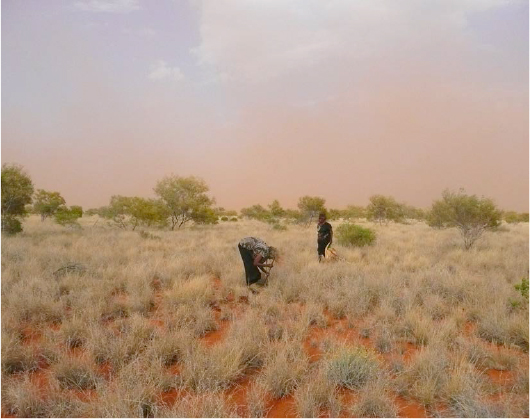
Image 1: Ilawanti Ungkutjuru Ken and Nyurpya Kaika Burton collecting grass, 2011, artists’ camp near Amata, SA (photo: J. Foster; © Tjanpi Desert Weavers, NPY Women’s Council, 2011)
The Tjanpi Desert Weavers Paarpakani artists camp, as well as the presentation by the artists at Same but Different, was facilitated by Jo Foster, Tjanpi Art and Culture projects manager. Linda Rive, NPY Women’s Council interpreter and translator, undertook interpretation for the artists at the Same but Different forum, as well as the subsequent transcription and translation of the original recording, created by PAW Media.
Note on translations
This paper is a transcription of the live interpretation of the presentation and performance in Pitjantjatjara language, song and ceremony of six Tjanpi Desert Weavers artists at Same but Different. In transcribing the paper, the interpretations (that is, both the original Pitjantjatjara as well as the English interpretation of what was said on the day) have been kept in order to preserve the performative quality of the presentation, and the pleasure and enjoyment of the artists’ interactions with each other, the audience, the facilitator (Jo Foster) and the interpreter (Linda Rive)—rather than a more strict retranslation verbatim of the words the women spoke (as this text might have done, in transcription and translation for publication after the event). Thus what may seem slight anomalies or differences between what the women say (Pitjantjatjara) and what the (English) ‘says’, reflects the spontaneous nature of interpretation as itself part of the performance (not secondary to the fact or rendered invisible in the transcription/translation process), including on-the-spot attention to the implied nuances of meanings and addendum not necessarily caught by words alone.
—
Nyurpaya Kaika Burton: Hello, ngayulu kuwari Tjanpiku tjukurpa wangkanyi, Paarpakani. Panya 1995 ngka Tjanpiku—Tjanpi startaringu—ka nganana startarrira palyaningi basket tjuta, munula ma nintiringangi, munula palula nguru tjanpi tjuta—tjanpi tjuta nganana putti nguru mantjiningi. Manta nguru. Munula nganana basket tjuta palyaningi, startarrira nyara palula.
Linda Rive: We are talking now about the inception of the Tjanpi Desert Weavers that started right back in 1995 and we started off learning how to make baskets, and that was the first thing that we made. But all of our raw materials came from the land, growing out of the land, out of the ground. And that is where we harvested all of our materials, all those different sorts of grasses and vegetation, pulling them up, and that is what we made all our items out of—plants growing on our own country.
Nyurpaya Kaika Burton: Nyara palula nguru Tjanpinya—Tjanpiku tjukurpa lipiringu munu ngura tjutakutu anu. APY Landsakutu, Western Australia kutu munu Northern Territory kutu. Lipiringu Tjanpiku tjukurpa.
Linda Rive: From only a few women, from a very small group of women that first learnt how to make baskets, that skill spread like wildfire across the Lands, and women in Western Australia, Northern Territory and South Australia—right across the APY [Anangu Pitjantjatjara Yankunytjatjara] Lands—everybody learnt from everybody else, and before we knew it, everyone knew how to weave, and knew which grasses to collect and knew what to make and knew how to make it, and the skill base became very, very wide.
Nyurpaya Kaika Burton: Munu nganana nyara palula nguru kuliningi, ‘Hey! Nganampa mantangka nganampa Tjukurpa tjuta, nganampa culture pulka! Uti nganana tjanpingka kulu palyanma!’
Linda Rive: Of course we realised as we were out collecting all that vegetation, all that different grass, that, ‘Hang on! All that grass is growing on sacred land in various areas’, and we realised as we were collecting the grasses and making the baskets, that we were in fact weaving the country and weaving stories into the country and each different grass had its own story, and we realised we were working with a very ancient story and tradition, but making new things out of it.
Nyurpaya Kaika Burton: Munula nyara palula nguru kuliningi, ‘Hey! Kuwari tjana palyala! Tjinguru nganana tjulpu pulka palyanu, Tjukurpa tjara. Tjulpu pulka paluru. Nganana communityngka walingka palyantja wiya, nganana putingka nyinangi, munu nganana parka mantjiningi, tjanpi mantjiningi, punu mantjiningi, munu nganana palula nguru tjulpu pulka tjuta palyanu!
Linda Rive: So we moved not just to baskets but we moved to animals and birds and lately, we were thinking, ‘Wow! You know, we are so inspired by all the birds that are all flying around!’ and so we decided that we would make a whole lot of birds. And we decided that we wouldn’t work in the community, we would go bush. Of course, we work far better out bush, because that is where all the grasses are, and we go there and we can pull the different grasses, get all the different grasses. Get all the different vegetation and fibres and we began to make lots and lots of big birds that were flying around and inspiring us.
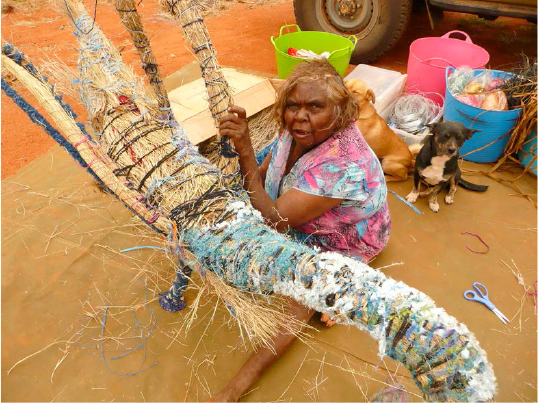
Image 2: Tjunkaya Tapaya, work in progress 2011, artists’ camp near Amata, SA (photograph: J. Foster; © Tjanpi Desert Weavers, NPY Women’s Council, 2011)
Nyurpaya Kaika Burton: Munu nganana tjulpu pulka palyanu ka Tandanya la nguru wangkangu ‘Uwa, nyaratja exhibition ngaranyi. Nganana tjulpu tjuta nyakuny-tjakitja. Minyma Tjanpi tjutakungku palyantja’. Ka tjulpu tjuta nganana Paarpakantja palyanu. Munu Tandanya la kutu anu munu nganana tjulpu tjuta nyangangi—nganampa tjulpu tjuta katu paarpakani—munu nganana inmaku pakanu!
Linda Rive: So Tandanya invited us to participate in this exhibition, and we made all these huge birds. So we went down to Tandanya and we saw all the birds flying around in the exhibition, and we found that really fabulous. In fact it got us going and we just had to sing a big inma!
Ilawanti Ungkutjuru Ken: Uwa. Nganana punu uwankara nyakula mantjilpai, munula pukultu pala palula palyalpai. Kutju palyantja wiya nganana panya papa, animal tjuta nganana palyalpai, papa, tjulpu, ngintaka uwankara. Nganampa kulintja palatja. Ka nyara palulala panya palyalpai.
Linda Rive: It is not just the birds of course, or baskets, but we are inspired by all the different animals in the landscape, and so now we make dogs, we make lizards, we make emus, we make everything. But this particular exhibition was focusing on birds, and that is what we went out to do on that particular day.
Ilawanti Ungkutjuru Ken: Uwa, ka palula nguru nganana punu winki mantjilpai—palu kuwari kampangu! Kampangu warungku panya. Tjanpi uwankara nganampa kampara wiyaringu ka minyma kutjarangku ankula putu nyangu munu paluru pula tjituru-tjituru nyinangi. Ka tjanpi uwankara kampara wiyaringu nganampa.
Linda Rive: Anyway, so what we did was, we went on this trip and out of Amata to collect our raw materials, with Jo, for the workshop, and we started driving off. But, oh dear, the whole country was burning up, and everything caught fire and we were driving past burnt country. And we thought, ‘Oh no! All of our materials—all of our grasses—are burnt black! What are we going to do next?’
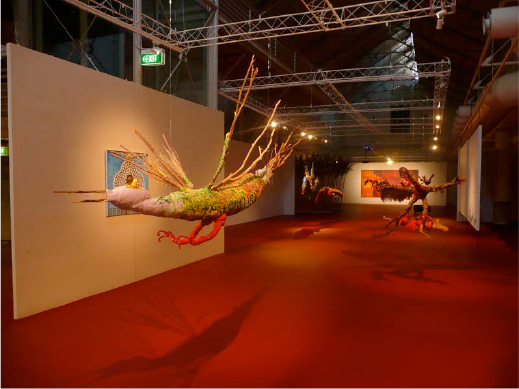
Image 3: Tjanpi Desert Weaver Paarpakani (Take Flight), 2012, ‘Deadly: Between Heaven and Hell’, Tandanya National Aboriginal Cultural Institute, SA (photograph: M. Brady; © Tjanpi Desert Weavers, NPY Women’s Council)
Ilawanti Ungkutjuru Ken: Ka nganana piruku ngura kutjupa kampara wiyaringu ka nganana anu ngura kutjupa kutu munu nyangu punu kutjupa pulka. Punu kutjupa pulka, tjanpi tjuta ngaranyi, ka palula nganana mantjini pulkara, ka nganana pukularipai munula palyalpai punu tjuta katulpai nyaa tjuta palyantjikitjangku. Wangunu nguru.
Linda Rive: At last we found some country that wasn’t burnt, and we got really happy then, because we could see that unfold in front of our eyes. So we stopped and we made camp here, as you can see, and we started collecting wangunu, which is one of our favourite grasses that grows out there.
Niningka Lewis: Uwa munu nganana nyangangka nyinapai putingka. Ka nganampa tinta tjuta, munu nganana warkangka palyaningi nyara palula.
Linda Rive: So here you can see our camp—our workshop camp—and that is where we stayed while we prepared the birds for the exhibition.
Niningka Lewis: Nyaa, one week nganana nyinangi ngura palula. Nyangatja tjinguru paintngka palyantja. Nganana nyangatja nyakula palyantja. Kuka tjara.
Linda Rive: What got us going on this whole exhibition idea of the birds was this painting by Ilawanti here. That really got us all thinking about the nature of eagles and how they care for their families. We found this particular painting extremely inspiring, and all the birds came out of this particular painting, by Ilawanti.
Tjunkaya Tapaya: Uwa, nganana nyara palula nguru Amatala, munu nganana tjunguringkula, ka nyara palula warka nyara paluru palyaningi, nganana putingka nyinara community material tjuta mantjiningi punungka.
Linda Rive: Some of us live in Amata, and there is some lovely country surrounding that area, with lots of different grasses, and there are also mountains, and there are eagles that live in those hills, and so we find this ideal country perfect, not only for inspiration but for the grasses, and close to home as well, and so that is where we went.
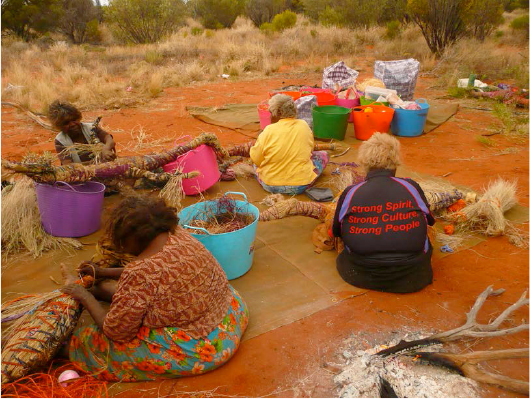
Image 4: Tjanpi Desert Artists, from left to right: Niningka Lewis, Ilawanti Ungkutjuru Ken, Paniny Mick, Naomi Kantjuriny, artists’ camp near Amata, SA, 2011 (photograph: J. Foster; image © Tjanpi Desert Weavers, NPY Women’s Council, 2011)
Tjunkaya Tapaya: Ka nganana work nyaratja wiru nganana palyaningi munula pukularinyi wiru tjuta palyara. Palyara nganana kuliningi nyanga paluru nganampa warka wiru mulapa. Ka nganana tjulpu tjuta palyaningi ngura nyara palula nyinara.
Linda Rive: So here we are in the camp making the birds, and really, as we work and as the works progress, and as they get bigger and more beautiful, we really think about the meaning of birds, and thinking about that painting, and thinking about caring and looking after each other, and watching out for each other, and what the land provides, and thinking about the strength of our culture. So it is a lovely time to be there together, working.
Tjunkaya Tapay: Uwa nganana palyara uwankara wiyanu munula tjunu, nyara kulira nyara ngaranyi, tjulpu tjuta.
Linda Rive: So here we are looking at our big birds, and reflecting on how the workshop’s been, and reflecting on the meaning of birds, and us being all together and spending time together.
Yaritji Young: Uwa, ngayulu Amatala nguru munu nganana panya nyaa, ngurilpai nyaa tjuta, punu tjuta, parka tjuta, wangunu tjuta, munu palula nguru tjanpi tjuta. Palula nguru tjanpi tjuta paunu munu mantjilpai, munu tjungulpai palunya tjananya. Nganana tjulpu tjuta palyaningi nyara palula munu kuliningi warka pulka mulapa nyaratja. Ka nganana mukuringkupai nyanga palunya purinypaku. Punu palatja nganana tjulpu Tjukurpa pulka tjara palyaningi.
Linda Rive: I am from Amata and I really, really love being out with all of the other ladies here, away from the houses, away from the buildings and away from the communities, in the land, where all the grasses are growing. We really love being together and we find that when we are together in these workshop situations, that we are really productive and make loads of fabulous things, and they just get bigger and better. As you can see with these birds, they are really huge and different, and we find that working together can be quite inspiring and makes us be more innovative.
Yaritji Young: Munu—ka nganampa tjanpi tjuta nguru bush firengku kampangu, ka nganana nyara palula nguru nyinangi, ka nganana nyinara ka mina pulkangka puyinu, ka nganampa tjanpi tjuta pulkaringu ka nganana tjanpi nguru pukularingi palyantjakitja. Nyanga palumpa tjuta.
Linda Rive: So not only did we have to contend with a big fire that burnt up a lot of our grass, during this workshop we also had to contend with a three-day downpour. It absolutely rained and rained and rained. And while it was a bit difficult, we were also a bit happy, because we knew that rain would bring up new grass, to use in the future.
Nyurpaya Kaika Burton: Nganana putingka nyinangi, munu nganana warka palyaningi, ka ngayuku miita, paluru rawa pitjapai munu kuka nganampa katipai, kutjupa kutjupa tjuta. Ka nganana pulkara pukularipai. Ka ngayulu kuliningi paluru wati walawurunya! Kuka ungkupai!
Image 5: Ilawanti Ungkutjuru Ken, Wampatku—On the Hunt, 2011, 1015 x 1015 mm, acrylic on linen (image © Ilawanti Ungkutjuru Ken and Tjala Arts)
Linda Rive: So we were out in this bush setting in our own country, and every day my husband would come to us. He would go hunting every day, and every day he would bring us meat! Bush turkey! And we thought it was really fantastic the way he was bringing us this meat—and we were thinking—‘Hey! He must be like that eagle that goes out hunting and looking and getting the meat, and taking the meat and feeding the whole family!’ My husband is just like that eagle from the painting! Going out and bringing us meat! So it was really lovely!
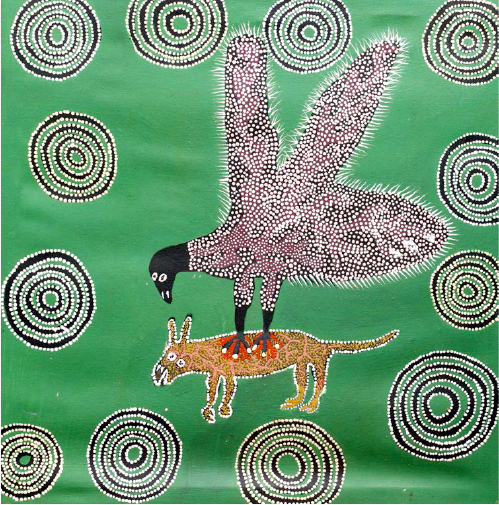
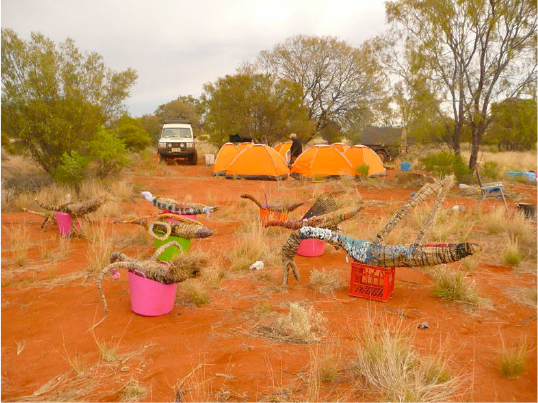
Image 6: Tjanpi tjulpu (birds) in process for Paarpakani (Take Flight), during artists’ camp held in Pitjantjatjara Country near Amata in SA, 2011 (photograph: J. Foster; © Tjanpi Desert Weavers, NPY Women’s Council, 2011)
Nyurpaya Kaika Burton: Nyangatja paluru nyalpi tjuta katiningi, ka ngayulu nyalpi tjuta mantjiningi, tjulpu nguru. Munu nganana kutjupatjara anu tjanpi mantjintjikitja, ka nyara paluru walpa pulka, ulpuru pulka pitjangi, munu warungku kampangi, piriya pulka. Ka nganana waru tjuta, nyaa, tjanpi tjuta mantjiningi, munu ngura kutu katingi munu palyaningi. Ngayulu tjulpu nguru palyanu, waya karpatjura.
Linda Rive: These are the feathers from one of the bush turkeys that my husband brought us to eat, so we ate the bird, and now we are using the feathers here by inserting the wires into them. But while we were doing this we were also going out and collecting different sorts of grasses and twigs and branches that we were looking for. And during this time the weather was just completely wild with the fires still burning all around, not far from us, we had smoke all in the sky, and then this big dust storm came and blew in, dust was blowing everywhere, and just whirlwinds, and just really full on weather. Anyway we made some amazing things.
Tjunkaya Tapaya: Uwa, nganana mai wiru palyalpai damper, ka nganana warka wiyaringkula mai nyinanyangka palyara ngalkupai, lunch or supper.
Linda Rive: Of course we had to eat, so everyone was making dampers, and that particular damper had seven pieces, and we were saying that that was like the Seven Sisters.
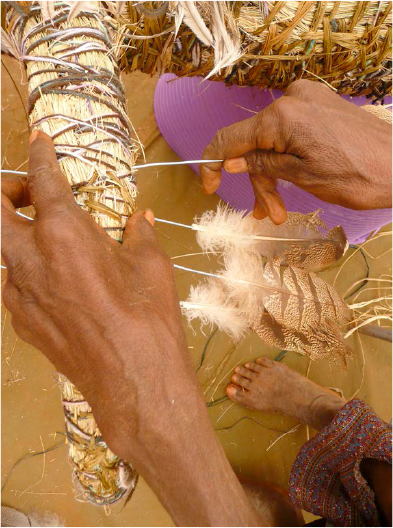
Image 7: Nyurpaya Kaika Burton attaching bush turkey feathers to her grass bird for Paarpakani (Take Flight), during artists’ camp held in Pitjantjatjara Country near Amata in SA, 2011 (photograph: J. Foster; © Tjanpi Desert Weavers, NPY Women’s Council, 2011)
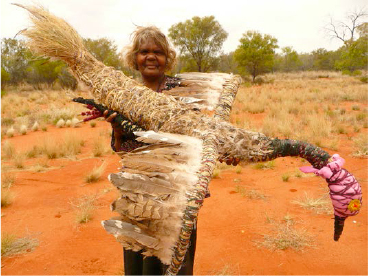
Image 8 (above): Nyurpaya Kaika Burton with her bird for Paarpakani (Take Flight), during artists’ camp held in Pitjantjatjara Country near Amata in SA, 2011 (photograph: J. Foster; © Tjanpi Desert Weavers, NPY Women’s Council, 2011)
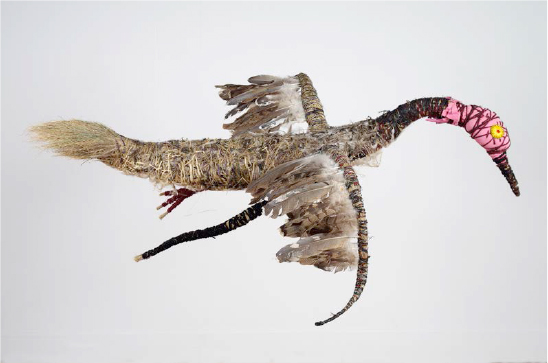
Image 9 (below): Nyurpaya Kaika Burton, Paarpakani (Take Flight), 2011–12, raffia, minari grass, wool, poly-raffia, bush turkey feathers, wire. For ‘Deadly: Between Heaven and Hell’, Tandanya National Aboriginal Cultural Institute, SA (photograph: M. Brady; © Tjanpi Desert Weavers, NPY Women’s Council, 2011)
Rene Wanuny Kulitja: Tjanpi palyaningi nyara palatja kuwari young women tjuta nintiringu munu palula tjana ngapartji tjungu palyani, minyma pulka tjutangku munu kungkawara tjutangku. Pulkara warka nyarangka nganana mukuringkula tjana palyani.
Linda Rive: One of the best outcomes of all of this work is that all of our younger women are watching us, and learning, and they are all taking up the art as well. We can see a really great future for all of our young girls. There are a lot of future artists, big artists, coming up through those young girls, and they are learning from us slightly older women, and we in turn learnt from the older women as well. Learning how to use different sorts of materials, including found objects. As you can see there are a lot of different materials in there, including twigs from the bush.
Rene Wanuny Kulitja: Ka nganana mara wakanu kala nganana nintiringu pulkara kuwari, kala kuwari pukulpa.
Linda Rive: It takes a lot of determination to make an item like this, because it is really hard work and it kills the hands, and for me, when I was learning and when I was making these things, you know, you stab the hand again and again and again. But the only way to get it finished is to persist and keep going and break through that pain barrier of that rough grass and that sharp needle and keep going until you have made something you are satisfied with.
Rene Wanuny Kulitja: Ka nganana tjanpi wiru palyara Tjukurtjara palyara kurunpa winki pukularipai. Wiru. Pukulpa palyantjaku, palya.
Linda Rive: And to top it all off, these birds and these sculptures, they come out of our very ancient culture and we make these things, we make them with a very strong feeling in our spirits. As we are making them we are feeling really deeply connected to the stories. They make us feel better, and these are really special objects because of that.
Rene Wanuny Kulitja: Ka paluru tjana Amatala nguru mauntalpa workshop palyaningi tjulpu tjutaku. Ka ngayulu palumpa tjanampa tjulpuku panya tjitji mankurpa tjunu. Munu ngayulu tjunguringu palatja panya, mununa pukularira inmaku pakaningi Tandanyala.
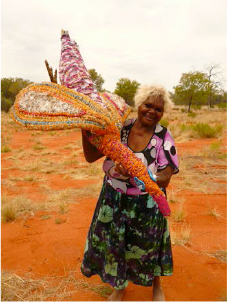
Image 10 (above): Naomi Kantjuriny with her bird for Paarpakani (Take Flight), during artists’ camp held in Pitjantjatjara Country near Amata, SA, 2011 (photograph: J. Foster; © Tjanpi Desert Weavers, NPY Women’s Council, 2011)
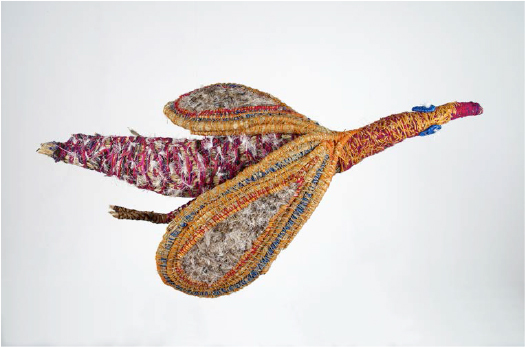
Image 11 (below): Naomi Kantjuriny, Paarpakani (Take Flight), 2011–12, raffia, minari grass, poly-raffia, wool, emu feathers, wire. For ‘Deadly: Between Heaven and Hell’, Tandanya National Aboriginal Cultural Institute, SA (photograph: M. Brady; © Tjanpi Desert Weavers, NPY Women’s Council, 2011)
Linda Rive: So now you can see the Tandanya exhibition there, because we all went down there and you can see us dancing. My input was to make some of these children riding these birds, and it was very exciting and very special to be part of this fantastic exhibition.
Ilawanti Ungkutjuru Ken: Uwa, nganampa nyara palula mankurpa ngarangi three communityngka ngarangi munu putingka ngarangi warka tjukurpa. Tjukurpa nganampa. Tjukurpa pulka mulapa.
Linda Rive: These stories are very, very ancient. They are Tjukurpa.
Nyurpaya Kaika Burton: Panya nyaa, ka walawuruku kuka ankupai katu munu mantangka. Ka nganana kuliningi nyara, panya walawuruku life, pulka, kunpu. Paluru katu para ngarapai munu paluru kukaku ngurilpai munu kuka nyakula ukalingkupai munu kuka palunya miltjingka wakalpai, munu nyalpingka kuru patilpai munu katu katira katipai palumpa ngura kutu munu ngalkupai.
Linda Rive: We spend lots of time thinking about what eagles do, and we are very impressed and very proud of our eagles, the way they can soar so high in the sky and then they have this amazing eyesight where they can see their prey so far below on the ground, and then they swoop down and they grab that prey in their big, big claws, and they spread their feathers over the prey so it blinds the prey, and then it kills the prey before the prey even knows what has happened to it, and then it takes it back to feed the children.
Nyurpaya Kaika Burton: Paluru tjulpu ngarapai Tjukurpa pulka tjara munu inmatjararingkula.
Linda Rive: There is a big, big eagle story, but there is also a big, big eagle song as well. Do we have time for a song? [LADIES’ EAGLE HUNTING SONG]
[The song (untranslated) can be heard in the live recording of Tjanpi Desert Weavers on PAW Media website:
http://www.pawmedia.com.au/library/tjanpi-desert-weavers-1202].
Ilawanti Ungkutjuru Ken: Palatja paluru kukaku nguriningi nyara palunya ngura, tjanampa ngura.
Linda Rive: Eagles hunting. [SINGING CONTINUES] [APPLAUSE]
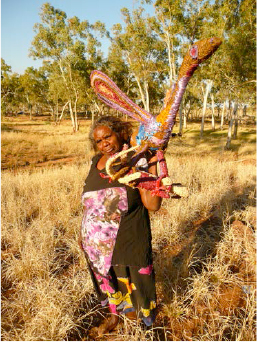
Image 12 (above): Niningka Lewis with her bird for Paarpakani (Take Flight), during artists’ camp held in Pitjantjatjara Country near Amata in SA, 2011 (photograph J. Foster; © Tjanpi Desert Weavers, NPY Women’s Council, 2011)
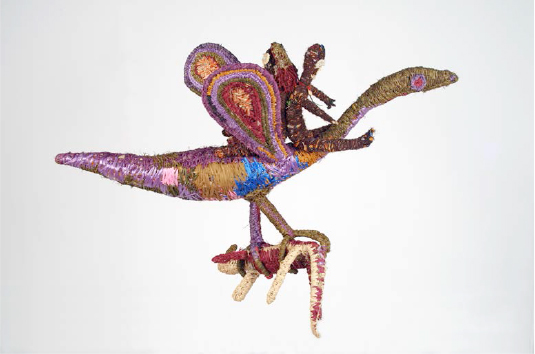
Image 13 (above): Niningka Lewis and Rene Kulitja, Paarpakani (Take flight) 2011–2012, raffia, wire, wool, fake flowers, polyester fibre. For ‘Deadly: Between Heaven and Hell’, Tandanya National Aboriginal Cultural Institute, SA (photograph: M. Brady; © Tjanpi Desert Weavers, NPY Women’s Council, 2011)
Ilawanti Ungkutjuru Ken: Walawuru kuka urara mantjilpai, tjitjiku, tjitji palumpaku, munu animal kutjupa pantilpai munu pitjapai. Palula nguru paluru mulapa alatjitu mantjilpai, paluru malu mantjilpai, rapita mantjilpai. Kukaputju pulka paluru uralpai.
Linda Rive: There is almost nothing that an eagle can’t do. They are really kukaputju [skilled hunters] and they bring home to the family, a whole kangaroo, or a rabbit. Anything that they do they are really good at what they do, and we like that, and we admire that in them.
Ilawanti Ungkutjuru Ken: Uwa, ka, kutjupa tjutangku paluru tjana kuka katira ngalkupai, paluru tjana waru katira kuka kutu ankupai, munu kuka ungkupai tjitjiku.
Linda Rive: Our good men are just like good eagles. Our men are good hunters, they are kukaputju [skilled hunters] too, and they bring the meat home.
Yaritji Young: Paluru kuka ngurinyangka ngali and kuka ngurinyangka ngali kuka putu ngurilpai munuli, ka paluru, ngali ripulangka malu ankupai munuli nyakupai wirkara paluru walawuru maluku. Ka ngali nyara paluru nyakupai malu palula wiyaringu, munuli nyakula panya walawuru katu pitjangi. Ka ngali nyara palula paulpai munu ngalya katira ngarira tjunkupai munu ngali paura ankupai ngura kutu. Paluru katipai, walawurungku.
Linda Rive: We often go out hunting ourselves because we do get meat. We go out with rifles and we are looking for kangaroo and we are pretty good hunters, the two of us, and we go and shoot a kangaroo and bring it home for meat. And sometimes when there are eagles around we will shoot a kangaroo and leave it for those eagles, as a gift. Ngaparji, that means reciprocating. For everything that an eagle does for us, we give back to them.
Jennifer Biddle, Convenor (from the floor): Can I be really cheeky? I just want to ask one question. I work for Warlpiri women and one of the best things I love about Tjanpi—and it makes me realise, listening and feeling, that feeling between you that you brought here today, is that there is a lot of joy, and it is really fun. I love that in Tjanpi and can you talk a little bit more about how that feeling between yourselves gets into that work. Because the works themselves are cheeky and funny and feel like that as well. They feel like a feeling.
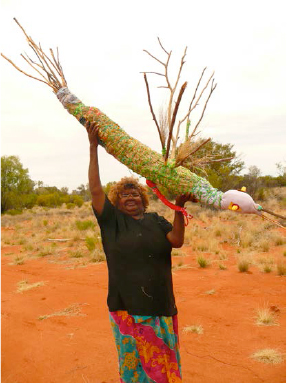
Image 14 (above): Yaritji Young with her bird for Paarpakani (Take Flight), during artists’ camp held in Pitjantjatjara Country near Amata in SA, 2011 (photograph: J. Foster; © Tjanpi Desert Weavers, NPY Women’s Council, 2011)
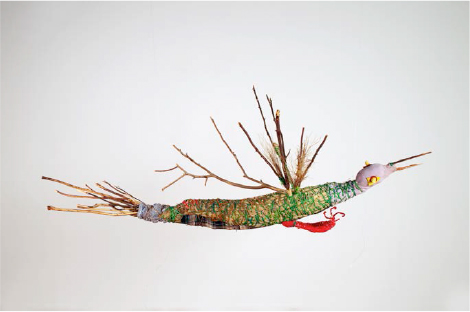
Image 15 (below): Yaritji Young, Paarpakani (Take Flight), 2011–2012, sticks, fabric, wool, raffia, wire, poly-raffia. For ‘Deadly: Between Heaven and Hell’, Tandanya National Aboriginal Cultural Institute, SA (photograph: M. Brady; © Tjanpi Desert Weavers, NPY Women’s Council, 2012)
Tjunkaya Tapaya: Uwa nganana minyma uwankara pukularira palyara wiru tjuta munu nganana sellamilalpai basket nguru animal kutjupa kutjupa tjuta nganana palyara munula pulkara pukularipai.
Linda Rive: There is no doubt that we derive a lot of joy and pleasure and fun being together, all of us women, working, and we get a good outcome too, because we make beautiful things, but we sell them and so there is an income there, so that is really satisfaction—there is a lot of satisfaction for us. We love it.
Tjunkaya Tapaya: Ka nganana communityngka nyinara tjuta, canvas walkatjunkupai munula nganana palyalpai mungartjirira warka wiyaringkula tjanpi tjuta palyalpai. Wiru tjuta.
Linda Rive: Often we are working in the arts centres during the day making paintings but the great thing about Tjanpi work is that we can make it any time any place and we often all go home and be at home together working. It is a transportable art form that we can do at home, and we just love it, because we are all together there and it is good fun.
Yaritji Young: Tjukurpa nganana palyaningi, Tjukurpa tjuta tjara uwankara, panya animals, rockholes tjuta kulu, tjulpu tjuta, palumpa uwankara Tjukurpa tjara. Ka nganana Tjukurpa nganampa palyalpai, nganampa tjamuku kamiku manta nguru Tjukurpa pulkatjara. Ka nganana palula nguru Tjukurpa pulka tjara palyani. Uwa.
Linda Rive: In Tjanpi, everything we make with tjanpi [grasses], really comes through a very ancient line of stories, through our grandfathers and our grandmothers, on their country, at their special places, and all the animals that live on that sacred country and the plants that grow there and the water and the rockholes, it is all sacred and full of a lot of stories. We find that so inspiring that we are never short of inspirational ideas, and that is where all of our ideas come from, from that Tjukurpa and from our land and from our relatives, our grandfathers and grandmothers.
Jennifer Biddle (from the floor): That is really inspiring, and I just want to thank you all very much.
[APPLAUSE)
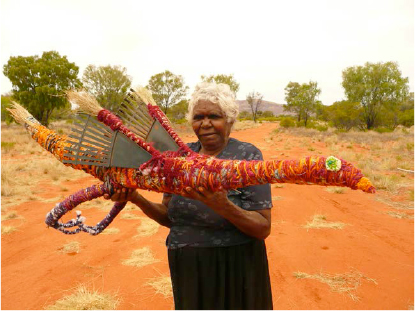
Image 16: Paniny Mick with her bird for Paarpakani (Take Flight), during artists’ camp held in Pitjantjatjara Country near Amata in SA, 2011 (photograph: J. Foster; © Tjanpi Desert Weavers, NPY Women’s Council, 2011)
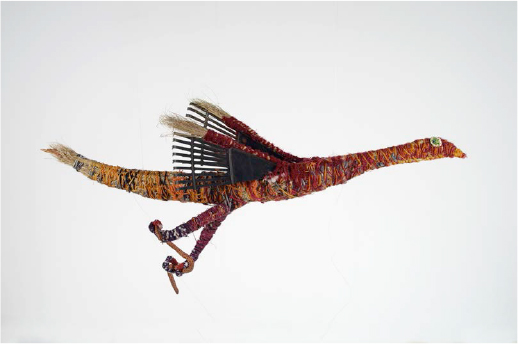
Image 17: Paniny Mick, Paarpakani (Take Flight), 2011–2012, raffia, minari grass, plastic rake, wool, wire. For ‘Deadly: Between Heaven and Hell’, Tandanya National Aboriginal Cultural Institute, SA (photograph: M. Brady; © Tjanpi Desert Weavers, NPY Women’s Council, 2011)
Nyurpaya Kaika Burton
Born: 1940 Pukatja (Ernabella), SA
Country: Pitjantjatjara, SA
Currently based: Amata, SA
Nyurpaya Kaika Burton began making baskets in the late 1990s and has only recently started to work sculpturally using natural fibres. She is a highly skilled wood carver and brings this acuity of working in three dimensions to her fibre work. Nyurpaya also paints for Tjala Arts and has recently taken to writing about her arts practice, which was featured in Art and Australia in May 2014.
Naomi Kantjuriny
Born: 1944 Amata, SA
Country: Pitjantjatjara, SA
Currently based: Amata, SA
Naomi is a prolific artist, basket maker and wood carver. Naomi is also a Ngangkari (traditional healer) and is currently employed by NPY Women’s council in their Ngangkari program, providing treatments to Aboriginal people on the APY Lands and speaking publicly about her work at national and international conferences on mental health.
Ilawanti Ungkutjuru Ken
Born: 1944 Watarru, SA
Country: Pitjantjatjara, SA
Currently based: Amata, SA
Ilawanti is a long-standing Tjanpi artist and a painter for Tjala Arts. Ilawanti is also a Ngangkari (traditional healer) and is currently employed by NPY Women’s Council in the Ngangkari program, providing treatments to Aboriginal people on the APY Lands and speaking publicly about her work at national and international conferences on mental health.
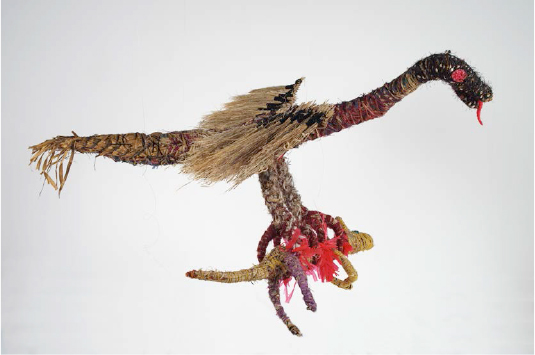
Image 18: Ilawanti Ungkutjuru Ken, Paarpakani (Take Flight) 2011–2012, minari grass, poly-raffia, string, yarn, raffia, buffel grass, emu feathers. For ‘Deadly: Between Heaven and Hell’, Tandanya National Aboriginal Cultural Institute, SA. © Tjanpi Desert Weavers, NPY Women’s Council (photograph: M. Brady; © Tandanya Aboriginal Cultural Institute, 2012)
Rene Wanuny Kulitja
Born: 1958 Pukatja (Ernabella), SA
Country: Pitjantjatjara, SA
Currently based: Alice Springs, SA
Rene is a dedicated Tjanpi artist and also paints for Maraku Arts. Her paintings have been exhibited nationally and internationally, with one of her designs featuring on a QANTAS plane. Rene has been a member of Mutijulu Community Council and Uluru Kata Tjuta National Park Board of Management. She was a founding Director of Walkatjara Art at Uluru and is Chairperson of Maruku Arts Governing Committee. She is currently a director of NPY Women’s Council.
Niningka Lewis
Born: 1945, out bush near Areyonga, NT
Country: Pitjantjatjara, SA
Currently based: Pukatja (Ernabella), SA
Niningka is a highly creative artist working across a number of mediums. She is a wood carver for Maraku Arts and a painter for Ernabella Arts. Niningka has also been a Tjanpi artist for many years, her fibre art is informed by her expertise in punu (wood carving) and she makes wonderfully animated animals including birds, dogs, goannas and lizards, and objects and cameos from community life, including teapots and teacups.
Tjunkaya Tapaya
Born: 1947 Pukatja (Ernabella), SA
Country: Pitjantjatjara, SA
Currently based: Pukatja (Ernabella), SA
Tjunkaya grew up at the Ernabella Mission, where she went to school and later worked, teaching her peers various domestic skills including sewing and cooking. Tjunkaya is a Tjanpi artist but also paints for Ernabella Arts and has developed into one of Ernabella Arts most outstanding batik artists. Tjunkaya also excels in ceramics and printmaking.
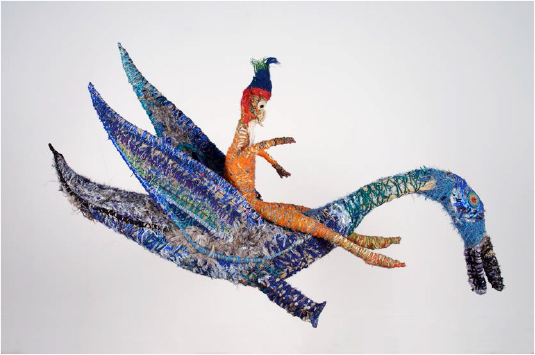
Image 19: Tjunkaya Tapaya and Rene Kulitja, Paarpakani (Take Flight) 2011–2012, minari grass, yarn, wire, raffia, poly-raffia. For ‘Deadly: Between Heaven and Hell’, Tandanya National Aboriginal Cultural Institute, SA (photograph: M. Brady; © Tandanya Aboriginal Cultural Institute, 2012)
Paniny Mick (participating artist, not present for Same but Different presentation)
Born: 1939 Rocket Bore near Mulga Park, SA
Country: Pitjantjatjara, SA
Currently based: Amata, SA
Paniny is a respected senior Amata woman, having come to Amata from Rocket Bore with her parents when she was a young girl. Paniny has worked as a teacher’s aide with pre-school children and has been a director for NPY Women’s Council. She is an inspired weaver who often uses found materials, emu feathers, minari grass, raffia and wool in her sculptural works.
Yaritji Young
Born: c. 1956 out bush near the creek at Ernabella, SA
Country: Pitjantjatjara, SA
Currently based: Rocket Bore, SA
Yaritji has been making Tjanpi works for many years drawing inspiration from the animals in Country surrounding Rocket Bore in addition to small trucks and camp crockery. Yaritji also paints for Tjala Arts.
Jo Foster has worked closely with Indigenous artists since 2000, initially as co-ordinator of Warlayirti Culture Centre in Balgo Hills, and since 2005, in various roles with Tjanpi Desert Weavers where she was manager, then creative development co-ordinator. More recently she has been regularly contracted by Tjanpi to facilitate major commissions and artists’ camps as Arts and Culture Project Manager.
Michelle Young has a BA in Anthropology from Auckland University. Before taking up the position of projects manager for Tjanpi Desert Weavers in March 2009, she spent seven years working for the Yap State Historic Preservation Office in the Federated States of Micronesia as museum director and curator. In this role, Michelle supported local craft and weaving initiatives aimed at providing greater income to women and preserving cultural traditions and archaeological remains.
Linda Rive has lived in Central Australia for thirty-five years, working with the Ngaanyatjarra, Pitjantjatjara and Yankunytjatjara people. She is fluent in the Pitjantjatjara and Yankunytjatjara language dialects and works as an interpreter, translator and oral historian. She is passionate about cultural history and the natural environment and desert people.