Commonwealth Journal of Local Governance
Issue 29
October 2024
RESEARCH AND EVALUATION (PEER REVIEWED)
Commonwealth Caribbean Cities, Climate Change Adaptation and Resilience: Empowering Local Government

Michelle Mycoo
Department of Geomatics Engineering and Land Management, The University of the West Indies, St. Augustine, Trinidad and Tobago, michelle.mycoo@uwi.edu
Corresponding author: Michelle Mycoo, Department of Geomatics Engineering and Land Management, The University of the West Indies, St. Augustine, Trinidad and Tobago, michelle.mycoo@uwi.edu
DOI: https://doi.org/10.5130/cjlg.vi29.9042
Article History: Received 12/02/2024; Accepted 23/09/2024; Published 09/10/2024
Citation: Mycoo, M. 2024. Commonwealth Caribbean Cities, Climate Change Adaptation and Resilience: Empowering Local Government. Commonwealth Journal of Local Governance, 29, 1–20. https://doi.org/10.5130/cjlg.vi29.9042
© 2024 by the author(s). This is an Open Access article distributed under the terms of the Creative Commons Attribution 4.0 International (CC BY 4.0) License (https://creativecommons.org/licenses/by/4.0/), allowing third parties to copy and redistribute the material in any medium or format and to remix, transform, and build upon the material for any purpose, even commercial, provided the original work is properly cited and states its license.
Abstract
Cities of Small Island Developing States face unprecedented challenges in climate change adaptation with local governments in these territories being increasingly called upon to respond to related natural hazards and deploy resources for planning, preparedness, emergency efforts and post-recovery initiatives in their communities. So far, very little research has been conducted on the paramount role and capacity of local governments in Commonwealth Caribbean Small Island Developing States to undertake climate change adaptation in an urban context and as an integral pathway to disaster-resilient development. This study investigates local government’s role in responding to climate change adaptation and the challenges it faces in performing this function in Commonwealth Caribbean cities. The research distilled the inputs of mayors and local government experts using interviews and drawing from their inputs at a stakeholder workshop. The study’s findings indicate that local governments within the region face many barriers to execute climate change adaptation initiatives. The paper suggests an array of credible policy measures and action that may be undertaken to empower Commonwealth Caribbean local governments in implementing climate change adaptation to enhance climate resilience within local communities, including central government’s role as an enabler.
Keywords
Local Government; Cities; Caribbean; Climate Change; Adaptation; Resiliency
Introduction
The United Nations Conference on the Environment and Development held in June 1992 in the city of Rio de Janeiro, Brazil, was an historic meeting for Small Island Developing States (SIDS), who used the event as a platform to advocate for a special follow-up meeting to address their particular issues. This was held in Bridgetown, Barbados in 1994 to devise a plan of action aimed at attaining sustainable development, reflecting SIDS’ unique characteristics and challenges faced (Mycoo 2022a). Since 1994, United Nations (UN) SIDS meetings have been convened every decade to articulate what sustainable development entails for SIDS. The host countries and themes of these meetings were the Mauritius Strategy of Implementation in 2005, the Samoa Pathway in 2014, and Antigua and Barbuda: Charting the Course Toward Resilient Prosperity in 2024. In 2015, SIDS committed to fulfilling the UN’s 17 sustainable development goals (SDGs) by 2030, but to do so face complex, interrelated challenges including geographical remoteness, fragile ecosystems, natural resource dependent economies, increasing debt, vulnerability to external economic shocks, human and technological resource constraints, limited capacity to mobilise investment, limited planning, implementation, monitoring and enforcement capacity, along with rapid and burgeoning informal urbanisation (Mycoo 2022a). Some of these factors undermine climate change adaptation by local governments at the city and urban settlement scales (Mycoo 2022a).
Against this background, various international agreements have highlighted climate adaptation in urban areas as a global priority (Chan and Amling 2019). This thematic focus is seen in the inclusion of adaptation and associated financial targets in the Paris Climate Agreement,1 the SDGs and UN-Habitat’s New Urban Agenda.2 Currently, countries of the Global South have insufficient access to climate adaptation finance and the evidence shows that downscaling to the sub-national level is often a missing element of the response to increasing climate change risks (Rouleau et al. 2022). Growing concern for climate change impacts on city dwellers led to the Intergovernmental Panel on Climate Change announcement in 2024 that a Special Report on Cities was merited.
Previously, the Commonwealth Local Government Forum (CLGF) had recognised urgent action is needed in managing urban development to ensure that critical SDGs, including climate action, can be achieved. It highlighted SIDS’ experiences in managing urbanisation, ways in which weak urban governance has compromised the living conditions of city dwellers, and the need for a transformative pathway going forward (Mycoo 2022a). A major stakeholder workshop on the theme ‘Building back better: local government delivering development in the Caribbean’ was held in Barbados in May 2022, co-hosted by CLGF and the Caribbean Development Bank, and attended by Commonwealth Caribbean mayors and local government staff. The workshop was designed to distil the knowledge of local authorities and climate change experts to inform both Caribbean SIDS of perspectives on sustainable urbanisation and climate change adaptation, and the Commonwealth Heads of Government Meeting to be held the following month in Kigali, Rwanda.
This paper firstly examines the role of local governments as identified by legislation covering Commonwealth Caribbean cities and urban settlements, their current weaknesses and barriers faced in performing their functions, and how these impact on climate change adaptation. Secondly, it recommends policy prescriptions which should be prioritised so that Commonwealth Caribbean local governments can achieve an enhanced capacity to feasibly pursue climate change adaptation and build climate resilience at city and urban scales.
Background
This study investigated the role of local government in responding to climate change adaptation and the challenges faced in performing this function within the context of Commonwealth Caribbean cities. Many Caribbean SIDS are already experiencing higher temperatures, more intense rainfall and tropical cyclones (TCs) and sea level rise, all of which are likely to worsen in the future (Mycoo et al. 2022). Moreover, anthropogenic drivers such as unsustainable land use practices and difficulties in enforcing land use zoning and building guidelines in informal settlements make Caribbean cities highly vulnerable to cyclones and flooding (Butcher-Gollach 2015; Mycoo 2017, 2018b). In Trinidad and Tobago, an estimated 85,000 squatter households (approximately 40% of the population) have illegally occupied over 396 squatter sites with the vast majority located in municipalities that make up Greater Port of Spain (Mycoo 2022b). Similarly, approximately 750 squatter settlements comprising 600,000 persons or 20% of Jamaica’s population lived in squatter settlements in 2008, and over 80% of these settlements were in urban areas (Government of Jamaica 2014). In St. Lucia, over 50% of development has no planning permission and has encroached on hazard-prone lands (King-Joseph and Lendor-Gabriel 2013). Such unregulated construction in key watersheds compounds flooding in Castries, St. Lucia (Rouleau et al. 2022); Kingston, Jamaica (Taylor et al. 2014; Rouleau et al. 2022); Port of Spain, Trinidad and Tobago (Mycoo 2018b); and Georgetown, Guyana (Mycoo 2014).
Flash flooding, largely due to increased urban runoff and a deficit in drainage infrastructure provision, is common throughout many municipalities in Commonwealth Caribbean SIDS. It is exacerbated by inadequate and clogged drainage systems, poor maintenance of watercourses, river channels, drains and culverts, indiscriminate dumping of solid waste into waterways, and land use changes such as more built development and deforestation. Local governments have been challenged to respond over the last six years to Categories 4 and 5 TCs which have caused unprecedented loss and damage to settlements and infrastructure (Mycoo 2022a; Mycoo et al. 2022). TC Maria in 2017 destroyed nearly all of Dominica’s infrastructure and losses amounted to more than 225% of the annual GDP (Eckstein et al. 2018) (see Figures 1 and 2). In June 2024, category 4 TC Beryl brought devastation to St. Vincent and the Grenadines, Grenada and Jamaica.
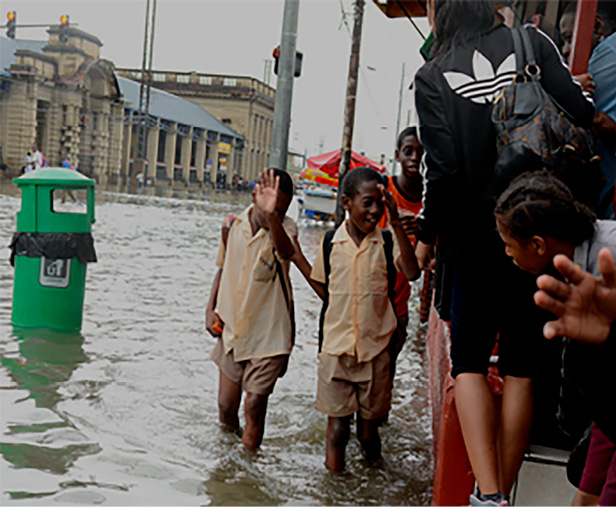
Figure 1. Flooding in the capital city of Port of Spain, Trinidad
Source: Flickr (2022)
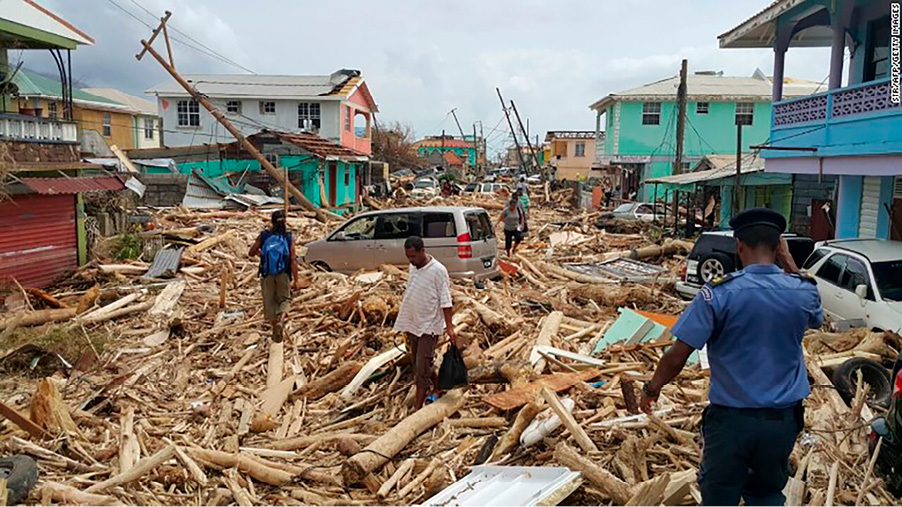
Figure 2. Devastation of Roseau’s buildings and infrastructure after Hurricane Maria struck Dominica in 2017
Source: The Guardian (2017)
High levels of urbanisation pose unprecedented challenges for local authorities. Moreover, projections up to 2050 indicate that those high levels will be the trend over the next three decades (see Figure 3), with as much as 80% of the Caribbean’s population living in cities by 2050 (Donovan and Turner-Jones 2017). Most Caribbean cities have fewer than 300,000 residents, but the challenge is how to address the pressure of growing urban populations. Central and local governments need accurate data on increases in population due to natural increase and/or in-migration to manage demand for housing and public services (Satterthwaite 2024). Further, urbanisation without capital investments in infrastructure, combined with climate change, will make Caribbean cities highly vulnerable to hydrometeorological events.
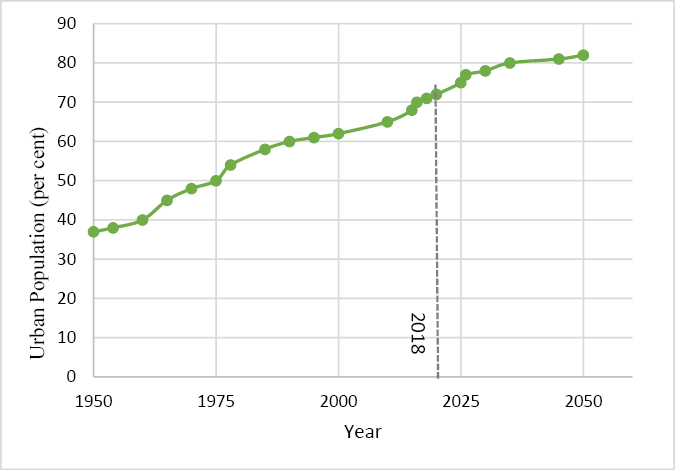
Figure 3. Percentage of urban population in the Caribbean 1950–2050
Source: Adapted from United Nations Department of Economic and Social Affairs (2018) World Population Prospects 2018
Researchers have noted that the urban climate resilience discourse is driven by national interests which may stymy the critical role of sub-national agendas in demarcating specific sectors and scales of adaptation (Kythreotis et al. 2020). Addressing urban climate adaptation planning at the national level may limit scientific rigour and clear policy prescriptions in the urban context (Sethi et al. 2021). Other researchers have found that inadequate engagement with local public, private and non-governmental stakeholders can undermine the effectiveness of adaptation actions (Kythreotis et al. 2020). Moreover, Tanner et al. (2017) have observed that the nexus between theory and practice is weak, such that urban resilience planning is mainly used to tackle specific sector issues as opposed to formulating holistic strategies and goals.
Specifically in relation to Commonwealth Caribbean SIDS, studies have found that local governments lack strong urban governance mechanisms to enforce building regulations, resulting in buildings which violate site development standards, urban sprawl, and burgeoning informal urban settlements, all making climate change adaptation complex (Enríquez-de-Salamanca 2019; Mycoo 2018a, 2018b). Recently, local government’s critical role in responding to climate change impacts within the urban context, including Caribbean SIDS, has been underscored (Mycoo 2022a). Local governments in SIDS can support optimal implementation of emergency plans, provide critical information on building appropriate infrastructure that can meaningfully serve communities pre- and post-disaster, and engage in long-term strategic planning (Moncada and Nguyen 2024). However, the evidence suggests that strengthening their capacity to perform such tasks will require resources and political will. Resolving a longstanding resistance by central government to give local government fiscal autonomy to perform essential functions at the community level is of paramount importance.
Methodology
The research drew on the contributions of mayors who attended the Barbados stakeholder workshop in 2022, as well as structured interviews conducted in 2023 with local government staff and experts who possessed a comprehensive knowledge of, and experience with, local governments within the Commonwealth Caribbean Region. Also, legislation and policy documents were examined to better understand Caribbean local governments’ mandate and to explore intersectional local governance themes pertaining to Commonwealth Caribbean SIDS, including collaborative and adaptive governance, cities and urbanisation, climate change adaptation, disaster risk reduction and resilience. Academic literature was sourced from online databases, the Web of Science and Scopus, to ensure a multidisciplinary lens was applied to researching the intersecting topics. These methods of investigation facilitated a triangulation of findings.
Case studies of Jamaica and Trinidad were used to investigate local government’s capacity in climate change adaptation. Three interviewees were selected based on geographical, gender and stakeholder diversity, local government personnel, varying country contexts and levels of governance. The interviewees were (1) the deputy mayor of Montego Bay, Jamaica (now mayor); (2) the former head of the Trinidad and Tobago Association of local government authorities; and (3) a national, regional and international administrator of umbrella local government associations, including the Commonwealth Caribbean Local Government Forum. Interviewees 1 and 2 were politicians and Interviewee 3 was a public official. The case studies were compared with innovations applied in Dominica to identify ways to improve climate change adaptation in the Caribbean context.
Case studies and findings
This section presents the Jamaica and Trinidad case study findings. Local government systems in Jamaica and Trinidad comprise a single tier of municipalities. In Jamaica they are known as parishes (except for the Kingston and St. Andrew Corporation) and in Trinidad they are referred to as city corporations, boroughs and regional corporations.3
Jamaica: legislative framework and policies
Jamaica’s Local Governance Act 2016 mandates local government to formulate sustainable urban policies and configure a governance framework which supports urban renewal, sustainable livelihoods, and high-quality living standards in urban centres (CLGF 2018a). According to this Act, local government in Jamaica is responsible for local planning and strategic direction including local sustainable development planning and development control; municipal enforcement and regulation of health, commercial services and civic order; and parish infrastructure. It also shares responsibility with central government for a range of services including water supply, environmental health, and local economic development. Parishes are expected to use a participatory approach, drawing on the synergies of the public and private sectors, non-governmental organisations (NGOs) and community-based organisations (Mycoo 2022a).
According to a summary provided by the Ministry of Local Government and Community Development the specific responsibilities of the Kingston and St. Andrew Corporation and Parish Councils are as follows:
• Developing, managing, and maintaining infrastructure and public facilities such as parochial roads, water supplies, drains and gullies, parks, recreational centres, markets, abattoirs, pounds, cemeteries, transportation centres, public sanitary conveniences and public beaches;
• Provision of local services such as poor relief, cleaning of public spaces, public health, and street lighting;
• Regulatory powers in respect to building and planning approvals and development control, licensing of trades and businesses, street parking, control of public vending;
• Coordinating inter-agency collaboration among NGOs, community-based organisations and government agencies which operate in the parish and are engaged in the delivery of local services or in local development;
• Support of national policies/development programmes at the local level; and
• Spearheading plans and initiatives for the orderly, balanced, and sustainable development of the parish and major towns, and for boosting economic activity and local wealth creation within the parish (Mycoo 2022a).
Jamaica: interviews
Interviewee 1 noted that the main barriers local government faces in carrying out its mandate are inadequate funding and skilled human resources. Interviewee 1 stated that although an engineer and building inspectors were hired, staff lacked skills in urban planning, the use of geographic information systems in mapping, and infrastructure design to cope with climate change impacts. It was revealed, however, that skilled personnel were made available by central government during an emergency such as a disaster, for example hurricanes, storms, floods and landslides. Also, in some municipalities, disaster plans and evacuation plans with an early warning component were commissioned by central government, and in accordance with the newly revised Disaster Risk Management Act 2015, parish disaster committees were established to provide relief to local communities (CLGF 2018a). This suggests that while conflicts exist between central and local government in power sharing there is cooperation in times of emergency, as Kelman (2016) observed among SIDS globally.
All aspects of climate change adaptation were being undertaken, but Interviewee 1 indicated “the main drawback was not having fiscal autonomy to conduct routine drainage maintenance aimed at flood risk reduction”. It was also highlighted that central government subcontracted solid waste collection to private operators so local government no longer performs this role. According to the interviewee, the limited adoption of technologies such as drones and satellite imagery also hampered efforts to monitor illegal building operations, violation of site development guidelines, and urban greening.
Trinidad: legislative framework and policies
In Trinidad, the Municipal Corporations Act 1990 is the principal legislation governing local government, but it also has responsibilities under the Town and Country Planning Act and development policy guidelines, and the Public Health Act. Overall, its responsibilities may be summarised as follows:
• Maintenance and management of common and recreation grounds;
• Solid waste removal and management;
• Enforcement of building and land development regulations (town planning regulations, eg ensuring the use of hurricane straps, setback distances, site and building coverage);
• Drainage and flood emergency response;
• Streets, roads, bridges and culverts maintenance;
• Management and improvement of physical environments through maintenance of trees, parks, playing fields and open space;
• Enforcing regulations for promotion of public health and sanitation; and
• Public education on disaster risk reduction (Mycoo 2022a).
The National Spatial Development Strategy (NSDS) and spatial development plans commissioned by central government and prepared by private consultants for 14 municipalities a decade ago, are used by local authorities to guide development occurring within municipal boundaries, but most of the NSDS made no specific recommendations for the implementation of climate change adaptation measures. A gap also exists in implementing the provisions of the NSDS, many of which are outdated because urban and regional planners are employed by the Town and Country Planning Division and no planners were assigned to each local authority when these plans were prepared.
Trinidad: interviews
According to Interviewee 3 from Trinidad, local government staff (both technical and administrative personnel) lack a basic understanding of climate change terms such as climate change itself, vulnerability, risks, adaptation, mitigation, resilience, and drivers. Although they are performing certain functions that lend themselves to climate change adaptation, staff are generally unclear of the distinction between adaptation and mitigation. It was suggested a good starting point to empower local government would be education and training of elected representatives, technical and administrative staff, plus improved internal communications, before mounting education campaigns for communities. The same interviewee indicated there was a need for tailored education and training courses targeting local government representatives on climate change adaptation in an urban context using a blended learning approach: online teaching may be cost-effective, but participants tend to be distracted and less engaged in discussions during the teaching periods. The respondent suggested that training courses should be delivered to engineers, public health inspectors, building inspectors and non-technical staff that provide basic services.
Interviewee 3 stated:
The lack of respect and recognition of local government staff, particularly those performing basic functions such as garbage collectors and tree pruners maintaining green urban space, was seen as an impediment to local government staff becoming champions of climate change adaptation. Additionally, the disconnect between technical and non-technical staff undermined collective action to respond to the challenges of climate change impacts and ways of adapting to these changes.
Enhancing local government effectiveness in community engagement was viewed as integral to adapting to climate change and building resilience. The interviewee indicated that social media was a powerful tool that could be employed to strengthen participatory governance. Mobile technology was seen as a means for lodging complaints and problem-solving of climate change challenges. Youth was considered a prime user of the micro-technology, and in this way youth engagement could be secured in deciding on adaptation projects and programmes they considered central to solving climate change impacts in their local communities.
Both Interviewees 2 and 3 from Trinidad indicated that lack of financial resources was a major barrier to local government’s work in adaptation to climate change. Interviewee 2 highlighted that about 80% of local government’s budget was allocated to recurrent expenditure with salaries accounting for most of the fiscal allocations from central government. They suggested that with increasing responsibilities for city and urban settlement management being placed on local government, more resources should be allocated to support its activities if there was to be any progress made in adapting to climate change while also promoting local economic development.
Broader findings
The case study findings are consistent with earlier research which noted that within SIDS, political interests and institutional arrangements are failing to manage the pressures of urbanisation that exacerbate climate change impacts. According to Barbara and Keen (2017, p. 16):
Key institutions such as municipal councils remain weak, reflecting decades of political neglect and under-resourcing ... While urban plans and policies exist on paper to direct development, in practice the city is being shaped more by powerful interests which operate relatively unfettered by paper regulations.
Research by Robinson (2018) revealed that 39% of limits on adaptation in SIDS are ‘institutional’. Local governments often lack technical skills, such as urban planners in towns and cities, to meet their obligations (UN-Habitat et al. 2019). In essence, there is a mismatch between the policy emphasis on local governance and the status and urban management capacity of local governments. Moreover, the flow of international adaptation finance to local governments and district councils has decreased (McNaught et al. 2022).
Consistent with that research, the Caribbean interviewees confirmed that the main barriers local governments face are their staff’s lack of knowledge, uncertainty regarding climate change impacts, limited financial resources for implementation of city adaptation and resilience-building measures, limited stakeholder engagement despite the availability of a suite of affordable communication technologies (partly due to limited budgets and knowledge of stakeholder engagement and participation techniques), divergent risk perceptions, and an ongoing lack of community support resulting from historical perceptions of local government inefficiency.
Despite such constraints, local-level governance worldwide plays an important role in realising both local and global goals. Local governance actors are those most likely to interact closely with citizens, as well as key duty-bearers for ‘on-the-ground’ implementation of central government policies, facilitating the interface between local governance and state or national institutions, and, increasingly, sustainable development. Many of the responsibilities of local government intersect with achieving climate-and disaster-resilient development in areas such as creating and maintaining green spaces; planning-related responsibilities (such as issuing building permits); and undertaking waste management (McNaught et al. 2022).
Local governments in the two case studies face significant climate change and governance challenges but are making substantial efforts to address them. For example, Jamaica has embraced new technology to enhance citizen engagement at the community level. Interviewee 1 indicated that social media was proving successful in engaging community stakeholders and identifying their needs. Also, under its town planning portfolio, local government is implementing software known as AMANDA, which enables development and building applications to be reviewed and tracked online. Information Communication Technology (ICT) has been acquired to improve efficiency of operations, as well as transparency and accountability in the development application process. The public can easily track applications being processed and view their status and milestones reached. On the other hand, the use of geographical information systems (GIS), spatial data and digital mapping remains limited. However, some local governments have issued elected officials with computer tablets, to ensure they have ready access to information regardless of their location, so that in a period of hurricanes and floods they can respond expeditiously to community disaster relief needs (CLGF 2018a).
The websites of all 14 Municipal Corporations in Trinidad are used to disseminate information to their citizens. Each municipality publishes its activities, projects, plans and decisions on its website to improve the transparency of its operations. Most broadcast their public council meetings monthly on local cable TV stations to inform and further engage their constituents and citizens on a variety of matters, including climate change issues such as flooding and disaster preparedness. A few have live-streamed meetings online. Another medium of engagement is extensive use of social media platforms to connect with constituents, promote activities and disseminate information to improve citizen engagement at the local level (CLGF 2018b).
Trinidad local authorities are also exploring the possibility of improving transparency in their operations and community participation though information dissemination using e-platforms: this may improve climate action at the community level. A complaints management software system is being commissioned by the Ministry of Rural Development and Local Government for use by all municipalities to receive and log complaints: it can also be used to give citizens the opportunity to obtain real-time information on issues affecting their communities and share ideas for community development. Additionally, video conferencing is being promoted to enhance stakeholder participation in discussing issues and solutions for improving the quality of service delivery (CLGF 2018b).
On the other hand, Interviewee 2 revealed that urban planners have not been assigned to local government offices to prepare spatial development plans as part of the decentralisation process because the proclamation of the Planning and Facilitation of Development Act 2014 was delayed. Nonetheless, a regional planning unit, which forms part of the Ministry of Rural Development and Local Government, is identifying those plans that require updating. Also, technology is being adopted to improve efficiency in processing development applications. For example, some progress has been made by the Ministry in the establishment of an automated construction permit system (ACPS) aimed at making easier the whole process of citizens obtaining planning, subdivision or building permits from the Town and Country Planning Division and the Municipal Corporations, as well as building completion certificates (CLGF 2018b). The ACPS is expected to facilitate better communication and engagement with applicants via mobile phones and online portals, and between permitting agencies using mobile apps and cloud-based services, thus reducing delays in obtaining approvals. However, it will not eliminate the need for building inspectors to monitor building operations and take enforcement action against persons who breach regulations.
In Trinidad, each Municipal Corporation has a Disaster Management Unit which is responsible for emergency responses to disasters such as flooding and storms. Local government liaises with the Meteorological Services to plan for such events. Local governments, however, have not embraced GIS training opportunities to generate maps for drain maintenance and disaster response, and continue to rely on the Office of Disaster Preparedness and Management to supply these maps. More effort is needed to mainstream the use of such tools and techniques to enhance urban management.
Despite these efforts, local authorities in Jamaica and Trinidad will continue to face barriers to climate change adaptation due to limited funding and a shortage of human resources, notably urban planners, GIS specialists and engineers. It is anticipated that implementing a revised property tax system will generate additional revenue to help provide the resources needed to enhance climate change adaptation capacity and resilience. Nevertheless, the experience of Jamaica and Trinidad suggests that new pathways are needed to empower local authorities to address climate change adaptation at the city and urban settlement levels. These pathways and measures to assist policymakers in determining capacity gaps at the local government level, and ways of closing those gaps, are discussed in more detail below, drawing on steps being taken in Dominica.
Lessons from Dominica
Dominica’s local government system comprises ten parishes, city and town councils for the capital city of Roseau and two other large urban areas, 38 village councils and a special council for the indigenous Carib territory (CLGF 2018c). However, their capacity to discharge their responsibilities is typically very limited: local government accounted for only 0.9% of total government expenditure in 2014–2015 (CLGF 2018c), and most councils have only a handful of staff, restricting their role mainly to road maintenance.
But despite limited resources Dominica provides valuable evidence of progress in enhancing climate change adaptation at the community level. At the 2022 Barbados workshop mentioned above, it was noted that Dominica is seeking to become the World’s First Climate Resilient Country by adopting and implementing an innovative approach to substantially increase capacity and resilience at the local community level by 2030. Dominica’s government is conducting stakeholder consultations to develop a Climate Resilience and Recovery Plan (CRRP) which will be executed by the Climate Resilience Execution Agency for Dominica (CREAD). CREAD’s first step in building resilience at the community level was to conduct local vulnerability assessments. Three aspects of vulnerability were considered and ranked: physical, social, and organisational. Based on these vulnerabilities, steps will be taken to design adaptation plans aimed at improving service delivery to communities (CLGF 2018c).
In addition, the government of Dominica has recognised that capacity building is central to becoming climate resilient and launched the Community Emergency Readiness Initiative (CERI) to strengthen both village councils and community organisations. This initiative will establish Community Disaster Management Committees (CDMCs) to implement disaster management plans being prepared for all communities. As shown in Figure 4, CDMCs focus on the provision of equipment, essentials such as food and water, and backup power generators to allow 15 days autonomy among communities and less dependence on central government during a disaster (CLGF 2018c). Implementing agencies include the Office of Disaster Management, Local Government Authority, National Emergency Planning Organisation sub-committees and CREAD. Under the CERI village councils will work collaboratively to build capacity among community-based organisations as part of CDMCs in implementing disaster management plans (CLGF 2018c). Local government in Dominica will therefore fulfil its mandate in promoting climate change resilience in terms of both disaster preparedness and emergency response.
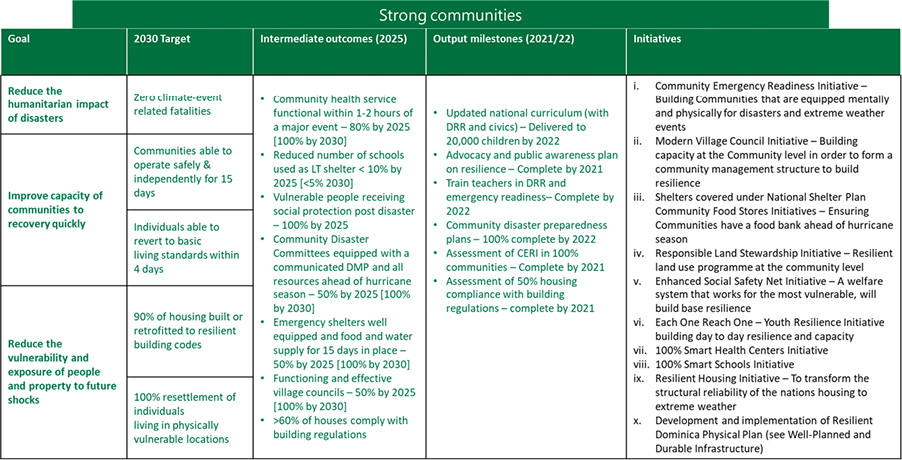
Figure 4. Summary of initiatives for building community resilience in Dominica
Source: Government of the Commonwealth of Dominica (2020)
Dominica has also recognised the importance of ecosystem-based adaptation as a climate change adaptation strategy and underscored that it will be implemented in the most vulnerable communities to build adaptive capacity. A German government-funded ecosystem-based adaptation project was developed to build the adaptive capacity of the community of Petite Soufriere using sustainable green engineering solutions, such as the planting of vetiver, which has shown to be effective in slope stabilisation (CLGF 2018c).
A third initiative being promoted in Dominica is one which focuses on fostering resilience through urban risk management, consistent with the UN SDG 11: development of inclusive, safe, resilient and sustainable cities and the generation of local economic opportunities to reduce poverty. A Centre of Excellence for Data in Resilience Decision-making will establish a dedicated GIS unit within the Ministry of Economic Affairs, Planning, Resilience, Sustainable Development, Telecommunications and Broadcasting, centralising data gathering and institutionalising the use of data to inform all important planning decisions (CLGF 2018c). The GIS unit is key to finalising and implementing the Resilient Dominica Physical Development Plan (funded by the European Union) as well as activities related to land management, hazard mapping, and infrastructure planning. All line ministries but especially those responsible for planning and sustainable development, housing, urban development and public works, will be mobilised (CLGF 2018c).
Many of Dominica’s initiatives aimed at climate change adaptation and resilience-building can be scaled to the city and urban settlement level in Commonwealth Caribbean SIDS. Although Dominica’s emphasis is on building community resilience, like Jamaica and Trinidad it plans to incorporate technical capacity building in GIS, implementation of physical plans and monitoring to ensure that all construction activity, but especially housing, is built in accordance with regulations.
The way forward: strengthening local government capacity
Local government resource mobilisation is an important factor in realising climate-resilient development in cities and urban areas. Collaboration between local authorities and the private sector in achieving climate change adaptation and disaster risk reduction is imperative. However, more effort and resources are needed in implementing this approach throughout the Caribbean (Wilkinson et al. 2018). Specific measures which Caribbean local governments in Jamaica and Trinidad and other Caribbean SIDS could employ to achieve climate change adaptation and urban resilience at the local community level are outlined below.
Human resources
Drawing from the case study findings, to effectively play a role in climate change adaptation and resilience-building in cities and urban settlements, local governments in Commonwealth Caribbean SIDS will require substantial increases in human resource capacity. According to all the interviewees local governments do have some expert staff such as engineers, building inspectors and accountants, but there remains a major skills gap. In practice it is difficult to close this gap in Caribbean SIDS due to budgetary constraints. However, central government can function as an enabler by promoting a resource sharing arrangement which would allow local authorities to draw from central government’s pool of expertise within line ministries and departments. A team of specialists comprising urban planners, engineers, landscape architects, geoinformatics engineers, economists, accountants, building inspectors, disaster response managers and communications experts with experience of working with local communities, could be formed to provide an interdisciplinary approach to urban governance with a focus on best-practice climate change adaptation (Mycoo 2022a).
Infrastructure
In Commonwealth Caribbean SIDS such as Jamaica and Trinidad, failure to systematically maintain and rehabilitate roads, bridges and culverts has led to delayed emergency responses leaving city and urban communities without relief. All three interviewees argued that better infrastructure maintenance and solid waste management are essential to ensure an efficient disaster response by local government.
As well as providing shade to help cope with growing urban heat stress being experienced due to hotter days occurring in all Caribbean SIDS cities, green infrastructure such as trees can reduce the risk of urban flooding. Furthermore, ecosystem-based adaptation measures require less funding to implement and maintain when compared with hard engineering. They also generate co-benefits such as enhanced community engagement, local buy-in and ownership. Urban greening using ecosystem-based adaptation is an area for capacity building through training in tree pruning and selection of low maintenance trees, bringing the science of landscape architecture to inform urban greening initiatives. Local government should consider forming viable partnerships with the business sector and local communities to sponsor trees for greening of cities and urban areas, and to assist with ongoing maintenance. Resource mobilisation in this way can help offset budgetary constraints resulting from limited fiscal transfers from central government (Mycoo 2022a).
Fiscal resources and decision-making autonomy
As noted by the interviewees, urban authorities often lack fiscal autonomy to implement projects that are central to improving the quality of life of city and urban residents. An effective climate strategy implies increasing urban resilience through more than merely control of land use change. It involves addressing infrastructure needs and the specific way in which land should be used in terms of resource consumption and flows (Inter-American Development Bank 2015; Mycoo 2022a). It also requires robust current data on the demand for urban services and the means to implement changes that often impose additional costs on public authorities.
The 2022 Barbados workshop highlighted the financial challenges facing local governments across Caribbean SIDS in carrying out their mandates. In particular, a common issue raised was that of limited, if any, access to funding for climate change adaptation and meeting the SDGs: project funding from international lending agencies is usually channelled to central government. However, international networks can provide support to SIDS’ local government in priority areas such as co-designing projects with communities and providing data acquisition technology to facilitate problem-solving, project implementation and monitoring.
At the same time, improved fiscal independence among local governments can be achieved through mobilising their own funds from local tax collection, notably property tax, and by seeking grant funding from international donors and multilateral development agencies. In September 2024 Trinidad will commence the introduction of property tax for residential property owners, and for the first time apply those revenues to fund improved delivery of urban services by local government.
Accessing the Green Climate Fund and other sources of finance
The current financial architecture around climate change adaptation is complex: it is neither easy to navigate nor is it easy to identify the right financial model. The Caribbean Community Climate Change Centre (CCCCC) is partnering with local governments to understand the climate finance architecture and to strengthen their capacity to access climate change funding via the Green Climate Fund, established under the UN Framework Convention on Climate Change in 2010.4 The main sources of public green finance include multi- and bi-lateral development banks, UN climate funds, national and regional banks, and European Union Funds. In May 2022, the UN dedicated climate change adaptation funding especially for SIDS through its Global Environmental Facility. This is the first multilateral Special Climate Change Fund under the UN Framework (Mycoo 2022a).
Mohan (2023) has indicated that for Caribbean SIDS a single source of finance would be incapable of meeting all the climate adaptation and mitigation needs of urban residents. She recommended a blend of loans, grants, bonds, micro-finance, tax revenue, community lending and crowd-sourcing sufficient to cover rising costs. Local authorities need to become familiar with these different streams of finance to support climate action at the local level. Given the limited capacity and skills base within local authorities, central government can again serve as an enabler by providing support staff from the Ministry of Finance to help identify priority projects and prepare successful applications to access adaptation funding from international donors and lending agencies.
Using new technologies
Developing a spatial infrastructure database and mapping urban infrastructure within each local government’s jurisdiction would provide a monitoring tool to determine when maintenance should be scheduled before and during the tropical cyclone season in preparation for hazard responses. Such a tool would also improve local governments’ capacity to prioritise budget allocations based on a needs assessment that establishes when and where available resources should be targeted within urban areas (Mycoo 2022a).
Additionally, high-resolution satellite data offers many possibilities to build climate resilience capacity. GIS technology, Landsat data, cloud and smart maps, Google Earth and drones can be employed in spatial analysis, synthesis, and visualisation not only in spatial planning, but also transportation planning and disaster risk management (Mycoo 2022a). Participatory mapping and 3D modelling are other tools which can facilitate community engagement in environmental risk assessment, vulnerability assessments, and climate change adaptation. Such tools have been used in some Caribbean SIDS since the mid-2000s (DeGraff and Ramlal 2015).
Digitalisation of administrative processes and smart applications for the provision of public services are becoming central to effective urban governance and are already being adopted by local governments in Jamaica and Trinidad (Mycoo 2022a). Along with more efficient administration and service delivery, ICT tools can also enhance citizen participation in urban planning and management. Documented experience in other cities confirms that ICT provides a consistent framework to improve the delivery of municipal services, integrating a vision of a Smart City that combines transparency, good management, participation and sustainable infrastructures and services (Inter-American Development Bank 2015). Data collection at the local level is achievable using miniature technologies such as new apps that enable residents to alert planning agencies about critical city issues, such as climate change impacts. And smart phones can be used to lodge complaints with local government, which can enhance their monitoring and enforcement capacity.
Conclusion
Local governments in Commonwealth Caribbean cities and urban settlements face multiple challenges of urbanisation, increasingly severe climate change impacts, and institutional barriers to meeting community needs such as a lack of fiscal autonomy and technical and human resources. Those barriers have been exacerbated by the dominance of central governments in controlling budgets, historical political divisions between central and local governments,5 and weak partnerships between local governments and key local and regional stakeholders. A business-as-usual approach will not yield opportunities for climate change adaptation and enhancing resilience. At the city level this will require, as a first step, achieving greater fiscal autonomy to enhance local government’s capacity to implement plans and projects that address critical issues such as frequent flooding and disaster preparedness. The second step would be to build human resource capacity in key areas such as urban planning, engineering, geoinformatics and communication. Investment in ICT technologies should then follow: options to make increased use of those technologies to support climate change adaptation appear almost limitless, so a ‘roadmap’ is needed for carefully staged investment in readily available and affordable tools.
To strengthen human resources, local government needs access to an interdisciplinary cadre of professionals drawn from government, the business sector, academia and non-governmental bodies. It also needs to collaborate with community- and faith-based (religious) organisations that function well at the local level and can quickly mobilise resources to assist communities during disasters. Forging partnerships among central and local governments and international networks to train local government staff in communications, data collection and analysis, and monitoring and evaluation of climate change adaptation plans, projects and policies, will move communities along a pathway to resilience.
Increased resources and improved technologies need to be coupled with a stronger political will to engage communities and respond better to climate change impacts on city and urban dwellers. In particular, an increased collaborative effort across governments and key stakeholders is critical to effectively undertake climate change adaptation in cities, urban areas and local communities. This paper has sought to stimulate debate and challenge policy- and decision-makers operating within the urban governance landscape to find innovative ways of unlocking the potential of local governments to promote effective responses to climate change, and in so doing to safeguard the wellbeing of their communities.
Declaration of conflicting interest
The author declared no potential conflicts of interest with respect to the research, authorship, and/or publication of this article.
Funding
The author received no financial support for the research, authorship or publication of this article.
References
Barbara, J. and Keen, M. (2017) Urbanisation in Melanesia: the politics of change. Development Bulletin, 78, 16–19.
Butcher-Gollach, C. (2015) Planning, the urban poor and climate change in Small Island Developing States (SIDS): unmitigated disaster or inclusive adaptation? International Development Planning Review, 37 (2), 225–248. https://doi.org/10.3828/idpr.2015.17
Chan, S. and Amling, W. (2019) Does orchestration in the Global Climate Action Agenda effectively prioritize and mobilize transnational climate adaptation action? International Environmental Agreements,19, 429–446. https://doi.org/10.1007/s10784-019-09444-9
Commonwealth Local Government Forum. (CLGF) (2018a) Country profile 2017–18 the local government system in Jamaica. Available at: https://www.clgf.org.uk/default/assets/File/Country_profiles/Jamaica.pdf
Commonwealth Local Government Forum. (CLGF) (2018b) Country profile 2017–18 the local government system in Trinidad and Tobago. Available at: https://www.clgf.org.uk/regions/clgf-americas/trinidad-and-tobago/
Commonwealth Local Government Forum. (CLGF) (2018c) Country profile 2017–18 the local government system in Dominica. Available at: http://www.clgf.org.uk/default/assets/File/Country_profiles/Dominica.pdf
DeGraff, A.K. and Ramlal, B. (2015) Participatory mapping: Caribbean Small Island Developing States. Available at: https://www.iapad.org/wp-content/uploads/2015/07/DeGraff-Ramlal-Participatory-Mapping-Caribbean-SIDS.pdf [Accessed: 12 August 2024].
Donovan, M. and Turner-Jones, T. (2017) Caribbean housing is expensive and scarce. here’s how to change that. Americas Quarterly, 20 April. Available at: https://www.americasquarterly.org/article/caribbean-housing-is-expensive-and-scarce-heres-how-to-change-that [Accessed: 25 May 2021].
Eckstein, D., Hutfils, M. and Winges, M. (2018) Who suffers most from extreme weather events? Weather-related loss events in 2017 and 1998 to 2017. Germany: Germanwatch.
Enríquez-de-Salamanca, Á. (2019) Vulnerability reduction and adaptation to climate change through watershed management in St. Vincent and the Grenadines. GeoJournal, 84 (4), 1107–1119. https://doi.org/10.1007/s10708-018-9914-z
Government of the Commonwealth of Dominica. (2020) Dominica climate resilience and recovery plan 2020–2030. Available at: https://www.dominica.gov.dm/images/docs/notices/crrp_final_042020.pdf
Government of Jamaica. (2014) National report for Third United Nations Conference on Housing and Sustainable Urban Development (HABITAT III). (2014) Kingston: Ministry of Transport, Works and Housing.
Inter-American Development Bank. (2015) The experience of Latin America and the Caribbean in urbanization. Knowledge sharing forum on development experiences: comparative experiences of Korea and Latin America and the Caribbean. Available at: https://publications.iadb.org/en/experience-latin-america-and-caribbean-urbanization-knowledge-sharing-forum-development-experiences [Accessed: 14 September 2024].
Interviewee 1, politician. (2024) Interviewed by author, 3 February 2024.
Interviewee 2, politician. (2024) Interviewed by author, 16 January 2024
Interviewee 3, public official. (2024) Interviewed by author, 17 January 2024.
Kelman, I. (2016) Governance of climate change adaptation on Small Island Developing States (SIDS). In: Knieling, J. (ed.) Climate adaptation governance in cities and regions: theoretical fundamentals and practical evidence. Hoboken, NJ: Wiley Blackwell, pp. 355–369. https://doi.org/10.1002/9781118451694.ch20
King-Joseph, A. and Lendor-Gabriel, G. (2013) Saint Lucia land policy issues. Castries, St. Lucia: Organisation of Eastern Caribbean States.
Kythreotis, A.P., Jonas, A.E.G., Mercer, T.G. and Marsden, T.K. (2020) Rethinking urban adaptation as a scalar geopolitics of climate governance: climate policy in the devolved territories of the United Kingdom. Territory, Politics, Governance, 11 (1), 39–59. https://doi.org/10.1080/21622671.2020.1837220
McNaught, R., McGregor, K., Kensen, M., Hales, R. and Nalau, J. (2022) Visualising the invisible: collaborative approaches to local-level resilient development in the Pacific Islands region. Commonwealth Journal of Local Governance, (26) 28–52. https://doi.org/10.5130/cjlg.vi26.8189
Mohan, P.S. (2023) Financing climate change mitigation and adaptation in Caribbean SIDS. PLOS Climate, 2 (3). https://doi.org/10.1371/journal.pclm.0000167
Moncada, S. and Ngyuen, L. (2024) Improving sustainability, climate resilience and pandemic preparedness in small islands: a systematic literature review. Sustainability, 16 (2), 550. https://doi.org/10.3390/su16020550
Mycoo, M. (2014) Autonomous household responses and urban governance capacity building for climate change adaptation: Georgetown, Guyana. Urban Climate, 9, 134–154. https://doi.org/10.1016/j.uclim.2014.07.009
Mycoo, M. (2017) A Caribbean New Urban Agenda post-Habitat III: closing the gaps. Habitat International, 69, 68–77. https://doi.org/10.1016/j.habitatint.2017.09.001
Mycoo, M. (2018a) Beyond 1.5°C: vulnerabilities and adaptation strategies for Caribbean Small Island Developing States. Regional Environmental Change, 18 (8), 2341–2353. https://doi.org/10.1007/s10113-017-1248-8
Mycoo, M. (2018b) Urban sustainability in Caribbean Small Island Developing States: a conceptual framework for urban planning using a case study of Trinidad. International Development Planning Review, 40 (2), 143–174. https://doi.org/10.3828/idpr.2018.8
Mycoo, M. (2022a) Cities, climate change adaptation and sustainable development: the role of local governments in Commonwealth Small Island Developing States. London: Commonwealth Local Government Forum. Available at : https://www.clgf.org.uk/default/assets/File/Cities%20and%20climate%20change_FINAL.pdf [Accessed: 4 September 2024].
Mycoo, M.A. (2022b) Caribbean island cities: urban issues, urbanisation processes and opportunities for transformation. In: Jesús M., Gonzales, Irazabal, C. and Losi-Gonzales, R.C. (eds.) The Routledge handbook of urban studies in Latin America and the Caribbean. New York: Routledge. https://doi.org/10.4324/9781003132622-28
Mycoo, M., Wairiu, M., Campbell, D., Duvat, V., Golbuu, Y., Maharaj, S., Nalau, J., Nunn, P., Pinnegar, J. and Warrick, O. (2022) Small islands. In: Pörtner, H.-O. Roberts, D.C., Tignor, M., Poloczanska, E.S., Mintenbeck, K., Alegría, A., Craig, M., Langsdorf, S., Löschke, S., Möller, V., Okem, A. and Rama, B. (2022) Climate change 2022: impacts, adaptation, and vulnerability. Contribution of Working Group II to the Sixth Assessment Report of the Intergovernmental Panel on Climate Change. Cambridge University Press, Cambridge, UK and New York, NY USA, pp. 2123–2161. https://doi.org/10.1017/9781009325844.018
Robinson, S.-A. (2018) Climate change adaptation limits in Small Island Developing States. In: Leal Filho, W. and Nalau, J. (eds.) Limits to climate change adaptation. Cham: Springer International Publishing, pp. 263–281. https://doi.org/10.1007/978-3-319-64599-5_15
Rouleau, T., Stuart, J., Call, M., Yozell, S., Yoshioka, N., Maekawa, M. and Fiertz, N. (2022) The climate and ocean risk vulnerability index: measuring coastal city resilience to inform action. Frontiers in Sustainable Cities, 4. https://doi.org/10.3389/frsc.2022.884212
Satterthwaite, D. (2024) The fastest-growing cities in Latin America and the Caribbean. Available at: https://www.iied.org/fastest-growing-cities-latin-america-caribbean [Accessed: 4 September 2024].
Sethi, M., Sharma, R., Mohapatra, S. and Mittal, S. (2021) How to tackle complexity in urban climate resilience? Negotiating climate science, adaptation and multi-level governance in India. PLoS ONE, 16 (7), 1–21. https://doi.org/10.1371/journal.pone.0253904
Tanner, T., Bahadur, A. and Moench, M. (2017) Challenges for resilience policy and practice. Working Paper 519. London: Overseas Development Institute.
Taylor, M.A., Mandal, A., Burgess, C. and Stephenson, T.S. (2014) Flooding in Jamaica: causes and controls. In: Chadee, D.D., Sutherland, J.M. and Agard, J.B. (eds.) Flooding and climate change: sectorial impacts and adaptation strategies for the Caribbean Region. York: Nova Publishers, pp. 163–186.
The Guardian. (2017) Hurricane Maria: Dominica ‘in daze’ after storm leaves island cut off, 21 September. Available at: https://www.theguardian.com/world/2017/sep/21/dominica-daze-hurricane-maria-island-caribbean-rescue
United Nations Department of Economic and Social Affairs, Population Division. (2018) World Population Prospects 2018. New York, UN. Available at: https://population.un.org/wup/ [Accessed: 26 August 2024].
UN-Habitat and UN System Chief Executives Board for Coordination (2019) UN system-wide strategy on sustainable urban development. https://unhabitat.org/sites/default/files/documents/2019-07/un-system-wide-strategy-on-sustainable-urban-development-1.pdf
Wilkinson, WE, Twigg, J and Few, R. (2018) Building back better: A resilient Caribbean after the 2017 hurricanes. Briefing Note, Overseas Development Institute.
1 The Paris Agreement is an international treaty on climate change signed in 2016 by 196 parties which seeks to help countries address climate change mitigation, adaptation and finance by keeping the rise in global surface temperature to well below 2°C above pre-industrial levels, but preferably no more than 1.5°C, by reducing greenhouse gases.
2 The New Urban Agenda was adopted at the United Nations Conference on Housing and Sustainable Urban Development (Habitat III) in Quito, Ecuador, on 20 October 2016. It represents a collective vision for a better and more sustainable future which recognises all people have equal rights and access to the benefits and opportunities that cities can offer, and in which the international community reconsiders the urban systems and physical form of urban spaces needed to achieve this.
3 Trinidad and Tobago is a unitary state but Tobago has its own, single local government body called the Tobago House of Assembly.
4 The Caribbean Community Climate Change Centre, based in Belize, coordinates the region’s efforts to cope with climate change by crafting effective solutions and spearheading projects to minimise environmental impacts. It provides policy advice and functions as an archive and clearing house for regional climate change data and documentation. At the workshop held in Barbados in 2022, the CCCCC indicated that it would assist local governments in accessing the Green Climate Fund.
5 Political divisions have existed between the ruling party in central government and local authorities consisting mainly of opposition party members, leading to central government providing less funding those local authorities.