Commonwealth Journal of Local Governance
Issue 28
September 2023
COMMENTARY
An Aboriginal and Torres Strait Islander Voice to Parliament: What Can Australia Learn from Other Countries?

Harry Hobbs
Faculty of Law, University of Technology Sydney, Sydney NSW 2007, Australia, hobbs.harry@uts.edu.au
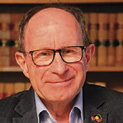
Ed Wensing
Centre for Aboriginal Economic Policy Research, Australian National University, Canberra ACT 2601, Australia, ewensing@sgsep.com.au
Corresponding author: Ed Wensing, Centre for Aboriginal Economic Policy Research, Australian National University, Canberra, ACT 2601, Australia, ewensing@sgsep.com.au
DOI: https://doi.org/10.5130/cjlg.vi28.8768
Article History: Received 10/07/2023; Accepted 07/08/2023; Published 25/09/2023
Citation: Hobbs, H., Wensing, E. 2023. An Aboriginal and Torres Strait Islander Voice to Parliament: What Can Australia Learn from Other Countries?. Commonwealth Journal of Local Governance, 28, 139–154. https://doi.org/10.5130/cjlg.vi28.8768
© 2023 by the author(s). This is an Open Access article distributed under the terms of the Creative Commons Attribution 4.0 International (CC BY 4.0) License (https://creativecommons.org/licenses/by/4.0/), allowing third parties to copy and redistribute the material in any medium or format and to remix, transform, and build upon the material for any purpose, even commercial, provided the original work is properly cited and states its license.
Abstract
This is an edited version of a presentation to the Australian Institute for International Affairs on 16 May 2023. The authors explain the origins of the proposal for an Aboriginal and Torres Strait Islander Voice to the Australian Parliament and why the Voice should be enshrined in the Australian Constitution. They also compare how other countries ensure that Indigenous peoples’ interests are properly considered in the processes of government. They conclude by noting that the proposed Voice is a modest request by Aboriginal and Torres Strait Islanders to be seen in the Constitution and heard in the democratic life of Australia.
Introduction
Australia is at a turning point in its history. Later this year Australians will be required to vote in a referendum to amend the Australian Constitution to recognise Australia’s Aboriginal and Torres Strait Islander peoples and establish an Aboriginal and Torres Strait Islander Voice to Parliament. This follows the election in May 2022 of a new federal government committed to implementing the proposal advanced by Aboriginal and Torres Strait Islander peoples in their 2017 Uluru Statement from the Heart (Referendum Council 2017).
The Voice to Parliament would be an advisory body comprised of Aboriginal and Torres Strait Islander members. It would be empowered to make representations to parliament and the executive government on matters that relate to Aboriginal and Torres Strait Islander people.
This Commentary explains where the idea of a Voice came from, the functions it would exercise, and why it should be enshrined in the Constitution. We also consider how other countries have dealt with similar issues: the challenges of ensuring the interests of Indigenous peoples are considered in the processes of government. We conclude by noting that the proposed Aboriginal and Torres Strait Islander Voice is a modest change with the potential for significant benefits to Australia.
The origins of the Voice to Parliament in Australia
It is a fact of history that Aboriginal and Torres Strait Islander peoples were not accorded respect and recognition when the British arrived to colonise Australia’s lands and waters in 1788 (Wensing 2022, p. 9). Then, a little over a century later, no Aboriginal or Torres Strait Islander people were invited to participate in the drafting of Australia’s federal Constitution. The views and interests of peoples whose connection to country stretches back some 60,000 years were not considered.
Aboriginal and Torres Strait Islander peoples have long advocated for reform of Australian governance to recognise their unique status and rights. For instance, in 1937 Yorta Yorta man William Cooper gathered 1,814 signatures for a petition to King George V, calling for Aboriginal representation in the Australian Parliament. The Australian government refused to forward it to the king (Attwood 2021).
A 1967 referendum moved Australia along just a little. Section 51(xxvi) of the Constitution had given the Australian Parliament power to make laws for “the people of any race, other than the Aboriginal race in any State, for whom it is deemed necessary to make special laws”. The fate of Aboriginal and Torres Strait Islander people was thus left to the states. Frustrated at discriminatory and paternalistic state laws, they sought protection from the Commonwealth (of Australia) and, after many years of campaigning, were successful. The 1967 referendum amended the ‘race power’, giving the Australian Parliament the power to make laws with respect to Aboriginal and Torres Strait Islander peoples. The referendum also saw the repeal of Section 127 of the Constitution which precluded “aboriginal natives” from being included in “reckoning the numbers of people of the Commonwealth” (Lino 2018, p. 133).
Following the referendum, successive Australian governments recognised the need to engage with and listen to Aboriginal and Torres Strait Islander peoples. Since 1972, several national Indigenous representative or appointed bodies have been established to advise the Australian government (Johnston 2023). These are shown in Table 1.
Source: Co-Design Process Interim Report, NIAA (2020, p.119) and Department of Prime Minister & Cabinet website
When Prime Minister Gough Whitlam established the first of these bodies, the National Aboriginal Advisory Committee in 1973, he said “Our most important objective now is to restore to Aboriginals the power to make their own decisions about their way of life” (Whitlam 1985, p. 468). In practice, however, each of these bodies struggled to be heard. Governments routinely ignored, sidelined, repealed and/or abolished them at whim, especially if they gave advice the government did not want to hear.
The Aboriginal and Torres Strait Islander Commission (ATSIC) was by far the most significant and long-lasting advisory body, operating from 1989 to 2005. It combined a policy and research advisory role with a programme delivery function in key areas of economic, social and corporate affairs, with a wide range of sub-programmes, including the very successful Community Development Employment Projects (CDEPs) and the Community Housing and Infrastructure Programme (CHIP) (Hobbs 2021, Ch. 5). ATSIC had challenges, but its role did reflect a “direct recognition of the existence of Indigenous governance” (Reilly 2006, p. 417).
The contemporary debate
ATSIC’s abolition in 2005 looms large in the contemporary debate for constitutional recognition. Eighteen years without a national representative body with a direct connection to government1 has further alienated Aboriginal and Torres Strait Islander peoples from the forums where decisions about them are made. They want a relationship with the Australian state on the basis of parity, mutual respect and trust (Hobbs 2021, p. 155; Wensing 2019, p. 270).
The debate now taking place has its origins in a 1998 High Court of Australia’s decision: Kartinyeri v Commonwealth [1998] (HCA 22; 195 CLR 337 [Australia]) (also known as the Hindmarsh Island Bridge case). In 1997, the Howard government passed a law to build a bridge to Hindmarsh Island in South Australia. A group of Ngarrindjeri women challenged the law, arguing it would destroy their cultural heritage. The High Court was asked whether the amended race power meant parliament could enact not only laws for the benefit of Aboriginal people, but also laws that discriminated against them – for example by destroying their cultural heritage. The Court ultimately ruled in favour of the government, and although it did not definitively resolve the broader question, the outcome was that the Australian Parliament can pass laws to discriminate against Aboriginal people. It has done so at least four times in the last 30 years.2
For many Aboriginal and Torres Strait Islander people, the promise of the 1967 referendum was broken by the High Court’s decision. They therefore sought structural reform to better recognise and respect their rights and interests. However, it was not until 2010 that the idea of constitutional recognition firmly re-emerged on the national agenda, when Prime Minister Julia Gillard set up an expert panel to consider whether and how this could be achieved (Lino 2018, pp. 44–45). Since then, there have been several public processes, including two parliamentary committee inquiries, a Referendum Council, and more than ten public reports on the topic of recognition (Davis 2023, p. 2), oversighted by no less than five prime ministers and five leaders of the opposition (see Appendix).
Initially, following Kartinyeri v Commonwealth [1998], the view was that the race power should be amended to only allow parliament to pass laws that would benefit or advance Aboriginal people. Most countries around the world have a Bill of Rights or a constitutional provision that says the parliament cannot discriminate on the basis of race. Indeed, every Commonwealth country has national human rights protections in place – except Australia (Australian Human Rights Commission 2022). However, in 2015 the federal coalition of Liberal and National parties (then forming government) explained that they could not support a constitutional amendment that would involve judges assessing whether a law benefited or disadvantaged Aboriginal people (Hobbs 2021).
Given this, Aboriginal and Torres Strait Islander people sought a different approach. In the 2017 Uluru Statement from the Heart (included in Referendum Council 2017), they called for a constitutional Voice to Parliament that would provide input into the development of law and policy at an early stage. This would avoid judges and lawyers and ensure that Australia’s Aboriginal and Torres Strait Islander peoples were both formally recognised and guaranteed some say over the design of laws that directly affect them (Wensing 2021a; 2021b).
The Uluru Statement is a significant document. It is the culmination of a series of ‘Regional Dialogues’ held in every state and territory (Wensing 2021a, p. 113). It was issued to the people of Australia because it is the people of Australia who must vote to change our Constitution (Davis and Williams 2021). It is a very generous invitation from Aboriginal and Torres Strait Islander peoples to “walk with us in a movement of the Australian people for a better future” (Referendum Council 2017, p. i).
The Statement calls for the “ancient sovereignty” of Australia’s Aboriginal and Torres Strait Islander peoples to be recognised through structural reform including constitutional change. Structural reform is needed to give First Nations peoples greater say and authority over the decisions that affect them, and it means making real changes to the way decisions are made and by whom, rather than simply tinkering with existing processes of decision-making and control (Davis and Williams 2021). As Pat Anderson AO, Co-Chair of the Uluru Dialogue said at a public forum on the Voice to Parliament in Canberra on 31 March 2023, we need an Australian solution to an Australian problem.
Why a constitutionally enshrined voice?
Some Australians ask why the Voice needs to be enshrined in the Constitution, when the Australian Parliament already has the power to establish it through legislation. There are three reasons.
First – the Voice is an advisory body only. It will have the power to make representations to parliament and the executive government. There is no obligation on parliament or the government to listen to those representations, or to act on them. But they are more likely to do so if the Voice has constitutional status and a degree of permanency. Through a referendum, the Australian people can tell parliament they should treat the Voice with the seriousness it deserves.
Second – As already noted, there is a history of previous Indigenous representative bodies being established in legislation or by the executive. This meant they could be, and were, easily abolished by successive governments depending on their ideology and priorities. Doing so has reversed progress, damaged working relationships and wasted talent that could be used to solve complex problems. It has also fuelled cynicism and distrust. In the Regional Dialogues that led to the Uluru Statement, many Aboriginal and Torres Strait Islander people said they were frustrated with this chopping and changing, and that they wanted a long-lasting and durable Voice (Wensing 2022).
Third – Enshrining the Voice in the Constitution would be an act of formal recognition and respect on the part of the Australian people, acknowledging Aboriginal and Torres Strait Islander peoples’ historical custodianship of the Australian continent. Crucially also, this is the form of recognition they seek. Moreover, backed by the people at a referendum, a constitutional Voice to Parliament can make a lasting contribution to a better future for Aboriginal and Torres Strait Islander peoples and for all Australians (Wensing 2022).
Hearing Indigenous voices across the world
The United Nations (UN) estimates there are around 470 million Indigenous people across 90 countries around the world (Buchholz 2022). Unsurprisingly, Indigenous peoples are diverse and pluralistic, criss-crossing geographies, languages, cultures, faiths and politics as well as personal socio-economic circumstances and perspectives (Hobbs 2021, p. 53). What is common, however, is that all Indigenous peoples have and continue to experience colonisation.
International law has gone some way in responding to colonialism by recognising Indigenous peoples’ right to self-determination. This consists of firstly a right to exercise control and autonomy over internal and local matters (ie a right to self-government within communities) (UN 2007, Articles 3-5); and secondly a right to be heard in the development and design of legislation and policy that affects or relates to them (ie a right to have their voices heard in the processes of settler–state government) (UN 2007, Articles 18, 23).
These rights are set out in the UN Declaration on the Rights of Indigenous Peoples – a formally non-binding legal instrument which was adopted by the UN General Assembly in 2007 (UN 2007). While the four common-law ‘CANZUS’ countries of Canada, Australia, New Zealand and the United States initially opposed the Declaration, they have all subsequently reversed their positions (Wensing 2021a, p. 102). Almost 150 countries have endorsed the Declaration and many have developed various ways to empower Indigenous peoples to have their interests considered in the development of law and policy. For example:
• Through an Indigenous representative body. These exist in Scandinavia, South Africa and New Caledonia. Generally speaking, they are separate from the ordinary parliament, but constitutionally or legislatively incorporated into the parliamentary process and empowered to provide advice in certain contexts.
• By requiring government to consult Indigenous peoples when considering actions or decisions that may impact their rights. This is the approach in Canada and has been part of the debate in Australia, though not in the current Voice proposal.
• Via political engagement through treaty and designated seats within parliament. This is the approach in Aotearoa New Zealand. The Uluru Statement also called for a Makarrata Commission to supervise agreement-making and truth-telling (Referendum Council 2017), though that specific proposal is not part of the Voice referendum.
While there are always lessons to be learned, both positive and negative, from the experiences of other countries facing similar challenges, it is necessary to pay close attention to the determining role of local cultural, political and historical contexts (Macpherson 2023). With that caveat in mind, the following paragraphs consider experience in Scandinavia, South Africa, Canada and New Zealand.
Scandinavia
The Sámi are an Indigenous people whose traditional lands stretch approximately 600,000km2 across Norway, Sweden, Finland and Russia (Hobbs 2021). Although their lands are claimed by four states, the Sámi are “one people residing across national boundaries” and share language, culture and customs (Sillanpää 1994, p. 60).
Colonisation occurred differently in Scandinavia from Australia, but with similar results. In Sweden, for example, Sámi lands were considered unowned because many Sámi practised nomadic reindeer herding. Colonisation has also made them a minority in their own lands. The Nordic countries do not collect statistics on minority groups, but estimates suggest that around 50–65,000 Sámi live in Norway, 20–40,000 in Sweden, and 8–10,000 in Finland, with another 2,000 in Russia (Axelsson 2011, p. 117).
In the late 1970s and early 1980s, the Sámi’s struggle for recognition gained international attention. Sámi and allies staged massive protests against the construction of a hydroelectric power plant on the Alta River in northern Norway. Although the power plant was eventually built, it put the issue of Sámi rights onto the political agenda. A few years later, Norway established a Sámi Parliament – a representative body for Sámi people living in Norway. Sweden and Finland quickly followed suit. Russia still has not.
All three parliaments (established in legislation) provide the Sámi people with formal access to the processes of government. Elections are held every four years, and all Sámi may vote to elect representatives of their choice. Like the proposed Australian Voice, the Sámi Parliaments have no power to veto legislation, but they may comment on bills and ensure Sámi interests are considered by parliament and the government. Unlike the proposed Voice (but as with Australia’s former ATSIC), the Sámi Parliaments also have a role in administering certain programmes and services related to Sámi people and culture.
Do the Sámi Parliaments make a difference to the design of legislation? Does the government listen? Sometimes (Hobbs 2021).
In 2009, for example, the Swedish government introduced into parliament a draft bill aimed at bringing Swedish laws into conformity with the International Labour Organization’s Convention 169 (ILO 1989). The Sámi Parliament heavily criticised the draft and the government agreed to substantially revise the proposal. By contrast, in 2008 the Swedish government proposed to add the Sámi to a list of minority groups whose rights are protected in the constitution. The Sámi Parliament argued that their connection to lands and waters means they are different from cultural or ethnic minority groups and should have special status. The government disagreed.
So although their representative body means that Sámi interests are heard, there is still some way to go. The Swedish government acknowledges this: in 2017 it declared that it does not always consult with the Sámi Parliament appropriately.
Norway offers a good comparison. Under Norwegian law, governments and public authorities must give the Norwegian Sámi Parliament an opportunity to express an opinion before they make decisions on matters “that may affect Sámi interests directly” (Government of Norway 2014, Article 2), including Sámi culture and land ownership. This covers all forms of decision-making including proposed laws, regulations, administrative decisions, guidelines and governmental reports. Consultation must be “genuine and effective” and may include consideration and debate by the Sámi Parliament. It does not extend to a veto, but cabinet documents must indicate where agreement has not been reached and the views of the Sámi Parliament must “be reflected in the documents submitted” (Government of Norway 2014, Article 6).
Once again, the results are “mixed” (UN Human Rights Council 2010, p. 5), but the process does give Sámi living in Norway a real say when decisions are made that affect them.
South Africa
The South African Constitution mandates the establishment of a National House of Traditional Leaders (NHTL) by means of either provincial or national legislation. The NHTL’s objectives and functions are to promote the role of traditional leadership within a constitutional democracy, enhance unity and understanding among traditional communities, and advise national government (Government of South Africa 2022).
The NHTL was established by the National House of Traditional Leaders Act 1997 (No. 10 of 1997) [South Africa] and consists of 18 members elected from the provincial houses in the six South African provinces that have traditional leaders. Its role is to:
• represent traditional leadership and their communities by playing a meaningful role in cooperative governance
• act as a custodian of cultures, customs and traditions
• advance the aspirations of the traditional leadership and their communities at the national level
• advance the plight of provincial houses of traditional leaders, traditional leadership and their communities at national government level
• participate in international matters that have to do with custom, traditions and matters of common interest
• play an oversight role on programmes intended to uplift communities
• advise government on related matters and influence government legislative processes at the national level (Government of South Africa 2022).
The national and provincial houses enhance cooperative relationships with their respective governments, and there are also local houses to deepen and cement the relationship between municipalities and traditional leaders on customary law and development initiatives (Government of South Africa 2022).
Canada
Like Australia, Canada is a federation that is home to hundreds of Indigenous communities. It also shares a similar colonial history and common-law foundation. Canada’s First Nations, Metis and Inuit peoples comprise around 5% of the total population (compared to around 3% for Australia’s Aboriginal and Torres Strait Islander peoples).
Despite these similarities, the legal and political relationship between Indigenous communities and the state is very different. When European powers first arrived in Canada, they negotiated ‘peace and friendship’ agreements with Indigenous communities that later developed into treaties. There are 70 historic treaties that form the basis of the relationship between the Crown and 364 First Nations, representing over 60,000 Indigenous people (Williams and Hobbs 2020). These treaties were not always honoured, but they show that European colonists understood and recognised that Indigenous communities owned their land and possessed rights to their country. This was not the case in Australia.
Vast areas of Canada, particularly in British Columbia, were never subject to these early treaties. However, in 1973 the Supreme Court of Canada held that Aboriginal title existed outside Canadian law, meaning that the Canadian Crown would need to negotiate to obtain rights to the land. This decision sparked the modern treaty era: 25 new treaties have been signed and treaty-making continues to this day. The process is difficult: modern treaties are legally more complex and are struck against a background of previously broken treaties, but they do evidence an attempt to come to terms with colonisation and recognise Indigenous peoples’ right to self-determination (Wensing 2021b, p. 147).
The Supreme Court of Canada has drawn on the treaty relationship to develop a fiduciary duty called the ‘honour of the Crown’. This includes a duty to consult when contemplating conduct that might adversely impact potential or established Aboriginal or treaty rights, which are protected by the constitution (Tsilhqot’in Nation v British Columbia [2014] 2 SCR 257 2014 [Canada]). In all cases consultation “must be meaningful and performed in good faith, with the intention of substantially addressing the concerns of the affected Indigenous group” (Morales 2017, p. 63).
The duty to consult applies only when the government is considering action. It does not apply when parliament is debating bills. However, in 2021 the Canadian Parliament enacted the United Nations Declaration on the Rights of Indigenous Peoples Act 2021 [Canada], which establishes a legal framework aimed at aligning Canadian law with the Declaration (Wensing 2021b). The Act requires the government, in consultation with Indigenous peoples, to develop and implement an action plan to achieve the objectives of the Declaration, and to table an annual report on progress. This builds upon the efforts of British Columbia, which in 2019 enacted its own Declaration on the Rights of Indigenous Peoples Act [SBC 2019].
Moreover, in 1982 Indigenous peoples in Canada formed their own national representative organisation. The Assembly of First Nations is a national advocacy body modelled on the UN General Assembly, ensuring each First Nations community is represented. It seeks to protect and advance Aboriginal and treaty rights and interests across Canada. However, demonstrating the challenges of Indigenous representative bodies, the Assembly depends upon the Canadian government for most of its funding, and currently has no formal role in advising the Canadian Parliament or government.
New Zealand
The relationship between Māori people and non-Indigenous New Zealanders rests on the Treaty of Waitangi, signed in 1840 by many (though not all) Māori chiefs and representatives of the British Crown. Under the treaty, Māori signatories ceded governorship to the Crown, while being promised that their full authority over their land, people and treasure would remain undisturbed.
However, for many years the treaty was simply ignored, and the Crown alienated Māori land without considering their interests or providing compensation. In 1877, this approach reached its zenith, when in Wi Parata v. Bishop of Wellington [1877] (3 NZ Jur (NS) SC 72, p. 78 [Aotearoa New Zealand]), Chief Justice Prendergast dismissed the treaty as a “nullity” because, on the Māori side, “no body politic existed capable of making a cession of sovereignty”.
From the 1950s, Māori activism focused on changing that dismissive attitude. Māori and their supporters called on the government to “honour the treaty”, by making good on past promises and rectifying historic wrongs. In 1975, the Waitangi Tribunal was established as a permanent commission of inquiry “to inquire into and make recommendations” in relation to Māori claims that they have been prejudicially affected by legislation or Crown action inconsistent with treaty principles (Treaty of Waitangi Act 1975, Schedule 1 [Aotearoa New Zealand]). Its decisions are not binding (except in limited circumstances) but they carry political and moral force and help propel direct negotiations between Māori and the Crown (Hobbs and Young 2021, p. 262).
Today, the treaty has legal force only to the extent that it has been incorporated by parliament into legislation. This occurs in 25 pieces of legislation other than treaty settlements (Palmer 2020, p. 128). The courts have said that references to the treaty in legislation require consideration of the underlying obligations and responsibilities of the parties to the treaty in a way that reflects their intentions. Also, courts have clarified that although the concept of ‘treaty principles’ does not have a precise meaning, there are at least three core concepts: partnership, active protection and redress (New Zealand Māori Council v Attorney General [1987] 1 NZLR 641 at 664; Williams and Hobbs 2020, p. 197).
• Partnership includes obligations for parties to act reasonably, honourably and in good faith, making informed decisions based on consultation. Courts have also suggested that this requires the Crown to take positive steps to actively pursue redress of grievances for breaches of the treaty.
• Active protection concerns the Crown’s promise under the treaty to guarantee the authority of Māori and protect their lands and resources.
• Redress, as the Waitangi Tribunal has found, requires the government to address grievances for breaches of the treaty so as to “restore the honour and integrity of the Crown and the mana and status of Māori” (Waitangi Tribunal 2004, p. 134).
Government ministers must consider the treaty principles when proposing legislation. The New Zealand Cabinet Manual requires ministers to draw the attention of cabinet to any aspect of a bill that may “have implications for, or may be affected by, the principles of the Treaty of Waitangi” (Cabinet Office 2017, p. 109).
New Zealand also has a system of reserved seats for Māori people that has operated since 1867. This is not part of the Treaty of Waitangi, but a piece of legislation aimed at giving Māori a more direct say in the New Zealand Parliament. Similarly, the Local Electoral Act 2001 (NZ) enables councils to establish dedicated Māori electoral wards or constituencies, and recently steps have been taken to encourage more widespread use of that option (Department of Internal Affairs 2022).
Conclusion
Where does this leave Australia?
On the one hand, the proposed Voice to Parliament is a sophisticated proposal that would ensure Aboriginal and Torres Strait Islander peoples can participate more effectively “in the democratic life of the state” (Davis 2018, p. 158), and does so in a manner consistent with Australia’s constitutional system. It is a simple request from the Aboriginal and Torres Strait Islander peoples who have cared for this continent for 60,000 years, and whose rights and interests have far too often been ignored: a plea to be seen in the Constitution and heard in the processes of governance.
On the other hand, a brief examination of examples overseas shows that the Voice proposal is also a very modest reform:
• It will not compel consultation
• It will not play an oversight role in service delivery or deliver material support for traditional communities
• It will not impose a fiduciary duty
• It will not entrench reserved seats in the Australian Parliament.
The Voice will enable Aboriginal and Torres Strait Islander peoples to have their views and interests heard in the design and delivery of law and policy that affects them. It is an opportunity to do things differently: laws and policies work better when they are developed with the input of those on the ground. The Voice will encourage this, and thus contribute to better outcomes.
The Australian Government’s Productivity Commission is currently reviewing achievements under the National Agreement on Closing the Gap (Australian Government 2020), an intergovernmental accord aimed at reducing the very high levels of disadvantage experienced by Aboriginal and Torres Strait Islander people compared with the Australian population as a whole. The commission’s draft report is scathing of governments’ collective failure to implement the Agreement’s key reforms. It notes the continuing lack of agency that Aboriginal and Torres Strait Islander people have in policy and decision- making about matters that affect them (Productivity Commission 2023). When the current Closing the Gap Agreement was signed, the then prime minister, Scott Morrison, endorsed the need for more effective engagement: “We know that when Indigenous people have a say in the design of programs, policies and services, the outcomes are better – and lives are changed” (Tingle 2023). Nevertheless, Mr Morrison’s Liberal and National Party government failed to act on a proposal it commissioned for a legislated Voice to Parliament (NIAA 2021), which was twice submitted to cabinet by the responsible minister (Brown and Bannister 2022); and the two parties now advocate a ‘No’ vote in the upcoming referendum.
The Productivity Commission’s findings further strengthen the case for a Voice to Parliament. And crucially, the Voice proposal is backed by over 60 years of international human rights laws and standards, in particular the UN Declaration on the Rights of Indigenous Peoples (UNDRIP) which, as noted earlier, Australia endorsed in 2009. This places Australia’s reputation for its treatment of Indigenous peoples under scrutiny on the world stage. If the forthcoming referendum fails, there may well be international reverberations (Reynolds 2023a; 2023b): Australia might be viewed in much the same way as was South Africa during the apartheid era, and come under heavy international pressure to effectively recognise Indigenous peoples’ rights to self-determination over matters that affect them.
As Robert French (2023, p. 20), the former Chief Justice of the High Court of Australia notes, the Voice referendum is “a once in a lifetime opportunity for Australia to fill a gaping hole in our Constitution”, a gap that says a lot about the country’s attitude toward its Indigenous peoples. It is time to right the wrongs of the past and to accept the invitation offered in the Uluru Statement from the Heart to “walk with” Aboriginal and Torres Strait Islander peoples and build a better Australia.
Declaration of conflicting interest
The authors declared no potential conflicts of interest with respect to the research, authorship, and/or publication of this article.
Funding
The authors received no financial support for the research, authorship or publication of this article.
References
Attwood, B. (2021) William Cooper: an Aboriginal life story. Melbourne: Miegunyah Press. https://doi.org/10.2307/jj.4688130
Australian Government. (2020) National agreement on Closing the Gap July 2020. Australian Government. Available at: https://www.closingthegap.gov.au/sites/default/files/2021-03/national-agreement-ctg-mar- 21_0.pdf
Australian Human Rights Commission. (2022) Free and equal. A Human Rights Act for Australia. Position Paper, December 2022. Available at: https://humanrights.gov.au/sites/default/files/free_equal_hra_2022_-_main_report_rgb_0_0.pdf
Axelsson, P. (2011) ‘In the National Registry, all people are equal’: Sámi in Swedish statistical sources. In: Axelsson, P. and Sköld, P. (eds.) Indigenous Peoples and demography: the complex relation between identity and demography, (pp. 117–133). Oxford and New York: Berghan Books. https://doi.org/10.1515/9780857450036-010
Brown, A. and Bannister, M. (2022) Nationals ignored voice report: Wyatt. The New Daily, 30 November. Available at: https://thenewdaily.com.au/news/national/2022/11/30/nationals-indigenous-voice-ken-wyatt/
Buchholz, K. (2022) Where the world’s Indigenous People live. Statista. Available at: https://www.statista.com/chart/18981/countries-with-the-largest-share-of-indigenous-people/#:~:text=India%20has%20104%20million%20indigenous,in%20Mexico%20(10%20percent)
Cabinet Office. (2017) Cabinet Manual 2017. New Zealand: New Zealand Department of the Prime Minister and Cabinet.
Davis, M. (2018) Correspondence: ‘moment of truth’. Quarterly Essay, 70, p. 147. Available at: https://www.quarterlyessay.com.au/essay/2018/06/dead-right
Davis, M. (2023) Voice of reason on recognition and renewal. Quarterly Essay, 90. Available at: https://www.quarterlyessay.com.au/essay/2023/06/voice-of-reason
Davis, M. and Williams, G. (2021) Everything you need to know about the Uluru Statement from the Heart. Sydney: UNSW Press.
Department of Internal Affairs. (2022) The processes for considering Māori wards are changing. Government of Aotearoa New Zealand. Available at: https://www.dia.govt.nz/maori-wards#First-stage-changes
French, R. (2023) Submission No. 98 to the Parliamentary Joint Committee Inquiry into the Aboriginal and Torres Strait Islander Voice Referendum Bill. Parliament House, Canberra. Available at: https://www.aph.gov.au/Parliamentary_Business/Committees/Joint/Former_Committees/Aboriginal_and_Torres_Strait_Islander_Voice_Referendum/VoiceReferendum/Submissions
Government of Norway. (2014) Procedures for consultation between the state authorities and the Sámi parliament [Norway], signed 11 May 2005. Available at: https://www.regjeringen.no/en/topics/indigenous-peoples-and-minorities/Sami-people/midtspalte/PROCEDURES-FOR-CONSULTATIONS-BETWEEN-STA/id450743/
Government of South Africa. (2022) South Africa, yearbook 2021/22. Government systems. Available at: https://www.gcis.gov.za/sites/default/files/docs/gcis/8.%20Government%20Systems.pdf
Hobbs, H. (2021) Indigenous aspirations and structural reform in Australia. Oxford: Hart Publishing. https://doi.org/10.5040/9781509940172
Hobbs, H. and Young, S. (2021) Modern treaty-making and the limits of the law. University of Toronto Law Journal, 71 (2), 234–273. https://doi.org/10.3138/utlj-2019-0131
International Labour Organization (ILO) (1989) Convention No. 169 Indigenous and Tribal Peoples Convention. Available at: https://www.ilo.org/dyn/normlex/en/f?p=NORMLEXPUB:12100:0::NO:12100:P12100_INSTRUMENT_ID:312314:NO
Johnston, J. (2023) Voice: a history of representation. Factsheet. Sydney: ANTaR.
Lino, D. (2018) Constitutional recognition. First peoples and the Australian settler state. Annandale, NSW: The Federation Press.
Macpherson, E. (2023) Can Western water law become more ‘relational’? A survey of comparative laws affecting water across Australasia and the Americas. Journal of the Royal Society of New Zealand, 53 (3), 395–424. https://doi.org/10.1080/03036758.2022.2143383
Morales, S. (2017) Bridging the incommensurable: Indigenous legal traditions and the duty to consult. In: Fitzgerald, O. and Schwartz, R. (eds.) UNDRIP Implementation: braiding international, domestic and Indigenous laws, (pp. 63–78). Waterloo, ON, Canada: Centre for International Governance Innovation.
National Indigenous Australians Agency (NIAA) (2020) Interim report to the Australian Government. Indigenous Voice Co-Design Process. (October) Available at: https://voice.gov.au/resources/indigenous-voice-co-design-process-interim-report-australian-government
National Indigenous Australians Agency (NIAA) (2021) Final report to the Australian Government. Indigenous Voice Co-Design Process. (July) Available at: https://voice.gov.au/sites/default/files/resource/download/indigenous-voice-co-design-process-final-report_1.pdf
Palmer, M. (2020) Indigenous rights, judges and judicial review in New Zealand. In: Varuhas, J. and Stark, S.W. (eds.) The frontiers of public law, (pp. 123–156). London: Bloomsbury Publishing. https://doi.org/10.5040/9781509930401.ch-006
Productivity Commission. (2023) Review of the National Agreement on Closing the Gap, Draft Report. Available at: https://www.pc.gov.au/inquiries/current/closing-the-gap-review/draft/closing-the-gap-review-draft.pdf
Referendum Council. (2017) Final report of the Referendum Council and Uluru Statement from the Heart. Available at: https://www.referendumcouncil.org.au/sites/default/files/report_attachments/Referendum_Council_Final_Report.pdf
Reilly, A. (2006) A constitutional framework for Indigenous governance. Sydney Law Review, 28 (3), 403–435.
Reynolds, H. (2023a) Australia’s real test. Pearls & Irritations. Available at: https://johnmenadue.com/australias-real-test/
Reynolds, H. (2023b) The Voice and the problem of race. Pearls & Irritations. Available at: https://johnmenadue.com/the-voice-and-the-problem-of-race/
Sillanpää, L. (1994) Political and administrative responses to Sámi self-determination: a comparative study of public administrations in Fennoscandia on the issue of Sámi land title as an Aboriginal right. Helsinki, Finland: Finnish Society of Science and Letters.
Tingle, L. (2023) The government is back with its housing bill and a clear signal for the Senate: pass it, or face a double dissolution election. ABC 7:30 Report. Available at: https://www.abc.net.au/news/2023-07-29/government-housing-bill-senate-double-dissolution-election/102662250
United Nations (UN) (2007) Declaration on the rights of indigenous peoples. General Assembly Resolution 61/295. Available at: http://legal.un.org/avl/pdf/ha/ga_61-295/ga_61-295_ph_e.pdf
United Nations (UN) Human Rights Council (2010) Report of the Working Group on the Universal Periodic Review: Norway. UN Doc A/HRC/13/5. January 4.
Waitangi Tribunal. (2004) Report on the Crown’s foreshore and seabed policy. Wai 1071. Available at: https://forms.justice.govt.nz/search/Documents/WT/wt_DOC_68000605/Foreshore.pdf
Wensing, E. (2019) Land justice for Indigenous Australians: how can the two systems of land ownership, use and tenure co-exist with mutual respect based on parity and justice? PhD Thesis, Australian National University. Available at: http://hdl.handle.net/1885/157200
Wensing, E. (2021a) Indigenous peoples’ human rights, self-determination and local governance – Part 1. Commonwealth Journal of Local Governance, (24), 98–123. https://doi.org/10.5130/cjlg.vi24.7779
Wensing, E. (2021b) Indigenous peoples’ human rights, self-determination and local governance – Part 2. Commonwealth Journal of Local Governance, (25), 133–160. https://doi.org/10.5130/cjlg.vi25.8025
Wensing, E. (2022) LGiU Briefings on the Uluru Statement from the Heart. SGS Economics and Planning and LGiU Australia. Available at: https://www.sgsep.com.au/assets/main/SGS-Economics-and-Planing_Uluru-Statement-combined-briefings.pdf
Whitlam, G. (1985) The Whitlam Government 1972–1975. Melbourne: Viking.
Williams, G. and Hobbs, H. (2020) Treaty. 2nd ed. Federation Press
Appendix: Selected public reports on recognition of Aboriginal and Torres Strait Islander peoples in Australia’s Constitution
| Year | Report title and author |
|---|---|
| 2012 January | Recognising Aboriginal and Torres Strait Islander Peoples in the Constitution. Expert Panel on Constitutional Recognition of Indigenous Australians https://www.indigenousjustice.gov.au/wp-content/uploads/mp/files/resources/files/12-01-16-indigenous-recognition-expert-panel-report.pdf |
| 2014 July | Interim Report. Parliament of Australia, Joint Select Committee on Constitutional Recognition of Aboriginal and Torres Strait Islander Peoples https://www.aph.gov.au/Parliamentary_Business/Committees/Joint/2015_Constitutional_Recognition_of_Aboriginal_and_Torres_Strait_Islander_Peoples/Interim_Report/index |
| 2014 October | Progress Report. Parliament of Australia, Joint Select Committee on Constitutional Recognition of Aboriginal and Torres Strait Islander Peoples https://www.aph.gov.au/Parliamentary_Business/Committees/Joint/2015_Constitutional_Recognition_of_Aboriginal_and_Torres_Strait_Islander_Peoples/Progress_Report |
| 2015 June | Final Report. Parliament of Australia, Joint Select Committee on Constitutional Recognition of Aboriginal and Torres Strait Islander Peoples https://www.aph.gov.au/Parliamentary_Business/Committees/Joint/2015_Constitutional_Recognition_of_Aboriginal_and_Torres_Strait_Islander_Peoples/Constitutional_Recognition/Final_Report |
| 2015 July | Kirribilli Statement. Statement Presented by Aboriginal and Torres Strait Islander Attendees at a Meeting Held with the Prime Minister and Opposition Leader on Constitutional Recognition |
| 2017 June | Final Report. Referendum Council (including the Uluru Statement from the Heart) https://www.referendumcouncil.org.au/sites/default/files/report_attachments/Referendum_Council_Final_Report.pdf |
| 2018 July | Interim Report. Parliament of Australia, Joint Select Committee relating to Constitutional Recognition relating to Aboriginal and Torres Strait Islander Peoples https://www.aph.gov.au/Parliamentary_Business/Committees/Joint/Former_Committees/Constitutional_Recognition_2018/ConstRecognition/Interim_Report |
| 2018 November | Final Report. Parliament of Australia, Joint Select Committee relating to Constitutional Recognition relating to Aboriginal and Torres Strait Islander Peoples https://www.aph.gov.au/Parliamentary_Business/Committees/Joint/Former_Committees/Constitutional_Recognition_2018/ConstRecognition/Final_Report |
| 2020 October | Interim Report to the Australian Government. Indigenous Voice Co-Design Process – Australian Government National Indigenous Australians Agency (NIAA) https://voice.gov.au/resources/indigenous-voice-co-design-process-interim-report-australian-government |
| 2021 January | Indigenous Voice Discussion Paper. Australian Government National Indigenous Australians Agency (NIAA) https://apo.org.au/sites/default/files/resource-files/2021-01/apo-nid310489.pdf |
| 2021 July | Indigenous Voice Co-Design Process. Final Report to the Australian Government National Indigenous Australians Agency (NIAA) https://voice.gov.au/sites/default/files/resource/download/indigenous-voice-co-design-process-final-report_1.pdf |
1 Noting also that NCAFP did not have a direct relationship with government.
2 The relevant statutes are: Commonwealth of Australia Native Title Act 1994, Hindmarsh Island Bridge Act 1997, Native Title Amendment Act 1993 and Northern Territory National Emergency Response Act 2007.