Construction Economics and Building
Vol. 26, No. 3/4
2026
ARTICLES (PEER REVIEWED)
Risk Level of Blockchain-Related Barriers in Contract Management within the Polish Construction Industry
Ogunniyi Olanrewaju1, Akinsanmi Akindeinde2,*, Lekan Ojo3, Oluwadamilare Ilesanmi4
1 University of Wisconsin-Milwaukee, Milwaukee, United States of America
2 Auckland University of Technology, Auckland, New Zealand
3 The Hong Kong Polytechnic University, Hong Kong
4 Federal University of Technology, Akure, Ondo State, Nigeria,
Corresponding author: Akinsanmi Akindeinde, Auckland University of Technology, Auckland, akinsanmi.akindeinde@autuni.ac.nz
DOI: https://doi.org/10.5130/mgdhgd86
Article History: Received 12/08/2025; Revised 27/01/2026; Accepted 17/04/2026; Published 18/09/2026
Citation: Olanrewaju, O., Akindeinde, A., Ojo, L., Ilesanmi, O. 2026. Risk Level of Blockchain-Related Barriers in Contract Management within the Polish Construction Industry. Construction Economics and Building, 26:3/4, 1–16. https://doi.org/10.5130/mgdhgd86
Abstract
A significant research gap exists in understanding how blockchain-related barriers affect contract management in the Polish construction industry, particularly in terms of the risks that these barriers pose to implementation. The aim of this study was to identify the key barriers to blockchain adoption and to evaluate the risk level associated with each barrier. Using the failure mode and effects analysis (FMEA) approach, a systematic review of the literature published between 2015 and 2024 was conducted to identify blockchain adoption barriers relevant to contract management. Purposive and snowball sampling targeted 45 qualified construction professionals in Warsaw, and a structured, expert-validated questionnaire was used to rate each barrier based on severity, occurrence, and detection. The FMEA enabled prioritization of blockchain-related risks according to their risk priority number (RPN), distinguishing low, moderate, and high-risk barriers. The findings reveal that the shortage of blockchain experts and the complexity of blockchain models pose the highest-risk barriers, while high implementation costs and limited client interest fall within the moderate-risk category. Recommended strategies include targeted capacity-building programs, simplification of blockchain system design, and collaborative funding. By clearly distinguishing between barriers (what obstructs adoption) and risks (the potential impact of those barriers), this study provides a structured, evidence-based foundation for improving blockchain adoption and strengthening digital transformation in Polish construction contract management.
Keywords
Blockchain Technology; Contract Management; Polish Construction Industry; Risk; FMEA
Introduction
The construction industry is well-known for its fragmented structure, involving numerous parties with varying interests in each project. This fragmentation often results in inefficiencies, low productivity, and suboptimal project outcomes (Shojaei, 2019). Over the years, technological advancements have been introduced to address these challenges (Hultgren & Pajala, 2018). Among these innovations, blockchain technology has emerged as a transformative tool capable of addressing long-standing inefficiencies by providing secure, decentralized, and transparent data management throughout the construction project life cycle (Wu et al., 2017). Thus, there is a pressing need to explore how blockchain technology can improve contract management, a critical aspect of construction projects plagued by delays, disputes, and mismanagement (Singh et al., 2023).
Traditional contract management practices in the construction industry rely heavily on manual workflows, paper documentation, and centralized systems prone to errors, delays, and miscommunication (Azhar, 2011). These practices often lead to contract breaches, resource mismanagement, and project delays, exacerbating inefficiencies (Peters et al., 2019). Blockchain technology, with smart contract self-executing contracts with terms coded directly into algorithms, offers an opportunity to address these inefficiencies (Penzes, 2018). By providing immutable transaction records and ensuring access to unalterable data for all stakeholders, blockchain can enhance trust, reduce disputes, and streamline contract management processes (Bilal et al., 2016; Ham et al., 2016; Santos et al., 2017). Despite these benefits, blockchain adoption in construction, particularly in contract management, has been slow, with Poland being a notable example of this reluctance (Ameyaw et al., 2024).
The Polish construction industry, like many traditional markets, has been slow to adopt blockchain technology. The industry heavily relies on conventional practices, emphasizing manual workflows and paper-based systems, which contribute to inefficiencies in project delivery and contract management (Morawiec & Sołtysik-Piorunkiewicz, 2022). Moreover, there is a general reluctance among Polish construction professionals to embrace innovative technologies due to a lack of awareness, limited understanding of blockchain’s benefits, and resistance to changing long-established processes (Zima et al., 2020). These challenges are compounded by the high costs of implementation and the complexity of integrating blockchain systems into existing workflows (Zawada et al., 2024).
Previous research has extensively explored blockchain technology’s potential to enhance construction practices across various regions. For instance, studies in China have focused on integrating blockchain with artificial intelligence for improved project management efficiency (Li et al., 2021). Research in the United States has emphasized the technology’s ability to foster trust and collaboration among project stakeholders (Wu et al., 2022). In the United Kingdom, attention has been given to blockchain’s role in resolving disputes through transparent and immutable record-keeping (Li & Kassem, 2021). Meanwhile, in South Africa, studies have addressed the cultural and regulatory challenges that hinder blockchain adoption in construction (Dowelani et al., 2022). Within Poland, research on blockchain adoption in construction has primarily addressed its potential for digital transformation in broader construction practices (Zima et al., 2020; Ameyaw et al., 2024; Singh et al., 2023). However, these studies have not specifically examined the barriers to adopting blockchain technology for contract management, which is a critical component of project success. The lack of research addressing this niche, particularly in the context of the Polish construction industry, leaves a significant gap in understanding how blockchain can address inefficiencies, disputes, and mismanagement that are prevalent in traditional contract workflows.
This study aimed to identify the key barriers to blockchain adoption and to evaluate the risk level associated with each barrier within the Polish construction industry. Unlike general studies that broadly explore blockchain’s potential in construction, this research focuses on identifying practical and systemic risks unique to Poland. These include the industry’s reliance on traditional practices, resistance to technological change, and the lack of regulatory frameworks supporting blockchain-based contracts. By filling this research gap, the study not only advances the body of knowledge on blockchain adoption in construction but also lays the groundwork for a transformative shift in how contracts are managed within the Polish construction industry0, as discussed by Treiblmaier (2018). Information-sharing obstacles and integration problems further complicate the adoption process, with Andrychowicz et al. (2015) and Öztürk and Yildizbaşi (2020) highlighting challenges in information exchange and interoperability. Swan (2015) emphasized the need for standardization to avoid technological constraints during integration. Additionally, the industry is vulnerable to malware issues due to often inadequate cybersecurity measures, which pose significant risks (Andrychowicz et al., 2015; Treiblmaier, 2018). Undefined application risks also contribute to the hesitation in adopting blockchain, as companies are uncertain about the potential legal and financial repercussions (Paech, 2018).
Literature review
Overview of blockchain technology in construction
The notion of blockchain technology was recognized as early as 1991 when academics Stuart Haber and W. Scott Stornetta devised a practical computer technique for time-stamping digital records so that they could not be backdated or manipulated (Haber & Stornetta, 1991). The system employed a cryptographically secure chain of blocks to store time-stamped documents. Merkle trees were integrated into the architecture in 1992, making it more efficient by allowing the collection of many documents in one block (Haber & Stornetta, 1992). However, this technique never materialized, and the patent expired in 2004 (Haber & Stornetta, 2004), 4 years before Bitcoin was launched. Bitcoin came into existence on 3 January 2009 when Satoshi Nakamoto mined the first Bitcoin block (Nakamoto, 2008). There was a common misconception that Bitcoin and blockchain were synonymous. However, it was not until 2014 that people began to recognize blockchain’s potential beyond cryptocurrency, leading to increased investment and exploration of its application across various industries (Mojeed, 2021).
Blockchain is a decentralized, encrypted digital ledger that records data across a distributed network of computers, ensuring that information is transparent and immutable (Wright & De Filippi, 2015). Each data record, or “block”, is linked to others in a chronological “chain”, and once added, it cannot be altered or deleted. This technology operates through automated protocols that ensure the integrity of transactions and enable shared governance (Christidis & Devetsikiotis, 2016). Every participant in the blockchain network maintains a copy of the ledger, eliminating the need for a central authority while promoting transparency and trust (Swan, 2015). Azure (2016) pointed out that blockchain technology streamlines business processes by allowing for near-instantaneous verification of transactions, reducing costs and minimizing the risk of fraud.
In comparison to traditional contract management, which involves the creation, execution, and monitoring of agreements between parties to ensure compliance with agreed terms, traditional contract management systems often rely on manual processes, paper documentation, and centralized databases, making them prone to delays, errors, and disputes due to miscommunication and the reliance on human workflows (Love et al., 2010). Blockchain, by contrast, automates the execution of contract terms through smart contracts, ensuring accuracy and reducing the risk of disputes (Penzes, 2018). Integrated with building information modeling (BIM), blockchain enhances transparency, accountability, and traceability through the supply chain, improving the overall efficiency of construction projects (Shojaei, 2019; Queiroz et al., 2019). Additionally, blockchain’s immutable records improve facility management and asset life cycle tracking, ensuring long-term operational efficiency (Mathews et al., 2017).
Barriers inhibiting blockchain’s adoption in construction industry
The barriers to blockchain adoption identified in this study were selected through a systematic review of literature published between 2015 and 2024, focusing on studies relevant to the construction industry. Inclusion criteria prioritized research that explicitly addressed technical, operational, managerial, and regulatory challenges associated with blockchain implementation. Only peer-reviewed articles, published in English and available in full text, were considered to ensure credibility and relevance. This approach ensured that the selected articles reflect the critical challenges highlighted in contemporary literature, providing a robust foundation for understanding the impediments to blockchain adoption in construction. A significant challenge is the high initial cost of implementation, as noted by Öztürk and Yildizbaşi (2020). Blockchain technology, particularly in the context of mining, requires substantial electrical energy and highly skilled human resources, leading to significant operational expenses (Öztürk & Yildizbaşi, 2020; Belle, 2017; Perera et al., 2020). The scarcity of qualified personnel to manage open-source platforms further exacerbates these costs, making it difficult for many construction companies to justify the investment (Belle, 2017; Perera et al., 2020). Additionally, the immaturity of blockchain technology presents another significant hurdle, particularly in terms of scalability and storage management. As Öztürk and Yildizbaşi (2020) noted, blockchain struggles with handling large volumes of transactions and storing the ever-increasing blocks of data, which is a critical requirement for large-scale construction projects. The inherent complexity of the technology also necessitates upgrades to existing infrastructure, further driving up implementation costs. The need for high computational power and ongoing scalability issues only compounds these challenges, making it difficult for companies to seamlessly integrate blockchain into their operations (Andoni et al., 2019; Viktorovich, 2020).
Another critical barrier is the widespread lack of awareness about the potential benefits of blockchain technology within the construction industry. Many professionals in the field are not fully informed about how blockchain can enhance transparency, efficiency, and security in project management and operations (Hunhevicz & Hall, 2019; Li et al., 2019). This gap in knowledge is a significant impediment to adoption, as it prevents industry stakeholders from recognizing the value that blockchain could bring to their projects. Compounding this issue is a deep-seated resistance to change, which is pervasive in the construction industry. Known for its reliance on traditional methods, the industry often exhibits reluctance to embrace new and unproven technologies. This resistance is largely driven by skepticism and fear of the unknown, both of which hinder the adoption of blockchain technology (Hunhevicz & Hall, 2019; Li et al., 2019). Additionally, the negative perception toward emerging technologies, intellectual property concerns, and fragmented smart contract processes further contribute to the industry’s resistance to blockchain adoption (Andoni et al., 2019; Perera et al., 2020). Furthermore, the lack of demand from contractors, coupled with the absence of incentives or rewards for adopting blockchain technology, creates a significant barrier to its widespread use (Jardim, 2020; Kamble et al., 2019). Without a clear demand or motivation for adoption, stakeholders are less likely to invest in and experiment with blockchain technologies.
San et al. (2019) highlighted insufficient governmental support as a significant barrier, with regulatory uncertainty posing a difficulty. Some countries ban blockchain technology due to its potential impact on the economy through criminal activities, uncontrolled currency, and financial outflow. Mougayar (2016) and Mathivathanan et al. (2021a) noted that unfavorable government policies contribute to this issue. Without clear regulatory frameworks and supportive policies, companies are reluctant to invest in blockchain, fearing potential legal and financial repercussions. Yang (2019) and Ivanov et al. (2019) discussed management’s hesitation to adopt new technologies (Deshpande et al., 2017; Paech, 2018). This reluctance is driven by concerns about the long-term viability of blockchain, the costs involved, and the uncertainty surrounding its benefits. Managers who are not committed to the long-term adoption of blockchain can significantly hinder its implementation, as they may be unwilling to allocate the necessary resources or champion the technology within their organizations.
The lack of research and development units and human resource policies also hinder adoption, as discussed by Treiblmaier (2018). These barriers, as outlined in Table 1, collectively impede the widespread adoption of blockchain technology in construction.
A, Andoni et al. (2019); B, Andrychowicz et al. (2015); C, Belle (2017); D, Deshpande et al. (2017); E, Govindan and Hasanagic (2018); F, Hunhevicz and Hall (2019); G, Ivanov et al. (2019); I, Öztürk and Yildizbaşi (2020); J, Jardim (2020); K, Kamble et al. (2019); L, Li et al. (2019); M, Mathivathanan et al. (2021b); N, Mougayar (2016); O, Öztürk and Yildizbaşi (2020); P, Paech (2018); Q, Swan (2015); R, Treiblmaier (2018); S, Viktorovich (2020); T, Yang (2019).
Methodology
Research design and sampling process
A purposive sampling technique was adopted to select respondents who possessed specific characteristics relevant to the study. The targeted population included construction professionals with experience in contract management, such as project managers, contract administrators, engineers, and procurement officers, working in Warsaw, Poland. These individuals were selected because of their knowledge of contract workflows and their exposure to digital technologies in construction. This approach ensured the recruitment of participants who could provide informed perspectives on the barriers to blockchain adoption in contract management. Additionally, snowball sampling was employed to expand the respondent pool. Initial participants were asked to recommend other qualified professionals within their networks. This method was particularly effective in reaching respondents with expertise in contract management while overcoming the challenges of accessing a specialized population within the limited study timeframe. These combined sampling techniques enhanced the representativeness and relevance of the data collected, as purposive sampling allows the selection of participants with the precise knowledge required for the research problem (Patton, 2015). The use of purposive and snowball sampling ensured the inclusion of knowledgeable respondents, increasing the study’s reliability and relevance to contract management in the Polish construction industry. Snowball sampling further strengthened the process by enabling initial participants to refer to other qualified professionals within their networks (Noy, 2008; Etikan et al., 2016).
The questionnaire was structured into two main sections: first, background information, which captured demographic details such as the respondents’ roles, years of experience in the construction industry, and familiarity with blockchain technology. The second section presented a list of identified barriers to blockchain adoption, and respondents were asked to evaluate each barrier in terms of severity, occurrence, and detection, reflecting its potential effect on blockchain adoption. To ensure content validity, the questionnaire was pretested with five industry experts who provided feedback on its clarity, comprehensiveness, and relevance. Adjustments were made based on their recommendations before distributing the survey via Google Forms and email. A total of 67 questionnaires were distributed, with 51 responses received. After data cleaning, 45 valid responses were included in the analysis, representing a response rate of 67%, which aligns with best practices for similar studies in construction research. Following data collection, the internal consistency reliability of the questionnaire was assessed using Cronbach’s alpha, a widely accepted measure of scale reliability in social and construction research (Tavakol and Dennick, 2011). All constructs achieved alpha values above the recommended threshold of 0.70, indicating satisfactory reliability and consistency in measuring blockchain adoption barriers.
Method of data analysis
The data collected for this study were analyzed using a combination of descriptive statistics and failure mode and effects analysis (FMEA). Descriptive statistics, including percentages and frequency distributions, were employed to summarize the demographic and background information of the respondents. This approach enabled the establishment of a clear profile of participants, providing insight into their characteristics, experiences, and perspectives relevant to the study.
FMEA tool was utilized to assess and prioritize the identified barriers to blockchain adoption in contract management by linking each barrier to its associated risk. Each barrier represents a potential source of failure in the adoption process, such as high implementation costs, lack of awareness, or technological immaturity. By evaluating the severity, occurrence, and detection (S, O, and D) of these barriers, it becomes possible to quantify the potential impact, likelihood, and detectability of each barrier as a “risk” to successful adoption. In this way, risks act as measurable proxies for the barriers, allowing systematic comparison and prioritization. Barriers that score high on severity, occurrence, and detection pose higher risks to project outcomes, making the FMEA methodology a suitable tool for identifying the most critical impediments.
These three parameters, assessed using 45 valid responses, were approximated to whole numbers to ensure a whole-number risk priority number (RPN). Each parameter is scored on a scale of 1 to 10, where 1 represents the lowest level and 10 represents the highest (Stamatis, 2003), and their product determines the RPN. The RPN, ranging from 1 to 1,000, categorizes risks into three levels with specific tolerance and response requirements (see Table 2). FMEA allowed for a systematic evaluation of the most critical barriers hindering blockchain adoption in contract management. The FMEA approach was used to identify the most critical issues. The RPNs are classified on a scale of 1–300 (low), 301–500 (moderate), and 501–1,000 (high), indicating the need for immediate attention (Carlson, 2012).
By quantifying the risk associated with each barrier, this method provided actionable insights, leading to the formulation of targeted strategies that could assist in overcoming the challenges specific to the Polish construction industry. This methodological approach ensured a rigorous and comprehensive examination of the barriers to blockchain adoption in contract management, contributing to actionable strategies for the Polish construction industry. A representation of the adopted methodology is shown in Figure 1.
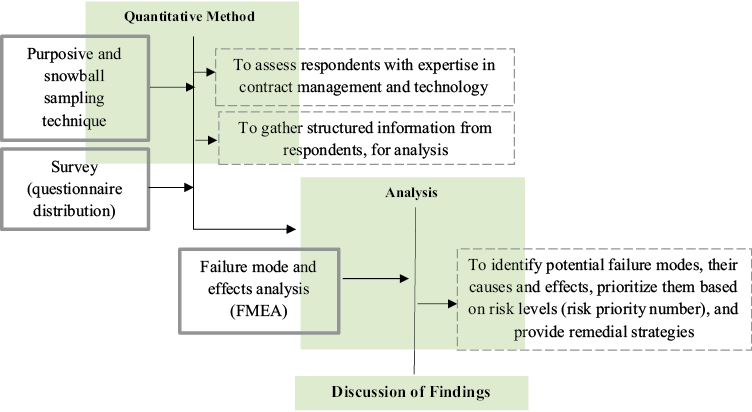
Figure 1. Research methodology adopted.
Results
Background information of respondents
Table 3 outlines the professions, project experience, and blockchain involvement of respondents in the construction sector. Project managers represent the largest group (22.22%), followed by architects and cost engineers (20% each). Clients make up 17.78%, while contractors (13.33%) and others (6.67%) are from smaller groups. Regarding project experience, 46.67% of the respondents have worked on more than eight construction projects, with few involved in one to eight projects. Notably, 73.33% of the respondents have experience with blockchain implementation in their projects, while 26.67% do not. This suggests that blockchain technology is gaining traction among experienced construction professionals across various roles.
The FMEA identified and prioritized 23 barriers to blockchain adoption in contract management based on their RPN, as presented in Table 4. High-risk barrier (RPN ≥ 500) includes overly complicated technical design (B10, RPN 729) and difficulty finding qualified professionals (B8, RPN 576), highlighting critical technical and skills-related challenges. Moderate-risk barriers (RPN 301–500) encompass unaffordable infrastructure, organizational inertia, low perceived value, lack of top-down commitment, industry-wide tool gaps, public cybersecurity threats, unclear regulations, and inadequate risk management strategies. Low-risk barriers (RPN ≤ 300) include issues such as lack of a regulatory framework, limited understanding of blockchain advantages, disputes over content ownership, delays, and unclear contractual obligations. Overall, the analysis shows that technical complexity, workforce skills, and organizational commitment are the most significant impediments, while legal, regulatory, and awareness-related barriers are less critical. The systematic approach provided by the detection, occurrence, and severity ratings facilitates an organized evaluation of risks, enabling the prioritization of efforts to address the most critical issues. Based on the failure modes, those with the highest RPN were prioritized for the development of appropriate remediation strategies. The overall classification of the identified barriers into high-, moderate-, and low-risk categories is presented in Figure 2.
FMEA, failure mode and effects analysis.
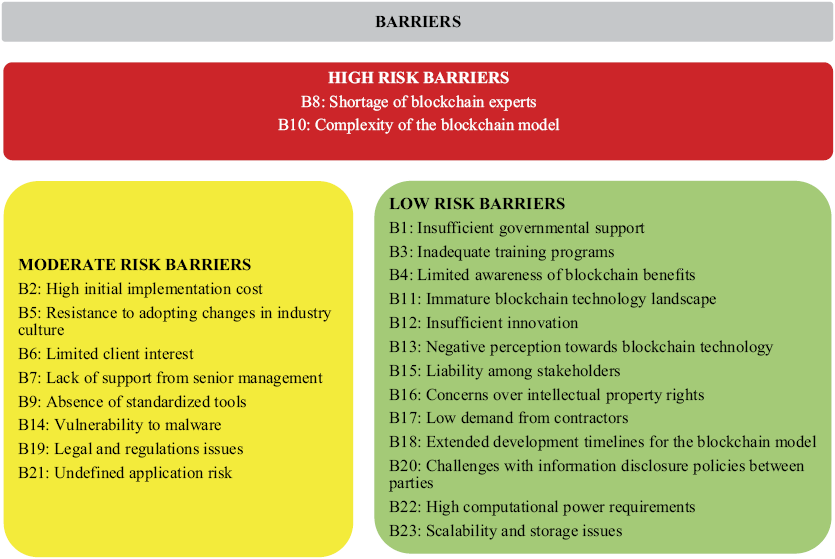
Figure 2. Risk category on the barriers to blockchain in contract management within the Polish construction industry.
Discussion
This study engaged 45 carefully selected professionals in Warsaw with expertise in contract management and exposure to digital technologies, including blockchain. Purposive and snowball sampling ensured the inclusion of highly knowledgeable participants, enhancing the relevance and credibility of the findings. A key contribution lies in applying the FMEA to systematically quantify and prioritize adoption barriers, an approach rarely used in prior research. By evaluating risks through detection, occurrence, and severity to generate an RPN, barriers were classified as low, moderate, or high, enabling targeted analysis and formulation of tailored mitigation strategies.
When compared to studies in other regions, several parallels and distinctions emerge. For instance, risk classification in the United States emphasizes severity and occurrence, like Poland, but often integrates financial quantification for prioritization (Wu et al., 2022). Meanwhile, studies in China rely less on numeric risk scoring and more on qualitative assessments guided by expert judgment (Li et al., 2021). Unlike Poland’s nuanced inclusion of moderate risks, Indian studies typically classify risks as high or low, focusing primarily on external factors such as government policies and client readiness (Singh et al., 2023). Germany places significant emphasis on financial risks, such as the economic feasibility of blockchain, while Australian studies expand the scope to include environmental and socio-political factors in smart contracts delivery (Kouhizadeh et al., 2023; Ameyaw et al., 2024). In contrast, Poland’s framework provides a focused, structured, and quantitative approach that addresses both technical and operational risks.
The FMEA further highlights shared challenges, such as the shortage of blockchain experts, a common barrier in Poland and South Africa (Dowelani et al., 2022). In response, both regions emphasize collaboration with educational institutions and training programs. Similarly, high implementation costs are a significant economic barrier in Poland and China, although China often adopts public–private partnerships as a solution, while Poland recommends phased funding and cost-sharing models (Liao et al., 2024). Regulatory challenges, such as data protection and intellectual property concerns, align Poland’s findings with those in Germany (Kaczmarek-Templin, 2023). However, Poland’s inclusion of liability among stakeholders adds a unique dimension. Unlike Poland, which categorizes fragmented smart contracts as a high-risk technological barrier, regions like South Africa prioritize overcoming broader adoption resistance due to limited awareness of blockchain’s potential (Otasowie et al., 2023).
This comparative analysis underscores the universality of some challenges, such as security concerns and expertise shortages, while highlighting Poland’s distinct contributions to blockchain research. By addressing barriers with tailored mitigation strategies, the study not only advances blockchain adoption in Poland but also provides valuable insights that could inform similar efforts in other regions. These findings emphasize the importance of region-specific frameworks while identifying opportunities for cross-regional learning and collaboration in overcoming barriers to blockchain implementation.
Recommendations and implications of the study
The study highlights critical barriers to adopting blockchain technology in contract management within the Polish construction industry and provides actionable recommendations to address them. High-risk barriers, such as the complexity of blockchain models, require specialized training programs to equip existing professionals with the necessary skills to implement and manage blockchain technology. Suggested remedies also include simplifying blockchain models, strengthening encryption, adopting standardized smart contract protocols, and investing in training programs (Li et al., 2021). These programs should be tailored to the construction sector, focusing on blockchain fundamentals, smart contract development, and security protocols, with practical applications. Collaborations between universities, industry associations, and blockchain technology providers are essential to bridge this skill gap. Additionally, offering incentives such as financial support for blockchain certifications and ongoing education will help cultivate a pool of qualified experts, ensuring that the industry is prepared to adopt blockchain successfully. Moderate risks, such as high initial implementation costs and limited client interest, are addressed through phased funding, cost-sharing strategies, and targeted awareness campaigns to demonstrate return on investment (Wu et al., 2022).
Furthermore, the study emphasizes the complexity of blockchain models as a significant barrier to adoption. Simplifying blockchain technology is crucial for making it more accessible to construction industry stakeholders. The development of user-friendly platforms and interfaces that abstract the technical complexities of blockchain will enable non-technical users to engage with the technology. It is recommended that blockchain developers work closely with construction professionals to create solutions tailored to the industry’s unique needs, ensuring that the technology is secure, scalable, and practical.
The limitations of this study include its focus on construction professionals within Warsaw, Poland, which may limit the generalizability of the findings to other regions or countries with different regulatory, technological, or organizational contexts. Future research could expand the geographical scope, increase sample size, or use case study approaches to validate and extend these findings.
Theoretical contribution
This study contributes to the growing body of knowledge on blockchain adoption by offering a detailed risk classification framework tailored to contract management in the construction industry. Leveraging the FMEA approach, it provides theoretical insights into categorizing blockchain-related barriers into high, medium, and low risks. By linking risk levels to actionable mitigation strategies, the research demonstrates how structured risk evaluation can directly inform practical adoption roadmaps. Furthermore, it underscores blockchain’s potential to address entrenched inefficiencies in construction workflows and establishes a transferable framework for guiding implementation strategies in other industries and regional contexts.
Managerial implications
The findings offer actionable insights for managers and stakeholders in the Polish construction industry to address blockchain adoption barriers effectively. Managers should prioritize mitigating high-risk challenges like fragmented smart contract processes and security concerns by adopting robust security protocols and standardized frameworks. Additionally, targeted awareness campaigns can boost client interest, while phased funding and cost-sharing models can alleviate financial burdens. By investing in expert training and fostering collaboration among industry leaders and policymakers, managers can create an enabling environment for blockchain implementation, driving efficiency and transparency in contract management practices.
Conclusion and future studies
The adoption of blockchain technology in contract management within the Polish construction industry faces significant barriers that hinder its widespread implementation. This study addressed these barriers by employing a structured methodology using an FMEA framework to assess risks and propose practical solutions. The research analyzed blockchain-related barriers obtained from extant literature and systematically categorized them based on their detection, occurrence, and severity. Key findings reveal that high-risk barriers, including the complexity of blockchain models and shortage of blockchain experts, require urgent attention. Moderate risks, such as high implementation costs and limited client interest, emphasize the need for strategic awareness campaigns and phased funding approaches. By prioritizing these challenges, stakeholders can focus on developing simplified models, enhancing security measures, and fostering collaboration within the industry. This study is essential, as it provides actionable insights for addressing the specific challenges of blockchain adoption in the Polish construction sector. Future research could expand this analysis to other regions or explore the long-term effects of these mitigation strategies on contract management. Collaborative efforts between academia and industry are also recommended to foster innovation and promote blockchain’s full potential in construction.
Data availability statement
Some or all data, models, or code that support the findings of this study are available from the corresponding author upon reasonable request.
References
Ameyaw, E. E., Agyekum-Mensah, G., Kumar, B., & Edwards, D. J. (2024). Understanding barriers to the adoption of blockchain-enabled smart contracts in construction projects: Perspectives of construction practitioners. Smart and Sustainable Built Environment. Advance online publication. https://doi.org/10.1108/SASBE-03-2024-0078
Andoni, M., Robu, V., Flynn, D., Abram, S., Geach, D., Jenkins, D., McCallum, P., & Peacock, A. (2019). Blockchain technology in the energy sector: A systematic review of challenges and opportunities. Renewable and Sustainable Energy Reviews, 100, 143–174. https://doi.org/10.1016/j.rser.2018.10.014
Andrychowicz, M., Masny, D., & Persichetti, E. (2015). Leakage-resilient cryptography over large finite fields: Theory and practice. In T. Malkin, V. Kolesnikov, A. B. Lewko, & M. Polychronakis (Eds.), Applied cryptography and network security (pp. 655–674). Springer International Publishing. https://doi.org/10.1007/978-3-319-28166-7_31
Azhar, S. (2011). Building Information Modelling (BIM): Trends, benefits, risks and challenges for the AEC industry. Leadership and Management in Engineering, 11, 241–252. https://doi.org/10.1061/(ASCE)LM.1943-5630.0000127
Azure, M. (2016). Blockchain as a Service (BaaS) | Microsoft Azure. Azure.Microsoft.com. https://azure.microsoft.com
Belle, I. (2017). The architecture, engineering and construction industry and blockchain technology. In Proceedings of the 2017 National Conference on Digital Technologies in Architectural Education and DADA 2017 International Conference on Digital Architecture (pp. 279–284). https://www.researchgate.net/publication/322468019
Bilal, M., Oyedele, L. O., Qadir, J., Munir, K., Ajayi, S. O., Akinade, O. O., Owolabi, H. A., Alaka, H. A., & Pasha, M. (2016). Big data in the construction industry: A review of present status, opportunities, and future trends. Advanced Engineering Informatics, 30(3), 500–521. https://doi.org/10.1016/j.aei.2016.07.001
Carlson, C. S. (2012). Effective FMEAs: Achieving safe, reliable, and economical products and processes using failure mode and effects analysis. John Wiley & Sons. https://doi.org/10.1002/9781118312575
Christidis, K., & Devetsikiotis, M. (2016). Blockchains and smart contracts for the Internet of Things. IEEE Access, 4, 2292–2303. https://doi.org/10.1109/ACCESS.2016.2566339
Deshpande, A., Stewart, K., Lepetit, L., & Gunashekar, S. (2017). Overview report: Distributed ledger technologies/blockchain: Challenges, opportunities, and the prospects for standards. The British Standards Institution (BSI). https://www.bsigroup.com. https://doi.org/10.7249/RR2223
Dowelani, M., Okoro, C., & Olaleye, A. (2022). Factors influencing blockchain adoption in the South African clearing and settlement industry. South African Journal of Economic and Management Sciences, 25(1), 1–11. https://doi.org/10.4102/sajems.v25i1.4460
Etikan, I., Alkassim, R., & Abubakar, S. (2016). Comparison of convenience sampling and purposive sampling. American Journal of Theoretical and Applied Statistics, 5(1), 1–4. https://doi.org/10.11648/j.ajtas.20160501.11
Govindan, K., & Hasanagic, M., 2018. A systematic review on drivers, barriers, and practices towards circular economy: A supply chain perspective. International Journal of Production Research, 56(1–2), 278–311. https://doi.org/10.1080/00207543.2017.1402141
Haber, S., & Stornetta, W. S. (1991). How to time-stamp a digital document. Journal of Cryptology, 3(2), 99–111. https://doi.org/10.1007/BF00196791
Haber, S., & Stornetta, W. S. (1992). Certificate revocation with efficient Merkle trees. In Proceedings of the 1992 Conference on the Theory and Application of Cryptography, Santa Barbara, California, USA. https://doi.org/10.1007/3-540-48285-7_26
Haber, S., & Stornetta, W. S. (2004). U.S. Patent No. 5,136,646. U.S. Patent and Trademark Office. (Note: Patent expiration information would typically be referenced from patent office records or legal documents.)
Ham, Y., Han, K. K., Lin, J. J., & Golparvar-Fard, M. (2016). Visual monitoring of civil infrastructure systems via camera-equipped unmanned aerial vehicles (UAVs): A review of related works. Visualization Engineering, 4(1), 1. https://doi.org/10.1186/s40327-015-0029-z
Hultgren, M., & Pajala, F. (2018). Blockchain technology in construction industry: Transparency and traceability in supply chain (Dissertation). Retrieved from https://urn.kb.se/resolve?urn=urn:nbn:se:kth:diva-231752, [03 September 2026].
Hunhevicz, J. J., & Hall, D. M. (2019). Managing mistrust in construction using DLT: A review of use-case categories for technical design decisions. In Proceedings of the 2019 European Conference on Computing in Construction (pp. 100–109). https://doi.org/10.35490/EC3.2019.171
Ivanov, D., Dolgui, A., & Sokolov, B. (2019). The impact of digital technology and Industry 4.0 on the ripple effect and supply chain risk analytics. International Journal of Production Research, 57(3), 829–846. https://doi.org/10.1080/00207543.2018.1488087
Jardim, M. (2020). Challenges and barriers to blockchain adoption in the construction industry. Journal of Construction Engineering and Management, 146(12), 05020018. https://doi.org/10.1016/j.techfore.2018.10.024
Kaczmarek-Templin, B. (2023). The Smart Contract–Problems with taking evidence in Polish civil proceedings in the light of European regulations. Bratislava Law Review, 7(1), 65–76. https://doi.org/10.46282/blr.2023.7.1.308
Kamble, S., Gunasekaran, A., & Arha, H. (2019). Understanding the blockchain technology adoption in supply chains: Indian context. International Journal of Production Research, 57(7), 2009–2033. https://doi.org/10.1080/00207543.2018.1518610
Kouhizadeh, M., Saberi, S., & Sarkis, J. (2021). Blockchain technology and the sustainable supply chain: Theoretically exploring adoption barriers. International Journal of Production Economics, 231, 107831. https://doi.org/10.1016/j.ijpe.2020.107831
Li, J., & Kassem, M. (2021). Applications of distributed ledger technology (DLT) and blockchain-enabled smart contracts in construction. Automation in Construction, 132, 103955. https://doi.org/10.1016/j.autcon.2021.103955
Li, J., Greenwood, D., & Kassem, M. (2019). Blockchain in the built environment: Analysing current applications and developing an emergent framework. Technological Forecasting and Social Change, 140, 97–110. https://doi.org/10.1016/j.techfore.2018.10.024
Li, W., Duan, P., & Su, J. (2021). The effectiveness of project management construction with data mining and blockchain consensus. Journal of Ambient Intelligence and Humanized Computing, 1–10. https://doi.org/10.1007/s12652-020-02668-7
Liao, L., Ye, Y., Wei, N., Li, H., & Fan, C. (2024). Exploring blockchain technology acceptance among non-managerial construction practitioners in Shenzhen, China. Engineering, Construction and Architectural Management, 31(5), 2053–2076. https://doi.org/10.1061/JCEMD4.COENG-15197
Love, P. E. D., Edwards, D. J., Watson, H., & Davis, P., 2010. Rework in civil infrastructure projects: Determination of cost predictors. Journal of Construction Engineering and Management, 136(3), 275–282. https://doi.org/10.1061/(ASCE)CO.1943-7862.0000136
Mathews, M., Robles, D., & Bowe, B. (2017). BIM+Blockchain: A solution to the trust problem in collaboration? CITA BIM Gathering 2017.
Mathivathanan, D., Govindan, K., & Haq, A. N. (2021a). Exploring the adoption of blockchain technology in supply chains: A literature review and research agenda. Journal of Cleaner Production, 269, 122543. https://doi.org/10.1007/s10479-022-05069-5
Mathivathanan, D., Kannan, D., & Haq, A. N. (2021b). Sustainable supply chain management practices in the Indian automotive industry: A multi-stakeholder view. Journal of Cleaner Production, 92, 248–257.
Mojeed, A. (2021, May 18). Why we banned cryptocurrency transactions. Premium Times. https://www.premiumtimes.ng/news/headlines/444866-why-we-banned-cryptocurrency-transactions.html
Morawiec, P., & Sołtysik-Piorunkiewicz, A. (2022). Cloud computing, big data, and blockchain technology adoption in ERP implementation methodology. Sustainability, 14(7), 3714. https://doi.org/10.3390/su14073714
Mougayar, W. (2016). The business blockchain: Promise, practice, and application of the next Internet technology. John Wiley & Sons.
Nakamoto, S. (2008). Bitcoin: A peer-to-peer electronic cash system. Retrieved from https://bitcoin.org/bitcoin.pdf
Noy, C., 2008. Sampling knowledge: The hermeneutics of snowball sampling in qualitative research. International Journal of Social Research Methodology, 11(4), 327–344. https://doi.org/10.1080/13645570701401305
Otasowie, K., Aigbavboa, C., Oke, A., Adekunle, P., & Zanele, B. (2023, October). Blockchain technology adoption in construction projects logistics in South Africa: Militating factors. In Proceedings of the Future Technologies Conference (pp. 341–354). Springer Nature Switzerland. https://doi.org/10.1007/978-3-031-47457-6_21
Öztürk, C., & Yildizbaşi, A. (2020). Barriers to implementation of blockchain into supply chain management using an integrated multi-criteria decision-making method: A numerical example. Soft Computing, 24(19), 14,771–14,789. https://doi.org/10.1007/s00500-020-04831-w
Paech, P. (2018). The governance of blockchain financial networks. SSRN Electronic Journal, 80(6), 1073–1087. https://doi.org/10.2139/ssrn.2875487
Patton, M. Q. (2015). Qualitative research & evaluation methods (4th ed.). SAGE Publications.
Penzes, B. (2018). Blockchain technology in the construction industry. https://doi.org/10.13140/RG.2.2.14164.45443
Perera, S., Nanayakkara, S., Rodrigo, M. N. N., Senaratne, S., & Weinand, R. (2020). Blockchain technology: Is it hype or real in the construction industry? Journal of Industrial Information Integration, 17, 100125. https://doi.org/10.1016/j.jii.2020.100125
Peters, E., Subar, K., & Martin, H., 2019. Late payment and nonpayment within the construction industry: Causes, effects, and solutions. Journal of Legal Affairs and Dispute Resolution in Engineering and Construction, 11(3), 04519013. https://doi.org/10.1061/(ASCE)LA.1943-4170.0000314
Queiroz, M. M., Telles, R., Bonilla, S. H., & Telles, R. (2019). Blockchain and supply chain management integration: A systematic review of the literature. Supply Chain Management: An International Journal. https://doi.org/10.1108/SCM-03-2018-0143
San, K. M., Choy, C. F., & Fung, W. P. (2019). The potential and impacts of blockchain technology in the construction industry: A literature review. IOP Conference Series: Materials Science and Engineering, 495(1), 012005. https://doi.org/10.1088/1757-899X/495/1/012005
Santos, R., Costa, A. A., & Grilo, A. (2017). Bibliometric analysis and review of building information modelling literature published between 2005 and 2015. Automation in Construction, 80(August), 118–136. https://doi.org/10.1016/j.autcon.2017.03.005
Singh, A. K., Kumar, V. P., Dehdasht, G., Mohandes, S. R., Manu, P., & Rahimian, F. P. (2023). Investigating the barriers to the adoption of blockchain technology in sustainable construction projects. Journal of Cleaner Production, 403, 136840. https://doi.org/10.1016/j.jclepro.2023.136840
Swan, M. (2015). Blockchain: Blueprint for a new economy. O’Reilly Media, Inc.
Shojaei, A. (2019). Exploring applications of blockchain technology in the construction industry. In Proceedings of International Structural Engineering and Construction, 6, 1–6. https://doi.org/10.14455/ISEC.2019.6(1).CON-31
Stamatis, D. H. (2003). Failure mode and effect analysis: FMEA from theory to execution. ASQ Quality Press.
Tavakol, M., & Dennick, R. (2011). Making sense of Cronbach’s alpha. International Journal of Medical Education, 2, 53–55. https://doi.org/10.5116/ijme.4dfb.8dfd
Treiblmaier, H. (2018). The impact of the blockchain on the supply chain: A theory-based research framework and a call for action. Supply Chain Management: An International Journal, 23(6), 545–559. https://doi.org/10.1108/SCM-01-2018-0029
Viktorovich, D. A. (2020). Barriers to adoption of blockchain technology in green supply chain management. Journal of Global Operations and Strategic Sourcing, 13(3), 307–327. https://doi.org/10.1108/JGOSS-06-2020-0027
Wright, A., & De Filippi, P. (2015). Decentralized blockchain technology and the rise of lex cryptographia. SSRN. https://doi.org/10.2139/ssrn.2580664
Wu, H., Li, Z., King, B., Miled, Z. B., Wassick, J., & Tazelaar, J. (2017). A distributed ledger for supply chain physical distribution visibility. Information, 8(4), 137. https://doi.org/10.3390/info8040137
Wu, H., Zhang, P., Li, H., Zhong, B., Fung, I. W., & Lee, Y. Y. R. (2022). Blockchain technology in the construction industry: Current status, challenges, and future directions. Journal of Construction Engineering and Management, 148(10), 03122007. https://doi.org/10.1061/(ASCE)CO.1943-7862.0002380
Yang, C. S. (2019). Maritime shipping digitalization: Blockchain-based technology applications, future improvements, and intention to use. Transportation Research Part E: Logistics and Transportation Review, 131, 108–117. https://doi.org/10.1016/j.tre.2019.09.020
Zawada, K., Rybak-Niedziółka, K., Donderewicz, M., & Starzyk, A. (2024). Digitization of AEC industries based on BIM and 4.0 technologies. Buildings, 14(5), 1350. https://doi.org/10.3390/buildings14051350
Zima, K., Plebankiewicz, E., & Wieczorek, D. (2020). A SWOT analysis of the use of BIM technology in the Polish construction industry. Buildings, 10(1), 16. https://doi.org/10.3390/buildings10010016