Construction Economics and Building
Vol. 26, No. 3/4
2026
ARTICLES (PEER REVIEWED)
A Framework for Addressing Barriers to Digital Twin Adoption in the Construction Sector of Developing Countries
Victor Adetunji Arowoiya1,*, Ayodeji Emmanuel Oke2,3,4, Adetayo Onososen5
1 Department of Civil and Environmental Engineering, Monash University, Australia
2 Research Group on Sustainable Infrastructure Management (RG-SIM+), Department of Quantity Surveying, Federal University of Technology Akure, Nigeria
3 School of Social Sciences, Universiti Sains Malaysia, Palau Pinang, Malaysia
4 CIDB Centre of Excellence, Faculty of Engineering and Built Environment, University of Johannesburg, Auckland Park, South Africa
5 Centre for Applied Research and Innovation in the Built Environment (CARINBE), Faculty of Engineering and the Built Environment (FEBE), University of Johannesburg, South Africa
Corresponding author: Victor Adetunji Arowoiya, victorarowoiya@gmail.com
DOI: https://doi.org/10.5130/e92c7616
Article History: Received 10/08/2025; Revised 31/10/2025; Accepted 19/01/2026; Published 18/09/2026
Citation: Arowoiya, V. A., Oke, A. E., Onososen, A. 2026. A Framework for Addressing Barriers to Digital Twin Adoption in the Construction Sector of Developing Countries. Construction Economics and Building, 26:3/4, 1–25. https://doi.org/10.5130/e92c7616
Abstract
Despite the global advancement of digital technologies aimed at improving productivity and performance, several limiting factors hinder the adoption of digital technologies among construction professionals, especially digital twin technologies. This research investigates the barriers to the use of the digital twin (DT) among construction professionals. A survey approach was adopted, and questionnaires were distributed using random sampling techniques to digitally inclined professionals. The response rate for the data retrieved was 50.9%; descriptive and inferential statistics were used to analyze the data collected. It was found that lack of government support, lack of expertise, cost of implementation, unavailability of technological operators, and lack of standardized tools were the top-ranked barriers to using DT in a developing context. Factor analysis was conducted to group the barriers into five components: programming and simulation, mindset, policy and structure, economic, and knowledge barriers. The Kruskal–Wallis test revealed that the cost of implementation significantly differed among the professionals, while other factors did not differ significantly among the respondents. Dunnett’s and least significant difference (LSD) post-hoc tests revealed significant differences between architects and builders, builders and quantity surveyors, architects and engineers, and engineers and quantity surveyors. It was therefore concluded that government support and the availability of technological experts are critical in helping professionals embrace cutting-edge technology such as DT. It was recommended that the government and other stakeholders make efforts to improve awareness and technical capacity through training, workshops, and seminars. It was also recommended that user-friendly DT solutions be developed to facilitate broader implementation across construction firms and organizations.
Keywords
Barriers; Construction; Digital Twin; Professional; Technology
Introduction
Digital twins (DTs) are virtual models connected to physical systems through data links, enabling simulations, predictions, and real-time decision-making (Kober et al., 2024). Initially coined in the context of rocket development, the scope of DTs has expanded across various industries, leveraging advancements in the Industrial Internet of Things (IIoT), big data, artificial intelligence (AI), cyber-physical systems (CPS), cloud computing, and automation (Bello et al., 2024). These technologies eliminate the effort and delay in model parametrization by integrating live data, thanks to the proliferation of sensors and the miniaturization of computing hardware in the Industry 4.0 era (Almatared et al., 2024).
In recent years, enhancing cost-effectiveness, sustainability, and flexibility has become critical for maintaining competitiveness (Ferlito et al., 2022). Digitalization has emerged as a crucial enabler of these goals, leading to widespread digital transformation (Adewale et al., 2024). This refers to the integration of digital technology across all business areas, fundamentally changing how organizations operate and deliver value to customers (Barrientos-Orellana et al., 2022). The adoption of emerging technologies, such as DTs, is crucial for improving performance, particularly in industries facing significant challenges, including the construction sector.
The construction industry, globally and in Nigeria, struggles with low productivity, project delays, and cost overruns (Oke et al., 2023). To address these issues, the industry is increasingly turning to digital and innovative solutions such as Building Information Modeling (BIM), the Internet of Things (IoT), blockchain, immersive techniques, and DTs (Garrido-Hidalgo et al., 2024). Specifically, DTs have become highly relevant for the construction industry, offering the ability to create dynamic, real-time replicas of built assets, systems, or processes (Torres et al., 2024). These models allow construction professionals to test designs, monitor performance, and identify areas for improvement during the construction process. DTs have been shown to enhance decision-making, reduce risks, and optimize project performance, leading to better collaboration among stakeholders.
Despite the clear benefits, the adoption of DT in the construction industry remains slow, especially in Nigeria. The Nigerian construction industry (NCI) is notorious for lagging in digital technology uptake, exacerbating its performance issues (Fagbenro et al., 2022). Limited studies have explored the barriers to DT adoption in developing countries. Most existing research on these barriers has been conducted in regions such as Indonesia, the Middle East, Sri Lanka, Singapore, and several developed nations, revealing a clear geographical gap (Waqar et al., 2023; Indunil et al., 2025; Barham et al., 2025). This underscores the need for a more coordinated effort to advance digitalization, particularly within the NCI (May & Rösner, 2022). The slow adoption of DT is further compounded by the coronavirus pandemic, which has increased the pressure on the industry to improve productivity and efficiency (Musonda et al., 2023). High-value industries like aerospace and automotive have already embraced DTs as part of their digital transformation strategies, benefiting from reduced costs, risks, and design time (Kober et al., 2024).
For the NCI, incorporating DT into its digital strategy could unlock similar benefits, improving the delivery and management of infrastructure projects (Bonomi & Drobot, 2023). The potential to visualize the final product, adjust before construction, and engage in accurate project planning underscores DT’s capacity to transform construction practices. Nonetheless, broader acceptance and application of DT within the NCI are essential to realizing these advantages (Winter & Chico, 2023). The objective of this research was to examine the barriers to the adoption of DT technology (DTT) among construction professionals in Nigeria. This is highly significant to the developing context because identifying these key challenges will enable targeted strategies to accelerate digital transformation and improve project outcomes in the construction industry.
Literature review
Trends in digital twin research
DTs have significant potential to improve project planning, design, and construction in the NCI by enabling proactive risk management and enhancing efficiency (Bonomi & Drobot, 2023). However, adoption remains limited, reflecting a global trend of slow DT maturity (Jahangir et al., 2024).
While the Architecture, Engineering, Construction, and Operation (AECO) industry is moving toward digital transformation (Kerrouchi et al., 2024), technical challenges (e.g., interoperability, real-time capabilities, and data quality) and non-technical factors (e.g., resistance to change, skill gaps, and unclear objectives) hinder widespread use (Klöckner et al., 2023).
There is no universal definition of DTs, contributing to conceptual ambiguity (Mohandes et al., 2024). The shift from BIM to DTs introduces real-time data integration, enabling better life cycle management of built assets (Zhao et al., 2022). DTs are increasingly applied in sectors such as smart manufacturing, healthcare, and facility management, demonstrating versatility and benefits that include improved decision-making, sustainability, and operational efficiency.
In developing countries, adoption is slowed by limited skilled personnel, project complexity, poor connectivity, and integration challenges (Machado et al., 2023). Overcoming these barriers requires clearer definitions, stronger stakeholder collaboration, targeted training, and strategic investment (Rafsanjani & Ahn, 2016; Opoku et al., 2023). Overall, DTs are central to the future of data-driven, sustainable, and efficient construction, but their full potential will only be realized through coordinated innovation and implementation efforts (Grasso et al., 2024).
Barriers to digital twin technology for construction project performance
The following challenges can be identified in the implementation of digital twins, although it enhances the Cyber-Physical Production System (CPPS) in functionality, predictive capabilities, and efficiency. The widespread use of manual motion data acquisition, despite its conflict with the need for real-time data availability, limits the potential of simulation, which requires a central information system (Al-Bouwarthan et al., 2020). In addition, the in-house implementation of Industry 4.0 is often insufficient; slow standardization of data acquisition in production hinders agile and adaptable system implementations, and standardization of data acquisition has not yet been achieved. Furthermore, high costs for new information technology (IT) environments prevent the application of Industry 4.0; coupling of simulation and optimization is not sufficiently ensured to fully benefit from near real-time models and raises data security concerns (Uhlemann et al., 2017). The hindering factors are discussed in the following section, and a summary of the literature review is shown in Table 1.
| S/N | Variables | Al-Bouwarthan et al., 2020 | Singh et al., 2021 | Eleonu & Anebo, 2020 | Mchirgui et al., 2024 | West & Blackburn, 2017 | Choi et al., 2019 | Kshetri, 2021 | Grieves, 2014 | Sepasgozar, 2020 | Radchenko et al., 2018 | Kehoe et al., 2015 | Deng et al., 2019 | Shirowzhan et al., 2019 | Thirumal et al., 2024 | Rathore et al., 2021 | Greif et al., 2020 | Russell, 2020 | Botin-Sanabria et al., 2022 | Opoku et al., 2023 | Agrawal et al., 2022 | Yang et al., 2024 | Zhu et al., 2024 | Waqar et al., 2023 | Barham et al., 2025 | Indunil et al., 2025 |
|---|---|---|---|---|---|---|---|---|---|---|---|---|---|---|---|---|---|---|---|---|---|---|---|---|---|---|
| B1 | Unavailability of technological operators | √ | ||||||||||||||||||||||||
| B2 | Slow standardization of data acquisition in productions | √ | ||||||||||||||||||||||||
| B3 | Digital privacy and rights issues | √ | √ | √ | √ | |||||||||||||||||||||
| B4 | Electrodermal activity (EDA) | √ | ||||||||||||||||||||||||
| B5 | Lack of standardized tools | √ | ||||||||||||||||||||||||
| B6 | Technical knowledge of the operation | √ | √ | |||||||||||||||||||||||
| B7 | Lack of trust | √ | √ | |||||||||||||||||||||||
| B8 | Lack of finance | √ | √ | √ | √ | √ | ||||||||||||||||||||
| B9 | Economic situation of the nation | √ | √ | |||||||||||||||||||||||
| B10 | Poor investment return/profit margin | √ | √ | |||||||||||||||||||||||
| B11 | Unreliable power supply | √ | √ | |||||||||||||||||||||||
| B12 | Complexity | √ | ||||||||||||||||||||||||
| B13 | Cultural beliefs | √ | √ | |||||||||||||||||||||||
| B14 | Lack of government support | √ | ||||||||||||||||||||||||
| B15 | Cost of implementation | √ | √ | |||||||||||||||||||||||
| B16 | Limitations in the simulation potential, combined with decentralized data acquisition and connectivity problems | √ | ||||||||||||||||||||||||
| B17 | Lack of awareness | √ | ||||||||||||||||||||||||
| B18 | Lack of experts | √ | √ | |||||||||||||||||||||||
| B19 | Low-speed Internet connection | √ |
Cultural beliefs
Culture is largely focused on why people are motivated and what their capabilities are. Research on the cultural and management barriers to implementing digital engineering in design, procurement, and manufacturing appears to be more mature than that in construction and facilities management (Eleonu & Anebo, 2020). Some cultures rely on traditional methods and human expertise for executing any construction project. In addition, there is reluctance or skepticism to replace traditional construction practices with digital twin systems; for instance, concerns regarding data privacy and security, and fear of losing their jobs due to automation of processes. When top leaders in an organization are unfamiliar due to cultural background, it can lead to resistance to digital twin adoption (Barham et al., 2025).
Cost of implementation
Factors affecting the cost of implementation include the need for new business models, a lack of a methodical approach for implementation, and high coordination effort (Grieves, 2014). According to West and Blackburn (2017), cost is a major consideration when deciding to implement digital twins in construction projects. In addition, the need for highly skilled operators who are proficient in digital technologies can lead to high labor costs and increase the overall cost of project execution, which makes DT adoption unappealing to stakeholders.
Slow standardization of data acquisition in production
This area is still being developed and lacks standards, such as a comprehensive and global standard for RFID technology, multi-protocol tags, and readers, and consistent BIM standards (to address software incompatibility). These reflect limited strategies and a lack of standardization of technical features. Additionally, an industry-specific reference architecture for Industry 4.0 is required (Choi et al., 2019).
Technical knowledge of operation
Digital twins involve the integration of different technologies, including sensors, cloud computing, data analytics, and visualization tools. Lack of standards, weak IT infrastructure, uncertainty about systems reliability, difficult interoperability/compatibility, and lack of technological maturity are challenges faced when setting up these components for digital twins (Indunil et al., 2025). Furthermore, the lack of standardized and shared project information is caused by the short-term nature of building projects and the disjointed nature of the construction value chain (Sepasgozar, 2020). Adoption is hindered when there is a lack of expertise in operating and using DT systems.
Economic situation of the nation
High cost of equipment, lack of business evaluation, unclear benefits, complexity of the construction site-based environment, financial risks, access to capital, and over-optimistic demand forecasts significantly influence DT implementation (Radchenko et al., 2018). Also, Greif et al. (2020) mentioned that hard economic challenges make it difficult to utilize DT. A country’s economy impacts investment capabilities for these technologies and infrastructure development. These technologies have high initial investment costs, which constrain small and medium enterprises (SMEs) from investing in those technologies.
Lack of standardized tools
There is a growing need for customization while at the same time competing globally with rivals. As a result of increasing product diversity (high-volume to low-volume production), this trend, which is driving the transition from macro to micro markets, leads to smaller lot sizes. It is necessary to consider higher needs for computing equipment used in the environment of a building site, which is primarily outside, dusty, and damp. For instance, mobile gadgets ought to be built to withstand high humidity, big drops, and powerful vibrations (Shirowzhan et al., 2019).
Complexity of DT implementation
Site layouts, client modifications, insufficient time and resources, and progress measurement are quite challenging. Others include project ambiguity, piece-work contract, technological problems, the absence of standardized procedures, local variations, dynamic projects, and interdependencies. Design-related issues include uncontrolled environments, robot intelligence, inefficient algorithms, limited modularization, reusability of information technology and solutions, and immature functional integration (Choi et al., 2019).
Poor investment return/profit margin
Digital twin technology is associated with upfront costs, which include software, hardware, and training that deter companies from reaching their profit target. Most construction companies hesitate to invest in technology when the return on investment is unclear or long-term (Opoku et al., 2023). In addition, smaller companies also struggle for financial resources for digital transformation due to low profit margins and market position, additional innovation risks, costs associated with the protection of intellectual property (IP), academic collaboration, and start-up costs (Grieves, 2014).
Unreliable power supply
It takes enormous amounts of energy to perform proof-of-work processes. Demand management, grid capabilities, and emissions are all impacted by the built environment (Mchirgui et al., 2024). Ensuring a reliable supply of electricity will require making quick decisions, depending on the expert judgment of grid operators. The supply of power is a major factor in the successful implementation of digital twins in the construction industry, especially in developing countries where supply is unreliable because of power interruptions. Digital twins depend on real-time data synchronization and cloud connectivity, and power interruptions disrupt data flow for digital twin platforms.
Digital privacy and rights issues
Concerns about privacy, security, and unethical use, and inefficient data processing that could provide biased results are only a few of the issues raised by big data (Singh et al., 2021). Supply chain experts expressed worries about data security and privacy, claiming that one of the main barriers to data sharing, particularly with consumers, is outdated legislation. Since transnational supply chains must adhere to various national laws when exchanging data, privacy, security, and data regulations may pose significant concerns (Waqar et al., 2023). However, by implementing efficient data governance activities within data integration and management, these difficulties could be resolved (Arunachalam et al., 2017).
Anyone involved in the computing business should be concerned about privacy and security, and data analytics is no exception. Because AI is still in its infancy, laws and regulations have not yet been properly developed (Al-Bouwarthan et al., 2020). As technology advances, the problem can be resolved by increased regulation, monitoring, and policies about AI. Future regulation could guarantee the creation of algorithms that take precautions to safeguard user data. A new law known as the General Data Protection Regulation (GDPR) establishes the protection and privacy of personal data in the UK and throughout Europe. Although it is a general rule for data and security, GDPR emphasizes the specific issues of handling data when creating AI algorithms (Deng et al., 2019).
Lack of trust
Another issue that affects a large part of the AI sector is trust. First, it is still relatively new, and second, using AI can be intimidating unless the developer is aware of its intricacy (Kehoe et al., 2015). Trust is hampered by the fear that AI and robots will overtake humans as the dominating force on Earth and seize control of vital infrastructure. AI is portrayed mostly in terms of its potential negative outcomes, and a lack of trust may pose a significant hurdle. Although there are increasingly good media articles about AI, there is still a clear problem, and more people need to be exposed to AI and its beneficial applications to overcome trust issues (Shirowzhan et al., 2019). These trust issues are exacerbated by privacy and security concerns but can be mitigated by more thorough privacy and security regulations governing AI.
Lack of financial resources
Digital twin creation has been expensive for a long time. Businesses have to invest in advanced software and recruit engineers and developers on a full-time basis (Barham et al., 2025). There has not been much testing or data visualization. In recent years, wearable technology and mixed reality have emerged, making the development of digital twins easier (Deng et al., 2019). However, access to financial resources for sensors and other computational resources remains limited (Singh et al., 2021; Rathore et al., 2021), which is common in developing countries (Kshetri, 2021).
Lack of awareness
Most professionals are not aware of digital twins, and there is a misconception between BIM and digital twins, which indicates a low level of knowledge of this concept. This lack of knowledge has limited the acceptance and adoption of digital twin technology implementation in the construction industry (Opoku et al., 2023). A clear awareness and value proposition to the organization will enhance its adoption.
Lack of government support
Government plays a critical role in digital twin technology implementation. This technology is costly for small businesses, enterprises, and large organizations. The government should create incentives and give subsidies for its adoption. Such initiatives and policies should be implemented to accelerate the adoption of DT technology (Zhu et al., 2024). However, few governments have incorporated digital twin technology in construction, such as the National Digital Twin Programme (NDTP) in the UK through the Centre for Digital Built Britain, and the Sydney Opera House, using centralized data sources for improving its operation and maintenance through DT concepts.
Lack of experts
Construction professionals have a limited understanding of what digital twins are made up of, what their capabilities and levels are, and how to utilize them effectively. Also, stakeholders are unwilling to change from traditional workflows to new technologies, such as digital twin systems for integrated workflows (Agrawal et al., 2022). This lack of knowledge due to inadequate expertise brings low productivity and causes underutilization of DT (Yang et al., 2024).
Unavailability of technological operators
The construction industry needs skilled operators to manage, analyze, gain insight, and maintain data from the digital twin system. Furthermore, operators must be capable of maintaining both the synchronized virtual and physical entities of a construction project. When there are no technological operators, projects may face the challenges of prolonged delays and high costs (Thirumal et al., 2024).
Low-speed Internet connection
Digital twins operate smoothly based on reliable and continuous Internet connectivity. Bidirectional transfer between the digital and physical models is needed. A lack of a high-speed Internet connection hinders the full maximization of the potential of digital twins. Real-time data exchange of physical entities requires high-speed Internet connections, such as 5G, for efficient communication interfaces (Russell, 2020). This will enable improved DT reliability and operational efficiency.
Limitations in the simulation potential, combined with decentralized data acquisition and connectivity problems
Real-time dynamic data are important tools for the creation of digital twins, and there are challenges in the proper integration of these data for the implementation of digital twins. For instance, sensor data come with complexity for data connectivity and processing, which poses challenges to implementation. Furthermore, proper simulation and modeling techniques are important to reduce computational complexity for DT (Botin-Sanabria et al., 2022).
Electrodermal activity
Electrodermal activity (EDA) is an indicator that measures the sweat gland activity associated with physiological and emotional responses and is controlled by the autonomic nervous system. EDA can be measured on the skin, particularly the palms, fingers, or soles of the feet, to assess stress and excitement (Choi et al., 2019). In the construction industry, incorporating these data into digital twin frameworks has technical challenges that require seamless integration to manage and monitor the stress and fatigue levels of construction workers for the purpose of enhancing safety.
Research methods
This section describes how this research was carried out. It focused on population, sampling frame, techniques, sample size, data collection, analytical tools, and Cronbach’s alpha test. The study adopted a quantitative research approach using a survey of the selected population sample (Kothari, 2014).
Population
The target population for the study was construction professionals in the built environment in Lagos State. These professionals are registered professionals in each professional body. These were limited to architects, quantity surveyors, builders, and engineers. The basis for selecting Lagos was the level of development in the use of emerging technologies compared to other states in the federation. Also, the level of urbanization in the state and the high volume of construction projects made it the right choice for the study (Bryman, 2016).
Sampling frame and techniques
The sampling frame represents the number of respondents within the whole population (Creswell & Creswell, 2018). The total number of construction professionals was 5,330, i.e., architects, engineers, builders, and quantity surveyors. The breakdown of each profession was 1,850 engineers; 1,080 quantity surveyors; 1,700 architects; and 700 builders. Random sampling techniques were adopted to support generalizability and minimize sampling bias, where each member of the population has an equal chance of being selected (Saunders et al., 2019). These professionals work in consulting, contracting firms, private and public institutions, and government agencies.
Sample size
To determine the sample size of the study, the formula by Yamane (1967) was used to determine the number of respondents to be chosen from the whole population, as shown in equation 1. The approach aligns with Creswell and Creswell (2018) and Saunders et al. (2019) for quantitative studies. The formula was used to get a sample size of 369 professionals. This was made up of 92 quantity surveyors, 88 builders, 95 engineers, and 94 architects.
 (1)
(1)where S, N, and e represent sample size, total population, and level of precision or standard of accuracy, respectively. The level of precision used was 10%.
Data collection
The questionnaire was developed with two sections; the first section was the general background of the respondents, including academic qualifications, the respondents’ professions, professional qualifications, years of working experience, and their organizations’ years in operation. The second section 2 was concerned with the barriers or limitations of digital twin technology in construction. This was structured on a 5-point Likert scale based on the level of hindrances. The questionnaires were distributed to the limited sample size of 369 by hand and through the mail. Within 3 months, i.e., March–May, 225 were retrieved, and 188 were deemed fit for further analysis after proper scrutiny. The other 37 questionnaires were excluded and discarded because they were incomplete and contained errors. This response rate of 50.9% was sufficient and reliable, as supported by Fosnacht et al. (2017).
Analytical tools/data analysis
The collected data were analyzed using SPSS and Excel. Frequencies, percentages, bar charts, and pie charts were employed to present the demographic information of the respondents. Information included the type of organization, field of specialization, years of working experience, and highest academic qualification. These methods were employed to analyze the variables according to their frequency and percentage distributions and to identify patterns and differences among the variables.
Mean item score (MIS), which is a measure of the distribution of assigned scores within a collection of specified variables, was used to analyze the data. When two or more variables had the same MIS, standard deviation (SD) was used as a basis for ranking. A variable with a larger SD was ranked lower than an item with a smaller SD when their mean scores were the same.
Researchers utilized factor analysis, a flexible statistical technique, to identify underlying factors that may explain the correlations among variables in the dataset. Its main objective was to derive a more parsimonious set of variables, that is, fewer variables than the original set, to facilitate the interpretation of the underlying constructs.
The Kruskal–Wallis test was used to determine whether there were significant differences in the opinions of the four respondent groups regarding barriers to digital twin technology, while Dunnett’s test and the LSD post hoc test were used to identify where significant differences occurred. Figure 1 shows the overall research framework.
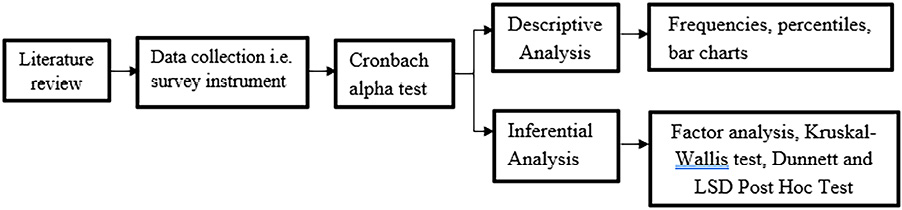
These methods were employed to analyze the variables according to their frequency and percentage distributions and to identify patterns and differences among the variables.
Cronbach’s alpha test
The questionnaire was validated, and the test of reliability was conducted using Cronbach’s alpha. This was used to check the internal consistency of the items in the questionnaire survey and verify its reliability, as shown in equation 2.
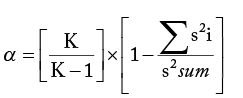 (2)
(2)
where K denotes the total number of barriers to digital twin technology, s2i denotes the variance of the respondent’s current sample, and s2sum is the variance of the sum of the respondents. This study used SPSS to determine Cronbach’s alpha coefficient (α) for the variables (Taber, 2018). Table 2 presents the test findings indicating that the designed questionnaire is reliable, as its value exceeds 0.50.
| Cronbach’s alpha test | Alpha value |
|---|---|
| Barriers to digital twin technology | 0.845 |
Findings and discussions
Respondents’ demographics
This section reveals the attributes of the respondents. It shows their profession, highest academic qualification, membership status, years of working experience, professional qualification, and years of operation of the organizations of the respondents who have been asked to provide information on their professional backgrounds.
The professionals registered with the Council of Registered Builders of Nigeria (CORBON) were 6.4%, those registered with the Quantity Surveyor Registered Board of Nigeria (QSRBN) were 21%, respondents registered with the Architects Registration Council of Nigeria (ARCON) were 28.7%, and those registered with the Council for the Regulation of Engineering in Nigeria (COREN) were 43.6%. Also, Figure 2 shows the respondents’ professions, where quantity surveyors comprise 23.4%, builders comprise 6.4%, architects represent 27.57%, and engineers represent 42.6%.
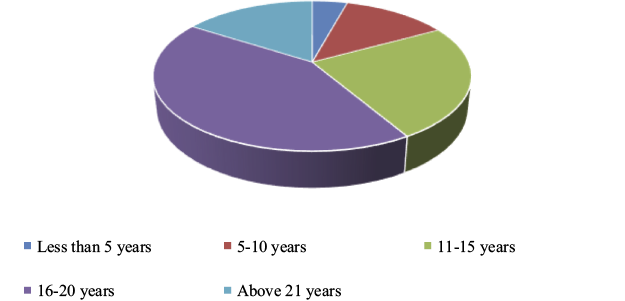
Figure 2. Years of organizational operations.
Furthermore, Figure 3 reveals the years of operation of the respondents’ organizations. Organizations with less than 5 years of establishment were 4.3%, while those with 5–10 years of operation were 12.8%. Organizations with 11–15 years of establishment were 24.5%; organizations with 16–20 years of operation were 42.6%; and those with ≥21 years of operation were 16%. Also, the professional qualifications of the respondents showed that Bachelor of Science or Technology (B.Sc/B. Tech) holders were 6.4%, Master of Science or Technology (M.Sc./MTech) holders represented 24.5%, Higher National Diploma (HND) holders represented 53.2%, and Doctor of Philosophy (Ph.D.) holders made up 11.7%. Moreover, for working experience, 28.7% of the respondents had less than 5 years, 37.2% had 6–10 years, 18.1% had 11–15 years, and 6.4% had 16–20 years. On this basis, it can be concluded that the data provided by the professionals are reliable for the analysis.
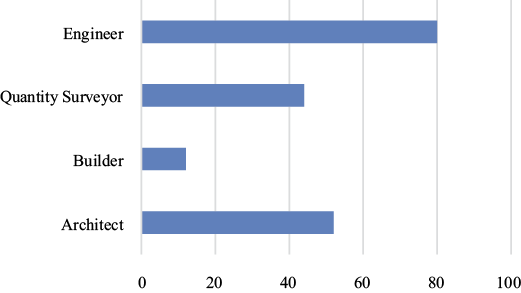
Figure 3. Profession of respondents.
Descriptive analysis
Table 3 shows the barriers to adopting digital twins for construction projects. The result reveals that the lack of government support was the major barrier, with a mean of 3.90, followed by the lack of experts with a mean of 3.87. The cost of implementation had a mean of 3.85, next to the unavailability of technological operators with a mean of 3.79. The lack of standardized tools was ranked fifth with a mean of 3.78, followed by the lack of financial resources with a mean of 3.76, while unreliable power supply was ranked seventh. The economic situation of the nation and lack of awareness were both ranked eighth; however, the economic situation of the nation was ranked higher than lack of awareness because it had a lower standard deviation. Finally, the least of the barriers were digital privacy and rights issues, with a mean of 3.53.
Inferential analysis
In terms of the quantity of data and the size of the population, Table 4 illustrates how adequate the sampling strategy was. Tabachnick and Fidell (2007) stated that for component analysis to be appropriate, Bartlett’s test of sphericity must be significant (p < 0.05). Additionally, they proposed that the Kaiser–Meyer–Olkin (KMO) index had a range of 0 to 1, with 0.50 being deemed appropriate for factor analysis. Factor analysis was appropriate in both situations since the KMO index in this instance was 0.739, and the test of sphericity was significant with a value of 0.000.
Extraction method: principal component analysis.
The initial matrix and the extracted squared loading results for the barriers to the adoption of digital twin for construction project performance are given in Table 5. Initial matrices are in the second, third, and fourth columns (Total, % Variance, and Cumulative %, respectively); the next three columns to the right of the rotated matrix shown are when the eigenvalue was greater than 1. The second column of total/initial eigenvalue shows the total variance explained by each factor. The factors listed in the third column are in decreasing order of the variance. The total variance of the first five items in the third column was 61.99%, meaning that the remaining 19 items only contributed 38.30% of the variance.
Figure 4 shows the scree plot, which is a graphical representation of the eigenvalues on the y-axis against the factors represented as components on the x-axis. The scree plot displays a downward curve, a graphical explanation of the total variance as explained in Table 6. A reduced set of components for barriers to the adoption of digital twins for construction project performance is shown in Table 7.
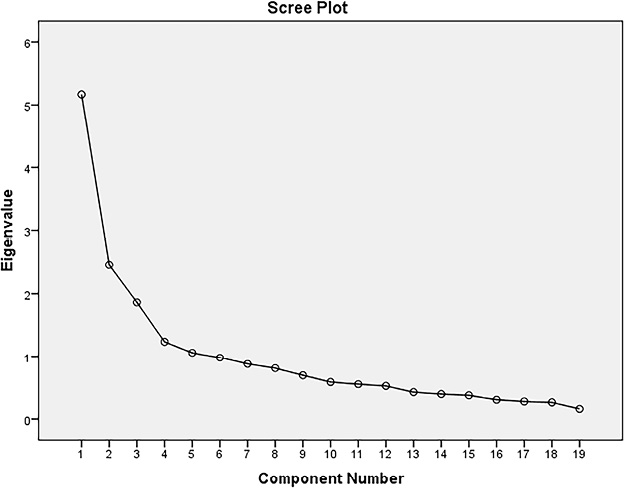
Figure 4. Graphical representation of eigenvalues.
Table 8 shows the Kruskal–Wallis test to understand the differences in the opinions of professionals regarding barriers to the adoption of DT. Among the factors, professionals had diverging opinions regarding the cost of implementation, whereas construction professionals had a converging view of other factors, which include lack of government support, lack of experts, unavailability of technological operators, lack of standardized tools, lack of financial resources, and unreliable power supply.
Notes: S–W, Shapiro–Wilk value; MIS, mean item score; RK, rank; SD, standard deviation; Asymp. sig., asymptotic significant values; and *p-values less than 0.05.
A further test was conducted to understand where the significance lies among the professionals. A post-hoc test was conducted to determine where significant differences existed among the variables. Only the cost of implementation showed a significant difference among all the variables. The further test revealed significant differences between architects and builders, architects and engineers, builders and quantity surveyors, and engineers and quantity surveyors, as shown in Table 9.
Note: SE, standard error.
* Significant (Sig.) at 0.05.
Discussion of findings
The barriers to the use of digital twins for construction project performance were represented by a model consisting of five components, as shown in Table 7. Factor analysis yielded only five reduced components. The varimax rotation is given in Table 6; each variable has a significant impact on one of the components, and the loading on each factor is greater than 0.30. Yap (2013) suggested that it is preferable to interpret only factor loadings that are greater than 0.30 (>0.30). Consequently, factor loadings below 0.30 were not shown. The strong communalities indicate that the variables are well represented by the retrieved components. Certain elements were heavily loaded under two components, but the highest loadings were selected for this research.
Before an accurate and succinct interpretation could be made, it was necessary to name the five extracted components. There was little to no established principle for identifying the extracted components of factor analysis, which was consistent with the first-factor analysis used in this study. The aforementioned remark implied that identifying these elements may have been arbitrary and dependent on the observer’s, researcher’s, or analyst’s perspectives, experiences, and education. Following thorough deliberation on the proper naming procedure, these names were given to each component: (i) programming and simulation barriers, (ii) mindset barriers, (iii) policy and structure barriers, (iv) economic barriers, and (v) knowledge barriers.
Programming and simulation barriers
This component has five items, namely, slow standardization of data acquisition in production with a factor loading of 0.844; electrodermal activity (EDA) with a factor loading of 0.762; limitation in the simulation potential, combined with decentralized data acquisition connectivity problems with a factor loading of 0.750; digital privacy and rights issues with a factor loading of 0.720; and low-speed Internet connection with a factor loading of 0.631. Note that different simulation models have limitations in data integration due to varied features and criteria that limit the full potential, accuracy, efficiency, and effectiveness of digital twin systems (Jahangir et al., 2024).
Data integration and compatibility issues have hindered seamless integration and accurate digital twin simulations (Yang et al., 2024). Without this issue being resolved, accurate and valuable insights into the project life cycle cannot be obtained, creating biased results. This poses a challenge to the clear benefits of incorporating these digital technologies in construction. Furthermore, digital privacy and security challenges contribute to trust issues, which imply that for organizations to have access to data throughout a project life cycle, it is vital that comprehensive privacy and security regulations are ensured to build trust in many organizations. These findings support research conducted in Malaysia, which identified privacy and security as negative effects of digital twin implementation for smart city development (Waqar et al., 2023).
Mindset barriers
This component involves four items: lack of trust with a factor loading of 0.753, lack of financial resources with a factor loading of 0.751, economic situation of the nation with a factor loading of 0.654, and technical knowledge of operation with a factor loading of 0.605. The adoption of more efficient and innovative practices is hindered because most professionals are reluctant to change the conventional methods of practice. Also, the upfront cost of implementing digital twin technology, which includes sensors, training, and software, is perceived as expensive by employers. These deter organizations from utilizing this technology because it does not seem to have quick benefits for and return for the organization.
There is also a limited understanding of digital twin technology in the construction industry. Many organizations in some developing countries underestimate its value, resulting to missed opportunities to improve project performance (Waqar et al., 2023; Oke et al., 2024). This mindset challenge from employers and employees must be addressed through education and training; clear demonstration of their usage and benefits in case studies will change the orientation of stakeholders in the construction industry (Arowoiya et al., 2024). It is important to highlight that the long-term benefits of using these technologies can go a long way in changing mindsets. Therefore, building trust and changing mindsets in the field of digital technologies are vital because these technologies may seem new, complex, and daunting to stakeholders and developers.
Policy and structure barriers
This component has four items, namely, unreliable power supply with a factor loading of 0.731, lack of government support with a factor loading of 0.625, cultural beliefs with a factor loading of 0.638, and poor investment return/profit margin with a factor loading of 0.608. The construction industry is reluctant to change and slow to adopt new technologies because there are no clear benefits and returns on investment. This makes stakeholders skeptical about adopting, despite some professionals being aware of the Industry 4.0 revolution and related technologies (Zhu et al., 2024). Therefore, the government plays a significant role in enacting policies to stabilize the economy and encourage investments in these digital technologies. When there are no clear policies that promote the use of these technologies, companies may hesitate to use them because of the cost and risks involved (Ojo et al., 2022).
When there is a lack of legal frameworks that address the privacy, ownership, and security of data, this undermines the belief and trust in adopting those technologies and indirectly affects other barriers, as shown in Figure 5. This leads to stakeholders’ reluctance to share data for digital twin solutions. A study from the Middle Eastern construction industry highlighted that organizational culture, entrenched beliefs, and resistance to change significantly impede the implementation of digital twin technologies (Barham et al., 2025). Also, subsidies or tax incentives should be offered to ameliorate financial burdens for organizations (Opoku et al., 2023). Finally, it is essential that the issue of interrupted power is resolved by relying on more renewable energy and energy storage solutions that can be implemented by the government.
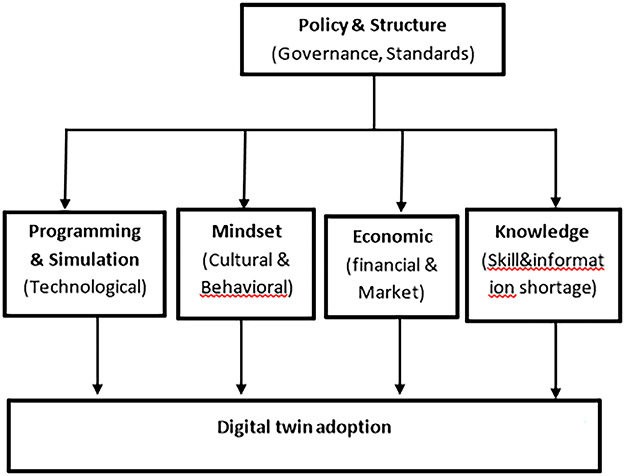
Figure 5. Framework for barriers to the adoption of digital twin technology.
Economic barriers
This component has three items: lack of awareness with a factor loading of 0.788, cost of implementation with a factor loading of 0.752, and unavailability of technological operators with a factor loading of 0.577. Cost of implementation is a major challenge in adopting digital twin technologies; however, there is a need for new business models. Smaller firms do not employ technological operators due to the high costs of using their expertise to set up and operate the DT system. These financial resources include skilled personnel, hardware, and software. The cost of investment can discourage construction firms and small and medium enterprises from adopting digital twin solutions when there are no obvious value propositions, benefits, and return on investment (ROI) (Zhu et al., 2024).
Most organizations’ way of operation focuses on cost minimization and short-term financial outcomes, i.e., profit, which impedes innovation and investment in new technologies. This aligns with findings from studies conducted in the Middle East, which reported that financial uncertainties hinder the adoption of digital twin technologies. Many organizations and businesses remain uncertain about ROI and face challenges in identifying cost-effective software and hardware solutions that best meet their operational needs (Barham et al., 2025). However, the promotion of low-interest loans or grants for small firms interested in adopting these technologies in their business workflows could improve the awareness of construction professionals working in those firms. Overall, there is a lack of a methodical approach to implementation, lack of effective coordination among diverse stakeholders, and limited collaboration among technological providers, affecting digital twin adoption (Grieves, 2014).
Knowledge barriers
This component involves three items, namely, lack of standardized tools with a factor loading of 0.772, lack of experts with a factor loading of 0.715, and technical complexity with a factor loading of 0.384. Many professionals still have unclear understanding of what a digital twin entails, causing misconceptions and resistance to its use or investment in it. There is insufficient understanding of how to incorporate these new technologies into existing workflows, systems, and processes, which creates technical and operational hindrances to their adoption. A review and interview-based study conducted in Sri Lanka confirmed that technical complexity is one of the major barriers to digital twin implementation (Indunil et al., 2025). Developing, implementing, and managing digital twin solutions in the construction sector, therefore, require specialized technical skills and expertise (Daniel et al., 2024).
Knowledge barriers can be addressed through programs and certifications for using these digital twin components. Similarly, existing construction professionals need to upskill through training to be more aware of utilizing these components. A proper understanding of integration and how to resolve interoperability issues must be well-practiced by professionals. Finally, the temporary nature of construction projects and the fragmented characteristics of the construction value chain are reasons for the lack of codified and shared project knowledge (Sepasgozar, 2020).
Conclusion, recommendations, and further studies
Conclusion
This study has explored the barriers to the adoption of digital twins in the construction industry from a construction-professional perspective. The following variables were ranked highest among the barriers to digital twin adoption. These include lack of government support, lack of expertise, cost of implementation, unavailability of technological operators, lack of standardized tools, lack of financial resources, unreliable power supply, and lack of awareness. The results can assist policymakers, technology developers, and construction firms in fine-tuning interventions to address these barriers. The Kruskal–Wallis test also shows that respondents had diverging opinions regarding only the cost of implementation, while professionals had converging views regarding other variables.
Factor analysis was conducted to classify variables related to barriers to DT adoption into five components, namely, programming and simulation, mindset, policy and structure, economic, and knowledge barriers. Policy and incentive schemes are needed to alleviate the economic burden of DT implementation. Also, professional bodies and training institutions should invest in digital literacy programs and continuous professional development to strengthen their capabilities in the use of DT tools and processes.
Understanding and addressing these barriers will assist construction professionals and academia in improving digital twin implementation in business and organizational contexts. Insights from the study could enable technology providers to create simplified, low-cost, and user-friendly DT solutions. By highlighting the limitations in a developing-country context, the study provides a roadmap for increasing the adoption of DT. Beyond the construction context, the findings contribute more broadly to digital transformation and innovation across different sectors in developing countries.
Recommendations
The following are recommendations from the study to enable digital twin implementations in the construction industry:
1. Since the study has revealed that lack of government support, lack of experts, and unavailability of technological operations are highly crucial to professional adoption, the government should be willing and ready to sponsor start-up technological firms and incorporate this into public construction projects. This will encourage private firms to follow suit.
2. Companies should prepare their staff for digital technologies such as digital twins by hiring technological firms to train them to improve their digital skills.
3. There should be more platforms to share knowledge about digital twins, their uses, and how they can be applied in the construction industry and business context.
4. All professionals involved in digital twins for the construction industry should ensure that they play their roles properly and efficiently so that project goals are achieved in terms of cost, time, and quality while adopting digital twins.
Limitations and areas of further study
Despite the findings of this research, some limitations need further exploration to confirm the results:
1. The study focused on Nigeria’s most industrialized state, i.e., Lagos State; other researchers can investigate other states or locations in the federation. Also, this study can be extended to other developing countries.
2. A firm-specific approach can also be adopted to properly and deeply investigate some uses of the digital twin system.
3. This study examined four types of professionals; further research can be conducted to include project managers and clients to assess their potential roles in addressing barriers to DT adoption.
4. A Delphi survey of international experts or a focus group of experts through interviews can give deeper insights into other barriers not covered in this study.
Data availability statement
The data that support the findings of this study are available on request from the corresponding author. The data are not publicly available due to information that could compromise the privacy of research participants.
References
Adewale, B. A., Ene, V. O., Ogunbayo, B. F., & Aigbavboa, C. O. (2024). A systematic review of the applications of AI in a sustainable building’s lifecycle. Buildings, 14. https://doi.org/10.3390/buildings14072137
Agrawal, A., Singh, V., Thiel, R., Pillsbury, M., Knoll, H., Puckett, J., & Fischer, M. (2022). Digital twin in practice: Emergent insights from an ethnographic-action research study. arXiv, abs/2203.07030. https://doi.org/10.1061/9780784483961.131
Al-Bouwarthan, M., Quinn, M. M., Kriebel, D., & Wegman, D. H. (2020). Risk of kidney injury among construction workers exposed to heat stress: A longitudinal study from Saudi Arabia. International Journal of Environmental Research and Public Health, 17, 3775–3791. https://doi.org/10.3390/ijerph17113775
Almatared, M., Liu, H., Abudayyeh, O., Hakim, O., & Sulaiman, M. (2024). Digital-twin-based fire safety management framework for smart buildings. Buildings, 14. https://doi.org/10.3390/buildings14010004
Arowoiya, V. A., Oke, A. E., Ojo, L. D., & Adelusi, A. O. (2024). Driving factors for the adoption of digital twin technology implementation for construction project performance in Nigeria. Journal of Construction Engineering and Management, 150(1). https://doi.org/10.1061/JCEMD4.COENG-13659
Arunachalam, D., Kumar, N., & Kawalek, J. P. (2017). Understanding big data analytics capabilities in supply chain management: Unravelling the issues, challenges and implications for practice. Transportation Research Part E: Logistics and Transportation Review. https://doi.org/10.1016/j.tre.2017.04.001
Barham, D., Matarneh, S. T., Tezel, A., Hasan, S., & Mereb, W. (2025). Opportunities and challenges of digital twin applications in the Middle East construction industry. Urbanization, Sustainability and Society, 2(1), 231–258. https://doi.org/10.1108/USS-07-2024-0041
Barrientos-Orellana, A., Ballesteros-Pérez, P., Mora-Melia, D., González-Cruz, M. C., & Vanhoucke, M. (2022). Stability and accuracy of deterministic project duration forecasting methods in earned value management. Engineering, Construction and Architectural Management, 29, 1449–1469. https://doi.org/10.1108/ECAM-12-2020-1045
Bello, A. O., Olanrewaju, O. I., Gbenga, P. O., Khan, A. A., & Isa, R. B. (2024). Exploring the barriers to digital twin adoption in the Nigerian construction industry: A structural equation modelling approach. Journal of Engineering, Design and Technology. https://doi.org/10.1108/JEDT-01-2024-0012
Bonomi, F., & Drobot, A. T. (2023). Infrastructure for digital twins: Data, communications, computing, and storage. In The Digital Twin. Springer International Publishing. https://doi.org/10.1007/978-3-031-21343-4_15
Botín-Sanabria, D. M., Mihaita, A.-S., Peimbert-García, R. E., Ramírez-Moreno, M. A., Ramírez-Mendoza, R. A., & Lozoya-Santos, J. d. J. (2022). Digital twin technology challenges and applications: A comprehensive review. Remote Sensing, 14(6), 1335. https://doi.org/10.3390/rs14061335
Bryman, A. (2016). Social research methods (5th ed.). Oxford University Press.
Choi, B., Jebelli, H., & Lee, S. (2019). Feasibility analysis of electrodermal activity (EDA) acquired from one wearable sensor to assess construction workers’ perceived risk. Safety Science, 115, 110–120. https://doi.org/10.1016/j.ssci.2019.01.022
Creswell, J. W., & Creswell, J. D. (2018). Research design: Qualitative, quantitative, and mixed methods approaches (5th ed.). Sage Publications.
Daniel, E. I., Oshodi, O. S., Nwankwo, N., Emuze, F. A., & Chinyio, E. (2024). Barriers to the application of digital technologies in construction health and safety: A systematic review. Buildings, 14(8), 2386. https://doi.org/10.3390/buildings14082386
Deng, X., Liu, P., Liu, X., Wang, R., Zhang, Y., He, J., & Yao, Y. (2019). Geospatial big data: New paradigm of remote sensing applications. IEEE Journal of Selected Topics in Applied Earth Observations and Remote Sensing, 12, 3841–3851. https://doi.org/10.1109/JSTARS.2019.2944952
Eleonu, O. F., & Anebo, N. P. (2020). An improved adaptive modelling of a card-based centralized locking system for Nigeria banks’ staff using digital twin paradigm. International Journal of Engineering Science Invention (IJESI), 9(4), 01–13. https://doi.org/10.35629/6734-0905010103
Fagbenro, R., Oyediran, O. S., & Onososen, A. O. (2022). Consulting business workflow and design performance metrics for BIM-based construction design in Nigeria. ECS Transactions, 107, 1029. https://doi.org/10.1149/10701.1029ecst
Ferlito, T.-L., Musonda, I., Tjebane, M. M., & Onososen, A. O. (2022). Systematic literature review on sustainable construction strategies for the development of affordable housing. In The Twelfth International Conference on Construction in the 21st Century (CITC-12) (pp. 195–203).
Fosnacht, K., Sarraf, S., Howe, E., & Peck, L. K. (2017). How important are high response rates for college surveys? The Review of Higher Education, 40(2), 245–265. https://doi.org/10.1353/rhe.2017.0003
Garrido-Hidalgo, C., Roda-Sanchez, L., Javier Ramírez, F., & Olivares, T. (2024). IoT-driven digital twin for improved product disassembly in remanufacturing. Lecture Notes in Mechanical Engineering, 281–291. https://doi.org/10.1007/978-3-031-52649-7_22
Grasso, M., Fogliazza, G., & Colosimo, B. M. (2024). Complex and big data handling and monitoring through machine learning towards digital twin in high precision manufacturing. Lecture Notes in Mechanical Engineering, 15–23. https://doi.org/10.1007/978-3-031-57496-2_2
Greif, T., Stein, N., & Flath, C. M. (2020). Peeking into the void: Digital twins for construction site logistics. Computers in Industry, 121, 103264. https://doi.org/10.1016/j.compind.2020.103264
Grieves, M. (2014). Digital twin: Manufacturing excellence through virtual factory replication. http://www.apriso.com
Indunil, H. T. T. A., Bandara, R. P., & Buddhini, P. H. Y. (2025). Barriers and solutions to adopting digital twin in Sri Lankan construction. https://doi.org/10.31705/WCS.2025.18
Jahangir, M. F., Schultz, C. P. L., & Kamari, A. (2024). A review of drivers and barriers of digital twin adoption in building project development processes. Journal of Information Technology in Construction, 29, 141–178. https://doi.org/10.36680/j.itcon.2024.008
Kehoe, S., Patil, P., Abbeel, P., & Goldberg, K. (2015). A survey of research on cloud robotics and automation. IEEE Transactions on Automation Science and Engineering, 12(2), 398–409. https://doi.org/10.1109/TASE.2014.2376492
Kerrouchi, S., Aghezzaf, E.-H., & Cottyn, J. (2024). Production digital twin: A systematic literature review of challenges. International Journal of Computer Integrated Manufacturing. https://doi.org/10.1080/0951192X.2024.2314792
Klöckner, M., Schmidt, C. G., Fink, A., Flückiger, L., & Wagner, S. M. (2023). Exploring the physical–digital interface in blockchain applications: Insights from the luxury watch industry. Transportation Research Part E: Logistics and Transportation Review, 179, 102–117. https://doi.org/10.1016/j.tre.2023.103300
Kober, C., Medina, F. G., Benfer, M., Wulfsberg, J. P., Martinez, V., & Lanza, G. (2024). Digital twin stakeholder communication: Characteristics, challenges, and best practices. Computers in Industry, 161, 104135. https://doi.org/10.1016/j.compind.2024.104135
Kothari, C. R. (2014). Research methodology: Methods and techniques (3rd ed.). New Age International.
Kshetri, N. (2021). The economics of digital twins. Computer, 54, 86–90. https://doi.org/10.1109/MC.2021.3055683
Machado, R., Rodrigues, R., Neto, L., Barbosa, L., Bessa, M., & Melo, M. (2023). Immersive virtual reality training platforms powered by digital twin technologies: The Smartcut case study. In V. J. S., V. J. S., & A. M. (Eds.), ICGI 2023 – 5th International Conference on Graphics and Interaction, Proceedings. Institute of Electrical and Electronics Engineers. https://doi.org/10.1109/ICGI60907.2023.10452724
May, I., & Rösner, C. (2022). AI-based generation of 3-D digital twins of existing bridges: Skalierbare Technologie zur Erstellung von 3-D Digital Twins für Bestandsbrücken. Bautechnik, 99, 143–149. https://doi.org/10.1002/bate.202100113
Mchirgui, N., Quadar, N., Kraiem, H., & Lakhssassi, A. (2024). The applications and challenges of digital twin technology in smart grids: A comprehensive review. Applied Sciences, 14(23), 10933. https://doi.org/10.3390/app142310933
Mohandes, S. R., Singh, A. K., Fazeli, A., Banihashemi, S., Arashpour, M., Cheung, C., Ejohwomu, O., & Zayed, T. (2024). Determining the stationary digital twins implementation barriers for sustainable construction projects. Smart and Sustainable Built Environment. https://doi.org/10.1108/SASBE-11-2023-0344
Musonda, I., Onososen, A. O., Moyo, T., & Tjebane, M. M. (2023). COVID-19 and shock events in the AEC sector: Perspectives on mitigating measures. In P. Manu, C. Cheung, A. Yunusa-Kaltungo, F. Emuze, T. A. Saurin, & B. H. W. Hadikusumo (Eds.), Construction safety, health and well-being in the COVID-19 era. Routledge. https://doi.org/10.1201/9781003278368-23
Ojo, L.D., Oke, A. E., Arowoiya, V.A., Mewomo, M., & Olaoluwa, J. (2022). Significant barriers to smart computing adoption on construction projects in a developing nation. Construction Business and Project Management Conference, Cape Town, South Africa.
Oke, A. E., Aliu, J., Fadamiro, P., Akanni, P., Jamir Singh, P. S., & Shaharudin Samsurijan, M. (2023). Unpacking the strategies to promote the implementation of automation techniques in the construction industry. Construction Innovation.
Oke, A. E., Arowoiya, V. A., Chan, M., & Oyediran, A. O. (2024). Digital twin technology (DTT) in a developing construction industry: Evaluation of the awareness and usage among professionals in Nigeria. International Journal of Construction Management. https://doi.org/10.1080/15623599.2023.2179628
Opoku, D. G. J., Perera, S., Osei-Kyei, R., Rashidi, M., Famakinwa, T., & Bamdad, K. (2023). Drivers for digital twin adoption in the construction industry: A systematic literature review. Buildings, 12, 113. https://doi.org/10.3390/buildings12020113
Radchenko, A., Alaasam, A., & Tchernykh, A. (2018). Micro-workflows: Kafka and Kepler fusion to support digital twins of industrial processes. In 2018 IEEE/ACM International Conference on Utility and Cloud Computing Companion (UCC Companion) (pp. 83–88). https://doi.org/10.1109/UCC-Companion.2018.00039
Rafsanjani, H. N., & Ahn, C. (2016). Linking building energy-load variations with occupants’ energy-use behaviors in commercial buildings: Non-intrusive occupant load monitoring (NIOLM). Procedia Engineering, 532–539, 145. https://doi.org/10.1016/j.proeng.2016.04.041
Rathore, M., Shah, S., Shukla, D., Bentafat, E., & Bakiras, S. (2021). The role of AI, machine learning, and big data in digital twinning: A systematic literature review, challenges, and opportunities. IEEE Access, 9, 32030–32052. https://doi.org/10.1109/ACCESS.2021.3060863
Russell, H. (2020). Sustainable urban governance networks: Data-driven planning technologies and smart city software systems. Geopolitics, History, and International Relations, 12, 9–15. https://doi.org/10.22381/GHIR12220201
Saunders, M., Lewis, P., & Thornhill, A. (2019). Research methods for business students (8th ed.). Pearson Education.
Sepasgozar, S. M. E. (2020). Digital twin and web-based virtual gaming technologies for online education: A case of construction management and engineering. Journal of Applied Science, 1–32. https://doi.org/10.3390/app10134678
Shirowzhan, S., Sepasgozar, S., Li, H., Trinder, J., & Tang, P. (2019). Comparative analysis of machine learning and point-based algorithms for detecting 3D changes in buildings over time using bi-temporal lidar data. Automation in Construction, 105, 102841. https://doi.org/10.1016/j.autcon.2019.102841
Singh, M., Fuenmayor, E., Hinchy, E. P., Qiao, Y., Murray, N., & Devine, D. (2021). Digital twin: Origin to future. Applied System Innovation, 4, 36. https://doi.org/10.3390/asi4020036
Tabachnick, B. G., & Fidell, L. S. (2007). Using multivariate statistics (5th ed.). Allyn and Bacon.
Taber, K. S. (2018). The use of Cronbach’s alpha when developing and reporting research instruments in science education. Research in Science Education, 48(Apr), 1273–1296. https://doi.org/10.1007/s11165-016-9602-2
Thirumal, S., Udawatta, N., Karunasena, G., & Al-Ameri, R. (2024). Barriers to adopting digital technologies to implement circular economy practices in the construction industry: A systematic literature review. Sustainability, 16(8), 3185. https://doi.org/10.3390/su16083185
Torres, J., San-Mateos, R., Lasarte, N., Mediavilla, A., Sagarna, M., & León, I. (2024). Building digital twins to overcome digitalization barriers for automating construction site management. Buildings, 14(7), 2238. https://doi.org/10.3390/buildings14072238
Uhlemann, T. H. J., Lehmann, C., & Steinhilper, R. (2017). The digital twin: Realizing the cyber-physical production system for Industry 4.0. Procedia CIRP, 61, 335–340. https://doi.org/10.1016/j.procir.2016.11.152
Waqar, A., Othman, I., Almujibah, H., Khan, M. B., Alotaibi, S., & Elhassan, A. A. M. (2023). Factors influencing adoption of digital twin advanced technologies for smart city development: Evidence from Malaysia. Buildings, 13(3), 775. https://doi.org/10.3390/buildings13030775
West, T. D., & Blackburn, M. (2017). Is digital thread/digital twin affordable? A systemic assessment of the cost of DoD’s latest Manhattan project. Procedia Computer Science, 114, 47–56. https://doi.org/10.1016/j.procs.2017.09.003
Winter, P. D., & Chico, T. J. A. (2023). Using the Non-Adoption, Abandonment, Scale-Up, Spread, and Sustainability (NASSS) framework to identify barriers and facilitators for the implementation of digital twins in cardiovascular medicine. Sensors, 23. https://doi.org/10.3390/s23146333
Yamane, T. (1967). Statistics: An introductory analysis. Harper and Row.
Yang, Z., Tang, C., Zhang, T., Zhang, Z., & Doan, D. T. (2024). Digital twins in construction: Architecture, applications, trends and challenges. Buildings, 14, 2616. https://doi.org/10.3390/buildings14092616
Yap, B. (2013). The application of principal component analysis in the selection of industry-specific financial ratios. British Journal of Economics, Management & Trade, 3(3), 242–252. https://doi.org/10.9734/BJEMT/2013/4125
Zhao, K., Liu, Y., Ming, W., Zhou, Y., & Wu, J. (2022). Digital twin-driven estimation of state of charge for Li-ion battery. In 2022 IEEE 7th International Energy Conference (ENERGYCON 2022): Proceedings. Institute of Electrical and Electronics Engineers. https://doi.org/10.1109/ENERGYCON53164.2022.9830324
Zhu, H., Hwang, B., Tan, Y. Z., & Wei, F. (2024). Building on digital twin: Overcoming barriers and unlocking success in the construction industry. Journal of Construction Engineering and Management. https://doi.org/10.1061/JCEMD4.COENG-13991