Construction Economics and Building
Vol. 26, No. 2
2026
ARTICLES (PEER REVIEWED)
Environmental, Social, and Governance Considerations in Sustainable Construction Project Delivery
Richard Ohene Asiedu1, Alexander Baah Amoakwa2, Collins Ameyaw3,*, De-Graft Owusu-Manu4, Papa Annan Daniels5, Samuel Gyimah6
1 Department of Building Technology, Koforidua Technical University, Koforidua, Ghana
2,4,5,6 Department of Construction Technology and Management, Kwame Nkrumah University of Science and Technology, Kumasi, Ghana
3 Department of Construction Technology and Quantity Surveying, Kumasi Technical University, Kumasi, Ghana
Corresponding author: Collins Ameyaw, collins.ameyaw@kstu.edu.gh
DOI: https://doi.org/10.5130/rzg8rc16
Article History: Received 26/06/2025; Revised 13/02/2026; Accepted 02/03/2026; Published 26/05/2026
Citation: Asiedu, R. O., Amoakwa, A. B., Ameyaw, C., Owusu-Manu, D.-G., Daniels, P. A., Gyimah, S. 2026. Environmental, Social, and Governance Considerations in Sustainable Construction Project Delivery. Construction Economics and Building, 26:2, 1–34. https://doi.org/10.5130/rzg8rc16
Abstract
The construction industry significantly impacts environmental and social systems while driving economic development globally. Despite growing emphasis on environmental, social, and governance (ESG) frameworks in developed economies, research examining ESG considerations in sustainable project delivery within low- and middle-income countries (LMICs), particularly Ghana, remains limited. This study addresses this knowledge gap by investigating key ESG considerations influencing sustainable project delivery in Ghana’s construction industry and their structural relationships. Through a comprehensive literature review, 20 ESG considerations were identified and empirically examined through a survey of 119 construction professionals with substantial knowledge of sustainable construction practices. Factor analysis revealed four critical ESG dimensions: environmental performance considerations (EPC), transparency and responsibility considerations (TRC), social impact considerations (SIC), and compliance and engagement considerations (CEC), cumulatively explaining 66.412% of variance. Partial least squares structural equation modeling (PLS-SEM) revealed that SIC exert dominant direct influence on environmental performance (β = 0.660, t = 7.842, p < 0.001), demonstrating that social legitimacy is most strongly associated with environmental sustainability outcomes in low-capacity regulatory environments. Contrary to developed-country contexts, transparency and compliance demonstrated limited mediating effects, reflecting Ghana’s institutional realities of weak enforcement infrastructure and governance gaps. The findings challenge conventional ESG hierarchies and provide contextualized insights for construction stakeholders, policymakers, and investors seeking to mainstream ESG practices in Sub-Saharan Africa. This research contributes theoretically by distinguishing project-level ESG implementation from corporate-level disclosure and practically by offering actionable recommendations for ESG integration adapted to LMIC institutional contexts, emphasizing social safeguards as enabling factors for broader sustainability outcomes.
Keywords
Environmental, Social, and Governance (ESG); Considerations, Sustainable Project Delivery; Construction Industry (CI); Ghana; PLS-SEM
Introduction
The concept of environmental resource preservation, social inclusion and diversity, and open and sound governance practices has gained global prominence (Zhao et al., 2023; Akomea-Frimpong et al., 2024). At the corporate level, the need for environmental, social, and governance (ESG) reporting has been heightened by investors, civil society organizations, governmental legal frameworks, and the United Nations Agenda 2030 for Sustainable Development. The demands are that corporate institutions are required to report ESG together with profitability to reflect the effects on sustainability (Alsayegh et al., 2020). Despite all these, the focus of ESG, which is more common in the developed economies, has been biased towards oil/gas (Bellavite Pellegrini et al., 2022; Ramírez-Orellana et al., 2023), manufacturing (Chen et al., 2022; Sun & Saat, 2023), and finance (Miralles-Quirós et al., 2019; Crespi & Migliavacca, 2020), which operate quite differently from the construction sector.
According to Samari et al. (2013), the uniqueness of the construction industry (CI) is that it goes through a life cycle that involves manifold stakeholders and complexities. Halbritter and Dorfleitner (2015) posited that as stakeholders continue to demand greater accountability and environmental stewardship, the CI has recognized the need to integrate the principles of ESG into its decision-making processes and implementation. According to Oxford Economics (2021), construction spending worldwide accounted for 13% of the global gross domestic product (GDP) in 2020 and is expected to reach 13.5% by the year 2030 (Leong et al., 2024). Specifically in developing countries, it is a major economic driver, where its contribution to GDP is higher. Thus, integrating ESG as part of construction management can contribute to project success, sustainability (Ng et al., 2020), financial performance (Duque-Grisales & Aguilera-Caracuel, 2021), risk mitigation, stakeholder value, and a more sustainable built environment (Lützkendorf et al., 2011).
Over the past few decades, sustainable construction has been widely accepted as the means of advancing the construction industry’s activities (Pitt et al., 2009; Murtagh et al., 2020; Ogunmakinde et al., 2022; Abdulai et al., 2024; Uddin et al., 2025). Unfortunately, sustainability in Ghana has generally been limited to corporate social responsibility (CSR), which comprises context-specific organizational actions and policies that focus on philanthropy activities without a framework and statutory regulations (Dartey-Baah & Amoako, 2021). At the project level, consideration of ESG principles as core elements for enhancing the industry’s image during project implementation is expected to eliminate the negative footprint the CI has garnered for itself as an industry that produces heavy waste and high carbon emissions and causes accidents (Agustin & Koestoer, 2025). In essence, the CI may improve upon its reputation among stakeholders by adhering to environmental sustainability and social responsibility (Erkens et al., 2015).
According to Low et al. (2023), ESG is a comprehensive framework of principles that may be employed to evaluate the corporate governance, social, and environmental consequences of a corporation, both inside its operations and in its interactions with external stakeholders. The environmental principles emphasize the reduction of carbon emissions, management of waste, preservation of natural resources, and minimization of energy consumption (Jiang et al., 2023; Soratana, 2025). Social considerations focus on ensuring worker welfare, upholding labor standards, promoting inclusion and diversity, and advancing local participation (Baid & Jayaraman, 2022; Becchetti et al., 2022). Governance principles assess shareholder rights, decision-making processes, ethical behaviour, and board composition (Halbritter & Dorfleitner, 2015). Current ESG regulations and reporting requirements predominantly focus on developed nations, while developing countries remain in the early stages (Li et al., 2022). Kyriakogkonas et al. (2022) asserted that ESG considerations play an important role in construction project delivery and outcomes.
The implementation of ESG principles in low- and middle-income countries (LMICs), particularly across Sub-Saharan Africa, is shaped by distinctive institutional and structural characteristics that differentiate these contexts from those of developed economies. In Ghana, as in peer systems such as Kenya, Nigeria, and Tanzania, the construction industry is characterized by limited regulatory enforcement capacity, high levels of informality in subcontracting arrangements, dominance of small- and medium-sized enterprises (SMEs), and procurement systems vulnerable to opacity (Ofori, 2012; Ahadzie et al., 2021). These structural realities fundamentally alter how ESG considerations manifest and interact at the project level. For instance, while developed economies may implement ESG dimensions simultaneously through comprehensive frameworks, construction stakeholders in Ghana and similar contexts must navigate challenges, including inadequate monitoring infrastructure, resource constraints among SME contractors, limited technical capacity for complex ESG metrics, and governance gaps that expose projects to corruption risks (Asiedu et al., 2025). Consequently, the relationships among environmental performance, social impact, transparency and responsibility, and compliance and engagement considerations may follow distinct causal pathways in these settings, requiring empirical investigation of how these dimensions interact to influence sustainable project delivery outcomes.
This contextual reality suggests that ESG implementation in LMICs like Ghana operates through hierarchical and interdependent relationships among key considerations rather than uniform adoption across all dimensions. Drawing from the institutional characteristics of the Ghanaian construction context and comparable Sub-Saharan African environments, this study advances three testable propositions (Ps) regarding the structural relationships among ESG considerations. P1: In low-capacity regulatory environments, transparency and responsibility considerations, along with compliance and engagement considerations, serve as foundational enablers that positively mediate the relationship between social impact considerations and environmental performance outcomes in construction projects. P2: Where site risks are high and stakeholder pressures acute, social impact considerations (including worker health, safety, and community safeguards) exert stronger direct effects on environmental performance than do compliance mechanisms alone, suggesting that social legitimacy influences broader ESG adoption. P3: Under conditions of limited enforcement capacity, transparency and responsibility considerations moderate the relationship between compliance and engagement considerations and environmental performance, such that projects with higher transparency achieve greater environmental performance gains from compliance activities.
In light of the substantial and influential functions that the CI assumes in defining the urban environment and communities, it is imperative to evaluate the ramifications of its operations from the perspective of ESG considerations in order to promote sustainable development (Kostrikin & Andreeva, 2023). However, literature on ESG considerations towards sustainable development with respect to the CI remains scant, especially within developing countries. There are also no clearly defined indicators on ESG principles; in most developing countries, such indicators are practically non-existent. Investigating the considerations of ESG within the construction sector has the potential to foretell future trends. Even though a relatively large number of studies on ESG have been undertaken (Assef & Mangold, 2022; Bhatia & Marwaha, 2022; Li et al., 2022; Kostrikin & Andreeva, 2023; Asiedu et al., 2025), the existing body of knowledge is bereft of a comprehensive exploration of ESG considerations of sustainable project delivery, particularly within the context of the Ghanaian CI. While previous studies conducted offer useful perspectives, the studies evaluate either a narrow ESG component or the construction sector. Thus, broader primary research across ESG aspects appears needed to deeply understand ESG integration issues across the CI. Gathering information directly from construction stakeholders could provide more robust and generalizable findings on ESG priorities and practices. This could better guide adoption to realize benefits like risk mitigation, stakeholder value, project success, and sector sustainability. To fill this knowledge gap, this study performed a quantitative data collection from stakeholders to investigate the key ESG considerations in sustainable project delivery and their interrelation to influence the environmental performance of construction projects within the Ghanaian construction industry.
Review of literature
Environmental, social, and governance
In recent years, the concept of ESG has gained notable traction (Meher et al., 2020; Tsang et al., 2023; Liu et al., 2023). ESG refers to integrating environmental stewardship, social responsibility, and good corporate governance into business operations and investment decisions (Almeyda & Darmansya, 2019). The environmental pillar focuses on a company’s ecological footprint, encompassing its greenhouse gas emissions, resource utilization, and waste management processes (Senadheera et al., 2022). The social pillar considers a company’s societal impact, including its labor practices, community engagement, and diversity and inclusion efforts (Baid & Jayaraman, 2022; Becchetti et al., 2022), as well as its relationships with customers, employees, communities, and the suppliers with whom it operates (Rau & Yu, 2023). The governance pillar examines the corporate governance structure of an organization, encompassing factors such as the composition of its board of directors, remuneration of executives, and the level of transparency in financial reporting (Bamahros et al., 2022).
The construction sector is increasingly recognizing the importance of ESG factors in its operations (Park et al., 2023), as the industry accounts for various ecological impacts such as waste generation, air pollution, and energy consumption (Sharrard et al., 2007). ESG performance has been shown to significantly moderate earnings management in the CI (Gavana et al., 2022). While ESG frameworks have been extensively applied in developed economies and other sectors, their application to construction project delivery in LMICs remains underexplored, warranting the current investigation.
Sustainable project delivery/development
As the global economy and society strive for sustainable developments (SDs), the implementation of the ESG principles has become imperative (Li et al., 2021). Sustainable projects are central elements of SDs (Sergi et al., 2019; Kumar & Majid, 2020). SDs are critical for promoting environmental conservation and social progress (Farooq et al., 2020) to attain a harmonious equilibrium among economic growth, societal equity, and ecological preservation (Frini & BenAmor, 2015). Sustainable projects are of paramount importance in augmenting the overall well-being of humans (Mensah et al., 2016). Megaprojects in particular have ambitious objectives encompassing sustainable infrastructure development, national economic growth, and the development of entire cities (Drouin, 2018). These projects can bring about transformative impacts on society and contribute to long-term sustainable development (Zaidan et al., 2019; Mirzayeva et al., 2020). To guarantee the achievement of sustainable projects, it is vital to have a comprehensive grasp of the knowledge base of the practitioners involved in delivering them (Kineber et al., 2021). This knowledge encompasses expertise in areas like business, governance, and regeneration, which are essential for effective project implementation (Akotia et al., 2016).
Understanding the ESG considerations in sustainable project delivery
Li et al. (2021) characterized ESG as an investment approach seeking to achieve sustainable and integrated growth by factoring in economic, environmental, social, and governance benefits. They further depict it as a comprehensive, practical, and pragmatic governance tactic, aimed at cultivating long-term value growth. The adoption of sustainable investment practices by mainstream investors has been relatively slow (Friede et al., 2015). However, a study by Khemir (2019) discovered that mainstream investors had a favorable view of ESG criteria and deemed them important in their investment decisions. Similarly, Kräussl et al. (2022) contended that institutional investors, however, are driven by incentives to protect their reputation, moral or ethical considerations, and fiduciary obligations and have exhibited a preference for ESG investing.
In development projects, ESG focuses on efforts to reduce greenhouse gas (GHG) emissions, improve energy efficiency, and switch to low-carbon and renewable energy sources (Patil et al., 2021; Senadheera et al., 2021). This is typically reflected by companies (e.g. construction firms) establishing emission reduction goals, executing energy-saving initiatives, and investing in renewable energy ventures to mitigate climate change risks (Žičkienė et al., 2022). Additionally, ESG helps in evaluating how well a company utilizes natural resources like water, land, and raw materials (Kemfert, 2019). Sustainable resource stewardship of these resources involves responsible sourcing, recycling and waste management programs, and minimizing resource depletion (Barbhuiya & Das, 2023). This environmental pillar of ESG gauges companies’ efforts to safeguard and conserve biodiversity (Bohnett et al., 2022), including preserving natural habitats, avoiding ecosystem harm, and backing conservation efforts (Lubchenco & Haugan, 2023). Environmental considerations in ESG extend beyond a company’s direct actions to its supply chain and product life cycle (Ducoulombier, 2021; Rivera et al., 2023), focused on ensuring sustainable sourcing, reducing environmental footprints in production, and promoting eco-friendly offerings (Jo & Kwon, 2021). Another ESG consideration involves compliance with environmental laws and regulations across local, national, and global levels (Litvinenko et al., 2022), including permits, licenses, and adherence to environmental standards and guidelines (Shao, 2022).
ESG considerations in project delivery extend beyond environmental accountability to social impact factors. Within the ESG framework, the social impact dimension encapsulates how companies treat their employees and ensure their welfare, safety, and fair treatment (Mooneeapen et al., 2022). It comprises elements like diversity and inclusion, employee compensation, working conditions, and compliance with labor laws and human rights standards (Baid & Jayaraman, 2022; Louche et al., 2023). Furthermore, the social considerations concentrate on how a company manages occupational health and safety risks for its employees, customers, and communities (Bhattacharya & Bhattacharya, 2023). This includes assessing workplace safety practices and emergency preparedness and preventing incidents that could harm people’s health or well-being (Zhou et al., 2023). Focused on the substantial social contribution of providing employment and safer working environments, ESG examines how a company interacts with and contributes to the communities where it operates (Pelosi and Adamson, 2016). This encompasses supporting local economic growth through philanthropic efforts, community outreach programs, and stakeholder engagement to understand and resolve community concerns (Okuma, 2019). Moreover, ESG also evaluates how a company engages with its stakeholders, like shareholders, employees, customers, suppliers, and the broader community (Gilchrist et al., 2021). This includes communication transparency, mechanisms for feedback and grievance redressal, and addressing stakeholder concerns or expectations (Thrall, 2021).
Although the environmental and social aspects of ESG are often deemed more crucial than the governance facet, the governance dimension provides the foundation for firms to be accountable and invest in an eco-friendly and socially responsible manner. Within the governance facet of the ESG framework, ESG examines the makeup, independence, and expertise of companies’ boards of directors (Arayssi et al., 2020). This includes evaluating whether the board has enough independent directors, the diversity of board members, their required qualifications, and their capacity to provide effective oversight and strategic guidance to the company (Birindelli et al., 2018; Cucari et al., 2018; Ismail & Latiff, 2019). Executive compensation, particularly its alignment with business performance and long-term shareholder value, is another area of concern for ESG (Lee et al., 2024). This involves assessing whether compensation packages are reasonable, transparent, and tied to specific performance metrics (Tamimi & Sebastianelli, 2017; Ben Ali & Chouaibi, 2023). Furthermore, ESG considers company transparency in disclosing relevant information to stakeholders (Yu et al., 2018), which means evaluating the quality and accuracy of financial reporting, disclosing material information, and the company’s commitment to timely and consistent communication with shareholders, investors, and other stakeholders (Jonsdottir et al., 2022; Asif et al., 2023). In addition to transparency and disclosure, ESG examines companies’ adherence to laws, regulations, and industry standards (Dye et al., 2021; Zhang et al., 2023), involving assessing the company’s track record in complying with legal requirements, its response to violations, and the efficacy of its compliance programs (Hamann, 2019; Strine Jr et al., 2020). Table 1 presents a summary of identified ESG considerations of sustainable project delivery.
| Consideration | Code | Underlying variables | References |
|---|---|---|---|
| Environmental considerations | EC1 | Climate change mitigation | Patil et al. (2021), Senadheera et al. (2021) |
| EC2 | Energy consumption and efficiency | Žičkienė et al. (2022) | |
| EC3 | Biodiversity conservation | Bohnett et al. (2022) | |
| EC4 | Sustainable waste management | Barbhuiya and Das (2023) | |
| EC5 | Pollution prevention | Senadheera et al. (2021) | |
| EC6 | Compliance with environmental regulations | Litvinenko et al. (2022), Shao (2022) | |
| EC7 | Green procurement | Ducoulombier (2021), Rivera et al. (2023) | |
| Social considerations | SC1 | Health and safety | Mooneeapen et al. (2022), Zhou et al. (2023), Bhattacharya and Bhattacharya (2023) |
| SC2 | Labor and human rights | Baid and Jayaraman (2022), Louche et al. (2023) | |
| SC3 | Supply chain management | Gilchrist et al. (2021) | |
| SC4 | Community engagement | Pelosi and Adamson (2016) | |
| SC5 | Stakeholder engagement | Thrall (2021) | |
| SC6 | Community protection/impacts | Okuma (2019) | |
| Governance considerations | GC1 | Independence of project stakeholders | Cucari et al. (2018) |
| GC2 | Compliance and legal issues | Dye et al. (2021), Zhang et al. (2023) | |
| GC3 | Project team diversity and structure | Arayssi et al. (2020), Cucari et al. (2018), Ismail and Latiff (2019) | |
| GC4 | Accountability | Jonsdottir et al. (2022), Asif et al. (2023) | |
| GC5 | Transparency and disclosure | Yu et al. (2018) | |
| GC6 | Bribery and corruption | Hamann (2019), Strine Jr et al. (2020) | |
| GC7 | Shareholder rights/shareholder compensation | Tamimi and Sebastianelli (2017), Ben Ali and Chouaibi (2023) |
Note: ESG, environmental, social, and governance. Source: Authors’ own work.
Hypothesis development
Based on the unique institutional context of LMICs and the four ESG consideration dimensions identified through the factor analysis using principal component analysis (PCA), this study proposes and tests three interrelated hypotheses regarding sustainable project delivery in the Ghanaian construction industry. The three propositions previously made map directly onto the four hypotheses formalized subsequently: P1 corresponds to H1a and H1b (mediation hypotheses), P2 corresponds to H2 (direct effects hypothesis), and P3 corresponds to H3 (moderation hypothesis). The transition from three propositions to four hypotheses reflects the disaggregation of the mediation pathway in P1 into two separate hypotheses (H1a for transparency and responsibility considerations and H1b for compliance and engagement considerations) to enable independent empirical testing of each mediating mechanism. The conceptual model (Figure 1) illustrates the hypothesized relationships among the ESG consideration dimensions.
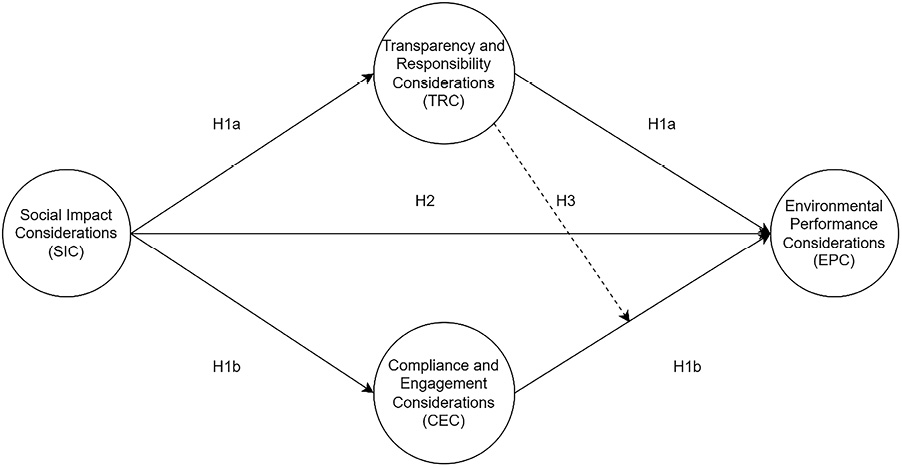
Figure 1. Conceptual model. Source: Authors’ own work
Mediation hypothesis (H1)
In construction project contexts, the relationship between social factors and environmental outcomes may be mediated through governance and compliance mechanisms. Transparency and accountability practices can translate social commitments into tangible environmental performance improvements by ensuring that social initiatives are properly documented, monitored, and evaluated (Sciarelli et al., 2021). Similarly, compliance with legal requirements and stakeholder engagement mechanisms can channel social concerns into environmental action by establishing formal processes for addressing environmental impacts (Dye et al., 2021).
H1a: Transparency and responsibility considerations positively mediate the relationship between social impact considerations and environmental performance in construction projects.
H1b: Compliance and engagement considerations positively mediate the relationship between social impact considerations and environmental performance in construction projects.
Direct effects hypothesis (H2)
In LMIC contexts characterized by weak regulatory enforcement, social legitimacy is strongly associated with ESG adoption rather than formal compliance mechanisms. Construction projects in these settings operate within communities where social acceptance and stakeholder buy-in are essential for project viability (Di Maddaloni & Sabini, 2022; Kahangirwe & Vanclay, 2024). Wei et al. (2024) demonstrated that social considerations, such as indoor air quality, have significant impacts on project environmental performance. Building on this evidence:
H2: Social impact considerations have a direct positive effect on environmental performance.
Moderation hypothesis (H3)
The effectiveness of compliance mechanisms in driving environmental performance may depend on the level of transparency and accountability in the project environment. In contexts with high transparency, compliance requirements are more visible and subject to stakeholder scrutiny, potentially enhancing their impact on environmental outcomes (Seligsohn et al., 2018). Therefore:
H3: Transparency and responsibility considerations positively moderate the relationship between compliance and engagement considerations and environmental performance.
Methodology
Research design and philosophical approach
The study adopted a pragmatic philosophical perspective and employed a quantitative research strategy, which are contemporary methods in the literature on construction management and sustainable development (Owusu-Manu et al., 2021; Debrah et al., 2022). A closed-ended questionnaire survey was used to collect data. Respondents were requested to rate the identified ESG considerations with regard to their experience with ESG policies and sustainable project developments on how significant they are in assessing ESG-conscious projects (refer to Table 1) using a 5-point Likert scale (1 = insignificant, 2 = less significant, 3 = moderately significant, 4 = significant, and 5 = very significant).
Target population and sampling frame
The target population comprised professionals actively engaged in sustainable construction projects in Ghana who possessed relevant knowledge and experience in ESG considerations. Specifically, the sampling frame included (a) construction professionals (project managers, quantity surveyors, construction managers, project engineers, and architects) working with registered construction firms, (b) ESG practitioners and sustainability researchers affiliated with academic institutions or consultancy firms, (c) investment managers and financial advisors involved in sustainable project financing, and (d) government officials responsible for construction regulation and sustainable development policy. These groups were selected because they are directly responsible for the financing, policy-making, and physical implementation of socially and environmentally responsible construction projects in Ghana.
Inclusion criteria required that respondents (i) have a minimum of 2 years of experience in the construction industry or related ESG fields, (ii) have been involved in at least one project incorporating sustainability considerations, and (iii) possess awareness of ESG principles and their application in construction contexts. These criteria ensured that respondents could provide informed assessments of ESG considerations.
Sample size
Evaluating the population size for this study was hindered by the absence of a comprehensive database of construction professionals, ESG practitioners, and experts involved in sustainable projects in Ghana. This limitation is characteristic of LMIC contexts where professional registration databases may be incomplete or inaccessible. This study, therefore, employed a purposive and snowball sampling technique to identify the respondents with information-rich experience relevant to the research objectives.
The snowball sampling technique identified 152 participants across construction firms, consultancies, financial institutions, academia, and government agencies involved in delivering a sustainable construction project with relevant, information-rich experience for the current study. After 3 months of data collection (from August 2023 to October 2023), a total of 119 out of the 152 respondents returned their questionnaires. This sample size was adequate because it satisfied the minimum sample size of Hair et al. (2021) based on the “ten-times rule”, which requires 10 observations per the maximum number of structural paths directed at any construct in the model. In the current study, the maximum number of paths directed at any construct [environmental performance considerations (EPC)] was four, requiring a minimum of 40 observations. The sample of 119 exceeded this threshold by nearly three times. Additionally, the sample satisfied the central limit theorem requirement of a minimum of 30 observations for asymptotic normality (Adabre et al., 2021); given the specialized nature of the target population (professionals with ESG knowledge in Ghana’s construction sector), the sample represents a substantial proportion of the accessible population with a response rate of 78.23% considered excellent for construction management research, which indicates strong engagement from the target population.
Data collection procedures
Data collection followed a systematic protocol. Initial contact was established through professional networks, industry associations (Ghana Institution of Surveyors and Ghana Institution of Engineering), and academic institutions (construction management departments at major universities). A pilot study involving four experts (a construction project manager, an ESG academic/researcher, an ESG practitioner from finance, and a government official) with more than 5 years’ experience was conducted to validate the questionnaire instrument (Boparai et al., 2018). Based on pilot feedback, minor modifications were made to improve the clarity of certain items. The main survey was administered both electronically (using structured online forms) and in paper format to maximize accessibility. Follow-up reminders were sent at 2-week intervals to enhance response rates. All responses were anonymized to encourage candid assessments.
Analytical approach
Subsequent to the completion of the data collection, the analytical approach followed a two-stage sequential methodology integrating exploratory analysis with confirmatory structural modeling:
Stage 1—Exploratory factor analysis (EFA): PCA with varimax rotation was conducted to identify the underlying factor structure of the 20 ESG considerations. This exploratory stage served to (a) reduce the dimensionality of the data by grouping related items into coherent factors, (b) identify latent constructs that would serve as variables in the subsequent structural model, and (c) assess construct validity through examination of factor loadings. Items were retained if they exhibited factor loadings ≥ 0.50, which indicates acceptable convergent validity (Field, 2005). The Kaiser–Meyer–Olkin (KMO) test for sampling adequacy and Bartlett’s test of sphericity were used to confirm the suitability of the data for factor analysis.
Stage 2—PLS-SEM analysis: The factors identified through EFA were subsequently treated as latent constructs in a partial least squares structural equation modeling (PLS-SEM). PLS-SEM was selected over covariance-based SEM (CB-SEM) for several reasons: (a) the study aimed to test newly developed hypotheses rather than confirm a well-established theory; (b) the sample size, while adequate for PLS-SEM, is at the lower threshold for CB-SEM; and (c) PLS-SEM is better suited for prediction-oriented research with complex models involving multiple constructs (Hair et al., 2021). The structural model tested the hypothesized relationships among the ESG dimensions, with path coefficients (β), t-statistics, and p-values derived from bootstrapping (5,000 resamples) to assess statistical significance.
Measurement model assessment criteria
An important aspect of the PLS-SEM approach is the measurement model quality, which fully captures the latent and manifest variables to ensure consistency (Hair et al., 2020). Several statistical methods have been proposed to ensure the measurement model’s validity, including EFA and PCA; however, in reflective measurement models, Hair et al. (2020) recently suggested a stepwise verification approach that includes outer loadings, indicator reliability, construct reliability (composite), average variance extracted (AVE), and discriminant validity.
Outer loadings
The initial step in determining the measurement model’s quality is to assess the significance of the outer loadings, which are correlation values between constructs and the indicators. This is expressed in Equation (1), where ε is the latent construct and Xi is the ith indicator. Significant loadings have been pegged at ≥0.70 (Hair et al., 2020).
 (1)
(1)
Indicator reliability (Cronbach’s alpha reliability test)
Cronbach’s alpha coefficient has been used to assess the internal consistency of measurement constructs and reliability (Seidu et al. 2023; Jayasena et al. 2024). This is expressed in Equation (2), where N represents the number of indicators measuring a construct and c refers to inter-item covariance. Coefficients above 0.7 are considered reliable (Hair et al., 2020).
 (2)
(2)
Constructs/composite reliability
Composite reliability values are weighted to provide a better reflection of internal consistency and are therefore preferred to Cronbach’s alpha in PLS-SEM analysis (Hair et al. 2021). The composite reliability weights also factor the diversity in the outer loadings, and coefficients > 0.7 are considered significant (Hair & Sarstedt, 2019). The composite reliability is calculated using Equation (3), where var is the variance and (λi) measures the loadings of each indicator.
 (3)
(3)
Average variance extracted value
The average of all indicators’ reliability in a construct constitutes the AVE, which measures the convergent validity of the construct. An acceptable AVE value is >0.50 (Hair et al., 2020). Equation (4) can be used to determine the AVE values for each construct.
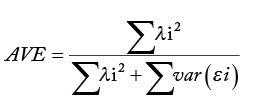 (4)
(4)
Discriminant validity
The most widely used statistical approaches in assessing discriminant validity in PLS-SEM are the Fornell–Larcker criterion and the cross-loadings (Henseler et al., 2015), with some works recommending a third criterion, namely, the heterotrait–monotrait (HTMT) ratio (Henseler et al., 2015). To measure how distinct a construct is from the other constructs in the model, the Fornell–Larcker criterion posits that a construct’s variance with its indicators should be more or higher than the variance with other constructs (Fornell & Larcker, 1981). Similar to the Fornell–Larcker approach, the cross-loading method dictates that an indicator should load more on the constructs it is measuring than on other constructs (Henseler et al., 2015). The HTMT ratios also measure the distinctiveness of the measurement constructs, and acceptable HTMT ratios are usually <0.9 (Kline, 2016).
The Fornell–Larcker criterion, the cross-loadings, and the HTMT ratios were computed using Equations (5)–(7).
 (5)
(5)
 (6)
(6)
 (7)
(7)
where AVE is the average variance extracted of the construct and kconstruct and other constructs are the relationships between the construct and the other constructs in the model. λi construct is the loading of an indicator on its construct.
Results
Background analysis
Regarding the demographic characteristics of the participants, the majority (43.7%) had construction management backgrounds, with 36.1% having relevant experience and expertise in project management and 13.4% in finance and investment. The remaining sectors were academia (3.4%), governance (2.5%), and facility management (0.8%). The professional background of the respondents was diverse, with 43.7% being project managers, followed by quantity surveyors (18.5%), construction managers (7.6%), project engineers (7.6%), architects (5.9%), ESG/sustainability researchers (5.0%), ESG practitioners/experts (2.5%), compliance officers (2.5%), investment managers/advisers (2.5%), facility managers (1.6%), a managing director (0.8%), and a project coordinator (0.8%). This diverse mix of professionals provided specialized knowledge and perspectives from different functions, enriching the research findings. The highest proportion of respondents had 5 to 10 years of experience (37%), followed by 11 to 15 years (22.7%) and less than 5 years (21%). The remaining years of experience categories were over 20 years (10.9%) and 16 to 20 years (8.4%), demonstrating adequate experience across entry-, middle-, and senior-level roles. The majority of respondents had master’s degrees (79.8%), followed by a bachelor’s degree (13.4%) and a PhD (5%). General Certificate Examination (GCE) A Level/Senior School Certificate Examination (SSCE) or equivalent and higher national diploma represented 0.8% each of the total respondents, indicating that the respondents were highly educated with over 98% tertiary academic backgrounds to comprehend the research questions.
Reliability and validity analysis
The value of Cronbach’s alpha (CA) coefficient is greater than 0.700, according to the internal consistency (reliability) data. A CA value of more than 0.700 indicates reliability (Norušis, 1993; Tavakol & Dennick, 2011; cf. Owusu-Manu et al., 2023). This implies that the responses have a high degree of internal consistency. Following that, factor loadings were used to assess the measurement model’s validity (Adabre et al., 2022; Owusu-Manu et al., 2023). The factor loadings of all the kept items were positive and more than 0.50, satisfying the validity requirements. Bartlett’s test findings, the KMO, and the responses’ reliability and validity analysis data are shown in Table 2.
Notes: CA, Cronbach’s alpha; ESG, environmental, social, and governance. Source: Authors’ own work.
Factor analysis
In this study, FA was used to categorize 20 variables into critical components, revealing the underlying ESG considerations that influence the delivery of sustainable project delivery in the Ghanaian CI. Scholars claim that to simplify complex and varied interactions between a set of observed variables, FA uncovers the underlying elements of a dataset and finds similar dimensions or factors that connect variables that are unconnected (Debrah, et al., 2021; Ghansah et al., 2021; Owusu-Manu et al., 2021;).
Initial considerations
Additional testing was performed to find out if the dataset was suitable for the EFA procedure. The provided data satisfied the requirements of the EFA technique, which included a correlation matrix, KMO, and Bartlett’s test of sphericity. According to Shrestha (2021), if the KMO value is <0.5, the EFA findings will certainly not be adequate for data analysis. The data had 119 observations across 20 variables (≈6 per variable) with a KMO value of 0.803, which is >0.5.
Communalities
The utilization of the notion of communality is applied as a means of evaluating the extent of correlation between a certain variable and other variables (Ahadzie, 2007). Communality is a statistical measure that quantifies the degree to which the underlying construct in a model replicates the variability seen in the measured variables (Field, 2000). Field (2005) asserted that for a dataset to be deemed acceptable, it is necessary for all variables to exhibit an extraction value over 0.50, as seen in Table 3.
Source: Authors’ own work.
Scree plot
The inclusion of an excessive number of components in an analysis may result in the introduction of unwanted, erroneous variance. Conversely, the exclusion of an insufficient number of factors may lead to the omission of significant shared variation. In the process of determining the appropriate number of components to extract, it is important to carefully consider and choose the most relevant criterion for your study. Eigenvalues and the scree test, specifically the scree plot (see Figure 2), were employed in order to ascertain the appropriate number of components to maintain. One criterion that may be employed to ascertain the appropriate number of factors to maintain is Kaiser’s criterion. This criterion, proposed by Kaiser in 1960, is considered a rule of thumb. According to this criterion, it is recommended to retain only those factors that possess eigenvalues greater than 1. The Guttman–Kaiser rule and the Cattell scree test were employed to ascertain the optimal number of components to extract. Based on the application of these criteria, it is suggested that a total of four primary components should be extracted.
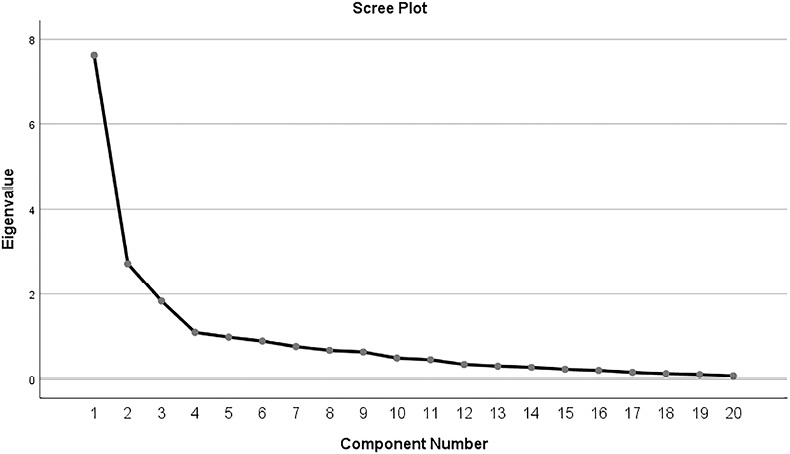
Figure 2. Scree plot. Source: Authors’ own work
Total variance explained
Table 4 illustrates the cumulative variation accounted for in the research. The initial four components had eigenvalues over 1 (7.628, 2.722, 1.837, and 1.097), aligning with the findings of Cardoso and Cruz-Almeida (2016), who argued that the eigenvalues should surpass a value of 1 to indicate the presence of several factors.
Source: Authors’ own work.
As shown in Table 4, component 1 accounted for the highest variance of 38.138%, component 2 was 13.608%, component 3 was 9.184%, and component 4 was 5.483%. The combined components account for a variance of 66.412% in the dataset. The values in bold (Table 4) represent the respective values of the four components, retained as per the reasons noted here.
Table 5 presents the rotated component matrix, which provides an interpretation of the components that have been effectively retrieved, indicating the number of factors. According to Norušis (2011), the procedure involves rotating factors in order to improve the interpretability of factor analysis results. According to Pallant (2020), the research utilized a varimax orthogonal rotation technique in order to reduce the number of variables that exhibit high loadings on each component.
Source: Authors’ own work.
It is noteworthy that the EFA produced factor groupings that differ from the original literature-derived categorizations in certain instances. Most notably, health and safety (originally classified as a social consideration) loaded onto the EPC factor. This regrouping is theoretically coherent in the Ghanaian construction context, where health and safety practices are primarily implemented through environmental management systems, site safety audits, and pollution-control measures rather than through standalone social welfare programs. In Ghana’s construction sector, characterized by limited institutional differentiation between social and environmental management functions, health and safety considerations tend to be operationalized as part of site-level environmental compliance activities. Furthermore, in practice, environmental officers on site may also be responsible for monitoring health and safety (H&S), leading to a tendency for safety issues to be addressed within the framework of environmental management (Asah-Kissiedu et al., 2023). This explains health and safety’s empirical co-loading with environmental performance indicators.
PLS-SEM model development
Decision-making sciences have used the SEM technique as a multivariate approach to test empirical hypotheses and explore theories (Xiong et al., 2015). Combining the capabilities of factor analysis and path analysis, SEM has proved an advancement over earlier statistical tools such as multiple regression analysis (Xiong et al., 2015). Researchers primarily use two variants of SEM to test hypotheses, namely, CB-SEM and PLS-SEM. Researchers adopt the former to test existing theories, while the latter can confirm existing theories and test new hypotheses (Hair et al., 2021). In this study, the nature of ESG considerations supports PLS-SEM as a more appropriate model for testing. Empirical studies have adopted PLS-SEM to model similar relationships between and among various constructs across different research domains (Jayasena et al., 2024). The literature on ESG highlights the importance of achieving environmental performance of projects through transparent, compliant, and social-centred considerations (Kim & Chang, 2022). PLS-SEM was therefore used to test the linear effect between and among latent constructs [transparency and responsibility considerations (TRC), social impact considerations (SIC), compliance and engagement considerations (CEC), and the manifest construct EPC].
Results of model development
The measurement model was assessed using four main methods. Firstly, the loadings of the indicators were assessed, and using Equation (1), indicators with loadings < 0.7 were removed from the model (Hair et al., 2020). The loadings of all considerations (except CEC1 and TRC4) included in the model ranged from 0.700 to 0.889. It should be noted that CEC1 (outer loading = 0.678) fell marginally below the 0.70 threshold; however, it was retained because its removal did not improve model fit and because composite reliability and AVE for the CEC construct remained above acceptable thresholds (CR = 0.821, AVE = 0.606). The cross-loading table (Table 6) reports only the retained indicators after final model refinement (CEC2 and CEC3), which accounts for the absence of CEC1 in that table. The higher loading of CEC2 (0.953) in Table 6 compared to the initial loading (0.889) in Table 7 reflects the standard recalibration of outer loadings that occurs when PLS-SEM iterates to convergence after removing low-loading indicators from other constructs during model refinement (red bold values in Table 7 indicate variables removed); this is not a data error but an expected algorithmic outcome. Using Equation (2) and a benchmark of 0.7 for Cronbach’s alpha coefficient (Owusu-Manu et al., 2023), each construct attained a highly reliable coefficient with lower and upper ranges of 0.702 and 0.890, respectively. The composite reliability of the measurement model was also assessed. Hair and Sarstedt (2019) recommended a coefficient benchmark of ≥0.70 to achieve composite reliability. Using Equation (3), the composite reliability of each indicator was ascertained. The lower and upper values were 0.764 and 0.909, respectively. The AVE is a significant indicator of convergent validity, and AVE values > 0.5 are considered acceptable (Hair et al. 2020). From Table 7, all AVE values were above the threshold, indicating the validity of the measurement model. It is also recommended to assess the discriminant validity of the measurement model. Using Equations (5)–(7), the Fornell–Larcker criterion, the cross-loadings, and the HTMT ratios were confirmed. Table 8 shows that the diagonal values are greater than the off-diagonal values, indicating discriminant validity (Abdulai et al., 2024). The cross-loadings in Table 6 also show that the indicators correlated more with their constructs than with other constructs. Finally, Table 9 shows that all HTMT ratios are <0.9, indicating the distinctiveness of the constructs (Kline, 2016; Seidu et al., 2025).
Notes: CEC, compliance and engagement considerations; EPC, environmental performance considerations; SIC, social impact considerations; TRC, transparency and responsibility considerations. Source: Authors’ own work.
Source: Authors’ own work.
Source: Authors’ own work.
Note: HTMT, heterotrait–monotrait. Source: Authors’ own work.
Structural model analysis
The measurement model’s goodness of fit indicates the overall structural quality, and several approaches can be applied, including multicollinearity using the variance inflation factor (VIF) (Kim, 2019), R2 values, f 2 values, and beta coefficients (Hair et al., 2020). According to Kim (2019), VIF values < 5 indicate that multicollinearity is not an issue. Table 10 indicates that all VIF values were <5; thus, multicollinearity was not an issue in the model. The R2 values depict the model’s explanatory power and in-sample prediction power. R2 coefficients that are 0.25 and below, 0.25 to 0.5, and above 0.7 are interpreted as weak, moderate, and considerable, respectively (Hair et al., 2019). From Table 11, the model in this study explained 50.2% of the variance in EPC, which is interpreted as moderate. Similarly, the in-sample prediction power of TRC and CEC were 35.7% and 18.6%, respectively, indicating moderate and weak explanatory power, respectively. Further, Table 10 indicates a large f 2 (0.556) (measure of effect size) between SIC and TRC. This posits a substantial effect of SIC on EPC achievement in delivering sustainable projects. This relationship is consistent with Wei et al. (2024), who revealed that social considerations, such as indoor air quality, have a high impact on the environmental performance of projects. As reported by Abdulai et al. (2024), f 2 values of 0.02–0.15, 0.15–0.35, and > 0.35 are interpreted as small, medium, and large, respectively. Consequently, CEC has a small effect size (0.017) on EPC, and similarly, TRC demonstrated a small effect on EPC. The path coefficients were computed through a bootstrapping analysis to test the initial hypothesis of the study. From Figure 3 and Table 10:
• H1a (TRC mediates SIC → EPC): The indirect effect of SIC on EPC through TRC was positive but not statistically significant (β = 0.015, t = 0.187, p = 0.852). The direct path from TRC to EPC was weak (β = 0.025, t = 0.321, p = 0.748), with a negligible effect size (f 2 = 0.001). H1a is not supported.
• H1b (CEC mediates SIC → EPC): The indirect effect of SIC on EPC through CEC was positive but weak (β = 0.046, t = 1.124, p = 0.261). The path from SIC to CEC was significant (β = 0.432, t = 4.612, p < 0.001, f 2 = 0.229), but the path from CEC to EPC was not statistically significant (β = 0.107, t = 1.428, p = 0.153, f 2 = 0.017). H1b is not supported.
• H2 (SIC → EPC direct effect): Social impact considerations had a strong, statistically significant direct positive effect on environmental performance considerations (β = 0.660, t = 7.842, p < 0.001). The effect size was large (f 2 = 0.513), indicating substantial practical significance. This effect was considerably stronger than the effect of CEC on EPC (β = 0.107, t = 1.428, p = 0.153). H2 is supported.
• H3 (TRC moderates CEC → EPC): The interaction term (TRC × CEC) had a positive but non-significant effect on EPC (β = 0.081, t = 1.152, p = 0.249, f 2 = 0.015). This indicates that transparency does not significantly enhance the relationship between compliance and environmental performance. H3 is not supported.
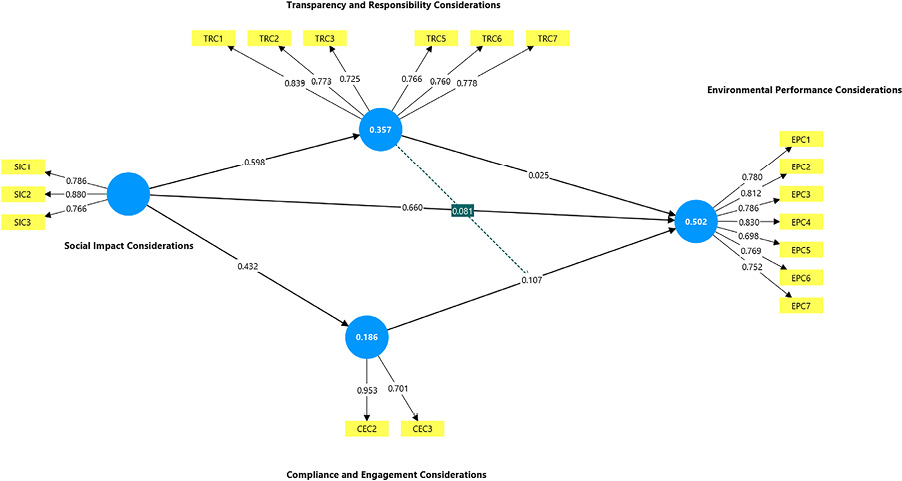
Figure 3. Final structural model. Source: Authors’ own work
Notes: VIF, variance inflation factor; CEC, compliance and engagement considerations; EPC, environmental performance considerations; SIC, social impact considerations; TRC, transparency and responsibility considerations.
Discussion
It is important to note that the model demonstrated moderate explanatory power, with R2 = 0.502 for environmental performance considerations. This indicates that the identified ESG dimensions explain approximately 50% of the variance in EPC, consistent with other ESG studies (Ramanathan et al., 2014; Yoo, 2025). The remaining 50% of variance suggests that other factors, including organizational capacity, financial resources, external market pressures, project-specific characteristics, and client requirements, also influence environmental outcomes. Future research should incorporate these additional variables for more comprehensive modeling.
The dominant role of social impact considerations (H2)
The most significant finding of this study is the dominant direct influence of social impact considerations on environmental performance (β = 0.660, t = 7.842, p < 0.001, f 2 = 0.513), which strongly supports H2. This substantial positive relationship indicates that in the Ghanaian construction context, social legitimacy is most strongly associated with environmental sustainability outcomes. The magnitude of this effect (β = 0.660) is considerably larger than typically reported in developed-country ESG studies, where environmental and governance factors often show comparable or stronger effects than social factors (Alsayegh et al., 2020). This finding aligns with Wei et al. (2024), who demonstrated significant impacts of social considerations on project environmental performance, but extends their work by revealing that in LMIC contexts, social considerations function not merely as parallel factors but as enabling conditions for environmental performance.
Several contextual factors explain this prominence of social factors in Ghana. Firstly, construction projects operate within communities where social acceptance and stakeholder buy-in are essential for project viability (Di Maddaloni & Sabini, 2022; Kahangirwe & Vanclay, 2024). Without addressing community concerns, ensuring worker welfare, and upholding human rights standards, construction organizations face significant resistance that impedes environmental performance initiatives. Secondly, Ghana’s construction industry is characterized by high site risks and acute stakeholder pressures (Ahadzie et al., 2021), making social safeguards practical entry points for broader ESG adoption. The practical implication is that construction practitioners should prioritize social safeguards, including worker health and safety, community protection, pollution prevention, and accountability as foundational elements of ESG strategies, rather than viewing them as parallel to environmental goals.
Limited mediating effects of transparency and compliance (H1a and H1b)
Contrary to the hypothesized relationships, both transparency and responsibility considerations (H1a: β = 0.025, t = 0.321, p = 0.748) and compliance and engagement considerations (H1b: β = 0.107, t = 1.428, p = 0.153) demonstrated non-significant mediating effects between SIC and EPC. The small effect sizes (f 2 = 0.001 for TRC → EPC and f 2 = 0.017 for CEC → EPC) further confirm their limited direct influence on environmental outcomes. This finding contrasts sharply with ESG research in developed economies, where transparency and compliance mechanisms are often central drivers of environmental performance (Halbritter & Dorfleitner, 2015; Yu et al., 2018). The non-significance of these paths can be understood through Ghana’s institutional context, characterized by limited regulatory enforcement capacity, high informality in subcontracting, and governance gaps (Ofori, 2012; Asiedu et al., 2025). In such environments, transparency mechanisms may be adopted symbolically to meet minimal requirements without substantially altering project practices, and compliance requirements may be inconsistently or selectively enforced.
However, it is important to note that SIC significantly influenced both TRC (β = 0.598, t = 8.124, p < 0.001) and CEC (β = 0.432, t = 4.612, p < 0.001), indicating that social considerations drive governance and compliance practices even if these do not translate directly into environmental outcomes. This suggests a sequential pathway where social legitimacy builds the organizational capacity and stakeholder relationships necessary for effective governance, which may subsequently enable environmental improvements over longer timeframes than captured in cross-sectional data.
Non-significant moderation effect of transparency (H3)
The interaction effect of transparency and compliance on environmental performance (H3: β = 0.081, t = 1.152, p = 0.249, f 2 = 0.015) was not statistically significant, indicating that transparency does not significantly amplify the effectiveness of compliance mechanisms in driving environmental outcomes. Theoretically, increased transparency should enhance compliance effectiveness by enabling stakeholder oversight and deterring non-compliance. However, in low-capacity regulatory environments like Ghana’s construction sector, transparency measures may be implemented without corresponding improvements in monitoring and enforcement infrastructure (Seligsohn et al., 2018). Where corruption and governance gaps are prevalent, transparency initiatives may be superficial or selectively applied, limiting their practical utility. This finding highlights the complexity of ESG relationships in LMIC contexts, where institutional weaknesses dampen the expected synergies between different ESG dimensions.
Study contributions and implications
The study makes several important theoretical contributions to the ESG literature, particularly in the context of project-level ESG implementation within LMICs. Firstly, by distinguishing project-level ESG considerations from corporate-level ESG reporting and disclosure frameworks, the study addresses a critical conceptual gap. While much ESG research has focused on firm-level disclosure to investors and regulators (Alsayegh et al., 2020; Tsang et al., 2023), this study demonstrates that ESG implementation at the project level involves different dynamics, including direct community engagement, site-specific environmental impacts, and real-time accountability mechanisms. This distinction is particularly important in construction, where project-level actions determine the actual environmental and social outcomes, regardless of corporate-level ESG commitments.
Secondly, the study advances understanding of how ESG dimensions interact in low-capacity regulatory environments. The findings challenge assumptions from developed-country contexts, where transparency and compliance are often presumed to be directly and significantly associated with environmental performance. Instead, this study reveals that in Ghana and likely in similar LMIC settings, social legitimacy is most strongly associated with how transparency and compliance relate to environmental outcomes. This observation aligns with institutional theory, which posits that organizational practices are shaped by the institutional contexts in which they operate (Ofori, 2012), and underscores the need for context-specific ESG models that account for local regulatory, social, and economic conditions.
The study findings also offer actionable insights for construction practitioners, policymakers, project managers, and investors seeking to mainstream ESG practices in Ghana and comparable LMIC contexts. Firstly, the dominant role of social impact considerations suggests that construction organizations should prioritize social safeguards, including worker health and safety, community protection, pollution prevention, and accountability as foundational elements of their ESG strategies. Rather than viewing social considerations as parallel to environmental goals, practitioners should recognize that strong social performance creates the conditions necessary for environmental performance improvements. Practically, this means investing in robust worker welfare programs, establishing grievance mechanisms with time-bound closure protocols, engaging communities proactively, and ensuring transparency in addressing social impacts. These social interventions serve as the entry points through which construction organizations can build the trust, legitimacy, and operational capacity needed to implement environmental sustainability measures effectively. Secondly, while transparency and compliance considerations demonstrated limited mediating and moderating effects in the current model, they remain essential components of a holistic ESG strategy. However, their implementation must be adapted to Ghana’s institutional realities. Rather than adopting expansive, data-intensive disclosure frameworks that may exceed local capacity, construction organizations should focus on lean, auditable key performance indicators (KPIs) that are practical to monitor and verify. For example, recommended KPIs include GHG intensity per m2, lost time injury frequency rate (LTIFR), percentage of community grievances resolved within 30 days, and percentage of site or supplier audits passed. These indicators align with internationally recognized frameworks, enabling data reusability and benchmarking, while remaining feasible for organizations with limited reporting infrastructure.
Thirdly, policymakers should recognize that effective ESG integration in construction requires more than regulatory mandates; it necessitates capacity building, enforcement infrastructure, and incentive mechanisms. Regulatory reforms should prioritize strengthening monitoring and enforcement capacity, establishing clear sanctions for non-compliance, and providing technical support to SMEs to adopt ESG practices. Additionally, policymakers can leverage procurement systems to drive ESG adoption by incorporating ESG pre-qualification criteria and scoring ESG performance in bid evaluations. For instance, public clients can require minimum site health and safety standards, waste-reduction targets, anti-corruption controls, and supplier due diligence as mandatory contract clauses, thereby embedding ESG requirements directly into project delivery mechanisms. Fourthly, investors and financiers should recognize that in LMIC contexts, social performance metrics are leading indicators of overall ESG maturity and environmental outcomes. Rather than focusing exclusively on environmental KPIs or corporate-level ESG ratings, investors should assess project-level social safeguards, community engagement practices, and accountability mechanisms as proxies for ESG implementation quality. This approach acknowledges the hierarchical nature of ESG adoption in low-capacity environments, where social legitimacy enables subsequent environmental and governance improvements.
An important practical challenge in Ghana’s construction sector is the prevalence of informal subcontracting and the dominance of SMEs, which collectively account for a substantial portion of construction activity. These SMEs often lack the financial resources, technical expertise, and organizational capacity to adopt comprehensive ESG frameworks independently. Consequently, mainstreaming ESG practices requires tailored interventions that account for these capacity constraints.
• Firstly, Tier 1 contractors and project owners have a responsibility to extend ESG requirements to subcontractors through contractual obligations, capacity-building initiatives, and supply chain due diligence. For example, main contractors can include ESG clauses in subcontracts that mandate minimum environmental and social standards, provide training and technical support to SME subcontractors, and conduct regular audits to ensure compliance.
• Secondly, donor-funded projects present unique opportunities to drive ESG adoption in Ghana’s construction sector. Multilateral development banks, bilateral donors, and international NGOs often impose stringent ESG requirements as conditions of financing, providing leverage to enforce practices that may otherwise be weakly implemented.
• Thirdly, cost–benefit considerations are critical in ensuring that ESG requirements are feasible and economically viable for SMEs. This study recommends distinguishing quick-payback measures, such as site energy management, material waste reduction, and pollution prevention, from measures that typically require concessional finance or owner support, such as green certifications, advanced green technologies, and comprehensive environmental monitoring systems.
Study limitations and directions for future research
While this study provides valuable insights into ESG considerations for sustainable project delivery in Ghana, several limitations should be acknowledged. Firstly, the use of purposive and snowball sampling (n = 119) supports analytical rather than statistical generalization. Although the sample size met the requirements for PLS-SEM analysis and satisfied the central limit theorem and the “ten-to-one” rule, the findings are context-specific to Ghana and should be adapted carefully when applied to other LMIC settings. Future research should employ larger, more representative samples across multiple Sub-Saharan African countries to enhance generalizability and enable comparative analyses of ESG dynamics across different institutional contexts. Secondly, while the PLS-SEM model explained 50.2% of the variance in environmental performance considerations, the remaining variance suggests that other factors, such as organizational capacity, financial resources, external market pressures, and project-specific characteristics, also influence environmental outcomes. Future research should incorporate additional variables, such as organizational size, project type (public vs. private), client requirements, and access to green finance, to develop more comprehensive models that account for these contextual factors. Thirdly, two constructs in the PLS-SEM model, SIC and CEC, contain only three indicators each. While this is technically permissible in PLS-SEM, small construct sizes may affect construct stability and reliability, particularly under conditions of moderate sample sizes. Future research should seek to expand the indicator pools for these constructs to enhance measurement robustness and replication potential. Finally, this study focused exclusively on the Ghanaian construction sector. While the findings offer transferable lessons for other LMICs, country-specific variations in regulatory frameworks, cultural norms, economic conditions, and institutional capacities may influence ESG dynamics differently. Comparative studies across multiple countries, such as Kenya, Nigeria, Tanzania, and Rwanda, would enrich understanding of how institutional contexts shape ESG priorities and enable the development of region-specific best practices.
References
Abdulai, S. F., Nani, G., Taiwo, R., Antwi-Afari, P., Zayed, T., & Sojobi, A. O. (2024). Modelling the relationship between circular economy barriers and drivers for sustainable construction industry. Building and Environment, 254, 111388. https://doi.org/10.1016/j.buildenv.2024.111388
Adabre, M. A., Chan, A. P., & Darko, A. (2022). Interactive effects of institutional, economic, social and environmental barriers on sustainable housing in a developing country. Building and Environment, 207, 108487. https://doi.org/10.1016/j.buildenv.2021.108487
Adabre, M. A., Chan, A. P., Edwards, D. J., & Adinyira, E. (2021). Assessing critical risk factors (CRFs) to sustainable housing: The perspective of a sub-Saharan African country. Journal of Building Engineering, 41, 102385. https://doi.org/10.1016/j.jobe.2021.102385
Agustin, N., & Koestoer, R. H. (2025). Achieving sustainable construction through the integration of lean construction and ESG: A critical review. Journal of Placemaking and Streetscape Design, 3(1), 23–38. https://doi.org/10.61511/jpstd.v3i1.2025.1856
Ahadzie, D. K. (2007). A model for predicting the performance of project managers in mass house building projects in Ghana (Unpublished doctoral dissertation). University of Wolverhampton, UK.
Ahadzie, D. K., Debrah, Y., & Ofori, G. (2021). Formality and informality in sub-Saharan Africa and the Ghanaian construction industry. In Work and labor relations in the construction industry (pp. 103–132). https://doi.org/10.4324/9780429431135-6-6
Akomea-Frimpong, I., Agar, C. E., Alidu, A. R., Ohenewaa-Ayisi, M. Y., Baah, B., Oduro, S., Acheampong, M. O., Konadu, E. A., Maal Arimiyaw, D., & Tumpa, R. J. (2024). A literature review of environmental, social and governance (ESG) indicators in the construction industry. Preprint. https://doi.org/10.20944/preprints202408.0203.v1
Akotia, J., Opoku, A., Egbu, C., & Fortune, C. (2016). Exploring the knowledge base of practitioners in the delivery of sustainable regeneration projects. Construction Economics and Building, 16(2), 14–26. https://doi.org/10.5130/AJCEB.v16i2.4892
Almeyda, R., & Darmansya, A. (2019). The influence of environmental, social, and governance (ESG) disclosure on firm financial performance. IPTEK Journal of Proceedings Series, (5), 278–290. https://doi.org/10.12962/j23546026.y2019i5.6340
Alsayegh, M. F., Abdul Rahman, R., & Homayoun, S. (2020). Corporate economic, environmental, and social sustainability performance transformation through ESG disclosure. Sustainability, 12(9), 3910. https://doi.org/10.3390/su12093910
Arayssi, M., Jizi, M., & Tabaja, H. H. (2020). The impact of board composition on the level of ESG disclosures in GCC countries. Sustainability Accounting, Management and Policy Journal, 11(1), 137–161. https://doi.org/10.1108/SAMPJ-05-2018-0136
Asah-Kissiedu, M., Manu, P., Booth, C. A., Mahamadu, A. M., & Agyekum, K. (2023). Integrated safety, health and environmental management in the construction industry: Key organisational capability attributes. Journal of Engineering, Design and Technology, 21(6), 1975–2007. https://doi.org/10.1108/JEDT-08-2021-0436
Asiedu, R. O., Amoakwa, A. B., Owusu-Manu, D., Edwards, D. J., Gyimah, S., & Ameyaw, C. (2025). Barriers to the integration of environmental, social and governance (ESG) considerations in the Ghanaian construction industry. Construction Innovation. https://doi.org/10.1108/CI-03-2025-0098
Asif, M., Searcy, C., & Castka, P. (2023). ESG and Industry 5.0: The role of technologies in enhancing ESG disclosure. Technological Forecasting and Social Change, 195, 122806. https://doi.org/10.1016/j.techfore.2023.122806
Assef, D., & Mangold, G. (2022). Building on change: ESG considerations for the construction industry. Civil Engineering = Siviele Ingenieurswese, 30(6), 36–37.
Baid, V., & Jayaraman, V. (2022). Amplifying and promoting the “S” in ESG investing: The case for social responsibility in supply chain financing. Managerial Finance, 48(8), 1279–1297. https://doi.org/10.1108/MF-12-2021-0588
Bamahros, H. M., Alquhaif, A., Qasem, A., Wan-Hussin, W. N., Thomran, M., Al-Duais, S. D., Shukeri, S. N., & Khojally, H. M. (2022). Corporate governance mechanisms and ESG reporting: Evidence from the Saudi stock market. Sustainability, 14(10), 6202. https://doi.org/10.3390/su14106202
Barbhuiya, S., & Das, B. B. (2023). Life cycle assessment of construction materials: Methodologies, applications and future directions for sustainable decision-making. Case Studies in Construction Materials, 19, e02326. https://doi.org/10.1016/j.cscm.2023.e02326
Becchetti, L., Bobbio, E., Prizia, F., & Semplici, L. (2022). Going deeper into the S of ESG: A relational approach to the definition of social responsibility. Sustainability, 14(15), 9668. https://doi.org/10.3390/su14159668
Bellavite Pellegrini, C., Caruso, R., & Seracini, M. (2022). ESG, COE and profitability in the oil and gas sector. In Climate change adaptation, governance and new issues of value: Measuring the impact of ESG scores on CoE and firm performance (pp. 127–153). Springer. https://doi.org/10.1007/978-3-030-90115-8_7
Ben Ali, A., & Chouaibi, J. (2023). Mediating effect of ESG performance on executive incentive compensation–financial performance relationship: Evidence from MENA banking sector. Corporate Governance, 24(2), 439–461. https://doi.org/10.1108/CG-02-2023-0065
Bhatia, S., & Marwaha, D. (2022). The influence of board factors and gender diversity on the ESG disclosure score: A study on Indian companies. Global Business Review, 23(6), 1544–1557. https://doi.org/10.1177/09721509221132067
Bhattacharya, A., & Bhattacharya, S. (2023). Integrating ESG pillars for business model innovation in the biopharmaceutical industry. Australasian Accounting, Business and Finance Journal, 17(1), 127–150. https://doi.org/10.14453/aabfj.v17i1.12
Birindelli, G., Dell’Atti, S., Iannuzzi, A. P., & Savioli, M. (2018). Composition and activity of the board of directors: Impact on ESG performance in the banking system. Sustainability, 10(12), 4699. https://doi.org/10.3390/su10124699
Bohnett, E., Coulibaly, A., Hulse, D., Hoctor, T., Ahmad, B., An, L., & Lewison, R. (2022). Corporate responsibility and biodiversity conservation: Challenges and opportunities for companies participating in China’s belt and road initiative. Environmental Conservation, 49(1), 42–52. https://doi.org/10.1017/S0376892921000436
Boparai, J. K., Singh, S., & Kathuria, P. (2018). How to design and validate a questionnaire: A guide. Current Clinical Pharmacology, 13(4), 210–215. https://doi.org/10.2174/1574884713666180807151328
Cardoso, J. S., & Cruz-Almeida, Y. (2016). Moving beyond the eigenvalue greater than one retention criteria in pain phenotyping research. Pain, 157(6), 1363–1364. https://doi.org/10.1097/j.pain.0000000000000520
Chen, H. M., Kuo, T. C., & Chen, J. L. (2022). Impacts on the ESG and financial performances of companies in the manufacturing industry based on climate change-related risks. Journal of Cleaner Production, 380, 134951. https://doi.org/10.1016/j.jclepro.2022.134951
Crespi, F., & Migliavacca, M. (2020). The determinants of ESG rating in the financial industry: The same old story or a different tale? Sustainability, 12(16), 6398. https://doi.org/10.3390/su12166398
Cucari, N., Esposito De Falco, S., & Orlando, B. (2018). Diversity of board of directors and environmental social governance: Evidence from Italian listed companies. Corporate Social Responsibility and Environmental Management, 25(3), 250–266. https://doi.org/10.1002/csr.1452
Dartey-Baah, K., & Amoako, G. K. (2021). A review of empirical research on corporate social responsibility in emerging economies. International Journal of Emerging Markets, 16(7), 1330–1347. https://doi.org/10.1108/IJOEM-12-2019-1062
Debrah, C., Owusu-Manu, D. G., Darko, A., Oduro-Ofori, E., Acquah, P. C., & Asamoah, E. (2021). Drivers for green cities development in developing countries: Ghanaian perspective. International Journal of Construction Management, 23(6), 1086–1096. https://doi.org/10.1080/15623599.2021.1955321
Debrah, C., Owusu-Manu, D. G., Kissi, E., Oduro-Ofori, E., & Edwards, D. J. (2022). Barriers to green cities development in developing countries: Evidence from Ghana. Smart and Sustainable Built Environment, 11(3), 438–453. https://doi.org/10.1108/SASBE-06-2020-0089
Di Maddaloni, F., & Sabini, L. (2022). Very important, yet very neglected: Where do local communities stand when examining social sustainability in major construction projects? International Journal of Project Management, 40(7), 778–797. https://doi.org/10.1016/j.ijproman.2022.08.007
Drouin, N. (2018). Editorial. International Journal of Managing Projects in Business, 11(1), 2–6. https://doi.org/10.1108/IJMPB-01-2018-0011
Ducoulombier, F. (2021). Understanding the importance of scope 3 emissions and the implications of data limitations. The Journal of Impact and ESG Investing, 1(4), 63–71. https://doi.org/10.3905/jesg.2021.1.018
Duque-Grisales, E., & Aguilera-Caracuel, J. (2021). Environmental, social and governance (ESG) scores and financial performance of multilatinas: Moderating effects of geographic international diversification and financial slack. Journal of Business Ethics, 168(2), 315–334. https://doi.org/10.1007/s10551-019-04177-w
Dye, J., McKinnon, M., & Van der Byl, C. (2021). Green gaps: Firm ESG disclosure and financial institutions’ reporting requirements. Journal of Sustainability Research, 3(1), e210006. https://doi.org/10.20900/jsr20210006
Erkens, M., Paugam, L., & Stolowy, H. (2015). Non-financial information: State of the art and research perspectives based on a bibliometric study. Accounting Auditing Control, 21(3), 15–92. https://doi.org/10.3917/cca.213.0015
Farooq, Q., Hao, J., Liu, X., Xiao, D., & Hao, Y. (2020). Social and environmental development: Fresh concepts and soft measures towards sustainable development. Sustainable Development, 28(6), 1796–1803. https://doi.org/10.1002/sd.2075
Fornell, C., & Larcker, D. F. (1981). Evaluating structural equation models with unobservable variables and measurement error. Journal of Marketing Research, 18(1), 39–50. https://doi.org/10.1177/002224378101800104
Friede, G., Busch, T., & Bassen, A. (2015). ESG and financial performance: Aggregated evidence from more than 2000 empirical studies. Journal of Sustainable Finance & Investment, 5(4), 210–233. https://doi.org/10.1080/20430795.2015.1118917
Frini, A., & BenAmor, S. (2015). A TOPSIS multi-criteria multi-period approach for selecting projects in sustainable development context. In Proceedings of the 2015 International Conference on Industrial Engineering and Operations Management (pp. 1–9). IEEE. https://doi.org/10.1109/IEOM.2015.7093900
Gavana, G., Gottardo, P., & Moisello, A. (2022). Related party transactions and earnings management: The moderating effect of ESG performance. Sustainability, 14(10), 5823. https://doi.org/10.3390/su14105823
Ghansah, F. A., Owusu-Manu, D. G., Ayarkwa, J., Edwards, D. J., & Hosseini, M. R. (2021). Exploration of latent barriers inhibiting project management processes in adopting smart building technologies (SBTs) in developing countries. Construction Innovation, 21(4), 685–707. https://doi.org/10.1108/CI-07-2020-0116
Gilchrist, D., Yu, J., & Zhong, R. (2021). The limits of green finance: A survey of literature in the context of green bonds and green loans. Sustainability, 13(2), 478. https://doi.org/10.3390/su13020478
Hair, J. F., Jr., & Sarstedt, M. (2019). Factors versus composites: Guidelines for choosing the right structural equation modeling method. Project Management Journal, 50(6), 619–624. https://doi.org/10.1177/8756972819882132
Hair, J. F., Jr., Howard, M. C., & Nitzl, C. (2020). Assessing measurement model quality in PLS-SEM using confirmatory composite analysis. Journal of Business Research, 109, 101–110. https://doi.org/10.1016/j.jbusres.2019.11.069
Hair, J. F., Astrachan, C. B., Moisescu, O. I., Radomir, L., Sarstedt, M., Vaithilingam, S., & Ringle, C. M. (2021). Executing and interpreting applications of PLS-SEM: Updates for family business researchers. Journal of Family Business Strategy, 12(3), 100392. https://doi.org/10.1016/j.jfbs.2020.100392
Hair, J. F., Risher, J. J., Sarstedt, M., & Ringle, C. M. (2019). When to use and how to report the results of PLS-SEM. European Business Review, 31(1), 2–24. https://doi.org/10.1108/EBR-11-2018-0203
Halbritter, G., & Dorfleitner, G. (2015). The wages of social responsibility—Where are they? A critical review of ESG investing. Review of Financial Economics, 26, 25–35. https://doi.org/10.1016/j.rfe.2015.03.004
Hamann, S. (2019). Effective corporate compliance: A holistic approach for the SEC and the DoJ. Washington Law Review, 94(2), 851–886.
Henseler, J., Ringle, C. M., & Sarstedt, M. (2015). A new criterion for assessing discriminant validity in variance-based structural equation modeling. Journal of the Academy of Marketing Science, 43(1), 115–135. https://doi.org/10.1007/s11747-014-0403-8
Ismail, A. M., & Latiff, I. H. M. (2019). Board diversity and corporate sustainability practices: Evidence on environmental, social and governance (ESG) reporting. International Journal of Financial Research, 10(3), 31–50. https://doi.org/10.5430/ijfr.v10n3p31
Jayasena, N. S., Chan, D. W., Kumaraswamy, M. M., Seidu, S., Ekanayake, E. M. A. C., & Siu, F. M. (2024). Adoption of public–private partnership (PPP) in smart infrastructure development projects in developing nations: An explorative structural equation modelling analysis. Cities, 152, 105232. https://doi.org/10.1016/j.cities.2024.105232
Jiang, Y., Ni, H., Guo, X., & Ni, Y. (2023). Integrating ESG practices and natural resources management for sustainable economic development in SMEs under the double-carbon target of China. Resources Policy, 87, 104348. https://doi.org/10.1016/j.resourpol.2023.104348
Jo, D., & Kwon, C. (2021). Structure of green supply chain management for sustainability of small and medium enterprises. Sustainability, 14(1), 50. https://doi.org/10.3390/su14010050
Jonsdottir, B., Sigurjonsson, T. O., Johannsdottir, L., & Wendt, S. (2022). Barriers to using ESG data for investment decisions. Sustainability, 14(9), 5157. https://doi.org/10.3390/su14095157
Kahangirwe, P., & Vanclay, F. (2024). Social impacts arising from road infrastructure projects in sub-Saharan Africa: Better management of social issues is needed in road construction, upgrading and rehabilitation. Impact Assessment and Project Appraisal, 42(4), 309–322. https://doi.org/10.1080/14615517.2024.2385877
Kemfert, C. (2019). Green deal for Europe: More climate protection and fewer fossil fuel wars. Intereconomics, 54, 353–358. https://doi.org/10.1007/s10272-019-0853-9
Khemir, S. (2019). Perception of ESG criteria by mainstream investors: Evidence from Tunisia. International Journal of Emerging Markets, 14(5), 752–768. https://doi.org/10.1108/IJOEM-05-2017-0172
Kim, J. H. (2019). Multicollinearity and misleading statistical results. Korean Journal of Anesthesiology, 72(6), 558–569. https://doi.org/10.4097/kja.19087
Kim, S., & Chang, S. (2022). Construction project level-based environmental, social, and governance (C-ESG): A review. EPiC Series in Built Environment, 3, 236–244. https://doi.org/10.29007/zqzq
Kineber, A. F., Othman, I., Oke, A. E., Chileshe, N., & Zayed, T. (2021). Exploring the value management critical success factors for sustainable residential building: A structural equation modelling approach. Journal of Cleaner Production, 293, 126115. https://doi.org/10.1016/j.jclepro.2021.126115
Kline, R. B. (2016). Principles and practice of structural equation modeling (5th ed.). Guilford Press.
Kostrikin, P., & Andreeva, A. (2023). ESG criteria for low-rise housing construction projects. In AIP Conference Proceedings (Vol. 2560, No. 1). AIP Publishing. https://doi.org/10.1063/5.0133359
Kräussl, R., Oladiran, T., & Stefanova, D. (2022). A review on ESG investing: Investors’ expectations, beliefs and perceptions. Center for Financial Studies Working Paper No. 694. https://doi.org/10.2139/ssrn.4123999
Kumar, J. C. R., & Majid, M. A. (2020). Renewable energy for sustainable development in India: Current status, future prospects, challenges, employment, and investment opportunities. Energy, Sustainability and Society, 10(2), 1–36. https://doi.org/10.1186/s13705-019-0232-1
Kyriakogkonas, P., Garefalakis, A., Pappa, E., & Kagias, P. (2022). Sustainable project management under the light of ESG criteria: A theoretical approach. Theoretical Economics Letters, 12(6), 1517–1538. https://doi.org/10.4236/tel.2022.126083
Lee, J., Koh, K., & Shim, E. D. (2024). Managerial incentives for ESG in the financial services industry: Direct and indirect association between ESG and executive compensation. Managerial Finance, 50(1), 10–27. https://doi.org/10.1108/MF-03-2023-0149
Leong, L. K., Manickam, L., Haque, R., Jumbulingam, K., & Noordin, N. B. M. (2024). Embracing digital transformation for sustainable business in the construction industry. Pakistan Journal of Life and Social Sciences, 22(2). https://doi.org/10.57239/PJLSS-2024-22.2.00113
Li, R. Y. M., Li, B., Zhu, X., Zhao, J., Pu, R., & Song, L. (2022). Modularity clustering of economic development and ESG attributes in prefabricated building research. Frontiers in Environmental Science, 10, 977887. https://doi.org/10.3389/fenvs.2022.977887
Li, T., Wang, K., Sueyoshi, T., & Wang, D. (2021). ESG: Research progress and future prospects. Sustainability, 13(21), 11663. https://doi.org/10.3390/su132111663
Litvinenko, V., Bowbrick, I., Naumov, I., & Zaitseva, Z. (2022). Global guidelines and requirements for professional competencies of natural resource extraction engineers: Implications for ESG principles and sustainable development goals. Journal of Cleaner Production, 338, 130530. https://doi.org/10.1016/j.jclepro.2022.130530
Liu, M., Luo, X., & Lu, W. Z. (2023). Public perceptions of environmental, social, and governance (ESG) based on social media data: Evidence from China. Journal of Cleaner Production, 387, 135840. https://doi.org/10.1016/j.jclepro.2022.135840
Louche, C., Delautre, G., & Balvadi Pimentel, G. (2023). Assessing companies’ decent work practices: An analysis of ESG rating methodologies. International Labour Review, 162(1), 69–97. https://doi.org/10.1111/ilr.12370
Low, J., Montella, F., & Schaafsma, E. (2023). Improving the construction sector’s ESG credentials. Construction Journal. Royal Institution of Chartered Surveyors (RICS). https://ww3.rics.org/uk/en/journals/construction-journal/ESG-2023-construction-trends-predictions.html [Accessed: July 7th, 2023]
Lubchenco, J., & Haugan, P. M. (2023). Ocean finance: Financing the transition to a sustainable ocean economy. In J. Lubchenco & P. M. Haugan (Eds.), The blue compendium: From knowledge to action for a sustainable ocean economy (pp. 309–331). Springer. https://doi.org/10.1007/978-3-031-16277-0_9
Lützkendorf, T., Fan, W., & Lorenz, D. (2011). Engaging financial stakeholders: Opportunities for a sustainable built environment. Building Research & Information, 39(5), 483–503. https://doi.org/10.1080/09613218.2011.597206
Meher, B. K., Hawaldar, I. T., Mohapatra, L., Spulbar, C. M., & Birau, F. R. (2020). The effects of environment, society and governance scores on investment returns and stock market volatility. International Journal of Energy Economics and Policy, 10(4), 234–239. https://doi.org/10.32479/ijeep.9311
Mensah, C. A., Andres, L., Perera, U., & Roji, A. (2016). Enhancing quality of life through the lens of green spaces: A systematic review approach. International Journal of Wellbeing, 6(1), 142–163. https://doi.org/10.5502/ijw.v6i1.445
Miralles-Quirós, M. M., Miralles-Quirós, J. L., & Redondo Hernández, J. (2019). ESG performance and shareholder value creation in the banking industry: International differences. Sustainability, 11(5), 1404. https://doi.org/10.3390/su11051404
Mirzayeva, G., Turkay, O., Akbulaev, N., & Ahmadov, F. (2020). The impact of mega-events on urban sustainable development. Entrepreneurship and Sustainability Issues, 7(3), 1653. https://doi.org/10.9770/jesi.2020.7.3(15)
Mooneeapen, O., Abhayawansa, S., & Mamode Khan, N. (2022). The influence of the country governance environment on corporate environmental, social and governance (ESG) performance. Sustainability Accounting, Management and Policy Journal, 13(4), 953–985. https://doi.org/10.1108/SAMPJ-07-2021-0298
Murtagh, N., Scott, L., & Fan, J. (2020). Sustainable and resilient construction: Current status and future challenges. Journal of Cleaner Production, 268, 122264. https://doi.org/10.1016/j.jclepro.2020.122264
Ng, T. H., Lye, C. T., Chan, K. H., Lim, Y. Z., & Lim, Y. S. (2020). Sustainability in Asia: The roles of financial development in environmental, social and governance (ESG) performance. Social Indicators Research, 150, 17–44. https://doi.org/10.1007/s11205-020-02288-w
Norušis, M. J. (1993). SPSS for Windows professional statistics release 6.0. SPSS.
Norušis, M. J. (2011). IBM SPSS statistics 19 guide to data analysis. Prentice Hall.
Ofori, G. (Ed.). (2012). New perspectives on construction in developing countries. Routledge. https://doi.org/10.4324/9780203847343
Ogunmakinde, O. E., Egbelakin, T., & Sher, W. (2022). Contributions of the circular economy to the UN sustainable development goals through sustainable construction. Resources, Conservation and Recycling, 178, 106023. https://doi.org/10.1016/j.resconrec.2021.106023
Okuma, K. (2019). Potential mechanisms for the social regulation of economies on global and local scales: An institutional analysis of ESG investment and community renewables. Evolutionary and Institutional Economics Review, 16(2), 523–541. https://doi.org/10.1007/s40844-019-00133-5
Owusu-Manu, D., Debrah, C., Oduro-Ofori, E., Edwards, D. J., & Antwi-Afari, P. (2021). Attributable indicators for measuring the level of greenness of cities in developing countries: Lessons from Ghana. Journal of Engineering, Design and Technology, 19(3), 625–646. https://doi.org/10.1108/JEDT-06-2020-0257
Owusu-Manu, D., Kukah, A. S. K., Edwards, D. J., & Ameyaw, E. E. (2023). Fuzzy synthetic evaluation of moral hazard and adverse selection of public–private partnership projects. International Journal of Construction Management, 23(11), 1805–1814. https://doi.org/10.1080/15623599.2021.2010356
Pallant, J. (2020). SPSS survival manual: A step-by-step guide to data analysis using IBM SPSS available at: SPSS Survival Manual: A Step by Step Guide to Data Analysis using IBM SPSS - Julie Pallant - Google Books (accessed 23 January 2024). https://doi.org/10.4324/9781003117407
Patil, R. A., Ghisellini, P., & Ramakrishna, S. (2021). Towards sustainable business strategies for a circular economy: Environmental, social and governance (ESG) performance and evaluation. In L. Liu & S. Ramakrishna (Eds.), An introduction to circular economy (pp. 527–554). Springer. https://doi.org/10.1007/978-981-15-8510-4_26
Pelosi, N., & Adamson, R. (2016). Managing the “S” in ESG: The case of indigenous peoples and extractive industries. Journal of Applied Corporate Finance, 28(2), 87–95. https://doi.org/10.1111/jacf.12180
Pitt, M., Tucker, M., Riley, M., & Longden, J. (2009). Towards sustainable construction: Promotion and best practices. Construction Innovation, 9(2), 201–224. https://doi.org/10.1108/14714170910950830
Ramanathan, R., Poomkaew, B., & Nath, P. (2014). The impact of organizational pressures on environmental performance of firms. Business Ethics: A European Review, 23(2), 169–182. https://doi.org/10.1111/beer.12042
Ramírez-Orellana, A., Martínez-Victoria, M., García-Amate, A., & Rojo-Ramírez, A. A. (2023). Is corporate financial strategy in the oil and gas sector affected by ESG dimensions? Resources Policy, 81, 103303. https://doi.org/10.1016/j.resourpol.2023.103303
Rau, P. R., & Yu, T. (2023). A survey on ESG: Investors, institutions and firms. China Finance Review International. https://doi.org/10.1108/CFRI-12-2022-0260
Rivera, L., Ortiz, N., Moreno, G., & Páez-Gabriunas, I. (2023). The effect of company ownership on environmental practices in the supply chain: An empirical approach. Sustainability, 15(16), 12450. https://doi.org/10.3390/su151612450
Samari, M., Godrati, N., Esmaeilifar, R., Olfat, P., & Shafiei, M. W. M. (2013). The investigation of the barriers in developing green building in Malaysia. Modern Applied Science, 7(2), 1. https://doi.org/10.5539/mas.v7n2p1
Sciarelli, M., Cosimato, S., Landi, G., & Iandolo, F. (2021). Socially responsible investment strategies for the transition towards sustainable development: The importance of integrating and communicating ESG. The TQM Journal, 33(7), 39–56. https://doi.org/10.1108/TQM-08-2020-0180
Seidu, S., Owusu-Manu, D. G., Kukah, A. S. K., Adesi, M., Oduro-Ofori, E., & Edwards, D. J. (2023). An assessment of the implications of disruptive technologies on performance of energy infrastructure projects in Ghana. International Journal of Energy Sector Management, 17(5), 887–903. https://doi.org/10.1108/IJESM-09-2021-0007
Seidu, S., Chan, D. W., & Debrah, C. (2025). A novel climate resilience implementation model for the construction industry: An international perspective. Building and Environment, 274, 112793. https://doi.org/10.1016/j.buildenv.2025.112793
Seligsohn, D., Liu, M., & Zhang, B. (2018). The sound of one hand clapping: Transparency without accountability. Environmental Politics, 27(5), 804–829. https://doi.org/10.1080/09644016.2018.1452522
Senadheera, S. S., Gregory, R., Rinklebe, J., Farrukh, M., Rhee, J. H., & Ok, Y. S. (2022). The development of research on environmental, social, and governance (ESG): A bibliometric analysis. Sustainable Environment, 8(1), 2125869. https://doi.org/10.1080/27658511.2022.2125869
Senadheera, S. S., Withana, P. A., Dissanayake, P. D., Sarkar, B., Chopra, S. S., Rhee, J. H., & Ok, Y. S. (2021). Scoring environment pillar in environmental, social, and governance (ESG) assessment. Sustainable Environment, 7(1), 1960097. https://doi.org/10.1080/27658511.2021.1960097
Sergi, B. S., Popkova, E. G., Borzenko, K. V., & Przhedetskaya, N. V. (2019). Public–private partnerships as a mechanism of financing sustainable development. In M. Ziolo & B. S. Sergi (Eds.), Financing sustainable development. Palgrave Studies in Impact Finance. Palgrave Macmillan. https://doi.org/10.1007/978-3-030-16522-2_13
Shao, Y. (2022). Environmental regulation, green innovation and enterprise ESG performance. In Proceedings of the International Conference on Bigdata, Blockchain and Economy Management (pp. 1500–1508). Atlantis Press. https://doi.org/10.2991/978-94-6463-030-5_150
Sharrard, A., Matthews, H., & Roth, M. (2007). Environmental implications of construction site energy use and electricity generation. Journal of Construction Engineering and Management, 133(11), 846–854. https://doi.org/10.1061/(ASCE)0733-9364(2007)133:11(846)
Shrestha, N. (2021). Factor analysis as a tool for survey analysis. American Journal of Applied Mathematics and Statistics, 9(1), 4–11. https://doi.org/10.12691/ajams-9-1-2
Soratana, K. (2025). Environmental factors in ESG investing. In M. Bednárová & K. Soratana (Eds.), Environmental, social, and governance (ESG) investment and reporting. Springer. https://doi.org/10.1007/978-3-031-84235-1_2
Strine, L. E., Jr., Smith, K. M., & Steel, R. S. (2020). Caremark and ESG, perfect together: A practical approach to implementing an integrated, efficient, and effective caremark and EESG strategy. Iowa Law Review, 106, 1885–1922.
Sun, L., & Saat, N. A. M. (2023). How does intelligent manufacturing affect the ESG performance of manufacturing firms? Evidence from China. Sustainability, 15(4), 2898. https://doi.org/10.3390/su15042898
Tamimi, N., & Sebastianelli, R. (2017). Transparency among SP 500 companies: An analysis of ESG disclosure scores. Management Decision, 55(8), 1660–1680. https://doi.org/10.1108/MD-01-2017-0018
Tavakol, M., & Dennick, R. (2011). Making sense of Cronbach’s alpha. International Journal of Medical Education, 2, 53–55. https://doi.org/10.5116/ijme.4dfb.8dfd
Thrall, C. (2021). Public-private governance initiatives and corporate responses to stakeholder complaints. International Organization, 75(3), 803–836. https://doi.org/10.1017/S0020818321000199
Tsang, A., Frost, T., & Cao, H. (2023). Environmental, social, and governance (ESG) disclosure: A literature review. The British Accounting Review, 55(1), 101149. https://doi.org/10.1016/j.bar.2022.101149
Uddin, M. A., Shahabuddin, M., Jameel, M., Rahman, M., Hosen, M. A., Alanazi, F., ... & El-kady, M. S. (2025). Sustainable construction practices in urban areas: innovative materials, technologies, and policies to address environmental challenges. Energy and Buildings, 341, 115831. https://doi.org/10.1016/j.enbuild.2025.115831
Wei, J., Li, H. X., Sadick, A. M., & Noguchi, M. (2024). A systematic review of key issues influencing the environmental performance of social housing. Energy and Buildings, 319, 114566. https://doi.org/10.1016/j.enbuild.2024.114566
Xiong, B., Skitmore, M., & Xia, B. (2015). A critical review of structural equation modeling applications in construction research. Automation in Construction, 49, 59–70. https://doi.org/10.1016/j.autcon.2014.09.006
Yoo, B. C. (2025). Exploring stakeholder and organizational influences on ESG management in the logistics sector. Sustainability, 17(9), 4243. https://doi.org/10.3390/su17094243
Yu, E. P. Y., Guo, C. Q., & Luu, B. V. (2018). Environmental, social and governance transparency and firm value. Business Strategy and the Environment, 27(7), 987–1004. https://doi.org/10.1002/bse.2047
Zaidan, E., Al-Saidi, M., & Hammad, S. H. (2019). Sustainable development in the Arab world–is the Gulf Cooperation Council (GCC) region fit for the challenge? Development in Practice, 29(5), 670–681. https://doi.org/10.1080/09614524.2019.1628922
Zhang, K., Kassim, A. A. M., & Guo, Y. (2023). Research on Corporate Sustainability from an ESG Perspective. Frontiers in Business, Economics and Management, 8(2), 192–196. https://doi.org/10.54097/fbem.v8i2.7148
Zhao, R., Wang, J., & Xue, F. (2023). A blockchain-based token economic model for incentivizing ESG in the construction industry. In Proceedings of the 2023 European Conference on Computing in Construction and the 40th International CIB W78 Conference (Vol. 235). https://doi.org/10.35490/EC3.2023.235
Zhou, S., Rashid, M., Zobair, S., Sobhani, F., & Siddik, A. (2023). Does ESG impact a firm’s sustainability performance? the mediating effect of firm innovation performance. Sustainability, 15(6), 5586. https://doi.org/10.3390/su15065586
Žičkienė, A., Morkunas, M., Volkov, A., Balezentis, T., Streimikiene, D., & Siksnelyte-Butkiene, I. (2022). Sustainable energy development and climate change mitigation at the local level through the lens of renewable energy: Evidence from Lithuanian case study. Energies, 15(3), 980. https://doi.org/10.3390/en15030980