Construction Economics and Building
Vol. 26, No. 1
2026
ARTICLES (PEER REVIEWED)
Hard Hats, Soft Skills: A Responsive Scaffold Model for Construction Management Education
Cedomir Gladovic
Faculty of Higher Education, Built Environment Degree Programs (BEDP), Holmesglen Institute, Melbourne, Australia
Corresponding author: Cedomir Gladovic, PO Box 42 Holmesglen 3148, Victoria, Australia, cedomir.gladovic@holmesglen.edu.au
DOI: https://doi.org/10.5130/b3db7q35
Article History: Received 04/06/2025; Revised 09/09/2025; Accepted 13/10/2025; Published 18/03/2026
Citation: Gladovic, C. 2026. Hard Hats, Soft Skills: A Responsive Scaffold Model for Construction Management Education. Construction Economics and Building, 26:1, 1–22. https://doi.org/10.5130/b3db7q35
Abstract
This conceptual paper introduces the responsive scaffold model (RSM), a theoretically grounded pedagogical and assessment framework designed to enhance soft skills development in construction management education. Using theoretical synthesis methodology, RSM integrates scaffolding theory, cognitive apprenticeship, and experiential learning into a cohesive framework. The model’s theoretical foundations are well-established in educational literature, with each component drawing upon substantial research evidence from related contexts. Although developed within Australian higher education, the paper illustrates RSM’s broader applicability across disciplines and international contexts. The model’s responsiveness ensures tailored support that adapts to learners’ evolving abilities, systematically reducing cognitive overload whilst maintaining academic rigour. Comparisons with problem-based and simulation-based learning highlight RSM’s distinctive approach to balancing structured guidance and learner autonomy. Implementation guidelines cover curriculum design, faculty development, and authentic assessment, demonstrating RSM’s scalability in large classes and digital settings. By aligning with educational standards and industry expectations, RSM offers a sustainable, learner-centred approach that bridges theoretical knowledge and real-world practice, advancing construction management education to enhance graduate employability and professional readiness. Future research directions are outlined to guide empirical validation of this conceptual framework.
Keywords
Construction Management Education; Responsive Scaffold Model; Soft Skills Development; Authentic Assessment; Assessment in Higher Education
Introduction: why construction management needs a new learning blueprint
Australian construction management education must produce graduates with practical problem-solving skills and professional competence. Due to increased enrolments and industry demands (Freeman, et al., 2014; Norton, 2023), traditional lecture-based methods are proving inadequate. This has stimulated a shift towards active, learner-centred approaches incorporating scaffolding, mentorship, and experiential learning to enhance learner engagement and skill development (Doo, et al., 2020). Construction management education traditionally commonly evaluates technical knowledge via exams and projects but frequently overlooks systematic assessment of communication, teamwork, and leadership skills. This results in technically proficient graduates who lack the interpersonal skills crucial for collaborative industry practice.
This conceptual paper proposes the responsive scaffold model (RSM) as an innovative pedagogical framework to address the soft skills gap in construction management education. As a theoretical contribution, RSM synthesises three established educational approaches: (i) scaffolding theory (Vygotsky, 1978), (ii) cognitive apprenticeship (Collins, et al., 1991), and (iii) experiential learning (Kolb, 2015), into a cohesive model designed explicitly for developing professional competencies. Although empirical testing of the model is outside the scope of this paper, each element is grounded in substantial research evidence demonstrating its effectiveness in professional education contexts. Recent applications of these approaches continue to demonstrate their relevance, particularly cognitive apprenticeship in management education (Matsuo & Tsukube, 2020) and scaffolding in online higher education (Doo, et al., 2020). As a conceptual framework, RSM awaits empirical implementation; however, the model targets explicitly identified interpersonal skill gaps through progressive scaffolding of communication (from structured presentations to stakeholder negotiations), systematic teamwork development via peer scaffolding, and leadership cultivation through graduated autonomy. Evidence from RSM’s component theories supports these anticipated outcomes (Belland, et al., 2017; Matsuo & Tsukube, 2020).
This conceptual work’s significance aligns with Jaakkola (2020) with their observation that theoretical models are crucial in advancing educational practice by providing structured frameworks to guide implementation and future research. Swedberg (2011) notes that “theorising in context” allows for developing solutions to practical challenges by synthesising established knowledge into novel configurations. RSM represents such a synthesis, addressing the specific challenges of construction management education whilst offering principles potentially applicable across professional education more broadly. Further research highlights that construction employers value communication and collaboration equally with technical expertise (Borg & Scott-Young, 2020). Studies by Luo and Chan (2022) and Dawson, et al. (2020) affirm that evaluative judgement and authentic iterative feedback effectively scaffold professional competencies. These findings support RSM’s learner-centred approach to cultivating essential construction management skills.
The discussion begins by examining why a shift in pedagogy is necessary in construction management education, assessing the shortcomings of lecture-based methods and how RSM addresses these deficiencies. It then explores the theoretical foundations of RSM by critically analysing scaffolding theory, cognitive apprenticeship, and experiential learning, specifically within Australian higher education contexts. Furthermore, the paper compares RSM with established approaches such as problem-based learning (PBL) and simulation-based learning to highlight its distinct advantages. It outlines an implementation framework that details curriculum integration, faculty development, and assessment aligned with Australian educational standards. Finally, scalability and sustainability are considered in large, resource-constrained, and digital contexts.
From lecture halls to job sites: why traditional pedagogy falls short
Construction management education traditionally relies on lectures for technical knowledge dissemination. However, lecture-based methods often fail to cultivate complex industry-required skills, leading to learners’ disengagement and superficial learning (Freeman, et al., 2014; Wetzel & Farrow, 2021). Recent studies demonstrate that passive lecture formats result in lower actual learning despite students’ perception of learning, with active methods consistently producing superior outcomes (Deslauriers, et al., 2019; Theobald, et al., 2020). Consequently, passive knowledge acquisition does little to develop the higher-order cognitive and practical skills essential for construction industry employment (Wetzel & Farrow, 2021). Traditional lectures limit interaction and real-time feedback, inadequately address diverse learner needs, and aggravate poor engagement and attendance. Consequently, learners struggle to connect theoretical concepts with practical construction management challenges (Forster, et al., 2017).
Construction industry employers often highlight graduates’ lack of practical problem-solving skills, necessitating extensive on-site training (Mehrabi Boshrabadi & Hosseini, 2020). This mismatch between university curriculums and industry expectations underscores the need for pedagogical reform (Torres, et al., 2017). Borg and Scott-Young (2020) specifically identified persistent gaps in graduates’ practical abilities to apply theoretical knowledge, advocating for more authentic educational workplace experiences.
RSM addresses these educational shortcomings directly by transforming learners from passive listeners into active learners. Through scaffolded activities, guided practice, and reflection, learners continuously engage with content, receiving regular formative feedback to address difficulties promptly (Van de Pol, et al., 2010). By emphasising experiential learning, RSM makes abstract concepts tangible and aligns with contemporary learner-centred practices (Ruge, et al., 2019).
Building the scaffold: three theories that support RSM
Table 1 illustrates how RSM explicitly integrates the three theoretical frameworks, mapping specific elements of the model to their theoretical foundations.
| RSM component | Theoretical foundation | Implementation in construction management education | Empirical support |
|---|---|---|---|
| Progressive project complexity | Scaffolding (Vygotsky, 1978) | Learners begin with structured assessment tasks with detailed guidance, gradually transitioning to complex projects with minimal support | Belland, et al. (2017) meta-analysis of 144 studies demonstrated that scaffolding consistently improves learning outcomes across STEM disciplines. |
| Educator modelling of professional communication | Cognitive apprenticeship (Collins, et al., 1991) | Educators demonstrate how to address industry tasks by verbalising their decision-making processes | Matsuo and Tsukube (2020) found that cognitive apprenticeship approaches improved critical thinking and problem-solving in management education settings. |
| Authentic industry scenarios | Experiential learning (Kolb, 2015) | Learners engage with real construction challenges, reflect on outcomes, conceptualise improvements, and apply insights in subsequent tasks | Collins and Redden (2020) demonstrated improved estimation abilities in construction education through experiential approaches; Jensen, et al. (2023) showed enhanced research capabilities through cognitive apprenticeship combined with authentic tasks. |
Integrating these frameworks creates a responsive learning environment where support adapts to learners’ development, professional practices are explicit, and experiences systematically translate into transferable knowledge. Each RSM component is grounded in well-established educational theory with demonstrated effectiveness in related contexts.
Figure 1 provides a visual representation of the RSM framework, illustrating the integration of theoretical foundations and the progressive implementation across a semester.
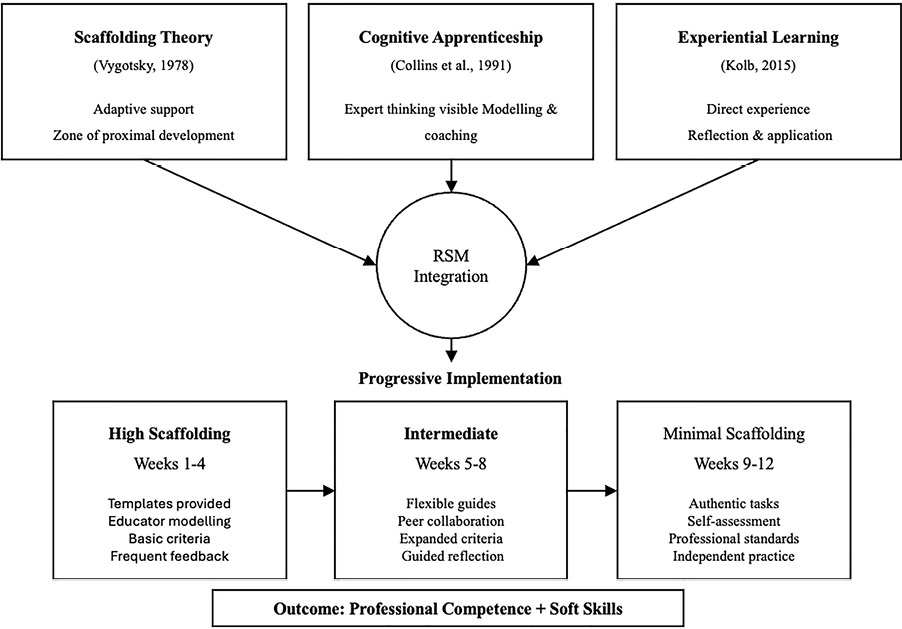
Figure 1. The responsive scaffold model framework and its progressive implementation trajectory.
First pillar—adaptive scaffolding: meeting learners where they are
Having established the need for a pedagogy that equips graduates with communication, teamwork and leadership capabilities, it is time to turn first to scaffolding, the adaptive support mechanism at the heart of RSM. Rooted in Vygotsky’s Zone of Proximal Development, scaffolding supplies carefully calibrated guidance that helps learners stretch beyond their current competence (Vygotsky, 1978). Rather than a static set of hints, it is a responsive process. The support is supplied when cognitive load is high and withdrawn as mastery grows, thereby fostering increasing autonomy (Van de Pol, et al., 2010). In RSM, educators provide dynamic support calibrated to learners’ evolving needs.
In Australian construction management programs, scaffolding involves educators modelling problem-solving processes, then progressively guiding group and individual tasks, gradually reducing support. Research confirms that such tailored scaffolding significantly enhances learning outcomes by adapting assistance to learners’ evolving abilities. Meta-analyses and empirical studies demonstrate that learners receiving adaptive scaffolding achieve significantly better outcomes than those receiving either no assistance or standardised support (Belland, et al., 2017; Doo, et al., 2020; Kim, et al., 2018). In RSM, educators regularly check what learners understand (by asking questions, giving quick tests, and watching group work) and offer just enough help to keep learners moving forward without solving problems for them. This reflects the cognitive apprenticeship principle of “learning through guided experience” whilst emphasising the importance of dynamic adjustment to meet learners’ evolving needs (Masava, et al., 2023).
Another benefit of scaffolding is increasing learners’ confidence and motivation by ensuring early success in learning tasks. Instead of facing overwhelming challenges alone, learners work through manageable tasks with support. This helps reduce anxiety, especially in construction programs that often contain complex technical material. The responsive nature of scaffolding also inherently accommodates diverse learner needs. For learners with disabilities, multi-modal scaffolds (visual templates, verbal coaching, and digital tools) ensure accessibility whilst enabling assistive technology integration. Non-traditional learners benefit from scaffolding that validates prior professional experience, whilst flexible timelines accommodate different learning paces. This adaptability aligns with research demonstrating that tailored support enhances outcomes across diverse populations (Van de Pol, et al., 2010) and that active learning approaches reduce achievement gaps across student demographics (Freeman, et al., 2014).
Belland, et al. (2017) found that scaffolding consistently improves learners’ cognitive results across different subjects and education levels. Their research shows scaffolding works exceptionally well with problem-focused educational methods, helping learners build advanced problem-solving abilities and construct arguments (Belland, et al., 2017). This evidence is relevant to construction management education, where problem-centred learning approaches (such as project scenarios and case studies) are highly desirable, but learners may struggle without appropriate guidance. RSM can preserve academic rigour whilst preventing cognitive overload by incorporating structured scaffolds, including site planning checklists, cost estimation templates, or guiding questions for case analyses (Kim & Lim, 2019). As a conceptual framework, RSM has not been empirically tested; however, scaffolding timeframes can be informed by established educational research. Scaffolding duration varies based on task complexity and learner readiness rather than fixed timelines. Van de Pol, et al. (2010) suggest that scaffolding typically spans 4–12 weeks for complex competencies, with gradual fading as learners demonstrate increasing independence. In construction management contexts, this might translate to scaffolding a semester-long project through three phases: high support (weeks 1–4), intermediate support (weeks 5–8), and minimal support (weeks 9–12). The key principle is responsive adjustment; scaffolding is reduced when learners consistently demonstrate competence, not according to predetermined schedules. This flexibility distinguishes RSM from rigid instructional sequences. Therefore, scaffolding theory contributes to RSM’s responsive, adjustable support principle, ensuring that learners are neither left entirely unguided nor spoon-fed solutions as they grapple with authentic construction problems. Over time, scaffolding is gradually removed, empowering learners to perform competently.
Second pillar—cognitive apprenticeship: making expert thinking visible
The second theoretical foundation of RSM is cognitive apprenticeship, which adapts the traditional master–apprentice model of craft learning to develop cognitive and academic competencies. In a cognitive apprenticeship, the educator makes their tacit problem-solving processes visible to learners through modelling and coaching, gradually withdrawing support as learners achieve proficiency (Collins, et al., 1991). Scaffolding theory explains how support should be provided, whilst cognitive apprenticeship offers a broader framework for the educator’s learning process in an authentic context.
In Australian construction education, cognitive apprenticeship aligns well due to the discipline’s practical nature. Educators using RSM explicitly model professional tasks, provide targeted feedback, and facilitate reflective practice, cultivating essential metacognitive and practical skills (Matsuo & Tsukube, 2020). Such an approach is shown to produce substantial benefits. Studies show that cognitive apprenticeship enhances teamwork, critical thinking, and problem-solving by having learners work alongside expert educators in workshop settings (Welsh & Dehler, 2012). Recent applications in management education demonstrate the continued effectiveness of cognitive apprenticeship approaches for developing professional competencies (Matsuo & Tsukube, 2020; Minshew, et al., 2021). This finding is particularly relevant for construction management education, where teamwork and resourcefulness are key graduate attributes. RSM nurtures these attributes in ways a lecture cannot by having learners learn alongside expert-like educators in a workshop-style setting (Minshew, et al., 2021). Learning involves more than transferring knowledge; it also includes active participation in a community of practice, specifically the professional community of construction managers. RSM encourages the creation of educational environments that mimic professional environments or job sites, where learners and educators address problems collaboratively.
Over time, the educator shifts from merely delivering information to acting as a mentor or “coach”, assisting learners in mastering construction management. This approach aligns with the broader trend in educational environments towards learning facilitation, a transformation many Australian universities have endorsed based on research into learning effectiveness and changing learner expectations (Merritt, et al., 2018). It ensures that theoretical knowledge is not delivered in isolation but in tandem with its application, thereby addressing one of the critical challenges in construction education by bridging theory and practice (Jensen, et al., 2023).
Third pillar—experiential learning: turning theory into action
The third theoretical underpinning of RSM is experiential learning, which means that learning is most profound when it arises from direct experience and subsequent reflection (Kolb, 2015). The influential experiential learning cycle outlines how learners progress through concrete experience, reflective observation, abstract conceptualisation, and active experimentation in a continuous process. These methods offer learners opportunities to encounter and navigate the complexities and uncertainties of construction projects within a safe educational environment. RSM strongly leverages this principle by embedding authentic tasks and practical exercises throughout the curriculum, ensuring that abstract concepts are consistently applied and tested in realistic scenarios (Collins & Redden, 2020).
Experiential learning particularly applies to the Australian context, where universities and industry have emphasised work-integrated learning and authentic assessment. Construction management programs across Australia aim to introduce internships, project-based pedagogies, and construction site labs to provide learners with a taste of real-world practice. RSM builds on these insights by incorporating experiential components in a structured and reflective manner. Each experiential activity in RSM is scaffolded and paired with guided reflection. For instance, learners might engage in a simulation game managing a construction project, then write a reflective journal linking their decisions to project management theories and discuss with peers how they would approach a similar project differently next time. This cycle aligns with Kolb’s model and helps learners transform experience into transferable knowledge (Kolb, 2015).
RSM integrates experiential tasks with explicit scaffolding and cognitive apprenticeship to ensure that experiential learning remains structured within curriculums. Activities are carefully selected, and educators facilitate guided reflection whilst avoiding unstructured trial-and-error approaches unsuitable for high-risk industries like construction. Experiential learning in RSM is not limited to physical activities; it also includes observational experiences, such as case studies and scenarios that mimic real projects. These can be particularly useful when resources or logistics prevent actual fieldwork. The Australian higher education context has a diverse learner body, and the Australian higher education benefits from such simulated experiential learning to provide all learners with exposure to construction practice (Quinn, et al., 2019). Ultimately, incorporating experiential learning into RSM ensures that construction management education is not merely an abstract intellectual exercise but a practical training ground. It bridges the gap between knowing and doing, addressing the long-recognised need to produce graduates who are informed about construction and capable of performing effectively within construction settings (Bevan & Kipka, 2012). The “feedback literacy” concept developed by Carless and Boud (2018) further reinforces RSM’s emphasis on developing learners’ capacity to seek, interpret, and implement feedback on their soft skills performance.
RSM in context: comparison with PBL and simulation-based learning
To clarify the responsive scaffold model’s distinctiveness, it is helpful to compare it with two well-known active learning approaches that share some philosophical common ground: PBL (Newman, 2003) and simulation-based learning (Sepasgozar, 2020). PBL and simulation pedagogies have influenced built environment education and offer valuable insights, yet RSM diverges from them in essential ways.
RSM versus PBL: guidance that prevents cognitive overload
PBL engages learners with complex, open-ended problems, encouraging collaborative problem-solving, with facilitators guiding rather than directing solutions. When implemented in construction education, PBL promotes learner autonomy, motivation, and the integration of diverse knowledge through authentic scenarios (Torres, et al., 2017). These benefits align with RSM’s aims of enhancing engagement, promoting self-directed learning, and developing teamwork skills. These positive outcomes also align with RSM’s active, empowered learning goal. RSM draws on the principles of PBL by centring learning on real-world problems. However, a key distinction lies in the level of guidance and structure provided.
It is essential to recognise that PBL exists along a continuum of guidance rather than as a single approach. Whilst early characterisations emphasised minimal guidance (Kirschner, et al., 2006), contemporary PBL implementations often incorporate substantial structure and facilitation. As Dolmans, et al. (2016) demonstrate in their comprehensive literature review, effective PBL typically includes various scaffolding elements, with instructors providing structured guidance calibrated to learners’ developing understanding and the complexity of learning tasks. Hmelo-Silver, et al. (2007) further argue that well-designed PBL inherently includes significant scaffolding elements.
RSM acknowledges these developments in guided PBL whilst offering a distinctive approach by systematically integrating scaffolding with cognitive apprenticeship. Rather than presenting RSM as superior to PBL, it suggests that RSM represents a complementary approach that specifically emphasises explicit skill development through responsive support structures. Whilst PBL traditionally focuses on self-directed knowledge acquisition, RSM provides a framework optimised for progressive soft skills development alongside technical competencies.
Traditional PBL deliberately minimises upfront guidance to encourage inquiry, potentially overwhelming novices due to cognitive overload (Kirschner, et al., 2006). In contrast, RSM explicitly integrates structured guidance, retaining complex contextual problems whilst providing responsive support throughout, thus offering a balanced approach between autonomy and scaffolding. For example, rather than expecting learners to independently identify all relevant knowledge gaps, an RSM educator may provide a framework or initial cues to ensure that critical factors in a construction case are noticed. Similarly, during self-directed problem-solving, RSM educators actively monitor group progress and offer timely “scaffolded” interventions if groups are stuck or off track. By doing so, RSM strives to achieve the best of both worlds: the engagement and deep learning of problem-solving combined with the effectiveness of expert guidance.
Another difference is that RSM is flexible in employing direct instruction when necessary. PBL purists avoid lectures entirely within a problem module. However, RSM allows educators to identify when learners need direct teaching of a concept to progress. In a construction management context, if a learner tackling a project scheduling problem does not understand a scheduling technique, the RSM approach would endorse a brief, just-in-time lesson or demonstration. This targeted instruction serves as a scaffold, enabling learners to overcome the dilemma and continue the problem-solving cycle at a higher level. Such adaptability addresses common faculty concerns that PBL sometimes leaves critical curriculum content to chance. RSM mitigates this by permitting structured inputs from educators to ensure alignment with learning outcomes.
In summary, RSM shares problem-centred learning features with PBL but uniquely incorporates continuous scaffolding to address criticisms of inadequate novice guidance (Kirschner, et al., 2006). It provides structured support, preventing learner confusion and ensuring coverage of essential disciplinary knowledge within active problem-solving contexts (Sonny Gad, 2024).
RSM versus simulations: structure without losing authenticity
Simulation-based learning uses iterative cycles of problem-solving and feedback in authentic professional scenarios, promoting practical skills, collaboration, and creativity (Marshalsey & Sclater, 2020). Early applications in construction education using virtual reality have demonstrated immersive and promising learning outcomes. Wang, et al. (2018) emphasise that virtual reality applications can deliver immersive experiences closely replicating real-world project processes. One challenge is scalability and structure. Traditional simulations require small learner-to-educator ratios, making them resource-intensive and challenging for large classes (Marshalsey & Sclater, 2020). RSM addresses this issue by implementing scaffolded peer learning and structured peer review sessions utilising clear rubrics and prompts, facilitating effective feedback within larger cohorts without requiring extensive faculty involvement. The educators subsequently intervene to provide higher level guidance or to resolve misconceptions, rather than trying to mentor every learner on an ongoing basis individually.
Simulation-based learning prioritises practical experience but sometimes neglects the theoretical foundations for comprehensive learning outcomes (Le, et al., 2014; Try, et al., 2021). RSM addresses this by deliberately combining learner-driven experiential tasks with explicit scaffolding to ensure essential theoretical knowledge is effectively integrated. For example, RSM includes mini-lectures or concept discussions at key points in a project, ensuring that learners possess the necessary theoretical grounding to inform their practical work. Furthermore, RSM emphasises the importance of making expectations explicit through scaffolding: learners are provided with frameworks or checklists for tasks that serve as reference points for their solutions. These scaffolds reduce the ambiguity and risk that learners sometimes associate with simulation tasks. RSM can be viewed as a “simulation with training wheels” that embraces the learn-by-doing approach and iterative feedback of simulations whilst offering more built-in guidance. Over time, as learners gain confidence, those “training wheels” (scaffolds) are removed, allowing learners to operate with increasing autonomy.
In summary, RSM is committed to authenticity, iteration, and community learning with simulation-based learning. However, it distinguishes itself by emphasising responsive support and alignment with formal curriculum requirements. It is designed to be more modular and adaptable; elements of RSM (scaffolded projects, cognitive apprenticeship techniques) can be integrated into standard subject structures without requiring a complete overhaul into a full simulation format. This flexibility is advantageous for resource-constrained programs. By comparing RSM with PBL and simulation pedagogies, it becomes clear that RSM is not an entirely new pedagogy, but rather an integration and refinement of proven approaches. Its novelty lies in combining scaffolding, cognitive apprenticeship, and experiential learning into a model focused on consistent, guided learner engagement. Having established RSM’s conceptual merits and distinctiveness, the next step is to consider how it can be implemented in the curriculum and how it aligns with educational standards and practical constraints in Australian higher education.
Blueprint to reality: implementing RSM in the curriculum
Implementing RSM from theory to practice requires careful planning at various levels: (i) curriculum design, (ii) educator preparation, and (iii) assessment strategy. This section presents an implementation framework for integrating RSM into the construction management program, ensuring that the approach enhances learner outcomes and aligns with Australian higher education’s assessment and quality standards.
Step 1—align learning outcomes, activities, and assessment
Effective RSM implementation requires curriculum (re)design incorporating scaffolded experiential learning through constructive alignment (Biggs, 1996). Constructive alignment links intended learning outcomes (ILOs) to supporting educational activities and assessments. For instance, a contract administration subject could include role-play simulations and authentic assessments corresponding to outcomes like resolving contractual disputes (Ruge, et al., 2019). The curriculum should progressively enhance experiential complexity. Initially, structured scaffolds support basic tasks, such as interpreting construction drawings. Gradually removing these supports increases learner autonomy, culminating in professional-level capstone projects that require graduates to apply their knowledge in increasingly complex contexts (Ruge, et al., 2019).
The integration of RSM does not require the elimination of traditional lectures; instead, lectures should be brief, targeted sessions that directly support experiential activities. Flipped classroom models, where foundational content is delivered online and class time is reserved for active learning, naturally complement RSM principles, effectively covering essential content and maximising learner engagement (Mojtahedi, et al., 2020). Curriculum designers must manage learner workload by prioritising depth over breadth. Recognising that RSM tasks typically require more time, disciplinary content should reduce superficial coverage, focusing instead on deeper skill retention and practical application (Collins, et al., 1991). Properly aligned RSM curriculums achieve essential outcomes through contextual application, ensuring educational standards whilst enhancing learner engagement and effectiveness (Daryono, et al., 2021).
Step 2—design assessment that feeds learning, not just grades
RSM contributes to ongoing discourse in assessment and evaluation literature by addressing several assessment challenges. First, it offers a solution to what Boud and Soler (2016) identify as the “sustainable assessment” challenge, developing assessment practices that simultaneously serve immediate feedback needs whilst building learners’ evaluative capabilities for lifelong learning. RSM fosters these skills by progressively transferring assessment responsibility to learners through calibrated peer and self-evaluation.
Second, the model addresses validity concerns in soft skills assessment by embedding evaluation in authentic contexts rather than isolated instruments. This approach aligns with Carless’ (2015) argument that assessment should be integrated with learning tasks rather than separated. The RSM assessment strategy creates what Carless named “learning-oriented assessment”, where the boundaries between learning activities and assessment blur, resulting in continuous feedback loops.
Finally, RSM contributes to discussions about assessment equity by providing explicit scaffolding for skills that might otherwise favour learners with prior exposure to professional environments. The model reduces hidden advantages and creates more equitable pathways to professional competence by making developing soft skills an explicit rather than implicit curriculum element.
Step 3—equip educators to coach, not lecture
RSM adoption shifts educators’ roles from lecturers to “facilitators”, necessitating focused faculty development workshops on scaffolding techniques, cognitive apprenticeship, and classroom management. These workshops equip educators in creating scaffolded tasks and effectively facilitate collaborative learning (Merritt, et al., 2018). Peer observation and team teaching (e.g., pairing novice instructors with experienced colleagues) enhance reflective practice during RSM adoption. Institutional incentives, such as recognition or adjusted workloads, support successful implementation (Penlerick & Capano, 2024).
Since many construction management educators have industry backgrounds, emphasising how RSM mirrors professional training methods can mitigate scepticism. Providing practical support resources, such as centralised case study repositories, simulations, and scaffold templates, notably decreases preparation time. A shared library of construction scenarios, complete with prompts and notes, fosters collaborative preparation in line with the Australian higher education tradition of educator communities of practice. Over time, faculty develop greater comfort and proficiency with RSM, which enhances effectiveness and reduces instructional effort.
Implementing RSM requires educators to transition from content experts to learning facilitators. To address this challenge, a structured faculty development program should accompany RSM implementation by including the following:
1. Skill coaching workshops: Educators engage in sessions that exemplify the cognitive apprenticeship approach, enhancing their capacity to make expert thinking visible and offer targeted feedback on soft skills.
2. Assessment calibration: Regular calibration sessions ensure the consistent application of soft skills rubrics, addressing the inherent subjectivity in evaluating interpersonal competencies.
3. Community of practice: A facilitated community of practice enables educators to share challenges, successes, and innovations in implementing RSM across various construction management subjects.
4. Industry partnership training: Faculty receive guidance on effectively incorporating industry partners into the educational process, ensuring authentic assessment whilst maintaining learning objectives.
This development program acknowledges that educators’ comfort and competence with responsive scaffolding are essential for the model’s success. As Merritt, et al. (2018) note, faculty development for cognitive apprenticeship approaches requires educators to experience the method themselves before effectively implementing it with learners.
Step 4—give feedback that builds professional judgement
RSM assessment prioritises authentic, performance-based tasks such as projects, presentations, and simulations, with ongoing checkpoints for timely feedback and to minimise learner anxiety (Browne, et al., 2009). Effective RSM feedback must be timely, specific, reflective, and continuous throughout learning activities. Criterion-referenced rubrics aligned with learning outcomes are crucial, promoting transparency and self-assessment. Using rubrics before tasks supports iterative refinement, whilst integrating peer and self-assessment deepens reflective practice and enhances learners’ understanding of assessment criteria (Nicol & Macfarlane-Dick, 2006).
Practical assessment of soft skills necessitates carefully crafted rubrics that balance specificity and contextual flexibility. For instance, a communication skills rubric within RSM might evaluate:
• Clarity of message (organisation, logical flow, and appropriate level of detail)
• Audience adaptation (language choice, technical terminology use, and responsiveness to questions)
• Professional presentation (confidence, engagement, and non-verbal communication)
• Supporting documentation (quality of visual aids, handouts, or written materials)
Each dimension would incorporate behavioural descriptors across various performance levels, fostering a common language for evaluation. As Panadero and Jonsson (2013) note, such analytic rubrics provide transparency in assessment whilst supporting learners’ ability to self-evaluate and improve. However, developing effective rubrics is an ongoing rather than a one-off task. Initial rubrics should be considered working documents, refined through collaboration amongst faculty and feedback from learners to enhance their clarity and relevance.
Whilst criterion-referenced rubrics provide a structure for assessment, they do not automatically eliminate subjectivity. As Jonsson and Svingby (2007) note in their review of rubric research, consistent application requires deliberate calibration amongst assessors. RSM implementation should include regular “calibration sessions” where faculty collectively review sample work, comparing assessments to establish shared interpretations of criteria. Although initially time-consuming, this process results in a more reliable assessment and fosters faculty consensus around soft skills standards.
To illustrate RSM’s assessment principles in practice, consider how communication competency might be progressively evaluated in a third-year Construction Project Management subject. In early weeks, learners receive highly scaffolded presentation tasks with detailed templates, specific behavioural criteria (e.g., “maintains eye contact for 60% of presentation duration”), and educator-only assessment. By mid-semester, scaffolding reduces to flexible outlines with expanded criteria incorporating audience adaptation, whilst structured peer assessment is introduced through guided feedback forms. Final assessments remove scaffolds entirely, requiring learners to navigate authentic stakeholder negotiations using professional industry standards, multi-source feedback, and critical self-assessment. This progression systematically builds assessment literacy whilst reducing subjectivity through graduated complexity and establishing inter-rater agreement on observable behaviours before progressing to nuanced professional judgements. Table 2 demonstrates how RSM’s progressive scaffolding approach operates in practice, mapping assessment complexity across temporal phases to show the systematic reduction of support as learners develop competency.
Calibration might involve:
• Faculty independently assessing the same learner presentations or team interactions.
• Discussing variations in scores to uncover sources of disagreement.
• Refining rubric language or assessment processes to enhance consistency.
• Creating exemplars at various performance levels for reference.
These calibration practices recognise that assessing soft skills requires professional judgement whilst offering systematic processes to enhance consistency and fairness.
The evaluation of RSM implementation must systematically monitor its impact on learning outcomes and learner satisfaction, ensuring alignment with standards for evidence-based practice. Strategies may include pre- and post-testing key competencies, learner surveys, and analyses of assessment data trends. Tracking improved grades or decreased failure rates can validate RSM’s effectiveness. Qualitative feedback can shed light on learners’ perceptions of engagement and the usefulness of scaffolding and feedback. Therefore, comprehensive assessment and evaluation confirm RSM’s effectiveness and reinforce its sustainability within the Australian higher education sector (Freeman, et al., 2014; Suwal & Singh, 2017).
RSM incorporates a multi-faceted assessment strategy that aligns with the progressive development of soft skills. Unlike traditional assessment approaches that may capture only outcomes, RSM employs continuous formative and summative evaluation techniques:
• Competency-based rubrics: Detailed rubrics break down complex soft skills such as communication, teamwork, and leadership into observable behaviours, enabling learners to comprehend expectations and monitor progress.
• 360-degree feedback: Learners receive focused feedback from various perspectives, including educators, peers, and industry representatives, providing a comprehensive view of their soft skills development. This method acknowledges the contextual nature of interpersonal competencies and offers learners diverse insights into their performance.
• Progressive self-assessment: Learners regularly evaluate their development against established criteria, enhancing critical reflective abilities and ownership of their learning journey. These self-assessments are compared with educators’ evaluations to identify perception gaps and improve learners’ professional self-awareness.
• Authentic performance tasks: Assessment activities reflect real-world construction scenarios where soft skills are naturally integrated, such as client presentations, team conflict resolution, and stakeholder negotiations. Performance in these contextualised tasks showcases transferable skill development rather than abstract knowledge.
Scaling the scaffold: making RSM work in large, digital, and resource-constrained classes
A critical examination of RSM must consider its practicality. Can RSM scale to large classes, sustain itself in resource-limited environments, and adapt to digital learning platforms? These questions are especially pertinent in the Australian higher education system, where universities are experiencing increasing enrolments, budget constraints, and rising digital delivery demands. This section explores these considerations and outlines strategies to uphold RSM’s efficacy across varied educational contexts.
Challenge 1—workload: lighten the load through peer scaffolding
Whilst RSM offers significant potential for enhancing soft skills development, several implementation challenges warrant acknowledgement:
• Resource intensity: The model’s responsive nature demands more frequent, individualised feedback than traditional teaching methods. This can be resource-intensive, especially in programs with large cohorts. To tackle this challenge, RSM integrates structured peer feedback protocols and digital feedback tools that enhance instructor capacity whilst maintaining quality.
• Learner resistance: Learners accustomed to technical content may initially resist a clear focus on developing soft skills. RSM addresses this by clearly communicating industry expectations and employment outcomes and weighing assessments to indicate the importance of these competencies.
• Assessment subjectivity: Soft skills assessments inherently involve subjective judgement, raising concerns about fairness and consistency. The model mitigates this through detailed rubrics, multiple assessors, and regular calibration sessions amongst educators.
• Contextual limitations: Although designed for construction management education, the model may need adaptation for subjects with largely theoretical content or those in the early stages of the program. RSM’s progressive nature allows for appropriate scaling of expectations based on learners’ academic levels and prior experiences.
• Resource intensity: The model’s responsive nature demands more frequent, personalised feedback than traditional teaching methods. This can be resource-heavy, especially in programs with large cohorts. The implications for faculty workload differ based on institutional context and existing infrastructure, whilst initial implementation requires a significant time investment in creating scaffold materials, rubrics, and assessment strategies.
Addressing this challenge necessitates practical resource planning and a phased approach to implementation. Instead of overhauling entire programs simultaneously, institutions could start with pilot subjects to develop and refine RSM strategies (Adachi, et al., 2018). It is advisable to begin with upper-year subjects, where class sizes are generally smaller and learners have gained sufficient disciplinary knowledge to engage effectively with complex tasks. Recognising these challenges is not a sign of weakness but demonstrates a pragmatic understanding of educational innovation. The RSM framework incorporates built-in flexibility to adapt to various institutional contexts whilst maintaining its core theoretical integrity.
Large classes challenge the interactive nature of RSM; however, active learning continues to be effective when suitably adapted. Research by Freeman, et al. (2014) shows that active methods yield improved performance even in large cohorts, though maximum benefits occur in smaller groups. This suggests that RSM can scale effectively through strategic adjustments.
Group-based learning enables RSM implementation in large classes by organising learners into collaborative teams working on scaffolded projects. Rotating roles within groups ensures active participation, whilst educators circulate, providing targeted scaffolding to maintain practical guidance (Wetzel & Farrow, 2021). This approach preserves RSM’s essential guidance whilst accommodating larger numbers.
Technology enhances scalability through audience response systems that simultaneously provide immediate feedback to hundreds of learners. According to Sepasgozar (2020), online discussion forums extend scaffolding beyond physical proximity, creating continuous feedback loops in blended environments. Peer scaffolding further broadens instructional capacity as advanced learners assist their peers whilst reinforcing their understanding. Despite larger class sizes, these strategies and rotation models, where cohorts engage in varied simultaneous activities, sustain RSM’s learner-centred effectiveness.
Challenge 2—limited resources: partner with industry, share artefacts
Although RSM requires a shift of resources from traditional lectures, it can still be resource-efficient and deliver improved outcomes. Many Australian universities already feature flexible learning spaces; even conventional classrooms can easily be adapted for collaborative learning. Workshop staffing can be strategically managed by involving industry professionals as guest mentors, which enhances support for educators and fosters university–industry collaboration (Nikmehr, et al., 2021). Such collaborative strategies are consistent with Australian higher education traditions and improve resource efficiency over time.
Whilst peer feedback extends instructional capacity in large cohorts, implementing practical peer assessment requires careful design and support. As Liu and Carless (2006) emphasise, learners need explicit training in providing constructive feedback, clear guidelines, and examples of practical commentary. Recent work on feedback literacy (Carless & Boud, 2018; Nicol & McCallum, 2021) provides frameworks for developing learners’ capacity to generate meaningful feedback. RSM incorporates this training through a scaffolded approach to peer assessment, where learners first practice with instructor-provided examples before engaging in guided peer review sessions.
The “peer feedback literacy” (Carless & Boud, 2018) concept provides a framework for understanding how learners develop the capacity to provide meaningful feedback. Instead of assuming learners can immediately produce high-quality peer assessments, RSM gradually develops this ability through structured activities and instructor modelling. This approach acknowledges that peer feedback is not merely a tactic for reducing workload, but a valuable learning experience.
Digital platforms can further support scalability through automated distribution of peer review assignments, standardised feedback forms, and instructor monitoring systems. Such technology allows faculty to oversee peer feedback whilst intervening only when necessary, creating a sustainable balance between comprehensive feedback and manageable workload (Adachi, et al., 2018). Moreover, a phased implementation approach, from pilot subjects to larger programs, enables institutions to gradually develop capacity and refine processes, addressing resource constraints pragmatically.
RSM demonstrates favourable long-term resource efficiency. Whilst the initial design of scaffolded activities requires significant effort, subsequent delivery becomes progressively streamlined as educators refine materials and anticipate common challenges. These resources can be shared across institutions, reducing sector-wide duplication of effort whilst distributing development costs. From a financial perspective, improved learner engagement typically enhances retention rates and decreases subject failures and outcomes, directly impacting performance-based funding models.
Challenge 3—digital delivery: keep guidance visible online
RSM translates effectively into online learning. Virtual reality and simulations enable remote engagement with structured guidance (Wang, et al., 2018). Interactive case-based modules on learning management systems replicate instructor scaffolding. Video conferencing and collaborative platforms facilitate cognitive apprenticeship via virtual demonstrations, observations, and coaching (Walker, et al., 2020). Digital platforms support responsive scaffolding through learning analytics, identifying learner difficulties for proactive intervention. Digital platforms readily support RSM implementation through existing features. Learning management systems enable adaptive release of scaffolded materials based on learner progress. Discussion forums progress from educator-guided to peer-led structures. Screen-recording tools capture expert thinking for cognitive apprenticeship, whilst collaborative platforms (i.e., Padlet) provide visual scaffolding workspaces. Virtual breakout rooms facilitate peer support with educator circulation. Learning analytics identify learners needing intervention, enabling responsive support before cognitive overload. These technologies maintain RSM’s calibrated support principle in digital environments. Digital discussions encourage contributions from quieter learners, creating inclusive online environments (Try, et al., 2021). Effective online RSM implementation necessitates faculty training in digital pedagogies. Successful translation of RSM online requires faculty development in digital pedagogies. Hajirasouli and Banihashemi (2022) emphasise the importance of “teaching presence”, active guidance, and support in online education. Whilst not all face-to-face techniques have direct online equivalents, instructional design support can develop alternatives that preserve RSM’s essential characteristics in digital formats.
Challenge 4—sustaining momentum: embed RSM in culture and policy
Sustainable implementation of RSM necessitates embedding it into the institutional culture beyond individual advocates. Institutional leadership must incorporate RSM into formal evaluation frameworks to enhance learning outcomes and learner satisfaction. The inherent responsiveness of RSM makes it adaptable, supporting long-term institutional adoption. Faculty continuity can be addressed by integrating RSM principles into educators’ induction, mentoring new educators, and developing comprehensive documentation that surpasses individual faculty members. The model’s foundations in scaffolding, cognitive apprenticeship, and experiential learning provide the necessary flexibility for adaptation across various settings. By maintaining its learner-centred focus whilst accommodating practical constraints, RSM presents a sustainable approach to construction management education that aligns with pedagogical best practices and institutional realities.
Where next? Research is needed to test and refine RSM
Whilst this paper establishes the theoretical foundations for RSM, empirical validation represents the next critical step in developing this approach. Future research might pursue several complementary paths:
• Design-based research studies: Implementing RSM elements in pilot subjects whilst systematically collecting data on learner engagement, learning outcomes, and skill development would provide initial validation of the model. Following the design-based research methodology outlined by Anderson and Shattuck (2012), such studies would allow iterative model refinement based on empirical feedback from authentic educational settings. Research questions might include the following: How do learners experience the progressive scaffolding approach? Which elements of cognitive apprenticeship prove most effective in construction management contexts? How do specific scaffold designs affect learning outcomes for different learner populations?
• Comparative case studies: Applying RSM in parallel with traditional approaches across matched subject sections would allow examination of differences in learner performance, engagement metrics, and industry-relevant skill development. This comparative approach could help identify the specific conditions under which RSM provides advantages over conventional teaching methods whilst highlighting areas for refinement. Mixed-methods research combining performance data with learner and faculty perceptions would provide vibrant insights.
• Longitudinal impact assessment: The ultimate test of RSM’s effectiveness is graduate workplace performance. Tracking graduates from RSM-based programs into early career positions could evaluate their professional adaptation compared to traditionally trained peers. Insights from industry partners regarding graduate preparation would be particularly valuable in assessing the model’s impact on the theory-practice gap identified in the literature.
• Faculty experience research: Investigating educator perspectives on implementing RSM would address practical implementation questions, including workload implications, professional development needs, and perceived effectiveness compared to previous approaches. Faculty adoption is critical in any pedagogical innovation, making this research strand essential for understanding implementation barriers and enablers.
• Cross-disciplinary applications: Testing RSM principles in diverse professional education contexts beyond construction management would identify core elements that transfer effectively versus aspects requiring discipline-specific adaptation. This research would address concerns about disciplinary variation in soft skills needs and pedagogical cultures, potentially extending RSM’s relevance across higher education.
These research directions provide empirical grounding for the conceptual framework presented here whilst generating practical implementation guidance for institutions considering RSM adoption.
Beyond construction: can RSM help other professions build soft skills?
Whilst proposed within Australian construction management education, RSM offers transferable principles relevant to various educational contexts internationally. Integrating scaffolding, cognitive apprenticeship, and experiential learning provides a framework applicable to any discipline where complex professional skills need to be developed alongside technical knowledge.
Cross-disciplinary applications
• Engineering education: The RSM approach could be readily adapted for civil, mechanical, or electrical engineering programs, particularly in capstone subjects where technical and soft skills naturally converge. Identify similar employability challenges across engineering disciplines, with employers consistently valuing communication and teamwork alongside technical expertise. RSM’s structured approach to developing these professional competencies addresses this common challenge whilst accommodating discipline-specific technical contexts.
• Business education: Business programs have long emphasised case studies and simulations that align with RSM’s experiential components. However, as Struyven, et al. (2010) note, business education often assumes rather than explicitly teaches communication and leadership skills. RSM’s scaffolded development of these competencies could enhance existing approaches by making skill development more deliberate and progressive, particularly in areas like management, marketing, and entrepreneurship, where interpersonal effectiveness is crucial.
• Health professions education: Nursing, medicine, and allied health fields face similar challenges in bridging theoretical knowledge and professional practice. These disciplines have already embraced some elements of cognitive apprenticeship through clinical placements and simulation. RSM could provide a more comprehensive framework for integrating these approaches throughout the curriculum, particularly emphasising patient communication, interprofessional collaboration, and clinical reasoning skills.
International adaptations
Cultural variations in soft skills expressions, particularly in communication styles and teamwork expectations, require consideration when implementing RSM internationally. However, the model’s responsive nature accommodates such contextual differences, as scaffolding is adjusted based on learners’ needs rather than predetermined sequences. Holley (2017) emphasises that pedagogical frameworks must recognise cultural diversity in professional practice, a principle RSM embraces through its adaptable structure.
Educational systems with varying resource profiles can also adapt RSM principles accordingly. Resource-rich environments may implement comprehensive simulation facilities and extensive individual coaching, whilst resource-constrained settings might emphasise peer scaffolding and targeted group interventions. This flexibility ensures RSM’s relevance across diverse global contexts. Furthermore, the RSM approach could be tailored for civil, mechanical, or electrical engineering programs, particularly in capstone subjects where technical and soft skills naturally converge. Similarly, business education’s focus on case studies and simulations aligns with RSM’s experiential components but could benefit from more structured scaffolding of interpersonal competencies. International adaptations must consider cultural variations in the expression of soft skills, particularly in communication styles and teamwork expectations. However, the model’s responsive nature accommodates such contextual differences, as scaffolding is adjusted based on learner needs rather than predetermined sequences. The assessment framework developed for RSM also has broader applications for evaluating complex professional competencies in any field struggling with the authentic assessment of hard-to-measure skills. As higher education globally faces increasing pressure to demonstrate graduate employability, RSM offers a structured approach to developing and assessing the competencies employers consistently value.
Conclusion: from hard hats to soft skills, closing the theory–practice gap
Australian construction management education faces a critical need for pedagogical transformation due to evolving industry demands and the limitations of traditional lectures. RSM offers a theoretically sound and practical solution by integrating scaffolding, cognitive apprenticeship, and experiential learning. RSM shifts the educational focus from teaching to active learner engagement, authentic problem-solving, and continuous feedback, effectively addressing significant gaps in traditional approaches.
This conceptual paper establishes the theoretical foundations for RSM by synthesising established educational approaches into a cohesive model that specifically addresses the challenges of soft skills development in construction management education. The paper acknowledges its theoretical nature whilst clearly linking RSM and empirically validated educational practices. Each component of the model, progressive scaffolding, cognitive apprenticeship techniques, and structured experiential learning, draws upon substantial research evidence, indicating that their integration could yield significant benefits for construction management education. As the research agenda outlines, future empirical testing will be essential to validate these theoretical propositions and refine implementation strategies.
Whilst this paper focuses on foundational pedagogical principles, RSM’s emphasis on critical professional judgement becomes increasingly vital as generative AI transforms construction management practice. The cognitive apprenticeship component provides a framework for demonstrating appropriate AI tool use whilst maintaining professional accountability. RSM’s scaffolding can progressively incorporate AI literacy, initially as guided support, then developing learners’ abilities to evaluate AI outputs against professional standards. Peer scaffolding develops human collaboration skills that complement AI capabilities. RSM’s experiential scenarios enable learners to exercise judgement about appropriate AI use, understanding both capabilities and limitations. Future RSM implementations should explicitly address AI integration, ensuring graduates leverage technological advances whilst maintaining essential human judgement.
Importantly, RSM aligns closely with the realities of Australian higher education, proposing practical solutions for large, diverse cohorts through group scaffolding and peer-assisted learning. The model addresses resource limitations and digital learning challenges by employing innovative technology and collaborative practices, ensuring scalability and sustainability across various institutional contexts. Compared to problem-based and simulation-based learning approaches, RSM offers a complementary framework emphasising explicit skill development through responsive support. Rather than competing with these established pedagogies, RSM integrates and refines their strengths, creating an evolved approach that targets the theory–practice gap in construction management education.
From an assessment perspective, RSM closely aligns with contemporary educational standards, integrating constructive alignment between learning outcomes, activities, and assessments. It prioritises authentic assessment and continuous feedback, fostering quality education by ensuring timely feedback for learners and targeted skill development. Through deep engagement, RSM nurtures critical thinking and lifelong learning, essential objectives for education in the built environment.
Adopting RSM positions and developing environmental programs as leaders in educational innovation significantly enhance graduate readiness for professional leadership and innovation. The framework offers a promising approach to addressing the ongoing challenge of producing professionally competent graduates equipped with technical knowledge and the essential soft skills demanded by the industry. As construction management education continues to evolve, RSM provides a theoretically grounded framework to guide this transformation.
References
Adachi, C., Tai, J., & Dawson, P. (2018). Academics’ perceptions of the benefits and challenges of self and peer assessment in higher education. Assessment & Evaluation in Higher Education, 43(2), 294–306. https://doi.org/10.1080/02602938.2017.1339775
Anderson, T., & Shattuck, J. (2012). Design-Based Research:A Decade of Progress in Education Research? Educational Researcher, 41(1), 16–25. https://doi.org/10.3102/0013189X11428813
Belland, B. R., Walker, A. E., Kim, N. J., & Lefler, M. (2017). Synthesizing Results From Empirical Research on Computer-Based Scaffolding in STEM Education: A Meta-Analysis. Review of Educational Research, 87(2), 309–344. https://doi.org/10.3102/0034654316670999
Bevan, D., & Kipka, C. (2012). Experiential learning and management education. Journal of Management Development, 31(3), 193–197. https://doi.org/10.1108/02621711211208943
Biggs, J. (1996). Enhancing Teaching through Constructive Alignment. Higher Education, 32(3), 347–364. https://doi.org/10.1007/BF00138871
Borg, J., & Scott-Young, C. (2020). Employers’ perspectives on work readiness in construction: are project management graduates hitting the ground running? International Journal of Managing Projects in Business, 13(6), 1363–1379. https://doi.org/10.1108/IJMPB-10-2019-0238
Boud, D., & Soler, R. (2016). Sustainable assessment revisited [Article]. Assessment & Evaluation in Higher Education, 41(3), 400–413. https://doi.org/10.1080/02602938.2015.1018133
Browne, L., Hough, M., & Schwab, K. (2009). Scaffolding: a promising approach to fostering critical thinking. Schole: A Journal of Leisure Studies and Recreation Education, 24(1), 114–119. https://doi.org/10.1080/1937156X.2009.11949630
Carless, D. (2015). Excellence in university assessment: learning from award-winning teaching. Routledge. https://doi.org/10.4324/9781315740621
Carless, D., & Boud, D. (2018). The development of student feedback literacy: enabling uptake of feedback. Assessment & Evaluation in Higher Education, 43(8), 1315–1325. https://doi.org/10.1080/02602938.2018.1463354
Collins, A., Brown, J. S., & Holum, A. (1991). Cognitive apprenticeship: Making thinking visible. American educator, 15(3), 6–11.
Collins, W., & Redden, L. (2020). Improving Student’s Estimating Abilities through Experiential Learning. International Journal of Construction Education and Research, 17(2), 117–132. https://doi.org/10.1080/15578771.2020.1739178
Daryono, R. W., Rochmadi, S., & Hidayat, N. (2021). Development and validation of video-based learning media to increase competency achievement in civil engineering education. Journal of Physics: Conference Series, 1833(1), 012022–undefined. https://doi.org/10.1088/1742-6596/1833/1/012022
Dawson, P., Carless, D., & Lee, P. P. W. (2020). Authentic feedback: supporting learners to engage in disciplinary feedback practices. Assessment & Evaluation in Higher Education, 286–296. https://doi.org/10.1080/02602938.2020.1769022
Deslauriers, L., McCarty, L. S., Miller, K., Callaghan, K., & Kestin, G. (2019). Measuring actual learning versus feeling of learning in response to being actively engaged in the classroom. Proceedings of the National Academy of Sciences, 116(39), 19251–19257. https://doi.org/10.1073/pnas.1821936116
Dolmans, D. H. J. M., Loyens, S. M. M., Marcq, H., & Gijbels, D. (2016). Deep and surface learning in problem-based learning: a review of the literature. Advances in Health Sciences Education, 21(5), 1087–1112. https://doi.org/10.1007/s10459-015-9645-6
Doo, M. Y., Bonk, C. J., & Heo, H. (2020). A Meta-Analysis of Scaffolding Effects in Online Learning in Higher Education. International Review of Research in Open and Distributed Learning, 21(3), 60–80. https://doi.org/10.19173/irrodl.v21i3.4638
Forster, A., Pilcher, N., Tennant, S., Murray, M., Craig, N., & Copping, A. (2017). The fall and rise of experiential construction and engineering education: decoupling and recoupling practice and theory. Higher Education Pedagogies, 2(1), 79–100. https://doi.org/10.1080/23752696.2017.1338530
Freeman, S., Eddy, S. L., McDonough, M., Smith, M. K., Okoroafor, N., Jordt, H., & Wenderoth, M. P. (2014). Active learning increases student performance in science, engineering, and mathematics. Proceedings of the National Academy of Sciences, 111(23), 8410–8415. https://doi.org/10.1073/pnas.1319030111
Hajirasouli, A., & Banihashemi, S. (2022). Augmented reality in architecture and construction education: state of the field and opportunities. International Journal of Educational Technology in Higher Education, 19(1), 1–28. https://doi.org/10.1186/s41239-022-00343-9
Hmelo-Silver, C., Duncan, R., & Chinn, C. (2007). Scaffolding and Achievement in Problem-Based and Inquiry Learning: A Response to Kirschner, Sweller, and Clark (2006). Educational Psychologist, 42(2), 99–107. https://doi.org/10.1080/00461520701263368
Holley, K. A. (2017). Interdisciplinary Curriculum and Learning in Higher Education. Oxford Research Encyclopedia of Education. https://doi.org/10.1093/acrefore/9780190264093.013.138
Jaakkola, E. (2020). Designing conceptual articles: four approaches. AMS Review, 10(1), 18–26. https://doi.org/10.1007/s13162-020-00161-0
Jensen, K., Miller, I., Suresh, D., & Martin, J. (2023). Beyond skills: building research capacity through cognitive apprenticeship and social capital. Australasian Journal of Engineering Education, 28(1), 97–109. https://doi.org/10.1080/22054952.2023.2230068
Jonsson, A., & Svingby, G. (2007). The use of scoring rubrics: Reliability, validity and educational consequences. Educational Research Review, 2(2), 130–144. https://doi.org/10.1016/j.edurev.2007.05.002
Kim, J., & Lim, K. (2019). Promoting learning in online, ill-structured problem solving: The effects of scaffolding type and metacognition level. Computers & Education, 138, 116–129. https://doi.org/10.1016/j.compedu.2019.05.001
Kim, N. J., Belland, B. R., & Walker, A. E. (2018). Effectiveness of Computer-Based Scaffolding in the Context of Problem-Based Learning for Stem Education: Bayesian Meta-analysis. Educational Psychology Review, 30(2), 397–429. https://doi.org/10.1007/s10648-017-9419-1
Kirschner, P. A., John, S., & and Clark, R. E. (2006). Why Minimal Guidance During Instruction Does Not Work: An Analysis of the Failure of Constructivist, Discovery, Problem-Based, Experiential, and Inquiry-Based Teaching. Educational Psychologist, 41(2), 75–86. https://doi.org/10.1207/s15326985ep4102_1
Kolb, D. A. (2015). Experiential learning: experience as the source of learning and development (Second edition. ed.). Pearson Education.
Le, Q., Pedro, A., & Park, C. (2014). A Social Virtual Reality Based Construction Safety Education System for Experiential Learning. Journal of Intelligent & Robotic Systems, 79(3-4), 487–506. https://doi.org/10.1007/s10846-014-0112-z
Liu, M. F., & Carless, D. (2006). Peer feedback: The learning element of peer assessment. Teaching in Higher Education, 11(3), 279–290. https://doi.org/10.1080/13562510600680582
Luo, J., & Chan, C. K. Y. (2022). Conceptualising evaluative judgement in the context of holistic competency development: results of a Delphi study. Assessment & Evaluation in Higher Education, 48(4), 513–528. https://doi.org/10.1080/02602938.2022.2088690
Marshalsey, L., & Sclater, M. (2020). Together but Apart: Creating and Supporting Online Learning Communities in an Era of Distributed Studio Education. International Journal of Art & Design Education, 39(4), 826–840. https://doi.org/10.1111/jade.12331
Masava, B., Nyoni, C. N., & Botma, Y. (2023). Scaffolding in Health Sciences Education Programmes: An Integrative Review. Medical Science Educator, 33(1), 255–273. https://doi.org/10.1007/s40670-022-01691-x
Matsuo, M., & Tsukube, T. (2020). A review on cognitive apprenticeship in educational research: Application for management education. International Journal of Management Education, 18(3), 100417–undefined. https://doi.org/10.1016/j.ijme.2020.100417
Mehrabi Boshrabadi, A., & Hosseini, M. R. (2020). Designing collaborative problem solving assessment tasks in engineering: an evaluative judgement perspective. Assessment & Evaluation in Higher Education, 46(6), 913–927. https://doi.org/10.1080/02602938.2020.1836122
Merritt, C., Daniel, M., Munzer, B. W., Nocera, M., Ross, J. C., & Santen, S. A. (2018). A Cognitive Apprenticeship-Based Faculty Development Intervention for Emergency Medicine Educators. Western Journal of Emergency Medicine: Integrating Emergency Care with Population Health, 19(1), 198–204. https://doi.org/10.5811/westjem.2017.11.36429
Minshew, L. M., Olsen, A. A., & McLaughlin, J. E. (2021). Cognitive Apprenticeship in STEM Graduate Education: A Qualitative Review of the Literature. AERA Open, 7(1), 1–16. https://doi.org/10.1177/23328584211052044
Mojtahedi, M., Kamardeen, I., Rahmat, H., & Ryan, C. (2020). Flipped Classroom Model for Enhancing Student Learning in Construction Education. Journal of Civil Engineering Education, 146(2), 05019001. https://doi.org/10.1061/(ASCE)EI.2643-9115.0000004
Newman, M. (2003). A Pilot Systematic Review and Meta-Analysis on the Effectiveness of Problem Based Learning. https://research.ebsco.com/linkprocessor/plink?id=e8a8e936-f669-3da9-86b5-354c1cdcc2aa
Nicol, D., & McCallum, S. (2021). Making internal feedback explicit: exploiting the multiple comparisons that occur during peer review. Assessment & Evaluation in Higher Education, 1–19. https://doi.org/10.1080/02602938.2021.1924620
Nicol, D. J., & Macfarlane-Dick, D. (2006). Formative assessment and self‐regulated learning: a model and seven principles of good feedback practice. Studies in Higher Education, 31(2), 199–218. https://doi.org/10.1080/03075070600572090
Nikmehr, B., Hosseini, M. R., Martek, I., Zavadskas, E., & Antucheviciene, J. (2021). Digitalization as a Strategic Means of Achieving Sustainable Efficiencies in Construction Management: A Critical Review. Sustainability, 13(9), 1–12. https://doi.org/10.3390/su13095040
Norton, A. (2023). Mapping Australian higher education 2023. https://polis.cass.anu.edu.au/research/publications/mapping-australian-higher-education-2023
Panadero, E., & Jonsson, A. (2013). The use of scoring rubrics for formative assessment purposes revisited: A review. Educational Research Review, 9(0), 129–144. https://doi.org/10.1016/j.edurev.2013.01.002
Penlerick, D. R., & Capano, C. (2024). Effect of Construction Management Instructors’ Degree and Industry Experience on Construction Management Graduate Job Readiness. International Journal of Construction Education and Research, 20(4), 523–543. https://doi.org/10.1080/15578771.2024.2404021
Quinn, D., Cioffi, E., Hill, S., Kor, M., Longford, A.-C., Moller, R., & Rathore, P. (2019). Implementing Work-Integrated Learning in Online Construction Management Courses. Journal of University Teaching and Learning Practice, 16(1), 1–14. https://doi.org/10.53761/1.16.1.9
Ruge, G., Tokede, O., & Tivendale, L. (2019). Implementing constructive alignment in higher education – cross-institutional perspectives from Australia. Higher Education Research & Development, 38(4), 833–848. https://doi.org/10.1080/07294360.2019.1586842
Sepasgozar, S. M. E. (2020). Digital Twin and Web-Based Virtual Gaming Technologies for Online Education: A Case of Construction Management and Engineering. Applied Sciences, 10(13), 1–32. https://doi.org/10.3390/app10134678
Sonny Gad, A. (2024). Project Management Pedagogy: Cultivating Critical Thinking Skills in Higher Education. Advanced Education(24), 151–172. https://doi.org/10.20535/2410-8286.296878
Struyven, K., Dochy, F., & Janssens, S. (2010). ‘Teach as you preach’: the effects of student‐centred versus lecture‐based teaching on student teachers’ approaches to teaching. European Journal of Teacher Education, 33(1), 43–64. https://doi.org/10.1080/02619760903457818
Suwal, S., & Singh, V. (2017). Assessing students’ sentiments towards the use of a Building Information Modelling (BIM) learning platform in a construction project management course. European Journal of Engineering Education, 43(4), 492–506. https://doi.org/10.1080/03043797.2017.1287667
Swedberg, R. (2011). Theorizing in sociology and social science: turning to the context of discovery. Theory and Society, 41(1), 1–40. https://doi.org/10.1007/s11186-011-9161-5
Theobald, E. J., Hill, M. J., Tran, E., Agrawal, S., Arroyo, E. N., Behling, S., Chambwe, N., Cintrón, D. L., Cooper, J. D., Dunster, G., Grummer, J. A., Hennessey, K., Hsiao, J., Iranon, N., Jones, L., Jordt, H., Keller, M., Lacey, M. E., Littlefield, C. E.,…Freeman, S. (2020). Active learning narrows achievement gaps for underrepresented students in undergraduate science, technology, engineering, and math. Proceedings of the National Academy of Sciences, 117(12), 6476–6483. https://doi.org/10.1073/pnas.1916903117
Torres, A., Sriraman, V., & Ortiz, A. (2017). Implementing Project Based Learning Pedagogy in Concrete Industry Project Management. International Journal of Construction Education and Research, 15(1), 62–79. https://doi.org/10.1080/15578771.2017.1393475
Try, S., Panuwatwanich, K., Tanapornraweekit, G., & Kaewmoracharoen, M. (2021). Virtual reality application to aid civil engineering laboratory course: A multicriteria comparative study. Computer Applications in Engineering Education, 29(6), 1771–1792. https://doi.org/10.1002/cae.22422
Van de Pol, J., Volman, M., & Beishuizen, J. (2010). Scaffolding in Teacher–Student Interaction: A Decade of Research. Educational Psychology Review, 22(3), 271–296. https://doi.org/10.1007/s10648-010-9127-6
Vygotsky, L. S. (1978). Interaction between learning and development. In M. Cole (Ed.), Mind in society: the development of higher psychological processes (pp. 79–91). Harvard University Press.
Walker, J., Towey, D., Pike, M., Kapogiannis, G., Elamin, A., & Wei, R. (2020). Developing a pedagogical photoreal virtual environment to teach civil engineering. Interactive Technology and Smart Education, 17(3), 303–321. https://doi.org/10.1108/ITSE-10-2019-0069
Wang, P., Wu, P., Wang, J., Chi, H.-L., & Wang, X. (2018). A Critical Review of the Use of Virtual Reality in Construction Engineering Education and Training. International Journal of Environmental Research Public Health, 15(6), 1–18. https://doi.org/10.3390/ijerph15061204
Welsh, M. A., & Dehler, G. (2012). Combining Critical Reflection and Design Thinking to Develop Integrative Learners. Journal of Management Education, 37(6), 771–802. https://doi.org/10.1177/1052562912470107
Wetzel, E., & Farrow, C. B. (2021). Active learning in construction management education: faculty perceptions of engagement and learning. International Journal of Construction Management, 23(8), 1417–1425. https://doi.org/10.1080/15623599.2021.1974684