Construction Economics and Building
Vol. 26, No. 3/4
2026
ARTICLE (PEER REVIEW)
Biochar-Enhanced Cementitious Materials: Influence of Feedstock and Production Parameters on Cement Properties
Mohamed Dafalla1,2 , Abrar Inayat1,3,* , Chaouki Ghenai1,4 , Abdallah Shanableh1,2
1 Biomass and Bioenergy Research Group, Center for Sustainable Energy and Power Systems Research, Research Institute of Sciences and Engineering, University of Sharjah, Sharjah, United Arab Emirates
2 Department of Civil and Environmental Engineering, University of Sharjah, Sharjah, United Arab Emirates
3 Department of Mechanical and Nuclear Engineering, University of Sharjah, Sharjah, United Arab Emirates
4 Department of Sustainable and Renewable Energy Engineering, University of Sharjah, Sharjah, United Arab Emirates
Corresponding author: Abrar Inayat, ainayat@sharjah.ac.ae
DOI: https://doi.org/10.5130/81n5ea48
Article History: Received 02/06/2025; Revised 19/01/2026; Accepted 22/05/2026; Published 29/10/2026
Citation: Dafalla, M., Inayat, A., Ghenai, C., Shanableh, A. 2026. Biochar-Enhanced Cementitious Materials: Influence of Feedstock and Production Parameters on Cement Properties. Construction Economics and Building, 26:3/4, 1–20. https://doi.org/10.5130/81n5ea48
Abstract
Adding biochar to cement-based materials has recently been proposed to enhance mechanical properties and, at the same time, contribute to carbon capture in construction. However, biochar efficiency in cementitious composites depends on the biomass type, production process, and properties of the produced biochar. This paper presents a detailed study of the effects of biochar production parameters on the structural and functional properties of biochar, with a special focus on pyrolysis temperature. The selection of raw biomass affects the specific surface area, pore structure, and chemical activity of biochar. This review aims to examine the effects of biochar addition on the compressive and flexural strength and thermal stability of cementitious composites. The results indicate that optimal biochar dosages (in the range of 1%–5% by weight of cement) are capable of enhancing the quality of concrete and decreasing the emission of greenhouse gases. However, there are some gaps in the current research, such as the requirement for standardized biochar production methods and the lack of information on the durability of the developed composites for long-term use in real construction projects. By bridging these gaps, this study aimed to guide future investigations and real-world uses of biochar in the production of resilient, low-carbon, and sustainable building materials.
Keywords
Biochar; Sustainable Construction; Cementitious Composites; Mechanical Strength; Green Building Materials
Introduction
The rapid pace of urbanization and infrastructure development has significantly increased the global demand for cement, highlighting the urgent need for sustainable construction materials to mitigate the construction sector’s environmental impact, particularly through effective carbon dioxide (CO₂) sequestration (Room & Bahadori-Jahromi, 2024). Cement production is a major contributor to anthropogenic greenhouse gas emissions, releasing approximately 0.9 tons of CO₂ per ton of cement produced, contributing to nearly 8% of global CO₂ emissions (Ige et al., 2024). This substantial carbon footprint is attributed to the energy-intensive production process of cement, which involves the calcination of limestone, requiring high temperatures typically achieved through fossil fuel combustion and generating CO₂ as a byproduct of chemical reactions (Senadheera et al., 2023). Figure 1 shows a pronounced and continuous increase in CO₂ emissions associated with cement production over the past century. Emissions now exceed 1.5 billion metric tons per year, with the most rapid acceleration occurring from the mid-twentieth century onward, which is known as the Great Acceleration. This long-term upward trend highlights the growing environmental burden of conventional cement production and reinforces the need for low-carbon material alternatives. Within this context, biochar-enhanced cementitious composites emerge as a promising strategy to reduce both process emissions and the embodied carbon of construction materials. The construction sector’s emissions are not limited to cement production but span all phases of the construction process, from raw material preparation to on-site construction activities, emphasizing the need for comprehensive CO₂ emission control and mitigation strategies (Mensah et al., 2021). As concrete remains one of the most widely used building materials globally due to its affordability, strength, and versatility, its environmental impact is profound, with traditional cement-based composites not only having high embodied carbon but also presenting sustainability challenges due to their limited recyclability and resource-intensive production processes (Aman et al., 2022). This scenario has prompted researchers to explore alternative materials, with bio-based constituents emerging as a promising solution to reduce emissions and improve sustainability (Senadheera et al., 2023). However, while integrating bio-based materials into cement formulations could potentially lower CO₂ emissions and enhance the carbon footprint of construction materials, challenges related to material degradation and potential adverse effects on cement performance remain (Mensah et al., 2021).
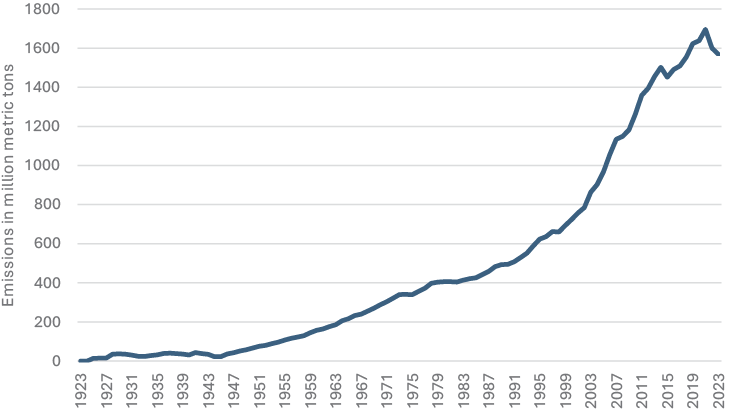
Figure 1. Annual global CO₂ emissions from cement from 1923 to 2023 (Friedlingstein et al., 2025).
Biochar, a carbon-rich byproduct of biomass pyrolysis, is increasingly recognized for its potential as a sustainable additive in construction materials, particularly in cement and concrete composites (Senadheera et al., 2023). Traditionally used in agriculture for soil amendment and carbon storage, biochar’s highly porous and functionalized surface, combined with its stability and pollutant immobilization capacity, has broadened its applicability across various sectors, including construction (Ye et al., 2025). Its integration into cementitious composites offers significant advantages, including enhanced mechanical strength, durability, and carbon sequestration through internal curing, pore refinement, and crack resistance (Khitab et al., 2021). Moreover, biochar can act as a substitute for cement, contributing to structural improvement in concrete when used in optimal proportions (Senadheera et al., 2023). Research has indicated that biochar not only improves the physical, thermal, and mechanical properties of cement-based composites but also enhances sustainability by reducing CO₂ emissions and mitigating natural resource depletion (Y. Zhang et al., 2022). Specific studies have highlighted its versatility, such as biochar derived from sewage sludge demonstrating pozzolanic properties that benefit concrete applications (Abdul Hamed et al., 2025; Nakić et al., 2025), and the integration of coffee biochar contributing to material sustainability while addressing supply chain and consistency challenges (Roychand et al., 2025). One of biochar’s most impactful roles in construction is its capacity for long-term carbon sequestration, where its stable carbon form effectively locks carbon away (Ganesan et al., 2025). Biochar can act as a negative-emission component in cementitious materials when its highly stable aromatic carbon, which is shown to persist for centuries, is permanently sequestered within long-lived concrete structures, thereby locking CO₂ (Shrestha et al., 2023). Deng et al. (2024) demonstrated that sustainably produced biochar could deliver up to 0.92 billion t CO₂ per year of negative emissions at an average cost of approximately US$90 per ton, indicating its capacity to meet the majority of carbon-removal requirements in pathways that aligned with China’s 2060 carbon-neutrality goal. Although challenges such as reduced workability in cementitious mixes may arise, these can be effectively managed through the use of flow-enhancing admixtures, reinforcing biochar’s promise as a transformative material in sustainable construction practices (Khitab et al., 2021).
The integration of biochar into cementitious materials aligns closely with several United Nations Sustainable Development Goals (SDGs). The valorization of biomass residues into biochar supports SDG 12 (Responsible Consumption and Production) by promoting circular material flows and reducing waste generation, as evidenced by recent studies on waste-derived biochar (Mekky et al., 2025). The demonstrated reductions in carbon footprint and the carbon-negative potential of biochar-enhanced cementitious systems contribute to SDG 13 (Climate Action). Furthermore, improvements in performance, durability, and environmental efficiency reported across scientometric and environmental analyses reinforce contributions to SDG 9 (Industry, Innovation, and Infrastructure) and SDG 11 (Sustainable Cities and Communities) by advancing low-carbon, resilient construction materials (Patro et al., 2024; Mekky et al., 2025).
This review aims to provide a comprehensive analysis of biochar’s application in construction materials, emphasizing its potential as a sustainable and carbon-sequestering additive in cementitious composites. It will explore recent advancements in biochar production technologies, examine how feedstock selection and pyrolysis conditions influence biochar properties, and assess their impact on concrete performance. This review’s objectives include evaluating current biochar production methods, assessing the performance of biochar-enhanced cementitious composites, identifying challenges and opportunities for large-scale integration, and proposing future research directions to optimize biochar’s role in sustainable construction. By offering a structured analysis of mechanisms, trends, and practical implications, this review supports researchers in developing next-generation eco-efficient cementitious materials. Through a critical examination of existing research, this review seeks to support researchers, industry practitioners, and policymakers in advancing biochar as a viable solution for reducing the carbon footprint of construction materials while enhancing material durability and performance.
Methodology
A structured and transparent review methodology was adopted to ensure the rigor and reproducibility expected of a comprehensive scientific review. The methodological approach combined systematic database searches with thematic synthesis to evaluate how biochar feedstock characteristics and production parameters influence its performance in cementitious materials. The literature search was conducted using major scientific databases, chosen for their extensive coverage in materials science and environmental engineering. Publications from 2009 to 2025 were considered to capture the evolution of biochar research and its integration into cementitious systems. Keyword combinations using Boolean operators included the following: “biochar AND cement”, “biochar AND cementitious materials”, “pyrolysis temperature AND biochar properties”, and “biochar AND mechanical properties and durability”. Reference lists of key articles were manually screened to identify additional relevant studies. Studies were included if they (i) were peer-reviewed; (ii) examined biochar production parameters (e.g., feedstock type and pyrolysis temperature) or biochar use in cementitious materials; (iii) reported quantitative or qualitative performance data on hydration, mechanical strength, durability, microstructure, or environmental attributes; and (iv) were written in English. Exclusion criteria eliminated non-peer-reviewed articles, unrelated agricultural-only studies, work focused on charcoal or activated carbon, papers lacking methodological clarity, and those without relevant experimental data. The initial search produced over 200 records. After removing duplicates, 130 remained for title and abstract screening. A total of 97 papers were selected for full-text reviews based on relevance to biochar production and cementitious applications. After applying all criteria, 84 studies were retained and categorized into thematic clusters addressing (i) feedstock characteristics, (ii) pyrolysis parameters, (iii) physicochemical properties, (iv) mechanical and durability performance, (v) environmental and economic implications, and (vi) challenges and future opportunities. The analysis employed a thematic synthesis approach focused on linking production parameters to changes in biochar properties and, subsequently, to performance outcomes in cementitious materials. Contradictions in the literature, such as differing optimal dosages, opposing trends in compressive strength, or discrepancies in reported durability benefits, were critically examined by comparing feedstock variability, particle fineness, curing conditions, and experimental methods. Knowledge gaps were identified by mapping areas with insufficient data, inconsistent methodologies, or limited long-term performance evidence. This review is constrained by variability in experimental methods, biochar characterization protocols, and mix-design differences across studies, which complicate direct comparisons. Additionally, long-term durability studies and industrial-scale evaluations remain limited. These constraints were carefully considered when interpreting and synthesizing findings. The methodological framework outlined earlier provides a clear basis for analyzing how biochar production conditions influence its physicochemical characteristics and, ultimately, its performance in cementitious composites.
Pyrolysis
Pyrolysis, a thermochemical decomposition technique, involves the exposure of organic matter to high temperatures in an oxygen-free environment (Tekin et al., 2014). These products have various uses across multiple fields, such as energy production, agriculture, waste management, and construction, showing the possibility of pyrolysis as a sustainable and environmentally friendly solution (Leng et al., 2020; Nemmour et al., 2022). The adoption of biomass energy has encountered obstacles related to high processing expenses and the requirement for readily accessible raw materials at a large scale (Qureshi et al., 2020; Yana et al., 2022). Despite these benefits, further research is necessary to fully realize the potential of pyrolysis technology and optimize its performance (Hasan et al., 2021). Biochar, a carbon-rich material produced through the thermochemical conversion of biomass, has emerged as a promising solution for enhancing soil fertility, improving construction material performance, and contributing to carbon sequestration (Dhyani & Bhaskar, 2018; Musco et al., 2024). Slow pyrolysis at moderate temperatures (300–500°C) typically produces biochar with higher volatile content and increased functional groups, boosting its chemical reactivity and binding potential in concrete mixes (Yao et al., 2011; Dafalla et al., 2024). The pyrolysis process can be tailored by adjusting parameters such as temperature, residence time, heating rate, and post-treatments, allowing controlled modification of biochar’s physicochemical properties. These adjustments are essential for optimizing its performance in cementitious applications (S. Li et al., 2019; Cheng et al., 2020; G. Wang et al., 2020; Sun et al., 2022). Additionally, alternative methods such as gasification, torrefaction, and hydrothermal carbonization contribute to biochar production, promoting waste-to-energy conversion and sustainable development (Adeyemi et al., 2023; Ravindiran et al., 2024).
Pyrolysis processes
Pyrolysis can be carried out in several modes, including slow, fast, and flash processes, each defined by operating conditions such as temperature, heating rate, and residence time. These parameters control product distribution, with high temperatures and short residence times favoring condensable vapors, longer residence times promoting non-condensable gases, and lower temperatures enhancing solid yields (Jouhara et al., 2018). Table 1 shows the various types of pyrolysis methods and their corresponding operational parameters for transforming biomass into valuable commodities. Slow pyrolysis tolerates higher moisture content in feedstock and can accommodate a wide range of feed sizes, such as briquettes or whole logs, utilizing feedstock such as wood, cashew nut shells, and palm. Although most literature has focused on solid fuel production through slow pyrolysis, liquid fuels can also be generated (Piscitelli et al., 2023). Where the heating rate is slow, the residence time is extended, and temperatures ranging from 300°C to 550°C are employed, which are ideal for producing biochar with higher yields (Z. Chen et al., 2018; Mei et al., 2023; Slezak et al., 2023).
| Process | Operating temp (°C) | Heating rate (°C/min) | Duration | Material size | Bio-oil (%) | Biochar (%) | Gas (%) |
|---|---|---|---|---|---|---|---|
| Slow | 300–550 | 50 | 5–30 min 25–35 h | Whole | 20–50 | 25–35 | 20–50 |
| Intermediate | 300–450 | 200 | 10 min | Coarse | 35–50 | 25–40 | 20–30 |
| Fast | 300–1,000 | 10–1,000 | 2 s | Fine particles | 60–75 | 10–25 | 10–30 |
| Flash | 800–1,000 | >1,000 | <0.5 s | Dust | 60–75 | 10–25 | 10–30 |
Pyrolysis reactor types
Reactor configurations in pyrolysis processes can be specifically tailored to accommodate particular feedstocks and desired outcomes. Several types of reactors are commonly employed in pyrolysis plants. The type of reactor and heating system chosen can have a significant impact on the final product (Al-Rumaihi et al., 2022). Table 2 shows a concise summary of various types of reactors. The selection of an appropriate pyrolysis reactor is crucial in determining the product spectrum and overall efficiency of the process. Two main factors to consider when evaluating reactor types are heat and mass transfer efficiency. Reactors can be assessed based on various operational parameters, and how particles interact within the reactor depends on the pyrolysis reactor, which also adds complexity to the pyrolysis process. The reactor technology used in pyrolysis is crucial for maximizing the desired product output, but the feedstock composition remains the primary factor in determining the value of the products obtained (Qureshi et al., 2020).
| Reactors | Mechanism | Benefits | Challenges | References |
|---|---|---|---|---|
| Fixed bed reactors | The catalyst is arranged in a fixed bed and is in the form of pellets. | This reactor is favorable due to its low cost, simple operation, extended residence time for improved carbon conversion, and high char yield with minimal ash residue. Suitable for internal curing, pore refinement, and partial aggregate replacement. | Difficulties in scaling up and with heat and mass transfer. The problem of eliminating tar and cleaning. A small amount of liquid and gas products are produced. | G. Chen et al. (2014), Dhyani and Bhaskar (2018), and Williams (2013) |
| Fluidized bed reactors | The feed and bed material are blended by fluidization. The velocity of the fluidized medium is employed for mixing. The process operates continuously. | This process offers adaptable high-temperature operation with uniform heat and mass transfer, allows controlled vapor residence times, and is readily scalable for biochar production. Mainly suitable as filler or partial cement replacement. | Pollutants are discharged. The initial cost and pre-treatment cost are significant. The feeding system may become obstructed, and pipes may corrode. | Dhyani and Bhaskar (2018), Garcia-Nunez et al. (2017), Qureshi et al. (2020), and H. Zhang et al. (2009) |
| Ablative reactors | Heat is conveyed to the reactor through direct contact with a cone. Flash pyrolysis occurs due to the rapid decomposition of organic material. | This method benefits from efficient heat transfer with low energy demand, does not require fluidizing gases, and accommodates a wide range of particle sizes, thereby reducing additional processing costs. Suitable for use as a filler or a blended cement additive. | The setup is complex and requires expertise. It is difficult to scale up the process. | Al-Rumaihi et al. (2022), Khuenkaeo and Tippayawong (2018), and Luo et al. (2017) |
| Rotating cone reactors | Centrifugal forces are utilized to blend the sand and feed, which move upward. | Large quantities of pyrolysis oil are produced. The process is cost-effective when implemented on a large scale. Limited to non-structural applications or filler roles. | The design is intricate. | Dhyani and Bhaskar (2018) and Garcia-Nunez et al. (2017) |
Pyrolysis parameters
Pyrolysis outcomes are largely controlled by key operating parameters such as heating rate, temperature, residence time, and feedstock characteristics. These factors determine the process and dictate the proportions and properties of the resulting products. Understanding their influence is essential for producing biochar with characteristics suitable for cementitious applications (Williams, 2013; Kan et al., 2016). Different studies have examined the yield and properties of products by pyrolyzing different kinds of biomass under different parameters. Yu et al. (2023) found that the yield of byproducts is significantly influenced by pyrolysis temperature. Particle size was found to primarily impact tar formation by affecting the residence time of volatiles within particles. The heating rate was found to significantly affect the amount and composition of biochar (Santos et al., 2020). Sato et al. (2019) investigated the effect of temperatures and residence times and observed that temperature had a greater influence than residence times.
The production parameters of biochar significantly influence its carbon structure, surface area, and functional group composition, which are critical for its functionality in construction materials (Musco et al., 2024). Higher pyrolysis temperatures yield biochar with enhanced pore structure and surface area, which can improve matrix compactness and mechanical performance. For instance, substituting 3% of sand with such biochar has been shown to increase compressive strength by 12.32% and tensile strength by 16.42% (Liu et al., 2025). Residence time during pyrolysis also affects biochar’s stability and porosity, with longer durations promoting carbonization and durability, although with the risk of pore collapse that may reduce internal curing benefits. The heating rate further impacts biochar morphology and reactivity; slower rates produce a well-organized carbon structure with high porosity, enhancing water retention and internal curing in concrete. Experimental studies on various biomass types, such as pine wood and acai seeds, have demonstrated that temperature, particle size, and heating rate critically influence biochar yield and quality (Sato et al., 2019; Santos et al., 2020; Yu et al., 2023). Although many studies have investigated how pyrolysis temperature and feedstock type influence biochar production, the reported trends remain inconsistent. These contradictions are largely attributed to variations in ash content, lignocellulosic composition, and heating profiles across different experiments. These inconsistencies highlight the need for standardized characterization and more controlled experimental approaches to clarify how specific production parameters shape biochar properties relevant to cementitious performance.
Parametric study of biochar for cement application
The effectiveness of biochar in cementitious materials is highly dependent on its preparation conditions, including critical factors such as pyrolysis temperature, heating rate, residence time, and molding parameters, such as biochar dosage, water-to-binder (w/b) ratio, and curing regime (Wen et al., 2023). These variables significantly influence the physicochemical properties of biochar, such as porosity, surface area, and functional group availability, which directly affect its performance in concrete composites. For example, studies have shown that optimizing biochar content and treatment can enhance energy dissipation and material ductility in cement matrices by improving microstructural integrity and promoting delayed peak strain under stress (M. Li et al., 2024). Additionally, biochar produced through high-temperature pyrolysis exhibits improved thermal resistance and contributes to enhanced flammability resistance and mechanical interlocking within the cement matrix, offering a robust approach to reducing the carbon footprint of construction materials (Mensah et al., 2021). The analysis of the experimental studies given in Tables 3 and 4 highlights the significant influence of biochar feedstock, pyrolysis temperature, and dosage on the mechanical, thermal, and environmental performance of cementitious materials.
| Biomass | Pyrolysis temperature (°C) | Biochar dosage (%) | Key findings | References |
|---|---|---|---|---|
| Wheat straw | 300, 500, and 700 | 1 and 2 | 31% increase in compressive strength at 500°C (1% dosage); best thermal conductivity and diffusivity at 700°C (2%) | Jiang et al. (2020) |
| Rice straw | 29% increase in compressive strength at 500°C (1% dosage); best thermal conductivity and diffusivity at 700°C (2%) | |||
| Spent coffee grounds | 350 and 450 | 15 | Biochar at 350°C improved concrete strength by 30%, while at 450°C, it enhanced workability, boosted flexural strength by 18.9%, and improved stability, but with lower strength than at 350°C | Roychand et al. (2025) |
| Junglee Keekar | 450–500 | 3, 5, 7.5, and 10 | Increased 28-day strength by 23.07%. JK10SP0.7 raised 56-day strength by 27.9%. Lower dosages showed minimal early strength gain | Rashid et al. (2024) |
| Coconut shell | 600–650 | 1, 2, 5, 10, and 15 | Enhanced pozzolanic activity with 0.1 N HCl pre-treatment; best compressive strength at 5% biochar (53.5 N/mm² at 28 days); increased CO2 sorption up to 75.3% with 5% biochar; higher strength with pre-treated biochar; suitable for carbon sequestration | Nair et al. (2020) |
| Biomass | Pyrolysis temperature (°C) | Biochar dosage (%) | Key findings | References |
|---|---|---|---|---|
| Rice stubble | 450 | 3, 5, 7.5, and 10 | At 7 days, the compressive strength increased by 18.7%. At 28 and 56 days, 6.8% and 12.23% increases were observed, respectively, at 7.5% and 10% dosage. | Rashid et al. (2024) |
| Wooden waste | NA | 0.8, 1, 1.5, 2, and 2.5 | Adding biochar increased the flexural strength and fracture energy of cementitious composites. | Restuccia et al. (2020) |
| Peanut shell | 500 | 1 and 3 | Biochar addition improved 7-day and 28-day cement density and increased 28-day compressive strength by 12% at 1% content and 22% at 3% content. | Han (2020) |
| Wood waste | 500 | 0.5, 1, and 2 | Incorporating 0.50% biochar improved 28-day compressive strength by 16% and reduced permeability by 40%, while 1% biochar minimized thermal damage, retaining 20% higher strength at 550°C, and 2% biochar enhanced water tightness by 22%–25% with a 40% reduction in permeability. | Gupta et al. (2020) |
| Sawdust | 500 | 5 and 15 | Adding 5% biochar reduced porosity by 16%, boosted unconfined compressive strength by 92%, and enhanced plant growth compatibility, while 15% biochar decreased porosity by 34%, reduced plant development, and achieved a 31.8% reduction in CO2 emissions compared with Portland cement. | Faiz et al. (2024) |
| Rice husk | 550 | 0, 2, 4, 6, and 8 | Compressive strength improved by 2.32%, flexural by 23.52%, and durability by 17.3%. Fine particles aided densification. | Aneja et al. (2022) |
Recent investigations into the application of biochar in cementitious structures have underscored the significance of pyrolysis temperature, biomass type, and dosage in determining its effectiveness. Roychand et al. (2023) reported that biochar produced from spent coffee grounds at a pyrolysis temperature of 350°C led to a 29.3% increase in compressive strength at the optimal replacement level. This finding highlights the effectiveness of low-temperature pyrolysis, which helps retain reactive surface functionalities that enhance cement hydration and matrix densification. However, when pyrolyzed at 500°C, despite yielding finer particles and higher fixed carbon content material, the biochar did not produce equal strength gains, indicating a threshold beyond which performance advantages plateau or diminish (Roychand et al., 2023). Vijaya Gowri et al. (2024) also investigated wood-waste biochar in concrete pavement applications and found that dosages of up to 20% enhanced the 28-day compressive strength when incorporated into a well-controlled mix design. Their study further demonstrated notable sustainability benefits, including a 17% reduction in CO₂ emissions and a 19% decrease in life cycle cost. These results highlight the potential for using relatively high biochar dosages when mixture proportions are carefully optimized (Vijaya Gowri et al., 2024). Although their study did not directly assess cement performance, Bordoloi et al. (2022) provided complementary evidence by demonstrating that biochar derived from sugarcane bagasse, water hyacinth, and yellow oleander at 550°C possesses favorable structural and thermal attributes. These biochar types exhibited high porosity and diverse surface morphologies, characteristics that are advantageous for integration into cementitious systems. Such properties are particularly relevant for improving thermal behavior and supporting internal curing mechanisms within concrete (Bordoloi et al., 2022).
Key findings emphasize that optimal pyrolysis conditions and precise biochar dosage are crucial to achieving enhanced compressive strength, improved thermal conductivity, and increased impermeability in biochar–cementitious composites. Overall, pyrolysis temperature and biomass feedstock significantly affect the chemical stability, porosity, and mineral content of biochar. Biochar produced at moderate temperatures (350–550°C) from lignocellulosic waste such as wood or bagasse appears to be the most favorable. Moreover, an optimal dosage range of 1%–5% is commonly cited across studies, although higher values (up to 20%) may be effective depending on the system design and mix constituents. By contrast, because biochar affects each material property differently, no single dosage range can be regarded as universally optimal across all performance metrics in cementitious systems. However, significant research gaps remain regarding how specific interactions among feedstock composition, pyrolysis temperature, and heating rate jointly influence the consistency and reproducibility of biochar properties relevant to cementitious performance. These findings underline the necessity of selecting appropriate biochar feedstocks and optimizing pyrolysis conditions to maximize performance in cementitious applications.
Influence of biochar on cementitious properties
The influence of biochar on cementitious properties extends beyond mechanical enhancements to include significant benefits for durability, permeability, and sustainability (Restuccia et al., 2020). Research has indicated that incorporating specific biochar types, such as wheat straw and rice straw biochar at 1% to 2% replacement levels, can significantly increase the compressive strength and thermal insulation of concrete, with optimal performance observed at higher pyrolysis temperatures (Jiang et al., 2020). Incorporating 5% biochar and 8% low-alkaline sulfoaluminate cement into vegetation concrete significantly reduced CO₂ emissions by 31.8% compared with Portland cement while boosting unconfined compressive strength by 92%, providing a sustainable, cost-effective construction material with enhanced plant growth compatibility and up to 33.8% lower construction costs (Faiz et al., 2024). Moreover, biochar derived from coconut shells pre-treated with 0.1 N HCl has been shown to maintain concrete strength while enhancing pozzolanic activity and carbon sequestration capacity, further supporting its application in sustainable construction practices (Nair et al., 2020). Table 5 shows an overview of how biochar affects important properties of cement-based materials, such as workability, setting time, strength, durability, and carbon capture potential. It shows that factors such as biochar’s porosity, particle size, source material, and production method can significantly influence how it interacts with cement. Understanding these relationships is key to making the most of biochar in construction, both to improve material performance and to support more sustainable building practices.
| Property | Biochar influence | Optimal conditions |
|---|---|---|
| Workability | Reduces due to high porosity and water absorption | Pre-soaked biochar or use of plasticizers |
| Setting time | Accelerates or retards based on chemistry | Use BC with amorphous silica or alkali-buffering capacity |
| Compressive strength | Improves at 2.5%–5% replacement; declines beyond 6%–10% | 2.5%–5% cement replacement with fine BC |
| Flexural strength | Increases at low dosages; improves interfacial bonding and filler effect | Fine biochar (<75 µm), surface-treated, <5% dosage |
| Shrinkage | Reduces due to internal curing and moisture retention | Use high porosity BC from low-temperature pyrolysis (e.g., <500°C) |
| Chloride penetration | Decreases due to matrix densification and pore refinement | Dense matrix with <5% BC addition |
| Carbonation resistance | Enhances via CO2 mineral carbonation in carbon-rich BC | Use lignocellulosic feedstock and control pyrolysis conditions |
| Density | Reduced density with biochar enables lightweight concrete design | Up to 3% biochar |
| Porosity | Increases porosity at high dosages | Below 5%; careful adjustment is needed to avoid reduced strength |
| Durability | Adding biochar enhances durability properties | <5% cement replacement with biochar fine particles |
| Thermal conductivity | Adding biochar decreases the thermal conductivity of the composites | Thermal conductivity is reduced by 26% with a 10% biochar addition |
L. Chen, Zhang, Labianca, et al. (2022) showed that biochar incorporation, particularly in high-volume cement-bonded particleboards, enabled significant carbon sequestration (up to 137 kg CO₂/tonne) while preserving flexural strength and lowering thermal conductivity. The addition of supplementary cementitious materials further improved the strength and carbon performance of biochar-based composites. To refine mix design, Y. Chen et al. (2024) applied a multi-objective optimization algorithm, revealing that a biochar dosage of 1%–3% offered the best balance between mechanical performance and reduced embodied CO₂ emissions. Biochar enhances cementitious materials by serving as nucleation sites for hydration, improving early strength, and promoting a denser microstructure at low dosages (≤5%). However, higher amounts may reduce strength and workability due to excessive porosity and water absorption. Optimizing biochar’s chemical structure and particle size and applying pre-treatment methods such as soaking or plasticizers can help mitigate these issues and improve its integration into cementitious composites (Akhtar & Sarmah, 2018; L. Wang et al., 2020; Aman et al., 2022; Senadheera et al., 2023). Collectively, these findings illustrate that biochar’s effectiveness in cement is highly contingent upon its pyrolysis characteristics, feedstock composition, and dosage, with optimal outcomes achieved through tailored formulations and advanced design optimization.
Environmental and economic implications of biochar-enhanced cementitious materials
The integration of biochar into cementitious systems offers merits that extend beyond microstructural and mechanical enhancements, establishing its role as a multifunctional material for sustainable construction. Its application promises significant environmental benefits and viable economic prospects, which are critical for advancing the long-term objectives of low-carbon building materials, circular resource economies, and cost-effective cement production and maintenance. To synthesize the findings across the reviewed literature, Table 6 shows an overview of the key environmental and economic contributions associated with the use of biochar in cement-based materials. Biochar consistently demonstrates strong environmental advantages when incorporated into cementitious systems, primarily due to its carbon sequestration potential and alignment with circular economy strategies. Life cycle assessments (LCAs) show that biochar stabilizes biogenic carbon for long durations, enabling substantial reductions in global warming potential when embedded in construction materials. For example, Azzi et al. (2022) reported climate benefits ranging from −1.4 to −0.11 t CO₂-eq per tonne of biochar used in urban materials, contingent on high carbon stability and low-carbon energy contexts. Similarly, Carvalho et al. (2022) demonstrated that converting waste biomass into biochar enables carbon-efficient resource circulation, reduces emissions from waste disposal, and supports greenhouse gas mitigation across the life cycle of biochar products. Labianca et al. (2024) showed that as little as 5 wt% biochar can yield robust environmental benefits, with certain product configurations even achieving carbon-negative performance due to the cradle-to-gate negative emission factor of biochar. However, the permanence of this benefit depends on the stability of biochar-bound carbon during end-of-life stages, as demolition, crushing, and recycling of concrete may influence whether the sequestered carbon remains retained or partially re-emitted (L. Chen, Zhang, Wang et al., 2022). Similar trends in biochar cement mortars are reported, where increasing cement replacement with biochar results in a steady decline in CO₂ emissions, achieving approximately 19.5% reduction at 10 wt% substitution (Rashid et al., 2024). These environmental gains are amplified when biochar displaces clinker in concrete, thereby lowering material-related emissions in the construction sector, one of the most carbon-intensive industries globally (Y. Zhang et al., 2022). Additionally, biochar contributes to durability and moisture regulation, which can extend service life and reduce environmental burdens related to repairs and material degradation (Mensah et al., 2021). Current environmental assessments lack harmonized LCA methodologies, resulting in significant variability in reported carbon benefits and limiting comparative evaluation across biochar types and production routes.
| Dimension | Environmental implications | Economic implications |
|---|---|---|
| Carbon performance | Long-term carbon sequestration and reduced climate impacts; up to −1.4 t CO2-eq per tonne of biochar in urban materials (Azzi et al., 2022). | Enables participation in carbon-credit systems and supports cost-effective decarbonization (Y. Zhang et al., 2022). |
| Circular economy | Valorization of waste biomass and reduced emissions from disposal (Carvalho et al., 2022). | Low-cost feedstocks reduce material expenses (Singhal, 2023). |
| Material efficiency | Lower clinker use and reduced embodied carbon in cementitious materials (Y. Zhang et al., 2022). | Partial cement replacement reduces binder costs (Singhal, 2023). |
| Durability and performance | Enhanced microstructure, reduced permeability, and improved service life (Mensah et al., 2021). | Lower maintenance and life cycle costs due to improved long-term performance (Mensah et al., 2021). |
| Energy use and production | High stability and low-carbon production routes improve environmental profile (Carvalho et al., 2022). | Local production lowers transport and operational costs (Azzi et al., 2022). |
Economically, the reviewed studies indicate that biochar-enhanced cementitious materials offer several cost-related advantages arising from waste valorization, reduced cement demand, and downstream savings in structural performance. Singhal (2023) highlighted that biochar is an economically feasible additive due to its production from low-cost agricultural wastes and its ability to partially replace cement while improving mechanical properties, reducing overall binder consumption and material costs. Mensah et al. (2021) further noted that improved durability, thermal resistance, and moisture management reduce long-term maintenance expenses, thereby enhancing life cycle economic performance when biochar is used as an internal curing agent or filler. Moreover, the LCA of urban biochar applications by Azzi et al. (2022) shows that localized biochar production and use can reduce transportation and energy costs, especially when integrated into municipal waste-management operations. At a broader scale, Y. Zhang et al. (2022) emphasized that biochar-based construction materials can contribute to carbon-market incentives and support cost-effective decarbonization pathways for the building sector, strengthening their economic competitiveness in emerging low-carbon procurement frameworks. Labianca et al. (2024) noted that biochar substitution can be cost-neutral or cost-effective depending on biochar market pricing, while carbon taxation and credits significantly improve economic feasibility. Moreover, L. Chen, Zhang, Wang, et al. (2022) demonstrated that mixes incorporating 30 wt% biochar and supplementary cementitious materials achieve positive economic returns, with total benefits ranging from approximately US$35 per cubic meter when considering cement savings, avoided landfill fees, and carbon-tax reductions. From an economic standpoint, a major research gap concerns the absence of robust cost models that account for feedstock availability, pyrolysis energy demand, processing scale, and supply-chain variability. As global construction trends increasingly emphasize sustainability, resilience, and resource circularity, biochar-modified cementitious materials emerge as a promising pathway that aligns environmental performance with economic viability.
Challenges and future perspectives
Despite significant progress in integrating biochar into the construction sector, there are still significant challenges and research gaps, particularly related to biochar variability and its performance in cementitious composites. One of the foremost challenges is the inconsistency in biochar characteristics, primarily influenced by differences in feedstock types, pyrolysis conditions, and processing parameters, which lead to unpredictable effects on the mechanical strength and durability of construction materials (Marathe & Sadowski, 2024). The heterogeneity of biomass sources, including agricultural waste, forestry residues, and animal-based biochar, further complicates achieving uniform physicochemical characteristics, thereby making it difficult to standardize biochar production processes for construction applications (Akinyemi & Adesina, 2020; Askar et al., 2024; Ravindiran et al., 2024). There is an urgent need to establish standardized classification standards to have uniform quality and performance when biochar is used as an additive or as a cement partial replacement. Furthermore, despite the potential for increased carbon sequestration and mechanical properties of cement-based composites, concerns regarding increased drying shrinkage due to chemical impurities and the need for optimal biochar dosage and treatment to ensure strength and durability are still of prime research interest (Gupta et al., 2021). Current production protocols often focus on agricultural applications, which are not compatible with the specific mechanical and strength requirements of cementitious materials. The commercialization of biochar-enhanced cementitious materials remains constrained by inconsistent product quality, limited large-scale processing capacity, and the absence of standardized supply-chain frameworks, challenges also emphasized in recent analyses of biochar production and deployment systems (Ye et al., 2025). Current studies are largely limited to laboratory-scale investigations, leaving critical gaps in long-term durability data, end-of-life impacts, and performance of biochar-modified cementitious composites under real-world production and service conditions (Onuaguluchi et al., 2024). At the same time, advances in artificial intelligence, particularly machine learning-based prediction and optimization models, offer a promising pathway to overcome these barriers by enabling process optimization, property forecasting, and life cycle assessment with accuracies exceeding 90%, thereby accelerating scale-up and reducing development costs (M. W. Chen et al., 2023). Although artificial intelligence-based predictive models are emerging, there is still a clear research gap in developing validated, large-scale datasets needed to train reliable machine learning frameworks for biochar–cement optimization. Therefore, future work should first prioritize the development of standardized production methods for biochar aimed at construction applications, improve the properties of biochar using novel pre-treatment and activation methods, and explore new treatment methods to improve the compatibility of biochar with cement matrices (Marathe & Sadowski, 2024; Ye et al., 2025). The literature still lacks long-term data on creep, shrinkage, durability, and end-of-life performance of high-dosage biochar-modified cementitious composites, limiting reliable assessment of their long-term structural and environmental performance (Murali & Wong, 2024). Addressing these challenges via systematic research will not only enhance the performance of construction materials that have been biochar-modified but also widen broader objectives of sustainability by enabling carbon sequestration and reducing the material footprint in the construction industry. Future research must prioritize large-scale field trials, extended performance assessments, and the setting of regulatory specifications to facilitate the large-scale application of biochar as a mainstream green building material to drive the transition to carbon-negative building practices.
Conclusions
The incorporation of biochar into cementitious composites presents a viable pathway toward sustainable construction, with enhanced mechanical performance, enhanced durability, and large-scale carbon sequestration. Existing research focuses on biochar production processes, such as feedstock, particle size, and pyrolysis temperature. Feedstock choice and pyrolysis conditions dictate enhanced permeability, the acceleration of hydration, and enhanced strength. However, inconsistencies in biochar properties due to varying production processes are a major concern. Establishing standardized processes, certification standards, and tested quality controls will be crucial to providing reproducible performance in applications in construction. Furthermore, biochar dosage has a great impact on its performance in cement mixtures; typically, low dosages (2.5%–5%) enhance strength and durability, while higher dosages might negatively influence mechanical properties and workability. Efficient techniques such as pre-wetting or the use of plasticizers overcome such hurdles and, hence, support the demands of certain recommendations for the use of biochar in cement composite-based composites. With improvements toward carbon-free construction worldwide, the use of biochar plays a dramatic part in sequestering CO₂ in building concrete structures by lowering emitted greenhouse gases and improving conditions for developing climate-friendly buildings.
References
Abdul Hamed, A. S., Munajat, N. F., Rasit, N., Almanassra, I. W., Atieh, M. A., Sayed, K., & Aljomard, H. (2025). Advancing pyrolysis of sewage sludge: Bibliometrics analysis, life cycle assessment, and circular economy insights. Thermal Science and Engineering Progress, 63. https://doi.org/10.1016/j.tsep.2025.103693
Adeyemi, I., Khan, H., Ghenai, C., & Janajreh, I. (2023). Techno-economic analysis of the co-gasification of sewage sludge and petroleum coke. Frontiers in Sustainability, 4. https://doi.org/10.3389/frsus.2023.1234760
Akhtar, A., & Sarmah, A. K. (2018). Strength improvement of recycled aggregate concrete through silicon rich char derived from organic waste. Journal of Cleaner Production, 196, 411–423. https://doi.org/10.1016/j.jclepro.2018.06.044
Akinyemi, B. A., & Adesina, A. (2020). Recent advancements in the use of biochar for cementitious applications: A review. Journal of Building Engineering, 32. https://doi.org/10.1016/j.jobe.2020.101705
Al-Rumaihi, A., Shahbaz, M., McKay, G., Mackey, H., & Al-Ansari, T. (2022). A review of pyrolysis technologies and feedstock: A blending approach for plastic and biomass towards optimum biochar yield. Renewable and Sustainable Energy Reviews, 167(March), 112715. https://doi.org/10.1016/j.rser.2022.112715
Aman, A. M. N., Selvarajoo, A., Lau, T. L., & Chen, W. H. (2022). Biochar as cement replacement to enhance concrete composite properties: A review. Energies, 15(20). https://doi.org/10.3390/en15207662
Aneja, A., Sharma, R. L., & Singh, H. (2022). Mechanical and durability properties of biochar concrete. Materials Today: Proceedings, 65, 3724–3730. https://doi.org/10.1016/j.matpr.2022.06.371
Askar, A., Abdalqader, A., Sonebi, M., & Amato, G. (2024). Biochar integration in precast concrete a critical appraisal of sustainability and performance enhancement. In Civil Engineering Research in Ireland 2024 (CERI2024) Conference.
Azzi, E. S., Karltun, E., & Sundberg, C. (2022). Life cycle assessment of urban uses of biochar and case study in Uppsala, Sweden. Biochar, 4(1). https://doi.org/10.1007/s42773-022-00144-3
Bahng, M. K., Mukarakate, C., Robichaud, D. J., & Nimlos, M. R. (2009). Current technologies for analysis of biomass thermochemical processing: A review. Analytica Chimica Acta, 651(2), 117–138. https://doi.org/10.1016/j.aca.2009.08.016
Bordoloi, U., Das, D., Kashyap, D., Patwa, D., Bora, P., Muigai, H. H., & Kalita, P. (2022). Synthesis and comparative analysis of biochar based form-stable phase change materials for thermal management of buildings. Journal of Energy Storage, 55. https://doi.org/10.1016/j.est.2022.105801
Carvalho, J., Nascimento, L., Soares, M., Valério, N., Ribeiro, A., Faria, L., Silva, A., Pacheco, N., Araújo, J., & Vilarinho, C. (2022). Life cycle assessment (LCA) of biochar production from a circular economy perspective. Processes, 10(12). https://doi.org/10.3390/pr10122684
Chen, G., Liu, C., Ma, W., Zhang, X., Li, Y., Yan, B., & Zhou, W. (2014). Co-pyrolysis of corn cob and waste cooking oil in a fixed bed. Bioresource Technology, 166, 500–507. https://doi.org/10.1016/j.biortech.2014.05.090
Chen, L., Zhang, Y., Labianca, C., Wang, L., Ruan, S., Poon, C. S., Ok, Y. S., & Tsang, D. C. W. (2022). Carbon-negative cement-bonded biochar particleboards. Biochar, 4(1). https://doi.org/10.1007/s42773-022-00185-8
Chen, L., Zhang, Y., Wang, L., Ruan, S., Chen, J., Li, H., Yang, J., Mechtcherine, V., & Tsang, D. C. W. (2022). Biochar-augmented carbon-negative concrete. Chemical Engineering Journal, 431. https://doi.org/10.1016/j.cej.2021.133946
Chen, M. W., Chang, M. S., Mao, Y., Hu, S., & Kung, C. C. (2023). Machine learning in the evaluation and prediction models of biochar application: A review. Science Progress, 106(1). https://doi.org/10.1177/00368504221148842
Chen, Y., Zou, Z., Jin, X., Wang, J., & Tan, K. (2024). Biochar-enhanced concrete mixes: Pioneering multi-objective optimization. Journal of Building Engineering, 88. https://doi.org/10.1016/j.jobe.2024.109263
Chen, Z., Wang, M., Jiang, E., Wang, D., Zhang, K., Ren, Y., & Jiang, Y. (2018). Pyrolysis of torrefied biomass. Trends in Biotechnology, 36(12), 1287–1298. https://doi.org/10.1016/j.tibtech.2018.07.005
Cheng, F., Bayat, H., Jena, U., & Brewer, C. E. (2020). Impact of feedstock composition on pyrolysis of low-cost, protein- and lignin-rich biomass: A review. Journal of Analytical and Applied Pyrolysis, 147(February), 104780. https://doi.org/10.1016/j.jaap.2020.104780
Dafalla, M., Inayat, A., Jamil, F., & Ghenai, C. (2024). Prospective of biochar material production and process optimization using co-pyrolysis approach-A mini-review. Journal of Physics: Conference Series, 2751(1). https://doi.org/10.1088/1742-6596/2751/1/012024
Deng, X., Teng, F., Chen, M., Du, Z., Wang, B., Li, R., & Wang, P. (2024). Exploring negative emission potential of biochar to achieve carbon neutrality goal in China. Nature Communications, 15(1). https://doi.org/10.1038/s41467-024-45314-y
Dhyani, V., & Bhaskar, T. (2018). A comprehensive review on the pyrolysis of lignocellulosic biomass. Renewable Energy, 129, 695–716. https://doi.org/10.1016/j.renene.2017.04.035
Faiz, H., Alam, M., Ng, S., Bakouri, M., Rahman, M., Ching, D. L. C., Javed, M. F., & Khan, I. (2024). Carbon dioxide emission evaluation of biochar based vegetation concrete for ecological restoration projects. Case Studies in Construction Materials, 21, e03874. https://doi.org/10.1016/j.cscm.2024.e03874
Friedlingstein, P., O’Sullivan, M., Jones, M. W., Andrew, R. M., Hauck, J., Landschützer, P., Le Quéré, C., Li, H., Luijkx, I. T., Olsen, A., Peters, G. P., Peters, W., Pongratz, J., Schwingshackl, C., Sitch, S., Canadell, J. G., Ciais, P., Jackson, R. B., Alin, S. R., … Zeng, J. (2025). Global Carbon Budget 2024. Earth System Science Data, 17(3), 965–1039. https://doi.org/10.5194/essd-17-965-2025
Ganesan, A., Rezazgui, O., Langlois, S., Boussabbeh, C., & Barnabé, S. (2025). Pyrolytic conversion of construction, renovation, and demolition (CRD) wood wastes in Québec to biochar: Production, characterization, and identifying relevant stability indices for carbon sequestration. Science of the Total Environment, 965. https://doi.org/10.1016/j.scitotenv.2025.178650
Garcia-Nunez, J. A., Pelaez-Samaniego, M. R., Garcia-Perez, M. E., Fonts, I., Abrego, J., Westerhof, R. J. M., & Garcia-Perez, M. (2017). Historical developments of pyrolysis reactors: A review. Energy & Fuels, 31(6), 5751–5775. https://doi.org/10.1021/acs.energyfuels.7b00641
Gupta, S., Kashani, A., Mahmood, A. H., & Han, T. (2021). Carbon sequestration in cementitious composites using biochar and fly ash–Effect on mechanical and durability properties. Construction and Building Materials, 291. https://doi.org/10.1016/j.conbuildmat.2021.123363
Gupta, S., Kua, H. W., & Low, C. Y. (2018). Use of biochar as carbon sequestering additive in cement mortar. Cement and Concrete Composites, 87, 110–129. https://doi.org/10.1016/j.cemconcomp.2017.12.009
Gupta, S., Kua, H. W., & Pang, S. D. (2020). Effect of biochar on mechanical and permeability properties of concrete exposed to elevated temperature. Construction and Building Materials, 234. https://doi.org/10.1016/j.conbuildmat.2019.117338
Han, T. (2020). Application of peanut biochar as admixture in cement mortar. IOP Conference Series: Earth and Environmental Science, 531(1). https://doi.org/10.1088/1755-1315/531/1/012061
Hasan, M. M., Rasul, M. G., Khan, M. M. K., Ashwath, N., & Jahirul, M. I. (2021). Energy recovery from municipal solid waste using pyrolysis technology: A review on current status and developments. Renewable and Sustainable Energy Reviews, 145(April), 111073. https://doi.org/10.1016/j.rser.2021.111073
Ige, O. E., Von Kallon, D. V., & Desai, D. (2024). Carbon emissions mitigation methods for cement industry using a systems dynamics model. Clean Technologies and Environmental Policy, 26(3), 579–597. https://doi.org/10.1007/s10098-023-02683-0
Jiang, X., Li, B., Li, J., & Guo, J. (2020). Study on the properties of different biochar to cement paste. IOP Conference Series: Earth and Environmental Science, 526(1). https://doi.org/10.1088/1755-1315/526/1/012085
Jouhara, H., Ahmad, D., van den Boogaert, I., Katsou, E., Simons, S., & Spencer, N. (2018). Pyrolysis of domestic based feedstock at temperatures up to 300 °C. Thermal Science and Engineering Progress, 5(October 2017), 117–143. https://doi.org/10.1016/j.tsep.2017.11.007
Kan, T., Strezov, V., & Evans, T. J. (2016). Lignocellulosic biomass pyrolysis: A review of product properties and effects of pyrolysis parameters. Renewable and Sustainable Energy Reviews, 57, 1126–1140. https://doi.org/10.1016/j.rser.2015.12.185
Khitab, A., Ahmad, S., Khan, R. A., Arshad, M. T., Anwar, W., Tariq, J., Khan, A. S. R., Khan, R. B. N., Jalil, A., & Tariq, Z. (2021). Production of biochar and its potential application in cementitious composites. Crystals, 11(5). https://doi.org/10.3390/cryst11050527
Khuenkaeo, N., & Tippayawong, N. (2018). Bio-oil production from ablative pyrolysis of corncob pellets in a rotating blade reactor. IOP Conference Series: Earth and Environmental Science, 159(1). https://doi.org/10.1088/1755-1315/159/1/012037
Labianca, C., Zhu, X., Ferrara, C., Zhang, Y., De Feo, G., Hsu, S. C., & Tsang, D. C. W. (2024). A holistic framework of biochar-augmented cementitious products and general applications: Technical, environmental, and economic evaluation. Environmental Research, 245. https://doi.org/10.1016/j.envres.2023.118026
Leng, L., Yang, L., Chen, J., Leng, S., Li, H., Li, H., Yuan, X., Zhou, W., & Huang, H. (2020). A review on pyrolysis of protein-rich biomass: Nitrogen transformation. Bioresource Technology, 315(July), 123801. https://doi.org/10.1016/j.biortech.2020.123801
Li, M., Zhu, X., Zhang, Y., & Tsang, D. C. W. (2024). A multi-phase mechanical model of biochar–cement composites at the mesoscale. Computer-Aided Civil and Infrastructure Engineering. https://doi.org/10.1111/mice.13307
Li, S., Harris, S., Anandhi, A., & Chen, G. (2019). Predicting biochar properties and functions based on feedstock and pyrolysis temperature: A review and data syntheses. Journal of Cleaner Production, 215, 890–902. https://doi.org/10.1016/j.jclepro.2019.01.106
Liu, S., Chen, Z., Shao, J., Luo, S., & Yu, D. (2025). Novel soybean dregs biochar concrete: Characterization and evaluation of the mechanical properties and microstructure. Construction and Building Materials, 458. https://doi.org/10.1016/j.conbuildmat.2024.139512
Luo, G., Chandler, D. S., Anjos, L. C. A., Eng, R. J., Jia, P., & Resende, F. L. P. (2017). Pyrolysis of whole wood chips and rods in a novel ablative reactor. Fuel, 194, 229–238. https://doi.org/10.1016/j.fuel.2017.01.010
Marathe, S., & Sadowski, Ł. (2024). Developments in biochar incorporated geopolymers and alkali activated materials: A systematic literature review. Journal of Cleaner Production, 469. https://doi.org/10.1016/j.jclepro.2024.143136
Mei, Y., Chen, Y., Zhang, S., Zheng, Y., Li, W., Chai, H., & Liu, K. (2023). Effect of temperature oscillation on torrefaction and pyrolysis of elm branches. Energy, 271(October 2022), 127055. https://doi.org/10.1016/j.energy.2023.127055
Mekky, K. M., Nasr, M., Sharobim, K., Fujii, M., & Ibrahim, M. G. (2025). Sludge valorization towards sustainable concrete: A biochar-based framework integrating life cycle assessment, and socio-economic impacts. Innovative Infrastructure Solutions, 10(9). https://doi.org/10.1007/s41062-025-02232-2
Mensah, R. A., Shanmugam, V., Narayanan, S., Razavi, S. M. J., Ulfberg, A., Blanksvärd, T., Sayahi, F., Simonsson, P., Reinke, B., Försth, M., Sas, G., Sas, D., & Das, O. (2021). Biochar-added cementitious materials—a review on mechanical, thermal, and environmental properties. Sustainability, 13(16). https://doi.org/10.3390/su13169336
Murali, G., & Wong, L. S. (2024). A comprehensive review of biochar-modified concrete: Mechanical performance and microstructural insights. Construction and Building Materials, 425. https://doi.org/10.1016/j.conbuildmat.2024.135986
Musco, A., Tarsi, G., Tataranni, P., Salzano, E., & Sangiorgi, C. (2024). Use of bio-based products towards more sustainable road paving binders: A state-of-the-art review. Journal of Road Engineering, 4(2), 151–162. https://doi.org/10.1016/j.jreng.2024.04.002
Nair, J. J., Shika, S., & Sreedharan, V. (2020). Biochar amended concrete for carbon sequestration. IOP Conference Series: Materials Science and Engineering, 936(1). https://doi.org/10.1088/1757-899X/936/1/012007
Nakić, D., Posavčić, H., Licht, K., & Vouk, D. (2025). Application of novel biochar derived from experimental sewage sludge gasification as an adsorbent for heavy metals removal. Sustainability, 17(3). https://doi.org/10.3390/su17030997
Nemmour, A., Inayat, A., Janajreh, I., & Ghenai, C. (2022). New performance correlations of municipal solid waste gasification for sustainable syngas fuel production. Biomass Conversion and Biorefinery, 12(10), 4271–4289. https://doi.org/10.1007/s13399-021-02237-8
Onuaguluchi, O., Mohamed, B., Adwan, A., Li, L., & Banthia, N. (2024). Sludge-derived biochar as an additive in cement mortar: Mechanical strength and life cycle assessment (LCA). Construction and Building Materials, 425. https://doi.org/10.1016/j.conbuildmat.2024.135959
Patro, A., Dwivedi, S., Thakur, A., Sahoo, P. K., & Biswas, J. K. (2024). Recent approaches and advancement in biochar-based environmental sustainability: Is biochar fulfilling the sustainable development goals? iScience, 27(9). https://doi.org/10.1016/j.isci.2024.110812
Piscitelli, L., Rasse, D. P., Malerba, A. D., Miano, T., & Mondelli, D. (2023). Slow pyrolysis of olive mill solid residues as a sustainable valorization strategy for waste biomass. Journal of Material Cycles and Waste Management, 25(3), 1688–1698. https://doi.org/10.1007/s10163-023-01645-4
Praneeth, S., Saavedra, L., Zeng, M., Dubey, B. K., & Sarmah, A. K. (2021). Biochar admixtured lightweight, porous and tougher cement mortars: Mechanical, durability and micro computed tomography analysis. Science of the Total Environment, 750. https://doi.org/10.1016/j.scitotenv.2020.142327
Qureshi, M. S., Oasmaa, A., Pihkola, H., Deviatkin, I., Tenhunen, A., Mannila, J., Minkkinen, H., Pohjakallio, M., & Laine-Ylijoki, J. (2020). Pyrolysis of plastic waste: Opportunities and challenges. Journal of Analytical and Applied Pyrolysis, 152(February). https://doi.org/10.1016/j.jaap.2020.104804
Rashid, S., Raghav, A., Goyal, A., Danie Roy, A. B., & Singh, M. (2024). Biochar as a sustainable additive in cementitious composites: A comprehensive analysis of properties and environmental impact. Industrial Crops and Products, 209. https://doi.org/10.1016/j.indcrop.2024.118044
Ravindiran, G., Rajamanickam, S., Janardhan, G., Hayder, G., Alagumalai, A., Mahian, O., Lam, S. S., & Sonne, C. (2024). Production and modifications of biochar to engineered materials and its application for environmental sustainability: A review. Biochar, 6(1). https://doi.org/10.1007/s42773-024-00350-1
Restuccia, L., Ferro, G. A., Suarez-Riera, D., Sirico, A., Bernardi, P., Belletti, B., & Malcevschi, A. (2020). Mechanical characterization of different biochar-based cement composites. Procedia Structural Integrity, 25, 226–233. https://doi.org/10.1016/j.prostr.2020.04.027
Room, S., & Bahadori-Jahromi, A. (2024). Biochar-enhanced carbon-negative and sustainable cement composites: A scientometric review. Sustainability, 16(23). https://doi.org/10.3390/su162310162
Roy, P., & Dias, G. (2017). Prospects for pyrolysis technologies in the bioenergy sector: A review. Renewable and Sustainable Energy Reviews, 77(February), 59–69. https://doi.org/10.1016/j.rser.2017.03.136
Roychand, R., Kilmartin-Lynch, S., Saberian, M., Li, J., & Li, C. Q. (2025). Translating lab success to the field: Evaluating coffee biochar-enhanced concrete in real-world construction. Case Studies in Construction Materials, 22. https://doi.org/10.1016/j.cscm.2025.e04233
Roychand, R., Kilmartin-Lynch, S., Saberian, M., Li, J., Zhang, G., & Li, C. Q. (2023). Transforming spent coffee grounds into a valuable resource for the enhancement of concrete strength. Journal of Cleaner Production, 419. https://doi.org/10.1016/j.jclepro.2023.138205
Santos, V. O., Queiroz, L. S., Araujo, R. O., Ribeiro, F. C. P., Guimarães, M. N., da Costa, C. E. F., Chaar, J. S., & de Souza, L. K. C. (2020). Pyrolysis of acai seed biomass: Kinetics and thermodynamic parameters using thermogravimetric analysis. Bioresource Technology Reports, 12(August), 100553. https://doi.org/10.1016/j.biteb.2020.100553
Sato, M. K., de Lima, H. V., Costa, A. N., Rodrigues, S., Pedroso, A. J. S., & de Freitas Maia, C. M. B. (2019). Biochar from acai agroindustry waste: Study of pyrolysis conditions. Waste Management, 96, 158–167. https://doi.org/10.1016/j.wasman.2019.07.022
Senadheera, S. S., Gupta, S., Kua, H. W., Hou, D., Kim, S., Tsang, D. C. W., & Ok, Y. S. (2023). Application of biochar in concrete—A review. Cement and Concrete Composites, 143. https://doi.org/10.1016/j.cemconcomp.2023.105204
Shrestha, R. K., Jacinthe, P. A., Lal, R., Lorenz, K., Singh, M. P., Demyan, S. M., Ren, W., & Lindsey, L. E. (2023). Biochar as a negative emission technology: A synthesis of field research on greenhouse gas emissions. Journal of Environmental Quality, 52(4), 769–798. https://doi.org/10.1002/jeq2.20475
Singhal, S. (2023). Biochar as a cost-effective and eco-friendly substitute for binder in concrete: A review. European Journal of Environmental and Civil Engineering, 27(2), 984–1009. https://doi.org/10.1080/19648189.2022.2068658
Slezak, R., Unyay, H., Szufa, S., & Ledakowicz, S. (2023). An extensive review and comparison of modern biomass reactors torrefaction vs. biomass pyrolizers—Part 2. Energies, 16(5). https://doi.org/10.3390/en16052212
Sun, J., Norouzi, O., & Mašek, O. (2022). A state-of-the-art review on algae pyrolysis for bioenergy and biochar production. Bioresource Technology, 346(August 2021). https://doi.org/10.1016/j.biortech.2021.126258
Tekin, K., Karagöz, S., & Bektaş, S. (2014). A review of hydrothermal biomass processing. Renewable and Sustainable Energy Reviews, 40, 673–687. https://doi.org/10.1016/j.rser.2014.07.216
Vijaya Gowri, T., Siva Rama Krishna, U., Baswaraj, K., & Biradar, S. V. (2024). Sustainable concrete pavements: A comparative analysis of biochar-supplemented and conventional concrete in terms of strength, carbon emissions, and cost. Journal of Physics: Conference Series, 2779(1). https://doi.org/10.1088/1742-6596/2779/1/012014
Wang, G., Dai, Y., Yang, H., Xiong, Q., Wang, K., Zhou, J., Li, Y., & Wang, S. (2020). A review of recent advances in biomass pyrolysis. Energy & Fuels, 34(12), 15557–15578. https://doi.org/10.1021/acs.energyfuels.0c03107
Wang, L., Chen, L., Tsang, D. C. W., Guo, B., Yang, J., Shen, Z., Hou, D., Ok, Y. S., & Poon, C. S. (2020). Biochar as green additives in cement-based composites with carbon dioxide curing. Journal of Cleaner Production, 258. https://doi.org/10.1016/j.jclepro.2020.120678
Wen, J., Wang, B., Dai, Z., Shi, X., Jin, Z., Wang, H., & Jiang, X. (2023). New insights into the green cement composites with low carbon footprint: The role of biochar as cement additive/alternative. Resources, Conservation and Recycling, 197. https://doi.org/10.1016/j.resconrec.2023.107081
Williams, P. T. (2013). Pyrolysis of waste tyres: A review. Waste Management, 33(8), 1714–1728. https://doi.org/10.1016/j.wasman.2013.05.003
Yana, S., Nizar, M., Irhamni, & Mulyati, D. (2022). Biomass waste as a renewable energy in developing bio-based economies in Indonesia: A review. Renewable and Sustainable Energy Reviews, 160(5), 112268. https://doi.org/10.1016/j.rser.2022.112268
Yao, Y., Gao, B., Inyang, M., Zimmerman, A. R., Cao, X., Pullammanappallil, P., & Yang, L. (2011). Biochar derived from anaerobically digested sugar beet tailings: Characterization and phosphate removal potential. Bioresource Technology, 102(10), 6273–6278. https://doi.org/10.1016/j.biortech.2011.03.006
Ye, P., Guo, B., Qin, H., Wang, C., Liu, Y., Chen, Y., Bian, P., Lu, D., Wang, L., Zhao, W., Yang, Y., Hong, L., Gao, P., Ma, P., Zhan, B., & Yu, Q. (2025). The state-of-the-art review on biochar as green additives in cementitious composites: Performance, applications, machine learning predictions, and environmental and economic implications. Biochar, 7(1), 21. https://doi.org/10.1007/s42773-024-00423-1
Yu, J., Liu, X., & Millan, M. (2023). A study on pyrolysis of wood of different sizes at various temperatures and pressures. Fuel, 342(February), 127846. https://doi.org/10.1016/j.fuel.2023.127846
Zhang, H., Xiao, R., Huang, H., & Xiao, G. (2009). Comparison of non-catalytic and catalytic fast pyrolysis of corncob in a fluidized bed reactor. Bioresource Technology, 100(3), 1428–1434. https://doi.org/10.1016/j.biortech.2008.08.031
Zhang, Y., He, M., Wang, L., Yan, J., Ma, B., Zhu, X., Ok, Y. S., Mechtcherine, V., & Tsang, D. C. W. (2022). Biochar as construction materials for achieving carbon neutrality. Biochar, 4(1). https://doi.org/10.1007/s42773-022-00182-x
Zhao, Z., El-Naggar, A., Kau, J., Olson, C., Tomlinson, D., & Chang, S. X. (2024). Biochar affects compressive strength of Portland cement composites: A meta-analysis. Biochar, 6(1). https://doi.org/10.1007/s42773-024-00309-2