Construction Economics and Building
Vol. 26, No. 3/4
2026
ARTICLE (PEER REVIEW)
Underutilisation of Intelligent Construction Information Management Systems in Construction Organisations in Nigeria
Ogbonna Steve Orji1,*, Victor Onyebuchi Ohamma2, Gospel Ozioma Okere3
1 Department of Quantity Surveying, Faculty of Environmental Science, Imo State University, Owerri, Nigeria
2 Department of Quantity Surveying, College of Environmental Sciences, Gregory University, Uturu, Abia State, Nigeria
3 Kennesaw State University, Kennesaw, GA, United States
Corresponding author: Ogbonna Steve Orji, drorjiogbonna@imsuonline.org
DOI: https://doi.org/10.5130/3y0m8p61
Article History: Received 31/05/2025; Revised 27/11/2025; Accepted 09/01/2026; Published 16/11/2026
Citation: Orji, O. S., Ohamma, V. O., Okere, G. O. 2026. Underutilisation of Intelligent Construction Information Management Systems in Construction Organisations in Nigeria. Construction Economics and Building, 26:3/4, 1–28. https://doi.org/10.5130/3y0m8p61
Abstract
The purpose of this article was to assess the factors leading to the underutilisation of intelligent construction information management systems (ICIMS) in construction organisations in Nigeria. Since the public introduction of Industry 4.0 in 2011 and the advent of Construction 4.0 around 2014, information management systems in the construction industry across the globe transitioned from a web-based information management system to a real-time information management system. This transition has been gainfully deployed in developed countries but seems to be less adopted in developing countries like Nigeria; hence, the need to identify new country-specific determinants is crucial. To achieve this, the study implemented a quantitative survey methodology to gather data from 329 construction professionals from a population of 1,203 professionals in South East Nigeria. The SPSS software package was used to analyse the data, generate relevant measures of dispersion, and run inferential statistical tests. The study revealed that cost-related issues are top-ranked concerns among the determinants of ICIMS underutilisation in the region. In addition, low satisfaction with the current method of working, a dearth of staff with requisite skills, and high fees charged by service providers are other critical issues that stakeholders must address to improve ICIMS utilisation in construction organisations. The pertinent knowledge and mitigating strategies for these factors should principally address incompatibility, costs, document management, risks, low integration or isolated applications, information and communication technology (ICT) infrastructure, and client commitment. Therefore, a tailored solution can be developed to mitigate these challenges in micro, small, and medium construction firms in Nigeria.
Keywords
Intelligent Construction; Information Management; Project Management Information System; Construction Organisations; Construction 4.0
Introduction
Information management systems are the foundation of every organisation, as they facilitate the organised management of knowledge, data, and information. A subset of these technologies, called business intelligence, gives organisations insights from their data to help them make better decisions (Haisam, 2023). Information management systems (IMS) are computer programs or systems used for tracking and archiving information. Organisations use IMS to manage the lifecycle of information from creation to disposal; however, information management is a practice that usually has inherent difficulties in every industry, including the construction sector (Adekunle et al., 2022a). The argument for investing in information management extends beyond merely boosting efficiency because of the unique connections between the construction sector and the rest of the economy and society (Chen et al., 2022). By building the networks that connect individuals, businesses, and markets, the industry paves the way for rapidly expanding local economies. Planning, building, and managing a country’s built assets may be made much more successful and efficient with the help of information management (Adekunle et al., 2022a).
In the construction sector, IMS are simply defined as the exchange and administration of data among industry participants. This computer system is used to handle data and building operations (Li et al., 2023). In this context, “construction information management system” refers to a hardware management system or interactive software program that is utilised in the construction environment to connect with all relevant parties (Adekunle et al., 2022a). Construction information management systems facilitate the collection, storage, distribution, archiving, deletion, and destruction of information, which improves the efficiency of construction operations (Lou & Lu, 2022). Along with tracking project budgets and spending, the system also collects and records all necessary approvals (Li et al., 2024). This technique may also be used to visually represent a facility’s functional and physical features, either digitally or conventionally. In terms of shared knowledge resources, construction information management systems provide information about a facility that may serve as a strong basis for decisions throughout its life cycle, which is characterised as spanning from original conception to destruction (Raitviir & Lill, 2024). For example, managing designs and assets with computer-aided design and management software reduces the risk of reporting errors, poor decision-making, and subpar project performance (Othman & Alamoudy, 2021). It is a crucial component of the decision-making process in the construction industry. It ensures that stakeholders make the best decisions at the right moment (Adekunle et al., 2022a).
However, a number of problems hinder administrative and engineering effectiveness when it comes to information management at construction sites (Adekunle et al., 2022b). Time management, financial planning, design, and specifications are all affected by these issues, which often lead to delays, defects, and disputes. Furthermore, in trying to ascertain the contemporary determinants of the underutilisation of IMS in construction projects, it is pertinent to note that construction information management over the years has metamorphosed into intelligent construction information management (ICIM) that incorporates smart technology, which includes data collection terminal (sensor node, etc.), data transport network [Internet of Things (IoT)], and data processing system and application terminal (visual platform), in the construction site (Lin et al., 2022). Here, online collaborative management, paperless offices, and automated supervision on the construction site are all made possible by intelligent construction information management (Cui et al., 2024). Nowadays, most industrialised countries have effectively accepted and used intelligent construction management (CM) instances and practices (Yan et al., 2023); nevertheless, developing countries like Nigeria continue to experience significant setbacks. However, a number of implementation constraints make it difficult for intelligent construction information management systems (ICIMS) to be implemented smoothly because it is a new construction and management mode that involves a variety of organisations, personnel, and techniques. Additionally, industry insiders do not have a basic understanding of this phenomenon.
As regards policy documents and regulations from the Nigerian Government, no considerable work has been carried out in this area to remove the obstacles that prevent the use of information technology (IT) in the construction sector in Nigeria. There are no guidelines yet for software interoperability issues, as in the UK, which is championed by AEC (UK) BIM Protocol (Sarı et al., 2018). Nonetheless, some Nigerian scholars have also studied the factors that influence the use of ICIMS in the construction industry, but the findings from these studies’ varied as well. For instance, Oke et al. (2022) noted that power supply, cost, limited consumer demand, and challenges in online security and data volume are the major obstacles to the adoption of the IoT, which is a subset of ICIMS in the Nigerian construction industry. Other studies (Amade & Nwakanma, 2021; Oke et al., 2024) have examined the level of awareness of ICIMS in the Nigerian construction industry without taking into consideration the interpolation from the awareness stage to the conviction stage. Ejidike et al. (2025) claimed that many organisations and professionals in the Nigerian construction industry are not fully aware of the IoT and ICIMS and their application areas in the construction industry; thereby, they lack the full knowledge of the concept.
In general, prior research works offered significant and beneficial references for the effective implementation of ICIMS in construction projects. However, the majority of the studies that have already been carried out only addressed a few current issues or application barriers; they lacked a thorough index system that specifically focuses on information management in construction projects, let alone carrying out in-depth investigation and discussion on influential factors. This study can thus compensate for these shortcomings. By first reducing the dimensionality of the components and then classifying them into categories, the article creatively employed exploratory factor analysis to characterise the features of each category. For the hypothesis test, the Wilcoxon signed-rank test of the difference was also used. Numerous contributions may be made from this study by determining and evaluating the major elements that affect the underutilisation of ICIMS in construction projects. Hence, this study aimed to identify and evaluate the contemporary determinants in the underutilisation of ICIMS in construction organisations in South East Nigeria.
Literature review
Concept of information management systems
A management information system is based on information technology and exists primarily to turn raw data from internal and external sources into information (Ashrafuzzaman, 2024). This information is then utilised to generate reports that help various divisions within an organisation make better, more informed decisions. To put it briefly, management information systems gather data from both internal and external sources and process it to speed up company decision-making.
Information management system in the construction industry
Construction projects include a wide range of entities and organisations, including clients, designers, consultants, contractors, and inspectors. They also include extremely complicated collaborative activities (Kermanshachi et al., 2021). Communication problems frequently arise between these unique specialists, both within and between disciplines. Poor project performance can be attributed in large part to the industry’s diverse professions not integrating and coordinating with one another (Barutha et al., 2021). It is against this background that the construction industry is gradually adopting a fully integrated project team approach to meet the ever-increasing client demands and improve project performance by allowing project participants to have real-time access to all the information of the project through the use of IMS (Churacharit & Chutima, 2022). During any given project, real-time data will be amassed on an enormous scale by individuals and organisations alike. This, in addition to the often highly unpredictable nature of construction contracts and the increasing vulnerability of personnel associated with the project, has commonly resulted in the transfer and storage of project data not being handled as intended.
Intelligent construction information management
The goal of intelligent information management is to accomplish digital transformation by integrating people, processes, information, and technology. To maximise project results, this all-encompassing method of managing building and construction projects uses cutting-edge technology, data analysis, and decision-making tools (You, 2024). The process of digitising building processes is essential for the preservation of significant documents that may be retrieved even years after they were discovered. Building a digital archive is crucial for citizens and professionals to readily access documents, to expedite the technical office staff’s search for the aforementioned documentation, and to ensure the archives’ long-term integrity and protection (Mulokoshi, 2024). Today, digitisation in the construction industry is synonymous with computerised and well-structured information-sharing procedures, from which the most benefit can only be obtained when all parties involved use it in unison (Kunkcu et al., 2025). This paper reviews an intelligent construction information management system that makes use of blockchain, building information modelling (BIM), IoT, and unmanned aerial vehicle (UAV) technologies.
Blockchain, BIM, and IoT in construction information management
Blockchain technology, which originated with Bitcoin and the cryptocurrency world, has sparked a true digital revolution that has affected many industries, including banking and finance, insurance, retail, agrifood, product monitoring, and construction (Liu et al., 2023). When paired with cutting-edge technologies like BIM and IoT, blockchain technology, or distributed systems in general, provides enormous potential and has the ability to usher in a whole new age of cooperation in the construction industry (Rane, 2023) (see Figure 1).
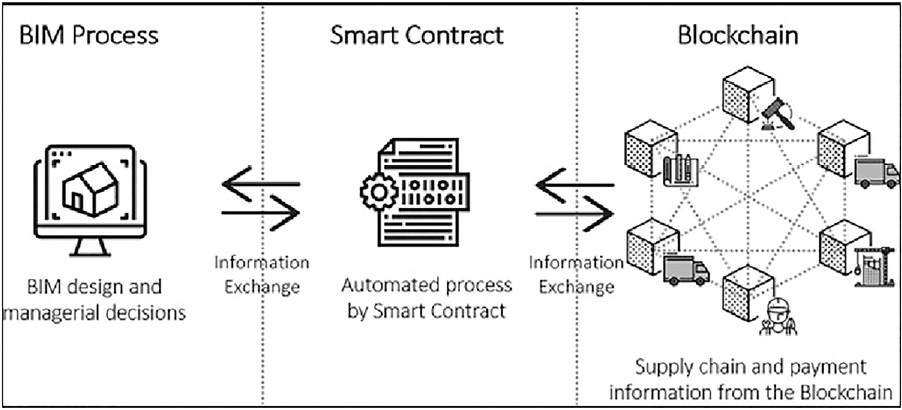
Figure 1. Integration of blockchain and BIM (Rane, 2023). BIM, building information modelling.
Paper-based communication is still quite common on construction sites today, and it is directly linked to glaring inefficiencies and high expenses (Foroughi Sabzevar et al., 2025). According to Wahab et al. (2023), blockchain technology, also referred to as smart contracts, makes it feasible to gather information that can be used to determine whether the work has been completed by the different teams involved in accordance with the project’s terms and, consequently, with what has been authorised by the relevant authorities.
BIM is a methodology that facilitates the design, construction, maintenance, and overall decision-making process for any part of a building’s operational life using a shared digital model of the building (Matniyazov et al., 2025). As a result, BIM is basically an IT approach that experts, insiders, and, in principle, any stakeholder connected to the building’s physical and non-physical design components may utilise. It is a digital depiction of all building-related information, including floor plans, geographic coordinates, types and attributes of building materials, features of individual systems, timelines for the different phases of construction, maintenance, and demolition, and energy analysis (Parekh & Trabucco, 2024).
BIM makes it possible to know, in real time and without ambiguity, things like the windows’ characteristics, the insulating materials used, or the installed air conditioning system’s effectiveness without having to undertake a duplicate examination (Zaman et al., 2024). All parties engaged, including builders, managers, property owners, public administrators, and therefore all stakeholders, benefit, not just the designer. However, because of the constant, real-time tracking and updating of information made possible by these technologies, all team members are aware of who did what, when, where, and how (Olawumi & Chan, 2019). Every aspect of the building’s life cycle is monitored.
According to Chen et al. (2023), it is possible to redefine and recontextualise BIM using IoT. Professionals can find people, equipment, and materials thanks to IoT, which also helps to gather important data about how and when these elements interact. Building sites with the right sensors enable us to determine, for instance, the location and duration of the largest human influx, the machine usage patterns, and whether or not the supplies have been delivered or installed (Malagnino et al., 2021). For instance, facility management, the business discipline that deals with the management of the physical workspaces and all those activities required to make buildings operational, productive, and safe, can use radiofrequency identification (RFID) to monitor people, machines, materials, plants, and other objects (Chen et al., 2023). It also allows for the storage and exploitation of useful data.
Project management information system
Project management information system (PMIS) is a computer-based information technology software system that companies use to create, store, and manage project data in order to achieve the best possible project performance (van Besouw & Bond-Barnard, 2021). PMIS systems are often composed of many software packages that provide more effective cost management systems, knowledge repositories, information management and dissemination, and resource scheduling (Ismail & Salama, 2025). This system can include automated key performance indicator (KPI) collection and reporting (PMBOK Guide, 2021).
PMIS was developed by organisations including Oracle, Artemis, and Scitor Corporation and released onto the market in the late 1970s (van Besouw & Bond-Barnard, 2021). However, as more individuals began using personal computers, project management software became increasingly popular only in the late 1980s and early 1990s (van Besouw & Bond-Barnard, 2021). Both project management software and methods advanced quickly during this period. PMIS has seen significant development in the past 10 years due to the demand for improved systems and new technological advancements (Nazari, 2024). From systems that just managed project scheduling and resources, PMIS have developed into complete systems that handle several other project management tasks at the project and project portfolio levels. They have also changed into Smart PMIS (van Besouw & Bond-Barnard, 2021). Rapid advancements in digital technologies have the potential to provide a “Smart” PMIS (SPMIS) that can help project managers oversee several intricate projects by combining, analysing, and interpreting data from different sources (van Besouw & Bond-Barnard, 2021). The analytics that will power automated project management tasks are powered by data. Data-accessible project management offices will be able to fully utilise emerging technology and will have a competitive edge over businesses without data.
Theoretical framework to understand intelligent construction information management system
Smart construction theory
The term “smart construction theory”(SCT) refers to a novel engineering management theory for ICIMS that uses technical and managerial innovation to create a smart environment for project construction and operation, as well as to enhance and efficiently manage every process of an engineering project throughout its life cycle (Ghazal & Hammad, 2022). To fulfil the needs of a smart project function and the unique goals of many stakeholders, it uses BIM, IoT, ubiquitous computing, 4D visualisation, and other cutting-edge network and information technology as implementation tools (Ghazal & Hammad, 2022).
The definition given states that the two main pillars of SCT’s supporting structure are as follows: smart city, which offers conceptual support for SCT (Liu & Wu, 2023) and smart construction, which is a key component and method of implementing smart cities (Zhuang et al., 2020). The theory behind smart construction is provided by architecture, engineering, and construction (AEC) project management, building lifecycle management (BLM), lean construction, and sustainable construction (Jiang et al., 2024); here, numerous technologies, including BIM, the IoT, ubiquitous computing, and 4D visualisation, offer technical support.
The fundamental tenet of SCT is to fully utilise cutting-edge information and network technologies, integrate all ICIMS links, respond intelligently to the various parties’ unique needs, make it convenient for parties at different stages, and achieve sustainable development of smart construction from the perspective of environmental and economic protection (Rane, 2023). Table 1 shows an expanded theoretical review linking SCT to ICIMS, while showing its possible deployment in micro, small, and medium construction firms.
| Research area of SCT | Link to ICIMS | Sources | Deployment in micro construction firms | Deployment in small construction firms | Deployment in medium construction firms | Research gap |
|---|---|---|---|---|---|---|
| Digitalisation and information integration | ICIMS serves as the digital backbone, integrating emails, drawings, specifications, procurement data, and cloud-based documentation. | Barbosa et al. (2017), Afolabi et al. (2019), Opoku and Perera (2021) | Limited adoption; mostly WhatsApp communication and basic spreadsheets; ICIMS viewed as expensive. | Partial adoption of shared folders and low-cost cloud tools; limited structured ICIMS platforms. | Increasing use of cloud documentation, e-tendering, and basic ICIMS modules. | High cost, low digital literacy, and limited ICT infrastructure slow ICIMS adoption for smaller firms. |
| Building information modelling (BIM)-driven smart construction | ICIMS enhances BIM through central data storage, version control, and live collaboration. | Oke et al. (2017), Bolpagni et al. (2020), Abioye et al. (2021) | BIM usage very rare; ICIMS–BIM integration almost non-existent. | Occasional BIM use for quantity survey (QS) and design coordination; limited integration with ICIMS. | Medium firms use BIM for design but rarely integrate it with ICIMS for lifecycle management. | Lack of BIM–ICIMS interoperability, inadequate training, and insufficient hardware capacity. |
| Internet of Things (IoT) and cyber-physical systems (CPS) | ICIMS connects IoT devices [radiofrequency identification (RFID), sensors, and drones] for real-time data capture and analytics. | Adegbembo and Afolabi (2020) | No IoT deployment; manual supervision dominates; ICIMS remains disconnected from site activities. | Some adoption of drones for monitoring; IoT integration into ICIMS is minimal. | Moderate use of drones and RFID; limited integration into ICIMS dashboards. | IoT cost barriers, unreliable power, low network coverage, and a lack of skilled technicians. |
| Lean construction (digital lean) | ICIMS supports lean workflows with visual dashboards, waste tracking, and workflow optimisation. | McHugh et al. (2021), Adewale et al. (2025) | Lean principles are informal; ICIMS tools not used for waste tracking. | Some use of digital scheduling tools; limited automated reporting in ICIMS. | Medium firms use ICIMS-like tools for material tracking and labour control. | Poor understanding of lean digitalisation among small and medium-sized enterprises (SMEs); fragmented workflows hinder ICIMS integration. |
| Knowledge management | ICIMS functions as a digital knowledge repository storing lessons learned, past project data, and templates. | Eze et al. (2018) | Knowledge not digitally stored; project information scattered across mobile phones and emails. | Small firms use simple file storage; limited structured knowledge systems. | Medium firms begin to centralise lessons learned using basic ICIMS modules. | Weak documentation culture; lack of digital archiving policies; low commitment of top management. |
| Artificial intelligence (AI) and machine learning in smart construction | ICIMS integrates AI for risk prediction, cost forecasting, and automated reporting. | Oyedele et al. (2022),Nguyen et al. (2023) | No AI integration; micro firms rely strictly on manual estimates and experience. | Small firms show emerging interest but lack data quality for AI-driven ICIMS tools. | Medium firms explore AI modules for QS estimation and progress verification. | Lack of quality datasets; low awareness of AI benefits; cost of customised ICIMS–AI systems. |
| Systems integration | ICIMS links design, procurement, cost control, human resource (HR), equipment management, and site monitoring into one system. | Oesterreich and Teuteberg (2016), Love et al. (2019) | Processes highly fragmented; no system integration; ICIMS adoption extremely low. | Some integration between invoicing, payroll, and procurement. | Medium firms adopt partial ICIMS modules for procurement and project controls. | Fragmentation of Nigerian construction SMEs makes system-wide ICIMS integration difficult. |
| Digital twin (DT) | ICIMS provides the data environment that feeds digital twin models with real-time project and asset data. | Boje et al. (2020), Opoku et al. (2022), Odunayo et al. (2023) | No DT deployment; lack of IoT and BIM maturity. | Digital twins not feasible due to low ICT capacity. | DT piloting in facility management, but not tied to ICIMS. | Poor infrastructure, high cost, and limited expertise hinder DT–ICIMS integration in SMEs. |
| Digital transformation and organisational change | ICIMS deployment requires strong leadership, strategic planning, training, digital culture, and change management. | Akomolafe et al. (2021), Forcael et al. (2022) | Limited strategic planning; digital transformation not prioritised. | Some willingness to adopt ICIMS, but lack organisational policy structures. | Medium firms implement structured training and semi-formal change strategies. | Low leadership commitment to digital transformation; no national digitalisation framework for SMEs. |
The expanded theoretical review of Table 1 clearly shows the various SCT research areas and their relationship with ICIMS, which also unveils the gap in the deployment of SCT-linked ICIMS in various sizes of construction firms. However, to explicitly articulate how the requirements of the SCT manifest in the specific barriers/factors to ICIMS utilisation in Nigerian construction firms, Table 2 shows the summary.
| SCT research area/requirement | Barrier/factor to ICIMS Utilisation | Manifestation/explanation | Sources |
|---|---|---|---|
| Digitalisation and information integration | High cost of employing ICIMS professionals | Firms avoid hiring specialised staff due to perceived high salaries, limiting digital adoption. | Eze et al. (2018), Afolabi et al. (2019) |
| Digitalisation and information integration | High cost of training staff in ICIMS | Training programs for ICIMS are seen as expensive, leading to skill gaps. | Akomolafe et al. (2021), Oyedele et al. (2022) |
| Digitalisation and information integration | High cost of procurement and maintenance of the system | Initial purchase and maintenance of ICIMS software/hardware are barriers to adoption. | Afolabi et al. (2019), Adegbembo and Afolabi (2020) |
| Organisational change and commitment | Satisfaction with existing method of working | Staff and management prefer traditional workflows, resisting ICIMS adoption. | Oke et al. (2017), Aghimien et al. (2020) |
| Knowledge management | Lack of staff with appropriate information technology (IT) skills | Absence of trained personnel prevents effective ICIMS utilisation. | Eze et al. (2018), Odunayo et al. (2023) |
| Financial and ICT management | High rate of usage fee for web-based project management system(WPMS)/application service provider (ASP) | Recurring subscription costs discourage small and medium firms. | Afolabi et al. (2019), Oyedele et al. (2022) |
| Systems integration and ICT infrastructure | Lack of intranet/extranet support | Poor internal networks hinder ICIMS communication and collaboration. | Adegbembo and Afolabi (2020), Odunayo et al. (2023) |
| Systems integration | Problem of ICIMS integration/collaboration | ICIMS fails to connect with legacy systems or other software. | Oke et al. (2017), Akomolafe et al. (2021) |
| Digitalisation and paperless processes | Traditional use of standalone software/paper-based | Firms continue using manual or isolated software systems, resisting ICIMS. | Afolabi et al. (2019), Oyedele et al. (2022) |
| Legal and regulatory support | Lack of legal support for ICT use | Weak ICT policy and regulation create uncertainty for ICIMS deployment. | Eze et al. (2018), Akomolafe et al. (2021) |
| Client and stakeholder alignment | Majority of clients not interested in ICIMS-based systems | Client reluctance reduces the incentive for firms to implement ICIMS. | Oke et al. (2017), Aghimien et al. (2020) |
| ICT reliability and infrastructure | Software and hardware reliability problems | Unstable systems or power issues disrupt ICIMS adoption. | Adegbembo and Afolabi (2020), Odunayo et al. (2023) |
| Knowledge and return on investment(ROI)awareness | Inadequate knowledge about return on ICIMS investment | Firms unsure of ICIMS benefits delay adoption. | Afolabi et al. (2019), Oyedele et al. (2022) |
Tables 1 and 2 reveal that the adoption and effective utilisation of ICIMS are critical for achieving digital transformation, process integration, and efficiency in construction organisations. SCT provides a conceptual foundation, linking digitalisation, BIM, knowledge management, systems integration, and organisational change to improved project performance (Ghazal & Hammad, 2022). However, empirical evidence from Nigerian construction firms indicates a significant gap between the theoretical benefits of ICIMS and its practical implementation. Key determinants of underutilisation include high costs of procurement, training, and professional staffing; low digital literacy; inadequate management commitment; resistance to change; poor ICT infrastructure; unreliable software/hardware; and limited awareness of return on investment. These barriers demonstrate that SCT principles are often violated in practice, leaving firms unable to realise the anticipated productivity, collaboration, and cost benefits of ICIMS. Despite global research on digital construction, limited Nigerian-focused studies have examined how these contextual factors, such as economic constraints, infrastructural limitations, client expectations, and organisational culture, interact to hinder ICIMS adoption. Addressing this research gap is necessary to identify locally relevant determinants, provide evidence-based recommendations for policy and organisational strategies, and facilitate a sustainable digital transformation roadmap for micro, small, and medium construction firms in Nigeria.
Conceptual framework
In determining the practicality of the factors affecting the underutilisation of ICIMS in construction organisations, there is a need to look at the statistical relationship of the factors that are likely to cause the underutilisation of ICIMS among micro, small, and medium firms. Concepts from Table 1 on the deployment of SCT-ICIMS in micro, small, and medium construction firms form the dependent variable, while Table 3 reveals the independent variables. The link between Table 3 and SCT is shown in Table 2.
The pictorial mapping of the variable groups mentioned and their interrelationship is shown in Figure 2.
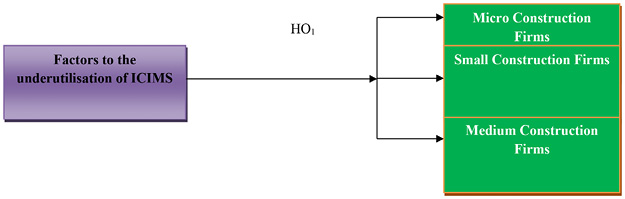
Figure 2. Conceptual framework of the study (author’s construct).
This framework supports the hypothesis of the study.
Ho1: There is no significant difference in the degree of impact of factors affecting the underutilisation of ICIMS in construction organisations.
The goal was to determine whether similar or varying levels of interventions, as well as mitigation strategies, are needed by micro, small, and medium firms to upscale ICIMS implementation in construction organisations in the research environment.
Methodology
This study was designed to evaluate the contemporary challenges leading to the underutilisation of ICIMS in construction organisations in South East Nigeria. In keeping with the aim, the study deployed a survey method, which was conducted using a questionnaire as the research tool. Conclusions were reached after the data gathered through this survey were examined, interpreted, and evaluated. Because the study aimed to obtain responses from experts in the whole construction sector in South East Nigeria, a questionnaire approach was used to gather quantitative data.
Additionally, a questionnaire can guarantee the impartiality and quantifiability of research (Alordiah & Ossai, 2023). The used questionnaire was closed-ended with a section that elicited responses on the determinants (factors) of the underutilisation of ICIMS. A 5-point Likert scale was deployed to assess respondents’ opinions on how much they agreed with each of the 23 items. In arriving at the sample size for the study, the population of the study comprised practising construction consulting and contracting firms in South East Nigeria, and the distribution is shown in Table 4.
Source: Field survey 2024.
From the study population, the total population of construction professionals for all states within the study area is 1,203, which represents the sample frame. The individual construction consulting and contracting firms in the South East are as stated in Table 4. In each case, copies of the questionnaire were distributed to one out of every construction firm in the state. The respondents are mainly at least one construction professional in a firm within the study area, as a representative of other professionals in the firm. Questionnaire distributions were performed through electronic means. In determining the sample size, the Taro Yamane formula was employed, as follows:
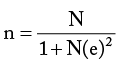
Where:
n = sample size
N = Study population
e = 5% level of significance
1 = constant
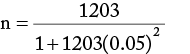
n = 300
Adding attrition of 10% gives a sample size of 345. Therefore, the sample size for the study was 345.
The number of questionnaires used for the analysis was 329. This means that 329 professionals out of 345 returned the questionnaire, giving an instrument mortality of just 16. This high response rate is justifiable first on the premise that this study is part of the lead author’s PhD programme, which lasted for 4 years. The 4-year window gave the author ample time to effectively carry out the administration of the instrument. The administration protocol for the instrument is basically online, and as such, the lead author is a registered member of National Institute of Quantity Surveyors (NIQS) who works in a multi-national construction firm in South East Nigeria and was assisted by colleagues in architecture, building, and engineering professions to disseminate the questionnaire in their various online platforms. They served as gatekeepers in the study. The instrument was effectively administered using both the WhatsApp groups of various professional bodies in South East Nigeria and the LinkedIn profiles of professionals. This dual online strategy increased the response rate. However, various institutional bodies were written to by the lead author with a consent letter from the lead author’s university. All relevant ethical considerations were adopted in this study.
The Shapiro–Wilk test was used to first check for normality in the data, and Cronbach’s alpha was computed to assess the measuring tool’s dependability. The higher the Cronbach’s alpha value, which ranges from 0 to 1, the more trustworthy the collected data (Izah et al., 2023).In the following stage of analysis, the determinants (factors) identified by the participants were ranked according to their level of significance using the mean item score (MIS). The inferred standard deviation (SD) for every factor was added to this. Although the factors were arranged from highest to lowest MIS, the factor with the lowest SD was given a better ranking, where two factors had identical MISs. In order to study the underlying theoretical structure of the phenomena and minimise the vast number of variables to a smaller set of summary variables, exploratory factor analysis was finally carried out. In the analysis, factor loadings with negative values meant that the related variables should be interpreted in the other way (Kyriazos & Poga, 2023).
Results
The questionnaires administered to professionals working in a construction consultancy and contracting firms were completed and returned (see Figure 3 and Table 5).
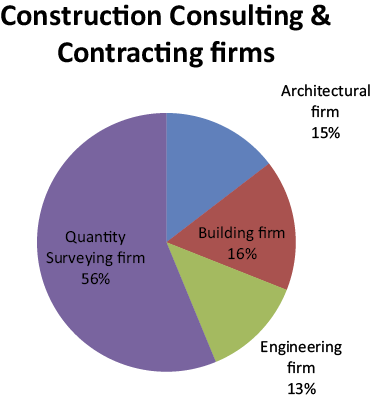
Figure 3. Construction consulting and contracting professionals involved in the study. Source: Field survey (2024).
Source: Field survey (2024).
According to Table 5, quantity surveying firms made up more than half (56.2%) of the firms under study, while engineering firms made up the least (12.8%). Similarly, between 5 and 59 employees made up more than half of the firms under study. The majority of the company (63.5%) have been around for more than 10 years. More employees have an MSc or PhD (59.9%) and are registered members or fellows (54.4%). Of the company’s employees, 69% have 5 to 20 years of experience. Anambra (1.8%), Ebonyi (1.8%), Enugu (17.9%), Imo (32.8%), and other states (45.6%) were the locations of the studied firms. Director/general manager (21.9%), project manager, supervisor or coordinator (36.2%), field manager (7.3%), head of department (9.1%), and construction professional (25.5%) were the positions currently occupied by the respondents.
Factors affecting the underutilisation of ICIMS in construction organisations in the South-East
This section appraised the prominent factors underwriting the underutilisation of ICIMS. The analysis involves mean item score, standard deviation, factor analysis, and the Wilcoxon signed-rank test. The results in Table 6 show three tiers of the MIS (>4.00,>3.00, and >2.00). Three factors obtained MISs greater than 4.0 (4.05–4.18), signifying them as the top three factors for the underutilisation of ICIMS in construction organisations.
Note: MIS, mean item score. Source: Field survey (2024).
The factors in the top tier were cost-related, including the cost of information technology personnel, the cost of training, and the cost of maintaining the ICIMS infrastructure. The second tier included 16 factors with MISs greater than 3.00. The important challenges in the second tier were low satisfaction with the current method of working, a dearth of staff with requisite skills, and high fees charged by service providers.
These factors add to the top five factors that must be improved to upscale IMS in construction organisations. Among the top 10 factors are a dearth of ICIMS infrastructures, inability to integrate and collaborate across organisations, use of isolated software across disciplines, and lack of legal support. The factors in the second tier are projected to have a moderate influence on inhibiting ICIMS implementation in construction organisations. Stakeholders must prioritise these factors to improve ICIMS in construction organisations towards greater efficiency and effectiveness. The sample seems to be consistent in their opinion about the pertinent and less consequential factors (standard deviation, 0.877–1.277).
Test of hypothesis HO1: The study conducted a test of difference to determine variations in the degree of impact of factors affecting the implementation of ICIMS in construction organisations. The goal was to determine whether similar or varying levels of interventions, as well as mitigation strategies, are needed by micro, small, and medium firms to upscale ICIMS implementation in construction organisations in the research environment. The indicative hypothesis (Ho1) for this examination states that the pattern of principal factors inhibiting the utilisation of ICIMS among construction organisations in South East Nigeria is not significantly different between micro, small, and medium firms. Again, due to the varying structure of construction organisations in the various categories, the norm expects that the degree of impact of pertinent factors would differ since firm capabilities to mitigate the problems are different. However, the descriptive results of the standard deviation show that the different layers of firms agreed on the impact of these factors due to the heterogeneous standard deviation recorded in Table 6. The perceived agreement was investigated further by testing the hypothesis.
The result in Table 7 shows a Wilcoxon signed-rank test of the difference in the pattern, and the degree of factors affecting ICIMS implementation in micro and small construction organisations shows statistically significant variation (Z = −1.780b, p = 0.075 > 0.05).
aFACMicro < FACSmall.
bFACMicro > FACSmall.
cFACMicro = FACSmall.
dFACSmall < FACMedium.
eFACSmall > FACMedium.
fFACSmall = FACMedium.
In a Wilcoxon signed-rank test, the decision rule is that if p-value ≤ a, the null hypothesis is rejected (evidence of a significant difference); however, if p-value > a, the researcher will fail to reject the null hypothesis (no significant difference). The failure to reject the null hypothesis is because the Wilcoxon test cannot prove that no difference exists. It only shows that there is not enough evidence to conclude a significant difference. Hence, in this study, since the p-value (0.075) was greater than a (level of significance= 0.05), we failed to reject the null hypothesis, which implies that the test did not find statistically significant evidence of a difference in the degree of impacts of the factors. Hence, there was no statistically significant difference in the degree of impact of the factors affecting the underutilisation of ICIMS for micro and small construction organisations. Therefore, the null hypothesis was not rejected. Also, a Wilcoxon signed-rank test of the difference (Table 7) in the degree and pattern of factors obstructing the implementation in small and medium construction organisations shows no statistically significant variation (Z = −4.170b, p = 0.000 < 0.05). The null hypothesis for micro and small construction organisations was rejected, and the inference is that the degree and pattern of factors obstructing ICIMS implementation in these organisations differ and would require similar or uniform interventions for mitigation.
The result in Table 7 further shows that 16 factors are high-impact factors inhibiting the ICIMS implementation in micro and small construction organisations, while the impact of nine factors has either a low or moderate impact on IMS implementation in that category of firms. Also, 22 factors are prominent issues for small and medium construction organisations that are rated as having high-impact, while only one received a moderate or low rating in this category of firms with no ties. Overall, the number of factors (22) with significant impacts on ICIMS implementation is greater in small/medium construction organisations compared to 14 in micro and small construction organisations. The impacts of factors and the contingent number of predictors of difficulties faced in IMS are related to the firm size and scope of businesses.
Factorisation of principal factors
The Kaiser–Meyer–Olkin measure of sampling adequacy of 0.852 shows how much of the variance in the variables could be attributed to underlying causes. This is considered adequate, and Bartlett’s test of sphericity indicates that the variables are related and thus appropriate for structure detection (see Table 8).
Source: Field survey (2024).
In Table 9, communalities show how much of each variable’s variance is taken into account. This is always equal to 1.0 for correlation analyses when principal components are extracted. All of the communalities in Table 9 are high (greater than 0.5), indicating that the variables are well-represented by the extracted components. The eigenvalue, or the variance in the original variables that each component accounts for, is shown in the “Total” column. Thus, factor 1 accounts for 27.4% of the total variance, factor 2 for 9.8%, factor 3 for 9.2%, factor 4 for 7.3%, factor 5 for 6.6%, factor 6 for 5.0%, and factor 7 for 4.4%. The variance explained by the first factor is greater than that of the other factors.
aExtraction Sums of Squared Loadings. Source: Field survey (2024).
Kaiser’s criterion states that all factors with eigenvalues greater than 1 and an average communality of 0.6 should be kept. The column labelled Extraction Sums of Squared Loadings show the eigenvalues linked to the factors in Table 9, as well as the percentage of variance explained. Seventy percent was the total percentage of the seven components. Using these components, we can significantly reduce the complexity of the dataset with only a 30% loss of information, as they account for 70% of the variability in the original 23 variables. The eigenvalues of the factors following rotation are shown in Table 10.
The factor structure was optimised by rotation, but after the rotation, some changes took place. Although the variation was now more evenly distributed among the components, the rotation preserved the cumulative percentage of variation explained by the extracted components. The rotated component matrix will be simpler to understand than the unrotated matrix, according to the variations in the individual totals.
The ideal number of components can be found using the scree plot shown in Figure 4.Each component’s eigenvalue in the original solution is plotted. On the steep slope, the first seven components were typically extracted. Little of the solution is contributed by the elements on the shallow slope.
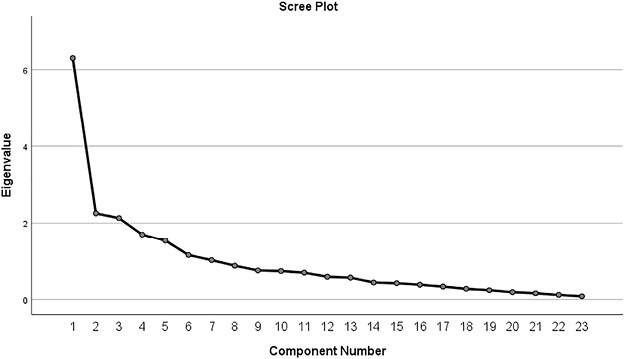
Figure 4. Scree plot showing the extracted components. Source: Field survey (2024).
Finally, the rotated component matrix in Table 11, which is a matrix of factor loadings for each variable onto each factor, displays factor loadings higher than 0.5 and is ordered by size.
The results show seven elements (components), which are compatibility factor, cost factor, communication factor, risk factor, traditional factor, ICT factor, and commitment factor.
Discussion of findings
Factors affecting the underutilisation of ICIMS
The top-tier IMS utilisation inhibiting factors are cost-related, including the cost of information technology personnel, the cost of training, and the cost of IMS infrastructure maintenance. Other important challenges are low satisfaction with the current method of working, the dearth of staff with requisite skills, and high fees charged by service providers. The inhibiting factors are organised into seven themes for proper mitigation, namely, incompatibility factor, cost-related factor, document management factor, risk factor, isolated uses of software factor, ICT infrastructure factor, and client commitment factor. The test of difference (Table 7) in the degree and the pattern of factors obstructing the implementation of IMS in micro, small, and medium construction organisations shows no statistically significant variation (Z = −4.170b, p = 0.000 < 0.05). The finding reveals that the cost of implementing ICIMS can be a significant barrier for construction organisations. This resonates with the findings of Abdul-Rahman and Gamil (2019) on the outcome that the cost of implementing a construction information management system includes not only the software and hardware but also the training and support required for the system. The cost of implementing and maintaining a construction information management system can be a significant factor in determining whether or not a construction organisation will adopt the system.
Furthermore, the study findings reveal that another factor that affects the use of ICIMS in construction organisations is the lack of technical expertise, which is also in line with the findings of Adekunle et al. (2024). According to Adekunle et al. (2022a, 2022b), the construction industry is traditionally a low-tech industry, and many organisations in Nigeria may not have the technical expertise required to implement and maintain an ICIMS. Hence, from the findings, compatibility issues can also be a significant factor in the adoption of information management systems in construction organisations in South East Nigeria. Alhazmi et al. (2021), in agreement with the study findings, describe that construction organisations in Nigeria have legacy systems that are not compatible with new information management systems that require real-time intelligent operations and sensor technology, making it difficult to integrate new systems into existing workflows.
The results of the study corroborated prior studies and provided overarching lines of evidence about the roles of these factors in the low utilisation of intelligent construction information management. For instance, Wasti (2019), through a review study affecting the factors of the adoption of BIM (which is a component in intelligent construction information management) in the construction industry in Nigeria, highlighted the lack of technical expertise, cost, and compatibility issues as major determinants to BIM underutilisation in Nigeria. Furthermore, a recent study by Abubakar et al. (2025) reported that the adoption of PMIS (a component of ICIMS) is disturbed by the availability of resources, access to technology, and the level of education and training of construction professionals, which is relatively poor in the Nigerian construction industry. In another recent study, Oke et al. (2025) observed that hindrances to ICIMS utilisation are dealing with a lack of awareness of the benefits of BIM, IoT, digital twin technology, cyber-physical systems (CPS), UAVs, smart contracts (blockchain technology), etc.; the high cost of implementation; and a lack of government support.
In comparison to other developing countries in Africa, the study by Tetteh-Agblakah (2024) in Ghana reported that the major hindrances to ICIMS utilisation are due to the lack of awareness of the benefits of BIM and other Construction 4.0 and 5.0 technologies, the high cost of implementation, and a lack of government support. The level of adoption of Construction 4.0 in construction organisations in Africa is influenced by various factors. The adoption of more advanced technologies, such as BIM, PMIS, UAV, CPS, IoT, and digital twin technology (DTT), in developing countries in Africa is often limited due to a lack of awareness of the benefits of these technologies and the high cost of implementation. The low awareness of the benefits of these technologies and the high cost of implementation for the adoption of these technologies are also widespread. The implication suggests that stakeholders need to consider the availability of resources, access to technology, and the level of education and training of construction professionals in the quest to improve ICIMS utilisation.
Conclusion
Given the growing momentum towards technology-driven construction practices across the globe, the technical, social, and policy dimensions that enable information technology integration in Nigeria remain weak. Hence, this study explored the factors influencing the underutilisation of ICIMS in construction organisations in Nigeria. As a component of construction management, ICIMS has its own set of problems and remedies. The primary issues influencing the underutilisation of ICIMS as a process in the field of construction delivery in Nigeria were examined in this study. Deploying quantitative analysis, the study concludes that the spectrum of factors inhibiting the implementation and utilisation of ICIMS systems in construction organisations is broad-based. However, cost-related issues are top-ranked concerns, including the cost of information technology personnel, the cost of training, and the cost of ICIMS infrastructure maintenance. In addition, low satisfaction with the current method of working, a dearth of staff with requisite skills, and high fees charged by service providers are other critical issues that stakeholders must address to improve ICIMS utilisation in construction organisations. The pertinent knowledge and mitigating strategies for these factors should principally address incompatibility, costs, document management, risks, low integration or isolated applications, ICT infrastructure, and client commitment. The distribution of these factors is also similar in micro, small, and medium construction organisations; however, there is a need for a tailored solution to be developed to mitigate these challenges across micro, small, and medium construction firms in Nigeria. Since micro firms face the highest financial and capacity constraints, solutions must be low-cost, low-infrastructure, and easy to adopt, such as the adoption of lightweight modular ICIMS tools. Small firms have moderate technical capacity but struggle with integration, training, and infrastructure; thus, solutions such as the adoption of hybrid/shared intranet–extranet systems to strengthen collaboration without costly enterprise networks will be needed. Finally, since medium firms have stronger structure and resources but face organisational change resistance, integration complexity, and security concerns, a tailored solution of an enterprise-level ICIMS deployment roadmap that defines phases for digitisation, integration, and optimisation will be sufficient.
Recommendations
Based on the findings and conclusions of the study, the following recommendations are proposed.
1. The contingent drivers of poor utilisation of ICIMS must be inclusively tackled. In addition to developing uniform mitigation strategies to improve these challenges in different firm strata, the pertinent solutions to these difficulties must be tailored to regional needs and peculiarities.
2. In addition to upscaling the development, implementation, and utilisation of ICIMS to optimise firm performance, construction organisations should foster open communication and collaboration among project stakeholders by using collaboration tools and adopting open-door policies that encourage the sharing of innovative ideas. Other strategies include initiating an effective problem-solving framework, fostering a culture of innovation and creativity, clear project goals and objectives, trust-building initiatives, the use of performance-based incentives, and the use of modern technologies in communication.
3. Scaling the use of ICIMS beyond specialised software to advanced systems like BIM, PMIS, enterprise resource planning, sensor technology integration, UAVs, construction document management systems, geographic information systems, and contract management systems is also necessary to maximise the full benefits of ICIMS utilisation.
Data availability
The data that support the conclusions of this study are available upon request from the corresponding author.
References
Abdul-Rahman, I., & Gamil, Y. (2019). Assessment of cause and effect factors of poor communication in construction industry. IOP Conference Series: Materials Science and Engineering, 601. https://doi.org/10.1088/1757-899X/601/1/012014
Abioye, S. O., Oyedele, L. O., Akanbi, L., Ajayi, A., Delgado, J. M. D., Bilal, M., & Akinade, O. O. (2021). Artificial intelligence-driven BIM for construction safety management. Automation in Construction, 129, 103–117. https://doi.org/10.3390/joitmc8010045
Abubakar, M. K., Waziri, A. Y., & Mukhtar, M. M. (2025). Appraising the adoption of project management information system by construction firms in Kano State, Nigeria. BIMA Journal of Science and Technology, 8(4B), 353–366. https://journals.gjbeacademia.com/index.php/gjam/article/download/877/774
Adegbembo, T., & Afolabi, A. (2020). IoT adoption barriers in Nigerian construction sites. International Journal of Construction Information Technology, 8(2), 55–67.
Adekunle, P., Aigbavboa, C., Akinradewo, O., Oke, A., & Aghimien, D. (2022a). Construction information management: Benefits to the construction industry. Sustainability, 14(18), 11366. https://doi.org/10.3390/su141811366
Adekunle, P., Aigbavboa, C., Thwala, W., Akinradewo, O., & Oke, A. (2022b). Challenges confronting construction information management. Frontiers in Built Environment, 8, 1075674. https://doi.org/10.3389/fbuil.2022.1075674
Adekunle, P., Aigbavboa, C., Akinradewo, O., Ikuabe, M., & Otasowie, K. (2024). Towards the uptake of digital technologies for construction information management: A partial least squares structural equation modelling approach. Buildings, 14(3), 827. https://doi.org/10.1007/978-3-031-73128-0_32
Adewale, B., Fatai, O. B., Ene, V., Adewale, B. A., Ohis Aigbavboa, C., Ogunbayo, B. F., & Ene, V. O. (2025). Exploring the integration of digital technologies and lean principles for transformative construction project management: A review. In The Fourteenth International Conference on Construction in the 21st Century (CITC-14) (pp. 2–5).
Afolabi, A., Emeghe, I., Oyeyipo, O., & Ojelabi, R. (2019). Digitalisation in the Nigerian construction industry: Challenges and prospects. Journal of Construction Project Management, 4(1), 12–22. https://doi.org/10.1080/15623599.2024.2362014
Aghimien, D., Aigbavboa, C., & Oke, A. (2020). Digital technology acceptance in African construction. Journal of Engineering, Design and Technology, 18(3), 533–548. https://doi.org/10.1080/15623599.2020.1745134
Akomolafe, M., Oke, A., & Aghimien, D. (2021). Drivers of digital transformation in Nigerian construction firms. Built Environment Journal, 18(2), 45–60.
Alhazmi, R., Alshammari, A., & Alotaibi, A. (2021). Construction performance evaluation model based on critical success factors: A case study of Saudi Arabia. Journal of Construction Engineering and Management, 147(1), 04020132.
Alordiah, C. O., & Ossai, J. N. (2023). Enhancing questionnaire design: Theoretical perspectives on capturing attitudes and beliefs in social studies research. International Journal of Innovative Science and Research Technology, 8(10). https://unidel.edu.ng/cms/uploads/publications/unidel_pub_1701432306.pdf
Amade, B., & Nwakanma, C. I. (2021). Identifying challenges of Internet of Things on construction projects using fuzzy approach. Journal of Engineering, Project & Production Management, 11(3). https://doi.org/10.2478/jeppm-2021-0021
Ashrafuzzaman, M. (2024). The impact of cloud-based management information systems on HRM efficiency: An analysis of small and medium-sized enterprises (SMEs). Academic Journal on Artificial Intelligence, Machine Learning, Data Science and Management Information Systems, 1(01), 40–56. https://doi.org/10.69593/ajaimldsmis.v1i01.124
Barbosa, F., Woetzel, J., Mischke, J., & Ribeirinho, M. J. (2017). Reinventing construction: A route to higher productivity. McKinsey Global Institute.
Barutha, P. J., Jeong, H. D., Gransberg, D. D., & Touran, A. (2021). Evaluation of the impact of collaboration and integration on performance of industrial projects. Journal of Management in Engineering, 37(4), 04021037. https://doi.org/10.1061/(ASCE)ME.1943-5479.0000921
Boje, C., Guerriero, A., Kubicki, S., & Rezgui, Y. (2020). Towards a semantic construction digital twin. Automation in Construction, 114. https://doi.org/10.1016/j.autcon.2020.103179
Bolpagni, M., Gavina, R., & Ribeiro, D. (2020). BIM-based collaborative workflows. Journal of Information Technology in Construction, 25, 407–420.
Chen, X., Chang-Richards, A. Y., Pelosi, A., Jia, Y., Shen, X., Siddiqui, M. K., & Yang, N. (2022). Implementation of technologies in the construction industry: A systematic review. Engineering, Construction and Architectural Management, 29(8), 3181–3209. https://doi.org/10.1108/ECAM-02-2021-0172
Chen, Y., Wang, X., Liu, Z., Cui, J., Osmani, M., & Demian, P. (2023). Exploring building information modeling (BIM) and internet of things (IoT) integration for sustainable building. Buildings, 13(2), 288. https://doi.org/10.3390/buildings13020288
Churacharit, C., & Chutima, P. (2022). An integration of project management body of knowledge and project management information system to improve on-time deliverable of liquefied natural gas station construction projects. Engineering Journal, 26(1), 55–73. https://doi.org/10.4186/ej.2022.26.1.55
Cui, W., Chen, Y., & Xu, B. (2024). Application research of intelligent system based on BIM and sensors monitoring technology in construction management. Physics and Chemistry of the Earth, Parts A/B/C, 134. https://doi.org/10.1016/j.pce.2024.103546
Ejidike, C. C., Mewomo, M. C., Olawumi, T. O., Wang, S., & Buniya, M. K. (2025). Barriers to the adoption of smart building technology in developing countries: An empirical survey. Journal of Construction Engineering and Management, 151(6). https://doi.org/10.1061/JCEMD4.COENG-15466
Eze, C., Olatunji, O., & Aibinu, A. (2018). Knowledge management and ICT adoption in Nigerian construction SMEs. Engineering, Construction and Architectural Management, 25(7), 934–967.
Forcael, E., Ferrari, I., Opazo-Vega, A., & Sepúlveda, M. (2022). Digital transformation in the construction industry. Journal of Construction Engineering and Management, 148(6), 1–28.
Foroughi Sabzevar, M., Gheisari, M., & Lo, J. (2025). Analyzing the pros and cons of paper-based 2D drawings in construction: A survey of U.S. construction professionals. International Journal of Construction Management, 25(4), 428–438. https://doi.org/10.1080/15623599.2024.2331863
Ghazal, M., & Hammad, A. (2022). Integrating smart and sustainable construction: A review of present status and possible opportunities. In International Conference on Trends on Construction in the Post-Digital Era (pp. 280–293). Springer International Publishing. https://doi.org/10.1080/15623599.2020.1738205
Haisam, A. M. (2023). What is information management system? Why is it important? https://theecmconsultant.com/best-ocr-software/
Ismail, S. M. A., & Salama, G. E. (2025). Components and architecture of project management information systems: Exploring PMIS dynamics. In Project Management Information Systems: Empowering Decision Making and Execution (pp. 49–98). IGI Global Scientific Publishing. https://doi.org/10.4018/979-8-3373-0700-8.ch002
Izah, S. C., Sylva, L., & Hait, M. (2023). Cronbach’s alpha: A cornerstone in ensuring reliability and validity in environmental health assessment. ES Energy & Environment, 23. https://doi.org/10.30919/esee1057
Jiang, X., Zhou, H., Li, M., Lu, K., Lyu, S., Omrani, S., & Skitmore, M. (2024). Sustainable construction projects management in the AEC industry: Analysis and visualization. International Journal of Construction Management, 24(4), 384–399. https://doi.org/10.1080/15623599.2023.2257477
Kermanshachi, S., Nipa, T. J., & Dao, B. (2021). Development of complexity management strategies for construction projects. Journal of Engineering, Design and Technology, 21(6), 1633–1657. https://doi.org/10.1108/JEDT-06-2021-0324
Kunkcu, H., Koc, K., & Gurgun, A. P. (2025). Technology-enhanced communication and contract management in construction projects. International Journal of Construction Education and Research, 22(2), 254–283. https://doi.org/10.1080/15578771.2025.2488912
Kyriazos, T., & Poga, M. (2023). Dealing with multicollinearity in factor analysis: The problem, detections, and solutions. Open Journal of Statistics, 13(3), 404–424. https://doi.org/10.4236/ojs.2023.133020
Li, F., Laili, Y., Chen, X., Lou, Y., Wang, C., Yang, H., & Han, H. (2023). Towards big data driven construction industry. Journal of Industrial Information Integration, 35. https://doi.org/10.1016/j.jii.2023.100483
Li, J., Jia, Z., & Wang, F. (2024). Construction of enterprise comprehensive management system based on information reconstruction and IoT. International Journal of System Assurance Engineering and Management, 15(7), 2914–2930. https://doi.org/10.1007/s13198-024-02304-z
Lin, C., Hu, Z. Z., Yang, C., Deng, Y. C., Zheng, W., & Lin, J. R. (2022). Maturity assessment of intelligent construction management. Buildings, 12(10). https://doi.org/10.3390/buildings12101742
Liu, H., Han, S., & Zhu, Z. (2023). Blockchain technology toward smart construction: Review and future directions. Journal of Construction Engineering and Management, 149(3). https://doi.org/10.1061/JCEMD4.COENG-11929
Liu, Z., & Wu, J. (2023). A review of the theory and practice of smart city construction in China. Sustainability, 15(9). https://doi.org/10.3390/su15097161
Lou, J., & Lu, W. (2022). Construction information authentication and integrity using blockchain-oriented watermarking techniques. Automation in Construction, 143. https://doi.org/10.1016/j.autcon.2022.104570
Love, P., Matthews, J., & Fang, W. (2019). Systems thinking in construction. Systems Research and Behavioral Science, 35(3), 263–279.
Malagnino, A., Montanaro, T., Lazoi, M., Sergi, I., Corallo, A., & Patrono, L. (2021). Building information modeling and Internet of Things integration for smart and sustainable environments: A review. Journal of Cleaner Production, 312. https://doi.org/10.1016/j.jclepro.2021.127716
Matniyazov, Z., Tulaganov, B., Adilov, Z., Khadjaev, R., & Elmurodov, S. (2025). Application of BIM technologies in building operating organisations. American Journal of Education and Learning, 3(3), 957–964. https://advancedscienti.com/index.php/AJEL/article/view/1438/2833
McHugh, K., Dave, B., & Koskela, L. (2021). On the role of lean in digital construction. In Industry 4.0 for the Built Environment: Methodologies, Technologies and Skills (pp. 207–226). Springer International Publishing. https://doi.org/10.1007/978-3-030-82430-3_9
Mulokoshi, S. N. (2024). The role of records centres in the digital environment: A case study of records centres in Windhoek (Doctoral dissertation, University of Namibia).
Nazari, N. (2024). The influence of PMIS–IT system integration on project efficiency and collaboration (Doctoral dissertation, Politecnico di Torino).
Nguyen, T., Bui, D., Ngo, T., & Nguyen, V. (2023). AI-enabled construction management systems: A review. Automation in Construction, 146.
Odunayo, A., Ogunmakinde, O., & Adegbembo, T. (2023). Digital twin awareness and adoption in Nigeria. Journal of Construction Informatics, 12(1), 55–70. https://doi.org/10.36615/jcpmi.v12i1.1141
Oesterreich, T., & Teuteberg, F. (2016). Digitalisation in construction: A review. Automation in Construction, 72, 22–43.
Oke, A. E., Aliu, J. O., Timothy Jesudaju, O., Thomas Fagbe, A., Aghimien, D., & Aigbavboa, C. O. (2025). Building a sustainable future: The role of digitalization in Nigerian heavy engineering projects. Engineering, Construction and Architectural Management. Advance online publication. https://doi.org/10.1108/ECAM-08-2024-1043
Oke, A. E., Arowoiya, V. A., & Akomolafe, O. T. (2022). An empirical study on challenges to the adoption of the Internet of Things in the Nigerian construction industry. African Journal of Science, Technology, Innovation and Development, 14(1), 179–186. https://hdl.handle.net/10520/ejc-aa_ajstid_v14_i1_a179. https://doi.org/10.1080/20421338.2021.1960541
Oke, A. E., Arowoiya, V. A., Chan, M., & Oyediran, A. (2024). Digital twin technology (DTT) in a developing construction industry: Evaluation of the awareness and usage among professionals in Nigeria. International Journal of Construction Management, 31(2), 1–11. https://doi.org/10.1080/15623599.2024.2411885
Oke, A., Aigbavboa, C., & Aghimien, D. (2017). BIM awareness and adoption by Nigerian quantity surveyors. Journal of Construction Economics, 5(1), 34–47.
Olawumi, T. O., & Chan, D. W. (2019). Building information modelling and project information management framework for construction projects. Journal of Civil Engineering and Management, 25(1), 53–75. https://doi.org/10.3846/jcem.2019.7841
Opoku, D. G. J., & Perera, S. (2021). Digital transformation in construction: A systematic review. Construction Innovation, 21(3), 421–444. https://doi.org/10.36680/j.itcon.2023.020
Opoku, D. G. J., Perera, S., Osei-Kyei, R., & Rashidi, A. (2022). Digital twin adoption in construction. Journal of Building Engineering, 45. https://doi.org/10.3390/buildings12020113
Othman, A. A. E., & Alamoudy, F. O. (2021). Optimising building performance through integrating risk management and building information modelling during the design process. Journal of Engineering, Design and Technology, 19(6), 1233–1267. https://doi.org/10.1108/JEDT-06-2020-0246
Oyedele, L., Akanbi, L., Ajayi, A., & Davila Delgado, J. (2022). AI-enabled optimisation for African construction. Automation in Construction, 136.
Parekh, R., & Trabucco, D. (2024). Recent progress in integrating BIM and LCA for sustainable construction: A review. International Journal of Science and Research Archive, 13(1), 907–932. https://doi.org/10.30574/ijsra.2024.13.1.1772
Raitviir, C. R., & Lill, I. (2024). Conceptual framework of information flow synchronization throughout the building lifecycle. Buildings, 14(7), 2207. https://doi.org/10.3390/buildings14072207
Rane, N. (2023). Integrating leading-edge artificial intelligence (AI), Internet of Things (IoT), and big data technologies for smart and sustainable architecture, engineering and construction (AEC) industry: Challenges and future directions. Engineering and Construction (AEC) Industry: Challenges and Future Directions. https://doi.org/10.2139/ssrn.4616049
Sarı, R., Pekeriçli, M. K., & Tanyer, A. M. (2018). Compliance of standard forms of construction contracts and protocols with BIM-adopted construction sector in USA and UK. In 5th International Project and Construction Management Conference. http://hdl.handle.net/20.500.12566/477
Tetteh-Agblakah, D. J. (2024). Evaluation of the readiness of the Ghanaian construction industry for the integration of Construction 4.0 technologies and factors influencing the readiness. International Journal of Applied and Natural Sciences, 2(1), 66–78. https://doi.org/10.61424/ijans.v2i1.182
van Besouw, J., & Bond-Barnard, T. (2021). Smart project management information systems (SPMIS) for engineering projects: Project performance monitoring and reporting. International Journal of Information Systems and Project Management, 9(1), 78–97. https://repository.up.ac.za/handle/2263/86944
Wahab, A., Wang, J., Shojaei, A., & Ma, J. (2023). A model-based smart contracts system via blockchain technology to reduce delays and conflicts in construction management processes. Engineering, Construction and Architectural Management, 30(10), 5052–5072. https://doi.org/10.1108/ECAM-03-2022-0271
Wasti, S. N. (2019). Factors influencing the adoption of building information modeling in the construction industry: A review. Journal of Construction Engineering and Management, 145(5), 04019017.
Yan, J. K., Zheng, Z., Zhou, Y. C., Lin, J. R., Deng, Y. C., & Lu, X. Z. (2023). Recent research progress in intelligent construction: A comparison between China and developed countries. Buildings, 13(5), 1329. https://doi.org/10.3390/buildings13051329
You, Z. (2024). Intelligent construction: Unlocking opportunities for the digital transformation of China’s construction industry. Engineering, Construction and Architectural Management, 31(4), 1429–1453. https://doi.org/10.1108/ECAM-08-2022-0706
Zaman, A. A. U., Abdelaty, A., & Sobuz, M. H. R. (2024). Integration of BIM data and real-time game engine applications: Case studies in construction safety management. Journal of Information Technology in Construction, 29, 117–140. https://doi.org/10.36680/j.itcon.2024.007
Zhuang, H., Zhang, J., CB, S., & Muthu, B. A. (2020). Sustainable smart city building construction methods. Sustainability, 12(12), 4947. https://doi.org/10.3390/su12124947