Construction Economics and Building
Vol. 26, No. 2
2026
ARTICLES (PEER REVIEWED)
Exploring Digital’s Role in Retaining Women in Construction
Karen B. Blay1,*, Sitsofe K. Yevu2, Kudirat O. Ayinla3, Anatu Mahama4, Seongha Hwang5, Katie Rafferty6
1-3,5-6 School of Architecture, Building and Civil Engineering, Loughborough University,
LE11 3TU, UK
4 Faculty of Business, Innovation and Entrepreneurship, Anglia Ruskin University, Peterborough, PE1 5BW, UK
Corresponding author: Karen Blay, K.B.Blay@lboro.ac.uk
DOI: https://doi.org/10.5130/tej2v289
Article History: Received 08/05/2025; Revised 31/01/2026; Accepted 23/02/2026; Published 26/05/2026
Citation: Blay, K. B., Yevu, S. K., Ayinla, K. O., Mahama, A., Hwang, S., Rafferty, K. 2026. Exploring Digital’s Role in Retaining Women in Construction. Construction Economics and Building, 26:2, 1–30. https://doi.org/10.5130/tej2v289
Abstract
Women make up less than 15% of the UK construction workforce and continue to face major retention challenges, driven by structural biases that lead to feelings of disrespect, insufficient support, and being undervalued. This study takes a novel approach by applying Actor-Network Theory (ANT) to investigate how digital technologies (as non-human actors) influence the retention of women (as human actors) in the industry- -a perspective that has been overlooked in previous research. Utilising data from 23 qualitative interviews with women involved in digitally enabled projects, the research develops a socio-technical framework that connects the functions of digital technology to the concepts of respect, support, and value (RSV). The interviews were analysed thematically using NVivo 13 to identify retention challenges and how women interact with digital technologies. The findings reveal several retention issues, including rigid work practices, a predominantly masculine culture, and occurrences of bullying and harassment. Importantly, the study shows that technologies like Building Information Modelling (BIM), Artificial Intelligence (AI), and online mentoring platforms do more than enhance operational efficiency; they actively reshape workplace dynamics to promote inclusivity and improve women’s perceptions of respect, support, and value. By employing ANT, this research underscores the strategic potential of digital technologies in addressing systemic challenges within the construction sector. This is the first study to establish a conceptual link between digitalisation and gender equity, and it offers practical strategies for construction firms to improve retention by focusing on respect, support, and perceived value.
Keywords
Digital Technologies; Actor-Network Theory (ANT); Retention of Women, Support-Value-Respect; Construction Sector
Introduction
The importance of inclusion within the construction sector cannot be overstated, particularly in light of the persistent gender disparities characterising the industry. As Roberson (2006) defines it, inclusion entails the integration of diversity into organisational systems, eliminating barriers to participation and effectively leveraging employees’ skills. In the construction industry, inclusion is typically examined through two main lenses: attraction and retention. This study focuses specifically on retention, reducing barriers to respect, support, and value (RSV), as the industry has long struggled with the “leaky pipeline” problem of retaining women (Gurjao, 2006; Matthewson, 2015; Edirisinghe et al., 2024). The challenge of retaining women in construction is critical, as evidenced by their representation of only 15% of the workforce and a mere 2% on-site in the UK (Turner et al., 2021).
Existing research on women’s retention has predominantly focused on social and cultural retention strategies designed to create a supportive and respectful work environment where women feel valued-a crucial factor in addressing the persistent trend of women leaving the industry (e.g. Blay, 2018; Smith et al., 2023). Retention challenges are deeply rooted in the sector’s masculine culture, which, alongside discrimination and stereotypes, leads to women feeling unsupported, disrespected, and undervalued, and poses a significant risk of future labour shortages (Oo et al., 2020; Baker et al., 2024; Van Heerden et al., 2025). Despite numerous non-digital social initiatives such as mentoring, networking, and addressing pay imbalances, efforts to enable women to feel respected, supported, and valued have yielded limited success (Drury et al., 2011; Fernando et al., 2014; Smith et al., 2023). These studies have provided valuable insights into structural biases and proposed strategies to foster respect, support, and value (RSV) for women. However, they share a common limitation: they conceptualise retention almost exclusively through social mechanisms, overlooking the potential of digital technologies to reshape workplace dynamics and address systemic inequities. The stagnation of women’s representation, with only a 4% increase over the past decade (Naoum et al., 2020), underscores the urgency of exploring innovative solutions beyond traditional approaches.
Recent research continues to emphasise conventional retention mechanisms whilst overlooking the transformative potential of digital technologies. For example, Baker et al. (2024) explored factors retaining women in construction, focusing on age and role levels, and highlighted the importance of career opportunities, salary, and training for young women, emphasising the need for improved working conditions and initiatives to support women. Similarly, Yan et al. (2025) analysed gender disparities in managerial roles and recommended the need to explore further initiatives that support women’s career progression, such as mentorship programs and training for traditionally male-dominated roles. Van Heerden et al. (2025) also identified gender-based differences in stressors within the construction sector and highlighted that although women have higher qualifications, they are sexually harassed and therefore disrespected and undervalued, calling for improved working conditions for women. Whilst these studies offer valuable insights, they remain anchored in traditional, non-digital interventions that have demonstrably failed to produce substantial change.
The advent of digitalisation presents a paradigm shift in addressing retention challenges, yet this potential remains critically underexplored in construction literature. Digitalisation here is defined as the integration of digital technologies into organisational processes (HM Government, 2020) and presents an alternative lens through which to analyse retention issues. The sector’s digital transformation, accelerated by the Building Information Modelling (BIM) mandate in 2016 and the Construction 4.0 agenda, has fundamentally altered how work is planned, executed, and managed (Oesterreich & Teuteberg, 2016). Digital technologies, including artificial intelligence (AI), Internet of Things (IoT), big data analytics, virtual reality (VR), and collaborative platforms, offer unprecedented capabilities to reshape workplace cultures, enhance transparency, and create more equitable working environments. To date, studies on digitalisation in construction have largely concentrated on efficiency, cost reduction, and technical performance. Prior research on women in construction has not examined how these technologies can serve as retention mechanisms to facilitate respect, support, and value, and this leads to a disciplinary divide. This disciplinary divide has obscured the socio-technological nature of retention challenges and solutions. Moreover, the construction industry’s slow technological adoption and its entrenched masculine culture have created an environment where the intersection of women’s inclusion and digital innovation remains conceptually underexplored.
More so, it is important to outline what makes digital technologies particularly relevant for women’s retention. Firstly, digital tools can systematically address the opacity and informal networks that have historically disadvantaged the support for women in construction. Transparent digital performance management systems, for instance, can mitigate bias in strategic decisions and salary determinations, directly addressing the pay imbalances and limited career opportunities identified as retention barriers (e.g. being undervalued) (Baker et al., 2024; Yan et al., 2025). Secondly, AI-powered analytics can identify patterns of discrimination and harassment in real-time (e.g. addressing lack of respect), enabling proactive interventions rather than reactive responses. Finally, digital training platforms and VR simulations can provide women with skill development opportunities in psychologically safe environments, addressing the confidence barriers created by masculine workplace cultures (Li et al., 2021).
Three converging factors make this investigation both timely and urgent. Firstly, the sector’s digital maturity has reached a critical threshold. The widespread adoption of BIM, cloud-based collaboration tools, and data analytics platforms means that the technological infrastructure necessary for inclusive digital interventions now exists (Construction Industry Training Board, 2021). Secondly, the COVID-19 pandemic has accelerated digital adoption and demonstrated the viability of remote and hybrid working models in construction, challenging long-held assumptions about the necessity of physical presence. Thirdly, the intensifying labour shortage crisis, projected to require 225,000 new workers by 2027 in the UK alone (Construction Industry Training Board, 2023), makes the retention of women not merely an equity issue but an economic imperative. The failure of traditional retention approaches, combined with the sector’s digital transformation and urgent workforce needs, creates a compelling case for investigating digital technologies as retention mechanisms.
Despite construction’s digital improvements and the exploration of social and technological factors in past research, the interplay between social and technological factors in fostering respect, support, and value for women remains a knowledge gap in construction research. This gap is significant because digital technologies can do more than streamline workflows. This research addresses this gap by employing Actor-Network Theory (ANT), which provides a theoretical framework uniquely suited to examining how digital technologies (non-human actors) and women (human actors) interact within networks to produce retention outcomes. ANT allows for an analysis of the relationships between humans and technological entities, treating both as active participants in shaping social realities (Latour, 1996; Dankert, 2011). Unlike traditional approaches that privilege either human agency or technological determinism, ANT captures the complexity of reality, emphasising the dynamic interactions within networks of human and non-human entities that shape social interactions and outcomes (Law, 1992; Baygi et al., 2021). Through this lens, digital technologies are not merely tools deployed by organisations but active agents that can reconfigure power relations, mediate interactions, and create new possibilities for respect, support, and value.
The potential of digital technologies to enhance women’s retention by promoting participation, transparent career progression, and equitable treatment has not been sufficiently investigated. This study examines the role that the network of women (human) and digital technologies (non-human) plays in facilitating retention through the lens of ANT. It proposes that digital initiatives can address the retention challenges faced by women in the industry by fundamentally altering the socio-technical networks that currently perpetuate exclusion. This study pioneers the exploration of the role of digital technologies in women’s retention using ANT and seeks to initiate a critical dialogue on the functional capacities of digital solutions in overcoming social challenges within the construction sector. By focusing on how digital technologies foster respect, support, and value, this perspective introduces a novel approach to retention strategies, moving beyond conventional social interventions to explore the transformative potential of digitalisation in promoting gender equity.
The central research question underpinning this enquiry is as follows: What role do digital technologies play in enhancing women’s retention in the construction sector (facilitating experiences of respect, support, and value)? To address this question, the study pursues two core objectives: (i) to identify the prevailing barriers that impede women’s retention in the industry and (ii) to examine how digital technologies contribute to women’s retention through the analytical lens of ANT.
Literature review
Women’s retention barriers
Retention in the construction sector refers to an organisation’s ability to maintain its employees over time, which necessitates implementing strategies that foster a sense of respect, support, and value among workers (Markos & Sridevi, 2010; Das & Baruah, 2013; Kossivi et al., 2016). Retaining women in the construction sector remains a significant challenge, with research indicating that most women leave the industry within 5 years of entry (Gurjao, 2006; Baker et al., 2025). This issue is compounded by an excessively stressful work environment, as highlighted by Karakhan et al. (2021) and Manesh et al. (2020). A literature review was carried out to examine women’s retention issues in the construction sector. The methodological considerations in the literature search were as follows:
• Search string and database selection: The Scopus search was conducted using specific keywords: “women”, “retention”, and “construction sector”. This approach aligns with systematic literature review practices, as seen in other studies that utilise databases like Scopus and Web of Science for comprehensive searches (Zamri & Halim, 2024).
• Screening criteria: The search initially led to identifying 30 papers, which were further refined to 25 after excluding those focused on the education sector. This exclusion process is similar to the Preferred Reporting Items for Systematic reviews and Meta-Analyses (PRISMA) framework used in systematic reviews, which involves clear criteria for screening articles (Zamri & Halim, 2024).
• Inclusion and exclusion parameters: The search was not limited to papers published within a specific timeframe.
From the literature review, it was identified that, despite implementing various retention initiatives, barriers such as cultural attitudes, work–life imbalance, and a lack of support continue to hinder progress. The barriers to women’s retention in the construction industry have been categorised under the themes of RSV (see Table 1).
| Themes | Retention barrier | Context | Authors |
|---|---|---|---|
| Respect | Lack of respect | The key reason why women left the architecture discipline | Matthewson (2015) |
| Sexual harassment | The lack of professionalism in organisations | Navarro-Astor et al. (2017) | |
| Negative attitudes and perceptions | The sexist attitudes of men and perceptions of “women suited for administrative” roles due to their gender | Lan Oo et al. (2019), Heerden et al. (2025), Worrall et al. (2008), Baker et al. (2024) | |
| Support | Masculine industry image | Marketing construction as manual, with poor working conditions, resulting in a hazardous perceived environment | Baker et al. (2023) |
| Lack of training, support, and mentoring | Lack of network opportunities coupled with few women in leadership positions; also, few female role models and mentors | Worrall et al. (2008), Adeyemi and Oke (2022) | |
| Inflexible work practices challenge work–life balance | The inability to carry out site-based work or other roles in construction remotely and at convenient times | Aboagye-Nimo et al. (2019), Shibani et al. (2021) | |
| Lack of empowerment | The inability to empower women across different job families | Lan Oo et al. (2019), Drury et al. (2011) | |
| Hegemonic masculinity | Hegemonic masculinities produce masculine privilege and support a gender hierarchy | Lan Oo et al. (2019), Galea and Chappell (2022), Powell and Sang (2013) | |
| Difficulties with career advancement and the glass ceiling | The lack of training to support women advancing their careers, thereby creating a “glass ceiling for women”, especially those returning from maternity leave | Baker et al. (2023) | |
| Value | Gender pay gap | Inequality in pay for women | Naismith et al. (2017), Maurer et al. (2021), Aboagye-Nimo et al. (2019) |
| Unfavourable career pattern due to maternity | Maternity negatively affects career progression | Naismith et al. (2017), Quezada-Espinoza et al. (2023) |
Table 1 synthesises the barriers identified in the literature, and the findings indicate that most barriers faced by women in construction are rooted in structural issues and socio-cultural factors. This situation contributes to a high turnover rate among women in the industry (Lan Oo et al., 2019), effectively sidelining a significant portion of the talent pool and exacerbating the skills shortage in the sector (ONS, 2019). In Table 1, under the theme of respect, issues such as lack of respect, sexual harassment, and sexist attitudes are prevalent, as noted by various authors (Matthewson, 2015; Navarro-Astor et al., 2017; Lan Oo et al., 2019). The theme of value reveals that the gender pay gap and unfavourable career progression, particularly during maternity, significantly hinder women’s retention (Naismith et al., 2017; Maurer et al., 2021). Lastly, the support theme underscores the negative impact of the industry’s image, lack of training and mentoring opportunities, and inflexible work practices on women’s ability to balance work and life commitments (Worrall et al., 2008; Baker et al., 2023).
The barriers identified in Table 1 can overshadow individual abilities, qualities, and achievements, leading to a lack of support and resources necessary for women to thrive in the construction sector. This structural bias ultimately diminishes women’s feelings of value, prompting them to leave the industry. Figure 1 illustrates the interrelationship between respect, support, and value, emphasising that whilst support is a practical manifestation of respect, value serves as both a cause and an effect of showing support and respect. The insights in Table 1 and Figure 1 collectively highlight the critical barriers to women’s retention in the construction sector, underlining the need for organisations to address these issues to cultivate a more inclusive and supportive work environment.
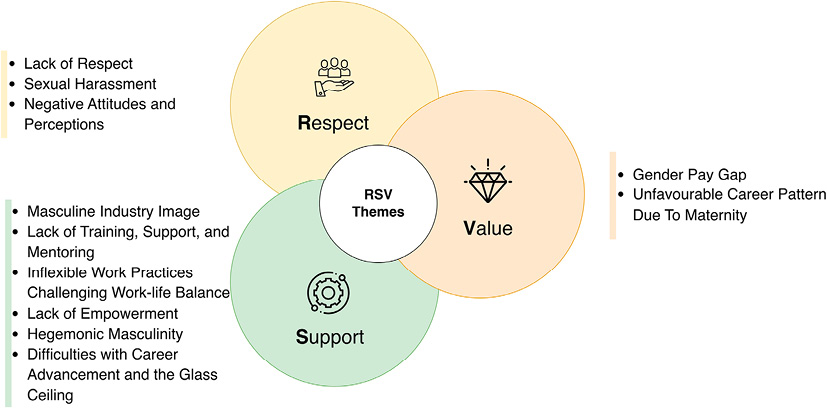
Figure 1. The relationship between respect, support, and value (RSV).
Current retention initiatives in the construction sector
Emerging policy-driven initiatives have shown promise in increasing female retention rates and focus on several key areas (see Table 2): (1) respect, addressing issues of lack of respect through policies like the Equality Act 2010 and the Sex Discrimination Act 1975; (2) career advancement, providing transparency around promotion opportunities and addressing the gender pay gap through the implementation of equality policies; (3) support systems, offering formal training opportunities, mentoring, and networking events such as the Women into Science and Engineering (WISE) initiative to counteract the lack of support (Adeyemi & Oke, 2022; Baker et al., 2024); (4) work–life balance, developing flexible work practices to improve work–life balance (Oyewobi et al., 2022); and (5) cultural change, mitigating biases and reducing masculine privilege through equality initiatives to foster a more inclusive industry image (Drury et al., 2011; Smith et al., 2023).
Despite these initiatives, barriers stemming from the industry’s culture and attitudes continue to create a “glass ceiling” that obstructs women’s career progression, leading many to exit the industry (Lan Oo et al., 2019). Oesterreich and Teuteberg (2016) recommended exploring innovative initiatives that leverage digitalisation to enhance women’s retention within the construction sector.
There is a pressing need to formalise these initiatives and align them with existing policies through digitalisation, which could alleviate some of the stressors present in the work environment. Galea et al. (2015) emphasised the importance of formal policies in retaining women and pointed out the disconnect between company values and these policies. Their research suggests that policies should be flexible to ensure robustness and adaptability, as current company values often do not support flexible working arrangements.
Significant strides have been made in recognising and addressing the barriers to women’s retention in construction; however, a concerted effort to formalise and examine the role that digital technology plays independently or in enhancing these initiatives is essential for fostering a supportive and equitable work environment and increasing the number of women in construction. Given the continual masculine environment and structural biases facilitating a lack of respect, career advancement barriers, and work–life imbalance (Opara et al., 2020), more initiatives need to be explored. The Farmer Review highlights the urgency of addressing the “manpower shortage” in the construction sector, advocating for the adoption of futuristic processes, such as digitalisation, to tackle workforce shortages (Farmer, 2016). This study employed ANT, as digitalisation integrates digital technologies into organisational processes (HM Government, 2020) and provides an alternative lens through which to analyse retention issues. ANT also provides an opportunity to examine the role that non-humans, specifically digital technologies, play in influencing the industry’s practices aimed at encouraging the retention of women in the construction sector (Crawford, 2020).
Conceptual framework for using ANT to examine the role of digital technologies in retaining women in construction
ANT offers a nuanced framework for understanding the interplay between human and non-human entities within the construction sector (e.g. see Alderman & Ivory, 2011; Sage et al., 2011; Kurokawa et al., 2017). From a gender perspective, Greed (2000) employed ANT to create new alliance pathways for minority women in construction whilst examining how networks facilitate power and control within organisations. By moving beyond traditional distinctions between these entities, ANT emphasises the heterogeneous nature of human activities and the significant contributions of various non-human “actants”, such as digital technologies, in shaping social dynamics (Dankert, 2011). The ANT approach focuses on the effects produced by the network of human and diverse non-human actants whilst considering the link between them in space and time. It helps to provide new perspectives in analysing interactions and effects. The “actant” refers to those actors who make a difference, consisting of both humans and diverse non-humans. This implies that individual actors do not make a difference on their own.
In this context, ANT posits that relationships among actants, both human (i.e. women) and non-human (i.e. digital technologies), generate complex translations that influence experiences and outcomes, which can lead to retention. The essence of any entity, including women in construction, is redefined through their networks and interactions over time. Thus, the attributes and experiences of women, such as resilience and adaptability, are closely tied to their engagement with digital technologies, which serve as crucial non-human actors in this network.
Digital technologies play a multifaceted role in enhancing communication, collaboration, productivity, and overall work experiences for women in construction (Xu et al., 2012; Caya & Mosconi, 2023; Sharma et al., 2023). Inferring from studies such as Anders (2016), Caya and Mosconi (2023), Chowdhury et al. (2019), Sharma et al. (2023), and Xu et al. (2012), digital technologies support a wide range of functions across personal, professional, and organisational contexts. Communication tools such as instant messaging, video conferencing, and email (e.g. Zoom, Slack, and Gmail) enable seamless interaction. Collaboration platforms, including shared document systems and project management tools like Google Workspace and Microsoft Teams, facilitate teamwork. Productivity tools improve efficiency through scheduling, task management, and automation, with examples such as Microsoft Office and Zapier. Information management systems, including cloud storage and databases (e.g. Dropbox and OneDrive), help organisations store and retrieve data effectively. Data analysis technologies like Excel, Tableau, and Python enable processing, visualising, and interpreting complex datasets. In education, e-learning platforms such as LinkedIn Learning and Moodle support virtual learning environments. Creative tasks are enabled by design and multimedia tools such as Adobe Creative Suite, Canva, and Final Cut Pro. Social networking technologies (Facebook, Twitter, and Instagram) connect users and support content sharing. E-commerce platforms like Shopify, PayPal, and Amazon facilitate online buying and selling. Finally, entertainment technologies provide digital access to streaming media, games, and other leisure content.
By examining these technologies and their functions through the ANT lens, this study can uncover how they facilitate connections among women and their professional environments, ultimately influencing their sense of support, value, and respect within the industry. Employing ANT enables a comprehensive analysis of the interactions between women and digital technologies, revealing how these relationships can enhance retention and foster a supportive environment for women in the construction industry (see Figure 2).
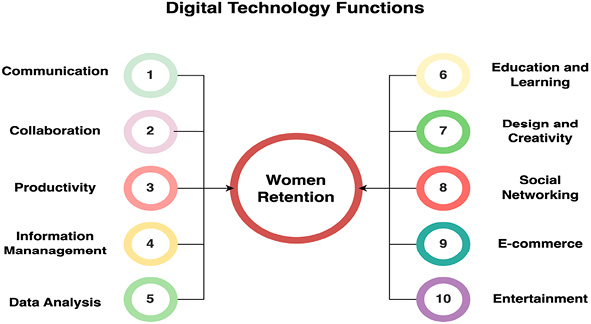
Figure 2. Representation of the network of digital technologies, systems, and women for retention. (author’s construct deduced from literature)
Throughout the asset and infrastructure delivery phase, construction professionals utilise a range of digital technologies to streamline their work. Table 3 captures some common technologies and their general roles within the sector (not specific to women’s retention).
| Technology | Role | Function | Authors |
|---|---|---|---|
| Building information modelling (BIM) | BIM is a digital collaborative tool for designing and managing data. It allows the development of 3D digital models of buildings or elements that multiple disciplines can manage. | Communication, collaboration, productivity, design and creativity, information management, efficiency | Kubba (2012) |
| Artificial intelligence (AI) | AI is the process of teaching computers to learn and perform like human beings. AI systems have the potential to be integrated into almost every aspect of construction. They can predict accurately, automate, and analyse data. | Data analysis, productivity | Kubba (2012) |
| Virtual reality (VR)/augmented reality (AR) | VR creates a virtual world that people can immerse themselves in; it creates the ability to be in one space physically but virtually in another. However, AR does not create a new world; instead, it uses the real world but layers on computer-generated components onto it. | Communication, collaboration, social networking | Shen and Shirmohammadi (2008) |
| Computer-aided design (CAD) | CAD technology is software used to design buildings and create models rather than being performed by hand. This software enhances efficiency and accuracy by automating parts of the design process. | Communication, collaboration, productivity, design and creativity | Mahoney and Tatum (1994) |
| Digital twin | A digital twin creates a virtual simulation of an actual physical place or building. This technology integrates data, services, and physical and virtual worlds into one environment, facilitating a simulation-based monitoring and control of physical parts. | Communication, collaboration, productivity, design and creativity, data analysis, information management | Tao et al. (2019) |
| Project management software | Project management software improves the project management process’s efficiency, from on-site health and safety to commercial management. | Communication, collaboration, productivity, design and creativity, data analysis, information management | Wisniewski (2020) |
| 5G | In the context of construction, this assists in improving communication and enabling the operation of various other automated technologies. | Communication | Mendoza et al. (2021) |
| Internet of Things (IoT) | The IoT uses physical devices that can have technology embedded into them to connect to the internet. This enables the physical devices to identify other devices and communicate or exchange data. | Communication, collaboration | Kiran et al. (2022) |
| Cloud communication/common data environments | The use of internet-based technology facilitates communication and collaboration in a non-physical way. | Communication, collaboration, efficiency | Buchal and Songsore (2019) |
| Metaverse | The metaverse can be described as a “virtual world”, essentially a digitalised version of a physical environment. This immersive technology facilitates communication with virtual avatars and allows detailed visualisation of building models. | Communication, collaboration, social networking | Waqar (2024) |
| Wearable technology | There is a wide range of wearable technologies in the construction industry. These include devices that sense the environment, monitor locations, and physically monitor workers’ health, such as an electrocardiogram. | Information management, design and creativity | Awolusi et al. (2018) |
| Big data analytics | Big data refers to large, challenging, or multifaceted data that require analytics to assess. | Data analysis | Bhargava et al. (2018) |
These digital technologies have been acknowledged by construction bodies, including the Royal Institution of Chartered Surveyors, the CITB, and the UK government, as opportunities to support women (UCL, 2015; CITB, 2018; Sawhney & Knight, 2023). In addition, the Organisation for Economic Co-operation and Development (OECD) deems that digitalisation has the potential to close or expand the gender imbalance in the workforce, depending on the way it is implemented and the policy in place (OECD, 2017). These include ensuring access to equal digital technologies and providing opportunities for requalification to enable people, particularly women, to remain in their industry by adapting jobs in response to digitalisation rather than facing job losses (Kurokawa et al., 2017).
From the literature sampled, the most common functions of technologies used in the construction sector are communication, followed by collaboration, productivity, data analysis, information management, design and creativity, and social networking. Given equal access, the functionality of these technologies can shape women’s work experiences and play a role in retention. Ultimately, leveraging digital technologies can create a more inclusive environment that not only supports women’s retention in the construction industry but also promotes their professional growth and development.
Digital technologies offer diverse functions-communication, collaboration, and data analysis. Their influence on retention operates through socio-technical mechanisms that foster RSV. These mechanisms can include visibility (making women’s contributions transparent), flexibility (enabling remote and hybrid work), voice (providing platforms for reporting and advocacy), and power redistribution (challenging informal male-dominated networks). ANT provides a lens to understand how these mechanisms operate within socio-technical networks. Through ANT’s concept of translation, technologies like BIM and MS Teams could be explored to examine if they can do more than facilitate collaboration, redefine participation norms by enabling women to negotiate spatial and temporal constraints, and challenge hegemonic masculinity that traditionally dominates construction sites. Similarly, inscription occurs when dashboards and performance tracking systems encode metrics into organisational routines, influencing recognition and reward structures. By making contributions visible and measurable, these inscriptions can enhance respect and value, countering informal male-dominated evaluation systems. These interactions demonstrate that non-human actors such as digital tools can actively mediate relationships, redistribute power, and create new possibilities for inclusion. In doing so, digital technologies become critical agents in transforming workplace culture and retention strategies, moving beyond technical efficiency to address systemic gender inequities in construction.
The conceptual framework presented here (Figure 3) highlights the potential of digital technologies to reshape the culture and attitudes towards women in construction. This possibility aims to illuminate how the integration of digital tools can transform women’s experiences, thereby addressing retention challenges and fostering a more inclusive construction sector. Through the ANT lens, Figure 3 illustrates the interplay between respect, support, and value as critical dimensions influencing women’s retention in the construction sector, and how digital technology functions can address associated barriers. Under respect, challenges such as lack of respect, sexual harassment, and negative attitudes persist, undermining inclusivity. Support encompasses barriers like a masculine industry image, insufficient training and mentoring, inflexible work practices that disrupt work–life balance, lack of empowerment, hegemonic masculinity, and difficulties with career advancement. Meanwhile, value relates to structural issues such as the gender pay gap and unfavourable career patterns due to maternity leave.
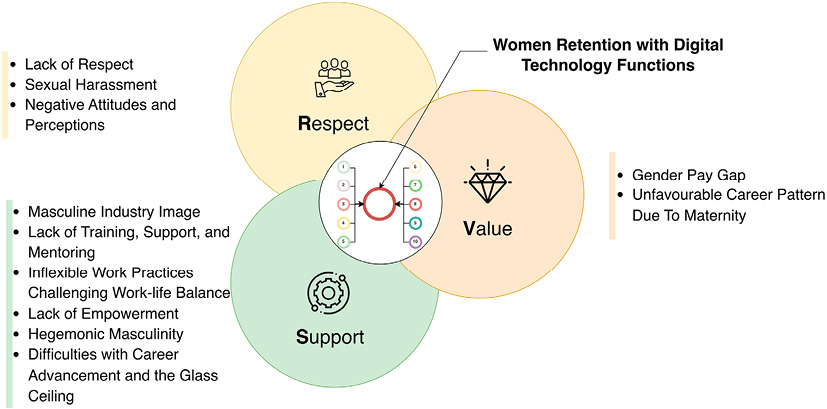
Figure 3. Conceptual model: the interplay between digital technology functions and respect, support, and value (RSV) themes.
Research methodology
Figure 4 outlines the research roadmap utilised in this study. It adopts a constructivist viewpoint, which holds that knowledge is formed through social interactions and emphasises the role of individuals in constructing meaning from their personal experiences and interactions with their environment (Amineh & Asl, 2015). This perspective is particularly relevant to the research, as it allows the authors to learn from the experiences of women working in the construction sector, thereby shaping an understanding of their lived realities.
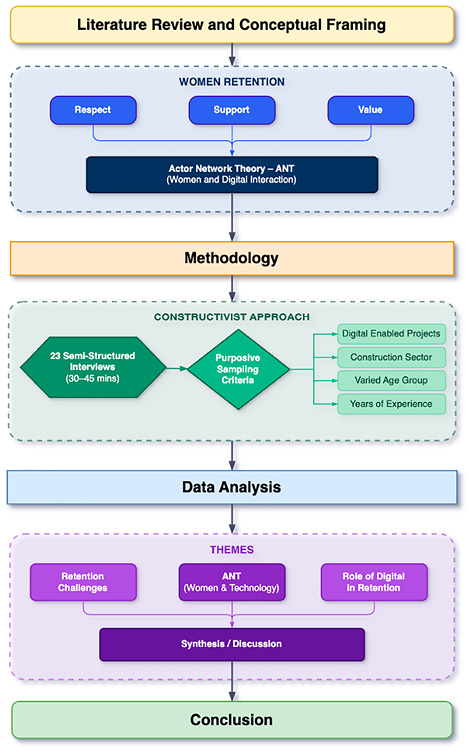
To deepen this analysis, ANT is incorporated as a complementary framework. By applying the ANT lens, the study explores the interactions among various actors within the network and examines how women’s experiences and decisions to remain in the construction field are influenced by external factors, including non-human actants. This dual approach not only enriches the understanding of the complexities within the construction sector but also highlights how digitally enabled practices are transforming workplace culture in the industry. Overall, the study is conceptualised through the integration of constructivism and ANT, providing a comprehensive framework for analysing the interplay between individual experiences and wider systemic influences.
A qualitative approach through interviews was employed to collect data. Interviews were considered best suited, as they allowed the exploration of women’s opinions, experiences, and perspectives concerning digitalisation in the construction sector without being influenced by others’ opinions. An interview is appropriate when the interviewees share a common characteristic, as was the case in this research, where all participants were women. Additionally, interviews are required when a simple “yes” or “no” will not suffice (Naoum et al., 2020). A semi-structured interview technique was chosen to enable the comprehensive collection of data on women’s perspectives relating to the digitalisation of the construction sector, whilst still providing some structure to the interview process. In addition, this type of interview can “achieve a high level of validity/credibility” if the interviewee is engaged, probed, and encouraged to explore answers (Saunders et al., 2019).
Data collection
A purposive sampling approach was employed to recruit participants with relevant experiences to share (Creswell & Poth, 2025). Given the widespread accessibility and advanced use of digital technologies in the UK, women of various age groups and experience levels who were involved in digitally enabled projects were identified through LinkedIn and Google searches. A total of 85 women were contacted, of whom 23 responded. The number of interview responses was considered sufficient for exploring the topic of women’s retention and is consistent with previous studies that achieved meaningful outcomes with sample sizes of around 20 interviews (Jaafar et al., 2016; Hasan et al., 2024).
A set of questions was developed to guide the interviews, focusing on themes such as retention challenges, the interaction between women and technology, and the contribution of digital tools to retention. Many of the questions were open-ended, allowing participants to offer detailed responses and elaborate where necessary. As a result, interviews ranged from 30 to 45 minutes in length. The interview explored women’s demographic and professional backgrounds in construction, the challenges they face, and the interaction between them and technology. It further examined suggested improvements, women’s contributions to mitigating these issues, and the role of digital technologies in addressing challenges and enhancing retention.
To ensure convenience and minimise travel costs, interviews were conducted via online video platforms. This format enabled the automatic generation of recordings and transcripts, which were subsequently reviewed to ensure thorough familiarity with the data. Data collection concluded after the analysis of the 23 interviews, as responses began to show common patterns and data saturation was reached. No further data collection was therefore required.
Data analysis and results
In this study, ANT served as a critical lens through which the data collected from 23 qualitative interviews with women (see Table 4) in the construction sector were analysed. ANT, with its emphasis on the relationships and interactions among human and non-human actors, provided a nuanced framework for understanding the complexities surrounding women’s retention challenges in a predominantly male-dominated industry. Data collection involved the meticulous transcription of interviews, ensuring that each participant’s voice was accurately represented. Following transcription, credibility checks were conducted to assess the reliability and validity of the data. This step was essential, as it enabled the identification of both the strengths and the limitations within participants’ narratives. By verifying the accuracy of the transcriptions and cross-referencing them with the original recordings, the researcher ensured that the insights gathered were robust and reflective of the women’s true experiences.
Using NVivo 13, data were organised under two primary themes, (1) retention challenges and (2) the role of digital technology in retention, both examined through the ANT lens. This thematic analysis facilitated a deeper exploration of how various actors, women workers, digital technologies, organisational practices, and cultural norms interact to shape the retention landscape. For the first theme, retention challenges, the analysis revealed how structural biases, inflexible work practices, and a masculine workplace culture emerged as significant barriers to women’s retention. By applying ANT, the researcher illustrated how these challenges are not merely individual experiences but are interconnected with broader societal and organisational networks that perpetuate gender disparities in the workplace. In the second theme, the role of digital technology in retention, ANT enabled an investigation into how various technological tools and platforms function as actors within the retention network. For example, the analysis examined how digital solutions for remote health and safety discussions, flexible working arrangements, e-mentoring services, and systems for reporting bullying and harassment could potentially transform the dynamics of respect, support, and value for women in construction. By highlighting the interactions between these technologies and the women using them, the study uncovered how digital innovations can empower women, foster a sense of belonging, and enhance their overall work experience.
Overall, employing ANT in the data analysis enriched the understanding of the retention challenges faced by women in the construction sector and illuminated the potential of digital technologies to act as transformative agents within these networks. This approach provided a comprehensive view of the interplay between human and non-human actors, ultimately contributing to a more holistic understanding of women’s retention issues in the construction industry.
Respondents had diverse years of experience across their different job roles in construction (Figure 5). The diversity of respondents and experiences provides the context needed to examine the complex interrelationships of networks between women and digital technologies in the construction sector. The average years of experience was 11, with almost half of the respondents taking extended leave, meaning they had a break in their careers, which affected career experience and retention at workplaces.
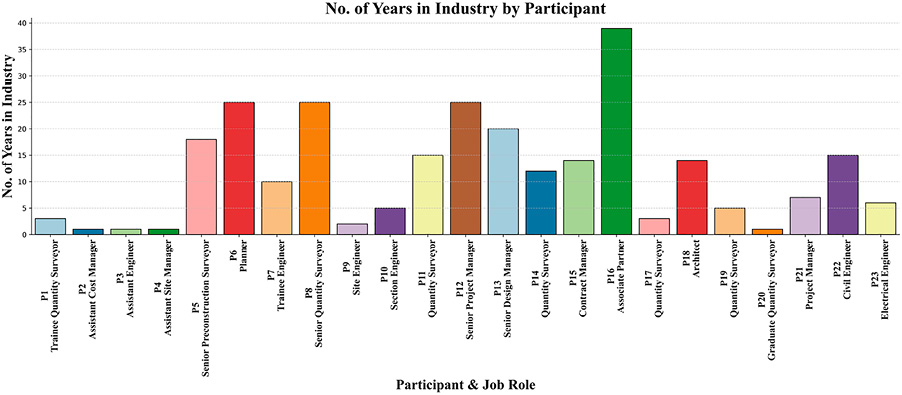
Figure 5. Respondents, their job role, and number of years in construction.
Content analysis of responses
Nodes were created within NVivo 13 based on these themes, and annotations were used to identify response patterns. Responses from the interviews under each theme were anonymised, aggregated, and summarised. All responses to retention challenges, the interaction between women and technology (ANT), and digital’s role in inclusion were analysed using a coding framework (see example in Table 5). The coding followed a three-tier approach: first-order themes, which are derived directly from participants’ statements; second-order themes, which are concepts grouped into broader categories reflecting patterns across interviews; and aggregated dimensions: aligned with the study’s conceptual framework of RSV.
For example, in coding, first- and second-order themes and aggregated dimensions were deduced from the transcribed text to identify women’s interactions with digital technology, and consequently, the role that digital technology plays in facilitating retention.
Retention challenges – barriers to supporting, valuing, and respecting women
Retention challenges for women in the construction sector are significant and multifaceted, as validated by extensive interviews with industry professionals. A primary barrier identified is inflexible work practices contributing to a detrimental work–life balance. Many respondents, including an assistant site manager, expressed the pressure to demonstrate their commitment by spending more hours on-site than required, stating, “Self-inflicted, I would spend more hours on site than I was technically contracted to…just because I felt like I had to prove that I was working just as hard as everyone else.” This sentiment resonates with findings from recent studies by Baker et al. (2023), Lan Oo et al. (2019), and Shibani et al. (2021), underscoring the urgent need for more adaptable work arrangements.
Another critical challenge stems from the pervasive masculine culture within the industry, which often results in negative experiences for women, including bullying and harassment. One planner recounted her experience of harassment and her decision not to report it, highlighting the fear of being labelled or blamed: “At the time, obviously, as a female and the only female engineer, you thought that you’d be called names and that you’d provoke it.” Such experiences contribute to a work environment where women frequently feel undervalued and overlooked, as illustrated by the remark, “People would see me, and then just kind of assume that I was there for the admin side.”
The theme of “lack of support” emerged prominently from the discussions, particularly regarding the challenges faced by women returning from maternity leave. A senior preconstruction surveyor shared her distressing experience: “I had an issue returning from maternity leave. I basically had an on-site role, and I was going back part-time, and that wasn’t really working, but it wasn’t really discussed. I returned back to the office, and there was no line manager there, and I basically sat there terrified, worrying about my child.” This highlights the urgent need for structured support networks and open communication for returning mothers.
Whilst the findings indicate that issues such as “negative attitudes and perceptions”, “unfavourable career patterns”, and “difficulty in career advancement” do not currently pose major obstacles to women’s retention, it is essential to recognise that the construction sector is gradually progressing towards a more inclusive environment. However, the “gender pay gap” remains a moderate but significant barrier to retaining women in the industry, emphasising the need for ongoing efforts to address this disparity.
Addressing these retention challenges (see Figure 6) is crucial for fostering a supportive, respectful, and equitable work environment for women in the construction sector. By implementing flexible work practices, cultivating a more inclusive culture, and providing robust support systems, the industry can not only retain talented women and address the leaky pipe but also enhance overall productivity and innovation.
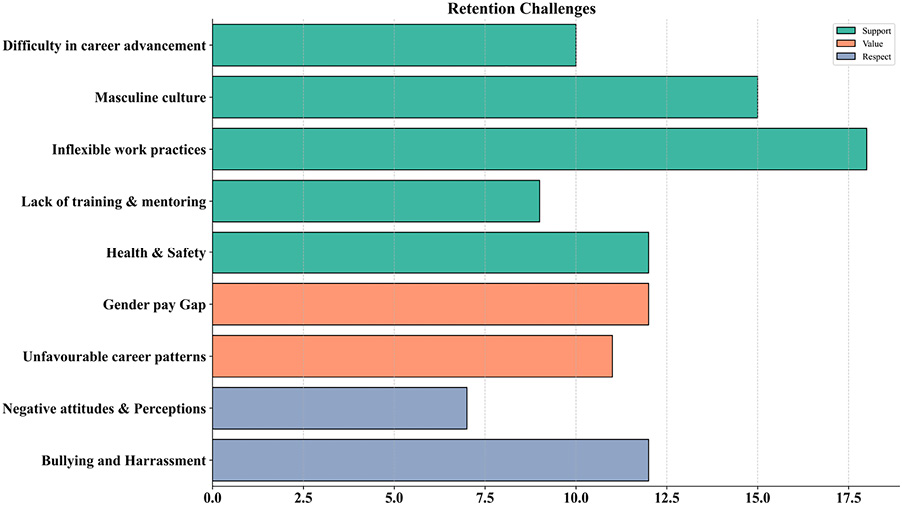
Figure 6. Retention challenges.
The role of digital technologies in retaining women in the workforce
Digital technologies are not passive tools; they act as socio-technical enablers that reshape workplace interactions and address systemic barriers to women’s retention. Through the lens of ANT, these technologies emerge as active agents fostering respect, support, and value within construction networks. The interviews reveal important variation and nuance in how these tools are experienced. These differences further clarify the study’s primary research question: What role do digital technologies play in retaining women by fostering respect, support, and value? Examples of how the interaction between women and technology supported women in different ways are explained next. Across all three RSV dimensions, the findings show that digital technologies shape retention not as universal enablers but as context-dependent socio-technical actants. They foster respect when women can leverage visibility and bias-reducing affordances, support when technologies meaningfully alleviate risks and inflexibility, and value when digital platforms enable fair recognition and career development. These benefits are experienced unevenly across job roles, life stages, digital competencies, and organisational conditions, highlighting that the role of digital technologies in retaining women is fundamentally relational, contingent, and shaped by the heterogeneous networks emphasised by ANT. The findings underscore that retention is not achieved through technology adoption alone but through its strategic use to dismantle structural biases and empower women.
Respect: enhancing visibility and reducing bias
Research by Worrall et al. (2008) and Pamidimukkala and Kermanshachi (2023) indicates that women often face assumptions of having less authority than their male counterparts. From this study, women frequently leverage digital communication platforms to assert professional identity and counter gender bias. For instance, email signatures listing chartership credentials rather than gendered titles were cited as strategies to shift perceptions towards competence: “I did deliberately put my chartership to show as a whole, I actually know what I’m talking about” (P8). Emerging technologies such as AI, VR, and metaverse environments create gender-neutral spaces that reduce stereotypes and promote inclusivity. Additionally, online training programs addressing unconscious bias and diversity further reinforce respect by educating employees on equitable practices.
Support: enabling flexibility and safety
Digital platforms such as MS Teams, BIM environments, and VPN-enabled systems facilitate remote working, allowing women to balance professional responsibilities with personal commitments without sacrificing career progression. Respondents emphasised that these tools reduce the pressure of on-site presence and mitigate health and safety risks. Drone-enabled software like Propeller was highlighted as transformative for performing hazardous tasks remotely, thereby reducing exposure to “macho” site culture and enhancing psychological safety. Social media platforms also provide networking and mentoring opportunities, helping women overcome isolation in male-dominated environments.
Value: driving transparency and career development
Data-driven tools such as Power BI and performance tracking systems offer visibility into individual contributions, enabling objective recognition and reducing pay inequities. Online mentoring platforms and social networks were identified as critical for career development, providing access to role models and peer support often absent in traditional structures. Furthermore, e-learning platforms allow women returning from maternity leave to upskill and reintegrate effectively, addressing career stagnation concerns. These technologies collectively strengthen women’s sense of value by promoting fairness and facilitating continuous professional growth.
Table 6 identifies the tools and their retention-related impacts, whilst Table 7 reveals the functional mechanisms through which those impacts occur, demonstrating that retention benefits arise from the function’s technologies provided rather than from the tools themselves. This aligns with the study’s broader argument that digitalisation can transform retention strategies beyond traditional social interventions, creating a more equitable construction industry.
This study emphasises that the interaction between women and technology is not just about using tools; it is about modifying these technologies to meet the specific needs of women for respect, support, and value (see Table 7). For example, social media has enabled women to connect with each other, enhancing their sense of belonging and retention. As one site engineer remarked, “The online social media stuff within the company is quite good for sharing what everyone’s doing, and I’ve gotten in touch with a couple of other female engineers through LinkedIn” (P9). Furthermore, technologies like the 360° camera monitoring system HoloBuilder allow remote access to site activities, enabling women to balance work and personal life effectively. A user noted, “I can access everything that I would do in the office from home... through the VPN” (P2).
Table 7 demonstrates that it is the functions of digital technologies, such as communication, collaboration, education, social networking, reporting, data analysis, and information management-rather than the tools themselves-that drive improvements in women’s experiences of respect, support, and value. It shows how different functions act as socio-technical mechanisms that enhance retention: communication and data-driven functions build respect by improving visibility and challenging bias; collaboration, remote working, and reporting functions provide support by enabling flexibility, safety, and connectedness; and learning, mentoring, and analytics functions strengthen value through fairer recognition and clearer development pathways. Importantly, the table also highlights that these benefits are not uniform-women in office-based or digitally intensive roles gain more from visibility and remote-working functions, whereas site-based workers benefit more from safety-oriented collaboration tools, and digital confidence, access, and organisational culture all shape how effectively each function contributes to retention.
Technology providers are urged to place inclusivity at the centre of their development processes, ensuring that digital tools are designed not only for the wider workforce but also with the specific needs of women in mind. The technological functions that women commonly rely on are communication, networking, social, efficiency, productivity, collaboration, and education (see bold data in Table 7). By enhancing these functions, providers can better support women’s day-to-day experiences and address the challenges they face in the workplace. The thoughtful integration of such technologies is essential in creating an environment where women feel respected, supported, and valued. Through inclusive innovation, technology can play a vital role in empowering women and fostering a thriving, diverse workforce.
Overall, the analysis demonstrates that the influence of digital technologies on women’s retention is neither uniform nor universal, but deeply shaped by differences in women’s roles, work contexts, digital confidence, organisational cultures, and life stages. By illustrating how specific technologies support some groups, such as site-based workers who benefit from safety-oriented tools, office-based professionals who gain visibility through data analytics, or primary caregivers who rely on remote-working systems, the findings highlight the nuanced and uneven ways in which digital tools operate across the construction workforce. Crucially, these differentiated experiences directly inform the study’s central research question by showing how digital technologies foster respect, support, and value through mechanisms such as visibility, flexibility, safety, voice, and fair recognition. This socio-technical perspective confirms that retention arises not from technology adoption alone but from the relational and contextual ways that women are able to use and adapt digital tools within their networks, thereby reinforcing the theoretical and empirical contribution of this study.
Discussion: digital technology and RSV through the lens of ANT
The intersection of technology and gender dynamics presents a transformative opportunity to address systemic issues that hinder women’s advancement in construction. Rather than viewing technologies as passive tools, ANT positions them as active participants or actants that mediate relationships, redistribute power, and influence workplace culture. Viewing retention through ANT reveals that digital technologies do more than support existing practices; they reconfigure socio-technical networks by altering relationships, mediating power, and enabling new forms of participation. Respect, support, and value are not static attributes but emergent properties of these networks, shaped by continuous interactions between human and non-human actors. By strategically deploying digital tools to foster inclusivity, organisations can transform retention from an individual challenge into a systemic capability, addressing both equity and productivity imperatives. Mechanisms include visibility, flexibility, voice, and power redistribution. Visibility is achieved through tools such as data analytics and BIM, which make women’s contributions transparent and measurable. This counters structural biases that often lead to undervaluation and pay disparities, ensuring that performance is assessed objectively rather than through informal networks. Flexibility emerges through remote work tools and VPN-enabled systems, enabling women to manage work–life balance without sacrificing career progression. This directly addresses the challenge of inflexible work practices, which have historically forced women to choose between professional and personal responsibilities. Voice is amplified through online reporting platforms that provide safe, anonymous channels for documenting bullying and harassment. These tools reduce fear of retaliation and empower women to speak up, fostering psychological safety in environments where masculine norms often silence dissent. Finally, power redistribution occurs through social media and online mentoring platforms, which create alternative networks of support and knowledge-sharing. By connecting women to mentors and peers, these technologies challenge exclusionary practices and diminish the dominance of male-centric informal networks. Collectively, these mechanisms illustrate how digital technologies, when strategically deployed, can dismantle systemic barriers and foster respect, support, and value for women in construction.
Respect: reconfiguring power relations
Under respect, visibility is critical. Tools such as BIM and data analytics make women’s contributions transparent and measurable, countering undervaluation and gender pay gaps. Online training platforms addressing unconscious bias also reinforce respect by educating employees on equitable practices. Digital technologies interact with women to challenge entrenched norms of disrespect and bias. For example, email systems and professional platforms enable women to foreground qualifications rather than gender, shifting perceptions of competence and authority. This interaction illustrates ANT’s principle of translation, where non-human actors (communication tools) mediate social meanings and alter hierarchical dynamics. Additionally, literature indicates that technologies facilitate communication, collaboration, and education, which are vital for fostering respect. For instance, longitudinal data visualisation can inform managerial decisions, shifting perceptions within the construction industry towards a more inclusive culture. Furthermore, online training programs focused on diversity and inclusion serve to educate employees on gender equality and unconscious bias, thereby promoting respect for women in the workplace (Worrall et al., 2008; Lan Oo et al., 2019).
Similarly, AI-driven analytics and VR environments create gender-neutral spaces, reducing stereotypes and fostering inclusivity. These technologies do not act in isolation; their influence emerges through networks where women actively adopt and adapt tools to assert identity and counter bias. Online training platforms further extend this network by embedding diversity education into organisational routines, reinforcing respect as a shared value rather than an individual struggle. From an empowerment perspective, online social networking platforms provide essential mentoring opportunities, enhancing women’s skills and capabilities, which are critical for gaining respect in their roles. Although digital technologies cannot completely eradicate bullying, they enable effective reporting mechanisms and data collection that can help reduce the prevalence of such negative behaviours (Pamidimukkala & Kermanshachi, 2023).
Support: negotiating flexibility and safety
Support is operationalised through socio-technical networks that enable women to balance professional and personal commitments. For support, flexibility is enabled through remote work tools and VPN systems, allowing women to balance professional and personal responsibilities without career penalties. Drone-enabled software and BIM environments reduce exposure to hazardous tasks and masculine site culture, enhancing psychological safety. Remote collaboration tools such as MS Teams and BIM platforms exemplify ANT’s notion of heterogeneous networks, where digital systems and human actors co-produce new work practices. These tools allow women to negotiate spatial and temporal constraints, reducing dependence on physical presence and mitigating exposure to masculine site cultures (supporting findings by Schongen, 2023). Drone-enabled software like Propeller demonstrates how non-human actors extend women’s agency by performing hazardous tasks remotely, thereby enhancing psychological safety. Social media platforms further strengthen these networks by connecting women to mentors and peers, counteracting isolation in male-dominated environments. Here, support emerges not from technology alone but from its integration into relational networks that redefine norms of participation and safety.
Value: enabling transparency and career progression
Finally, value is strengthened through data-driven performance tracking and mentoring platforms, which provide objective recognition and career development opportunities, addressing barriers such as limited advancement and maternity-related career stagnation. Value is shaped through interactions that make contributions visible and equitable. Data-driven tools such as Power BI and performance tracking systems exemplify ANT’s concept of inscription, where organisational decisions are encoded into digital artefacts that influence recognition and reward structures. These technologies enable objective evaluation of outputs, reducing reliance on informal networks that often disadvantage women. Online mentoring platforms and e-learning systems extend this network by providing pathways for skill development and reintegration after maternity leave, addressing career stagnation concerns. Through these interactions, non-human actors actively mediate access to opportunities and redistribute symbolic capital, reinforcing women’s sense of value within organisational hierarchies. For example, research by Pamidimukkala and Kermanshachi (2023) and Naismith et al. (2017) indicates that extended leave can impede women’s career progression, complicating their reintegration into the workforce. However, digital tools can bridge this gap by offering training, support, and communication pathways that assist women on extended leave, thereby enhancing their career advancement prospects (Shibani et al., 2021). Furthermore, digital technologies play a crucial role in closing the information gap regarding available opportunities, which has been a significant barrier to women’s career advancement. The interplay of support, respect, and value demonstrates that fostering an inclusive culture is both a cause and an effect of these digital interventions. Figure 7 is an updated version of Figure 3 based on the findings. Figure 7 illustrates how digital technology functions interact with the three retention dimensions: respect, support, and value, in shaping women’s retention through socio-technical mechanisms. It shows that technologies enhance visibility, flexibility, safety, voice, and recognition, but their benefits vary by role, digital confidence, and organisational context. The figure reinforces that retention emerges from dynamic interactions between women, technologies, and workplace structures, rather than from technology alone.
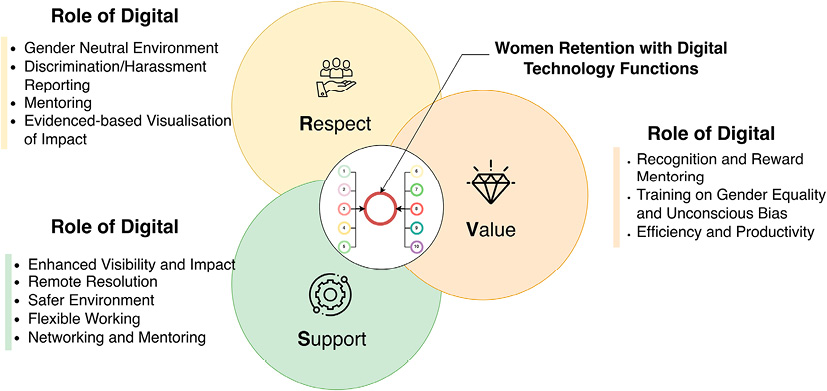
Figure 7. Developed model-the interplay between digital technology functions and the three retention dimensions.
Implications
The findings of this research, through an ANT lens, highlight the transformative potential of digital technologies in creating a more equitable work environment for women. By leveraging these digital tools, managers can enhance retention rates, promote gender equality, and cultivate an environment where women feel respected, supported, and valued. The practical implications of this study highlight the need for the construction sector to invest in digital solutions that empower women and address the unique challenges that they face in the workplace.
Implications for construction organisations
Organisations should recognise that digital tools do not automatically generate equitable outcomes; their effect depends on how they are integrated into everyday work practices, communication structures, and decision-making processes. Technologies that enhance visibility, such as BIM platforms, data-driven reporting systems, and collaborative digital workspaces, can counteract long-standing biases only when paired with organisational willingness to rely on transparent metrics rather than informal judgements. Firstly, firms should therefore institutionalise the use of such tools in performance evaluation, career progression, and workload allocation processes to ensure that women’s contributions become consistently visible and valued. Secondly, digital technologies should be embedded into flexible working policies in ways that support women across diverse roles. The study shows that tools enabling remote working, mobile reporting, and remote monitoring help women navigate inflexible site-based schedules and reduce exposure to masculine cultures. Therefore, construction organisations could critically evaluate the mode of conducting some on-site activities to encourage the integration of remote work. In this regard, these organisations should be willing to accommodate structural changes to their workflow or business-as-usual if they want a higher rate of retaining women. Thirdly, the findings highlight the importance of digital safety and voice mechanisms, such as online discriminatory-reporting platforms, mobile incident reporting tools, and anonymous feedback systems. These tools provide women with safe channels to report harassment and bullying, thereby helping to shift organisational norms towards accountability and psychological safety. Organisations must ensure that these platforms are widely accessible, rigorously monitored, and coupled with clear response protocols to avoid the risk of digital reporting becoming a symbolic gesture rather than a meaningful avenue for redress.
Implications for technology developers
Technology developers have an opportunity and responsibility to design digital tools that recognise and address gendered workplace dynamics. The findings indicate that women derive retention-enabling benefits from technologies that support communication, flexibility, networking, education, and safety. Developers should therefore consider embedding features such as inclusive interface design, safety-centred functionalities, gender-neutral avatars in virtual environments, and customisable visibility settings that help women assert competence without exposure to gendered assumptions. Furthermore, emerging technologies such as AI, VR, and metaverse platforms require careful development to ensure that they do not reproduce biases but instead actively promote gender-equitable interactions.
Implications for policymakers and industry bodies
Policymakers and industry associations should recognise digitalisation as a crucial mechanism for addressing the systemic cultural and structural issues that have historically undermined women’s retention in construction. Existing equality policies, whilst valuable, remain limited when not complemented by tools that make compliance actionable, transparent, and trackable. Policies should therefore incentivise organisations to adopt digital systems that enhance transparency in pay, promotion, and safety reporting. Industry bodies could also establish digital standards and guidelines to ensure consistent, equitable implementation of such technologies across organisations of varying sizes and digital maturity.
Theoretical implications
The findings open new research pathways on the role of digital technologies to positively influence women in construction. This would equip researchers with new insights into technological functions that are desired by women in the construction environment. In terms of respect, support, and value, the integrated model developed encourages researchers to effectively conceptualise the potential influence links between the three themes for women’s retention and digital technology functions. This shifts the existing research discourse on women’s retention to exploring dynamic influences of digital technologies regarding different women in construction, if higher retention rates are desired.
Conclusion and limitations
The understanding of women’s retention in the construction industry remains limited within the broader context of construction knowledge. This study makes a significant contribution to the discourse by identifying and addressing key barriers to women’s retention, namely, inflexible working practices and a traditionally masculine culture. By utilising ANT, the research provides innovative insights into how digital technologies can be strategically employed to tackle these challenges.
The findings reveal that women in construction have a strong preference for digital tools that enhance efficiency, collaboration, and communication, such as social networking platforms for performance support and mentoring, remote work options, and effective communication tools for reporting issues. These technologies are crucial in fostering a supportive environment that acknowledges and values women’s contributions, ultimately leading to improved retention rates in the sector.
However, this study acknowledges several limitations. Firstly, there is a persistent issue of unequal access to technology among women, along with varying levels of digital proficiency, which can hinder the effectiveness of the proposed solutions. Additionally, the development of gender-neutral environments through emerging technologies, such as AI, VR, and the metaverse, is still in its infancy and requires further investigation to validate their impact and effectiveness in promoting inclusivity.
Building on these findings, future research should adopt more explicitly theory-driven and comparative approaches to deepen the understanding of how socio-technical networks shape women’s retention in construction. Firstly, ANT-informed comparative studies across job families, project types, organisational digital maturity levels, and national contexts would reveal how different constellations of human and non-human actants produce varied retention outcomes. Such work would illuminate how mechanisms such as visibility, flexibility, safety, and voice operate differently depending on occupational demands, hierarchical structures, and cultural environments. Secondly, longitudinal studies that track the adoption and evolution of digital technologies over time, particularly AI-assisted decision systems, immersive virtual workspaces, and emerging reporting platforms, would allow researchers to examine how shifting networks reconfigure retention dynamics and whether early gains in respect, support, and value are sustained or eroded through organisational change. Finally, mixed-cohort studies comparing women’s experiences with those of men would clarify which digital affordances produce gender-specific benefits and which support retention more broadly. Such theoretically grounded and context-sensitive research would advance the socio-technical understanding of retention and support the development of adaptable, equitable digital strategies for the construction industry.
Overall, this research establishes a foundational framework for future studies and industry initiatives aimed at cultivating a more inclusive and equitable construction industry for women. By actively engaging with digital solutions and addressing the identified barriers, organisations can foster a more supportive environment that not only enhances retention but also promotes gender equality and empowers women in their professional journeys. The insights gained from this study serve as a call to action for stakeholders to invest in and prioritise the implementation of digital technologies that support women, thereby transforming the construction industry into a more equitable space for all.
References
Aboagye-Nimo, E., Wood, H., & Collison, J. (2019). Complexity of women’s modern-day challenges in construction. Engineering, Construction and Architectural Management, 26(11), 2550–2565. https://doi.org/10.1108/ECAM-09-2018-0421
Adeyemi, O., & Oke, A. (2022). Factors affecting mentoring of professionals in construction firms: Nigerian quantity surveyors’ perspective. International Journal of Construction Management, 22(12), 2300–2307. https://doi.org/10.1080/15623599.2020.1783601
Alderman, N., & Ivory, C. (2011). Translation and convergence in projects: An organizational perspective on project success. Project Management Journal, 42(5), 17–30. https://doi.org/10.1002/pmj.20261
Amineh, R. J., & Asl, H. D. (2015). Review of constructivism and social constructivism. Journal of Social Sciences, Literature, and Languages,1(1), 9–16.
Anders, A. (2016). Team communication platforms and emergent social collaboration practices. International Journal of Business Communication, 53(2), 224–261. https://doi.org/10.1177/2329488415627273
Awolusi, I., Marks, E., & Hallowell, M. (2018). Wearable technology for personalized construction safety monitoring and trending: Review of applicable devices. Automation in Construction, 85, 96–106. https://doi.org/10.1016/j.autcon.2017.10.010
Baker, M., Ali, M., & Crawford, L. (2024). What do women want? An exploration of workplace attraction and retention factors for women in construction. International Journal of Construction Management, 24(3), 270–280. https://doi.org/10.1080/15623599.2023.2222987
Baker, M., Ali, M., & French, E. (2023). Investigating how women leaders and managers support other women’s entrance and advancement in construction and engineering. Journal of Construction Engineering and Management, 149(2), 04022166. https://doi.org/10.1061/JCEMD4.COENG-12399
Baker, M., Ali, M., Hassett, E., & Jahan Tumpa, R. (2025). Tapping the untapped resource to address construction skills shortages: Perceptions of Australian women career changers and construction women. Journal of Construction Engineering and Management, 151(4), 04025006. https://doi.org/10.1061/JCEMD4.COENG-15382
Baygi, R. M., Introna, L. D., & Hultin, L. (2021). Everything flows: Studying continuous socio-technological transformation in a fluid and dynamic digital world. MIS Quarterly, 45(1), 423–452. https://doi.org/10.25300/MISQ/2021/15887
Bhargava, M. G., Kiran, K. T. P. S., & Rao, D. R. (2018). Analysis and design of visualization of educational institution database using Power BI tool. Global Journal of Computer Science and Technology, 18(C4), 1–8.
Blay, K. (2018). The impact of inclusiveness on resilience in temporary multidisciplinary organizations (TMO). In Construction Research Congress 2018 (pp. 243–252). https://doi.org/10.1061/9780784481295.025
Buchal, R., & Songsore, E. (2019). Using Microsoft Teams to support collaborative knowledge building in the context of sustainability assessment. In Proceedings of the Canadian Engineering Education Association (CEEA). https://doi.org/10.24908/pceea.vi0.13882
Caya, O., & Mosconi, E. (2023). Citizen behaviors, enterprise social media and firm performance. Information Technology & People, 36(3), 1298–1325. https://doi.org/10.1108/ITP-07-2020-0514
Chowdhury, T., Adafin, J., & Wilkinson, S. (2019). Review of digital technologies to improve productivity of New Zealand construction industry. Journal of Information Technology in Construction, 24, 569–587. https://doi.org/10.36680/j.itcon.2019.032
CITB. (2018). Unlocking construction’s digital future: A skills plan for industry.
Crawford, T. H. (2020). Actor-network theory. In Oxford research encyclopedia of literature. https://doi.org/10.1093/acrefore/9780190201098.013.965
Creswell, J. W., & Poth, C. N. (2025). Qualitative inquiry and research design: Choosing among five approaches (5th ed.). Sage.
Dankert, R. (2011). Using actor-network theory (ANT) doing research. Ritske Dankert Ruimte En Wonen. Volume 40 of Sustainable Urban Areas, ISSN 1574-6410, IOS Press.
Das, B. L., & Baruah, M. (2013). Employee retention: A review of literature. IOSR Journal of Business and Management, 14(2), 08–16. https://doi.org/10.9790/487X-1420816
Drury, B. J., Siy, J. O., & Cheryan, S. (2011). When do female role models benefit women? The importance of differentiating recruitment from retention in STEM. Psychological Inquiry, 22(4), 265–269. https://doi.org/10.1080/1047840X.2011.620935
Edirisinghe, R., Jayasuriya, S., Almulla, J., Abobakr, M., Bastos Costa, D., Alberte, E., & Tzortzopoulos. (2024). Gender diversity in construction: Demystifying the pipeline leaks in Australia, United States, United Kingdom and Brazil. International Journal of Construction Management, 1–15. https://doi.org/10.1080/15623599.2024.2397291
Farmer, M. (2016). Farmer review. Construction Leadership Council. www.constructionleadershipcouncil.co.uk
Fernando, N. G., Amaratunga, D., & Haigh, R. (2014). The career advancement of professional women in the UK construction industry: The career success factors. Journal of Engineering, Design and Technology, 12(1), 53–70. https://doi.org/10.1108/JEDT-04-2012-0018
Galea, N., & Chappell, L. (2022). Male-dominated workplaces and the power of masculine privilege: A comparison of the Australian political and construction sectors. Gender, Work & Organization, 29(5), 1692–1711. https://doi.org/10.1111/gwao.12639
Galea, N., Powell, A., Loosemore, M., & Chappell, L. (2015). Designing robust and revisable policies for gender equality: Lessons from the Australian construction industry. Construction Management and Economics, 33(5–6), 375–389. https://doi.org/10.1080/01446193.2015.1042887
Greed, C. (2000). Women in the construction professions: Achieving critical mass. Gender, Work & Organization, 7(3), 181–196. https://doi.org/10.1111/1468-0432.00106
Gurjao, S. (2006). Inclusivity: The changing role of women in the construction workforce. CIOB.
HM Government. (2020). Energy white paper: Powering our net zero future. https://www.gov.uk/government/publications/energy-white-paper-powering-our-net-zero-future/energy-white-paper-powering-our-net-zero-future-accessible-html-version
Karakhan, A. A., Gambatese, J. A., Simmons, D. R., & Al-Bayati, A. J. (2021). Identifying pertinent indicators for assessing and fostering diversity, equity, and inclusion of the construction workforce. Journal of Management in Engineering, 37(2), 04020114. https://doi.org/10.1061/(ASCE)ME.1943-5479.0000885
Kiran Kumar, E. V. S. S., Rohit, J. S., Nidesh Raj, N., Reddy, E. S., & Malla, V. (2022). Application of IoT in construction industry. In Indian Lean Construction Conference (pp. 501–511). Springer Nature Singapore. https://doi.org/10.1007/978-981-99-5455-1_44
Kossivi, B., Xu, M., & Kalgora, B. (2016). Study on determining factors of employee retention. Open Journal of Social Sciences, 4(5), 261–268. https://doi.org/10.4236/jss.2016.45029
Kubba, S. (2012). Handbook of green building design and construction: LEED, BREEAM, and green globes. Butterworth-Heinemann. https://doi.org/10.1016/B978-0-12-385128-4.00003-2
Kurokawa, M., Schweber, L., & Hughes, W. (2017). Client engagement and building design: The view from actor–network theory. Building Research & Information, 45(8), 910–925. https://doi.org/10.1080/09613218.2016.1230692
Lan Oo, B., Feng, X., & Teck-Heng Lim, B. (2019). Early career women in construction: Career choice and barriers. IOP Conference Series: Materials Science and Engineering, 601(1), 012021. https://doi.org/10.1088/1757-899X/601/1/012021
Latour, B. (1996). On actor-network theory: A few clarifications. Soziale welt, 369-381.
Law, J. (1992). Notes on the theory of the actor-network: Ordering, strategy, and heterogeneity. Systems Practice, 5(4), 379–393. https://doi.org/10.1007/BF01059830
Mahoney, J. J., & Tatum, C. B. (1994). Construction site applications of CAD. Journal of Construction Engineering and Management, 120(3), 617–631. https://doi.org/10.1061/(ASCE)0733-9364(1994)120:3(617)
Manesh, S. N., Choi, J. O., Shrestha, B. K., Lim, J., & Shrestha, P. P. (2020). Spatial analysis of the gender wage gap in architecture, civil engineering, and construction occupations in the United States. Journal of Management in Engineering, 36(4), 04020023. https://doi.org/10.1061/(ASCE)ME.1943-5479.0000780
Markos, S., & Sridevi, M. S. (2010). Employee engagement: The key to improving performance. International Journal of Business and Management, 5(12), 89. https://doi.org/10.5539/ijbm.v5n12p89
Matthewson, G. (2015). Dimensions of gender: Women’s careers in the Australian architecture profession (PhD thesis, The University of Queensland). https://doi.org/10.14264/uql.2015.1071
Maurer, J. A., Choi, D., & Hur, H. (2021). Building a diverse engineering and construction industry: Public and private sector retention of women in the civil engineering workforce. Journal of Management in Engineering, 37(4), 04021028. https://doi.org/10.1061/(ASCE)ME.1943-5479.0000913
Mendoza, J., de-la-Bandera, I., Álvarez-Merino, C. S., Khatib, E. J., Alonso, J., Casalderrey-Díaz, S., & Barco, R. (2021). 5G for construction: Use cases and solutions. Electronics, 10(14), 1713. https://doi.org/10.3390/electronics10141713
Naismith, N., Robertson, S., & Tookey, J. (2017). Identifying barriers to retaining female professionals in engineering and construction organisations. In AUBEA 2017: Australasian Universities Building Education Association Conference 2017 (pp. 227–218). https://doi.org/10.29007/pv2l
Naoum, S. G., Harris, J., Rizzuto, J., & Egbu, C. (2020). Gender in the construction industry: Literature review and comparative survey of men’s and women’s perceptions in UK construction consultancies. Journal of Management in Engineering, 36(2), 04019042. https://doi.org/10.1061/(ASCE)ME.1943-5479.0000731
Navarro-Astor, E., Román-Onsalo, M., & Infante-Perea, M. (2017). Women’s career development in the construction industry across 15 years: Main barriers. Journal of Engineering, Design and Technology, 15(2), 199–221. https://doi.org/10.1108/JEDT-07-2016-0046
OECD. (2017). The pursuit of gender equality: An uphill battle. https://doi.org/10.1787/9789264281318-en
Oesterreich, T. D., & Teuteberg, F. (2016). Understanding the implications of digitisation and automation in the context of Industry 4.0: A triangulation approach and elements of a research agenda for the construction industry. Computers in Industry, 83, 121–139. https://doi.org/10.1016/j.compind.2016.09.006
ONS. (2019). Employee turnover levels and rates by industry section, UK, January 2017 to December 2018. https://www.ons.gov.uk/Employmentandlabourmarket/Peopleinwork/Employmentandemployeetypes/Adhocs/10685employeeturnoverlevelsandratesbyindustrysectionukjanuary2017todecember2018 (accessed 19 March 2025).
Oo, B. L., Lim, B., & Feng, S. (2020). Early career women in construction: Are their career expectations being met? Construction Economics and Building, 20(3), 1–19. https://doi.org/10.5130/AJCEB.v20i3.6867
Opara, V., Sealy, R., & Ryan, M. K. (2020). The workplace experiences of BAME professional women: Understanding experiences at the intersection. Gender, Work & Organization, 27(6), 1192–1213. https://doi.org/10.1111/gwao.12456
Oyewobi, L. O., Oke, A. E., Adeneye, T. D., Jimoh, R. A., & Windapo, A. O. (2022). Impact of work–life policies on organizational commitment of construction professionals: Role of work–life balance. International Journal of Construction Management, 22(10), 1795–1805. https://doi.org/10.1080/15623599.2020.1742632
Pamidimukkala, A., & Kermanshachi, S. (2023). Occupational challenges of women in construction industry: Development of overcoming strategies using Delphi technique. Journal of Legal Affairs and Dispute Resolution in Engineering and Construction, 15(1), 04522028. https://doi.org/10.1061/(ASCE)LA.1943-4170.0000571
Powell, A., & Sang, K. J. (2013). Equality, diversity and inclusion in the construction industry. Construction Management and Economics, 31(8), 795–801. https://doi.org/10.1080/01446193.2013.837263
Quezada-Espinoza, M., Dominguez, A., & Zavala, G. (2023). How difficult are simple electrical circuit conceptions? New findings. European Journal of Educational Research, 12(3), 1269–1284. https://doi.org/10.12973/eu-jer.12.3.1269
Roberson, Q. M. (2006). Disentangling the meanings of diversity and inclusion in organizations. Group & Organization Management, 31(2), 212–236. https://doi.org/10.1177/1059601104273064
Sage, D., Dainty, A., & Brookes, N. (2011). How actor-network theories can help in understanding project complexities. International Journal of Managing Projects in Business, 4(2), 274–293. https://doi.org/10.1108/17538371111120243
Saunders, M., Lewis, P., & Thornhill, A. (2019). Research methods for business students (8th ed.). Pearson.
Sawhney, A., & Knight, A. (2023). Digitalisation in construction report 2023.
Schongen, S. (2023). Digitalisation as a prospect for work–life balance and inclusion: A natural experiment in German hospitals. Social Inclusion, 11(4), 225–238. https://doi.org/10.17645/si.v11i4.7117
Sharma, A., Bhatnagar, J., Jaiswal, M., & Thite, M. (2023). Enterprise social media and organizational learning capability: Mediated moderation effect of social capital and informal learning. Journal of Enterprise Information Management. https://doi.org/10.1108/JEIM-07-2021-0323
Shen, X., & Shirmohammadi, S. (2008). Virtual and augmented reality. In B. Furht (Ed.), Encyclopedia of multimedia (pp. 962–967). Springer US. https://doi.org/10.1007/978-0-387-78414-4_253
Shibani, A., Saidani, M., Hassan, D., Agha, A., Alghodi, M., Alawanati, N., & Gherbal, N. (2021). Challenges and barriers to women in the UK construction industry. In Proceedings of the International Conference on Industrial Engineering and Operations Management. IEOM Society International. https://doi.org/10.46254/AN11.20210513
Smith, N. E., Chowdhury, S., & Costello, S. B. (2023). Examining the effectiveness of gender equity initiatives to support women in engineering. Journal of Management in Engineering, 39(2), 04022078. https://doi.org/10.1061/JMENEA.MEENG-5014
Tao, F., Qi, Q., Wang, L., & Nee, A. Y. C. (2019). Digital twins and cyber–physical systems toward smart manufacturing and Industry 4.0: Correlation and comparison. Engineering, 5(4), 653–661. https://doi.org/10.1016/j.eng.2019.01.014
Turner, M., Holdsworth, S., Scott-Young, C. M., & Sandri, K. (2021). Resilience in a hostile workplace: The experience of women onsite in construction. Construction Management and Economics, 39(10), 839–852. https://doi.org/10.1080/01446193.2021.1981958
UCL. (2015). Digital built Britain level 3 building information modelling: Strategic plan.
Van Heerden, A., Boulic, M., McDonald, B. W., & Chawynski, G. (2025). Gender-perceived workplace stressors by New Zealand construction professionals. International Journal of Construction Management, 25(3), 289–300. https://doi.org/10.1080/15623599.2024.2317039
Waqar, A. (2024). Intelligent decision support systems in construction engineering: An artificial intelligence and machine learning approaches. Expert Systems with Applications, 249, 123503. https://doi.org/10.1016/j.eswa.2024.123503
Wisniewski, J. (2020). Improving project management efficiency in commercial construction management (Doctoral dissertation, Worcester Polytechnic Institute).
Worrall, L., Harris, K., Thomas, A., Stewart, R., Jessop, S., McDermott, P., & Platten, A. (2008). Organisational cultures: Progression and retention barriers to women in the UK construction industry. The International Journal of Diversity in Organizations, Communities, and Nations, 8(3), 31–40. https://doi.org/10.18848/1447-9532/CGP/v08i03/39580
Xu, C., Ryan, S., Prybutok, V., & Wen, C. (2012). It is not for fun: An examination of social network site usage. Information & Management, 49(5), 210–217. https://doi.org/10.1016/j.im.2012.05.001
Yan, D., Ding, Y., Sunindijo, R. Y., Wang, C. C., & Yang, Z. (2025). Career progression of female and male managers in the Australian construction industry: A comparative analysis using LinkedIn data. International Journal of Construction Management, 1–10. https://doi.org/10.1080/15623599.2025.2482220
Zamri, A. D., & Abd Halim, S. N. (2024). Employee retention and talent management: A systematic literature review. International Journal of Entrepreneurship and Management Practice. https://doi.org/10.35631/IJEMP.728009