Construction Economics and Building
Vol. 26, No. 2
2026
ARTICLES (PEER REVIEWED)
Assessment of Consumer Behaviour Towards Recycled Plastic Products: Insights from the UAE
Iman Ibrahim1,*, Narjes Haj-Salem2, Ayat Gamal Ashour3, Emran Bassam Alotaibi3
1 College of Design, University of the Arts Sharjah, Sharjah 27272, UAE
2 Department of Management College of Business Administration, University of Sharjah, Sharjah 27272, UAE
3 Department of Civil and Environmental Engineering, College of Engineering, University of Sharjah, Sharjah 27272, UAE
Corresponding author: Iman Ibrahim, College of Design, University of the Arts Sharjah, UAE, imanabdelshahid@uas.ac.ae
DOI: https://doi.org/10.5130/h6brre78
Article History: Received 06/05/2025; Revised 15/11/2025; Accepted 19/01/2026; Published 08/06/2026
Citation: Ibrahim, I., Haj-Salem, N., Ashour, A. G., Alotaibi, E. B. 2026. Assessment of Consumer Behaviour Towards Recycled Plastic Products: Insights from the UAE. Construction Economics and Building, 26:2, 1–23. https://doi.org/10.5130/h6brre78
Abstract
This study examines consumer behaviour in the United Arab Emirates (UAE) towards purchasing household items made from recycled plastics, a critical component of environmental sustainability. Using a survey-based methodology combined with structural equation modelling (SEM), the research investigates the effects of perceived risks, anticipated emotions, and perceived economic, environmental, and social benefits on purchase intentions. Key findings reveal a higher purchase propensity among women (75.3%) and young adults aged 18–30 (86.8%), with educated individuals demonstrating stronger preferences for eco-friendly products. The research identifies environmental concern, attitude, perceived behavioural control, anticipated pride, and environmental benefits as the most significant predictors of purchase intentions across genders. A strong positive correlation between environmental concern and economic benefits highlights their interdependence, while moderate correlations with perceived social responsibility suggest additional underlying complexities. Notably, the study is among the first to explore gender-specific consumer behaviour towards recycled plastic products in the UAE, addressing a critical gap in the behavioural literature of developing economies. The findings contribute to the theoretical understanding of sustainable consumer behaviour by integrating constructions from the theory of planned behaviour and social learning theory. Practically, the research provides actionable recommendations for businesses and policymakers, emphasising the importance of gender-sensitive strategies, educational campaigns, and product availability to enhance the adoption of recycled plastic products. These insights align with the UAE’s sustainability goals and broader global efforts to reduce plastic waste and promote a circular economy.
Keywords
Recycled Plastic Products; Consumer Behaviour; Environmental Sustainability; Purchase Intentions
Introduction
The rapid increase in global plastic production and consumption has led to severe environmental challenges, particularly in waste management and pollution. Since the 1950s, over 8.3 billion metric tons of plastic have been produced, with only 9% being recycled, while the remainder accumulates in landfills, oceans, and natural ecosystems, causing significant ecological harm (Geyer et al., 2017; Hossain et al., 2021). This crisis represents an environmental threat and raises profound questions about resource efficiency, economic sustainability, and public health implications worldwide (Nayanathara Thathsarani Pilapitiya & Ratnayake, 2024). This issue is particularly critical in regions with high consumption rates, such as the United Arab Emirates (UAE), where economic development and a reliance on single-use plastics exacerbate the problem. The UAE generates substantial volumes of plastic waste, with the average resident consuming approximately 450 single-use PET water bottles annually, largely due to the nation’s arid climate and widespread reliance on bottled drinking water (Abu Jadayil et al., 2022). Consequently, plastic waste in the UAE has become a pressing environmental challenge, demanding urgent solutions that align with the country’s Sustainable Development Goals (SDGs) and Vision 2050, which aim to promote resource efficiency, waste minimisation, and sustainable economic practices (Alhosani et al., 2023).
One promising approach to addressing this crisis is the circular economy model, which emphasises sustainable consumption, recycling, and waste management to close the life cycle loop of materials (Abu Jadayil et al., 2022). This model represents a paradigm shift from the traditional linear “take–make–dispose” economic approach towards a restorative and regenerative system that maintains material value throughout product life cycles (Ghisellini et al., 2016). Central to the success of this model are consumers, whose behaviours and purchase decisions influence the demand for sustainable products, such as household items made from recycled plastics. Despite global progress in raising awareness about environmental sustainability, studies have indicated that consumer acceptance of recycled products remains inconsistent due to concerns about product safety, quality, and perceived value (Magnier et al., 2019; De Marchi et al., 2020). These concerns are often worsened by information asymmetry, price sensitivity, and cultural factors that vary significantly across geographic and socioeconomic contexts (Polyportis et al., 2022; Jin et al., 2024). In the UAE context, understanding consumer behaviour towards recycled plastic products is especially pertinent given the nation’s distinctive socioeconomic landscape. The UAE represents a unique case study due to its high per capita income, multicultural demographic composition, and ambitious sustainability initiatives such as the UAE Green Agenda 2015–2030 and the National Climate Change Action Plan. However, a significant research gap exists regarding the determinants of consumer acceptance of recycled plastic products within this specific cultural and economic environment.
Literature review
Global plastic waste and sustainability challenges
Global plastic production has reached unprecedented levels, resulting in over 8 billion metric tons of plastic waste, with less than 10% being successfully recycled, leading to severe environmental consequences (Lebreton & Andrady, 2019). This accumulation of waste in landfills and oceans has caused severe ecological damage and raised concerns about resource depletion. Addressing this issue has become a priority for policymakers and sustainability advocates, particularly in regions like the UAE, where pervasive single-use plastic consumption and the development of effective recycling systems are still in the early stages. Recycling reduces plastic waste in landfills and natural environments, conserving resources and energy (Ayodele et al., 2018). Over 4% of the world’s oil and gas consumption is attributed to the manufacturing of plastic materials, a process that is highly energy-intensive, requiring between 62 and 108 MJ of energy per kilogram of plastic produced (Hossain et al., 2021). To address this crisis, the UAE has implemented national initiatives, such as the “Say No to Plastic Bags” campaign and large-scale investments in recycling infrastructure under Vision 2050 (Alhosani et al., 2023). However, the success of these initiatives depends heavily on consumer behaviour, which influences the demand for sustainable products, such as recycled plastics. Existing research has explored factors influencing sustainable consumer behaviour, such as environmental concern, perceived benefits, and social norms (Trudel, 2019; Kachef & Chadwick, 2023). However, studies focusing on developing economies, particularly in the Middle East, remain scarce, leaving a critical gap in understanding consumer preferences, attitudes, and barriers towards purchasing recycled products.
Studies have suggested a spectrum of factors, including personal values, environmental awareness, perceived product safety, and social norms, that significantly impact consumer choices (Herrmann et al., 2022; Kachef & Chadwick, 2023). Notably, perceptions of contamination and sustainability identification of recycled plastics emerge as critical considerations affecting consumer purchase intentions (Balu et al., 2022). Preez et al. (2021) focused on the awareness and use of plastic food packaging among young South African consumers, emphasising the importance of educating consumers about safe plastic usage practices. Negash et al. (2021) contributed to understanding household waste sorting engagement by highlighting the role of environmental attitudes and perceived convenience in waste management strategies. Shi et al. (2021) offered a bibliometric analysis of household waste recycling, highlighting the importance of sociopsychological factors in influencing residents’ recycling behaviour. A recent study delved into consumer responses to sustainable practices, highlighting the complex interplay among personal values, environmental awareness, and behavioural outcomes (Kachef & Chadwick, 2023). However, there is a need for more explicit investigation into how these factors drive or hinder the purchase intentions for household items made from recycled plastics.
A significant way to reduce plastic waste is through the construction industry. Increasingly, building materials such as insulation, roofing, structural components, and composite materials are being manufactured from recycled plastics. Nyika and Dinka (2022) performed an extensive review of the recycling of plastic waste for building and construction materials, illustrating that plastics can be utilised either independently or in combination with other materials to create various products, such as bricks, tiles, asphalt, and cementitious composites, thus yielding cost savings and environmental benefits. Anouti et al. (2022) conducted a study on the Gulf Cooperation Council region and found that using recycled plastics in construction could reduce CO2 emissions by 2%–2.5% compared to the expected levels in the building materials sector by 2040. This would also add significant economic value. However, there are still factors that make their adoption challenging, such as concerns about quality, uncertainty about its effectiveness in construction, and the lack of sufficient recycling facilities in many areas. These results demonstrate that, although technical feasibility has been established, consumer acceptance and integration into the supply chain remain crucial for the widespread adoption of this technology. This means that behavioural research is needed to find ways to address these problems in construction sites.
Drivers and barriers to consumer adoption of sustainable products
Research on consumer behaviour towards sustainable materials has identified several critical drivers and barriers that shape purchase decisions (Polyportis et al., 2022; Findrik and Meixner, 2023). This complex interplay of factors operates at individual, social, and structural levels, creating a multidimensional framework that determines the adoption route of sustainable products across different consumer segments and geographic contexts (Vermeir et al., 2020; Fletcher et al., 2024). Environmental concern consistently emerges as a key driver of sustainable consumption. Consumers with higher environmental consciousness exhibit stronger purchase intentions for recycled and bioplastic products (Sun et al., 2022). This relationship is particularly pronounced when environmental values align with personal identity constructs, creating what García-Salirrosas and Rondon-Eusebio (2022) termed “value-consistent purchasing behaviour”. The strength of this driver varies significantly across cultural contexts. Zhuang et al. (2021) found that collectivist societies more readily translate environmental concern into purchase behaviour when sustainability initiatives are framed as community benefits rather than individual advantages. Furthermore, Zheng et al. (2023) demonstrated that environmental awareness must be accompanied by a sense of self-efficacy, the belief that individual consumer choices can make a meaningful difference in driving the effective adoption of sustainable products. Without this critical psychological component, even highly environmentally concerned consumers may exhibit the value–action gap identified in numerous studies (Essiz et al., 2023).
However, a lack of consumer knowledge regarding material detection and disposal processes remains a significant barrier. Studies have highlighted that consumers often struggle to differentiate between bioplastics and conventional plastics, leading to uncertainty in their purchase decisions (Blesin et al., 2017; Dilkes-Hoffman et al., 2019). Moreover, misconceptions about the end-of-life characteristics of bioplastics hinder their adoption (Taufik et al., 2020). This knowledge deficit extends beyond simple recognition to include a deeper understanding of life cycle impacts. Nuojua et al. (2024) found that even environmentally conscious consumers frequently underestimate the embedded carbon footprint of conventional plastics while overestimating the environmental benefits of alternative materials. Expanding on this knowledge gap, Kaiser and Fuhrer (2003) identified three distinct dimensions of sustainability knowledge that influence consumer behaviour: declarative knowledge (understanding what sustainable materials are), procedural knowledge (knowing how to identify and dispose of sustainable products), and effectiveness knowledge (understanding the impact of sustainable choices). Their research demonstrates that interventions targeting all three knowledge dimensions yield significantly higher adoption rates than traditional awareness campaigns focused solely on declarative knowledge.
Another significant barrier to the wider adoption of plastic is price sensitivity. While consumers express willingness to pay a 10%–20% premium for bioplastics (Yue et al., 2012; Chen et al., 2020), price remains a major barrier to broader adoption. De Marchi et al. (2020) found that pricing significantly deters acceptance of recycled products despite growing awareness of their environmental benefits. This price sensitivity exhibits considerable heterogeneity across consumer segments. The meta-analysis reveals that consumers are willing to pay, on average, a premium of 16.8% for socially responsible products, although this premium decreases significantly to 10.9% when actual purchase behaviour is measured rather than hypothetically stated intentions (Tully & Winer, 2014). Van Doorn and Verhoef (2015) demonstrated that consumers calculate value through mental accounting that weighs immediate cost premiums against perceived long-term benefits, including health implications and quality perceptions. Price sensitivity decreases significantly when sustainable products are positioned as investments rather than expenditures (Hult et al., 2019). Additionally, contextual factors such as retail environment, product category, and purchase occasion moderate the influence of price sensitivity. Luchs and Kumar (2017) found that price premiums for sustainable products are more readily accepted in certain product categories, particularly those with health associations and purchase contexts, especially publicly visible consumption.
Consumer perceptions of safety, durability, and contamination risks pose additional barriers. Magnier and Schoormans (2015) revealed that suspicion surrounding product aesthetics and quality often undermines trust in sustainable packaging. This quality perception deficit stems from historical experiences with early-generation sustainable products and persistent misconceptions about the manufacturing processes for eco-friendly materials (Herbes et al., 2018). Research by Pancer et al. (2017) demonstrated that quality concerns are particularly pronounced for products with explicit environmental claims, where consumers may associate sustainability with reduced performance despite advancements in manufacturing. These quality perceptions exhibit significant effects by product category. Schäufele and Hamm (2017) found that consumer acceptance of sustainable materials varies significantly across product categories, based on perceived risk and benefits, with much higher acceptance for organic produce than for processed foods. Interestingly, Ketelsen et al. (2020) identified that negative quality perceptions can be substantially mitigated through transparency in production processes, where detailed information about sustainability practices significantly increases consumer acceptance of eco-friendly products, even in sensitive product categories.
Friedrich (2021) also noted concerns about greenwashing, where exaggerated environmental claims create uncertainty about sustainable products. This phenomenon has evolved from simple scepticism towards environmental claims to what Leonidou and Skarmeas (2015) termed “sustainability scepticism”—a pervasive distrust of corporate ecological initiatives regardless of merit. This suspicion is revealed most strongly in markets with higher incidents of exposed greenwashing, creating regional variations in consumer trust (de Freitas Netto et al., 2020). The impact of greenwashing concerns extends beyond individual purchase decisions to affect broader public discourse on sustainability. Nyilasy et al. (2014) found that exposure to greenwashing creates spillover effects on overall engagement with sustainability across multiple consumption domains. Research by Atkinson and Rosenthal (2014) suggested that third-party certification significantly mitigates greenwashing concerns, with independently verified environmental claims generating significantly higher trust and purchase intentions than company-generated claims, even when both communicate identical ecological benefits.
Demographics, such as gender, education, and age, significantly influence consumer behaviour. Achabou and Dekhili (2013) found that women exhibit stronger preferences for sustainable products. In addition, Zelezny et al. (2000) emphasised that women perceive higher environmental risks and are more likely to adopt eco-friendly practices. These gender differences persist across cultural contexts, although with varying magnitudes. Swim et al. (2020) found that the effects of gender on sustainable consumption are most pronounced in societies with higher levels of gender equality. This suggests that as gender norms equalise, inherent differences in risk perception and environmental concern become more behaviourally relevant. Beyond gender, educational attainment strongly predicts sustainable product adoption, with Sun and He (2023) demonstrating that higher education levels correlate with greater knowledge about environmental issues and sustainable materials, positively affecting purchasing behaviour for eco-friendly alternatives like bioplastics. Age cohort effects also significantly influence the adoption of sustainable products. However, recent research challenges this assumption, suggesting that younger consumers are not uniformly more eco-conscious. Grazzini et al. (2018) mentioned that younger consumers express stronger environmental values, but older consumers often demonstrate higher purchase rates for sustainable products due to greater financial resources and established consumption habits.
Recent advancements in circular economy research underscore that successful transitions necessitate both technological innovation and shifts in consumer perceptions and behaviours (Avrami et al., 2024). Shevchenko et al. (2023) developed a framework that focuses on products to help us understand how consumers can contribute to the circular economy. They discovered that consumers assume various roles in the procurement, utilisation, and disposal of products, and that each of the five circular strategies (refuse, reduce, reuse, repair, and recycle) necessitates a specific set of behaviours. People are finding it harder to trust eco-friendly products, though, because more people are concerned about greenwashing, which occurs when companies mislead consumers about the eco-friendliness of their products. Recent research suggests that greenwashing considerably diminishes trust in green brands and adversely affects purchase intentions (Isac et al., 2024), with even minor instances of executive greenwashing significantly undermining consumer confidence. Wang and Walker (2023) investigated intervention strategies to re-establish green consumer trust after greenwashing, finding that transparency mechanisms, such as quantifying green attributes and visualising environmental behaviours, can effectively restore credibility. These contemporary perspectives underscore that, in addition to positive attitudes and behavioural regulation, trust and authenticity are critical factors influencing consumer intentions regarding recycled products, particularly in contexts where apprehensions about greenwashing are prevalent.
Theoretical framework and research gaps
Research on sustainable consumption in developing economies and Middle Eastern contexts provides valuable regional insights for understanding environmental behaviours. Haj-Salem et al. (2022) examined green consumption in the Middle East, demonstrating that environmental awareness significantly affects the relationship between anticipated emotions and purchasing intentions, with collective impact messaging being especially effective in encouraging eco-friendly behaviour. The theory of planned behaviour (TPB) (Ajzen, 1991) supports these findings by emphasising the impact of attitudes, social norms, and perceived control on the development of behavioural intentions. Shabbir et al. (2020) investigated green marketing strategies and their impact on consumer behaviour in the UAE, demonstrating that eco-labelling, green packaging, and environmental concerns significantly influence UAE consumers’ perceptions of the environment. Their findings suggest that while foundational behavioural frameworks, such as the TPB, possess universal applicability, regional factors, including governmental sustainability initiatives (UAE Vision 2031, Net Zero 2050) and heterogeneous demographic compositions, may influence the relative importance of various determinants. These regional studies underscore that environmental attitudes and awareness are critical determinants of sustainable consumption in Middle Eastern contexts, although cultural values and infrastructural factors may affect behavioural outcomes.
In conclusion, this review has identified three fundamental principles for the present study. Plastic waste is a significant environmental issue worldwide, and the construction industry presents numerous opportunities to utilise recycled plastic. Second, several factors influence whether people purchase eco-friendly products, including their attitudes, perceived control over their behaviour, social norms, and environmental concerns. However, trust, awareness, and accessibility remain as challenges. Third, although the TPB offers a comprehensive theoretical framework for analysing consumer behaviour, its application to recycled plastic products in Middle Eastern contexts remains constrained. This study fills these gaps by examining how TPB constructs and environmental concern influence the purchasing intentions of UAE consumers for recycled plastic products. It does this by making both theoretical and practical contributions to the promotion of sustainable consumption in developing economies.
This study investigated the factors influencing consumer behaviour towards purchasing household items made from recycled plastic in the UAE. Specifically, the research seeks to
1. quantitatively assess the prevalence and patterns of recycled plastic product consumption among UAE residents,
2. identify the psychological and socioeconomic factors (environmental concern, anticipated pride, and perceived risks) that drive or hinder purchase intentions, and
3. analyse the role of gender and demographics in shaping consumer attitudes towards recycled products.
These provide insights into how theoretical frameworks, such as the TPB, explain the complexities of sustainable consumer behaviour. The study makes a significant contribution by offering one of the first investigations into consumer behaviour towards recycled plastic products in the UAE, a rapidly developing economy with ambitious sustainability goals. The findings will bridge the gap between consumer behaviour theory and practice, providing policymakers, businesses, and sustainability advocates with actionable strategies to promote the adoption of recycled products. Ultimately, this research supports broader global efforts to reduce plastic pollution, foster circular economic initiatives, and advance sustainable development.
Methodology
This study employed a cross-sectional survey design to investigate the factors influencing consumer purchase intentions for household items made from recycled plastic in the UAE. The survey development was informed by an extensive review of the existing literature on consumer behaviour towards recycled and bioplastic products (Dilkes-Hoffman et al., 2019; Findrik & Meixner, 2023). The structured questionnaire was meticulously designed to elicit the factors influencing purchase intentions (PIs) and validated through expert feedback and statistical analysis. This approach allowed for a comprehensive assessment of consumer attitudes, beliefs, and behaviours regarding recycled plastic products in the UAE market.
This study draws on the TPB (Ajzen, 1991) and social learning theory (Nabavi & Bijandi, 2024) as theoretical frameworks for investigating consumer behaviour towards recycled plastic products. The TPB posits that behavioural intentions are shaped by two key constructs: attitude towards behaviour (A) and perceived behavioural control (PBC). These constructions are particularly relevant for understanding the psychological and social factors that influence purchase intentions. For example, attitudes represent consumers’ evaluations of recycled products, and perceived behavioural control captures the ease or difficulty of making such purchases. Social learning theory complements the TPB by emphasising the role of observational learning, where individuals adopt behaviours modelled by peers, influencers, or media. This theory emphasises the significance of social reinforcement and exposure in influencing eco-conscious consumer decisions, which is particularly relevant in the context of sustainable practices.
The conceptual framework for this study, depicted in Figure 1, integrates these theoretical constructions with additional factors identified in the literature to provide a comprehensive understanding of consumer decision-making. The key constructs analysed included attitude (A), anticipated disgust (AD), anticipated pride (AP), contamination risk (CR), environmental benefits (EB), environmental concern (EC), economic benefits (ECB), PBC, perceived effectiveness (PE), perceived functional risk (PFR), perceived quality (PQ), perceived reliability (PR), perceived superiority (PS), perceived safety risk (PSR), and social benefits (SB). To capture the diverse aspects of consumer decision-making, PI was divided into three unique components:
1. Purchase likelihood (PI1)
This dimension measures the likelihood that consumers will purchase household products made from recycled plastic when the price and quality are comparable to those of non-recycled alternatives. PI1 reflects consumer preferences when cost or performance concerns do not outweigh sustainability concerns.
2. Brand switch propensity (PI2)
This evaluates the likelihood that consumers will switch from their preferred brand to one that uses recycled plastic, emphasising the importance of eco-consciousness over brand loyalty. PI2 highlights how environmental values compete with established brand preferences.
3. Effort willingness (PI3)
This component examines the extent to which consumers are willing to exert additional effort to find and purchase household items made from recycled plastic. PI3 reflects a deeper commitment to environmental responsibility compared to passive purchase intentions.
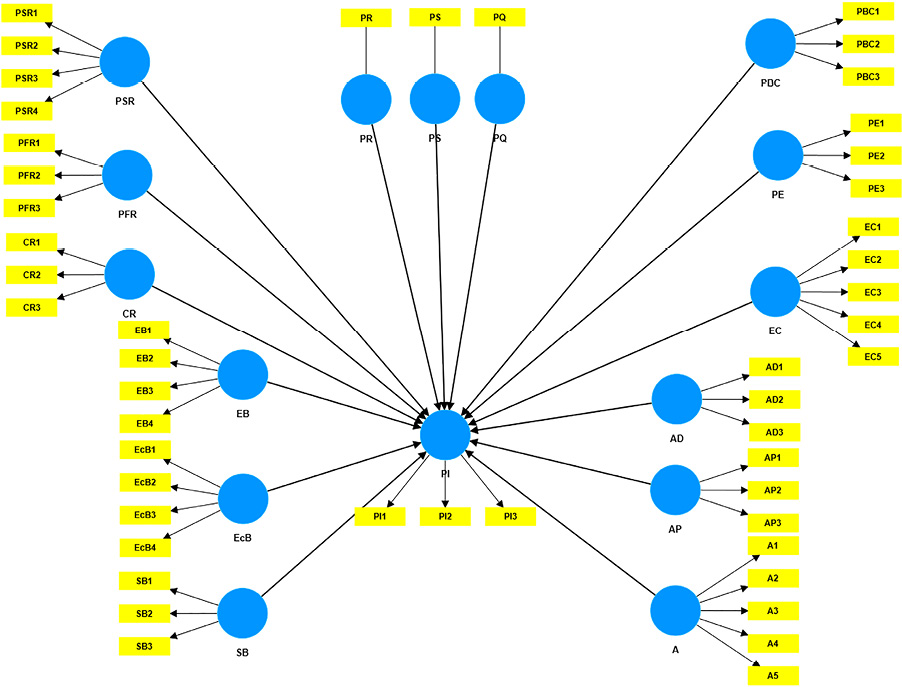
| A | Attitude | EB | Environmental benefits | PE | Perceived Effectiveness |
| AD | Anticipated disgust | EC | Environmental concern | PFR | Perceived functional risk |
| Ap | Anticipated pride | ECB | Economic benefits | PSR | Perceived safety risk |
| CR | Contamination risk | PBC | Perceived Behavioral Control | SB | Social benefits |
| PQ | Perceived Quality (PQ), | PR | Perceived reliability | PS | Perceived superiority |
Figure 1. The conceptual framework for the effect of different factors on purchase intention (PI).
The questionnaire used validated scales and adapted items from credible sources to ensure reliability and accuracy. The development process included a thorough literature review to identify key variables, expert validation by four scholars specialising in sustainability and consumer behaviour, whose feedback improved clarity and relevance, and a pilot test with a sample of 15 respondents to ensure clarity and reliability, followed by necessary revisions. The final instrument contained sections on demographics, past buying behaviour, perceived risks and benefits of recycled plastics, environmental attitudes, and purchase intentions. The Likert-scale items, ranging from “strongly disagree” (1) to “strongly agree” (7), enabled nuanced measurement of attitudes and perceptions.
The questionnaire was electronically administered to a convenience sample of students and employees at Sharjah University to collect data. Participation was voluntary, and respondents were informed about the study’s purpose, confidentiality, and the ethical considerations involved. The study adhered to ethical guidelines for research involving human subjects, including obtaining informed consent and disclosing potential risks or discomforts. Participants were assured of anonymity, with no financial incentives provided. To validate the questionnaire, factor analysis (both exploration and confirmatory) was performed to assess construct validity. The reliability of each construct was evaluated using Cronbach’s alpha, with all factors exceeding the acceptable threshold of 0.7. This ensured that the scales reliably measured the intended constructs. The data were analysed using structural equation modelling (SEM), which enabled the evaluation of complex relationships between latent variables, such as attitudes, perceived risks, and purchase intentions.
Data collection and participants
The data collection for this study was conducted using a Google Forms online survey, enabling a streamlined and accessible approach for participants. The survey targeted a broad demographic spectrum within the UAE, ensuring diverse perspectives on the consumption of recycled plastic household items. A pilot study with a smaller sample size was conducted before the main survey to validate and refine the questionnaire. This step is vital for ensuring the clarity and effectiveness of the survey questions, thereby enhancing the reliability of the collected data. Participants ranged across various demographics, including gender, education level, income bracket, and marital status, providing a comprehensive understanding of consumer behaviours and attitudes. As mentioned, students were asked to participate voluntarily in this research by responding to an online questionnaire, which took 7 to 10 minutes to complete. Ultimately, 173 individuals provided electronic consent and completed the survey.
The sample exhibits demographic concentration (75.3% women, predominantly aged 18–30), which is suitable for examining sustainable consumption, as younger, educated consumers are typically early adopters of green products, and women frequently serve as primary decision-makers in household purchases. Nonetheless, research reveals that this constrains generalisability to alternative demographic segments. To evaluate potential common method bias (CMB) using diverse diagnostic techniques in SPSS 26.0, the full correlation matrix was examined for all measurement items, and 1,128 unique correlation pairs were identified. The highest correlation between items was 0.934, but only eight pairs (0.7%) exceeded the 0.90 level that would indicate severe multicollinearity. Most of these high correlations occurred between items designed to assess the same construct (for instance, various methods of evaluating “attitude” or “environmental concern”). This is expected because things that measure the same thing should be very similar. The average correlation between items was 0.522, and 99.3% of the pairs of correlations fell within the expected range of values.
Data measurements using structural equation modelling
SEM facilitates the empirical testing of a theoretical framework, primarily using data derived from surveys, as noted in prior research (Alamer & Marsh, 2022). The SEM in this study was developed through bootstrapping procedures executed using the SmartPLS software (version 4.0.9.2) (Corrêa Ferraz et al., 2022). This process involved rigorous assessments of internal consistency, validity, reliability, and the model’s goodness of fit, thus enabling a comprehensive statistical examination of the proposed theoretical model (Kumar, 2012; Sarstedt et al., 2021). Further analysis of the SEM involved several statistical techniques to validate the data’s internal consistency and overall validity. These techniques included the computation of Cronbach’s alpha, composite reliability , average variance extracted (AVE), discriminant validity analysis (DVA) using the Fornell–Larcker criterion, the heterotrait–monotrait (HTMT) ratio, and the variance inflation factor (VIF) (Tavakol & Dennick, 2011). Additionally, to evaluate the model’s goodness of fit, key metrics such as the coefficient of determination (R2), predictive relevance (Q2), and effect size (f2) were calculated (Gumasing et al., 2022). These metrics provide a robust and comprehensive evaluation of the model’s ability to accurately interpret the data. These analytical techniques yield crucial insights into the interrelationships among the study variables, thereby significantly contributing to understanding the underlying phenomena.
Results and analysis
Statistical analysis
The participant demographic profile depicted in Figure 2(a) reveals a pronounced gender disparity, with women comprising 75.3% of the respondents and men comprising 24.7%. Figure 2(b) highlights the respondents’ educational backgrounds, offering insight into the survey’s reach across various intellectual echelons. Of the participants, 67.2% held a bachelor’s degree, 19.5% a master’s degree, and 9.2% a PhD, with minimal representation from individuals holding doctorates and diplomas. In Figure 2(c), it can be noted that 86.8% of respondents were aged between 18 and 30. The other age groups, 31–40, 41–50, 51–60, and those above 60, constituted a smaller fraction of the participant pool.
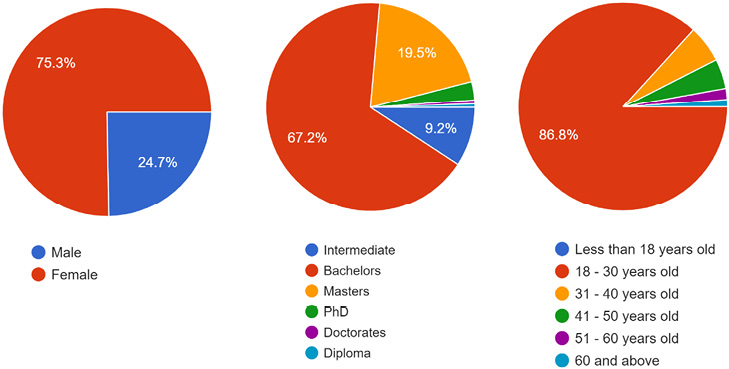
Figure 2. Descriptive statistics of the demographic respondents: (a) gender, (b) level of education, and (c) age.
Analysis of the survey data, as presented in Figure 3, reveals the purchasing patterns of respondents concerning household items manufactured from recycled plastic. The survey allowed participants to select multiple products, offering insights into a broad spectrum of consumer behaviour. The items reported as being purchased most frequently include recycled bins (with a purchase rate of 60.3%), storage containers (at 47.7%), and kitchen utensils (at 41.4%). These findings underscore a consumer preference for practical and highly functional products. Additionally, a secondary tier of items, including drinkware at 37.9%, laundry baskets at 30.5%, and children’s toys and desk organisers at 32.8%, reflects a moderate propensity for acquisition, suggesting an intermediate market presence for recycled plastic products in these domains. Conversely, decorative items such as wall art and lamps, reported at 21.3%–23%, alongside niche products like ice cube trays and shower curtains, demonstrate lower purchasing frequencies, indicating potential gaps in market availability, consumer awareness, or value attribution to these products when composed of recycled materials.
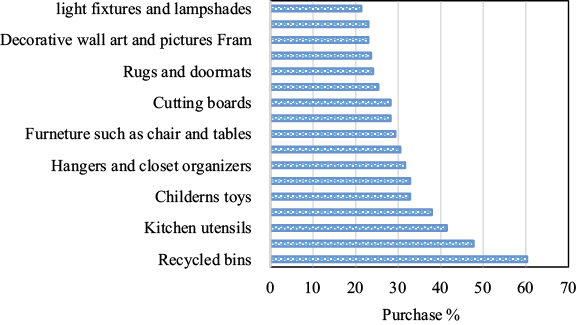
Figure 3. Regular purchase of household items made from recycled plastic.
Measurement model
Measurement model assessment typically involves the following criteria, shown in Table 1, to ensure its appropriateness. Composite reliability, Cronbach’s alpha (CA), and AVE were used to ensure that the indicators accurately represent their latent variables and that the items possess sufficient convergent and discriminant validity (Cheung et al., 2023). The AVE-defined criteria to prove the convergent validity of the constructs should be greater than 0.5 (Sarstedt et al., 2022). CA was used to measure internal consistency. The threshold for the reliability of the measure was greater than 0.7. Owing to the underestimation problem with Cronbach’s alpha, there is a need for a more accurate estimation of true reliability. The composite reliability must be greater than 0.7. Another indicator of a measure’s reliability, with a threshold value of 0.50, typically denotes acceptable reliability. The study’s scale factor loadings were above 0.5, as shown in Figure 4, except for the two items related to composite reliability and AD.
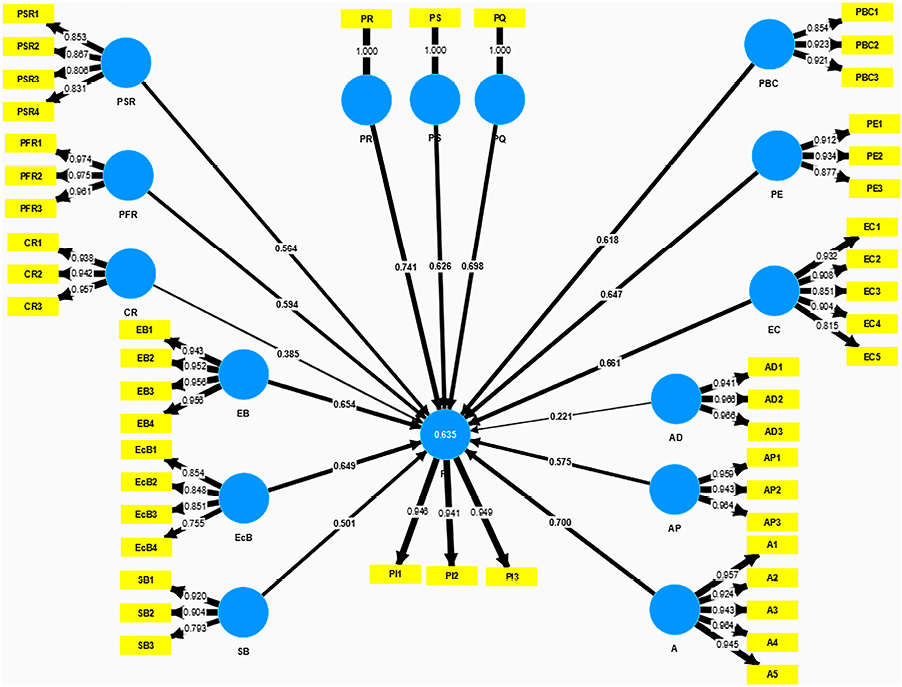
Figure 4. Developed SEM: factor loadings of each question. SEM, structural equation modelling.
Discriminate validity analysis
The HTMT ratio matrix provides insight into the discriminant validity of the constructs within the research model, as shown in Table 2. The diagonal, which represents the square root of AVE, defined by values greater than 0.900, indicates the highest correlations. For discriminant validity to be confirmed, off-diagonal values (heterotrait correlations) should be considerably lower than the diagonal values and ideally below the threshold of 0.9 (Henseler & Sarstedt, 2013). Observing the matrix, most constructs displayed HTMT values well below the threshold, suggesting adequate discriminant validity.
Notes: A, attitude; AD, anticipated disgust; AP, anticipated pride; CR, contamination risk; EB, environmental benefits; EC, environmental concern; ECB, economic benefits; PBC, perceived behavioural control; PE, perceived effectiveness; PFR, perceived functional risk; PI, purchase intention; PQ, perceived quality; PR, perceived reliability; PS, perceived superiority; PSR, perceived safety risk; SB, social benefits.
Goodness of fit of the model
According to Tenenhaus et al. (2005), as the global fit measure, goodness of fit (GoF) is the geometric mean of both the AVE and the average of the endogenous variables. The GoF aims to take into account both the calculation and the study’s structural model, along with an emphasis on the model’s overall performance (Henseler & Sarstedt, 2013). The calculation formula of GoF is as illustrated in Equation 1:
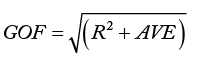
The determination of whether or not the partial least squares structural equation modeling (PLS-SEM) model is valid is based on the GoF criteria: below 0.1 = no fit, 0.1 to 0.25 = small fit, 0.25 to 0.36 = medium fit, and higher than 0.36 = large fit (Wetzels et al., 2009). For this study, the GoF was (0.76); this means that this study’s GoF model was large enough to have sufficient global PLS model validity.
Structural model assessment
The structural model assessed the presumed relationships between various exogenous variables and the endogenous variable (PI). The path coefficients, along with their significance (T-values), explanatory power (R2), and effect size (f2), are summarised in Table 3. Significant relationships were observed in several ways. For instance, the path from CR to PI exhibited a notable coefficient (T-value = 2.099), indicating a statistically significant relationship. This path also demonstrated moderate explanatory power, with an R2 of 0.408 and a medium effect size (f2 = 0.033). Similarly, the path PQ > PI displayed a high T-value of 2.758, suggesting a robust association, with an R2 of 0.72 and the highest effect size in the model (f2 = 0.04). Conversely, some paths showed lower significance. The path PE > PI, with a T-value of 0.299, did not reach the conventional levels of statistical significance. Similarly, PFR > PI and PSR > PI paths indicated no significant relationships, with T-values of 0.175 and 0.084, respectively.
Notes: A, attitude; AD, anticipated disgust; AP, anticipated pride; CR, contamination risk; EB, environmental benefits; EC, environmental concern; ECB, economic benefits; PBC, perceived behavioural control; PE, perceived effectiveness; PFR, perceived functional risk; PI, purchase intention; PQ, perceived quality; PR, perceived reliability; PS, perceived superiority; PSR, perceived safety risk; SB, social benefits.
To assess the quality of the model, the Stone–Geisser Q2 statistics were employed to evaluate the model’s predictive relevance for the endogenous constructions. Values of 0.5, 0.25, and 0.00 indicate large, medium, and small predictive power, respectively. In our model, PI1 demonstrated a Q2 of 0.487, indicating substantial predictive power. This implies that the model can substantially predict the variations in PI1. Similarly, PI3, with a Q2 of 0.481, fell within the range of large predictive power. However, PI2 presented a Q2 of 0.419, which is indicative of medium predictive power, suggesting a moderate capability of the model in predicting changes in PI2. Root mean squared error (RMSE) and mean squared error (MSE) measured the model’s predictive accuracy, with lower values indicating better predictive accuracy. The RMSE values for PI1, PI2, and PI3 were 1.29, 1.27, and 1.243, respectively, while the MSE values were consistently close, around 0.967 to 0.969. These findings suggest a relatively similar level of predictive accuracy across these constructions, as shown in Table 4.
| Variables | Q2 | RMSE | MSE | VIF |
|---|---|---|---|---|
| PI1 | 0.487 | 1.29 | 0.969 | 4.3 |
| PI2 | 0.419 | 1.27 | 0.969 | 4.065 |
| PI3 | 0.481 | 1.243 | 0.967 | 4.554 |
Note: VIF, variance inflation factor.
Gender-based differences in path coefficients
The structural model’s assessment reveals distinct gender-based differences in the effects on the endogenous variable PI. The table delineates path coefficients for both female and male participants across various exogenous variables. Notably, the path from A to PI for men (0.579) was substantially larger than for women (0.012), suggesting a strong gender moderation effect. Conversely, the path from EC to PI for women (0.243) was positive and of moderate size. In contrast, for men, this path was negative and presented the largest absolute coefficient (−0.508) among the male group, indicating a substantial difference in the direction and strength of the relationship. Other notable differences were observed in the paths from EB to PI and PS to PI, which were positive for both genders. Still, the coefficients were more pronounced for men (0.45 and 0.373, respectively) than for women (0.106 and 0.166, respectively). This suggests that these variables have a stronger effect on PI among men, as shown in Figure 5.
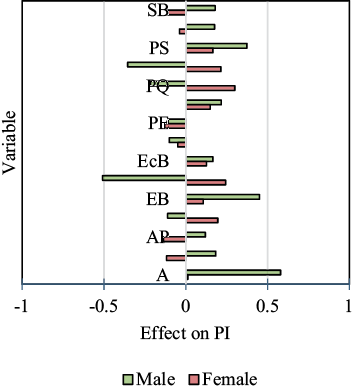
Figure 5. Parching intention comparison according to gender.
Discussion
Demographics and consumer behaviour
The findings reveal a significant predominance of female participants, which suggests that women may exhibit greater engagement or interest in purchasing household items made from recycled materials. This aligns with previous studies indicating that women often perceive higher risks associated with environmental degradation and are more likely to engage in sustainable behaviours (Zelezny et al., 2000; Achabou & Dekhili, 2013). The study also captured insights from participants with higher education levels, reflecting an association between education and increased environmental awareness, consistent with global trends. Furthermore, the substantial representation of younger adults suggests that this demographic may be more proactive in adopting environmentally sustainable practices, reinforcing findings from previous research highlighting progressive attitudes towards sustainability among younger generations (Ruokamo et al., 2022).
Gender-specific findings
The gender-based analysis highlights key differences in factors influencing purchase intentions for recycled products. EC emerged as the most significant factor for women, suggesting a strong relationship between women’s ecological awareness and their likelihood of purchasing recycled products. This finding aligns with research demonstrating women’s heightened sensitivity to environmental issues and greater likelihood of engaging in behaviours that mitigate environmental risks (Astika Nithasyah et al., 2023). Other critical factors influencing purchase intentions include A, PBC, and AP. Positive attitudes towards recycled products, a sense of control over the purchasing process, and the emotional reward of making sustainable choices are significant motivators, particularly among women. These findings reinforce the role of emotional and cognitive factors in driving green consumer behaviour, as suggested by Sun et al. (2022) and Yilmaz and Kahveci (2022). In contrast, while these factors also influence male participants, their impact is lower, underscoring the importance of tailoring marketing and communication strategies to resonate with gender-specific values.
Consumer preferences and market trends
The study’s insights into consumer preferences reveal an intrinsic motivation to prioritise functional items, such as recycled bins and kitchen utilities, which align with both practical use and environmental values. These findings suggest that functionality, combined with environmental benefits, significantly enhances the consumer appeal of recycled products. Conversely, the lower purchase rates for decorative and specialised items highlight potential gaps in market availability and consumer awareness. Addressing these gaps through targeted educational campaigns and expanding the market presence of such products could enhance their adoption. The intermediate purchase rates for items such as drinkware, laundry baskets, and desk organisers suggest that while these products hold practical value, they may not evoke the same level of environmental consideration as high-utility items. This nuanced understanding of purchasing behaviour underscores the importance of aligning product design and marketing strategies with consumer priorities to enhance adoption rates.
Correlation insights and implications
The correlation analysis provides valuable insights into the relationships between variables influencing purchase intentions. For instance, the strong positive correlation between EC and EB (r = 0.843) suggests that consumers who value environmental benefits are also more likely to exhibit greater concern for environmental issues. This finding highlights the importance of emphasising the ecological benefits of recycled products in marketing efforts to enhance consumer engagement. In contrast, variables such as AD exhibit weak correlations with other constructs, suggesting that this factor plays a limited role in shaping consumer behaviour. These findings indicate areas for targeted interventions, such as addressing misperceptions about recycled products through educational campaigns. Similarly, the moderate correlation between PSR and SB (r = 0.54) underscores the importance of reinforcing positive social perceptions to mitigate safety concerns.
Gender-based moderation effects
The structural model’s analysis of gender-based differences reveals significant variations in how exogenous variables influence purchase intentions. For example, the impact of EC on purchase intention is notably stronger for women, indicating a greater sensitivity to environmental messaging. Similarly, the influence of PBC and AP highlights the importance of empowering women to feel capable of making sustainable choices and reinforcing the emotional rewards of such behaviours. These findings suggest that tailored communication strategies emphasising environmental values and emotional benefits could effectively enhance purchase intentions among female consumers.
Practical implications
The framework of this study offers broader applicability, despite its primary focus on the UAE. The TPB model is theoretically robust across diverse cultural contexts, and research on sustainable consumption in other developing nations can gain insights from our findings regarding social norms, perceived behavioural control, and environmental concern. However, cultural and infrastructure disparities may influence these relationships, suggesting that forthcoming cross-regional comparative studies could enhance generalisability and identify context-specific adaptation needs. This study offers significant insights to diverse groups. Construction companies should establish procurement policies that prioritise the use of recycled plastic materials and invest in training programs that demonstrate the ease and effectiveness of using recycled products. Because perceived behavioural control is so important, making things easier to access and providing people with information about quality assurance will help them adopt. The research supports the development of infrastructure for recycled plastic products, public awareness campaigns that emphasise the environmental benefits, and financial incentives for construction projects that utilise recycled materials. This is good news for policymakers and those involved in waste management. If building codes required a certain amount of recycled content in construction materials, it would be easier for the market to accept these materials. Manufacturers’ marketing plans should discuss the environmental benefits of their products and provide useful information about their effectiveness, as well as where to purchase them. This would directly address the attitudinal and control factors identified in the study model.
Limitations and future research
There are a few key points to consider. The cross-sectional design constrains causal inference, and self-reported measures may be susceptible to response bias. The demographic concentration of the sample (mainly women aged 18 to 30 with high educational attainment) makes it hard to apply the results to larger groups. Subsequent research should employ longitudinal designs, stratified sampling to ensure demographic diversity, and mixed-methods approaches to enhance validity and generalisability. Regarding replicability, while our specific sample characteristics define the context of these findings, the theoretical framework (TPB) and standardised measurement instruments facilitate replication. Future researchers are encouraged to test our model with diverse samples (different age groups, gender distributions, educational levels, and geographic locations) to establish external validity and identify potential moderating effects of demographic or cultural factors.
Conclusions
This study on the factors influencing consumer behaviour regarding the use of recycled plastic in the UAE has produced important insights that further both theoretical and practical understanding of sustainable consumption in this unique regional setting. By employing SEM, this research provided a detailed analysis of the intricate relationships among psychological, socioeconomic, and environmental factors shaping consumer purchase intentions towards recycled plastics. This study is one of the first to explore gender-specific consumer behaviour towards recycled plastic household items in the UAE, contributing significantly to the growing body of literature on sustainable consumption in developing economies. The findings highlight the critical role of perceived advantages and environmental consciousness in driving sustainable purchase decisions. Practicality and perceived utility were shown to heavily influence consumer preferences, with functional items that align with environmental values being the most favoured. Additionally, the study reveals significant gender disparities, with women demonstrating stronger environmental concerns and emotional motivations, such as anticipated pride, influencing their purchase intentions. These insights underscore the importance of tailoring initiatives to engage different demographic segments more effectively.
The theoretical contributions of this research expand the understanding of consumer behaviour regarding recycled materials. By integrating constructs from the TPB and social learning theory, the study provides a robust framework for future investigations. The application of SEM highlights its utility in uncovering complex interrelationships among factors, offering a methodological blueprint for similar studies. From a practical perspective, the findings provide actionable recommendations for policymakers, businesses, and sustainability advocates. Marketing strategies should emphasise the environmental benefits and emotional rewards of purchasing recycled products, especially for female consumers. Moreover, addressing barriers such as limited product availability and perceived safety risks is crucial for encouraging broader adoption. These insights lay the groundwork for targeted interventions that align consumer values with sustainability goals, promoting the wider use of recycled plastic items.
In conclusion, while the global community grapples with environmental sustainability challenges, understanding the factors that influence consumer attitudes towards recycled plastics is more critical than ever. This study contributes to the academic understanding of sustainable consumer behaviour and provides practical guidance for stakeholders seeking to foster more sustainable consumption habits in the UAE and beyond. By supporting international efforts to reduce plastic pollution and promote sustainable development, this research makes a valuable contribution to addressing one of our most pressing environmental issues.
References
Abu Jadayil, W., Qureshi, M. R. N. M., Ajaj, R., Aqil, E., Shawahin, G., Anver, H., & Aljeawi, S. (2022). An empirical investigation on plastic waste issues and plastic disposal strategies to protect the environment: A UAE perspective. Sustainability , 14(24). https://doi.org/10.3390/su142416719
Achabou, M. A., & Dekhili, S. (2013). Luxury and sustainable development: Is there a match? Journal of Business Research, 66(10), 1896–1903. https://doi.org/10.1016/j.jbusres.2013.02.011
Ajzen, I. (1991). The theory of planned behavior. Organizational Behavior and Human Decision Processes, 50(2), 179–211. https://doi.org/10.1016/0749-5978(91)90020-T
Alamer, A., & Marsh, H. (2022). Exploratory structural equation modeling in second language research. Studies in Second Language Acquisition, 44(5), 1477–1500. https://doi.org/10.1017/S0272263121000863
Alhosani, K. M., Kaied, Y. O., Darwish, A. S., & Farrell, P. (2023). Sustainable waste management strategy for plastic bag mitigation and reducing carbon footprint in the Emirate of Ajman – UAE. Journal of Engineering Science and Technology, 18(6), 2763–2778.
Anouti, Y., Katiyar, D., Duerrbeck, A., & Gupta, A. (2022). Using recycled plastics to build a more sustainable future. Strategy& Middle East, PwC [Preprint]. https://www.constructionweekonline.com/business/insights/using-recycled-plastic-for-sustainable-construction
Astika Nithasyah, Farhana, Z., & Rahayu, F. (2023). Consequences of environmental concern, health consciousness, and perceived behavior control. The Management Journal of Binaniaga, 8(1), 57–70. https://doi.org/10.33062/mjb.v8i1.23
Atkinson, L., & Rosenthal, S. (2014). Signaling the green sell: The influence of eco-label source, argument specificity, and product involvement on consumer trust. Journal of Advertising, 43(1), 33–45. https://doi.org/10.1080/00913367.2013.834803
Avrami, E., Filatov, E. A., Durmanov, A. S., Shkalenko, A. V., Kosov, M. E., Ponkratov, V. V., & Nikolaeva, I. V. (2024). A new concept of consumer behavior in the circular economy. Emerging Science Journal, 8(4), 1536–1553. https://doi.org/10.28991/ESJ-2024-08-04-018
Ayodele, T. R., Alao, M. A., & Ogunjuyigbe, A. S. O. (2018). Recyclable resources from municipal solid waste: Assessment of its energy, economic and environmental benefits in Nigeria. Resources, Conservation and Recycling, 134(March), 165–173. https://doi.org/10.1016/j.resconrec.2018.03.017
Balu, R., Dutta, N. K., & Roy Choudhury, N. (2022). Plastic waste upcycling: A sustainable solution for waste management, product development, and circular economy. Polymers, 14(22). https://doi.org/10.3390/polym14224788
Blesin, J. M., Jaspersen, M., & Wiebke, M. Ã. (2017). Boosting plastics’ image? Communicative challenges of innovative bioplastics. e-plastory - Journal of Historic Polymeric Materials, Plastics Heritage and History, (3), 2–2. http://e-plastory.com/index.php/e-plastory/article/view/Blesin
Chen, K. J., Galinato, S. P., Marsh, T. L., Tozer, P. R., & Chouinard, H. H. (2020). Willingness to pay for attributes of biodegradable plastic mulches in the agricultural sector. HortTechnology, 30(3), 437–447. https://doi.org/10.21273/HORTTECH04518-20
Cheung, G.W., Cooper-Thomas, H.D., Lau, R.S. and Wang, L.C. (2023). Reporting reliability, convergent and discriminant and best-practice recommendations. Asia Pacific Journal of Management. https://doi.org/10.1007/s10490-023-09871-y
Corrêa Ferraz, R., Maydeu-Olivares, A., & Shi, D. (2022). Asymptotic is better than Bollen-Stine bootstrapping to assess model fit: The effect of model size on the chi-square statistic. Structural Equation Modeling, 1–13. https://doi.org/10.1080/10705511.2022.2053128
De Marchi, E., Pigliafreddo, S., Banterle, A., Parolini, M., & Cavaliere, A. (2020). Plastic packaging goes sustainable: An analysis of consumer preferences for plastic water bottles. Environmental Science and Policy, 114(September), 305–311. https://doi.org/10.1016/j.envsci.2020.08.014
Dilkes-Hoffman, L., Ashworth, P., Laycock, B., Pratt, S., & Lant, P. (2019). Public attitudes towards bioplastics–knowledge, perception and end-of-life management. Resources, Conservation and Recycling, 151, 104479.) https://doi.org/10.1016/j.resconrec.2019.104479
Du Preez, M., Van der Merwe, D., Wyma, L., & Ellis, S. M. (2021). Assessing knowledge and use practices of plastic food packaging among young adults in South Africa: Concerns about chemicals and health. International Journal of Environmental Research and Public Health, 18(20). https://doi.org/10.3390/ijerph182010576
Essiz, O., Yurteri, S., Mandrik, C., & Senyuz, A. (2023). Exploring the value-action gap in green consumption: Roles of risk aversion, subjective knowledge, and gender differences. Journal of Global Marketing, 36(1), 67–92. https://doi.org/10.1080/08911762.2022.2116376
Findrik, E., & Meixner, O. (2023). Drivers and barriers for consumers purchasing bioplastics – A systematic literature review. Journal of Cleaner Production, 410(April), 137311. https://doi.org/10.1016/j.jclepro.2023.137311
Fletcher, C. A., Aureli, S., Foschi, E., Leal Filho, W., Barbir, J., Beltrán, F. R.,& Banks, C. E. (2024). Implications of consumer orientation towards environmental sustainability on the uptake of bio-based and biodegradable plastics. Current Research in Environmental Sustainability, 7(February). https://doi.org/10.1016/j.crsust.2024.100246
de Freitas Netto, S. V. et al. (2020). Concepts and forms of greenwashing: A systematic review. Environmental Sciences Europe, 32(1). https://doi.org/10.1186/s12302-020-0300-3
Friedrich, D. (2021). Comparative analysis of sustainability measures in the apparel industry: An empirical consumer and market study in Germany. Journal of Environmental Management, 289(January), 112536. https://doi.org/10.1016/j.jenvman.2021.112536
García-Salirrosas, E. E., & Rondon-Eusebio, R. F. (2022). Green marketing practices related to key variables of consumer purchasing behavior. Sustainability (Switzerland), 14(14). https://doi.org/10.3390/su14148499
Geyer, R., Jambeck, J. R., & Law, K. L. (2017). Production, use, and fate of all plastics ever made. Science Advances, 3(7), 25–29. https://doi.org/10.1126/sciadv.1700782
Ghisellini, P., Cialani, C., & Ulgiati, S. (2016). A review on circular economy: The expected transition to a balanced interplay of environmental and economic systems. Journal of Cleaner Production, 114, 11–32. https://doi.org/10.1016/j.jclepro.2015.09.007
Grazzini, L., Rodrigo, P., Aiello, G., & Viglia, G. (2018). Loss or gain? The role of message framing in hotel guests’ recycling behaviour. Journal of Sustainable Tourism, 26(11), 1944–1966. https://doi.org/10.1080/09669582.2018.1526294
Gumasing, M. J. J., Prasetyo, Y. T., Persada, S. F., Ong, A. K. S., Young, M. N., Nadlifatin, R., & Redi, A. A. N. P. (2022). Using online grocery applications during the COVID-19 pandemic: Their relationship with open innovation. Journal of Open Innovation: Technology, Market, and Complexity, 8(2), 93. https://doi.org/10.3390/joitmc8020093
Haj-Salem, N., Ishtiaq, M., & Raza, A. (2022). How anticipated pride and guilt influence green consumption in the Middle East: The moderating role of environmental consciousness. Journal of Retailing and Consumer Services, 68(January), 103062. https://doi.org/10.1016/j.jretconser.2022.103062
Henseler, J., & Sarstedt, M. (2013). Goodness-of-fit indices for partial least squares path modeling. Computational Statistics, 28(2), 565–580. https://doi.org/10.1007/s00180-012-0317-1
Herbes, C., Beuthner, C., & Ramme, I. (2018). Consumer attitudes towards biobased packaging – A cross-cultural comparative study. Journal of Cleaner Production, 194, 203–218. https://doi.org/10.1016/j.jclepro.2018.05.106
Herrmann, C., Rhein, S., & Sträter, K. F. (2022). Consumers’ sustainability-related perception of and willingness-to-pay for food packaging alternatives. Resources, Conservation and Recycling, 181(February). https://doi.org/10.1016/j.resconrec.2022.106219
Hossain, M. U., Ng, S. T., Dong, Y., & Amor, B. (2021). Strategies for mitigating plastic wastes management problem: A lifecycle assessment study in Hong Kong. Waste Management, 131(March), 412–422. https://doi.org/10.1016/j.wasman.2021.06.030
Hult, G. T. M., Sharma, P. N., Morgeson III, F. V., & Zhang, Y. (2019). Antecedents and consequences of customer satisfaction: Do they differ across online and offline purchases? Journal of Retailing, 95(1), 10–23. https://doi.org/10.1016/j.jretai.2018.10.003
Isac, N., Javed, A., Radulescu, M., Cismasu, I. D. L., Yousaf, Z., & Serbu, R. S. (2024). Is greenwashing impacting on green brand trust and purchase intentions? Mediating role of environmental knowledge and purchase intentions? Mediating role of environmental, Environment Development and Sustainability [Preprint], (January). https://doi.org/10.1007/s10668-023-04352-0
Jin, X., Omar, A., & Fu, K. (2024). Factors influencing purchase intention toward recycled apparel: Evidence from China. Sustainability (Switzerland), 16(9). https://doi.org/10.3390/su16093633
Kachef, R. L., & Chadwick, M. A. (2023). Not all litter is littered: An exploration of unintentional means of public waste generation. Environmental Challenges, 13, 100756. https://doi.org/10.1016/j.envc.2023.100756
Kaiser, F. G., & Fuhrer, U. (2003). Ecological behavior’s dependency on different forms of knowledge. Applied Psychology, 52(4), 598–613. https://doi.org/10.1111/1464-0597.00153
Ketelsen, M., Janssen, M., & Hamm, U. (2020). Consumers’ response to environmentally-friendly food packaging – A systematic review. Journal of Cleaner Production, 254, 120123. https://doi.org/10.1016/j.jclepro.2020.120123
Kumar, K. (2012). A beginner’s guide to structural equation modeling, 3rd ed. Journal of the Royal Statistical Society Series A: Statistics in Society, 175(3), 828–829. https://doi.org/10.1111/j.1467-985X.2012.01045_12.x
Lebreton, L., & Andrady, A. (2019). Future scenarios of global plastic waste generation and disposal. Palgrave Communications, 5(1), 1–11. https://doi.org/10.1057/s41599-018-0212-7
Leonidou, C. N., & Skarmeas, D. (2015). Gray shades of green: Causes and consequences of green skepticism. Journal of Business Ethics, 144(2), 401–415. https://doi.org/10.1007/s10551-015-2829-4
Luchs, M. G., & Kumar, M. (2017). “Yes, but this other one looks better/works better”: How do consumers respond to trade-offs between sustainability and other valued attributes? Journal of Business Ethics, 140(3), 567–584. https://doi.org/10.1007/s10551-015-2695-0
Magnier, L., Mugge, R., & Schoormans, J. (2019). Turning ocean garbage into products – Consumers’ evaluations of products made of recycled ocean plastic. Journal of Cleaner Production, 215, 84–98. https://doi.org/10.1016/j.jclepro.2018.12.246
Magnier, L., & Schoormans, J. (2015). Consumer reactions to sustainable packaging: The interplay of visual appearance, verbal claim and environmental concern. Journal of Environmental Psychology, 44, 53–62. https://doi.org/10.1016/j.jenvp.2015.09.005
Nabavi, R. T., & Bijandi, M. S. (2024). A literature review on Bandura’s social learning theory and social cognitive learning theory (December).
Nayanathara Thathsarani Pilapitiya, P. G. C., & Ratnayake, A. S. (2024). The world of plastic waste: A review. Cleaner Materials, 11(August 2023), 100220. https://doi.org/10.1016/j.clema.2024.100220
Negash, Y. T., Hassan, A. M., Tseng, M. L., Wu, K. J., & Ali, M. H. (2021). Sustainable construction and demolition waste management in Somaliland: Regulatory barriers lead to technical and environmental barriers. Journal of Cleaner Production, 297, 126717. https://doi.org/10.1016/j.jclepro.2021.126717
Nuojua, S., Pahl, S., & Thompson, R. C. (2024). Plastic alternatives and substitutes in the packaging sector – A UK consumer perspective. Sustainable Production and Consumption, 46(February), 68–81. https://doi.org/10.1016/j.spc.2024.02.019
Nyika, J., & Dinka, M. (2022). Recycling plastic waste materials for building and construction materials: A minireview. Materials Today: Proceedings [Preprint], (April). https://doi.org/10.1016/j.matpr.2022.04.226
Nyilasy, G., Gangadharbatla, H., & Paladino, A. (2014). Perceived greenwashing: The interactive effects of green advertising and corporate environmental performance on consumer reactions. Journal of Business Ethics, 125(4), 693–707. https://doi.org/10.1007/s10551-013-1944-3
Pancer, E., McShane, L., & Noseworthy, T. J. (2017). Isolated environmental cues and product efficacy penalties: The color green and eco-labels. Journal of Business Ethics, 143(1), 159–177. https://doi.org/10.1007/s10551-015-2764-4
Polyportis, A., Mugge, R., & Magnier, L. (2022). Consumer acceptance of products made from recycled materials: A scoping review. Resources, Conservation and Recycling, 186(January), 106533. https://doi.org/10.1016/j.resconrec.2022.106533
Ruokamo, E., Räisänen, M., & Kauppi, S. (2022). Consumer preferences for recycled plastics: Observations from a citizen survey. Journal of Cleaner Production, 379(P2), 134720. https://doi.org/10.1016/j.jclepro.2022.134720
Sarstedt, M., Hair, J. F., Pick, M., Liengaard, B. D., Radomir, L., & Ringle, C. M. (2022). Progress in partial least squares structural equation modeling use in marketing research in the last decade. Psychology and Marketing, 39(5), 1035–1064. https://doi.org/10.1002/mar.21640
Sarstedt, M., Ringle, C. M., & Hair, J. F. (2021). Partial least squares structural equation modeling. In Handbook of market research (pp. 587–632). https://doi.org/10.1007/978-3-319-57413-4_15
Schäufele, I., & Hamm, U. (2017). Consumers’ perceptions, preferences and willingness-to-pay for wine with sustainability characteristics: A review. Journal of Cleaner Production, 147, 379–394. https://doi.org/10.1016/j.jclepro.2017.01.118
Shabbir, M. S., Bait Ali Sulaiman, M. A., Hasan Al-Kumaim, N., Mahmood, A., & Abbas, M. (2020). Green marketing approaches and their impact on consumer behavior towards the environment: A study from the UAE. Sustainability, 12(21). https://doi.org/10.3390/su12218977
Shevchenko, T., Saidani, M., Ranjbari, M., Kronenberg, J., Danko, Y., & Laitala, K. (2023). Consumer behavior in the circular economy: Developing a product-centric framework. Journal of Cleaner Production, 384, 135568. https://doi.org/10.1016/j.jclepro.2022.135568
Shi, K., Zhou, Y., & Zhang, Z. (2021). Mapping the research trends of household waste recycling: A bibliometric analysis. Sustainability (Switzerland), 13(11). https://doi.org/10.3390/su13116029
Sun, X., Tian, Z., Wang, J., & Su, W. (2022). The impact of environmental commitment on green purchase behavior in China. International Journal of Environmental Research and Public Health, 19(14). https://doi.org/10.3390/ijerph19148644
Sun, Y., & He, H. (2023). Understanding consumers’ purchase intentions of single-use plastic products. Frontiers in Psychology, 14(February), 1–13. https://doi.org/10.3389/fpsyg.2023.1105959
Swim, J. K., Gillis, A. J., & Hamaty, K. J. (2020). Gender bending and gender conformity: The social consequences of engaging in feminine and masculine pro-environmental behaviors. Sex Roles, 82(5–6), 363–385. https://doi.org/10.1007/s11199-019-01061-9
Taufik, D., Reinders, M. J., Molenveld, K., & Onwezen, M. C. (2020). The paradox between the environmental appeal of bio-based plastic packaging for consumers and their disposal behaviour. Science of the Total Environment, 705. https://doi.org/10.1016/j.scitotenv.2019.135820
Tavakol, M., & Dennick, R. (2011). Making sense of Cronbach’s alpha. International Journal of Medical Education, 2, 53–55. https://doi.org/10.5116/ijme.4dfb.8dfd
Tanenhaus, M., Vincenzo, E. V., Chatelin, Y. M., & Lauro, C. (2005). PLS path modeling. Computational Statistics and Data Analysis, 48(1), 159–205. https://doi.org/10.1016/j.csda.2004.03.005
Trudel, R. (2019). Sustainable consumer behavior. Consumer Psychology Review, 2(1), 85–96. https://doi.org/10.1002/arcp.1045
Tully, S. M., & Winer, R. S. (2014). The role of the beneficiary in willingness to pay for socially responsible products: A meta-analysis. Journal of Retailing, 90(2), 255–274. https://doi.org/10.1016/j.jretai.2014.03.004
Van Doorn, J., & Verhoef, P. C. (2015). Drivers of and barriers to organic purchase behavior. Journal of Retailing, 91(3), 436–450. https://doi.org/10.1016/j.jretai.2015.02.003
Vermeir, I., Weijters, B., De Houwer, J., Geuens, M., Slabbinck, H., Spruyt, A., & Verbeke, W. (2020). Environmentally sustainable food consumption: A review and research agenda from a goal-directed perspective. Frontiers in Psychology, 11(July). https://doi.org/10.3389/fpsyg.2020.01603
Wang, D., & Walker, T. (2023). How to regain green consumer trust after greenwashing: Experimental evidence from China. Sustainability [Preprint]. https://doi.org/10.3390/su151914436
Wetzels, M., Odekerken-Schröder, G., & Van Oppen, C. (2009). Using PLS path modeling for assessing hierarchical construct models: Guidelines and empirical illustration. MIS Quarterly: Management Information Systems, 33(1), 177–196. https://doi.org/10.2307/20650284
Yilmaz, E., & Kahveci, D. (2022). Consumers’ purchase intention for upcycled foods: Insights from Turkey. Future Foods, 6(December 2021), 100172. https://doi.org/10.1016/j.fufo.2022.100172
Yue, C., Hall, C. R., Behe, B. K., Campbell, B. L., Lopez, R. G., & Dennis, J. H. (2010). Comparing willingness to pay estimation models for conjoint analysis: A case study of willingness to pay for biodegradable containers for plants. Acta Horticulturae, 930, 217–224. https://doi.org/10.17660/ActaHortic.2012.930.28
Zelezny, L. C., Chua, P. P., & Aldrich, C. (2000). Elaborating on gender differences in environmentalism. Journal of Social Issues, 56(3), 443–457. https://doi.org/10.1111/0022-4537.00177
Zheng, M., Zheng, Q., Chen, J., & Tang, D. (2023). Are non-competitors greener? The effect of consumer awareness differences on green food consumption. Frontiers in Psychology, 14. https://doi.org/10.3389/fpsyg.2023.1276261
Zhuang, W., Luo, X., & Riaz, M. U. (2021). On the factors influencing green purchase intention: A meta-analysis approach. Frontiers in Psychology, 12(April), 1–15. https://doi.org/10.3389/fpsyg.2021.644020