Construction Economics and Building
Vol. 26, No. 2
2026
ARTICLES (PEER REVIEWED)
Work Process Attachment Forms and Styles Influencing Organizational BIM Transformation
Oluseye Olugboyega*, Olasedidun Marvellous, Abiola Odunayo Ajayi, Olabisi Olabayo Ogunniyi
Intelligent Construction Analytics Lab (IntelliCAL), Department of Building/Construction Management, Faculty of Environmental Design and Management, Obafemi Awolowo University, Ile-Ife, Nigeria
Corresponding author: Oluseye Olugboyega, oolugboyega@oauife.edu.ng
DOI: https://doi.org/10.5130/vkhxjn70
Article History: Received 17/04/2025; Revised 07/09/2025; Accepted 11/12/2025; Published 05/06/2026
Citation: Olugboyega, O., Marvellous, O., Ajayi, A. O., Ogunniyi, O. O. 2026. Work Process Attachment Forms and Styles Influencing Organizational BIM Transformation. Construction Economics and Building, 26:2, 1–22. https://doi.org/10.5130/vkhxjn70
Abstract
This study evaluated the impact of work process attachment forms and styles on organizational building information modeling (BIM) transformation in the Nigerian construction industry. The study employed Bowlby’s theory of attachment forms and styles to suggest that attachment to established work processes may lead construction professionals to resist BIM transformation, as they have confidence in traditional methods and feel secure in their ability to execute these processes. The hypotheses derived from this statement were evaluated using path-structural equation modeling. Data for hypothesis testing were obtained from 462 construction experts with expertise in BIM implementation, familiarity with discipline-specific information in BIM models, and a minimum work tenure of 2.5 years. The research indicated that construction professionals’ opposition to BIM integration in their workplace is attributable to attachments such as cultural (r = −0.15), functional (r = −0.36), and emotional bonds (r = −0.17). The findings show that attachment-driven resistance manifests as interpersonal conflict, workplace anxiety, and disorganization. The study shows that BIM resistance is not just a technical or managerial challenge but also a psychological and social challenge.
Keywords
Attachment Styles; Work Attachment; BIM Revolution; BIM Transformation; Bowlby’s Theory of Attachment
Introduction
The global construction industry continues to grapple with the challenges of fully adopting building information modeling (BIM). While BIM has been widely recognized for its potential to improve efficiency, reduce project costs, and enhance collaboration, its widespread implementation remains elusive (Andersson and Eidenskog, 2023). Across many contexts, construction organizations are hesitant to embrace BIM due to concerns over initial financial outlays, steep learning requirements, and disruptions to established workflows (Wang et al., 2020). Scholars argue that the digital revolution of construction is incomplete until organizations are genuinely transformed through BIM—not merely by acquiring software but by embedding BIM into every facet of their operations, including design, construction, and facilities management (Klein et al., 2022; Nast & Rekve, 2023). This requires profound organizational change, involving not only process redesign but also cultural and attitudinal shifts among construction professionals. Nevertheless, a persistent obstacle to organizational BIM transformation is resistance from construction professionals, who are deeply embedded in long-standing work practices. Research highlights that the sector’s historical reliance on conventional methods—paper-based drawings, manual documentation, and fragmented workflows—creates inertia against digital transformation (Liao & Teo, 2018; Wang et al., 2024). Professionals often experience reluctance to abandon familiar procedures, perceiving BIM as disruptive or threatening to established competencies (Ahmed, 2018). This reveals a deeper psychological attachment to traditional work processes that extends beyond mere technical or financial concerns.
Despite global recognition of BIM’s transformative potential, organizational BIM adoption remains hindered by professionals’ strong attachment to conventional work processes, which generates psychological resistance to new practices. While existing studies frequently frame this resistance in terms of cost, training, or culture, there is limited research exploring how underlying attachment patterns to established workflows shape individual and collective responses to BIM. Without addressing these psychological dynamics, BIM transformation risks stagnating, leaving construction organizations unable to realize the full benefits of digital integration. This gap underscores the urgent need to investigate the role of work process attachment in organizational BIM transformation. This study aimed to analyze the work process attachment forms and styles of construction professionals, assess the factors influencing organizational BIM transformation, and evaluate the impact of work process attachment on the successful adoption of BIM within construction organizations. Guided by the study aim, this research was structured around four key questions. First, it sought to identify the forms and styles of work process attachment that are exhibited by construction professionals within the Nigerian construction sector. Building on this, it explored how these attachment patterns influence professionals’ resistance or openness to organizational BIM transformation. The study then examined the broader organizational and contextual factors that interact with work process attachment to shape the trajectory of BIM adoption. Finally, it investigated how construction organizations can strategically leverage an understanding of work process attachment to facilitate a smoother and more sustainable transformation toward BIM.
Traditional change management frameworks, such as Lewin’s three-step model of unfreezing, changing, and refreezing, offer useful but largely procedural explanations of organizational change. However, such models often overlook the emotional and psychological bonds that employees develop with established practices. Attachment theory, by contrast, provides a richer lens for understanding resistance by framing work process attachment as an affective and cognitive bond, akin to personal attachment relationships (Sroufe and Waters, 2017). Applying attachment theory allows the study to capture the deep-seated anxieties, dependencies, and coping strategies that professionals exhibit when asked to transition from traditional to digital workflows. This approach is particularly valuable in BIM transformation, where success depends not only on technical capability but also on overcoming psychological resistance rooted in attachment to established norms. The Nigerian construction sector offers a particularly informative context for studying organizational BIM transformation. Despite being one of Africa’s largest and fastest-growing construction markets, the sector remains heavily dependent on traditional, labor-intensive practices and is marked by fragmented project delivery structures, low digital maturity, and entrenched professional hierarchies. These features amplify the challenges of BIM adoption and make visible the role of psychological resistance in hindering transformation. Moreover, Nigeria’s pressing need for infrastructural development, coupled with increasing global pressures for digitalization, creates an urgent imperative to understand and address the barriers to BIM transformation. Investigating work process attachment in this context, therefore, not only contributes to BIM research but also provides actionable insights into digital transformation in other developing construction industries facing similar constraints.
Literature review
Contributions of the previous studies to work process attachment forms and styles influencing organizational BIM transformation
The reviewed studies collectively illustrate how BIM has reshaped the construction sector, yet they also highlight the persistent role of professional attachments to traditional work processes in shaping organizational transformation. Scholars such as Alaloul et al. (2020) and Olugboyega (2024) underscored BIM’s capacity to improve efficiency, reduce costs, and enhance collaboration, framing it as a digital shift far superior to conventional 2D methods (Taher, 2021). However, the very advantages of BIM—its integrative, data-intensive, and multi-dimensional nature—contrast sharply with entrenched habits of paper-based documentation, isolated task execution, and short-term project thinking that dominate the industry (Liao & Teo, 2018; Wang et al., 2020). This clash foregrounds the psychological resistance that arises when professionals are asked to detach from familiar workflows. The expansion of BIM functionalities from 3D visualization to 4D scheduling and 5D cost management (Kim, 2019; Jiang et al., 2022), and even into predictive analytics powered by artificial intelligence (Ilbeigi et al., 2023), demonstrates how BIM redefines professional competencies. Such transformations often destabilize professionals who are attached to established expertise and accustomed to traditional methods of design coordination or cost estimation. Attachment to older practices not only fuels resistance but also manifests as apprehension about obsolescence or loss of control over professional identity (Ahmed, 2018; Mercer, 2019). In this sense, BIM adoption is not only a technical transition but also a psychological negotiation between old attachments and new expectations.
The integration of BIM with immersive technologies such as augmented reality/virtual reality (AR/VR) (Schiavi et al., 2022), as well as with cloud-based platforms that enable real-time global collaboration (Logothetis et al., 2018; Zhao & Taib, 2022), further complicates these attachments. While these tools enhance collaboration and reduce errors, they also demand a radical departure from siloed working practices that many professionals value for their familiarity and autonomy. Attachment styles, therefore, play a critical role: some professionals may demonstrate anxious resistance, clinging to traditional tools like computer-aided design; others may show avoidant detachment, resisting collaborative digital platforms due to fear of visibility or accountability. Understanding these differentiated patterns is essential for managing BIM transformation effectively. The case studies of major infrastructure projects, such as London’s Elizabeth Line (Singhal, 2020) or the Singapore Sports Hub (Sielker & Allmendinger, 2018), illustrate the collaborative benefits of BIM but also reveal the scale of organizational change required. The capacity of BIM to consolidate information and enhance planning only materializes when professionals overcome their attachment to fragmented, discipline-specific workflows. Similarly, sustainability-driven projects like The Edge in Amsterdam (Ibrahım & Labaran, 2024) demonstrate BIM’s potential for real-time building performance optimization, but also expose a cultural gap: while BIM enables new forms of performance-based design, professionals often remain attached to conventional metrics and deliverables.
Despite these advances, barriers persist. Studies have consistently identified high upfront costs, limited skills, interoperability challenges, and legal uncertainties as obstacles to BIM adoption (Siebelink et al., 2021; Jiang et al., 2022; Olugboyega & Windapo, 2023). Nevertheless, beneath these structural issues lies the more enduring psychological resistance to change. Chowdhury et al. (2024) and Faisal Shehzad et al. (2022) showed that many professionals perceive BIM’s learning curve as prohibitively steep, reinforcing attachment to traditional processes and slowing organizational transformation. This aligns with Wang et al. (2024), who argued that professional resistance—rooted in established work identities and routines—remains the single greatest obstacle to BIM’s diffusion. These studies contribute to understanding BIM adoption as a struggle between innovation and attachment. While technological advances, policy mandates, and market pressures push for BIM transformation, the lived experiences of construction professionals reveal attachments to familiar methods that profoundly shape the pace and quality of organizational change. Recognizing work process attachment forms and styles—whether rooted in anxiety, avoidance, or security—provides a critical psychological lens for explaining why BIM transformation succeeds in some contexts and falters in others. This insight underscores the need to move beyond purely procedural change models, instead acknowledging the emotional and cognitive bonds that professionals form with their work processes, and how these bonds influence the trajectory of BIM adoption.
Research gaps regarding work process attachment forms and styles influencing organizational BIM transformation
Over the past decade, BIM has developed into a transformative technology with applications across the design, construction, and facilities management life cycle. Literature highlights its efficiency, cost-saving, and collaborative benefits and increasingly documents its integration with emerging technologies such as artificial intelligence, AR/VR, cloud computing, and digital twins (Motamedi & Shahinmoghadam, 2021; Jiang et al., 2022). Case studies of projects in the USA, the UK, Europe, and Singapore demonstrate how BIM has optimized project outcomes, enhanced collaboration, and improved sustainability (Kim, 2019; Singhal, 2020; Ibrahım & Labaran, 2024). This body of knowledge illustrates BIM’s technical capacity and showcases strategies for overcoming issues of interoperability, regulation, and workforce upskilling. However, while the technical, financial, organizational, and regulatory barriers to BIM adoption are well-documented (Liao & Teo, 2018; Nast & Rekve, 2023), the psychological and behavioral dimensions of resistance remain underexplored. Scholars often attribute resistance to factors such as high upfront costs, steep learning curves, lack of training, interoperability issues, or fragmented industry practices (Olugboyega & Windapo, 2023; Chowdhury et al., 2024). Nevertheless, these explanations primarily treat resistance as rational, procedural, or structural. What they overlook is the affective attachment that professionals form with traditional work processes—an attachment built over years of practice, identity formation, and professional validation within paper-based, manual, or siloed workflows.
Although some studies have acknowledged that professionals familiar with conventional practices perceive BIM as disruptive and intimidating (Faisal Shehzad et al., 2022), there is little theorization of how specific forms and styles of work process attachment (for example, secure, avoidant, and anxious) manifest in BIM adoption contexts. Current literature does not examine how these attachment styles shape professionals’ willingness to unlearn, relearn, or adapt to digital work practices. Similarly, while organizational change management frameworks (for example, Lewin’s model and Kotter’s steps) are referenced in some BIM adoption studies, these models insufficiently account for emotional bonds to work practices. This leaves a conceptual and empirical gap that attachment theory could fill by providing insight into the psychological underpinnings of resistance. Existing research largely examines barriers at the organizational or industry level but rarely considers how individual attachment patterns aggregate into organizational resistance or transformation dynamics. The geographical scope of current studies also reveals a research gap. Much of the evidence originates from developed economies with strong regulatory drivers (for example, the UK BIM mandate) and digital infrastructures. Limited research addresses BIM transformation in developing contexts such as Nigeria, where digital maturity is low, reliance on traditional methods is high, and professional identity is strongly tied to conventional practices. This context is critical for unpacking work process attachment, as resistance is likely more pronounced where digital transitions challenge deeply entrenched manual and hierarchical work systems.
Theoretical and conceptual background
This study employed Bowlby’s theory of attachment forms and styles to examine how construction professionals’ attachment to conventional work processes influences organizational BIM transformation. Bowlby (1979) and Ainsworth (1978) demonstrated that attachment, first observed in child–caregiver relationships, extends into adulthood as individuals form enduring bonds with places, routines, institutions, and roles. Later work by Hazan and Shaver (1990) confirmed that attachment theory provides a useful framework for understanding adult relationships beyond the interpersonal domain, including bonds within professional environments. In organizational contexts, attachment explains why individuals often resist changes that disrupt familiar routines, established competencies, and stable sources of identity. In the workplace, these attachments can become embedded in daily practices, organizational cultures, and professional traditions, often shaping how individuals respond to change. For construction professionals, the bonds formed with established work processes are not only practical but also deeply psychological, and these attachments can serve as hidden barriers to digital transformation. Attachment theory thus provides a critical foundation for hypothesizing that various forms (personal, professional, cultural, functional, and emotional) and styles (secure, avoidant, anxious-resistant, and disorganized) of attachment to conventional work processes can negatively affect BIM transformation in construction organizations.
In this study, work process attachment is defined as the development of strong emotional bonds between individuals and the processes, routines, and environments that shape their professional lives. Such attachments extend beyond technical tasks to influence job satisfaction, commitment, motivation, and overall well-being in the workplace (Zuckerman et al., 2023). The quality of these attachments can shape not only individual performance but also the trajectory of organizational change, including the adoption of innovations such as BIM. Different forms of work process attachment highlight how resistance to BIM may emerge and illustrate how professionals become psychologically anchored to traditional practices. Personal attachment reflects the emotional bond and sense of security that individuals derive from their own work experiences and long-standing habits. This form of attachment affects motivation, engagement, and job satisfaction, but it may also create resistance when established practices are disrupted by new technologies (Zuckerman et al., 2023). When BIM challenges these familiar routines, individuals may perceive it as a threat to their competence and identity. Professional attachment extends this connection to one’s role, organization, and professional community. Strong professional attachment is often associated with commitment and productivity, but it can also entrench loyalty to existing practices, thereby limiting openness to transformation (Robledo et al., 2022). Professional attachment operates at the level of disciplinary traditions and norms, where longstanding reliance on 2D drawings or manual documentation reinforces loyalty to conventional methods and fuels skepticism toward BIM.
Similarly, cultural attachment arises from collective values within construction organizations and the industry at large, where entrenched practices are defended as “the way things are done”, making change more difficult to accept. Cultural attachment refers to an individual’s emotional alignment with the values, traditions, and norms of the workplace or broader construction sector (Sonkar, 2021). Employees with high cultural attachment experience belonging and purpose, yet this sense of collective identity may reinforce resistance if the prevailing culture privileges conventional methods over innovation. Functional attachment captures the satisfaction derived from familiar tasks, tools, and workflows. While functional attachment motivates performance and dedication, it may also lead professionals to resist process changes that threaten their mastery of traditional methods (Robledo et al., 2022; Rebillon et al., 2023). Functional attachment is also critical, as professionals often become comfortable with established workflows and tools; BIM’s requirement for retraining and the disruption of familiar methods may therefore encounter resistance. Finally, emotional attachment arises when individuals develop a deep affective connection to their roles and organizations, often expressed as loyalty and pride (Sonkar, 2021). Although such attachment fosters resilience and advocacy, it may also heighten anxiety when digital innovations like BIM are perceived as destabilizing or undermining established roles. Emotional attachment further complicates this transition, as traditional processes often provide feelings of security and predictability, while BIM is associated with uncertainty, stress, and potential destabilization of professional routines.
Beyond these forms, attachment theory also provides a useful framework for understanding how individual attachment styles influence resistance to BIM. Those with secure attachment may place high confidence in familiar processes, leading them to undervalue the need for innovation and inadvertently reinforce complacency. A secure attachment style is characterized by confidence, trust, and openness to collaboration. Securely attached employees are generally effective at communication and teamwork, but their confidence in established processes can sometimes foster complacency and reduce the urgency to adopt new methods (Sonkar, 2021). Avoidant attachment, by contrast, can manifest as disengagement or dismissal of BIM, where professionals downplay its importance or resist training opportunities. An avoidant attachment style is marked by withdrawal and excessive autonomy. Employees with this style often minimize the importance of new practices, avoid training, and resist collaboration, thereby undermining BIM implementation (Rebillon et al., 2023). Anxious-resistant attachment produces ambivalence, with professionals desiring stability but fearing change, often expressing concerns over job security, skill gaps, or future uncertainties. An anxious-resistant attachment style is defined by a strong need for reassurance, low self-esteem, and dependence on external validation. In workplace contexts, such employees may exhibit uncertainty and insecurity during transitions, frequently seeking guidance yet struggling to adapt to BIM-driven changes (Sonkar, 2021).
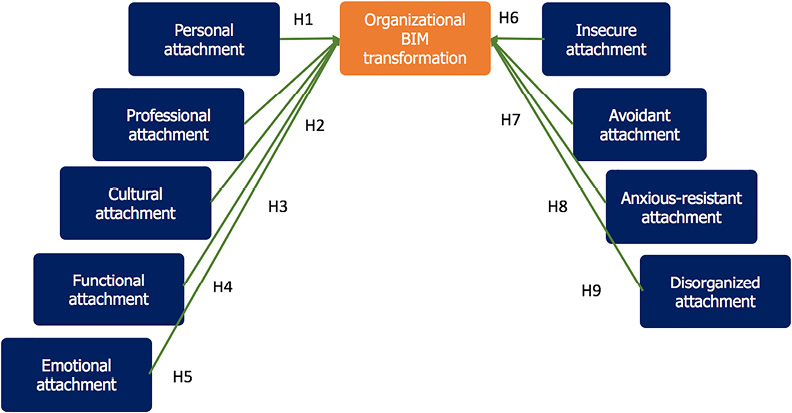
Lastly, a disorganized attachment style combines contradictory tendencies, including inconsistent cooperation, difficulty following procedures, and unpredictable reactions to change (Rebillon et al., 2023). Employees with disorganized attachment may oscillate between compliance and resistance, creating instability in organizational transformation processes. Disorganized attachment adds further complexity, as inconsistent or contradictory responses to change create unpredictable dynamics within organizations, impeding coordinated transformation. These insights suggest that the resistance construction professionals demonstrate toward BIM adoption is not simply the result of technical, financial, or organizational barriers. Rather, it is also rooted in the psychological attachments that professionals form with traditional work processes. By extending Bowlby’s theory to the context of BIM transformation, this study argued that these attachments—whether personal, professional, cultural, functional, emotional, or expressed through secure, avoidant, anxious, or disorganized styles—act as invisible but powerful forces that slow or block BIM transformation in construction organizations. Understanding these attachments is therefore essential to addressing the human dimension of BIM adoption and achieving successful organizational change. This notion is depicted in Figure 1. The hypotheses included in the proposition are as follows:
Hypothesis 1: Personal attachment of construction professionals to conventional work processes negatively affects BIM transformation in construction organizations.
Hypothesis 2: Professional attachment of construction professionals to conventional work processes negatively affects BIM transformation in construction organizations.
Hypothesis 3: Cultural attachment of construction professionals to conventional work processes negatively affects BIM transformation in construction organizations.
Hypothesis 4: Functional attachment of construction professionals to conventional work processes negatively affects BIM transformation in construction organizations.
Hypothesis 5: Emotional attachment of construction professionals to conventional work processes negatively affects BIM transformation in construction organizations.
Hypothesis 6: Secure attachment of construction professionals to conventional work processes negatively affects BIM transformation in construction organizations.
Hypothesis 7: Avoidant attachment of construction professionals to conventional work processes negatively affects BIM transformation in construction organizations.
Hypothesis 8: Anxious-resistant attachment of construction professionals to conventional work processes negatively affects BIM transformation in construction organizations.
Hypothesis 9: Disorganized attachment of construction professionals to conventional work processes negatively affects BIM transformation in construction organizations.
Research methods
This study adopted the hypothetico-deductive research approach, a theory-testing framework that begins with the formulation of hypotheses derived from established theoretical underpinnings—in this case, Bowlby’s attachment theory and its subsequent workplace adaptations. Predictions were generated from these hypotheses, tested empirically, and evaluated for validation or refinement. By following this approach, the study ensured methodological rigor, minimized researcher subjectivity, and facilitated the generation of replicable, evidence-based insights. The target population comprised professionals actively engaged in construction processes where BIM plays a transformative role. Architects, quantity surveyors, facilities managers, land surveyors, civil and structural engineers, building services engineers, and builders were identified as core participants due to their direct involvement in model creation, coordination, and use. Stakeholders such as clients and regulators were excluded, as their input was deemed less central to understanding work process attachment patterns. A purposive sampling strategy was adopted to ensure that only respondents with meaningful experience of conventional processes were included. To qualify, participants were required to have at least 2.5 years of professional experience in traditional construction practices, in line with attachment theory’s stipulation of a critical attachment formation period. Screening revealed 610 eligible professionals across Nigeria. Recruitment was facilitated through professional associations and organizations that are full members of the Federation of Construction Industry in Nigeria, with organizational gatekeepers nominating eligible professionals based on their experience in discipline-specific BIM coordination or relevant traditional methods. A total of 610 professionals were contacted, and 487 responses were received, yielding a response rate of 79.8%. After data cleaning, which involved removing incomplete and patterned responses, 462 valid responses were retained for analysis.
Table 1 presents the demographic profile of the respondents who gave valid responses. As shown in the table, the existence of several titles illustrates the complex structure of the construction sector, encompassing responsibilities from supervisory to management and specialist professions. This varied composition facilitated a robust interchange of ideas and viewpoints throughout the research process. The educational credentials of the respondents reveal a highly educated labor force. This may suggest that the business requires specific knowledge and abilities and that an educated staff is crucial for facilitating BIM transformation within construction organizations. The distribution of respondents across various professions within the industry offers insights into the composition of knowledge. All respondents confirmed their complete registration with their professional bodies. This certification guarantees that they are current with the newest industry standards and best practices, augmenting their capacity to contribute significantly to the research. The data about the number of completely engaged projects indicate the respondents’ level of exposure and involvement. This signifies extensive experience and the possibility for diverse competence in traditional work processes. Prior to the main survey, a pilot study was conducted with 35 professionals to evaluate the clarity, structure, and comprehensiveness of the questionnaire. Feedback from this pilot highlighted minor wording ambiguities, which were corrected. The pilot responses were excluded from the final dataset but were used to test preliminary reliability, with Cronbach’s alpha values exceeding 0.70 across all constructs, confirming acceptable internal consistency. Several measures were also taken to reduce sampling and response bias. Anonymity and confidentiality were assured to minimize social desirability effects, and both digital and physical questionnaires were distributed to ensure inclusivity of professionals with varying levels of digital access. Items were randomized in order within each section to minimize order bias, and respondents were instructed that there were no right or wrong answers, emphasizing honest personal reflection.
The structured questionnaire consisted of four main sections. The first part addressed respondents’ demographic and professional profiles, including title, educational attainment, occupation, professional affiliation, and total number of projects completed. The second section explored work attachment forms such as personal, professional, cultural, functional, and emotional attachment, with items including statements such as “Workers resist BIM transformation due to contentment with the experience acquired in traditional work processes” and “Workers resist BIM transformation because of the self-esteem derived from conventional processes”. The third section examined work attachment styles, such as secure, avoidant, anxious-resistant, and disorganized attachment, with items such as “Employees resist BIM transformation by avoiding BIM-related methods and technologies” and “Employees resist BIM transformation by disrupting communication flow during BIM adoption”. The final section investigated organizational evidence of BIM transformation, asking respondents to indicate their level of agreement with statements such as “There is an in-house BIM training program at my workplace” and “There is a site-level BIM transition program at my workplace”. All items in the second, third, and fourth sections were measured using a 5-point Likert scale, where 1 indicated strong disagreement and 5 indicated strong agreement.
To establish instrument validity, content validation was undertaken through expert review by three BIM academics and two industry practitioners, while construct validity was tested through confirmatory factor analysis (CFA). The analysis demonstrated high reliability and validity: Cronbach’s alpha ranged from 0.78 to 0.89 across constructs, composite reliability (CR) values were all above 0.80, and average variance extracted (AVE) values ranged from 0.54 to 0.71, exceeding the 0.50 threshold. Factor loadings were all significant and above 0.60, confirming convergent validity. Discriminant validity was also satisfied, as the square root of AVE for each construct exceeded inter-construct correlations. Data were analyzed using structural equation modeling (SEM), implemented in AMOS 26.0. The maximum likelihood estimation (MLE) method was employed, as it is robust for large samples and normally distributed data. Model fit was assessed using multiple indices, including the comparative fit index (CFI), the root mean square error of approximation (RMSEA), and the standardized root mean square residual (SRMR). The results indicated a good fit of the model, with CFI values exceeding 0.90, RMSEA values below 0.08, and SRMR values below 0.08. Finally, ethical approval was obtained from the Research Ethics Committee of the Department of Building, Obafemi Awolowo University, Nigeria. All participants provided informed consent prior to data collection, with the consent form outlining the study’s purpose, voluntary participation, the right to withdraw at any time, and assurances of anonymity and confidentiality. Completion of the consent process was mandatory before participants could proceed to the questionnaire.
Results
Work process attachment forms and styles of construction professionals
Table 2 presents the mean score analysis of the work process attachment forms among construction professionals, highlighting the underlying reasons for their resistance to BIM transformation. The results reveal several distinct patterns of attachment—personal, cultural, functional, and emotional—that significantly shape attitudes toward change. A key finding is that professionals demonstrated strong personal attachment to conventional work processes. This attachment is primarily rooted in the competencies and confidence they have built over time. High mean scores were recorded for confidence (3.84), knowledge (3.81), and experience (3.80), followed by self-esteem (3.71) and self-reliance (3.61). These results suggest that professionals draw a sense of identity and mastery from traditional methods, which in turn reinforces their resistance to BIM adoption. Interestingly, while investments in professional qualifications (3.42) and pride in profession (3.31) only moderately influence resistance, attachment to professional identity (3.77) and professional ethics (3.78) significantly drive resistance. This indicates that resistance is not simply about individual skills but also about preserving the professional values and identities shaped within conventional systems.
Note: BIM, building information modeling
Cultural factors emerged as one of the strongest barriers to BIM adoption. Professionals displayed high resistance due to long-standing organizational and industry norms such as conventional standards (3.93), regulations (3.92), teamwork structures (3.91), training practices (3.82), tools (3.84), and habitual work patterns (3.81). This pattern suggests that resistance is institutionalized, as the culture of conventional practice has become deeply ingrained. It implies that BIM transformation is perceived not merely as a technological shift but as a disruption to established professional traditions and collective ways of working. Resistance is also reinforced by the perceived functional reliability of conventional methods. Professionals reported high satisfaction with existing processes (3.90), organizational structures (3.77), productivity levels (3.77), and learning rates (3.74). These results show that conventional processes are viewed as stable, efficient, and dependable, reducing the perceived need for disruptive innovations like BIM. While the benefits of conventional work (3.62) showed slightly lower scores, they still indicate moderate functional loyalty, suggesting that professionals remain reluctant to trade a familiar and proven system for one they perceive as uncertain.
Emotional factors represent another strong source of resistance. Professionals associated conventional processes with past accomplishments (3.79), personal confidence and trust (3.71), and skepticism about BIM processes (3.61). Most notably, the stress of BIM-related change (mean score = 4.21) stood out as the highest resistance factor across all categories, underlining the psychological and emotional burden that professionals feel when asked to transition. This highlights that resistance is not only rational (based on skills, culture, or functions) but also deeply affective, tied to fear of uncertainty and disruption of professional comfort zones. These findings underscore that resistance to BIM transformation is multi-dimensional. It is not driven by a single factor but by a combination of personal identity, cultural traditions, functional reliability, and emotional security rooted in conventional work processes. Among these, cultural and emotional attachments appear to exert the strongest influence, as they capture both the collective mindset of the profession and the individual anxieties surrounding change. The implications are critical for BIM implementation strategies. Efforts to promote BIM adoption must go beyond technical training and emphasize cultural reorientation, identity integration, stress mitigation, and trust-building measures.
Work process attachment styles of construction professionals
The results of the mean score analysis of construction professionals’ work attachment styles, as presented in Table 3, reveal distinct behavioral patterns that shape their response to BIM transformation. The results show that conflict-related issues are the most significant features of insecure attachment among construction professionals. Specifically, conflicts over BIM workload (mean score = 3.56), BIM roles (mean score = 3.58), and recognition for BIM efforts (mean score = 3.76) emerged as notable concerns. These findings suggest that resistance is not necessarily rooted in rejection of BIM itself but rather in interpersonal frictions and perceived inequities associated with BIM implementation. Interestingly, “creating tension in the workplace” (mean score = 3.40) was not considered significant, which implies that while conflicts exist, they may not escalate into generalized hostility or persistent workplace disharmony. In contrast, all variables associated with avoidant attachment style were found to be insignificant. The low mean scores—such as avoidance of BIM tools and technologies (mean score = 1.70), avoidance of BIM training (mean score = 2.77), and avoidance of BIM-related meetings (mean score = 1.76)—indicate that professionals are not disengaging from BIM. This pattern is significant because it suggests that the workforce is open to BIM participation and is not resisting through withdrawal or detachment, thereby ruling out avoidance as a major barrier to adoption.
Note: BIM, building information modeling
The analysis reveals a strong presence of anxiety-driven resistance. Construction professionals expressed high levels of anxiety about their ability to use BIM (mean score = 3.77), job stress (mean score = 3.87), job security due to BIM (mean score = 3.88), remuneration (mean score = 3.92), productivity (mean score = 3.86), and project deadlines (mean score = 4.01). The only exception was anxiety about organizational goals (mean score = 3.45), which was not significant. This pattern indicates that resistance is largely personal and role-related rather than tied to a larger organizational vision, highlighting the need for targeted training, stress management, and role assurance strategies. The findings also highlight that disorganized attachment features are highly significant. Professionals reported experiencing unpredictable work patterns (mean score = 4.44), disorganized power structures (mean score = 4.20), and disorganized communication flow (mean score = 4.11). Additional concerns, such as confusion about protocols (mean score = 3.70), tardiness from meetings (mean score = 3.71), and missing deadlines (mean score = 3.71), further demonstrate instability in work coordination. This pattern suggests that systemic and organizational inefficiencies, rather than individual reluctance, are major sources of resistance to BIM transformation. The results collectively reveal that resistance to BIM among construction professionals is not rooted in avoidance but rather in conflict, anxiety, and organizational disorganization. While professionals are generally open to BIM tools and engagement, insecurities tied to interpersonal recognition, role clarity, workload balance, and systemic inefficiencies significantly hinder smooth adoption. These findings underscore the importance of addressing organizational structures, role allocation, and support mechanisms, rather than assuming outright resistance to technological change.
Determinants of organizational BIM transformation
The results of the mean score analysis of the determinants of organizational BIM transformation, as presented in Table 4, reveal a mixed but telling pattern of organizational readiness. A key finding is that most construction organizations are not yet undertaking site BIM transition (mean score = 3.44). This reflects a critical gap between organizational intentions and on-site execution, suggesting that while BIM adoption may be acknowledged at the policy or management level, its practical integration into field operations remains weak. This lack of site-level transformation is significant because it undermines the full benefits of BIM, which depend heavily on coordination between office-based planning and on-site implementation. Despite the limited site adoption, organizations demonstrate a relatively strong consensus on the need for BIM (mean score = 3.76) and a sustained commitment to its implementation (mean score = 3.52). These findings indicate that the cultural and strategic foundations for BIM transformation are in place. In other words, resistance at the organizational level is not rooted in unwillingness or lack of awareness but rather in executional and structural challenges.
Note: BIM, building information modeling
The presence of in-house BIM proficiency programs (mean score = 3.61) further highlights that organizations are actively investing in capacity development. This suggests recognition of skills as a critical determinant of successful BIM transformation. The significance of this pattern is that organizations are laying the groundwork to address human capital needs, which may, over time, reduce anxieties and resistance among professionals while ensuring that the workforce is better equipped to handle BIM processes. These results reveal a disconnect between strategic intent and operational practice. Organizations are conceptually aligned with BIM transformation and are making investments in training and commitment-building. However, the relatively low site-level adoption indicates that the challenge lies in translating organizational will into practical, on-the-ground application. Bridging this gap requires not just training but also stronger leadership, clearer protocols, and streamlined site-based BIM workflows.
Influence of work process attachment forms and styles on organizational BIM transformation
Table 5 and Figure 2 present the parameter estimations on the impact of work process attachment forms and styles on organizational BIM transformation. The analysis shows that all parameter estimates are statistically significant and that the model’s goodness-of-fit indices fall within acceptable limits. Thus, all the hypothesized relationships were supported, with the notable exception of Hypothesis 7. Hypothesis 7 proposed that avoidant attachment of construction professionals to conventional work processes would negatively affect BIM transformation. Contrary to this expectation, the results revealed a weak, favorable association between avoidant attachment style and BIM transformation (r = 0.71). This is significant because it suggests that professionals who appear “avoidant” of conventional processes may actually be more open to BIM adoption, possibly because their detachment from traditional practices frees them to embrace new technologies. Personal attachment (r = −0.66) demonstrated a small but unfavorable association with BIM transformation, while professional attachment (r = −0.48) also exerted a modest negative effect. This indicates that strong reliance on conventional experiences, roles, and expertise acts as a barrier to change. These patterns highlight that deeply ingrained practices and identity-related attachments may hinder flexibility in adopting BIM.
Notes: BIM, building information modeling; CFI, comparative fit index; TLI, Tucker–Lewis index; RMSEA, root mean square error of approximation; SRMR, standardized root mean square residual; PFI, parsimonious fit indices
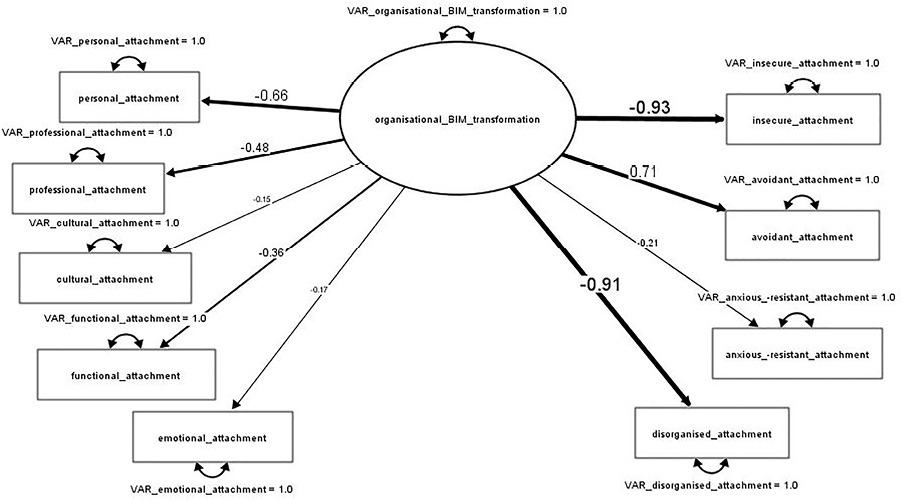
Figure 2. Structural equation model.
Cultural (r = −0.15), functional (r = −0.36), and emotional (r = −0.17) attachments also demonstrated modest but negative associations with BIM transformation. Although weaker in effect, these findings emphasize that attachment rooted in workplace culture, daily functional routines, and emotional comfort with familiar processes cumulatively contribute to resistance. This suggests that organizational BIM transformation requires not only technical upskilling but also cultural and emotional adaptation strategies. In terms of attachment styles, insecure attachment (r = −0.93) emerged as particularly detrimental, reflecting that unresolved conflicts, recognition struggles, and workplace tensions meaningfully obstruct BIM transformation. Similarly, disorganized attachment (r = −0.91) had a strongly negative effect, indicating that systemic inefficiencies, poor communication, and role ambiguities undermine organizational readiness for BIM. However, anxious-resistant attachment (r = −0.21) exerted only a weak negative effect, suggesting that while anxieties about BIM persist, they may not be as structurally obstructive as insecurity or disorganization. The results point to a nuanced dynamic: forms of attachment (personal, professional, cultural, functional, and emotional) generally hinder BIM adoption, although at varying levels of intensity. Insecure and disorganized styles exert the most harmful influence, reflecting that both interpersonal conflicts and systemic disarray are major barriers to transformation. Avoidant attachment, contrary to expectations, has a weak but favorable effect, signaling that detachment from traditional practices can be reframed as an opportunity for embracing innovation. These findings underscore that BIM transformation in construction organizations is less about outright rejection of technology and more about managing deep-rooted attachments, structural inefficiencies, and cultural inertia.
Discussion of findings
Interpretation of results
The findings demonstrate that construction professionals’ reluctance to adopt BIM transformation is rooted less in technological inadequacy and more in psychological and social attachments to traditional work processes. Professionals feel secure in the routines, knowledge, and identity tied to conventional methods, and this familiarity generates resistance when faced with BIM-related responsibilities. Such attachments are not merely habitual but also cultural, functional, and emotional, thereby explaining why resistance persists even in organizations that express strategic support for BIM. At the same time, the study reveals that professionals are not disengaged from BIM per se. Their participation in BIM-related tools, seminars, training, and meetings shows that the workforce is open to innovation when adequately supported. The contradiction—openness to training but resistance to change—underscores the dual role of attachment: it provides stability and professional identity but becomes a barrier when innovation challenges entrenched norms. Another key result concerns the attachment styles of professionals. Insecure and disorganized styles strongly hinder BIM transformation by creating anxieties, conflicts, and coordination problems. In contrast, avoidant attachment—which was hypothesized to have a negative impact—actually showed a weakly favorable effect. This suggests that professionals less tied to traditional processes may paradoxically be more willing to experiment with BIM. Such findings disrupt conventional assumptions that all forms of attachment necessarily obstruct change.
Attachment theory offers a novel lens for explaining BIM adoption resistance because it shifts the discussion away from purely technical or managerial barriers to the psychosocial underpinnings of professional behavior. Traditional explanations of BIM resistance often emphasize cost, training, leadership, or organizational readiness. By contrast, attachment theory highlights how professionals’ sense of security, identity, and belonging are tied to existing processes, and how different attachment styles shape adaptive or maladaptive responses to technological disruption. This theoretical framing explains why resistance persists even in contexts where BIM training, resources, and organizational commitment are present. It also explains the variability in responses: why some professionals avoid change, others express anxiety, and others struggle with systemic disorganization. In this sense, attachment theory enriches the literature on technology adoption by linking personal–psychological patterns with organizational change outcomes.
Significance of the findings
The findings show that attachment-driven resistance manifests as interpersonal conflict, workplace anxiety, and disorganization. These dynamics reduce collaboration, job satisfaction, and trust in organizational goals. Recognizing attachment as a factor enables organizations to design interventions that reduce stress and conflict, thereby fostering healthier, more cohesive work environments. By applying attachment theory to BIM adoption, this study introduces a new explanatory model for resistance to technological change in construction. It extends attachment theory beyond its traditional domains (psychology, education, and social relations) into construction management, offering a theoretical bridge between organizational behavior and digital transformation research. This novel application deepens our understanding of why BIM adoption stalls even when structural enablers are in place. The finding that personal, professional, and emotional attachments negatively impact BIM adoption (ranging from −0.15 to −0.66) implies the need for change management strategies that address identity and role security. Managers must reassure staff that BIM complements rather than threatens professional ethics and skills. The detrimental effect of insecure and disorganized attachment styles (r = −0.93, −0.91) indicates that leadership should prioritize clear communication, structured workflows, and consistent protocols to reduce uncertainty and reinforce trust during transformation. Anxiety-related results show that workers fear productivity loss, job security issues, and remuneration changes. Targeted training and mentoring programs should address these anxieties directly, not only by teaching BIM skills but also by reinforcing confidence in career continuity.
The positive association of avoidant attachment with BIM transformation suggests that individuals less tied to old methods can act as change champions or early adopters, helping diffuse innovation across teams. The study highlights that site-level BIM transition remains underdeveloped despite organizational consensus. Regulators can use this insight to incentivize field-level adoption, ensuring that policies bridge the gap between strategic intent and operational practice. Evidence that cultural and emotional attachments hinder change underscores the need for industry-wide campaigns that reframe BIM as an enabler of professional identity, rather than as a threat to established culture. The validation of most hypotheses except Hypothesis 7 demonstrates that attachment theory does not map neatly onto traditional assumptions. This creates space for future studies to refine attachment-based models for organizational technology adoption, potentially extending the framework to other industries facing digital transformation. The study shows that BIM resistance is not just a technical or managerial challenge but also a psychological and social challenge. Attachment theory provides a richer understanding of how professionals’ identities, anxieties, and relational patterns shape organizational transformation. The findings matter because they highlight that successful BIM transformation requires not only training and investment but also attention to the emotional and cultural attachments that anchor professionals to conventional practices. By addressing these attachments directly—through reassurance, structured support, and empowerment of early adopters—construction organizations can transform resistance into receptiveness, ensuring smoother and more sustainable BIM integration.
Corroboration and extension of earlier studies
The present findings both corroborate and extend earlier studies on the role of professional attachments in shaping organizational BIM transformation. A clear point of convergence lies in the recognition that construction professionals’ reluctance to embrace BIM is largely rooted in their comfort and familiarity with conventional work practices. Previous studies emphasized that professionals’ resistance arises from fears of losing their identity and ethical grounding, as well as from strong cultural, functional, and emotional attachments to traditional methods (Ahmed, 2018; Liao & Teo, 2018; Mercer, 2019; Alaloul et al., 2020; Wang et al., 2020). The current results reinforce this by demonstrating that personal, professional, cultural, functional, and emotional attachments all exert modest but unfavorable associations with BIM transformation. These patterns highlight the enduring psychological and cultural dimensions of resistance, showing that attachments to conventional workflows manifest not only as a preference for old practices but also as an obstacle to organizational change. At the same time, the present findings provide additional nuance by distinguishing the effects of specific attachment styles. In line with earlier research (Siebelink et al., 2021; Faisal Shehzad et al., 2022; Olugboyega & Windapo, 2023; Chowdhury et al., 2024), insecure, anxious-resistant, and disorganized attachment styles were found to hinder BIM transformation, reflecting the anxieties and uncertainties that professionals face when reconciling personal goals with organizational transitions. However, a notable divergence emerges in the treatment of avoidant attachment. While prior studies suggested that avoidant tendencies contributed little or even negligible resistance, the current results reveal a weak but favorable influence of avoidant attachment on BIM transformation (Faisal Shehzad et al., 2022; Chowdhury et al., 2024). This indicates that professionals who distance themselves from traditional processes may actually be better positioned to adapt to digital workflows, thereby challenging the assumption that all forms of attachment inevitably obstruct transformation.
Another shared theme is the importance of collaboration and team cohesion. Previous studies pointed to disputes, lack of communication, and deficient collaboration as key inhibitors of BIM adoption (Mercer, 2019; Faisal Shehzad et al., 2022). Similarly, the present study underscores how insecure and resistant attachment styles negatively affect organizational transformation by undermining trust, adaptability, and cohesion. Nevertheless, there is also evidence of a positive trend: both sets of findings agree that professionals demonstrate receptiveness to BIM training, seminars, and proficiency programs, suggesting that with sufficient support, organizations can gradually overcome attachment-related resistance. A further contrast lies in the organizational implications. Earlier studies stressed the necessity of leadership intervention—through training, feedback, and support—to mitigate anxieties and ensure smoother transitions (Liao & Teo, 2018; Siebelink et al., 2021). The current findings advance this perspective by demonstrating empirically, through parameter estimates, the degree to which different attachment forms and styles directly influence BIM outcomes. This quantitative evidence strengthens the argument that addressing attachments is not merely a cultural concern but a measurable determinant of organizational success. Both the present and prior studies converge on the idea that BIM transformation is not only a technical or procedural shift but also a psychological negotiation between entrenched attachments and new digital expectations. While previous studies established the broad influence of cultural, functional, and emotional ties, the current findings refine this understanding by mapping specific attachment forms and styles onto organizational outcomes. The divergence concerning avoidant attachment offers a particularly valuable insight, suggesting that detachment from conventional methods may, in some cases, facilitate BIM adoption. Together, these findings underscore the necessity for construction firms to recognize and manage the emotional and cognitive bonds that professionals form with their work processes, as these bonds fundamentally shape the pace, quality, and success of BIM transformation.
Conclusions
This study concluded that construction professionals’ reluctance to fully adopt BIM is deeply rooted in their personal and professional attachments to traditional work practices. Many derive significant identity, pride, and ethical grounding from conventional methodologies, and these entrenched attachments obstruct their readiness to embrace BIM. The findings highlight that resistance is not merely a matter of technical unfamiliarity but rather a reflection of the profound entanglement between personal identity, professional ideals, and emotional security. A key conclusion is that cultural, functional, and emotional attachments exert a measurable negative impact on BIM transformation. Among the attachment styles examined, insecure forms of attachment had the strongest influence. Specifically, anxious-resistant and disorganized attachment styles emerged as the most detrimental, as they amplified anxieties about job security, organizational change, and technological adoption, thereby undermining collaboration and cohesion. By contrast, avoidant attachment styles showed a weak but somewhat favorable correlation, suggesting that professionals who detach from traditional practices may adapt more easily to BIM, particularly in contexts requiring autonomy rather than collaboration. Secure attachment styles generally facilitated adaptation, although even secure professionals sometimes struggled in high-pressure or fast-paced transition contexts. These findings underscore that no single attachment style is uniformly beneficial or harmful; rather, their effects depend on the organizational and interpersonal demands of the BIM transformation process.
Theoretical contributions
Theoretically, this study contributes by introducing attachment theory as a novel explanatory framework for understanding resistance to BIM adoption. Prior explanations often emphasized organizational culture, training deficits, or leadership gaps. By framing resistance in terms of attachment forms and styles, this study deepens our understanding of why professionals cling to old practices and how emotional bonds to work processes shape attitudes toward change. Attachment theory also provides a differentiated account: it shows that resistance is not uniform but patterned by psychological tendencies toward security, anxiety, or avoidance. This represents a conceptual advancement that integrates psychological theory with construction management research, thereby bridging two domains that are rarely considered together.
Practical contributions
Practically, the findings carry direct implications for construction firms. First, recognizing that professional identity and ethics are strongly entrenched attachment points suggests that training programs must be designed not only to build technical capacity but also to frame BIM adoption as a way of reinforcing rather than undermining professional pride. Second, since insecure attachment styles—especially anxious-resistant and disorganized—have the strongest negative impact, organizations should provide clear communication, mentoring, and structured support systems to reduce uncertainty and build trust. Third, the weakly favorable role of avoidant attachment suggests that some professionals may adapt more quickly if allowed flexibility for independent, task-focused work within the BIM process. Finally, leadership must play an active role in diagnosing attachment-related barriers, aligning interventions with the psychological needs of different employee groups, and promoting a collaborative but empathetic workplace climate.
Study limitations
Despite its contributions, the study is limited in several respects. The exclusive reliance on quantitative methods, particularly structural equation modeling, provided robust statistical insights but did not capture the deeper narratives behind professionals’ attachments to traditional practices. The absence of a mixed-methods approach restricts understanding of the lived experiences and contextual nuances that underlie the statistical relationships. Similarly, the study focused on organizational-level transformation but did not fully account for inter-organizational dynamics, such as subcontractor networks or industry-wide cultural norms, which may amplify or moderate resistance.
Future research
Future research should adopt a qualitative or mixed-methods approach to provide richer insights into why certain attachment styles exert stronger effects on BIM adoption. In-depth interviews, focus groups, or case studies could illuminate how professionals articulate their fears, aspirations, and coping mechanisms during BIM transitions. Longitudinal research is also needed to trace how attachment-related resistance evolves over time, especially as professionals gain more exposure to BIM tools and workflows. Moreover, comparative case studies of firms that have successfully managed attachment differences could yield practical models for fostering secure, adaptive responses to change. Finally, future studies should examine the role of leadership interventions—such as coaching, mentoring, or structured communication strategies—in mitigating the negative effects of insecure attachments, thereby offering actionable pathways for organizations to achieve smoother BIM transformation.
Data availability statement
The authors confirm that the data supporting the findings of this study are available within the article.
References
Ahmed, S. (2018). Barriers to implementation of building information modeling (BIM) to the construction industry: A review. Journal of Civil Engineering and Construction, 7(2), 107–113. https://doi.org/10.32732/jcec.2018.7.2.107
Ainsworth, M. D. S. (1978). The Bowlby-Ainsworth attachment theory. Behavioral and Brain Sciences, 1(3), 436–438. https://doi.org/10.1017/S0140525X00075828
Alaloul, W. S., Liew, M. S., Zawawi, N. A. W. A., & Kennedy, I. B. (2020). Industrial revolution 4.0 in the construction industry: Challenges and opportunities for stakeholders. Ain Shams Engineering Journal, 11(1), 225–230. https://doi.org/10.1016/j.asej.2019.08.010
Andersson, R., & Eidenskog, M. (2023). Beyond barriers–exploring resistance towards BIM through a knowledge infrastructure framework. Construction Management and Economics, 41(11–12), 926–941. https://doi.org/10.1080/01446193.2023.2218498
Bowlby, J. (1979). The Bowlby-Ainsworth attachment theory. Behavioral and Brain Sciences, 2(4), 637–638. https://doi.org/10.1017/S0140525X00064955
Chowdhury, M., Hosseini, M. R., Edwards, D. J., Martek, I., & Shuchi, S. (2024). Comprehensive analysis of BIM adoption: From narrow focus to holistic understanding. Automation in Construction, 160, 105301. https://doi.org/10.1016/j.autcon.2024.105301
Faisal Shehzad, H. M., Binti Ibrahim, R., Yusof, A. F., Mohamed Khaidzir, K. A., Shawkat, S., & Ahmad, S. (2022). Recent developments of BIM adoption based on categorization, identification and factors: A systematic literature review. International Journal of Construction Management, 22(15), 3001–3013. https://doi.org/10.1080/15623599.2020.1837719
Hazan, C., & Shaver, P. R. (1990). Love and work: An attachment-theoretical perspective. Journal of Personality and Social Psychology, 59(2), 270. https://doi.org/10.1037/0022-3514.59.2.270
Ibrahım, U. M., & Labaran, Y. H. (2024). Cultivating holistic approaches to sustainable construction: Insights from real-world projects. ArtGRID-Journal of Architecture Engineering and Fine Arts, 6(1), 121–150. https://doi.org/10.57165/artgrid.1382482
Ilbeigi, M., Bairaktarova, D., & Morteza, A. (2023). Gamification in construction engineering education: A scoping review. Journal of Civil Engineering Education, 149(2), 04022012. https://doi.org/10.1061/(ASCE)EI.2643-9115.0000077
Jiang, R., Wu, C., Lei, X., Shemery, A., Hampson, K. D., & Wu, P. (2022). Government efforts and roadmaps for building information modeling implementation: Lessons from Singapore, the UK and the US. Engineering, Construction and Architectural Management, 29(2), 782–818. https://doi.org/10.1108/ECAM-08-2019-0438
Kim, J. (2019). Multi-dimensional and complex space development of Hudson Yards, New York City using railroad site. Journal of the Korea Institute of Spatial Design, 14(7), 339. https://doi.org/10.35216/kisd.2019.14.7.339
Klein, H. C., Stelter, A., Oschinsky, F. M., & Niehaves, B. (2022). A status quo bias perspective on user resistance in building information modeling adoption–towards a taxonomy. Computers in Industry, 143, 103760. https://doi.org/10.1016/j.compind.2022.103760
Logothetis, S., Karachaliou, E., Valari, E., & Stylianidis, E. (2018). Open source cloud-based technologies for BIM. The International Archives of the Photogrammetry, Remote Sensing and Spatial Information Sciences, 42, 607–614. https://doi.org/10.5194/isprs-archives-XLII-2-607-2018
Mercer, J. (2019). Conventional and unconventional perspectives on attachment and attachment problems: Comparisons and implications, 2006–2016. Child and Adolescent Social Work Journal, 36(2), 81–95. https://doi.org/10.1007/s10560-017-0511-7
Motamedi, A., & Shahinmoghadam, M. (2021). BIM-IoT-integrated architectures as the backbone of cognitive buildings: Current state and future directions. In BIM-enabled cognitive computing for smart built environment (pp. 45–68). CRC Press. https://doi.org/10.1201/9781003017547-3
Nast, A., & Rekve, A. (2023). Understanding “resistance to change” for BIM adoption and new research ways forward. In ECPPM 2022 – eWork and eBusiness in Architecture, Engineering and Construction 2022 (pp. 687–694). CRC Press. https://doi.org/10.1201/9781003354222-87
Olugboyega, O. (2024). Differential relationships in the BIM implementation process in a developing country: The role of essential BIM implementation strategies. Engineering, Construction and Architectural Management, 31(8), 3283–3307. https://doi.org/10.1108/ECAM-10-2022-0999
Olugboyega, O., & Windapo, A. (2023). Modelling the indicators of a reduction in BIM adoption barriers in a developing country. International Journal of Construction Management, 23(9), 1581–1591. https://doi.org/10.1080/15623599.2021.1988196
Rebillon, J., Codou, O., Hamel, J. F., Moffat, E., & Scrima, F. (2023). The mediating role of perceived comfort between workplace attachment style and perceived stress. International Journal of Environmental Research and Public Health, 20(7), 5377. https://doi.org/10.3390/ijerph20075377
Robledo, J. P., Cross, I., Boada-Bayona, L., & Demogeot, N. (2022). Back to basics: A re-evaluation of the relevance of imprinting in the genesis of Bowlby’s attachment theory. Frontiers in Psychology, 13, 1033746. https://doi.org/10.3389/fpsyg.2022.1033746
Schiavi, B., Havard, V., Beddiar, K., & Baudry, D. (2022). BIM data flow architecture with AR/VR technologies: Use cases in architecture, engineering and construction. Automation in Construction, 134, 104054. https://doi.org/10.1016/j.autcon.2021.104054
Siebelink, S., Voordijk, H., Endedijk, M., & Adriaanse, A. (2021). Understanding barriers to BIM implementation: Their impact across organizational levels in relation to BIM maturity. Frontiers of Engineering Management, 8, 236–257. https://doi.org/10.1007/s42524-019-0088-2
Sielker, F., & Allmendinger, P. H. I. L. (2018). International experiences: Future cities and BIM. University of Cambridge.
Singhal, V. (2020). A conceptual framework for effective BIM-enabled information management in railways (Master’s thesis, Universidade do Minho, Portugal).
Sonkar, T. (2021). Attachment theory. Journal of Research in Humanities and Social Science, 9, 1–5.
Sroufe, L. A., & Waters, E. (2017). Attachment as an organizational construct. In Interpersonal development (pp. 109–124). Routledge. https://doi.org/10.4324/9781351153683-5
Taher, G. (2021). Industrial revolution 4.0 in the construction industry: Challenges and opportunities. Management Studies and Economic Systems, 6(3–4), 109–127. https://doi.org/10.12816/0060000
Wang, G., Wang, P., Cao, D., & Luo, X. (2020). Predicting behavioural resistance to BIM implementation in construction projects: An empirical study integrating technology acceptance model and equity theory. Journal of Civil Engineering and Management, 26(7), 651–665. https://doi.org/10.3846/jcem.2020.12325
Wang, Y., Zhao, B., Nie, Y., Jiang, L., & Zhang, X. (2024). Challenge for Chinese BIM software extension comparison with international BIM development. Buildings, 14(7), 2239. https://doi.org/10.3390/buildings14072239
Zhao, Y., & Taib, N. (2022). Cloud-based building information modelling (cloud-BIM): Systematic literature review and bibliometric-qualitative analysis. Automation in Construction, 142, 104468. https://doi.org/10.1016/j.autcon.2022.104468
Zuckerman, I., Mizrahi, D., & Laufer, I. (2023). Exploring EEG features for differentiating between secure and insecure attachment styles. In Intelligent Systems Conference (pp. 436–448). Springer Nature Switzerland. https://doi.org/10.1007/978-3-031-47718-8_29