Construction Economics and Building
Vol. 26, No. 3/4
2026
ARTICLES (PEER REVIEWED)
Leadership, Resilience and Safety Outcomes: A Study of Indian Construction Workers Post-COVID-19
Gaurav Joshi1,*, Deepti Pathak2
1 Lal Bahadur Shastri Institute of Management, New Delhi, India
2 SVKM’s Narsee Monjee Institute of Management Studies (NMIMS), Bengaluru, Karnataka, India
Corresponding author: Gaurav Joshi, gauravjoshi12@gmail.com
DOI: https://doi.org/10.5130/h4z1ca70
Article History: Received 17/02/2025; Revised 30/04/2026; Accepted 17/06/2026; Published 09/10/2026
Citation: Joshi, G., Pathak, D. 2026. Leadership, Resilience and Safety Outcomes: A Study of Indian Construction Workers Post-COVID-19. Construction Economics and Building, 26:3/4, 1–25. https://doi.org/10.5130/h4z1ca70
Abstract
Worker safety remains a serious concern for the Indian construction industry, where unsafe worker behaviour is a key contributor to workplace accidents, and leadership has a strong impact on safety behaviour. Construction industry researchers have largely focused on how leadership styles and safety climate affect employees’ overall satisfaction. Prior research suggests that the quality of the association between leaders and followers may relate to followers’ resilience. Leader–member exchange (LMX) captures this relationship quality, defined by trust, mutual respect, support and role clarity between supervisors and workers. While earlier studies have generally treated LMX as a single, uniform construct, this study advances the literature by unpacking its four distinct sub-dimensions to better understand how each uniquely contributes to worker outcomes. By linking these sub-dimensions to resilience and safety behaviour amongst Indian construction workers in the post-coronavirus disease 2019 environment, this study offers a richer theoretical explanation and contextually relevant insights for strengthening leadership practices and safety management in high-risk settings. To reduce unsafe behaviour amongst construction workers, this study examined how the four sub-dimensions of LMX relate to employee resilience and safety behaviour. Hypothesised relationships were tested using partial least squares structural equation modelling, with data collected from 139 construction workers across various construction companies in the Delhi/National Capital Region using purposive sampling. Results show a positive association between all four LMX dimensions: affect, contribution, loyalty and professional respect, and employee resilience. Additionally, employees’ capability to cope with adverse situations enhances their safety behaviour, indicating that despite pandemic-related challenges, leaders’ support, emotional connection, mutual goal setting and inspirational motivation helped employees overcome adversity, fostering intrinsic motivation to abide by safety norms and engage actively in safety behaviour.
Keywords
Leader–Member Exchange; Employee Resilience; Safety Compliance; Indian Construction Sector; COVID-19
Introduction
The Indian construction sector is a dynamic engine of economic growth, currently on a trajectory of unprecedented expansion. India is already estimated to be the world’s third-largest construction market (Press Information Bureau, 2024). This growth is fuelled by a staggering scale of investment; as Manivannan et al. (2022) pointed out, the National Infrastructure Pipeline has projected a USD 1.4 trillion investment in roads, railways and urban infrastructure.
Despite all this, the construction sector encounters more workplace hazards than any other sector. According to the International Labour Organization’s report, the accident rate amongst construction workers is the highest in India, with 165 of 1,000 workers getting injured on the job. According to a British Safety Council study, nearly 80% of workers in the Indian construction sector work in an unsafe environment, with the death rate 20% higher than in Britain. Nevertheless, another study mentioned that in the construction sector, a lack of work safety kills 38 to 73 labourers every day (Hussain, 2020).
For the entire world, coronavirus disease 2019 (COVID-19) was a crisis unlike any other in recent years; it elevated levels of uncertainty, anxiety and a lack of clarity amongst businesses and people (McKinsey, 2020). According to World Health Organization data through January 2025, the coronavirus had reached 231 countries, resulting in 7.1 million deaths. The government of India announced a nationwide lockdown of 21 days on 24 March 2020, restricting the movement of 1.3 billion Indians, and the whole construction industry came to a standstill (Pathak & Joshi, 2020). In 2020, there were approximately 20,000 ongoing construction projects across India, engaging approximately 8.5 million workers (Babar, 2020). Although the construction industry is one of the largest sources of employment in India, it has long been recognised as one of the country’s most hazardous sectors. Prior to the COVID-19 pandemic, the risk of occupational accidents in construction was already alarmingly high. Despite this growth, safety remains a chronic concern. Data from the pre-pandemic era highlight the inherent dangers of the sector; for instance, statistical analysis of fatal accident patterns in India reported approximately 38 fatal accidents occurring every day (Patni, 2022). Between 2008 and 2012 alone, over 11,000 workers lost their lives, underscoring that safety failures are a chronic, rather than acute, issue in the region (Hire et al., 2021). These figures indicate that safety challenges in the industry were deeply entrenched even before the pandemic. Subsequent reports following the post-lockdown restart further revealed that industrial accidents continued to occur with concerning frequency, underscoring the persistence of systemic safety gaps rather than a pandemic-specific spike. Owing to COVID-19, many construction projects were postponed, and a few were even cancelled. Many organisations shifted to work-from-home scenarios due to COVID-19. However, this was not the case for employees in the construction sector. Employees were required to report to the office/construction sites, where they faced a high risk of COVID-19 exposure. Even in 2021, most of the construction sites were working at half of their capacity. The exodus of migrant labourers and fear of COVID-19 infection kept the workers’ attendance at less than 70%. Even after work resumed following the COVID-19 lockdown, industrial accidents occurred at least every 2 days, killing or injuring workers and causing severe health and environmental impacts (Industrial Union Report, 2020). This high-risk baseline underscores the urgency of the post-COVID-19 situation, where accidents continue to occur at high frequencies. This research explicitly focuses on the post-pandemic period, examining how leadership-driven resilience helps workers navigate safety protocols after the resumption of full-scale activities. Together, this evidence highlights the enduring and critical need to strengthen safety management practices within the construction sector. The relatively unsafe work conditions in the construction sector, along with high job demand and interpersonal relationships, amongst others, increase the risk for adverse psychological outcomes (Goldenhar et al., 2003; J.Y. et al., 2012; He et al., 2021). Employee resilience plays a major role in helping employees thrive during pandemics and successfully manage change (Näswall et al., 2015; Caniëls & Hatak, 2019). Resilience is a developmental capability, and consequently, the role of organisational climate and leaders’ support becomes significant in helping employees develop resilience (Meng et al., 2017; Caniëls & Hatak, 2019). Leadership plays a pivotal role in shaping safety outcomes in construction, especially in the volatile post-COVID context. In this study, we do not treat COVID-19 as a variable to be measured in isolation, but rather as an extreme-risk contextual condition. As Sankar et al. (2024) suggested, modern construction sites require leadership to act as a “catalyst” for safety, particularly when workers are navigating the psychological after-effects of a global crisis. By framing our study in the post-pandemic era, we argue that “general” constructs such as leader–member exchange (LMX) become even more critical. Jiang et al. (2023) highlighted that during periods of systemic uncertainty, the strength of the social exchange between a supervisor and workers is what determines whether safety protocols are followed or ignored.
Qualitative work by Sankar and Anandh (2024) highlighted how safety leadership via visible commitment, communication and modelling safe behaviour can cultivate a strong safety climate. Hence, the COVID-19 pandemic can be considered an opportunity to re-formulate conventional leadership theories and analyse how leaders can keep their workers motivated and ensure that they follow safety guidelines during difficult times. COVID-19 not only disrupted project timelines but also redefined workplace safety to include health-related compliance (mask wearing, distancing and sanitisation), thereby extending traditional notions of construction safety. Omidi et al. (2023) demonstrated that safety leadership positively predicts both deep and surface compliance, mediated by workers’ psychological contract of safety and risk perception. On similar lines, Sankar et al. (2024) found that site-level leadership significantly influences multiple dimensions of safety climate (such as management commitment and reporting practices), which in turn promote safer behaviours. In their study, Sankar and Anandh (2024) showed that transformational leadership aimed specifically at safety enhances knowledge sharing amongst workers and fosters a psychologically safe environment, both of which mediate the relationship between leadership and safety behaviour. These mechanisms likely also support resilience: by enabling adaptive learning and mutual support, leaders help workers internalise safety norms (Omidi et al., 2023) and recover from COVID-related stressors. This body of literature thus points to targeted leadership interventions and policies strengthening the psychological contract of safety as effective levers to enhance resilience and reduce safety incidents, a finding that is highly relevant for Indian construction settings grappling with post-pandemic challenges. Recent bibliometric analyses indicate that while the field of safety leadership has grown significantly, it remains fragmented, necessitating integrated models that link leadership roles to specific safety outcomes (Jiang et al., 2023). Furthermore, global trends in construction safety research from 2000 to 2023 highlight an intensification of publishing activity, with safety climate and behaviour remaining priority research areas (Ganiyev et al., 2024).
These new realities make it crucial to examine how leadership and resilience shape worker safety behaviours in the post-pandemic context. While LMX and resilience have been studied in other industries and geographies, there is a dearth of empirical research connecting multidimensional LMX, resilience and safety behaviour in the Indian construction sector. This sector is uniquely characterised by widespread contractual labour, low formal education levels, weak enforcement of safety regulations and post-COVID disruptions, making it different from the Western or East Asian contexts where most prior studies have been conducted. While studies have examined LMX, resilience and construction safety separately (e.g. Li et al., 2019), there is a lack of research integrating the multidimensional LMX framework with resilience and safety behaviour in the Indian construction context, particularly under the unprecedented challenges brought by COVID-19. By applying partial least squares structural equation modelling (PLS-SEM) on construction worker data in India, we provide a robust analytical model that integrates leadership, resilience and safety behaviour. This modelling framework itself offers a replicable approach for future studies in similar high-risk industries. This study extends existing research in three ways: (i) by unpacking LMX into its four sub-dimensions to provide a nuanced understanding of leadership–resilience linkages, (ii) by introducing employee resilience as a mediating mechanism between LMX and safety behaviour and (iii) by situating the analysis in the post-COVID-19 construction sector, where resilience and safety behaviour became more salient than ever before. In light of the preceding discussion, this study seeks to address the following research questions:
1. How do the four sub-dimensions of LMX (affect, loyalty, contribution and professional respect) influence employee resilience amongst construction workers in India post-COVID-19?
2. How does employee resilience, in turn, affect construction workers’ safety compliance and safety participation?
Literature review
The research work examining the correlation between employee resilience and their safety behaviour in the Indian construction sector is still in its infancy (He et al., 2019). Previous research on construction safety (Liang et al., 2020) has largely employed unidimensional LMX or general leadership measures. Our study differs by conceptualising LMX as a four-dimensional construct and examining how these sub-dimensions uniquely contribute to resilience, which in turn predicts safety compliance and participation. This study contributes to the existing research by integrating the literature on LMX relationships and employee resilience and by examining the combined effect of these factors on the safety behaviour of construction employees.
Leader–member exchange and COVID-19
LMX theory suggests that leadership cannot be defined as a homogenous concept, as leaders and followers form dyadic relationships (Kakkar, 2019). The theoretical foundation of LMX lies in the harmonic relationship between leaders and their followers that has been built upon role theory (Graen, 1976), which states that a leader tests a follower by assigning multiple tasks during role-making, and the follower’s ability to fulfil these job demands defines the nature of the leader–member relationship (Jr. et al., 1975; Thrasher et al., 2020). While LMX theory originated in the 1970s (Graen, 1976), recent studies have expanded its application to safety behaviour, resilience and construction contexts (Thrasher et al., 2020; He et al., 2021; Tanskanen, 2024). The quality of leader–follower relationships results in differentiated exchanges, with some employees forming high-quality “in-group” ties and others forming lower-quality “out-group” ties (Graen, 1976; He et al., 2021). The in-group comprises followers whom the leader trusts and with whom the leader has high-quality exchange relationships, whereas the out-group consists of the rest of the followers. As a construct, LMX is more detailed, as it frames leadership as a two-way relationship based on expectations of reciprocation between leaders and subordinates (Kakkar, 2019; Tanskanen, 2025). Li et al. (2025) used a mixed-artificial intelligence approach combining surveys, microblog analysis and predictive modelling to investigate how micro-psychological drivers (e.g. LMX, perceived organisational support and tenure) and macro-socioeconomic conditions (e.g. city-level gross domestic product) jointly influence safety knowledge sharing. Their findings reveal that supportive organisational climates and favourable economic contexts significantly enhance workers’ willingness to exchange safety knowledge. Their results underscore the importance of both internal organisational mechanisms and external economic conditions in promoting safety-related communication amongst workers. From lockdowns and the mass exodus of migrant workers, to changed government policies, restrictions on the number of workers at construction sites and workers’ resistance to returning to work, COVID-19 posed numerous challenges to the construction sector (Pathak & Joshi, 2020). These norms of reciprocity or exchange relationships are also applicable to construction workers and their supervisors. The uncertainty of COVID-19 restricted the ability of construction companies to prepare concrete plans. Positive organisational climate and good leadership by frontline supervisors can, however, help employees bounce back and help organisations survive and thrive (Prayag et al., 2019). The landscape of safety leadership is rapidly evolving. As Jiang et al. (2023) noted in their bibliometric review, safety leadership research is transitioning towards more nuanced, integrated models that account for complex organisational climates.
Recent empirical work has specifically highlighted the role of leadership as a foundational element of site safety. For instance, Sankar et al. (2024) described safety leadership as a “catalyst” for a positive safety climate, arguing that without active supervisor engagement, physical safety protocols often remain ineffective. This is complemented by the findings of Omidi et al. (2023), who demonstrated that when leaders prioritise safety, it strengthens the “psychological contract” of the workers, leading to higher rates of safety compliance and fewer incidents. Furthermore, Sankar and Anandh (2024) emphasised that in the high-stakes construction environment, leaders must navigate multiple leadership styles—ranging from transformational to transactional—to effectively manage the diverse risks encountered on-site.
With a growing body of research, LMX was conceptualised as a construct focusing on the exchange of information and resources between leaders and followers, and the unique relationship shared with each subordinate is instrumental in shaping their behaviour in the organisation (Cropanzano et al., 2016; Kakkar, 2019; Thrasher et al., 2020; He et al., 2021). Therefore, considering the present scenario, understanding the role that LMX plays in building employee resilience with respect to construction companies has become even more relevant.
Employee resilience
According to Luthans (2002, p. 702), psychological resilience can be defined as “the developable capacity to recover or bounce back from adversity, conflict, and failure or even positive events, progress, and increased responsibility”. Few researchers in the past have conceptualised resilience as a personality trait, linking it with the proactive personality (Chiaburu et al., 2006; Britt et al., 2016; Caniëls & Hatak, 2019), while others have considered it more of a state-like variable that is found to be stable in the short run but may deviate in the long run (Shin et al., 2019). A resilient workforce is more able to learn from uncertainty and bounce back positively, which is not only important for an organisation’s survival but also critical for future prosperity (Wang et al., 2013; Prayag et al., 2019). Resilience becomes even more important as organisations now have more fluid work arrangements and individuals change multiple jobs during their career (Luthans et al., 2006; Prayag et al., 2019).
Employee resilience can be developed through organisational support and interventions, and positive leadership (Luthans et al., 2006; Nguyen et al., 2016; Tonkin et al., 2018; Richard, 2020; Mishra & Shukla, 2021). Fulfilling relationships with the supervisor can stimulate organisational resilience (Dutton & Heaphy, 2003). From the perspective of COVID-19, resilience acts as a positive internal resource that helps employees navigate this uncertain and stressful time (Avey et al., 2009). Organisational climate and supportive relationships have been found to play supportive roles in the development of resilience (Avey et al., 2008; Vanhove et al., 2015; Nguyen et al., 2016). During these difficult times of COVID-19, leaders/supervisors can build employee resilience by providing a supportive environment and emphasising the positive aspects of the situation (Kakkar, 2019). If developed effectively, resilience can help employees not only survive but also thrive in these turbulent times and can generate positive individual and work-related outcomes (Youssef & Luthans, 2007; Tonkin et al., 2018; Prayag et al., 2019).
Thus, employee resilience and LMX require more research emphasis, as leader behaviours and exchange relationships help develop supportive employee behaviours (Prayag et al., 2019; Luthans, 2002). As noted in the review of existing research, the role of employee resilience in safety behaviour in the context of Indian construction firms is yet to be explored.
Safety performance and COVID-19
With the severe adverse impact of COVID-19 on almost every sector and organisation, there has been an increased concern amongst leaders across the globe regarding the safety and overall well-being of employees. As per the existing research work with respect to the construction industry, one of the most significant factors causing a high number of workplace accidents is unsafe behaviour (Heinrich, 1931; Choudhry & Fang, 2008; J.Y. et al., 2012); therefore, safety behaviour is seen as one of the widely regarded indicators of safety performance (Muñiz et al., 2014; Liang et al., 2020). The safety behaviour of construction workers comprises the following: abiding by the standard operating procedures, rules and regulations at work; ensuring the safety of other workers and the workplace; identifying the dangers; and reporting to higher authorities in a timely manner (Zohar, 2008). According to previous studies, construction workers’ safety behaviour can be grouped into two types: safety participation and safety compliance (Neal et al., 2000; Neal & Griffin, 2006; Cheng & Shan, 2020; Liang et al., 2020). Griffin and Neal (2000) defined safety compliance as being concerned with the congruence of workers’ behaviour with various safety-related rules and regulations at the workplace. Construction workers who breach safety rules and put their lives at stake by taking unnecessary risks at work are not uncommon (Liang et al., 2020; Xia et al., 2020; He et al., 202). Safety participation, however, refers to the worker’s voluntary behaviour to promote health and safety in the workplace (Griffin & Neal, 2000). It includes construction workers’ participation in making safety plans, helping colleagues and the safety management team, working proactively in identifying work hazards and reporting the same to the concerned people in order to enhance workplace safety (Zohar, 2010; Cheng & Shan, 2020). The two dimensions of safety behaviour make it more relevant and easier to predict with higher accuracy (McCabe et al., 2017; Xia et al., 2020). Thus, the present study used these two dimensions of safety behaviour, as they have been accepted widely and validated by researchers (He et al., 2019; Liang et al., 2020).
During the pandemic, along with general safety compliance such as wearing helmets, securing safety harnesses and properly handling construction tools to prevent falling objects, workers also had to conform to COVID-19 safety guidelines, such as wearing masks and practising social distancing. (Christian et al., 2009; Liang et al., 2020). While widespread COVID-19 has made safety compliance mandatory for construction workers, the voluntary nature of safety participation makes it even more important than ever before for ensuring worker safety at construction sites. Therefore, safety behaviour becomes crucial for ensuring worker and site safety (He et al., 2019). Recent research has highlighted the need to consider both psychological and contextual factors when examining construction safety behaviours. According to Mohamed Ali et al. (2025), safety-specific transformational leadership enhances workers’ knowledge sharing and fosters psychological safety, which in turn mediates the effect of leadership on safety behaviour. Newer studies in 2025 have further supported this perspective: Wang et al. (2025) demonstrated that foremen’s paternalistic leadership can influence construction workers’ safety behaviours through team safety climate and workers’ psychological safety. Similarly, Liu et al. (2025) showed that workers’ subjective well-being positively affects safety behaviour via increased safety awareness and risk perception, suggesting that resilience (in terms of well-being) is itself an important antecedent of safety. Together, these studies suggest that in post-COVID construction settings—such as in India—leadership that builds trust, encourages communication and nurtures well-being can strengthen resilience and thereby improve safety outcomes. While their study provides valuable insights into safety communication and knowledge flows, it does not unpack how specific leadership mechanisms, such as the four sub-dimensions of LMX, contribute to resilience and subsequently to safety compliance and participation. These new realities make it crucial to examine how leadership and resilience shape worker safety behaviours in the post-pandemic context. Addressing this gap, the present study advances the literature by focusing on the nuanced role of LMX sub-dimensions in shaping employee resilience and safety behaviours in the Indian construction sector post-COVID. Figure 1 shows the conceptual framework guiding this study. The core idea is that LMX is not merely a managerial tool but a social exchange. When supervisors show professional respect and loyalty, workers develop the resilience needed to maintain safety standards under pressure.
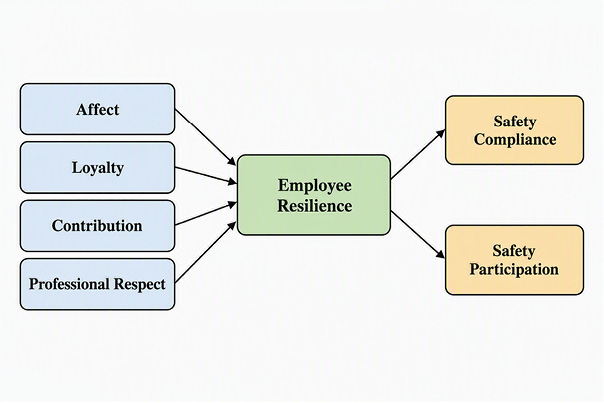
Figure 1. Conceptual Framework
Drawing on LMX theory, the model proposes that the four core dimensions of LMX—affect, loyalty, contribution and professional respect—serve as antecedents of employee resilience. These dimensions capture the relational quality between supervisors and workers, which is particularly critical in high-risk sectors such as construction. Our framework proposes that these four dimensions do not directly force safety behaviour; instead, they build employee resilience. Resilience is the psychological “muscle” that allows a construction worker to maintain focus and safety standards despite the unique pressures of the post-pandemic era. As Caniëls and Hatak (2019) observed, workers who enjoy high-quality social exchanges with their leaders are better equipped to bounce back from the stresses of hazardous work. This resilience then translates into two critical safety outcomes: a) safety compliance, adhering to the formal rules and regulations of the site; and b) safety participation, proactively helping colleagues, attending safety meetings and improving the overall safety culture of the team. Previous research indicated that it is the supervisor’s daily behaviour that ultimately shapes the worker’s safety participation (Wang et al., 2025). In turn, employee resilience is theorised to influence two key safety behaviours: safety compliance and safety participation. By positioning resilience as the mediating psychological capability that translates high-quality leader–member relationships into safer work behaviours, the framework integrates prior theoretical insights with the unique occupational hazards of the construction sector.
This model also forms the basis for this study’s hypotheses and empirical analysis presented in subsequent sections.
Hypothesis development
LMX is ingrained in social exchange theory (Blau, 1964). LMX can be described as a reciprocal exchange process that takes place between leaders and members based on their needs, resulting in outcomes much beyond the scope of formal work, such as mutual respect, affect, care and norms (Liden & Maslyn, 1998). In most of the studies, LMX is considered a unidimensional construct, which limits its practicality (Greguras & Ford, 2006). However, the present study is an attempt to address this research gap by focusing on the multidimensional nature of LMX. LMX is a multidimensional construct encompassing four main dimensions, i.e. affect, loyalty, contribution and professional respect (Dienesch & Liden, 1986; Liden & Maslyn, 1998; He et al., 2019).
Affect is defined as the mutual affection between leaders and followers, which relies on relational attraction or personal charisma rather than professional values and may yield personally rewarding outcomes (Dienesch & Liden, 1986; He et al., 2019). Leader–member relationships based on trust, mutual respect and affection provide more comfort to followers (Kakkar, 2019). Leaders with charisma have the ability to engender positive emotions in their followers (Richard, 2020). Organisational stimuli such as positive interpersonal relationships with leaders can help individuals cope with the challenges and bounce back (Harland et al., 2005; Caniëls & Hatak, 2019). High-quality interpersonal and social bonding with leaders creates an emotional attachment and generates positive emotions (Fisk & Friesen, 2012; Berg et al., 2017). Emotionally supportive behaviour from superiors has a positive impact on subordinates’ ability to overcome adverse situations (Toegel et al., 2012; Richard, 2020). A satisfying relationship with a leader is found to be favourable for the followers’ resilient behaviour (Caniëls & Hatak, 2019). Therefore, we propose that:
H1: Affect will have a positive association with employee resilience.
The support that leaders and members provide for each other’s objectives and actions is referred to as loyalty. The degree of public support provided to followers for their work further enhances the quality of the relationship (Graen, 1976). Leaders are responsible for subordinates’ evaluation and response to a situation (Tse et al., 2017). During the difficult times of COVID-19, leaders needed to lend all possible support to their followers and communicate that they were valuable; this helped in gaining not only the trust of their subordinates but also their loyalty. Few researchers have defined resilience as an intrinsic capability that can be developed (Caniels & Hatak, 2019). Relationships with leaders, i.e. the support provided and feedback, act as a significant source of strength for followers and increase employee resilience (Harland et al., 2005; Kuntz et al., 2017; Caniëls & Hatak, 2019). In line with this, we propose that:
H2: Loyalty will have a positive association with employee resilience.
Contribution is the perception of the degree of effort of members for the achievement of mutual goals (Dienesch & Liden, 1986). The coronavirus has created great uncertainty and stress and prompted tunnel vision, in which people’s prime focus is on the present rather than on the future. Many researchers have found a positive association between LMX and work effort (Harland et al., 2005; Caniëls & Hatak, 2019). Resilience can be equated with work effort, as both refer to the willingness and energy put into the job (Caniëls & Hatak, 2019; Kakkar, 2019). Leaders can convert crises into developmental challenges and, hence, can promote resilience in their followers by positively framing the situation and making the challenges appear as “demanding” rather than “problematic” (Harland et al., 2005; Allison, 2011; Buch et al., 2014; Richard, 2020). This improves the motivation level of subordinates to reciprocate the resources and changes their response to the situation. Followers readily accept the “role breadth” and are ready to go beyond their defined job roles (Hsiung & Tsai, 2008; Caniëls & Hatak, 2019; Kakkar, 2019). Therefore, we propose that:
H3: Contribution will have a positive association with employee resilience.
Professional respect is the perception of the reputation that leaders/followers build within the organisation or in the outside world based on their personal experiences, awards and professional achievements. This perception could be based on historical data available; therefore, there is a congeniality of developing professional respect towards a person even before working with them (Dienesch & Liden, 1986; He et al., 2019). The degree to which a leader behaves with confidence during a crisis instils confidence in the subordinates’ behaviour too (Harland et al., 2005). This inspirational motivation by role modelling can help enhance employee resilience by stimulating courage and instilling a sense of identity and purpose (Caniëls & Hatak, 2019; Kakkar, 2019). Therefore, we propose that:
H4: Professional respect will have a positive association with employee resilience.
Employee resilience can be referred to as a psychological capacity to deal with adversities, resulting in increased performance (Youssef & Luthans, 2007; Chen et al., 2017; Pathak & Joshi, 2020). Resilient employees can respond to volatile internal and external organisational environments (Gittell et al., 2006; Prayag et al., 2019). Specifically, employee resilience contributes to job satisfaction, job engagement and organisational commitment (Youssef & Luthans, 2007; Chen et al., 2017a,b). Employee resilience makes individuals more goal-focused and helps reduce counter-productive behaviours (Chen et al., 2017a,b). In addition, individual resilience is found to facilitate safety-focused behaviours (Eid et al., 2011; Chen et al., 2017a,b). Nevertheless, the authors were not able to find any empirical studies examining the role of employee resilience in predicting safety behaviour in construction companies in India. Accordingly, we propose that:
H5: Employee resilience will have a positive association with safety compliance.
H6: Employee resilience will have a positive association with safety participation.
Research methodology
Sampling and population
This study focused on examining the influence that various sub-dimensions of LMX have on employee resilience and their safety behaviours in the post-pandemic period. This study implemented quantitative research with the help of a self-administered questionnaire. The survey reached 190 construction workers working in different project sites of the National Capital Region of India using the purposive sampling method (Schutt, 2006) for primary data collection. Additionally, a screening question was used to ensure that construction workers had the requisite construction site experience of more than 3 years. Specifically, construction workers were required to report that they had worked in construction sites before and after COVID-19. The screening question was applied to eliminate those who were not working during the pre- and post-COVID eras to ensure that the participants experienced both pre-pandemic and post-pandemic working conditions. A valid concern may arise regarding the use of “general” questionnaire items to study a pandemic-specific context. However, we contend that the validity of our findings relies on this exact approach. Our goal was to measure the durability of safety resilience following a crisis.
The primary data were collected between September and October 2023, which represents the post-pandemic recovery phase when construction activities resumed to near-normal levels. As Omidi et al. (2023) demonstrated, the “psychological contract” of safety was tested the most during these transition periods. While the questions regarding LMX and resilience are general, the temporal framing of the data collection ensured that respondents answered based on their lived experiences of returning to high-risk environments after the pandemic lockdowns. Therefore, COVID-19 serves as the contextual amplifier that makes a leader’s “general” support the most vital factor in workers’ “specific” safety compliance (Wang et al., 2024).
The site supervisors helped complete the questionnaire, as they were familiar with the construction site workers. The questionnaire used several sets of questions focusing on the seven constructs required to test the hypotheses. Before giving the questionnaire to the site supervisors, the questions were translated into the local language, i.e. Hindi, as most of the construction workers do not understand English and feel more comfortable using the local language. The respondents were found to belong to different demographics. After collecting the completed questionnaires, initial screening was performed to check for consistency and reliability of the responses. Only 139 responses were found to be valid and further used for analysis purposes. As per the researchers, the minimum required sample for the PLS-SEM is based on the maximum number of arrows pointing towards a latent variable, where in the PLS path model, it must be a minimum of 10 times (Hair et al., 2017). The model for this study, shown in Figure 1, had a maximum of four arrows pointing towards the latent variable employee resilience, which led to the fulfilment of the required sample size.
Research questionnaire
The survey instrument was designed using well-established scales. Employee resilience was measured using nine items (α = 0.85) adapted from Kuntz et al. (2017), Nguyen et al. (2016) and Prayag et al. (2019) and measured on a 5-point Likert scale (1 = never and 5 = always). Sample items included “I learn from mistakes at work and improve the way I do my job” and “I use change at work as an opportunity for growth”.
Four dimensions of LMX, i.e. contribution, professional experience, affect and loyalty, were measured using 12 items (α = 0.89) adapted from Liden and Maslyn (1998) on a 5-point Likert scale (1 = strongly disagree and 5 = strongly agree). Sample items included “My supervisor defends my work actions to a superior, even without complete knowledge of the issue in question” and “I do work for my supervisor that goes beyond what is specified in my job description”.
Safety performance was measured using six items (α = 0.85) adapted from the Neal et al. (2000) scale, which has consistently demonstrated strong reliability and satisfactory validity. The three items from the scale assessed safety compliance, and another three items assessed safety participation. Sample items included “I use the correct safety procedures for carrying out my job” and “I put in extra effort to improve the safety of the workplace”.
Data analysis technique
The exploratory factor analysis method was employed to analyse the valid responses collected via the questionnaire. The discriminant validity and reliability of the various items in the research instrument were checked. Prior to measurement model specification, the measurement items were reviewed for the requisite normality. The values of skewness were found to be in the range of −1.57 to −0.31 and kurtosis in the range of −0.74 to 3.02, which provide confirmation that the primary data were appropriately distributed for structural model analysis (Curran et al., 1996). The PLS-SEM algorithm was used for conducting path analysis for the purpose of hypothesis testing. The PLS-SEM method generally delivers similar outcomes for larger and smaller sample sizes (F. et al., 2021). The software SmartPLS 3.2.9 was used for conducting path analysis of primary data. The bootstrapping procedure (n = 5,000 resamples) was used to estimate the model. The discriminant validity was measured using the Fornell and Larcker and heterotrait–monotrait ratio methods.
Results:
Table 1 shows the details of the construction workers who participated in the survey. A total of 139 construction workers provided their opinions with respect to safety and safety compliance at their work site. Almost 89% of the construction workers were male, while only 11% were female. Roughly 64% of the construction workers had experience of between 3 and 6 years, while only 9% of the workers had experience above 14 years. In terms of education, the majority of construction workers had a formal primary level of education. Regarding age, 46% of the workers were aged 20–30 years, while only 9% were aged above 50 years.
Table 2 shows the standard loadings of the different scale items used for conducting the primary survey via the questionnaire. The standard loadings of various scale items were used for measuring the reliability of the scale. As per the standard loadings shown in Table 2, two items from the employee resilience construct, namely, E2 and E7, fell below the 0.70 threshold (Hair et al., 2017). The standard loadings of all other items were found to be greater than 0.7, and all were suitable for further analysis. As the values for two items, namely, E2 and E7, were below the threshold limit, these items were not considered for further analysis.
Table 3 shows the reliability statistics for different constructs. The reliability of the constructs is based on the values of Cronbach’s alpha, rho_A, composite reliability and average variance extracted (AVE). The values of Cronbach’s alpha, rho_A, and composite reliability were found to be above 0.7, which means that all the constructs were internally consistent. To validate the condition of convergent validity of the constructs, the values of AVE for all the constructs were calculated, and the values for all the constructs were found to be above 0.5, which confirmed convergent validity of the constructs (Fornell & Larcker, 1981).
Table 4 shows the discriminant validity of the constructs used in the collection of primary data. The discriminant validity was measured using the Fornell and Larcker (1981) criterion by comparing the square root of each AVE in the diagonal with the correlation coefficients (off-diagonal) for each construct in the relevant rows and columns. Table 4 shows that the square root of the AVE is above 0.7, and the values for all constructs fall between 0.790 and 0.947.
Table 5 shows the discriminant validity of the scale using the heterotrait–monotrait ratio criterion. According to the results, all the values of heterotrait–monotrait ratio ratios for all the constructs were below 0.9, which suggests that the condition of no multicollinearity amongst the latent constructs was fulfilled. The results suggest that the discriminant validity was established for this study.
Structural model for hypothesis testing
Figure 2 shows the path model for this study. The model reveals that affect, loyalty, contribution and professional respect explain 74.6% of the variance in employee resilience. Employee resilience explains 80.3% of the variance in safety compliance and 71.0% in safety participation.
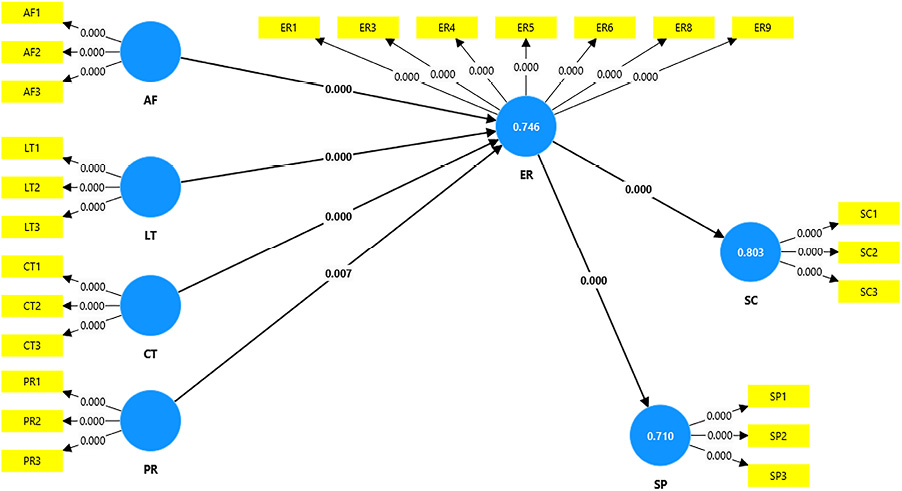
Figure 2. Partial least squares (PLS) path model.
Table 6 shows the results of bootstrapping (n = 5,000) for testing the hypothesis. According to the p-values and t-statistics, H1, H2, H3, H4, H5 and H6 were supported, as their p-values were found to be 0.000, 0.000, 0.000, 0.007, 0.000 and 0.000, respectively. The findings suggest that employee resilience is positively influenced by affect, loyalty, contribution and professional respect. Additionally, employee resilience had a positive effect on both safety compliance and safety participation.
Discussion and implications
To date, the association between LMX and the safety behaviour of employees has not been assessed in the context of the Indian construction sector. The earlier research work focused on countries other than India to either assess the impact of leadership style on workplace safety behaviour in the construction/mining sector or to study the association between leadership and employee resilience (Chen et al., 2017a,b; Caniels & Hatak, 2019; Kakkar, 2019; He et al., 2019). This study was an attempt to assess the indirect influence of LMX on the safety behaviour of construction workers through employee resilience. Our findings are particularly relevant for the post-pandemic construction sector, where the lingering effects of COVID-19 continue to influence worker psychology and safety behaviours. According to our results, the safety behaviour of construction employees is dependent on LMX and employee resilience. As shown in Exhibit 6, the quality of the LMX relationship significantly predicts worker resilience. This suggests that with respect to construction firms, a supportive social exchange is more effective than a purely economic one in fostering resilience (Caniëls & Hatak, 2019). Our results indicate that in the context of construction firms, the three dimensions of LMX—affect, loyalty and contribution—have a significant positive association with employee resilience. This suggests that stronger emotional bonds, perceived leader support and mutual task-related exchange between supervisors and workers meaningfully enhance employees’ capacity to adapt and recover in high-risk work environments (Chaurasia & Shukla, 2013; Chen et al., 2017a,b; Caniëls & Hatak, 2019).
These findings are aligned with contemporary research that views LMX as a dynamic and multidimensional relational construct that plays a crucial role in shaping employee resilience and safety behaviours (Tanskanen, 2024). During any disaster, the positive interpersonal relationships of the followers with their leaders result in higher resilience (Kakkar, 2019), confirming the first hypothesis. Our findings are consistent with the work of Wang et al. (2024), which identified leadership as the primary driver of safety behaviour.
The interpretation of this could be that despite the turbulence caused by COVID-19, leaders in the construction sector, through their situational awareness and quick decision-making, showed their proactiveness and were able to uphold their followers’ emotional and psychological endurance. Irrespective of the severe impact of COVID-19 on the construction sector, using their charisma, leaders were able to generate positivity amongst the followers, guiding them through this phase of adversity. The results are in sync with the previous studies, which highlighted the importance of the quality of relationships and emotional engagement between leaders and followers to help the latter cope with workplace uncertainties (Harland et al., 2005; Wang et al., 2024).
The outcome of our second hypothesis suggests that the high degree of support from the leader’s side encourages high employee resilience (Harland et al., 2005; He et al., 2021). This suggests that leaders who were confident regarding their followers’ potential during the lockdown phase and stood by their followers’ side during these difficult times were able to motivate their followers to fight back. Leaders who trusted their followers provided them with genuine feedback and the right support in order to develop resilience, which the followers warmly reciprocated by showing high levels of loyalty, increased commitment and willingness to face adversities with increased vigour (Kuntz et al., 2017; Caniëls & Hatak, 2019). Leaders set organisational goals and new pathways to reach those goals. The high goal-directed behaviour of leaders enhances their ability to reframe adverse situations and gives them a positive perspective (Hall et al., 2017; Prayag et al., 2019; Pathak & Joshi, 2020; Mishra & Shukla, 2021). This intellectual stimulation further strengthens the follower’s willpower to overcome the challenges.
As confirmed by our third hypothesis, the contribution dimension of LMX has a significant and positive impact on employee resilience. According to the results, increased contribution is one of the significant indicators of increased employee resilience. In this context, it reflects the reciprocal nature of the exchange; when leaders provide support, workers reciprocate with higher discretionary effort and adaptive behaviours (Buch et al., 2014). This is particularly critical in high-risk post-pandemic environments, where the development of employee resilience is essential for sustaining safe work practices (Liang et al., 2020). The results are in sync with earlier research work, highlighting that an employee’s ability to bounce back from challenges, instead of getting overwhelmed by them, is positively associated with their resilience (Harland et al., 2005; Allison, 2011). Although the contribution dimension is part of the LMX construct, the items used in this study primarily capture employees’ discretionary efforts, that is, the extent to which followers go beyond formal job requirements and invest additional energy to support their supervisor or work group. Given this orientation, the significant association between contribution and employee resilience should not be interpreted as a direct outcome of leader behaviour alone. Instead, it reflects the role of employee agency and proactive engagement in strengthening resilience. Employees who voluntarily exert extra effort, especially in challenging conditions such as the pandemic, may develop higher adaptive capacity through sustained involvement, problem-solving and commitment to collective goals. This aligns with the reciprocity principle in LMX, wherein followers’ willingness to contribute more intensively reinforces the relational quality and, in turn, fosters psychological resources such as resilience.
The outcomes emphasise that the professional respect dimension of LMX has a positive effect on followers’ resilience post-COVID-19, which supports our fourth hypothesis. One possible explanation for this may be that LMX serves as a superior predictor of subordinate performance compared with leadership, as the perception of leadership is shaped by the quality of the leader–subordinate relationship. Employees do not unconditionally learn from and emulate their bosses (Meng et al., 2017; He et al., 2021). The pandemic induced considerable fear amongst employees regarding job security and workplace safety, hence rendering leaders’ affect and support critically important. In addition, when professional respect is equally distributed amongst team members, it can create feelings of equity and satisfaction (Kakkar, 2019; Richard, 2020; Mishra & Shukla, 2021). This can boost team cohesion and support, which are crucial for resilience.
A positive association between employee resilience and safety compliance confirmed our fifth hypothesis. The willingness to fight back and overcome the uncertainties will increase the likelihood of compliance with safety rules (He et al., 2019; Liang et al., 2020). Resilient employees are less likely to show non-compliance with safety rules, as unsafe behaviours can expose them and their co-workers to higher workplace hazards, which may lead to fatal and non-fatal accidents (He et al., 2019; Xia et al., 2020).
A positive and significant association of employee resilience with safety participation confirmed our sixth hypothesis. A resilient employee will be more proactive in the organisation and will be more likely to identify and report any work-related hazards to safety inspectors or supervisors (Zohar, 2008; Eid et al., 2011; Cheng & Shan, 2020). Resilience, when developed through organisational and leader support, generates greater commitment and engages employees to actively participate voluntarily in decision-making to improve work processes (Christian et al., 2009; Cheng & Shan, 2020).
Our analysis, as shown in Exhibit 6, confirms that the quality of the relationship between a leader and a member is the primary driver of employee resilience. In our study of Indian construction firms, we found that the “contribution” dimension of LMX is particularly vital. Rather than just reflecting what a leader does, this dimension captures the reciprocal effort of the worker. As Buch et al. (2014) noted, a high-quality exchange encourages workers to go beyond their basic job descriptions to ensure the safety of the collective.
Concurrent with the data shown in Exhibit 7, we see that this resilience acts as a bridge to safety compliance. This finding is essential for the post-pandemic context, where the “new normal” requires workers to be more adaptive. In line with the observations of Caniëls and Hatak (2019), social exchanges provide the emotional and professional support necessary for workers to remain resilient in the face of the unique stressors presented by the global health crisis. By integrating these recent findings with our own data, we provide a robust evidence base for the critical role of leadership in modern construction safety.
Theoretical contributions
The present study highlighted the importance of good leader–member relationships for improving safety behaviour amongst construction workers. Followers’ engagement in a quality exchange relationship with their supervisors can enhance their resilience, which will further influence their safety behaviour significantly. This study contributes to LMX theory by demonstrating that not all dimensions of LMX contribute equally to employee resilience specifically within the context of Indian construction firms. Specifically, affect, loyalty and contribution emerged as significant predictors of resilience, indicating that emotional bonds, perceived leader support and mutual task-related exchange are central to strengthening workers’ adaptive capacity. Our research reveals that when a supervisor and workers share a bond of mutual liking (affect) and a reliable commitment to one another’s character (loyalty), the worker feels a sense of psychological security. The contribution dimension represents the shared effort put into reaching professional goals. We found that when supervisors invest in their workers’ growth and safety, workers reciprocate by expanding their effort and vigilance.
As Bitmiş and Ergeneli (2012) established, these emotional dimensions of LMX are essential for reducing the negative impact of work-related stress. By feeling supported at a personal level, workers are better able to maintain their focus and composure in hazardous sites.
By identifying which facets of LMX have the strongest impact, this study refines theoretical understanding of how leader–member relationships translate into psychological resources in hazardous industry contexts. This nuanced evidence extends existing resilience research and offers a sector-specific perspective that has been largely overlooked.
This research contributes to the emerging literature on the relationship between LMX and safety behaviour by highlighting the role of employee resilience. By bridging these concepts, our study proves that resilience is not merely an individual trait but a social outcome of a high-quality relationship. This is further supported by the work of Putra and Istiyani (2022), who identified LMX as a critical mediator in building organisational resilience. Furthermore, Caniëls and Hatak (2019) emphasised that the social side of leader–follower exchanges provides the essential support system that enables employees to “bounce back” from challenges and remain committed to safety standards. This research asserts that the positive relationship with leaders enhances the follower’s capability to defy the odds and overcome adversities, and it further contributes to increased safety behaviour at the workplace (Harland et al., 2005; He et al., 2019). Therefore, with the increased concern about worker safety, construction firms, in order to ensure safety behaviour, need to focus on making workers more resilient through building quality relationships with their supervisors, and this highlights the role of LMX and employee resilience in improving safety behaviour.
Practical implications
From a practical viewpoint, in the current situation, the hard-hit construction sector looks to leaders to play a supportive role and create an emotional connection to help employees and the business recover quickly. Various previous studies have explained the importance of positive leader–member relationships in building employee resilience and a safe work climate after any crisis (Chen et al., 2017a,b; Cheng & Shan, 2020; Liang et al., 2020). Therefore, quality leader–member relationships will be helpful in fostering a climate of trust, which will further lead to improved safety behaviour and increased productivity.
Leaders can enhance the quality of relationships with followers by creating an emotional connection with the followers and maintaining harmonious interpersonal relationships. Loyalty can be developed by supporting the actions of the followers publicly and showing trust in the follower’s capabilities (Caniëls & Hatak, 2019). In addition, contribution can be increased by setting up mutual goals that are more realistic and by simplifying the situation and the task. The faith, respect, empathy, care and support shown by leaders can help employees accept reality and identify ways to deal with future contingencies (Kakkar, 2019).
The major challenge for the leader will be creating and strengthening an emotional bond with all the followers and including them in their in-group. They must express gratitude to the employees by publicly acknowledging their efforts, as it is the employees who face all the hardships of work and put their lives at risk. It can also help increase employee commitment and worth, which will further result in increased resilience. In addition, from a managerial perspective, this study has pinpointed the need for construction firms to understand the importance of leader–member relationships and to nurture these relationships, which in turn will help overcome the adversities of COVID-19, create a safe workplace and achieve the desired results. Therefore, leadership can be utilised to develop employee resilience, which will further help improve safety behaviour in the organisation.
The findings of this study provide several practical implications for the Indian construction sector. First, construction companies should recognise that leadership behaviours, particularly the quality of LMX, directly contribute to employee resilience, which in turn enhances safety compliance and participation. Site supervisors and project managers must be trained not only in technical management but also in relational leadership skills—such as building affective trust, demonstrating loyalty and providing professional respect—as these strengthen workers’ intrinsic motivation to follow safety norms. Second, resilience-building interventions, such as stress management workshops, peer-support groups and safety climate briefings, should be integrated into construction site practices to help workers adapt to adversity, including crises such as the COVID-19 pandemic. Third, organisations should embed resilience and safety performance indicators into contractor evaluation systems, thereby ensuring that sub-contractors also prioritise worker well-being. Lastly, policymakers and industry associations can use these insights to design sector-specific safety training modules that emphasise both leader–worker relationships and resilience as critical levers for reducing accidents in construction sites. Our findings align with recent systematic literature reviews that have emphasised that supervisor leadership styles are the primary drivers of construction worker safety behaviour (Wang et al., 2024). By focusing on the “contribution” dimension of LMX, this study extends the recent work of Sankar and Anandh (2024), who advocated for safety-specific leadership to empower employees through shared safety goals.
Conclusion and future research
Due to the increasing number of accidents in the construction sector, this study is highly relevant, as it examines the significance of the safety behaviour of construction workers, especially during and after COVID-19. The safety behaviour of construction workers is dependent not on a single factor but on various factors, and employee resilience is one of the significant antecedents of safety behaviour. This paper examined the influence of LMX relationships on safety behaviour.
During the pandemic, the construction sector was one of the worst-hit sectors; therefore, both survival and revival have become of paramount importance. Findings suggest that construction firms not only need to monitor employees’ safety behaviour but also need to focus on promoting strong leader–member relationships in the organisation. Promoting positive and supportive leadership will help organisations increase employees’ resilience and improve their overall safety behaviour, thereby improving the organisation’s safety performance. In addition, this study considers LMX as a multidimensional construct and hence gives a fresh perspective to safety research in the construction sector by examining the impact of each sub-dimension of LMX on employee resilience. The use of structural equation modelling helps measure unobservable variables, such as LMX, employee resilience and employees’ safety behaviour, and handles multiple dependent variables. However, there are still some limitations. First, this study focused mainly on the safety behaviour of construction sector employees in urban India post-COVID-19. However, the general safety behaviour in construction firms can be an area of further research. Second, the present study used an analytical approach, which suppresses statistical generalisation. Third, the sample consisted mainly of full-time workers, so further research is needed to study the safety behaviour of contractual workers. This study relied on site supervisors for questionnaire distribution due to the dispersed and transient nature of construction sites, where direct researcher access to workers was limited post-COVID-19 pandemic. While this approach ensured feasibility and access to participants, it may have unintentionally excluded workers holding negative perceptions of leadership or safety practices, thereby introducing a potential bias. Future studies should consider employing independent data collectors or anonymous digital survey tools to mitigate this limitation. Therefore, a separate study can be conducted to identify the relationship between LMX, worker resilience and safety behaviour.
References
Allison, E. (2011). The resilient leader. Educational Leadership, 69(4), 79–82.
Ali, M., Iyiola, K., Alzubi, A., & Aljuhmani, H. Y. (2025). Using safety-specific transformational leadership to improve safety behavior among construction workers: Exploring the role of knowledge sharing and psychological safety. Buildings, 15(18), 3340. https://doi.org/10.3390/buildings15183340
Avey, J. B., Luthans, F., & Jensen, S. M. (2009). Psychological capital: A positive resource for combating employee stress and turnover. Human Resource Management, 48(5), 677. https://doi.org/10.1002/hrm.20294
Avey, J. B., Wernsing, T. S., & Luthans, F. (2008). Can positive employees help positive organizational change? Impact of psychological capital and emotions on relevant attitudes and behaviors. The Journal of Applied Behavioral Science, 44(1), 48. https://doi.org/10.1177/0021886307311470
Babar, K. (2020, March 21). COVID-19 impact: Construction projects hit as workers keep away. The Economic Times. https://economictimes.indiatimes.com/industry/services/property-/-cstruction/covid-19-impact-construction-projects-hit-as-workers-keep-away/articleshow/74738820.cms
Berg, J., Osher, D., Same, M. R., Nolan, E., Benson, D., & Jacobs, N. (2017). Identifying, defining, and measuring social and emotional competencies. American Institutes for Research.
Bitmiş, M. G., & Ergeneli, A. (2012). The moderating effect of work stress on the relationships between dimensions of leader–member exchange and job satisfaction. Journal of Global Strategic Management, 6(1), 112–120. https://doi.org/10.20460/JGSM.2012615791
Britt, T. W., Shen, W., Sinclair, R. R., Grossman, M. R., & Klieger, D. M. (2016). How much do we really know about employee resilience? Industrial and Organizational Psychology, 9(2), 378. https://doi.org/10.1017/iop.2015.107
Buch, R., Kuvaas, B., Dysvik, A., & Schyns, B. (2014). If and when social and economic leader-member exchange relationships predict follower work effort. Leadership & Organization Development Journal, 35(8), 725–739. https://doi.org/10.1108/LODJ-09-2012-0121
Caniëls, M. C. J., & Hatak, I. (2019). Employee resilience: Considering both the social side and the economic side of leader-follower exchanges in conjunction with the dark side of followers’ personality. The International Journal of Human Resource Management, 33(2), 297–328. https://doi.org/10.1080/09585192.2019.1695648
Chaurasia, S., & Shukla, A. (2013). The influence of leader-member exchange relations on employee engagement and work role performance. International Journal of Organization Theory and Behavior, 16(4), 465. https://doi.org/10.1108/IJOTB-16-04-2013-B002
Chen, Y., McCabe, B., & Hyatt, D. (2017a). Impact of individual resilience and safety climate on safety performance and psychological stress of construction workers: A case study of the Ontario construction industry. Journal of Safety Research, 61, 167. https://doi.org/10.1016/j.jsr.2017.02.014
Chen, Y., McCabe, B., & Hyatt, D. (2017b). Relationship between individual resilience, interpersonal conflicts at work, and safety outcomes of construction workers. Journal of Construction Engineering and Management, 143(8). https://doi.org/10.1061/(ASCE)CO.1943-7862.0001338
Cheng, Z. J., & Shan, J. (2020). 2019 novel coronavirus: Where we are and what we know. Infection, 48(2), 155. https://doi.org/10.1007/s15010-020-01401-y
Chiaburu, D. S., Baker, V. L., & Pitariu, A. H. (2006). Beyond being proactive: What (else) matters for career self-management behaviors? Career Development International, 11(7), 619. https://doi.org/10.1108/13620430610713481
Choudhry, R. M., & Fang, D. (2008). Why operatives engage in unsafe work behavior: Investigating factors on construction sites. Safety Science, 46(4), 566. https://doi.org/10.1016/j.ssci.2007.06.027
Christian, M. S., Bradley, J. C., Wallace, J. C., & Burke, M. J. (2009). Workplace safety: A meta-analysis of the roles of person and situation factors. Journal of Applied Psychology, 94(5), 1103. https://doi.org/10.1037/a0016172
Cropanzano, R., Dasborough, M. T., & Weiss, H. M. (2016). Affective events and the development of leader-member exchange. Academy of Management Review, 42(2), 233. https://doi.org/10.5465/amr.2014.0384
Curran, P. J., West, S. G., & Finch, J. F. (1996). The robustness of test statistics to nonnormality and specification error in confirmatory factor analysis. Psychological Methods, 1(1), 16. https://doi.org/10.1037/1082-989X.1.1.16
Dansereau, F., Jr., Graen, G., & Haga, W. J. (1975). A vertical dyad linkage approach to leadership within formal organizations: A longitudinal investigation of the role-making process. Organizational Behavior and Human Performance, 13(1), 46–78. https://doi.org/10.1016/0030-5073(75)90005-7
Dienesch, R. M., & Liden, R. C. (1986). Leader-member exchange model of leadership: A critique and further development. Academy of Management Review, 11(3), 618. https://doi.org/10.2307/258314
Dutton, J. E., & Heaphy, E. D. (2003). The power of high-quality connections at work. In K. S. Cameron, J. E. Dutton, & R. E. Quinn (Eds.), Positive organizational scholarship: Foundations of a new discipline (pp. 263–278). Berrett-Koehler Publishers.
Eid, J., Mearns, K., Larsson, G., Laberg, J. C., & Johnsen, B. H. (2011). Leadership, psychological capital and safety research: Conceptual issues and future research questions. Safety Science, 50(1), 55. https://doi.org/10.1016/j.ssci.2011.07.001
Fisk, G. M., & Friesen, J. P. (2012). Perceptions of leader emotion regulation and LMX as predictors of followers’ job satisfaction and organizational citizenship behaviors. The Leadership Quarterly, 23(1), 1. https://doi.org/10.1016/j.leaqua.2011.11.001
Fornell, C., & Larcker, D. F. (1981). Evaluating structural equation models with unobservable variables and measurement error. Journal of Marketing Research, 18(1), 39. https://doi.org/10.2307/3151312
Ganiyev, K., Alizada, S., Asgarov, A., Gasimli, M., & Gasimzade, N. (2024). Safety management in the construction industry: Bibliometric analysis. Problems and Perspectives in Management, 22(3), 198–213. https://doi.org/10.21511/ppm.22(3).2024.16
Gittell, J. H., Cameron, K. S., Lim, S., & Rivas, V. (2006). Relationships, layoffs, and organizational resilience. The Journal of Applied Behavioral Science, 42(3), 300. https://doi.org/10.1177/0021886306286466
Goldenhar, L. M., Williams, L. J., & Swanson, N. G. (2003). Modelling relationships between job stressors and injury and near-miss outcomes for construction labourers. Work & Stress, 17(3), 218. https://doi.org/10.1080/02678370310001616144
Graen, G. B. (1976). Role-making processes within complex organizations. In M. D. Dunnette (Ed.), Handbook of industrial and organizational psychology (pp. 1201–1245). Rand McNally College Publishing Company.
Greguras, G. J., & Ford, J. M. (2006). An examination of the multidimensionality of supervisor and subordinate perceptions of leader-member exchange. Journal of Occupational and Organizational Psychology, 79(3), 433. https://doi.org/10.1348/096317905X53859
Griffin, M. A., & Neal, A. (2000). Perceptions of safety at work: A framework for linking safety climate to safety performance, knowledge, and motivation. Journal of Occupational Health Psychology, 5(3), 347–358. https://doi.org/10.1037/1076-8998.5.3.347
Hair, J. F., Jr., Hult, G. T. M., Ringle, C. M., & Sarstedt, M. (2017). A primer on partial least squares structural equation modeling (PLS-SEM) (2nd ed.). SAGE Publications.
Hair, J. F., Jr., Hult, G. T. M., Ringle, C. M., Sarstedt, M., Danks, N. P., & Ray, S. (2021). Partial least squares structural equation modeling (PLS-SEM) using R: A workbook. Springer. https://doi.org/10.1007/978-3-030-80519-7
Hall, C. M., Prayag, G., & Amore, A. (2017). Tourism and resilience: Individual, organisational and destination perspectives. Channel View Publications. https://doi.org/10.21832/HALL6300
Harland, L. K., Harrison, W., Jones, J. R., & Reiter-Palmon, R. (2005). Leadership behaviors and subordinate resilience. Journal of Leadership & Organizational Studies, 11(2), 2. https://doi.org/10.1177/107179190501100202
He, C., Jia, G., McCabe, B., & Sun, J. (2019). Relationship between leader–member exchange and construction worker safety behavior: The mediating role of communication competence. International Journal of Occupational Safety and Ergonomics, 27(2), 371. https://doi.org/10.1080/10803548.2019.1579484
He, C., McCabe, B., & Jia, G. (2021). Effect of leader-member exchange on construction worker safety behavior: Safety climate and psychological capital as the mediators. https://doi.org/10.1016/j.ssci.2021.105401
Heinrich, C. (1931). Notes on and descriptions of some American moths. Proceedings of the United States National Museum, 79(2879), 1. https://doi.org/10.5479/si.00963801.79-2879.1
Hire, S., Sandbhor, S., Ruikar, K., & Amarnath, C. B. (2021). BIM usage benefits and challenges for site safety application in Indian construction sector. Asian Journal of Civil Engineering, 22(7), 1249. https://doi.org/10.1007/s42107-021-00379-8
Hsiung, H., & Tsai, W. (2008). Job definition discrepancy between supervisors and subordinates: The antecedent role of LMX and outcomes. Journal of Occupational and Organizational Psychology, 82(1), 89. https://doi.org/10.1348/096317908X292374
Hussain, F. (2020, February 9). Five construction labourers fall to death every month in Bengaluru. The Times of India. https://timesofindia.indiatimes.com/city/bengaluru/five-construction-labourers-fall-to-death-every-month-in-bengaluru/articleshow/74039111.cms
Industrial Global Union. (2020, July 7). India’s safety crisis: Industrial accidents during COVID-19 kill at least 75. https://www.industriall-union.org/indias-safety-crisis-industrial-accidents-during-covid-19-kill-at-least-75
Jiang, Z., Zhao, X., Wang, Z., & Herbert, K. (2023). Safety leadership: A bibliometric literature review and future research directions. Journal of Business Research, 172, 114437. https://doi.org/10.1016/j.jbusres.2023.114437
Jr., D., Fred, George, G., & J., H., William. (1975). A vertical dyad linkage approach to leadership within formal organizations: A longitudinal investigation of the role making process. Calhoun: The Naval Postgraduate School Institutional Archive (Naval Postgraduate School). https://hdl.handle.net/10945/61488
J.Y., Y., IYS, C., & M.Y., L. (2012). Preventing construction worker injury incidents through the management of personal stress and organizational stressors. The HKU Scholars Hub (University of Hong Kong). http://hdl.handle.net/10722/184680
Kakkar, S. (2019). Leader-member exchange and employee resilience: The mediating role of regulatory focus. Management Research Review, 42(9), 1062. https://doi.org/10.1108/MRR-03-2018-0116
Kuntz, J., Connell, P., & Näswall, K. (2017). Workplace resources and employee resilience: The role of regulatory profiles. Career Development International, 22(4), 419. https://doi.org/10.1108/CDI-11-2016-0208
Leung, M.-Y., Chan, I. Y. S., & Yu, J. Y. (2012). Preventing construction worker injury incidents through the management of personal stress and organizational stressors. Accident Analysis & Prevention, 48, 156–166. https://doi.org/10.1016/j.aap.2011.03.017
Li, R. Y. M., Dong, R. K., Pu, R., & Zeng, L. (2025). How do micro-psychological and macro-socioeconomic factors influence construction safety knowledge sharing? Insights from a mixed-AI approach. Labour & Industry, 35(1), 15–40. https://doi.org/10.1080/10301763.2025.2466252
Li, R. Y. M., Tang, B., & Chau, K. W. (2019). Sustainable construction safety knowledge sharing: A partial least square-structural equation modeling and a feedforward neural network approach. Sustainability, 11(20), 5831. https://doi.org/10.3390/su11205831
Liang, Q., Leung, M., & Ahmed, K. (2020). How adoption of coping behaviors determines construction workers’ safety: A quantitative and qualitative investigation. Safety Science, 133, 105035. https://doi.org/10.1016/j.ssci.2020.105035
Liden, R. C., & Maslyn, J. M. (1998). Multidimensionality of leader-member exchange: An empirical assessment through scale development. Journal of Management, 24(1), 43. https://doi.org/10.1016/S0149-2063(99)80053-1
Liu, Q., Zhang, L., & Li, Y. (2025). Pathway to enhancing safety behavior of construction workers through subjective well-being. Frontiers in Public Health, 13, 1652268. https://doi.org/10.3389/fpubh.2025.1652268
Luthans, F. (2002). The need for and meaning of positive organizational behavior. Journal of Organizational Behavior, 23(6), 695. https://doi.org/10.1002/job.165
Luthans, F., Avey, J. B., Avolio, B. J., Norman, S. M., & Combs, G. M. (2006). Psychological capital development: Toward a micro-intervention. Journal of Organizational Behavior, 27(3), 387. https://doi.org/10.1002/job.373
Manivannan, J., Loganathan, S., Kamalanabhan, T. J., & Kalidindi, S. N. (2022). Investigating the relationship between occupational stress and work-life balance among Indian construction professionals. Construction Economics and Building, 22(2), 27–51. https://doi.org/10.5130/AJCEB.v22i2.8052
McCabe, B. Y., Alderman, E., & Chen, Y. (2017). Safety performance in the construction industry: Quasi-longitudinal study. Journal of Construction Engineering and Management, 143(4), 4016113. https://doi.org/10.1061/(ASCE)CO.1943-7862.0001260
McKinsey & Company. (2020, April 17). A leader’s guide: Communicating with teams, stakeholders, and communities during COVID-19. https://www.mckinsey.com/capabilities/people-and-organizational-performance/our-insights/a-leaders-guide-communicating-with-teams-stakeholders-and-communities-during-covid-19
Meng, H., Luo, Y., Huang, L., Wen, J., Ma, J., & Xi, J. (2017). On the relationships of resilience with organizational commitment and burnout: A social exchange perspective. The International Journal of Human Resource Management, 30(15), 2231. https://doi.org/10.1080/09585192.2017.1381136
Mishra, R., & Shukla, A. (2021). Building resiliency in employees using LMX concept: A qualitative study. Indian Journal of Industrial Relations, 57(1), 130–141.
Muñiz, B. F., Montes-Peón, J. M., & Vázquez-Ordás, C. J. (2014). Safety leadership, risk management and safety performance in Spanish firms. Safety Science, 70, 295. https://doi.org/10.1016/j.ssci.2014.07.010
Näswall, K., Kuntz, J., Hodliffe, M., & Malinen, S. (2015). Employee Resilience Scale (EmpRes). CTIT Technical Reports Series. https://connections-qj.org/article/employee-resilience-scale-empres
Neal, A., & Griffin, M. (2006). A study of the lagged relationships among safety climate, safety motivation, safety behavior, and accidents at the individual and group levels. Journal of Applied Psychology, 91(4), 946. https://doi.org/10.1037/0021-9010.91.4.946
Neal, A., Griffin, M., & Hart, P. M. (2000). The impact of organizational climate on safety climate and individual behavior. Safety Science, 34, 99. https://doi.org/10.1016/S0925-7535(00)00008-4
Nguyen, Q. K., Kuntz, J., Näswall, K., & Malinen, S. (2016). Employee resilience and leadership styles: The moderating role of proactive personality and optimism. New Zealand Journal of Psychology, 45(2), 13. https://psycnet.apa.org/record/2017-06974-002
Omidi, L., Karimi, H., Pilbeam, C., Mousavi, S., & Moradi, G. (2023). Exploring the relationships among safety leadership, safety climate, psychological contract of safety, risk perception, safety compliance, and safety outcomes. Frontiers in Public Health, 11, 1235214. https://doi.org/10.3389/fpubh.2023.1235214
Pathak, D., & Joshi, G. (2020). Impact of psychological capital and life satisfaction on organizational resilience during COVID-19: Indian tourism insights. Current Issues in Tourism, 24(17), 2398. https://doi.org/10.1080/13683500.2020.1844643
Patni, S. (2022). Statistically analyzing fatal accidents pattern of construction activities in India. The Asian Review of Civil Engineering, 11(2), 10. https://doi.org/10.51983/tarce-2022.11.2.3455
Prayag, G., Spector, S., Orchiston, C., & Chowdhury, M. (2019). Psychological resilience, organizational resilience and life satisfaction in tourism firms: Insights from the Canterbury earthquakes. Current Issues in Tourism, 23(10), 1216. https://doi.org/10.1080/13683500.2019.1607832
Press Information Bureau. (2024, March 15). Government released comprehensive guidelines for effective disposal of C&D waste: Hardeep S Puri. Government of India. https://www.pib.gov.in/PressReleseDetailm.aspx?PRID=2007086®=3&lang=2
Putra, Y. S., & Istiyani, A. (2022). Developing organizational resilience with the mediating role of leader–member exchange. Annals of Human Resource Management Research, 2(1), 59–69. https://doi.org/10.35912/ahrmr.v2i1.1120
Richard, E. M. (2020). Developing employee resilience: The role of leader-facilitated emotion management. Advances in Developing Human Resources, 22(4), 387. https://doi.org/10.1177/1523422320949143
Sankar, S. S., & Anandh, K. S. (2024). Navigating leadership styles through qualitative exploration for enhanced safety in the construction sector. Safety Science, 175, 106495. https://doi.org/10.1016/j.ssci.2024.106495
Sankar, S. S., Anandh, K. S., & Prasanna, K. (2024). Safety leadership: A catalyst for positive safety climate on construction sites. Buildings, 14(6), 1806. https://doi.org/10.3390/buildings14061806
Schutt, R. K. (2006). Investigating the social world: The process and practice of research (5th ed.). SAGE Publications.
Shin, Y. C., Kim, S. M., Kim, H., Min, K. J., Yoo, S.-K., Kim, E., & Jeon, S. W. (2019). Resilience as a protective factor for depressive mood and anxiety among Korean employees. Journal of Korean Medical Science, 34(27). https://doi.org/10.3346/jkms.2019.34.e188
Tanskanen, J. (2024). Effort and reward as a mechanism linking leader-member exchange with work engagement. Cogent Business & Management, 12(1). https://doi.org/10.1080/23311975.2024.2443807
Tanskanen, J. (2025). Effort and reward as a mechanism linking leader–member exchange with work engagement. Cogent Business & Management, 12(1), 2443807. https://doi.org/10.1080/23311975.2024.2443807
Thrasher, G. R., Dickson, M. W., Biermeier-Hanson, B., & Najor-Durack, A. (2020). Social identity theory and leader–member exchange: Individual, dyadic and situational factors affecting the relationship between leader–member exchange and job performance. Organization Management Journal, 17(3), 133. https://doi.org/10.1108/OMJ-04-2019-0719
Toegel, G., Kilduff, M., & Anand, N. (2012). Emotion helping by managers: An emergent understanding of discrepant role expectations and outcomes. Academy of Management Journal, 56(2), 334. https://doi.org/10.5465/amj.2010.0512
Tonkin, K., Malinen, S., Näswall, K., & Kuntz, J. (2018). Building employee resilience through wellbeing in organizations. Human Resource Development Quarterly, 29(2), 107. https://doi.org/10.1002/hrdq.21306
Tse, H. H. M., Troth, A. C., Ashkanasy, N. M., & Collins, A. (2017). Affect and leader-member exchange in the new millennium: A state-of-art review and guiding framework. The Leadership Quarterly, 29(1), 135. https://doi.org/10.1016/j.leaqua.2017.10.002
Vanhove, A. J., Herian, M. N., Perez, A. L. U., Harms, P. D., & Lester, P. B. (2015). Can resilience be developed at work? A meta-analytic review of resilience-building programme effectiveness. Journal of Occupational and Organizational Psychology, 89(2), 278. https://doi.org/10.1111/joop.12123
Wang, J., Cooke, F. L., & Huang, W. (2013). How resilient is the (future) workforce in China? A study of the banking sector and implications for human resource development. Asia Pacific Journal of Human Resources, 52(2), 132. https://doi.org/10.1111/1744-7941.12026
Wang, L., Luo, X., Li, H., & Chen, H. (2025). The impact of foremen’s paternalistic leadership on construction workers’ safety behaviors: Considering the effects of team safety climate, workers’ psychological safety and power distance. Frontiers in Public Health, 13, 1633467. https://doi.org/10.3389/fpubh.2025.1633467
Xia, N., Xie, Q., Hu, X., Wang, X., & Meng, H. (2020). A dual perspective on risk perception and its effect on safety behavior: A moderated mediation model of safety motivation, and supervisor’s and coworkers’ safety climate. Accident Analysis & Prevention, 134, 105350. https://doi.org/10.1016/j.aap.2019.105350
Youssef, C. M., & Luthans, F. (2007). Positive organizational behavior in the workplace: The impact of hope, optimism, and resilience. Journal of Management, 33(5), 774–800. https://doi.org/10.1177/0149206307305562
Zohar, D. (2008). Safety climate as a micro-level lens on organizational safety. Safety Science, 46(4), 585. https://doi.org/10.1016/j.ssci.2007.06.026
Zohar, D. (2010). Thirty years of safety climate research: Reflections and future directions. Accident Analysis & Prevention, 42(5), 1517. https://doi.org/10.1016/j.aap.2009.12.019