Construction Economics and Building
Vol. 26, No. 3/4
2026
ARTICLES (PEER REVIEWED)
Team Characteristics and Psychological Wellbeing: Implications for Construction Managers
Katrin Leifels1,*, Paul Bowen2, Azizur Rahman1
1 RMIT University, School of Property, Construction, and Project Management, Melbourne, Australia
2 University of Cape Town, Department of Construction Economics and Management, Cape Town, South Africa
Corresponding author: Katrin Leifels, Katrin.leifels@rmit.edu.au
DOI: https://doi.org/10.5130/wbqaqs26
Article History: Received 14/02/2025; Revised 06/08/2025; Accepted 08/06/2026; Published 28/09/2026
Citation: Leifels, K., Paul Bowen, P., Rahman, A. 2026. Team Characteristics and Psychological Wellbeing: Implications for Construction Managers. Construction Economics and Building, 26:3/4, 1–21. https://doi.org/10.5130/wbqaqs26
Abstract
In teams for construction projects, it is likely that several team characteristics can affect team members’ psychological wellbeing. Using data drawn from team members across diverse industries, a model is proposed to examine interactions and relationships between team size, managers’ and colleagues’ social support, social stressors and cultural diversity amongst team members, and team members’ psychological wellbeing. The aim of this research was to juxtapose our findings with construction teams to provide lessons for construction managers. An online survey was conducted to collect data. A total of 981 usable returns were obtained. Structural equation modelling was used to test hypotheses. The results show that team size is associated with an increase in social stressors. Manager and colleague support are each negatively associated with social stressors, and manager support is positively associated with psychological wellbeing, whilst colleague support is not. Manager support was found to be positively associated with support from colleagues. Social stressors are negatively related to psychological wellbeing, and cultural diversity is not associated with social stressors. The results highlight the importance of providing adequate social support and fostering a supportive work environment. Training programmes for construction workers, including their managers, that emphasise the importance of social support are a valuable strategy. We recommend equipping construction teams and their managers with the necessary skills to achieve this. Our study underscores the vital role of social support from the manager in mitigating the negative impacts of social stressors, thereby promoting psychological wellbeing amongst team members.
Keywords
Social Stressors; Teamwork; Social Support; Resources; Psychological Wellbeing
Introduction
Psychosocial demands and stress have received increased awareness across all industries. The reasons behind these trends are the high costs associated with work-related stress (Hassard et al., 2018). In addition, new legislation requires the identification and mitigation of psychosocial risks at workplaces (see, for instance, SafeWork NSW, 2021).
Psychosocial demands and mental health issues vary across industries. The construction industry is characterised by its elevated risk levels and potential hazards (Cheung & Zhang, 2020) and is defined by a highly demanding psychosocial work environment (Boschman et al., 2013), contributing to stress, anxiety and a reduced level of mental health amongst construction workers (Sun et al., 2022; Zhang et al., 2023; Roy et al., 2024; Firose et al., 2025). Different forms and levels of diversity, including professional and cultural differences, amongst team members in construction projects are common (Wu et al., 2019). Whilst cultural diversity can be associated with a variety of positive outcomes, such as increased creativity (Li et al., 2017), research has found that cultural diversity can also be associated with negative outcomes. For instance, cultural diversity, if mismanaged, can lead to increased safety risks on construction sites (Loosemore et al., 2011). Construction workers who do not speak English as their first language are exposed to increased safety risks due to their inability to understand basic instructions, which can also increase the safety risks of workers around them (Trajkovski & Loosemore, 2006; Loosemore et al., 2011).
In addition to the work environment itself, cultural differences within construction teams can significantly affect a project’s success, as culturally diverse teams experience an increased prevalence of conflict. Culturally diverse teams can generate additional pressures and complex conditions that may not occur in non-diverse teams, such as communication barriers and discrimination (Miller et al., 2000). However, research on the occurrence and the effects of psychosocial and resource demands that arise from the prevalence of cultural diversity in work settings is still sparse. Instead, most studies have focused on psychosocial demands and resources associated with the work or workplace itself (see, for instance, Soucek et al., 2024) rather than those that arise from the direct interaction with members from different cultures. Moreover, existing studies have not transferred their findings to the specific environment of the Australian construction industry, whose mental health is often poorer compared with that of the rest of the Australian population (Lingard & Turner, 2015).
Our study addresses the current lack of research on psychosocial demands and resources associated with cultural diversity and will focus on the specific environment of the construction industry. We aim to provide insights on how to mitigate existing demands and increase helpful resources to improve the mental health and wellbeing of construction workers. Specifically, our research aims to identify suitable training initiatives and interventions for construction managers that can mitigate the negative effects of cultural diversity on individual team member wellbeing.
Literature review and hypotheses
We used the job demands–resource (JD-R) model as a theoretical framework (Demerouti et al., 2001; Bakker & Demerouti, 2017). According to the JD-R model, workplace conditions can be categorised into job demands and job resources (Taris & Schaufeli, 2015). Demands, also termed stressors, are all those job aspects that require effort and have the potential to affect health negatively (Geurts & Sonnentag, 2006). Examples of work stressors include time pressure and a heavy workload. Resources, however, are factors that assist workers to achieve goals or reduce stressors and their concomitant negative effects on health (Bakker & Demerouti, 2017). Examples of such resources include decision latitude and social support. The JD-R model suggests that an individual’s psychological wellbeing is a function of stressors and resources experienced in the work environment (Lattrich & Büttgen, 2020; Radic et al., 2020; Salas-Vallina et al., 2020).
Lesener et al. (2019) reviewed 74 longitudinal studies using the JD-R model as a theoretical framework. They validated the causal relationships between excessive job stressors and health impairments, as well as between poor job resources and health impairments.
We propose to extend the JD-R model by adding social demands and social resources to the framework. There is significant extant literature underscoring the impacts of social stressors and social resources on individual wellbeing (Gerhardt et al., 2021). Social stressors can be described as poor interactions with others (Sonnentag, 2003). They focus on social interactions rather than stressors occurring from the work or work environment. Gerhardt et al. (2021) conducted a meta-analysis of 557 studies, underscoring the adverse effects of social stressors on health and wellbeing, and emphasised their prevalence in the workplace. The prevalence of social stressors may even be increased in a culturally diverse environment. For instance, cultural differences between individuals may reflect themselves in the form of differences in values, behaviours, beliefs and language (Gelfand et al., 2007; Stahl & Maznevski, 2021). Based on these differences, it is hypothesised that:
H1. Cultural diversity amongst team members is positively associated with social stressors.
Some researchers highlight preferences about the optimal number of members working together as a team, even though there seems to be no “magic number in team size” (Aubé et al., 2011, p. 357). However, there is some evidence that a bigger team or too many teams may be positively associated with social stressors (Aubé et al., 2011; Mistry et al., 2023). This argument assumes that working in a team becomes more difficult as the team becomes bigger. Indeed, Aubé et al. (2011) supported a positive relationship between team size and different types of counterproductive behaviours, such as parasitism, interpersonal aggression, boastfulness and misuse of resources. Hence, it is hypothesised that:
H2. Team size is positively associated with social stressors.
Several studies have explored the effects of social support, which can be defined as “the perception or experience that one is loved and cared for by others, esteemed and valued, and part of a social network of mutual assistance and obligations” (Taylor, 2011, p. 189). They support the generally negative association that social support has with social stressors (Dormann & Zapf, 1999; Jolly et al., 2021). For example, Dormann and Zapf (2004) found a negative relationship between customer-related social stressors and social support provided by their manager. Earlier, Dormann and Zapf (1999) reported a significantly negative relationship between social support provided by colleagues and social stressors. Based on these findings, it is hypothesised that:
H3. Managers’ social support is negatively associated with social stressors.
H4. Colleagues’ social support is negatively associated with social stressors.
Moreover, it is predicted that social support provided by managers will be positively associated with co-worker support. This assumes that the manager acts as a role model and that subordinates adopt their modelled behaviour. Thus, it is hypothesised that:
H5. Managers’ social support is positively associated with colleagues’ social support.
Research has highlighted the positive effects of social support on mental wellbeing (Taylor, 2011; Fila et al., 2017). A study of 5,877 employees in Switzerland by Hämmig (2017) found that social support provided by managers’ is a key resource at work. In his study, participants without perceived social support from their manager have a significantly higher prevalence of poor health. Based on this finding, it is hypothesised that:
H6. Managers’ social support is positively associated with psychological wellbeing.
The influence of social support on employees’ wellbeing has also been studied (Guidetti et al., 2018). Several studies have supported a positive relationship between social support and psychological wellbeing and health (e.g., Stansfeld et al., 1999; Viswesvaran et al., 1999; Chu et al., 2010; Woodhead et al., 2016). A positive relationship has been found between social support from colleagues and the individual’s psychological wellbeing (e.g., Baruch-Feldman et al., 2002). In line with these findings, it is hypothesised that:
H7. Colleagues’ social support is positively associated with psychological wellbeing.
Social relationships are very important for an individual’s wellbeing (Lansford et al., 2005). However, research has indicated that social stressors can be a risk to health and wellbeing (Dormann & Zapf, 2004; Gerhardt et al., 2021; Leifels & Bowen, 2021). Gerhardt et al. (2021), in their meta-analysis of 557 studies, revealed a negative relationship between social stressors and psychological wellbeing. Lim et al. (2008) found a negative association between workgroup incivility and psychological wellbeing, which also indirectly mediated the effects on physical health. Based on these findings, it is hypothesised that:
H8. Social stressors are negatively associated with psychological wellbeing.
Building on the literature review and the hypotheses posited, Figure 1 depicts the proposed research (theoretical) model and the relationships to be analysed.
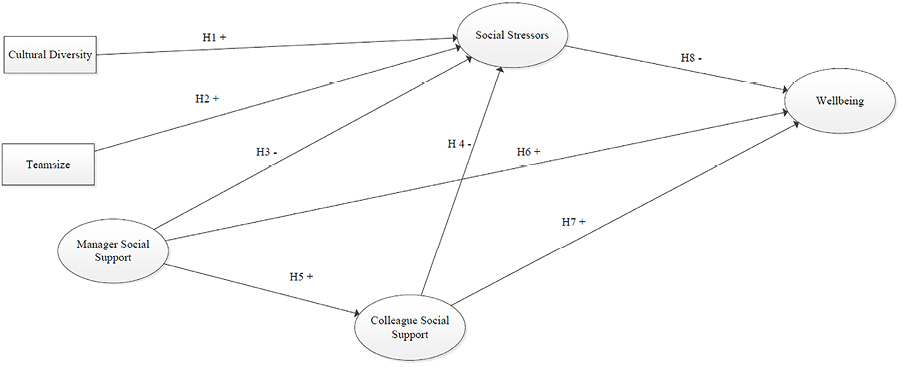
Figure 1. Theoretical model of team member wellbeing.
Methodology and approach
Participants and setting
Data were originally collected using a purposive cross-sectional online questionnaire survey available in both German and English. We used the committee approach based on Rippl et al. (2015) to translate all questionnaire items from German to English and to back-translate from English to German. Some of the items needed to be modified as part of the translation/back-translation process to ensure common meaning. The suitability of the items in German and English was assessed through four rounds of testing, including test–retests and parallel tests with various convenience samples, before distributing the questionnaire. The size of the convenience sample was calculated based on Israel’s (1992) sample size formula. According to Israel’s (1992) equation, the researchers required a sample size of n = 384 valid responses. Data were collected between December 2015 and April 2016 using the online platform Qualtrics. Links to the Qualtrics survey were shared on social and professional networks, a panel and company newsletters using a snowball approach. In order to be eligible to participate in the survey, individuals had to work in a team with at least two other individuals and interact with their team members face-to-face. Although the platform link was accessible worldwide, most data were collected in Germany, Austria and Australia. The questionnaire evaluated the occurrence and effects of social stressors and social resources in work teams and their effects on individual psychological wellbeing. The questionnaire also included demographic information, specifically gender, age, nationality and the number of different nationalities within their work team. Using nationality as a criterion for cultural diversity aligns with the approaches taken by other researchers, such as Ayub and Jehn (2018) and Hajro et al. (2017).
Measures
Table 1 depicts the factors of interest, with their corresponding items and measures.
Note. (R) indicates item was reverse coded.
The items assessing social stressors were drawn and adjusted from Bruk-Lee (2006), George (1992), Jehn (1995), Anderson and West (1998), Simons and Peterson (2000), Müller (2013) and Sternthal et al. (2011).
The items measuring both managers’ and colleagues’ social support were drawn from Macdonald (1998). The items were slightly modified to make them more suitable within the context of social support perceived to be forthcoming from team colleagues and the manager.
The items used to capture psychological wellbeing were drawn from Ducki (1998).
Data analysis
Various descriptive and bivariate analyses were conducted using IBM SPSS ver. 29. Descriptive statistics of the characteristics of the sample in terms of age, gender, nationality, work experience and time working in their current work team were used to describe the sample characteristics. Correlation analysis was performed to explore the associations between the key constructs of interest. To validate the factorial structure of the constructs of interest, confirmatory factor analysis was performed using AMOS ver. 29 (Arbuckle, 2019). Six model fit indices were applied to assess the level of model fit, namely, χ2/df ratio (less than 4), goodness of fit index (≥0.95), Bollen’s incremental fit index (IFI ≥ 0.95), Tucker–Lewis index (TLI ≥ 0.95), Bentler’s comparative fit index (CFI ≥ 0.95), root mean square error of approximation (RMSEA < 0.06) and Hoelter’s critical N (≥200). For factor loadings, a minimum value of 0.5 is considered acceptable, whilst values of 0.7 and above are deemed strong. Model improvements were evaluated using the chi-square difference test. Upon validation of the factorial structure, unweighted scale scores were computed by summing the scores of the corresponding constituent items and reverse scoring when deemed appropriate. In all instances, higher scores indicate elevated levels of the respective constructs of interest. Cronbach’s alpha was employed to evaluate the internal consistency of each scale, with alpha > 0.7 deemed acceptable (Hair et al., 2014).
Convergent validity at the scale level was examined using three variables (SEW1, SEW2 and SEW3) from the same study based on face validity and is shown in Table 1. For instance, “Even if I am feeling stressed, I am always friendly and polite to others” (SEW1). Pearson’s correlation coefficients (for continuous variables) were utilised to assess convergent and divergent validity.
Lastly, the proposed theoretical model (structural model) was subjected to structural equation modelling analysis. This approach aimed to explore the hypothesised causal relationships amongst demographic characteristics, social stressors, social support from managers, social support from colleagues and psychological wellbeing-related consequences.
Results
Characteristics of the sample
Within the final dataset (n = 981), a minority of participants were male (42%). The age ranged from 18 to 69 years (M = 39 years; SD = 11.1), with a median of 37 years. Experience in their present team ranged from 0 to 37 years (M = 4.8; SD = 5.7), with a median of 2.8 years. Team sizes fluctuated between 3 and 30 members, whilst the diversity of nationalities within teams ranged from 1 to 20. The population consisted of team members drawn from a variety of industries and disciplines, predominantly from the aviation and manufacturing industries.
Data cleaning and missing values
The total number of cases was n = 1,116. Cases from participants who reported working in teams with fewer than 3 or more than 30 people were excluded from the dataset (n = 97). Additionally, one case involving a participant under the age of 18 years (n = 1) was removed. The authors conducted across-scale and within-scale missing value analyses using Little’s missing completely at random (MCAR) test (χ2 = 1,495.119, df = 1351, p = 0.004). Based on the results of the MCAR test, 37 cases were deleted, resulting in a final sample of n = 981. Within-scale analysis indicated that items on all four scales exhibited missing values. No item indicated more than 0.6% missing data. This was followed by Little’s MCAR test applied to each of the four scales. Little’s MCAR test suggested that the assumption of missing values for all item values was missing completely at random and was tenable, as follows: SS (χ2 = 38.854, df = 44, p = 0.691, range 0.1–0.6%), MSS (χ2 = 4.458, df = 3, p = 0.216, range 0.3–0.4%), CSS (χ2 = 4.926, df = 9, p = 0.841, range 0–0.1%) and WB (no missing values).
For the across-scale analysis (χ2 = 399.960, df = 406, p = 0.575, range 0–0.6%), Little’s MCAR test revealed that the missing values for all items were missing completely at random. The extent of missing values was low for each scale, with less than 0.6% missing values. We adopted multiple imputation using the expectation–maximisation algorithm, leading to a 981-case dataset with no missing values for the variables of interest.
Correlation analysis
An overview of the correlations between the different types of social support, social resources and psychological wellbeing is shown in Table 2.
Note. ***p < 0.001 (one-tailed test). Internal consistency reliability (α) values are shown in parentheses on the diagonal.
All correlations were significant, p < 0.001 (one-tailed). Regarding direction of association, social stressors were negatively associated with both social support from managers and social support from colleagues, as well as with psychological wellbeing. Social support from managers was positively associated with both social support from colleagues and psychological wellbeing. Lastly, social support from colleagues was positively associated with psychological wellbeing. The magnitude of the strengths of relationships varied between small (0.10 to 0.29), medium (0.30 to 0.49) and large (≥0.50). The strength of the relationships between wellbeing and each of social stressors and social support from the manager was small, and with social support from colleagues, the strength of the relationship was also small. Notably, the association between social support from the manager and social support from colleagues was of medium strength.
Confirmatory factor analysis
A measurement model based on the four latent factors was developed and tested. Whilst team size and diversity level were not included as constructs in the measurement model, they were incorporated into the structural model as observed variables.
The fit indices for the 25-item, four-factor measurement model indicated a marginally acceptable fit to the data (χ2/df ratio = 6.059, IFI = 0.901, TLI = 0.890, CFI = 0.901, RMSEA = 0.072, 95% CI (0.069–0.075) and Hoelter (95%) = 186). All factor loadings were statistically significant (p < 0.001), with most items demonstrating strong loadings onto their respective factors (>0.70). Item SS1 had a borderline factor loading of 0.486 but was retained, as it was only marginally below the threshold. The modification indices suggested the necessity of including several correlated error terms, specifically within the colleagues’ social support and managers’ social support factors. A possible explanation for this was the similarity in the wording of the relevant questions. All suggested error term covariances were amongst items within their respective constructs, so the overall integrity of the measurement model was retained. These modifications were made, and the model was re-run.
The revised model proved a good fit to the data (χ2/df ratio = 2.907, IFI = 0.964, TLI = 0.958, CFI = 0.964, RMSEA = 0.044, CI 95% (0.040–0.048) and Hoelter (95%) = 388). All factor loadings were strong and statistically significant (p < 0.001). The chi-square difference test indicated that this model was significantly improved by permitting these items’ error terms to correlate (Δχ2(6) = 775.804, p < 0.001). No additional adjustments were required, and the adequacy of the measurement model’s dimensionality was affirmed.
Internal consistency
The internal consistency of the four scales varied from good to excellent, ranging from 0.79 to 0.92 (see Table 2). Moreover, for all scales, the corrected item-total correlation values exceeded 0.50 (indicative of very good discrimination), with the notable exception of item SS1 (0.476), “Differences in opinion arise regarding the timing of undertaking a task”. Again, a possible explanation for this may be the similarity in the wording of the relevant question. The removal of any of the items would not enhance the alpha values of the scales.
Convergent and divergent validity
Three variables, namely, SEW1, SEW2 and SEW3 (see Table 1), were employed to evaluate both convergent and divergent validity. The outcomes of the validity tests at the scale level are given below.
The way team members handle stress has interesting correlations with various aspects of their work environment and psychological wellbeing. For instance, those who maintain a friendly and polite demeanour even under stress tend to experience fewer social stressors (r = −0.123, n = 981, p < 0.001). Moreover, this behaviour is significantly linked to increased social support from both managers (r = 0.128, n = 981, p < 0.001) and colleagues (r = 0.140, n = 981, p = 0.001), as well as higher levels of psychological wellbeing (r = 0.116, n = 981, p < 0.001). In essence, team members exhibiting friendliness and politeness during stress report not only reduced social stresses but also heightened support from managers and colleagues. In addition, those team members report enhanced psychological wellbeing. It is important to note, however, that whilst these relationships are statistically significant, their effect sizes are relatively small.
Similarly, team members who remain objective and factual in arguments demonstrate interesting associations. This behaviour is negatively correlated with social stressors (r = −0.151, n = 981, p < 0.001) and positively associated with increased social support from managers (r = 0.172, n = 981, p < 0.001), social support from colleagues (r = 0.100, n = 981, p < 0.001) and psychological wellbeing (r = 0.142, n = 981, p < 0.001). In simpler terms, individuals who maintain objectivity and accuracy in arguments with team colleagues report higher levels of support from both managers and colleagues and fewer social stressors. All these relationships are statistically significant, yet again, they are characterised by relatively small effect sizes.
Lastly, individuals who are attentive in discussions with colleagues also bear interesting correlations. Being attentive is significantly negatively correlated with social stressors (r = −0.090, n = 981, p < 0.01) and positively correlated with increased social support from managers (r = 0.081, n = 981, p < 0.05), social support from colleagues (r = 0.087, n = 981, p < 0.05) and psychological wellbeing (r = 0.138, n = 981, p < 0.001). In essence, team members who demonstrate attentiveness during discussions report greater psychological wellbeing and social support from managers and colleagues, as well as reduced social stressors, compared with their less attentive counterparts. As observed before, these associations, whilst statistically significant, are characterised by relatively small effect sizes.
Overall, the three scales successfully distinguished individuals who were significantly different from one another in relation to friendliness and politeness, objectivity and factualness, and attentiveness when interacting with colleagues. This indicates satisfactory construct validity.
The structural model
Building upon the conceptual (theoretical) model shown in Figure 1 and the confirmatory factor analysis described above, a structural model was developed and tested. This structural model retained the covariances of error terms as identified in the refined measurement model. The structural model demonstrated a good fit to the data, as evidenced by the following fit indices: χ2/df ratio = 2.842, p < 0.001, IFI = 0.959, TLI = 0.954, CFI = 0.959, RMSEA = 0.043, CI 95% (0.040–0.047) and Hoelter (95%) = 392.
Most of the relationships within the model were statistically significant at p < 0.001, including those between support from the manager and support from colleagues, support from colleagues and social stressors, social stressors and psychological wellbeing, and social support from the manager and wellbeing. The relationship between social support from colleagues and psychological wellbeing was not statistically significant (p = 0.700), nor was the level of diversity with social stressors (p = 0.491).
No further adjustments were deemed necessary, and the final depiction of the structural model is shown in Figure 2.
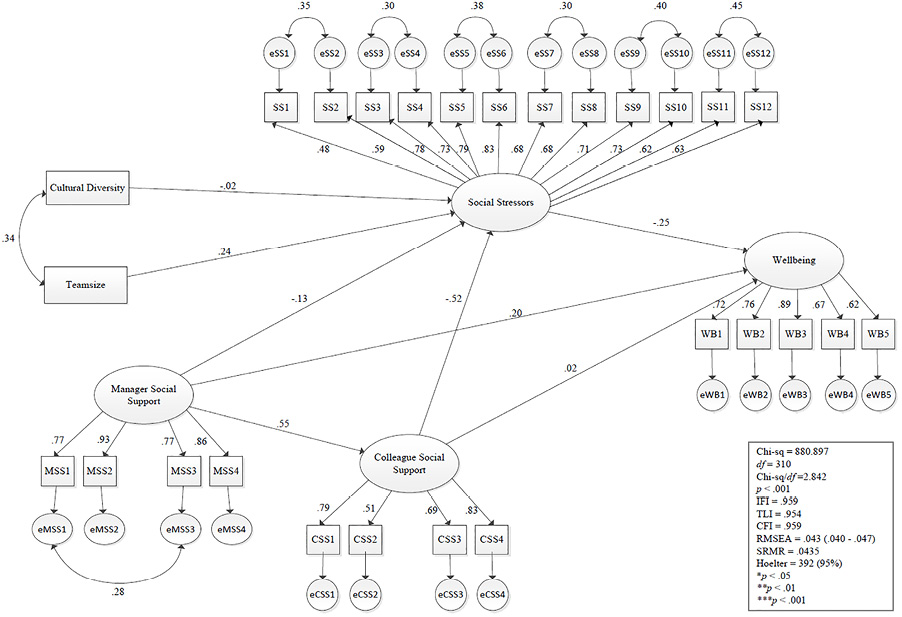
Figure 2. The structural model.
The standardised regression weights (loadings), along with their associated significance levels, are shown in Table 3.
Table 3 shows a summary of the testing of the hypothesised relationships as outlined in the structural equation modelling process. The magnitude of the path coefficients is also shown in Table 3. In addition to exploring a good model fit, we assessed the validity of the model by evaluating the path coefficients’ significance, direction and magnitude.
Discussion
Team composition and social stressors
The results show that a team’s diversity is not significantly associated with an increase in social stressors, thus rejecting Hypothesis 1. This result contradicts much of the extant literature that highlights that cultural diversity in work teams is positively associated with an increase in social stressors in the form of conflicts (Ayub & Jehn, 2014; Liu et al., 2020) and misunderstandings (Jenifer & Raman, 2015). However, it is important to note that most of the teams in this sample have already worked together over a long period of time. This is important to note, as research has suggested that the effects of certain types of diversity reduce over time. For instance, there is some evidence that the effects of surface-level diversity, which refers to overt demographic characteristics such as age, sex and ethnicity, diminish over time (Harrison et al., 2002) and vary depending on the specific context (Jansen & Searle, 2021). The teams in this study had worked together for an average of 57 months, which may have affected the effects of diversity, leading to reduced perceived stressors. This suggests that the stage of the team may be influential.
Another way to explain these findings could be a potential increase in resources that may reduce the perceived social stressors. For instance, Kotze and Massyn (2019) revealed the importance of cross-cultural resources. These cross-cultural resources may include cross-cultural resilience, which allows individuals to maintain their performance despite differences and uncertainties associated with cross-cultural differences. Another resource that could explain the non-significant relationship between social stressors and cultural diversity within teams may be a high level of cultural intelligence amongst our sample, which has been shown to positively influence a variety of intercultural outcomes on the individual and team levels (see, for instance, Ott & Michailova, 2018). Cultural intelligence provides individuals with the appropriate knowledge, behaviours and motivation that translate into the individual’s ability to interact with culturally different individuals in an effective way (Iskhakova & Ott, 2020). For instance, previous research undertaken by Bücker et al. (2014) found that cultural intelligence can positively influence communication effectiveness and reduce anxiety during cross-cultural interaction. The social stressors in our study included, inter alia, misunderstanding, differences in behaviour and differences in the perception of time. Considering that the teams in this study had worked together for a considerable period of time, it is highly likely that team members had gained cultural intelligence through their working experience, which reduced the perceived stressors and consequently their effects on the individual’s wellbeing.
When analysing the effects of team size, the results show that team size is positively associated with social stressors (smaller effect) (Bowers et al., 1996). This finding supports Hypothesis 2 and is consistent with previous studies highlighting that a larger team may be associated with an increase in social stressors due to individual differences.
However, the perception of social stressors could be affected by the perceived level of available social support (Maqsoom et al., 2018; Zhang et al., 2023). For instance, findings by Mueller (2012) suggest that team size affects the perception of available support. Her findings suggest that larger teams “diminish perceptions of available support which would otherwise buffer stressful experiences” (Mueller, 2012, p. 111).
The role of social support
Consistent with previous studies, the results of our study highlight the importance of social support. Both manager and colleague support are negatively associated with social stressors, supporting Hypotheses 3 and 4. These findings align with studies conducted by Eisenberger et al. (2007) and Kemp et al. (2013). Eisenberger et al. (2007) measured neurocognitive reactivity and neuroendocrine response to social stressors with different levels of social support. Participants with a greater level of social support showed a reduced cortisol response to social demands. Employees who perceive more social support are more likely to react less to social stressors perceived within their own work team.
Social support from the manager was found to be positively associated with social support from colleagues (large effect) (Kemp et al., 2013). In our study, team members receiving higher levels of support from the manager were also more likely to receive higher levels of support from their colleagues, supporting Hypothesis 5. This finding could indicate that the manager acts as a role model for colleagues. This phenomenon could be explained by the social learning theory (Bandura, 1971). According to this theory, behavioural patterns can be acquired through either direct experience or by observing a certain behaviour exhibited by others (Bandura, 1971). In this context, role models in the form of managers can facilitate the acquisition of certain types of behaviour (Brown & Treviño, 2013). The role of managers as an antecedent of subordinates’ behaviours was investigated in several studies (e.g. Brown & Treviño, 2013; Koch & Binnewies, 2015). For example, Koch and Binnewies (2015) analysed the effects of managers as work–life-friendly role models. Employees whose managers were perceived as work–life-friendly role models were more likely to segment between work and home, highlighting the strong effects that managers can have as role models.
Social support and social stressors and their effect on wellbeing
Social support from the manager was found to be positively associated with psychological wellbeing. The strength of the relationships between wellbeing and social support provided by the manager was positive, supporting Hypothesis 6 (smaller effect). The association between social support provided by colleagues and psychological wellbeing was not significant. Hence, Hypothesis 7 is rejected. This finding aligns with extant literature such as Ersoy et al. (2023) and Hämmig (2017). Both studies analysed the effects of different sources of social support on different health outcomes and only found significant effects for supervisor support, but not for colleague support, underpinning the stronger effects that supervisor support has relative to colleague support. In another study, Charoensukmongkol et al. (2016) examined the effects of both colleague and supervisor support on burnout. Their findings showed that only supervisor support had a negative effect on all three dimensions of burnout (emotional exhaustion, depersonalisation and personal accomplishment), whilst colleague support was only negatively associated with two dimensions (emotional exhaustion and depersonalisation) and not with personal accomplishment. These findings align with our research, highlighting the importance of supervisor support compared with colleague support.
Moreover, our findings confirm previous research, highlighting the importance of social support provided by managers (e.g., Stansfeld et al., 1999; Baruch-Feldman et al., 2002). For example, Stansfeld et al. (1999) reported that social support from the manager is a stronger predictor of employees’ mental health than social support from colleagues. However, our findings could also be influenced by the different cultural backgrounds of our sample. The perception and the effects of social support vary depending on the individuals’ cultural background (Taylor et al., 2004; Glazer, 2006; Kim et al., 2008). Team members’ own cultural background may have influenced their support-seeking behaviour and their perception of available support. For instance, members from collectivistic cultures may be more hesitant to seek or utilise certain types of social support. In line with this, the perceived benefits of social support can vary (Kim et al., 2008; Wu et al., 2021). Lastly, social stressors were found to be negatively associated with psychological wellbeing (smaller effects), supporting Hypothesis 8. This finding aligns with existing literature highlighting the negative effects that social stressors have on psychological wellbeing (Bowling & Beehr, 2006; Hershcovis & Barling, 2010; Gerhardt et al., 2021).
Implications of the research findings and limitations
This research unequivocally underscores the multifaceted challenges and necessary interventions in managing construction teams. First, it is important to note that larger teams may be associated with an increase in social stressors. Whilst teams are common in construction, construction managers should be mindful that bigger teams can be associated with more conflict and hence decreased wellbeing. Second, construction sites are often culturally diverse. Although the data were collected in 2015–2016, the core challenges and dynamics of managing culturally diverse construction teams remain highly relevant. Issues such as team diversity, social support and psychological wellbeing continue to be pressing concerns in construction and project management contexts worldwide. For instance, Australia’s most culturally diverse workplaces are construction sites (Loosemore et al., 2010). Even though we did not find a significant relationship between cultural diversity and social stressors, the structural relationships identified in our model align with well-established theories (e.g. JD-R model) that are still actively used today, supporting the applicability of the findings in contemporary settings. As such, misunderstandings and stereotypes are prevalent in construction sites (Loosemore et al., 2010).
To prevent social stressors from occurring, team training should be implemented (Wacker & Dziobek, 2018). Training should focus on the cultural differences within construction teams, different conflict management styles and social support. Liu et al. (2020) explored the effects of cultural diversity on construction joint ventures and suggested that the negativity of conflicts caused by cultural diversity can be reduced by adopting a suitable conflict management approach. They also suggested that a cooperative conflict management approach can mitigate the negative effects of cultural conflicts on project performance, highlighting the importance of choosing appropriate conflict management styles by managers of culturally diverse teams.
Our study extends the discussion of the importance of social support by aligning with the extant literature (Love & Edwards, 2005). It is important for managers of construction teams to recognise and integrate social support mechanisms, as validated by previous researchers (Sampson et al., 2014). Managers should undergo targeted training to appreciate and foster social support within their teams (Froehlich & Gegenfurtner, 2019). This training should also address differences in the perception, support-seeking behaviour and effects of social support across cultures.
Another important aspect is that the provider of social support should be aware of cultural differences in the perceived level of responsiveness of social support givers. According to Wu et al. (2021), perceived responsiveness and the associated cultural fit are critical in social support interactions; thus, individuals are more likely to seek support when the support giver responds to their needs. However, what is perceived as responsive in the social support process varies between cultures and can affect wellbeing outcomes. For instance, individuals from collectivistic countries may perceive unsolicited support as more responsive than individuals from individualistic countries (Wu et al., 2021).
When conceptualising and conducting training, construction managers and foremen should be informed and reminded about their ability to function as role models in providing social support for their subordinates. By functioning as a positive role model, the social support across colleagues could potentially be improved. However, it is important to note that construction supervisors already work long hours whilst also facing a variety of other demands (Boschman et al., 2011). Hence, the design of these training programs should not exacerbate the burden on construction managers, foremen and other supervisors of construction teams.
Our research highlights the importance of social support provided by supervisors. To increase social support provided by supervisors, construction companies should also review the support system available to their supervisors themselves. Research has indicated that supervisors’ levels of perceived organisational support are positively related to their employees’ perceived levels of supervisor support (Shanock & Eisenberger, 2006). Increasing organisational support can enhance manager support. This aligns with findings by Cheung and Zhang (2020), who noted the importance of organisational support for providing construction supervisors with important clues about their roles and responsibilities in safety management. These findings and insights serve as a clarion call for strategic, well-balanced and empathetic management approaches in the culturally diverse and dynamic field of construction management.
Whilst we have focused on social support provided by the manager and colleagues, other forms of social support exist (Love & Edwards, 2005). This includes, inter alia, social support provided by the partner, spouse or others (Helgeson, 2003). However, other forms of social support were not considered as part of our study, which can be seen as a limitation.
Other limitations include the cross-sectional research design, reliance on self-reported measures and specific cultural contexts, as cross-sectional research cannot draw conclusions about causes and effects. Specifically, participants’ responses in the form of self-reports increase the risk of common method bias. The same applies to self-selection bias, which may have influenced individuals to be motivated to participate by their self-perception of being stressed in their workplace setting.
Most of the data were collected from Germany, Austria and Australia, which can also have influenced the research results. For instance, these countries score higher in their individualism scores (Germany 67, Austria 55 and Australia 90) (Hofstede & Hofstede, 2005), which can affect the use of social support (Wu et al., 2021) and the effects of stress (Malik & Huo, 2023). These constitute geographical limitations for the survey response data.
The respondents came from a variety of different industries, which may have affected the results. However, the issues examined in this study are common amongst construction teams; hence, we would expect similar findings in the construction industry. Whilst our measure of cultural diversity, based on the number of nationalities represented in each team, captures an essential demographic component, it may not fully reflect the complexity of cultural dynamics within teams. Future studies should consider incorporating additional dimensions such as values, communication styles and cultural norms, which may provide a more nuanced understanding of how cultural diversity affects team functioning and wellbeing. Future research should employ longitudinal designs, incorporate objective (i.e. reducing reliance on self-reporting subjectivity) measures and examine these relationships in other cultural contexts to increase the generalisability of the findings. Additionally, exploring other forms of social support and their impact on psychological wellbeing is suggested.
Conclusion
We aimed to provide pointers for construction team managers who are managing culturally diverse teams. We have presented a theoretical framework on how team size, cultural diversity, social stressors and social support may affect team members’ psychological wellbeing. This research expands the JD-R theory by including different sources of social support, social stressors and other team characteristics as determinants of the individual’s wellbeing. Notwithstanding the aforementioned limitations, our findings have implications for construction teams who deliver products and services in the context of a global economy and, arguably, a global workforce.
Our study provides critical insights into the relationships between cultural diversity, team size, social stressors, social support and psychological wellbeing for construction teams. It underscores the vital role of social support from the manager in mitigating the negative impacts of social stressors, thereby promoting psychological wellbeing amongst team members. The findings suggest that whilst larger team sizes are associated with increased social stressors, adequate social support from the manager can mitigate these negative effects. Ultimately, our study contributes to the literature by highlighting the importance of managers’ support and the pivotal role that construction managers and foremen can play as role models in shaping supportive behaviours within the team. However, the unexpected finding that colleague support did not significantly impact psychological wellbeing calls for further research to understand the complexities of social support in a team context.
Our study calls for a comprehensive approach to address social stressors and promote psychological wellbeing in culturally diverse construction teams.
References
Anderson, N. R., & West, M. A. (1998). Measuring climate for work group innovation: Development and validation of the team climate inventory. Journal of Organizational Behavior, 19, 235–258. https://doi.org/10.1002/(SICI)1099-1379(199805)19:3<235::AID-JOB837>3.0.CO;2-C
Arbuckle, J. (2019). Amos (Version 26.0) [Computer program]. IBM SPSS.
Aubé, C., Rousseau, V., & Tremblay, S. (2011). Team size and quality of group experience: The more the merrier? Group Dynamics: Theory, Research, and Practice, 15, 357–375. https://doi.org/10.1037/a0025400
Ayub, N., & Jehn, K. (2014). When diversity helps performance: Effects of diversity on conflict and performance in workgroups. International Journal of Conflict Management, 25, 189–212. https://doi.org/10.1108/IJCMA-04-2013-0023
Ayub, N., & Jehn, K. A. (2018). Exploring diversity effects: Nationality composition and nationality context in workgroups. European Journal of Work and Organizational Psychology, 27, 616–628. https://doi.org/10.1080/1359432X.2018.1502173
Bakker, A. B., & Demerouti, E. (2017). Job demands-resources theory: Taking stock and looking forward. Journal of Occupational Health Psychology, 22, 273–285. https://doi.org/10.1037/ocp0000056
Bandura, A. (1971). Social learning theory. General Learning Press.
Baruch-Feldman, C., Brondolo, E., Ben-Dayan, D., & Schwartz, J. (2002). Sources of social support and burnout, job satisfaction, and productivity. Journal of Occupational Health Psychology, 7, 84–93. https://doi.org/10.1037/1076-8998.7.1.84
Boschman, J., Van Der Molen, H., Sluiter, J., & Frings-Dresen, M. (2013). Psychosocial work environment and mental health among construction workers. Applied Ergonomics, 44, 748–755. https://doi.org/10.1016/j.apergo.2013.01.004
Boschman, J. S., Van Der Molen, H. F., Sluiter, J. K., & Frings-Dresen, M. H. (2011). Occupational demands and health effects for bricklayers and construction supervisors: A systematic review. American Journal of Industrial Medicine, 54, 55–77. https://doi.org/10.1002/ajim.20899
Bowers, C. A., Weaver, J. L., & Morgan, B. B. (1996). Moderating the performance effects of stressors. In J. E. Driskell & E. Salas (Eds.), Stress and Human Performance (163–192). Lawrence Erlbaum Associates.
Bowling, N. A., & Beehr, T. A. (2006). Workplace harassment from the victim’s perspective: A theoretical model and meta-analysis. Journal of Applied Psychology, 91, 998. https://doi.org/10.1037/0021-9010.91.5.998
Brown, M. E., & Treviño, L. K. (2013). Do role models matter? An investigation of role modeling as an antecedent of perceived ethical leadership. Journal of Business Ethics, 122, 587–598. https://doi.org/10.1007/s10551-013-1769-0
Bücker, J. J., Furrer, O., Poutsma, E., & Buyens, D. (2014). The impact of cultural intelligence on communication effectiveness, job satisfaction and anxiety for Chinese host country managers working for foreign multinationals. The International Journal of Human Resource Management, 25(14), 2068–2087. https://doi.org/10.1080/09585192.2013.870293
Bruk-Lee, V. (2006). Measuring social stressors in organizations: The development of the Interpersonal Conflict in Organizations Scale (ICOS) (Doctoral dissertation, University of South Florida).
Charoensukmongkol, P., Moqbel, M., & Gutierrez-Wirsching, S. (2016). The role of coworker and supervisor support on job burnout and job satisfaction. Journal of Advances in Management Research, 13(1). https://doi.org/10.1108/JAMR-06-2014-0037
Cheung, C. M., & Zhang, R. P. (2020). How organizational support can cultivate a multilevel safety climate in the construction industry. Journal of Management in Engineering, 36, 04020014. https://doi.org/10.1061/(ASCE)ME.1943-5479.0000758
Chu, P. S., Saucier, D. A., & Hafner, E. (2010). Meta-analysis of the relationships between social support and well-being in children and adolescents. Journal of Social and Clinical Psychology, 29, 624–645. https://doi.org/10.1521/jscp.2010.29.6.624
Demerouti, E., Bakker, A. B., Nachreiner, F., & Schaufeli, W. B. (2001). The job demands-resources model of burnout. Journal of Applied Psychology, 86, 499–512. https://doi.org/10.1037/0021-9010.86.3.499
Dormann, C., & Zapf, D. (1999). Social support, social stressors at work, and depressive symptoms: Testing for main and moderating effects with structural equations in a three-wave longitudinal study. Journal of Applied Psychology, 84, 10. https://doi.org/10.1037/0021-9010.84.6.874
Dormann, C., & Zapf, D. (2004). Customer-related social stressors and burnout. Journal of Occupational Health Psychology, 9, 61–82. https://doi.org/10.1037/1076-8998.9.1.61
Ducki, A. (1998). Arbeits-und organisationspsychologische Gesundheitsanalysen: Entwicklung und Erprobung eines Befragungsinstruments im Rahmen eines Mehr-Ebenen-Ansatzes zur betrieblichen Gesundheitsanalyse [Occupational psychological health analyses. Development and testing of a survey as part of a multilevel analysis]. University of Leipzig.
Eisenberger, N. I., Taylor, S. E., Gable, S. L., Hilmert, C. J., & Lieberman, M. D. (2007). Neural pathways link social support to attenuated neuroendocrine stress responses. NeuroImage, 35, 1601–1612. https://doi.org/10.1016/j.neuroimage.2007.01.038
Ersoy, A., Mahmood, Z., Sharif, S., Ersoy, N., & Ehtiyar, R. (2023). Exploring the associations between social support, perceived uncertainty, job stress, and emotional exhaustion during the COVID-19 crisis. Sustainability, 15(3), 2150. https://doi.org/10.3390/su15032150
Fila, M. J., Purl, J., & Griffeth, R. W. (2017). Job demands, control and support: Meta-analyzing moderator effects of gender, nationality, and occupation. Human Resource Management Review, 27, 39–60. https://doi.org/10.1016/j.hrmr.2016.09.004
Firose, M. M., Chathurangi, B. N. M., & Kamardeen, I. (2025). Work stress among construction professionals during an economic crisis: A case study of Sri Lanka. Smart and Sustainable Built Environment. https://doi.org/10.1108/SASBE-10-2024-0411
Froehlich, D. E., & Gegenfurtner, A. (2019). Social support in transitioning from training to the workplace: A social network perspective. In H. Fasching & L. Ableidinger (Eds.), Beziehungen in pädagogischen Arbeitsfeldern und ihren Transitionen über die Lebensalter (pp. 208–222). Verlag Julius Klinkhardt.
Gelfand, M. J., Erez, M., & Aycan, Z. (2007). Cross-cultural organizational behavior. Annual Review of Psychology, 58(1), 479–514. https://doi.org/10.1146/annurev.psych.58.110405.085559
George, J. M. (1992). Extrinsic and intrinsic origins of perceived social loafing in organizations. The Academy of Management Journal, 35, 191–202. https://doi.org/10.2307/256478
Gerhardt, C., Semmer, N. K., Sauter, S., Walker, A., De Wijn, N., Kalin, W., Kottwitz, M. U., Kersten, B., Ulrich, B., & Elfering, A. (2021). How are social stressors at work related to well-being and health? A systematic review and meta-analysis. BMC Public Health, 21, 890. https://doi.org/10.1186/s12889-021-10894-7
Geurts, S. A., & Sonnentag, S. (2006). Recovery as an explanatory mechanism in the relation between acute stress reactions and chronic health impairment. Scandinavian Journal of Work, Environment & Health, 32, 482–492. https://doi.org/10.5271/sjweh.1053
Glazer, S. (2006). Social support across cultures. International Journal of Intercultural Relations, 30, 605–622. https://doi.org/10.1016/j.ijintrel.2005.01.013
Guidetti, G., Converso, D., Loera, B., & Viotti, S. (2018). Concerns about change and employee wellbeing: The moderating role of social support. Journal of Workplace Learning, 30, 216–228. https://doi.org/10.1108/JWL-09-2017-0083
Hair, J. F., Gabriel, M., & Patel, V. (2014). AMOS covariance-based structural equation modeling (CB-SEM): Guidelines on its application as a marketing research tool. Brazilian Journal of Marketing, 13.
Hajro, A., Gibson, C. B., & Pudelko, M. (2017). Knowledge exchange processes in multicultural teams: Linking organizational diversity climates to teams’ effectiveness. Academy of Management Journal, 60, 345–372. https://doi.org/10.5465/amj.2014.0442
Hämmig, O. (2017). Health and well-being at work: The key role of supervisor support. SSM Population Health, 3, 393–402. https://doi.org/10.1016/j.ssmph.2017.04.002
Harrison, D. A., Price, K. H., Gavin, J. H., & Florey, A. T. (2002). Time, teams, and task performance: Changing effects of surface-and deep-level diversity on group functioning. Academy of Management Journal, 45, 1029–1045. https://doi.org/10.2307/3069328
Hassard, J., Teoh, K. R., Visockaite, G., Dewe, P., & Cox, T. (2018). The cost of work-related stress to society: A systematic review. Journal of Occupational Health Psychology, 23, 1. https://doi.org/10.1037/ocp0000069
Helgeson, V. S. (2003). Social support and quality of life. Quality of Life Research, 12, 25–31. https://doi.org/10.1023/A:1023509117524
Hershcovis, M. S., & Barling, J. (2010). Towards a multi-foci approach to workplace aggression: A meta-analytic review of outcomes from different perpetrators. Journal of Organizational Behavior, 31, 24–44. https://doi.org/10.1002/job.621
Hofstede, G., & Hofstede, G. (2005). Cultures and organizations: Software of the mind (3rd millennium ed.). McGraw-Hill.
Iskhakova, M., & Ott, D. L. (2020). Working in culturally diverse teams: Team-level cultural intelligence (CQ) development and team performance. Journal of International Education in Business, 13(1), 37–54. https://doi.org/10.1108/JIEB-11-2019-0052
Israel, G. D. (1992). Determining sample size. University of Florida Cooperative Extension Service, Institute of Food and Agriculture Sciences, EDIS.
Jansen, A. E., & Searle, B. J. (2021). Diverse effects of team diversity: A review and framework of surface and deep-level diversity. Personnel Review, 50, 1838–1853. https://doi.org/10.1108/PR-12-2019-0664
Jehn, K. A. (1995). A multimethod examination of the benefits and detriments of intragroup conflict. Administrative Science Quarterly, 40(2), 256–282. https://doi.org/10.2307/2393638
Jenifer, R. D., & Raman, G. (2015). Cross-cultural communication barriers in the workplace. International Journal of Management, 6, 348–351.
Jolly, P. M., Kong, D. T., & Kim, K. Y. (2021). Social support at work: An integrative review. Journal of Organizational Behavior, 42, 229–251. https://doi.org/10.1002/job.2485
Kemp, E., Borders, A. L., & Ricks, J. M. (2013). Sales manager support: Fostering emotional health, motivation and customer-orientation in salespeople. European Journal of Marketing, 47(3/4), 635–654. https://doi.org/10.1108/03090561311297508
Kim, H. S., Sherman, D. K., & Taylor, S. E. (2008). Culture and social support. American Psychologist, 63, 518. https://doi.org/10.1037/0003-066X
Koch, A. R., & Binnewies, C. (2015). Setting a good example: Supervisors as work-life-friendly role models within the context of boundary management. Journal of Occupational Health Psychology, 20, 82–92. https://doi.org/10.1037/a0037890
Kotze, M., & Massyn, L. (2019). The influence of employees’ cross-cultural psychological capital on workplace psychological well-being. SA Journal of Industrial Psychology, 45, 1–8. https://doi.org/10.4102/sajip.v45i0.1660
Lansford, J. E., Antonucci, T. C., Akiyama, H., & Takahashi, K. (2005). A quantitative and qualitative approach to social relationships and well-being in the United States and Japan. Journal of Comparative Family Studies, 36, 1–22. https://doi.org/10.3138/jcfs.36.1.1
Lattrich, K.-K., & Büttgen, M. (2020). Project leaders’ control resources and role overload as predictors of project success: Developing the job demands–resources model. Business Research, 13, 767–788. https://doi.org/10.1007/s40685-020-00115-z
Leifels, K., & Bowen, P. (2021). The dark side of teamwork: The relationship between social stressors, social resources and team member well-being in monocultural and multicultural work teams. Cross Cultural & Strategic Management, 28, 867–893. https://doi.org/10.1108/CCSM-08-2020-0172
Lesener, T., Gusy, B., & Wolter, C. (2019). The job demands-resources model: A meta-analytic review of longitudinal studies. Work & Stress, 33, 76–103. https://doi.org/10.1080/02678373.2018.1529065
Li, C. R., Lin, C. J., Tien, Y. H., & Chen, C. M. (2017). A multilevel model of team cultural diversity and creativity: The role of climate for inclusion. The Journal of Creative Behavior, 51, 163–179. https://doi.org/10.1002/jocb.93
Lim, S., Cortina, L. M., & Magley, V. J. (2008). Personal and workgroup incivility: Impact on work and health outcomes. Journal of Applied Psychology, 93, 95–107. https://doi.org/10.1037/0021-9010.93.1.95
Lingard, H., & Turner, M. (2015). Improving the health of male, blue collar construction workers: A social ecological perspective. Construction Management and Economics, 33, 18–34. https://doi.org/10.1080/01446193.2014.997259
Liu, J., Cui, Z., Feng, Y., Perera, S., & Han, J. (2020). Impact of culture differences on performance of international construction joint ventures: The moderating role of conflict management. Engineering, Construction and Architectural Management, 27, 2353–2377. https://doi.org/10.1108/ECAM-02-2019-0111
Loosemore, M., Phua, F., Dunn, K., & Ozguc, U. (2010). Operatives’ experiences of cultural diversity on Australian construction sites. Construction Management and Economics, 28, 177–188. https://doi.org/10.1080/01446190903450087
Loosemore, M., Phua, F. T., Dunn, K., & Ozguc, U. (2011). The politics of sameness in the Australian construction industry: Comparing operative and manager attitudes towards cultural diversity. Engineering, Construction and Architectural Management, 18, 363–380. https://doi.org/10.1108/09699981111145817
Love, P. E., & Edwards, D. J. (2005). Taking the pulse of UK construction project managers’ health: Influence of job demands, job control and social support on psychological wellbeing. Engineering, Construction and Architectural Management, 12, 88–101. https://doi.org/10.1108/09699980510576916
Macdonald, G. (1998). Development of a social support scale: An evaluation of psychometric properties. Research on Social Work Practice, 8, 564–576. https://doi.org/10.1177/104973159800800505
Malik, T. H., & Huo, C. (2023). National cultural moderates the link between work stress and depression: An analysis of clinical trial projects across countries. Cross-Cultural Research, 57, 23–55. https://doi.org/10.1177/10693971221131427
Maqsoom, A., Mughees, A., Khan, A. K., & Arif, M. I. (2018). Labor productivity in construction industry: Investigating the influence of internal psychosocial stressors. In International Conference on Construction and Real Estate Management 2018 (pp. 10–17). American Society of Civil Engineers. https://doi.org/10.1061/9780784481745.002
Miller, D. M., Fields, R., Kumar, A., & Ortiz, R. (2000). Leadership and organizational vision in managing a multiethnic and multicultural project team. Journal of Management in Engineering, 16, 18–22. https://doi.org/10.1061/(ASCE)0742-597X(2000)16:6(18)
Mistry, S., Kirkman, B. L., Moore, O. A., Hanna, A. A., & Rapp, T. L. (2023). Too many teams? Examining the impact of multiple team memberships and permanent team identification on employees’ identity strain, cognitive depletion, and turnover. Personnel Psychology, 76, 885–912. https://doi.org/10.1111/peps.12515
Mueller, J. S. (2012). Why individuals in larger teams perform worse. Organizational Behavior and Human Decision Processes, 117, 111–124. https://doi.org/10.1016/j.obhdp.2011.08.004
Müller, G. F. (2013). Landauer Organisations- und Teamklima-Inventar (LOTI) [Landauer tools to measure organizational and team climate]. Author’s edition. University of Koblenz-Landau.
SafeWork NSW. (2021). Code of practice: Managing psychosocial hazards at work. SafeWork NSW. https://www.safework.nsw.gov.au/resource-library/codes-of-practice/codes-of-practice/managing-psychosocial-hazards-at-work
Ott, D. L., & Michailova, S. (2018). Cultural intelligence: A review and new research avenues. International Journal of Management Reviews, 20(1), 99–119. https://doi.org/10.1111/ijmr.12118
Radic, A., Arjona-Fuentes, J. M., Ariza-Montes, A., Han, H., & Law, R. (2020). Job demands–job resources (JD-R) model, work engagement, and well-being of cruise ship employees. International Journal of Hospitality Management, 88, 102518. https://doi.org/10.1016/j.ijhm.2020.102518
Rippl, S., & Seipel, C. (2015). Ziele und Ablauf kulturvergleichender Studien. In S. Rippl & C. Seipel (Eds.), Methoden kulturvergleichender Sozialforschung: Eine Einführung (pp. 63–83). Springer VS. https://doi.org/10.1007/978-3-531-19969-6_4
Roy, N., Paul, K. D., Tamanna, S. S., Paul, A. K., Almerab, M. M., & Mamun, M. A. (2024). Prevalence and risk factors of depression, anxiety, and stress among the Bangladeshi construction workers: A cross-sectional study. PLoS One, 19(8), e0307895. https://doi.org/10.1371/journal.pone.0307895
Salas-Vallina, A., Pozo, M., & Fernandez-Guerrero, R. (2020). New times for HRM? Well-being oriented management (WOM), harmonious work passion and innovative work behavior. Employee Relations: The International Journal, 42, 561–581. https://doi.org/10.1108/ER-04-2019-0185
Sampson, J. M., Dearmond, S., & Chen, P. Y. (2014). Role of safety stressors and social support on safety performance. Safety Science, 64, 137–145. https://doi.org/10.1016/j.ssci.2013.11.025
Shanock, L. R., & Eisenberger, R. (2006). When supervisors feel supported: Relationships with subordinates’ perceived supervisor support, perceived organizational support, and performance. Journal of Applied Psychology, 91, 689. https://doi.org/10.1037/0021-9010.91.3.689
Simons, T. L., & Peterson, R. S. (2000). Task conflict and relationship conflict in top management teams: The pivotal role of intragroup trust. Journal of Applied Psychology, 85, 102. https://doi.org/10.1037/0021-9010.85.1.102
Sonnentag, S. (2003). Recovery, work engagement, and proactive behavior: A new look at the interface between nonwork and work. Journal of Applied Psychology, 88, 518. https://doi.org/10.1037/0021-9010.88.3.518
Soucek, R., Voss, A. S., Drexler, H., & Moser, K. (2024). New ways of working and psychological well-being: Work intensity as a target variable of job resources. International Journal of Workplace Health Management. https://doi.org/10.1108/IJWHM-01-2024-0010
Stahl, G. K., & Maznevski, M. L. (2021). Unraveling the effects of cultural diversity in teams: A retrospective of research on multicultural work groups and an agenda for future research. Journal of International Business Studies, 52, 4–22. https://doi.org/10.1057/s41267-020-00389-9
Stansfeld, S. A., Fuhrer, R., Shipley, M. J., & Marmot, M. G. (1999). Work characteristics predict psychiatric disorder: Prospective results from the Whitehall II Study. Occupational and Environmental Medicine, 56, 302–307. https://doi.org/10.1136/oem.56.5.302
Sternthal, M. J., Slopen, N., & Williams, D. R. (2011). Racial disparities in health: How much does stress really matter? Du Bois Review: Social Science Research on Race, 8, 95–113. https://doi.org/10.1017/S1742058X11000087
Sun, C., Hon, C. K., Way, K. A., Jimmieson, N. L., & Xia, B. (2022). The relationship between psychosocial hazards and mental health in the construction industry: A meta-analysis. Safety Science, 145, 105485. https://doi.org/10.1016/j.ssci.2021.105485
Taris, T. W., & Schaufeli, W. B. (2015). The job demands–resources model. In S. Clarke, T. M. Probst, F. W. Guldenmund, & P. Passmore (Eds.), The Wiley Blackwell handbook of the psychology of occupational safety and workplace health (pp. 155–180). Wiley. https://doi.org/10.1002/9781118979013.ch8
Taylor, S. E. (2011). Social support: A review. In H. S. Friedman (Ed.), The Oxford handbook of health psychology. Oxford University Press. https://doi.org/10.1093/oxfordhb/9780195342819.013.0009
Taylor, S. E., Sherman, D. K., Kim, H. S., Jarcho, J., Takagi, K., & Dunagan, M. S. (2004). Culture and social support: Who seeks it and why? Journal of Personality and Social Psychology, 87, 354. https://doi.org/10.1037/0022-3514.87.3.354
Trajkovski, S., & Loosemore, M. (2006). Safety implications of low-English proficiency among migrant construction site operatives. International Journal of Project Management, 24, 446–452. https://doi.org/10.1016/j.ijproman.2005.11.004
Viswesvaran, C., Sanchez, J. I., & Fisher, J. (1999). The role of social support in the process of work stress: A meta-analysis. Journal of Vocational Behavior, 54, 314–334. https://doi.org/10.1006/jvbe.1998.1661
Wacker, R., & Dziobek, I. (2018). Preventing empathic distress and social stressors at work through nonviolent communication training: A field study with health professionals. Journal of Occupational Health Psychology, 23, 141. https://doi.org/10.1037/ocp0000058
Woodhead, E. L., Northrop, L., & Edelstein, B. (2016). Stress, social support, and burnout among long-term care nursing staff. Journal of Applied Gerontology, 35, 84–105. https://doi.org/10.1177/0733464814542465
Wu, D. C., Kim, H. S., & Collins, N. L. (2021). Perceived responsiveness across cultures: The role of cultural fit in social support use. Social and Personality Psychology Compass, 15, e12634. https://doi.org/10.1111/spc3.12645
Wu, G., Zhao, X., Zuo, J., & Zillante, G. (2019). Effects of team diversity on project performance in construction projects. Engineering, Construction and Architectural Management, 26, 408–423. https://doi.org/10.1108/ECAM-05-2018-0220
Zhang, S., Sunindijo, R. Y., Frimpong, S., & Su, Z. (2023). Work stressors, coping strategies, and poor mental health in the Chinese construction industry. Safety Science, 159, 106039. https://doi.org/10.1016/j.ssci.2022.106039