Construction Economics and Building
Vol. 26, No. 1
2026
ARTICLES (PEER REVIEWED)
Principal Component Analysis of Smart City Delivery for Sustainable Construction in Ghana
Adu Gyamfi Timothy1,3,*, Stanley Owuotey Bonney2, Wellington Didibhuku Thwala1
1 Akenten Appiah-Menka University of Skills Training and Entrepreneurial Development, ORCID: https://orcid.org/0000-0001-8054-7492
2 Department of Built Environment University of Environment and Sustainable Development Somanya – Ghana
3 Faculty of Engineering, Built Environment, and Information Technology, Walter Sisulu University, East London, South Africa
Corresponding author: Adu Gyamfi Timothy, agttimo78@gmail.com
DOI: https://doi.org/10.5130/g34gzt45
Article History: Received 12/01/2025; Revised 13/09/2025; Accepted 17/09/2025; Published 27/02/2026
Citation: Adu Gyamfi, T., Bonney, S. O., Thwala, W. D. 2026. Principal Component Analysis of Smart City Delivery for Sustainable Construction in Ghana. Construction Economics and Building, 26:1, 1–27. https://doi.org/10.5130/g34gzt45
Abstract
A paradigm shift towards sustainable urban development is represented by the building industry’s adoption of smart city ideas. The construction sector can play a key part in creating cities of the future, as smart city initiatives continue to gain traction. The purpose of the study was to evaluate the approaches to deliver smart cities for sustainable development in the construction industry in Ghana, utilising principal component analysis. The study used questionnaire instrumentation and quantitative research methods. Of the 350 respondents, 317 were purposively sampled to answer the questionnaire. The study found that there are two distinct methods for delivering smart cities: integrated and collaborative service platforms (ICSPs) and technology and data-driven approaches (TDAs). The major discoveries under ICSPs include integrated service delivery platforms, collaborative governance, smart building solutions, and smart health services. Key revelations under TDAs comprise cloud computing, integrated transport systems, co-creation and citizen engagement, and data analytics and artificial intelligence. The study’s conclusion is that in order to support long-term scalability, reduce redundancy, and enhance system resilience in response to growing urban demands, industry stakeholders should make investments in adaptable, modular technologies that can be easily integrated into existing infrastructure. Players in the building construction sector that support smart cities as sustainable construction practices may find the survey’s findings intriguing. The current study contributes to the body of knowledge about approaches to smart city delivery in the Ghanaian construction industry, which is important, given the dearth of prior research on this topic in Ghana.
Keywords
Smart City; Sustainable Construction; Construction Industry; Smart City Delivery; Ghana
Introduction
Rapid urbanisation and population growth in many cities contribute to numerous socio-economic, technological, and environmental challenges. These include poor governance; traffic congestion; inadequate housing, healthcare, and educational facilities; ineffective utility management; and environmental pollution (Karmaker, et al., 2023). Challenges such as resource mismanagement, poor infrastructure, and environmental degradation undermine economies, exacerbate inequality, and contribute to high crime rates (Aljowder, et al., 2023). For instance, Accra, Ghana, ranked the 44th-best city globally (Chisom, 2024). As Ghana’s most active centre of political and economic activities, Accra faces issues like traffic congestion, uncontrolled physical development, and environmental degradation (Ofori, 2021). In Ghana, as in other developing nations, urban challenges such as rapid population growth, inadequate infrastructure, environmental degradation, and inefficient service delivery persist (World Bank, 2020). According to the United Nations (2018), by 2050, an estimated 68% of the global population will reside in cities, exacerbating challenges such as resource scarcity, traffic congestion, and environmental degradation. However, these persistent issues, like flooding, waste management, water pollution, deforestation, traffic congestion, auto pollution, climate change, and other environmental issues, need to be addressed by adopting sustainable practices. Ghana can gain from implementing smart city strategies as part of its sustainable development plan, as they can improve the standard of living for residents and maximise the effectiveness of urban systems (Bibri and Krogstie, 2017). By enhancing public services and infrastructure, fostering private sector innovation, and guaranteeing greater accessibility to high-quality public services, smart city solutions can help address these problems (Smart City Journal, 2016). Smart cities offer a transformative approach to urban development, leveraging digital technology, data analytics, and integrated systems to enhance infrastructure efficiency, quality of life, and sustainable development. Smart city initiatives aim to address these challenges using technologies like the Internet of Things (IoT) and information and communication technology (ICT) systems (Albino, et al., 2015).
Research on smart city development has highlighted global experiences. For example, Liu and Wu (2023) reviewed the concept and reality of smart cities in China, while Lim (2021) examined South Korea’s experience with smart city development. However, in Ghana, Owusu-Manu, et al. (2022) clarified the definitions and benefits of smart building technologies and the factors influencing their adoption. Ghansah, et al. (2023) conducted studies in Ghana and published “A framework for smart building technologies implementation in the Ghanaian construction industry: a PLS-SEM approach”. Morlu (2024) wrote “Smart cities in Ghana: The role of technology in urban development”.
Despite these existing studies, the approach to delivering smart cities in developing nations such as Ghana remains slow, with limited attention in the literature. This gap impedes the effective implementation of smart cities in construction projects in Ghana. This study examines how smart city delivery approaches (SCDAs) can support sustainable development in Ghana’s construction industry. It explores strategies and elements needed to enhance SCDA implementation amid rapid urbanisation. The paper is structured into two sections: respondents’ biodata and indicators for executing smart city approaches. It reviews smart city components, emerging trends, and relevant theories, followed by methodology, results, and discussion. Smart technologies such as IoT, artificial intelligence (AI), predictive analytics, and real-time monitoring can improve planning, safety, efficiency, and waste management. They also support energy-efficient designs, adaptable buildings, investment attraction, and improved public services, ultimately enhancing urban living standards. Adopting smart city construction techniques supports government initiatives in digitalisation and sustainable urban development, aligning with national development agendas and international commitments such as the United Nations Sustainable Development Goals.
Literature review
Smart city components
According to Giffinger, et al. (2007), the concept of a smart city is built on six fundamental elements: smart economy, smart people, smart governance, smart mobility, smart environment, and smart living. These pillars serve as the foundation for defining and achieving city smartness. Smart people represent the social and human capital crucial for smart cities, characterised by active participation in public life, education, creativity, and adaptability. Digital tools, reliable internet access, and accessible information are essential for empowering citizens to enhance mobility, sustainability, governance, and quality of life (Vanolo, 2014).
Smart governance aims to foster transparency, citizen engagement, and efficient political strategies through open data and digital records (Alfano, et al., 2014; Meijer and Bolivar, 2016; Gceza, 2018). Smart living focuses on promoting urban health, education, and skills development, especially for small and medium enterprises, contributing to a high quality of life when other smart pillars are effectively implemented (Shapiro, 2006; Oke, et al., 2020).
Smart mobility integrates ICT into transport systems to enhance safety, reduce congestion, and lower greenhouse gas emissions (Giffinger, et al., 2007; Vanolo, 2014). A smart economy encourages innovation, resource efficiency, and sustainable growth, supporting entrepreneurship, flexible labour markets, and global market integration (Hollands, 2008; Caragliu, et al., 2011; Bakici, et al., 2013; Bawa, et al., 2016). The smart environment promotes sustainability through disaster warning systems, smart grids, biodiversity management, and efficient resource management (Komninos, 2009; Ghosal and Halder, 2018). Together, these elements aim to create sustainable, inclusive, and high-quality urban living.
Smart city construction and technology
Smart cities utilise advanced technologies in building construction to enhance connectivity, sustainability, and efficiency. Smart buildings, a fundamental component of smart cities, optimise resource usage while providing comfortable environments for living and working. Technologies such as AI, the IoT, and Building Information Modelling (BIM) play critical roles in addressing urban challenges (Miettinen and Paavola, 2014). BIM facilitates the digital management of a building’s lifecycle, improving collaboration, minimising errors, and supporting sustainable design through energy simulations (Bolton, et al., 2018). IoT sensors monitor real-time environmental, structural, and energy data, enabling predictive maintenance and performance optimisation (Jiang, et al., 2021). Digital twins—virtual models of physical assets—further enhance energy management, emergency preparedness, and maintenance strategies.
Smart energy grids integrated with building systems dynamically adjust energy consumption, thereby reducing waste and operational costs. AI automates various construction processes, including resource allocation, risk management, and scheduling, while machine learning predicts potential challenges to streamline project delivery (Mohanty, et al., 2016). Automation technologies, such as drones equipped with LiDAR and cameras, allow for efficient surveying, tracking, and site inspections, improving accuracy and reducing manual labour. Robotics also contributes to increased productivity and reduced material waste in construction tasks (Zhou, et al., 2020). Unmanned aerial vehicles offer significant advantages in efficiency, safety, and data collection by providing detailed, real-time insights throughout the construction process (Adu Gyamfi, et al., 2024). Collectively, these innovations are revolutionising construction practices and driving the development of smart cities.
The Unified Theory of Acceptance and Use of Technology
To comprehend and forecast user acceptance of information systems and technology, a theoretical model known as the Unified Theory of Acceptance and Use of Technology (UTAUT) was developed. Venkatesh, Morris, Davis, and Davis introduced the model in 2003. The UTAUT framework identifies four moderating variables (age, gender, experience, and voluntariness) and four primary constructs that influence user behaviour and technology acceptance. Its main constructs are performance expectancy, effort expectancy, social influence, and facilitating conditions. Professionals, such as construction workers, can apply this model to better understand how they perceive and adopt new technologies (Venkatesh, et al., 2003).
UTAUT was adapted for the construction organisational environment to determine users’ behavioural intentions regarding smart city initiatives. Because it explains and predicts how individuals, groups, and governments accept smart technologies, UTAUT can be highly useful in the development of smart cities. In the context of smart cities, performance expectancy refers to the degree to which stakeholders believe that utilising smart city technologies (such as IoT sensors, smart grids, or e-governance platforms) will enhance their daily operations or lives (Venkatesh, et al., 2003). For example, citizens are more likely to adopt a smart transportation system if they believe it will significantly reduce their travel time.
Effort expectancy becomes crucial because smart city solutions must be intuitive and easy to use. If citizens or public officials find systems too complex, it can discourage adoption (Alawadhi, et al., 2012). Therefore, designing accessible and user-friendly technologies is essential for the success of smart city projects. Social influence plays a role when individuals perceive that those important others, such as peers, community leaders, or government authorities, believe they should use a particular smart technology (Venkatesh, et al., 2003). Public campaigns promoting the use of smart waste management applications, for instance, can create normative pressure that drives adoption.
Finally, facilitating conditions—the belief that supportive technical infrastructure and resources are available—are critical. Residents are more likely to use smart city technologies if they believe they have access to reliable internet, technical support, and educational opportunities (Al Jaafreh and Allzouzi, 2023). By applying UTAUT in smart city planning, policymakers can design programs that anticipate and reduce adoption barriers. This approach ensures broader acceptance and optimises the benefits of smart technologies for urban sustainability and improved quality of life.
Emerging trends in smart cities for sustainable development
Globally, the convergence of environmental demands and digital innovation has sparked a revolution in urban development strategies. Cities are being reimagined as dynamic, data-driven ecosystems that prioritise sustainability, resilience, and inclusivity, moving beyond their traditional roles as mere hubs of population and commerce. The emergence of smart and circular city models signifies a comprehensive reorganisation of resource management, infrastructure, and urban governance.
A central objective of smart cities is the decarbonisation of municipal energy systems. Municipalities are increasingly integrating decentralised renewable energy sources such as solar, wind, and biogas into urban grids managed by intelligent digital platforms. A notable example is the Hyllie district in Malmö, Sweden, where E. ON’s ectogrid and ectocloud systems integrate multiple energy sources. These systems utilise real-time data analytics to optimise energy storage, balance supply and demand, and minimise waste, thereby enhancing climate resilience and energy efficiency (The Guardian, 2025). By fostering responsive, localised networks, such technologies demonstrate the transformative potential of smart grids in urban energy management. Urban planning that embraces circular economy principles reduces environmental impact and promotes resource efficiency. The vision of a smart and circular city involves eliminating waste through sustainable consumption patterns, closed-loop systems, and innovative design. This approach not only reduces dependence on finite resources but also drives economic innovation through recycling, reuse, and regeneration (Mylonas, et al., 2024). Digital platforms enhance the performance of circular systems by tracking resource flows, predicting maintenance needs, and supporting informed policy-making. Together, smart technologies and circularity form a strong foundation for regenerative urban development.
Artificial intelligence is rapidly becoming a cornerstone of smart city planning. By processing vast amounts of data from urban sensors, AI can manage public utilities, predict traffic patterns, and optimise resource allocation. These capabilities enhance operational efficiency and support data-driven decision-making, thereby reducing both financial and environmental costs (Brant, 2024). Moreover, AI enables adaptive infrastructure, allowing cities to respond effectively to dynamic challenges such as population growth, climate change, and economic fluctuations. This enhances the strategic capacity of urban planners, shifting governance from reactive to proactive. Active citizen engagement is essential for the success of smart city initiatives. Digital platforms and smartphone applications now enable residents to participate in civic decision-making, report infrastructure issues, and contribute to urban planning. These participatory processes strengthen social cohesion and enhance the legitimacy of development efforts by ensuring alignment with local values and priorities (Smart Cities Markets, 2024). This shift towards bottom-up planning is not only democratic but also strategic, leveraging community insights and creativity to foster innovation and address local challenges.
In the critical area of waste management, smart technologies are delivering tangible environmental benefits. Cities like Seoul have implemented sensor-equipped bins and AI-powered waste sorting systems to boost collection efficiency and recycling rates (Newton, 2025). These innovations reduce operational costs and carbon emissions while supporting broader sustainability objectives by diverting waste from landfills. The integration of smart waste systems with circular economy principles and citizen feedback mechanisms enables a comprehensive approach to environmental stewardship. The evolution towards circular, data-driven, and citizen-focused models marks a significant advancement in smart city development. By integrating artificial intelligence, renewable energy, and participatory governance, cities can become more inclusive, resilient, and sustainable. As these trends continue to unfold, future research should focus on the ethical, equity, and governance implications of smart city technologies to ensure that their benefits are equitably distributed and aligned with the public interest.
Failed or struggling smart city projects
Masdar City, United Arab Emirates
Masdar City was established in 2006 in Abu Dhabi by the UAE government in collaboration with the renewable energy company Masdar. The goal was to create a smart city that is powered entirely by renewable energy sources, is carbon-neutral, and produces zero waste. The project was estimated to cost between US$18 and US$22 billion and cover an area of 6 km2. The first phase was originally planned to be completed and habitable by 2009, with a total construction timeline of approximately 8 years (BBC News, 2008).
However, after delays pushed the start of the first phase from 2006 to February 2008, actual construction began, and the city’s first six buildings were completed and occupied in October 2010. The Great Recession and the 2008 financial crisis caused further delays, postponing the expected completion to between 2020 and 2025 (Stanton, 2010; Bryan, 2011). By 2016, only about 13% of the total planned area, less than 0.3 km2, had been developed. As of 2020, the final completion date had once again been pushed back, this time to 2030 (Flint, 2020). Masdar City was intended to serve as a model of innovative urban planning, sustainable development, and community living. It was originally designed to accommodate 45,000–50,000 residents and 1,500 businesses (Dianna, 2007; Carvalho, 2009). However, by 2023, the city hosted only around 15,000 residents and office commuters.
The ambitious goals set for the project were not realised due to several challenges, including an overly optimistic budget and timeline. Harsh desert conditions, such as intense heat and dust, reduced the efficiency of solar power systems. In addition, limited private investment and the global economic downturn significantly hampered progress. As of now, only a small portion of Masdar City has been completed and occupied.
Sidewalk Toronto (Canada)
Sidewalk Labs, a division of Google’s parent company Alphabet, launched a smart city project in Toronto, Canada, in partnership with Waterfront Toronto, the government agency responsible for city development. The project aimed to build a technology-driven neighbourhood equipped with sensors, data collection systems, and smart infrastructure. Investors proposed that the government grant them authority to impose taxes on citizens and to establish and manage public services such as transportation and schools. They even suggested that Sidewalk Labs should have its own police force and an alternative method of incarceration for local residents (Canadian Civil Liberties Association, 2019; Silverberg, 2024).
However, residents opposed the development, arguing that it violated their fundamental right to privacy as well as other rights supported by privacy, such as freedom of expression and association (Bryant, 2019). The project soon faced unexpected and significant challenges. One of the project’s advisers resigned amid the growing criticism. In May 2020, Sidewalk Labs ultimately abandoned the Toronto waterfront project, citing “unprecedented economic uncertainty” during the early stages of the COVID-19 pandemic as the reason for its termination (Brenda, 2020).
In conclusion, public opposition stemmed from concerns about the extensive collection of personal data and the lack of control over how that information would be used. Trust in the project was undermined by a lack of transparency and insufficient public engagement. The combined impact of the COVID-19 pandemic and ongoing debates over data governance led to the project’s official cancellation in 2020.
Konza Technopolis, Kenya
The Kenyan government launched the Konza Technopolis smart city initiative in 2008 as part of its Vision 2030 economic development plan. The project aimed to create a technology-driven smart city that would attract foreign investment and foster innovation. As a flagship smart city initiative and a key component of Kenya’s Vision 2030, Konza Technopolis falls under the business process outsourcing sector and associated IT-enabled services within the Economic and Macro Pillar (The EastAfrican, 2020). According to the Daily Nation (2020), President Mwai Kibaki laid the foundation stone for the Konza project in January 2013. However, following the end of President Kibaki’s term, the project experienced significant delays, leading many to question whether the flagship initiative would ever be completed (Afolayan, 2016).
By the end of the 2022–2023 fiscal year, investors had committed to at least 75% of the land parcels within Konza Technopolis (Kenya News Agency, 2022). In February 2025, the government issued a directive urging investors to commence construction on their allocated plots, signalling its commitment to accelerating development in the area (Digital, 2025).
Despite this progress, the project’s development has been hindered by land disputes and slow administrative processes. Additionally, an overreliance on government funding, coupled with limited private sector investment, has further delayed progress. For many years, there has been minimal visible development despite a well-defined vision. As of now, Konza Technopolis remains in its early stages, with only basic infrastructure in place.
Amazon second headquarters project
The Amazon second headquarters (HQ2) case illustrates the challenges of anchor tenants in smart city initiatives, particularly the unequal distribution of costs and benefits among corporations, governments, and communities (Baglieri, et al., 2012). Beyond simply being a corporate relocation, HQ2 should be seen through the broader lens of smart city development, where Amazon’s technology-driven model raises questions about datafication, surveillance, and social equity (Gupta, 2019).
Amazon’s global competition to select a second headquarters attracted hundreds of proposals, with 20 cities such as New York and Toronto shortlisted (Bisnow, 2018; Nager, et al., 2019). Many state and local governments offered incentives, including tax breaks and land, highlighting their expectation of long-term economic benefits. These incentives influenced Amazon’s choice of New York and Northern Virginia as finalists (Yurieff, 2018).
However, strong opposition developed in New York, led by unions and later joined by lawmakers and the public (Gupta, 2019). Concerns centred on rising housing costs, gentrification, and inequality, which opponents argued would disproportionately harm low-income residents. While Amazon’s presence promised high-paying jobs and city revenue, it also risked displacing vulnerable communities through higher rents and property prices.
Labour issues further fuelled the backlash. Amazon has a long record of opposing unionisation and has been criticised for low wages, unsafe conditions, and heavy workplace monitoring (Retail, Wholesale and Department Store Union, 2018; Fuchs, et al., 2022). From the labour movement’s perspective, HQ2 would deepen inequality by prioritising white-collar employees while leaving blue-collar workers in precarious conditions. Opposition, therefore, became a broader strategy to demand better pay, safer working environments, and reduced technological surveillance.
In addition, Amazon’s history of producing ICT products linked to increased community surveillance (Guariglia and Gullo, 2021; Guo, 2021; Lyons, 2021) raised fears about data governance. Concerns over government policies regarding data collection, privacy, and the risks of intensified surveillance contributed to public rejection.
In conclusion, Amazon’s HQ2 in New York failed because of a fundamental misalignment between promised economic benefits and the social risks perceived by residents. While governments prioritised growth and incentives, unions and communities emphasised inequality, displacement, and surveillance. This case demonstrates that smart city projects succeed only when risks and rewards are fairly distributed, and when citizen concerns about equity and transparency are meaningfully addressed.
New York City Automated Decision Systems project
The case of the New York City Automated Decision Systems (ADS) Task Force demonstrates how institutional failure often stems from misaligned values and expectations between governments and civil society, rather than simply a lack of purpose. Smart city initiatives frequently use ICT to automate data collection and decision-making with the aim of reducing costs. However, the rise of data-intensive automation raises serious concerns about algorithmic governance and equity for marginalised communities (Levy, et al., 2021). Participatory consultation processes can reduce these risks, but only when they are genuine, transparent, and responsive to citizen input (Gooch, et al., 2018).
In 2017, New York City created the ADS Task Force in response to civil society pressure. Nevertheless, limited public consultation, minimal transparency, and insufficient information sharing led to a breakdown of trust. While civil society organisations (CSOs) pushed for broad definitions of algorithms and inclusive decision-making, the government narrowly restricted ADS to limited automated systems (NYC ADS Task Force, 2019). This definitional conflict prevented agreement on even the basic scope of the initiative (Lecher, 2019). As a result, CSOs disengaged and published their own shadow report in 2019, while the official government report was considered ineffective (Cahn, 2019; Richardson, 2019).
The failure illustrates two key issues. Firstly, CSOs sought value-sensitive design—more openness, broader inclusion, and recognition of the risks of discriminatory algorithms for low-income and racialised communities. In contrast, the government prioritised efficiency, minimising public engagement and restricting the release of information. Secondly, the process reflected the wider problem of top-down smart city governance, where authorities rarely reconsider decisions or adapt ICT strategies despite citizen concerns (Shadowen, et al., 2020). This entrenched approach risks exacerbating inequities, particularly for communities already vulnerable to surveillance and discrimination (Pali and Schuilenburg, 2019).
In conclusion, the ADS Task Force failed because of a fundamental misalignment between government priorities and civil society values. While CSOs emphasised equity, transparency, and meaningful participation, the city limited involvement and focused narrowly on efficiency. This disconnects not only eroded trust but also reinforced concerns that smart city technologies could worsen surveillance and inequities rather than promote fairness.
Smart city delivery approaches
In the building industry, delivering a smart city entails utilising cutting-edge technologies, creative methods, and integrated solutions to build sustainable, effective, and interconnected urban settings. The following are the main delivery approaches for accomplishing this goal.
Integrated data platforms
The effective operation of smart city development depends on integrated data systems. According to Kolhe, et al. (2023), cities can develop a holistic picture of urban operations by centralising data from several city departments and IoT devices. Cities combine information from waste management, energy, and public transit systems to help city officials make well-informed decisions and react quickly to urban issues (Anthopoulos, 2017). By anticipating and addressing problems before they become more serious, the platform’s real-time data analysis and visualisation capabilities enhance city operations as a whole.
Public–private partnerships
Public–private partnerships (PPPs) are vital for smart city development, combining public oversight with private-sector innovation to deliver sustainable, efficient urban solutions. They facilitate resource sharing, risk reduction, and technology adoption, enhancing quality of life and urban sustainability. Projects like Amsterdam’s Smart City initiative demonstrate how PPPs optimise energy use and reduce emissions (Weber and Khademian, 2008). By dividing financial and operational risks, PPPs ensure long-term project success (Sørensen and Torfing, 2011). They also promote citizen engagement through transparent, participatory platforms (Koppenjan and Enserink, 2009) while enabling scalable, adaptable solutions to meet the evolving needs of metropolitan areas (Siemiatycki, 2013).
Internet of Things deployment
The widespread deployment of IoT sensors and devices is a crucial component of smart city services. By integrating IoT technologies into various aspects of urban life, smart cities aim to optimise resource use, enhance safety, and provide personalised experiences for residents. According to Alahi, et al. (2023), IoT integration improves infrastructure efficiency, enhances service delivery, and promotes sustainable urban development. For example, IoT sensors enable real-time monitoring of water distribution and quality, allowing early detection of leaks and pollution (Zin, et al., 2019). This proactive approach not only reduces water waste but also ensures a safe and reliable supply for households. Additionally, IoT devices installed in vehicles, buildings, and public spaces generate valuable data to support informed decision-making and efficient resource management (Alahi, et al., 2023).
Sustainable infrastructure and green technologies
Sustainable infrastructure and green technologies are critical, as smart cities aim to balance urbanisation with environmental stewardship, economic viability, and enhanced quality of life. Key strategies include using advanced technologies, improving resource efficiency, and integrating renewable energy systems. Initiatives such as energy-efficient lighting and green roofs reduce energy use and mitigate urban heat islands (Gielen, et al., 2019). Smart grids support efficient energy distribution and the integration of renewables, lowering greenhouse gas emissions. IoT-enabled water and waste management systems enhance monitoring, reduce waste, and conserve resources (Akande, et al., 2019). Additionally, autonomous electric public transport reduces air pollution and traffic congestion, improving urban livability (Geissdoerfer, et al., 2017). Together, these approaches promote circular economies (D’Amato, et al., 2021) and climate-resilient urban development.
Citizen engagement and co-creation
Citizen participation and co-creation are essential for developing responsive, sustainable, and inclusive smart cities. By prioritising residents’ input, smart city projects become more innovative, widely accepted, and locally relevant (Nam and Pardo, 2011). Co-creation brings together citizens, businesses, and governments to collaboratively design urban solutions, such as optimising public transport routes and implementing bike-sharing programs (Arnkil, et al., 2010). This approach ensures urban systems are technically sound, socially equitable, and environmentally sustainable (Meijer, et al., 2019). By integrating citizen engagement and co-creation, municipalities can build inclusive, resilient urban ecosystems that strengthen community bonds and foster a shared vision for the city’s future.
Integrated service delivery platforms
Integrated service delivery platforms are essential to smart city development, offering a cohesive strategy for managing urban resources, enhancing productivity, and improving citizens’ quality of life. These platforms connect diverse urban services such as waste management, energy distribution, healthcare, and transportation through technologies like cloud computing, data analytics, and the IoT (Anthopoulos, 2017). Predictive analytics, for instance, can optimise energy use and streamline traffic during peak hours (Hashem, et al., 2016). Moreover, integrated platforms provide a flexible foundation for expanding services and adapting to emergencies, including natural disasters (Chourabi, et al., 2012), thereby promoting efficiency, responsiveness, and sustainability.
Collaborative governance
Collaborative governance is a crucial strategy for the development of smart cities, emphasising the active participation of diverse stakeholders, including governments, businesses, academic institutions, and residents. This approach ensures inclusive, transparent, and efficient governance that addresses the varied needs of urban communities. By fostering co-creation, it integrates multiple perspectives into policy and project design, enhancing their relevance and acceptance (Ansell and Gash, 2008). Digital platforms support collaboration by providing real-time data, facilitating informed decision-making, and building trust through transparency (Meijer, et al., 2019). Collaborative efforts enable cities to respond effectively to crises such as pandemics and climate change (Choi and Robertson, 2019), promoting sustainable, inclusive, and resilient urban ecosystems.
Smart building solutions
Smart building solutions are fundamental to smart city development, integrating sustainability, technology, and efficient resource management to create structures that enhance urban living. Acting as microcosms of the broader smart city ecosystem, smart buildings contribute to urban goals of efficiency and sustainability. Integrating systems such as waste management, heating, cooling, lighting, and security, they optimise user experiences while reducing energy consumption and operational costs (Huang, et al., 2020). IoT-enabled automation of ventilation, lighting, and temperature control creates responsive environments tailored to residents’ needs (Pavel, et al., 2021). Thus, smart buildings are essential for promoting environmental stewardship, resilience, and improved quality of life in smart cities.
Smart health services
Smart health services are a vital component of smart city development, leveraging data-driven solutions and advanced technologies to enhance the quality, accessibility, and efficiency of healthcare. They create interconnected healthcare ecosystems that enable seamless communication and data exchange among patients, providers, and policymakers (Vardoulakis, et al., 2019). Wearable technologies and sensors facilitate real-time health monitoring, alerting healthcare professionals to potential emergencies (Bhatt and Chakraborty, 2022). Additionally, big data analytics supports disease outbreak prediction, resource optimisation, and personalised patient care (Zhao, et al., 2021). By ensuring timely, high-quality healthcare, smart health services contribute to resilient urban environments and improve overall quality of life.
e-Government platforms
e-Government systems are essential to smart city development, utilising digital technologies to enable effective, transparent, and citizen-focused governance. These platforms integrate various services such as public feedback, license applications, and tax payments into unified online systems, enhancing service delivery and reducing bureaucratic inefficiencies (Anthopoulos, 2017). By digitising services, e-government ensures accessibility anytime and promotes inclusivity. It also fosters transparency by providing citizens with information and allowing them to monitor projects and services (Nam and Pardo, 2011). During emergencies like pandemics or natural disasters, e-government systems maintain uninterrupted service provision (Chourabi, et al., 2012). Thus, e-government plays a crucial role in fostering sustainable, resilient, and inclusive smart city growth.
Cloud computing
Cloud computing is fundamental to smart city development, providing scalable, adaptable, and cost-effective solutions for storing, processing, and analysing the vast data generated by urban systems. By centralising data management, cloud platforms enhance the efficiency of public services and resource allocation (Hashem, et al., 2015). They facilitate real-time data collection and sharing among departments, supporting informed decision-making (Chandrakanth, et al., 2021). Additionally, cloud-enabled analytics allow cities to predict and address challenges such as traffic congestion and energy shortages proactively (Silva, et al., 2018). Thus, cloud computing underpins the creation of flexible, efficient, and resilient smart urban ecosystems.
Integrated transport systems
Integrated transport systems are a core element of smart city development, providing effective, sustainable, and accessible urban mobility solutions. By combining bicycles, buses, trains, and ride-sharing services into unified networks, these systems offer seamless travel options for users. Advanced technologies such as mobile applications, real-time data analytics, and IoT devices are crucial for efficient planning and management (Benevolo, et al., 2016). IoT sensors and GPS tools deliver real-time information on traffic and service availability, helping users make informed travel choices (Shaheen, et al., 2016; Milić, et al., 2021). Integrated transport significantly enhances urban mobility, sustainability, and quality of life.
Data analytics and artificial intelligence
Data analytics and AI are foundational to smart city development, enabling the transformation of vast urban data into actionable insights. These technologies support intelligent applications in energy optimisation, traffic management, healthcare, and public safety, enhancing responsiveness and efficiency (Batty, et al., 2012). AI predicts future events, such as traffic congestion, by analysing historical trends (Meijer, et al., 2016), while also improving safety by detecting and preventing crime through surveillance and social signal analysis (Goodman, 2020). Together, data analytics and AI empower smart cities to address complex challenges, adapt to changing needs, and improve residents’ quality of life.
Smart waste management
An essential component of developing a smart city is smart waste management, which uses data-driven methodologies and technology to build environmentally friendly, sustainable, and effective trash handling systems. In order to improve recycling efforts, track bin full levels, and optimise garbage collection routes, smart waste management uses sensors, automation, and data analytics. For instance, to cut down on pointless journeys and save gasoline, Singapore uses smart bins with sensors to detect fill levels and alert waste collection providers (Ramayah, et al., 2016). Fill levels, temperature, and odour are all detected by sensors built inside smart bins, which provide real-time data for effective collection scheduling (Neirotti, et al., 2014). According to Soni, et al. (2021), smart systems contribute to urban sustainability by minimising fuel consumption, lowering emissions, and improving recycling.
Urban digital twins
Urban digital twins (UDTs) are dynamic digital models of real-world cities that integrate data from various urban systems, including infrastructure, transportation, and environmental sensors, to simulate and assess real-time conditions. Urban digital twins allow stakeholders to visualise the outcomes of different urban scenarios, enhancing resilience, sustainability, and informed decision-making (Batty, et al., 2012). Cities such as Helsinki and Singapore have adopted urban digital twins to optimise service delivery, monitor environmental shifts, and support urban planning (Zhao, et al., 2020). By integrating IoT sensor data, urban digital twins create a living digital environment, enabling real-time infrastructure monitoring (Zhao, et al., 2020). City planners can evaluate the impact of construction projects, regulatory changes, or environmental factors on urban environments (Batty, et al., 2012). As Coldefy, et al. (2020) highlighted, UDTs improve urban management precision, providing data-driven insights that support more sustainable, participatory, and resilient smart city development.
In conclusion, the literature review reveals that delivering smart cities involves a multifaceted approach. Key strategies include leveraging public–private partnerships, deploying IoT technologies, and prioritising sustainable infrastructure and green innovations. It also encompasses implementing smart building solutions, promoting citizen engagement and co-creation, adopting collaborative governance models, and developing integrated data and service delivery platforms. Additional components such as smart waste management systems, cloud computing, smart healthcare services, integrated transport networks, urban digital twins, and the use of data analytics and artificial intelligence play crucial roles in enhancing the efficiency and sustainability of construction and urban development.
Limitations
Although numerous empirical studies exist, the literature on smart city implementation within the construction industry remains limited, particularly in addressing alternative approaches such as augmented reality, circular economy practices, Mobility as a Service (MaaS), 5G connectivity, and strategies for resilience and disaster management in the context of sustainable construction.
Research methodology
All other methodological components were selected based on the research design employed (Sileyew, 2019). This study adopted a descriptive survey research design as its primary structure. A descriptive approach is crucial for comparing and contrasting data, as well as identifying relationships between variables (Agedu, et al., 2011). It enables researchers to gain insights into important phenomena as they occur in real time while accounting for multiple factors and circumstances.
A literature review was conducted to ascertain the study variables. A quantitative research approach was used, with data collected from respondents through structured questionnaires, resulting in a robust dataset. The target population comprised construction professionals working in sustainable construction projects across five regions of Ghana: Ashanti, Greater Accra, Eastern, Western, and Northern. These professionals included architects, engineers, quantity surveyors, project managers, and site supervisors. A purposive sampling technique was used to ensure that the participants had relevant experience and knowledge in sustainable construction and technological innovation. Questionnaires were chosen as the data collection instrument because they are effective tools for gathering a wide range of information from a large respondent pool. The questionnaire was divided into two sections: Section One captured biodata, while Section Two focused on indicators for smart city delivery. A five-point Likert scale (1 = strongly disagree to 5 = strongly agree) was used to measure responses.
To refine the questionnaire, a pilot study was conducted involving eight participants, three academicians, and five field practitioners knowledgeable about smart city concepts were engaged to review the questions. According to Adu Gyamfi, et al. (2022), pilot studies help researchers refine their instruments, improve understanding of the research topic, and estimate the time and resources required for the full study. The final survey was administered using Google Forms, and each respondent was contacted by phone to obtain consent before receiving the survey link. As supported by Adu Gyamfi, et al. (2024), contacting respondents directly by phone before sharing a Google Form link increases response rates compared to distribution via WhatsApp platforms.
A sample size of 350 was determined, as no exact population data were available for professionals in the five selected regions, despite their significant involvement in sustainable construction. This sample size was deemed sufficient for multivariate analysis, including principal component analysis (PCA), which requires a sizable dataset for accurate factor extraction. A total of 317 responses were received, representing a high response rate of 90.57%. To ensure reliability, the internal consistency of the study variables was assessed using Cronbach’s alpha, which yielded a value of 0.899, indicating high reliability. According to Norušis (2011), a Cronbach’s alpha of 0.70 or higher denotes dependable performance of variables.
Data analysis was conducted using IBM SPSS Statistics (Version 26). Descriptive statistics (mean, frequency, and standard deviation) were used to summarise general response trends. The core analytical method was PCA with Varimax rotation, which simplifies interpretation by reducing the number of variables with high loadings on each factor. Prior to performing PCA, the data were tested for suitability using the Kaiser–Meyer–Olkin (KMO) measure of sampling adequacy, where values above 0.70 were deemed acceptable, and Bartlett’s test of sphericity, where p-values below 0.05 indicated significant inter-correlations among variables, justifying the use of PCA. Eigenvalues greater than 1.0 and a scree plot were used to determine the number of components to retain.
The resulting components were interpreted based on factor loadings and aligned with relevant theoretical constructs from the literature. These components were then categorised into strategic orientations for smart city delivery, including technology-driven approaches and integrated service platforms.
Limitations of using quantitative methodology
Quantitative research frequently concentrates on statistical analysis and numerical data, which may ignore the complexity, depth, and context of participants’ experiences (Bryman, 2016). This restricts its capacity to comprehend the “why” and “how” underlying actions or occurrences. Quantitative studies usually use structured instruments like questionnaires or surveys, which can restrict the flexibility to modify research topics or examine new concerns as they arise (Babbie, 2020). According to Creswell and Creswell (2018), quantitative approaches typically call for a set research design and standardised instruments, which may restrict the flexibility to adjust for unforeseen study outcomes. Human emotions, values, and meanings are frequently better examined through qualitative methods, whereas quantitative approaches may not sufficiently account for them (Denzin and Lincoln, 2011). Although useful for statistical generalisation, quantitative research frequently falls short in capturing contextual depth and complex human experiences (Denzin and Lincoln, 2011; Bryman, 2016). Flexibility and interpretative depth may be restricted by its dependence on preset factors (Creswell and Creswell, 2018).
Results and discussion
Biographic data for respondents
As shown in Table 1, the predominance of men in the respondent demographics highlights the persistent gender imbalance in the construction industry. While this aligns with the current demographic structure of Ghana’s construction sector, it also underscores the need to incorporate more female perspectives to enrich the discourse. A significant proportion of respondents (69.4%) reported having 11–15 years of work experience, suggesting a well-informed cohort with substantial hands-on expertise in urban planning and construction. This depth of experience not only enhances the credibility of the PCA but also strengthens the overall validity of the study’s findings.
Source: Authors’ construct (2025).
The professional composition of the sample reflects the core disciplines of the construction industry and is notably diverse. Engineers and site supervisors constitute the largest group, providing a strong technical and operational basis for evaluating smart city initiatives. Additionally, the inclusion of architects, project managers, and quantity surveyors contributes to a well-rounded, multidisciplinary understanding of innovative urban delivery strategies in Ghana. This comprehensive approach ensures that participants are equipped with insights across various dimensions of municipal infrastructure planning and development.
Approaches to delivering smart cities in the construction sector in Ghana
According to respondents’ descriptive data on potential strategies for implementing the smart city concept in Ghanaian construction companies, integrating advanced technologies, fostering collaboration, and prioritising sustainability are highly valued. Table 2 presents the results for 18 variables used to assess the construction industry’s approach to developing smart cities in Ghana. In line with Field (2018), the indicators were ranked based on mean scores (MSs) and standard deviations. When mean scores were equal, the variable with the lower standard deviation was given a higher rank. The results revealed that green technologies and sustainable infrastructure had the highest mean score of 4.83, followed by smart building solutions with an MS of 4.81, and smart health services in third place with an MS of 4.79. Public–private partnerships ranked fourth, while cloud computing had the lowest mean score of 3.40.
Source: Authors’ construct (2025).
Factor analysis on the approach to deliver smart city projects
Factor analysis is a statistical method commonly used in research to identify underlying dimensions or patterns within a set of observed variables. It is primarily applied for data reduction, identifying latent constructs, and understanding the structure of relationships among variables (Gyamfi, et al., 2022). Factor analysis reduces a large number of variables into a smaller set of components without significant loss of information, making the data easier to interpret and enabling researchers to focus on the most critical elements (Yong and Pearce, 2013). It helps uncover latent (unobservable) factors that explain the correlations among observed variables (Field, 2018).
According to Costello and Osborne (2005), factor analysis aids in hypothesis generation and theory development by revealing hidden relationships and clusters within datasets. In this study, PCA was employed to reduce the dimensionality of the variables assessing smart city development in the construction industry. The PCA produced two distinct scales from a set of 18 variables. As noted by Rehbinder (2011) and Agumba (2013), the KMO measure and Bartlett’s test of sphericity were used to assess the suitability of the data for factor analysis. As shown in Table 3, the study’s KMO value was 0.874, exceeding the minimum threshold of 0.6 recommended for acceptable factor analysis (Tabachnick and Fidell, 2001; Sarmento and Costa, 2017). These diagnostics confirm the appropriateness of the data for factor analysis. Bartlett’s test of sphericity yielded a significant χ2 value of 4,088 with p < 0.001, indicating that the correlations between variables were sufficiently strong to proceed with PCA.
| χ2 | df | p |
|---|---|---|
| 4,088 | 153 | <0.001 |
| KMO measure of sampling adequacy | 0.874 |
Source: Authors’ construct (2025).
KMO, Kaiser–Meyer–Olkin.
Following the Kaiser criterion, which recommends retaining factors with eigenvalues greater than 1 (Sarmento and Costa, 2017), two components were extracted, as shown in Table 4. These components explained 61.9% of the total variance in the 18 variables. Specifically, it accounted for 31.2% of the variance in eight variables, while Component 2 explained 30.7% in 10 variables. Figure 1 illustrates the scree plot that visually confirms the two-component solution identified by the factor analysis. The pattern matrix shows the correlation between each variable and its corresponding component. As detailed in Table 5, Factor 1 includes eight items, while Factor 2 includes 10 items. All factor loadings exceeded the recommended threshold of 0.4 (Agumba, 2013; Gyamfi, et al., 2022), indicating meaningful contributions of each variable to the respective component. Therefore, the 18 items retained in Components 1 and 2 were considered practically significant and were used as observable variables to assess strategies for smart city adoption in the construction industry.
| Component | Sum of Squared loadings | % of variance | Cumulative % |
|---|---|---|---|
| 1 | 5.61 | 31.2 | 31.2 |
| 2 | 5.53 | 30.7 | 61.9 |
Source: Authors’ construct (2025).
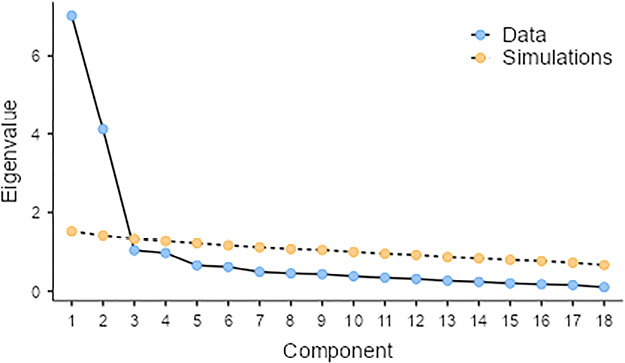
Figure 1. Scree plot on approaches to delivering a smart city.
Source: Authors’ construct (2025).
Component loadings on approaches to delivering smart city services
The component loadings reveal two key strategic dimensions essential for implementing Ghana’s smart city concept: integrated and collaborative service platforms, and technology and data-driven approaches. The importance of these strategies is supported by thematic clusters of approaches represented within each component.
Component 1: Integrated and collaborative service platforms
This component was labelled “integrated and collaborative service platforms”, indicating that the successful delivery of smart cities in Ghana requires platforms that are both integrated and collaborative. The study identifies key elements within this component, including integrated service delivery platforms (0.874), collaborative governance (0.843), smart building solutions (0.836), smart health services (0.820), and e-government platforms (0.814), all of which are strongly represented in the component loadings.
As a strategic approach to smart city implementation in the building construction industry, integrated service delivery platforms align with the findings of Chourabi, et al. (2012), who emphasised that such platforms provide a foundational structure for expanding services and adapting to evolving urban needs, including the integration of new technologies and responses to emergencies such as natural disasters. Similarly, Anthopoulos (2017) highlighted that these platforms rely on IoT, cloud computing, and data analytics to ensure seamless communication between systems and stakeholders. Hashem, et al. (2016) further argued that interconnected systems facilitate real-time analytics, enabling governments to make informed decisions—for example, using predictive analytics to optimise energy distribution or manage traffic flow during peak hours. The study also finds collaborative governance to be a critical strategy in the development of smart cities. This supports Choi and Robertson’s (2019) perspective that collaborative governance enables cities to effectively respond to challenges such as pandemics and climate change by pooling resources and expertise. Ansell and Gash (2008) further emphasised that involving all stakeholders in governance fosters equitable service delivery and ensures that underrepresented groups have a voice in smart city initiatives.
Moreover, the study concludes that smart building solutions are essential for implementing smart cities. This finding is consistent with Huang, et al. (2020), who argued that integrating systems for waste management, lighting, heating, cooling, and security within smart buildings enhances user experiences while reducing operational costs and energy consumption. The research also underscores the importance of smart health services in the development of smart cities. This supports the view of Vardoulakis, et al. (2019), who noted that smart healthcare aims to create interconnected ecosystems where patients, providers, and policymakers can benefit from seamless communication and data sharing. Zhao, et al. (2021) added that smart health services leverage big data analytics to forecast disease outbreaks, optimise resource allocation, and personalise patient care.
Overall, the concepts of collaborative governance and integrated service delivery platforms highlight the necessity of cohesive systems that combine multipurpose services, ensuring operational efficiency and seamless access for citizens in a smart city environment.
Component 2: Technology and data-driven approaches
The second component was labelled “technology and data-driven approaches”, indicating that the successful implementation of smart cities in Ghana relies heavily on the use of advanced technologies and data systems. Key elements within this component include cloud computing and technology (0.800), integrated transport systems (0.781), co-creation and citizen engagement (0.752), and data analytics and artificial intelligence (0.746).
According to Hashem, et al. (2015), cloud computing centralises data processing and storage, enabling cities to manage resources more efficiently and deliver seamless public services. This finding reinforces the idea that cloud computing is a fundamental enabler in the development of smart cities. Chandrakanth, et al. (2021) further observed that cloud-based systems support real-time data collection and information exchange across city departments, thereby enhancing decision-making processes. The study also reveals that integrated transport systems depend on advanced technologies such as the IoT, real-time data analytics, and mobile applications to ensure efficient planning, management, and operation. This aligns with Benevolo, et al. (2016), who emphasised the critical role of these technologies in smart mobility. Similarly, Milić, et al. (2021) noted that IoT sensors and GPS devices provide real-time data on vehicle locations, traffic conditions, and service availability, helping users make informed travel decisions.
In addition, the findings regarding citizen engagement and co-creation align with those of Arnkil, et al. (2010), who defined co-creation as a collaborative process involving residents, businesses, and local governments in designing and implementing urban solutions. Meijer, et al. (2019) further suggested that such collaboration strengthens stakeholder relationships, enhances social capital, and contributes to the development of urban solutions that are technically effective, environmentally sustainable, and socially inclusive. This component as a whole illustrates the critical dependence of smart city systems on advanced technology and robust data infrastructures. Cloud computing enables the storage and processing of large datasets, while AI-driven analytics provide predictive insights and support data-driven decision-making, both of which are essential for effective and efficient urban management.
Theoretical contributions
The results of the study’s PCA indicate that two key subgroups, technology and data-driven techniques, and integrated and collaborative service platforms are essential for the successful delivery of smart cities. The researcher found no evidence of a comparative study conducted within Ghana’s building construction industry. This study is particularly relevant, as it fills a gap in the literature regarding the most critical delivery approaches for developing smart cities in Ghana’s construction sector.
Practical implication
Smart city development in Ghana’s building sector presents several opportunities for sustainable urban transformation by policymakers. Smart building technologies can be integrated into infrastructure planning to reduce costs, lower energy consumption, and support the creation of environmentally friendly cities (Meena, et al., 2022). Resilient healthcare facilities can be developed through the adoption of smart health services, enhancing the technological capacity of new clinics and hospitals and improving health outcomes in both urban and rural areas. Integrated city management can be achieved through the use of service delivery platforms that optimise resource management, improving the efficiency of urban utilities and transit systems by construction organisations or practitioners (European Commission, 2020).
Social contributions
Smart city development in Ghana has the potential to promote inclusive urban development by fostering co-creation and citizen participation, ensuring that marginalised communities have a voice in shaping urban initiatives (European Commission, 2025). Increased public trust can be achieved through open data exchange and AI-powered decision-making, which enhances transparency and builds confidence among citizens, government institutions, and developers.
Recommendations
• To advance smart city development in Ghana, stakeholders should prioritise the integration of service delivery platforms supported by the IoT, cloud computing, and real-time data analytics. These platforms will enable effective resource management and seamless communication across various urban systems. Additionally, adopting collaborative governance models is essential to ensure inclusive and equitable urban development. Such models encourage active participation from the public and private sectors, academic institutions, and citizens.
• The standardisation of smart building solutions within the construction industry is also critical for enhancing operational efficiency and reducing environmental impact. These solutions should incorporate automated control systems, advanced waste management technologies, and sustainable energy systems. Furthermore, the sector should promote the development of intelligent healthcare infrastructure, enabling robust, data-driven healthcare delivery systems that can withstand public health crises.
• To sustain and expand smart city initiatives, investment in building local expertise in digital technology and urban planning is vital. Finally, the government must establish clear policies and incentives to foster innovation, ensure system interoperability, and build public trust through transparent, citizen-centred e-government services.
Through the implementation of these strategies, Ghana can develop resilient, inclusive, and sustainable smart cities that are capable of addressing current urban challenges while meeting future growth demands.
Conclusion
This study investigated strategic approaches for delivering smart cities to support sustainable growth in Ghana’s construction industry. It highlighted the role of smart city concepts in enhancing the resilience, sustainability, and adaptability of urban infrastructure through technological integration and stakeholder collaboration. Using a quantitative research design and a structured questionnaire, the study employed PCA to categorise smart city delivery factors into two components: integrated and collaborative service platforms, and technology and data-driven approaches. These include e-government services, smart buildings, health systems, cloud computing, transport integration, citizen engagement, data analytics, and AI. The findings offer practical guidance for Ghana’s construction sector, such as adopting cloud-based platforms for project management, using IoT and analytics to reduce congestion, and promoting citizen participation in urban development. Policymakers are advised to create interoperability standards and encourage modular, scalable technologies. The study, limited to five regions, calls for broader research across Ghana to further explore smart city implementation challenges and success factors. Overall, this study contributes valuable insights to the knowledge base on sustainable smart city delivery strategies in Ghana’s construction industry.
References
1. Adu Gyamfi, T., Adjei, K. O., and Bonney, S. O. (2024). Strategies to Improve Building Construction Sustainability Through Utilisation of Drones in the Building Construction Sector. International Symposium on Green Technologies and Applications, December 27-29th. Morrocco. Procedia Computer Science, Elsevier in Press. https://doi.org/10.1016/j.procs.2024.05.023
2. Adu Gyamfi, T. Clinton Aigbavboa, O. C., and Thwala, W. D. (2022). Risk resources management influences public–private partnership risk management in construction industry. Confirmatory factor analysis approach. Journal of Engineering, Design and Technology 1726-0531. https://doi.org/10.1108/JEDT-12-2021-0699
3. Agedu, G.O., Donkor, F. and Obeng, S. (2011) Teach Yourself Research Methods. UEW, Kumasi. https://www.scirp.org/reference/referencespapers?referenceid=2655599 (Accessed on 12/02/2024)
4. Agumba, J. N. (2013), A Construction Health and Safety Performance Improvement Model for South African Small and Medium Enterprises. Ph.D Thesis, University of Johannesburg.
5. Akande, A., Cabral, P., and Casteleyn, S. (2019). Understanding urban sustainability challenges in developing countries: A focus on Lagos, Nigeria. Sustainability, 11(3), 607. https://doi.org/10.3390/su11030607
6. Al Jaafreh, M., B., and Allouzi, M., A. (2023). Smart Cities Adoption in Saudi Arabia: A Comprehensive Review and Future Drivers. British Journal of Multidisciplinary and Advanced Studies, Engineering and technology 4(5):20-39. https://doi.org/10.37745/bjmas.2022.0300
7. Alawadhi, S., Aldama-Nalda, A., Chourabi, H., Gil-Garcia, J. R., Leung, S., Mellouli, S., and Walker, S. (2012). Building understanding of smart city initiatives. Proceedings of the 11th IFIP WG 8.5 International Conference on Electronic Government (EGOV), Kristiansand, Norway. Springer, Berlin, Heidelberg. https://doi.org/10.1007/978-3-642-33489-4_4
8. Albino, V., Berardi, U., and Dangelico, R. M. (2015). Smart cities: Definitions, dimensions, performance, and initiatives. Journal of Urban Technology, 22(1), 3-21. https://doi.org/10.1080/10630732.2014.942092
9. Afolayan, E (2016). Will Kenya’s ambitious Konza City project prove doubters wrong. Africa M.E. https://africa-me.com/will-kenyas-ambitious-konza-city-project-prove-doubters-wrong/ Retrieved 5/7/ 2025.
10. Alfano, A., Amitrano, C. C. and Bifulco, F., (2014). Smart cities drivers and ICT: in search of relationships. EIIC Interdisciplinary Conference, pp. 17–22
11. Afolayan, E (2016). Will Kenya’s ambitious Konza City project prove doubters wrong. Africa M.E. https://africa-me.com/will-kenyas-ambitious-konza-city-project-prove-doubters-wrong/ Retrieved 5/7/ 2025.
12. Alahi, M. E. E., Sukkuea, A., Tina, F. W., Nag, A., Kurdthongmee, W., Suwannarat, K., and Mukhopadhyay, S. C. (2023). Integration of IoT-Enabled Technologies and Artificial Intelligence (AI) for Smart City Scenario: Recent Advancements and Future Trends. Sensors, 23(11), 5206. https://doi.org/10.3390/s23115206
13. Aljowder, T.; Ali, M.; and Kurnia, S. (2023). Development of a Maturity Model for Assessing Smart Cities: A Focus Area Maturity Model. Smart Cities, 6, 2150–2175. https://doi.org/10.3390/smartcities6040099
14. Ansell, C., and Gash, A. (2008). Collaborative governance in theory and practice. Journal of Public Administration Research and Theory, 18(4), 543-571. https://doi.org/10.1093/jopart/mum032
15. Anthopoulos, L. (2017). Understanding smart cities: A tool for smart government or an industrial trick? Springer. https://doi.org/10.1007/978-3-319-57015-0
16. Arnkil, R., Järvensivu, A., Koski, P., and Piirainen, T. (2010). Exploring quadruple helix: Outlining user-oriented innovation models. Työraportteja Working Papers, 85.
17. Baglieri, D., Cinici, M. C., and Mangematin, V. (2012). Rejuvenating clusters with ‘sleeping anchors’: The case of nanoclusters. Technovation. 32, 245–56. https://doi.org/10.1016/j.technovation.2011.09.003
18. Bakıcı, T., Almirall, E. and Wareham, J., (2013). A smart city initiative: the case of Barcelona. Journal of the knowledge economy, 4(2), pp.135-148. https://doi.org/10.1007/s13132-012-0084-9
19. Batty, M., Axhausen, K. W., Giannotti, F., Pozdnoukhov, A., Bazzani, A., Wachowicz, M., and Portugali, Y. (2012). Smart cities of the future. The European Physical Journal Special Topics, 214(1), 481–518. https://doi.org/10.1140/epjst/e2012-01703-3
20. Bawa, M., Caganova, D., Szilva, I., and Spirkova, D., (2016). Importance of Internet of Things and Big Data in Building Smart City and What Would Be Its Challenges. A. Leon-Garcia et al. (Eds.): Smart City 2015, pp. 605–616. https://doi.org/10.1007/978-3-319-33681-7_52
21. Babbie, E. (2020). The Practice of Social Research (15th ed.). Cengage Learning.
22. BBC News (2008). Work starts on Gulf ‘green city. http://news.bbc.co.uk/2/hi/science/nature/7237672.stm. Retrieved 5/7/2025
23. Benevolo, C., Dameri, R. P., and D’Auria, B. (2016). Smart mobility in smart cities: Action taxonomy, ICT intensity, and public benefits. Springer Smart City Development, 13(2), 13–28. https://doi.org/10.1007/978-3-319-61313-0_2
24. Bhatt, S., and Chakraborty, S. (2022). Role of IoT in smart healthcare: Challenges and opportunities. Healthcare Technology Letters, 9(2), 36-44. https://doi.org/10.1049/htl2.12012
25. Bibri, S., E. and Krogstie, J. (2017). Smart sustainable cities of the future: An extensive interdisciplinary literature review, Sustainable Cities and Society, Vol. 31, Pp. 183-212. https://doi.org/10.1016/j.scs.2017.02.016
26. Bisnow. (2018). Amazon HQ2 Shortlist: Details On The 20 Finalists In $5B Sweepstakes. Forbes (2018). Available online at: https://www.forbes.com/sites/ bisnow/2018/01/19/amazon-hq2-shortlist-details-on-the-20-finalists-in-5bsweepstakes/(accessed September 2, 2025)
27. Bolton, A., Butler, L., Dabson, J., Enzer, M., Evans, M., Glancy, J., and Winnard, J. (2018). The Gemini Principles: Guiding values for the national digital twin and information management framework. Centre for Digital Built Britain.
28. Brant, J. (2024). Trends that will shape smart cities in 2024. https://sifinetworks.com/municipality/trends-that-will-shape-smart-cities-in-2024/?utm_source=chatgpt.com . (Accessed on 5/5/2025)
29. Brenda, M (2020). Statement On the Reset of The Quayside Project. https://ccla.org/privacy/surveillance-technology/smart-cities/statement-on-the-reset-of-the-quayside-project/
30. Bryan, W (2011). “Masdar City: The World’s Greenest City?”. Time. https://time.com/archive/6934748/masdar-city-the-worlds-greenest-city/. Retrieved 5/7/2025
31. Bryant, M (2019). Toronto’s Smart City: Our Fight for Privacy. https://ccla.org/major-cases-and-reports/torontos-smart-city/ Retrieved 5/7/2025
32. Bryman, A. (2016). Social research methods (5th ed.). Oxford University Press.
33. Cahn, A. F. (2019). The First Effort to Regulate AIWas a Spectacular Failure. FastCompany. Available online at: https://www.fastcompany.com/90436012/ the-first-effort-to-regulate-ai-was-a-spectacular-failure (accessed September 2, 2025).
34. Canadian civil liberties association (2019). Why Toronto’s Smart City is an Issue. https://ccla.org/major-cases-and-reports/torontos-smart-city/
35. Carvalho, S. (2009). “First Solar to help power Masdar, UAE’s green city”. Reuters UK. https://web.archive.org/web/20111224221502/http://uk.reuters.com/article/2009/01/15/emirates-masdar-solar-idUKN1553106120090115. Retrieved 5/7/2025
36. Chandrakanth, T., Kumari, K. R., and Sravani, S. (2021). Cloud computing and its role in the evolution of smart cities. International Journal of Engineering Research & Technology (IJERT), 10(5), 329–333.
37. Caragliu, A., Del Bo, C. and Nijkamp, P., (2011). Smart cities in Europe. Journal of urban technology, 18(2), pp.65-82. https://doi.org/10.1080/10630732.2011.601117
38. Chisom, M. (2024). Only 3 cities in Africa rank among 50 best cities in the world in 2024. https://businessday.ng/bd-weekender/article/only-3-cities-in-africa-rank-among-50-best-cities-in-the-world-in-2024/ (Accessed on September, 2024)
39. Choi, T., and Robertson, P. J. (2019). Deliberation and collaboration in collaborative governance: A simulation-based analysis. Journal of Public Administration Research and Theory, 29(1), 118-133. https://doi.org/10.1093/jopart/muy060
40. Chourabi, H., Nam, T., Walker, S., Gil-Garcia, J. R., Mellouli, S., Nahon, K., and Scholl, H. J. (2012). Understanding smart cities: An integrative framework. 45th Hawaii International Conference on System Sciences (HICSS), 2289-2297. https://doi.org/10.1109/HICSS.2012.615
41. Coldefy, C., Niaré, A., Lartigue, F., and Grollimund, B. (2020). Urban digital twins for better urban planning and management. Journal of Urban Technology, 27(1), 3-22.
42. Costello, A. B., and Osborne, J. (2005). Best practices in exploratory factor analysis: Four recommendations for getting the most from your analysis. Practical Assessment, Research, and Evaluation, 10(1), 7. https://doi.org/10.7275/jyj1-4868
43. Creswell, J. W., and Creswell, J. D. (2018). Research design: Qualitative, quantitative, and mixed methods approaches (5th ed.). Sage publications, Los Angeles.
44. D’Amato, D., Droste, N., Allen, B., Kettunen, M., Lähtinen, K., Korhonen, J., and Toppinen, A. (2021). Green economy: Pragmatism and sustainability in the circular economy. Journal of Cleaner Production, 283, 123087. https://doi.org/10.1016/j.jclepro.2020.123087
45. Daily Nation (2020). Pomp as Kibaki launches Konza technology city. https://nation.africa/kenya/news/pomp-as-kibaki-launches-konza-technology-city--845284 Retrieved 5/7/2025.
46. Denzin, N. K., and Lincoln, Y. S. (Eds.). (2011). The Sage handbook of qualitative research (4th ed.). Thousand Oaks, CA: Sage.
47. Digital, K. B. C. (2025). Gov’t gives Konza investors 18 months to develop or lose land. https://www.kbc.co.ke/govt-gives-konza-investors-18-months-to-develop-or-lose-land/ Retrieved 5/7/2025.
48. Dianna, D (2007). Zero Carbon; Zero Waste in Abu Dhabi. BusinessWeek. https://web.archive.org/web/20121105133302/http://www.businessweek.com/stories/2007-08-01/zero-carbon-zero-waste-in-abu-dhabibusinessweek-business-news-stock-market-and-financial-advice. Retrieved 5/7/2025
49. European Commission (2025). Smart cities and communities: Shaping Europe’s digital future. https://digital-strategy.ec.europa.eu/en/policies/smart-cities-and-communities. Accessed on 04/07/2025
50. European Commission (2020). Smart cities: Cities using technological solutions to improve the management and efficiency of the urban environment. https://commission.europa.eu/eu-regional-and-urban-development/topics/cities-and-urban-development/city-initiatives/smart-cities_en#:~:text=Related%20events-,What%20are%20smart%20cities?,signed%20up%20as%20a%20member. Accessed on 04/07/2025
51. Field, A. (2018). Discovering Statistics Using IBM SPSS Statistics (5th ed.). Sage Publications.
52. Flint, A. (2020). What Abu Dhabi’s City of the Future Looks Like Now. Bloomberg. https://www.bloomberg.com/news/articles/2020-02-14/the-reality-of-abu-dhabi-s-unfinished-utopia Retrieved 5/7/2025
53. Fuchs, M., Dannenberg, P., and Wiedemann, C. (2022). Big tech and labour resistance at Amazon. Sci. Cult. 31, 29–43. https://doi.org/10.1080/09505431.2021.1937095
54. Gceza, N., (2018). Cyber Security in Smart Cities: A People Perspective. In: Smart Cities Africa Summit. Emperors Palace Hotel, Johannesburg, South Africa, 3-4 July 2018.
55. Geissdoerfer, M., Savaget, P., Bocken, N. M. P., and Hultink, E. J. (2017). The circular economy – A new sustainability paradigm? Journal of Cleaner Production, 143, 757–768. https://doi.org/10.1016/j.jclepro.2016.12.048
56. Ghosal, A. and Halder, S., (2018). Building Intelligent Systems for Smart Cities: Issues, Challenges and Approaches. In: Z. Mahmood, ed. Smart Cities, Development and Governance Frameworks. Derby, UK: Springer. pp.107-125. https://doi.org/10.1007/978-3-319-76669-0_5
57. Ghansah, F. A., Owusu-Manu, D. G., Edwards, D. J., Thwala, W. D., Yamoah Agyemang, D., and Ababio, B. K. (2023). A framework for smart building technologies implementation in the Ghanaian construction industry: a PLS-SEM approach. Building Research & Information, 52(1–2), 148–163. https://doi.org/10.1080/09613218.2023.2248294
58. Gielen, D., Boshell, F., Saygin, D., Bazilian, M. D., Wagner, N., and Gorini, R. (2019). The role of renewable energy in the global energy transformation. Energy Strategy Reviews, 24, 38-50. https://doi.org/10.1016/j.esr.2019.01.006
59. Giffinger, R., Fertner, C., Kramar, H. and Meijers, E., 2007. Smart Cities: Ranking of European Medium-sized Cities. Centre of Regional Science (SRF). Vienna University of Technology, Vienna, Austria, 2007. [online] Available at: http://www.smart-cities.eu/download/smart_cities_final_report.pdf.
60. Gooch, D., Barker, M., Hudson, L., Kelly, R., Kortuem, G., Van Der Linden, J., et al. (2018). Amplifying quiet voices: challenges and opportunities for participatory design at an urban scale. ACM Trans. Comput. Hum. Interact. 25, 34. https://doi.org/10.1145/3139398
61. Goodman, B. (2020). Smart cities and AI: The future of urban development. AI & Society, 35(1), 1–10.
62. Guariglia, M., and Gullo, K. (2021). Emails from 2016 Show Amazon Ring’s Hold on the LAPD. Through Camera Giveaways. Electronic Frontier Foundation (2021). Available online at: https://www.eff.org/deeplinks/2021/06/emails-showamazon- rings-hold-lapd-through-camera-giveaways (accessed September 2, 2025)
63. Guo, E. (2021). How Amazon Ring Uses Domestic Violence to Market Doorbell Cameras. MIT Technology Review (2021). Available online at: https://www.technologyreview.com/2021/09/20/1035945/amazon-ring-domestic-violence/(accessed September 2, 2025).
64. Gupta, P. S. (2019). The fleeting, unhappy affair of Amazon HQ2 and New York City. Transnat. Legal Theory 10, 97–122. https://doi.org/10.1080/20414005.2019.1609785
65. Gyamfi, T. A., Aigbavboa, C., & Thwala, W. D. (2022). Confirmatory factor analysis of organisational culture influence on public-private partnership risk management in the construction industry in Ghana. International Journal of Construction Supply Chain. Management, 12(1), 183-200. https://doi.org/10.14424/ijcscm120122-183-200
66. Hashem, I. A. T., Yaqoob, I., Anuar, N. B., Mokhtar, S., Gani, A., and Khan, S. U. (2015). The rise of “big data” on cloud computing: Review and open research issues. Information Systems, 47, 98–115. https://doi.org/10.1016/j.is.2014.07.006
67. Hashem, I. A. T., Yaqoob, I., Anuar, N. B., Mokhtar, S., Gani, A., and Khan, S. U. (2016). The rise of “big data” on cloud computing: Review and open research issues. Information Systems, 47, 98-115. https://doi.org/10.1016/j.is.2014.07.006
68. Hollands, R.G., (2008). Will the real smart city please stand up?’, City, 12(3), pp.303–20. https://doi.org/10.1080/13604810802479126
69. Huang, L., Zhu, J., and Lu, X. (2020). Energy and environmental performance of smart buildings: A comprehensive review. Renewable and Sustainable Energy Reviews, 131, 110010. https://doi.org/10.1016/j.rser.2020.110010
70. Jiang, J., Hong, T., and Kim, J. (2021). Building energy monitoring and analysis system for sustainable smart city development. Energy and Buildings, 248, 111135.
71. Karmaker, A.K.; Islam,S.M.R.; Kamruzzaman, M.; Rashid, M.M.U.; Faruque, M.O.; and Hossain, M.A. (2023). Smart City Transformation: An Analysis of Dhaka and Its Challenges and Opportunities. Smart Cities, 6, 1087–1108. https://doi.org/10.3390/smartcities6020052
72. Kenya News Agency (2022). Konza Phase-1 vertical infrastructure at 80pc complete. https://www.kenyanews.go.ke/konza-phase-1-vertical-infrastructure-at-80pc-complete/ Retrieved 5/7/2025.
73. Kolhe, R., V., William, P., Yawalkar, P., M., Paithankar, D., N., and Pabale, A., R. (2023). Smart city implementation based on Internet of Things integrated with optimization technology. Measurement: Sensors, Volume 27, 100789 https://doi.org/10.1016/j.measen.2023.100789
74. Komninos, N., (2009). Intelligent cities: towards interactive and global innovation environments. International Journal of Innovation and Regional Development, 1(4), pp.337-355.
75. Koppenjan, J. F. M., and Enserink, B. (2009). Public-private partnerships in urban infrastructures: Reconciling private sector participation and public accountability. Public Administration Review, 69(2), 284–296. https://doi.org/10.1111/j.1540-6210.2008.01974.x
76. Lecher, C. (2019). New York City’s Algorithm Task Force is Fracturing. The Verge. Available online at: https://www.theverge.com/2019/4/15/18309437/newyork-city-accountability-task-force-law-algorithm-transparency-automation (accessed September 2, 2025).
77. Levy, K., Chasalow, K. E., and Riley, S. (2021). Algorithms and decision-making in the public sector. Ann. Rev. Law Soc. Sci. 17, 309–334. https://doi.org/10.1146/annurev-lawsocsci-041221-023808
78. Lim, Y. (2021). Impacts of Smart City Development: Experience of South KoreaThesis submitted to Erasmus University Rotterdam for degree of Doctor of Philosophy.
79. Lyons, K. (2021). Amazon’s Ring Now Reportedly Partners with More than 2,000 US Police and Fire Departments. The Verge (2021). Available online at: https://www.theverge.com/2021/1/31/22258856/amazon-ring-partners policefire-security-privacy-cameras (accessed September 2, 2025).
80. Meena, C. S., Kumar, A., Jain, S., Rehman, A. U., Mishra, S., Sharma, N. K., Bajaj, M., Shafiq, M., and Eldin, E. T. (2022). Innovation in Green Building Sector for Sustainable Future. Energies, 15(18), 6631. https://doi.org/10.3390/en15186631
81. Meijer, A. and Bolívar, M.P.R., (2016). Governing the smart city: a review of the literature on smart urban governance. International Review of Administrative Sciences, 82(2), pp.392-408.
82. Meijer, A., Gil-Garcia, J. R., and Bolívar, M. P. R. (2016). Smart city research: Contextual conditions, governance models, and public value assessment. Social Science Computer Review, 34(6), 647–656. https://doi.org/10.1177/0894439315618890
83. Meijer, A., Burger, N., and Ebbers, W. (2019). Citizen engagement in smart cities: Inclusive innovation and its socio-political implications. The Routledge Handbook of Smart Cities, 271-285.
84. Miettinen, R., and Paavola, S. (2014). Beyond the BIM utopia: Approaches to the development and implementation of building information modeling. Automation in Construction, 43, 84-91. https://doi.org/10.1016/j.autcon.2014.03.009
85. Milić, M., Šoštarić, M., and Vujičić, A. (2021). Integrated transport systems as a pillar of sustainable urban mobility. Transportation Research Procedia, 60, 328–335. https://doi.org/10.1016/j.trpro.2021.12.041
86. Morlu’s, J., S. (2024). Smart Cities in Ghana: The Role of Technology in Urban Development Technology. https://jsmorlu.com.gh/blog/technology/role-of-technology-in-ghana/ Accessed on 20/04/2025.
87. Mohanty, S. P., Choppali, U., and Kougianos, E. (2016). Everything you wanted to know about smart cities: The Internet of Things is the backbone. IEEE Consumer Electronics Magazine, 5(3), 60-70. https://doi.org/10.1109/MCE.2016.2556879
88. Mylonas, G., Kalogeras, A., Petersen, S., A., Muñoz, L., and Chatzigiannakis, I. (2024). When Circular Economy Meets the Smart City Ecosystem: Defining the Smart and Circular City. Computers and Society. https://doi.org/10.48550/arXiv.2410.22012
89. Nager, A. B., Lowe Reed, A. S., and Langford, W. S. (2019). Catching the whale: a comparison of place promotion strategies through the lens of Amazon HQ2. Geogr. Compass 13, e12462. https://doi.org/10.1111/gec3.12462
90. Nam, T., and Pardo, T. A. (2011). Conceptualizing smart city with dimensions of technology, people, and institutions. Proceedings of the 12th Annual International Conference on Digital Government Research, 282-291. https://doi.org/10.1145/2037556.2037602
91. Neirotti, P., De Marco, A., Cagliano, A. C., Mangano, G., and Scorrano, F. (2014). Current trends in smart city initiatives: Some stylised facts. Cities, 38, 25–36. https://doi.org/10.1016/j.cities.2013.12.010
92. Newton, E. (2025). 6 Smart City Trends Transforming Communities in 2025. https://innotechtoday.com/6-smart-city-trends-transforming-communities-in-2025/?utm_source=chatgpt.com. (Accessed on 3/5/2025)
93. Norušis, M. J. (2011). IBM SPSS Statistics 19 Guide to Data Analysis. Upper Saddle River, New Jersey: Prentice Hall.
94. NYC Automated Decision Systems Task Force (2019). Automated Decision Making Task Force Report. New York City. Available online at: https://www1.nyc. gov/assets/adstaskforce/downloads/pdf/ADS-Report-11192019.pdf (accessed September 2, 2025).
95. Ofori, F., N., K. (2021). Sprawl and Congestion in Accra – Challenges and Opportunities of Sustainable Development in Ghana’s Capital City. Regional Insights: A selection of articles providing a fresh take on regional studies. https://doi.org/10.1080/13673882.2021.00001092
96. Oke, A.E., Aghimien, D.O., Aigbavboa, C.O., and Akinradewo, O.I. (2020). Appraisal of the drivers of smart city development in South Africa. Construction Economics and Building, 20:2, 109-126. https://doi.org/10.5130/AJCEB.v20i2.6632
97. Owusu-Manu, D. G., Ghansah, F. A., Ayarkwa, J., Edwards, D. J., and Hosseini, R. (2022). Factors influencing the decision to adopt Smart Building Technology (SBT) in developing countries. African Journal of Science, Technology, Innovation and Development, 14(3), 790-800. https://doi.org/10.1080/20421338.2021.1899761
98. Pali, B., and Schuilenburg, M. (2019). Fear and fantasy in the smart city. Crit. Criminol. 28, 775–788. https://doi.org/10.1007/s10612-019-09447-7
99. Pavel, S., Tanasiev, V., Ion, I., and Badea, A. (2021). Smart buildings and sustainability: Towards an efficient and green built environment. Energy Reports, 7, 206-213. https://doi.org/10.1016/j.egyr.2021.01.034
100. Ramayah, T., Lee, J. W. C., and Lim, S. (2016). Sustaining the environment through recycling: An empirical study. Journal of Environmental Management, 172, 37–45. https://doi.org/10.1016/j.jenvman.2016.02.018
101. Rehbinder, E. (2011), Do personal networks affect the success of foreign venture performance? An empirical analysis of Nordic firms in Poland. Copenhagen Business School. Copenhagen Business School Research, An Applied Orientation. Pearson Education Australia, Frenchs Forest.
102. Richardson, R. (2019). Confronting Black Boxes: A Shadow Report of the New York City Automated Decision System Task Force. AI Now Institute. Availableonline at: https://ainowinstitute.org/ads-shadowreport-2019.html (accessed September 2, 2025).
103. Retail, Wholesale and Department Store Union (2018). What’s Wrong with Amazon? New York, NY: Retail, Wholesale and Department Store Union. Available online at: https://www.rwdsu.info/new_report_what_s_wrong_with_amazon (accessed Sep 2, 2022).
104. Sarmento, R., and Costa, V. (2017), Comparative Approaches to Using R and Python for Statistical Data Analysis. IGI Global, Pennsylvania. https://doi.org/10.4018/978-1-68318-016-6
105. Shaheen, S., Cohen, A., and Zohdy, I. (2016). Shared mobility: Current practices and guiding principles. U.S. Department of Transportation Federal Highway Administration.
106. Shadowen, N., Lodato, T., and Loi, D. (2020). “Participatory governance in smart cities: future scenarios and opportunities,” in Distributed, Ambient and Pervasive Interactions, eds N. Streitz and S. Konomi. Lecture Notes in Computer Science. (Cham: Springer International Publishing), 443–63. https://doi.org/10.1007/978-3-030-50344-4_32
107. Shapiro, J.M., (2006). Smart cities: quality of life, productivity, and the growth effects of human capital. The review of economics and statistics, 88(2), pp.324-335. https://doi.org/10.1162/rest.88.2.324
108. Siemiatycki, M. (2013). The global production of transportation public-private partnerships. International Journal of Urban and Regional Research, 37(4), 1254–1272. https://doi.org/10.1111/j.1468-2427.2012.01151.x
109. Sileyew, J., K. (2019). Research Design and Methodology. Book Chapter from Cyberspace Edited by Evon Abu-Taieh, Abdelkrim El Mouatasim and Issam H. Al Hadid. https://doi.org/10.5772/intechopen.85731
110. Silva, B. N., Khan, M., and Han, K. (2018). Towards sustainable smart cities: A review of trends, architectures, components, and open challenges in smart cities. Sustainable Cities and Society, 38, 697–713. https://doi.org/10.1016/j.scs.2018.01.053
111. Silverberg, D (2024). A hit show on Toronto’s failed smart city project returns to the stage. https://www.smartcitiesdive.com/news/toronto-smart-city-sidewalk-labs-master-plan-play/728717/
112. Smart City journal (2016). Smart City in Accra-Ghana: A Gold Coast again. https://www.thesmartcityjournal.com/en/articles/smart-city-accra-ghana-gold-coast Accessed on 26/04/2025
113. Smart Cities Markets (2024). Emerging Trends in Global Smart Cities Market: IoT Integration, AI Analytics, Sustainable Infrastructure & More. https://www.marketsandmarkets.com/ResearchInsight/emerging-trends-in-smart-cities-market.asp?utm_source=chatgpt.com. (Accessed on 2/5/2025)
114. Soni, R., Sharma, S., and Dubey, R. (2021). Smart waste management for smart cities: Technologies and practices. Journal of Cleaner Production, 281, 124462. https://doi.org/10.1016/j.jclepro.2020.124462
115. Sørensen, E., and Torfing, J. (2011). Enhancing collaborative innovation in the public sector. Administration & Society, 43(8), 842–868. https://doi.org/10.1177/0095399711418768
116. Stanton, C (2010). “Masdar City completion pushed back, but total cost falls”. The National. https://web.archive.org/web/20101014014754/http://www.thenational.ae/news/uae-news/environment/masdar-city-completion-pushed-back-but-total-cost-falls. Retrieved 5/7/2025
117. Tabachnick, B. G., and Fidell, L. S. (2001), Using multivariate statistics. (4th ed.). Boston: Allyn and Bacon.
118. The EastAfrican (2020). Inside Silicon Savannah, a dream coming true. https://www.theeastafrican.co.ke/tea/news/east-africa/inside-silicon-savannah-a-dream-coming-true--1314544 Retrieved 5/07/2025.
119. The Guardian (2025). Sweden’s city of tomorrow: how Scandi innovation is leading climate-smart urban development. https://www.theguardian.com/urban-energy-innovation/2025/mar/18/learning-from-scandi-innovation-how-swedens-city-of-tomorrow-is-leading-the-way-in-climate-smart-urban-development?utm_source=chatgpt.com. (Accessed on 5/5/2025)
120. United Nations. (2018). World Urbanization Prospects: The 2018 Revision. Department of Economic and Social Affairs.
121. Vanolo, A., (2014). Smartmentality: The smart city as disciplinary strategy. Urban studies, 51(5), pp.883-898. https://doi.org/10.1177/0042098013494427
122. Vardoulakis, S., Giagloglou, E., Steinle, S., Davis, A., Sleeuwenhoek, A., Galea, K. S., and Dixon, K. (2019). Smart health services and sustainable cities: Addressing global urbanization challenges. Sustainability, 11(7), 2048. https://doi.org/10.3390/su11072048
123. Venkatesh, V., Morris, M.G., Davis, G.B. and Davis, F.D. (2003) User Acceptance of Information Technology: Toward a Unified View. MIS Quarterly, 27, 425-478. https://doi.org/10.2307/30036540
124. Weber, E. P., and Khademian, A. M. (2008). Wicked problems, knowledge challenges, and collaborative capacity builders in network settings. Public Administration Review, 68(2), 334–349. https://doi.org/10.1111/j.1540-6210.2007.00866.x
125. World Bank. (2020). Urban Development Overview. Retrieved from https://www.worldbank.org/en/topic/urbandevelopment
126. Yong, A. G., and Pearce, S. (2013). A beginner’s guide to factor analysis: Focusing on exploratory factor analysis. Tutorials in Quantitative Methods for Psychology, 9(2), 79–94. https://doi.org/10.20982/tqmp.09.2.p079
127. Zhao, Y., Li, Z., and Zhang, M. (2020). Urban digital twins: Opportunities and challenges. Automation in Construction, 114, 103148. https://doi.org/10.1016/j.autcon.2020.103148
128. Zhao, Y., Zhang, J., and Wang, J. (2021). Big data and artificial intelligence for smart healthcare: Progress and challenges. Journal of Medical Systems, 45(8), 83.
129. Zhengrong Liu and Jianping Wu, (2023). “A Review of the Theory and Practice of Smart City Construction in China,” Sustainability, MDPI, vol. 15(9), pages 1-22. https://doi.org/10.3390/su15097161
130. Zin, M., C., Lenin, G., Huo C., L., and MV Prassana, M., V. (2019). Real-time water quality system in internet of things. IOP Conf. Ser.: Mater. Sci. Eng. 495 012021. https://doi.org/10.1088/1757-899X/495/1/012021