Construction Economics and Building
Vol. 26, No. 2
2026
ARTICLES (PEER REVIEWED)
Influence of Education and Training on Sustainable Construction Adaptive Capacity in the Construction Industry
Mark Pim-Wusu1,3,*, Timothy Adu Gyamfi2, Wellington Didibhuku Thwala3, Clinton Ohis Aigbavboa4
1 Department of Building Technology, Accra Technical University, Accra, Ghana.
ORCID ID: 0000-0001-7743-6759
2 Department of Construction Technology and Management Education, Akenten Appiah-Menka University of Skills Training and Entrepreneurial Development, Kumasi, Ghana
3 Department of Civil Engineering, Walter Sisulu University, East London, South Africa
4 Department of Construction Management and Quantity Surveying, University of Johannesburg, Johannesburg, South Africa
Corresponding author: Mark Pim-Wusu, mpimwusu@atu.edu.gh
DOI: https://doi.org/10.5130/5064yf80
Article History: Received 10/10/2024; Revised 25/01/2026; Accepted 23/03/2026; Published 05/06/2026
Citation: Pim-Wusu, M., Adu Gyamfi, T., Didibhuku Thwala, W., Ohis Aigbavboa, C. 2026. Influence of Education and Training on Sustainable Construction Adaptive Capacity in the Construction Industry. Construction Economics and Building, 26:2, 1–27. https://doi.org/10.5130/5064yf80
Abstract
Fostering sustainable building practices is essential to mitigating the environmental impact of human activity. Education and training play a critical role in this effort. However, developing nations have yet to fully adopt sustainable construction strategies. This study investigates how education and training influence the adaptive capacity of Ghana’s construction sector. A quantitative approach was employed, with data collected from 400 participants. The data were analysed using IBM SPSS (version 26), and structural equation modelling (SEM) was conducted using AMOS (version 24). The analysis revealed two key latent constructs of education and training: adaptive barriers (ADBs) and implementation awareness (IPA). The findings suggest that enhancing education and training is essential to building adaptive capacity within the industry. The study recommends that government agencies and construction stakeholders implement advocacy programmes and workshops to promote sustainable construction practices among contractors and professionals. The novelty of this research lies in its contribution to achieving Sustainable Development Goal (SDG) 11 by proposing a structured pathway for integrating sustainability into construction practices. It uniquely highlights the direct impact of targeted education and training initiatives on adaptive capacity in Ghana’s construction industry.
Keywords
Education and Training; Adaptive Capacity; Sustainable Construction; Construction Sector; Sustainability
Introduction
Education and training play a vital role in promoting sustainable construction (SC) practices and improving traditional construction methods (Lowe et al., 2023). These efforts begin at the design stage and continue throughout project development, ensuring that workers align with sustainable building requirements (Basira & Shafiu, 2022; Pinto et al., 2022). A key outcome of effective training is the acquisition of long-lasting knowledge; however, knowledge gained through field training may fade over time. Therefore, fostering adaptive capacity, the ability to adjust and respond effectively to sustainability challenges, is essential (Pim-Wusu et al., 2022a, 2022c).
Ebekozien and Aigbavboa (2023a) identified education and training as the most critical elements of a construction firm’s sustainability strategy. Nevertheless, many industry players overlook the importance of evaluating training outcomes to ensure alignment with the intended behavioural and knowledge changes (Pinto et al., 2022; Ebekozien & Aigbavboa, 2023b; Laumer & Maier, 2023). As Ebekozien et al. (2021) stated, “what gets measured gets done”, highlighting the need for construction firms to observe and regularly assess training impacts to achieve SC goals. Laumer and Maier (2023) similarly stressed the importance of evaluating training effectiveness. Fonseca et al. (2020) argued that construction firms bear the responsibility for education and training, as these efforts directly enhance adaptive capacity. Although training entails significant costs, it is a long-term investment critical to achieving sustainability objectives. Agyekum et al. (2022) emphasised that education and training are particularly important in developing nations such as Ghana to support progress toward the Sustainable Development Goals (SDGs). Various studies have addressed adaptive capacity. For example, Pim-Wusu et al. (2022b) explored adaptable buildings, while Geraedts et al. (2014) and Geraedts and Prins (2016) proposed frameworks for assessing building flexibility. Manewa et al. (2016), Graves et al. (2018), Kougea et al. (2019), and Barton et al. (2021) examined multiple dimensions of building adaptability and resilience in the face of sustainability challenges.
In Ghana, Pim-Wusu et al. (2024) studied the effects of adaptability and integration on small- and medium-sized construction enterprises. Further research (Pim-Wusu et al., 2022a, 2022c) pointed to a significant lack of education and training in the sector. While existing literature covers adaptive capacity broadly, few studies have focused specifically on the role of education and training in shaping it within Ghana’s construction industry. This is the gap that this study seeks to address. Despite some progress, sustainable construction practices in Ghana remain limited. Traditional methods and materials still dominate, often disregarding SC principles (Pim-Wusu et al., 2022a, 2022b, 2022c). Nevertheless, with increasing climate-related challenges such as heavy rainfall, heatwaves, and droughts, the urgency to adopt sustainable construction practices is growing.
This study aims to explore how education and training can enhance adaptive capacity within Ghana’s construction industry. Specifically, it seeks to examine the indicators of education and training that influence adaptive capacity. Ultimately, the findings will inform policymakers and construction stakeholders on how to promote sustainable practices, reduce carbon emissions, and support Sustainable Development Goal 9. The research underscores the importance of investing in knowledge and skill development to drive the industry’s transition toward more sustainable and resilient construction practices.
Literature review
A theory that underpins education and training
Resilience theory, introduced by Rutter (2006), describes the ability to achieve positive outcomes despite significant risks and adversity. In the construction context, resilience refers to a system’s capacity to adapt to disturbances while maintaining its core functions and structure (Walker et al., 2004; Folke et al., 2010). Laumer and Maier (2023) further defined resilience as the industry’s ability to recognise and integrate new knowledge, especially from external sources, into construction practices. For construction firms to embrace education and training effectively, they must understand how environmental changes impact their operations. Pim-Wusu et al. (2022a) and Debrah et al. (2021) viewed resilience as an innovation that evolves, influenced by past experiences. Similarly, Walker and Salt (2006) and Chapin et al. (1996) argued that systems must withstand shocks, recover, and adapt without becoming obsolete. This flexibility is vital for the construction sector, as it faces growing environmental challenges while striving to deliver sustainable infrastructure. Over the past three decades, resilience theory has gained prominence in sustainable development research (Folke et al., 2002; Gunderson & Holling, 2003). A central concept within this theory is adaptive capacity, defined as a system’s ability to adjust to change. Folke et al. (2010) posited that construction, as a social–ecological system, should be able to realign without significant disruption, especially in developing nations, where rapid urbanisation demands flexible building practices. Resilience can be strengthened through continuous learning, adaptation, and keen observation (Gunderson and Holling, 2003; Folke et al., 2004). Mohammed et al. (2022) argued that embedding sustainability and resilience within construction training is essential due to mounting global resource pressures. They proposed two primary forms of training: orientation (an induction for new workers) and on-the-job training, where workers directly engage with SC practices during work.
Amaratunga et al. (2017) emphasised that such training should directly enhance adaptive capacity and support SC practices. Mohammed et al. (2022) concurred, adding that well-structured training enables industry players to adopt innovative approaches tailored to various educational needs. Raouf and Al-Ghamdi (2020) highlighted the need for practical, hands-on training to embed sustainable behaviours in daily operations. Overall, resilience theory supports the premise that education and training are foundational to building adaptive capacity in the construction industry, enabling firms to achieve sustainable outcomes through innovation, flexibility, and continuous learning.
Education and training in sustainable construction
Traditionally, construction industry training was delivered primarily through classroom-based methods. Today, the approach has evolved to include modern, practical formats that address the environmental impacts of construction activities (Ardoin et al., 2014). These include orientation, on-the-job training, refresher courses, skill upgrades, and practical demonstrations (Dearing & Cox, 2018; Ebekozien et al., 2021). Such training helps construction firms develop confidence and a deeper understanding of adaptive capacity for sustainable practices (Ibrahim et al., 2022). In turn, this improves project delivery and enhances overall firm performance. Ebekozien et al. (2023a) noted that investing in training fosters unity among workers, while Pinto et al. (2022) and Kopnina et al. (2015) highlighted how it enables employees to acquire new techniques and improve job satisfaction. Sustainable construction education promotes environmental stewardship, economic resilience, and the resolution of social and political issues in both urban and rural settings (Litzenberg, 2023). It equips industry professionals and communities with the knowledge and skills to develop innovative, sustainable projects (Raouf & Al-Ghamdi, 2020; Lowe et al., 2023). Dearing and Cox (2018) argued that specialised training programmes offer equal access to skills, reducing worker dependency on others. When workers feel valued and skilled, retention improves, reducing recruitment costs (Ardoin et al., 2014; Kopnina et al., 2015; Ebekozien et al., 2021). Therefore, education and training are critical not only for SC adoption but also for staff development and retention.
Education and training factors influencing the adaptive capacity of sustainable construction
Education and training have become central to the construction industry’s evolution (Hart, 1996; Ebekozien et al., 2023b). In the context of adaptive capacity and environmental change, scholars such as Sengupta and Blessinger (2022) and Laumer and Maier (2023) stressed that achieving adaptive capacity requires the full participation of field operatives. Addressing resistance to new practices is key to advancing sustainability. To adopt environmentally sustainable methods, firms must prioritise knowledge acquisition and commit to protecting fragile ecosystems (Basira & Shafiu, 2022; Ibrahim et al., 2022; Pinto et al., 2022). Practical training and incentive packages can motivate workers and prevent reliance on outdated methods, which inhibit innovation and reduce adaptability. Yap and Skitmore (2020), Pim-Wusu et al. (2024), and Litzenberg (2023) argued that construction workers must stay informed about sustainability trends and understand their impact on project performance. Effective communication, both formal and informal, is essential. Liu et al. (2023) showed that informal learning networks can significantly enhance sustainable construction training and adaptation strategies.
Illiteracy remains a critical barrier in developing countries (Lam et al., 2015; Ebekozien et al., 2021, 2023c). Seiler and Bagby (2023) emphasised literacy as a fundamental human right and a driver of sustainable development. Sustainability literacy enables individuals to understand the interconnections between society, the environment, and development (UCEM, 2023), empowering them to make informed decisions and participate in both economic and political systems. Lam et al. (2015) and Ebekozien et al. (2023b) demonstrated through mixed-methods research, that higher literacy is associated with greater adaptability and sustainable practices. Similarly, low digital literacy, which is the ability to utilise modern tools such as building information modelling (BIM), artificial intelligence (AI), drones, and augmented reality/virtual reality (AR/VR), also hinders sustainable construction (Martzoukou 2021; Pim-Wusu et al., 2022b). These technologies are vital for improving construction sustainability (Jupp, 2013; Bejaković & Mrnjavac, 2020; Liu et al., 2020).
The Organisation for Economic Co-operation and Development (OECD) (2014) and Curtarelli et al. (2017) reported a growing demand for digital competence, which includes innovation, problem-solving, and creativity, key to sustainable development (CPD Certification Service, 2023). Scholars such as Tan et al. (2011), Laumer and Maier (2023), and Litzenberg (2023) underscored the potential of digital tools to address waste and energy inefficiency in construction. Higher education institutions must integrate sustainability and lean construction into their curricula to prepare future professionals (Ibrahim et al., 2022; Pim-Wusu et al., 2022a). While academia contributes through knowledge creation, the construction industry must translate this knowledge into practice, requiring collaboration between both sectors (Lowe et al., 2023). Government policy can also drive sustainability. Regulations holding firms accountable for environmental harm encourage compliance and innovation (Zhang, 2022). Focus groups by Sultan and Alaghbari (2021) and Pinto et al. (2022) highlighted the role of corporate social responsibility and social dialogue in SC.
Field training remains crucial. Basira and Shafiu (2022) and Laumer and Maier (2023) recommended action-oriented training supported by investment. The “Green Management 2005” document encourages training in noise and dust control (Cummings et al., 2015; Dalirazar & Sabzi, 2020). Education is equally vital in waste reduction (Tan et al., 2011; Ebekozien et al., 2023c), and standards such as BS 7750 promote carbon minimisation. The World Business Council for Sustainable Development (WBCSD) “Chronos” platform fosters sustainability awareness and adaptive capacity through training. Site induction alone is insufficient. Workers need comprehensive education to understand broader environmental issues (Saeed et al., 2018; Basira & Shafiu, 2022). Sustainable waste management education improves productivity and efficiency while reducing pollution (Li et al., 2022; Sivashanmugam et al., 2022). Firms that prioritise sustainability training tend to attract and retain skilled labour, leading to better performance and team cohesion (Pim-Wusu et al., 2022c; Ebekozien et al., 2023a; Lowe et al., 2023). Developed countries are ahead in SC adoption, while developing countries like Ghana need targeted education and training programs to enhance adaptive capacity. Key components influencing this capacity include literacy, digital skills, academia–industry collaboration, environmental awareness, and corporate responsibility. To truly achieve SDGs, developing nations must invest in widespread training, especially for field operatives, equipping them with tools to address environmental challenges. With the proper support, construction can become a catalyst for sustainable growth, as the conceptual framework illustrated in Figure 1 for education and training influences the adaptive capacity of sustainable construction. However, Table 1 below shows constructs generated from the literature to test the influence of education and training on sustainable construction adaptive capacity.
1. Alternative hypothesis (H1): Education and training have a significant influence on adaptive capacity.
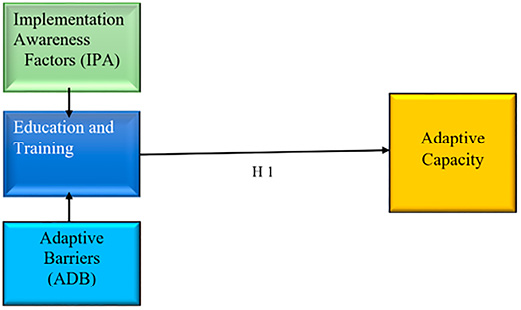
Figure 1. Conceptual framework for education and training influence on adaptive capacity of sustainable construction. Source: authors’ construct (2025)
Source: Author’s construct
Methodology
The success of any research largely depends on its design, which provides a systematic plan for addressing the research problem. According to Kothari (2004), a research design is a structured framework that guides data collection and analysis. This study employed a survey research design, which is suitable for gathering a broad range of opinions and enabling comparisons across diverse perspectives (Flynn et al., 2018). This design also supports the statistical analysis and generalisation of findings (Culka, 2018). A quantitative research approach was employed to ensure objectivity, using numerical and statistical data to measure variables and draw general conclusions (Leedy & Ormrod, 2015; Garg, 2019). A literature review informed the selection of 15 key factors for investigation. The primary data collection instrument was a structured questionnaire, chosen for its efficiency and ability to reach a large audience (Fosnacht et al., 2017; Olanrewaju et al., 2020). The questionnaire was divided into two sections: Section A focused on collecting demographic data, and Section B focused on education and training variables, measured on a 5-point Likert scale ranging from 1 (strongly disagree) to 5 (strongly agree). The target population consisted of professionals in Ghana’s construction industry, particularly members of the Ghana Institution of Engineering (GhIE), Ghana Institution of Surveyors (GhIS), and Ghana Institute of Architects (GIA). The broader population of 4,800 professionals included engineers, surveyors, and architects from consultancies, public institutions, and small- to medium-sized contracting firms across all 16 regions of Ghana. Additionally, officials from district, municipal, and metropolitan assemblies involved in planning and construction oversight were included. A purposive sampling technique was employed to ensure that respondents possessed relevant expertise in sustainable construction and development. This method prioritised participants most likely to provide insightful and accurate data. The sample size was calculated using the formula by Krejcie and Morgan (1970) and Bukhari (2020):
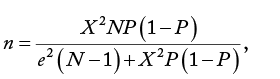
where
n = sample size
X 2 = chi-square value with 1 degree of freedom (equal to 3.841)
N = population size
P = population proportion (assumed to be 0.5)
Substituting the values into the formula yielded n ≈ 356. This was rounded up to 400 respondents to ensure a robust and even sample, particularly suitable for structural equation modelling (SEM) analysis. According to Ebekozien et al. (2023c), larger sample sizes improve population estimates’ precision in SEM. Neuman (2014) also noted that the sample size should be determined based on analysis type, required accuracy, and population characteristics. The questionnaire was created using Google Forms and distributed via email and WhatsApp. A higher response rate was achieved through follow-up phone calls (Adu Gyamfi et al., 2024). Before distribution, a pilot test was conducted with academics and construction professionals to assess the clarity and relevance of the questions. Leedy and Ormrod (2015) highlighted that instrument reliability depends on consistent results. Similarly, Adu Gyamfi et al. (2022) recommended conducting pilot surveys to refine the tools and estimate the time/resource needs. The pilot test yielded a Cronbach’s alpha score of 0.877, indicating strong internal reliability, as values above 0.7 are considered very good (Daud et al., 2018). A total of 400 valid responses were analysed using IBM SPSS version 26 and AMOS version 24. Analytical techniques included the following: descriptive statistics (mean, standard deviation (SD), frequencies, and percentages), exploratory factor analysis (EFA), confirmatory factor analysis (CFA), and SEM. AMOS was particularly useful due to its sensitivity to the sample size and suitability for model estimation and validation (Adu Gyamfi et al., 2022).
Exploratory factor analysis: dimensionality of education and training construct
Factor analysis was employed in this study to reduce the dimensionality of a large dataset, thereby identifying underlying patterns and relationships (Gyamfi et al., 2022; Jaadi, 2024). Specifically, EFA was used to categorise the 14 variables into recognisable scale components for evaluating the education and training (EAT) construct (Pallant, 2020). The extraction and rotation method applied was maximum likelihood with varimax rotation, using all 14 components to assess the construct.
The adequacy and suitability of the dataset for factor analysis were assessed using Bartlett’s test of sphericity and the Kaiser–Meyer–Olkin (KMO) measure, as recommended by Farrington (2009) and Agumba (2013). The KMO statistic, which ranges from 0 to 1, must reach a minimum value of 0.6 to be considered adequate for factor analysis (Sarmento & Costa, 2017; Tabachnick & Fidell, 2019), while Hair et al. (2018) suggested a preferable threshold of 0.7. Bartlett’s test of sphericity was employed to confirm the factorability of the dataset, with a significance level set at p < 0.05 (Field, 2005; Rehbinder, 2011; Agumba, 2013). This test assesses whether the correlation matrix has significant correlations among variables, indicating suitability for factor analysis (Sarmento & Costa, 2017).
Kaiser’s criterion was applied, whereby only factors with eigenvalues greater than 1 were retained for interpretation. A scree plot was also used to visually determine the number of factors by identifying the point at which a substantial drop in eigenvalues occurs (Field, 2005; Sarmento & Costa, 2017). Furthermore, the internal consistency of items was assessed using corrected item–total correlations, with a cut-off value of 0.3 applied to identify any items that should be excluded (Hair et al., 2010; Tabachnick & Fidell, 2012).
To determine the practical significance of factor loadings in the pattern matrix, a cut-off value of 0.40 was adopted, as recommended by Brown and Moore (2012). All 14 items (EAT1 to EAT14) met the required criteria and were successfully loaded onto two validated EAT components.
Analysis and results
The respondents’ backgrounds were assessed based on their professional positions, years of experience, highest educational qualifications, and the nature of their companies. These demographic characteristics were analysed using frequency and percentage distributions, as presented in Table 2.
Source: Fieldwork
To determine the most suitable type of data analysis, the Shapiro–Wilk test was used to check for normality of the data. The study yielded a p-value above 0.05 and a Shapiro–Wilk (W) statistic of 0.97, which agrees with Tabachnick and Fidell (2019).
The indicator variables for the education and training construct
This analysis section examines aspects related to training and education. The mean and SD were used to analyse the items in this section. The results are displayed in Table 3.
Source: Author’s fieldwork
The study’s findings revealed that all 14 indicators had a mean score (MS) above 3.5, indicating general agreement among respondents that the education and training variables influence the adaptive capacity of sustainable construction. Specifically, environmental guidelines recorded the highest mean score of 3.83, highlighting their perceived importance in enhancing education and training to improve the adaptive capacity of construction firms. This was followed by an understanding of alteration in the mind, with a mean score of 3.82, and a high degree of illiteracy at 3.80. The interchange of information recorded a mean of 3.78, while lean design and construction had a mean score of 3.75. Even the lowest-ranked item, the unacceptability of novel provision, recorded a mean score of 3.53, which still reflected moderate agreement.
To provide a more rigorous analysis, the data were further subjected to inferential statistics, including EFA and SEM.
Table 4 presents the outcomes of the EFA, including the KMO measure, Bartlett’s test of sphericity, and factor loadings. The KMO value was 0.847, which exceeded the 0.7 cut-off value recommended by Hair et al. (2018), indicating sampling adequacy. Bartlett’s test of sphericity was statistically significant (p < 0.001), confirming that the data were suitable for factor analysis.
Notes: ADB, adaptive barrier; IPA, implementation awareness. Source: Author’s fieldwork
All items exceeded the minimum factor loading threshold of 0.5, surpassing the 0.40 benchmark suggested by Gyamfi et al. (2022) and Hair et al. (2022). Seven items were loaded significantly on the first component, which included: unacceptability of novel provision, learning and communications, a higher level of ignorance, interchange of information, a lower degree of computer literacy, understanding of alteration in the mind, and interpersonal interaction. These items collectively reflect adaptive barriers (ADBs).
Another seven items were loaded strongly on the second component: carbon minimisation approach, environmental guidelines, waste reduction, lean design and construction, environmental prerequisites, reduce noise and dust, and fortify delicate ecologies. These are interpreted as measuring implementation awareness (IPA).
To confirm the factor structure, a scree plot is presented in Figure 2. The plot shows a clear inflexion point after the second factor, indicating that two factors should be retained. This supports the two-dimensional structure of the education and training construct as comprising adaptive barriers and implementation awareness.
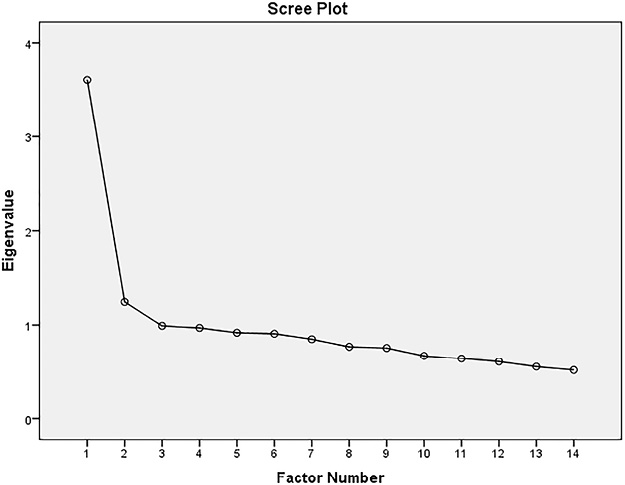
Figure 2. Scree plot for extracted factor eigenvalues for education and training. Source: Authors’ work
Structural equation modelling for the education and training construct
The EAT components underwent a CFA following the establishment of unidimensionality and reliability through EFA. In line with Hu and Bentler (1999), a statistical approach was adopted to assess model fit. The chi-square test (χ2) was used to evaluate the goodness of fit, indicating the difference between the observed and expected covariance matrices (Gunzler & Morris, 2016). A χ2 value of less than 3 indicates a good fit, while values below 5 are considered acceptable. As shown in Table 5, the study reported a χ2 value of 0.112, reflecting a good model fit.
Notes: CFI, comparative fit index; RMSEA, root mean square error of approximation; NFI, normed fit index. Source: Author’s compilation of fit index
A unidimensional model for the EAT construct is illustrated in Figure 3, with supporting details presented in Table 6. Out of the original 14 indicator variables, 11 were retained and used for the final CFA, following the recommendations of Adu Gyamfi et al. (2020) and Byrne (2016). As posited by Field (2013), variables with factor loadings less than 0.5 were rejected as part of the CFA model. Based on the analysis of 400 cases, these 11 indicators were grouped into two distinct components, which the researchers identified as ADB and IPA factors.
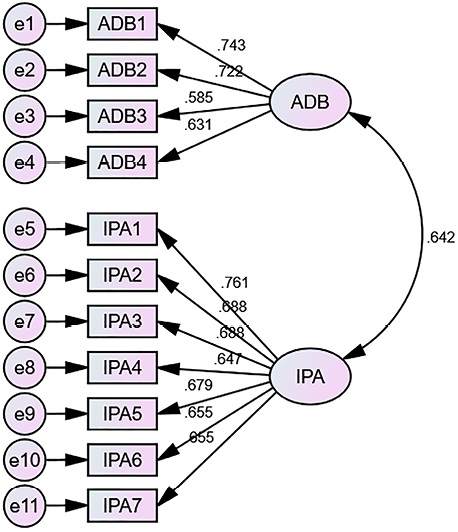
Figure 3. CFA model for education and training. CFA, confirmatory factor analysis. Source: Authors’ work
Source: Author’s compilation of indicator variables
The ADB component comprised the following variables: unacceptability of novel provision, learning and communications, a high degree of illiteracy, and a degree of computer literacy. Meanwhile, the IPA component included the following: fortification of delicate ecologies, reduced noise and dust, environmental guidelines, carbon minimisation approach, environmental prerequisites, waste reduction, and lean design and construction.
To address sample size sensitivity associated with the chi-square test, the study also utilised the comparative fit index (CFI), which evaluates the relative improvement in the fit of the proposed model compared to a null model (Bentler, 1990). According to Hu and Bentler (1999) and Portela (2012), a CFI value above 0.90 indicates a strong model fit. The present study recorded a CFI of 0.909, which exceeded the recommended threshold, suggesting a good fit (Table 6).
Furthermore, the normed fit index (NFI) was employed to compare the χ2 values of the null and proposed models (Bentler & Bonnett, 1980). As per Portela (2012), an NFI value of 0.90 or higher indicates an acceptable model fit. The current study achieved an NFI of 0.901, which met this criterion, further confirming the model’s adequacy.
Additionally, the root mean square error of approximation (RMSEA) was used to adjust for the chi-square test’s tendency to reject models with large sample sizes (Browne & Cudeck, 1992). According to Portela (2012), RMSEA values below 0.05 indicate excellent fit, values between 0.05 and 0.08 reflect a good fit, values between 0.08 and 0.10 represent mediocre fit, and values above 0.10 indicate poor fit (Marsh et al., 2004). As shown in Table 6, the study reported an RMSEA of 0.079, which fell within the acceptable fit range.
Table 7 presents the correlation coefficients, standard errors, and test statistics for the final 11-indicator model. All correlation values were below 1.00, and all p-values were below the 0.05 significance threshold, indicating statistical significance and the appropriateness of the estimates. Among the indicators, IPA1 recorded the highest standardised coefficient parameter of 0.761, demonstrating the strongest contribution to the model.
Notes: ADB, adaptive barrier; IPA, implementation awareness. Source: Author’s fieldwork analysis
Most parameter estimates showed strong correlations, with values approaching 1.00, indicating a robust linear relationship between the indicator variables and the latent factors (ADB and IPA). The R-squared values were also close to 1.00, demonstrating that these factors explain a significant proportion of the variance in the indicators. These results confirm that the indicator variables effectively predict the unobserved components of education and training. The strong explanatory power and correlations highlight the substantial link between measured variables and their underlying factors.
Furthermore, Table 7 shows that both ADB and IPA significantly influence the education and training construct. The obtained p-value of 0.000 confirms a strong effect of education and training on the adaptive capacity of sustainable construction, leading to the acceptance of hypothesis 1.
Discussion of findings
This section discusses two sub-scale components derived from the CFA model, ADB and IPA, which influence the education and training construct aimed at improving adaptive capacity in sustainable construction.
Component 1: adaptive barriers
The CFA model identified four key variables under the adaptive barrier sub-scale: unacceptability of novel provision, learning and communications, high illiteracy, and low computer literacy. The unacceptability of novel provision aligns with the findings of Sengupta and Blessinger (2022) and Laumer and Maier (2023), who argued that this issue must be a key concern in managing adaptive capacity, as change is unattainable without the participation of field operatives. This indicator significantly explains the proportion of the variance in the adaptive barrier indicator due to its potential to impede innovation, increase cost, reduce collaboration, undermine sustainable development goals, and hinder learning and development as far as the adaptivity of sustainable construction is concerned. Learning and communication were also identified as adaptive barriers that hinder education and training in enhancing adaptive capacity in sustainable construction within developing countries. This finding supports Ebekozien et al. (2021), who posited that without effective learning and communication, field operatives remain unaware of evolving practices and functional requirements necessary for understanding the impact of sustainable construction and engaging meaningfully with both superiors and subordinates.
The study further found that high illiteracy is a significant barrier, consistent with Ebekozien et al. (2021, 2023a), who reported that illiteracy prevents many construction firms in developing countries from improving their adaptive capacity for sustainable practices. Additionally, low computer literacy was identified as a limiting factor for education and training. This aligns with Pim-Wusu et al. (2022b), Martzoukou (2021), and Basira and Shafiu (2022), who argued that limited digital skills hinder the adoption of modern tools and information technology (IT)-based training systems, thereby reducing the sector’s ability to develop adaptive capacity. Through education and training, digital literacy can be improved by implementing targeted IT learning platforms for both field operatives and the broader construction workforce.
Education and training are shown to significantly influence the adaptive capacity of construction firms by promoting sustainable practices that benefit the industry. However, barriers such as the unacceptability of novel provisions, poor communication, high illiteracy, and low digital literacy limit the adoption and practical implementation of sustainable building practices. These adaptive barriers slow innovation uptake, leaving practices such as green roofing, passive cooling, and renewable systems confined to theoretical frameworks rather than becoming industry standards. They also reduce efficiency and quality, resulting in the misinterpretation of sustainable specifications, increased maintenance costs, shorter system lifespans, and weak collaboration between professionals, leading to design–construction mismatches. Moreover, these barriers weaken community buy-in, causing end-users to reject or misuse sustainable features due to a lack of understanding, while also limiting scalability by hindering knowledge transfer from pilot projects to broader applications.
Component 2: implementation awareness factors
The CFA model also identified seven implementation awareness variables: fortification of delicate ecologies, reduction of noise and dust, environmental guidelines, carbon minimisation approaches, environmental prerequisites, waste reduction, and lean design and construction. These variables reflect the degree of awareness required among construction professionals to implement sustainable practices effectively.
The inclusion of the fortification of delicate ecologies as a variable aligns with Basira and Shafiu (2022), who argued that protecting sensitive ecosystems is essential for environmentally sustainable construction. Reducing noise and dust also emerged as an awareness factor, consistent with Cummings et al. (2015) and Raouf and Al-Ghamdi (2020), who highlighted that such outcomes can be achieved through education and training during project planning and execution. Similarly, the identification of environmental guidelines supports Zhang (2022), who maintained that environmental regulations promote the green transformation of construction firms and resolve tensions between sustainability and economic growth. This indicator significantly explains the proportion of the variance in the implementation awareness factors due to its potential to help establish specific, measurable, and achievable environmental standards for construction projects, ensuring compliance with environmental regulations and laws, reducing the risk of fines and reputational damage, encouraging the adoption of best practices (such as reducing waste, conserving water, and minimising environmental impact), and providing training and education to construction personnel on environmental guidelines and sustainable practices. The incorporation of environmental guidelines into construction companies can reduce environmental impact, improve brand reputation, enhance stakeholder trust, increase efficiency, generate cost savings, and ensure regulatory compliance. The carbon minimisation approach, identified as another key variable, supports Candanosa’s (2021) argument that reducing fossil fuel emissions benefits public health, financial resilience, and air quality. The recognition of environmental prerequisites aligns with Laumer and Maier (2023), who highlighted that awareness of these requirements encourages firms to invest in sustainability-focused education and training. This indicator accounts for 96% of the variation in implementation awareness factors, highlighting its significant influence on identifying potential environmental impacts and developing strategies to mitigate them, creating plans to manage and minimise environmental impacts during construction, and regularly monitoring and reporting environmental performance to ensure compliance and identify areas for improvement and working with stakeholders, including local communities, to understand their concerns and develop mutually beneficial solutions. By integrating environmental prerequisites into construction practices, companies can reduce their environmental footprint, improve their public image and reputation, enhance stakeholder trust, increase efficiency and cost savings, and comply with regulations. Waste reduction, another significant factor, is supported by Tan et al. (2011) and Ebekozien et al. (2023c), who argued that minimising waste directly reduces emissions, cuts costs, and enhances productivity. Furthermore, as noted by Litzenberg (2023) and Ebekozien et al. (2023b), lean design and construction should be embedded in higher education curricula to equip future professionals with the competencies required for sustainable development.
These implementation awareness indicators directly strengthen sustainable construction outcomes by shaping decision-making, guiding project execution, and ensuring long-term environmental performance. When applied through education and training, they enhance environmental performance by reducing pollution, habitat loss, and carbon emissions. They also promote compliance with regulations, increase community acceptance, and reduce disruptions or penalties. In terms of efficiency, these factors support lean practices that reduce material usage, lower project costs, and minimise waste, thereby advancing circular economy principles. In the long term, they contribute to building performance, reduce maintenance requirements, and ensure environmental sustainability.
Practical implications
The identification of four major adaptive barriers: low computer literacy, high illiteracy, communication gaps, and resistance to novel provisions, underscores the need for targeted interventions. These should focus on cultural acceptance, effective communication strategies, and accessible digital and educational tools. For such programs to succeed, they must be tailored to local contexts, adopt inclusive approaches, and invest in long-term capacity building. Moreover, by identifying seven critical implementation awareness factors, this study provides actionable insights for integrating sustainability into construction practice. These findings can inform the development of targeted training programs, environmental policies, and academic curricula designed to promote sustainable practices and enhance project outcomes. In other words, policymakers could step in to create supportive frameworks, educators could build capacity to sustain, and industry stakeholders could implement and normalise sustainable practices. Such coordinated engagement transforms sustainability from a policy aspiration into a practical, widely adopted component of construction practice, ultimately improving project performance, environmental outcomes, and long-term sector resilience.
Theoretical implications
The adaptive barrier sub-scale supports theoretical models that emphasise the role of cognitive and sociocultural factors in innovation adoption. The findings validate the need to incorporate behavioural, educational, and technological readiness into frameworks for building adaptive capacity, particularly in contexts with limited infrastructure and resources. However, under the implementation awareness factor sub-scale, grounded in resilience theory, the study highlights the importance of education, adaptability, and innovation in addressing systemic and environmental challenges in the construction sector. The findings support a transformative approach to sustainability, in which proactive system design, knowledge integration, and continuous learning are key components. This theory reframes sustainability not merely as recovery from disruption but as the capacity to evolve and thrive in the face of change. It demonstrates that resilience is strengthened not only by mitigating barriers but also by leveraging them as diagnostic tools to guide targeted capacity building and system redesign. In doing so, the findings advance theory toward a more nuanced understanding of how construction systems can adapt, evolve, and thrive in the face of persistent environmental and socio-technical change.
Conclusion and recommendation
The primary objective of this study was to assess the impact of education and training on the adaptive capacity of sustainable construction in Ghana’s construction sector. Using a quantitative approach focused on factor variables related to education and training, the empirical findings revealed two core latent components: adaptive barriers and implementation awareness.
The study identified key adaptive barriers, including the unacceptability of novel provisions, challenges in learning and communication, high illiteracy rates, and limited computer literacy. In contrast, implementation awareness was characterised by variables such as the fortification of delicate ecosystems, the reduction of noise and dust, adherence to environmental guidelines, a carbon minimisation approach, and compliance with environmental prerequisites. These findings underscore the critical role of education and training in promoting sustainable construction practices. Effective education and training equip construction workers with consistent and environmentally responsible site practices, enhance firm competitiveness, and support the achievement of Sustainable Development Goal 11, which promotes sustainable cities and communities. Firms that invest in education and training not only improve their own performance but also contribute to the diffusion of sustainability values across the industry.
Moreover, education and training act as a catalyst for communication and knowledge exchange within the sector, fostering mutual understanding and encouraging other firms to adopt sustainable strategies. While these initiatives require substantial investment and long-term commitment, they are essential for building adaptive capacity. The construction industry, therefore, has a responsibility to mitigate its environmental impact through sustained training and education.
The novelty of this study lies in its contextual focus on Ghana, contributing to the global discourse on sustainable development. To facilitate sector-wide adaptability, the study recommends that government agencies and industry stakeholders organise advocacy programs, workshops, and continuous professional development sessions to promote sustainable construction practices. Furthermore, policies should be introduced to encourage the adoption of adaptive capacity within the construction sector. These may include integrating sustainability into curricula, implementing monitoring systems for greenhouse gas emissions from construction activities, and supporting the use of environmentally conscious construction methods.
Limitations
While this study provides valuable insights, it is not without limitations. Future research should explore additional dimensions of adaptive capacity beyond education and training. Areas such as adaptive change, leadership roles, centralised information systems, and success factors for adaptation merit further investigation to provide a more comprehensive understanding of sustainable construction practices. Also, there were methodological limitations, including the study’s use of purposive sampling and quantitative methods. Future studies could explore a random sampling approach and a mixed-methods strategy to allow for greater generalisability.
Future research recommendations
This study employed a quantitative methodology to generate objective, statistically grounded insights. However, future research could adopt a Delphi technique to gather input from a broader range of experts across diverse regions. Such an approach would enrich the understanding of adaptive capacity by incorporating expert consensus and multi-stakeholder perspectives, further enhancing policy relevance and practical applicability.
References
Adu Gyamfi, T., Adjei, K. O., & Bonney, S. O. (2024). Strategies to improve building construction sustainability through utilisation of drones in the building construction sector. In Procedia Computer Science. https://doi.org/10.1016/j.procs.2024.05.023
Adu Gyamfi, T., Aigbavboa, C. O., & Thwala, W. D. (2022). Risk resources management influence on public-private partnership risk management in the construction industry. confirmatory factor analysis approach. Journal of Engineering, Design and Technology. https://doi.org/10.1108/JEDT-12-2021-0699
Adu Gyamfi, T., Nana-Addy, E., & Gyadu-Asiedu, W. (2020). Motivational strategies to improve artisans’ productivity in the construction industry in Ghana. Journal of Building Construction and Planning Research, 8, 285–301. https://doi.org/10.4236/jbcpr.2020.84019
Agumba, J. N. (2013). A construction health and safety performance improvement model for South African small and medium enterprises (PhD Thesis). University of Johannesburg. https://hdl.handle.net/10210/8705 [Accessed 23 March 2024]
Agyekum, K., Goodier, C., & Oppon, J. A. (2022). Key drivers for green building project financing in Ghana. Engineering, Construction and Architectural Management, 29(8), 3023–3050. https://doi.org/10.1108/ECAM-02-2021-0131
Amaratunga, D., Haigh, R., Malalgoda, C., & Keraminiyage, K. (2017). Mainstreaming disaster resilience in the construction process: professional education for a resilient built environment. A report of the CADRE project: Collaborative Action towards Disaster Resilience Education. http://eprints.hud.ac.uk/id/eprint/31907/ [Accessed 23 March 2024].
Ardoin, N. M., DiGiano, M., Bundy, J., Chang, S., Holthuis, N., & O’Connor, K. (2014). Using digital photography and journaling in evaluation of field-based environmental education programs. Studies in Educational Evaluation, 41, 68–76. https://doi.org/10.1016/j.stueduc.2013.09.009
Barton, R. J., Gutiérrez-Antinopai, F., & Ulloa, M. E. (2021). Adaptive capacity as local sustainable development: contextualising and comparing risks and resilience in two Chilean regions. Sustainability, 13(9), 4660. https://doi.org/10.3390/su13094660
Basira, K. L., & Shafiu, M. (2022). Integrating patient safety education into pharmacy curriculum in Nigeria. International Journal of Pharmacy Practice, 30(6), 583–585. https://doi.org/10.1093/ijpp/riac085
Bejaković, P., & Mrnjavac, Ž. (2020). The importance of digital literacy in the labour market. Employee Relations, 42(4), 921–932. https://doi.org/10.1108/ER-07-2019-0274
Bentler, P. M. (1990). Comparative fit indexes in structural models. Psychological Bulletin, 107(2), 238–246. https://doi.org/10.1037/0033-2909.107.2.238
Bentler, P. M., & Bonett, D. G. (1980). Significance tests and goodness-of-fit in the analysis of covariance structures. Psychological Bulletin, 88(3), 588–606. https://doi.org/10.1037/0033-2909.88.3.588
Brown, T. A., & Moore, M. T. (2012). Confirmatory factor analysis. In R. H. Hoyle (Ed.), Handbook of structural equation modelling (pp. 361–379). The Guilford Press.
Browne, M. W., & Cudeck, R. (1992). Alternative ways of assessing model fit. Sociological Methods and Research, 21(2). https://doi.org/10.1177/0049124192021002005
Bukhari, S. A. R. (2020). Bukhari sample size calculator. https://doi.org/10.13140/RG.2.2.27730.58563
Byrne, B. M. (2016). Structural equation modelling with AMOS: basic concept, application and programming (3rd ed.). Routledge. https://doi.org/10.4324/9781315757421
Candanosa, R. M. (2021). Reducing emissions to lessen climate change would yield dramatic health benefits by 2030. https://climate.nasa.gov/news/3134/reducing-emissions-to-lessen-climate-change-would-yield-dramatic-health-benefits-by-2030/ [Accessed 26 March 2024].
Chapin, F. S., Torn, M. S., & Tateno, M. (1996). Principles of ecosystem sustainability. The American Naturalist, 148(6), 1016–1037. https://doi.org/10.1086/285969
Culka, M. (2018). Quantitative scenario design with Bayesian model averaging: constructing consistent scenarios for quantitative models exemplified for energy economics. Energy, Sustainability and Society, 8(1), 1–21. https://doi.org/10.1186/s13705-018-0162-3
Cummings, S., Bridgman, T., & Brown, K. G. (2015). Unfreezing change as three steps: rethinking Kurt Lewin’s legacy for change management. Human Relations, 69(1), 33–60. https://doi.org/10.1177/0018726715577707
Curtarelli, M., Gualtieri, V., Shater Jannati, M., & Donlevy, V. (2017). ICT for work: digital skills in the workplace. https://api.semanticscholar.org/CorpusID:204497714 [Accessed 27 May 2024].
Dalirazar, S., & Sabzi, Z. (2020). Strategic analysis of barriers and solutions to the development of sustainable buildings using the PESTLE technique. International Journal of Construction Management, 23(1), 167–181. https://doi.org/10.1080/15623599.2020.1854931
Daud, K. A. M., Khidzir, N. Z., Ismail, A. R., & Abdullah, F. A. (2018). Validity and reliability of an instrument to measure social media skills among small and medium entrepreneurs at Pengkalan Datu River. International Journal of Development and Sustainability, 7(3), 1026–1037.
Dearing, J. W., & Cox, J. G. (2018). Diffusion of innovations theory, principles, and practice. Health Affairs, 37(2), 183–190. https://doi.org/10.1377/hlthaff.2017.1104
Debrah, C., Owusu-Manu, D., Darko, A., Oduro-Ofori, E., Acquah, P. C., & Asamoah, E. (2021). Drivers for green cities development in developing countries: Ghanaian perspective. International Journal of Construction Management, 23(6), 1086–1096. https://doi.org/10.1080/15623599.2021.1955321
Ebekozien, A., & Aigbavboa, C. (2023a). Evaluation of built environment programmes accreditation in the 21st-century education system in Nigeria: stakeholders’ perspective. International Journal of Building Pathology and Adaptation, 41(6), 102–118. https://doi.org/10.1108/IJBPA-02-2022-0027
Ebekozien, A., & Aigbavboa, C. O. (2023b). Improving quantity surveying education through continually updating the curriculum and digitalisation to meet industry requirements. Journal of Engineering, Design and Technology. https://doi.org/10.1108/JEDT-01-2022-0043
Ebekozien, A., Aigbavboa, C., & Aliu, J. (2023a). Built environment academics for the 21st-century world of teaching: stakeholders’ perspective. International Journal of Building Pathology and Adaptation, 41(6), 119–138. https://doi.org/10.1108/IJBPA-04-2022-0062
Ebekozien, A., Aigbavboa, C., & Samsurijan, M. S. (2023b). Social sustainability under threat: a case of two collapsed buildings in Lagos, Nigeria. Property Management, 41(3), 431–453. https://doi.org/10.1108/PM-10-2022-0072
Ebekozien, A., Aigbavboa, C. O., Adekunle, S. A., Aliu, J., & Thwala, W. D. (2023c). Training needs of built environment professionals: the role of the fourth industrial revolution. Engineering, Construction and Architectural Management. https://doi.org/10.1108/ECAM-03-2022-0212
Ebekozien, A., Aigbavboa, C. O., Thwala, W. D. D., Aigbedion, M. I., & Ogbaini, I. F. (2021). An appraisal of generic skills for Nigerian built environment professionals in the workplace: the unexplored approach. Journal of Engineering, Design and Technology. https://doi.org/10.1108/JEDT-09-2021-0453
Farrington, S. M. (2009). Sibling partnerships in South African small and medium-sized family businesses (Doctoral thesis). Nelson Mandela Metropolitan University. https://core.ac.uk/download/pdf/145051228.pdf\. [Accessed 25 March 2024].
Field, A. (2005). Discovering statistics using SPSS (and sex, drugs and rock ‘n roll) (2nd ed.). Sage.
Field, A. (2013). Discovering statistics using IBM SPSS statistics: and sex and drugs and rock ‘n’ roll (4th ed.). Sage.
Flynn, B., Pagell, M., & Fugate, B. (2018). Survey research design in supply chain management: the need for evolution in our expectations. Journal of Supply Chain Management, 54(1), 1–15. https://doi.org/10.1111/jscm.12161
Folke, C., Carpenter, S. R., Walker, B., Scheffer, M., Chapin, T., & Rockström, J. (2010). Resilience thinking: integrating resilience, adaptability and transformability. Ecology and Society, 15(4), 20. https://doi.org/10.5751/ES-03610-150420
Folke, C., Carpenter, S., Elmqvist, T., Gunderson, L., Holling, C. S., & Walker, B. (2002). Resilience and sustainable development: building adaptive capacity in a world of transformations. AMBIO: A Journal of the Human Environment, 31(5), 437–440. https://doi.org/10.1579/0044-7447-31.5.437
Folke, C., Carpenter, S., Walker, B., Scheffer, M., Elmqvist, T., Gunderson, L., & Holling, C. S. (2004). Regime shifts, resilience, and biodiversity in ecosystem management. Annual Review of Ecology, Evolution, and Systematics, 35, 557–581. https://www.jstor.org/stable/30034127 [Accessed 29 March 24]. https://doi.org/10.1146/annurev.ecolsys.35.021103.105711
Fonseca, L. M., Domingues, J. P., & Dima, A. M. (2020). Mapping the sustainable development goals relationships. Sustainability, 12, 1–15. https://doi.org/10.3390/su12083359
Fosnacht, K., Sarraf, S., Howe, E., & Peck, L. K. (2017). How important are high response rates for college surveys? The Review of Higher Education, 40(2), 245–265. https://doi.org/10.1353/rhe.2017.0003
Garg, N. (2019). High performance work practices and organisational performance-mediation analysis of explanatory theories. International Journal of Productivity and Performance Management, 68(4), 797–816. https://doi.org/10.1108/IJPPM-03-2018-0092
Geraedts, R., & Prins, M. (2016). FLEX 3.0: an instrument to formulate the demand for and assessing the supply of the adaptive capacity of buildings. In CIB World Building Congress 2016 (pp. 679-690). Tampere University of Technology. https://research.tudelft.nl/en/publications/flex-30-an-instrument-to-formulate-the-demand-for-and-assessing-t
Geraedts, R., Hermans, M., Remøy, H., & Rijn, E. (2014). Adaptive capacity of buildings: a determination method to promote flexible and sustainable construction. https://design.umn.edu/sites/design.umn.edu/files/202010/csbr_mpca_resilience_report_final_2018.pdf [Accessed 29 March 2024]
Graves, R., Weber, W., & Kutschke, L. (2018). Resilient adaptation of sustainable buildings. International Union of Architects World Congress, UIA2014, Durban SA. http://resolver.tudelft.nl/uuid:3c57e976-5af4-4e05-a66d-723604ded852
Gunderson, L. H., & Holling, C. S. (2003). Panarchy: understanding transformations in human and natural systems. Island Press. https://doi.org/10.1016/S0006-3207(03)00041-7
Gunzler, D. D., & Morris, N. (2016). A tutorial on structural equation modelling for analysis of overlapping symptoms in co-occurring conditions using MPlus. Statistics in Medicine, 34(24), 3246–3280. https://doi.org/10.1002/sim.6541
Gyamfi, T. A., Aigbavboa, C., & Thwala, W. D. (2022). Confirmatory factor analysis of organisational culture influence on public-private partnership risk management in construction industry in Ghana. International Journal of Construction Supply Chain Management, 12(1), 183–200. https://doi.org/10.14424/ijcscm120122-183-200
Hair, J. F., Hult, G. T. M., Ringle, C. M., & Sarstedt, M. (2022). A primer on partial least squares structural equation modelling (PLS-SEM) (3rd ed.). Sage. https://doi.org/10.1007/978-3-030-80519-7
Hair, J. F., Black, W. C., Babin, B. J., & Anderson, R. E. (2010). Multivariate data analysis (7th ed.). Prentice Hall.
Hair, J. F., Black, W. C., Babin, B. J., & Anderson, R. E. (2018). Multivariate data analysis (8th ed.). Cengage Learning.
Hart, T. (1996). The role of the personnel practitioner in facilitating environmental responsibility in work organisations (1st ed.). Routledge.
Hu, L. T., & Bentler, P. M. (1999). Cut-off criteria for fit indexes in covariance structure analysis: conventional criteria versus new alternatives. Structural Equation Modelling: A Multidisciplinary Journal, 6(1), 1–55. https://doi.org/10.1080/10705519909540118
Ibrahim, F. S. B., Ebekozien, A., Khan, P. A. M., Aigbedion, M., Ogbaini, I. F., & Amadi, G. C. (2022). Appraising the fourth industrial revolution technologies’ role in the construction sector: how prepared are the construction consultants? Facilities, 40(7/8), 515–532. https://doi.org/10.1108/F-09-2021-0086
Jaadi, Z. (2024). Principal component analysis (PCA): a step-by-step explanation: learn how to use a PCA when working with large data sets. https://builtin.com/data-science/step-step-explanation-principal-component-analysis (Accessed on 25/3/2024).
Jupp, J. (2013). Developing digital literacy in construction management education: a design thinking led approach. Journal of Pedagogic Development, 3(3), 24–30. http://hdl.handle.net/10453/27318 [Accessed 27 May 2024].
Kopnina, H. (2015). Neoliberalism, pluralism and environmental education: the call for radical re-orientation. Environmental Development, 15, 120–130. https://doi.org/10.1016/j.envdev.2015.03.005
Kothari, C. R. (2004). Research methodology methods and technique second revised edition. New Age International.
Kougea, C. C., Remoy, H. T., & de Jong, P. (2019). Degrees of adaptability: a design framework for adaptable real estate transformation projects (Master thesis). http://resolver.tudelft.nl/uuid:c179aa2f-f30b-45dc-8fb0-8c5c56575413
Krejcie, R. V., & Morgan, D. W. (1970). Determining sample size for research activities. Educational and Psychological Measurement, 30(3), 607–610. https://doi.org/10.1177/001316447003000308
Lam, C., Huang, X., & Chan, S. (2015). The threshold effect of participative leadership and the role of leader information sharing. Academy of Management Journal, 58(3), 836–855. https://doi.org/10.5465/amj.2013.0427
Laumer, S., & Maier, C. (2023). ICT-based training and education in volunteer sports communities: an action design research project with soccer referees during the COVID-19 pandemic. Internet Research. https://doi.org/10.1108/INTR-10-2021-0714
Leedy, D. P., & Ormrod, E. J. (2015). Practical research: planning and design (11th ed.). Pearson. https://pce-fet.com/common/library/books/51/2590_%5BPaul_D._Leedy,_Jeanne_Ellis_Ormrod%5D_Practical_Res(b-ok.org).pdf
Li, J., Wu, Q., Wang, C. C., Du, H., & Sun, J. (2022). Triggering factors of construction waste reduction behaviour: evidence from contractors in Wuhan, China. Journal of Cleaner Production, 337, 130396. https://doi.org/10.1016/j.jclepro.2022.130396
Litzenberg, J. (2023). Intensive English programme ecology: decolonising ‘within the cracks. ELT Journal, 77(3), 357–365. https://doi.org/10.1093/elt/ccad005
Liu, K., Hwang, B.-G., Jia, J., Man, Q., & Zhang, S. (2023). Shaping online and offline informal learning networks in off-site construction projects: a proximity perspective. Engineering, Construction and Architectural Management. https://doi.org/10.1108/ECAM-09-2022-0901
Liu, Z. J., Tretyakova, N., Fedorov, V., & Kharakhordina, M. (2020). Digital literacy and digital didactics as the basis for new learning model development. International Journal of Emerging Technologies in Learning, 15(4), 4. https://doi.org/10.3991/ijet.v15i14.14669
Lowe, M. S., Stone, S. M., & Macy, K. V. (2023). Peer teachers taking the lead in classroom instruction: program creation and challenges faced. Reference Services Review, 51(2), 171–189. https://doi.org/10.1108/RSR-09-2022-0041
Manewa, A., Siriwardena, M., Ross, A., & Madanayake, U. (2016). Adaptable buildings for a sustainable built environment. Built Environment Project and Asset Management, 6(2), 139–158. https://doi.org/10.1108/BEPAM-10-2014-0053
Marsh, H. W., Hau, K., & Wen, Z. (2004). In search of golden rules: comment on hypothesis-testing approaches to setting cutoff values for fit indexes and dangers in overgeneralizing Hu Bentler’s (1999) findings. Structural Equation Modelling: A Multidisciplinary Journal, 11(3), 320–341. https://doi.org/10.1207/s15328007sem1103_2
Martzoukou, K. (2021). Academic libraries in COVID-19: a renewed mission for digital literacy. Library Management, 42(4/5), 266–276. https://doi.org/10.1108/LM-09-2020-0131
McDermot, E., Agdas, D., Díaz, C. R. R., Rose, T., & Forcael, E. (2020). Improving the performance of infrastructure projects in developing countries: an Ecuadorian case study. International Journal of Construction Management, 22(13), 2469–2483. https://doi.org/10.1080/15623599.2020.1797985
Mohammed, S., Hashem, M. M., & Shantanu, K. (2022). Sustainability and resilience education framework for interdisciplinary course development. EPiC Series in Built Environment, 3, 578–586. https://doi.org/10.29007/l622
Neuman, W. L. (2014). Social research methods; qualitative and quantitative approaches (7th ed.). Pearson. New International Ed. https://letrunghieutvu.yolasite.com/resources/w-lawrence-neuman-social-research-methods_-qualitative-and-quantitative-approaches-pearson-education-limited-2013.pdf
OECD. (2014). Skills and jobs in the internet economy. https://www.oecd.org/content/dam/oecd/en/publications/reports/2014/10/skills-and-jobs-in-the-internet-economy_g17a2559/5jxvbrjm9bns-en.pdf
Olanrewaju, O. I., Chileshe, N., Babarinde, S. A., & Sandanayake, M. (2020). Investigating the barriers to building information modelling (BIM) implementation within the Nigerian construction industry. Engineering, Construction and Architectural Management, 27(10), 2931–2958. https://doi.org/10.1108/ECAM-01-2020-0042
Pallant, J. (2020). SPSS survival manual: a step-by-step guide to data analysis using IBM SPSS. McGraw-Hill. https://doi.org/10.4324/9781003117452
Pim-Wusu, M., Aigbavboa, C. O., & Thwala, W. D. (2022a). Construction sustainability implementation in Ghana with the views of professionals working with contractors. https://www.researchgate.net/publication/363884875_CONSTRUCTION_SUSTAINABILITY_IMPLEMENTATION_IN_GHANA_WITH_THE_VIEWS_OF_PROFESSIONALS_WORKING_WITH_CONTRACTORS#fullTextFileContent. https://doi.org/10.54941/ahfe1002355
Pim-Wusu, M., Aigbavboa, C. O., & Thwala, W. D. (2022b). Environmentally sustainable construction implementation in Ghana: perspective of professionals working with contractors. https://doi.org/10.54941/ahfe1002355
Pim-Wusu, M., Aigbavboa, C. O., & Thwala, W. D. (2022c). Environmentally sustainable construction implementation: perspective of professionals in consultancy firms. www.doi.org/10.14455/ISEC.2022.9(2).CON-01.
Pim-Wusu, M., Aigbavboa, C., Adu Gyamfi, T., & Didibhuku Thwala, W. (2024). Adaptability and integration influence on adaptive capacity of small- and medium-scale construction organisations. Frontiers in Engineering and Built Environment. https://doi.org/10.1108/FEBE-01-2024-0003
Pinto, M., Caballero Mariscal, D., & Segura, A. (2022). Experiences of information literacy and mobile technologies among undergraduates during the COVID-19 pandemic: a qualitative approach. Aslib Journal of Information Management, 74(2), 181–201. https://doi.org/10.1108/AJIM-10-2020-0333
Portela, D. M. P. (2012). Ontributo das técnicas de análise fatorial para o estudo do programa. http://hdl.handle.net/10400.2/2536
Raouf, A. M., & Al-Ghamdi, S. G. (2020). Framework to evaluate the quality performance of green building delivery: construction and operational stage. International Journal of Construction Management. https://doi.org/10.1080/15623599.2020.1858539
Rehbinder, E. (2011). Do personal networks affect the success of foreign venture performance? https://research-api.cbs.dk/ws/portalfiles/portal/58449412/erik_rehbinder.pdf
Rutter, M. (2006). Implications of resilience concepts for scientific understanding. Annals of the New York Academy of Sciences, 1094, 1–12. https://doi.org/10.1196/annals.1376.002
Saeed, B. B., Afsar, B., Hafeez, S., Khan, I., Tahir, M., & Afridi, M. A. (2018). Promoting employees’ pro-environmental behaviour through green human resource management practices. Corporate Social Responsibility and Environmental Management, 26(1), 424–438. https://doi.org/10.1002/csr.1694
Sarmento, R., & Costa, V. (2017). Comparative approaches to using R and Python for statistical data analysis. IGI Global Publishing. https://doi.org/10.4018/978-1-68318-016-6
Seiler, B., & Bagby, E. (2023). Literacy as a catalyst for sustainable societies. https://www.mathematica.org/blogs/literacy-can-promote-more-sustainable-and-peaceful-societies#:~:text=High%2Dquality%20literacy%20and%20numeracy,with%20reducing%20violence%20and%20crime. [Accessed 27 May 2024].
Sengupta, E., & Blessinger, P. (2022). Introduction to the role of education and pedagogical approach in service learning. In E. Sengupta, and P. Blessinger (Eds.), Role of Education and Pedagogical Approach in Service Learning, Emerald Publishing Limited. https://doi.org/10.1108/S2055-364120220000046001
Sivashanmugam, S., Rodriguez, S., Rahimian, F. P., & Dawood, N. (2022). Maximising the construction waste reduction potential – how to overcome the barriers. ICE Proceedings Civil Engineering, 176(2), 1–9. https://doi.org/10.1680/jcien.22.00163
Sultan, B., & Alaghbari, W. (2021). Construction industry sustainable development indicator for low-income developing countries: Yemen as a case study. International Journal of Construction Management. https://doi.org/10.1080/15623599.2021.1951429
Tabachnick, B. G., & Fidell, L. S. (2012). Using multivariate statistics (6th ed.). Pearson.
Tabachnick, B. G., & Fidell, L. S. (2019). Using multivariate statistics (7th ed.). Pearson.
Tan, Y., Shen, L., & Yao, H. (2011). Sustainable construction practice and contractors’ competitiveness: a preliminary study. Habitat International, 35(2), 225–230. https://doi.org/10.1016/j.habitatint.2010.09.008
The CPD Certification Service. (2023). CPD tips - importance of computer literacy skills and how to develop them. https://cpduk.co.uk/news/cpd-tips-importance-of-computer-literacy-skills-and-how-to develop-them [Accessed 27 May 2024].
University College of Estate Management Articles. (2023). Why sustainability literacy is in such high demand? https://www.ucem.ac.uk/whats-happening/articles/sustainability-literacy/ [Accessed 27 May 2024].
Walker, B., & Salt, D. (2006). Resilience thinking: sustaining ecosystems and people in a changing world. Island Press. https://faculty.washington.edu/stevehar/Resilience%20thinking.pdf. [Accessed 29 March 2024].
Walker, B., Holling, C. S., Carpenter, S. R., & Kinzig, A. (2004). Resilience, adaptability and transformability in social-ecological systems. Ecology and Society, 9(2), 5. http://www.ecologyandsociety.org/vol9/iss2/art5/. https://doi.org/10.5751/ES-00650-090205
Yap, J. B. H., & Skitmore, M. (2020). Ameliorating time and cost control with project learning and communication management: leveraging on reusable knowledge assets. International Journal of Managing Projects in Business, 13(4), 767–792. https://doi.org/10.1108/IJMPB-02-2019-0034
Zhang, D. (2022). Environmental regulation and firm product quality improvement: how does the greenwashing response? International Review of Financial Analysis, 80. https://doi.org/10.1016/j.irfa.2022.102058
Appendix A
Questionnaire survey
Dear Sir/Madam,
We are researching the influence of education and training on the adaptive capacity of the Ghanaian construction industry. Please complete the following short questionnaire.
SECTION A: BACKGROUND INFORMATION
This section of the questionnaire is about your background or biographical information. The information will allow us to compare groups of respondents. Once again, we assure you that your response will remain anonymous. Your cooperation is appreciated.
1. What position do you hold in this firm?
| Company director | 1 |
| Project manager | 2 |
| Site manager | 3 |
| Consultant supervisor | 4 |
| Consultant | 5 |
| Field engineer | 6 |
| Quantity surveyor | 7 |
| Architect | 8 |
| Planner | 9 |
2. How many years of experience do you have in the construction industry?
| 1–5 years | 1 |
| 6–10 years | 2 |
| 11–15 years | 3 |
| 16–20 years | 4 |
| 20 years and above | 5 |
3. What is your highest educational qualification?
| HND/diploma | 1 |
| Bachelor’s degree | 2 |
| Master’s degree | 3 |
| Doctoral degree | 4 |
4. Which best describes the nature of your company?
| D4K4 contractor | 1 |
| D3K3 contractor | 2 |
| D2K2 contractor | 3 |
| Consultancy firm | 4 |
| Public sector firm | 5 |
SECTION B: INFLUENCE OF EDUCATION AND TRAINING ON THE ADAPTIVE CAPACITY OF THE GHANAIAN CONSTRUCTION INDUSTRY
Operational definition:
Education and training: This is defined as intelligence, knowledge, attainment, good sense of judgement, job orientations, and commitment to adaptive capacity as well as requisite skills to deliver new projects by creating new forms of approaches of industry players and the professional members in the industry.
Based on your expertise and knowledge, please specify the extent to which the education and training variables below could influence the adaptive capacity of the Ghanaian construction industry.
Please indicate your response using a 5-point Likert scale, where 1 = no extent, 2 = small extent, 3 = moderate extent, 4 = high extent, and 5 = very high extent.
| Code | To what extent can the following attributes influence education and training on adaptive capacity | Extent of implementation | ||||
|---|---|---|---|---|---|---|
| No extent | Small extent | Moderate extent | High extent | Very high extent | ||
| EAT 1 | A lower degree of computer literacy | |||||
| EAT 2 | Unacceptability of novel provision | |||||
| EAT 3 | Learning and communications | |||||
| EAT 4 | A high degree of illiteracy | |||||
| EAT 5 | Interpersonal interaction | |||||
| EAT 6 | Understanding of alteration in the mind | |||||
| EAT 7 | Interchange of information | |||||
| EAT 8 | Waste reduction | |||||
| EAT 9 | Environmental prerequisites | |||||
| EAT 10 | Fortification of delicate ecologies | |||||
| EAT 11 | Lean design and construction | |||||
| EAT 12 | Environmental guidelines | |||||
| EAT 13 | Carbon minimisation approach | |||||
| EAT 14 | Reduce noise and dust | |||||