Construction Economics and Building
Vol. 26, No. 1
2026
ARTICLES (PEER REVIEWED)
Measuring the Overall Impact of Barriers to BIM Adoption in Prefabricated Construction Using a Fuzzy Synthetic Evaluation Approach
Ha Duy Khanha,*, Nguyen Van Minhb, Nguyen Thanh Tub
a Department of Civil Engineering, Ho Chi Minh City University of Technology and Engineering, Vietnam, https://orcid.org/0000-0002-2776-1542
b Department of Civil Engineering, Ho Chi Minh City University of Technology and Engineering, Vietnam
Corresponding author: Ha Duy Khanh, khanhhd@hcmute.edu.vn
DOI: https://doi.org/10.5130/q5awae95
Article History: Received 13/09/2024; Revised 04/10/2025; Accepted 08/11/2025; Published 27/02/2026
Citation: Ha, D. K., Nguyen, V. M., Nguyen, T. T. 2026. Measuring the Overall Impact of Barriers to BIM Adoption in Prefabricated Construction Using a Fuzzy Synthetic Evaluation Approach. Construction Economics and Building, 26:1, 1–22. https://doi.org/10.5130/q5awae95
Abstract
Building information modeling (BIM) is increasingly used in construction projects in developing countries like Vietnam. However, many stakeholders still question its effectiveness and feel unprepared to apply it. This challenge is more evident in prefabricated construction, where design and construction occur simultaneously. BIM offers many benefits in this context, but also brings notable difficulties. This study examined the significant barriers to BIM implementation in prefabricated construction projects. A quantitative approach was used, beginning with a literature review to identify potential barriers, followed by a pilot test with three experts to refine and validate them. Eleven barriers were identified and categorized into human-, technological-, and performance-related groups. A structured quantitative questionnaire was distributed to professionals with experience in BIM-based prefabricated projects. Using a non-probability sampling approach, 151 valid responses were collected from stakeholders with diverse roles and backgrounds. The results indicated that human-related barriers are the most significant. The top five barriers are the lack of high-quality human resources, poor coordination among stakeholders, a long time needed to generate detailed models, weak integration between tools, and resistance to changes in work processes. Stakeholders showed strong agreement in their evaluations, with correlation coefficients above 0.3 at the 0.01 and 0.05 significance levels. Factor analysis and evaluation using exploratory factor analysis and fuzzy synthetic evaluation confirmed a substantial impact of these barriers, with a score of 3.488 out of 5.0 (69.8%). These findings provide a solid foundation for developing policies and strategies to strengthen BIM adoption and improve project performance.
Keywords
Barriers; Building Information Modeling (BIM); Construction Management;
Fuzzy Synthetic Evaluation; Prefabricated Construction
Background
The construction industry has long been recognized as a critical driver of economic growth, providing essential infrastructure and supporting the development of communities worldwide (Osei, 2013). However, in recent years, the industry has faced persistent challenges such as cost overruns, schedule delays, and suboptimal collaboration among project stakeholders (Cantarelli, et al., 2012; Flyvbjerg, 2014; Sinoh, et al., 2020). As construction projects increase in scale and complexity, the limitations of conventional management approaches have become more apparent, underscoring the need for innovative technologies to address these longstanding issues (Alsofiani, 2024).
One technology that has garnered significant attention in the construction industry is building information modeling (BIM). BIM is a digital platform that facilitates the creation, management, and exchange of project-related information throughout the entire life cycle of a built asset (Ahn, et al., 2016). It has the potential to revolutionize how construction projects are planned, designed, and executed, offering benefits such as improved visualization, enhanced coordination, and more efficient data management (Neves, et al., 2019; Ma, et al., 2020). Despite these well-documented advantages, widespread BIM adoption in the construction industry has been hindered by various barriers, as identified in numerous studies (Boktor, et al., 2014; Ahn, et al., 2016; Ma, et al., 2020; Alsofiani, 2024).
In Vietnam, the adoption of BIM in the construction industry has been steadily gaining traction in recent years, driven by government initiatives and growing awareness of its potential benefits (Nguyen, et al., 2024). Recognizing the global shift toward digital transformation in construction, the Vietnamese government introduced Decision No. 2500/QD-TTg (2016), encouraging the use of BIM in state-funded projects, particularly large infrastructure developments. This decision marked a significant step toward modernizing Vietnam’s construction sector and laid the foundation for broader BIM adoption (Khanh and Hieu, 2020; Tu and Bao, 2023).
Several large-scale projects, including airports, bridges, and industrial plants, have started incorporating BIM into their workflows. Leading construction firms in Vietnam have embraced BIM to improve efficiency, reduce errors, and enhance stakeholder collaboration. For instance, contractors and design firms use BIM for design coordination, clash detection, and construction planning (Khanh and Hieu, 2020). However, BIM implementation is still largely confined to larger companies and high-profile projects, while small- and medium-sized enterprises (SMEs) often lag due to financial and technical constraints (Saka and Chan, 2020). In prefabricated construction projects such as prefabricated steel factories and car parking structures, the unique characteristics of the process present distinct challenges for BIM application, which require careful analysis and resolution (Khanh and Hieu, 2020). One of the most critical challenges is the absence of industry-specific standards and guidelines (Azhar, 2011). Prefabricated construction involves specialized workflows, production methods, and supply chain processes not sufficiently supported by generic BIM frameworks (Alsofiani, 2024). Financial constraints also remain a significant deterrent, particularly for smaller prefabrication firms, as BIM’s high upfront investment and ongoing maintenance costs are often considered prohibitive (Zhu and Zhang, 2018).
Despite recent advancements, Vietnam’s construction industry remains in the early stages of BIM adoption compared to other countries. BIM usage is sporadic, with many projects relying on traditional 2D drawings and less integrated digital processes. This slow adoption highlights the opportunities and challenges that need to be addressed for broader BIM implementation. According to recent studies, such as Khanh and Hieu (2020), Nguyen and Nguyen (2021), and Nguyen, et al. (2024), the critical barriers to BIM adoption in Vietnam’s construction projects include a lack of standardized regulations and guidelines, limited technical expertise and training, high initial investment costs, resistance to change, poor collaboration, and inconsistent project delivery models.
Building on the above discussion, this study sets out to (1) identify the key barriers to BIM adoption in prefabricated construction projects, (2) analyze stakeholders’ views on the relative importance of these barriers, and (3) construct a model to evaluate their overall impact on BIM implementation. The projects examined were primarily buildings with structural components pre-manufactured off-site, located in Ho Chi Minh City and nearby provinces. All projects were undertaken by private owners and contractors with prior experience applying BIM within the Vietnamese construction sector.
Building information modeling
Concepts
As the construction industry evolves, with projects becoming more complex and clients demanding higher levels of management and quality, traditional management methods are no longer sufficient to meet the industry’s needs (Ma, et al., 2020). In this context, BIM has emerged as a transformative technology that significantly enhances the efficiency and effectiveness of construction project management (Moradi and Sormunen, 2023). Indeed, BIM has revolutionized the architecture, engineering, and construction sectors by providing a comprehensive digital platform for the design, construction, and management of built environments (Azhar, 2011). Through this innovative approach, stakeholders can access a centralized and reliable source of project information, enabling more informed decision-making, improved collaboration, and greater efficiency throughout the project’s lifecycle (Borrmann and König, 2018).
At its core, BIM involves the creation of a digital and virtual model that accurately represents a built asset’s physical and functional characteristics. This model is a shared data repository, encompassing everything from spatial and topographical information to schedules and resource data (Doukari, et al., 2022). By consolidating all project-related information into a single, integrated digital model, BIM enables project teams to visualize, simulate, and analyze projects in detail, helping to identify potential challenges and optimize decision-making processes more effectively than traditional methods (Azhar, 2011).
Critical barriers
While BIM offers numerous benefits, such as improved collaboration, enhanced project coordination, and more efficient construction processes (Moradi and Sormunen, 2023), its adoption and implementation have faced significant challenges across the construction industry (Ibrahim and Al-Kazzaz, 2021). A critical barrier is the lack of awareness and understanding among construction professionals regarding BIM’s capabilities and potential benefits (Boktor, et al., 2014; Ismail, et al., 2019; Ma, et al., 2020). A key hurdle to widespread BIM adoption is the difficulty in quantifying its tangible benefits, leading to uncertainty about its return on investment and impact on project performance (Chou and Chen, 2017). Moreover, inadequate training and education programs have been identified as a critical obstacle (Ahn, et al., 2016). Many construction professionals, particularly in labor-intensive trades like mechanical contracting, lack the skills and knowledge to effectively use BIM tools and workflows (Boktor, et al., 2014). This skills gap has become a significant challenge to successfully implementing BIM across the industry (Nguyen and Nguyen, 2021).
In addition to BIM software’s perceived complexity and steep learning curve, resistance to change is a significant barrier. The construction industry is deeply rooted in traditional methods, and adopting BIM requires substantial organizational restructuring and the development of new workflows. This adoption can result in pushback and skepticism from stakeholders accustomed to conventional practices (Ahn, et al., 2016).
Although BIM has gained traction globally, in some regions, such as Malaysia, its implementation remains early. Quantity surveyors have slowly adopted the technology (Ismail, et al., 2019). Barriers to adoption include a lack of experience, difficulties integrating BIM into existing workflows, and concerns about uncertainty in effectiveness, which hinder even experienced firms from fully embracing BIM. This uncertainty stems from factors such as project-specific conditions, BIM application methods, and the level of maturity in implementation (Chou and Chen, 2017).
The industry’s slow adoption of BIM is also due to the high costs associated with software, hardware, and training investments, and the lack of industry-wide standards and guidelines for BIM implementation (Khanh and Hieu, 2020; Nguyen, et al., 2024). Construction companies often struggle to navigate the complex landscape of BIM tools and workflows, further hindering adoption (Ahn, et al., 2016). Chou and Chen (2017) reported that 67% of authorized entities and 61% of construction companies viewed “profit uncertainty” as a major barrier to BIM implementation. More recently, the State of BIM Report (2024) indicated that about 60% of firms have experienced measurable financial benefits from BIM. However, a significant share of organizations remain uncertain or have yet to see clear returns on investment. This uncertainty often depends on project characteristics, the approach to BIM application, and the maturity of implementation practices, which differ across firms and projects.
Relevant solutions
To address these barriers, construction firms, professional bodies, and government agencies must collaborate to develop and implement comprehensive strategies that address the challenges impeding BIM adoption. One key aspect is providing targeted training and support to construction professionals, particularly those in labor-intensive trades like mechanical contracting, where BIM has shown substantial potential benefits (Boktor, et al., 2014). Government-led policies and incentive measures can also be crucial in driving BIM adoption. However, they must be flexible enough to meet the diverse needs of various construction projects and organizations (Chou and Chen, 2017).
For BIM to become widely adopted, a multifaceted approach is required that tackles technical, organizational, and cultural barriers. This approach should include organizational restructuring, employee training and education programs, investments in software and hardware, and collaborative relationships with other stakeholders (Ahn, et al., 2016). The benefits of BIM are well-documented, with research highlighting its potential to enhance sustainable design practices, improve project management, and foster better collaboration among project stakeholders (Borrmann and König, 2018). However, successful BIM implementation requires a strategic transformation, with companies restructuring their internal frameworks and procedures to leverage the technology’s capabilities fully (Ahn, et al., 2016).
The found gaps
In reviewing previous studies on barriers to BIM adoption in construction, two critical gaps emerged that warrant further exploration. First, many studies on BIM barriers have examined the construction process as a whole without differentiating between the distinct phases of a project (e.g., design, preconstruction, construction, and operation). However, the challenges and benefits of BIM adoption can vary significantly depending on the project phase. Second, most studies have concentrated on developed countries, with relatively few examining BIM adoption barriers in developing countries or specific sectors like prefabricated construction. The construction industry operates under different economic, regulatory, and cultural conditions across regions, and barriers to BIM adoption in developing nations can differ significantly from those in more technologically advanced markets. Additionally, the unique characteristics of specialized sectors, such as prefabricated construction projects, are often overlooked in favor of more generalized construction contexts.
Research method
Figure 1 outlines the study’s process, which has nine steps divided into three phases: Phase 1 focuses on defining the research problem, Phase 2 involves data collection, and Phase 3 centers on analysis and conclusion drawing. Each step is carefully reviewed and validated before moving to the next.
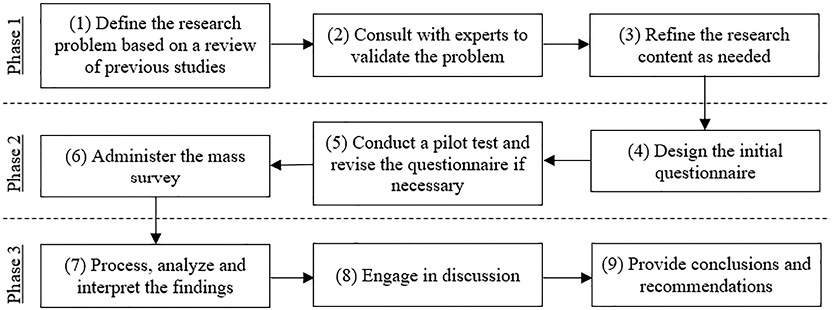
Figure 1. The research process.
Based on a review of previous research, this study identified 18 barriers to BIM application in construction. These barriers formed the core of the preliminary questionnaire. This questionnaire was piloted by three experts with over 10 years of experience in BIM in construction projects. The pilot survey aimed to evaluate the feasibility of the research and gather expert feedback on the questionnaire’s content. The results showed that, in addition to comments on formatting, all three experts identified and selected 10 barriers most relevant to Vietnamese prefabricated construction. In addition, they added one more barrier to the research, i.e., C4 “The inability to account for unforeseen factors”, as described in Table 1.
| Code | Group | Barrier | Relevant sources |
|---|---|---|---|
| A1 | A: Human-related | Lack of high-quality human resources with formal training | Boktor, et al. (2014); Aibinu and Venkatesh (2014); Ahn, et al. (2016); Nguyen and Nguyen (2021); Nguyen, et al. (2024) |
| A2 | Limited experience in managing information models, leading to inaccurate outcomes | Löf and Kojadionovic (2012); Boktor, et al. (2014); Chou and Chen (2017) | |
| A3 | Resistance to change in work processes among professionals | Gu and London (2010); Khosrowshahi and Arayici (2012); Ahn, et al. (2016); Chou and Chen (2017); Ismail, et al. (2019); Vasudevan (2020); Alsofiani (2024) | |
| A4 | Poor coordination and a lack of data sharing between the units involved in the project | Choi (2010); Azhar (2011); Wong and Gray (2019); Moradi and Sormunen (2023); Sampaio, et al. (2023) | |
| B1 | B: Technology-related | High investment costs for equipment, infrastructure, and software licenses | Aibinu and Venkatesh (2014); Stanley and Thurnell (2014); Ahn, et al. (2016); Nguyen and Nguyen (2021); Nguyen, et al. (2024) |
| B2 | Limited features in certain tools, reducing technical and volume accuracy | Choi (2010) | |
| B3 | Ineffective integration between different software tools | Von Both (2012); Löf and Kojadionovic (2012); Ahn, et al. (2016) | |
| C1 | C: Performance-related | Absence of a comprehensive legal framework, standards, regulations, and documentation | Von Both (2012); Chou and Chen (2017); Ismail, et al. (2019); Vasudevan (2020); Nguyen and Nguyen (2021); Alsofiani (2024); Nguyen, et al. (2024) |
| C2 | A long time is required to generate detailed information in the model | Khan and Muneeb (2019); Lazaro-Aleman, et al. (2020) | |
| C3 | Challenges related to information security | Mitchell and Lambert (2013); Aibinu and Venkatesh (2014) | |
| C4 | The inability to account for unforeseen factors | Experts |
Note. BIM, building information modeling.
Data were collected through a questionnaire survey comprising five sections related to BIM application in construction. Part 1 introduced the purpose of the survey, Part 2 assessed the benefits and barriers of using BIM, Part 3 explored the causal relationships between these benefits and barriers, Part 4 evaluated the BIM implementation process, and Part 5 gathered personal information about the respondents. A 5-point Likert scale was used, where 1 = “very low”, 2 = “low”, 3 = “medium”, 4 = “high”, and 5 = “very high”. The questionnaire was refined based on expert feedback, and a pilot survey was conducted with 10 respondents. The pilot results indicated that the questionnaire was clear and easy to complete.
A more extensive survey targeted individuals who had worked on prefabricated construction projects involving BIM applications. To ensure objectivity and reliability, the survey participants needed to have significant experience in the field. Due to logistical challenges, a non-probability sampling method was used, and the questionnaire was distributed via Google Forms. After approximately 2 months, 155 responses were received. Four incomplete responses were excluded, leaving 151 valid responses for analysis. These responses were processed and categorized before analysis. Only data from Part 2 and Part 5 were used for this study.
This study used various analytical tools to examine the collected data. A descriptive analysis was used to obtain statistics on the respondent population, such as means, standard deviations, and percentages. Cronbach’s alpha was used to assess the reliability of the data. Spearman’s correlation test was employed to analyze correlations in rank barrier factors between respondent groups. Exploratory factor analysis (EFA) was used to group initial factors into principal components. Fuzzy synthetic evaluation (FSE) was employed to evaluate the overall impact of barriers to BIM adoption. The procedure for performing FSE is depicted in Figure 2.
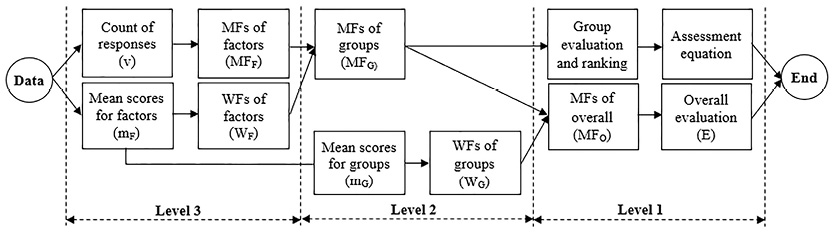
Figure 2. Fuzzy synthetic evaluation process.
Analysis and findings
Information of respondents
The purpose of using descriptive statistics is to assess the characteristics of the survey sample across various classification groups. The analysis results of 151 valid responses were as follows:
• Occupational fields: 132 respondents (87%) were engineers, 7 were architects (5%), 9 were lecturers (6%), and 3 belonged to other professions (2%).
• Job positions: 8 respondents (5%) were members of the board of directors, 15 (10%) were managers or department heads, 22 (15%) were team leaders, and the remaining 106 (70%) were employees.
• Project stakeholders: 68 respondents worked for contractors, 49 for design and supervision consultants, and 15 for project investors. The remaining 19 respondents were educators (8) and suppliers (2) or from other sectors (9).
• Years of experience: 17 respondents had more than 9 years of experience, 10 had 6 to 9 years, 38 had 3 to 6 years, and the remaining 86 had less than 3 years of experience.
The composition of the survey groups was satisfactory and representative. However, it is worth noting that the respondents generally have limited years of experience, likely due to the relatively recent adoption of BIM in the construction industry. Overall, the study surveyed respondents with relevant backgrounds, making their assessments and feedback on the issue of BIM in construction highly reliable.
Reliability of data
It is essential to assess the reliability of each variable within the model to ensure that each variable represents a meaningful concept in this study. This study used Cronbach’s alpha coefficient to evaluate the overall reliability of each variable (Hair, et al., 2009). The results of Cronbach’s (α) test are presented in Table 2.
Table 2 shows that the overall Cronbach’s alpha value was 0.788, which exceeded the 0.7 threshold, ensuring a high data reliability level, as Hair, et al. (2009) noted. Cronbach’s alpha coefficients for each factor group were also strong, hovering around 0.8. Moreover, the “corrected item–total correlation” coefficients were all above 0.3, confirming that each factor contributed to the overall reliability of the total variable. The “Cronbach’s alpha if the item is deleted” values indicate whether removing an item would increase or decrease the overall Cronbach’s coefficient. If the value increases, it suggests that the variable negatively impacts the total variable and vice versa. However, the results show no such variable.
Ranking and its correlation
Descriptive statistics were used to rank the barriers to BIM adoption, including mean and standard deviation. The ranking results are presented in Table 3. A 5-point Likert scale was employed, with the following impact levels: 1–1.8 (very low), 1.8–2.6 (low), 2.6–3.4 (medium), 3.4–4.2 (high), and 4.2–5 (very high).
Note. BIM, building information modeling.
The results in Table 3 show that the average scores range from 3.119 to 3.735, indicating that most respondents believe that BIM application in the preconstruction phase faces significant obstacles. The most challenging barrier is A1 “Lack of high-quality human resources with formal training” (µ = 3.735). Other significant difficulties include A4 “Poor coordination and a lack of data sharing between the units involved in the project” (µ = 3.709), B1 “High investment costs for equipment, infrastructure, and software licenses” (µ = 3.530), and C2 “A long time is required to generate detailed information in the model” (µ = 3.649). These issues are identified as critical challenges that need to be addressed.
Overall, 7 out of 11 barrier factors were rated highly influential, while the remaining 4 were rated moderately influential, highlighting their significant impact on BIM adoption. The top-ranked barriers were evenly distributed across groups A, B, and C.
A brief explanation of the top-ranked factors is as follows:
• Lack of high-quality human resources: In numerous countries, especially developing economies, construction workforces are often dominated by low-skilled foreign labor, which poses a significant challenge to transitioning to more advanced methods like BIM (Wong and Gray, 2019). For instance, a recent study found that 58% of mechanical contractors in the industry have less than 3 years of BIM experience and consider themselves beginners in using this technology (Boktor, et al., 2014). The lack of comprehensive BIM training programs in many undergraduate construction and engineering curricula further exacerbates the lack of BIM expertise in the construction workforce. This scarcity of BIM-proficient graduates entering the industry creates a self-perpetuating cycle as firms struggle to find the skilled talent needed to fully realize the benefits of this transformative technology, in turn discouraging additional investment and adoption (Ahn, et al., 2013; Boktor, et al., 2014).
• Lack of coordination and data sharing: A key factor contributing to this challenge is the complexity inherent in the construction industry, which often involves a diverse array of professionals with varying expertise, responsibilities, and priorities (Sampaio, et al., 2023). Effective collaboration and information exchange are crucial for the successful integration of BIM. Nevertheless, the industry has historically been plagued by fragmentation and a lack of a common language or framework for data sharing (Wong and Gray, 2019). This issue is further exacerbated by the wide-ranging software platforms and systems employed by different stakeholders, unique file formats, and data structures, which can often hinder the seamless exchange of information and impede the collaborative process (Santos, et al., 2021). Sampaio, et al. (2023) indicated that BIM managers play a crucial role in ensuring the accuracy and quality of the information included in the BIM model, as well as in controlling the responsibility given to each involved professional, coordinating the various design and construction activities, and guaranteeing the correction of the amount.
• High investment in BIM adoption: The implementation of BIM technology comes with significant upfront costs required for the necessary equipment, infrastructure, and software licenses, posing a challenge for construction companies, especially smaller firms, to fully embrace this transformative approach (Ahn, et al., 2016). In addition to the initial acquisition of BIM software and hardware, companies must account for a range of supplementary expenses, such as training their workforce to effectively utilize the new technology, developing and integrating new digital workflows that align with BIM processes, and maintaining the BIM system over the long term (Jamal, et al., 2019; Alsofiani, 2024). This financial burden can be particularly problematic for SME construction enterprises, which often operate with limited budgets and may struggle to allocate the necessary resources to implement BIM effectively (Saka and Chan, 2020).
• Large time consumption of a BIM model: Existing research has sought to identify the factors contributing to this challenge, recognizing the need to address the issue in order to capitalize on the benefits offered by BIM fully (Bynum, et al., 2013; Manzoor, et al., 2021). As the construction industry continues to evolve, the pressure to streamline processes and deliver projects more expeditiously has become increasingly pronounced, driving the need for innovative solutions to address the time-consuming aspects of BIM model generation (Khan and Muneeb, 2019; Lazaro-Aleman, et al., 2020). One of the critical factors contributing to the extended time required for BIM model generation is the complexity of the construction project itself. Research has shown that as the number of stories in a building increases, the time and cost required to create a detailed BIM model also rise significantly (Khan and Muneeb, 2019). This context is due to the additional layers of complexity and the increased volume of information that must be incorporated into the model.
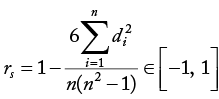
This study also employed Spearman’s (ρ) test to assess the level of correlation between the groups of surveyed respondents. The formula used to compute Spearman’s correlation coefficient is as follows:
 .(1)
.(1)
In Spearman’s correlation test, the closer rs is to 1 (or −1), the more strongly the variables correlate positively (or negatively). A higher correlation coefficient indicates a greater level of consensus. The correlation scale is as follows: 0–0.2 indicates a very weak correlation, 0.2–0.4 is weak, 0.4–0.6 is moderate, 0.6–0.8 is strong, and 0.8–1 is very strong. The results, presented in Table 4, show that most groups demonstrate a moderate level of consensus. While some respondent pairs exhibit low consensus, others display very high agreement. Overall, the consensus among groups varies when evaluating and ranking the influence of BIM barriers.
* Correlation is significant at the 0.05 level (two-tailed).
** Correlation is significant at the 0.01 level (two-tailed).
The values in bold denote weak correlations between variable pairs.
Factor loadings
EFA is a technique used to reduce the dimensionality of a research model by condensing a large set of initial factors into a smaller set of representative ones while preserving the original explanatory power (Iyer and Jha, 2005; Doloi, 2012). In this study, EFA was conducted with the following conditions: factors with an eigenvalue greater than 1 were retained, the varimax rotation method with Kaiser normalization was applied, maximum iterations for convergence were set to 25, principal component extraction was used, factor loadings above 0.5 were considered, and the analysis matrix was a correlation matrix. Additionally, the first check for EFA was assessed using the Kaiser–Meyer–Olkin (KMO) test, with a threshold value of 0.5, and Bartlett’s test of sphericity at a significance level of 0.05.
The initial check results showed a KMO value of 0.764, greater than 0.5, indicating that the data were highly suitable for factor analysis. Additionally, Bartlett’s test showed a significance level of 0, which was less than 0.05, suggesting that the correlation matrix of the variables significantly differed from the identity matrix (Hair, et al., 2009). Furthermore, the total explained variance for extracting the initial factors was 66.723%, exceeding the 50% threshold, indicating a strong relationship between factors and components (Field, 2005). As a result, three principal components were extracted, as depicted in Figure 3.
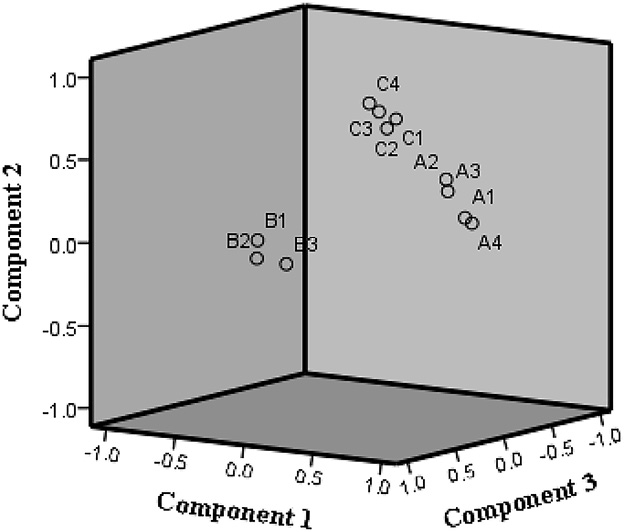
Figure 3. Component plot in rotated space.
Therefore, the factor loading results, as shown in Table 5, can be used to develop the factor model. All factor loadings exceeded 0.5, making them appropriate for exploratory studies with fewer than 200 data samples.
Fuzzy synthetic evaluation
FSE, based on fuzzy logic and set theory, offers a framework for quantifying ambiguous or hard-to-measure factors (Zhao, et al., 2016). Its main strength is handling qualitative and subjective data, making it ideal for multi-criteria decision-making in civil engineering (Marks, et al., 1995; Wen, et al., 2021). FSE is particularly effective in managing uncertainties in construction projects and assessing overall performance (Pang and Bai, 2013; Wang, et al., 2020).
The calculation theory of FSE is quite complex. Therefore, this study provides a detailed step-by-step calculation process, as shown in Figure 2:
Step 1: Count the number of responses (n) according to the scale values (v) from 1 to 5 (j) for all 11 barrier factors. The calculation formula is as follows:
 ,(2)
,(2)
where i is a running variable representing the total number of samples collected and j is the scale levels
(j = 1 ÷ 5).
The results are shown in Table 6. For example, the count result for A1 is 5 responses for value 1, 12 responses for value 2, 36 responses for value 3, 63 responses for value 4, and 35 responses for value 5.
Step 2: Determine the fuzzy matrix for the barrier factors according to the scale values. Each element in the matrix is calculated by dividing the total number of responses for each scale value by the total number of responses (N). At this time, each factor has the following function (MFF):
 .(3)
.(3)
Since the value levels all tend to represent a particular factor, the MF in the matrix form can be abbreviated as follows:
 .(4)
.(4)
The results are also presented in Table 6. For example, for factor A1,
 .
.
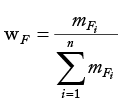
Step 3: Determine the weightings of the factors (wF) in the groups. In this step, the average value of the factors (mF) in Table 3 is used to calculate the weightings below:
 ,(5)
,(5)
where n is the number of factor groups.
The calculation results are described in Table 7. For example, for factor A1, the weighting (wA1) is
 .
.
Step 4: Identify the fuzzy matrix using membership functions for groups (MFG), as follows:
 .(6)
.(6)
The calculation results are also described in Table 7. For example, for group A, MF is
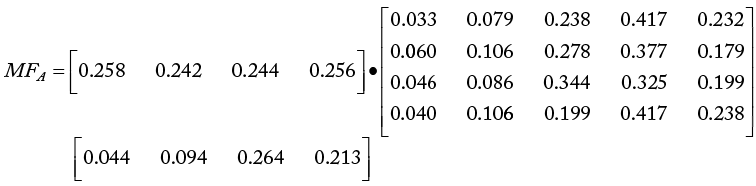 .
.
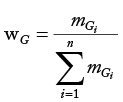
Step 5: Calculate the weighting matrix for groups (wG). Similar to step 3, the sum of group means is utilized to calculate the weightings, as follows:
 .(7)
.(7)
The results are presented in Table 8. For example, for group A, the weighting (wA) is
 .
.
Step 6: Determine the fuzzy matrix for the overall impact of the factors (MFO), as follows:
 ,(8)
,(8)
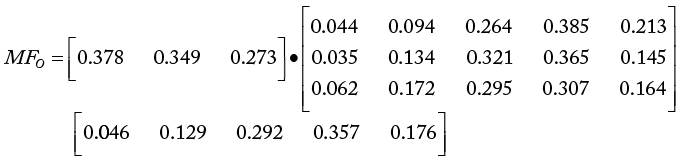 .
.
The results are also outlined in Table 8.
Step 7: Evaluation and ranking.
The evaluation value (E) is defined based on the following formula:
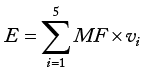 .(9)
.(9)
The coefficients (C) of the groups in the overall equation are as follows:
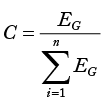 .(10)
.(10)
The results of this step are presented in Table 9. For example, for group A,
 ,
,
 ,
,
| Group | Group evaluation (EG) | Coefficients | Rank | Overall | |
|---|---|---|---|---|---|
| Evaluation (E) | Linguistic | ||||
| A | 3.627 | 0.348 | 1 | 3.488 | High |
| C | 3.453 | 0.331 | 2 | ||
| B | 3.341 | 0.321 | 3 | ||
which are similar to those of groups B and C.
Using Eq. (10), the evaluation value of the overall is
 .
.
Based on the linguistic value of the triangular fuzzy function corresponding to the 5-point scale, E = 3.448 lies between 3.4 and 4.2, so it can be concluded that the barriers have a high impact on BIM usage.
Discussion and comparison
The need for an overall evaluation of BIM adoption
As the scale and complexity of construction projects increase, the need for efficient and effective management has become crucial. The application of BIM technology in construction projects has provided various benefits, including enhanced visualization, improved productivity, better coordination of construction drawings, and faster delivery at lower costs (Qiu, et al., 2019; Ma, et al., 2020). However, construction companies often face challenges in reorganizing their organizational structure to fully capitalize on the advantages of BIM adoption and implementation (Ahn, et al., 2016). While the technological advancements associated with BIM are undoubtedly significant, the successful adoption and implementation of this innovative approach requires a deeper understanding of the critical role that human involvement plays (Ma, et al., 2020; Doukari, et al., 2022). The ability of BIM to foster close collaboration and encourage the integration of various stakeholders’ roles throughout a project’s lifecycle is a pivotal feature that distinguishes it from traditional construction practices (Azhar, et al., 2015). Concomitant with the development of the construction industry, construction projects have grown increasingly complex and large in scale, leading clients to have even higher and more demanding requirements for the management levels and quality of these projects (Ma, et al., 2020). As a result, humans have a vital mission in successfully adopting BIM.
The use of BIM in prefabricated construction projects
Prefabrication is a sustainable construction method that has gained popularity in many countries (Xue, et al., 2017). However, the adoption of prefabrication in small-scale construction projects has been hindered by various challenges (Khahro, et al., 2019). One of the major obstacles is the lack of environmental support from project parties, which hinders effective implementation (Tam, et al., 2007). Moreover, the adoption of BIM remains uneven across different construction sectors, with the prefabricated segment often lagging behind other domains (Boktor, et al., 2014). Indeed, a growing body of research has highlighted the myriad advantages that BIM can bring to construction projects, from enhanced collaboration and real-time data-driven decision-making to significant cost and time savings (Alsofiani, 2024). Nonetheless, the prefabricated construction industry has been slow to fully realize these benefits, with numerous barriers impeding the widespread adoption of BIM within this specialized sector (El-Abidi and Ghazali, 2015).
Widespread benefits of BIM adoption in countries
The adoption of BIM has been a topic of extensive research and discussion within the construction industry, as it offers numerous benefits in terms of improved project management, enhanced collaboration, and increased efficiency. However, implementing BIM is not without its challenges, and various countries have faced similar barriers that hinder its widespread adoption (Nanajkar and Gao, 2014). One major obstacle to BIM adoption across countries is the lack of a clear understanding among construction professionals regarding the tangible business value and return on investment that BIM can provide (Alsofiani, 2024). Additionally, the high initial investment required for software, hardware, and training often deters smaller construction firms from embracing BIM (Hatmoko, et al., 2019), particularly in developing nations where access to capital and resources may be more limited (Jamal, et al., 2019; Alsofiani, 2024). Another common barrier to BIM adoption is the resistance to change within the construction industry, where traditional methods and practices are deeply entrenched. This resistance can stem from a variety of factors, including a lack of awareness or understanding of the benefits that BIM can offer, concerns about the potential disruption to established workflows and project management processes, and anxieties about the increased liability and legal implications associated with BIM-enabled collaboration (Alsofiani, 2024). The absence of clear legal frameworks and standardized contracts regarding the ownership, storage, and management of BIM data has also been a significant hurdle in many countries, as the ambiguity surrounding these issues can impede the smooth progress of BIM use (Nguyen and Nguyen, 2021; Nguyen, et al., 2024).
Conclusions and recommendations
BIM has emerged as a transformative technology that can significantly improve the efficiency and effectiveness of construction project management. Previous studies have acknowledged the benefits of BIM in the construction industry. However, its adoption still faces significant challenges, particularly during preconstruction. Prefabricated construction projects are no exception, as they require the fabrication and construction processes to run in parallel. This action demands an exceptionally high level of design accuracy.
Consequently, this study focused on identifying the common barriers to BIM adoption in the preconstruction phase of these projects and assessing their overall impact on BIM usage. The data analysis revealed that human-related factors represent the most significant barriers to applying BIM in prefabricated construction projects. Other vital obstacles include poor coordination and a lack of information sharing between project stakeholders. From a company perspective, the biggest challenge is the cost of investing in BIM infrastructure. Additionally, the time required to create a model with detailed and comprehensive information is often lengthy from various stakeholders’ viewpoints.
A Spearman’s correlation test showed a high level of agreement among stakeholders when ranking these barriers. The barriers were categorized into three main components, i.e., people, technology, and implementation, based on a model with high explained variance. The study then evaluated the overall impact of these barriers on BIM adoption. The finding shows that the impact was quite substantial. As a result, managers and practitioners must prioritize addressing these barriers to ensure effective and accurate design in the preconstruction stage.
Due to limited resources, the survey was conducted with a few construction firms applying BIM in the preconstruction phase. Reaching these BIM-implementing companies proved challenging due to information security concerns and difficulty scheduling interviews with experts and high-ranking individuals. Future studies should consider alternative data collection methods to improve participation rates and gather more comprehensive insights.
Human research ethics statement
The authors confirm that human participants were involved in the data collection process for this study. All respondents were experienced professionals in the construction industry and participated in interviews and questionnaires in a mentally and emotionally stable condition. The questionnaire introduction included a confidentiality guarantee to ensure participants’ responses were honest and objective.
Declaration of generative AI and AI-assisted technologies in the writing process
During the preparation of this work, the authors used ChatGPT 3.5 to assist the writing process more naturally. After using this tool, the authors reviewed and edited the content as needed and take full responsibility for the publication’s content.
Author contributions
The authors confirm their contribution to the paper, as follows: study conception and design: Ha Duy Khanh; data collection: Nguyen Thanh Tu; analysis and interpretation of results: Ha Duy Khanh and Nguyen Van Minh; draft manuscript preparation: Ha Duy Khanh. All authors reviewed the results and approved the final version of the manuscript.
Acknowledgments
We want to thank all the experts working for various construction firms in Ho Chi Minh City, Vietnam, for their help with our work sampling. This work was funded by Ho Chi Minh City University of Technology and Engineering, Vietnam.
References
Ahn, Y. H., Kwak, Y. H., & Suk, S. J. (2016). Contractors’ transformation strategies for adopting building information modeling. Journal of Management in Engineering, 32(1), 05015005. https://doi.org/10.1061/(ASCE)ME.1943-5479.0000390
Ahn, Y. H., Cho, C. S., & Lee, N. (2013). Building information modeling: Systematic course development for undergraduate construction students. Journal of Professional Issues in Engineering Education and Practice, 139(4), 290-300. https://doi.org/10.1061/(ASCE)EI.1943-5541.0000164
Aibinu, A., & Venkatesh, S. (2014). Status of BIM adoption and the BIM experience of cost consultants in Australia. Journal of Professional Issues in Engineering Education and Practice, 140(3), 04013021. https://doi.org/10.1061/(ASCE)EI.1943-5541.0000193
Alsofiani, M. A. (2024). Developing a Comprehensive Measurement Tool for Assessing the Rate of BIM Adoption in the Construction Industry. https://doi.org/10.48550/arXiv.2405.19755
Azhar, S. (2011). Building information modeling (BIM): Trends, benefits, risks, and challenges for the AEC industry. Leadership and Management in Engineering, 11(3), 241-252. https://doi.org/10.1061/(ASCE)LM.1943-5630.0000127
Azhar, S., Khalfan, M., & Maqsood, T. (2015). Building information modelling (BIM): now and beyond. Construction Economics and Building, 12(4), 15-28. https://doi.org/10.5130/AJCEB.v12i4.3032
Boktor, J., Hanna, A., & Menassa, C. C. (2014). State of practice of building information modeling in the mechanical construction industry. Journal of Management in Engineering, 30(1), 78-85. https://doi.org/10.1061/(ASCE)ME.1943-5479.0000176
Borrmann, A., König, M. (2018). Building Information Modeling. In: Vismann, U. (eds) Wendehorst Bautechnische Zahlentafeln. Springer Vieweg, Wiesbaden, 1475-1485. https://doi.org/10.1007/978-3-658-32218-2_24
Bynum, P., Issa, R. R., & Olbina, S. (2013). Building information modeling in support of sustainable design and construction. Journal of Construction Engineering and Management, 139(1), 24-34. https://doi.org/10.1061/(ASCE)CO.1943-7862.0000560
Cantarelli, C. C., Molin, E. J., van Wee, B., & Flyvbjerg, B. (2012). Characteristics of cost overruns for Dutch transport infrastructure projects and the importance of the decision to build and project phases. Transport Policy, 22, 49-56. https://doi.org/10.1016/j.tranpol.2012.04.001
Choi, H. S. (2010). Analysis about Factors affecting Inactive of BIM Introduction in the Construction Industry. MSc thesis, Department of Civil Engineering, Hanyang University
Chou, H. Y., & Chen, P. Y. (2017). Benefit evaluation of implementing BIM in construction projects. In IOP Conference Series: Materials Science and Engineering, 245(6), p.062049. https://doi.org/10.1088/1757-899X/245/6/062049
Decision No. 2500/QD-TTg. (2016). Project on applying BIM in construction activities and maintenance management. Vietnamese Government. Issued date: 22 December, 2016. Available at: https://datafiles.chinhphu.vn/cpp/files/vbpq/2016/12/2500.signed.pdf
Doloi, H. (2012). Understanding impacts of time and cost related construction risks on operational performance of PPP projects. International Journal of Strategic Property Management, 16(3), 316-337. https://doi.org/10.1016/j.ijproman.2011.05.004
Doukari, O., Seck, B., & Greenwood, D. (2022). The creation of construction schedules in 4D BIM: A comparison of conventional and automated approaches. Buildings, 12(8), 1145. https://doi.org/10.3390/buildings12081145
El-Abidi, K. M. A., & Ghazali, F. E. M. (2015). Motivations and limitations of prefabricated building: An overview. Applied Mechanics and Materials, 802, 668-675. https://doi.org/10.4028/www.scientific.net/AMM.802.668
Field, A. (2005). Reliability analysis. In: Field, A., Ed., Discovering Statistics Using SPSS. 2nd Edition, Sage, London.
Flyvbjerg, B. (2014). What you should know about megaprojects and why: An overview. Project Management Journal, 45(2), 6-19. https://doi.org/10.1002/pmj.21409
Gu, N., & London, K. (2010). Understanding and facilitating BIM adoption in the AEC industry. Automation in Construction, 19(8), 988-999. https://doi.org/10.1016/j.autcon.2010.09.002
Hair Jr., J.F., Black, W.C., Babin, B.J. and Anderson, R.E. (2009). Multivariate data analysis. 7th Edition, Prentice Hall, Upper Saddle River.
Hatmoko, J. U. D., Fundra, Y., & Wibowo, M. A. (2019). Investigating building information modelling (BIM) adoption in Indonesia construction industry. In MATEC Web of Conferences, 258, p.02006. https://doi.org/10.1051/matecconf/201925802006
Ibrahim, M. Y., & Al-Kazzaz, D. A. (2021). A comparative analysis of BIM standards and guidelines between UK and USA. In Journal of Physics: Conference Series, 1973(1), p.012176. https://doi.org/10.1088/1742-6596/1973/1/012176
Ismail, N. A. A., Adnan, H., & Bakhary, N. A. (2019). Building Information Modelling (BIM) adoption by quantity surveyors: a preliminary survey from Malaysia. In IOP Conference Series: Earth and Environmental Science, 267, 5, p.052041. https://doi.org/10.1088/1755-1315/267/5/052041
Iyer, K. C. and Jha, K. N. (2005). Factors affecting cost performance: evidence from the Indian construction projects, International Journal of Project Management, 23(4), 283–295. https://doi.org/10.1016/j.ijproman.2004.10.003
Jamal, K. A. A., Mohammad, M. F., Hashim, N., Mohamed, M. R., & Ramli, M. A. (2019). Challenges of Building Information Modelling (BIM) from the Malaysian architect’s perspective. In MATEC Web of Conferences, 266, p. 05003. https://doi.org/10.1051/matecconf/201926605003
Khahro, S. H., Memon, N. A., Ali, T. H., & Memon, Z. A. (2019). Adoption of prefabrication in small scale construction projects. Civil Engineering Journal, 5, 1099-1104. https://doi.org/10.28991/cej-2019-03091314
Khan, A., & Muneeb, A. (2019). Creation of Formula to Predict Time and Cost Benefit by Using 5D BIM Rather than Traditional Method of Construction. Advancements in Civil Engineering & Technology, 3(1), https://doi.org/10.31031/ACET.2019.03.000552
Khanh, H.D., & Hieu, H.T. (2020). Process of BIM application in the preconstruction phase for industrial building projects in Ho Chi Minh City. Vietnam Journal of Science and Technology, 62(8), 30–4. https://vjol.info.vn/index.php/most/article/view/51822
Khosrowshahi, F., & Arayici, Y. (2012). Roadmap for implementation of BIM in the UK construction industry. Engineering, Construction and Architectural Management, 19(6), 610-635. https://doi.org/10.1108/09699981211277531
Lazaro-Aleman, W., Manrique-Galdos, F., Ramirez-Valdivia, C., Raymundo-Ibañez, C., & Moguerza, J. M. (2020, February). Digital transformation model for the reduction of time taken for document management with a technology adoption approach for construction SMEs. In 2020 9th International Conference on Industrial Technology and Management (ICITM) (pp. 1-5). IEEE. https://doi.org/10.1109/ICITM48982.2020.9080390
Löf, M. B. & Kojadionovic, I. (2012). Possible utilization of BIM in the production phase of construction projects. MSc thesis, Architectural Design and Construction Project Management, University of Skanska, Sweden.
Ma, C., Yang, D., & Ma, K. (2020). Research on application of building information management technology to engineering project management. In IOP Conference Series: Earth and Environmental Science, 580(1), p.012018. https://doi.org/10.1088/1755-1315/580/1/012018
Manzoor, B., Othman, I., Gardezi, S. S. S., & Harirchian, E. (2021). Strategies for adopting building information modeling (Bim) in sustainable building projects - A case of Malaysia. Buildings, 11(6), 249. https://doi.org/10.3390/buildings11060249
Marks, L. A., Dunn, E. G., Keller, J. M., & Godsey, L. D. (1995). Multiple criteria decision making (MCDM) using fuzzy logic: an innovative approach to sustainable agriculture. In Proceedings of 3rd International Symposium on Uncertainty Modeling and Analysis and Annual Conference of the North American Fuzzy Information Processing Society, 503-508. https://doi.org/10.1109/ISUMA.1995.527746
Mitchell, D. & Lambert, S. (2013). BIM: Rules of engagement. The CIB World Building Congress, 3 August 2013, Brisbane, Australia, 1-5. Available at: https://wbc2013.apps.qut.edu.au/papers/cibwbc2013_submission_464.pdf
Moradi, S., & Sormunen, P. (2023). Integrating lean construction with BIM and sustainability: a comparative study of challenges, enablers, techniques, and benefits. Construction Innovation, 24(7), 188-203. https://doi.org/10.1108/CI-02-2023
Nanajkar, A., & Gao, Z. (2014). BIM implementation practices at India’s AEC firms. In ICCREM 2014: Smart Construction and Management in the Context of New Technology, 134-139. https://doi.org/10.1061/9780784413777.016
Neves, J., Sampaio, Z., & Vilela, M. (2019). A case study of BIM implementation in rail track rehabilitation. Infrastructures, 4(1), 8. https://doi.org/10.3390/infrastructures4010008
Nguyen, T.-Q., & Nguyen, D.-P. (2021). Barriers in BIM adoption and the legal considerations in Vietnam. International Journal of Sustainable Construction Engineering and Technology, 12(1), 283-295. https://penerbit.uthm.edu.my/ojs/index.php/IJSCET/article/view/8553. https://doi.org/10.30880/ijscet.2021.12.01.027
Nguyen, T. T. N., Do, S. T., Nguyen, V. T., & Nguyen, T. A. (2024). Interrelationships among enabling factors for BIM adoption in construction enterprises. Engineering, Construction and Architectural Management, 31(2), 891-918. https://doi.org/10.1108/ECAM-05-2022-0465
Osei, V. (2013). The construction industry and its linkages to the Ghanaian economy-polices to improve the sector’s performance. International Journal of Development and Economic Sustainability, 1(1), 56-72. Available at: https://papers.ssrn.com/sol3/papers.cfm?abstract_id=4955779
Pang, B., & Bai, S. (2013). An integrated fuzzy synthetic evaluation approach for supplier selection based on analytic network process. Journal of Intelligent Manufacturing, 24, 163-174. https://doi.org/10.1007/s10845-011-0551-3
Qiu, S., Xu, H., Jin, J., Zhang, H., & Sun, K. (2019). Application of BIM technology in construction engineering. In IOP Conference Series: Earth and Environmental Science, 371(2), p.022073. https://doi.org/10.1088/1755-1315/371/2/022073
Saka, A. B., & Chan, D. W. (2020). Profound barriers to building information modelling (BIM) adoption in construction small and medium-sized enterprises (SMEs): An interpretive structural modelling approach. Construction Innovation, 20(2), 261-284. https://doi.org/10.1108/CI-09-2019-0087
Sinoh, S. S., Othman, F., & Ibrahim, Z. (2020). Critical success factors for BIM implementation: a Malaysian case study. Engineering, Construction and Architectural Management, 27(9), 2737-2765. https://doi.org/10.1108/ECAM-09-2019-0475
Stanley, R., & Thurnell, D. (2014). The benefits of, and barriers to, implementation of 5D BIM for quantity surveying in New Zealand. The Australasian Journal of Construction Economics and Building, 14(1), 105-117. https://search.informit.org/doi/10.3316/informit.200817347855487. https://doi.org/10.5130/AJCEB.v14i1.3786
State of BIM. (2024). The State of BIM Report 2024. Available at: https://stateofbim.com
Tam, V. W., Tam, C. M., & Ng, W. C. (2007). An examination on the practice of adopting prefabrication for construction projects. International Journal of Construction Management, 7(2), 53-64. https://doi.org/10.1080/15623599.2007.10773102
Tu, N. P. Q., & Bao, N. Q. (2023). Current status and trends of BIM application. Journal of Construction. Available at: https://tapchixaydung.vn/thuc-trang-va-xu-huong-ap-dung-bim-20201224000016997.html (In Vietnamese).
Vasudevan, G. (2020). The benefits of implementation of BIM technologies and tools in significantly construction wastes in the Malaysia construction industry. In IOP Conference Series: Materials Science and Engineering, 849(1), p.012019. https://doi.org/10.1088/1757-899X/849/1/012019
Von Both, P. (2012). Potentials and barriers for implementing BIM in the German AEC market. In Digital Physicality – Proceedings of the 30th eCAADe Conference, 2, 151–158. Czech Technical University in Prague. https://doi.org/10.52842/conf.ecaade.2012.2.151
Wang, G., Liu, Y., Hu, Z., Lyu, Y., Zhang, G., Liu, J., & Liu, L. (2020). Flood risk assessment based on fuzzy synthetic evaluation method in the Beijing-Tianjin-Hebei metropolitan area, China. Sustainability, 12(4), 1451. https://doi.org/10.3390/su12041451
Wen, Z., Liao, H., Zavadskas, E. K., & Antuchevičienė, J. (2021). Applications of fuzzy multiple criteria decision making methods in civil engineering: A state-of-the-art survey. Journal of Civil Engineering and Management, 27(6), 358-371. https://doi.org/10.3846/jcem.2021.15252
Wong, S. Y., & Gray, J. (2019). Barriers to implementing Building Information Modelling (BIM) in the Malaysian construction industry. In IOP Conference Series: Materials Science and Engineering, 495, 1, p.012002. https://doi.org/10.1088/1757-899X/495/1/012002
Xue, H., Zhang, S., Su, Y., & Wu, Z. (2017). Factors affecting the capital cost of prefabrication—A case study of China. Sustainability, 9(9), 1512. https://doi.org/10.3390/su9091512
Zhao, X., Hwang, B. G., & Gao, Y. (2016). A fuzzy synthetic evaluation approach for risk assessment: a case of Singapore’s green projects. Journal of Cleaner Production, 115, 203-213. https://doi.org/10.1016/j.jclepro.2015.11.042
Zhu, X. L., & Zhang, H. (2018). Control management of construction cost of prefabricated residential buildings. Electronic Journal of Structural Engineering, 18(2), 109-116. https://doi.org/10.56748/ejse.182702