Construction Economics and Building
Vol. 26, No. 1
2026
ARTICLES (PEER REVIEWED)
Adoption Strategies for Health and Safety Technologies in the Construction Industry
Hayford Pittri1,*, Kofi Agyekum2, Augustine Senanu Kukah3, Eric Asamoah4, Rhoda Gasue2, Benjamin Botchway2
1 Institute of Sustainable Built Environment, School of Energy, Geoscience, Infrastructure and Society, Heriot-Watt University, Edinburgh, UK
2 Department of Construction Technology and Management, Kwame Nkrumah University of Science and Technology
3 Centre for Smart Modern Construction, School of Engineering, Design and Built Environment, Western Sydney University, Sydney, Australia
4 Department of Statistics and Actuarial Science, Kwame Nkrumah University of Science and Technology
Corresponding author: Hayford Pittri, hayfordp09@gmail.com
DOI: https://doi.org/10.5130/xqpma823
Article History: Received 19/08/2024; Revised 21/07/2025; Accepted 11/10/2025; Published 27/02/2026
Citation: Pittri, H., Agyekum, K., Kukah, A. S., Asamoah, E., Gasue, R., Botchway, B. 2026. Adoption Strategies for Health and Safety Technologies in the Construction Industry. Construction Economics and Building, 26:1, 1–26. https://doi.org/10.5130/xqpma823
Abstract
Despite growing global interest in digital innovations for health and safety (H&S) management, the Ghanaian construction industry (GCI) continues to lag in the adoption of such technologies due to persistent barriers and the absence of strategic implementation frameworks. Existing studies have largely focused on individual technologies or general adoption challenges without offering holistic, context-specific strategies tailored to developing countries. This study aimed to identify and evaluate the key barriers and strategies influencing the adoption of H&S technologies in the GCI and to develop a contextualised framework to support their effective implementation. A sequential mixed-methods approach was adopted. First, a scoping review identified relevant barriers and global strategies. A quantitative survey of 123 construction professionals then assessed the significance of selected strategies, followed by three rounds of focus group discussions (FGDs) to validate, categorise, and map strategies to barrier themes. The study identified 16 strategies, with “client involvement”, “awareness creation”, and “technical know-how” ranked highest. Wilcoxon signed-rank tests confirmed the statistical significance of all strategies, while the Kruskal–Wallis and Mann–Whitney U tests revealed significant variations in perceptions across professional roles for selected strategies prior to the FGDs. The study offers practical insights for stakeholders in the GCI by linking strategic interventions directly to context-specific challenges, thus supporting the targeted deployment of digital H&S technologies. Theoretically, the study contributes a robust framework grounded in the technology–organisation–environment and diffusion of innovation theories, enhancing the understanding of technology adoption dynamics in developing countries.
Keywords
Health and Safety; Strategies; Barriers; Technology; Construction; Ghana
Introduction
The construction industry plays a vital role in global economic growth through its contributions to gross domestic product (GDP) and employment (Agyekum, et al., 2018; Nnaji and Karakhan, 2020). However, it remains one of the most hazardous sectors worldwide (Abas, et al., 2020; Williams, et al., 2020). Project success largely depends on the health, safety, and efficiency of the workforce, underscoring the importance of effective construction health and safety (H&S) management (Nnaji and Karakhan, 2020). Despite various regulatory frameworks, workplace accidents remain prevalent, particularly in developing countries where enforcement is weak (Awolusi, et al., 2018; Nnaji and Karakhan, 2020). According to the International Labour Organization, construction workers face a risk of fatal accidents three to four times higher than in other industries, rising to six times in developing nations. In Ghana, where construction is largely manual and low-tech, H&S performance is notably poor (Agyekum, et al., 2022). Although some measures have been introduced, their impact have been limited by inadequate enforcement and a lack of sustained management commitment (Boakye, et al., 2022).
With technology taking over the globe and the construction industry paying more attention to its incorporation, current studies have been geared towards exploring how they can be used to improve the performance of H&S in the construction industry (Nnaji and Karakhan, 2020; Agyekum, et al., 2022; Boakye, et al., 2022). Malomane, et al. (2022) proposed the adoption of fourth-industrial technologies to improve H&S performance by minimising the rate of accidents and injuries and producing construction works that pose fewer hazards. Mihic, et al. (2019) added that technologies to improve H&S are not new in H&S-related research, but strategies to improve their implementation in developing countries are yet to be explored. In Ghana, few studies have been conducted on technology adoption for H&S management. A typical example of such studies is that undertaken by Agyekum, et al. (2022), who sought the current level of awareness of technology adoption for H&S management and its inherent challenges encountered. Mustapha, et al. (2024a) also evaluated the role of drones for enhancing safety management in the Ghanaian construction industry (GCI). Tetteh, et al. (2024) examined the critical drivers for the adoption of wearable sensing technologies for construction safety monitoring in Ghana. Pittri, et al. (2024a) examined the utilisation of and barriers to unmanned aerial vehicle applications for H&S management in the GCI. However, none of these studies have systematically mapped the strategic pathways necessary for technology adoption in developing country contexts such as Ghana. To address the growing need for the effective integration of H&S technologies in the GCI, this study sought to provide a comprehensive analysis of the barriers impeding adoption and the strategies required to overcome them. This study, therefore, moved beyond fragmented analyses to provide a structured and contextualised framework for improving H&S outcomes through digital solutions. Specifically, the study was guided by five interrelated objectives:
1. to identify the barriers to adopting H&S technologies in the GCI,
2. to categorise the identified barriers to adopting H&S technologies in the GCI,
3. to evaluate the strategies for the adoption of H&S technology in the GCI,
4. to map the validated strategies to their corresponding barriers for the adoption of H&S technologies in the GCI, and
5. to develop a contextualised framework for the adoption of H&S technologies in the GCI.
By achieving these objectives, the study provides robust empirical and theoretical contributions that can inform decision-making by industry stakeholders, policymakers, and researchers. Improving H&S standards through the strategic adoption of digital technologies not only mitigates occupational risks but also enhances project efficiency, reduces costs associated with accidents and delays, and promotes sustainable growth. In doing so, the study also contributes to broader development goals, particularly Sustainable Development Goal 3 (Good Health and Well-being) and Goal 8 (Decent Work and Economic Growth), by fostering safer and more resilient construction environments.
To ground the study in existing knowledge, a structured desk-based scoping review was conducted and reported under the Results and Discussion section. This review served as the literature foundation, synthesising current empirical and theoretical insights into adoption barriers and strategies, and guided the subsequent empirical phases of the research. To achieve the study’s objectives, a four-stage sequential research design was adopted, combining a scoping review, quantitative survey, multiple rounds of focus group discussions, and framework development. The next section outlines the methodological procedures underpinning each of these stages.
Methodology
This study adopted a multi-stage sequential mixed-methods design, combining a desk-based scoping review, quantitative survey, focus group discussions (FGDs), and a conceptual framework development. This approach was chosen to allow both the systematic identification of barriers and strategies and the contextual validation and integration of findings through stakeholder engagement. The design enhances methodological rigour by allowing the triangulation of literature, empirical evidence, and expert consensus, thus ensuring both relevance and practical applicability in the GCI (Yu, et al., 2021).
Although a number of studies have explored the barriers to adopting digital technologies for H&S management in the GCI, these investigations have primarily focused on identifying constraints without providing a systematic or strategic discussion on how to overcome them. Notably, studies such as Agyekum, et al. (2022) and Pittri, et al. (2024a), have highlighted critical challenges, including low awareness, inadequate infrastructure, and limited technical capacity, yet they fall short of offering a comprehensive framework of strategies to enhance technology adoption. To address this gap, the present study first conducted a desk-based scoping review aimed at identifying context-specific barriers that accurately reflect the realities of the GCI. The scoping review followed the methodological guidance of Arksey and O’Malley’s (2005) five-stage framework, encompassing the following: identifying the research question, searching for relevant studies, selecting studies, charting the data, and summarising and reporting the results. The review utilised databases such as Scopus and Google Scholar, applying keywords including “health and safety technologies”, “construction”, “Ghana”, “barriers”, and “digital adoption”. The inclusion criteria focused on peer-reviewed articles published in English and conducted within the Ghanaian context. After screening, four relevant studies were identified and reviewed to extract the key barriers applicable to the local industry. Given the limited availability of Ghana-specific research on strategies for H&S technology adoption, a narrative literature review was also carried out to synthesise globally identified strategies. This approach was necessary to supplement the local context with international best practices and theoretical insights, which were later evaluated through survey and focus group methods.
Following the desk-based scoping review, a structured questionnaire survey was employed to collect quantitative data on the strategies for the adoption of H&S technologies in the GCI. Rowley (2014) asserted that when a study’s goal is to record and gauge the frequency of, amongst other things, opinions, attitudes, experiences, processes, behaviours, and expectations, a questionnaire is a better tool for gathering data. The questionnaire used in this study comprised two sections. The first part of the survey asked about the respondents’ demographic background. The gender, level of education, job role, and number of years of professional experience of the respondents were amongst the demographic data that were requested. The second part of the study focused on strategies to enhance the adoption of current technology for H&S management in the GCI. In this section, respondents were asked to rate, on a scale from 1 to 5 (where 1 = not significant, 2 = less significant, 3 = moderately significant, 4 = significant, and 5 = highly significant), the strategies that can increase/enhance the adoption of current technologies for H&S in the GCI. A pilot study involving 15 H&S experts—12 practitioners and 3 academics—was conducted through face-to-face interviews to evaluate the clarity, relevance, and adaptability of the questionnaire. Feedback from this process informed refinements to the instrument. The final survey was administered online via Google Forms to preserve respondent anonymity and facilitate broader reach. The target population comprised project managers, quantity surveyors, engineers, architects, and contractors serving as H&S officials in large construction firms (D1K1) in Ghana. Due to the absence of a comprehensive sampling frame for this group, a combination of purposive and snowball sampling techniques were adopted. Initial respondents were selected based on predefined criteria, including familiarity with H&S technologies and affiliation with D1K1 firms, following a similar approach by Agyekum, et al. (2022). These respondents subsequently referred others with similar profiles, following a snowballing approach. In total, 123 valid responses were obtained, consistent with prior studies in the same context (Agyekum, et al., 2022). Data were analysed using IBM SPSS version 26. Reliability testing using Cronbach’s alpha yielded a value of 0.855, indicating high internal consistency. Normality of data was tested using the Kolmogorov–Smirnov test with Lilliefors’ correction (see Appendix 1), revealing non-normal distribution and thus justifying the use of non-parametric tests. These included the median, quartile deviation (QD), Wilcoxon signed-rank test, Kruskal–Wallis test, and Mann–Whitney U test (Pittri, et al., 2024b). Two null hypotheses were formulated: (1) there are no significant strategies for the adoption of H&S technologies in the GCI, and (2) there are no statistically significant differences in strategy perceptions across professional roles. Strategies were ranked by their median scores, with the QD used to resolve ties; in cases of further ties, mean and standard deviation values were considered. The Wilcoxon signed-rank test assessed whether strategy medians were significantly higher than a hypothetical benchmark of 3.5, chosen to reflect values above the neutral point (3.0) on the Likert scale (Pittri, et al., 2024b). A median above 3.5 indicated a strategy’s perceived significance. Assessing respondents’ opinions served to validate the proposed strategies, ensuring alignment with both theoretical expectations and industry realities. Moreover, the Kruskal–Wallis test was applied to detect differences in strategy ratings across professional roles. Where significant differences were found, the Mann–Whitney U test was used for post-hoc pairwise comparisons to identify the specific groups driving these variations.
The third phase of the study employed a series of FGDs to deepen the understanding of the barriers and strategies associated with the adoption of H&S technologies in the GCI. This qualitative phase was designed with four primary objectives: first, to categorise the context-specific barriers identified through the literature review; second, to validate the strategies previously examined in the quantitative stage; third, to identify any additional strategies that may have been overlooked; and finally, to map the strategies with their respective barriers, which informed the development of a conceptual framework. Morgan (1996) postulated that FGDs are effective in eliciting collective insights, exploring consensus and divergence amongst professionals, and uncovering nuanced interpretations of complex issues. This approach enabled the researchers to obtain rich, interactive data grounded in local professional experiences. Participants were selected purposively to ensure broad representation across relevant professional roles, including project managers, engineers, quantity surveyors, contractors, and regulatory officers who doubled as H&S officers in the GCI. The inclusion criteria focused on individuals with first-hand knowledge or experience (>5 years) in the use, management, or regulation of digital H&S technologies in construction, ranging from D4K4 contractors to D1K1. In total, three separate FGDs were conducted, each comprising seven participants. This range is consistent with qualitative research guidelines, which recommend group sizes that are large enough to generate diverse perspectives but small enough to avoid dominance or groupthink (Krueger and Casey, 2015). The composition of each group was carefully curated to facilitate cross-professional dialogue and elicit insights from both technical and managerial standpoints. Each focus group session lasted approximately 60 to 90 minutes and was guided by a semi-structured discussion protocol. This ensured a balance between systematic coverage of key topics and flexibility for participants to elaborate on the objectives of the study. The sessions were organised sequentially. The first round of FGDs sought to categorise the barriers to adopting digital technologies for H&S management in the GCI. Participants were presented with a list of barriers previously identified through the scoping review of context-specific literature. Using a semi-structured facilitation approach, participants were asked to evaluate the clarity, relevance, and contextual applicability of each barrier based on their industry experience. Barriers were accepted if at least two-thirds (≥66%) of participants within a group independently confirmed their relevance during the discussion. This consensus threshold was adopted to ensure that only barriers with strong practical resonance across the professional spectrum were retained. In cases of divergence, further probing and clarification were employed to reach agreement or justify exclusion. The criteria for acceptance also required that the barriers be observable within the current practices or policies in the GCI, thereby grounding the results in both perception and lived reality. The second round of focus group discussions aimed to validate the strategies previously identified through the literature review and survey, while also identifying additional interventions tailored to the GCI. This stage was essential to ensure that proposed solutions were not only theoretically grounded but also practically viable given the industry’s socio-economic and institutional conditions. Participants reviewed each of the pre-identified strategies and assessed their applicability and potential impact. The final session involved a barrier-strategy mapping exercise, where participants were invited to explicitly link each barrier to one or more strategies that they believed could address it. This iterative process supported the development of a robust foundation for constructing an adoption framework. All FGDs were audio-recorded with participants’ consent and transcribed verbatim for analysis. Thematic content analysis was conducted using the NVivo version 15 software to organise, code, and interpret the qualitative data. The analysis focused on identifying dominant themes, patterns of convergence and divergence, and the relationships between specific barriers and strategies. Special emphasis was placed on understanding how participants linked contextual barriers to practical solutions, which formed the basis for the development of the adoption framework.
The conceptual framework was developed using an evidence-based, iterative process that was guided by the study’s successive phases. Each step made a distinct contribution to the development of the framework: the scoping review laid the groundwork by identifying globally recognised strategies and context-specific barriers, the quantitative survey assessed and ranked these strategies according to industry perceptions, and the three rounds of focus group discussions confirmed and broadened the strategy set, categorised barriers, and methodically mapped strategies to related challenges.
The results of each research stage are presented and discussed in the following section, beginning with a desk-based scoping study that identified the barriers and an initial set of strategies. This section demonstrates how the sequential findings collectively contributed to the identification of barriers, the validation of strategies, and the development of the final adoption framework.
Results and discussion
Barriers to the adoption of digital technologies for health and safety management in the GCI
Based on four context-specific studies, this review consolidates and contextualises the key barriers to adopting digital technologies for H&S management in the GCI. The barriers reflect a combination of technical, organisational, economic, and regulatory constraints, many of which are rooted in the broader structural and institutional dynamics of the GCI. Table 1 presents a summary of these barriers, each accompanied by a brief description and the relevant sources from which they were identified or adapted.
| S/N | Barrier | Description | Source(s) |
|---|---|---|---|
| 1 | High cost of digital technologies | The financial burden of acquiring and maintaining advanced technologies hinders adoption amongst resource-constrained firms. | Agyekum, et al. (2022); Acheampong, et al. (2025); Pittri, et al. (2024a); Mustapha, et al. (2024b) |
| 2 | Weak innovation culture | Limited organisational readiness and reluctance to embrace new practices stifle innovation and technology uptake. | Agyekum, et al. (2022); Acheampong, et al. (2025); Pittri, et al. (2024a); Mustapha, et al. (2024b) |
| 3 | Lack of skilled personnel | Insufficient availability of trained professionals to operate and manage digital systems impedes adoption. | Acheampong, et al. (2025); Pittri, et al. (2024a) |
| 4 | Resistance to change | A preference for traditional practices, especially amongst older workers and management, leads to reluctance in embracing digital tools. | Agyekum, et al. (2022); Acheampong, et al. (2025) |
| 5 | Limited government support and regulation | The absence of clear policies, incentives, and regulatory frameworks creates uncertainty and slows adoption. | Agyekum, et al. (2022); Acheampong, et al. (2025); Pittri, et al. (2024a) |
| 6 | Inadequate ICT infrastructure | Poor internet connectivity, lack of hardware, and unreliable digital systems prevent effective technology use. | Acheampong, et al. (2025); Pittri, et al. (2024a); Mustapha, et al. (2024b) |
| 7 | Lack of continuous workforce training | The absence of structured and ongoing digital skills development limits workforce capability. | Agyekum, et al. (2022); Acheampong, et al. (2025) |
| 8 | Uncertainty about technological outcomes | Concerns about the return on investment and potential disruptions discourage technology adoption. | Acheampong, et al. (2025); Mustapha, et al. (2024b) |
| 9 | Data security and privacy concerns | Fears about data breaches and misuse of sensitive information act as a deterrent to digital adoption. | Acheampong, et al. (2025); Mustapha, et al. (2024b) |
| 10 | Fragmented construction sector structure | The disjointed and project-based nature of the industry complicates coordinated digital transitions. | Acheampong, et al. (2025); Agyekum, et al. (2022); Mustapha, et al. (2024b) |
| 11 | Limited awareness of digital solutions | A general lack of exposure to or understanding of available technologies reduces motivation to adopt them. | Acheampong, et al. (2025); Pittri, et al. (2024a) |
| 12 | Client opposition or low demand for digital innovation | Clients often prioritise cost savings over innovation, which discourages firms from investing in digital H&S technologies. | Acheampong, et al. (2025); Agyekum, et al. (2022) |
| 13 | Lack of integration with existing H&S systems | Difficulty in aligning new digital tools with traditional safety management processes limits implementation. | Acheampong, et al. (2025) |
| 14 | Unclear cost–benefit justification | Construction firms may struggle to see a clear return on investment for H&S-specific digital tools, especially under tight budgets. | Agyekum, et al. (2022); Acheampong, et al. (2025); Pittri, et al. (2024a); Mustapha, et al. (2024b) |
| 15 | Lack of top management commitment | Absence of leadership support and strategic direction for digital H&S transformation hampers adoption. | Agyekum, et al. (2022); Pittri, et al. (2024a) |
| 16 | Limited vendor or technical support for H&S tools | Unavailability of local support services for implementation, training, and troubleshooting discourages technology use. | Acheampong, et al. (2025); Pittri, et al. (2024a); Mustapha, et al. (2024b) |
| 17 | Cultural resistance to safety innovation | Prevailing attitudes that undervalue safety improvements through digital means can hinder uptake of new technologies. | Acheampong, et al. (2025); Pittri, et al. (2024a); Mustapha, et al. (2024b) |
| 18 | Unreliable broadband limiting real-time H&S monitoring | Real-time safety systems like drones or IoT wearables require consistent connectivity, which is often lacking on Ghanaian construction sites. | Acheampong, et al. (2025); Pittri, et al. (2024a) |
| 19 | Lack of research and development in H&S innovation | Scarce local R&D efforts focusing on safety-specific technologies restrict tailored solutions for the industry. | Acheampong, et al. (2025) |
Note. H&S, health and safety.
Source: Table created by authors.
Strategies for the adoption of digital technologies for health and safety management in the construction industry
To improve the H&S of construction workers, many researchers have discussed the potential of adopting technologies such as building information modelling (BIM), wearable safety devices, and exoskeletons to create a radical approach (Awolusi, et al., 2018; Gheisari and Esmaeili, 2019). However, the construction industry is known to be reluctant to change, and hence, there is a risk of opposition when development takes place, especially with technology adoption (Nnaji and Karakhan, 2020). With this in mind, researchers have taken a keen interest in identifying strategies to encourage the adoption of current technologies.
One critical strategy identified to encourage the use of technology to mitigate the risks on construction sites is client involvement. By way of client involvement, this strategy asks project clients to consider technology utilisation as a factor for evaluating a contractor’s performance in terms of safety. They may also include particular technological criteria in contracts or reward contractors implementing cutting-edge safety solutions to increase technology usage for H&S management on building projects (Nnaji and Karakhan, 2020). With clients’ full involvement, a pathway is created for the safety culture enhancement of projects. Aside from the client, however, all other stakeholders involved in the construction process must be duly engaged to complete the enhancement and efficiency of the safety culture on construction sites.
To further encourage the implementation of technologies in managing H&S, the workforce must be trained on the use of these technologies to be competent. Workers should first be made aware of the value and potential of the technology as part of the training process. In addition to training the workforce, the number of technical know-how for these current H&S technologies may be increased amongst the workforce to create a balance and a ripple effect of knowledge transfer. Notwithstanding the above measures, the most fundamental strategy in propagating the use of H&S technologies in the building sector is to make available to stakeholders all information regarding H&S technologies and their efficiencies (Laryea, 2010; Eyiah-Botwe, et al., 2018; Abas, et al., 2020; Nnaji and Karakhan, 2020).
To effectively manage H&S, it is necessary to communicate, monitor, and control construction activities (Nnaji and Karakhan, 2020). These are made simple by technology that supports collaborative (human–robot) teams, simulation training, safety training using virtual reality, and inspection through automation and augmented reality (Nnaji and Karakhan, 2020). According to Awolusi, et al. (2018), more training is needed to embrace these technologies. It was added that the innovation culture in the construction industry also needs to be strengthened. According to Williams, et al. (2020), although the measure of the maturity of the H&S culture in the GCI was at the pathological stage, it can still improve its H&S practices.
Prevention through design (PtD) facilitates the adoption of current technologies for H&S. PtD contributes to safe construction work environments, minimising the requirement for reactive safety measures (Ibrahim, et al., 2021). This enhances the use of current technologies for H&S. Furthermore, when PtD principles are applied, current technologies that use these principles have easier adoption in the construction industry, as they receive regulatory approvals and certifications quickly (Asmone, et al., 2022). PtD principles enhance innovation in the adoption of current technologies used for safety, as PtD focuses on design solutions that minimise hazards, thereby improving the adoption of complex safety technologies (Farghaly, et al., 2022). PtD increases the adoption of current technologies for safety, as it encourages the usage of analytics and real-time data in the identification of risks, thereby leading to safer construction systems (Samsudin, et al., 2022). In the long run, this leads to safer construction decision-making and more adoption of data-driven safety technologies. Lastly, the principles of PtD can be incorporated into much wider safety management systems for construction (Vincoli, 2024). This improves the efficacy of these H&S technologies.
Another major strategy essential to the adoption of current technologies in construction H&S is the integration of these technologies with existing systems (Cheung, et al., 2018). For the benefits of technology use to be evident in H&S, it is crucial to ensure that there is seamless operation amongst the technologies (Turner, et al., 2020). A detailed assessment of current technologies and their systems helps to understand their shortcomings and compatibilities with other safety technologies. Collaboration with vendors of these technologies also confirms whether the technologies can be integrated with other hardware, software, and processes (Brown, 2010). Furthermore, compatibility is essential in the integration of technologies (Kude, et al., 2011). Unified platforms for integrating several current technologies and further displaying a single interface in the management of these technologies are critical for integration (Santana, et al., 2017). H&S technologies can also include data mapping to ensure that there is accuracy and consistency amongst the technologies (Torbaghan, et al., 2022). Middleware solutions and application programming interfaces can facilitate the exchange of data amongst different technology systems. Lastly, in order to ensure the integration of technologies in construction safety, data consolidation is required. This involves consolidating data from multiple sources and storing it in a central repository so detailed analysis can be conducted (Omrany, et al., 2023).
A strategy that encourages the adoption of current technologies for H&S management in the construction industry is live demonstrations and simulations of the technologies (Akomea-Frimpong, et al., 2023). When these technologies are demonstrated and their uses shown, it increases the adoption rate of these technologies (Babalola, et al., 2023). This is because it shows the practical uses, benefits, and functions of these technologies, thereby boosting confidence amongst construction stakeholders. Pilot construction projects can be selected, and these current technologies tested. Technology vendors may be invited during the trial demonstrations to provide support (Sepasgozar, 2020). The technologies can then be deployed with monitoring and evaluation taking place afterwards.
Leadership commitment is another critical strategy in encouraging the adoption of current H&S management technologies. Leaders in construction firms should be strong advocates for the adoption of current technologies in their companies (Ediriweera and Wiewiora, 2021). As leaders visibly show their support, it demonstrates the importance of these technologies (Casini, 2021). The leadership of construction companies can reward the employees in the organisation who participate in training workshops on these technologies. They can apportion resources, time, and funding towards the implementation of current technologies (Xia, et al., 2021).
The next section presents the results of the survey phase, beginning with the demographic characteristics of the respondents. This is followed by statistical analyses including tests of normality, descriptive statistics of the strategies, the Wilcoxon signed-rank test, Kruskal–Wallis test, and Mann–Whitney U test, all aimed at validating and prioritising the adoption strategies identified in this section.
Background of survey respondents
The respondents were questioned about their gender, highest educational level, job position, and the number of years of professional experience. According to Research Optimus (2021), analysing the participants’ demographic data frequency can provide insights into the study’s participants.
Table 2 shows the composition of the respondents, consisting of 102 men (82.9%) and 21 women (17.1%), where the majority were men, and the minority were women, which is common in the construction industry. These respondents were H&S officials who also had roles as project managers (26.8%), architects (7.3%), engineers (26.8%), quantity surveyors (26.8%), and contractors or construction managers (12.2%). This diversity indicates a broad range of perspectives and expertise within the respondent group. The highest levels of education attained by these professionals were doctoral degrees (2.4%), master’s degrees (34.1%), bachelor’s degrees (58.5%), and higher national diplomas (4.9%) in related fields. In terms of work experience, 39 (31.7%) respondents had 3–5 years of experience in their respective fields, 24 (19.5%) had less than 3 years of job experience, 18 (14.6%) had between 6 and 8 years of work experience, 12 (9.8%) had between 9 and 12 years of work experience, and 30 (24.4%) professionals had more than 12 years of work experience in their respective profession.
Note. HND, higher national diploma.
Source: Table created by authors.
Tests of normality of strategies for the adoption of current health and safety technologies
The study began with the assumption that the data set follows a normal distribution. The Kolmogorov–Smirnov (K–S) test with Lilliefors’ significance correction was employed to test this. The analysis revealed that the p-values for each variable were less than 0.05, indicating a poor fit between the data and the assumptions of the statistical model, with p-values ranging from 0 (total incompatibility) to 1 (total compatibility) (Pittri, et al., 2024b). Lilliefors’ correction was applied to enhance the K–S test’s accuracy, as the data did not stem from a known population mean and standard deviation. These findings strongly suggest rejecting the null hypothesis, consistent with Adachi (2022), who noted that p-values of 0.05 or lower justify null hypothesis rejection. To corroborate these p-values, the Shapiro–Wilk test was also conducted, yielding similar results as presented in Table A1 (Appendix). Following this result, the study adopted nonparametric statistics, specifically the median, QD, Wilcoxon signed-rank test, Kruskal–Wallis test, and Mann–Whitney test.
Descriptive statistics of strategies for the adoption of current health and safety technologies
Table 3 presents the descriptive statistics of strategies for adopting emerging H&S technologies in the GCI. The variables were ranked based on their median, QD, mean score (MS) values, and standard deviation (SD). The highest-rated strategy was “client involvement”, which had a median of 5 and a quartile deviation of 0.5, indicating that respondents consistently rated this strategy highly. The remaining seven variables had the same median value of 4.0 and a standard deviation of 0.5, suggesting a relative consistency or stability in the rankings by respondents. For these seven strategies, the MS and SD were used for further differentiation. The second-ranked strategy was “increasing awareness of the use of technologies in H&S”, with a mean score of 4.29 and a standard deviation of 0.837. “Increasing the number of technical know-how for the technologies amongst the workforce” was ranked third, with a mean score of 4.24 and a standard deviation of 0.908. “Improving the current H&S culture on construction sites” was ranked fourth, with a mean score of 4.22 and a standard deviation of 0.954. Both “training the workforce to use the technologies” and “making available the necessary information concerning H&S technologies to stakeholders” were ranked fifth and sixth, respectively, each with a mean score of 4.20; however, their SD differed, being 0.947 and 1.022, respectively. “Governmental support and regulations for the use of the technologies” was ranked seventh, with a mean score of 4.10 and a standard deviation of 1.082. Lastly, “opportunities to observe and try technologies before adopting them” ranked eighth, with a mean score of 4.07 and a standard deviation of 0.925. However, all the strategies attained a very high rating, indicating that the respondents consider all the variables essential for the adoption of H&S technologies in the GCI. The low quartile deviation indicates a strong consensus amongst respondents, with the highest-ranked variable underscoring the importance of engaging clients in the implementation process. The findings of the study portray the pivotal role that clients play in driving demand and facilitating the implementation of technologies. The lower ranking of “opportunities to observe and try technologies before adopting them” may suggest that while important, stakeholders may feel that awareness, training, and client involvement could potentially mitigate the need for extensive trials.
Note. QD, quartile deviation.
Source: Table created by authors.
Significant test of strategies for the adoption of current health and safety technologies
The Wilcoxon signed-rank test was conducted to test whether the identified strategies were significantly different from the hypothesised mean (see Table 4). The test results for all eight strategies indicate a p-value of 0.000, meaning that all strategies were statistically significant (since p < 0.05). This implies that the adoption of H&S technologies in the construction industry is strongly influenced by each of the identified strategies. The standardised test statistics ranged from 5.755 to 7.618, further reinforcing the significance of these strategies. This suggests that a multifaceted approach incorporating all these strategies could be highly effective in enhancing technology adoption in the construction sector.
Source: Table created by authors.
Variations of responses to the strategies for the adoption of current health and safety technologies using Kruskal–Wallis
The Kruskal–Wallis test was used to identify if there were significant differences in the responses to the strategies based on the professional role of respondents. Four of the strategies [client involvement (p = 0.616), increasing the number of technical know-how for the technologies amongst the workforce (p = 0.195), opportunities to observe and try technologies before adopting them (p = 0.206), and increasing awareness of the use of technologies in health and safety (p = 0.462)] showed no statistical differences (p > 0.05), indicating a consensus amongst the professional roles on these strategies (see Table 5). The results further show significant differences in the opinions of respondents concerning four strategies “training the workforce to use the technologies” (p = 0.042), “improving the current health and safety culture on construction sites” (p = 0.033), “making available necessary information concerning health and safety technologies to stakeholders” (p = 0.003), and “governmental support and regulations for the use of the technologies” (p = 0.022). These significant differences indicate that certain roles may prioritise or perceive these strategies differently. For instance, workforce training, safety culture improvement, information dissemination, and governmental support may require more targeted communication and implementation strategies to align the perspectives of different professionals.
Note. (a) Kruskal–Wallis test. (b) Grouping variable: professional role.
** Test shows significant difference.
Source: Table created by authors.
Mann–Whitney test for the significant differences in responses to the strategies for the adoption of current health and safety technologies
The Mann–Whitney test was further carried out to explore pairwise differences in responses amongst different professional roles based on the four statistically significant strategies at significant levels of 5% and 10% (see Table 6). These results highlight that certain professional roles have divergent views on the importance of implementation of these strategies, suggesting that tailored approaches may be necessary to address the concerns or priorities of different roles. This implies the need for customised training, awareness programs, and involvement plans that consider the specific expectations and priorities of each professional group.
Source: Table created by authors.
The descriptive statistics identified client involvement as the top-ranked strategy, reflecting respondents’ belief that clients can leverage their influence and resources to drive the adoption of innovative technologies and enhance project safety outcomes. Several stakeholders on construction projects play important roles in implementing innovative safety solutions, of which the client is one (Eyiah-Botwe, et al., 2018; Osei-Asibey, et al., 2021). According to Nnaji and Karakhan (2020), using H&S technologies can improve construction projects through client involvement. This is because the client would insist on including specific technological requirements in contracts or force contractors to adopt or improve the safety solutions of a project. By way of client involvement, this strategy asks project clients to consider technology utilisation as a factor for evaluating a contractor’s performance in terms of safety. They may also include particular technological criteria in contracts or reward contractors implementing cutting-edge safety solutions to increase technology usage for H&S management on building projects (Nnaji and Karakhan, 2020). With clients’ full involvement, a pathway is created for the safety culture enhancement of projects. Similar to the studies of Nnaji and Karakhan (2020) and Osei-Asibey, et al. (2021), this study also identified the involvement of clients as an important strategy for adopting the current H&S technologies. The findings of the Kruskal–Wallis and Mann–Whitney U tests underscore that client involvement is widely regarded as a critical strategy for H&S technology adoption, with no significant disparities in opinion across professional roles. This broad agreement reflects the universal acknowledgement of the client’s influential role in fostering a culture of safety and driving the implementation of innovative safety technologies in construction projects.
The study highlights awareness as a key strategy for adopting current H&S technologies in the GCI, as respondents rated it the second-highest strategy amongst the eight. The negative H&S issues prevalent in the construction industry need to be addressed. To mitigate the effects of H&S challenges, essential technologies are key (Agyekum, et al., 2022). However, Ikuabe, et al. (2020) asserted that the level of awareness of construction professionals of these technologies still needs to be improved. In the view of Osunsanmi, et al. (2020), there needs to be a higher level of awareness and understanding of how these technologies operate in the construction industry in developing countries. This suggests that the adoption of current technologies for H&S can be improved through awareness creation, training, workshops, and seminars (Malomane, et al., 2022; Pittri, et al., 2024c). Workshops and seminars on these current technologies should also be organised for built environment professionals for them to realise the importance of their adoption. Without awareness of current technologies essential for H&S in the construction industry, H&S hazards and incidents on sites will be on the rise. Workers should first be made aware of the value and potential of the technology as part of the training process. This will make it easier for the workers to embrace and appreciate the essence of using such technologies. Workers’ orientations and both on-the-job and off-the-job training should inculcate some H&S technology elements. Aghimien, et al. (2020) posited that the construction industry needs a higher awareness rate of the benefits of H&S technologies, as it has a low adoption level. Therefore, higher education institutions should improve the training on these technologies in their syllabi to raise the awareness level of construction professionals (Oke and Fernandes, 2020). The Kruskal–Wallis test showed no significant differences in respondents’ opinions across professional roles, indicating a consensus on the importance of raising awareness to enhance the adoption of H&S technologies in the GCI. This agreement highlights the critical role of awareness creation in addressing persistent H&S challenges.
To enhance skills and education on current technologies essential for H&S, institutions of higher education could incorporate technologies such as the use of drones, augmented reality (AR), mixed reality (MR), and the internet of things (IoT), and their practices in various syllabi in order to enhance the technical know-how on the usage of these technologies (Malomane, et al., 2022). The findings of this study conform to those of Osunsanmi, et al. (2020), who postulated that although radio-frequency identification (RFID) and other H&S technologies can help monitor the safety of construction professionals, both the cost of procuring and low levels of technical ability have inhibited their adoption. For these technologies to be adopted in the GCI, the technical know-how of professionals needs to be developed. Technical know-how can be developed by training the workforce on these technologies. Also, technical know-how on these technologies can be made mandatory for all professionals during recruitment. In addition, case studies should be conducted, an H&S technologies module should be incorporated into the construction department, and professionals should be educated on the technologies (Keogh and Smallwood, 2021). Updating employees’ technical and soft skills will be necessary to increase their competitiveness and sustainability. In addition to training the workforce, the number of technical know-how for these current H&S technologies may be increased amongst the workforce in order to create a balance, as well as a ripple effect of knowledge transfer, which is also anchored by studies such as Laryea (2010), Eyiah-Botwe, et al. (2018), and Abas, et al. (2020). The Kruskal–Wallis and Mann–Whitney U tests revealed no significant differences in respondents’ opinions regarding the importance of increasing technical know-how amongst the workforce for the adoption of H&S technologies in the GCI. This consensus highlights a shared understanding amongst stakeholders that improving technical knowledge and skills is essential for overcoming adoption barriers such as cost and low technical capacity. The findings emphasise the need for workforce training, curriculum updates in higher education, and mandatory technical competence during recruitment to enhance the adoption of these technologies.
The study’s results revealed that to enhance the adoption of technologies for H&S management in the construction sector, the Ghanaian construction industry’s current H&S culture must be improved. These H&S practices can be improved by ensuring that strict adherence to the safety policies, codes of conduct, management, and supervision is in place. Proper supervision and management of the workforce to adhere to safety policies and use H&S technologies will improve these workforces’ H&S culture. In addition, firms in the industries should develop stringent H&S codes and policies towards using H&S technologies on all projects they carry out. This will go a long way in making it a firm culture. According to Williams, et al. (2020), although the measure of the maturity of the H&S culture in the GCI sites is at the pathological stage, it can still improve its H&S practices. Adjusting the management system to generate a more radical approach to improving the H&S of the construction workforce could be the way forward to overcome the challenges associated with H&S practices (Awolusi, et al., 2018; Gheisari and Esmaeili, 2019; Tang, et al., 2019). The Kruskal–Wallis test revealed significant differences in opinions on improving H&S culture in the GCI, reflecting diverse priorities amongst professional roles. To address these disparities, tailored H&S interventions are proposed, including role-specific management, supervision, and training programs. For instance, training programs should be tailored to the specific responsibilities of each professional role, such as training project managers on integrating H&S into project planning, workshops for engineers on designing for safety, sessions for quantity surveyors on budgeting for H&S technologies, and practical training for contractors on implementing safety policies on-site.
The fifth-ranked strategy is training the workforce, which aligns with the submission of Malomane, et al. (2022), who asserted that professionals already working in the industry must be provided with education and skills through either professional training or short courses. Training the workforce with the knowledge and skills needed to embrace/use H&S technologies will provide the skills necessary to perform their jobs safely and prevent the creation of risks that could endanger others or themselves. Many studies have discussed the potential of adopting these technologies to generate a radical approach to improving the safety and health of the construction workforce. To counter most of the obstacles to the implementation of these H&S technologies in the construction industry, there is a need for the workforce to be given the requisite training to improve their competencies in using the technologies essential for H&S management (Awolusi, et al., 2018; Gheisari and Esmaeili, 2019). Any job or trade inevitably changes over time, and the required skill sets are also subject to change. With the industry embracing a faster, more accurate, and safer process, there is a clear need for professionals to stay up-to-date with technical skills, which will be acquired through training. Tailored training programs based on the results of the Kruskal–Wallis test should address the unique needs of each role, such as providing short courses or role-based workshops to develop practical competencies, which are vital for overcoming barriers to implementing H&S technologies in the construction sector.
Building on the quantitative findings, the subsequent stages involved a series of FGDs aimed at validating the identified barriers and strategies, exploring their interrelationships, and contextualising them to inform the development of a practical adoption framework.
Focus group round one: barrier validation and categorisation
The first round of FGC, which aimed at categorising the identified barriers, revealed high agreement with all the barriers extracted from the literature, affirming their practical relevance. Participants highlighted how many of these barriers were interlinked and mutually reinforcing. For example, resistance to change was often discussed in relation to inadequate top-level commitment, lack of continuous training, and weak innovation culture. Similarly, concerns around high technology costs were seen as exacerbated by unreliable broadband infrastructure and data security and privacy concerns. The final outcome of this stage was the classification of the validated barriers into four major thematic categories—organisational, technological, economic, and regulatory/institutional—as presented in Table 7. This structured grouping not only reflects the multi-level nature of the challenges but also provides a foundation for systematically linking these barriers to targeted strategies in subsequent focus group rounds and framework development.
Note. H&S, health and safety.
Source: Table created by authors.
Focus group round two: strategy validation and expansion-aligning global practices with local realities
The feedback from the second round of focus group discussions, which aimed to validate the strategies previously identified through the literature review and survey, demonstrated broad consensus on all the proposed strategies. Several new and context-specific strategies emerged from the discussions, expanding the initial list. These include the following:
1. incorporation of H&S digital tools into tertiary construction education curricula to build future capacity;
2. pilot testing and demonstration projects to showcase practical benefits and build trust amongst sceptical stakeholders;
3. provision of financial incentives or tax reliefs for firms investing in H&S technologies, especially small- and medium-sized enterprises (SMEs);
4. public–private partnerships (PPPs) for co-funding digital infrastructure and training programs;
5. mandating digital reporting standards for H&S compliance, particularly on large-scale public projects;
6. creation of regional digital H&S innovation hubs to offer technical support, knowledge sharing, and technology incubation;
7. localisation of software and user interfaces to reflect Ghanaian worksite realities; and
8. certification schemes and continuing professional development (CPD) incentives tied to digital H&S competencies.
Participants also advocated for stronger collaboration amongst academia, regulators, and industry bodies to drive coordinated implementation. It was emphasised that while some strategies mirror global practices, their success in Ghana depends on adaptability to the local regulatory landscape, infrastructure limitations, and workforce digital literacy. This enriched set of strategies—validated and supplemented through expert dialogue—provides a well-rounded foundation for the next phase, where each strategy was systematically linked to corresponding barriers to inform a practical adoption framework.
Focus group round 3: mapping of strategies to barriers
Following the identification and categorisation of barriers and the validation and expansion of strategies, the third round of focus group discussions focused on systematically mapping each strategy to one or more barrier themes. Participants engaged in an interactive mapping exercise where they deliberated on the most appropriate strategies to address specific organisational, technological, economic, and regulatory/institutional barriers. This process revealed both one-to-one and one-to-many relationships, reflecting the multi-dimensional nature of the adoption challenges in the GCI. For instance, workforce training and technical upskilling were strongly linked to organisational barriers such as resistance to change, lack of skilled personnel, and weak innovation culture. Similarly, strategies such as localisation of software, demonstration projects, and innovation hubs were mapped to technological barriers, including poor information and communications technology (ICT) infrastructure and a lack of integration with existing systems. Economic constraints such as high technology costs and unclear cost–benefit justifications were addressed through fiscal incentives, PPPs, and client involvement. Regulatory and institutional barriers, including weak policy support and limited awareness, were matched with strategies such as mandating digital reporting standards and embedding digital H&S tools into professional curricula. The resulting matrix of strategy–barrier linkages provides a targeted and practical guide for overcoming context-specific challenges and informs the development of the final adoption framework presented in Figure 1.
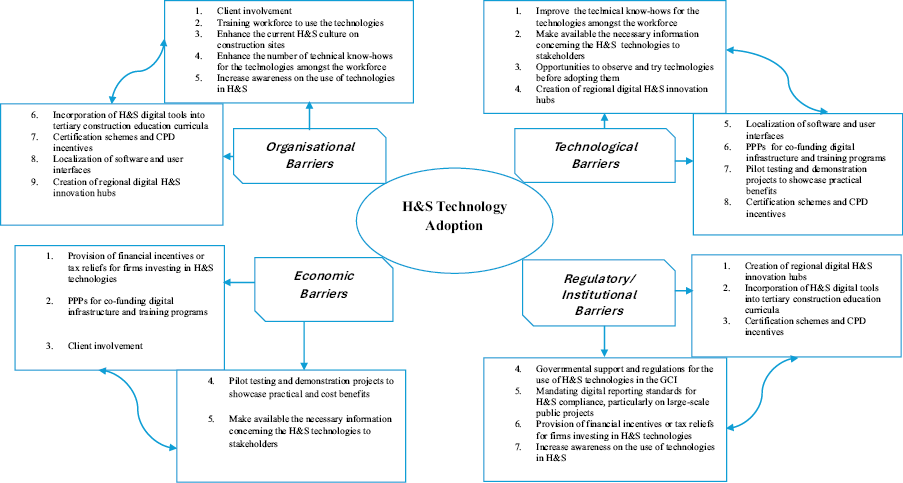
Figure 1. Conceptual framework for H&S implementation in the GCI. Source: Figure created by authors. H&S, health and safety; GCI, Ghanaian construction industry.
Conceptual framework for the adoption of H&S technologies
The conceptual framework presented in Figure 1 offers a structured and context-specific model for enhancing the adoption of digital technologies for H&S management in the GCI. The framework informs researchers, policymakers, and industry practitioners with a structured pathway for promoting the effective implementation of H&S technologies in the GCI. It synthesises findings from the literature review, quantitative survey, and FGDs, resulting in a comprehensive mapping of 16 validated strategies across the four key barrier categories. The framework draws attention to the complex, multi-dimensional nature of H&S technology adoption in developing contexts. Unlike generic adoption models, it recognises that barriers and solutions do not operate in isolation but are interdependent and often mutually reinforcing. This reflects prior research by Agyekum, et al. (2022), Nnaji and Karakhan (2020), and Pittri, et al. (2024a), who emphasised that systemic constraints—such as workforce skill gaps, limited policy support, and infrastructural deficits—must be addressed holistically to achieve meaningful digital transformation.
Organisational barriers in this framework are addressed through strategies focused on workforce development, awareness creation, and leadership engagement. This aligns with the argument by Malomane, et al. (2022) that internal change management and cultural transformation are prerequisites for successful digitalisation. The incorporation of H&S digital tools into education curricula and CPD incentives further supports long-term behavioural and institutional shifts.
Technological barriers are met with interventions aimed at enhancing technical know-how, facilitating pilot testing, and improving localised system usability. These elements are critical in contexts where technological unfamiliarity and weak infrastructure inhibit uptake (Pittri, et al., 2024a; Acheampong, et al., 2025). The inclusion of PPPs and digital H&S innovation hubs reinforces the role of multi-stakeholder collaboration in building technological capacity.
Economic constraints—particularly the high cost of acquisition and implementation—are countered through fiscal support mechanisms, including tax incentives and cost-sharing initiatives. These measures reflect calls in the literature for proactive investment models that de-risk adoption for construction firms, especially SMEs (Tetteh, et al., 2024).
Regulatory and institutional barriers are addressed by strategies that call for clearer policy direction, enforcement mechanisms, and national standards for digital H&S compliance. These insights resonate with the institutional voids highlighted in developing economies, where weak governance can stifle innovation diffusion (Williams, et al., 2020).
The framework’s emphasis on aligning industry incentives with policy support builds on the theoretical assumptions of the technology–organisation–environment (TOE) framework (Tornatzky and Fleischer, 1990), which posits that technology adoption is influenced by a combination of organisational readiness, technological characteristics, and external environmental pressures. Additionally, the framework is informed by Rogers’ diffusion of innovation (DOI) theory (2003), particularly in its attention to the importance of trialability (e.g., pilot projects), observability (e.g., demonstration effects), and compatibility (e.g., software localisation) as enablers of innovation acceptance. The interaction between stakeholders, evidenced through strategies like client involvement and public–private partnerships, also reflects the innovation system perspective, where adoption depends on the strength of networks and institutional alignment.
This framework provides a practical roadmap tailored to the GCI, while remaining theoretically anchored in established innovation and adoption models. It bridges the gap between abstract constructs and implementable actions, offering actionable insights for policymakers, construction professionals, and academic researchers. Its relevance extends beyond Ghana, serving as a potential reference model for other developing countries seeking to advance digital H&S practices in construction.
Conclusion
This study investigated the strategic mechanisms for enhancing the adoption of H&S technologies in the GCI, a sector characterised by high accident rates, limited digital integration, and systemic implementation challenges. Through a multi-stage mixed-methods design—comprising a scoping review, quantitative survey, and FGDs—the research identified context-specific barriers, evaluated a range of adoption strategies, and developed a contextualised framework to support effective technology implementation.
The findings revealed a suite of 16 strategies for improving H&S technology adoption, eight of which were prioritised through empirical analysis. “Client involvement”, “awareness creation”, and “technical upskilling” emerged as the most significant enablers. Statistical validation using the Wilcoxon signed-rank test confirmed that all eight strategies were significantly perceived as critical to adoption (p < 0.05). Moreover, the Kruskal–Wallis and Mann–Whitney U tests revealed that perceptions of certain strategies varied significantly across professional roles, suggesting that stakeholder-specific needs and priorities must be considered during implementation. The FGDs further contextualised the results by categorising barriers into organisational, technological, economic, and regulatory/institutional domains and systematically linking them to appropriate strategies.
Practically, the study provides a structured, evidence-based roadmap for policymakers, construction firms, and regulators to address the prevailing challenges limiting the uptake of H&S technologies. For instance, enforcing client-driven digital safety requirements, increasing technical training, and establishing demonstration projects can drive systemic change. The framework also supports policy formulation by identifying strategic leverage points for interventions, including regulatory reforms, fiscal incentives, and capacity-building initiatives targeted at SMEs.
Theoretically, this study contributes to the extension of existing technology adoption models, particularly the TOE framework and DOI theory. The research enriches these models by demonstrating their applicability in a developing country context, where socio-cultural norms, infrastructural deficits, and institutional voids mediate the adoption process. The developed barrier-strategy framework provides a novel conceptual tool that maps interdependencies between challenges and actionable solutions, offering a scalable model for future research and policy adaptation. While the framework is grounded in the Ghanaian construction context, its structure and underlying principles offer transferable insights that can inform the adoption of health and safety technologies in similar developing economies and contribute to the broader theoretical discourse on technology adoption in construction.
Despite its contributions, the study has certain limitations. The sample size, although consistent with comparable studies, may constrain the generalisability of findings. Additionally, the study was confined to the Ghanaian context, and while the findings offer valuable insights for similar economies, regional variations must be considered before broader application. The study also relied primarily on perceptual data, which may not fully capture actual implementation practices or behavioural outcomes. Future research should consider longitudinal case studies to examine how the identified strategies perform over time and in real-world settings. Cross-national comparative studies could further validate and refine the framework across different developing economies. Additionally, integrating cost–benefit analyses and decision-support tools could provide stronger evidence to justify strategic investments in digital H&S innovations. The evolving roles of emerging technologies such as digital twins, artificial intelligence (AI), and blockchain also warrant further exploration in the context of proactive safety management.
References
Abas, N.H., Jalani, A.F.A. and Affandi, H.M. (2020), “Construction stakeholders’ perceptions of occupational safety and health risks in Malaysia,” International Journal of Sustainable Construction Engineering and Technology, 11(1), pp.300-311. Available at: https://penerbit.uthm.edu.my/ojs/index.php/IJSCET/article/view/6273/3595 (Accessed 25/12/2024)
Acheampong, A., Adjei, E.K., Asiedu, R.O., Atibila, D.W. and Abu, I.M. (2025), “Evaluating the factors influencing artificial intelligence technology uptake in health and safety management within the Ghanaian construction industry”, Journal of Engineering, Design and Technology, Vol. ahead-of-print No. ahead-of-print. https://doi.org/10.1108/JEDT-03-2024-0186
Adachi, P. (2022), “Understanding Kolmogorov-Smirnov (KS) tests for data drift on profiled data”, available at: www.towardsdatascience.com/ (accessed 26 July 2023).
Aghimien, D., Aigbavboa, C., Aghimien, L., Thwala, W. D., and Ndlovu, L (2020), “Making a case for 3D printing for housing delivery in South Africa”, International Journal of Housing Markets and Analysis, 13(4), 565-581. https://doi.org/10.1108/IJHMA-11-2019-0111
Agyekum, K., Pittri, H., Botchway, E. A., Amudjie, J., Kumah, V. M. A., Kotei-Martin, J. N., and Oduro, R. A. (2022), “Exploring the Current Technologies Essential for Health and Safety in the Ghanaian Construction Industry”, Merits, 2(4), 314-330. https://doi.org/10.3390/merits2040022
Agyekum, K.; Simons, B.; Botchway, S.Y. (2018), “Factors influencing the performance of safety programmes in the Ghanaian construction industry”, Acta Structilia, 25, 39–61. Available at: https://www.ajol.info/index.php/actas/article/view/180639 (Accessed 25/12/2024). https://doi.org/10.18820/24150487/as25i2.2
Akomea-Frimpong, I., Dzagli, J.R.A.D., Eluerkeh, K., Bonsu, F.B., Opoku-Brafi, S., Gyimah, S., Asuming, N.A.S., Atibila, D.W. and Kukah, A.S. (2023), “A systematic review of artificial intelligence in managing climate risks of PPP infrastructure projects”, Engineering, Construction and Architectural Management, Vol. ahead-of-print No. ahead-of-print. https://doi.org/10.1108/ECAM-01-2023-0016
Arksey, H., and O’Malley, L. (2005), “Scoping studies: Towards a methodological framework” International Journal of Social Research Methodology, 8(1), 19–32. https://doi.org/10.1080/1364557032000119616
Asmone, A. S., Goh, Y. M., and Lim, M. S. (2022), “Prioritization of industry level interventions to improve implementation of design for safety regulations”, Journal of safety research, 82, 352-366. https://doi.org/10.1016/j.jsr.2022.06.011
Awolusi, I., Marks, E. and Hallowell, M. (2018), “Wearable technology for personalized construction safety monitoring and trending: Review of applicable devices”, Automation in construction, 85, pp.96-106. https://doi.org/10.1016/j.autcon.2017.10.010
Babalola, A., Manu, P., Cheung, C., Yunusa-Kaltungo, A., and Bartolo, P. (2023), “A systematic review of the application of immersive technologies for safety and health management in the construction sector”, Journal of Safety Research, 85, 66-85. https://doi.org/10.1016/j.jsr.2023.01.007
Boakye, M.K., Adanu, S.K., Adzivor, E.K., Coffie, G.H. and Ayimah, J.C. (2022), “Factors influencing health and safety performance at construction sites in Ghana: the perspective of building artisans”, International journal of occupational safety and ergonomics, pp.1-7. https://doi.org/10.1080/10803548.2022.2112444
Brown, S. A., Dennis, A. R., and Venkatesh, V. (2010), “Predicting collaboration technology use: Integrating technology adoption and collaboration research”, Journal of management information systems, 27(2), 9-54. https://doi.org/10.2753/MIS0742-1222270201
Casini, M. (2021), “Construction 4.0: Advanced technology, tools and materials for the digital transformation of the construction industry”, Woodhead Publishing.
Cheung, W. F., Lin, T. H., and Lin, Y. C. (2018), “A real-time construction safety monitoring system for hazardous gas integrating wireless sensor network and building information modeling technologies”, Sensors, 18(2), 436. https://doi.org/10.3390/s18020436
Ediriweera, A., and Wiewiora, A. (2021), “Barriers and enablers of technology adoption in the mining industry”, Resources Policy, 73, 102188. https://doi.org/10.1016/j.resourpol.2021.102188
Eyiah-Botwe, E., Aigbavboa, C.O. and Thwala, W.D. (2018), “Adopting innovative methods in the Ghanaian construction industry”, ICIDA-2016 Conference, South Africa. Available at: https://core.ac.uk/reader/74246670 (Accessed 25/12/2024)
Farghaly, K., Collinge, W., Mosleh, M. H., Manu, P., and Cheung, C. M. (2022), Digital information technologies for prevention through design (PtD): a literature review and directions for future research. Construction Innovation, 22(4), 1036-1058. https://doi.org/10.1108/CI-02-2021-0027
Gheisari, M., and Esmaeili, B. (2019), “Applications and requirements of unmanned aerial systems (UASs) for construction safety”, Safety science, 118, 230-240. https://doi.org/10.1016/j.ssci.2019.05.015
Ibrahim, C. K. I., Belayutham, S., and Mohammad, M. Z. (2021), “Prevention through design (PtD) education for future civil engineers in Malaysia: Current state, challenges, and way forward”, Journal of Civil Engineering Education, 147(1), 05020007. https://doi.org/10.1061/(ASCE)EI.2643-9115.0000030
Ikuabe, M., Aigbavboa, C., and Oke, A. (2020, March), “Cyber-physical systems: matching up its application in the construction industry and other selected industries”, In Proceedings of the International Conference on Industrial Engineering and Operations Management, Dubai, United Arab Emirates (pp. 10-12).
Keogh, M., and Smallwood, J. J. (2021, February). “The role of the 4th Industrial Revolution (4IR) in enhancing performance within the construction industry”, In IOP Conference Series: Earth and Environmental Science (Vol. 654, No. 1, p. 012021). IOP Publishing. https://iopscience.iop.org/article/10.1088/1755-1315/654/1/012021/pdf. https://doi.org/10.1088/1755-1315/654/1/012021
Krueger, R. A., and Casey, M. A. (2015). Focus groups: A practical guide for applied research (5th ed.). Thousand Oaks, CA: Sage Publications.
Kude, T., Dibbern, J., and Heinzl, A. (2011), “Why do complementors participate? An analysis of partnership networks in the enterprise software industry”, IEEE Transactions on Engineering Management, 59(2), 250-265. https://doi.org/10.1109/TEM.2011.2111421
Laryea, S., (2010), “Health and safety on construction sites in Ghana”, In Proceedings of the Construction, Building and Real Estate Research Conference of the Royal Institution of Chartered Surveyors, Paris, France, 2–3 September. Available at: https://centaur.reading.ac.uk/16289/1/Health_and_safety_on_construction_sites_in_Ghana.pdf (Accessed 25/12/2024)
Malomane, R., Musonda, I. and Okoro, C.S. (2022), “The Opportunities and Challenges Associated with the Implementation of Fourth Industrial Revolution Technologies to Manage Health and Safety”, International Journal of Environmental Research and Public Health, 19(2), p.846. https://doi.org/10.3390/ijerph19020846
Mihic, M., Vukomanovic, M., and Završki, I. (2019), “Review of previous applications of innovative information technologies in construction health and safety”, Organization, technology and management in construction: an international journal, 11(1), 1952-1967. Available at: https://hrcak.srce.hr/file/327490 (Accessed 25/12/2024)
Morgan, D.L., 1996. Focus groups. Annual review of sociology, 22(1), pp.129-152. https://doi.org/10.1146/annurev.soc.22.1.129
Mustapha, Z., Akomah, B.B., Kwaku, O.E. and Tieru, C.K. (2024a). Enhancing Safety Management in the Ghanaian Construction Industry: Evaluating the Role of UAV Implementation and Construction Managers Understanding. Journal of Civil Engineering Frontiers (JoCEF), 5(2). https://doi.org/10.38094/jocef50291
Mustapha, Z., Tieru, C.K., Akomah, B.B. and Yankah, J.E. (2024b). Limitations for the implementation of artificial intelligence in construction health and safety in Ghana. Baltic Journal of Real Estate Economics and Construction Management, 12(1), pp.103-118. https://doi.org/10.2478/bjreecm-2024-0007
Nnaji, C., and Karakhan, A. A. (2020), “Technologies for safety and health management in construction: Current use, implementation benefits and limitations, and adoption barriers”, Journal of Building Engineering, 29, 101212. https://doi.org/10.1016/j.jobe.2020.101212
Oke, A., and Fernandes, F. A. P. (2020), “Innovations in teaching and learning: Exploring the perceptions of the education sector on the 4th industrial revolution (4IR)”, Journal of Open Innovation: Technology, Market, and Complexity, 6(2), 31. https://doi.org/10.3390/joitmc6020031
Omrany, H., Al-Obaidi, K. M., Husain, A., and Ghaffarianhoseini, A. (2023), “Digital twins in the construction industry: a comprehensive review of current implementations, enabling technologies, and future directions”, Sustainability, 15(14), 10908. https://doi.org/10.3390/su151410908
Osei-Asibey, D., Ayarkwa, J., Adinyira, E., Acheampong, A. and Amoah, P. (2021), “Roles and Responsibilities of Stakeholders towards Ensuring Health and Safety at Construction Site”, Journal of Building Construction and Planning Research, 9(1), pp.90-114. https://doi.org/10.4236/jbcpr.2021.91008
Osunsanmi, T. O., Oke, A. E., and Aigbavboa, C. O. (2020), “Barriers for the adoption of incorporating RFID with mobile technology for improved safety of construction professionals”, In The Construction Industry in the Fourth Industrial Revolution: Proceedings of 11th Construction Industry Development Board (CIDB) Postgraduate Research Conference 11 (pp. 297-304). Springer International Publishing. https://doi.org/10.1007/978-3-030-26528-1_29
Papapostolou A, Chaouchi A. (2011), “RFID-assisted indoor localization and the impact of interference on its performance”, J Netw Computer Appl. 34:902–913. https://doi.org/10.1016/j.jnca.2010.04.009
Patel, K. K. and Patel, S. M. (2016), “Internet of things-IOT: definition, characteristics, architecture, enabling technologies, application and future challenges”, International Journal of Engineering Science and Computing, 6(5). DOI 10.4010/2016.1482
Pittri, H., Atibila, D. W., Arachchige, G., Agyekum, K., Oduro, S., Deedei, E. A., Ibosiola, A., & Mensah, E. A. (2024c, 08/11 October 2024). Immersive Technologies (IMTs) for Health And Safety Management in the Construction Industry: A Systematic Review of Enablers, Application and Challenges CIBW099W123 2024, Proceedings, KNUST, Kumasi, Ghana. https://scholar.google.com/scholar?oi=bibs&cluster=17920423893566403482&btnI=1&hl=en
Pittri, H., Godawatte, G.A.G.R., Agyekum, K., Botchway, E.A., Dompey, A.M.A., Oduro, S. and Asamoah, E. (2024b), “Examining the barriers to implementing design for deconstruction in the construction industry of a developing country”, Construction Innovation, Vol. ahead-of-print No. ahead-of-print. https://doi.org/10.1108/CI-09-2023-0239
Pittri, H., Godawatte, G.A.G.R., Agyekum, K., Dompey, A.M.A., Botchway, B. and Narh, E. (2024a), “The application of unmanned aerial vehicles (UAVs) for health and safety management in the construction industry”, International Journal of Building Pathology and Adaptation, Vol. ahead-of-print No. ahead-of-print. https://doi.org/10.1108/IJBPA-10-2024-0209
Research Optimus (2021), “What is frequency analysis?” Available at https://www.researchoptimus.com/article/frequencyanalysis.php#:~:text=Frequency%20Analysis%20is%20an%20important,%2C%20dispersion%2C%20percentiles%2C%20etc (accessed on 17/11/2021)
Rghioui, A. and Oumnad, A. (2017), “Internet of Things: Visions, technologies, and areas of application”, Technology, 6(7). https://doi.org/10.11648/j.acis.20170506.11
Rowley, J. (2014), “Designing and using research questionnaires”, Management Research Review, Vol. 37 No. 3, pp. 308-330. https://doi.org/10.1108/MRR-02-2013-0027
Samsudin, N. S., Mohammad, M. Z., Khalil, N., Nadzri, N. D., and Ibrahim, C. K. I. C. (2022), “A thematic review on Prevention through design (PtD) concept application in the construction industry of developing countries”, Safety science, 148, 105640. https://doi.org/10.1016/j.ssci.2021.105640
Santana, E. F. Z., Chaves, A. P., Gerosa, M. A., Kon, F., and Milojicic, D. S. (2017), “Software platforms for smart cities: Concepts, requirements, challenges, and a unified reference architecture”, ACM Computing Surveys (Csur), 50(6), 1-37. https://doi.org/10.1145/3124391
Sepasgozar, S. M. (2020), “Digital twin and web-based virtual gaming technologies for online education: A case of construction management and engineering”, Applied Sciences, 10(13), 4678. https://doi.org/10.3390/app10134678
Tender, M., Couto, J. P., Gibb, A., Fuller, P., and Yeomans, S. (2022), “Emerging technologies for health, safety and well-being in construction industry”, Industry 4.0 for the Built Environment: Methodologies, Technologies and Skills, 369-390. https://doi.org/10.1007/978-3-030-82430-3_16
Tetteh, P.A., Addy, M.N., Acheampong, A., Akomea-Frimpong, I., Ayidana, E. and Ghansah, F.A. (2024), “Critical drivers for the adoption of wearable sensing technologies (WSTs) for construction safety monitoring in Ghana: a fuzzy synthetic analysis”, Construction Innovation, Vol. ahead-of-print No. ahead-of-print. https://doi.org/10.1108/CI-04-2023-0071
Torbaghan, M. E., Sasidharan, M., Reardon, L., and Muchanga-Hvelplund, L. C. (2022), “Understanding the potential of emerging digital technologies for improving road safety”, Accident Analysis & Prevention, 166, 106543. https://doi.org/10.1016/j.aap.2021.106543
Turner, C. J., Oyekan, J., Stergioulas, L., and Griffin, D. (2020), “Utilizing industry 4.0 on the construction site: Challenges and opportunities”, IEEE Transactions on Industrial Informatics, 17(2), 746-756. https://doi.org/10.1109/TII.2020.3002197
Vincoli, J. W. (2024), “Basic guide to system safety”, John Wiley & Sons.
Williams, J., Fugar, F. and Adinyira, E. (2020), “Assessment of health and safety culture maturity in the construction industry in developing economies: A case of Ghanaian construction industry”, Journal of Engineering, Design and Technology, 18(4), pp. 865-881. https://doi.org/10.1108/JEDT-06-2019-0151
Xia, N., Tang, Y., Li, D., and Pan, A. (2021), “Safety behavior among construction workers: influences of personality and leadership”, Journal of Construction Engineering and Management, 147(4), 04021019. https://doi.org/10.1061/(ASCE)CO.1943-7862.0002023
Yu, A.T., Wong, I., Wu, Z. and Poon, C.S. (2021), “Strategies for effective waste reduction and management of building construction projects in highly urbanized cities—A case study of Hong Kong”, Buildings, 11(5), p.214. https://doi.org/10.3390/buildings11050214
Appendix 1
| Strategies for H&S adoption | Kolmogorov–Smirnova | Shapiro–Wilk | ||||
|---|---|---|---|---|---|---|
| Statistic | df | p-Value | Statistic | df | p-Value | |
| Client involvement | 0.318 | 123 | 0.000 | 0.748 | 123 | 0.000 |
| Training the workforce to use the technologies | 0.266 | 123 | 0.000 | 0.779 | 123 | 0.000 |
| Improve the current health and safety culture on construction sites | 0.281 | 123 | 0.000 | 0.769 | 123 | 0.000 |
| Increase the number of technical know-how for the technologies amongst the workforce | 0.285 | 123 | 0.000 | 0.765 | 123 | 0.000 |
| Make available the necessary information concerning health and safety technologies to stakeholders | 0.272 | 123 | 0.000 | 0.743 | 123 | 0.000 |
| Opportunities to observe and try technologies before adopting them | 0.232 | 123 | 0.000 | 0.824 | 123 | 0.000 |
| Governmental support and regulations for the use of the technologies | 0.261 | 123 | 0.000 | 0.779 | 123 | 0.000 |
| Increase awareness of the use of technologies in health and safety | 0.289 | 123 | 0.000 | 0.765 | 123 | 0.000 |
Note. H&S, health and safety.
a Lilliefors’ significance correction.
Source: Table created by authors.