Construction Economics and Building
Vol. 25, No. 2
July 2025
RESEARCH ARTICLE
Framework for Managing Deficiencies and Inefficiencies in Quantity Surveying-Related Software Implementation
Moorthy Gowthaman1, Iresha Gamage2, Tania Karunaratne3,*
1 Unique Project Solutions, Dubai, United Arab Emirates
2 School of Engineering, Design and Built Environment, Western Sydney University, NSW, Australia
3 Oxford College of Business, Colombo, Sri Lanka
Corresponding author: Tania Karunaratne, karunarathne7tania@gmail.com
DOI: https://doi.org/10.5130/AJCEB.v25i2.9191
Article History: Received 15/06/2024; Revised 08/02/2025; Accepted 20/04/2025; Published 08/08/2025
Citation: Gowthaman, M., Gamage, I., Karunaratne, T. 2025. Framework for Managing Deficiencies and Inefficiencies in Quantity Surveying-Related Software Implementation. Construction Economics and Building, 25:2, 192–214. https://doi.org/10.5130/AJCEB.v25i2.9191
Abstract
There is a wide variety of software that can be applied in the construction sector relating to various aspects including design, time management, cost management, and quality management. Software like AutoCAD, CostX, Revit, CostOS™, Vico Cost Planner, PlanSwift, Oracle Primavera, Cubicost, and Bluebeam are among the prominent software that directly deal with cost management/quantity surveying (QS) aspects in construction projects. Although the global construction sector has been revolutionised by information technology, the Sri Lankan construction industry continues to be slow to adopt new technologies due to many factors. In particular, quantity surveyors encounter deficiencies and inefficiencies when implementing quantity surveying-related software within the Sri Lankan construction industry, mainly due to the issues related to the product, organisation, and human resources. Therefore, this study focused on strategies to overcome deficiencies and inefficiencies in implementing quantity surveying-related software in Sri Lanka and thereby enhance productivity. A qualitative approach was adopted using a survey research strategy to investigate the research phenomena in Sri Lanka. Data were collected through ten semi-structured interviews with industry practitioners and academic professionals. Purposive sampling identified resource persons experienced in quantity surveying and related software such as AutoCAD, CostX, Revit, CostOS™, Vico Cost Planner, PlanSwift, and Cubicost. The study revealed deficiencies such as lack of financial capacity, standards, skilled personnel, and knowledge opportunities, and inefficiencies including less memory access, organisational and legal issues, delays, budget overruns, and poor product quality. Experts suggested stakeholder actions to overcome these issues, and a framework was developed to support effective QS software implementation.
Keywords
Deficiencies; Inefficiencies; Quantity Surveying Software; Strategies
Introduction
Time, cost, and quality are the three main parameters that determine whether a construction project succeeds or fails (Mallawaarachchi and Senaratne, 2015). Getting these aspects in balance, which minimises project length, total project cost, and maximises total quality, could determine a construction project’s success (Nguyen, et al., 2022). Advancing technology and applications, as well as general digitisation in construction, suggest how to reach construction project goals more easily and effectively (Mesaroš, et al., 2018). Information technology (IT) has resulted in numerous inventive successes in the construction industry, resulting in a reduction in overall construction time and deficiencies, as well as an increase in production and competence in the construction sector (Lekan, et al., 2018). Existing research on software adoption in the construction industry often examines a wide range of professional roles without addressing particular requirements and challenges that quantity surveyors encounter (Ola-Ade, Ajayi and Onososen, 2023). Quantity surveying professionals have specific concerns, such as the necessity for accurate cost management and project forecasting, resulting in a noticeable research gap. Effective cost management ensures that construction projects stay on budget while fulfilling quality and deadlines. Proactive cost estimation, constant monitoring, and stakeholder involvement are critical for avoiding construction-related risks such as cost overruns and delays. Cost management is increasingly incorporating sustainability goals such as energy efficiency, waste reduction, and the use of environmentally friendly materials. To achieve environmental, social, and economic benefits, these factors necessitate proper financial planning as well as the implementation of sustainable project management procedures (Shah, Bhatti and Ahmed, 2023). According to Smith (2001), enhanced efficiency through computerised quantities and cost calculations, elimination of measurement through derivation of quantities from CAD files, enhanced services in cost planning, feasibility, and time are among the benefits of IT applications for the quantity surveying profession. The adoption of digital technologies for various phases of construction will significantly reduce uncertainty and promote satisfactory construction (Aghimien, et al., 2018). Similarly, El-Mashaleh (2007) mentioned that the introduction of software leads construction projects to have a high speed of work, introduces new operations and documentation methods, enhances the quality of documents, and reduces the cost of projects and the complexity of work.
AutoCAD, CostX, Revit, CostOS™, Vico Cost Planner, and Cubicost are some examples of quantity surveying-related software used in the industry (Lim, 2023; Pradeep, et al., 2024). According to Edirisinghe and Bandara (2022), the most commonly used quantity surveying software in Sri Lanka are MS Excel and AutoCAD. Software products such as CostX, AutoCAD, Primavera, and Building Information Modelling have the potential to play a crucial role in assessing the future success of quantity surveying organisations (Aluthwela and Perera, 2016). Building Information Modelling (BIM)-based software solutions have ushered in a new era of software utilisation in the construction industry (Bouska, 2016). BIM-based estimating software is more efficient than traditional software, but quantity surveyors must intelligently select the most appropriate software to reap the full benefits of technology.
When considering QS-related software, there is a need to focus on deficiencies and inefficiencies in their implementation. Deficiencies in software implementation are often defects, omissions, or deviations from expected norms that compromise the quality or operation of a process, design, or system. These can include technical concerns like errors in project design, insufficient software functionality, or failure to fulfil regulatory standards, which can result in delays, cost overruns, or revisions. A study found that deficiencies such as incomplete designs or failure to effectively integrate systems are substantial contributors to inefficiencies in building projects (Malagnino, et al., 2021; Ola-Ade, et al., 2023). Inefficiencies are associated with inefficient resource utilisation, such as time, budget, labour, or technology, which has an adverse effect on productivity and performance. In the construction industry, inefficiencies may result from poor workflow management, poorly utilised technological resources, or misaligned timelines for projects (Wasiu and Muideen, 2024). According to recent research, software inefficiencies and deficiencies remain a significant issue in the construction industry. A study by Wasiu and Muideen (2024) revealed that problems including poor training, lack of standards, and lack of interoperability in digital tools like project management software and BIM have a big impact on project costs and schedules. These concerns are handled within broader frameworks for quality and risk management, which emphasise interconnectivity rather than rigid categorisation (Wawak, et al., 2020). Even though software offer a wide range of benefits to the quantity surveying business, there are significant obstacles to their adoption. Time required to identify software adoption in a project, infrequent use of software technologies by project participants, lack of availability and growth of software in Sri Lanka, and inappropriate software adoption result in a waste of time and money in the Sri Lankan construction industry (Jayasena and Weddikkara, 2013). The accuracy of quantity surveying-related software cannot always be assured because of the trust issue caused by the significant risk of automated procedures and the ambiguity created regarding the responsible party for data accuracy (Mutis and Hartmann, 2018). Mutis and Hartmann (2018) stated that obtaining an ownership license, having a high responsibility for data entry into the BIM-based quantity surveying-related software models, and technical requirements to control the software are the common barriers that have limited the usage of the software.
It is crucial to highlight that, while global studies on technology adoption in construction exist, there is limited research on the unique constraints in the Sri Lankan context (Gunawardhana, 2018). Previous research has mainly overlooked the challenges that affect the adoption of QS software in developing countries. Furthermore, while many studies have focused on challenges, there are few effective solutions for resolving the inefficiencies and deficiencies discovered during the implementation process (Mutis and Hartmann, 2018). Even though information and communication technology (ICT) has a significant impact on the construction industry, QS appears to be among the few professions that have not been significantly transformed by the application of technological advancements provided by the digital revolution, particularly in developing economies (Mawunyo, 2018). The importance of technology adoption in the construction industry in Sri Lanka is not recognised or appreciated (Gunawardhana, 2018), and the Sri Lankan construction sector is currently in the early stages of grasping the potential and capabilities of QS-related software (John, 2016). According to Sandagomika, et al. (2020), high implementation costs, IT infrastructure and compatibility issues, security and privacy concerns, the absence of creative culture, and resistance to change are key barriers to implementing technology in the Sri Lankan construction industry. Similarly, Perera, et al. (2022) identified barriers to the implementation of technology in the Sri Lankan construction industry including legal barriers, insufficient support from the government, economic challenges, the lack of interactions between IT and construction professions, and resistance to change. As a result of moving to a new software-based QS practice, there can be inefficiencies and deficiencies in implementation as described in the above paragraph. Mutis and Hartmann (2018) also emphasised that software that are mostly connected with quantity surveying practice should contain the ability to move with basic quantity surveying functions with a minimum level of issues in implementation to generate the expected results of utilising them.
Therefore, this study intended to identify the deficiencies and inefficiencies in the implementation of new QS-related software and to find strategies to overcome them in order to achieve the expected productivity in construction projects. Additionally, this research will contribute to the knowledge gap since no prior study has been conducted with the same objectives in the Sri Lankan construction industry. Therefore, the deficiencies and inefficiencies in the implementation of new QS-related software were identified in this study, and the recommended strategies for these deficiencies and inefficiencies were outlined in a framework that the professionals in the construction industry could use to adopt the solutions to the deficiencies and inefficiencies when implementing new QS-related software. The introduction of this study defines the research background and aims, followed by a literature analysis that examines existing studies on QS software deficiencies and inefficiencies. The methodology section describes the qualitative approach and data collection procedures, while the findings and discussion sections examine the results in light of existing literature. The paper concludes with implications, recommendations, and areas for future research.
Literature review
Deficiencies and inefficiencies in implementing new quantity surveying-related software
There is a huge transformation in the construction industry when compared to construction technologies used in the past (Behzadi, 2016). The advancement of technology is frequently altering the way construction projects are delivered in countries around the world (Aghimien, et al., 2022). Digital management systems, the Internet of Things (IoT), artificial intelligence (AI), machine learning, digital twin technology, and computer vision are examples of emerging digital technologies that have been utilised in the construction industry as well (McCoy and Yeganeh, 2021). AI and big data analytics software solutions assist project teams in evaluating alternatives by offering a clear rationale for selecting the most effective approaches based on predictive insights and simulations (Zabala-Vargas, et al., 2023). A study conducted by Khudzari, et al. (2021) identified internal factors (including labour, cost, time, and technology) and external factors associated with the government and leaders’ opinions, which affect the adoption of emerging technologies in the construction industry from the viewpoint of project managers. Similarly, Holt, et al. (2015) identified limited budget, lack of staff support, lack of knowledge, poor management, and employees’ hesitation as limiting factors for the adoption of technology in the construction sector. Nevertheless, digitalisation continues to drive innovation in construction, improving productivity, safety, and sustainability while helping organisations gain a competitive edge (Chen, et al., 2021). The emergence of concentrated focus professionals, innovative adoption and technological advancement, the ever-changing construction, and development will necessitate a significantly greater emphasis on the industry (Olowolayemo and Michael, 2022). However, it is clear that the adoption of digital technologies for various construction processes will significantly minimise uncertainty and promote satisfactory construction outcomes (Aghimien, et al., 2018). New technologies have the potential to improve current and future demand responses while increasing the quality and productivity of the industry (Duncan, et al., 2018).
Digital technologies are contributing to the fast transformation in the construction industry, increasing efficiency, productivity, and sustainability. These advancements improve communication, reduce waste, and enhance safety and project management. Digital tools also allow for real-time data transactions, intelligent decision-making, and predictive analytics, which leads to better project outcomes and stakeholder satisfaction (Aigbavboa, et al., 2024). Furthermore, digitalisation has facilitated the adoption of smart contracts and blockchain, which improves transparency and efficiency in construction operations. Implementing robotics and automation decreases delays and improves precision, addressing long-standing industry difficulties. These improvements illustrate the need to incorporate digital technology in fulfilling the industry’s changing demands while providing sustainable and cost-effective building solutions (Manzoor, et al., 2023; Aigbavboa, et al., 2024).
Quantity surveying is a profession that assists in the estimation of building materials and other construction-related aspects. Quantity surveyors are involved in the preparation of cost plans, project procurement, financial management, contract administration, cost management, and feasibility studies in the construction sector. A quantity surveyor needs to deal with much important information to successfully complete a project (Brook, 2004). Similarly, Olanrewajua and Anahve (2015) mentioned that quantity surveyors are involved in cost management, procurement, and contractual issues in construction; provide consultancy on cost implications; and monitor and update preliminary estimates and contractual obligations. The implementation of software will make these tasks easier to carry out with greater efficiency and speed up information sharing. It makes the exchange of information and governance easier, and it represents an extensive amount of guarantee in the construction industry’s information process (Edirisinghe and Bandara, 2022). New software and concepts assist in speeding up the traditional approach while also providing a variety of other advantages, including easy revisions (Reddy, 2018). There has been a significant change in the quantity surveying profession’s scope and services in the construction industry over the past decade, which has caused changes in demands, level of competition and IT developments (Smith, 2004). It has been stated that there are several numbers of software used to help quantity surveyors deliver services in an effective and efficient way, and cost planning, budgeting, costing, and cash flow activities become easier with this technical involvement (Ojo, et al., 2019). In a similar view, Odeyinka and Doherty (2008) mentioned that software can be utilised for measurement, cost estimations, cost planning, cash flow forecasting, resource analysis, tendering, and project control in the construction industry globally. Table 1 summarises the new QS-related software used in the industry to perform core quantity surveying tasks.
Source: Adapted from Edirisinghe and Bandara (2022).
Note. QS, quantity surveying.
QS-related software such as AutoCAD, CostX, MS Excel and MS Project are among the software that are mainly used for core tasks such as quantity take-offs, cost estimation, preparation of bill of quantities (BOQ), and project management. According to Edirisinghe and Bandara (2022), when compared to the utilisation of MS Excel and AutoCAD, the utilisation of MS Project, PlanSwift, CostX, Primavera, and Revit Architecture software is lower in Sri Lanka. The Sri Lankan construction industry still uses paper documentation and utilises a few basic applications such as Microsoft Office, Autodesk AutoCAD, and Microsoft Project (Epasinghe, et al., 2018). According to Ekanayake, et al. (2022), the use of CAD applications is more widespread in Sri Lanka than outside the country, while word processing, spreadsheet, and CAD programmes are used in all five construction stages including the feasibility study, design, tender, construction, and post-construction stages.
Research studies have clearly stated that the involvement of software makes a professional’s career easy by saving operating costs, and it facilitates the decision-making process as well (Oladapo, 2006). Furthermore, the use of modern technology has the most significant impact on productivity, where it improves the efficiency of quantity surveying activities. New applications easily identify measurements, and values are written down instantly, and even complex computations may be accomplished in a couple of minutes (Reddy, 2018). In addition, data extracted from BIM models to meet the needs of quantity surveyors can be used for a variety of purposes, including pricing, cost modelling, estimating, and life cycle costing, for delivering different performances as cost consultants and contractors (Wijayakumar and Jayasena, 2013). Madugu, et al. (2018) reported that faster and more effective operations, better designs, regulated whole-life cycle costs, and environmental data improved manufacturing quality and customer service, and lifespan data are among the important aspects that can be efficiently delivered with the use of new software, in general. Furthermore, the benefits of using software include increased productivity, discounted operational costs, direct value extraction from files, and enhanced communication among quantity surveyors (Agyekum, et al., 2015). Even though there are both pros and cons of using software packages in performing a specific task, computer software related to quantity surveying is important to work faster with accuracy, efficiency and neatness (Ojo, et al., 2019).
Although software tools offer numerous opportunities for QS practices, quantity surveyors must adapt to provide more efficient cost management services that include time and cost modelling (Smith, 2004). Construction quality and collaboration across diverse engineering disciplines have increased with both computer-integrated construction and object-based modelling of buildings (Jung and Joo, 2011). Cost overruns, disagreements, mismanagement, and waste reduction have all caused failures in the construction sector (Olatunji, et al., 2010). According to the author, using IT in the construction business helps to reduce the aforementioned failures and inefficiencies. As a result, quantity surveyors should become familiar with QS-related software in order to reap greater benefits by comprehending its significance.
In the construction industry, deficiencies are inherent flaws or limitations in tools and processes, whereas inefficiencies are caused by suboptimal resource utilisation, both of which restrict the effective implementation of quantity surveying-related software (Adam, et al., 2020; Malagnino, et al., 2021). The most significant inefficiency and deficiency barriers to new software implementation in quantity surveying are lack of expertise, awareness, and understanding, as well as lack of customer demand (Muhammad, 2015). Furthermore, lack of practitioner excitement, lack of standards, and technology are the most common roadblocks that cause a gap between awareness and the implementation of new quantity surveying-related software. Table 2 lists the deficiencies and inefficiencies in implementing new quantity surveying-related software.
| Deficiencies/inefficiencies | References | |
|---|---|---|
| Deficiencies | Lack of financial capacity | Edirisinghe and Bandara (2022) Liu, et al. (2015) Ganah and John (2016) |
| Lack of skilled personnel | Edirisinghe and Bandara (2022) Arunkumar, et al. (2018) | |
| Lack of knowledge | Aghimien, et al. (2022) Edirisinghe and Bandara (2022) | |
| Inefficiencies | Organisational issues | Agyekum, et al. (2015) Won, et al. (2013) |
| Legal issues | Aghimien, et al. (2022) Arunkumar, et al. (2018) |
According to literature findings, researchers have found lack of standards, lack of financial capacity, lack of skilled personnel, lack of knowledge, organisational issues, and legal issues as major deficiencies and inefficiencies in implementing new quantity surveying-related software. With the rise of networks in society, standardisation is an important factor that needs to be considered for the functioning of QS-related technologies (Castells, 2011). Even though standardisation is of tremendous importance in modern society, the attention towards the standardisation process is relatively low within the construction industry (Feng, 2003).
Improvement strategies for overcoming deficiencies and inefficiencies in quantity surveying software implementation
While QS software is predicted to deliver major benefits to the architecture, engineering, and construction (AEC) sector by implementing new technologies, it must consider the cost and all perceived costs associated with using technologies such as training expenses, administrative and start-up costs, and behavioural costs (Liu, et al., 2015). The cost of implementing new quantity surveying software-related tools is a major deficiency, and it is used to increase the productivity of construction projects; therefore, the cost of implementation needs to be considered (Ganah and John, 2016). According to Compeau and Higgins (1995), training is an important factor that needs to be considered in the implementation stage, and it is a key organisational element that helps to adopt QS applications and software. Organisations are hesitant to adopt new software due to security concerns, a conservative mindset, and the absence of first-hand software specialists (Edirisinghe and Bandara, 2022). Professional responsibility, procedural difficulties, and trust are among the organisational issues with quantity surveying-related software in the construction industry (Won, et al., 2013). Every jurisdiction has its own laws and regulations to protect intellectual property rights and software licenses (Madatli, 2015), where organisations have to monitor licenses and other legal aspects related to software implementation.
To overcome the deficiencies and inefficiencies in implementing new quantity surveying-related software, many strategies are proposed in the literature. Organisations can conduct awareness programmes aimed at the top management to motivate them to use specialised software by emphasising its benefits (Edirisinghe and Bandara, 2022). Professional institutions and quantity surveying firms can provide proper training to improve the computer literacy of quantity surveyors (Edirisinghe and Bandara, 2022). Financial barriers of small firms with limited financial capacity can be addressed by arranging low-interest financing opportunities by the government (Edirisinghe and Bandara, 2022). According to Liu, et al. (2015), BIM is one of the most remarkable technological breakthroughs in the construction industry. It is suggested that the government and the AEC sector collaborate to promote BIM education, decrease BIM implementation costs, and develop BIM implementation strategies. Well-designed training programs enhance employees’ digital tool proficiency, reducing delays caused by lack of understanding (McCoy and Yeganeh, 2021). Additionally, Edirisinghe and Bandara (2022) emphasised that regular skill development is essential to optimising the usage of advanced software systems, ensuring error-free workflow management, and minimising downtime. According to Agyekum, et al. (2015), using standardised procedures will ensure stability and improved project performance. In order to minimise misalignment and inefficiencies, McCoy and Yeganeh (2021) also highlighted the significance of establishing precise, uniform guidelines for software setups and usage. Liu, et al. (2022) claimed that inefficiencies such as data duplication and time delays result from ineffective tool integration. Effective communication is crucial in reducing inefficiencies caused by lack of coordination among team members. According to Liu, et al. (2022), using collaborative platforms that allow for real-time information sharing can help to eliminate misconceptions and delays. According to Edirisinghe and Bandara (2022), optimising software with capabilities such as predictive analytics and AI can improve decision-making and project outcomes. Improving user interfaces and aligning them with quantity surveyors’ activities could dramatically reduce errors and inefficiencies (Aghimien, et al., 2022). Adam, et al. (2020) emphasised the importance of solid planning and resource management systems that can automate and optimise resource deployment, leading to avoiding delays and cost overruns. According to McCoy and Yeganeh (2021), effective resource planning tools combined with quantity surveying software enable project managers to make data-driven decisions that improve efficiency. Nasila and Cloete (2018) emphasised that ongoing evaluation of software implementation via user feedback allows for rapid upgrades and revisions, ensuring that the system remains relevant and efficient. Furthermore, Wawak, et al. (2020) proposed that using agile approaches in software development can improve the tool’s adaptability, allowing it to change in response to the needs of the construction sector.
Research methodology
Having established the theoretical background on identifying quantity surveying-related software and their contributions to the construction industry, as well as the deficiencies and inefficiencies in implementing new software in Sri Lanka through a literature review, the research process was designed to address these issues. It aimed to investigate strategies to overcome the deficiencies and inefficiencies in implementing quantity surveying-related software in the Sri Lankan construction industry and to develop methods to resolve these challenges. Among the available research approaches, the authors decided that the qualitative approach would provide more meaning to this study since this study required an in-depth analysis to identify the probable strategies to overcome deficiencies and efficiencies associated with the QS software implementation in Sri Lanka. According to Saunders, Lewis and Thornhill (2019), qualitative research is exploratory and aims to analyse phenomena within particular contexts using in-depth, non-numerical data collection techniques like interviews. It emphasises adaptability, interpretivism, and subjective experiences, depending on small, purposely chosen samples to provide in-depth insights into complicated and context-dependent situations. However, since the construction industry is one of the last industries to go digital (Mesaroš, et al., 2018), and the experts still lack exposure to modern technology, it was challenging to find a credible and significant sample for quantitative data collection. Hence, this research adopted a qualitative approach, conducting data collection through semi-structured interviews. Semi-structured interviews allow for both predetermined questions and the possibility of discovering unexpected insights throughout the interview (Saunders, Lewis and Thornhill, 2019). The purposive sampling method was used to identify the probable resource persons who have knowledge of both quantity surveying and related software. This approach guarantees the collection of significant and comprehensive data and is successful in providing in-depth, context-specific insights (Etikan, et al., 2016). The sample included both academic professionals and industry practitioners, providing a broad view of the issues associated with using quantity surveying software. Academics understand the theoretical elements of QS software, including its deficiencies and inefficiencies, which they investigate through teaching and research. In contrast, industry practitioners provide practical views, focusing on real-world concerns like usability and integration (Creswell and Poth, 2018). Furthermore, the sample comprised participants who are both young and experienced professionals, ensuring a diversified perspective. Younger professionals are more likely to adopt new technology, whereas experienced professionals bring important expertise, particularly in shifting to digital tools. This diversity of professional backgrounds and years of experience enhanced this study’s conclusions by providing a balanced, multifaceted perspective. Furthermore, this study included software engineers to collect a diverse point of view regarding the research area. The inclusion of software engineers further diversified the sample, providing a technical perspective that adds depth to the understanding of the software’s development and performance. The sample size was limited to 10, considering the availability of professionals and the data saturation principle. The details of the interviewees are presented in Table 3.
Note. QS, quantity surveyor; BIM, Building Information Modelling.
A comprehensive content analysis of the obtained data was carried out utilising the NVivo software. Content analysis is a systematic and repeatable process of evaluating qualitative data. Manual content analysis was not an easy task because there was a significant amount of data to examine. As a result, a computer-aided content analysis was considered to get trustworthy and accurate results. Data collected from the interviews were coded using the NVivo software and then underwent content analysis (Bazeley and Jackson, 2013).
The themes for this study were systematically developed using a combination of literature review and data analysis. The initial themes were identified by a complete analysis of previous studies on deficiencies and inefficiencies in quantity surveying-related software implementation and improvement strategies for overcoming deficiencies and inefficiencies in quantity surveying software implementation. These themes guided the design of semi-structured interviews, yet they were flexible enough to allow participants to provide ideas beyond the predetermined topics. The data gathered from the interviews were analysed using the NVivo software and an iterative coding procedure. Responses were first organised into predetermined topics, and emerging patterns were identified and included in the thematic framework (Fereday and Muir-Cochrane, 2006). During this iterative process, the themes were developed to represent both the theoretical foundations and the particular insights presented by participants. Finally, the thematic structure was matched with the research objectives to ensure that it addressed the main issues of deficiencies, inefficiencies, and potential improvement strategies.
Research findings
New QS-related software in Sri Lanka
Respondents shared their experiences in using new software, and Table 4 shows quantity surveying-related software that have been used by the experts during their careers.
According to Table 4, nine respondents have experience using CostX, which is the most commonly used QS software by experts. Only one respondent (R1) has experience using the CAD Measure software, and R6 has experience using the PlanSwift software. Four respondents have experience using Cubicost 5D BIM technology. Thus, it is evident that all respondents had enough knowledge and experience in handling QS-related software, especially the ones that they had been using.
Deficiencies and inefficiencies in implementing new QS-related software
Respondents shared their opinion on inefficiencies and deficiencies that could occur during the implementation of new quantity surveying-related software in Sri Lanka, which were identified under the literature review, and they identified a few new inefficiencies and deficiencies that they have experienced. Table 5 summarises identified deficiencies and inefficiencies through the literature review and semi-structured interviews, respectively.
Lack of financial capacity is the most identified deficiency, with nine responses, by the respondents when implementing new quantity surveying-related software. Lack of standards, organisational issues, legal issues, delays, budget overruns, and poor product quality can be considered among the factors that are challenging to achieve, with more than five expert responses. A smaller number of respondents identified lack of skilled personnel, lack of opportunities to gain knowledge and training, and less memory access as the inefficiencies and deficiencies when implementing new QS-related software.
In this study, deficiencies and inefficiencies are interrelated but distinct concepts. Deficiencies refer to gaps in the quantity surveying software implementation process, which create conditions where inefficiencies can arise. For instance, inadequate training can result in ineffective software utilisation since staff members may find it difficult to fully utilise the product. Inefficiencies refer to the suboptimal use of resources, which arise as consequences of deficiencies or separate issues. In practice, addressing deficiencies such as providing additional training is likely to reduce inefficiencies including delays and cost overruns, but not all inefficiencies are directly attributable to deficiencies.
Deficiencies in implementing new QS-related software in Sri Lankan construction industry
Lack of standards
According to the statements provided by experts, there is lack of standards related to three areas.
• Lack of standards in using QS software in projects
• Lack of Sri Lankan measurement standards that are used in QS software
• Lack of standards for input data
Respondents identified that there are no standards available for quantity surveyors to use this software for their measurements and that they are still using the traditional software to do the measurements. R4 emphasised that “even though QS software is user-friendly and made work easier, poor interoperability can be an inefficiency where different kind of formats is not supported by the specific software”. However, the formats may be different from one country to another when it comes to measurements. Sri Lanka has a different standard method of measurement, which is SLS 573. However, when we adopt QS software, they do not have anything in common with SLS 573. Therefore, there is a need to customise the software according to our measurement rules. R4 considered customisation difficulties as major deficiencies in implementing new QS software. R2 stated that “when customizing foreign originated software, the method of measurement based on is also should be considered as it is difficult to proceed with a software which is not developed according to relevant standard”. The next important thing is the standard of input data to the software. As per the respondents, there is no standard quality when uploading data to the software. R7 indicated that the information received is not in a good standard to measure quantities and as an example, PDF drawings are generally received as images.
Lack of financial capacity
All firms may be unable to afford these expensive QS software due to lack of financial capacity. Licenses to activate quantity surveying software are expensive. All experts agreed that the initial cost of implementing QS software is extremely high, and the cost of licenses varies depending on the software. R1 stated that “an organization needs to consider about the financial capacity as the cost for the licensed software to be purchased would be expensive”. Furthermore, R8 stated that “aside from the purchase cost, there are some additional costs such as payments done to skilled employees who are capable of using QS software and the cost of computers with sufficient capability to run the software”. All experts agreed that this type of software is typically used for foreign clients and projects. Most of the organisations use CostX because it is less expensive than Cubicost and provides substantial value for money. R1 stated that “if the organization have five or six Quantity Surveyors to use a specific software then the payment for the software per year is very expensive”.
Lack of skilled personnel
Proper skills are required to fully utilise the features provided by the software. A majority of the experts agreed that lack of skilled personnel is a major issue in Sri Lanka when implementing new QS software. R6 stated that “In order to implement these kinds of technologies, firms and institutes must train Quantity Surveyors properly, as lack of knowledge regarding general Quantity Surveying practice with good competent in using Quantity Surveying related software will be led to defective outcomes”. According to R1, “there is a shortage of skilled personnel and knowledge within our Quantity Surveying community, and some Quantity Surveyors have skills and knowledge about those Quantity Surveying related software, but not all quantity surveyors have knowledge and skills on this software”. If a QS does not understand how to use CostX or other QS software, this will cause problems for the rapidly evolving construction industry. R4 indicated that “if New QS software is implemented in an organization, it will take some time and cost to train employees to use the software. If proper training is not given, it will affect the outcome of the projects”.
Lack of opportunities to gain knowledge and training
Lack of opportunities to gain knowledge and training indicates lack of awareness regarding the software and its features available in the market. All experts agreed that the lack of knowledge regarding new QS-related software is one of the deficiencies for implementing them in Sri Lanka. Maximum efficiency from software could be obtained if quantity surveyors had solid theoretical and practical knowledge of QS-related software usage. Most universities and institutes teach the fundamentals of using these types of software, but not the practical implementation. R2 indicated that “if Quantity Surveyors have good knowledge in QS software usage, then maximum efficiency could be gained from software”.
Inefficiencies in implementing new QS-related software in Sri Lankan construction industry
Less memory access
All respondents stated that memory access is not considered a vital issue in implementing new quantity surveying-related software in Sri Lanka. It will be considered an issue if outdated computers are used to run the software. Hence, it is not a fault of the software. If the user has a decent computer to run the software, then it is not an issue. In addition, R1 stated that “even some quantity surveying related software provide cloud storage facilities to store data, which will be a solution for these memory issues”. Furthermore, R1 and R3 indicated that “the drawings are becoming large in the format of CAD or PDF and contain a lot of information, which may sometimes cause memory issues”.
Organisational issues
Organisational issues can occur among employees due to unfamiliarity with the new software and their reluctance to change. R3 stated that “generally, senior quantity surveyors or top management in an organization do not like to believe in software, and they believe that software is not protective, so it will be an issue for the traditionally experienced Quantity Surveyors”. However, some employees believe that software will reduce job opportunities for traditional quantity surveyors. However, as respondents highlighted, quantity surveyors with software knowledge will get job opportunities in the future. In addition, R4 stated that “the flow of QS software may not be compatible with the organization’s workflow, such as the line of authority and working teams”. The commitment of employees at each level of the organisation hierarchy is required to successfully adopt software within the organisation.
Legal issues
Most of the legal issues associated with QS-related software implementation are due to the unavailability or unaffordability of software licenses. Most of the construction firms in Sri Lanka use pirated versions of common software like AutoCAD and Revit, as they are freely available. However, when it comes to the QS-related software, fewer pirated versions are available, as they are not commonly used everywhere. R1 indicated that “there are no crack versions for QS software, because that software has limited usage when compared with other designing and engineering software”. Due to these legal restrictions, most QS-related software become unaffordable to firms, and sometimes they may have limited licenses or free trials where the user cannot work efficiently as with the original version.
Delays
In line with experts’ opinions, there are three different situations that can cause delays in using new quantity surveying-related software in the Sri Lankan construction industry. The delays occur due to high adoption time, human errors, and issues in the software. R4 indicated that “delays might occur during the implementation period of the software as the user needs some considerable time to adapt the software features”. Faults caused by quantity surveyors and other professionals may also cause delays. R6 indicated that “although the Quantity Surveyor has a very good knowledge of the software, sometimes he may not have a sound knowledge with regard to drawings and construction technologies”. Thus, it can cause delays. When enormous amounts of information are stored inside, software will cause delays while engaged in a specific task. Furthermore, R3 added that “When using high-capacity files in Cost X, there can be a delay of importing and exporting the files”. R8 stated that “lack of proper resources is also one of the reasons for delays”, and R6 indicated that “if Quantity Surveyors have good knowledge regarding the software, but not regarding drawing, reading and construction technologies errors could happen which led to delays”.
Budget overruns
According to experts’ opinion, budget overruns can also be considered an inefficiency. R3 mentioned that “in an organization, initially they purchase a lot of software licenses per annum from software vendors at the time they have a high number of projects”. However, later, they may not have that many projects to run. Since they have already bought the software licenses, it causes a budget overrun for them due to the lack of current projects. In addition to the above-mentioned statements, R2 and R6 indicated that “when quantity surveyors are budgeting or estimating the cost of a project, they need to make sure to include the cost of the QS software within the contract price”. It will make sure that the organisation has no cost overruns later.
Poor product quality
There are many QS software tools available in the market to purchase, such as CostX, Cubicost, CAD Measure, and PlanSwift. R2 indicated that “generally, most quantity surveyors use Cost X and Plan Swift”. QS-related software have different qualities, as the developers of the software are not the same. Users need to properly conduct a market survey and purchase competent software that meet their organisation’s requirements. If the users are not good enough to select the best option, inefficiencies will occur. R1 stated that “when comparing QS software, software is different from each other and consist different features and most of the time the good quality will take high cost”.
Strategies to overcome deficiencies and inefficiencies in implementing new QS software
Following the identification of deficiencies and inefficiencies in the implementation of new QS-related software, respondents were asked to suggest strategies to overcome key deficiencies and inefficiencies in using the software and achieve the expected results.
Strategies to overcome lack of standards
The prime solution to overcome lack of standards is to make responsible authorities aware of the use of software and their capabilities or to make it compulsory for related parties to use this kind of QS-related software for their projects. R8 described that “if the government can standardize the BOQ preparation process in government projects with the use of software as a major client, then all firms who are engaged with government projects will have to shift to the software”. Furthermore, experts highlighted that professionals or managerial people in top positions in construction organisations need to identify the lack of standards in the Sri Lankan construction industry and promote standardisation. It is good to check the possibilities of customising QS-related software, considering the Sri Lankan Standard Method of Measurement under the purview of these organisations.
Strategies to overcome lack of financial capacity
Most of the quantity surveying firms that have been locally established are facing financial difficulties when they try to purchase software and respective licenses. As stated by respondents, firms can check with banks and some private sector investors to obtain enough financing to make the purchases. In line with that, respondents highlighted that it is better to have the involvement of the Construction Industry Development Authority (CIDA) to act on behalf of the quantity surveying firms and come to a certain policy-level decision to provide low-interest loans for companies that are willing to adopt new software in their organisation. It will be a direct motivational factor to promote the usage of such software in the industry as well. It is understandable that the capital cost cannot be fully recovered in one project. Therefore, there is a need to make sure that the user covers a portion of the cost of the license when calculating the project cost. This portion depends on each firm’s policies. Both R1 and R4 stated that “the cost of capital should be weighed against the outcome of the software, selecting suitable software for the organization and identifying as to how it can improve productivity and efficiency to compensate the investment cost”.
Strategies to overcome lack of skilled personnel
Proper training and guidance were suggested by the experts as a strategy to overcome lack of skilled personnel. R1 mentioned that “beginners need to be provided with sufficient training” as a strategy. R5 mentioned that “as guiding materials for most of the software are available online, training and adapting would not be that difficult and it can be very helpful to develop every individual skill”. In addition to that, R6 stated that “professionals from universities and professional bodies can be hired for training sessions and workshops to further improve the skills of users”. Respondents also stated that switching to new software in an abbreviated period of time is difficult while quantity surveyors are being trained. They have emphasised the importance of having ongoing skill development programs.
Strategies to overcome lack of opportunities to gain knowledge and training
Lack of knowledge can also be addressed by offering appropriate training and workshops. According to expert R1, “software companies can come forward to have sessions, demos and workshops for QS professionals as well as for undergraduate students to improve knowledge and awareness”. To close the knowledge gap in this field, experts underlined the necessity of organised training courses and continuous professional development (CPD) meetings. They stated that their organisations are ready to take an active role in addressing software competency gaps by holding undergraduate-specific training sessions, which will promote industry–academia cooperation. According to R8, “to promote d these types of software, the government should have a policy to create awareness among construction firms, such as in China, UAE, Australia, and UK, where building information modelling policies are in place”.
Strategies to overcome memory access issues
Memory access is not a big issue if the user has a computer that has good capacity to run the software. According to R1, “when a user is going for QS related software and trying to use the software, first of all, the user needs to improve the storage capacity”. Having a large-capacity hard disk, a portable hard disk, or a central server where they can store all the information is an additional benefit for running the software without any destruction. According to the view of R4, “IT specialists in the company can handle it”. They can get feedback from the users, implement innovative ideas, and try to increase memory access within that software as per users’ feedback.
Strategies to overcome organisational issues
According to expert statements, a majority of professionals believe that the CostX software is extremely difficult to use. However, if they are given the opportunity to go over the fundamentals with demonstrations, this will not be the case. Software vendors and lower-level quantity surveyors must explain the benefits of using this software to top management. Along with R1, R6 stated that “top management should understand the benefits of using this type of software”. R3 stated that “if the organization can get a custom software as per the organizational requirement which is suitable for the organization’s ERP system, the organizational issues can be solved to some extent”. Organisations must weigh the advantages and disadvantages, conduct an analysis, and publish results. It will make employees believe in the software; hence, they will gradually reduce their reluctance to change.
Strategies to overcome legal issues
Experts jointly agreed that “there are no legal issues if the user has the proper license to access the software”. Furthermore, R3 mentioned that most of the construction-related software have crack versions available in Sri Lanka, but QS-based software do not have crack versions due to the limited users. Traditional laws in Sri Lanka and their provisions are not applicable to legal issues that have arisen due to the current technological development in Sri Lanka. As the best solution, R8 mentioned that it is necessary to create new legal provisions and that the judges of courts should be educated on digitalisation and technology, or the best way is to go with Alternative Dispute Resolution methods with technical experts.
Strategies to overcome budget overruns
R4 stated that “an organization needs to consider the future project plans before purchasing a software”. According to expert R2, the company should ensure that the income from projects covers a portion of the cost of purchasing software licenses. Expert R7 also agreed with R2’s statement, and R7 added, “The software user can add the cost of the software license to the project”. This may not be viable for small-scale projects in Sri Lanka and, hence, is only applicable to large-scale projects. The budget of a large-scale project compared to the cost of software licenses is a very small percentage of the respective amount. Compared to the cost of a small-scale project, that of the software license is not small.
Strategies to overcome poor product quality
Before purchasing QS-related software, a proper analysis of the types of software available in the market must be conducted, and getting to know about the quality of such software products is essential. R1 mentioned that users who are already familiar with these products can contribute to the purchasing process, and based on that, the top management can decide which product is suitable for their requirements. Generally, if the users have any issues with the product, they will most likely shift from one software to another, or otherwise, the users can contact the developers and report the poor quality of the product. If the issues occur frequently and the developers do not make any steps to solve or even respond to user feedback, users can choose alternative software. Expert R3 agreed with the statement of expert R1, and R3 stated that “the quality check should be conducted by a technical manager or relevant professional in the organization before purchasing the software license”.
Strategies to overcome delays
Most experts agreed that reducing delay times using the software can be done through workshops and proper training of the users or employees in a firm. This allows for a gradual reduction in the amount of time spent on activities. The most important thing is to provide a quick response to bugs. R9 and R10, who are software developers, stated that “if bugs occur in the QS related software or any kind of software, users need to reach out to software developers and let them know about the issues in order to get those eliminated quickly”.
According to Aghimien, et al. (2022), deficiencies, including lack of standards, lack of financial capacity, and lack of skilled personnel and knowledge, are globally relevant, especially in underdeveloped countries where the adoption of new technologies has been restricted by limited resources. Similarly, Edirisinghe and Bandara (2022) emphasised the necessity of aligning digital technologies with local measurement standards, which is repeated in this work by focusing on the Sri Lankan Standard Method of Measurement (SLS 573). Inefficiencies, including delays, budget overruns, and organisational barriers, are consistent with global research; for example, Won, et al. (2013) examined the impact of inefficient workflows and resource allocation on project performance. Liu, et al. (2021) supported the findings of this study by emphasising the importance of resilient hardware and infrastructure in addition to digital adoption.
The strategies described in this study align with and extend existing literature. This study emphasises the importance of providing a favourable atmosphere for QS software adoption. Furthermore, contractor-focused strategies, such as CPD programs and organisational change management, are consistent with Compeau and Higgins’ (1995) emphasis on skill development as a driver of technology adoption. However, this study extends further by emphasising collaboration between academics and industry to bridge theoretical understanding and practical application. While prior research has mostly addressed technical barriers (McCoy and Yeganeh, 2021), this study emphasises the linked duties of governments, contractors, and educational institutions. Zhao, et al. (2020) recommended structured collaborations, which this study supports by promoting internships and hands-on training programs. In conclusion, while the findings are consistent with global issues in QS software adoption, this study’s emphasis on context-specific solutions and stakeholder collaboration provides a unique point of view.
Framework for managing deficiencies and inefficiencies in implementing new QS software
The research aimed to investigate the strategies to overcome deficiencies and inefficiencies in implementing new QS software and to develop a conceptual framework to manage deficiencies and inefficiencies in quantity surveying-related software implementation. The framework in Figure 1 elaborates on the strategies that need to be used to overcome the deficiencies and inefficiencies in quantity surveying-related software implementation.
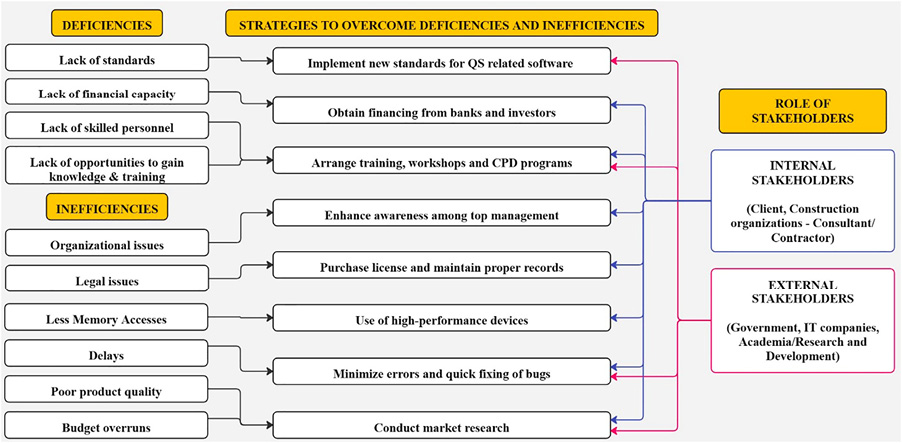
Figure 1. Framework to overcome deficiencies and inefficiencies in implementing new quantity surveying software
Addressing the deficiencies and inefficiencies in quantity surveying software implementation requires collaborative efforts from different stakeholders. Stakeholders can maximise the usage of QS software by aligning their tasks and encouraging collaboration. Government organisations play an important role in developing policies and standards for QS software. They can encourage industry-wide adoption by offering financial incentives such as subsidies or low-interest loans while also ensuring that the software adhere to national standards and local construction norms. In addition, governments can conduct awareness efforts and oversee compliance to help the industry’s digital transformation. When incorporating QS software into projects, clients play a crucial role. Clients can allocate budgets for software implementation and training. Contractors and construction firms are responsible for the operational use of QS software. They must prioritise training programs for improving employees and develop change management strategies to mitigate resistance to new technologies. Quantity surveyors and end users, as the key consumers of QS software, are at the forefront of its adoption. They must actively participate in training programs to increase their proficiency and collaborate with other stakeholders to enable seamless incorporation into workflows. This framework promotes active engagement among stakeholders, creating an environment for long-term and efficient implementation of software.
Conclusions and recommendations
This study sought to develop a framework by highlighting inefficiencies and deficiencies in QS software implementation and strategies for overcoming deficiencies and inefficiencies in the Sri Lankan construction industry. Quantity surveying software can be used as an alternative method for quantity surveying practices including measuring quantities more easily than the traditional method, which is beneficial to QS professionals. Initially, literature identified a few types of QS-based software, including Autodesk QTO, BIM Measure from Causeway, CostOS™, Nomitech, DProfiler, Beck Technology, Vico Cost Planner, Vico Office Client, and Vico Cost Explorer.
During the primary data collection process, it was discovered that lack of financial capacity, lack of standards, lack of skilled personnel, and lack of opportunities to obtain knowledge are deficiencies whereas less memory access, organisational issues, legal issues, delays, budget overruns, and poor product quality are inefficiencies. Consequently, strategies to overcome these deficiencies and inefficiencies in implementing new quantity surveying-related software were identified separately, and the governmental and organisational influence for managing financial issues, knowledge gaps, and standardisation were the highly recommended strategies brought up by experts. Organisational commitments at different working hierarchies to promote the usage of these software were also found to be a good solution to overcome some deficiencies and inefficiencies.
This study has figured out a set of strategies to aid quantity surveying professionals in achieving success when implementing new quantity surveying-related software in Sri Lanka. A conceptual framework that suggests solutions to overcome deficiencies and inefficiencies in implementing new QS software is created based on the research findings. The aim of this research is to encourage professionals to adhere to the identified strategies, as these help to overcome the issues of implementing new QS-based software in Sri Lanka. This is applicable to quantity surveyors and organisations that are going to use QS-related software or for those who are currently using such software.
However, there are certain limitations to this study. A significant percentage of interviewers (60%) had a minimum of 5 years of professional experience, which may have impacted the depth and breadth of viewpoints presented. Furthermore, the interviewees’ professional positions and levels of experience varied, possibly leading to gaps in the insights given. Future research could overcome these limitations by interviewing a more diverse and experienced sample of respondents and undertaking a comparison analysis across several areas or sectors of the construction industry.
This study has made the following contributions to the existing knowledge of the quantity surveying field.
• Development of a context-specific framework for deficiencies and inefficiencies in quantity surveying-related software implementation in Sri Lanka
• Solutions to overcome deficiencies and inefficiencies to implement new quantity surveying-related software in Sri Lanka
This study has theoretical as well as practical implications. It provides practical strategies to improve collaboration, resource optimisation, and operational efficiency. The proposed framework encourages practitioners’ investments in training and CPD, which helps professionals to utilise modern QS tools. In terms of theoretical implications, this study contributes to the academic discussion by giving a framework that incorporates strategies to overcome deficiencies and inefficiencies in implementing new QS software. Furthermore, this study contributes to the discussion of technology adoption in the construction industry, providing an outline for future research on the integration of digital tools into project management and quantity surveying. The qualitative findings of this study require validation through quantitative results in the future for different kinds of construction software in Sri Lanka. Further research can be conducted to study standards of implementing new QS software that align with Sri Lankan construction standards. This study also raises questions about the changing roles of quantity surveyors in the face of technological improvements, urging more theoretical research. The findings indicate a gap in academia and the industry, which can be bridged by collaboration between academia and the industry, integrating hands-on software training into academic curricula. This study has formulated a set of methods to aid quantity surveying professionals in achieving success in implementing new quantity surveying-related software in Sri Lanka. The research findings could help to overcome the issues in implementing new QS-based software in Sri Lanka and can be applicable to the quantity surveyors and organisations that are implementing and currently using QS software.
Although this study focused on the Sri Lankan construction industry, the findings and proposed framework are broadly applicable to construction industries in other countries with similar stakeholder arrangements and cost management approaches. The strategies outlined will assist construction firms all over the world in improving the effectiveness of their project management and technology adoption procedures by addressing primary deficiencies and inefficiencies. This study provides insights for global application and demonstrates the framework’s applicability beyond Sri Lanka.
References
Adam, S., Ahmed, S. and Khan, R., 2020. Overcoming inefficiencies in software adoption in the construction industry. Construction Innovation, 20(4), pp. 459-475. https://doi.org/10.1108/CI-06-2019-0048
Aghimien, D.O., Adegbembo, T.F., Aghimien, E.I. and Awodele, O.A., 2018. Challenges of sustainable construction: a study of educational buildings in Nigeria. International Journal of Built Environment and Sustainability, 5(1). https://doi.org/10.11113/ijbes.v5.n1.244
Aghimien, D., Ngcobo, N., Aigbavboa, C., Dixit, S., Vatin, N.I., Kampani, S. and Khera, G.S., 2022. Barriers to digital technology deployment in value management practice. Buildings, 12(6), pp. 731. https://doi.org/10.3390/buildings12060731
Aigbavboa, C., Addy, H. and Thwala, W., 2024. A Bibliometric Review of the Trends of Construction Digitalization Research in the Past Ten Years. Buildings, 14(9). https://doi.org/10.3390/buildings14092729
Agyekum, K., Ayarkwa, J. and Acheampong, A., 2015. Incorporating information technology in quantity surveying practice in Ghana: challenges and benefits. Annals of the Faculty of Engineering Hunedoara, 13(4), pp. 49.
Aluthwela, A., Perera, B.A.K.S., 2016. Characteristics of QS firms and their impact on performance. Proceedings of Institute of Quantity Surveyors Sri Lanka. https://www.researchgate.net/publication/319507375.
Amusan Lekan, M., Oloniju Leke, I., Mariam, A., Adebisi, M., Farayola Hezekiah, N.P.P. and Osawaru, F., 2018. Adopting information and communication technology in construction industry. International Journal of Mechanical Engineering and Technology, 9(1), pp. 739-746.
Arunkumar, S., Suveetha, V. and Ramesh, A., 2018. A feasibility study on the implementation of building information modeling (BIM): from the architects’and engineers’ perspective. Asian Journal of Civil Engineering, 19, pp. 239-247. https://doi.org/10.1007/s42107-018-0020-9
Bazeley, P. and Jackson, K., 2013. Qualitative Data Analysis with NVivo. SAGE Publications.
Behzadi, A., 2016. Using augmented and virtual reality technology in the construction industry. American journal of engineering research, 5(12), pp. 350-353.
Bouška, R., 2016. Evaluation of maturity of BIM tools across different software platforms. Procedia Engineering, 164, pp. 481-486. https://doi.org/10.1016/j.proeng.2016.11.648
Brook, M., 2016. Estimating and tendering for construction work. Routledge. https://doi.org/10.4324/9781315734699
Castells, M., 2011. The rise of the network society. John Wiley and sons.
Chen, X., Chang-Richards, A.Y., Pelosi, A., Jia, Y., Shen, X., Siddiqui, M.K. and Yang, N., 2021. Implementation of technologies in the construction industry: a systematic review. Engineering, Construction and Architectural Management, 29(8), pp. 3181-3209. https://doi.org/10.1108/ECAM-02-2021-0172
Compeau, D.R. and Higgins, C.A., 1995. Computer self-efficacy: Development of a measure and initial test. MIS quarterly, pp. 189-211. https://doi.org/10.2307/249688
Creswell, J.W. and Poth, C.N., 2018. Qualitative Inquiry and Research Design: Choosing Among Five Approaches (4th ed.). SAGE Publications.
Duncan, A., Kingi, V.M. and Brunsdon, N., 2018. Adopting new ways in the building and construction industry.
Edirisinghe, T.V. and Bandara, K.P.S.P.K., 2022. Specialized Software Usage among the Quantity Surveyors in Sri Lanka. http://ir.kdu.ac.lk/handle/345/6080.
Ekanayake, G.B.E.M.H.S., Disaratna, V., Gimhani, M. and Perera, K., 2022. Evaluation of the Technological Gap in Quantity Surveying Practices: Sri Lankan Context Vs. Global Context. Bhumi Plan. Res. J, 9, 42. https://doi.org/10.4038/bhumi.v9i2.82
El-Mashaleh, M.S., 2007. Benchmarking information technology utilization in the construction industry in Jordan. Journal of Information Technology in Construction (ITcon), 12(19), pp. 279-291.
Epasinghe, E.A.K., Jayasena, H.S., Kolugala, L.M.B.N. and Wijewickrama, M.K.C.S., 2018. Open BIM adoption in Sri Lankan construction industry. Asia, pp. 1-13.
Etikan, I., Musa, S.A. and Alkassim, R.S., 2016. Comparison of convenience sampling and purposive sampling. American Journal of Theoretical and Applied Statistics, 5(1), pp. 1-4. https://doi.org/10.11648/j.ajtas.20160501.11
Feng, P., 2003. Studying standardization: a review of the literature. Proceedings of the 33rd European Solid-State Device Research-ESSDERC’03 (IEEE Cat. No. 03EX704), pp. 99-112. https://doi.org/10.1109/SIIT.2003.1251199
Fereday, J. and Muir-Cochrane, E., 2006. Demonstrating rigor using thematic analysis: A hybrid approach of inductive and deductive coding and theme development. International Journal of Qualitative Methods, 5(1), pp. 80-92. https://doi.org/10.1177/160940690600500107
Ganah, A.A. and John, G.A., 2016. Achieving Level 2 BIM by 2016 in the UK. Computing in Civil and Building Engineering 2016, pp. 143-150. https://doi.org/10.1061/9780784413616.019
Gunawardhana, W.H.T., 2018. Adaptability of digital technologies in construction practices in Sri Lanka. Doctoral dissertation, University of Moratuwa. https://doi.org/10.15396/eres2019_85
Holt, E.A., Benham, J.M. and Bigelow, B.F., 2015. Emerging technology in the construction industry: Perceptions from construction industry professionals. ASEE Annual Conference and Exposition, pp. 26-595.
Jayasena, H.S. and Weddikkara, C., 2013. Assessing the BIM maturity in a BIM infant industry.
John, D. D., 2016. Building information modeling (BIM) technology adoption and implementation in the Sri Lankan construction industry; First part–the diagnosis. Civil Engineering.
Jung, Y. and Joo, M., 2011. Building information modelling (BIM) framework for practical implementation. Automation in construction, 20(2), pp. 126-133. https://doi.org/10.1016/j.autcon.2010.09.010
Khudzari, F., Rahman, R.A. and Ayer, S.K., 2021. Factors Affecting the Adoption of Emerging Technologies in the Malaysian Construction Industry. In IOP Conference Series: Earth and Environmental Science (Vol. 641, No. 1, p. 012006). IOP Publishing. https://doi.org/10.1088/1755-1315/641/1/012006
Lim, K., 2023 ‘The Role of Software in Modern Quantity Surveying’, International Journal of Project Management, 41(5), pp. 789-800.
Liu, S., Xie, B., Tivendale, L. and Liu, C., 2015. Critical barriers to BIM implementation in the AEC industry. https://doi.org/10.5539/ijms.v7n6p162
Liu, Y., Liu, L., Yang, L., Hao, L., & Bao, Y. 2022. Digital technologies and data-driven delay management process for construction projects. Frontiers in Built Environment, 8, Article 1029586. https://doi.org/10.3389/fbuil.2022.1029586
Madatli, K., 2015. Software License Agreements: Main Types, Legal Aspects, and Regulations. Baku St. UL Rev., 2, 118.
Madugu, A.A., Muhammad, A. and Monday, G.D., 2018. Evaluation of Building Information Modelling (BIM) Software Capabilities that support Quantity Surveying practices in Nigeria.
Malagnino, G., Dimaggio, A. and Grasso, P., 2021. Integration challenges in construction software: Impacts on project efficiency. International Journal of Construction Engineering and Management, 9(3), pp. 112-121.
Mallawaarachchi, H. and Senaratne, S., 2015. Importance of quality for construction project success. 6th ICSECM, pp. 84-89.
Manzoor, B., Othman, I. and Pomares, J.C., 2023. Digital Technologies in the AEC Industry: A Bibliometric-Qualitative Literature Review. International Journal of Environmental Research and Public Health, 18(11). https://doi.org/10.3390/ijerph18116135
Mawunyo, A.R.K., 2018. The Effects of ICT in Quantity Surveying Service Delivery in the Ghanaian Construction Industry, Doctoral dissertation, Kwame Nkrumah University of Science and Technology.
McCoy, A. and Yeganeh, A., 2021. An overview of emerging construction technologies. NAIOP Research Foundation, pp. 1-45.
Mesároš, P., Mandičák, T., Behun, M. and Smetankova, J., 2018. Applications of knowledge technology in construction industry. In 2018 16th International Conference on Emerging eLearning Technologies and Applications (ICETA), pp. 367-372. IEEE. https://doi.org/10.1109/ICETA.2018.8572231
Muhammad, M.R.R., 2015. The significance of building information modelling to the quantity surveying practices in the UAE construction industry. In 6th international conference on structural engineering and construction management, pp., 22-32.
Mutis, I. and Hartmann, T. (Eds.)., 2018. Advances in Informatics and Computing in Civil and Construction Engineering: Proceedings of the 35th CIB W78 2018 Conference: IT in Design, Construction, and Management. Springer. https://doi.org/10.1007/978-3-030-00220-6
Nasila, M., & Cloete, C. 2018. Adoption of Building Information Modelling in the construction industry in Kenya. Acta Structilia, 25(2), 1–38. https://doi.org/10.18820/24150487/as25i2.1
Nguyen, D.T., Le-Hoai, L., Tarigan, P.B. and Tran, D.H., 2022. Tradeoff time cost quality in repetitive construction project using fuzzy logic approach and symbiotic organism search algorithm. Alexandria Engineering Journal, 61(2), pp. 1499-1518. https://doi.org/10.1016/j.aej.2021.06.058
Odeyinka, H. and Doherty, C., 2008. An evaluation of quantity surveying software usage in Northern Ireland. In RICS COBRA Research Conference, pp. 4-17. Royal Institution of Chartered Surveyors.
Ojo, L.D., Akindeinde, A.S. and Oke, A.E., 2019. Pedagogy of quantity surveying software: improvement strategies and impacts. In Environmental Design and Management International Conference, pp. 640-649.
Oladapo, A. A., 2006. The impact of ICT on professional practice in the Nigerian construction industry. The Electronic Journal of Information Systems in Developing Countries, 24(1), pp. 1-19. https://doi.org/10.1002/j.1681-4835.2006.tb00157.x
Ola-Ade, E., Ajayi, M. and Onososen, A., 2023. “Perception of Quantity Surveyors on 5D BIM,” FIG Working Week 2023.
Olanrewaju, A. and Anahve, P.J., 2015. Duties and responsibilities of quantity surveyors in the procurement of building services engineering. Procedia Engineering, 123, pp. 352-360. https://doi.org/10.1016/j.proeng.2015.10.046
Olatunji, O.A., Sher, W. and Gu, N., 2010. Building information modeling and quantity surveying practice. Emirates Journal for Engineering Research, 15(1), pp. 67-70.
Olowolayemo, O.E. and Michael, O.F. Utilization of Quantity Surveying Software: Its Impact on Quantity Surveyors’ Core Duties.
Perera, G.K.E., Nilupulee, M.K.M., Kalpani, W.B., Dissanayake, Y.R.W. and Bandara, K.S.P.K., 2022. Barrier Analysis to Implement Building Information Modeling (BIM) Execution Plan in Sri Lankan Construction Industry.
Pradeep, A., Smith, J. and Lee, R., 2024. ‘Emerging Technologies in Quantity Surveying: A Review’, Journal of Construction Engineering and Management, 150(2), pp. 123-134.
Reddy, R., 2018. A study on the barriers and benefits in adoption of QS software using ISM methodology [RICS School of Built Environment]. https://www.researchgate.net/publication/324173859.
Sandagomika, N.M.G.H., Sandanayake, Y.G. and Ekanayake, B.J., 2020. Drivers and Barriers of Using Internet of Things for Successful Lean Implementation in Construction Projects in Sri Lanka. https://doi.org/10.4038/faruj.v7i0.26
Saunders, M., Lewis, P. and Thornhill, A., 2019. Research methods for business students. 8th ed. Harlow: Pearson Education Limited.
Shah, F.H., Bhatti, O.S. and Ahmed, S., 2023. ‘Project management practices in construction projects and their roles in achieving sustainability—A comprehensive review’, Engineering Proceedings, 44(1), https://doi.org/10.3390/engproc2023044002
Smith, P., 2001. Information technology and the QS practice. Construction Economics and Building, 1(1), pp. 1-21. https://doi.org/10.5130/AJCEB.v1i1.2276
Smith, P. V. 2004. Trends in the Australian quantity surveying profession 1995-2003. In World Congress on Cost Engineering, Project Management and Quantity Surveying, AACE American Association of Cost Engineers. International Cost Engineering Council.
Wasiu, Y. and Muideen, A.A., 2024. Artificial intelligence in the construction industry: A systematic review of the entire construction value chain lifecycle. Energies, 17(1), pp. 182. 10.3390/en17010182. https://doi.org/10.3390/en17010182
Wawak, S., Ljevo, Ž., & Mladen, V. 2020. Understanding the Key Quality Factors in Construction Projects - A Systematic Literature Review. Sustainability, 12(24), 10376. https://www.mdpi.com/2071-1050/12/24/10376. https://doi.org/10.3390/su122410376
Wijayakumar, M. and Jayasena, H.S., 2013. Automation of BIM quantity take-off to suit QS’s requirements.
Won, J., Lee, G., Dossick, C. and Messner, J., 2013. Where to focus for successful adoption of building information modeling within organization. Journal of construction engineering and management, 139(11), pp. 04013014. https://doi.org/10.1061/(ASCE)CO.1943-7862.0000731
Zabala-Vargas, S., Jaimes-Quintanilla, M. and Jimenez-Barrera, M., 2023. Big Data, Data Science, and Artificial Intelligence for Project Management in the AEC Industry. Buildings, 13(12), pp. 2944. https://doi.org/10.3390/buildings13122944