Construction Economics and Building
Vol. 24, No. 1/2
July 2024
RESEARCH ARTICLE
Assessing the Underlying Factors Affecting Trust and Transparency in the Construction Industry: A Mixed Method Approach
Abdulkabir Bello1,*, Aliyyu Abiola Abdulraheem2, Oladayo Popoola Afolabi3, Adefemi Aka1, Precious Oluwatofunmi Gbenga4
1 Department of Building, School of Environmental Technology, Federal University of Technology, Minna, Nigeria
2 Department of Building and Quantity Surveying, Faculty of Environmental Sciences, University of Abuja
3 Department of Architectural Engineering and Construction Management, College of Design and Built Environment, King Fahd University of Petroleum and Minerals, Saudi Arabia
4 Department of Surveying and Geo-informatics, School of Environmental Technology, Federal University of Technology, Minna, Nigeria
Corresponding author: Abdulkabir Opeyemi Bello, Department of Building, School of Environmental Technology, Federal University of Technology, Minna, Nigeria, abdulkabiropeyemi@gmail.com
DOI: https://doi.org/10.5130/AJCEB.v24i1/2.8906
Article History: Received 12/11/2023; Revised 18/02/2024; Accepted 02/03/2024; Published 01/07/2024
Citation: Bello, A., Abdulraheem, A. A., Afolabi, O. P., Aka, A., Gbenga, P. O. 2024. Assessing the Underlying Factors Affecting Trust and Transparency in the Construction Industry: A Mixed Method Approach. Construction Economics and Building, 24:1/2, 3–28. https://doi.org/10.5130/AJCEB.v24i1/2.8906
Abstract
The construction industry’s lack of trust and transparency presents significant challenges that can impede project success and hinder overall industry growth. Without trust, stakeholders may hesitate to collaborate effectively, leading to communication breakdowns, disputes, and del ays. Transparency gaps in project management and decision-making processes can breed suspicion and erode confidence among stakeholders, undermining their willingness to invest time, resources, and effort. Moreover, lacking trust and transparency can exacerbate corruption, inefficiency, and quality concerns, undermining industry credibility and public trust. This study delves into the context of the Nigerian construction industry to explore the impediments to trust and transparency and develop strategies for improvements. The study adopts a mixed-methods research to comprehensively examine the factors affecting trust and transparency using semi-structured interviews and structured questionnaires. These factors were categorised into four clusters: “Communication and Information Sharing”, “Ethical and Integrity Issues”, “Technological and Operational Challenges”, and “Project-specific and Security Concerns” and validated by experts before administration of the surveys. The interview data was thematically analysed, while the questionnaire was analysed using partial least square structural equation modelling. The findings underscore the detrimental effects of inadequate communication protocols, ethical lapses, technological advancement resistance, and project data security vulnerabilities. Consequently, the study proposes comprehensive strategies, including establishing clear communication protocols, reinforcing ethical frameworks, embracing technological innovations, and implementing robust security measures. These strategies aim to enhance information sharing, foster ethical compliance, improve operational efficiency, and safeguard critical project data, fostering a culture of trust and transparency within the Nigerian construction industry.
Keywords
Construction Performance; Nigeria; Project Delivery; Trust and Transparency; Stakeholder Relationships
Introduction
The construction industry, a cornerstone of global economic development, significantly contributing to GDP and employment, operates in a complex and fragmented landscape characterised by diverse stakeholders, intricate supply chains, and multifaceted project dynamics. In this intricate environment, establishing trust and transparency is pivotal for ensuring the industry’s sustainability, efficiency, and ethical integrity. Trust, a foundational element, hinges on the principle that project stakeholders will act reliably and ethically, fulfilling their commitments and delivering quality outcomes (Flanagan, Haak and Paglione, 2021). Trust facilitates cooperation among numerous participants, including owners, contractors, subcontractors, suppliers, designers, and regulatory bodies. However, it is also indispensable for project success, mitigating disputes, encouraging innovation, and nurturing enduring relationships (Strahorn, Gajendran and Brewer, 2017). Transparency, conversely, relates to the accessibility and clarity of project-related information, encompassing aspects like costs, schedules, performance metrics, and safety records (Elbashbishy, Ali and El-adaway, 2022). In essence, transparency ensures that data is readily available and comprehensible to all relevant parties, promoting accountability, risk management, and ethical conduct within the industry (Derigent and Thomas, 2016).
Notwithstanding their undeniable significance, the construction industry grapples with notable challenges regarding trust and transparency across various dimensions. To begin, the industry’s complex stakeholder interactions, featuring numerous actors, each with distinct interests, goals, and levels of influence, often lead to difficulties in coordinating these diverse entities and aligning their interests, resulting in trust deficits (Walker and Lloyd-Walker, 2016). Information asymmetry, a pervasive issue in construction projects, entails unevenly distributed information that can be exploited for personal gain or to the detriment of other stakeholders, ultimately eroding trust (Strahorn, Gajendran and Brewer, 2015). Contractual ambiguity, characterised by complex and convoluted contracts, can obscure responsibilities and obligations, making it challenging to ascertain them clearly and leading to disputes and trust breakdowns (Qian and Papadonikolaki, 2021; Lu, et al., 2015). Consequently, addressing these multifaceted challenges is essential for fostering trust and transparency in the construction industry, enhancing its efficiency, sustainability, and ethical integrity, and ensuring its continued contributions to global economic growth.
Several developed and developing countries have significantly addressed trust and transparency challenges in the construction industry. In the United States, regulations like the Freedom of Information Act (FOIA) and industry initiatives such as those by the Associated General Contractors (AGC) have advanced transparency and ethical conduct (Winders, 2018; Usmen, et al., 2009.). The United Kingdom has emphasised transparency through its Construction Strategy promoting digital solutions like Building Information Modelling (BIM) Infrastructure and Projects Authority (2016). In the developing world, Singapore has employed stringent regulations and digital tools to ensure transparency (Hoe, 2016; Neupane et al., 2012). Malaysia’s Construction Industry Transformation Programme (CITP) (Mahat, et al., 2019), and India’s Real Estate (Regulation and Development) Act (RERA), (Godge, et al., 2023) exemplify efforts to enhance trust and transparency in construction. These initiatives underscore the global recognition of trust and transparency’s pivotal role in fostering a more efficient, accountable, and sustainable construction industry.
In the context of the Nigerian construction industry, these challenges related to trust and transparency take on specific nuances and complexities. Moreover, historical issues related to corruption in Nigeria (Folarin, 2021) can significantly impact trust and transparency within the construction industry, with bribery, kickbacks, and embezzlement undermining the integrity of construction projects and eroding trust in the fairness of procurement processes and the quality of project outcomes. Project delays and cost overruns are prevalent in the Nigerian construction industry, often due to factors like inadequate planning, poor project management, and unforeseen challenges, leading to disputes, strained relationships, and a lack of transparency in project execution (Okereke, Pepple and Eze, 2022; Oluyemi-Ayibiowu, Aiyewalehinmi and Omolayo, 2019). Given the crucial role of the construction industry in Nigeria’s development and its challenges in trust and transparency, conducting a comprehensive study within this context is paramount. There is a significant gap in research within the realm of trust and transparency in the Nigerian construction industry, particularly concerning the lack of context-specific studies.
This research examines the factors influencing trust and transparency and proposes strategies for enhancing it in the Nigerian construction industry.
The identified factors (25) in this study were categorised into four clusters, namely Communication and Information Sharing”, “Ethical and Integrity Issues”, “Project-specific and Security Concerns”, and “Technological and Operational Challenges”. The impacts of these clusters on trust and transparency were tested using the Partial Least Square Structural Equation Model (PLS-SEM). The results show these clusters impact trust and transparency in the Nigeria construction industry. Further, the opinions of the professionals were examined using Kruskal-Wallis, which was based on their profession and location. The result shows the professionals have similar opinions on the factors. Lastly, the study develops tailored strategies for each cluster through expert opinions. The outcome of this study will contribute significantly to the process of attaining trust and transparency in the Nigerian construction industry and stand as a focal point for future studies in this domain.
Literature review
Overview of trust and transparency in the construction industry
In the construction industry, trust is frequently referred to as the readiness of project participants to rely on one another’s expertise, integrity, and commitment to accomplish project goals. Lack of trust among stakeholders can result in disputes, delays, and cost overruns, according to a study by Deep, et al. (2018), underlining the need to develop trust-based partnerships. Additionally, the research by Evans, et al. (2020) emphasises how trust promotes good communication and collaboration, enabling the resolution of issues and the effective use of resources throughout multiple project phases. In the construction industry, accountability is being encouraged, and information asymmetry is being reduced vastly by transparency.
According to Emaminejad, Kath and Akhavian (2023) and Abougamil, Thorpe and Heravi (2023), transparency can increase stakeholders’ awareness of project dynamics and promote a more collaborative atmosphere. These practices include being open about project information, expenses, and decision-making processes. Similar findings from a report from the International Federation of Consulting Engineers (FIDIC) (2017) show that open lines of communication and readily available project data help to reduce risks and enhance overall project governance.
The construction industry, however, frequently faces several obstacles that make it difficult to achieve optimum trust and transparency. According to Yap and Lim (2023) and Aderibigbe, Umeokafar and Umar (2023), the traditional adversarial nature of contracts and the absence of standardised norms for information exchange might make it difficult for stakeholders to build trust and transparency. The study by Lehto and Aaltonen (2021) and Russell, Lee and Clift (2018) also highlights the significance of cultural variations and conflicting objectives among stakeholders, emphasising cultural awareness and goal alignment to build a trust and transparent environment.
Additionally, it has been determined that integrating digital technologies is a promising way to raise confidence and transparency in the construction sector. In particular, Mazzoli, et al. (2021) emphasise how Building Information Modelling (BIM) technologies can encourage data sharing and collaborative decision-making, enhancing transparency throughout project lifecycles. Gupta and Jha (2023) state that blockchain technology can ensure data integrity, increase party confidence, and facilitate safe and transparent transactions in the construction industry.
Effective cooperation and project management are fundamentally based on trust and transparency in the construction industry. Despite the difficulties, the adoption of digital tools, the creation of standardised protocols, and the promotion of a collaborative environment can all assist stakeholders in building strong relationships based on trust and adopting open procedures. In addition to improving project outcomes, fostering a culture of trust and openness opens the ground for the construction industry to experience ongoing growth and innovation. Table 1 summarises the factors affecting trust and transparency.
Factors affecting trust and transparency in the Nigerian construction industry
Communication and information sharing
The Nigerian construction industry faces serious difficulty due to a lack of information sharing, which can result in misunderstandings and impede efficient decision-making. Critical project information should be shared among stakeholders; this often does not happen. This lack of transparency leads to strained relationships and a suspicious environment. Ambiguous communication channels exacerbate this problem even further because the lack of clearly defined communication protocols prevents the adequate flow of information and increases the likelihood of misunderstandings and conflicts (Mashali, et al., 2023; Wilkinson, 2021). Information asymmetry, in which one party has access to more or better information than another, maintains an imbalance of power and prevents the growth of trust among stakeholders, creating a climate of mistrust and uncertainty (Li, et al., 2021). According to Fitriani and Ajayi (2023) and Shergold and Weir (2018), inadequate documentation practises, which are characterised by poor record-keeping and insufficient documentation of project activities, generate legal problems and disputes (Downey et al., 2023; Tang, Abdul Majid and Aziz, 2023) while undermining trust between the many stakeholders participating in the construction process. Furthermore, a vague project scope that is not clearly stated can cause disputes and misunderstandings among stakeholders, undermining trust in the Nigerian construction industry (Tuuli, et al., 2023). According to the findings of Adeyemi and Aigbavboa (2022), conflicts are a significant factor affecting trust in the Nigeria construction industry.
Ethical and integrity issues
Conflicts of interest represent a danger to trust and transparency in the construction industry because they result in skewed decision-making and erode stakeholders’ faith in the transparency of project procedures (Ghahari, et al., 2023). In addition to damaging the reputation of the industry, the frequency of ethical lapses, such as bribery, corruption, and fraudulent practices, also generates an environment of mistrust among stakeholders (Dimuna, 2023; Soni and Smallwood, 2023; Ebekozien, et al., 2022). Legal disputes and protracted legal processes exacerbate relationship problems and destroy confidence, impeding the advancement of construction projects (Adibfar, Costin and Issa, 2020). Lack of accountability is another critical problem since it undermines the motivation for ethical behaviour and fosters mistrust among stakeholders (Dikmen and Çiçek, 2023). Payment irregularities and quality control problems also lead to a loss of confidence since they cast doubt on the honesty and competence of the parties concerned and adversely affect the sector’s overall transparency and trust. Akinrata, Ogunsemi and Akinradewo (2019) demonstrated how unethical practices affect the construction industry’s reputation and professional trust. Similarly, the Ebekozien (2020) study stretched the need to enhance transparency in the construction industry.
Technological and operational challenges
The incorporation of technical improvements is hampered by resistance to change within the Nigerian construction sector, slowing growth and lowering overall efficiency (Ebekozien and Samsurijan, 2022). Lack of trust and transparency in project transactions results from inadequate Risk Management practices, which cause fear and uncertainty among stakeholders (Ivić and Cerić, 2023). Unreliable technology use makes operations more complicated since it causes inefficiencies and inconsistent project execution, which undermines stakeholder trust (Ayodele and Kajimo-Shakantu, 2021). In Nigeria, the lack of collaboration among the various parties involved in building projects results in information silos and disruption of information flow, which undermines confidence and transparency in the sector.
These issues are made much more difficult by the complexity of contractual agreements, which frequently results in misunderstandings and disagreements that erode stakeholder trust (Ebekozien and Samsurijan, 2022). Lack of regulatory compliance (Ojo, Oladinrin and Obi, 2021) and cultural barriers (Luo, et al., 2022) exacerbate the complexity because they obstruct effective communication and comprehension and affect stakeholders’ levels of trust due to their disparate cultural practices and disregard for industry standards. Poor labour relations and resource constraints negatively impact the industry’s trust and transparency. They lead to inefficiencies and unhappiness that make it difficult for construction projects to run smoothly and breed mistrust among stakeholders.
Project-specific and security concerns
The vulnerability of project data can result in breaches and misuse, generating an environment of doubt and mistrust (Turk, et al., 2022), which poses a severe threat to trust and transparency within the Nigerian construction industry. The absence of sustainable practices within the sector degrades stakeholders’ confidence in the sector’s long-term sustainability and the industry’s adherence to moral and environmental norms. The sector issues are further exacerbated by the lack of transparency in procurement processes, which prevents fair competition and fosters a culture of suspicion among participants, resulting in a lack of trust and transparency (Imoni, et al., 2023). A lack of adequate conflict resolution procedures within the Nigerian construction sector leads to drawn-out disputes and unresolved problems, which fosters a climate of mistrust and uncertainty among stakeholders and obstructs efficient project management and the growth of an open working environment. Bodunde, et al. (2020) establish trust issues as a challenge impacting the strategic alliance procurement method in the Nigeria construction industry. The research findings of Adindu, et al. (2020) indicate that corrupt practices in the delivery of construction projects in Nigeria continue to hinder project performance significantly. The study suggests promoting transparency, adopting ethical standards, and ensuring accountability throughout all stages of construction projects and infrastructure development in Nigeria as essential measures.
| Code | Factors | Sources |
|---|---|---|
| CIS | Communication and Information Sharing | |
| CIS1 | Lack of Information Sharing | Mashali, et al. (2023); Tuuli, et al. (2023); Wilkinson (2021); Tang, Abdul Majid and Aziz (2023) |
| CIS2 | Ambiguous Communication Channels | |
| CIS3 | Information Asymmetry | |
| CIS4 | Insufficient Documentation | |
| CIS5 | Unclear Project Scope | |
| EII | Ethical and Integrity Issues | |
| EII1 | Conflicts of Interest | Ghahari, et al. (2023); Dikmen and Çiçek (2023); Ebekozien, et al. (2022); Adeyemi and Aigbavboa (2022); Adibfar, Costin and Issa (2020) |
| EII2 | Ethical Lapses | |
| EII3 | Legal Disputes | |
| EII4 | Lack of Accountability | |
| EII5 | Payment Delays | |
| EII6 | Quality Control Issues | |
| EII7 | Lack of Transparency in Bid Evaluation | |
| TOC | Technological and Operational Challenges | |
| TOC1 | Resistance to Change | Ivić and Cerić (2023); Luo, et al. (2022); Ayodele and Kajimo-Shakantu (2021); Ojo, Oladinrin and Obi (2021) |
| TOC2 | Inadequate Risk Management | |
| TOC3 | Unreliable Technology | |
| TOC4 | Lack of Collaboration | |
| TOC5 | Complexity of Contractual Agreements | |
| TOC6 | Lack of Regulatory Compliance | |
| TOC7 | Cultural Barriers | |
| TOC8 | Resource Constraints | |
| TOC9 | Poor Labour Relations | |
| PSC | Project-specific and Security Concerns | |
| PSC1 | Data Security Concerns | Imoni, et al. (2023); Turk, et al. (2022) |
| PSC2 | Lack of Sustainable Practices | |
| PSC3 | Lack of Transparency in Procurement | |
| PSC4 | Inadequate Conflict Resolution |
Theoretical underpinning
This study has adopted the Theory of Trust by Mayer, Davis and Schoorman (1995), and the Theory of Transparency by Hood (2006) as the theoretical underpinnings for the comprehensive examination of trust and transparency in the Nigerian construction industry. These theories have been selected for their inherent suitability and applicability to the study’s context. The Theory of Trust, as developed by Mayer, Davis and Schoorman (1995), provides a thorough framework for comprehending the dynamics of trust between people and organisations. This theory’s components’ capacity, benevolence, and integrity are particularly pertinent in evaluating the complexities of trust development in construction projects because trust is a vital aspect influencing stakeholder collaboration and relationship building. This theory, the study can examine how the perceptions of stakeholders’ competence, intentions, and behaviour consistency affect trust dynamics. This theory is particularly relevant to the construction sector since the effective completion of projects depends on cooperative efforts, interdependence, and long-term partnerships. The Transparency theory would enable the study to analyse the effects of open communication channels, documentation, and procurement procedures on confidence and transparency in the Nigerian construction industry. The Theory of Transparency is a good fit for this study due to its capacity to evaluate how sound information is disseminated and how good decisions are made, allowing the identification of areas where greater transparency can improve stakeholder relationships and project outcomes.
Methodology
Research design
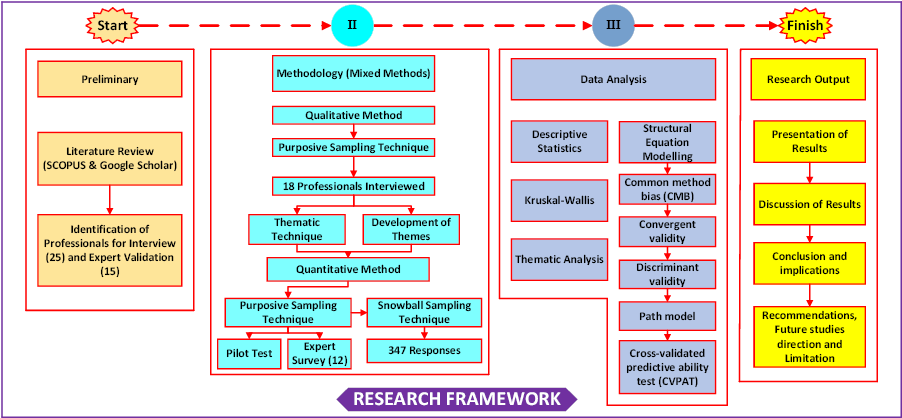
This research design utilised a mixed-methods approach, combining quantitative data collection through surveys with qualitative data collection through interviews. Figure 1 shows the study research framework. This comprehensive method aimed to understand better the factors affecting trust and transparency in the Nigerian construction industry. Using mixed methods allows for comprehensive data analysis and enriching understanding, as established by (Creswell, 2021). A structured questionnaire (five Likert-scale), developed through Google Forms, served as the quantitative data collection tool. Likert scales are adequate for collecting participants’ opinions on different views (Collins, 2018). This approach is considered cost-effective and easy to reach a broader range of respondents. Expert validation was first carried out on the categorised factors to ensure the factors were suitable for the designated category (supplementary_table_1). A pilot test was undertaken with a select group of professionals to ensure the questionnaire’s clarity, comprehensibility, and validity. The questionnaire encompassed factors rooted in the existing literature and the interview responses’ lens, resulting in 347 responses. The factors were sourced from the literature by exploring the SCOPUS and Google Scholar databases using the following search string: “trust AND transparency AND in AND the AND construction AND industry”. The resulting manuscript was thoroughly studied to identify factors affecting trust and transparency in the construction industry. The technique was further enhanced by interviewing the professionals on the factors affecting trust and transparency in the construction industry. This approach resulted in twenty-five factors and was categorised into four similar distinct clusters, as shown in Table 1. This response rate is deemed adequate for the study considering construction-related studies in Nigeria (Bello, et al., 2023a; Aka, et al., 2024).
Data was collected through a combination of two sampling techniques; the quantitative approach utilised the snowball technique, which is usually adopted where the total population is unknown or cannot be readily determined. Snowball is a non-probability technique based on initial participants referring potential respondents (Saunders, Lewis and Thornhill, 2016). This approach has been adopted in construction-related studies (Bello, et al., 2023a; Bello, et al., 2023b). While the qualitative approach utilised the purposive technique, purposive sampling is vital in research for selecting specific participants with pertinent expertise or experience. According to Tavakol and Sandars (2014), it ensures the inclusion of knowledgeable professionals, enhancing the study’s relevance and depth.
Through the qualitative approach, 18 professionals within the Nigerian construction industry were interviewed to provide in-depth insights into the influencing factors and strategies to improve trust and transparency. These professionals included Architects, Builders, Quantity surveyors, Civil engineers, Land surveyors, and Estate surveyors and valuers. The semi-structured interviews allowed for predetermined questions derived from the literature and emergent questions based on the participants’ responses. The qualitative data were analysed using thematic analysis to identify recurring themes and patterns within the interviews.
The selection criteria to participate in the study are as follows:
i. Participants should be professionals actively engaged in the Nigerian construction industry.
ii. Participants must be chartered members of their respective fields.
iii. Participants must be willing to provide informed consent, indicating their voluntary participation in the study.
Research hypotheses
Based on the identified factors, the following hypotheses were formulated, and Figure 2 shows the conceptual framework:
Hypothesis (H1): Communication and information-sharing significantly influence and positively impact trust and transparency.
Hypothesis (H2): Ethical and integrity standards significantly influence and positively impacts trust and transparency.
Hypothesis (H3): Project-specific and security concerns significantly influence and positively impacts and transparency.
Hypothesis (H4): Technological and operational challenges significantly influence and positively impact trust and transparency.
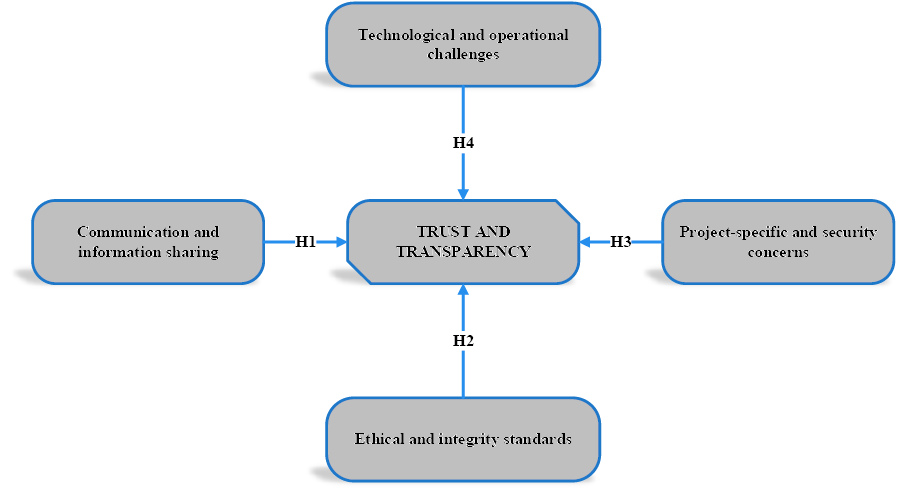
Figure 2. Conceptual Framework
Expert validation
Before data collection, expert validation was conducted on the categorised factors influencing trust and transparency; the experts (12) were provided with a categorised list of the factors in an Excel document through email. They were asked to validate the suitability of each factor under each category based on “YES” and “NO”. The validations’ outcome shows that most experts agree with the factors’ categorisation as shown in (supplementary_table_1). Their diverse geographical backgrounds enriched the understanding of cultural and regional nuances in trust and transparency within the construction industry. Their input provided a comprehensive overview of the identified factors and their contextual relevance.
Data analysis
The data analysis incorporated a mixed-methods technique, integrating the SEM to examine the intricate relationships between trust and transparency and their influencing factors. In addition, the Kruskal-Wallis test was applied to assess potential differences among professional categories in their perceptions of trust and transparency. SPSS V26 and PLS-SEM Version-4 were used for the analysis. Thematic analysis of the interviews was further carried out. By triangulating the results from both data sets, a holistic understanding of the complex relationships between trust, transparency, and their influencing factors was achieved.
Results and discussion
Presentation of results
This study examines professionals across diverse characteristics, as shown in (Supplementary_Table_2). Professionally, Architects accounts for (19.88%,), Builders (25.94%), Civil Engineers (28.24%), Quantity Surveyor (16.71%), Land Surveyor (4.90%), and Estate Surveyor and Valuer (4.32%). Regarding the years of experience, professionals with 11-15 years dominate the workforce at 31.12%, closely followed by the 6-10 years with 26.22%. Small firms with 1 to 49 employees comprise the majority, accounting for 57.93% of the industry. In contrast, medium and large firms hold 31.99% and 10.09%, respectively. Bachelor’s degree holders form the largest group regarding academic qualifications at 58.21%, with Masters’ degree holders at 36.02% and those with a Doctorate at 5.76%. Regarding the types of projects, Building Construction is the primary focus, encompassing 29.11% of the professionals, followed by significant involvement in Civil Infrastructure (Roads, Bridges, etc.) at 13.26%. In comparison, 57.63% are involved in building construction, civil infrastructure, planning and design, Renovation and rehabilitation, and Structural works. Contracting emerges as the dominant sector, constituting 36.89% of the industry, closely followed by Consultancy at 24.21% and Sub-contracting at 15.56%, while Sub-contracting (15.56%), Academia/Researcher (14.12%) and Facility management (9.22). Geographically, the Southwest region boasts the highest representation at 26.80%. In comparison, the North Central region follows closely at 25.36%. The other regions contribute smaller percentages, such as Northeast (7.20%), Northwest (11.24%), Southeast (13.54%), and South-South (15.85%). These findings collectively provide valuable insights into the dynamics of the construction industry in Nigeria, shedding light on the distribution of professionals, their experience, firm sizes, qualifications, project involvement, major sectors, and regional presence, thereby serving as a crucial resource for industry stakeholders and policymakers.
Measurement model
The measurement model focuses on the relationship between the unobservable and observable variables. The validity of the measurement model is assessed through Convergent and Discriminant validity (Hair, et al. 2006). Utilising the Variance Inflation Factor (VIF) test, multicollinearity was evaluated. Each component’s VIF values were below Kock (2015) advised benchmark of 3.3, implying that the data do not exhibit common method bias.
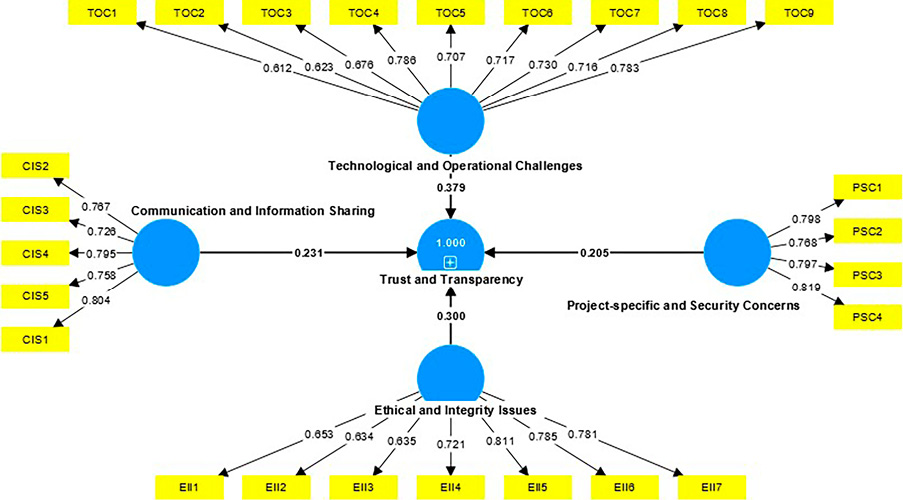
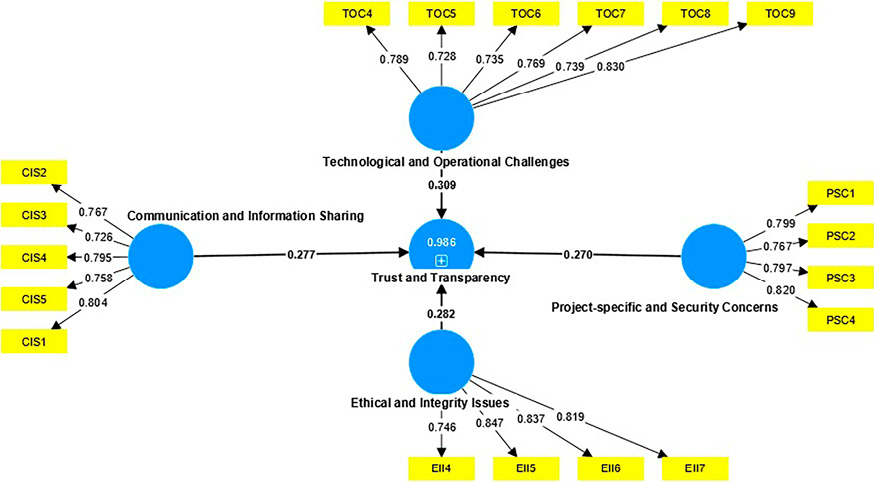
Convergent validity refers to the relationship between the different dimensions of a single construct (Hulland, 1999). In the context of PLS-SEM, the strength of the convergent validity of a measurement model is evaluated using three criteria: the Composite reliability scores (ρc), the Cronbach alpha (α), and the Average Variance Extracted (AVE) (Fornell and Larcker in 1981). Table 2 shows the convergent validity test’s initial and final loading for all the components. According to Nunnally and Bernstein (1978), a (ρc) value above 0.700 is considered adequate. The study (ρc) ranges between 0.873 and 0.895, exceeding the benchmark of 0.700. Table 2 demonstrates that all of the constructs in the final loading exceed the 0.500 AVE criterion adopted by Olanrewaju, et al. (2022). The initial and final model loading is shown in Figures 3 and 4. While Figure 3 shows the total (25) loaded factors, Figure 4 shows the final loading with factors above 0.700. After initial loading, 6 of the 25 variables were excluded due to low loading (p < 0.700), as advised by (Hair Jr., et al., 2017).
| Factors | Initial Loading | Final Loading | VIF | ||||
|---|---|---|---|---|---|---|---|
| α | ρc | AVE | α | ρc | AVE | ||
| Communication and Information Sharing | 0.829 | 0.879 | 0.594 | 0.829 | 0.879 | 0.594 | 1.890 |
| Ethical and Integrity Issues | 0.843 | 0.882 | 0.519 | 0.828 | 0.886 | 0.661 | 2.361 |
| Project-specific and Security Concerns | 0.807 | 0.873 | 0.633 | 0.807 | 0.873 | 0.633 | 1.397 |
| Technological and Operational Challenges | 0.874 | 0.900 | 0.501 | 0.858 | 0.895 | 0.586 | 3.118 |
In this study, the discriminant validity was rigorously assessed through multiple methods: the Hetrotrait-Monotrait ratio (HTMT) of correlations, the Fornell-Larcker criterion, and cross-loading analysis. The Fornell-Larcker criterion, as presented in Table 4, establishes the relationship between the square root of Average Variance Extracted (AVE) and the correlations between constructs. The results demonstrate that the square root of AVE consistently exceeds the correlations between constructs, affirming distinctiveness among them. Moreover, the HTMT analysis, also summarized in Table 4, confirms that all construct correlations remain comfortably below the recommended threshold of 0.900. This finding, consistent with Henseler, Ringle and Sarstedt (2015), reinforces the clear separation between constructs. Additionally, the cross-loading analysis detailed in Table 3 further supports the robustness of discriminant validity, revealing a moderate level of one-dimensionality. This indicates that each construct predominantly loads onto its intended dimension, reinforcing the reliability and validity of the measurement model. These results collectively affirm the discriminant validity of the constructs under study, ensuring confidence in the distinctiveness and reliability of the measured variables.
| Factors | Communication and Information Sharing | Ethical and Integrity Issues | Project-specific and Security Concerns | Technological and Operational Challenges |
|---|---|---|---|---|
| CIS1 | 0.804 | 0.561 | 0.480 | 0.526 |
| CIS2 | 0.767 | 0.596 | 0.491 | 0.600 |
| CIS3 | 0.726 | 0.425 | 0.459 | 0.489 |
| CIS4 | 0.795 | 0.604 | 0.500 | 0.527 |
| CIS5 | 0.758 | 0.517 | 0.504 | 0.524 |
| EII1 | 0.519 | 0.695 | 0.528 | 0.521 |
| EII2 | 0.435 | 0.667 | 0.490 | 0.474 |
| EII3 | 0.478 | 0.619 | 0.433 | 0.442 |
| EII4 | 0.610 | 0.725 | 0.476 | 0.498 |
| EII5 | 0.508 | 0.803 | 0.541 | 0.683 |
| EII6 | 0.520 | 0.679 | 0.519 | 0.627 |
| EII7 | 0.498 | 0.782 | 0.614 | 0.644 |
| PSC1 | 0.483 | 0.584 | 0.798 | 0.663 |
| PSC2 | 0.485 | 0.526 | 0.767 | 0.510 |
| PSC3 | 0.537 | 0.636 | 0.797 | 0.714 |
| PSC4 | 0.504 | 0.532 | 0.819 | 0.618 |
| TOC1 | 0.427 | 0.46 | 0.439 | 0.518 |
| TOC2 | 0.483 | 0.615 | 0.513 | 0.623 |
| TOC3 | 0.470 | 0.508 | 0.590 | 0.673 |
| TOC4 | 0.599 | 0.546 | 0.576 | 0.779 |
| TOC5 | 0.432 | 0.491 | 0.555 | 0.717 |
| TOC6 | 0.567 | 0.531 | 0.569 | 0.729 |
| TOC7 | 0.442 | 0.569 | 0.564 | 0.739 |
| TOC8 | 0.424 | 0.51 | 0.576 | 0.728 |
| TOC9 | 0.574 | 0.652 | 0.644 | 0.787 |
| Heterotrait-Monotrait ratio (HTMT) | ||||
|---|---|---|---|---|
| Factors | Communication and Information Sharing | Ethical and Integrity Issues | Project-specific and Security Concerns | Technological and Operational Challenges |
| Communication and Information Sharing | ||||
| Ethical and Integrity Issues | 0.789 | |||
| Project-specific and Security Concerns | 0.772 | 0.803 | ||
| Technological and Operational Challenges | 0.783 | 0.835 | 0.893 | |
| Fornell-Larcker criterion | ||||
| Factors | Communication and Information Sharing | Ethical and Integrity Issues | Project-specific and Security Concerns | Technological and Operational Challenges |
| Communication and Information Sharing | 0.771 | |||
| Ethical and Integrity Issues | 0.653 | 0.813 | ||
| Project-specific and Security Concerns | 0.632 | 0.663 | 0.796 | |
| Technological and Operational Challenges | 0.666 | 0.709 | 0.759 | 0.766 |
Path analysis
Path analysis enables the analysis of complex relationships between multiple variables simultaneously. It helps to understand the connection between endogenous and exogenous factors (Hair, et al., 2006). The structural model assessment provides insight into the significance of the hypothesised parameter calculations. To assess the validity of the set hypotheses, the Bootstrapping technique was applied by randomly resampling the original dataset to create 10,000 new observations at a 95% confidence interval (CI), a commonly used maximum number of random samples. Figure 5 shows the path model, while Table 5 presents the standardised path coefficient (β) and p-values, demonstrating that all hypothesised clusters are significant at a p-value of less than 0.05. The result further indicates that all the clusters impact trust and transparency in the Nigerian construction industry. Figure 5 depicts all four significant clusters of factors impacting trust and transparency in the Nigerian construction industry.
Further, table 5 shows the CVPAT test, which examines whether the proposed model can outperform a naïve threshold, a crucial predictive validity component according to (Shmueli, et al., 2016). The evaluation of these models shows that they meet the required standard set by (Hair, et al., 2022). The models’ average loss must be significantly lower (higher predictive accuracy) than the naive indicator averages to be predictively valid. Otherwise, the models should be discarded (Shmueli, et al., 2019). Table 4 indicates adequate predictive validity for the CVPAT test.
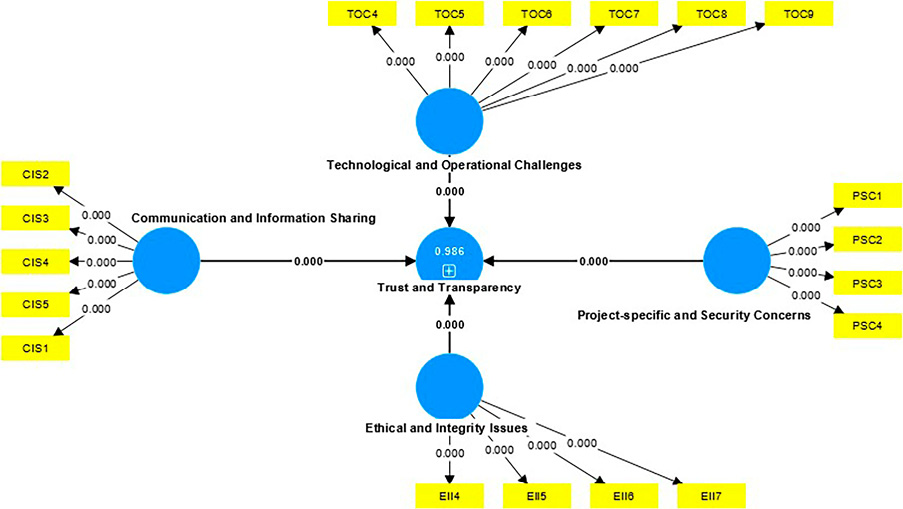
Table 5. Path Test
| Factors | β | SD | T | P | CI | |
|---|---|---|---|---|---|---|
| 2.50% | 97.50% | |||||
| Communication and Information Sharing -> Trust and Transparency | 0.280 | 0.031 | 8.931 | 0.000* | 0.223 | 0.345 |
| Ethical and Integrity Issues -> Trust and Transparency | 0.280 | 0.029 | 9.693 | 0.000* | 0.227 | 0.342 |
| Project-specific and Security Concerns -> Trust and Transparency | 0.268 | 0.029 | 9.464 | 0.000* | 0.216 | 0.328 |
| Technological and Operational Challenges -> Trust and Transparency | 0.311 | 0.027 | 11.637 | 0.000* | 0.261 | 0.363 |
| Cross-Validated Predictive Ability Test (CVPAT) | ||||||
| Average loss difference | t | P | ||||
| Trust and Transparency | -0.384 | 23.547 | 0.000* | |||
| Overall | -0.384 | 23.547 | 0.000* | |||
Impact of the identified factors on trust and transparency in the Nigeria construction industry
The interplay between “Communication and Information Sharing,” “Ethical and Integrity Issues,” “Project-specific and Security Concerns”, and “Technological and Operational Challenges” significantly influences trust and transparency in the Nigerian construction industry. By recognising the interconnected nature of these factors and addressing them holistically, stakeholders can cultivate a culture of trustworthiness, accountability, and openness, ultimately enhancing project outcomes and industry reputation.
i. Effective communication and information sharing in the Nigerian construction industry are pivotal in fostering trust and transparency among stakeholders. Clear and transparent communication channels facilitate the exchange of critical project information, ensuring that all parties are adequately informed about project objectives, progress, and potential challenges. Trust can erode when communication is lacking or ambiguous, leading to misunderstandings, delays, and conflicts. Moreover, transparent information sharing promotes accountability and visibility, enhancing stakeholders’ confidence in project management processes and decision-making. Conversely, poor communication practices can create a perception of opacity and distrust, hindering collaboration and jeopardising project outcomes.
ii. Ethical considerations and integrity issues significantly influence trust and transparency within the Nigerian construction industry. Stakeholders’ adherence to ethical standards and integrity principles is essential for building trust and maintaining transparency throughout project lifecycles. Ethical misconduct, such as bribery, corruption, or fraudulent practices, undermines trust relationships and compromises the integrity of project processes and outcomes. By contrast, a commitment to ethical conduct fosters an environment of trustworthiness and openness, where stakeholders feel confident in the integrity of their counterparts and the fairness of project transactions. Addressing ethical challenges head-on and promoting a culture of honesty and integrity can strengthen trust bonds and enhance transparency in the construction industry.
iii. Project-specific factors and security concerns also have significant implications for trust and transparency in construction projects in Nigeria. Each project’s complexity and unique characteristics can influence stakeholders’ perceptions of trust and transparency. Project scope, budget, timeline, and resource allocation can impact stakeholders’ confidence in project management capabilities and the likelihood of achieving project objectives. Moreover, security concerns, including theft, vandalism, and cybersecurity threats, pose risks to project assets, data, and stakeholder trust. Proactive risk management strategies and robust security measures are essential for mitigating these threats and maintaining transparency regarding project security protocols and incidents. When stakeholders feel assured about the safety and security of project resources and information, trust levels can increase, fostering a more transparent and collaborative project environment.
iv. Technological and operational challenges further shape trust and transparency dynamics in the Nigerian construction industry. Rapid technological advancements offer opportunities to streamline project processes, improve efficiency, and enhance transparency through digital platforms, Building Information Modelling (BIM), Internet of Things (IoT), Blockchain technology (BT) and project management software. Blockchain technology is emerging as a transformative force in the Nigerian construction industry, offering decentralised, immutable ledgers that bolster trust and transparency. Its rising adoption mirrors the industry’s recognition of the need for enhanced transparency amidst regional trust challenges. Blockchain’s impact lies in its ability to provide tamper-proof records and enforce smart contracts, streamlining operations and reducing disputes. By digitising processes like payments and material tracking, blockchain enhances efficiency, fosters collaboration, and addresses longstanding industry challenges. Despite potential regulatory and technological hurdles, blockchain offers a decentralised platform to overcome collaboration and information sharing barriers. In embracing blockchain, Nigerian construction stakeholders can establish a more equitable, transparent ecosystem founded on verifiable data and automated processes, paving the way for innovation and sustainable development. However, technological innovations also introduce challenges such as data privacy concerns, interoperability issues, and skill gaps among stakeholders. Addressing these challenges requires investment in digital literacy, cybersecurity measures, and infrastructure development to ensure that technological solutions contribute positively to trust and transparency goals. Additionally, operational inefficiencies, such as delays, cost overruns, and quality issues, can strain trust relationships and hinder transparency efforts. By addressing operational challenges and embracing technological innovations responsibly, stakeholders can build trust through improved project performance and enhanced transparency in the Nigerian construction industry.
Kruskal Wallis (K-W)
This study examines the variations in the respondents’ opinions based on two core components: the location and profession of respondents using the K-W technique, as shown in Table 4. The k-w test result indicated that all the measurements are above the p = 0.005 value threshold. They indicate that there is no significant difference among the respondents’ opinions. This means that even though the respondents have different professions and operate in different regions, they experience similar factors that affect trust and transparency in their region of operation.
| Code | Location | Profession | ||||
|---|---|---|---|---|---|---|
| Kruskal-Wallis H | df | Asymp. Sig. | Kruskal-Wallis H | df | Asymp. Sig. | |
| CIS1 | 29.556 | 4 | 0.055 | 15.989 | 4 | 0.383 |
| CIS2 | 16.713 | 4 | 0.635 | 14.409 | 4 | 0.196 |
| CIS3 | 13.730 | 4 | 0.312 | 8.531 | 4 | 0.074 |
| CIS4 | 32.610 | 4 | 0.417 | 26.692 | 4 | 0.286 |
| CIS5 | 75.300 | 4 | 0.333 | 20.034 | 4 | 0.192 |
| EII1 | 12.578 | 4 | 0.235 | 82.601 | 4 | 0.330 |
| EII2 | 18.672 | 4 | 0.079 | 12.830 | 4 | 0.516 |
| EII3 | 13.256 | 4 | 0.110 | 6.530 | 4 | 0.163 |
| EII4 | 13.893 | 4 | 0.220 | 21.693 | 4 | 0.500 |
| EII5 | 21.884 | 4 | 0.086 | 18.133 | 4 | 0.118 |
| EII6 | 19.154 | 4 | 0.098 | 7.503 | 4 | 0.286 |
| EII7 | 12.956 | 4 | 0.054 | 15.798 | 4 | 0.089 |
| PSC1 | 9.779 | 4 | 0.069 | 16.006 | 4 | 0.153 |
| PSC2 | 15.230 | 4 | 0.420 | 11.294 | 4 | 0.216 |
| PSC3 | 17.777 | 4 | 0.169 | 17.881 | 4 | 0.487 |
| PSC4 | 17.487 | 4 | 0.128 | 7.353 | 4 | 0.118 |
| TOC1 | 15.906 | 4 | 0.079 | 9.278 | 4 | 0.059 |
| TOC2 | 4.231 | 4 | 0.376 | 9.795 | 4 | 0.426 |
| TOC3 | 17.520 | 4 | 0.157 | 9.060 | 4 | 0.060 |
| TOC4 | 19.435 | 4 | 0.096 | 6.468 | 4 | 0.167 |
| TOC5 | 17.007 | 4 | 0.246 | 12.038 | 4 | 0.382 |
| TOC6 | 17.040 | 4 | 0.088 | 7.378 | 4 | 0.117 |
| TOC7 | 8.695 | 4 | 0.163 | 17.282 | 4 | 0.204 |
| TOC8 | 9.305 | 4 | 0.308 | 6.435 | 4 | 0.169 |
| TOC9 | 23.406 | 4 | 0.101 | 9.983 | 4 | 0.418 |
Strategies for improving trust and transparency in the construction industry
Table 7 presents the thematic outcome of the various strategies from the professionals through interview sessions to enhance trust and transparency in the construction industry. Encouraging transparent communication through regular meetings, as suggested by participant P-1-8-4-13-17, facilitates the dissemination of accurate information, fostering a culture of openness and accountability among stakeholders. Upholding moral values in decision-making processes, as emphasised by participants P-1-2-7-11-13, instils confidence in the integrity of the construction practices, thus enhancing trust between project participants. Integrating advanced technology for streamlined operations, advocated by participants P-1-3-9-18, enables efficient data management and real-time monitoring, promoting transparency in project execution and resource utilisation.
Additionally, the implementation of strict security measures in construction sites, as highlighted by participants P-1-4-8-13-14-17, ensures the protection of sensitive project data, mitigating potential risks and bolstering the confidence of stakeholders in the project’s security framework. By fostering a culture of open communication, enforcing ethical codes of conduct, investing in staff training, and adopting robust security systems, the strategies suggested in the table collectively contribute to a more transparent and trustworthy construction environment, facilitating smoother collaboration, minimising unethical practices, ensuring operational efficiency, and safeguarding critical project information.
Discussion of results
The Nigerian construction industry grapples with challenges that significantly impede trust and transparency an issue well-substantiated in contemporary scholarly discourse. Among these challenges, effective communication and information sharing have emerged as paramount concerns, as highlighted by Mashali, et al. (2023), who emphasise the detrimental repercussions of inadequate information exchange on crucial decision-making processes and stakeholder relationships. In light of this, the proposition to encourage transparent communication through regular meetings, as advocated by participants (P-1-8-4-13-17), resonates powerfully with the perspectives of Mashali, et al. (2023) and Wilkinson (2021). These scholars emphasise the indispensable role of well-defined communication protocols in facilitating seamless information flow and alleviating potential misunderstandings within the construction ecosystem. Additionally, the consensus among participants (P-3-6-9-18) to establish an efficient channel for sharing project updates and cultivating an open communication culture to foster collaboration (P-7-2-11-16) is a crucial strategy to surmount the prevailing communication barriers. In line with these measures, the participants’ view (P-10-5-12-14-15) on adopting digital platforms for real-time information dissemination represents a promising avenue to address the intricacies associated with communication and information sharing in the Nigerian construction landscape.
Ethical lapses and conflicts of interest represent recurring themes in the scholarly discourse, significantly eroding trust within the construction industry. The works of Ghahari, et al. (2023), Soni and Smallwood (2023) and Adibfar, Costin and Issa (2020), collectively underscore the detrimental consequences of ethical transgressions, such as bribery and corruption, on stakeholder relationships and the industry’s overall reputation. Correspondingly, this study’s proposal to uphold moral values (P-1-2-7-11-13), enforce ethical compliance (P-4-10-14-15), and incorporate ethical codes of conduct in procurement processes (P-6-3-5-17), as well as the integration of ethical guidelines into daily business operations (P-8-9-12-16-18), aligns seamlessly with the literature’s resounding call for a more robust ethical framework. These strategies are envisioned to ensure equitable practices and cultivate trust among stakeholders, echoing the scholarly emphasis on the necessity of an ethical compass to guide the construction industry toward a more transparent and trustworthy trajectory.
Furthermore, it is crucial to acknowledge the well-documented resistance to technological advancements and the ensuing operational challenges within the Nigerian construction sector. As Ebekozien and Samsurijan (2022) have astutely observed, the industry’s gradual technology adoption has adversely affected operational efficiency. In light of these issues, this study’s proposal to integrate advanced technology (P-1-3-9-18) for streamlined operations aligns seamlessly with the imperatives of addressing the technological constraints in the literature. Beyond this, various participants have put forth a spectrum of strategies, including investing in innovative technological solutions for project management (P-2-4-7-11), providing training for staff on the latest technological advancements in the field (P-6-10-13-16-17), and embracing emerging technologies to enhance operational efficiency (P-5-8-12-14-15). These multifaceted approaches are designed to propel the construction industry toward a more technologically adept and efficient future, reconciling the literature’s concerns regarding the sector’s technological inertia and the subsequent impediments to trust and transparency.
Moreover, the works of Turk, et al. (2022) and Imoni, et al. (2023) underscore the vulnerability of project data and the pervasive lack of transparency in procurement processes, both of which significantly undermine trust and transparency within the construction industry. To address these concerns, the implementation of strict security measures, as agreed by the participants (P-1-4-8-13-14-17), as a strategy closely aligns with the literature’s persistent call for the establishment of robust security systems to safeguard project data and ensure transparency in procurement processes. Furthermore, the study suggests prioritising security protocols to mitigate potential risks (P-2-3-6-16), implementing robust security systems for safeguarding project data (P-5-18-11-15) and enforcing stringent security measures to protect project resources (P-7-9-10-12). These multifaceted strategies collectively work toward creating a more secure and trustworthy construction environment, in line with the literature’s concerns regarding the susceptibility of project data and the necessity for enhanced security measures to foster an environment of transparency and trust.
Conclusion and implications
Conclusion
This study examines the factors influencing trust and transparency in the Nigerian construction industry, highlighting critical communication, ethics, technology, and security issues. Through an in-depth analysis, it became evident that the lack of effective communication channels, ethical lapses, technological constraints, and security vulnerabilities collectively create an environment of mistrust among stakeholders, ultimately impeding the sector’s growth and efficiency. The result of the PLS-SEM shows that the factors impact trust and transparency in the construction industry. Based on the findings and triangulation with existing literature, it is clear that fostering transparent communication, upholding ethical standards, embracing technological advancements, and implementing stringent security measures are pivotal steps toward fostering trust and transparency in the Nigerian construction landscape. Encouraging transparent communication through regular meetings, enforcing ethical compliance in all processes, integrating advanced technology for streamlined operations, and implementing robust security systems emerged as indispensable strategies for addressing the identified challenges. While the study provided empirical evidence and practical recommendations to mitigate the identified issues, it also underscored the significance of collective action and industry-wide collaboration by emphasising the need for a comprehensive and holistic approach. The study encourages the stakeholders, policymakers, and industry players to work hand in hand to implement the proposed strategies effectively. This is supported by the Kruskal-Wallis result, which reveals the professionals have similar opinions on the factors affecting trust and transparency in the Nigeria construction industry. By prioritising these measures, the Nigerian construction industry can aspire to foster a culture of trust, integrity, and transparency, thus paving the way for sustainable growth and development in the industry.
Moreover, all stakeholders need to remain committed to the principles of open communication, ethical conduct, technological innovation, and robust security practices, as these pillars will be instrumental in shaping a more resilient and transparent construction industry that can effectively meet future challenges. By collectively embracing these recommendations, the Nigerian construction industry can aim for a more transparent, efficient, and collaborative ecosystem that inspires confidence and trust among all stakeholders involved. Ultimately, this study serves as a roadmap for stakeholders to navigate the intricate landscape of the Nigerian construction industry, offering practical solutions to enhance trust and transparency, thereby fostering a more resilient and robust construction sector for the future.
Implications
Theoretical implications
This study contributes to the theoretical understanding of trust and transparency in the context of the Nigerian construction industry. It highlights the multifaceted nature of challenges that impede trust, emphasising the significance of effective communication, ethical integrity, technological advancements, and security measures. By triangulating empirical data with existing literature, the study reinforces the interconnectedness of these factors and their influence on stakeholder relationships and industry dynamics. Moreover, the study’s identification of specific strategies provides a nuanced understanding of how these theoretical concepts can be practically applied to enhance trust and transparency in construction management.
Practical implications
By implementing the suggested strategies for transparent communication, ethical compliance, technological integration, and robust security measures, industry practitioners can effectively mitigate the challenges that undermine trust and transparency. Encouraging transparent communication protocols and leveraging digital platforms for information dissemination can improve collaboration and streamline project operations. Prioritising ethical values and enforcing codes of conduct in procurement processes can foster a culture of fairness and accountability. Embracing technological advancements and stringent security measures will enhance operational efficiency and safeguard critical project data, fostering a more secure and trustworthy construction environment.
Managerial implications
For industry managers and policymakers, this study provides valuable insights into fostering a more transparent and trustworthy construction industry. By prioritising implementing the recommended strategies, managers can cultivate a culture of open communication, ethical compliance, technological innovation, and robust security protocols within their organisations. The managerial implications underscore the critical role of proactive measures in cultivating Nigeria’s sustainable and resilient construction industry.
Recommendations, future studies directions, and limitations
This study recommended that stakeholders in the Nigerian construction industry prioritise the establishment of clear communication protocols, including regular meetings and utilising digital platforms, to ensure efficient information sharing and mitigate misunderstandings. Additionally, there is a pressing need to strengthen the industry’s ethical frameworks and compliance measures to foster transparency and accountability, thereby mitigating the risks associated with conflicts of interest and ethical lapses. Embracing technological advancements and investing in training programs to enhance technological literacy within the workforce should be pivotal to facilitate the integration of advanced technology for streamlined operations and improved project management efficiency. Moreover, robust security protocols should be implemented to safeguard project data and resources, ensuring the integrity and confidentiality of sensitive information and fostering a secure and trustworthy construction environment while mitigating potential risks associated with data breaches and security vulnerabilities.
Future research should include a comparative analysis of trust and transparency issues in the construction industries of different countries, considering cultural, legal, and economic factors. Strategies developed in this study should be subjected to quantitative research to gain insights from a broader range of professionals on how the strategies can enhance trust and transparency in the Nigerian construction industry. Longitudinal studies are essential to evaluate the long-term impact of implemented strategies on trust and transparency within the Nigerian construction industry, providing insights into their sustainability over time. Comprehensive stakeholder perception studies would offer a deeper understanding of stakeholders’ attitudes, facilitating a holistic approach to addressing trust and transparency challenges.
The study’s primary limitation lies in its limited sample size, which hinders the broader applicability of findings within the Nigerian construction industry. A constrained sample raises concerns of underrepresentation and oversimplification of industry complexities. Although the study’s insights hold value, they must be validated through more comprehensive sampling methods in future research to ensure their relevance and reliability across the construction industry.
References
Abougamil, R.A., Thorpe, D. and Heravi, A., 2023. Investigating the Source of Claims with the Importance of BIM Application on Reducing Construction Disputable Claims in KSA. Buildings, 13(9), p.2219. https://doi.org/10.3390/buildings13092219
Aderibigbe, A., Umeokafor, N. and Umar, T., 2023. Is integrated project delivery sufficient to reduce adversarialism in the UK construction industry? 11th World Construction Symposium, 21–22 July, Colombo, Sri Lanka. pp.634-44. https://doi.org/10.31705/WCS.2023.52
Adeyemi, B.S. and Aigbavboa, C.O., 2022. An evaluation of the impacts of construction professionals’ conflict on performance in the Nigerian construction industry. International Journal of Building Pathology and Adaptation [e-journal] (published ahead of print 11 January 2022). https://doi.org/10.1108/IJBPA-09-2021-0124
Adibfar, A., Costin, A. and Issa, R.R., 2020. Design copyright in architecture, engineering, and construction industry: Review of history, pitfalls, and lessons learned. Journal of Legal Affairs and Dispute Resolution in Engineering and Construction, 12(3), p.04520032. https://doi.org/10.1061/(ASCE)LA.1943-4170.0000421
Adindu, C., Diugwu, I., Yusuf, S. and Musa, M., 2020. Issues of corruption in construction projects and infrastructure development in Nigeria: An empirical approach. Supporting Inclusive Growth and Sustainable Development in Africa-Volume I: Sustainability in Infrastructure Development, pp.191-200. https://doi.org/10.1007/978-3-030-41979-0_14
Aka, A., Bello, A.O., Bamgbade, A.A. and Bilau, A.A., 2024. Age-performance consideration in the recruitment of tradespeople in Nigerian construction industry. Engineering, Construction and Architectural Management, 31(1), pp.386-404. https://doi.org/10.1108/ECAM-05-2022-0430
Akinrata, E.B., Ogunsemi, D.R. and Akinradewo, O.F., 2019. Outcomes of unethical practices by quantity surveyors in Nigerian construction industry. International Journal of Applied Research in Social Sciences, 1(3), pp.84-94. https://doi.org/10.51594/ijarss.v1i3.23
Ayodele, T.O. and Kajimo-Shakantu, K., 2021. The fourth industrial revolution (4thIR) and the construction industry-the role of data sharing and assemblage. In: IOP Conference Series Earth and Environmental Science, [e-journal] 654(1), p.012013. https://doi.org/10.1088/1755-1315/654/1/012013
Bello, A.O., Eje, D.O., Idris, A., Semiu, M.A., and Khan, A.A., 2023a. Drivers for the implementation of modular construction systems in the AEC industry of developing countries. Journal of Engineering, Design and Technology (published ahead of print). https://doi.org/10.1108/JEDT-11-2022-0571
Bello, A.O., Khan, A.A., Idris, A. and Awwal, H.M., 2023b. Barriers to modular construction systems implementation in developing countries’ architecture, engineering and construction industry. Engineering, Construction and Architectural Management (published ahead of print). https://doi.org/10.1108/ECAM-10-2022-1001
Bodunde, F.I., Akinrata, E., Oke, A.E. and Babalola, A., 2020. Strategic alliance in the construction industry: Barriers facing its implementation in an emerging market. Journal of Construction Project Management and Innovation, 10(2), pp.65-78. https://doi.org/10.36615/jcpmi.v10i2.391
Collins, H., 2018. Creative Research: The Theory and Practice of Research for the Creative Industries. London: Bloomsbury Publishing. https://doi.org/10.5040/9781474247115
Creswell, J.W., 2021. A concise introduction to mixed methods research. SAGE publications [online] Available at: https://au.sagepub.com/en-gb/oce/a-concise-introduction-to-mixed-methods-research/book266037.
Deep, S., Gajendran, T., Jefferies, M. and Davis, P., 2018. An analytical literature review of risks in collaborative procurement. In: The Royal Institution of Chartered Surveyors-Annual Construction, Building and Real Estate Research Conference, London, UK. Available at: http://www.rics.org/Documents/COBRA (202018).
Derigent, W. and Thomas, A., 2016. End-of-life information sharing for a circular economy: Existing literature and research opportunities. In: Borangiu, T., Trentesaux, D., Thomas, A. and McFarlane, D., eds. Service orientation in holonic and multi-agent manufacturing. Studies in Computational Intelligence. (640), pp.4150. https://doi.org/10.1007/978-3-319-30337-6_4
Dikmen, S. and Çiçek, H.G., 2023. Fighting against corruption and bribery in public procurements during the Covid-19 pandemic. In: The Ethics of Bribery: Theoretical and Empirical Studies, pp.309-28. Cham: Springer International Publishing. https://doi.org/10.1007/978-3-031-17707-1_18
Dimuna, K., 2023. Corruption And the Challenges of Infrastructural Development in Developing Countries: Nigeria in Perspective. African Journal of Environmental Research, 4(1), pp.41-62.
Ebekozien, A., 2020. Corrupt acts in the Nigerian construction industry: is the ruling party fighting corruption? Journal of Contemporary African Studies, 38(3), pp.348-65. https://doi.org/10.1080/02589001.2020.1758304
Ebekozien, A. and Samsurijan, M.S., 2022. Concession of public infrastructure: pitfalls and solutions from construction consultants’ perspective. Asian Journal of Civil Engineering, 23(5), pp.753-64. https://doi.org/10.1007/s42107-022-00455-7
Ebekozien, A., Samsurijan, M.S., Amadi, G.C., Awo-Osagie, A.I. and Ikuabe, M., 2022. Moderating effect of anti-corruption agencies on the relationship between construction corruption forms and projects delivery. International Planning Studies, 27(4), pp.336-53. https://doi.org/10.1080/13563475.2022.2099354
Elbashbishy, T.S., Ali, G.G. and El-adaway, I.H., 2022. Blockchain technology in the construction industry: mapping current research trends using social network analysis and clustering. Construction Management and Economics, 40(5), pp.406–27. https://doi.org/10.1080/01446193.2022.2056216
Emaminejad, N., Kath, L. and Akhavian, R., 2023. Assessing Trust in Construction AI-Powered Collaborative Robots using Structural Equation Modeling. Journal of Computing in Civil Engineering, 38(3), p.04024011. https://doi.org/10.1061/JCCEE5.CPENG-5660
Evans, M., Farrell, P., Elbeltagi, E., Mashali, A. and Elhendawi, A., 2020. Influence of partnering agreements associated with BIM adoption on stakeholder’s behaviour in construction mega-projects. International Journal of BIM and Engineering Science, 3(1), pp.1-20. https://doi.org/10.54216/IJBES.030101
FIDIC (International Federation of Consulting Engineers). 2017. Conditions of contract for construction. 2nd ed. Geneva: Thomas Telford. Available at: https://fidic.org/books/construction-contract-2nd-ed-2017-red-book.
Fitriani, H. and Ajayi, S., 2023. Barriers to sustainable practices in the Indonesian construction industry. Journal of Environmental Planning and Management, 66(10), pp.2028-50. https://doi.org/10.1080/09640568.2022.2057281
Flanagan, H., Haak, L.L. and Paglione, L.D., 2021. Approaching Trust: Case Studies for Developing Global Research Infrastructures. Frontiers in research metrics and analytics, [e-journal] 6, p.746514. https://doi.org/10.3389/frma.2021.746514
Folarin, S., 2021. Corruption, Politics and Governance in Nigeria. In: Ajayi, R., Fashagba, J.Y., eds. Nigerian Politics. Advances in African Economic, Social and Political Development. Springer, Cham. https://doi.org/10.1007/978-3-030-50509-7_21
Fornell C. and Larcker D.F., 1981. Evaluating structural equation models with unobservable variables and measurement error. Journal of marketing research, [e-journal] 18(1), pp.39–50. https://doi.org/10.2307/3151312
Ghahari, S.A., Queiroz, C., Labi, S. and McNeil, S., 2023. Corruption Propensity and Mitigation at Different Phases of Infrastructure Development. Public Works Management and Policy, 29(1), pp.5-44. https://doi.org/10.1177/1087724X231162544
Godge, M.A., Gandal, J. and Kumar, A., 2023. Impact of Real Estate Regulatory Authority (RERA) Act 2016. The Online Journal of Distance Education and e-Learning, 11(1), pp.252-56.
Gupta, P. and Jha, K.N., 2023. A Decentralised and Automated Contracting System Using a Blockchain-Enabled Network of Stakeholders in Construction Megaprojects. Journal of Management in Engineering, 39(4), p.04023021. https://doi.org/10.1061/JMENEA.MEENG-5366
Hair Jr, J.F., Matthews, L.M., Matthews, R.L. and Sarstedt, M., 2017. PLS-SEM or CB-SEM: updated guidelines on which method to use. International Journal of Multivariate Data Analysis, 1(2), pp.107-23. https://doi.org/10.1504/IJMDA.2017.10008574
Hair, J.F., Black, W.C., Babin, B.J., Anderson, R.E. and Tatham, R., 2006. Multivariate data analysis. 7th ed. Uppersaddle River, NJ, US: Pearson Education.
Hair, J.F., Hult, G.T.M., Ringle, C.M. and Sarstedt, M., 2022. A Primer on Partial Least Squares Structural Equation Modeling (PLS-SEM). Thousand Oaks, CA: SAGE. https://doi.org/10.1007/978-3-030-80519-7
Henseler, J., Ringle, C.M. and Sarstedt, M., 2015. A new criterion for assessing discriminant validity in variance-based structural equation modeling. Journal of the Academy of Marketing Science, 43, pp.115-35. https://doi.org/10.1007/s11747-014-0403-8
Hoe, S.L., 2016. Defining a smart nation: The case of Singapore. Journal of Information, Communication and Ethics in Society, 14(4), pp.323-33. https://doi.org/10.1108/JICES-02-2016-0005
Hood, C., 2006. Transparency in Historical Perspective. In: Hood, C. and Heald, D., eds. Transparency: The Key to Better Governance? Proceedings of the British Academy, 135. Oxford: Oxford University Press, pp.3–24. https://doi.org/10.5871/bacad/9780197263839.003.0001
Hulland, J., 1999. Use of partial least squares (PLS) in strategic management research: A review of four recent studies. Strategic Management Journal, 20(2), pp.195-204. https://doi.org/10.1002/(SICI)1097-0266(199902)20:2<195::AID-SMJ13>3.0.CO;2-7
Imoni, S., Akande, E.O., Jiya, V.H., Onuzulike, C. and Tiza, M.T., 2023. A Comprehensive Review of Engineering, Procurement, and Construction in Nigeria. Journal of Management Studies and Development, 2(03), pp.226-49. https://doi.org/10.56741/jmsd.v2i03.382
Infrastructure and Projects Authority, 2016. Government Construction Strategy (GCS) 2016-2020. [pdf] Available at: https://www.gov.uk/government/publications/government-construction-strategy-2016-2020.
Ivić, I. and Cerić, A., 2023. Risks Caused by Information Asymmetry in Construction Projects: A Systematic Literature Review. Sustainability, 15(13), p.9979. https://doi.org/10.3390/su15139979
Kock, N., 2015. Common method bias in PLS-SEM: A full collinearity assessment approach. International Journal of e-Collaboration, 11(4), pp.1-10. https://doi.org/10.4018/ijec.2015100101
Lehto, A. and Aaltonen, K., 2021. Cultural change in the construction industry: The role of project alliance organisational culture. [pdf] Available at: https://oulurepo.oulu.fi/bitstream/handle/10024/30024/nbnfi-fe2021110453900.pdf?sequence=1 andisAllowed=y.
Li, Y., He, N., Li, H., Liu, Z. and Qi, J., 2021. Influencing factors on inter-organisational trust asymmetry behavior in construction projects: Evidence from China. Engineering, Construction and Architectural Management, 28(1), pp.308-31. https://doi.org/10.1108/ECAM-05-2019-0256
Lu, P., Guo, S., Qian, L., He, P. and Xu, X., 2015. The effectiveness of contractual and relational governances in construction projects in China. International Journal of Project Management 33(1), pp.212-22. https://doi.org/10.1016/j.ijproman.2014.03.004
Luo, M., Hwang, B.G., Deng, X., Zhang, N. and Chang, T., 2022. Major Barriers and Best Solutions to the Adoption of Ethics and Compliance Program in Chinese International Construction Companies: A Sustainable Development Perspective. Buildings, 12(3), p.285. https://doi.org/10.3390/buildings12030285
Mahat, N.A.A., Alwee, S.N.A.S., Adnan, H. and Hassan, A.A., 2019. Propelling green building technologies adoption in Malaysia construction industry. In: IOP conference series: earth and environmental science, 233(2), p.022032. https://doi.org/10.1088/1755-1315/233/2/022032
Mashali, A., Elbeltagi, E., Motawa, I. and Elshikh, M., 2023. Stakeholder management challenges in mega construction projects: critical success factors. Journal of Engineering, Design and Technology, 21(2), pp.358-75. https://doi.org/10.1108/JEDT-09-2021-0483
Mayer, R.C., Davis, J.H. and Schoorman, F.D., 1995. An integrative model of organisational trust. Academy of Management Review, 20(3), pp.709-34. https://doi.org/10.5465/amr.1995.9508080335
Mazzoli, C., Iannantuono, M., Giannakopoulos, V., Fotopoulou, A., Ferrante, A. and Garagnani, S., 2021. Building information modeling as an effective process for the sustainable re-shaping of the built environment. Sustainability, 13(9), p.4658. https://doi.org/10.3390/su13094658
Neupane, A., Soar, J., Vaidya, K. and Yong, J., 2012. Role of public e-procurement technology to reduce corruption in government procurement. In: IPPC5 Proceedings of the 5th International Public Procurement Conference. Seattle, USA, 17-19 August 2012. Part II Paper 8. Available at: https://research.usq.edu.au/item/q17y5/role-of-public-e-procurement-technology-to-reduce-corruption-in-government-procurement.
Nunnally J.C. and Bernstein I., 1978. The Role of University in the Development of Entrepreneurial Vocations: a Spanish Study. In: Psychometric Theory. New York: McGraw-Hill, pp.387-405.
Ojo, L.D., Oladinrin, O.T. and Obi, L., 2021. Critical barriers to environmental management system implementation in the Nigerian construction industry. Environmental Management, 68(2), pp.147-59. https://doi.org/10.1007/s00267-021-01473-y
Okereke, R.A., Pepple, D. and Eze, E., 2022. Design and Pre-Contract Delay and Its Impact on Construction Project Delivery in Nigeria. CHSM Journal, 2(1), pp.1-20. https://doi.org/10.22452/jpmp.vol2no1.2
Olanrewaju, O.I., Kineber, A.F., Chileshe, N. and Edwards, D.J., 2022. Modelling the relationship between Building Information Modelling (BIM) implementation barriers, usage and awareness on building project lifecycle. Building and Environment, 207, p.108556. https://doi.org/10.1016/j.buildenv.2021.108556
Oluyemi-Ayibiowu, B.D., Aiyewalehinmi, O.E. and Omolayo, O.J., 2019. Most critical factors responsible for cost overruns in Nigeria building construction industry. Journal of Multidisciplinary Engineering Science Studies, 5, pp.2500-08.
Qian, X. and Papadonikolaki, E., 2021. Shifting trust in construction supply chains through blockchain technology. Engineering, Construction and Architectural Management, 28(2), pp.584-602. https://doi.org/10.1108/ECAM-12-2019-0676
Downey, R., Ros, C. and Devereux, M., 2023. What’s All the Buzz?’ Drones in the construction industry. Construction Law International, 18(2), p.38.
Russell, E., Lee, J., and Clift, R., 2018. Can the SDGs provide a basis for supply chain decisions in the construction sector? Sustainability, 10(3), p.629. https://doi.org/10.3390/su10030629
Saunders, M., Lewis, P. and Thornhill, A., 2016. Research Methods for Business Students. Harlow, England: Pearson.
Shergold, P. and Weir, B., 2018. Building Confidence: Improving the effectiveness of compliance and enforcement systems for the building and construction industry across Australia. [online] Available at: https://apo.org.au/node/314175.
Shmueli, G., Ray, S., Estrada, J.M.V. and Chatla, S.B., 2016. The elephant in the room: Predictive performance of PLS models. Journal of Business Research, 69(10), pp.4552-64. https://doi.org/10.1016/j.jbusres.2016.03.049
Shmueli, G., Sarstedt, M., Hair, J.F., Cheah, J.H., Ting, H., Vaithilingam, S. and Ringle, C.M., 2019. Predictive model assessment in PLS-SEM: guidelines for using PLS predict. European Journal of Marketing, 53(11), pp.2322-47. https://doi.org/10.1108/EJM-02-2019-0189
Soni, M.S. and Smallwood, J.J., 2023. Perceptions of Corruption in the South African Construction Industry. International Journal of Construction Education and Research, 20(1), pp.1-22. https://doi.org/10.1080/15578771.2023.2179138
Strahorn, S., Brewer, G. and Gajendran, T., 2017. The influence of trust on project management practice within the construction industry. Construction Economics and Building, 17(1), pp.1-19. https://doi.org/10.5130/AJCEB.v17i1.5220
Strahorn, S., Gajendren, T. and Brewer, G., 2015. The influence of trust in traditional contracting: investigating the “lived experience” of stakeholders. Construction Economics and Building, [e-journal] 15(2), pp.81-101. https://doi.org/10.5130/AJCEB.v15i2.4408
Tang, H.L., Abdul Majid, A.S. and Aziz, N.M., 2023. Challenges of Legal Intermediaries in Construction Litigation. Journal of Legal Affairs and Dispute Resolution in Engineering and Construction, 15(2), p.04523009. https://doi.org/10.1061/JLADAH.LADR-944
Tavakol, M. and Sandars, J., 2014. Quantitative and qualitative methods in medical education research, AMEE Guide No 90: Part II. Medical Teacher, 36(10), pp.838-48. https://doi.org/10.3109/0142159X.2014.915297
Turk, Ž., de Soto, B.G., Mantha, B.R., Maciel, A. and Georgescu, A., 2022. A systemic framework for addressing cybersecurity in construction. Automation in Construction, 133, p.103988. https://doi.org/10.1016/j.autcon.2021.103988
Tuuli, M.M., Adaku, E., Banye, E.Z. and Tettey, A.S., 2023. Project Scope Management in Developing Countries. In: George Ofori, ed. Building a Body of Knowledge in Project Management in Developing Countries. London: World Scientific. Ch.5. pp.141-178. https://doi.org/10.1142/9789811224720_0005
Usmen, M.A., Mamman, D., Kazan, E. and Singh, K., 2009. A Critical Review of Ethics Issues and Corrupt Practices in the Global Construction Industry. In: Fifth International Conference on Construction in the 21st Century (CITC-V) “Collaboration and Integration in Engineering, Management and Technology.” Istanbul, Türkiye, 20-22 May. pp.975-83.
Walker, D.H. and Lloyd-Walker, B.M., 2016. Understanding the motivation and context for alliancing in the Australian construction industry. International Journal of Managing Projects in Business, 9(1), pp.74-93. https://doi.org/10.1108/IJMPB-07-2015-0065
Wilkinson, P., 2021. Communicating in the Construction Industry. In: Bolpagni, M., Gavina, R., Ribeiro, D., eds. Industry 4.0 for the Built Environment: Methodologies, Technologies and Skills. [online] Available at: https://link.springer.com/chapter/10.1007/978-3-030-82430-3_26. pp.609-30.
Winders, D.J., 2018. Administrative Law Enforcement, Warnings, and Transparency. [pdf] In: Friends of the Earth, Inc. v Laidlaw Environmental Services (TOC) Inc., 528 US 167, 186 (2000). Available at: https://heinonline.org/HOL/LandingPage?handle=hein.journals/ohslj79&div=23&id=&page=.
Yap, J.B.H. and Lim, S.Y., 2023. Collaborative Project Procurement in the Construction Industry: Investigating the Drivers and Barriers in Malaysia. Journal of Construction in Developing Countries, 28(1), pp.171-92. https://doi.org/10.21315/jcdc-10-21-0157