Construction Economics and Building
Vol. 23, No. 3/4
December 2023
RESEARCH ARTICLE
A New Productivity Benchmarking System Connected to Well-designed Labour Apprenticeship Framework for Construction Projects
Kesavan Manoharan1,*, Pujitha Dissanayake2, Chintha Pathirana2, Dharsana Deegahawature3, Renuka Silva4
1 Department of Construction Technology, Faculty of Technology, Wayamba University of Sri Lanka, Kuliyapitiya, Sri Lanka
2 Department of Civil Engineering, University of Peradeniya, Peradeniya, Sri Lanka
3 Department of Industrial Management, Wayamba University of Sri Lanka, Kuliyapitiya, Sri Lanka
4 Centre for Quality Assurance, Wayamba University of Sri Lanka, Kuliyapitiya, Sri Lanka
Corresponding author: Kesavan Manoharan, Department of Construction Technology, Faculty of Technology, Wayamba University of Sri Lanka, Kuliyapitiya, Sri Lanka, kesavan@wyb.ac.lk
DOI: https://doi.org/10.5130/AJCEB.v23i3/4.8780
Article History: Received 01/10/2022; Revised 24/06/2023; Accepted 23/08/2023; Published 23/12/2023
Abstract
This study primarily identifies the knowledge gaps that must be filled to apply conceptualised methods for raising and benchmarking productivity levels of various construction operational tasks. Accordingly, this study intended to evaluate labour productivity in relation to labour performance using potential apprenticeship instruments and systems. Comprehensive literature analysis and expert consultations were carried out to create a new mechanism with the collection of potential models, methods and systems connected to labour training, performance evaluation and productivity measurements. A total of 23 construction projects in Sri Lanka employed the created approach methodically. The results demonstrate the precise patterns of substantial shifts in labour productivity and performance index values, which have sparked new conceptual mechanisms for construction project planning methods. The outcomes demonstrate that the suggested approach can be used in a way that is reliable, generalisable, productive and sustainable. The study provides project managers, planners and engineers with a new road map and helpful techniques to raise the standard for measuring labour productivity levels across a variety of jobs. The overall study outcomes strengthen the chain relationship among the training elements, labour skills, performance and productivity. Though the study findings were limited to the construction industry and Sri Lankan context, the study outcomes are expected to make a significant impact on the current practices of various industry sectors in many developing countries for achieving higher productivity levels in work operations. This paper discusses some more implications and future scopes of the study elaborately.
Keywords
Construction Workers; Productivity Measurements; Benchmarking; Productivity Index; Performance Index
Introduction
Construction has been one of the most demanding sectors that contribute to the national socio-economic goals of a country (Silva, Warnakulasuriya and Arachchige, 2018). The construction sector accounts for a considerable proportion of gross domestic product in different countries – for instance, 9% in Oman, 6.1% in the UK and 5.5% in Japan (Umar, 2021). The continuous development of the construction industry is essential for the growth of employability since it claims one of the leading industries that make huge impacts on employability (Umar, 2021). The expenditure in the construction sector is expected to rise to 14 trillion US$ in 2025, whereas it was notably 9.5 trillion US$ in 2014 (Umar, et al., 2020). In general, the construction industry involves a variety of resources in a wide range of construction projects such as the construction of buildings, roads/highways, water supply work, etc. The sustainability of the construction industry mainly depends on the productivity of labour (Sally, et al., 2000; Onyekachi, 2018; Dinh and Nguyen, 2019).
Labour productivity is a physiological measure of labour performance in construction operations, and it can be expressed in terms of the ratio between the amount of work performed and the labour hours (Onyekachi, 2018). Sangole and Ranit (2015) state that productivity is related in an important way to the inputs, outputs and processes of work operations. Higher labour productivity ensures the long-term growth and viability of construction firms linked to cost-effectiveness, competitiveness and implementation of major stakeholder proposals (Sally, et al., 2000). It is also a key contributor to reducing delays in construction projects (Kesavan, et el., 2014).
PROBLEM STATEMENT AND KNOWLEDGE GAP
Construction organisations encounter difficulties linked to time overruns, cost overruns, quality issues and unsafe practices as a result of the lower productivity of labour (Dinh and Nguyen, 2019; Mistri, Patel and Pitroda, 2019). Recent studies have found that labour productivity issues in several developing nations, including Sri Lanka, have caused such difficulties for many construction organisations (Shahab and Audrius, 2019; Dinh and Nguyen, 2019; Manoharan, et al., 2022; Onyekachi, 2018; Silva, Warnakulasuriya and Arachchige, 2018). This leads to significant changes in various construction processes associated with project scopes, planning, monitoring, resource controlling, operational management and stakeholder agreement aspects (Dinh and Nguyen, 2019; Mistri, Patel and Pitroda, 2019). Even though various factors like project delays, difficulties in obtaining permits, ineffective planning and scheduling, market inflation, lengthy dispute settlements and poor site management practices result in productivity loss, the most crucial reason behind the low levels of labour productivity is the industry’s lack of understanding of how to apply productivity benchmarking techniques linked to apprenticeship and performance evaluation procedures at construction sites (TVEC, 2017; Ojha, et al., 2020; Manoharan, et al., 2021a). The current study has found a lack of studies that intended to address such a knowledge gap in the industry systematically.
THE STUDY AIM AND ITS SIGNIFICANCE
Based on the significance of the problematic aspects associated with the above-stated knowledge gap, this study aims to evaluate labour productivity and benchmarking techniques in a variety of construction project operations compared to labour performance differences by methodically implementing labour apprenticeship components. Accordingly, the study objectives mainly focus on measuring performance and productivity index values of labour, performing the necessary comparisons by implementing work-integrated learning approaches and developing guidelines for upgrading the organisational policies and site management practices associated with productivity benchmarking procedures. Notably, the discussions with the industry sector experts underscored how critical it is to close this knowledge gap in construction projects because these kinds of initiatives are essential to bolstering the economic foundation of an emerging nation like Sri Lanka. The study also focuses on ways of implementing effective labour rewarding mechanisms based on the changes in labour performance and productivity levels due to the application of training practices. The study further evaluates how satisfied construction organisations, trainers and workers are with productivity enhancement approaches and results connected to labour training components. This could result in the development of fresh productivity-boosting techniques for planning and managing construction projects.
IMPORTANCE OF EFFECTIVE SUPERVISION PRACTICES FOR IMPROVING THE PERFORMANCE AND PRODUCTIVITY OF LABOUR IN CONSTRUCTION
The supervision of labour is one of the significant factors that influence labour performance in construction projects (Montaser, et al., 2018; Onyekachi, 2018; Dinh and Nguyen, 2019; Manoharan, et al., 2020). A good understanding between construction supervisors and labourers results in a reduction of wrong construction methods as well as higher labour motivation and engagement towards higher quality and productivity of work outputs (Onyekachi, 2018; Murari and Joshi, 2019). Delivery of work-based training components for labourers through effective supervision practices will be able to make significant changes to labour work outputs at construction sites (Manoharan, et al., 2021a, 2021b). With the direct scope of driving labour performance and productivity through supervision practices, a guide model was presented by Manoharan, et al. (2021b) to systematically design new construction supervisory training programmes. Importantly, this guide model consists of a set of construction supervisors’ competencies that are significant for improving the performance and productivity of construction labour operations. It highlights the importance of the following elements of competencies among construction supervisors to provide labour training exercises and evaluate labour skills in construction.
• Describing the importance of a training needs assessment; Describing the steps needed to plan for training implementation; Summarising how to conduct a training needs assessment; Developing training plans, course materials and training needs assessments; Demonstrating a variety of advanced brainstorming techniques and competency-based training techniques to construction labourers; Demonstrating basic theories and applications of the construction related works to construction labourers; Providing experiential learning exercises to construction labourers; Maintaining proper records of the labour training exercises; Assessing the performance of labourers in construction works; Implementing the possible labour rewarding mechanisms in the construction sector
COMPETENCIES OF CONSTRUCTION LABOURERS INFLUENCING THE PRODUCTIVITY OF LABOUR OPERATIONS
Recent studies highlight that the poor competencies of labourers have significantly contributed to various challenges related to productivity faced by construction firms in many countries, including Egypt (Montaser, et al., 2018), India (Mistri, Patel and Pitroda, 2019), Nigeria (Onyekachi, 2018), South Africa (Windapo, 2016), Sri Lanka (Silva, Warnakulasuriya and Arachchige, 2018; Manoharan, et al., 2021c) and Vietnam (Dinh and Nguyen, 2019). The progress of many construction projects has been significantly affected due to the labourers’ poor cognitive skills in construction methods/technologies and health and safety practices in many countries (Montaser, et al., 2018; Mistri, Patel and Pitroda, 2019; Manoharan, et al., 2021a). Poor health and safety practices incur work-related injuries among labourers that put them out of work for a period and also affect their quality of work outputs. Notably, the deaths of more than a hundred thousand construction workers are reported every year due to poor occupational safety and health conditions, whereas this is nearly 30% of all occupational deadly injuries (International Labour Organisation, 2015). Umar and Egbu (2017) reveal that a significant proportion of work-related injuries arise from the workers’ faults compared with the factors related to equipment, materials, environment and management.
Poor learning abilities have been the major resistance for Indian (Mistri, Patel and Pitroda, 2019), South African (Windapo, 2016) and Sri Lankan (Silva, Warnakulasuriya and Arachchige, 2018) labourers to gain new experiences in handling a wide range of challenges and opportunities in job-related tasks. On the other hand, poor self-management skills of construction labourers have created various conflicts among project participants in construction projects in many countries, including Nigeria (Onyekachi, 2018), Sri Lanka (Fernando, Fernando and Gunarathna, 2016) and Vietnam (Dinh and Nguyen, 2019). Commitment, participation and punctuality are the key self-management skills essential for labourers to establish their reputation in the job environment (Hickson and Ellis, 2013).
Taking on the Sri Lankan construction sector, the technical skills of labourers in bar bending, carpentry, plumbing, painting and electrical works were identified by Fernando, Fernando and Gunarathna (2016) that need to be specifically improved. Fernando, Fernando and Gunarathna (2016) also highlight the need for improving the punctuality of Sri Lankan labourers in the construction industry. Manoharan, et al. (2021c) point up the importance of developing technical skills of Sri Lankan labourers in concreting, bar bending, plastering, tiling, welding, electrical work and equipment handling, also their self-management skills related to commitment, punctuality, participation, self-motivation and problem-solving to fill out the gaps compared with the levels of leading foreign labour forces.
TRAINING TOOLS ASSOCIATED WITH LABOUR PERFORMANCE EVALUATIONS AND PRODUCTIVITY ASSESSMENTS
A forward-thinking strategy for personnel planning in the developing construction sector was created by Uwakweh and Maloney (1991), emphasising the need to create a pool of supervisory strategies and paths through improving training implementation procedures. The primary weakness of this model is the absence of productivity-enhancing traits associated with supervisory attributes or tactics. The findings of Serpell and Ferrada (2006), who proposed a realistic competency framework for supervisors of construction sites operating in underdeveloped nations, must also be taken into consideration. In order to coordinate and organise the execution of essential operational processes in accordance with project plans to achieve higher productivity gains, Serpell and Ferrada (2006) place a substantial focus on the work characteristics among the supervisory job positions. Although the Serpell and Ferrada (2006) framework discusses parts of productivity development, its biggest flaw is the lack of labour competency qualities and labour performance evaluation procedures linked to supervisory attributes. Additionally, in order for the construction industry in the member states of the European Union to recover from the effects of the global financial crisis and meet the challenges posed by digitalisation, sustainability and environmental requirements, Akyazi, et al. (2020) have developed a model that places an emphasis on competent and multi-skilled workforces. But when considering the current practices related to technology and financial issues, a thorough examination of the model’s contents reveals certain limitations regarding its application in many developing nations, such as Sri Lanka. Reviewing various other workforce competency framework models revealed similar problems (Detsimas, et al., 2016; Moon, Abd-Karim and Danuri, 2018; Vaz-Serra and Mitcheltree, 2020).
The importance of the tools/models/systems developed by Manoharan, et al. (2021a, 2022) is highlighted for assessments of potential apprenticeship models in light of the shortcomings, restrictions and research gaps connected with the application of the competency framework models outlined above. Significantly, the findings of Manoharan, et al. (2021a, 2022) offer useful strategies that may be appropriate and applicable to the objectives of the current investigation. It is important to note that Manoharan, et al. (2021a) included a set of developed labour training exercises (LBEXs), whereas Manoharan, et al. (2022) comprehensively developed a set of labour training elements of outcomes (LBEOs) relative weights based on the objectives of labour training exercises to guide the training delivery and assessment components relating to work operations. Manoharan, et al. (2022) have introduced a labour performance score system (LBPS), which offers a systematic framework for performance assessments and performance-based classifications for construction labourers, as part of their thorough examination of these LBEXs and LBEOs. The additional recommendation of Manoharan, et al. (2021a) is to monitor the continuous work productivity of trained labourers on job sites to determine the physiological measure of labour performance. As a result, these systems can help to modify behavioural construction techniques for improving the effectiveness and productivity of work outputs. It is also crucial to note that the models and systems developed by Manoharan, et al. (2021a, 2022) do not contain the restrictions and gaps mentioned in the preceding paragraph.
Methodology
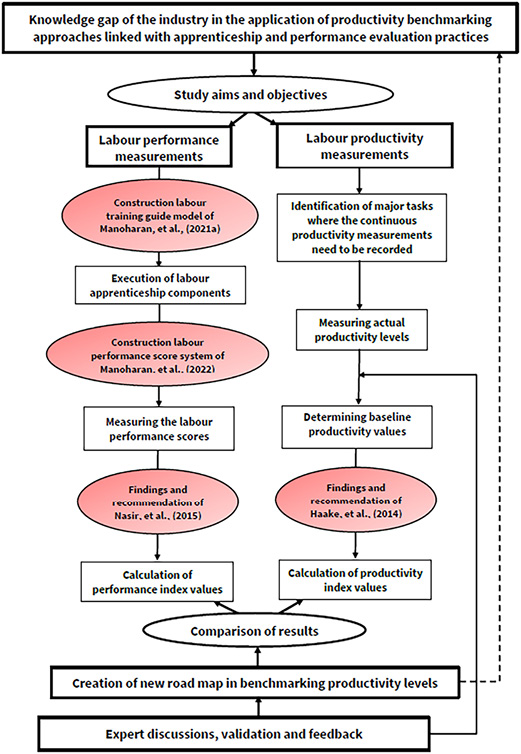
Figure 1 illustrates how the study methodology was designed based on the identified knowledge gap and the study objectives. Importantly, the expert reviews and discussions verified this mechanism by evaluating several areas related to the usefulness, applicability and organisational features for bridging the knowledge gap identified. Both potential academic specialists and industry professionals (project directors, project managers, civil engineers and senior technical officers) were involved in these consultations and the validation process. In accordance with the procedures outlined in the following paragraphs, a number of processes were systematically carried out with the aid of possible instruments based on the mechanism depicted in Figure 1.
SELECTION OF PROJECTS
For the delivery of labour training exercises, the proposals were called from the construction projects, where the course followers (construction supervisory workers) were working. Initially, the proposals were received from 31 construction projects, but 23 projects (building – 9; roads/highway – 9; water supply – 4; others – 1) were selected through interviews and discussions conducted among the construction supervisory workers and other members of each project team by assessing their current practices and needs. Importantly, the following questions were also considered key elements in the selection of projects.
• Do you think that
◦ the training exercises can be delivered to the labourers through the work operations at the selected project/site for 6-10 months?
◦ the project team may be transferred from the selected project/site to another during the labour training period? (If ‘Yes’, specify the actions/alternative methods to be taken/arranged)
◦ the labourers may be transferred from the selected project/site to another during the labour training period? (If ‘Yes’, specify the actions/alternative methods to be taken/arranged)
◦ the skills of labourers can be continuously assessed at the project/site during the labour training period?
◦ the labour profiles and records can be continuously maintained throughout the labour training?
◦ the possible rewarding mechanisms can be implemented for the labourers at the selected project/site?
After the completion of the project selections, the data was collected for each selected project through direct visits, document reviews, interviews and discussions with the construction management teams (CMTs) of those projects under the following topics/areas. Overall, a total of 296 labourers (buildings – 111; roads/highway – 113; water supply and others – 72) were identified to be trained from the selected projects at the initial stage.
• Background details of the selected construction project/site; Details of the current/previous practices, working patterns and problematic areas related to labour (Current behaviour of labourers and their working pattern; Labourers’ technical/soft skills and their educational qualifications; Problematic practices resulting in poor labour performance); Importance of labour training practices for the selected projects/sites (How the labour training practices will be playing a key role in the selected project?); Planning the steps and methods to conduct the labour training at the selected project/site.
PREPARING CONSTRUCTION SUPERVISORS
Regular lectures, meetings and group discussions were conducted for the construction supervisors, as per the guidelines mentioned in the course unit ‘Training of Trainers Project on Labour Training Exercises’. With the focus on the elements of competencies highlighted in the guide model of Manoharan, et al. (2021b), the construction supervisors were trained to improve their cognitive, transferable and self-management skills, considering the following aspects.
• Leading activities that reinforce learning among labourers; Presenting information effectively; Explaining clearly to the questions getting from labourers; Maintaining good eye contact; Listening and making accurate observations; Assisting labourers to link the training tasks to their jobs; Keeping a positive attitude; Speaking in a clear voice; Gesturing appropriately; Maintaining interest and dispelling confusion; Having excellent communication skills with high motivation, dedication, commitment and integrity.
DELIVERY OF LABOUR TRAINING EXERCISES AND MEASURING THE LABOUR PERFORMANCE SCORES
According to the recommendations made by Manoharan, et al. (2021a), the seven competency factors listed below were the main focus of these labour training components.
• Enhancing the soft skills required for construction labourers in work-related tasks
• Enhancing the knowledge and use of fundamental scientific and technological principles by construction labourers
• Enhancing the knowledge and use of basic engineering and technology concepts by construction labourers in work-related tasks
• Enhancing the performance of construction labourers in terms of their knowledge and usage of the technological methods/procedures utilised in construction tasks
• Enhancing the performance of construction labourers in handling materials and tools associated with construction operations
• Enhancing the performance of construction labourers in applying green concepts in work-related tasks
• Enhancing the needed skills/abilities of construction labourers associated with fundamental level management processes
Subsequently, monthly performance evaluations were carried out for each of the seven categories listed above in accordance with the guidelines given by Manoharan, et al. (2021a) on the basis of the level descriptors of the Sri Lankan National Vocational Qualification Framework. As a result, the weights of LBEXs and LBEOs created by Manoharan, et al. (2021a) were used to determine the monthly performance scores for each labourer.
PRODUCTIVITY MEASUREMENTS
The productivity measurements were continuously recorded for the following labour works throughout the delivery of the labour training project at the selected projects/sites. The productivity measurement values were recorded for only the tasks where the labourers (who followed the labour training) were mainly involved in the selected projects during the reporting period. It should be considered that there were some other labourers (who were not in the labour training circle) also involved with them in some tasks several times. But, the majority were the labourers (who followed the labour training), and they were the main contributors to the recorded tasks.
• Building project works (Conventional slab formwork; Conventional column formwork; Reinforcement laying for slab; Reinforcement laying for beam; Reinforcement laying for columns; Concreting (ready mix) for slab and beams; Concreting (site mixing and placement) for slabs and beams; Concreting (site mixing and placement) for columns; Brick wall partition work internal; Brick wall partition work external; Plastering work internal; Plastering work external)
• Road project works (Aggregate base course laying; Asphalt (wearing course) laying; Concrete pavement laying; Road marking; Shoulder work)
• Water supply works (Supplying and fixing pipes; Water leak repairing; Fixing new connections; Defected water meter replacement)
The productivity levels in the above-mentioned labour works were compared with the improved performance of labour. As recommended by Nasir, et al. (2015), Equation (1) was used to measure the productivity index values for each type of construction task. The CMTs of all the selected projects revealed that no productivity benchmark or baseline values had been previously used in their usual practice. Through the discussions with the CMTs, it was decided to consider the mean between the previous monthly average productivity levels for the baseline productivity values. Accordingly, the baseline productivity values were updated every month. According to Haake, Foster and James (2014), similar approaches were used to determine labour performance improvement index values.
 (1)
(1)
LABOUR REWARDING AND REPORTING
The labour rewarding mechanisms were mainly processed by implementing the Recognition for Prior Learning (RPL) methods at the selected construction sites. The RPL is the quick process that determines how well the individual has achieved the required competencies according to the national skill standards of the National Vocational Qualification (NVQ) framework. At the end of the training period, each labourer can be recommended by the career guidance unit or other relevant division of the construction firm for a suitable NVQ level based on his/her performance values. The grading system recommended by Manoharan, et al. (2022) was used to assign each labourer to compare with the NVQ levels. The individual performance report of each labourer was presented to the CMTs with the overall variations in the monthly labour performance score values and productivity measurements to take necessary steps for the RPL implementation. Furthermore, a series of interviews were also conducted among the trained labourers to assess their satisfaction levels with the impacts of the training outcomes.
Results and Discussions
The list of the selected projects for the labour training delivery is shown in Table 1. In total, 200-300 labourers were involved in the apprenticeship components of this study. It is noteworthy that the selected organisations had not implemented any suitable procedures or activities to offer apprenticeship facilities and assess how the labourers performed in tasks related to construction. There had been no mechanisms used in those projects to keep track of productivity measurements. The CMTs of the selected projects, except for R2, R7, R9 and O1, agreed to perform productivity measurements for the relevant tasks in their project operations.
Notably, project B9 was stopped for a long time of period due to the above-mentioned problems. Hence, it was decided not to continue the labour training exercises for project B9 from the end of the second month. In addition, the labour training exercises were not conducted in project R7 for the third month since long weeks of shutdowns were implemented during this period. But the labour training exercises were resumed from the fourth month onwards and processed smoothly.
PRODUCTIVITY LEVELS
Figure 2 illustrates the monthly average productivity levels for the tasks mentioned in the methodology, considering each project category.
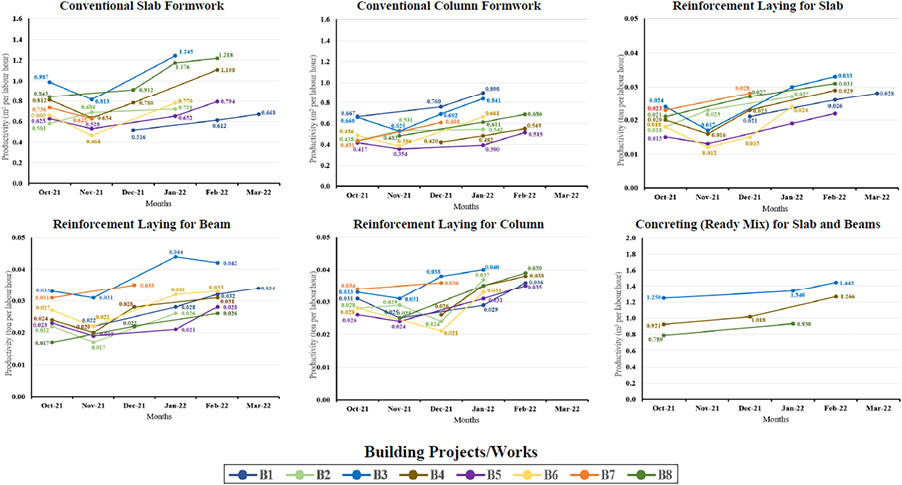
Figure 2. Variations in monthly average productivity levels
Overall, the study reports a remarkable improvement in the productivity levels of the labour works in the selected projects during the labour training period. The results show that there was a notable drop in the productivity levels of most of the tasks in most projects during the early stages, especially in November and December. Most of the projects experienced labour shortages during this period due to various reasons (as described above). In addition, the bad weather conditions forced the discontinuity of tasks in some projects during the period. These can be the major reasons for the productivity losses in the projects during the early stages of the labour training period. However, the productivity levels of all the work categories gradually and considerably increased during the middle and end stages of the labour training in the vast majority of the selected projects. The CMTs of all the selected projects confirmed that no other specific practices were newly applied to the construction practices rather than the labour training tasks during these six month periods. The labour trainers (construction supervisors) revealed that they have observed a significant improvement in the speed and quality of work outputs of the labour operations. They highlighted that the labour training components have played a significant role in improving the competencies of labourers in a wide range, and this has resulted in a notable increase in the productivity levels of various construction tasks. In spite of that, the following list of factors might also have some influence on the productivity levels shown in Figure 2.
• Site layout - working at different floor levels, material storage and delivery facilities
• Availability of materials, material characteristics and size
• Usage of equipment/tools and their qualities and capacities
• Dimensions of structures and other features
• Size and quality of work outputs
• Weather conditions; Site management policies/practices
• Organisational policies and interventions
COMPARISON OF PRODUCTIVITY LEVELS WITH PERFORMANCE IMPROVEMENT; A NEW ROADMAP FOR FIXING/UPDATING PRODUCTIVITY BENCHMARK LEVELS
The variations in productivity index values and performance improvement index values are illustrated in Figure 3. Since the monthly average productivity levels increased in most of the construction tasks (illustrated in Figure 2), the baseline productivity values also increased for each task in respective projects every month accordingly. Though the results show lower productivity index values at the earlier stages of labour training (less than 1 for most of the tasks), productivity index values of all the tasks in all the projects increased during the middle stage (greater than 1 for all the tasks), as illustrated in Figure 3. The productivity index values reached to peak level and started to drop during the end stages of labour training. The study recommends that the productivity measurement processes can be continued in the same way till the productivity index values reach 1 in respective tasks. Considering the updated baseline productivity values (obtained at the points where the productivity index values reach 1), the productivity benchmark values can then be finalised for the respective tasks in every project. The variations of the labour performance index values indicate that there are ways still to improve the performance of labour in most projects. The differences between the variations of performance index and productivity index values refer to the impacts of the factors influencing productivity levels shown above.
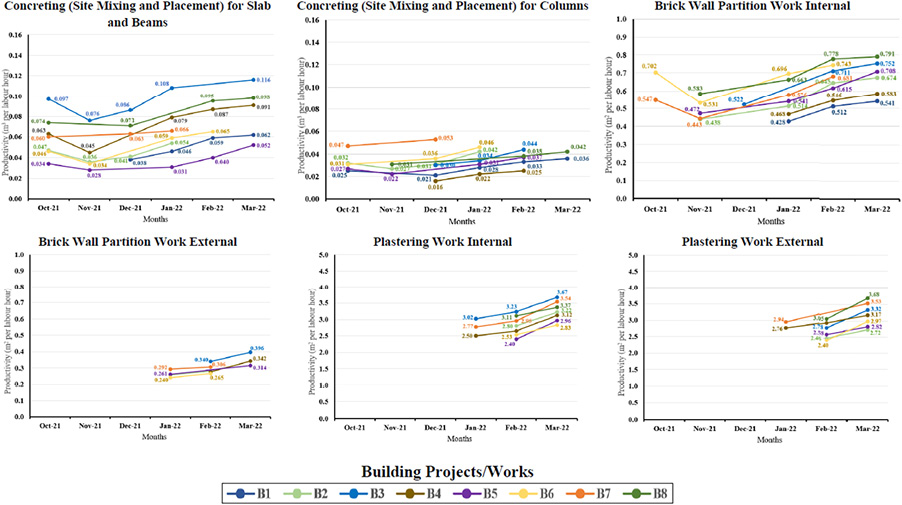
Figure 3. Variations in productivity index values and performance improvement index values
LABOUR REWARDING AND REPORTING
The meetings were held among the career guidance representatives (CGRs) of each selected project for the above-reported improvements in labour performance and productivity levels project-wise. The detailed records of the labour training delivery, labour skill assessment sheets, labour performance score profiles and productivity measurements were checked by the CGRs and revealed their satisfaction with the improved labour performance and productivity levels. In particular, the CMTs stated that they have experienced significant changes in their construction practices during the completion stage of labour training components such as improvement in the labour morale and work commitment, higher quantity and quality of work outputs, reduction in reworks and material wastage, effective working patterns among crews and well-improved labour resources to handle the modern technologies.
Overall, the vast majority of the CMTs agreed to provide possible rewarding facilities for their labourers such as salary increments, promotion and career upgrading opportunities. A number of NVQ assessors also participated in these meetings to discuss the procedure for the process of RPL implementation. Based on the procedures mentioned in NVQ Circular 02/2021, the steps were taken to conduct the RPL assessments individually and group-wise in most of the projects with the support of the CMTs to award the NVQ certifications to the labourers for their performance levels. Some organisations stated that this will be processed in the near future stages since they had some financial difficulties in funding the RPL assessment fee at that stage. Furthermore, the interviews with the trained labourers have revealed their high-level satisfaction with the impacts of the application of training components on their needs, lifestyles, job standards, financial status and career development opportunities.
DISCUSSIONS WITH PAST STUDIES
The results ensure that the current study has satisfactorily addressed the need for systematic procedures in work-based labour training facilities, evaluation of labour skills, performance assessments and productivity measurements, highlighted by past studies (Silva, Warnakulasuriya and Arachchige, 2018; Montaser, et al., 2018; Onyekachi, 2018; Dinh and Nguyen, 2019; Mistri, Patel and Pitroda, 2019; Shahab and Audrius, 2019). As recommended by Dickinson, et al. (2018) and Jeelani, et al. (2018) to use digital technologies in work-based training activities, the developed practices of the current study can be tested or upgraded with the digital technologies for further reinforcement of labour training delivery methods in the near-future stages. The current study outcomes may contribute to filling the gaps highlighted by recent studies between the industry’s requirements and the curricula of vocational training programmes (Fernando, Fernando and Gunarathna, 2016; TVEC, 2017; Onyekachi, 2018; Manoharan, et al., 2020). The study outcomes are also expected to make an impact in upgrading industry practices to address the challenges highlighted by recent studies (TVEC, 2017; Silva, Warnakulasuriya and Arachchige, 2018; Manoharan, et al., 2021c) on the growth of foreign labour in the Sri Lankan construction sector. Considering these aspects, the study findings will go a long way for the construction sector of many countries in making significant changes in training development practices that will benefit the reinforcement of construction planning and operational management processes.
Conclusion
The overall study findings display the variations in the productivity levels of labour work due to the application of work-based training practices. This has led the study to present a systematic generalised mechanism for reporting the training outcomes to the organisation level and then taking the steps to reward labourers. The study outcomes reinforce the chain relationships among the training elements, labour skills, labour performance and productivity levels leading to construction firms achieving organisational goals and sustaining the ‘new normal’ situations. The findings underline the significance of effective work-based training and skill assessment practices for making organisations experience well-improved performance and work qualities of labour with higher productivity levels of work operations. This will build up good bonds between the workers and the employers by filling the unnecessary gaps between management policies and labour operations. As a result, labourers may receive salary increments, promotion opportunities and career development benefits, leading to an uplift in their motivation levels, the fulfilment levels of needs and lifestyles. This may further result in a dramatic increase in the skilled workforce in the industry, as well as the labourers transferring from their casual appointments to permanent appointments in construction firms. Accordingly, this study unlocks the potential hurdles to expanding the local labour supply while controlling the excessive inclination of local firms towards foreign labour. The study findings importantly show a new template that pushes construction firms to revise their productivity benchmark levels for the different types of construction works.
In this study, despite the work-based training practices playing a key role in achieving higher levels of productivity of labour, some other factors might also influence the results (as described in the results and discussion section). The characteristics and impacts of those factors may differ between the organisations, industry sectors and countries. This study is expected to contribute to revising the organisational policies and construction management practices for taking possible steps to control the negative influences of those factors.
Though the construction supervisory workers are directly involved in the applications of the labour training components at worksites, this study also contributes to polishing the characteristics of the job roles of engineers and project managers for further reinforcing the generalisability of the work-based labour training components and applications. Accordingly, the training institutions may introduce new continuing professional training programmes for engineers and project managers.
Though the contractors’ registration grades of Construction Industry Development Authority (CIDA), financial capabilities, resource availabilities, project scopes and past experience varied in a wide range among the construction firms where the labour training components were applied, the results show similar patterns in the variations in the performance and productivity levels of labour with small marginal differences among all the selected projects. This ensures the generalisability of the developed labour training components for the construction industry. The overall study outcomes provide a bridge that combines various industry practices leading to driving improvement of the overall quality of the workforce capacity involving professional, technical and vocational competence in the industry. Although the scope of the study was limited to the Sri Lankan context, the study findings can make a significant contribution to upgrading the construction and operational management practices associated with vocational training development in many countries. The study delivers some generalised mechanisms and procedures that can be used or tested in similar ways for improving the productivity and quality of workforce operations not only in the construction sector but also in other developing sectors in many countries. Accordingly, the study recommends future studies focus on developing new training models as well as assessing the training outcomes, considering the characteristics of different trades or industry sectors in different contexts. The study also recommends future studies focus on testing necessary digital technologies in the application of the developed labour training mechanisms and practices for further reinforcement of training delivery methods to the next normal. The study opens a new window to developing new mobile application tools for performing labour training components within the proposed framework. This may provide further better ways to apply the proposed mechanisms and practices in a large number of projects nationally and internationally, and also further strengthen the generalisation of the proposed labour training components. Accordingly, the impacts of the study outcomes significantly contribute to reinforcing the industry’s focus on reskilling and upskilling to successfully face the challenges and opportunities related to productivity and technological advancement.
References
Akyazi, T., Alvarez, I., Alberdi, E., Oyarbide-Zubillaga, A., Goti, A. and Bayon, F., 2020. Skills needs of the civil engineering sector in the European Union countries: current situation and future trends. Applied Sciences, [e-journal] 10(20), pp.1–24. https://doi.org/10.3390/app10207226
Detsimas, N., Coffey, V., Sadiqi, Z. and Li, M., 2016. Workplace training and generic and technical skill development in the Australian construction industry. Journal of Management Development, [e-journal] 35(4), pp.486–504. https://doi.org/10.1108/JMD-05-2015-0073
Dinh, T.H. and Nguyen, V.T., 2019. Analysis of affected factors on construction productivity in Vietnam. International Journal of Civil Engineering and Technology, 10(2), pp.854–64.
Fernando, P.G.D., Fernando, N.G. and Gunarathna, M.A.C.L., 2016. Skills developments of labourers to achieve the successful project delivery in the Sri Lankan construction industry. Civil and Environmental Research, 8(5), pp.86–99.
Haake, S.J., Foster, L.I. and James, D.M., 2014. An improvement index to quantify the evolution of performance in running. Journal of Sports Sciences, [e-journal] 32(7), pp.610–22. https://doi.org/10.1080/02640414.2013.841974
Hickson, B.G. and Ellis, L., 2013. Factors affecting construction labour productivity in Trinidad and Tobago. The Journal of the Association of Professional Engineers of Trinidad and Tobago, 42(1), pp.4–11.
International Labour Organisation, 2015. Construction: a hazardous work. Available at: http://www.ilo.org/safework/areasofwork/hazardous-work/WCMS_356576/lang--en/index.htm [Accessed 12 March 2022]
Jeelani, I., Albert, A., Azevedo, R. and Jaselskis, E.J., 2017. Development and testing of a personalized hazard-recognition training intervention. Journal of Construction Engineering and Management, [e-journal] 143(5), pp.04016120.1–11. https://doi.org/10.1061/(ASCE)CO.1943-7862.0001256
Kesavan, M., Gobidan, N.N., Gobishanker, R. and Dissanayake, P.B.G. 2014. Proper project planning in avoiding construction project delays. Proceedings of the Special Sessions on Sustainable Design and Construction, 5th International Conference on Sustainable Built Environment 2014, Kandy, Sri Lanka, 12-15 December 2014. pp.77–84.
Manoharan, K., Dissanayake, P., Pathirana, C., Deegahawature, D. and Silva, R., 2020. Assessment of critical factors influencing the performance of labour in Sri Lankan construction industry. International Journal of Construction Management, [e-journal] pp.1–12. https://doi.org/10.1080/15623599.2020.1854042
Manoharan, K., Dissanayake, P., Pathirana, C., Deegahawature, D. and Silva, R., 2021a. A competency-based training guide model for labourers in construction. International Journal of Construction Management, [e-journal] pp.1–11. https://doi.org/10.1080/15623599.2021.1969622
Manoharan, K., Dissanayake, P., Pathirana, C., Deegahawature, D. and Silva, R., 2021b. A curriculum guide model to the next normal in developing construction supervisory training programmes. Built Environment Project and Asset Management, [e-journal] pp.1–31. https://doi.org/10.1108/BEPAM-02-2021-0038
Manoharan, K., Dissanayake, P., Pathirana, C., Deegahawature, D. and Silva, R., 2021c. Comparison of skills between Sri Lankan and foreign construction labour. Proceedings of the 9th World Construction Symposium, Colombo, Sri Lanka, 09-10 June 2021. pp.208–20. https://doi.org/10.31705/WCS.2021.18
Manoharan, K., Dissanayake, P., Pathirana, C., Deegahawature, D. and Silva, R., 2022. A labour performance score and grading system to the next normal practices in construction. Built Environment Project and Asset Management, [e-journal] pp.1–20. https://doi.org/10.1108/BEPAM-10-2021-0125
Mistri, A., Patel, C.G. and Pitroda, J.R., 2019. Analysis of causes, effects and impacts of skills shortage for sustainable construction through analytic hierarchy process. International Journal of Technical Innovation in Modern Engineering & Science, 5(5), pp.168–76.
Montaser, N.M., Mahdi, I., Mahdi, H.A. and Rashid, I.A., 2018. Factors affecting construction labour productivity for construction of pre-stressed concrete bridges. International Journal of Construction Engineering and Management, [e-journal] 7(6), pp.193–206. https://doi.org/10.5923/j.ijcem.20180706.01
Moon, C.A., Abd-Karim, S.B. and Danuri, M.S.M., 2018. The need for a competencies’ assessment framework for the Malaysian construction project managers. Journal of Surveying, Construction and Property, [e-journal] 9(1), pp.57–74. https://doi.org/10.22452/jscp.vol9no1.6
Murari, S.S. and Joshi, A.M., 2019. Factors affecting labour productivity in precast construction industry. Proceedings of Fourth National Conference on Road and Infrastructure, RASTA - Center for Road Technology, Bangalore, India, 4-5 April 2019. pp.163–69.
Nasir, H., Haas, C., Caldas, C. and Goodrum, P., 2015. An integrated productivity-practices implementation index for planning the execution of infrastructure projects. Journal of Infrastructure Systems, [e-journal] 22(2), pp.1-11. https://doi.org/10.1061/(ASCE)IS.1943-555X.0000275
Ojha, A., Seagers, J., Shayesteh, S., Habibnezhad, M. and Jebelli, H., 2020. Construction safety training methods and their evaluation approaches: a systematic literature review. Proceedings of the 8th International Conference on Construction Engineering and Project Management, Hong Kong, 7-8 December 2020. pp.188–97.
Onyekachi, V.N., 2018. Impact of low labour characteristics on construction sites productivity in EBONYI state. International Journal of Advanced Research in Science, Engineering and Technology, 5(10), pp.7072–87.
Sally, W.F., Adelaide, W.K., Sarah, J. and Marsh, B.V., 2000. Beyond products: new strategic imperatives for developing competencies in dynamic environments. Journal of Engineering and Technology Management, [e-journal] 17(3–4), pp.357–77. https://doi.org/10.1016/S0923-4748(00)00029-1
Sangole, A. and Ranit, A., 2015. Identifying factors affecting construction labour productivity in Amravati. International Journal of Science and Research, 4(5), pp.1585–88.
Serpell, A. and Ferrada, X., 2006. Construction in developing economies: new issues and challenges. Proceedings of CIB W107 Construction in Developing Countries International Symposium, pp.1–8.
Shahab, S. and Audrius, B., 2018. Application of fuzzy fault tree analysis to identify factors influencing construction labor productivity: a high-rise building case study. Journal of Civil Engineering and Management, [e-journal] 25(1), pp.41–52. https://doi.org/10.3846/jcem.2019.7785
Silva, G.A.S.K., Warnakulasuriya, B.N.F. and Arachchige, B.J.H., 2018. A review of the skill shortage challenge in construction industry in Sri Lanka. International Journal of Economics, Business and Management Research, 2(1), pp.75–89.
TVEC (Tertiary and Vocational Education Commission of Sri Lanka), 2017. Construction Industry Sector Training Plan 2018 – 2020. Sri Lanka: TVEC.
Umar, T. and Egbu, C., 2017. Causes of construction accidents in Oman. Middle East Journal of Management, [e-journal] 5(1), pp.21–33. https://doi.org/10.1680/jmuen.16.00032
Umar, T., 2021. Key factors influencing the implementation of three-dimensional printing in construction. Proceedings of the Institution of Civil Engineers – Management, Procurement and Law, [online] 174(3), pp.104–17. https://doi.org/10.1680/jmapl.19.00029
Umar, T., Egbu, C., Honnurvali, M.S., Saidani, M. and Al-Mutairi, M., 2020. An assessment of health profile and body pain among construction workers. Proceedings of the Institution of Civil Engineers – Municipal Engineer, [online] 173(3), pp.125–35. https://doi.org/10.1680/jmuen.18.00019
Uwakweh, B.O. and Maloney, W.F., 1991. Conceptual model for manpower planning for the construction industry in developing countries. Construction Management and Economics, [e-journal] 9(5), pp.451–65. https://doi.org/10.1080/01446199100000034
Vaz-Serra, P. and Mitcheltree, H., 2020. Understanding the key Master of Construction Project Management graduate competencies required to meet industry needs in Australia. International Journal of Construction Education and Research, [e-journal] 17(3), pp.222–41. https://doi.org/10.1080/15578771.2020.1739177
Windapo, A.O., 2016. Skilled labour supply in the South African construction industry: the nexus between certification, quality of work output and shortages. SA Journal of Human Resource Management, [e-journal] 14(1), pp.1–8. https://doi.org/10.4102/sajhrm.v14i1.750