Construction Economics and Building
Vol. 25, No. 1
March 2025
RESEARCH ARTICLE
Technological Imperatives for Issues in the Certification of Quality, Progress, and Payments in Construction Projects: A Systematic Review
G. Thilini Weerasuriya1,*, Srinath Perera2, Rodrigo N. Calheiros3
1 Centre for Smart Modern Construction, School of Engineering, Design and Built Environment, Western Sydney University, T.Weerasuriya@westernsydney.edu.au
2 Centre for Smart Modern Construction, School of Engineering, Design and Built Environment, Western Sydney University , Srinath.Perera@westernsydney.edu.au
3 School of Computer, Data and Mathematical Sciences, Western Sydney University, R.Calheiros@westernsydney.edu.au
Corresponding author: G. Thilini Weerasuriya, School of Engineering, Design and Built Environment, Western Sydney University, t.weerasuriya@westernsydney.edu.au
DOI: https://doi.org/10.5130/AJCEB.v25i1.8680
Article History: Received 20/06/2023; Revised 06/06/2024; Accepted 12/08/2024; Published 31/03/2025
Citation: Weerasuriya, G. T., Perera, S., Calheiros, R. N. 2025. Technological Imperatives for Issues in the Certification of Quality, Progress, and Payments in Construction Projects: A Systematic Review. Construction Economics and Building, 25:1, 25–48. https://doi.org/10.5130/AJCEB.v25i1.8680
Abstract
Construction projects require certification of quality, progress of work, and related payments to ensure successful completion. However, several issues related to quality, progress, and payment certifications exist in the construction industry. Therefore, a two-stage systematic review of the literature was conducted with the objective of understanding issues and appropriate solutions related to quality, progress, and payment certifications in construction projects. The literature review, following the Preferred Reporting Items for Systematic Reviews and Meta-Analyses (PRISMA) guidelines, retrieved journal articles in Scopus and Web of Science published between 2008 and 2023. In stage 1, 1,450 records were retrieved through search queries on prevalent issues, and 50 articles were selected after applying inclusion criteria and screening. Stage 2 of the review sought technological imperatives that mapped to the pinpointed issues. A total of 1,262 search results were screened using the same criteria as the first stage, producing 45 articles. The studies related to quality and progress certification highlighted issues such as defects, failures and rework; delayed project completion; and inaccurate documentation and reporting. Payment certification-related articles discussed issues like payment delays, non-payments, payment disputes, and insolvency. Building information modelling, artificial intelligence, and blockchain technology and smart contracts were highlighted as the major technological imperatives for solving these issues. These technologies support rigorous inspections, ensure compliance of building materials and products, enable contract fulfilment, and guarantee payments, thereby effectively addressing the issues. The study strongly advocates for blockchain and smart contracts as a comprehensive technological solution to overcome certification-related challenges in construction projects.
Keywords
Blockchain; Construction; Payments; Quality; Systematic Review
Introduction
Construction projects are complex and dynamic endeavours that demand the effective coordination of numerous stakeholders. The success of these projects depends on the accurate assurance and certification of the quality and progress of work as well as the certification of related payments. This process is essential for ensuring that the final product aligns with specified requirements and that all parties involved are fairly compensated for their contributions. Despite the critical nature of these processes, the industry faces challenges related to the certification of quality, leading to significant compliance failures (Maund, Sher and Naughton, 2014; Shergold and Weir, 2018; Wu, Lu and Xu, 2022) and a lack of accountability for issues in certification and delays in approval of work (Maritz and Gerber, 2017). Additionally, the construction industry’s cash flow challenges, highlighted by high rates of payment delinquency and bankruptcy (Griffiths, Lord and Coggins, 2017; Wang, et al., 2023b) and payment disputes along the construction supply chain (Bolton, et al., 2022; Francis, Ramachandra and Perera, 2022), further complicate project execution. Quality assurance directly influences progress tracking and, consequently, the certification of payments (Ashworth and Perera, 2018). Hence, the interconnectedness of quality, progress, and payment issues in construction projects requires a comprehensive approach to find effective solutions.
The choice of a systematic literature review as the methodology for this study is driven by the need for a structured examination of existing research on these issues. Therefore, the objective of this paper is to critically examine the technological imperatives for addressing the pervasive issues related to the certification of quality, progress, and payments in construction projects. By identifying the core problems and the generic solution strategies reported in the literature, this review aims to pinpoint the technological imperatives essential for enhancing certification processes and ensuring the success of construction projects.
Research methodology
The research question for the systematic literature review was this: “What is the current state of research on issues related to certification of quality, progress, and payments in construction projects, and the related solution strategies and technological imperatives for solving these issues?” A comprehensive search was performed in two stages on the Scopus and Web of Science databases to identify relevant literature using the PRISMA guidelines (Page, et al., 2021) to answer this research question. A two-stage review was adopted to address the complex nature of the topic under consideration, enabling a more structured and focused analysis.
The first stage of the systematic literature review aimed to identify the issues related to certification and the generic solution strategies. The steps are illustrated in a flow diagram in Figure 1 and described subsequently.
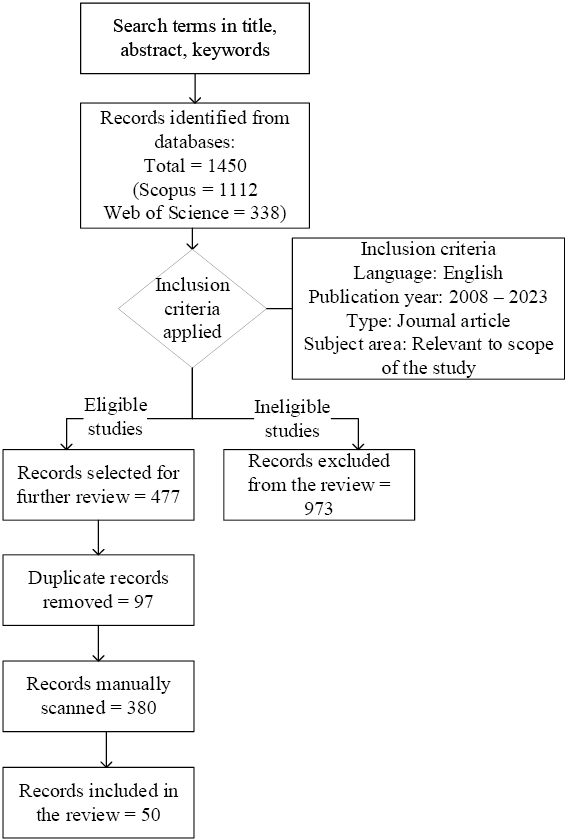
Figure 1. Flow diagram for systematic literature review on issues related to quality, progress, and payment certifications.
The following advanced search query was used in Scopus: TITLE-ABS-KEY (“construction” AND (“quality” OR “defect*” OR “payment” OR “progress” OR “work” OR “inspection”) AND (“certification” OR “certificate” OR “certify*”) AND (“issues” OR “challenges” OR “problems” OR “solutions” OR “strategies” OR “technologies”)). A similar query was used in Web of Science with the same keywords and logical operators in the Title Search field.
A total of 1,450 records were returned from the search queries, with 1,112 from Scopus and 338 from Web of Science. These studies were screened for inclusion based on the predefined inclusion and exclusion criteria. The inclusion criteria were journal articles that pertain to issues of the certification of quality, progress, and payments in construction projects and relevant solutions published between 2008 and 2023 in English. Exclusion criteria were non-English language publications, conference papers, book chapters and grey literature not related to the certification of quality, progress, and payments in construction projects. The 477 records remaining after screening were checked for duplicates, and 97 duplicate papers were removed, producing 380 eligible articles. Subsequently, titles and abstracts were manually evaluated to screen articles for in-depth analysis. A total of 50 articles were included in the review, with 35 articles related to quality and/or progress certification and 15 on payment certification. The current solution strategies were also extracted according to the two major categories of issues.
The second stage of the systematic review aimed to discover technological imperatives for the identified issues (Figure 2). The Scopus and Web of Science databases were searched using keywords identified through the previous analysis.
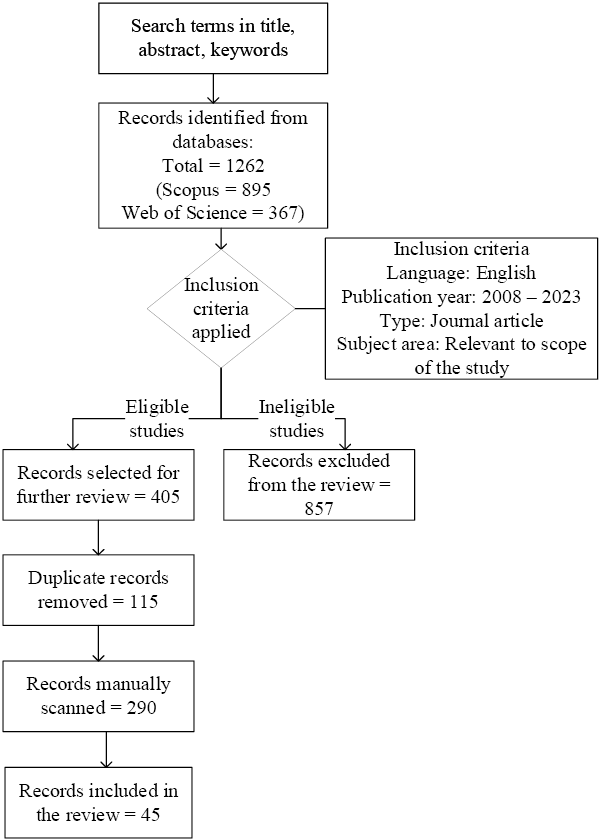
Figure 2. Flow diagram for systematic literature review on technological imperatives related to quality, progress, and payment certifications.
The advanced search query on Scopus was as follows: (TITLE-ABS-KEY(“defect*” OR “failure*” OR “rework” OR “project delay*” OR “inaccurate documentation” OR “inadequate documentation” OR “conflict of interest” OR “accountability” OR “payment delay*” OR “underpayment” OR “nonpayment” OR “payment dispute*” OR “conflict*” OR “poor communication” OR “insolvency” OR “retention” OR “compliance” OR “inspection” OR “quality management” OR “training” OR “certification” OR “contract*” OR “construction guarantee” OR “payment guarantee” OR “project bank account” OR “legislative measure” OR “legislation” OR “regulation” OR “regulatory framework” OR “defect prevention”) AND TITLE-ABS-KEY(“construction industry” OR “construction project*” OR “built environment”)) AND TITLE-ABS-KEY(“technolog* solution*” OR “innovative technolog*” OR “digital technolog*” OR “smart technolog*” OR “information technolog*” OR “industry 4.0” OR “digitalisation”). The search on Web of Science used the same keywords and logical operators on the Title Search field.
The search queries produced 1,262 results, with 895 from Scopus and 367 from Web of Science. The inclusion and exclusion criteria used in the previous search were also applied to these results. After the initial screening, 405 records remained, and these were checked for duplicates, with 115 duplicate articles removed. The titles and abstracts of the 290 eligible articles were manually screened to identify 45 articles for review.
Issues related to quality, progress, and payment certification
Issues related to quality and progress certification
This section examines the issues related to quality and progress certification within the 35 selected articles from stage 1 of the systematic review. These issues are depicted in Table 1 and discussed in detail in the subsequent subsections.
Defects, failures, and rework
A “defect” in construction refers to any deviation caused by a technical issue that leads to the misuse of resources or additional costs during the construction process (Jingmond and Ågren, 2015). Failure usually results from a combination of several interrelated reasons, such as technical issues and unforeseen shortcomings in the performance of materials. Human judgement errors, ignorance or greed can cause deficiencies in procedures leading to failures (Buys and Le Roux, 2013).
The current methods used in the construction industry to detect defects on a construction site are mainly manual and rely on construction consultants to make assessments based on two-dimensional plans and paper-based drawings (May, et al., 2022). Major defects are caused by poor workmanship, low-quality materials and components, and inadequate quality assurance checks of the work done (Abdul-Rahman, et al., 2014), as well as time limitations, financial limitations on operational expenses, and insufficient training of employees (Aljassmi, Han and Davis, 2016). A study that examined the association between construction inspections and critical defects listed factors such as not implementing quality control checklists, incorrect recording of inspections, failure to inspect construction progress and failure to notify contractors to mitigate defects (Lin and Fan, 2018). Other studies, listed in Table 1, also highlighted poor workmanship and the lack of accurate inspections and certifications as factors contributing to construction defects.
Quality control, time schedules, and collaboration between stakeholders have been identified as factors influencing the number of significant defects at project handover (Schultz, et al., 2015). Contractors are not usually insured for building defects during the statutory warranty period. They tend to avoid rectifying defects, as the expense cuts into their profits and increases their overhead costs, resulting in poor-quality building works (Paton-Cole and Aibinu, 2021).
Rework due to defects is a major cause of increase in project costs and delays (Kamal, et al., 2022). Reasons for rework include defective installation of items, noncompliance with specifications and standards, and insufficient oversight and inspection (Love and Smith, 2019). Previously undiscovered defects can also be exposed during the testing of rework (Rahmandad and Hu, 2010).
Delayed project completion
Most construction projects encounter delays in progress, resulting in the late completion of milestones or project delivery (Ogbeifun and Pretorius, 2022). Delays affect clients through cost overruns and delayed realisation of project objectives. Delays cause contractors to incur larger overhead costs due to longer working periods, increased costs of material due to inflation and higher labour costs. A critical factor for project delays is the financial constraint, including delays in honouring payment certificates (Jingmond and Ågren, 2015). Additionally, delays occur due to poor supervision and site management, inefficient and time-consuming site inspections, late delivery of material and material shortages, defects and rework, delays in certification and instructions from consultants, and poor communication and coordination, among others (see Table 1 for references).
Inaccurate and inadequate documentation and reporting
Determining responsible parties for project non-conformances is difficult due to inaccurate documentation or non-reporting of non-conformance incidents (Love, et al., 2018). Systems that enable the recording of project quality data are lacking, and project stakeholders perceive a low level of confidence in the integrity of documentation maintained by contractors (Sheng, et al., 2020). Defects in all project stages can be ascribed to factors like insufficient communication among project stakeholders, a lack of integrated project quality management (Yoon, Son and Kim, 2021), and deficiencies in documentation (Senaratne and Mayuran, 2015). Ensuring the quality of building materials and products without effective documentation to trace their provenance is challenging (Gharbia, et al., 2023). Records can also be falsified, causing severe consequences (Meacham, 2010).
The current process of defect management has issues including being time-consuming, data loss at points of data re-entry, difficulties in monitoring the progress of the construction phase and not having a central defect data repository (Lundkvist, Meiling and Sandberg, 2014). It is also challenging to track the history of defects because of the lack of extensive records on the defects (Lin, Chang and Su, 2016). The progress of project work should be regularly monitored and compared with the plans and corrective actions taken when discrepancies are observed. However, manual methods of data gathering on site do not continuously capture the progress of construction work or details of defects and can have errors in data entry, creating a lack of data for quality management and control (Chang, Du and Shen, 2012; Park, et al., 2013; Wang, et al., 2015; Martínez-Rojas, Marín and Vila, 2016; Mirshokraei, De Gaetani and Migliaccio, 2019).
Conflicts of interest and lack of accountability for defects
Most construction work needs to be certified. This involves assessing if proposals are compliant with relevant codes and standards, conducting inspections throughout the construction process and performing a final inspection prior to the building being occupied. Accredited building surveyors who serve as certifiers are accountable for fulfilling these responsibilities (Maund, Sher and Naughton, 2014).
Paton-Cole and Aibinu (2021) revealed a potential conflict of interest with the role of building surveyors. They are appointed by the builder to supervise their own work while also working independently on behalf of the client. If a building surveyor mistakenly issues a certificate approving defective work, the builder could refuse to take responsibility for the defects. This highlights the need to reconsider the assignment of responsibility for defects among builders, suppliers, and building surveyors to ensure that the public interest is served.
Issues related to payment certification
This section discusses the issues related to payment certification as presented in the 15 papers selected through the first stage of the systematic review. Table 2 summarises these issues, and they are detailed in the subsequent subsections.
| Issues related to payment certification | Total references discussing issues | References |
|---|---|---|
| Payment delays, underpayment and non-payment | 9 | El-adaway, et al. (2017), Griffiths, Lord and Coggins (2017), Azman, et al. (2014), Masrom, et al. (2021), Ye and Rahman (2010), Fugar and Agyakwah-Baah (2010), Ramachandra and Rotimi (2015b), Wang, et al. (2023b), Demachkieh and Abdul-Malak (2019) |
| Payment disputes | 2 | Ramachandra and Rotimi (2015a; 2015b) |
| Conflict and poor communication | 4 | Demachkieh and Abdul-Malak (2019), Ye and Rahman (2010), Ramachandra and Rotimi, (2015a), Sonmez, Ahmadisheykhsarmast and Güngör (2022) |
| Insolvency of construction contracting firms | 4 | El-Kholy and Akal (2021), Ye and Rahman (2010), Bolton, et al. (2022), Griffiths, Lord and Coggins (2017) |
Payment delays, underpayment, and non-payment
The payment problem is prevalent in the construction industry due to its hierarchical contractual framework (El-adaway, et al., 2017). Contractors are paid by their principals and are expected to deliver funds to subcontractors and suppliers in the supply chain. This structure of payment leads to payment issues for two primary reasons. First, the lower-tier contractors and suppliers are susceptible to bankruptcy or poor payment practices of the contractors above them in the chain. Second, the principal contractors have a dominant position in the contracting chain, and they can use this position to pressure subcontractors and suppliers into extending credit terms to get an advantage in cash flow and consequently obtain low-cost finance (Griffiths, Lord and Coggins, 2017).
A significant factor contributing to underpayment, delayed payment, and non-payment was identified as delayed assessment and certification of interim and final payments (Ye and Rahman, 2010; Azman, et al., 2014; Masrom, et al., 2021). The certification process can be time-consuming and complex, which can lead to delays and added costs. Delay in honouring payment certificates is a major contributor to causing delays in construction projects (El-adaway, et al., 2017). Delays in payment can lead to interruptions in the delivery of materials, which can, in turn, affect the productivity of labour in the construction sector (Fugar and Agyakwah-Baah, 2010; Ramachandra and Rotimi, 2015b).
Contractors’ delay in submitting claims or submitting incomplete payment claims contributes to delays in payment (Ye and Rahman, 2010). Late payments can also result from the need to adjust the payment before it can be processed. These administrative procedures, which can be complex and time-consuming, cause considerable delays in payment processing (Wang, et al., 2023b).
The construction industry faces cash flow issues due to inadequate management capacity and ineffective utilisation of funds by clients, scarcity of capital to finance projects and poor implementation of processes. Furthermore, poor cash flow is caused by deliberate delayed payments to gain financial advantages and delays in releasing retention money to contractors. Construction industry participants generally deem that delaying payments for a few days can be accepted (Ye and Rahman, 2010).
Contractors’ interim payments could be withheld due to quality-related issues (Demachkieh and Abdul-Malak, 2019). Lack of oversight can lead to errors and non-compliance with regulations, subsequently leading to penalties. Failure of the contractor to deliver work according to quality requirements will lead to temporary withholding of part of the interim payment (Ye and Rahman, 2010). The work may be taken over with lower quality if the contractor fails to fully rectify the defects, and a payment set-off would be made (Demachkieh and Abdul-Malak, 2019).
Payment disputes
Causes of payment disputes involve factors such as non-payment of certified sums, failure to pay for variations claims, late release of retention money, and valuation of final account (Ramachandra and Rotimi, 2015a). The certification process may lack transparency, making it difficult for parties to understand the status of payments and disputes. Limited ability to enforce contracts can also lead to disputes and delays in the certification process. Payment denials are often due to concerns over the legitimacy of progress claims, work that is incomplete or defective, or the failure to issue payment schedules (Ramachandra and Rotimi, 2015b).
Conflict and poor communication
Certification issues in construction projects can be caused by poor communication and conflicts between the parties involved (Demachkieh and Abdul-Malak, 2019). The client may not trust the consultants responsible for certifying the contractor’s progress claim and variation orders, while the contractor may struggle to understand the client’s requirements for variation of work. Difficulty in reaching a settlement and disagreement over the valuation of completed work can contribute to certification problems. Varying assessments are caused by different measurement methods for quantity take-off, delays in inspections by consultants, and overstatement of bills of quantities for items (Ye and Rahman, 2010). A lack of standardisation in the process of certification of payments can also lead to confusion and inconsistencies in its implementation (Ramachandra and Rotimi, 2015a; Sonmez, Ahmadisheykhsarmast and Güngör, 2022).
Insolvency of construction contracting firms
Insolvency of construction contracting firms is largely due to financial causes. The primary reasons are delayed progress payments from clients and the non-payment of interest on delayed certificates (Ye and Rahman, 2010; El-Kholy and Akal, 2021). Holding retention money for longer than necessary also significantly contributes to bankruptcies in the construction industry (Bolton, et al., 2022). Payment problems have an impact on both construction projects’ success and the long-term survival of the industry (Griffiths, Lord and Coggins, 2017).
Solution strategies for issues related to quality, progress, and payment certification
This section discusses general solution strategies for certification-related issues presented in the literature.
Solution strategies for issues related to quality and progress certification
The pertinent solution strategies for quality and progress certification-related issues are listed in Table 3 and subsequently discussed.
| Solution strategies for issues related to quality and progress certification | References |
|---|---|
| Strict supervision and regular inspections | Kamal, et al. (2022), Kwon, Park and Lim (2014), Love and Smith (2019), Hasan, et al. (2016) |
| Ensuring compliance of building materials and products | Gharbia, et al. (2023) |
| Regulatory frameworks for defect prevention and control and accountability | Paton-Cole and Aibinu (2021) |
| Quality management frameworks | Lundkvist, Meiling and Sandberg (2014), Chang, Du and Shen (2012), Egwunatum, et al. (2022) |
| Training and certification of relevant stakeholders | Meacham (2010) |
Strict supervision and regular inspections
Appointing experienced site managers to oversee the quality of work and provide strict supervision minimises the amount of defective work produced, thereby reducing the need for rework (Kamal, et al., 2022). Construction quality inspections and certifications should be regularly carried out by consultants such as engineers, architects, and building surveyors (Kwon, Park and Lim, 2014). Before the certificate of practical completion is issued, defects should be accurately detected by consultants and rectified by contractors. Implementing regular quality controls and inspections during design and construction can reduce or eliminate post-handover defects (Love and Smith, 2019). Strategies to minimise defects also include stakeholders taking responsibility for failures and compliance with specifications (Hasan, et al., 2016).
Ensuring compliance of building materials and products
Building code compliance of materials and products can be ensured through the following methods: factory self-certification, independent third-party certification, product identification and traceability, industry-led quality assurance systems, product authentication and insurance schemes (Gharbia, et al., 2023).
Regulatory frameworks for defect prevention, control, and accountability
Various countries have introduced regulatory frameworks to prevent and control defects. For example, in Australia, the construction process is subject to pre- and post-construction building regulations, which allow building surveyors to oversee the design and construction process independently. Residential construction inspection and certification should comply with the Building Code of Australia, Australian standards, guidelines issued by local councils and issued building permits. This is necessary for ensuring structural integrity, compliance with energy efficiency requirements, and health, safety and amenity. The quality assurance checks by the building surveyor must be conducted at specific project milestones (Paton-Cole and Aibinu, 2021).
Quality management frameworks
A proactive defect management framework was proposed by Lundkvist, Meiling and Sandberg (2014), which used the plan-do-check-act theory and continuous improvement. This framework was introduced to mitigate insufficiencies in the current process of defect management. A checklist for engineers was developed by Chang, Du and Shen (2012) based on deficiencies in site visits, types of defects that occur frequently and factors that affect construction productivity. The checklist can be used as a systematic tool to enhance the quality of construction and improve project performance.
Total quality management (TQM) principles for improving construction quality supervision and monitoring and control of quality were studied by Egwunatum, et al. (2022). Principles such as guaranteeing material procurement with the specified standards of quality, using a construction quality improvement process in the organisation and responsibility of site management are required during the construction stage to ensure quality standards.
Training and certification of relevant stakeholders
The implementation of licensing is a crucial measure to increase the level of responsibility and accountability among practitioners. Various jurisdictions globally already have some form of licensing or certification to establish minimum standards in the industry. For a licensing scheme to be effective in demonstrating minimum competency requirements, there must be compulsory standards and continuous professional development. Additionally, a clear and effective disciplinary system must be in place to remove unethical practitioners (Meacham, 2010).
Solution strategies for issues related to payment certification
Table 4 lists the solution strategies for issues related to payment certification. These are described in the following subsections.
| Solutions for issues related to payment certification | References |
|---|---|
| Standard forms of contract | Masrom, et al. (2021), El-adaway, et al. (2017), Maritz (2011) |
| Construction and payment guarantees | Maritz (2011) |
| Legislative measures | Uher and Brand (2008), Bolton, et al. (2022), Ramachandra and Rotimi (2015b) |
| Project bank accounts | Bolton, et al. (2022), Griffiths, Lord and Coggins (2017) |
Standard forms of contract
Suitable implementation of standard forms of contract is proposed to mitigate payment default issues (Masrom, et al., 2021). Payment provisions in seven major standard forms of construction contracts were analysed by El-adaway, et al. (2017). They found that provisions for payments in these standard forms shared many similarities, such as requiring progress payments and specifying payment mechanisms. However, the amount and timing of payments, as well as the procedures for dispute resolution and payment certification, differed. Therefore, a better understanding of payment provisions in different standard forms of contracts could help to improve payment practices in the construction industry, reduce payment disputes, and enhance project outcomes. However, regular changes to these forms cause difficulty in interpretation and increase risk for the parties in the contract (Maritz, 2011).
Construction and payment guarantees
In some forms of contract, contractors should give a construction guarantee to clients. These on-call or on-demand guarantees state that the client can call in the guarantee by proving their rights with a certificate provided by the principal agent (Maritz, 2011). A payment guarantee is a contract between a third-party guarantor and a contractor, in which the guarantor promises to pay the contractor the value of the construction work done, up to the amount guaranteed or a percentage of the total price, if the client defaults on their payments. One issue that arises is that contractors want the payment guarantee to be in effect until they receive the final payment certificate, but banks require a specific expiration date. This can be difficult to determine at the start of the construction period (Maritz, 2011).
Legislative measures
Legislative measures have been introduced in many countries to ensure security of payment. For example, the Building and Construction Industry Security of Payment Act 1999 in New South Wales, Australia, provides a means for claimants to recover payments through an adjudication process (Uher and Brand, 2008). The UK’s Construction Act of 2009 aimed to prohibit contract clauses that make payments by the contractor contingent upon the contractor receiving payment first, which would safeguard subcontractors and other supply chain members from late payments or non-payment. Nonetheless, small- and medium-sized enterprises in the construction industry reported that clients and primary contractors do not adhere to the regulation and continue to use these clauses (Bolton, et al., 2022). Ramachandra and Rotimi (2015b) reported strategies such as issuing statutory demands, proceedings for bankruptcy, and liquidation to remedy payment problems.
Project bank accounts
Project bank accounts (PBAs) can address payment delays in the construction industry (Bolton, et al., 2022). A PBA is a dedicated bank account that is used to make payments to the main contractor and other participants in the supply chain. The main contractor submits a payment claim including a breakdown of payments to each supplier, which is approved by the client. The client pays the total progress payment amount into the PBA, and each supplier is paid when both the client and the main contractor agree. This system allows funds to flow more quickly through the supply chain, bypassing the traditional lengthy payment credit terms in subcontracts. However, some contractors may resist PBAs because they cannot strategically manage their cash flow, and PBAs do not prevent head contractors from disputing payment claims to reduce payments (Griffiths, Lord and Coggins, 2017).
Technological imperatives for certification of quality, progress, and payments
The second stage of the literature review identified several technological imperatives that have emerged to solve the previously discussed issues, with the most prevalent being building information modelling, artificial intelligence, and blockchain technology and smart contracts. These support and augment the general strategies available for issue resolution. Table 5 presents the identified literature on these technology solutions.
Building information modelling
Utilising building information modelling (BIM) for defect management has been proposed in research, as BIM enables effective collaboration among project participants and the incorporation of project data in various project-related activities (Lin, Chang and Su, 2016). Furthermore, studies have investigated the integration of BIM with augmented reality (AR) for project progress monitoring and defect detection. For example, a framework for BIM-AR integration for quality control proposed by Mirshokraei, De Gaetani and Migliaccio (2019) acquired inspection data, processed the results by extracting data from 4D BIM models and facilitated collaboration among stakeholders through a web-based checklist and an AR mobile application. Ma, et al. (2018) proposed the visualisation of defects on a BIM model to be collaboratively viewed by project stakeholders for effective quality inspections.
A prototype system by Wang, et al. (2015) integrating BIM and Light Detection and Ranging (LiDAR) had a LiDAR system connected to a quadrotor that flew around the construction site to generate a 3D point cloud model of as-built data in real-time using the data collected from LiDAR. It synchronised a BIM model with the as-built model to calculate the deviations and assess construction quality. A conceptual framework to adopt BIM to facilitate dispute management in the construction project life cycle was developed by Wang, et al. (2023a). Causes of disputes such as design errors and delays could be reduced by improving information management and collaboration through BIM in this framework.
BIM can also be integrated with blockchain technology to give a single source of truth of data in a project and provide a secure, transparent method for multiple stakeholders to use and share data (Celik, Petri and Rezgui, 2023; Hijazi, et al., 2023). A prototype that combines BIM, Internet of Things and blockchain was proposed by Sarkar, Dhaneshwar and Raval (2023) to automate project monitoring to effectively manage data and improve payment processes for project contractors and subcontractors.
Artificial intelligence
Complex tasks are performed by computers using artificial intelligence (AI) techniques. Issues related to construction progress and quality inspections can be solved to a certain extent using AI techniques for automation, computer vision and natural language processing.
AI-based solutions drive automation of activities in the construction process to overcome issues related to manual observation, for example, automated capturing of site images, videos and other data through drones and sensors, which are analysed by AI techniques like machine learning to identify defects and monitor progress (Pan and Zhang, 2021).
Computer vision is an area of AI that can extract relevant and valuable data from digital images and other forms of visual inputs. Attempts are being made to supplement and replace manual visual inspections using computer vision techniques. Currently, deep learning algorithms are predominantly used in computer vision to process, analyse, and understand captured data for detection of defects, structural components, and site conditions. For example, concrete cracks are detected from photographs using deep learning classifications (Baduge, et al., 2022). 3D point clouds are also used as computer vision image data to evaluate the progress of construction projects (Chen, et al., 2023). Project progress tracking can also use machine learning and image processing with deep learning models (Greeshma and Edayadiyil, 2022). Computer vision can ensure that construction materials or products meet quality standards, for instance, by checking the dimensions and shape of building components, such as windows or doors, to ensure that they are within acceptable tolerances (Braun, et al., 2020).
Natural language processing (NLP) is a branch of AI that uses computers to process language-related data to comprehend text like a human. NLP techniques can be applied to construction documents such as inspection reports to extract valuable insights and identify patterns to improve quality control processes. For example, documents such as building codes can be analysed through NLP techniques to check if BIM-based designs meet compliance requirements (Pan and Zhang, 2021). Inspection reports contain information about defects and non-conformities, and by using NLP techniques, the reports are analysed to identify the type, frequency and severity of defects. This enables the identification of root causes of defects and the prevention of similar issues from occurring in the future (Locatelli, et al., 2021).
Blockchain technology and smart contracts
A blockchain is a peer-to-peer decentralised digital ledger of data, which contains a cryptographically linked record of all transactions executed within the network (Perera, et al., 2020). Blockchain technology uses smart contracts, which are tamper-proof digital contracts that are automatically executed and enforce rules that are dependent on distributed consensus within a blockchain (Yang, et al., 2020). The architecture of blockchain provides its users with the following key advantages.
• Decentralisation: Allowing peer-to-peer sharing of data removes the need for a central authority to maintain the ledger. This removes the single failure point that would affect a centralised system and creates a more robust system (Perera, et al., 2020; Wu, et al., 2022).
• Security and trust: Having consensus mechanisms and cryptography promotes security and trust in the blockchain data. Data hashing provides assurance against unauthorised data modification. Transaction origins can be determined through digital signatures and keys (Perera, et al., 2020; Qian and Papadonikolaki, 2021).
• Auditability: Validation of transactions made on the blockchain is conducted by network nodes, and a timestamp for each transaction is recorded. The transaction and ledger data are available for all authorised users to view. This allows users to trace records through any network node (Perera, et al., 2020; Gao, et al., 2022).
• Immutability: The necessity of validating data on the peer-to-peer network and replicating the ledger to all nodes assures the immutability of the data. A block, once added to the blockchain, cannot be removed, thereby preserving all ledger transactions (Perera, et al., 2020).
The blockchain can store certifications on the quality of materials and products, and the quality and quantity of work progress so that relevant stakeholders know the sources of the information (Wang, et al., 2017; Lu, et al., 2022). Since the records are tamper-proof, it will assist in enforcing compliance of work, and all modifications to data such as BIM models and certifications can be stored immutably on the blockchain (Hijazi, et al., 2023). A framework to store extension of time requests was proposed by Elazhary and Hosny (2023) to support delay analysis in construction projects and trace the sources of delays, benefitting the resolution of disputes due to delays. Tracing the provenance of products in the construction supply chain is important for quality assurance and compliance purposes when defective products are identified (Teisserenc and Sepasgozar, 2021). If the full history of product transactions is tracked through the blockchain, it enables the identification of responsible parties and enhances the traceability and transparency of the supply chain (Wang, et al., 2017; Lu, et al., 2021).
Managing construction payments through blockchain is proposed by several researchers to provide immutability. For example, a framework by Das, Luo and Cheng (2020) uses smart contracts to automate interim payment conditions by sharing project-level information related to payments. Confidentiality of data is also enabled through the management of cryptographic keys. Blockchain, through implementing smart contracts, can solve issues related to security of payment (Nanayakkara, et al., 2021; Wu, Lu and Xu, 2022). The fund availability can be established through private blockchain networks to reduce concerns regarding non-payment (Ahmadisheykhsarmast and Sonmez, 2020). Storing retention money on a blockchain network has the potential to protect the funds and allow it to be accessed to pay subcontractors upon contractor insolvency. Project updates being added as ledger transactions would trigger automatic payments for predefined conditions. This would reduce the issues of late payments or non-payment (Chong and Diamantopoulos, 2020). Investigations on integrating BIM with smart contracts proposed improving the administration of progress payments by digitising building elements and using computerised protocols that run on a blockchain to automate payment terms (Sigalov, et al., 2021; Sonmez, Ahmadisheykhsarmast and Güngör, 2022). Tezel, et al. (2021) researched blockchain-based project bank accounts for payments in the construction supply chain, which would enable quicker payments and continuous, transparent tracking of transactions, thereby reducing disputes and costs. If disputes arise, a decentralised, blockchain-based dispute resolution system proposed by Saygili, Mert and Tokdemir (2022) aims to resolve construction disputes with greater transparency and cost savings.
Discussion
The technological imperatives of BIM, artificial intelligence, and blockchain technology and smart contracts solve the issues related to quality, progress, and payment certifications by supporting or directly implementing the general solution strategies. For example, strict supervision and regular inspections can be implemented using automation and computer vision artificial intelligence techniques. BIM and blockchain can support the inspection process by storing inspection documentation to trace the history of revisions. The compliance of building materials and products with standards can be identified using computer vision and natural language processing. The provenance of these materials and products can be stored on the blockchain to enable traceability. Smart contracts can implement regulatory frameworks for defect prevention, control, and accountability. Quality management frameworks are supported by BIM and blockchain. Relevant stakeholders’ training and certification details can be stored on the blockchain to ensure that they are qualified to engage in project-related activities. Blockchain and smart contracts can be implemented to reflect standard forms of contract. Natural language processing can identify the fulfilment of contract clauses. Construction and payment guarantees and project bank accounts can be implemented on the blockchain and fulfilled using smart contracts.
A keyword co-occurrence network was developed using the VOSViewer software tool, which identified keywords that recurred more than three times. A thesaurus file aggregated synonyms and consolidated the representation of keywords in the network. Figure 3 shows the network of 30 recurring keywords, with the keyword blockchain occurring the greatest number of times, followed by smart contracts, BIM, construction industry, and construction contract.
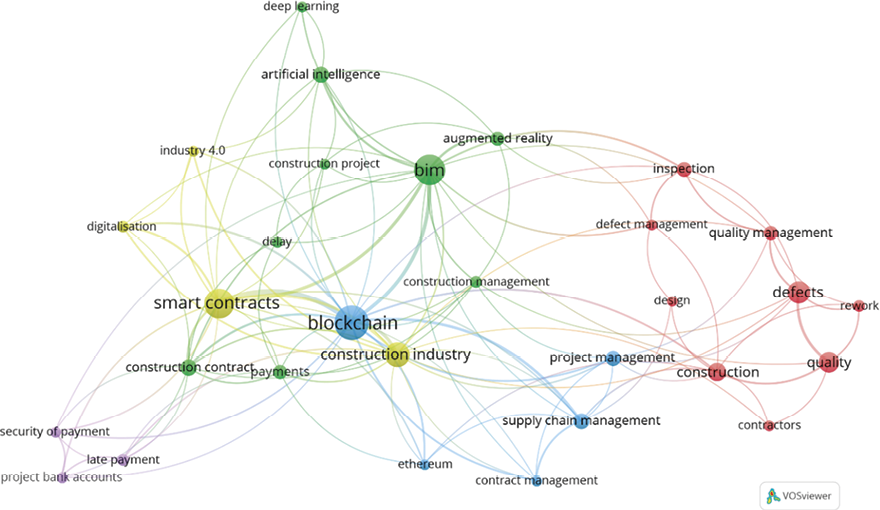
Figure 3. Keyword co-occurrence network.
Mitigation of issues related to quality, progress, and payments in construction projects requires a comprehensive technological solution. Table 6 summarises the technological imperatives for solving these issues. As seen in the table, blockchain technology and smart contracts can solve all the pinpointed issues due to the advantages presented.
Conclusions
This study evaluated the landscape of quality, progress, and payment certification in construction projects through a two-stage systematic review process, with the objective of critically examining the issues related to certifications and identifying technological imperatives for these highlighted issues. The first stage of the study contributed to revealing the most prominently reported issues related to quality and progress certification as defects, failures, and rework, followed by inaccurate and inadequate documentation and reporting. The prominent issues related to payment certification include payment delays, underpayment, and non-payments; conflict and poor communication; and insolvency of construction contracting firms.
General solution strategies for these issues were identified as strict supervision and regular inspections, implementing quality management frameworks, training and certification of relevant stakeholders, using standard forms of contract, providing construction and payment guarantees and implementing legislative measures. However, implementing these solutions with traditional methods is inadequate to solve the prevalent issues. Therefore, technology should be used to augment these solutions for more effective issue mitigation.
The second stage of the systematic review highlighted that BIM, artificial intelligence, and blockchain technology and smart contracts were the major technological imperatives for solving the issues. BIM enables the digital modelling of construction work and supports collaboration among project stakeholders. BIM can also be integrated with other technologies such as augmented reality, LiDAR, Internet of Things, and blockchain to solve issues related to project progress monitoring, defect detection, documentation and reporting, and payments. Artificial intelligence techniques such as automation, computer vision, and natural language processing are used to automate progress monitoring, identify defects and ensure compliance with standards. The review revealed that blockchain technology and smart contracts are being introduced to solve the highlighted issues related to quality, progress, and payment certifications. Construction quality certifications and details of work progress can be stored on the blockchain as a single source of truth about the status of the project. Identifying the provenance of products in the construction supply chain is important for quality assurance and compliance purposes. Smart contracts can automate payments based on predefined conditions. Payment guarantees and project bank accounts implemented on the blockchain can be used to make payments and protect construction stakeholders from late payments or non-payment. The inherent features of blockchain such as decentralisation, security, trust, auditability, and immutability make blockchain an ideal solution for the issues discussed herein.
The systematic review was limited to the Scopus and Web of Science databases, which may not capture relevant studies in other journals that are not within the selected indices as well as non-journal publications. Further, technologies such as the Internet of Things and radio frequency identification (RFID) tags were also mentioned in some literature but were not discussed as separate technological imperatives herein because they were used in conjunction with BIM, AI, and blockchain solutions. Future research can examine applications of the identified technologies in-depth to solve the issues related to quality, progress, and payment certification.
References
Abdul-Rahman, H., Wang, C., Wood, L.C. and Khoo, Y.M., 2014. Defects in affordable housing projects in Klang Valley, Malaysia. Journal of Performance of Constructed Facilities, 28(2), pp.272-85. https://doi.org/10.1061/(ASCE)CF.1943-5509.0000413
Ahmadisheykhsarmast, S. and Sonmez, R., 2020. A smart contract system for security of payment of construction contracts. Automation in Construction, 120(December 2020), p.103401. https://doi.org/10.1016/j.autcon.2020.103401
Aljassmi, H., Han, S. and Davis, S., 2016. Analysis of the Complex Mechanisms of Defect Generation in Construction Projects. Journal of Construction Engineering and Management, 142(2), p.04015063. https://doi.org/10.1061/(ASCE)CO.1943-7862.0001042
Asadi, K., Ramshankar, H., Noghabaei, M. and Han, K., 2019. Real-time image localization and registration with BIM using perspective alignment for indoor monitoring of construction. Journal of Computing in Civil Engineering, 33(5). https://doi.org/10.1061/(ASCE)CP.1943-5487.0000847
Ashworth, A. and Perera, S., 2018. Contractual Procedures in the Construction Industry. 7th ed. Milton, United Kingdom: Routledge. https://doi.org/10.1201/9781315529059
Azman, M.N.A., Dzulkalnine, N., Abd Hamid, Z. and Beng, K.W., 2014. Payment Issue in Malaysian Construction Industry: Contractors’ Perspective. Jurnal Teknologi, 70(1). https://doi.org/10.11113/jt.v70.2804
Baduge, S.K., Thilakarathna, S., Perera, J.S., Arashpour, M., Sharafi, P., Teodosio, B., Shringi, A. and Mendis, P., 2022. Artificial intelligence and smart vision for building and construction 4.0: Machine and deep learning methods and applications. Automation in Construction, 141(September 2022), p.104440. https://doi.org/10.1016/j.autcon.2022.104440
Bolton, S., Wedawatta, G., Wanigarathna, N. and Malalgoda, C., 2022. Late Payment to Subcontractors in the Construction Industry. Journal of Legal Affairs and Dispute Resolution in Engineering and Construction, 14(4), p.04522018. https://doi.org/10.1061/(ASCE)LA.1943-4170.0000552
Braun, A., Tuttas, S., Borrmann, A. and Stilla, U., 2020. Improving progress monitoring by fusing point clouds, semantic data and computer vision. Automation in Construction, 116, p.103210. https://doi.org/10.1016/j.autcon.2020.103210
Buys, F. and Le Roux, M., 2013. Causes of defects in the South African housing construction industry: perceptions of built-environment stakeholders: review articles. Acta Structilia: Journal for the Physical and Development Sciences, 20(2), pp.78-99. https://doi.org/10.38140/as.v20i2.141
Carretero-Ayuso, M.J., Moreno-Cansado, A. and García-Sanz-Calcedo, J., 2017. An analysis of technical facilities failures in modern Spanish houses. Building Services Engineering Research and Technology, 38(4), pp.490-98. https://doi.org/10.1177/0143624417701802
Celik, Y., Petri, I. and Rezgui, Y., 2023. Integrating BIM and Blockchain across construction lifecycle and supply chains. Computers in Industry, 148, p.103886. https://doi.org/10.1016/j.compind.2023.103886
Chang, A.S., Du, S.-J. and Shen, F.-Y., 2012. Engineer self-evaluation checklist for effective site visits. Journal of Construction Engineering and Management, 138(10), pp.1220-29. https://doi.org/10.1061/(ASCE)CO.1943-7862.0000530
Chen, G., Liu, M., Zhang, Y., Wang, Z., Hsiang Simon, M. and He, C., 2023. Using Images to Detect, Plan, Analyze, and Coordinate a Smart Contract in Construction. Journal of Management in Engineering, 39(2), p.04023002. https://doi.org/10.1061/JMENEA.MEENG-5121
Chong, H.Y. and Diamantopoulos, A., 2020. Integrating advanced technologies to uphold security of payment: Data flow diagram. Automation in Construction, 114(June 2020), p. 103158. https://doi.org/10.1016/j.autcon.2020.103158
Das, M., Luo, H. and Cheng, J.C., 2020. Securing interim payments in construction projects through a blockchain-based framework. Automation in Construction, 118, p.103284. https://doi.org/10.1016/j.autcon.2020.103284
Demachkieh, F.S. and Abdul-Malak, M.-A.U., 2019. Administration of Construction Contract Interim Payments Based on Earned-Value Reduction Techniques. Journal of Legal Affairs and Dispute Resolution in Engineering and Construction, 11(4), p.04519023. https://doi.org/10.1061/(ASCE)LA.1943-4170.0000309
Egwunatum, S.I., Anumudu, A.C., Eze, E.C. and Awodele, I.A., 2022. Total quality management (TQM) implementation in the Nigerian construction industry. Engineering, Construction and Architectural Management, 29(1), pp.354-82. https://doi.org/10.1108/ECAM-08-2020-0639
El-adaway, I., Fawzy, S., Burrell, H. and Akroush, N., 2017. Studying Payment Provisions under National and International Standard Forms of Contracts. Journal of Legal Affairs and Dispute Resolution in Engineering and Construction, 9(2), p.04516011. https://doi.org/10.1061/(ASCE)LA.1943-4170.0000200
El-Kholy, A. and Akal, A., 2021. Determining the stationary financial cause of contracting firms failure. International Journal of Construction Management, 21(8), pp.818-33. https://doi.org/10.1080/15623599.2019.1584836
Elazhary, M. and Hosny, O., 2023. Framework for the Application of Blockchain Technology to Delay Analysis. Journal of Legal Affairs and Dispute Resolution in Engineering and Construction, 15(2), p.04522063. https://doi.org/10.1061/JLADAH.LADR-863
Finger, F.B., González, M.S. and Kern, A.P., 2015. Control of finished work - Final quality inspection in a social housing project. Revista Ingenieria de Construccion, 30(2), pp.147-53. https://doi.org/10.4067/S0718-50732015000200006
Francis, M., Ramachandra, T. and Perera, S., 2022. Disputes in Construction Projects: A Perspective of Project Characteristics. Journal of Legal Affairs and Dispute Resolution in Engineering and Construction, 14(2), p.04522007. https://doi.org/10.1061/(ASCE)LA.1943-4170.0000535
Fugar, F.D. and Agyakwah-Baah, A.B., 2010. Delays in building construction projects in Ghana. Australasian Journal of Construction Economics and Building, 10(1/2), pp.128-41. https://doi.org/10.5130/ajceb.v10i1/2.1592
Gao, Y., Casasayas, O., Wang, J. and Xu, X., 2022. Factors affecting the blockchain application in construction management in China: an ANP-SWOT hybrid approach. Architectural Engineering and Design Management, 19(1), pp.1-16. https://doi.org/10.1080/17452007.2022.2155603
Gharbia, M., Chang-Richards, A., Xu, X., Höök, M., Stehn, L., Jähne, R., Hall, D., Park, K., Hong, J. and Feng, Y., 2023. Building Code Compliance for Off-Site Construction. Journal of Legal Affairs and Dispute Resolution in Engineering and Construction, 15(2). https://doi.org/10.1061/JLADAH.LADR-856
Greeshma, A.S. and Edayadiyil, J.B., 2022. Automated progress monitoring of construction projects using Machine learning and image processing approach. Materials Today: Proceedings, 65, pp.554-63. https://doi.org/10.1016/j.matpr.2022.03.137
Griffiths, R., Lord, W. and Coggins, J., 2017. Project bank accounts: the second wave of security of payment? Journal of Financial Management of Property and Construction, 22(3), pp.322-38. https://doi.org/10.1108/JFMPC-04-2017-0011
Hamledari, H. and Fischer, M., 2021. Construction payment automation using blockchain-enabled smart contracts and robotic reality capture technologies. Automation in Construction, 132, p.103926. https://doi.org/10.1016/j.autcon.2021.103926
Hasan, M.I.M., Abd Razak, N.N., Endut, I.R., Samah, S.A.A., Ridzuan, A.R.M. and Saaidin, S., 2016. Minimizing defects in building construction project. Jurnal Teknologi, 78(5-2). https://doi.org/10.11113/jt.v78.8494
Hijazi, A.A., Perera, S., Alashwal, A.M. and Calheiros, R.N., 2023. Developing a BIM Single Source of Truth Prototype Using Blockchain Technology. Buildings, 13(1). https://doi.org/10.3390/buildings13010091
Jingmond, M. and Ågren, R., 2015. Unravelling causes of defects in construction. Construction Innovation, 15(2), pp.198-18. https://doi.org/10.1108/CI-04-2014-0025
Kamal, A., Abas, M., Khan, D. and Azfar, R.W., 2022. Risk factors influencing the building projects in Pakistan: from perspective of contractors, clients and consultants. International Journal of Construction Management, 22(6), pp.1141-57. https://doi.org/10.1080/15623599.2019.1683693
Khalesi, H., Balali, A., Valipour, A., Antucheviciene, J., Migilinskas, D. and Zigmund, V., 2020. Application of Hybrid SWARA-BIM in Reducing Reworks of Building Construction Projects from the Perspective of Time. Sustainability, 12(21). https://doi.org/10.3390/su12218927
Kwon, O.S., Park, C.S. and Lim, C.R., 2014. A defect management system for reinforced concrete work utilizing BIM, image-matching and augmented reality. Automation in Construction, 46, pp.74-81. https://doi.org/10.1016/j.autcon.2014.05.005
Li, S., Cai, H.B. and Kamat, V.R., 2016. Integrating Natural Language Processing and Spatial Reasoning for Utility Compliance Checking. Journal of Construction Engineering and Management, 142(12). https://doi.org/10.1061/(ASCE)CO.1943-7862.0001199
Lin, C.-L. and Fan, C.-L., 2018. Examining association between construction inspection grades and critical defects using data mining and fuzzy logic. Journal of Civil Engineering and Management, 24(4), pp.301-17. https://doi.org/10.3846/jcem.2018.3072
Lin, Y.-C., Chang, J.-X. and Su, Y.-C., 2016. Developing construction defect management system using BIM technology in quality inspection. Journal of Civil Engineering and Management, 22(7), pp.903-14. https://doi.org/10.3846/13923730.2014.928362
Locatelli, M., Seghezzi, E., Pellegrini, L., Tagliabue, L.C. and Di Giuda, G.M., 2021. Exploring natural language processing in construction and integration with building information modeling: A scientometric analysis. Buildings, 11(12). https://doi.org/10.3390/buildings11120583
Love, P.E.D. and Smith, J., 2019. Unpacking the ambiguity of rework in construction: making sense of the literature. Civil Engineering and Environmental Systems, 35(1-4), pp.180-203. https://doi.org/10.1080/10286608.2019.1577396
Love, P.E.D., Smith, J., Ackermann, F., Irani, Z. and Teo, P., 2018. The costs of rework: insights from construction and opportunities for learning. Production Planning & Control, 29(13), pp.1082-95. https://doi.org/10.1080/09537287.2018.1513177
Lu, W., Li, X., Xue, F., Zhao, R., Wu, L. and Yeh, A.G.O., 2021. Exploring smart construction objects as blockchain oracles in construction supply chain management. Automation in Construction, 129, p.103816. https://doi.org/10.1016/j.autcon.2021.103816
Lu, W., Wu, L., Xu, J. and Lou, J., 2022. Construction E-Inspection 2.0 in the COVID-19 Pandemic Era: A Blockchain-Based Technical Solution. Journal of Management in Engineering, 38(4). https://doi.org/10.1061/(ASCE)ME.1943-5479.0001063
Lundkvist, R., Meiling, J.H. and Sandberg, M., 2014. A proactive plan-do-check-act approach to defect management based on a Swedish construction project. Construction Management and Economics, 32(11), pp.1051-65. https://doi.org/10.1080/01446193.2014.966733
Ma, Z., Cai, S., Mao, N., Yang, Q., Feng, J. and Wang, P., 2018. Construction quality management based on a collaborative system using BIM and indoor positioning. Automation in Construction, 92, pp.35-45. https://doi.org/10.1016/j.autcon.2018.03.027
Maritz, M.J., 2011. Doubts raised on the validity of construction and payment guarantees. Acta Structilia: Journal for the Physical and Development Sciences, 18(1), pp.1-26. https://doi.org/10.38140/as.v18i1.109
Maritz, M.J. and Gerber, S.C., 2017. Construction works: Defects liability before and after the issuing of the final completion certificate. Tydskrif vir Hedendaagse Romeins-Hollandse Reg (Journal for Contemporary Roman-Dutch Law), 80(1), p.27.
Martínez-Rojas, M., Marín, N. and Vila, M.A., 2016. The role of information technologies to address data handling in construction project management. Journal of Computing in Civil Engineering, 30(4), p.04015064. https://doi.org/10.1061/(ASCE)CP.1943-5487.0000538
Masrom, M.A.N., Ying, C.B., Mohamed, S., Yassin, A.M., Wee, S.T., Haron, R.C. and Chan, M., 2021. Determining critical contributory factors of payment default in residential construction projects. International Journal of Integrated Engineering, 13(5), pp.200-10. https://doi.org/10.30880/ijie.2021.13.05.021
Maund, K., Sher, W. and Naughton, R., 2014. Understanding the building certification system: a need for accreditation reform. Australasian Journal of Construction Economics and Building-Conference Series, 2(2), pp.64-71. https://doi.org/10.5130/ajceb-cs.v2i2.3892
May, K.W., KC, C., Ochoa, J.J., Gu, N., Walsh, J., Smith, R.T. and Thomas, B.H., 2022. The Identification, Development, and Evaluation of BIM-ARDM: A BIM-Based AR Defect Management System for Construction Inspections. Buildings, 12(2), p.140. https://doi.org/10.3390/buildings12020140
Meacham, B.J., 2010. Accommodating innovation in building regulation: lessons and challenges. Building Research and Information, 38(6), pp.686-98. https://doi.org/10.1080/09613218.2010.505380
Mirshokraei, M., De Gaetani, C.I. and Migliaccio, F., 2019. A web-based BIM–AR quality management system for structural elements. Applied Sciences, 9(19), p.3984. https://doi.org/10.3390/app9193984
Nafe Assafi, M., Hossain, M.M., Chileshe, N. and Datta, S.D., 2022. Development and validation of a framework for preventing and mitigating construction delay using 4D BIM platform in Bangladeshi construction sector. Construction Innovation, (ahead-of-print). https://doi.org/10.1108/CI-08-2021-0160
Nanayakkara, S., Perera, S., Senaratne, S., Weerasuriya, G.T. and Bandara, H.M.N.D., 2021. Blockchain and Smart Contracts: A Solution for Payment Issues in Construction Supply Chains. Informatics, 8(2), p.36. https://doi.org/10.3390/informatics8020036
Ogbeifun, E. and Pretorius, J.H.C., 2022. Investigation of factors responsible for delays in the execution of adequately funded construction projects. Engineering Management in Production and Services, 14(1), pp.93-102. https://doi.org/10.2478/emj-2022-0008
Omar, H. and Mahdjoubi, L., 2022. Practical solutions for improving the suboptimal performance of construction projects using Dubai construction projects as an example. Engineering, Construction and Architectural Management, 30(6), pp.2185-205 https://doi.org/10.1108/ECAM-10-2021-0956
Page, M.J., McKenzie, J.E., Bossuyt, P.M., Boutron, I., Hoffmann, T.C., Mulrow, C.D., Shamseer, L., Tetzlaff, J.M., Akl, E.A., Brennan, S.E., Chou, R., Glanville, J., Grimshaw, J.M., Hrobjartsson, A., Lalu, M.M., Li, T., Loder, E.W., Mayo-Wilson, E., McDonald, S., McGuinness, L.A., Stewart, L.A., Thomas, J., Tricco, A.C., Welch, V.A., Whiting, P. and Moher, D., 2021. The PRISMA 2020 statement: an updated guideline for reporting systematic reviews. Systematic Reviews, 10(1), p.89. https://doi.org/10.31222/osf.io/v7gm2
Pan, Y. and Zhang, L., 2021. Roles of artificial intelligence in construction engineering and management: A critical review and future trends. Automation in Construction, 122, p.103517. https://doi.org/10.1016/j.autcon.2020.103517
Park, C.S., Lee, D.Y., Kwon, O.S. and Wang, X., 2013. A framework for proactive construction defect management using BIM, augmented reality and ontology-based data collection template. Automation in Construction, 33, pp.61-71. https://doi.org/10.1016/j.autcon.2012.09.010
Paton-Cole, V.P. and Aibinu, A.A., 2021. Construction Defects and Disputes in Low-Rise Residential Buildings. Journal of Legal Affairs and Dispute Resolution in Engineering and Construction, 13(1). https://doi.org/10.1061/(ASCE)LA.1943-4170.0000433
Perera, S., Nanayakkara, S., Rodrigo, M.N.N., Senaratne, S. and Weinand, R., 2020. Blockchain technology: Is it hype or real in the construction industry? Journal of Industrial Information Integration, 17, p.100125. https://doi.org/10.1016/j.jii.2020.100125
Qian, X.N. and Papadonikolaki, E., 2021. Shifting trust in construction supply chains through blockchain technology. Engineering, Construction and Architectural Management, 28(2), pp.584-602. https://doi.org/10.1108/ECAM-12-2019-0676
Qureshi, A.H., Alaloul, W.S., Wing, W.K., Saad, S., Alzubi, K.M. and Musarat, M.A., 2022. Factors affecting the implementation of automated progress monitoring of rebar using vision-based technologies. Construction Innovation, 24(3), pp.770-89. https://doi.org/10.1108/CI-04-2022-0076
Rahmandad, H. and Hu, K., 2010. Modeling the rework cycle: capturing multiple defects per task. System Dynamics Review, 26(4), pp.291-315. https://doi.org/10.1002/sdr.435
Ramachandra, T. and Rotimi, J.O.B., 2015a. Causes of payment problems in the New Zealand construction industry. Construction Economics and Building, 15(1), pp.43-55. https://doi.org/10.5130/AJCEB.v15i1.4214
Ramachandra, T. and Rotimi, J.O.B., 2015b. Mitigating Payment Problems in the Construction Industry through Analysis of Construction Payment Disputes. Journal of Legal Affairs and Dispute Resolution in Engineering and Construction, 7(1), p.A4514005. https://doi.org/10.1061/(ASCE)LA.1943-4170.0000156
Sarkar, D., Dhaneshwar, D. and Raval, P., 2023. Automation in Monitoring of Construction Projects Through BIM-IoT-Blockchain Model. Journal of The Institution of Engineers (India): Series A, 104, pp.317-33. https://doi.org/10.1007/s40030-023-00727-8
Saygili, M., Mert, I.E. and Tokdemir, O.B., 2022. A decentralized structure to reduce and resolve construction disputes in a hybrid blockchain network. Automation in Construction, 134(February 2022), p.104056. https://doi.org/10.1016/j.autcon.2021.104056
Schultz, C.S., Jørgensen, K., Bonke, S. and Rasmussen, G.M.G., 2015. Building defects in Danish construction: project characteristics influencing the occurrence of defects at handover. Architectural Engineering and Design Management, 11(6), pp.423-39. https://doi.org/10.1080/17452007.2014.990352
Senaratne, S. and Mayuran, J., 2015. Documentation management based on ISO for construction industries in developing countries. Journal of Construction in Developing Countries, 20(2), p.81.
Sheng, D., Ding, L., Zhong, B., Love, P.E.D., Luo, H. and Chen, J., 2020. Construction quality information management with blockchains. Automation in Construction, 120, p.103373. https://doi.org/10.1016/j.autcon.2020.103373
Shergold, P. and Weir, B., 2018. Building confidence. Improving the effectiveness of compliance and enforcement systems for the building and construction industry across Australia. Australia: Department of Industry, Innovation and Science.
Sigalov, K., Ye, X., König, M., Hagedorn, P., Blum, F., Severin, B., Hettmer, M., Hückinghaus, P., Wölkerling, J. and Groß, D., 2021. Automated Payment and Contract Management in the Construction Industry by Integrating Building Information Modeling and Blockchain-Based Smart Contracts. Applied Sciences, 11(16), p.7653. https://doi.org/10.3390/app11167653
Sonmez, R., Ahmadisheykhsarmast, S. and Güngör, A.A., 2022. BIM integrated smart contract for construction project progress payment administration. Automation in Construction, 139, p.104294. https://doi.org/10.1016/j.autcon.2022.104294
Tayeh, B.A., Maqsoom, A., Aisheh, Y.I.A., Almanassra, M., Salahuddin, H. and Qureshi, M.I., 2020. Factors affecting defects occurrence in the construction stage of residential buildings in Gaza Strip. SN Applied Sciences, 2, pp.1-12. https://doi.org/10.1007/s42452-020-1959-1
Teisserenc, B. and Sepasgozar, S., 2021. Project data categorization, adoption factors, and non-functional requirements for blockchain based digital twins in the construction industry 4.0. Buildings, 11(12). https://doi.org/10.3390/buildings11120626
Tezel, A., Febrero, P., Papadonikolaki, E. and Yitmen, I., 2021. Insights into Blockchain Implementation in Construction: Models for Supply Chain Management. Journal of Management in Engineering, 37(4). https://doi.org/10.1061/(ASCE)ME.1943-5479.0000939
Uher, T.E. and Brand, M.C., 2008. Claimants’ view of the performance of adjudication in New South Wales. Engineering, Construction and Architectural Management, 15(5), pp.470-84. https://doi.org/10.1108/09699980810902758
Wang, J., Sun, W., Shou, W., Wang, X., Wu, C., Chong, H.-Y., Liu, Y. and Sun, C., 2015. Integrating BIM and LiDAR for real-time construction quality control. Journal of Intelligent & Robotic Systems, 79, pp.417-32. https://doi.org/10.1007/s10846-014-0116-8
Wang, J., Wu, P., Wang, X. and Shou, W., 2017. The outlook of blockchain technology for construction engineering management. Frontiers of Engineering Management, 4(1), pp.67-75. https://doi.org/10.15302/J-FEM-2017006
Wang, J., Zhang, S., Fenn, P., Luo, X., Liu, Y. and Zhao, L., 2023a. Adopting BIM to Facilitate Dispute Management in the Construction Industry: A Conceptual Framework Development. Journal of Construction Engineering and Management, 149(1). https://doi.org/10.1061/(ASCE)CO.1943-7862.0002419
Wang, P., Wang, K., Huang, Y., Zhu, J., Fenn, P. and Zhang, Y., 2023b. Payment Issues in China’s Construction Industry: Nature, Causes, and a Predictive Model. Journal of Construction Engineering and Management, 149(1), p.04022144. https://doi.org/10.1061/(ASCE)CO.1943-7862.0002422
Wu, L., Lu, W. and Xu, J., 2022. Blockchain-based smart contract for smart payment in construction: A focus on the payment freezing and disbursement cycle. Frontiers of Engineering Management, 9(2), pp.177-95. https://doi.org/10.1007/s42524-021-0184-y
Wu, L., Lu, W., Zhao, R., Xu, J., Li, X. and Xue, F., 2022. Using Blockchain to Improve Information Sharing Accuracy in the Onsite Assembly of Modular Construction. Journal of Management in Engineering, 38(3). https://doi.org/10.1061/(ASCE)ME.1943-5479.0001029
Yang, R., Wakefield, R., Lyu, S., Jayasuriya, S., Han, F., Yi, X., Yang, X., Amarasinghe, G. and Chen, S., 2020. Public and private blockchain in construction business process and information integration. Automation in Construction, 118(October 2020), p.103276. https://doi.org/10.1016/j.autcon.2020.103276
Ye, K.M. and Rahman, H.A., 2010. Risk of late payment in the Malaysian construction industry. International Journal of Mechanical and Industrial Engineering, 4(5), pp.503-11.
Yoon, S., Son, S. and Kim, S., 2021. Design, Construction, and curing integrated management of defects in finishing works of apartment buildings. Sustainability, 13(10), p.5382. https://doi.org/10.3390/su13105382
Zhang, X., 2023. Application of information technology in BIM monitoring of construction quality of large construction projects. Journal of Computational Methods in Sciences and Engineering, 23(1), pp.267-84. https://doi.org/10.3233/JCM-226555
Zunguzane, N., Smallwood, J. and Emuze, F., 2012. Perceptions of the quality of low-income houses in South Africa: Defects and their cause. Acta Structilia: Journal for the Physical and Development Sciences, 19(1), pp.19-38. https://doi.org/10.38140/as.v19i1.120