Construction Economics and Building
Vol. 23, No. 3/4
December 2023
RESEARCH ARTICLE
Mixed-Method Approach to Evaluate Rework Provisions within New Zealand Construction Contracts
Ramin Asadi*, Suzanne Wilkinson, James Olabode Bamidele Rotimi
Massey University, New Zealand
Corresponding author: Ramin Asadi, Massey University, New Zealand, raminasadi2013@yahoo.com
DOI: https://doi.org/10.5130/AJCEB.v23i3/4.8617
Article History: Received 13/08/2022; Revised 12/09/2023; Accepted 27/10/2023; Published 23/12/2023
Abstract
Rework in construction contracts is an interesting topic as it influences contractual claims and disputes. Changes in design, scope, and construction turn into rework and then affect project completion time, performance, and contract sum. Addressing the rework provision in a well-defined contract before the work commences will safeguard the project against unforeseen circumstances Contractual rework provisions are difficult to trace as they are often written indirectly or in a complex context. Therefore, a list of rework causes from the literature is used in this study to investigate rework clauses and identify the relevant provisions in the general contract conditions. Rework provisions in the New Zealand standard contract are reviewed first and the identified contract clauses are then evaluated based on the result of the questionnaire survey and professional interviews. The mixed method, both quantitative and qualitative approach, is utilized for data collection and analysis. This research revealed that only five significant causes of rework, involved in the categories of process, materials and equipment, are adequately addressed in the contract conditions, so the remaining causes of rework require further investigation. The result also identified five contract clauses related to rework provisions. The study suggests the contract parties review the rework provisions ahead of time during the negotiation of the contract. This approach enables the parties to manage their obligations under rework events by addressing other causes of rework. Properly addressing the causes of rework in the contract provisions reduces contractual claims, disputes, and improves the overall project performance.
Keywords
Contract; Construction; Rework; Provisions; Causes
Introduction
The contract conditions need to be managed and strengthened due to the increasing rate of construction contracts in the next few years (Assaad, et al., 2020). The contract conditions govern the relationship between the contract parties, and define their responsibilities, which at the highest level include the client and the contractor. Contractual issues such as delay, low quality, cost overruns, claims, and disputes are linked to the improper allocation of risks within the contract conditions (Assaad, et al., 2020). The latest reported disputes amount by Arcadis (2022) show over 52.6 million US dollars as the global average amount which prolonged the project duration to the additional 15.4 months. According to (Jelodar, Yiu and Wilkinson, 2016), most construction disputes originate from contract documents and over 16 percent of the construction claims are raised on the basis of the contract documents (Al-Mohsen, 2012). Claim management is an essential part of a successful project (Seo and Kang, 2020), and effective claim management is achieved if the contract conditions are well defined (Zaneldin 2020). Poorly written contract clauses and the provisions of the contract are difficult to interpret (El-adaway, Vance and Abotaleb, 2020), and bespoke provisions increase the tendency for misinterpretation (Mendis, Hewage and Wrzesniewski, 2015). The investigation of contractual claims and disputes has always been a critical issue due to the effects they have on cost and project productivity (Jelodar, Yiu and Wilkinson, 2016).
One of the common causes of contractual claims and disputes is related to rework (Palaneeswaran, Love and Kumaraswamy, 2008; Wang, et al., 2019). The risk of claims and disputes is an inherent part of the rework in construction projects (Asadi, Rotimi and Wilkinson, 2022). Rework has been regarded as an issue affecting contractual claims in construction projects. Rework leads to poor performance (Love, Irani and Edwards, 2003) and contributes to construction disputes (Aiyewalehinmi and Nkumah, 2019). Most construction projects deal with the chronic problem of rework (Ma, et. al., 2019), that sometimes costs up to 25 percent of the contract value. Such cost is inevitable due to the complex nature of the construction projects (Miri and Khaksefidi, 2015). The unfair disclaimer clauses in the contract can also create rework in construction projects (Mendis, Hewage and Wrzesniewski, 2015). Such evidence confirms the necessity of contractual guidelines to administrate the contract under rework circumstances. Rework-related issues require a clear set of responsibilities between the contractual parties to reduce contractual claims and disputes. As such, the contract clauses related to rework issues must be spelled out in the construction contracts. In this study rework is defined as any activities that require to be redone where they are not in compliance with the construction contract (Asadi, Rotimi and Wilkinson, 2023a).
The contract parties need to understand how rework leads to contractual claims and how the contract conditions address such issues. The contract parties shall be familiar with rework provisions in the contract. The assessment of provisions allows contract parties to understand relevant conditions under rework events. For example, if rework occurs due to the client’s instruction, the associated cost is compensated as a change order through the variation clause without any conflicts unless there are debates on adjusted time and cost (El-adaway, et al., 2016). As such, it is necessary to monitor the conditions of the contract if rework occurs and generate contractual issues. This statement would be emphasised more if the rework contributes to contractual claims and project cost overruns (Love, et al., 2000). Most of the previous studies have reviewed the overall conditions of the contract in general terms, and very little, if any research has reviewed the conditions under rework circumstances (Asadi, Wilkinson and Rotimi, 2021). Overall, the literature shows that research on the general conditions of the contract is the central aspect of attention worldwide, while in New Zealand there very few studies in this field (Wright and Fergusson, 2009; Finnie, 2013; Jelodar, Yiu and Wilkinson, 2016). This paper highlights the importance of further investigating the contract conditions in rework situations as stated in previous studies (Asadi, Rotimi and Wilkinson, 2023a; 2023b), and explores the rework provisions in the contract that is used most often in New Zealand construction projects.
Background
In terms of the background of this study, a combination of previous research on rework and contractual claims was reviewed to make a new contribution to the body of knowledge. From a systematic point of view, the two concepts of rework and claim can be regarded as cyclical elements that trigger each other. If rework is not managed properly, it may then change to a conflict. If the condition of the contract does not address such conflicts, it will require further litigation that is very costly (Jelodar, Yiu and Wilkinson, 2016). There are various perspectives on the assessment of contract conditions in the literature; they concern a wide range of factors, from change orders, safety issues, contractual effects, claims, disputes, delays, and some of the conceptual frameworks of contract administrations (Asadi, Wilkinson and Rotimi, 2023). The suggested models and frameworks for contract administration have evolved over the years. For example, a framework consisting of three dimensions of causes, effects, and mitigations was proposed by (Hansen, Rostiyanti and Rif’at, 2020) to minimise the effects of change orders in construction contracts. In another study the direct and indirect associated costs of change orders have been utilised to examine the relationships between the contract conditions and various variables in four standard contract forms (Syal and Bora, 2016). These studies revealed that contract management practice needs improvement should change orders occur.
Some guidelines also have been proposed for different purposes, such as public infrastructure projects (El-adaway, et al., 2018), and safety-related issues under the design-build standard form of contract (Nabi, et al., 2020). The extension of time also has been reviewed to present a guideline to administrate delay provisions in six different contract forms, namely FIDIC, NEC, JCT, EJCDC, AIA, and Consensus DOCS (El-adaway, Vance and Abotaleb, 2020). Assaad, et al. (2020) investigated the back-to-back relationship under standard subcontract agreements to provide a checklist that enables the contract parties to achieve higher project performance. Seo and Kan (2020) investigated performance indicators for claim management based on various contractual issues. Zaneldin (2020) also evaluated the types, causes, and severity of claims in construction contracts in projects in the UAE. Most of the previous studies have generally reviewed claim processes, not mainly focusing on the claim derivers. Overall, while contractual and legal matters such as delay, payments, claims and change orders have been analysed under the various standard forms of the contract, the assessment of contract conditions is silent regarding rework issues.
According to (Jelodar, Yiu and Wilkinson, 2016), rework, claims, and disputes arise from common sources. Even though most of the studies have identified the causes of rework and the causes of contractual claims separately, they have yet to examine or investigate the relationship between the rework, and the claims, and disputes (Asadi, Rotimi and Wilkinson, 2022). While many research studies have been conducted to understand the impacts of rework on project performance in the construction industry (Love and Edwards, 2004; Mahamid, 2016), very few have studied the effects of contractual claims originating from rework. Mendis, Hewage and Wrzesniewski (2015) studied the contractual obligations to manage waste, and their findings showed that three clauses of quality, workmanship, and inspections are more prone to generate rework in construction projects. Little research, if any, addresses the contractual claim aspects of the rework in construction projects. Overall, the evidence shows that the limited research has studied the contract clauses and their interactions and reciprocal actions associated with the rework (Mendis, Hewage and Wrzesniewski, 2015). In addition, the available frameworks in the literature for claims, conflicts and disputes have not adequately addressed the rework issues in the contract conditions. Thus, the knowledge gap in this study is the lack of addressing the rework in the contract conditions.
Causes of rework in construction contracts
This paper investigates the sources of contractual claims and reworks embedded in the contract’s conditions. The extent to which all identified rework causes are addressed is then extensively assessed in the relevant provisions to determine the contract clauses. As such, a list of rework causes in construction contracts first needs to be identified from the literature to initiate the research. The literature review shows that rework can occur in the contract on both the side of the client and that of the contractor. In a study performed in Sweden by Josephson, Larsson and Li (2002), rework was classified in five groups: client, design, workmanship, materials, machines, and production management. Changes, errors, and omissions were found as the major associated causes of rework in Australia (Love, Edwards and Smith, 2009). Generally, rework caused by the contractor will be related to technical factors, quality management factors and human resources factors (Oyewobi and Ogunsemi, 2010). Asadi, Rotimi and Wilkinson (2023b) classified rework factors into four main groups of process, management and planning, material and equipment, and human resources. In addition, the rework causes that were understood to be related to the contractors included ineffective coordination, poor materials, defective material, and poor safety considerations (Ye, et al., 2015). In Singapore, the client was found to be more associated with the occurrence of rework. Overall, in terms of rework circumstances that were related to the client, there were seven related causes that were identified as: changes in plan, inadequate project objectives, and change in specifications, impediment decisions, replacement of material, obstinate nature, and client’s financial problems (Hwang, Zhao and Goh, 2014). In a study conducted in Malaysia, project coordination, project implementation, technology, machines, design process and site workmanship have been found to be significant rework factors (Yap, Low and Wang, 2017).
Rework causes associated with the client, consultant, and contractor were also examined in the study on the root causes of rework in Nigerian building construction projects (Eze and Idiake, 2018). Forcada et al. (2014), in their case studies of highway construction projects in Spain, investigated the responsibilities of parties in rework circumstances at three levels of project, organisation and people. They found that the risk is involved with the scope changes, and they advised that the poor skill level and high project complexities are critical in rework management. Ndwandwa, Simpeh and Smallwood (2017), considered the cost and time overruns from rework events in South Africa. They found that rework mainly occurs due to factors ranging from design, site, planning and scheduling. In Saudi Arabia, the relationship between rework and material waste was examined in buildings, and the study added the lack of labor skills and inadequate supervision to the previously identified rework causes (Mahamid, 2020). Then four more causes under the contract management category of rework were identified through a study in China that included the fuzziness of the project scope, unfulfilled contract, ambiguity, and low contract payment (Liu, et al., 2020). According to the research performed by (Safapour and Kermanshachi, 2019) in the USA, the cost of rework is reduced by implementing constructability and quality management strategies.
Goals and objectives
This study aims to provide evidence by evaluating rework provisions in the general contract conditions of New Zealand construction contracts. A similar approach has been used previously to find contract clauses associated to rework and waste in Canada (Mendis, Hewage and Wrzesniewski, 2015). The paper’s outcome raises the understanding of the contract provisions related to rework and the associated risks. As such, the results of this paper would improve the party’s ability to manage rework and its impacts in the contract. Managing the impacts of rework enhances the performance of the projects. It also offers a better understanding of the rework-related provisions and provides opportunities to suggest guidelines for contract improvement under rework circumstances. Therefore, the objectives of the study are to find whether rework causes have been addressed adequately in the contract conditions of NZS3910 and which contract clause is related to rework.
NZS3910:2013, The standard form of contract in New Zealand, was published in 1949 for the first time. The majority of New Zealand civil and construction projects use it. The document under the name of NZSS 623 was issued and aligned with the standards outlined in Act 1941. In 1964 this contract was revised based on the fourth edition of the general conditions of ICE and the available issuance of the FIDIC in 1957 (Robertson, 2018). The name of this standard was changed and published under NZS3910, in 1987 there was a significant revision. NZS3910 was revised again in 2003 and 2013 to bring the document’s status to the current plain version in English. The last edition of this contract form is currently used, listed as NZS3910:2013 with the title “Conditions of Contract for Building and Civil Engineering Construction”. The current contract form has been designed to be aligned with the Construction Contract Act 2002 and is intended to be fit for the purpose. Thus, the latest version has only been updated based on the limited scope review of the previous issues. This standard document has provided a package that includes all essential commercial provisions to be used for all types of engineering and building work with a variety of administrative arrangements. The contract’s bases are almost the same as NCE and the main body of general conditions in NZS3910 comprises 15 clauses, while the condition of other type of contracts such as FIDEC includes 72 clauses. NZS3910 contract is administered by the Engineer to the contract, which is a specified role to inspect, certify and issue notices. The other types of contacts do not specify this role in their conditions.
Methodology
This paper follows a mixed methodological approach that includes of quantitative and qualitative aspects. Multiple steps have been taken in this study starting with a list of rework causes from the literature, conducting a questionnaire survey in conjunction with reviewing the NZS3910 contract and professional interviews. A similar approach using a multi-step mixed method has previously been used by (Hansen, Rostiyanti and Rif’at, 2020) to develop a framework to mitigate contract change orders. From a contract perspective, research on the implications of rework causes is scarce. Thus, the qualitative approach is the best way to collect empirical evidence related to this concept (Jelodar, Yiu and Wilkinson, 2016). According to Hansen, Rostiyanti and Rif’at (2020) using the qualitative approach is helpful as it is data-driven, exploratory by nature and flexible. In the first step, the causes of rework were utilised based on a comprehensive list of rework causes from two previous studies in New Zealand (Asadi, Rotimi and Wilkinson, 2022; 2023a). This comprehensive list was achieved based on a systematic literature review on rework studies and it was customised to New Zealand construction contracts. The common causes of rework in New Zealand construction contracts were then studied by conducting a survey to understand which rework causes were adequately addressed in the contract conditions. The highly addressed causes of rework from the survey were then reviewed based on the contractual provisions of NZS3910:2013 to validate the result of the survey. The main purpose of the survey was to solicit the construction industry’s opinion on the adequacy of addressing rework in the clauses of the contract. The practical work was observed to assess the conditions of the contract in relation to rework by conducting interviews with construction experts and legal professionals. Thus, the survey result was then confirmed by the evidence from the interviews with construction practitioners in the contract field. Comparing the expert’s opinion and the survey results helps to understand the rework issues in the contract conditions and gives insight to prevent contractual issues, claims and conflicts. Comparison analysis provides a basis for further investigation of rework provisions from a practical perspective. As shown in Figure 1, the method used in this study comprises four consecutive stages described in detail as follows.
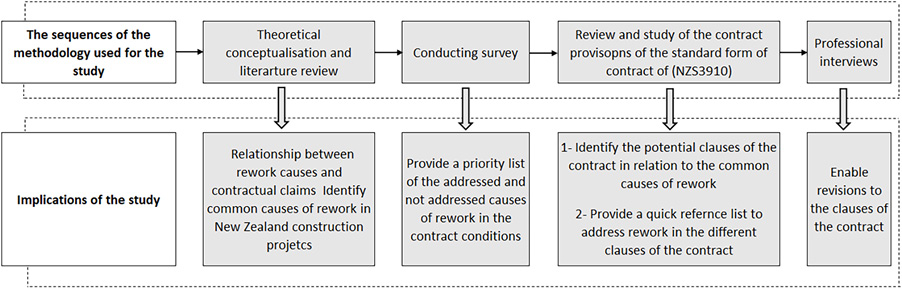
Figure 1. Research methodology
Theoretical conceptualisation
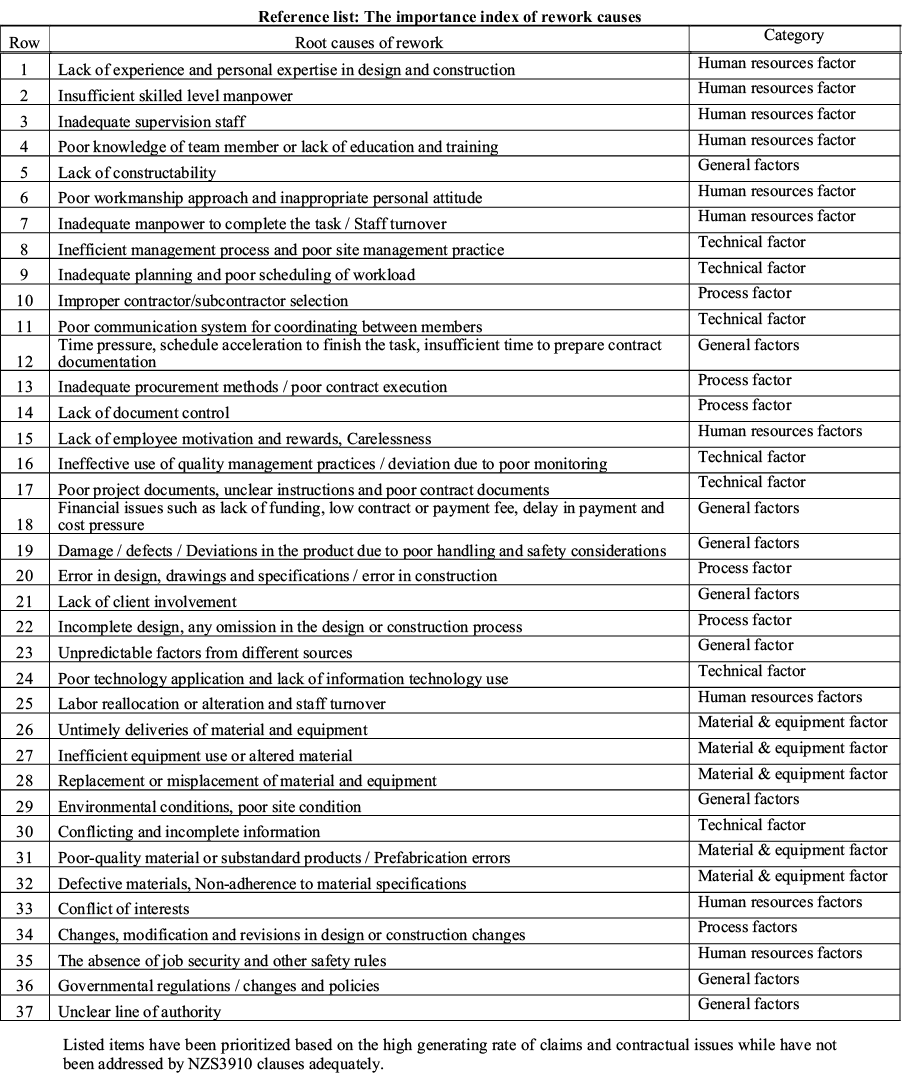
The concept used in this study was based on the relationship between rework and contract clauses. Therefore, a theory is required to be developed on how rework is investigated in the contract documents. In this theory a chain of activities are placed to demonstrate the links between rework and contract. The link between these two elements of the study can be achieved by searching a common factor between the two. The established link leads to the identification of relevant contract clauses that can be referenced in the contract provisions. The literature review shows that the causes of rework will result in contractual claims. As such, the relationship between rework and contract conditions can be studied through contractual claims as a common source. Overall, the conceptualised theory comprises (1) identifying the causes of rework (2) investigating the relationship between rework causes and contractual claims (3) exploring the relevant provision of the contractual claims (4) detecting contract clauses from the referred provisions. Thus, the process is initiated by a list of rework causes from the literature as stated in Table 1.
Conducting survey
The quantitative method in research is a deducible approach to connect the theory and objectives and provide confirmation for the research (Umar, 2020). Following on from identifying the causes of rework from the literature, a quantitative approach was employed through a questionnaire survey that aimed to rank addressed causes of rework in contracts. The questions have been sent to four experienced professors and professionals from academia and the construction industry for their initial review. The criteria for selection of respondents were based on their knowledge, background, and experience in contract management. This initial review improved the quality of questions and ensured the validity of the contents before releasing the questionnaire to the industry. Contract plays an important role in the construction industry, and the industry’s view in this study was considered highly significant and used as the main part of the data collection.
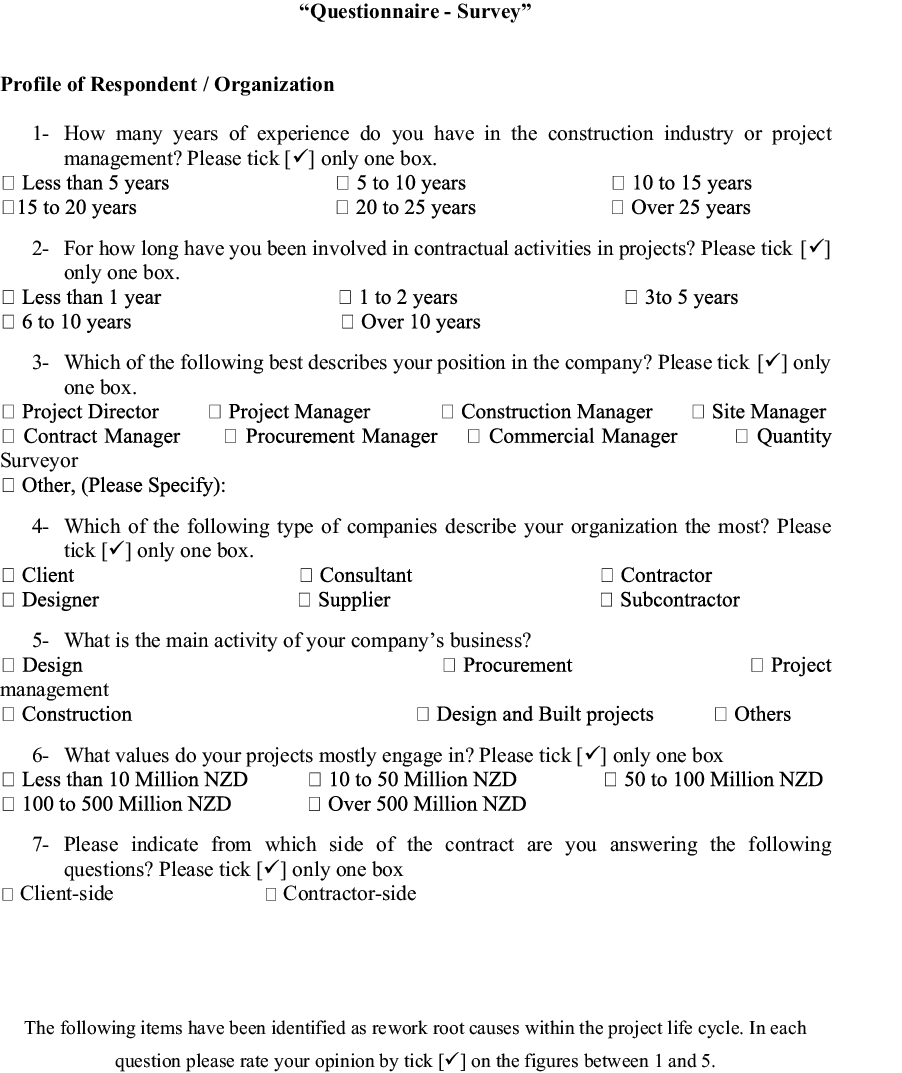
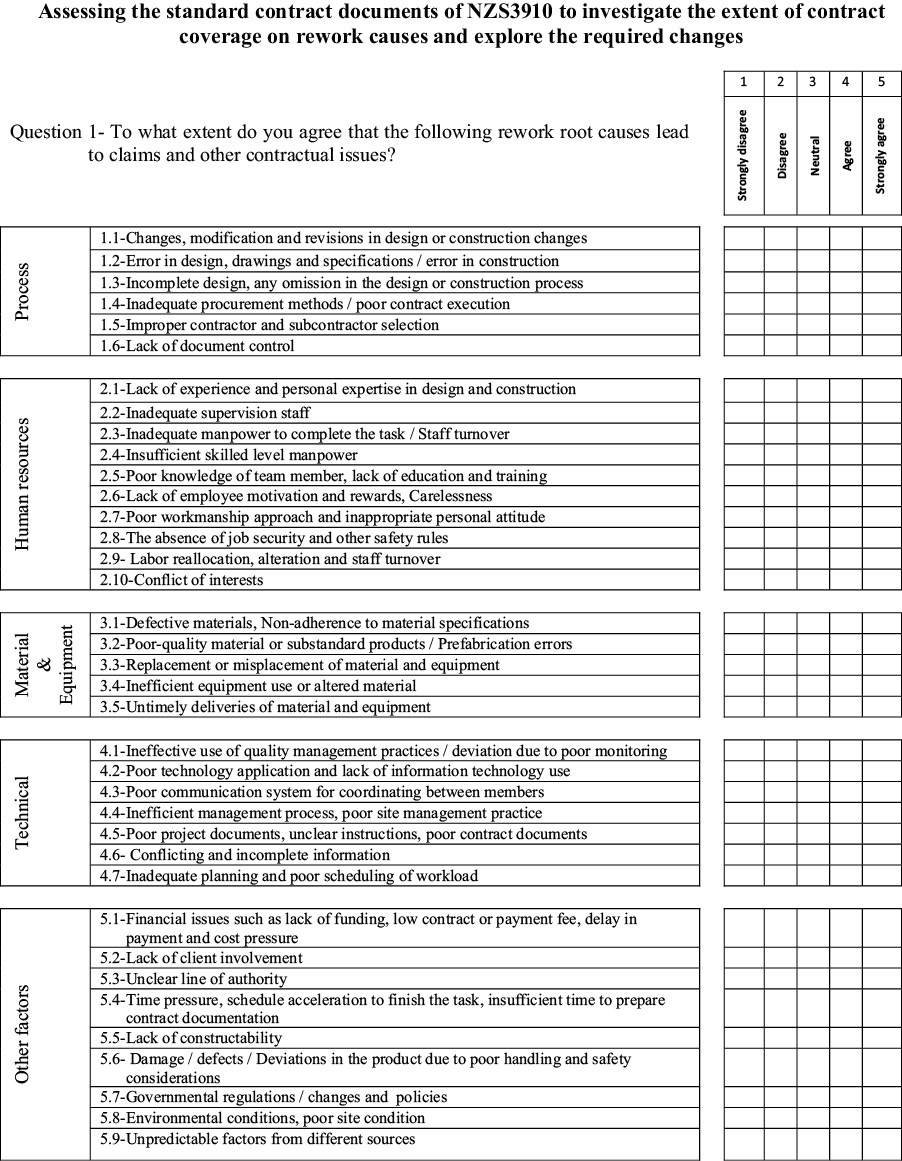
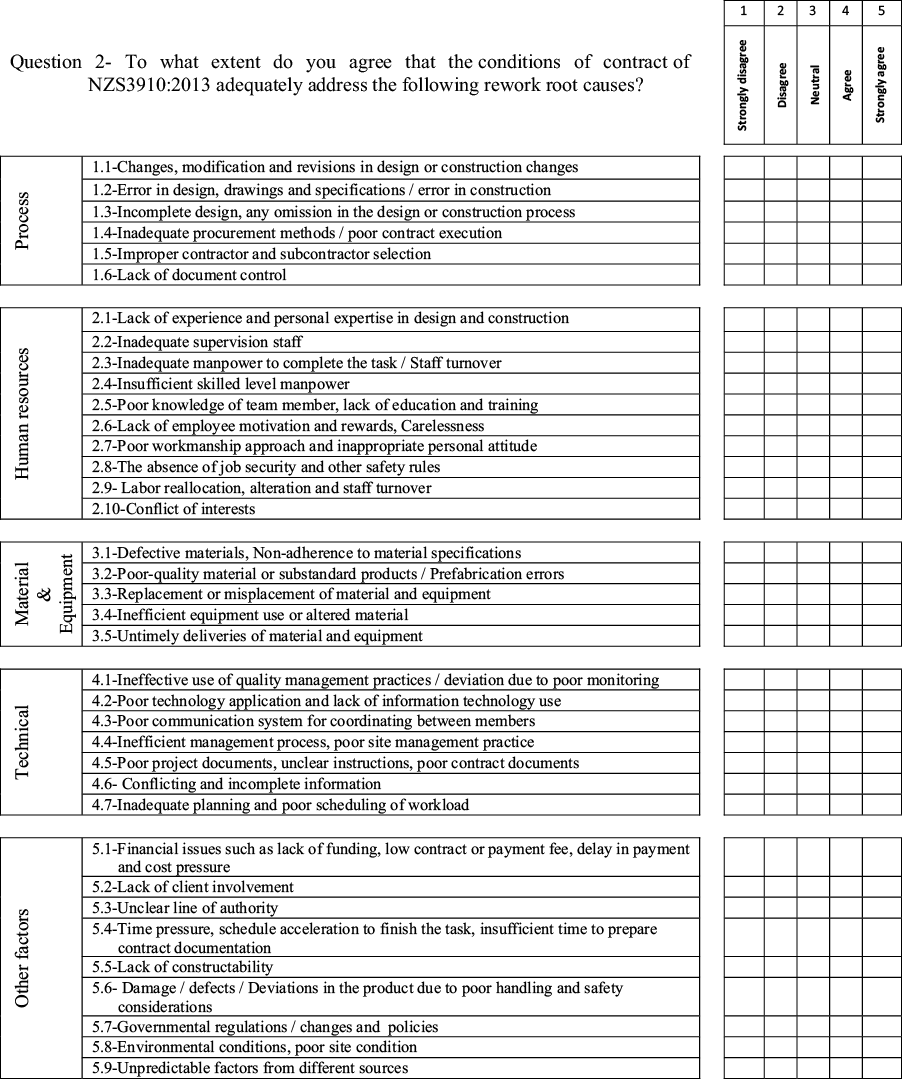
Two questions were included in the survey (1) to establish links between contractual claims and rework causes identified in Table 1 and (2) to understand which cause has been addressed in the contract conditions of NZS3910. The measurement of the responses was designed based on the 5-point Likert scale from strongly disagree (1) to strongly agree (5) as attached in appendix 1. The questionnaire was distributed online through a link to the selected target companies, including clients, consultants, architects, quantity surveyors, contractors, and legal firms who work consistently with construction projects in New Zealand. The selected criterion for including these participants in the study was based on their experience working on construction contracts using the standard form NZS3910. They were identified through the website of relevant associations listed in previous New Zealand studies in the same field (Asadi, Rotimi and Wilkinson, 2023b). The link to give access to the survey was shared with selected targets through email. To ensure the validity and reliability of the result, the participants were asked to respond if they only use NZS3910 contract in their projects (Kisi, et al., 2020). The total number of enterprises in the field of building and construction was 67,239 based on New Zealand’s building performance annual report 2021. The minimum sample size of this population is 382 with a 95% confidence level. Over the period of six months 81 respondents (21%) answered the survey question through the link on Qualtrics Software. The response rate of over 20% is the acceptable range for analysis and is considered high for surveys of this nature (Hughes and Maeda, 2002).
Review of the contract NZS3910 provisions
The contract conditions of NZS3910 comprise 15 clauses, two appendixes, 16 schedules to the general conditions, 14 guidelines and one general aid to the Valuation of Variations. To verify that the identified significant causes in the survey have been addressed in the conditions of the contract, the related provisions were reviewed under the clauses of NZS3910. Analysis of the related clauses was performed using NVivo 12 and coding of provisions based on the selected keywords in each of the rework causes. Thus, provisions related to rework and their contract clauses were identified and listed to verify the outcome of the survey and then validated through interview results.
Professional interviews
After identification of the rework provisions stipulated in the contract conditions of NZS3910, the next step involved confirming the initial result through the professionals’ interview. The interviews were exercised to find the industry’s opinion if NZS3910 contract is fit for purpose under rework event. A semi-structured interview was considered an appropriate way for data collection due to the exploratory nature of this research (Umar, et al., 2020). The questions for conducting interviews were designed to identify relevant rework contract clauses and provisions. The interviews aimed to understand how rework is addressed within clauses of NZS3910. Then, participants were asked about improving contract conditions of NZS3910 under rework events. The answers the participants provided in the interviews are reflected in Table 5. As per Appendix 2, the main questions for this study were as below:
• Q1- How is rework addressed within clauses of NZS3910?
• Q2- Which clauses relate to the causes of rework?
• Q3- Do you recommend adding a new clause to cover rework in the contract?
The criteria for selecting interviewees were based on years of experience in construction and contract management according to the study’s aim and objectives. Participants were selected based on the minimum criteria of having at least 15 years work experience in contract management field and sufficient knowledge using NZS3910 in local projects. Only the participants who had construction project experience were listed for this purpose. Similar criteria have been practiced in previous studies with the same nature (Umar, et al., 2020). A list of experienced professionals in construction dispute resolution was extracted from the available Arbitrators and Mediators Institute of New Zealand (AMINZ) database and New Zealand Building Dispute Tribunal. The other experts in the construction industry were identified through top-tier active construction companies in New Zealand by field investigation and available contacts listed under companies’ websites, LinkedIn and the members of Civil Contractors New Zealand (CCNZ). A total of 39 people was identified at this stage and they were invited by email to join the interview. The email replies from 15 of invitees were positive and the interviews were scheduled accordingly. Three of the participants cancelled their scheduled meetings due to workload and 12 interviews were performed in two forms, in-person and online. All interviews were recorded and transcribed. The interviews result is considered completed when data reached at saturation level (Jelodar, Yiu and Wilkinson, 2021). The analysis of the interviews with 12 participants led to theoretical data saturation. While the numbers of interviews for research with a similar exploratory nature are generally about 20, literature shows that data saturation level may be achieved with fewer responses, for example, 10 in some studies (Umar, et al., 2020).
Analysis and results
Analysis of the collected data and their results are presented separately in accordance with the methodology used for the study in four steps. Previous studies on rework have identified several causes separately in which some are common across their research. Part of the identified causes heavily depends on the project type, geographical location, and the economic situation of the construction industry. A systematic literature review to identify rework causes in New Zealand construction projects (Asadi, Rotimi and Wilkinson, 2022; 2023a) resulted in a comprehensive list of rework causes as combined in Table 1. This table reflects the most common causes of rework in New Zealand construction contracts. The comprehensive list indicates 37 root causes in six groups and is used in this study as a basis for further analysis in the contract review, questionnaire survey, and interviews.
Survey analysis
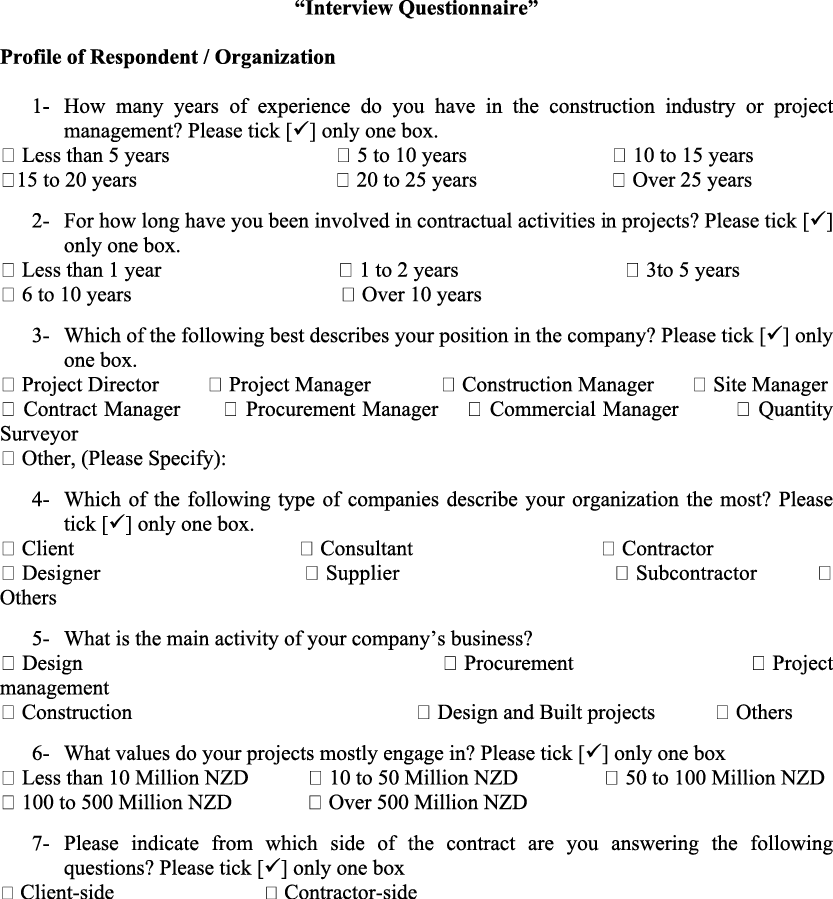
All causes of rework listed in Table 1 were assessed by conducting a questionnaire survey and the collected data from the survey was then analysed using Mean and standard deviation to rank the most significant causes that have been addressed in the contract conditions. The demographic details of the survey participants are presented in Table 2. The level of experience in construction projects and contract management varies among participants. Respondents with more than 20 years of experience in construction comprise 43% of the sample size. More than half of the participants, “71.3%” had over ten years of working experience in the contract management field. Thus, the reliability of the survey data is considered high with the adequate knowledge and experience of the respondents. Moreover, participants were from different types of organisations such as design and architects, project management, construction, design and built companies. Therefore, the survey data covers a range of organisations that use NZS3910 in their construction projects. The contract values have also represented the size of projects. It is noted that most participants were involved with projects that were less than 10 million dollars (40 out of 80). Also, respondents to the survey questionnaire are from two sides of the contract, comprising 51% client and 49% contractor.
| Description | Sample size | % of respondents |
|---|---|---|
| Profession/job roles of participants | ||
| Project Director/Project Manager | 29 | 36.2% |
| Construction/Site Manager | 2 | 2.5% |
| Commercial/Contract Manager | 11 | 13.8% |
| Quantity Surveyor | 11 | 13.8% |
| Others | 27 | 33.7% |
| Year of experience in construction | ||
| Less than 10 years | 16 | 20% |
| Between 10 and 20 | 21 | 26.2% |
| More than 20 | 43 | 53.8% |
| Contract experience | ||
| Less than 5 years | 16 | 20% |
| Between 5 and 10 | 7 | 8.7% |
| More than 10 | 57 | 71.3% |
| Type of organisation | ||
| Design and Architect | 14 | 17.5% |
| Project Management | 13 | 16.3% |
| Construction | 24 | 30% |
| Design and Built | 9 | 11.2% |
| Others | 20 | 25.% |
| Value of the involved projects | ||
| Less than 10 Million NZD | 40 | 50% |
| Between 10 and 50 Million NZD | 14 | 17.5% |
| Between 50 and 100 Million NZD | 8 | 10% |
| More than 100 Million NZD | 18 | 22.5% |
| Contract sides | ||
| Client | 41 | 51.2% |
| Contractor | 39 | 48.7% |
Surveys with a response scale in construction research generally are analysed by ranking the results using either RII (Zaneldin, 2020), or frequency analysis through comparing means (Beale and Smallwood, 2019). The result of the descriptive analysis for rework causes have been presented in Table 3, showing the client and contractors’ viewpoints. According to (Beale and Smallwood, 2019) mean scores over 3.4 are considered significant items with a Likert scale of 1 to 5. Taking this criterion, the overall ranking of rework causes addressed by the contract conditions only covers four causes as the most significant items. Since P3 with a mean of 3.39 is very close to the minimum of 3.4, it has also been included in the list of the most addressed significant causes in the contract. According to the demographical survey analysis, the participants’ share from the contractor side is 48.75 % and 51.25% from the client side. Thus, the overall ranking in the first column in Table 3 is valid for both parties and is considered as the final list for processing to the next stage.
| Rework cause | Overall, N=80 | Client, N=41 | Contractor, N=39 | ||||||
|---|---|---|---|---|---|---|---|---|---|
| Rank | Mean | SD | Rank | Mean | SD | Rank | Mean | SD | |
| P1 | 1 | 3.83 | 1.088 | 1 | 3.78 | 1.194 | 1 | 3.87 | 0.978 |
| P2 | 3 | 3.50 | 1.091 | 4 | 3.39 | 1.159 | 2 | 3.62 | 1.016 |
| P3 | 5 | 3.39 | 1.085 | 4 | 3.39 | 1.159 | 4 | 3.38 | 1.016 |
| M1 | 2 | 3.55 | 0.967 | 2 | 3.66 | 0.965 | 3 | 3.44 | 0.968 |
| M2 | 4 | 3.43 | 1.053 | 3 | 3.59 | 0.948 | - | - | - |
The validity of the answers is verified through a reliability test and for the Likert scale questionnaire the Cronbach alpha test is generally used. Any figure of the Cronbach alpha greater than 0.7 approves the internal consistency of the responses (Ma, Li and Cheng, 2020). In this survey with 80 completed responses, the Cronbach alpha test resulted in 0.954 among 37 questions which verifies the reliability and allows performing further analysis.
Survey results
The results of the survey revealed five significant addressed causes of rework. The contract provisions to address these rework causes are discussed by highlighting some of the key points that establish a reliable link between rework and the contract clauses. The survey analysis showed that 32 of rework causes fall under the mean of 3.4, confirming that they have not been identified as the significant addressed items in the contract conditions. In other words, the current conditions of NZS3910 contract do not cover all identified causes of rework. It must be noted that none of the causes of rework appeared over the mean 4.2 as the highly significant item. As such, rework as a continuing problem in construction projects needs more investigation within the construction contracts.
The five significant addressed causes of rework are listed as:
1. Changes, modification and revisions in design / construction changes, (P1)
2. Defective materials, non-adherence to material specifications, (M1)
3. Error in design, drawings and specifications / construction error, (P2)
4. Poor-quality material or substandard products / prefabrication errors, (M2)
5. Incomplete design, any omission in the design or construction process, (P3)
Contract review and analysis
The top five significant causes of rework (P1, M1, P2, M2, P3) extracted from the survey were further studied and reviewed in the contract conditions of NZS3910. The keywords of each significant cause were searched in the contract conditions to identify all connections. All identified links were then carefully reviewed to understand the coverage of contract clauses in terms of addressing rework causes. The frequency analysis of relevant keywords in NZS3910 revealed that, change with stemmed words (P1) has been used seven times in various clauses of the contract. The conditions of the contract address design and construction changes in sub-clauses 2.3.4, and discuss the identified changes in the special conditions as per sub-clause 2.7.3. The importance of changes has also been highlighted in sub-clause 6.3.3, where it does not allow the Engineer’s representative to exercise any changing of the drawings and specifications and only gives such permissions to the Engineer to the contract. Finally, sub-clauses 9.1.1 and 9.1.2 treat any given direction by the Engineer to carry out the work as a variation and define various possible reasons that may lead to a change in the contract. This evidence shows that the first ranked cause is addressed in clauses 2, 6 and 9. Analysis of the second addressed causes in the contract showed that defective with stemmed word (M1) has been used 43 times, and the keyword material has been used 60 times within the various clauses. Under the sub-clause 6.4.1, the Engineer is involved with the process of inspection and test for materials. The contract under sub-clauses of 6.4.2 and 6.5.1 clearly refers to the cost of non-conformance materials. The other parts of the contract have excluded the cost of remedying loss or damage caused by defective material from the coverage of insurance under sub-clauses of 8.3.5 and 8.7.1. Sub-clause 10.3.1 refers to the contractors’ entitlement for an extension of time due to the loss or damage to the materials. The contractor shall also remedy defects or damages resulting from defective materials under 11.2.1. This evidence shows that the second ranked cause is addressed in clauses 6, 8, 10 and 11.
Analysing the keywords in the third ranked cause (P2) showed that, error has been used seven times within various clauses. Any fault, defect, error and omission in the design is addressed in the expected risk under sub-clause 5.6.6. Sub-clause 5.8.5 addresses the rectification of construction errors and its associated cost. This sub- clause also states the conditions around how such errors will be treated as variations. Insurance clause will not cover the cost of rectifying loss or damage caused by errors in design or construction, as it has been excluded under sub-clauses 8.3.5 and 8.7.1. This evidence shows that the third cause is addressed in clauses 5 and 8.The frequency analysis of the keyword quality with stemmed word (M2) has been used 13 times within various clauses. The contractor under sub-clause 5.1.1 is obligated to provide temporary or permanent materials as per the quality specified in the contract. Under 5.6.2, the contractor shall be responsible for the care of materials and under 5.18.2 shall provide a quality plan that describes required procedures for meeting the quality of materials as per 5.9.2 provisions. Any change in the character or the quality of material is processed as variation under sub-clause 9.1.1, and subsequently an extension of time shall be granted for loss or damage to the materials under sub-clause 10.3.1 if the contractor is entitled. This evidence shows that the fourth ranked cause is addressed in clauses 5, 9 and 10.
Even though the word “incomplete” has not been used in the document, “omission” as a keyword in P3 appeared eighteen times in different clauses. Omission in the design has been referenced as the expected risks under sub-clauses 5.6.6. The insurance in the sub-clause 8.3.4 needs to be maintained by the contractor for any act or omission arising out of the performance after practical completion. Any omission in construction stage is covered under sub-clauses 10.4.1 Sub-clause 11.3.1 says that the final competition certificate will be issued when the contractor remedied all minor omissions and defects. Making good on the omissions and defects in the remaining contract works has also been addressed under sub-clause 12.3.2. This evidence shows that the fifth ranked cause of rework is addressed in clauses 5, 8, 10, 11, and 12.
Contract review results
Overall, the analysis of the significant addressed causes of rework in the contract documents identified NZS3910 clauses and their provisions as the final result of the contract review as listed below.
• Clause 2, “The contract” and its sub-clauses (a) and (b)
• Clause 5, “General obligations” and the sub-clauses of (a) general responsibilities, (b) care of the work and site, (c) materials, labour and plant, (d) quality plan
• Clause 6, “Engineer’s powers and responsibilities” and the sub-clauses (a) and (b)
• Clause 8, “Insurance” and its sub-clauses (a) and (b)
• Clause 9, “Variations” and its sub-clauses (a) and (b)
• Clause 10, “Time for completion” and the sub-clause of time extension and final completion certificate
• Clause 11, “Defect liabilities” and the sub-clause of time extension and remedying of defects
• Clause 12, “Time for completion” and the sub-clause of retention monies
The results of the contract review by providing the above evidence confirmed that the identified rework causes from the survey are adequately addressed in the Contract conditions of NZS3910. The results of the contract document review validate the survey results.
Interview analysis
The professional interviews were then performed to identify the various clauses of NZS3910 contract. Table 4 shows the basic information about the professionals who attended the interviews for this research.
| No | Interviewee | Years of experience | Background | Meeting duration |
|---|---|---|---|---|
| 1 | I.A | 45 | Architect and Construction Disputes Consultant | 69 Minutes |
| 2 | I.B | 21 | Building Surveyor, Contract Engineer | 66 Minutes |
| 3 | I.C | 25 | Consultant and Contract Engineer | 30 minutes |
| 4 | I.D | 25 | Construction Lawyer, Adjudication, Panellist of Building Dispute Tribunal | 41 minutes |
| 5 | I.E | 17 | Commercial Manager in construction Company | 52 Minutes |
| 6 | I.F | 39 | Dispute Board Member, Arbitrator, Adjudicator & Commercial Mediator | 60 Minutes |
| 7 | I.G | 43 | Senior Project Director, Contract Engineer | 55 Minute |
| 8 | I.H | 25 | Commercial Manager in construction Company | 37 Minutes |
| 9 | I.J | 25 | Quantity Surveyor- Technical Director, consultant company | 71 Minutes |
| 10 | I.K | 25 | Principal Consultant, Contract Engineer | 74 Minutes |
| 11 | I.L | 15 | Projects Lawyer, Specialist Construction | 26 Minutes |
| 12 | I.M | 20 | Registered Quantity Surveyor, ADR Practitioner | 54 Minutes |
| Average of experience | 27 years | |||
Note: Three of the interviewees were members of the committee for preparing NZS3910 editions of 2003 and 2013.
The semi-structured interview covered the questions seeking relations between rework and contract clauses. The content analysis of the recorded and transcribed interviews was then performed using NVivo 12. The professional's opinion regarding rework in the contract conditions was analysed to determine their viewpoints about addressing rework in the contract clauses. Table 5 summarises the participants’ opinion in responding to three questions in the semi-structured interview. Only two participants stated that the contract mostly addresses the causes of rework and others provided comments as follows.
| No | Interviewee | Question 1 | Question 2 | Question 3 | |
|---|---|---|---|---|---|
| Clause No. NZS3910 | Clause title | ||||
| 1 | I.A | No comments | Clauses 6.4 to 6.8 - 11 | Engineer Power - Defects liability | No |
| 2 | I.B | Comment 2 | Clauses 6.4 - 9 - 10.3 | Test and inspection - EOT - Variation | No |
| 3 | I.C | No issues | - | Not required | No |
| 4 | I.D | Mostly addressed | Clause 6.5 | Making Good | No |
| 5 | I.E | Comment 5 | Clauses 11.2 - 9 - 10.3 | Remedying Defect and its provisions - EOT - Variation | No |
| 6 | I.F | Comment 6 | Clauses 5 - 9 - 10.3 | linked to the quality of work - EOT - Variation | No |
| 7 | I.G | Comment 7 | Clauses 5 - 9 - 11.2 | Remedying defects - Variation - General Obligations | No |
| 8 | I.H | Mostly addressed | Clauses 5 - 6.5 - 11.2 | Remedying defects - Making Good - Normal completion | No |
| 9 | I.J | Comment 9 | Clauses 6.5 to 6.8 - 9 | Making good - Variation | - |
| 10 | I.K | Comment 10 | Clauses 6 - 9 - 11 | Related to the engineer - Defect Liability - Variation | No |
| 11 | I.L | Comment 11 | Clauses 9 - 11 – 13 - 14 | Defects liability - Defaults - Variation - Disputes | - |
| 12 | I.M | Comment 12 | Clauses 5 - 6 – 10 - 11 - 12 | General Obligations - Engineer Power - EOT - Defects liability - Payments | No |
• Comment 2 – “Rework is a broad term, which can be a contractor’s fault, client fault, supervisors’ fault, or architects’ fault. The need for more definition of reworks in the contract is important. It would certainly have to be added to the “interpretation section” of the back of the document.”
• Comment 5 – “The current provisions are not covering rework causes; they are particularly descriptive. It’s not very descriptive as to who’s responsible for what and what’s really fair? Where are the tears when a defect occurs? Can be repaired rather than replaced, it’s all very reliant on an independent engineer to assess that kind of question.”
• Comment 6 – “Rework has no clear definition in the contract.”
• Comment 7 – “In terms of the conditions of contract, although they don’t specifically address different types of rework, the contract does address whether the contractor is entitled to a variation or whether the contractor is required to rework something to the correct standard or to the great quality at no additional cost to the principle. I would say rework is not being addressed properly because of the lack of skills and lack of supervision within the contract up industry.”
• Comment 9 – “There is no word of rework in the contract conditions. Removal and making good is one of those ones, so probably rework has not been addressed enough to be honest. There’s been discussion around early warning type notifications, and at the moment I think RFIs always perceive to be a contract’s ways of letting their design team know that they need more information about rework.”
• Comment 10 – “No discussion about rework in the contract, and it’s only about defect. There’s a clause that the engineer discovers the defective works, and then there’s a way to deal with rework. This defect is including late defects and defect during notifications period. The defect can be discovered by inspection and if you discover it, which would be rework.”
• Comment 11 – “I do think the defects liability section really addresses rework and I think we have the defects notification period in the remedying of defects and that’s really where we address the contractor coming back to do rework. To come back and do rework prior to practical completion would need to be in another section of 3910, not in the defect liability section because I think they serve different purposes.”
• Comment 12 – “NZS 3910 does use generic terminology, it just talks about remedying defects or nonconforming work, and it is quite important because a lot of the wording is deliberately neutral.”
Interviews results
The summarised report in Table 5 displays the contract clauses that are related to rework provisions as per participants’ opinion. As shown in the table, eight identified clauses are:
• Clauses 6, 9 and 11, quoted by seven participants out of 12,
• Clauses 5 and 10, quoted by four participants out of 12, and,
• Clauses 12, 13 and 14, quoted by one participant out of 12.
The most quoted clauses in the interview are also found in the document review. These contract clauses are in parallel with the results of the contract review representing five common items. Therefore, the area with the most potential to investigate rework within the contract conditions are clause 5 (General obligations), clause 6 (Engineer power), clause 9 (Variation), clause 10 (Time for completion), and clause 11 (Defect liabilities). Any further proposed framework or checklist to administer contracts in rework events will contribute most to the identified provisions in the above mentioned clauses. These clauses are similar to the identified clauses in the contract review results. Therefore, the results of the contract review are validated by the identified common clauses from these two stages of the research method. Overall, the result of three stages of the survey, document review and professional interviews are in the same streamlines and confirm each other.
Discussion
The significant cause of disputes in New Zealand comes from the lack of an independent view of the contract administrator or the lack of independent monitoring of construction projects. Rework is one of the issues that may result in conflicts and disputes if it is not managed properly. According to Jelodar, Yiu and Wilkinson (2016), ambiguity in the contract clauses and complexity due to the high number of provisions between contract clauses will result in conflict and dispute emergence. The results of the survey and professional interviews revealed that both client and contractor have the same understanding of the contract conditions under rework circumstances. In accordance with the survey results, changes, defective materials, errors, poor quality materials and incomplete design are the main adequately addressed causes of rework in the contract conditions. The survey outcome is supported by previous construction contract study in New Zealand which confirms that most of the process-related causes such as changes, errors and other relevant design issues are covered by the contract conditions (Jelodar, Yiu and Wilkinson, 2016). Regardless of the pre-mentioned causes of rework, the survey result indicates that the other rework causes may not be addressed adequately by the contract conditions. Generally, if rework occurs due to the significant causes referenced in the contract conditions, a rework claim can suitably be launched by addressing the available contract provisions. Otherwise, rework will be managed in a grey area with the possibility of acceptance or rejection by either party.
The interview results revealed that there is a similarity in the way professionals understand if it occurs in construction contracts. Most of the participants in the interview confirmed that some contract clauses need to be amended or revised to cover rework and its causes. They believe that contractual provisions are essential to reference rework issues. Thus, they suggested different strategies to tackle rework in construction projects. Although some experts believe that more clarification within the contract provisions is required to address rework adequately, others say that more inter-crossing provisions among various clauses may not be helpful. Most of the participants agreed that quality assurance is the solution that has the highest possibility of reducing rework. As such, addressing rework causes would require deciding who is liable for that cause. Another contractual point in relation to rework was mainly interconnected to the role of the Engineer who facilitates rework processing. Thus, to deal with rework causes within the contractual provisions, the overall idea is around the Engineer’s role. The Engineer must take appropriate action when there is a consequent issue such as a delay (Seneviratne and Michael, 2020).
The overall comments pointed out that while rework needs to be defined clearly in the definition section to recognise it from defects, adding an extra clause would not be a good solution to cover this deficiency. It is evident that the current provisions in the contract conditions are not enough to cover rework sequences before or after project completion. Therefore, some relevant clauses require revising accordingly. To generalise comments on rework provisions, it is observed that most participants agree to improve the contract conditions by clarifying rework events and their process within current clauses of the contract. Based on the collected data and observations during the conducted survey and interviews, it was evident that apart from the identified clauses in Table 5, rework is not adequately covered by the current contract conditions of NZS3910. These outcomes verify that the general conditions of NZS3910 may require a series of changes to address the number of rework causes.
Research implications
The review of rework causes in the contract conditions provides a contractual perspective of the rework that may prevent the occurrences of claims and disputes. The identified rework provisions will help the assessment of the contractual claims, conflicts and disputes related to rework events. If the contract parties’ liabilities are well structured to address rework causes, the subsequent process such as claim handling and dispute resolutions can be appropriately managed. It helps contract parties to understand their responsibilities in rework events. . Therefore, both client and contractor can define their rights and responsibilities under potential rework circumstances and raise their concerns about rework issues prior to contract signature. The following list presents the implications of this study based on the presented result and the provided discussion.
1. Providing a checklist to identify risks associated with rework at the early stages of a project.
2. Addressing the contract parties’ responsibilities under rework events.
3. Improving the contract administration process for rework-related clauses that will lead to fewer claims and disputes.
Conclusion
This study explored the causes of rework in New Zealand construction contracts to identify the relevant contract clauses if rework occurs. The employed methodology in the study was initiated by a conceptualised theory followed by conducting a survey, review of the contract and performing the professional interviews. The robust method allowed the practicality of the study based on the selected case of NZS3910 as the contract used most often in New Zealand construction projects. The finding of the study contributes to the body of knowledge as it identified rework provisions within various contract clauses. The survey results identified five adequately addressed causes of rework in the contract. The survey results were then verified through the analysis of the rework provision in the contract. Evaluating the provisions provided links between the causes of rework and the clauses of the contract. The contract review process identified eight clauses that are related to rework. The identified contract clauses were then investigated by interviewing the professionals. The interview participants responded to the questions by providing evidence from real cases in practical projects. Then the interview results completed the process of identifying the rework provisions in the contract. The analysis of the transcribed interviewees revealed the most relevant rework clauses in contract conditions of NZS3910. The identified clauses were (1) General obligations, (2) Engineer power, (3) Variation, (4) Time for completion, and (5) Defect liabilities. The interview results verified the previously identified clauses related to rework at the contract review stage, confirming five addressed causes of rework in the contract based on the survey results. However, this outcome addressed the identified knowledge gap; it indirectly indicated that most of the causes of rework are not addressed in the contract conditions of NZS3910. The non-addressed causes of rework in the contract highlighted the need to reorganise rework processing in the contract clauses. Thus, construction contracts require improvement by developing a systematic process to manage rework in the contract conditions.
This study is limited to a standard form of contract that is commonly used in New Zealand and the results are applicable to NZS3910. Further studying of contract clauses related to rework in other standard form of contracts worldwide can provide evidence to validate the results of this paper. Construction contracts should tentatively be updated and tailored based on the project specification and geographical locations (Mendis, Hewage and Wrzesniewski, 2015). Therefore, future research can be carried out based on the ideas provided in the implication section of this study. To generalise results for contract management, comparison with international contracts such as NEC, FIDIC is needed. As such, providing the advantages and disadvantages of each standard form of contract will improve rework management in construction projects. In addition, the paper outcomes are expected to enhance rework provisions within contract clauses to minimise contractual issues such as claims and disputes. While this paper lacks proposing a framework to manage construction contracts under rework events, it is suggested that developing a guideline for mapping rework provisions is required.
References
Aiyewalehinmi, E.O. and Nkumah, L., 2019. Evaluation of construction contract dispute between the clients and contractors in Nigeria (Ondo state as a case study). European Journal of Engineering and Technology, 7(3), pp.40-55.
Al-Mohsen, M., 2012. Claim Analysis of Construction Projects in Oman. International Journal on Advanced Science Engineering and Information Technology, 2(2), pp.73-78. https://doi.org/10.18517/ijaseit.2.2.182
Arcadis, 2022. Global Construction Disputes Report. Successfully navigating through turbulent times. [pdf] Australia: Arcadis. Available at: https://www.arcadis.com/en-au/knowledge-hub/perspectives/global/global-construction-disputes-report.
Asadi, R., Wilkinson, S. and Rotimi, J.O.B., 2021. The common causes of rework in construction contracts: a diagnostic approach. Journal of Engineering, Design and Technology, [e-journal] 21(4), pp.1107-33. https://doi.org/10.1108/JEDT-04-2021-0215
Asadi, R., Rotimi J.O.B. and Wilkinson, S., 2022. Investigating the relationship between rework and contractual claims: The salience of contract conditions. Journal of Legal Affairs and Dispute Resolution in Engineering and Construction,14(1), p.04521046. https://doi.org/10.1061/(ASCE)LA.1943-4170.0000519
Asadi, R., Wilkinson, S. and Rotimi, J.O.B., 2023. Guidelines for Mapping Rework in the Contract Conditions of Construction Projects. Journal of Legal Affairs and Dispute Resolution in Engineering and Construction, 15(1), p.04522041. https://doi.org/10.1061/(ASCE)LA.1943-4170.0000563
Asadi, R., Rotimi, J.O.B. and Wilkinson, S., 2023a. Rework causes classification model with liable parties of the contract in construction projects. Frontiers in Built Environment, [e-journal] 9(2023), pp.1-20. https://doi.org/10.3389/fbuil.2023.1143829
Asadi, R., Rotimi, J.O.B. and Wilkinson, S., 2023b. Analyzing Underlying Factors of Rework in Generating Contractual Claims in Construction Projects. Journal of Construction Engineering and Management, [e-journal] 149(6), pp.1-12. https://doi.org/10.1061/JCEMD4.COENG-12141
Assaad, R., Gasser, A.E., Abdul Nabi, A.M. and El-adaway, I.H., 2020. Back-to-Back Relationship under Standard Subcontract Agreements: Comparative Study. Journal of Legal Affairs and Dispute Resolution in Engineering and Construction, 12(3), p.04520020. https://doi.org/10.1061/(ASCE)LA.1943-4170.0000406
Beale, J. and Smallwood, J.J., 2019. The potential of industry 4.0 to enhance construction health and safety (H&S) performance. In: Proceedings 14th International Postgraduate Research Conference. Contemporary and Future Directions in the Built Environment. Manchester, 16-17 December 2019, pp.233-44. Manchester, UK: University of Salford.
El-adaway, I.H., Fawzy, S., Allard, T. and Runnels, A., 2016. Change Order Provisions under National and International Standard Forms of Contract. Journal of Legal Affairs and Dispute Resolution in Engineering and Construction, 8(3), p.03716001. https://doi.org/10.1061/(ASCE)LA.1943-4170.0000187
El-adaway, I.H., Abotaleb, I.S., Eid, M.S., May, S., Netherton, L. and Vest, J., 2018. Contract Administration Guidelines for Public Infrastructure Projects in the United States and Saudi Arabia: Comparative Analysis Approach. Journal of Construction Engineering and Management, 144(6), p.04018031. https://doi.org/10.1061/(ASCE)CO.1943-7862.0001472
El-adaway, I.H., Vance, R.A. and Abotaleb, I.S., 2020. Understanding Extension of Time under Different Standard Design-Build Forms of Contract. Journal of Legal Affairs and Dispute Resolution in Engineering and Construction, 12(1), p.04519031. https://doi.org/10.1061/(ASCE)LA.1943-4170.0000331
Eze, E.C. and Idiake, J.E., 2018. Analysis of Cost of Rework on Time and Cost Performance of Building Construction Projects in Abuja, Nigeria. International Journal of Built Environment and Sustainability 5(1), pp.56-67. https://doi.org/10.11113/ijbes.v5.n1.246
Finnie, D., 2013. Comparison of time adjustment clauses between DZ3910, AS4000 and STCC’. Australasian Journal of Construction Economics and Building, 13(1), pp.66-84. https://doi.org/10.5130/AJCEB.v13i1.3071
Forcada, N., Rusinol, G., Macarulla, M. and Love, P.E.D., 2014. Rework in highway projects. Journal of Civil Engineering and Management, 20(4), pp.455–65. https://doi.org/10.3846/13923730.2014.893917
Hansen, S., Rostiyanti, S.F. and Rif’at, A., 2020. Causes, Effects, and Mitigations Framework of Contract Change Orders: Lessons Learned from GBK Aquatic Stadium Project. Journal of Legal Affairs and Dispute Resolution in Engineering and Construction, 12(1), p.05019008. https://doi.org/10.1061/(ASCE)LA.1943-4170.0000341
Hughes, W. and Maeda, Y., 2002. Construction contract policy: do we mean what we say? RICS Research Paper. 4(12), pp.1–25. https://doi.org/10.1017/CBO9780511811753.004
Hwang, B.G., Zhao, X. and Goh, K.J., 2014. Investigating the client-related rework in building projects; The case of Singapore. International Journal of Project Management, 32, pp.698-708. https://doi.org/10.1016/j.ijproman.2013.08.009
Jelodar, M.B., Yiu, T.W. and Wilkinson, S., 2016. Dispute Manifestation and Relationship Quality in Practice. Journal of Legal Affairs and Dispute Resolution in Engineering and Construction, 8(1), p.C4515003. https://doi.org/10.1061/(ASCE)LA.1943-4170.0000171
Josephson, P.E., Larsson, B. and Li, H., 2002. Illustrative benchmarking rework and rework costs in Swedish construction industry. Journal of Management in Engineering, 18(2), pp.76-83. https://doi.org/10.1061/(ASCE)0742-597X(2002)18:2(76)
Kisi, K.P., Lee, N., Kayastha, R. and Kovel, J., 2020. Alternative dispute resolution practices in international road construction contracts. Journal of Legal Affairs and Dispute Resolution in Engineering and Construction 12(2), p.04520001. https://doi.org/10.1061/(ASCE)LA.1943-4170.0000373
Liu, Q., Ye, G., Feng, Y., Wang, C. and Peng, Y., 2020. Case based insights into rework costs of residential building projects in China. International Journal of Construction Management, 20(4), pp.347-55. https://doi.org/10.1080/15623599.2018.1484856
Love, P.E.D., Mandal, P., Smith, J. and Li, H., 2000. Modelling the dynamics of design error induced rework in construction. Construction Management and Economics, 18(5), pp.567–74. https://doi.org/10.1080/014461900407374
Love, P.E.D., Irani, Z. and Edwards, D.J., 2003. Learning to Reduce Rework in Projects Analysis of Firm’s Organizational Learning and Quality Practices. Project Management Journal, 34(3), pp.13-25. https://doi.org/10.1177/875697280303400303
Love, P.E.D. and Edwards, D.J., 2004. Forensic project management; The underlying causes of rework in construction projects. Civil Engineering and Environmental Systems, 21(3), pp.207-28. https://doi.org/10.1080/10286600412331295955
Love, P.E.D., Edwards, D.J. and Smith, J., 2009. Divergence or congruence: A path model of rework for building and civil engineering projects. Journal of Performance of Constructed Facilities, 23(6), pp.480-88. https://doi.org/10.1061/(ASCE)CF.1943-5509.0000054
Ma, D., Li, X. and Cheng, C., 2020. The impact of the international construction standard application capability on contractor’s competitiveness: Chinese Contractors experience. Journal of Civil Engineering and Management, 26(8), pp.757–74. https://doi.org/10.3846/jcem.2020.13749
Ma, G., Jiang, S., Zhu, T., and Jia, J., 2019. A Novel Method of Developing Construction Projects Schedule under Rework Scenarios. Sustainability, 11, 5710. https://doi.org/10.3390/su11205710
Mahamid, I., 2020. Impact of rework on material waste in building construction projects. International Journal of Construction Management, 22(8), pp.1500-07. https://doi.org/10.1080/15623599.2020.1728607
Mahamid, I., 2016. Analysis of rework in residential building projects in Palestine. Jordan Journal of Civil Engineering, 10(2), pp.197-208. https://doi.org/10.14525/JJCE.10.1.3536
Mendis, D., Hewage, K N. and Wrzesniewski, J., 2015. Contractual obligations analysis for construction waste management in Canada. Journal of Civil Engineering and Management, 21(7), pp.866–80. https://doi.org/10.3846/13923730.2014.893907
Miri, M. and Khaksefidi, M., 2015. Cost management in construction projects rework and its effects. Mediterranean Journal of Social Sciences, 6(6), S6, pp.209-15. https://doi.org/10.5901/mjss.2015.v6n6s6p209
Ndwandwa, S., Simpeh, E.K. and Smallwood, J.J., 2017. Factors influencing the occurrence of rework in construction. In: Proceedings of International Research Conference 2017: Shaping Tomorrow’s Built Environment. Manchester, 11-12 September, pp.757-70. Manchester, UK: University of Salford.
Oyewobi, L.O. and Ogunsemi, D.R., 2010. Factors influencing rework occurrence in construction; A study of selected building projects in Nigeria. Journal of Building Performance, 1(1), pp.1-20.
Palaneeswaran, E., Love, P.E.D. and Kumaraswamy M.M., 2008. Mapping rework causes and effects using artificial neural networks. Building Research & Information, 36(5), pp.450-65. https://doi.org/10.1080/09613210802128269
Robertson, S., 2018. The Engineer to the Contract: How the role evolved, and the part played in dispute resolution, Society of Construction Law, New Zealand. Society of Construction Law Presentation, Christchurch and Hamilton, NZ, 1 March 2018 and 5 April 2018, pp.1-24. Aukland, NZ: Kensington Swan.
Safapour, E. and Kermanshachi, S., 2019. Identifying early indicators of manageable rework causes and selecting mitigating best practices for construction. Journal of Management in Engineering, 35(2), p.04018060. https://doi.org/10.1061/(ASCE)ME.1943-5479.0000669
Seneviratne, K. and Michael, G.V., 2020. Disputes in time bar provisions for contractors’ claims in standard form of contracts. International Journal of Construction Management, 20(4), pp.335-46. https://doi.org/10.1080/15623599.2018.1484854
Seo, W. and Kang, Y., 2020. Performance Indicators for the Claim Management of General Contractors. Journal of Management in Engineering, 36(6), p.04020070. https://doi.org/10.1061/(ASCE)ME.1943-5479.0000835
Syal, M. and Bora, M., 2016. Change Order Clauses in Standard Contract Documents. Practice Periodical on Structural Design and Construction, 21(2), p.04015021. https://doi.org/10.1061/(ASCE)SC.1943-5576.0000281
Umar, T., 2020. Making Future Floating Cities Sustainable: A way Forward. In: Proceedings of the Institution of Civil Engineers - Urban Design and Planning 2020, [e-journal] 173(6), pp.214–37. https://doi.org/10.1680/jurdp.19.00015
Umar, T., Egbu, C., Ofori, G., Honnurvali, M.S., Saidani, M., Shibani, A., Opoku, A., Gupta, N. and Goh, K., 2020. UAE’s commitment towards UN Sustainable Development Goals. In: Proceedings of the Institution of Civil Engineers-Engineering Sustainability, [e-journal] 173(7), pp.325-43. https://doi.org/10.1680/jensu.19.00036
Wang, C., Yap, J.B.H., Wood, L.C. and Abdul-Rahman, H., 2019. Knowledge modelling for contract disputes and change control. Production Planning & Control, 30(8), pp.650-64. https://doi.org/10.1080/09537287.2019.1572247
Wright, J.N. and Fergusson, W., 2009. Benefits of the NEC ECC form of contract: A New Zealand case study. International Journal of Project Management, 27, pp.243–49. https://doi.org/10.1016/j.ijproman.2008.03.005
Yap, J.B.H., Low, P.L. and Wang, C., 2017. Rework in Malaysian building construction impacts causes and potential solutions. Journal of Engineering, Design and Technology, 15(5), pp.591-618. https://doi.org/10.1108/JEDT-01-2017-0002
Ye, G., Jin, Z., Xia, B. and Skitmore, M., 2015. Analysing causes for reworks in construction projects in China. Journal of Management in Engineering, (31)6, p.04014097. https://doi.org/10.1061/(ASCE)ME.1943-5479.0000347
Zaneldin, E.K., 2020. Investigating the types, causes and severity of claims in construction projects in the UAE. International Journal of Construction Management, 20(5), pp.385-401. https://doi.org/10.1080/15623599.2018.1484863
Establishment of the relations between rework causes and clauses of NZS3910:2013 to explore the recommendations that can be used in contract to address rework (Descriptive questions)
A survey within New Zealand construction projects in the last few months was conducted to investigate which root causes of rework lead to contractual issues and claims and explore if the clauses of NZS3910:2013 adequately address those causes. The initial result of the survey prioritized the causes of rework as the attached list that is used for reference to answer the following interview questions. The interview aims to find whether addressing rework has been stated in the clauses of NZS3910 clearly or not? It would be appreciated to answer the questions based on your best experience and knowledge of NZS3910:2013.
Question 1. How is rework addressed within clauses of NZS3910?
Question 2. Which clauses relate to the causes of rework?
Question 3. Do you recommend adding a new clause to cover rework in the contract?
Please recommend any clauses of NZS3910 that can be ammended/changed based on the priority index of the attached reference.