Construction Economics and Building
Vol. 24, No. 4/5
December 2024
RESEARCH ARTICLE
Design–Build with a Development Phase: An Initiation and the First Trials
Pertti Lahdenperä
VTT Technical Research Centre of Finland Ltd
Corresponding author: Pertti Lahdenperä, VTT Technical Research Centre of Finland Ltd,
pertti.lahdenpera@vtt.fi
DOI: https://doi.org/10.5130/AJCEB.v24i4/5.8471
Article History: Received 01/12/2022; Revised 21/09/2023; Accepted 29/09/2024; Published 23/12/2024
Citation: Lahdenperä, P. 2024. Design–Build with a Development Phase: An Initiation and the First Trials. Construction Economics and Building, 24:4/5, 18–42. https://doi.org/10.5130/AJCEB.v24i4/5.8471
Abstract
Design–build (DB) is a much-used project delivery system with operational variations for different needs and situations. Yet, novel applications have to be strived for as all current applications have some drawbacks. Accordingly, by means of a constructive research approach, this study focuses on a DB procedure that exploits the parties’ collaboration in order to improve the economic efficiency of construction projects. It is called “design–build with a development phase” (DBd). In the procedure, the owner and the selected contractor continue the development of the project solution in co-operation, adhering to the principle of benefit sharing, which is enabled by pre-agreed rules and the benchmark solution, formed as a result of price-inclusive contractor selection. More precisely, this paper presents the DBd procedure and how it was initially constructed and eventually applied in some road infrastructure projects. The paper also reports the related experiences, which were positive based on the improved value for money in the trial projects. Thus, the paper offers a novel option for the industry to improve its performance and contributes by disproving the dominant view, which has been guiding the formulation and use of the current project delivery practices, that price-inclusive competition and collaborative development thereafter could not be matched successfully.
Keywords
Design–Build; Development Phase; Collaboration; Public Procurement; Project Delivery Systems
Introduction
The project delivery system (PDS) determines the division of labour and related allocation of risks and contractual and operational relations between the major players of a project, as well as the scope of the related competition (Lahdenperä, 2020). PDSs that confine themselves to the realization of a construction project have conventionally been classified as the construct-only or design–bid–build, management-type and design–build-type methods on the roughest level of examination (see for example, Love, Skitmore and Earl, 1998; Dorsey, 1997; Konchar and Sanvido, 1998; Masterman, 1992; Chang and Ive, 2011). A more recent addition to the owner’s range of instruments is project alliance either applied to the letter (Department of Treasury and Finance, 2006; Walker and Hampson, 2003; Hauck, et al., 2004) or as applied within an integrated project delivery framework (American Institute of Architects, 2007; National Association of State Facilities Administrators, 2010).
In design–build (DB), a single contractor or consortium (the design-builder) under contract to the project owner is responsible for the project’s design and construction as an entity whereas in other presented PDSs, the owner assumes liability for design alone or jointly with the service providers. Correspondingly, DB is commonly used when the owner wants to transfer the bulk of the risks to a service provider and when there is a need for a speedy delivery and/or cost certainty but no need to influence all the details of the design. According to Alleman, Nevett and Goodrum (2018), the top reasons for selecting DB are schedule acceleration, innovation, and risk management.
The speed of delivery, in particular, has been shown to be the strength of DB by a plethora of (meta-)studies carried out to compare the performance of DB with that of other PDSs, although DB is, in general, also competitive in terms of other measures (e.g., Sullivan, et al., 2017; Nikou Goftar, El Asmar and Bingham, 2014; Shrestha, O’Connor and Gibson, 2012; Tran, Diraviam and Minchin, 2018; Chen, et al., 2015; Antoine, Alleman and Molenaar, 2018; Choi, et al., 2020; Nguyen, Tran and Bypaneni, 2021). However, due to variation in results, other strong generalizations may not be reasonable. Variation in relative performance exists not only because of contingency and varying projects and conditions, but also due to the different variations of DB (Chen, et al., 2015; Ramsey, El Asmar and Gibson, 2016; El Wardani, Messner and Horman, 2006).
DB is also actively used in Finland. However, at the same time, attention has been focused on how to make it even better. The competition procedure is laborious since contractors have to include the project’s technical design in their tender while the owner has to analyse the different solutions in a hurry before making the procurement decision. For public owners, fair and non-discriminatory treatment of tenderers increases the challenge. Further, the secretive procedure does not encourage the development of a project solution in collaboration, and after entering in the contract, there are hardly any prerequisites for development.
This is why a group of public infrastructure owners and contractors (and the VTT Technical Research Centre of Finland as a consultant) launched a joint project to search for possibilities to improve the performance of DB projects. In addition to the experienced deficiencies, special emphasis was given to the means of exploiting the parties’ co-operation more widely than in an ordinary DB project. This is largely due to fact that project alliancing has been actively applied in Finland (Lahdenperä, 2019) and successful results (see, e.g., Lahdenperä, 2016; 2017; Finnish Transport Agency, 2018) have made parties value its collaborative approach. Yet not all projects call for an alliance’s joint organization and risk sharing if it can be expected that the uncertainty related to the project can largely be mitigated prior to entering into the implementation.
The joint effort resulted in the “design–build with a development phase” (DBd) procedure. The lower-case “d” attached to the DB initialism indicates that a specific joint development effort is included in the duties preceding a usual DB package, and, correspondingly, specifies the DB variation in question. In the procedure, the owner and the selected contractor continue the development of the project solution in co-operation, adhering to the principle of benefit sharing, which is enabled by pre-agreed rules on stepwise development and the determination of allotments, and by the benchmark solution, formed as a result of price-inclusive contractor selection. Yet, the procedure does not require the inclusion of the design solution in the proposal. Instead, the owner ensures that the design solution of the chosen contractor meets the set requirements during the contractual development phase that precedes the realization. The development phase ends when the owner decides about exercising its option for the implementation phase, which follows the usual DB contracting practice.
This paper reports the joint development effort in its entirety. Accordingly, the aim of the study reported in the paper is to develop an application for DB projects that will guide the parties in collaborating more extensively than the norm and, as a result, improve the economics of projects and deliver better value for money. The work covers the creation and construction of the application and testing it in a few road projects in accordance with the constructive research approach. Although cooperation has been highlighted as a means of development, the work is limited to those processes and rules that create the basis for building effective cooperation.
The paper proceeds as follows. The next section briefly introduces the current DB modes of operation and their main variations. Then the study paradigm and methods are explored. This is followed by a section that eventually presents the developed DBd approach, preceded by a review of the experienced problems that led to the new application. Then the pilot projects and gained experiences are presented in detail. The paper ends with a discussion and conclusions.
Different DB practices
DB is not a standardized procedure; there are numerous possibilities to apply the general principle. Xia, et al. (2012b) offered a broad outlook for numerous concepts describing DB variations and outlined a classification framework for the DB variants. The classification criteria include the proportion of design undertaken by the owner and the scope of services, the possible application of novation in which the design contract is transferred from the owner to the design-builder, and the contractor procurement method and the degree of competition. Accordingly, Xia, Chan and Yeung (2011) emphasized the proportion-of-design view when differentiating between variations.
Xia, et al. (2012a) continued with the proportion-of-design view, but also determined the variants of contractor selection methods (qualification-based, best-value, and lowest-price methods), the procurement process (one- or two-step selection), and contract type (with or without a guaranteed maximum price) more concretely. The authors also added that the best-value selection of design-builders is the preferred approach, typically combined with the two-step selection process. Chen, et al. (2015) completed the list of variations (with infrequently used ones), but the best-value method (typically combined with discussions) was found to be the dominant selection method, and a lump sum was the most frequently used contract method. These two methods, the best-value and lump-sum method, also appear in parallel while civil infrastructure is especially strongly oriented towards these methods in DB projects (Adamtey, 2020).
In the single-step selection procedure offerors submit full technical and price proposals as a first response to the owner’s request, which potentially allows an unlimited number of companies to compete in the award stage, whereas in the two-step procedure (or two-phase procedure according to Migliaccio, Gibson and O’Connor, (2009)) offerors submit qualifications information first, and then, based on these qualifications, the owner shortlists the most qualified offerors, who are subsequently invited to submit full technical and price proposals for the project (Ramsey, El Asmar and Gibson, 2016).
El Wardani, Messner and Horman (2006), again, shed light on alternative selection methods and the related selection criteria with references to Beard, Loulakis and Wundram (2001). In addition to sole source–selection based on an established relationship, there are a few more competitive methods. In qualification-based selection the team is selected primarily based on qualitative criteria, such as past performance, design-builder reputation, technical competence, and financial stability. Best-value selection includes a submission of more comprehensive proposals that are evaluated based on the technical aspects together with the associated cost of the project. In low-bid selection the owner primarily selects the DB team based on the project value and related cost items.
Although proponents typically need to respond to the owner’s preset requirements in their proposals, a variation of best-value selection allows proposers to request that the owner modifies the contract requirements, specifically for that proposer’s use in gaining competitive benefit (Gransberg, Loulakis and Gad, 2014; Gad, Gransberg and Loulakis, 2015). Such a procedure then results in alternative technical concepts (ATCs) to improve the owner’s baseline design solution (Gad, Loulakis and Gransberg, 2019). The owner also often pays stipends to unsuccessful proposers and, by doing so, acquires the right to use their ATCs in later design activities (Migliaccio, Gibson and O’Connor, 2009). Maintaining confidentiality in the process is critical and sometimes legally binding agreements are made between the owner and proposers due to one-on-one meetings in order to respect confidentiality, intellectual property, and commercially sensitive information (London Underground, 2014).
Further, another application of DB is so-called progressive DB, where the owner involves a designer-builder in order to develop a project early in the process by using qualification-based selection, and pays for these services (Gad, et al., 2019; Gransberg and Molenaar, 2019). The aim is to continue onto construction with the same design-builder, but if the completed proposal’s price negotiations (that are based on open book pricing) are unsuccessful, the owner has an off-ramp clause in their preconstruction services contract that allows the owner to withdraw from the cooperative relationship (Alleman and Tran, 2019; Gransberg and Molenaar, 2019). In some cases, even two separate design-builders may be involved in contract-based development in order to maintain competitive pressure in the development (Department of Infrastructure and Regional Development, 2015). These processes are also referred to as early contractor involvement (ECI).
As for the contract or payment methods touched on above, Chen, et al. (2015) brought forward the lump-sum, cost-plus-fee, and guaranteed-maximum price (GMP) methods. In the cost-plus-fee method, the owner reimburses the contractors for the cost and fee according to actualization, and the GMP method follows the practice, but only until a stipulated price. Yet, if the costs are less than the agreed-on amount, then the owner and contractor will usually share the savings per contract terms (Kaplanogu and Arditi, 2009; Chan, et al., 2011). The GMP method can be regarded as a specialized form of a more general target-cost (TC) contract method, where both cost over- and under-runs are shared between the contracting parties (Chan, et al., 2011).
Methods
The research approach
This research aims to improve DB practices and thus the value-for-money ratio attained in projects. The challenge is approached from the practice point of view and a heuristic element is in a central position in finding a solution in accordance with the constructive research approach (originally Kasanen, Lukka and Siitonen, 1993; Lukka, 2000). The aim of the approach is to ensure the relevance of the research results, which is not always the case when following the traditional ideal of science.
The constructive approach begins with a practically-relevant problem and proceeds onto an innovate solution idea (i.e., a construct) based on a comprehensive understanding of the topic (Kasanen, Lukka and Siitonen, 1993); the construct is also the key component differentiating the approach from action research (Kasanen, Lukka and Siitonen, 1993; Jones, Gold and Claxton, 2022). The approach also requires that, first, the functioning of the solution can be demonstrated and, second, the theoretical connections and the research contribution of the solution concept can be shown.
The approach is often paralleled (see, e.g., da Rocha, et al., 2012; Chynoweth, 2013; da Rocha and Kemmer, 2018) with the better-known design science approach (Hevner, et al., 2004; Kuechler and Vaishnavi, 2008; Johannesson and Perjons, 2014). In addition to other domains, the research approaches have also been recognized and applied by the construction management community (e.g., Koskela, 2008; Voordijk, 2009; Oyegoke and Kiiras, 2009; da Rocha, et al., 2012; Chynoweth, 2013; Kanjanabootra, 2016, Zegarra and Alarcón, 2019, Abdelmegid, et al., 2023). On top of these studies, papers on research strategy have focused explicitly on the constructive research approach and encourage its application more generally in organizational research (Jones, Gold and Claxton, 2022) and in construction/project-management research (Oyegoke, 2011).
From these two different (at least in name) research approaches, the heuristic or creative element is more obvious in the constructive approach (Piirainen and Gonzalez, 2013; Sbiti, et al., 2022), but then it is also stricter in requiring successful instantiation (or implementation) of the developed solution (Piirainen and Gonzalez, 2013) by adhering to the pragmatist notion of truth with reference to James (1955). The application in trial projects gets a great deal of attention here so that the constructive research approach determines the approach of this study.
The development and trial of the procedure
The development work started at an orientation/ideation workshop with forty-five experts in infrastructure as participants. The participants represented the owner and contractor organizations participating in the overall development project: the Finnish Transport Infrastructure Agency (FTIA) (accounting for about half of the participants), municipalities and general contractors (each accounting for about one fourth of the participants).
The workshop started with an introduction to all the participants to stimulate conversation, after which it continued in groups. The groups were asked to create or modify a proposal outline for an operating model that could be used as a starting point for further development work. These process outlines (including also other than DB solutions) were presented to the participants who then voted on which ones should be prioritized for further work.
After the orientation workshop, the development work of the DB procedure continued in working groups for just over three months during six development workshops. Each development workshop typically had about ten participants, although the number of participating owner and contractor representatives was nearly double that in total. The working groups resulted in a basic description of the application, i.e., DBd.
After the basic description of the DBd procedure was completed, documentary work was initiated with the aim of testing the model in a few FTIA road projects. The first project (Hwy 4 Kello–Räinänperä, Project A) mainly evaluated the process and documents as there were few development opportunities there (therefore the project is not reviewed in the study). Subsequently, the first project was followed by three other projects (Projects B–D below) whose acquisitions were initiated almost simultaneously. In these projects, the project solution was also altered as a result of the development phase, and the experiences gained from the projects constitute the starting point for assessing the functionality of the DBd procedure.
Assessment of functionality
The starting point for the evaluation of the DBd performance is the fact that it is impossible to make an indisputable outcome-based comparison of different projects that considers all the different aspects (costs, usability, maintainability, safety, etc.) of various parts in a commensurable way. Therefore, the study assesses the results achieved in relation to what can be expected to be achieved with conventional DB.
As a first measure, the study delves into the three most important alterations to the project solution made in each pilot project and evaluates whether or not the alterations can be considered to have improved value for money.
This kind of mini-case study is, however, also subject to the above-mentioned challenge of mutual valuation, which even concerns practical decision-making, where the valuing is largely based on decision-makers’ expertise and not concretized then or ever after. It is not transparent or traceable. Therefore, in order to overcome obscurity, the study aims to capture the in-depth understanding of the actors involved in the projects. Taking this approach, the interviewee is left with the task of evaluating the different types of effects and their relative importance, which is more likely to reflect the decision criteria used in the decision-making of the project.
This approach was first adopted in order to communicate the order of magnitude of the aggregated benefit (or lack thereof) in comparison with conventional DB practice: relative net benefit and the likelihood of adoption (estimated by project key members) formed the starting point for this (i.e., the second assessment view). Next, the project participants were asked to comment on the success of the project from the perspective of general performance indicators (cost, quality, schedule, etc.) as complementary measures since the aggregated benefit gives no proper information about the different indicators (i.e., the third view). The success criteria used in the study correspond to those used in general, as shown by Chan, Scott and Lam (2002) and Lam, Chan and Chan (2007).
The fourth view of the functionality assessment was the general acceptability and usability of the process and its various partial solutions. This, again, was to reveal any experienced obstacles to or preconditions for the use of the DBd procedure since any negation could make the use of the practice impossible, even if proved profitable. In other words, the assessment tries to find out if practitioners support the idea of applying the procedure in future projects and, if so, under what conditions.
Finally, as a fifth element of assessment, the study reviews DBd project evaluations that have applied the Infrastructure Project Assessment Tool (IPAT). The objective of the IPAT is to assess the totality of management quality relating to the project (Netlipse, 2017). In the case of targeted projects, the evaluations are third-party assessments, conducted by a team of qualified foreign expertslate in the project’s execution phase.
Conclusions on the DBd procedure’s functionality are eventually drawn based on triangulation of all the five partial assessment views and sources of data.
Implementation of interviews
The project participants were asked to assess the project in interviews. The interviews were conducted after the projects’ development phase when the realization phase had already begun as it is justified to assume that the development of the DBd project solution actualizes particularly during the development phase. Interviews were conducted with designated key persons, the owner’s and contractor’s project leaders and principal designers for each pilot project, which meant nine primary informants at this stage. The first group represented the FTIA, and the rest represented private enterprises. As can be judged by the person’s senior positions, all the interviewees have extensive experience (measured in decades) in the infrastructure sector and comparable projects. It is also notable that the group of interviewees included only one participant from the previous DBd development workshops. This contributes to the reliability of results as the means of improvement were planned by different experts to those making the assessment.
The semi-structured interviews were organized around approximately 50 questions, some of which were targeted towards scale estimates. The interviews were mostly between 2.0 and 2.5 hours long, with two longer exceptions. These were preceded by fact-finding sessions with owner representatives in order to figure out the more detailed contents and impacts of the alterations as well as the procedures followed to ensure a full, deep enough understanding of the underlying factors, which may have not been obvious on the basis of project documents that were also studied as appropriate.
Renewal of the process
This section presents the constructed DBd procedure in relation to conventional DB practice. This approach is selected to demonstrate the novelty, while it also reveals the underlying way of thinking (including mobilizing problems) and, therefore, also justifies the emerging construct.
Conventional DB practice
As to design-builder selection (for FTIA projects), it is conventionally based on the restricted procedure of the European public procurement legislation (European Union, 2014), which is similar to the two-step procedure described above (see, e.g., Ramsey, El Asmar and Gibson, 2016) by only allowing a certain number of the best pre-qualified offerors to make full proposals. Design proposals are to be included in proposal packages, in addition to management plans and price quotes, but alternative technical concepts (cf. Gransberg, Loulakis and Gad, 2014) are not allowed. Accordingly, the criteria used for the evaluation of proposals are diverse so that it is a question of best-value selection (cf. El Wardani, Messner and Horman, 2006).
The contract made with the proposer with the economically most advantageous offer is typically a fixed price contract in the main line. There are temporal limitations and preconditions (as to the readiness of the design) for the beginning of construction works, but the aim is to proceed in accordance with the proposed solution in as straightforward a way as is generally possible.
Change drivers
The DB procedure also includes some challenges that were highlighted in the workshops. Contractors have to include the project’s technical design in their tender, but planning is labour-intensive and expensive. The workload is emphasized when only one offeror is chosen as the contractor of a project. Many offerors’ prepared tenders are wasted work from their perspective, even though they provide a valuable comparison to the owner. The labor-intensiveness of preparing tenders may limit the contractors’ willingness to tender, which may appear to the owner as a lack of competition.
When technical designs are included in tenders, it is natural that the owner has to assess and analyse the different solutions before making the procurement decision. This becomes a challenge in processes with tight schedules. Another risk related to public procurement is that the overall best option will be eliminated from the competition due to small formalities as it is impossible to postpone even the smallest improvements until after the procurement decision. The possibilities for appeals are emphasized in competition with a design proposal.
Striving for a generally competitive offer drives actors to consider the acceptability of different solutions, which may make it necessary to request the owner’s interpretation of the matter. However, the concern is that competitors will be able to identify a new type of solution merely on the basis of the owner’s positive opinion since equal treatment of the offerors requires that all competitors be informed of the interpretation. In this case, the contractor is not incentivized to ask for the owner’s interpretation in advance and opts to wait until the potential contract is signed before presenting the development idea.
However, the normal preparation phase for construction is too short in the case that an idea creates dialogue and subsequent alterations require replanning, a compliance review, or official decisions. The preconditions for the profitable introduction of ideas are already significantly weakened, and the difficulty of economic negotiations can make the situation even worse. Therefore, the original owner requirements are left without critical economic assessment. A project solution implemented in this way is not as cost-effective as it could be.
This may lead to the parties proceeding with the implementation without having been able to eliminate all ambiguities, contradictions, and shortcomings in the documents or having planned the production with sufficient accuracy. This results in various surprises, many of which lead to difficult discussions about additional work and alterations, and unfortunately, often disputes. The planning of production lacks a sufficiently proactive approach, and management is more focused on reacting to and tackling challenges.
Consequently, the challenge of developing a DB project is to take some weight off the competition phase and to delay some of the design work until after a contract has been made. At the same time, the procedure must enable further development of the tendered solution so that the parties have a shared interest in finding better implementation solutions through cooperation, even by questioning the original design criteria. It is also necessary to reserve time for project development both in terms of the project process and resource allocation.
Renewed procedure
The DBd procedure, intended to rise to the challenges of conventional DB practice, consists of the competition, development, and realization phases (see Figure 1). The publication of a procurement notice launches the competition phase (Task 1). The request for proposals describes aspects such as the product/functionality requirements for the project solution and the boundary conditions for the realization. Potential offerors submit a request to participate (Task 2) to the owner, as specified by the procurement notice. In the request, the offerors demonstrate that they are suitable for implementing the project (in terms of the fulfilment of legal and financial obligations, and in terms of technical performance). The owner assesses the suitability of the candidate companies (Task 3) and, if necessary, determines their superiority and selects the predetermined number of best contractors as offerors. Formally, this is a restricted procedure, referred to in legislation and European directives (European Union, 2014).
Candidates selected as offerors are asked to submit a proposal containing the price (Task 4) for the implementation of a solution that corresponds to the request for proposals. The request for proposals may be further specified along with the dialogue with the offerors. The written tender includes the specified prices and the contractor’s assurance that it will realize the contract at the offered price in accordance with the requirements laid down in the request for proposals as no technical plans are attached to the tender (Task 5). In addition, various actions may be required to assess the organization’s capability (in terms of organizational structure and staffing, selection workshops, action plans, etc.).
The owner compares the proposals (Task 6), and the contractor who has submitted the most economically efficient proposal is selected as the implementer (Task 7). The selection criterion is either the lowest price or the price–quality ratio referred to in legislation (European Union, 2014). The owner’s procurement is conditional so that, in case of a potential disruption of cooperation, the owner can determine that the original procurement decision has lapsed (and turn to the offeror who was in second place in the original tendering process). The owner and the selected contractor conclude a contract on the development of the project, including the owner’s option to realize it (Task 8). The contract specifies the work to be conducted during the development phase and the terms and conditions of the compensation that may be paid for it, as well as the principles for allocating the benefits from the development of the project solution by means of different type cases and examples.
The development phase starts with a presentation of the proposed solution (Task 9) and its review (Task 10). The owner assesses the conformity of the tendered solution with the requirements, and endeavours to specify any alterations required to meet the requirements (Task 11). At the same time, the purpose is to start a dialogue between the owner and the contractor that continues alongside the development of the plans (Task 12) as the owner and the contractor work together to improve the project solution (even though the actual planning work is the contractor’s responsibility). It is expected that the contractor, especially, is active in presenting development ideas (Task 13), as the owner has already influenced the planning of the previous phase. In addition to structural solutions, implementation details, such as the working order and traffic arrangements during construction, for instance, are issues to be examined during the development phase of a road project.
The development phase ends when the parties have taken the minimum measures defined for the development phase and find that continuing development is no longer economically meaningful (Task 14). At the end of the development phase, the contractor hands over a preliminary technical design to the owner, and the owner decides about the transition to the realization phase (or the discontinuation of cooperation) (Task 15). The owner makes a unilateral decision about whether or not to exercise the option for construction, and a positive decision initiates the realization phase. The contract is updated or supplemented so that it considers the work conducted at the development phase and corresponds to the plans at the time (Task 16).
The contractor will typically implement the solution defined at the development phase of the project at a fixed price (Task 17). The project now proceeds as a normal DB contract from the owner’s perspective (Task 18). However, regarding the allocation of benefits, the same principles are applied to possible alterations during the realization period as stated above, in connection with alterations during the development phase. Upon completion of the construction work, the owner receives the resulting structure, and this takeover initiates the warranty phase (Task 19).
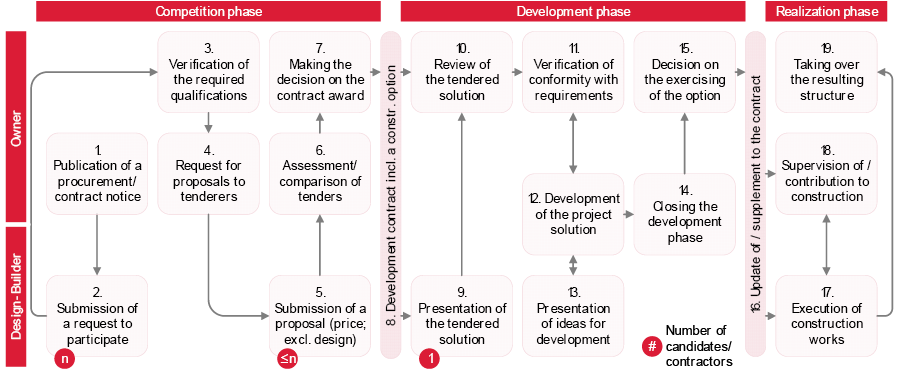
Figure 1. The DBd (i.e., “design–build with a development phase”) process
The upgrade in short
In a DBd contract, the preparation of project documents preceding the tendering process, as well as the realization phase of construction, largely follow the practices of a conventional DB contract. The main differences lie in the selection of the contractor and the new development phase immediately thereafter. Participation in the tendering does not then require submitting a design proposal, nor is it a selection criterion for the contractor. Secondly, unlike usual DB procedures, the selection and the resulting contract do not necessarily lead to implementation if it appears that the tendered technical solution is not compliant, and the contractor does not amend it to be compliant at the tendered price or if the parties do not otherwise reach an agreement on the solution to be implemented.
The purpose of the development phase is to enable the development of the project implementation solution in cooperation between the owner and the contractor so that the alterations made improve the technical and economic efficiency of the project. This can be achieved by developing qualitatively better solutions compared with basic solutions or cheaper solutions that are qualitatively equivalent or even solutions that are of slightly lower quality if the cost or other benefits gained from them are significant in relation to the alteration. Risk elimination and proactive planning are also part of the range of tools used during development.
Joint development generates new practices that will also change a project’s contracts. In addition to the option for realization, these include the organization, minimum measures, and the operating model of the development phase. The gradual nature of alteration planning (preliminary, outline and completed proposals stages) and the resolution of related financial issues are also key factors related to the definition of the operating model. Owner’s acceptance is needed to step from one stage to the next one. An example of more concrete rules is that the acceptation transfers more cost risk to the owner if it later dismisses the planned alteration. On the other, if the benefits available from an alteration decrease from those presented by the design-builder in a previous stage, the difference primarily burdens the design-builder. These and other pre-agreed rules direct actors toward careful, open and sincere collaboration.
Moreover, successful development work leads to a distribution of benefits, which also requires a framework that has been agreed upon. This framework and the proportional shares or their ranges, naturally vary depending on the type of alteration. The owner’s share is generally bigger, when an alteration is enabled by an easement of a requirement, whereas alterations to administrative plans from a previous design stage creates a more equal situation. Regarding the determination of gained benefits (and possible disbenefits), there is also a systematics set up for the impact assessment including different views (scope, quality standard, usability of the product, maintenance need, service life, risks, etc.). Case examples have also been attached to the contract for reference.
Application projects and their results
The content and scope of projects
Initially, the DBd procedure was tested in a few state-owned road projects (by the FTIA). The procurements of the three primary pilot projects were initiated almost simultaneously in May 2018. These projects are:
Rd 132 Klaukkala bypass (Project B). The contract involves constructing a stretch of nearly eight kilometres of a novel single carriageway road in a new terrain corridor. It is a road that bypasses an urban centre, and it involves the implementation of four interchanges and the road and street arrangements they require. The contract also includes the improvement of pedestrian routes and public transport stop arrangements in the area and the construction of noise barriers. The value of the realization phase contract is EUR 25 million.
Hwy 4 Kirri–Tikkakoski (Project C). The contract involves constructing a stretch of about 17 kilometres of motorway. Almost one third of this will be constructed in a new terrain corridor. The rest involves upgrading the current road into a motorway, which entails constructing new lanes alongside the current road. A pedestrian route will be built for the road network. The contract also includes the construction of five new interchanges as well as updating one existing interchange. The value of the realization phase contract is EUR 122 million.
E18 Turku Ring Road, Kausela–Kirismäki (Phase 1; Project D). The contract involves expanding the existing two-lane ring road into four lanes; the first phase will cover nearly half of the entire 10 km road section (the southeast part). The contract also includes removing old interchanges and replacing them with a new interchange and an overbridge. In addition, a network of parallel roads and a pedestrian traffic system will be built alongside the ring road and noise barriers will be improved. The value of the first phase contract is EUR 36 million.
The projects were already fundamentally different in terms of technical content and conditions, but there were many differences in their practices as well. The most significant difference was pricing. In most projects, the tender was presented as a fixed price and the price was changed on the basis of the alterations made during the development phase, based on case-specific cost calculations and the allocation criteria defined for each alteration category. Conversely, in Project C, the tender was based on unit prices for the goods/materials and services concerning the road area and road structures; however, a fixed price quote was still determined for the project level items (joint site costs, central office, fees) included in the contract price in the due course. The contract price was fixed at the end of the development phase in accordance with the volumes and unit prices at the time. The reason for using the unit price procedure was that the road plan for the project (prior to the selection of the contractor) was not prepared with a similar level of detail/diligence as the plans of the other projects under consideration. The plan was also partly outdated due to issues such as regulatory changes since the completion of the plan.
Competition phase
The interactive competition phase (ranging from the procurement notice to entering into the development phase contract) in Project C lasted four months, while the same phase lasted a couple of weeks longer for the other projects. In most projects, the difference between the cheapest two offers was at most 2% or 3%, but in Project D, the cheapest offer that was selected was significantly cheaper than the other offers. It is possible that one key factor that explains the difference, especially in this project, is the successful development of the solution at the competition phase. No complaints were made regarding the procurements.
Alterations during the development phase
The duration of the development phase (ranging from the contract to exercising the construction option) was slightly less than three months in Projects B and D and six months in Project C.
In Project B, the results of the development phase were made concrete in an appendix to the contract agreement that specified ten alterations. Five of these alterations specified the impact on the amount of the contract in euros, and the rest determined the principle of the allocation of benefits that would be followed after the more detailed cost impact of the alterations had been determined. The three most significant alterations (on which the functionality assessment is to be based) are presented in more detail at the top of Table 1 in the order of their benefit, assessed by the owner’s project manager. While two of the alterations (B1, B2) reach savings in the range of EUR 0.1 million, safety and the minimization of disturbances (traffic redirection and stops) were still more significant factors in the planning of the former. With regard to these two alterations (B1, B2), the benefits are distributed equally between the owner and the contractor, but the third alteration (B3), which reduces the scope of the project, mostly brings savings to the owner. All three alterations recorded in the table required changes to the owner’s requirements.
The three most significant alterations in the development phase of Project C are described in the middle of Table 1. The redesign of the interchange (C1) is the most significant one. In the variable terrain, the solution represents the optimization of excavation and filling, within the permissible longitudinal gradients of a motorway as well as the optimization of land use as the area surrounding the intersection is intended to become a business and industrial area. The alteration results in a more functional way to access the area. The alteration is linked to the construction of a parallel road (C2) that is located fairly far away from the interchange area, which would have made the use of its blasted stone difficult. The parallel road can now be finished quickly with purchased blasted stone, which facilitates the implementation of the rest of the project. This results in additional costs, but the project will probably be ready for traffic almost one year earlier with these alterations. The underpass alteration (C3) is an improvement from the perspective of future use, but it also avoids the construction of roads alongside waterways, shortens the corresponding bridges that will be built as part of the project, and improves user safety during work with regard to pedestrian traffic.
Three of the many development ideas in Project D progressed into alterations (Table 1, the bottom part). The most significant alteration concerns the placement of the surplus blasted stone off the current phase of the project. The blasted stone was meant to be taken to the area of the second phase being constructed later under a different contract (Project F below) in order to meet its blasted stone needs. By making excavations and placing blasted stone directly in the future structure, extensive subgrade reinforcements are avoided due to the preloading of the base with the early placement of the blasted stone. In the overall review of the phases, the net savings are on the scale of EUR 1 million, even though a new railing solution is required since the location is close to the current road. The alteration to the underpass height of the bridge (D2) is mainly functional and is achieved with a very small additional investment. New traffic arrangements (D3) provide safe and functional conditions for both traffic and construction with virtually no cost impacts.
Two of the alterations made in the projects (C1 and C3) were so significant that they required a change in the administrative road plan and making the plan available to the public as well. Otherwise, the alterations mainly consisted of matters that were within the owner’s decision-making power.
Exercising the realization option
The owner exercised the realization option in all the projects and the projects progressed to the realization phase. The realization phase was estimated to last more than two and a half years in Projects B and D and four and a half years in Project C. In most of the projects (B and D) it was obvious early on that the owner would exercise the option to realize the project and therefore it was a natural continuation of successful work done during the development phase. The realized duration of the development phase, just under three months, was essentially what had been planned for these projects.
However, the situation was more challenging for Project C than for the other projects. The planning of the project did not proceed as hoped, partly due to its delayed start, the challenging nature of the initial data, major alterations, and insufficient resourcing. There were major challenges in the submission of the preliminary technical design and, correspondingly, in the calculation of sufficiently unambiguous quantity data. In this project, the owner also had to question whether they wanted to exercise the realization option, which was why the service provider’s resourcing was also adjusted. In the end, the realization option was exercised, but instead of the planned development period of about four months, the phase lasted six months. The duration of the phase had no impact on alternative implementation resources as the development phase agreement concluded for this project had already ended the validity of other tenders.
Functionality assessment
This section first presents the results of the three interview assessment rounds in the same order that they were dealt with in the Methods section above (in the subsection, “Assessment of functionality”). These are followed by a review of third-party assessments.
Itemized alterations
The functioning of the DBd procedure was assessed by examining the alterations made during the development phase. The three most significant alterations of each project were examined (see Table 1), and the interviewees were asked to consider what kinds of conditions would have allowed their implementation in a conventional DB project. The interviewees were asked to give a numerical assessment to two aspects:
The likelihood of adoption. How likely is it that the alteration in question would have been implemented in a conventional DB process? The value 0% indicates the certainty that the alteration would not have been implemented and 100% indicates the certainty for the opposite; all intermediate values are in use.
Relative net benefit. What would have been the net benefit achieved by the owner in a conventional DB process (taking all impacts into account) in relation to the net benefit achieved now? The value 100% refers to the benefits of the DBd project; more than 100% is also possible in this instance.
Summaries of the responses are presented in Figure 2, where each individual value always represents the average of nine responses calculated in the following alternative ways:
by party (owners, contractors, designers), encompassing all responses by an actor in a certain role regardless of alterations’ ranking and project.
by project (Project B, etc.), encompassing all responses for a certain project regardless of alterations’ ranking and role of a respondent.
by alteration (Alteration 1, etc.), encompassing all responses for a certain ranking of alterations regardless of project and role of a respondent.
There is a great deal of variation in the likelihood of adoption. For one alteration (C1; Table 1), the interviewees strongly believed that the alteration would not have been implemented in a conventional DB process. One significant factor of an alteration like this is whether the alteration is a prerequisite for another one, as was the case here (C1 → C2). On the other hand, even the top three alterations of each project contained an alteration where at least one of the respondents assessed that it would have been implemented in a conventional DB project as well. However, the respondents only agreed on the implementation of one alteration out of the nine (D3; Table 1).
When asked about the obstacles to implementation, respondents mentioned project scheduling; in a conventional DB project, it is no longer possible to consider major alterations in the realization phase. The expected allocation of benefits may also have the effect that contractors do not present their ideas if it is assumed that the entire benefit will be directed to the owner.
For relative net benefit, the responses did not vary as much as the responses to the likelihood of adoption. If adoption is possible, conventional DB contracts will not necessarily fall far behind the owner benefit generated by the DBd procedure. However, the actual impact varies greatly case by case, as there are many variables. The distribution of benefits in a unit-priced contract may also differ significantly from the distribution of benefits in a fixed price contract.
In terms of relative net benefit, the views expressed by representatives of each role are consistent. Yet, contractors estimated the likelihood of adoption to be smaller than others. On the other hand, the contractors’ views should be emphasized because, when assessing the initiative behind the alterations, the contractors clearly raised novel ideas more often than other parties. There were more differences between the projects, which is natural because of the differences between the projects and the alterations made in them. When assessed by alteration (in order of importance), there is specifically a difference in how likely the alterations would be implemented in a conventional DB project.
Figure 3 illustrates the expected benefits of a conventional DB contract (as a percentage of the 100% benefit achieved with the DBd procedure) as the product of relative net benefit and likelihood of adoption. As a whole, there is no major difference between the parties other than what is directly caused by the contractors’ lower assessments of the likelihood of adoption. The comparison of projects highlights large-scale alterations in Project C, whose preconditions for implementation in a conventional DB project are relatively low. Further, the analysis by alteration on the right-hand side of the figure indicates the most important thing: the more significant and more useful alteration one aims for, the more important it is to use the DBd procedure instead of the conventional DB process.
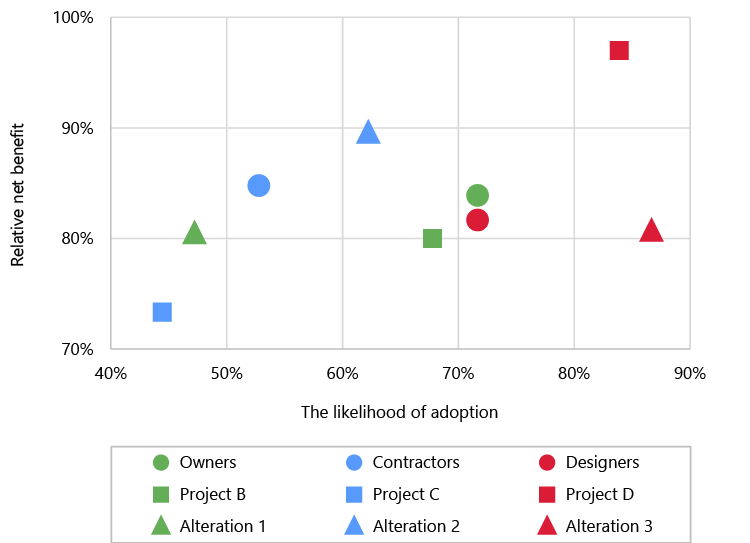
Figure 2. Assessments of the likelihood and relative net benefit of adoption
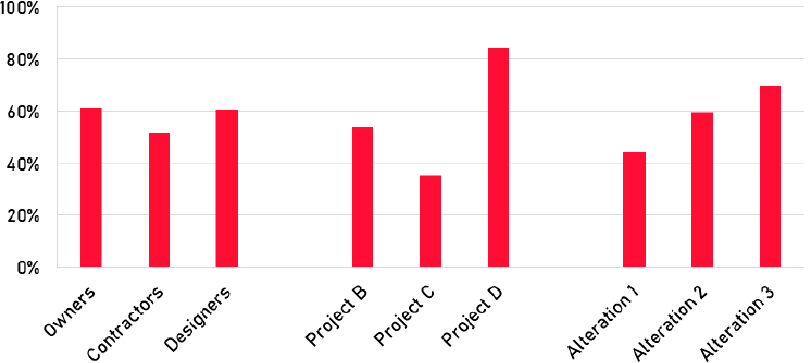
Figure 3. Expected relative benefit for a conventional DB project
General effects
The interviewees were also asked to rate the impact of the procedure on the achievement of general performance targets (see Figure 4). These ratings concerned the realization of the application project under review (Project realization in the figure). In addition, interviewees were asked to separately assess how the established use of the DBd procedure will improve the overall value-for-money output in the future (Established use in the figure). In all cases, the reference was the result of a conventional DB procedure and the rating scale ranged from a significant negative impact (“significantly weakens / adds / slows down”) to a significant positive effect (“significantly improves / decreases / speeds up”) without headlining intermediate levels. Figure 4 reports the number of responses per rate and target while the size (area) of a bubble illustrates the number.
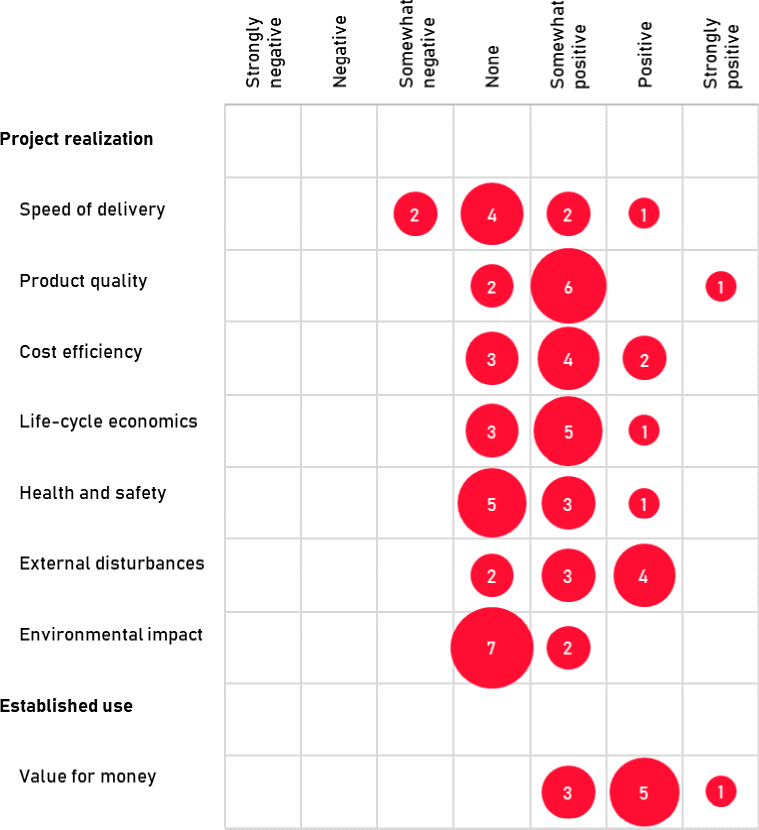
Figure 4. Assessments of the realization of the general performance targets (Projects B–D)
Different aspects were emphasized in different projects, but the alterations can generally be seen to have produced some savings that subsequently improve the quality and the life cycle economy through reinvestments. The interviewees felt that additional planning, better risk management, and clarifying objectives with mutual interaction had a positive impact on many aspects. In fact, all the respondents’ assessments were neutral or positive in terms of targets other than speed. Thus, in Projects B and D, the impact on speed remained unclear, but the alterations made in Project C may have sped up the completion of the project, even though the start of construction was delayed compared with the conventional DB procedure (due to the preceding development phase). It is also noteworthy that the contractor cannot make binding procurements at the development phase before the realization option decision, so some opportunities may be lost.
In general, the effect of the realized projects was not considered strong, although it was positive as a whole. Yet, the actual extent of the effect remains unclear since it is always about the images given by the scales and (translated) rate definitions, so the result is indicative at most. It also has to be noted that the rating fails to convey all the perceived benefits as the reduction of uncertainty and better predictability were considered to form a major benefit although the survey ignores this benefit (i.e., the fact that various negative surprises in the implementation stage are less likely due to combined competence in development).
The question of the overall functionality of the procedure included the presumption that the procedure was already well established, which was intended to ignore the potential challenges related to the early adoption of the procedure. It was also assumed that the DBd procedure would be used consistently in projects where it was appropriate. A summary of the answers to the question is found under the value for money section in Figure 4. The potential was seen to be slightly higher than the experienced benefit in the implemented projects since the refinement of operational processes, realizing purpose and potential, and cultural changes often require time.
Experiences in general
The parties’ interviews did not reveal any significant opposition to the application of the procedure even though the interviews addressed various factors much more extensively than is possible in this summary that focuses on the general eligibility of the model.
Exclusion of technical design from the proposal and reviewing it based on the principal solutions does not make it more difficult to select a contractor, and the practice is particularly preferred by contractors. In the absence of a complete design, the motivation for alteration planning is also maintained, and at best, the result is a development effort where both parties work together. In this way, there is higher confidence in the project solution and its feasibility at the time of the final contract (exercising the realization option). The realization option procedure is a safeguard for the owner, and as a result, the owner is now consulted more readily than in a conventional DB contract.
The need for resourcing and commitment to a prolonged uncertain situation (the development phase) appears challenging for the contractors, but it is partly compensated for by the less labour-intensive tender. Companies are particularly interested in projects where the offer is based on unit prices as this will further reduce the workload of preparing the offer as it leaves out quantity surveying as well as the related risk analysis and determination of a contingency reserve.
The uncertainty of progressing to the realization phase is also somewhat limited so that it does not become an overall steering factor. Having progressed to the development phase, the owner has a strong interest in implementing the project and, for public sector projects in particular, discontinuing cooperation is only a real threat in cases where the service provider is unable to fulfil their basic obligations, that is, they are unable to allocate competent resources to the project, to participate in discussions with the owner in order to move the development forward, and are unable to supplement their tender solution with regard to further planning.
Moreover, the development phase does not significantly increase the experienced workload as it now largely consists of the work that has traditionally been done at the competition phase. Of course, the owner’s involvement and more extensive examinations of alternative solutions are a new element, but these additional tasks are mainly only conducted if there are improvement opportunities whose realization benefits both parties. However, anticipating the amount of work is now more challenging than in the traditional process.
Participants also did not feel that the completion of the project was slowed down by a separate development phase. The development phase takes months of dedicated time, perhaps even slightly longer than the shortest instances in the pilot projects. However, a significant amount of time is only used up when there are meaningful improvements to explore; in large complex projects, these improvements will often speed up the realization phase more than the delay caused by the development phase. So, the development phase is a small investment since altering solutions may speed up the deployment of a facility significantly.
It is also clear that there were more development ideas presented now and/or the ideas concerned more significant alterations than before (in conventional DB). Naturally, there were differences between the projects. In addition to clear technical alterations, the work done during the development phase also improves the manageability of the project’s realization. Good advance planning frees up some of the site management’s capacity to prepare future tasks when work is being conducted. Instead of a reactive approach, the likelihood of more proactive management is now greater.
Third-party assessments
A third-party assessment has been conducted on three of the FTIA’s DBd projects now. Project C is the only one where the assessment object matches with the entity examined in this paper (Netlipse, 2022c). It concludes the following: “Applying the development phase as an extension of the Design & Build contract is a smart and novel practice and was beneficial to the project (…). Also, in the development phase some flaws and missing items were discovered (…).;” and “The DBd contract showed to be flexible enough to manage scope changes that come up during the project.” Overall, the assessment concludes that “this method of contracting seems to have yielded added value” and “the project shows an early delivery.”
The only negative comments related to DBd can be found from the assessment connected to Project D. According to the assessment (Netlipse, 2022a), “it could have been more beneficial to take a bit more time in (…) the development phase.” and “The development phase has not been used to its full potential.” Yet, the assessors recognized that even now “The development phase has allowed the contractor to reduce their risks and find optimizations, which has benefitted both the contractor and FTIA.” Thus, even the negative comments presented turn to support DBd. On the other hand, it must be noted that Project D, examined in this paper, is Phase 1 of this project entity, while the assessment (mainly) focused on its Phase 2 (which is the sixth DBd project by the FTIA in its order: Project F), where there was “political pressure to start construction” at the time of a funding decision (Netlipse, 2022a).
The third completed IPAT assessment (Netlipse, 2022b) focused on the FTIA’s fifth DBd project (Hwy 3 Hämeenkyrönväylä, Project E) that is not studied in this paper. However, the report shares the supportive opinion of the other assessments by concluding that “DBd allowed for a joint understanding and collaborative working in interpreting the functional specification into a preliminary design, including the ability to incorporate the relevant technology and material requirements into the design approach.”
Discussion
The study developed and evaluated a DB application referred to as DBd that combines price-inclusive design-builder selection and a detached joint development phase between the owner and the selected design-builder, followed by the owner’s separate decision on whether or not to continue to construction. The DBd procedure was pretty much created from scratch, utilized in a few projects, and reviewed in regard to the experiences gained in those projects.
Although it is impossible to briefly review the overall DBd practice in relation to all existing DB variations, the recognition of the joint development activity offers a shortcut to focus on its novelty. First, a sort of joint development exists in projects where the alternative technical concepts presented by proposers in the competition phase are taken into final design with the selected design-builder (Gransberg, Loulakis and Gad, 2014), but such a process involves the utmost laborious competition phase, which is totally different from the purposefully lightened competition of the DBd process, for instance. Excessive laboriousness also troubles joint development with two competing design-builders (Department of Infrastructure and Regional Development, 2015), although the challenge is now postponed in the process.
In addition to the latter (Department of Infrastructure and Regional Development, 2015), a joint development phase with a deferred final decision about the continuation to the construction phase by the owner also exists in so-called progressive DB (Alleman and Tran, 2019; and other similar practices, e.g., Rosander and Kadefors, 2019, 2023, and Engebø, 2022), but there, just one design-builder continues to the development phase, although the preceding competition does not include a guaranteed price or strong price benchmark for the owner. Therefore, the owner is exposed to the principal-agency problematics with the more knowledgeable design-builder as regards pricing. In most projects, this is something the owner strives to avoid.
Therefore, a similar approach with the same rationality is not known to have been used and has not been brought forward in research. This indicates that the DBd approach is likely to be novel and it is reasonable to make it known to a wider audience for further assessment and research.
The DBd procedure was also evaluated in three road projects where it was considered an improvement in comparison with the former practice by the parties involved in the pilot projects as well as external assessors. It was reckoned to have led to better value for money, and it was easily usable and efficient in using resources while also fixing the experienced deficiencies of the conventional practice. Side effects, if any, tend to be positive in regard to maintaining competition and streamlining the implementation phase. The study itself does not extend to a detailed post-completion analysis, but in this regard, the deferred completion of the paper has made is possible to ensure that improvements made during the development phase have now been realized and the projects have been completed with success.
All this also supports the more general validity of DBd as a competitive procedure considering that the point of reference was previously considered the most appropriate practice as a result of the preceding evolution of DB in the target market. Moreover, since the benchmark application (i.e., DB involving a two-step procedure, best-value selection with design proposal, etc.) strongly resembles the DB practices actively used elsewhere, the results of the study may potentially be of a greater significance than can be deducted directly from the success in the pilot projects. In other words, if some Finnish construction owners have stepped forward away from the solutions used elsewhere, it would be surprising if actors in other countries did not find DBd meaningful.
On the other hand, the limitation of the study is that the performance assessment is rather imprecise and limited to only a few road projects where it is largely subject to the assessment of the involved key professionals. Further, initial experiments in an industry accustomed to another kind of operating culture may not give a complete picture of how the DBd procedure works as an established course of action. Therefore, more experiments of various types in different regions with proper validation and congruent results are required for generalization and to shed light on the usability of the procedure in the long term.
However, an indication of the procedure’s generalizability has also evolved with the postponement because the FTIA has launched a few more DBd projects (in addition to the six projects listed above) since the completion of the empirical part of this paper. Some Finnish municipalities have also followed the trend and, in addition to infrastructure, DBd has found its way into building construction.
However, this does not mean that DBd will outstrip other DB variations or be worth using in any circumstances since that is not a reasonable expectation. Instead, DBd should be recognized as an alternative to the other current variations in certain cases. For instance, progressive DB or other so-called early involvement practices may better serve demanding projects that involve a lot of uncertainty and unsolved issues at the time of design-builder selection, which makes commitment to a certain price impractical. On the other hand, if external uncertainty is manageable, if an exceptional project involves extensive innovation potential, and if the owner considers industry-wide ideation worthwhile, a process based on alternative technical concepts may well be preferable over DBd. Furthermore, the practice referred to as conventional DB in this paper is more for straightforward projects with unambiguous requirements that are inflexible and not likely to change.
Application areas for DBd can most likely be found between these extremes: a wide-ranging design competition is unlikely to pay for the effort but, in contrast, involving a very capable design-builder brings needed know-how to develop a project when external uncertainties are modest, and the project scope and requirements can be determined for (more straightforward) competition (although not necessarily in their final form). The need to improve the project may also be related to the owner’s envisaged requirements changes and partly outdated plans, while parallel design commissioning no longer make sense.
Conclusions
Overall, it can be concluded that a novel DBd process has been created and the experiments in the realized projects legitimize the recognition of the DBd procedure as a valid DB practice when adhering to the pragmatist notion of truth. The paper contributes to the body of knowledge, first by disproving the dominant view (which has been guiding the formulation and use of the current project delivery practices) that price-inclusive competition and collaborative development thereafter could not be matched successfully and, second, by offering a novel option for the industry to improve its performance accordingly.
Acknowledgements
The starting point of the article is a mandate funded by the Finnish Transport Infrastructure Agency, Infra ry (Infra Contractors Association in Finland) and Kehto-forum (major Finnish cities/municipalities).
References
Abdelmegid, M., González, V., O’Sullivan, M., Walker, C., Poshdar, M. and Alarcón, L., 2023. Exploring the links between simulation modelling and construction production planning and control: a case study on the last planner system. Production Planning & Control, [e-journal] 34(5), pp.459-76. https://doi.org/10.1080/09537287.2021.1934588
Adamtey, S.A., 2020. An empirical study to assist owners in selecting the right procurement method for design-build projects. International Journal of Construction Education and Research, [e-journal] 18(1), pp.67-84. https://doi.org/10.1080/15578771.2020.1786482
Alleman, D. and Tran, D., 2019. Challenges of implementing progressive design-build in highway construction projects. Journal of Legal Affairs and Dispute Resolution in Engineering and Construction, [e-journal] 12(1), 04519036. https://doi.org/10.1061/(ASCE)LA.1943-4170.0000327
Alleman, D., Nevett, G. and Goodrum, P., 2018. Design-build performance over the years: An exploration into Colorado’s experience. In: Construction Research Congress 2018. New Orleans (LA), United States, 2-4 April 2018. Reston (VA): American Society of Civil Engineers (ASCE). https://doi.org/10.1061/9780784481271.033
American Institute of Architects (AIA), 2007. Integrated project delivery: A guide. Sacramento (CA): AIA National and AIA California Council.
Antoine, A.L.C., Alleman, D. and Molenaar, K.R., 2018. Examination of project duration, project intensity, and timing of cost certainty in highway project delivery methods. Journal of Management in Engineering, [e-journal] 35(1), 04018049. https://doi.org/10.1061/(ASCE)ME.1943-5479.0000661
Beard, J., Loulakis, M. and Wundram, E., 2001. Design-build: Planning through development. New York (NY): McGraw-Hill.
Chan, A.P.C., Scott, D. and Lam, E.W.M., 2002. Framework of success criteria for design-build projects. Journal of Management in Engineering, [e-journal] 18(3), pp.120-28. https://doi.org/10.1061/(ASCE)0742-597X(2002)18:3(120)
Chan, D.W.M., Chan, A.P.C., Lam, P.T.I. and Wong, J.M.W., 2011. An empirical survey of the motives and benefits of adopting guaranteed maximum price and target cost contracts in construction. International Journal of Project Management, [e-journal] 29(5), pp.577-90. https://doi.org/10.1016/j.ijproman.2010.04.002
Chang, C.-Y. and Ive, G., 2011. Selecting procurement systems for capital projects: a transaction cost perspective. Advances in Business and Management, 2, pp.125-37.
Chen, Q., Jin, Z., Xia, B., Wu, P. and Skitmore, M., 2015. Time and cost performance of design-build projects. Journal of Construction Engineering and Management, [e-journal] 142(2), 04015074. https://doi.org/10.1061/(ASCE)CO.1943-7862.0001056
Choi, K., Jung, I., Yin, Y., Gurganus, C. and Jeong, H.D., 2020. Holistic performance evaluation of highway design-build projects. Journal of Management in Engineering, [e-journal] 36(4), pp.1-11. https://doi.org/10.1061/(ASCE)ME.1943-5479.0000781
Chynoweth, P., 2013. A taxonomy of research styles for the chartered surveying profession: research into practice, for practice, and through practice. In: Proceedings of the Royal Institution of Chartered Surveyors Construction, Building, and Real Estate Conference (COBRA), New Delhi, India, 10-12 September 2013.
da Rocha, C., Formoso, C., Tzortzopoulos-Fazenda, P., Koskela, L. and Tezel, A., 2012. Design science research in lean construction: process and outcomes. In: Proceedings for the 20th Annual Conference of the International Group for Lean Construction, San Diego (CA), United States, 18–20 July 2012.
da Rocha, C. and Kemmer, S., 2018. Integrating product and process design in construction. Construction Management and Economics, [e-journal] 36(9), pp.535-43. https://doi.org/10.1080/01446193.2018.1464198
Department of Infrastructure and Regional Development, 2015. National alliance contracting guidelines. Guidance note 6: Early contractor involvement and other collaborative procurement methods. Canberra (ACT): Australian Government, Department of Infrastructure and Regional Development.
Department of Treasury and Finance, 2006. Project alliancing: Practitioners’ guide. State of Victoria, Melbourne (VIC): The Department of Treasury and Finance.
Dorsey, R., 1997. Project delivery systems for building construction. Washington DC: Associated General Contractors of America.
El Wardani, M.A., Messner, J.I. and Horman, M.J., 2006. Comparing procurement methods for design-build projects. Journal of Construction Engineering and Management, [e-journal] 132(3), pp.230-38. https://doi.org/10.1061/(ASCE)0733-9364(2006)132:3(230)
Engebø, A., 2022. Collaborative project delivery methods. PhD. Trondheim: Norwegian University of Science and Technology, Department of Civil and Environmental Engineering.
European Union, 2014. Directive 2014/24/EU of the European Parliament and of the Council of 26 February 2014 on public procurement and repealing Directive 2004/18/EC. Official Journal of the European Union L 94, Volume 57, 28 March 2014, pp.65-242.
Finnish Transport Agency, 2018. Rantatunneli: Value for money report. Helsinki, Finland: Finnish Transport Agency.
Gad, G.M., Davis, B., Shrestha, P.P. and Harder, P., 2019. Lessons learned from progressive design-build implementation on airport projects. Journal of Legal Affairs and Dispute Resolution in Engineering and Construction, [e-journal] 11(4), 04519020. https://doi.org/10.1061/(ASCE)LA.1943-4170.0000320
Gad, G.M., Gransberg, D.D. and Loulakis, M., 2015. Submittal and evaluation procedures for alternative technical concepts. Transportation Research Record, [e-journal] 2504(1), pp.10-18. https://doi.org/10.3141/2504-02
Gad, G.M., Loulakis, M.C. and Gransberg, D., 2019. Confidentiality issues with alternative technical concepts during design-build project procurement. Journal of Legal Affairs and Dispute Resolution in Engineering and Construction, [e-journal] 12(1), 04519034. https://doi.org/10.1061/(ASCE)LA.1943-4170.0000345
Gransberg, D.D. and Molenaar, K.R., 2019. Critical comparison of progressive design-build and construction manager/general contractor project delivery methods. Transportation Research Record, [e-journal] 2673(1), pp.261-68. https://doi.org/10.1177/0361198118822315
Gransberg, D.D., Loulakis, M. and Gad, G.M., 2014. Alternative technical concepts for contract delivery methods (NCHRP Synthesis 455). Washington DC: The National Academies Press. https://doi.org/10.17226/22419
Hauck, A., Walker, D., Hampson, K. and Peters, R., 2004. Project alliancing at National Museum of Australia–collaborative process. Journal of Construction Engineering and Management, [e-journal] 130(1), pp.143-52. https://doi.org/10.1061/(ASCE)0733-9364(2004)130:1(143)
Hevner, A., March, S., Park, J. and Ram, S., 2004. Design science in information systems research. MIS Quarterly, [e-journal] 28(1), pp.75-105. https://doi.org/10.2307/25148625
James, W., 1955. Pragmatism and four essays from the meaning of truth. Cleveland (OH): The World Publishing Company.
Johannesson, P. and Perjons, E., 2014. An introduction to design science. Cham: Springer. https://doi.org/10.1007/978-3-319-10632-8
Jones, O., Gold, J. and Claxton, J., 2022. An exposition of the constructive research approach: a tactical treatise for addressing methodological and practical issues in organisational research. International Journal of Organizational Analysis, [e-journal] ahead-of-print. https://doi.org/10.1108/IJOA-03-2022-3212
Kanjanabootra, S., 2016. Design science method and theory in a construction and engineering context: ‘a phronetic tale of research.’ Engineering Project Organization Journal, [e-journal] 6(2-4), pp.64-77. https://doi.org/10.1080/21573727.2016.1260549
Kaplanogu, S.B. and Arditi, D., 2009. Pre-project peer reviews in GMP/lump sum contracts. Engineering, Construction and Architectural Management, [e-journal] 16(2), pp.175-85. https://doi.org/10.1108/09699980910938046
Kasanen, E., Lukka, K. and Siitonen, A., 1993. The constructive approach in management accounting research. Journal of Management Accounting Research, 5(fall), pp.243-64.
Konchar, M. and Sanvido, V., 1998. Comparison of U.S. project delivery systems. Journal of Construction Engineering and Management, [e-journal] 124(6), pp.435-44. https://doi.org/10.1061/(ASCE)0733-9364(1998)124:6(435)
Koskela, L., 2008. Which kind of science is construction management? In: Proceedings for the 16th Annual Conference of the International Group for Lean Construction. Manchester, United Kingdom, 16-18 July 2008.
Kuechler, B. and Vaishnavi, V., 2008. On theory development in design science research: anatomy of a research project. European Journal of Information Systems, [e-journal] 17(5), pp.489-504. https://doi.org/10.1057/ejis.2008.40
Lahdenperä, P., 2016. Towards quantification of the economic efficiency advantage of alliancing in complex infrastructure projects. In: Saari, A. and Huovinen, P., eds. Proceedings of the CIB World Building Congress 2016 Intelligent Built Environment for Life. May 30-June 3, 2016, Tampere, Finland. Volume III. Tampere University of Technology, Department of Civil Engineering, Construction Management and Economics. Report 18 (pp.496-509). http://urn.fi/URN:ISBN:978-952-15-3743-1
Lahdenperä, P., 2017. Towards a coherent theory of project alliancing: Discovering the system’s complex mechanisms yielding value for money. Construction Economics and Building, [e-journal] 17(2), pp.41-61. https://doi.org/10.5130/AJCEB.v17i2.5292
Lahdenperä, P., 2019. A longitudinal view of adopting project alliancing: Case Finland. In Lill, I. and Witt, E., eds. 10th Nordic Conference on Construction Economics and Organization (Emerald Reach Proceedings Series, Vol. 2). Bingley: Emerald Publishing Limited. pp.129-36. https://doi.org/10.1108/S2516-285320190000002053
Lahdenperä, P., 2020. Impact of market fluctuation on relative advantageousness of project delivery systems. Engineering Project Organization Journal, [e-journal] 9. https://doi.org/10.25219/epoj.2020.00102
Lam, E.W.M., Chan, A.P.C. and Chan, D.W.M., 2007. Benchmarking the performance of design-build projects: Development of project success index. Benchmarking, [e-journal] 14(5), pp.624-38. https://doi.org/10.1108/14635770710819290
London Underground, 2014. Innovative contractor engagement: Project report on the implementation of innovative contractor engagement for the appointment of a design and build contractor for the Bank Station capacity upgrade scheme. London: London Underground.
Love, P., Skitmore, M. and Earl, G., 1998. Selecting a suitable procurement method for a building project. Construction Management and Economics, [e-journal] 16(2), pp.221-33. https://doi.org/10.1080/014461998372501
Lukka, K., 2000. The key issues of applying the constructive approach to field research. In: Management expertise for the new millennium. Turku: Turku School of Economics and Business Administration A-1 (pp.113-28).
Masterman, J., 1992. An introduction to building procurement systems. London: E & FN Spon.
Migliaccio, G.C., Gibson, G.E. and O’Connor, J.T., 2009. Procurement of design-build services: Two-phase selection for highway projects. Journal of Management in Engineering, [e-journal] 25(1), pp.29-39. https://doi.org/10.1061/(ASCE)0742-597X(2009)25:1(29)
National Association of State Facilities Administrators, 2010. Integrated project delivery for public and private owners. Lexington (KY): National Association of State Facilities Administrators (NASFA), Construction Owners Association of America (COAA), The Association of Higher Education Facilities Officers (APPA), Associated General Contractors of America (AGC) and American Institute of Architects (AIA).
Netlipse, 2017. IPAT assessors manual. Baarn: Netlipse – Networking knowledge of large infrastructure projects in Europe. (Version 3.0.).
Netlipse, 2022a. IPAT assessment report, E18 Turku ring road Kausela-Kirismäki. Baarn: Netlipse – Networking knowledge of large infrastructure projects in Europe.
Netlipse, 2022b. IPAT assessment report, main road 3 Hämeenkyrönväylä project. Baarn: Netlipse – Networking knowledge of large infrastructure projects in Europe.
Netlipse, 2022c. IPAT assessment report, main road 4 Kirri-Tikkakoski. Baarn: Netlipse – Networking knowledge of large infrastructure projects in Europe.
Nguyen, P.H.D., Tran, D.Q. and Bypaneni, S.P.K., 2021. Exploring the impact of project size on design-bid-build and design-build project delivery performance in highways. Construction Management and Economics, [e-journal] 39(11), 879-93. https://doi.org/10.1080/01446193.2021.1993289
Nikou Goftar, V., El Asmar, M. and Bingham, E., 2014. A meta-analysis of literature comparing project performance between design-build (DB) and design-bid-build (DBB) delivery systems. In: Construction Research Congress 2014. Atlanta (GA), United States, 19-21 May 2014. Reston (VA): American Society of Civil Engineers (ASCE). https://doi.org/10.1061/9780784413517.142
Oyegoke, A., 2011. The constructive research approach in project management research. International Journal of Managing Projects in Business, [e-journal] 4(4), pp.573-95. https://doi.org/10.1108/17538371111164029
Oyegoke, A. and Kiiras, J., 2009. Development and application of the specialist task organization procurement approach. Journal of Management in Engineering, [e-journal] 25(3), pp.131-42. https://doi.org/10.1061/(ASCE)0742-597X(2009)25:3(131)
Piirainen, K. and Gonzalez, R., 2013. Seeking constructive synergy: design science and the constructive research approach. In: vom Brocke, J., Hekkala, R., Ram, S. and Rossi, M., eds. Design science at the intersection of physical and virtual design. Proceedings, 8th International Conference, DESRIST. Helsinki, Finland, 11–12 June 2013. Berlin/ Heidelberg: Springer-Verlag (pp.59–72). https://doi.org/10.1007/978-3-642-38827-9_5
Ramsey, D., El Asmar, M. and Gibson, G.E., 2016. Quantitative performance assessment of single-step versus two-step design-build procurement. Journal of Construction Engineering and Management, [e-journal] 142(9), 04016033. https://doi.org/10.1061/(ASCE)CO.1943-7862.0001145
Rosander, L. and Kadefors, A., 2019. From project to policy: Implementing a collaborative procurement strategy in a public client organization. In: Gorse, C. and Neilson, C.J., eds. Proceedings of the 35th Annual ARCOM Conference, 2-4 September 2019, Leeds, UK (pp.750–59). https://www.arcom.ac.uk/-docs/archive/2019-Indexed-Papers.pdf
Rosander, L. and Kadefors, A., 2023. Implementing relational contracting in a public client organization: the influence of policy clashes, resources and project autonomy. Construction Management and Economics, [e-journal] 41(8), pp.651-69. https://doi.org/10.1080/01446193.2023.2190992
Sbiti, M., Beladjine, D., Beddiar, K. and Mazari, B., 2022. Leveraging quantity surveying data and BIM to automate mechanical and electrical (M & E) construction planning. Applied Sciences, [e-journal] 12(9), 4546. https://doi.org/10.3390/app12094546
Shrestha, P.P., O’Connor, J.T. and Gibson, G.E., 2012. Performance comparison of large design-build and design-bid-build highway projects. Journal of Construction Engineering and Management, [e-journal] 138(1), pp.1-13. https://doi.org/10.1061/(ASCE)CO.1943-7862.0000390
Sullivan, J., El Asmar, M., Chalhoub, J. and Obeid, H., 2017. Two decades of performance comparisons for design-build, construction manager at risk, and design-bid-build: Quantitative analysis of the state of knowledge on project cost, schedule, and quality. Journal of Construction Engineering and Management, [e-journal] 143(6), 4017009. https://doi.org/10.1061/(ASCE)CO.1943-7862.0001282
Tran, D.Q., Diraviam, G. and Minchin, R.E., 2018. Performance of highway design-bid-build and design-build projects by work types. Journal of Construction Engineering and Management, [e-journal] 144(2), 04017112. https://doi.org/10.1061/(ASCE)CO.1943-7862.0001437
Voordijk, H., 2009. Construction management and economics: the epistemology of a multidisciplinary design science. Construction Management and Economics, [e-journal] 27(8), pp.713-20. https://doi.org/10.1080/01446190903117777
Walker, D. and Hampson, K., eds., 2003. Procurement strategies. A relationship-based approach. Oxford: Blackwell Science. https://doi.org/10.1002/9780470690635
Xia, B., Chan, A.P.C. and Yeung, J.F.Y., 2011. Developing a fuzzy multicriteria decision-making model for selecting design-build operational variations. Journal of Construction Engineering and Management, [e-journal] 137(12), pp.1176-84. https://doi.org/10.1061/(ASCE)CO.1943-7862.0000381
Xia, B., Chan, A., Molenaar, K. and Skitmore, M., 2012a. Determining the appropriate proportion of owner-provided design in design-build contracts: Content analysis approach. Journal of Construction Engineering and Management, [e-journal] 138(9), pp.1017-1022. https://doi.org/10.1061/(ASCE)CO.1943-7862.0000522
Xia, B., Chan, A., Skitmore, M. and Dean, A., 2012b. A classification framework for design-build variants from an operational perspective. International Journal of Construction Management, [e-journal] 12(3), pp.85-99. https://doi.org/10.1080/15623599.2012.10773196
Zegarra, O. and Alarcón, L., 2019. Coordination of teams, meetings, and managerial processes in construction projects: using a lean and complex adaptive mechanism. Production Planning & Control, [e-journal] 30(9), pp. 736-63. https://doi.org/10.1080/09537287.2019.1578905