Construction Economics and Building
Vol. 22, No. 4
December 2022
RESEARCH ARTICLE
Developing a Framework for Construction Sector Capacity
An Thi Hoai Le1,*, Niluka Domingo1, Casimir MacGregor2, Regan Potangaroa1
1 School of Built Environment, Massey University, New Zealand
2 Building Research Association of New Zealand (BRANZ)
Corresponding author: An Thi Hoai Le, School of Built Environment, Massey University, New Zealand, a.lethihoai@massey.ac.nz
DOI: https://doi.org/10.5130/AJCEB.v22i4.8180
Article History: Received 11/05/2022; Revised 09/09/2022 & 26/10/2022; Accepted 22/11/2022; Published 15/12/2022
Abstract
Understanding construction sector capacity allows stakeholders to assess the ability to deliver construction projects critically. However, the capacity concept in the construction sector is dynamic, and interrelationships of capacity at different levels have not been explored thoroughly. Accordingly, this paper reviewed studies on capacity at different levels: sector, organisational, and individual to (1) identify attributes of capacity at each level; (2) map relationships of the capacities in the construction sector; and (3) develop a conceptual framework of project capacity in the construction sector and propose future research directions. This study used an integrative literature review approach to synthesise literature from various domains to describe different levels of the construction sector’s capacity. The findings of the literature review conceptualised a construction sector capacity framework at four levels: sector, organisational, individual, and project. The detailed descriptions of the relevant attributes at each level advance our understanding of capacity within the construction sector and are fundamental to developing capacity assessment tools for the construction sector. The relationships formed in the proposed framework help explain how the capacity at each level affects the system. Findings also serve to identify areas for future research, including investigating interrelationships of attributes in the capacity framework.
Keywords
Construction Capacity; Capacity Framework; Organisational Capacity; Project Capacity; Individual Capacity
Introduction
The construction sector directly contributes to the national GDP and facilitates economic activities in other sectors through buildings, infrastructure development, facilities management, and related construction services (Deloitte, 2019). In terms of GDP contribution, for example, the construction sector generates about 9% of GDP in the European Union (Deloitte, 2019); it represents 7.4% of Canada’s GDP (Statistics Canada, 2021) and contributes 6.7% as the fifth largest sector in terms of GDP contribution in New Zealand (Statistics New Zealand, 2021). It is obvious that the ability to deliver projects in the construction sector is vital for the development of any nation.
However, lessons learned so far indicate that the construction sector is facing several major issues. It has generally been considered a traditional sector with low productivity (Ma and Liu, 2016; Ghodrati, et al., 2018; Hasan, et al., 2018; Xiong, Newton and Skitmore, 2019), especially the lowest productivity gains over the last decades (Deloitte, 2019), high staff turnover (Ayodele, Chang-Richards and González, 2020), skills shortages (Chang-Richards, et al., 2017; Kim, Chang and Castro-Lacouture, 2020), loss and lack of collaboration among partners (Deep, Gajendran and Jefferies, 2019), and slow adoption of digital technologies and innovation (Chancellor, Abbott and Carson, 2015; Delgado, et al., 2019; Olanipekun and Sutrisna, 2021). The construction sector is also susceptible to economic fluctuations (Ercan, 2019). For example, the construction sector suffers from capacity constraints such as resources and expertise in high-demand periods. At the same time, there are significant job losses in the construction sector during downturns more so than in other sectors (PwC, 2016). The so-called ‘boom-bust’ cycle, leads to instability and uncertainty within the sector, especially for its workforce. Therefore, the understanding of the ‘ability’ to deliver is vital to support decision-makers to establish policies or strategies for the development of the construction sector in the ‘boom-bust’ cycle. To the authors’ best knowledge, there are limited studies focusing on developing a framework for measuring the capacity of the construction sector to predict its ability to deliver future projects.
In response, the CanConstructNZ research programme has been established aiming at measuring the capacity of the construction sector in New Zealand. The programme aims to create a comprehensive system intending to generate a set of capacity measurement factors that allows the sector stakeholders to understand what can realistically be delivered by the sector and the changes required for the successful delivery of future planned projects. As a part of the CanConstructNZ programme, this study serves as a starting point to develop a capacity framework with indicators at different levels to help measure the sector capacity, identify gaps in capacity, and map them against the future demand of construction pipeline projects. In addition, in order to explore the potential of interrelationships between the different aspects that define capacity in the construction sector, an in-depth understanding of the different capacity levels and their components is needed. From this perspective, this paper conducts the integrative literature review to present the structure, foundational elements, and attributes of different levels of capacity and then develop a construction sector capacity framework. The following three research objectives guide this review process: (1) identify attributes of capacity at each level; (2) map relationships of the capacities in the construction sector; and (3) develop a conceptual framework of project capacity in the construction sector and propose future research directions. Findings from this study can offer a new way of thinking about capacity in the construction sector, including key levels, attributes and their relationships. The findings highlight areas for future research for better understanding of capacity measurement and can support governments and stakeholders in identifying capacity gaps and proposing capacity development interventions.
Key terms and definitions
Capacity definitions
Capacity is an important economic measure and is defined in terms of potential output in consideration of the capital stock, existing regulations, and the state of technology (Kirkley and Squires, 2003; Shaikh and Moudud, 2004). Previous studies have also proven that understanding the concept of capacity helps explain various economic phenomena to support operation and business strategies (Squires and Segerson, 2020). Therefore, capacity and related terms have been studied in different sectors such as fisheries, electric, health, and dairy farms to prevent over/under-investment in stock resources, explain the appropriate number of firms and plants in the sector, forecast the growth rate and variability of demand, measure productivity, identify opportunities for firm investments and take advantage of market changes (Kirkley, Morrison Paul and Squires, 2002; Squires and Segerson, 2020).
There are various definitions of capacity in the literature. Brown, LaFond and Macintyre (2001) defined capacity as its existence to perform a particular action or enable performance and, similarly, Michael et al. (2003) agreed that the concept of capacity is the ability to ‘perform or produce’. UNDP (2010) offered a more detailed definition of capacity as “the ability of individuals, institutions, and societies to perform functions, solve problems, and set and achieve objectives in a sustainable manner” (UNDP, 2010, p.2). Some practitioners and analysts measured capacity as a humane resource issue dealing with skill development and training at the individual level (Alsop and Kurey, 2005). Many other analysts accepted the broader scope of capacity, which includes the ability to deliver and general management problem-solving to implement better at the organisational level (Backer, 2000).
In more detail, Morgan (2006) discussed five central characteristics of the capacity concept, which are empowerment and identity, collective capabilities, a systems phenomenon, a potential state and the creation of public value; thus, defines capacity as “that emergent combination of attributes that enable human system to create development value” (Morgan, 2006, p.8). Following this definition, Morgan (2006) also drew four aspects of capacity that can be used to address various methods of assessment and evaluation of capacity. The first aspect is about foundational components or elements of capacity which are usually financial resources, structure, information, culture, and location, among others. The second aspect covers ‘competencies’ focusing on the energy, skills, behaviours, motivations, influence and abilities of individuals. The third one refers to the management capabilities such as financial management, policy analysis or ability to adapt and earn legitimacy. The last aspect is used to refer to the overall ability of a system to create value.
In the construction field, O’Brien and Fischer (2000) distinguished two definitions of capacity. The first capacity definition is for suppliers, and it is a manufacturing concept so the capacity can be defined as the maximum productive output of a firm’s resources. The second definition is about contractors’ capacity which is determined by their labour and equipment resources. Arneson (2018) introduced the concept of construction capacity as the maximum building volume that a construction industry can supply due to the supply chain availability of labour and materials. Although the capacity definition varies in different sectors, it can be understood as the ability and resources of the sector/organisations to deliver their projected plans and achieve their development goals.
There are two popular approaches for assessing capacity in the literature: the technological/engineering approach and the economic capacity (Lowe, 2009; Squires and Segerson, 2020). The technological approach is defined as the maximum sustainable level of “output that can be reached under normal input conditions” and fully employing the variable inputs (Klein, et al., 1973, p.744). This approach has limited applications as it does not consider economic factors (Lowe, 2009). For example, the capacity of a plant should not only consider if it is physically feasible to operate, such as three shifts per day but also needs to calculate the higher labour cost of the second and third shifts. In either approach, economic capacity defines the firm’s benchmark level of output based on optimising economic behaviour (Squires and Segerson, 2020). The term ‘capacity utilisation’ also refers to the economic capacity which is defined by actual output divided by capacity (Morrison, 1985) and to identify whether the industry is over/under capacity and how efficient it is. Other researchers and organisations established sets of indicators to measure different aspects of capacity such as organisational capacity (IFC, 2017), and regional capacity (Arneson, 2018). Unfortunately, the current capacity measurement approaches do not seem to be able to assess all these aspects of the construction sector’s capacity.
The present research does not seek to provide an exhaustive literature review on capacity definitions but rather aims to discover different levels and attributes of construction sector capacity allowing us to develop a comprehensive assessment model for all aspects of the construction sector capacity. Furthermore, the new construction project capacity framework developed in this study enables us to capture relationships within and across the capacity levels in the construction sector.
Capacity in the Construction Management Research
To date, the construction sector capacity has been investigated in the literature but still with an unsystematic approach. Researchers tended to focus on investigating certain capacity aspects of the sector such as human capacity and financial capacity. For example, O’Brien and Fischer (2000) discussed the importance of capacity constraints to construction cost and schedule. The study surveyed fifteen subcontractors and suppliers in Norway and the US to explore the effects of capacity on the on-site and off-site cost of firms involved in a project when there are changes in the project schedule. The findings of this study suggested that a model of the relationship between site conditions and capacity allocation is essential to understand subcontractors’ behaviours. Using a similar approach, Chang-Richards, et al. (2016) identified internal and external factors affecting the capacity of subcontracting businesses in Canterbury, Newzealand. The factors were industry structure, procurement environment, company’s vision/strategic goal, and employee needs and skills. Meanwhile, Offei, Kissi and Nani (2019) identified key lacking capacity areas in SMEs in the Ghanaian construction industry including financial, managerial, plans and equipment and technical capacity. These are in line with the findings by Tucker, Windapo and Cattell (2015) who defined capacity as the ability to innovate, having adequate human resources, technology, managerial skills, technical ability and financial capital.
Another area of the research effort was identifying foundational components or specific elements of construction capacity, such as financial capacity, human resource capacity, technological capacity, and supply chain capacity. Tucker, Windapo and Cattell (2015) explored the use of financial capacity as a predictor of construction company performance with twelve indicators of financial capacity. On the other direction, Mishra (2018) assessed the human resource capacity of construction companies in Nepal. Human resource capacity (HRC) was about ensuring that the organisation had enough people with the necessary skills to achieve its objectives. The HRC also referred to the system of recruitment, training, team development, boarding program, benefits, health and safety and performance appraisal. Other research focused on technological capacity as it is a critical factor for innovation strategies in construction companies (Ercan, 2019; Kamal, et al., 2021). Different indicators for measuring the technological capacity of the contractors were found such as staff technological skills, on-job training scheme, investment in R&D, and top management’s support (Ercan, 2019). In conjunction with technological capacity, absorptive capacity was discussed in the literature in terms of the main indicators of how construction companies develop their absorptive capacity and factors that influence their absorptive capacity (Waalkens, 2006; Kamal, et al., 2021). Regarding an overall view of capacity building, Kululanga (2012) developed a framework for capacity building of the construction industry in four levels: individual, organisational, industry and state levels. The findings indicate that although different aspects of construction capacity were investigated, this body of research did not seek to develop an overall framework for capturing the construction sector’s capacity. The question of whether the different aspects influence each other and, if so how has not yet been explored.
The concept of capacity has been studied in the construction sector, but no framework has been developed to date that captures different levels of construction sector capacity, attributes, and relationships from a holistic view. This present study aims to fill the gaps by reviewing the capacity framework in different domains to investigate attributes of different levels of capacity and develop a holistic framework for construction sector capacity. This proposed framework would help decision-makers and researchers in developing measurement indicators for capturing construction sector capacity.
Research method
This study aims to develop a conceptual framework that offers new ways of thinking about capacity in the construction sector and develop research questions for future research. The background section indicates that although ‘capacity’ is a mature topic that has been thoroughly studied in other sectors, there is no capacity framework for the construction sector to date. Therefore, an integrative literature review was chosen for this study because it goes beyond analysis and synthesis of previous research findings; it provides a new framework and generates new knowledge about a specific topic (Torraco, 2005). Furthermore, it allows for the inclusion of both peer-reviewed publications, along with ‘grey literature’ (including government reports, industry reports and policy documents), which are not usually included in a systematic review (Lubbe, Ham-Baloyi and Smit, 2020). Other researchers have employed this literature review method for similar studies, for example, Papastamoulis, et al. (2021) and Wagner, Schöne and Rieger (2020).
This paper follows the guidelines for writing an integrative literature review (Torraco, 2016). It starts by developing a map of the key levels of capacity in the construction sector: individual, organisation, and the sector as a whole, as well as their relationships. A set of keywords were used to discover the first set of publications that reflect the levels of capacity in the construction sector and their attributes, including individual capacity, organisational capacity, sector capacity, industry capacity and construction capacity. The search was performed separately in the following online databases, considering only peer-reviewed articles: Scopus, Web of Science, Science Direct, Emerald, Springer and Google Scholar.
In addition to the academic publications, relevant reports by government, non-government organisations and non-profit organisations were used as the grey literature source for this review. The reports are usually not published in academic journals, so they were sourced from the Google database, targeted websites, and in consultation with contact experts. Many researchers suggest that grey literature can contribute to the literature review and be used as the basis of empirical findings (Godin, et al., 2015; SAGE, 2017). These documents often contain policy recommendations, guidelines, and programme evaluation studies which can be valuable resources for the review process. Because there is no rigid standard for the systematic grey literature search method and Google searches, they tend to yield large amounts of data, not all of which are relevant to the topic under investigation. Therefore, the selection of the grey literature was conducted manually. The reports were selected from global institutes and networks such as the World Bank Institute, the United Nations Development Program (UNDP), the European Centre for Development Policy Management, or developed countries such as the United States and the United Kingdom and Canada. Articles and reports were selected according to the following criteria:
• They provide means to understand construction sector capacity.
• They provide means to define key attributes of different levels of construction sector capacity.
• They provide cases to further understand the interrelationships among the different capacity levels.
• They define research questions for future research on the topic.
The analysis was conducted following general steps suggested by Erlingsson and Brysiewicz (2017) and Assarroudi, et al. (2018):
• Familiarising with the data: read and re-read the articles and reports while focusing on the research aim. The initial impression was that while the academic papers focus on attributes of specific capacity at the operational level (individual, organizational), the reports focus more on the capacity of the strategic level (sector).
• Developing a predefined structure of the capacity framework and of attributes to capture the capacity at different levels, and factors affecting capacity.
• Determination of coding rules to keep the coding process consistent. Code the text using Nvivo version 12 software
Findings
To date, only two frameworks for construction sector capacity have been proposed, but none of them discovers different levels and attributes of each level for measuring the sector capacity. The first was developed by the Infrastructure & Cities for Economic Development (2018), or ICED, which designed a construction capacity framework that structured the capacity into three core pillars: Investment and Business, Legal and Regulatory, and People and Organisations. Different elements and considerations are mapped for each pillar within the ICED framework, and illustrative questions to understand current practice are proposed under each element; however, measurement indicators of the capacity are missing. Another approach was proposed by Kululanga (2012), who developed a four-level capacity framework for the construction sector, arguing that capacity-building strategies should be considered from a system perspective. The indicators in this framework focused only on capacity-building interventions and neglected measures of capacity for the construction sector across time and place. Another shortcoming of this framework is that it does not capture how the different aspects relate to each other. This study, hence, also reviews the capacity concepts in different domains such as health, agriculture, manufacturing, and NGOs, to develop a comprehensive capacity framework for the construction sector.
Levels of capacity
The capacity levels identified in previous studies can be grouped into three broad levels, namely individual, team/program/organisation, and sector/institution. These levels set frames about where capacities are needed or the point of entry for capacity assessment. Some studies discuss only a single capacity level (either individual or organisation), such as Qvortrup (2016) and Rajeshwari, Deo and van Wessel (2020), while others suggest that capacity should be viewed in a system context and assessed at multiple levels (Brown, LaFond and Macintyre, 2001; Baser, et al., 2008; UNDP, 2008; Japan International Cooperation Agency, 2014; OECD, 2020). Regardless of their conceptualisation of different levels, all agree that each level interacts with others and requires different capacity development interventions. However, the attributes and relationships between the levels are where researchers have not reached a definite agreement yet.
The individual level, which is also referred to as the employee level (Brown, LaFond and Macintyre, 2001), or the participants/practitioner level (Rajeshwari, Deo and van Wessel, 2020), captures the skills, knowledge, and experience that allow people to perform their roles effectively (Bester, 2015). Findings from the literature focus on the capacity of individual roles in organisations (Johnson and Thomas, 2007; Levine, et al., 2013). However, the interaction of different roles in organisational capacity has not been appropriately explored. For example, people involved in a team/group might not be employees from one organisation and have other interests than the team’s mission, so the team capacity should not simply be measured by a combination of the individual capacities in the group.
On the other hand, the organisational level has been well-defined and explored in the literature. Similar to the individual level, the organisational level can be understood as a point of entry for capacity assessment, where a framework of internal structure, policies, and procedures is provided to allow individuals to work together for a common goal (Michael, et al., 2003; UNDP, 2008). The highest level is the sector level, encompassing the broader system that includes rules, laws, policies, and power relations (UNDP, 2008; Bester, 2015). The sector capacity level impacts the performance of all other levels, including individuals, teams, or one or more organisations within and across sectors (OECD, 2020).
Attributes of individual capacity
Individual capacities are divided in the form of ‘hard’ competencies and ‘soft’ competencies, and both ‘hard’ and ‘soft’ competencies are mainly made up of human resource capacity in organisational and sector capacity (Kululanga, 2012; Mishra, 2018; Offei, Kissi and Nani, 2019). The ‘hard’ competencies refer to technical skills, knowledge, and experience associated with areas of expertise such as techniques of operating equipment, manual skills, and data and modelling skills (Johnson and Thomas, 2007; Kühl, 2009). The hard competencies can be recognised easily, but the specific nature of the skill depends on the unique characteristics of the jobs performed. With regard to soft competencies, the literature has listed various soft competencies such as learning skills, negotiating skills, critical thinking, problem-solving and adapting to change skills (Johnson and Thomas, 2007; Kühl, 2009), as well as leadership, administrative and financial skills (Bennett, et al., 2012).
Schech, et al. (2020) reported that it is widely recognised that both technical (hard) and functional (soft) capacities are needed to facilitate the capacity development of individuals. However, in practice, sometimes, there is no simple division between the ‘soft’ and ‘hard’ competencies because one type of skill may be included or combined with the others. In the construction sector, there are various occupations such as project management professionals, engineers, architects, structural and civil trades, and finishing trades. They require different sets of ‘hard’ and ‘soft’ competencies to perform their tasks and collaborate on a project. However, Raidén and Dainty (2006) argue that, in all cases, capacity should not mainly focus on human resource issues with skills development and individual training.
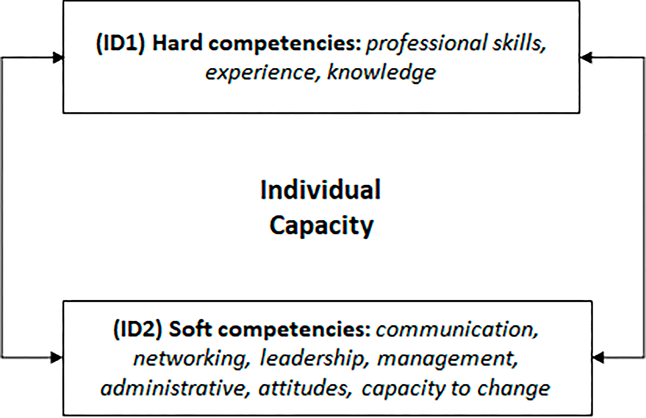
Attributes of organisational capacity
The literature also points out the forms of capacity at the organisational level in different sectors, such as health care, education, agriculture, tourism, and NGOs. For example, Michael, et al. (2003) developed a conceptual framework for organisational capacity for non-profit and voluntary organisations. Organisations can employ three main capacities to achieve their missions and objectives: financial capacity, human capacity, and structural capacity. Among those, human capacity is the critical element that facilitates the development of other capacities. Details of these capacities are listed below:
• Financial capacity: the revenues, expenses, assets, and liabilities of the organisation;
• Human resource capacity: competencies, knowledge, attitudes, motivation, and behaviours of people within the organisation;
• Structural capacity: relationship and network capacity, infrastructure and process capacity, planning and development capacity.
Similarly, The IFC (2017) (CNCS) defined terms of organisational capacity, including the wide range of capabilities, knowledge, and resources that organisations need to be effective. The CNCS also introduced five domains of organisational capacity in the following:
• Leadership capacity: Vision/mission, governance, strategy/planning, culture/values;
• Management and operations capacity: financial management, human resources, IT & infrastructure;
• Service capacity: program design, program implementation, performance management;
• Community engagement capacity: fund development, communication and advocacy, volunteer management, community partnerships;
• Evaluative capacity: evaluation planning, data collection, measuring impact, learning and continuous improvement.
Among these domains, management and operations capacity and service capacity focus on the internal-facing capacity that determines the organisation’s effectiveness, while community engagement capacity is the primary external-facing capacity as it refers to dealing with relationships with external partners. Meanwhile, leadership capacity relates to the capacity of senior leadership to set the strategy and drive organisational culture. Finally, evaluative capacity focuses on gathering data and measuring the organisation’s impact and continuous development.
Baser, et al. (2008) argue that capacity can be conceptualised as being built on five core capabilities that contribute to the overall capacity of a system or organisation. The authors also state that all five capabilities are necessary, and none is sufficient by themselves to ensure overall capacity. These core capabilities together form the capacity that enables an organisation to carry out its missions and processes inside or outside the system, and they are described as follows (Brinkerhoff and Morgan, 2010):
• Capability to commit and engage: This core capability involves the ability to: encourage mindfulness; persevere; aspire; embed conviction; take ownership, and be determined.
• Capability to carry out technical, service delivery, and logistical tasks: This includes capabilities to deliver services; for strategic planning and management and financial management. This capacity needs to be supplemented and combined with the four other capabilities to be effective.
• Capability to relate and attract support: This is about establishing and managing linkages, alliances, and/or partnerships with others to leverage resources and actions; earning credibility and legitimacy; dealing effectively with competition, politics, and power differentials.
• Capability to adapt and self-renew: This is about monitoring, adaptation and self-renewal. Actors with this capability are able to adapt and modify plans and operations based on monitoring of progress and outcomes; proactively anticipate change and new challenges and develop strategies to cope with these changing contexts as well as resiliency.
• Capability to balance diversity and coherence: This is about the attention to communication and openness and the use of cross-functional, cross-national, and cross-disciplinary teams and management groups. Actors with these capabilities can build connections, manage diversity, balance control, flexibility, and consistency; to manage a difficult situation.
Based on the findings in the literature, Figure 2 illustrates the capacity at the organisational level for the construction sector, regardless of the size of the organisation. The first category is the capacity to formulate policies and strategies (O1) which is similar to leadership capacity or organisational structure and process, enabling the organisation to create visions, strategies and values for the organisation (Baser, et al., 2008; Brinkerhoff and Morgan, 2010; Levine, et al., 2013; Hambrick, Svensson and Kang, 2019). This category helps to set the culture and strategy of the organisation, which might include but is not limited to employing staff with relevant qualifications and experience, pursuing partnerships, planning development and improvement, and preparing the capacity to respond to the future (Macmillan, 2002; Bossink, 2004; Sarshar, Haigh and Amaratunga, 2004).
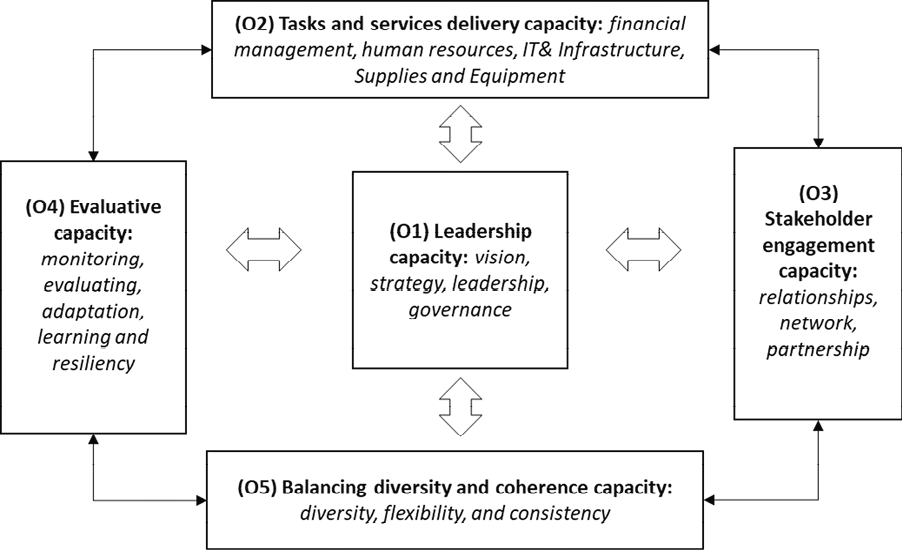
Figure 2. Organisational capacity
The second category (O2) relates to the capability to deliver technical tasks and services, which are similar to ‘service capacity’ in the CNCS framework (IFC, 2017). An organisation with O2 capacity has ‘supply and equipment capacity’, ‘infrastructure capacity’, and ‘set of procedures capacity’ that enable their staff to carry out critical functions and produce acceptable outcomes (UNDP, 2005; Baser, et al., 2008; Brinkerhoff and Morgan, 2010; Bennett, et al., 2012; Levine, et al., 2013; Hambrick, Svensson and Kang, 2019; Dymnicki, et al., 2021). Previous work in the construction management field usually centred on specific components of O2 such as financial capacity, human resource capacity, and technology capacity (Tucker, Windapo and Cattell, 2015; Offei, 2016; Okoye, 2016; Arneson, 2018; Asante, Kissi and Badu, 2018; Mishra, 2018; Ercan, 2019; Kamal, et al., 2021). Other aspects of organisational capacity in the construction sector have not yet been explored.
The third category (O3) is about the capacity to relate and engage, ‘community engagement capacity’, and ‘relationship and network capacity’. This capacity allows organisations to form productive relationships and alliances to make them a part of a broader effort to achieve common objectives (Michael, et al., 2003; Germann and Wilson, 2004; Baser, et al., 2008; IFC, 2017). Previous works show that collaboration and partnerships are critical for organisational competition (Lazar, 2000; Hauck, et al., 2004). This category is particularly relevant to construction organisations as their projects based on their work mean that they often have to cooperate with many small firms, meaning that construction projects can often only be achieved through working in partnerships (Kululanga, 2012).
The fourth category refers to the capacity to evaluate and self-renew, which means an organisation’s ability to measure impacts and learn lessons in an ‘evaluative capacity’ (Germann and Wilson, 2004; Morgan, 2006; Baser, et al., 2008; UNDP, 2008; Kühl, 2009; Brinkerhoff and Morgan, 2010). The strategies and attributes associated with the fourth category are related to managers’ ability to assess their current capacity, accumulate their knowledge and share best practices with other organisations in the construction sector (Disterer, 2002). As a result, organisations can adopt new ideas to master change and keep up with the demands of customers and clients (Kululanga and Mccaffer, 2001). Finally, complex systems such as organisations or a network of the organisation usually struggle to balance their capacities, such as whether they should focus on delivering technical services, developing innovation, or prioritising external or internal, short-term or long-term missions. Therefore, the fifth category is related to balancing diversity and coherence to encourage stability and innovation (Morgan, 2006; Brinkerhoff and Morgan, 2010; IFC, 2017).
Attributes of sector capacity
Previous works demonstrate that improvements in the construction sector had been greatly enhanced at the sector level (Thwala and Mvubu, 2008). In addition, Al-Sedairy (2001) suggests that a stable economic and political environment contributes to the construction sector’s capacity building. The sector describes the broader system that includes rules, laws, policies, power relations and the society within which individuals and organisations function and facilitate or hinder operations (UNDP, 2010; Bester, 2015). Therefore, the sector level may include regional, national, and inter-sector capacity. To date, studies on sector capacities have tended to focus on specific aspects, such as measuring ‘capacity utilisation,’ rather than providing a detailed description of the attributes of other sector capacity categories. Meanwhile, UNDP Capacity Assessment Practice Note (UNDP, 2008) identified five capacity aspects at the sector level:
• Policies and strategies formulating capacity (S1)
• Stakeholders engagement capacity (S2)
• Data management capacity (S3)
• Operational capacity (S4)
• Evaluative capacity (S5)
Accordingly, Figure 3 presents attributes and their relationship at the sector level of the construction capacity based on the findings in the literature. The first category (S1) includes setting objectives, elaborating sectoral and cross-sectoral policies, and managing priority-setting mechanisms. These policies, legislations, and strategies should explore different perspectives and provide incentives in multi-level governance and allow adaptive capacity (Brown, LaFond and Macintyre, 2001; Folke, et al., 2002; UNDP, 2005; 2008; Polk, 2011; Bennett, et al., 2012; Infrastructure & Cities for Economic Development, 2018). The second category (S2) is about engaging and building consensus among all relevant stakeholders in the system, such as creating community-private-public partnerships and networks; motivating and mobilising stakeholders; promoting engagement and coordination between organisations within the community; establishing collaborative mechanisms and communication channels; managing large group processes and open dialogue; and mediating divergent interests (Brown, LaFond and Macintyre, 2001; UNDP, 2008; Polk, 2011; Bennett, et al., 2012). Furthermore, since the construction sector is interrelated and impacts other sectors such as education, manufacturing, and professional services, engagement among the ‘sister’ sectors is critical to address the issue of capacity at the macro level. Some sister sectors can impact the construction capacity, such as curricula for education, construction workforce, research activities, personnel mobility within and outside the sector, and technology development for construction materials (Kululanga, 2012). Therefore, the ‘capacity to engage stakeholders’ is one of the vital attributes of the construction sector’s capacity.
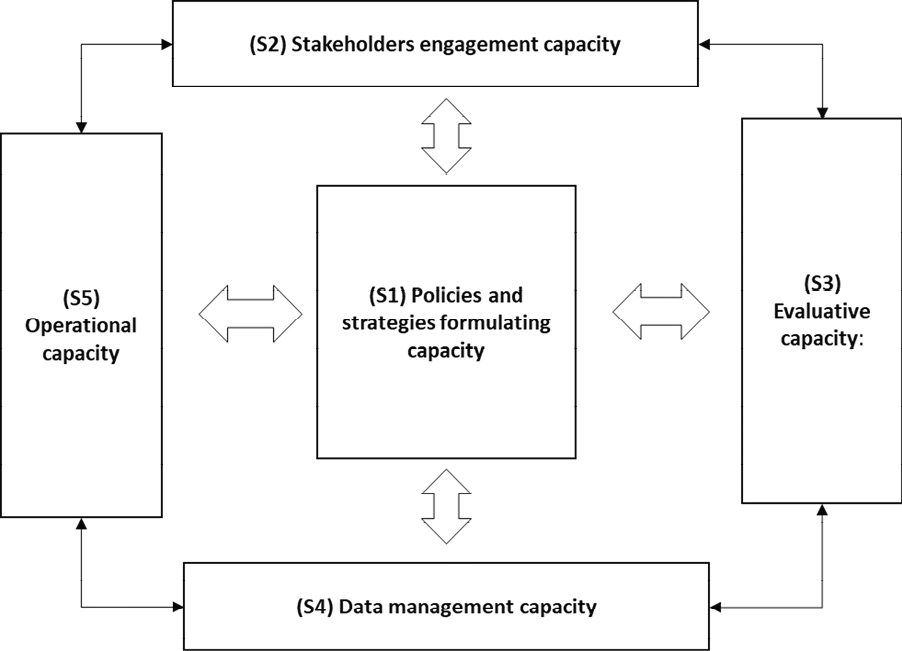
Similar to organisation capacity O4, evaluative capacity S3 evaluates progress to ensure performance, learning and accountability. It includes the capacity to measure results and collect feedback to adjust policies, systemise lessons, promote learning, and ensure accountability to all relevant stakeholders (The World Bank, 2012, Brown et al., 2001, UNDP, 2008). Meanwhile, the S4 category refers to fully understanding an operating environment by gathering, accessing, disaggregating, analysing and synthesising data and information; and translating information into a vision and/or a mandate (UNDP, 2008; Polk, 2011; Bennett, et al., 2012; The World Bank, 2012). Although this category has not been studied extensively in the construction management research domain, it cannot be denied that information is critical for measuring capacity in the sector and guiding future capacity development changes. Last but not least, the S5 category includes the capacity to formulate, plan, and manage projects and programmes, including preparing a budget and estimating capacity development costs, managing human and financial resources and procurement; to set indicators for monitoring progress (Brown, LaFond and Macintyre, 2001; UNDP, 2008; Bennett, et al., 2012). This category is critical because it refers to the planning capacity of the sector which formulates and manages pipeline projects. It is hypothesised that all aspects at the sector level are correlated and impacted by one another, as shown in Figure 3. However, these interrelationships have not been examined and described so far.
Discussion
The conceptual frameworks above have defined horizontal planes that form the framework within the construction capacity, starting with Individual capacity (Figure 1), followed by organisational capacity (Figure 2), and finally, Sector capacity (Figure 3). These separate frames, when combined, provide a comprehensive framework for the construction sector. Although attributes of capacity have been studied at length, deeper insights into how to measure capacity in the construction sector are still missing in the literature. Future research could develop a measurement model for each level of the construction sector’s capacity.
In addition, a project-based organisation is typical for many construction projects in the construction sector. However, the project capacity concept is still vague in the literature. Figure 4 presents a new concept of capacity at the project level, assuming that the project capacity is built by all aspects of the individual capacity involved in the project and partial aspects of the organisational capacity who are key players in the project. It is demonstrated that individual capacities can be transmitted to the project/organisational capacity (Somarriba-chang, Nacional and Una, 2014). The explanation for the partial overlap between ‘organisation’ and ‘project’ capacity is that ‘individual’ refers to human resource capacity, as shown in Figure 1, while ‘organisation’ and ‘project’ have other capacity dimensions such as financial capacity, engagement capacity, and management capacity. Therefore, the overlap between ‘project’ and ‘organisational’ capacity includes other aspects besides human resource capacity (individual capacity). However, the links between organisational capacity and project capacity have not yet been defined.
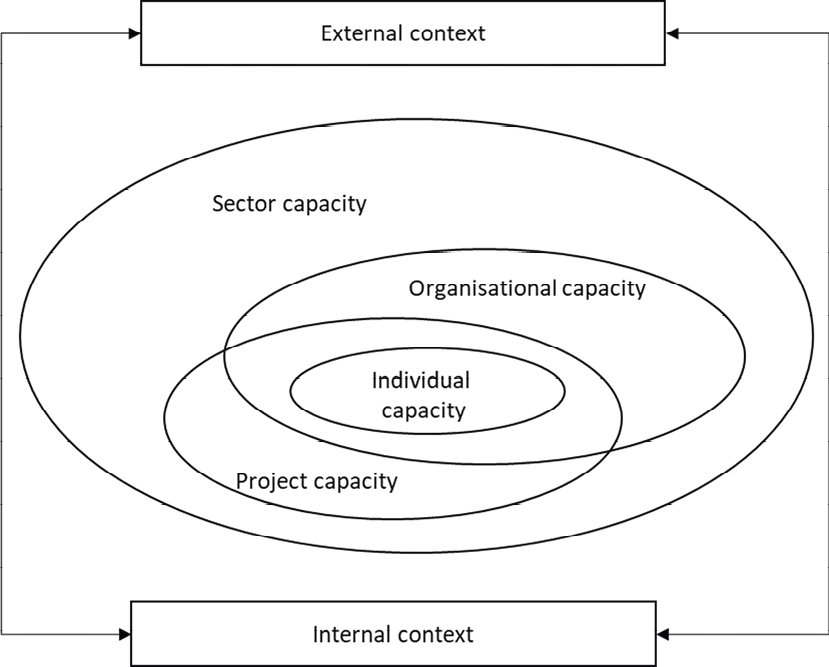
Figure 4. Project-based organisation capacity for future research
Typical construction projects often involve a number of different organisations such as engineering consultants, sub-contractors, suppliers, and consultants. These partners usually join the project to perform specific and short-term tasks/missions. The project capacity should be developed considering the construction sector’s scope, stakeholders, and actors. The key players that influence the project capacity are clients, contractors/sub-contractors and consultants. Furthermore, the influence of manufacturers and distributors should be taken into account because it will align through the contractors rather than to the project itself. Similarly, institutional actors and regulators, including institutions and associations, are likely to impact the project capacity through the consultants, clients and contractors. Due to the complexity of construction projects, measuring project capacity and exploring relationships between organisations involved in the project is challenging and needs to be explored in greater detail in future work.
In addition, the interrelationships among the different levels and the attributes in each level also have not been clearly described yet in the literature. For example, with the individual capacity framework, employees in the sector can be informed about the types of skills they should be equipped with, but it does not show how the individual capacity can be transmitted to the project and organisational capacity they are working in.
Future Work
Different vertical fractures between the capacity frames in Figure 4 need to be investigated further in addition to the horizontal ones as outlined below:
• The connections/relationship of individual hard competencies (ID1) and the client capacity at project level (P1) and organisational capacity to deliver (O2), organisational capacity to formulate policies (O1), organisational capacity to evaluate (O5);
• The connections/relationship of individual hard competencies (ID1) and the consultant capacity at project level (P2) and organisational capacity to deliver (O2), organisational capacity to formulate policies (O1), organisational capacity to evaluate (O5);
• The influences of individual soft competencies (ID2) and organisational capacity to relate (O2), sector capacity to engage (S2), and sector capacity to assess a situation (S4);
• The influences of individual soft competencies (ID2) and organisational capacity to balance diversity and coherence (O4);
• The influences of manufacturer and distributor capacity to the contractor capacity connecting to the sector capacity to budget (S2);
• The influences of institutional actors’ capacity on the sector capacity to formulate policies (S1), and sector capacity to evaluate (S3).
The six threads above also can be used as research questions for future work on the topic. The vertical relationships in Figure 4 are meaningful but challenging to validate. Future research should first simplify the relationships within the framework to drive the data required for testing these hypotheses.
Conclusion
The construction industry is responsible for the country’s infrastructure, economic growth and society’s well-being. However, the reality is that it faces many capacity limitations to support economic and social development. This review presents foundational elements of the construction sector capacity framework, which have emerged from a holistic approach. The findings of this study contribute to the body knowledge by providing a conceptual framework that can help capture construction capacity at different levels and different aspects. The results can also help policymakers and organisation managers review their capacity against the identified attributes to find gaps and initiate interventions for their capacity development. The findings serve as a starting point for future research to fill the gaps in exploring measurement indicators at each level and the interrelationships between the attributes across the levels. The frameworks suggested above could, in a similar way, be adopted for other sectors and customised by the same process to fit their in-sector context. However, this study still has a limitation as these frameworks have not been validated using the actual data of the construction sector. Future studies may focus on different approaches for validating these frameworks.
Acknowledgement
The authors acknowledge the funding of the New Zealand Ministry of Business, Innovation and Employment, Endeavour Programme Research Grant under contract number MAUX2005.
Disclosure statement
No potential conflict of interest was reported by the author(s).
References
Al-Sedairy, S.T., 2001. A change management model for Saudi construction industry. International Journal of Project Management, 19(3), pp.161-69. https://doi.org/10.1016/S0263-7863(99)00067-8
Alsop, R. and Kurey, B., 2005. Local organizations in decentralized development: Their functions and performance in India: World Bank Publications. https://doi.org/10.1596/978-0-8213-6312-6
Arneson, E., 2018. Construction Capacity: How Regional Construction Supply Chains Respond to Disruption. PhD, Department of Civil, Environmental, and Architectural Engineering, University of Colorado.
Asante, J., Kissi, E. and Badu, E., 2018. Factorial analysis of capacity-building needs of small- and medium-scale building contractors in developing countries. Benchmarking: An International Journal, 25(1), pp.357-72. https://doi.org/10.1108/BIJ-07-2016-0117
Assarroudi, A., Heshmati Nabavi, F., Armat, M.R., Ebadi, A. and Vaismoradi, M., 2018. Directed qualitative content analysis: the description and elaboration of its underpinning methods and data analysis process. Journal of Research in Nursing, 23(1), pp.42-55. https://doi.org/10.1177/1744987117741667
Ayodele, O.A., Chang-Richards, A. and González, V., 2020. Factors affecting workforce turnover in the construction sector: A systematic review. Journal of Construction Engineering and Management, 146(2), p.03119010. https://doi.org/10.1061/(ASCE)CO.1943-7862.0001725
Backer, T.E., 2000. Strengthening nonprofits: Capacity-building and philanthropy: Human Interaction Research Institute Encino, CA.
Baser, H., Morgan, P., Bolger, J., Bringkerhoff, D., Land, A., Taschereau, S., Waston, D. and Jinke, J., 2008. Capacity Change Performance Study Report.
Bennett, N., Lemelin, R.H., Koster, R. and Budke, I., 2012. A capital assets framework for appraising and building capacity for tourism development in aboriginal protected area gateway communities. Tourism Management, 33(4), pp.752-66. https://doi.org/10.1016/j.tourman.2011.08.009
Bester, A., 2015. Capacity development: A report prepared for the United Nations Department of Economic and Social Affairs.
Bossink, B.A., 2004. Managing drivers of innovation in construction networks. Journal of Construction Engineering and Management, 130(3), pp.337-45. https://doi.org/10.1061/(ASCE)0733-9364(2004)130:3(337)
Brinkerhoff, D.W. and Morgan, P.J., 2010. Capacity and capacity development: Coping with complexity. Public Administration and Development: The International Journal of Management Research and Practice, 30(1), pp.2-10. https://doi.org/10.1002/pad.559
Brown, L., LaFond, A. and Macintyre, K.E., 2001. Measuring capacity building: Carolina Population Center, University of North Carolina at Chapel Hill ….
Chancellor, W., Abbott, M. and Carson, C., 2015. Factors promoting innovation and efficiency in the construction industry: A comparative study of New Zealand and Australia. Construction Economics and Building, 15(2), pp.63-80. https://doi.org/10.5130/AJCEB.v15i2.4386
Chang-Richards, A.Y., Wilkinson, S., Seville, E. and Brundsdon, D., 2016. Capacity and capability development of Canterbury subcontracting business: Features, motivating factors and obstacles.
Chang-Richards, Y., Wilkinson, S., Seville, E. and Brunsdon, D., 2017. Effects of a major disaster on skills shortages in the construction industry. Engineering, Construction and Architectural Management, 24(1), pp.2-20. https://doi.org/10.1108/ECAM-03-2014-0044
Deep, S., Gajendran, T. and Jefferies, M., 2019. A systematic review of ‘enablers of collaboration’among the participants in construction projects. International Journal of Construction Management, pp.1-13. https://doi.org/10.1080/15623599.2019.1596624
Delgado, J.M.D., Oyedele, L., Ajayi, A., Akanbi, L., Akinade, O., Bilal, M. and Owolabi, H., 2019. Robotics and automated systems in construction: Understanding industry-specific challenges for adoption. Journal of Building Engineering, 26, p.100868. https://doi.org/10.1016/j.jobe.2019.100868
Deloitte, 2019. Global Powers of Construction.
Disterer, G., 2002. Management of project knowledge and experiences. Journal of knowledge management. https://doi.org/10.1108/13673270210450450
Dymnicki, A., Neiman, S., Joshi, A., Johnson, T. and Hodgman, S., 2021. Development and validation of a measure of organizational capacity for implementing youth development programs. Eval Program Plann, 86, p.101916. https://doi.org/10.1016/j.evalprogplan.2021.101916
Ercan, T., 2019. Building the Link between Technological Capacity Strategies and Innovation in Construction Companies. In. https://doi.org/10.5772/intechopen.88238
Erlingsson, C. and Brysiewicz, P., 2017. A hands-on guide to doing content analysis. African Journal of Emergency Medicine, 7(3), pp.93-99. https://doi.org/10.1016/j.afjem.2017.08.001
Folke, C., Carpenter, S., Elmqvist, T., Gunderson, L., Holling, C.S. and Walker, B., 2002. Resilience and sustainable development: building adaptive capacity in a world of transformations. AMBIO: A journal of the human environment, 31(5), pp.437-40. https://doi.org/10.1579/0044-7447-31.5.437
Germann, K. and Wilson, D., 2004. Organizational capacity for community development in regional health authorities: a conceptual model. Health promotion international, 19(3), pp.289-98. https://doi.org/10.1093/heapro/dah303
Ghodrati, N., Yiu, T.W., Wilkinson, S. and Shahbazpour, M., 2018. Role of Management Strategies in Improving Labor Productivity in General Construction Projects in New Zealand Managerial Perspective. Journal of Management in Engineering, 34(6). https://doi.org/10.1061/(ASCE)ME.1943-5479.0000641
Godin, K., Stapleton, J., Kirkpatrick, S.I., Hanning, R.M. and Leatherdale, S.T., 2015. Applying systematic review search methods to the grey literature: a case study examining guidelines for school-based breakfast programs in Canada. Systematic reviews, 4(1), pp.1-10. https://doi.org/10.1186/s13643-015-0125-0
Hambrick, M.E., Svensson, P.G. and Kang, S., 2019. Using social network analysis to investigate interorganizational relationships and capacity building within a sport for development coalition. Sport Management Review, 22(5), pp.708-23. https://doi.org/10.1016/j.smr.2018.12.002
Hasan, A., Baroudi, B., Elmualim, A. and Rameezdeen, R., 2018. Factors affecting construction productivity: a 30 year systematic review. Engineering, Construction and Architectural Management. https://doi.org/10.1108/ECAM-02-2017-0035
Hauck, A.J., Walker, D.H., Hampson, K.D. and Peters, R.J., 2004. Project alliancing at national museum of Australia—Collaborative process. Journal of Construction Engineering and Management, 130(1), pp.143-52. https://doi.org/10.1061/(ASCE)0733-9364(2004)130:1(143)
IFC, 2017. Organizational capacity assessment tool. Washington, DC: Corporation for National and Community Service.
Infrastructure & Cities for Economic Development, 2018. Construction Capacity Framework.
Japan International Cooperation Agency, 2014. Capacity Development Guideline/Manual (JICA Model).
Johnson, H. and Thomas, A., 2007. Individual learning and building organisational capacity for development. Public Administration and Development: The International Journal of Management Research and Practice, 27(1), pp.39-48. https://doi.org/10.1002/pad.429
Kamal, E.M., Lou, E.C.W., Yusof, N.A. and Osmadi, A., 2021. Absorptive capacity of Malaysian SME construction organisations. Architectural Engineering and Design Management, pp.1-12. https://doi.org/10.1080/17452007.2021.1883518
Kim, S., Chang, S. and Castro-Lacouture, D., 2020. Dynamic modeling for analyzing impacts of skilled labor shortage on construction project management. Journal of Management in Engineering, 36(1), p.04019035. https://doi.org/10.1061/(ASCE)ME.1943-5479.0000720
Kirkley, J., Morrison Paul, C.J. and Squires, D., 2002. Capacity and Capacity Utilization in Common-pool Resource Industries. Environmental and Resource Economics, 22(1), pp.71-97. https://doi.org/10.1023/A:1015511232039
Kirkley, J.E. and Squires, D., 2003. Capacity and capacity utilization in fishing industries: FOOD AND AGRICULTURE ORGANIZATION OF THE UNITED NATIONS.
Klein, L.R., Long, V., Greenspan, A., Greenwald, D., Edmonson, N. and Perry, G., 1973. Capacity utilization: concept, measurement, and recent estimates. Brookings Papers on Economic Activity, 1973(3), pp.743-63. https://doi.org/10.2307/2534206
Kühl, S., 2009. Capacity development as the model for development aid organizations. Development and Change, 40(3), pp.551-77. https://doi.org/10.1111/j.1467-7660.2009.01538.x
Kululanga, G., 2012. Capacity building of construction industries in Sub‐Saharan developing countries. Engineering, Construction and Architectural Management, 19(1), pp.86-100. https://doi.org/10.1108/09699981211192580
Kululanga, G.K. and Mccaffer, R., 2001. Measuring knowledge management for construction organizations. Engineering, Construction and Architectural Management, 8, pp.346-54. https://doi.org/10.1108/eb021195
Lazar, F.D., 2000. Project partnering: improving the likelihood of win/win outcomes. Journal of Management in Engineering, 16(2), pp.71-83. https://doi.org/10.1061/(ASCE)0742-597X(2000)16:2(71)
Levine, R., Russ-Eft, D., Burling, A., Stephens, J. and Downey, J., 2013. Evaluating health services research capacity building programs: implications for health services and human resource development. Evaluation and Program Planning, 37, pp.1-11. https://doi.org/10.1016/j.evalprogplan.2012.12.002
Lowe, D.J., 2009, University of Cape Town, 2009.
Lubbe, W., Ham-Baloyi, W.t. and Smit, K., 2020. The integrative literature review as a research method: A demonstration review of research on neurodevelopmental supportive care in preterm infants. Journal of Neonatal Nursing, 26(6), pp.308-15. https://doi.org/10.1016/j.jnn.2020.04.006
Ma, L. and Liu, C., 2016. Decomposition of temporal changes in construction labour productivity. International Journal of Construction Management, 18(1), pp.65-77. https://doi.org/10.1080/15623599.2016.1258755
Macmillan, S., 2002. The right vision for construction R&D? Responding to the Fairclough Review. Building Research & Information, 30(5), pp.328-33. https://doi.org/10.1080/09613210210159082
Michael, H., Alison, A., Cathy, B., Kathy, B., Margaret, d.W., Don, E., Louis, J., David, L., Benoît, L., Eli, M., Susan, S. and Yves, V., 2003. The capacity to serve.
Mishra, A.K., 2018. Assessment of Human Resource Capacity of Construction Companies in Nepal. Journal of Advanced Research in HR & Organizational Management, 05(04), pp.14-25. https://doi.org/10.24321/2454.3268.201804
Morgan, P., 2006. The concept of capacity. European Centre for Development Policy Management, pp.1-19.
Morrison, C.J., 1985. Primal and dual capacity utilization: an application to productivity measurement in the US automobile industry. Journal of Business & Economic Statistics, 3(4), pp.312-24. https://doi.org/10.1080/07350015.1985.10509463
O’Brien, W.J. and Fischer, M.A., 2000. Importance of capacity constraints to construction cost and schedule. Journal of Construction Engineering and Management, 126, pp.366-73. https://doi.org/10.1061/(ASCE)0733-9364(2000)126:5(366)
OECD, 2020. Building Capacity for Evidence-Informed Policy-Making : Lessons from Country Experiences [online]. Available at: https://www.oecd.org/gov/building-capacity-for-evidence-informed-policy-making-86331250-en.htm.
Offei, I., 2016. Development of a framework for capacity building of sme building contractors in Ghana through public procurement.
Offei, I., Kissi, E. and Nani, G., 2019. Factors Affecting the Capacity of Small to Medium Enterprises (SME) Building Construction Firms in Ghana. Journal of Construction in Developing Countries, 24(1), pp.49-63. https://doi.org/10.21315/jcdc2019.24.1.3
Okoye, P., 2016. Optimising the Capacity of Nigeria Construction Sector for Socio-economic Sustainability. British Journal of Applied Science & Technology, 16(6), pp.1-16. https://doi.org/10.9734/BJAST/2016/26268
Olanipekun, A.O. and Sutrisna, M., 2021. Facilitating Digital Transformation in Construction—A Systematic Review of the Current State of the Art. Frontiers in Built Environment, p.96. https://doi.org/10.3389/fbuil.2021.660758
Papastamoulis, V., London, K., Feng, Y., Zhang, P., Crocker, R. and Patias, P., 2021. Conceptualising the Circular Economy Potential of Construction and Demolition Waste: An Integrative Literature Review. Recycling, 6(3), p.61. https://doi.org/10.3390/recycling6030061
Polk, M., 2011. Institutional capacity-building in urban planning and policy-making for sustainable development: success or failure? Planning, Practice & Research, 26(2), pp.185-206. https://doi.org/10.1080/02697459.2011.560461
PwC, 2016. Value of construction sector in New Zealand. Price Waterhouse and Coopers & Lybrand.
Qvortrup, L., 2016. Capacity building: data-and research-informed development of schools and teaching practices in Denmark and Norway. European Journal of Teacher Education, 39(5), pp.564-76. https://doi.org/10.1080/02619768.2016.1253675
Raidén, A.B. and Dainty, A.R., 2006. Human resource development in construction organisations: An example of a “chaordic” learning organisation? The learning organization. https://doi.org/10.1108/09696470610639130
Rajeshwari, B., Deo, N. and van Wessel, M., 2020. Negotiating autonomy in capacity development: Addressing the inherent tension. World Development, 134, p.105046. https://doi.org/10.1016/j.worlddev.2020.105046
SAGE, 2017. Reviewing the Literature London, United Kingdom.
Sarshar, M., Haigh, R. and Amaratunga, D., 2004. Improving project processes: best practice case study. Construction Innovation. https://doi.org/10.1108/14714170410815015
Schech, S., Skelton, T., Mundkur, A. and Kothari, U., 2020. International volunteerism and capacity development in nonprofit organizations of the global south. Nonprofit and Voluntary Sector Quarterly, 49(2), pp.252-71. https://doi.org/10.1177/0899764019867774
Shaikh, A.M. and Moudud, J.K., 2004. Measuring capacity utilization in OECD countries: A cointegration method. Working paper.
Somarriba-chang, M., Nacional, U. and Una, A., 2014. Evaluating Capacity Development. Experiencies from Research and Development Organizations around the World.
Squires, D. and Segerson, K., 2020. Capacity and Capacity Utilization in Production Economics. Handbook of Production Economics, pp.1-37. https://doi.org/10.1007/978-981-10-3450-3_7-1
Statistics Canada, 2021. GDP at basis prices.
Statistics New Zealand, 2021. Regional gross domestic product: Year ended March 2020.
The World Bank, 2012. Guide to evaluating capacity development results.
Thwala, W.D. and Mvubu, M., 2008. Current challenges and problems facing small and medium size contractors in Swaziland. African Journal of Business Management, 2(5), pp.093-98.
Torraco, R.J., 2005. Writing integrative literature reviews: Guidelines and examples. Human resource development review, 4(3), pp.356-67. https://doi.org/10.1177/1534484305278283
Torraco, R.J., 2016. Writing integrative literature reviews: Using the past and present to explore the future. Human resource development review, 15(4), pp.404-28. https://doi.org/10.1177/1534484316671606
Tucker, G.C., Windapo, A. and Cattell, K.S., 2015. Exploring the use of financial capacity as a predictor of construction company corporate performance. Journal of Engineering, Design and Technology, 13(4), pp.596-611. https://doi.org/10.1108/JEDT-10-2013-0074
UNDP, 2005. The UNDP Benchmarks and Indicators for Capacities [online]. Available at: https://www.betterevaluation.org/sites/default/files/UNDP%20Benchmarks%20and%20Indicators%20for%20Capacities.pdf.
UNDP, 2008. The United Nations Development Program: Capacity Assessment Practice Note [online]. Available at: https://www.undp.org/publications/capacity-assessment-practice-note.
UNDP, 2010. The United Nations Development Program: Measuring Capacity [online]. Available at: https://www.undp.org/publications/measuring-capacity.
Waalkens, J., 2006. Building capabilities in the construction sector: Absorptive capacity of architectural and engineering medium-sized enterprises.
Wagner, A., Schöne, L. and Rieger, M.A., 2020. Determinants of Occupational Safety Culture in Hospitals and other Workplaces—Results from an Integrative Literature Review. International Journal of Environmental Research and Public Health, 17(18), p.6588. https://doi.org/10.3390/ijerph17186588
Xiong, B., Newton, S. and Skitmore, M., 2019. Towards a conceptual model of the job performance of construction professionals: A person-environment fit perspective. International Journal of Construction Management, pp.1-15. https://doi.org/10.1080/15623599.2019.1695417