Construction Economics and Building, Vol. 18, No. 2 June 2018
ISSN 2204-9029 | Published by UTS ePRESS | ajceb.epress.lib.uts.edu.au
RESEARCH ARTICLE
Relational Contracting Conceptual Model for Public Sector Construction Organisations: An Indian Context
Abhay Tawalare1 and Boeing Laishram2*
1 Department of Civil Engineering, Visvesvaraya National Institute of Technology Nagpur, South Ambazri Road, Nagpur (India)-440010.
2 Department of Civil Engineering, Indian Institute of Technology Guwahati, North Guwahati, Guwahati (India)-781039.
*Corresponding author: Boeing Laishram, Department of Civil Engineering, Indian Institute of Technology Guwahati, North Guwahati, Guwahati (India)-781039; Email: boeing@iitg.ernet.in
DOI: http://dx.doi.org/10.5130/AJCEB.v18i2.5872
Article History: Received 06/01/2018; Revised 24/03/2018 & 05/05/2018; Accepted 02/06/2018; Published 27/06/2018
Citation: Tawalare, A. and Laishram, B. 2018. Relational Contracting Conceptual Model for Public Sector Construction Organisations: An Indian Context . Construction Economics and Building, 18:2, 70-91. http://dx.doi.org/10.5130/AJCEB.v18i2.5872
© 2018 by the author(s). This is an Open Access article distributed under the terms of the Creative Commons Attribution 4.0 International (CC BY 4.0) License (https://creativecommons.org/licenses/by/4.0/), allowing third parties to copy and redistribute the material in any medium or format and to remix, transform, and build upon the material for any purpose, even commercially, provided the original work is properly cited and states its license.
Abstract
Adoption of relational contracting in public sector construction organisations is more difficult than in private sector organisations due to the inherent rigidity of public sector. Therefore, implementation of the relational contracting processes should be treated as an organisational change management process in public sector organisations. The purpose of this paper is to develop a relational contracting conceptual model (RCMM) by integrating success factors for positive change management in public sector organisations. A qualitative research methodology comprising two rounds of expert interviews was used. The first round of interviews was conducted to gauge the present level of relational contracting in public sector construction organisations. The second round of interviews was conducted to validate the relational contracting conceptual model by integrating success factors of change management in public sector organisations. The relational contracting model highlighted the importance of a need to develop a vision for partnering, stakeholder analysis and consensus building among them, empowerment of operational level employees and their participation in plan execution, time bound review meetings of top management on site to show commitment, resolution of disputes and fast decision making along with publication of the performance reports. The paper presents a critical insight on relational processes of public sector construction organisations in India in the context of organisational change management model which has not been the focus in majority of the previous research studies.
Keywords
Relational contracting conceptual model, change management, partnering, public sector, Indian construction industry.
Introduction
Relational contracting, either in the form of partnering or alliancing, improves the working relationship between various stakeholders. Partnering is implemented by adding a partnering agreement along with traditional contract. It encourages contractor, consultant and client to proactively address project risks, identifying them before they affect the project, act, and jointly agree to manage the risk. Alliance is an agreement between two or more parties who undertake work cooperatively. They work as a team based on principals of good faith and trust, on a shared risk and reward basis, and allow open book approach for achieving agreed outcomes (Jefferies, Brewer and Gajendran, 2014). Partnering and alliancing are different from each other but work on common relational factors like respect, trust, teamwork, commitment and shared goals. This relationship depends on good faith rather than on a formal contract (Lu and Yan, 2007). Therefore relational contracting requires transforming the organisational culture from one state to another state. However, transformation at organisational level for relational contracting is difficult to apply in public sector projects when compared to private sector projects (Ling and Tran, 2012). The public-sector organizations are rigid, while private sector boundaries are more flexible and permeable, making it an ideal climate for close inter-organizational cooperation in relational transactions (Ling et al., 2013 a). Public clients are not able to offer any future relationships since project procurement is through competitive bidding. Public clients also cannot be seen to have a “hand-in-glove” relationship with contractors. The possible side-effects of closer relationships include break-down of contractual checks and balances, and dangers of shifting collaboration to corruption (Rahman and Kumaraswamy, 2008). Therefore, regulations restrict public officials in some activities and perpetuate a behavioural pattern that works against any kind of trust-based relationships with contractors (Palaneeswaran et al., 2003). Furthermore, in public agencies, employees and their departments have well defined jurisdictions, responsibilities and a hierarchy of authority. This traditional bureaucratic system of organisation must be overcome to allow public agencies to partner effectively (Crowley and Karim, 1995). Successful implementation of partnering in projects requires the public sector to play the role of facilitator but it is not fully committed and ready to compromise on procedures (Ng et al., 2002). For most public agencies, relational contracting represents a significant divergence from traditional practices and requires comprehensive strategic planning for transformation at organisational level. It demands appropriate change at the core of organizational design and functioning. Therefore, implementation of partnering in projects should be considered as a modern organisational change management process even though project partnering agreement is carried out for individual projects (Wilson, Songer and Diekmann, 1995).
The desperate need of infrastructure development in country has increased the demand of the construction sector in India and the construction industry is growing annually at about 11.1% over the last few years (Tripathi and Jha, 2018). Indian public-sector construction industry is driven by traditional contracting and infrastructure projects are infamous for delays and cost overruns. The critical factors affecting delays are lack of commitment; inefficient site management; poor site coordination; improper planning; lack of clarity in project scope; lack of communication; and substandard contract (Doloi et al., 2012). There is a need to work on issues like streamline project approvals and statutory sanctions; investments in sectorial skill development; adoption of project management practices and lean principles over the entire life cycle of a project; establish national construction quality, sustainability and safety benchmarks; time-bound dispute resolution and prevention techniques; and strengthen accountability, transparency and governance in public sector projects (Sawhney, Agnihotri and Paul, 2014). Tabish and Jha (2011 a) evaluated the success factors for public projects in India and pointed out the necessity for more partnering efforts to overcome the challenges of Indian public projects. The use of partnering has benefited the public sector organizations in developed countries in terms of significant cost saving and schedule reduction; reduced litigations; better communication; better teamwork; increased trust and stronger relationships (Grajek, Gibson and Tucker, 2000). Moreover, it has facilitated more fun at the workplace, a more attractive profession, an improved public image of the construction industry (Nystro, 2008). In view of the above, this paper seeks to answer the question “How should relational contracting be incorporated into the traditional procurement processes of Indian public-sector construction organisations?”
Public Sector Organisational Change
The Public Sector undergoes changes to face external environmental threats or to improve the performance for building support among its stakeholders (Stewart and Kringas, 2003). Though there is no specific generic model for implementing planned organisational change, an important step in this direction can be played by leaders by verifying the need for change and persuading other members of the organization and important external stakeholders to accept the need (Fernandez and Rainey, 2006). The process of convincing stakeholders begins with drafting a vision statement for the perceived change. The content of the vision statement must be sensible and should be clearly understood by the organizational members because a content without clarity is ineffective (Cole, Harris and Bernerth, 2006). Getting support from the key external stakeholders is another important aspect of a successful change management strategy. Implementation without support of interest groups may cause dissatisfaction and criticism (Fernandez and Rainey, 2006). It requires a collaborative nature of change effort in which managers, operation level employees and change agents jointly diagnose the organisation’s problems and jointly plan and design the specific changes to be brought about (Coram and Burnes, 2001). Change processes need to be ‘fit for purpose’, with contextually appropriate goals and plans (Buick, Blackman and O’Donnell, 2015).
In the past, many public-sector agencies failed to fully adopt change due to the inability of top management to disseminate information about the new policy and convince employees of the need to implement it (Fernandez and Pitts, 2007). In fact, top management is considered as a role model (Voet, Kuipers and Groeneveld, 2015). Whenever employees see their top managers committing both time and effort to bring about the change, employees’ commitment to change and moral support will also be more likely (Jurisch et al., 2013). For effective implementation, employees must also know what is to be achieved and be clear about the direction of change to reduce employee uncertainty and obtains their support (Buick, Blackman and O’Donnell, 2015). Successful change management also requires sufficient resources to support the process. It involves redeployment/reorientation of scarce organizational resources for developing the plan, communicating the need, training employees, developing new processes and practices, restructuring and reorganizing the organization (Fernandez and Rainey, 2006). The change process will not produce the anticipated results if senior management fails to provide necessary resources (Jurisch et al., 2013). Similarly, leadership role of direct supervisors should not be overlooked during organisational change in public organisations (Voet, 2014). Communicating accurate and timely information during change process provides opportunities for the employees to learn about the change (Wright, Christensen and Isett, 2011). A regular and effective communication between managers and employees could be facilitated by regular meetings and informal discussions. This ensures that the employees are kept informed of the changing circumstances so that they can adjust their behaviour accordingly (Buick, Blackman and O’Donnell, 2015).
As public organizations serve multiple constituents with multiple goals, it is relatively difficult to assess outcomes. This may reflect a greater emphasis in the public sector on evaluating organizational processes rather than outcomes (Robertson and Seneviratne, 1995). The outcome of change management needs to be measured on two criteria. Firstly, the success of change management as perceived by staff at the management and workforce levels, and secondly, success as measured by improvement in key performance indicators nominated in strategic plans and annual reports (Stewart and Kringas, 2003).
Review of Partnering Models
Partnering process has normally focused on processes for partner selection, partnering execution, and partnering assessment. Some of the key models which have focused on at least two of these processes are highlighted in Table 1. These models have been reviewed from the perspective of the key focus areas for ensuring a successful organizational change in public sector context. Most of these models have addressed some of the key focus areas such as development of a vision, development of execution plan, commitment of leadership, communication during institutionalism, and measuring and celebrating progress. On the other hand, the key focus areas such as ‘Ensure the need’, ‘Stakeholder analysis’, ‘Consensus building to overcome resistance to change’, and ‘Empower team with resources’ have not been addressed by most of the models. Furthermore, these models have suggested strategies on partnering but these strategies have certain limitations investigated from the perspective of public sector organizational change. For instance, Crowley and Karim (1995) have suggested creation of joint alliance for partnering but the model is silent on how the public sector rigid boundaries can be made flexible. Li et al. (2001) proposed an approach of co-operative benchmarking approach to partnering (COBAP) where the team had the major constraint of needing to include two members from probable contractor organizations in the COBAP team before bidding in the public-sector context. Anvuur and Kumaraswamy (2007) proposed partnering strategies to improve trust, cooperation and productivity but failed to suggest micro-level processes on how to bring about these cultural transformation. Similarly, Cho et al. (2010) proposed a hybrid model for partnering which had not been designed for public sector organisations that want to use partnering as an organisational change process for the first time. Thus, the planned organisational change model for adoption of relational contracting in public sector construction projects had not been the focus of the previous reported models.
Conceptual Model of RC
Content analysis of the existing body of knowledge had been undertaken to understand the key processes of partnering and what factors should be taken into consideration to ensure successful implementation of those processes. Table 2 provides the list of success factors while conceptual framework for relational contracting is shown in Figure 1.
| Code | Public Sector Organiz- ational Change – Key Focus Areas | Crowley and Karim (1995) | Wilson, Songer and Diekmann (1995) | Crane et al. (1997) | Li et al. (2001) | Cheng and Li (2004) | Beach, Webster and Campbell, (2005) | Anvuur and Kumara- swamy (2007) | Cho et al. (2010) |
|---|---|---|---|---|---|---|---|---|---|
| EN | Ensure the need: Leaders should verify the need to change within context of environmental change | √ | √ | √ | |||||
| DV | Develop a vision: Vision communicates a picture of the future that provides overall direction for the change process. | √ | √ | √ | √ | √ | √ | √ | √ |
| SA | Stakeholder analysis: Stakeholder analysis identifies stakeholder’s knowledge, attitudes within context of change and convinces for new functional roles. | √ | √ | ||||||
| DEP | Development of execution plan: Develop a course of action jointly to diagnose problems, plan and design the specific changes. | √ | √ | √ | √ | √ | √ | √ | |
| CCBR | Consensus building to overcome resistance to change: Develop mechanism for creating individual change readiness and obtains their support for organisational change. | √ | √ | ||||||
| ETR | Empower team with resources: Successful change requires sufficient resources in terms of money, manpower and authority of decision making for planning, training, communicating, experimenting and innovating. | √ | √ | √ | |||||
| CL | Commitment of leadership: If senior managers are committing both time and effort to the change then employees get motivated for equal commitment to the change. | √ | √ | √ | √ | √ | √ | ||
| COM | Communication during institutionalisation: Communicating accurate and timely information during change process provides opportunities to employees to learn about the change. | √ | √ | √ | √ | √ | √ | √ | |
| MP | Measuring and celebrating progress: The outcome need to measure as improvement against key performance indicators and satisfaction of employees during change. | √ | √ | √ | √ | √ | √ | √ |
Internal Alignment for Change
Determining owner’s internal ability to partner is a crucial process which the owner can start by analysing culture, work processes and contracting methods (CII, 1996). Internal alignment for change will require change in contracting approaches to craft a cooperative culture with contractual flexibilities to proactively address future uncertainties (Rahman and Kumaraswamy, 2012). One of the key areas of contracting approach requiring internal alignment will be with respect to contractor selection. As lowest price is the least important criterion in RC, other parameters like quality of work, project management capability, adequate resources, safety issues and technical capabilities should also be given importance. Framing equitable risk allocation framework (Ling, Rahman and Ng, 2006) and promotion of use of financial incentives will encourage relational contracting and promote cultural shift from traditional adversarial approach to cooperative contracting (Tang, Duffield and Young, 2006). The planned processes used by the organisation to improve core competencies like management skills, organisational routines, knowledge base and intangible assets will also decide the necessary changes for internal alignment to facilitate innovation (Manley, McFallan and Kajewski, 2009). Investing in R&D, maintaining a formal system of transferring project learning into continuous business processes, actively monitoring international best practices and pursuing partnering are some of the key strategies for innovation (Manley, McFallan and Kajewski, 2009).
Relationship Alignment
Relationship alignment focuses on providing opportunities for development of trust. CII (1996) asserted that some clients allowed trust to develop naturally while some made specific efforts to increase trust using business and social opportunities. Efforts in the form of organizing initial meetings for exchanging expectations and goals regarding relationships among the parties provide an opportunity for deeper understanding of the project’s overall goals (Chen and Chen, 2007). Employees need to be educated about partnering and made to feel that they are a valuable and necessary part of the process (Crane et al., 1997). This should be also extended to SME organisations of the supply chain, as there is no established tradition of training for such skills in such organizations. Involvement of the contractor and sub-contractor will help to nurture close collaboration throughout the project life cycle (Eriksson, 2010). The team-building sessions should thus be held prior to implementation of the project involving key players from different firms, e.g., engineers, foremen, specialists and other staff (Larson, 1997). Finally, partnering efforts should attempt to give project team members increased autonomy by delegating decision making authority down to lower level.
Relationship Execution
Effective teams translate their shared purpose into specific performance goals and targets. They periodically assess their joint performance against targets through review meetings (Anvuur and Kumaraswamy, 2007). The review meetings provide a platform for open communication among the contract participants. The paradigm shift in attitude towards openness and communication between parties considerably reduces the cost of administration required for a contract (Glagola and Sheedy, 2002). Besides review meetings, regular interim workshops also provide an effective medium to strengthen the partnering spirit of all the parties over the life of project (Chan et al., 2006). The project success lies in the member’s ability to embrace conflict and turn it into creative conflict through dialogue (Ruuska and Teigland, 2009). These contracting parties will feel that their partners are willing to seek a win/win resolution sincerely without destroying the cooperation harmony (Wong, Cheung and Ho, 2005).
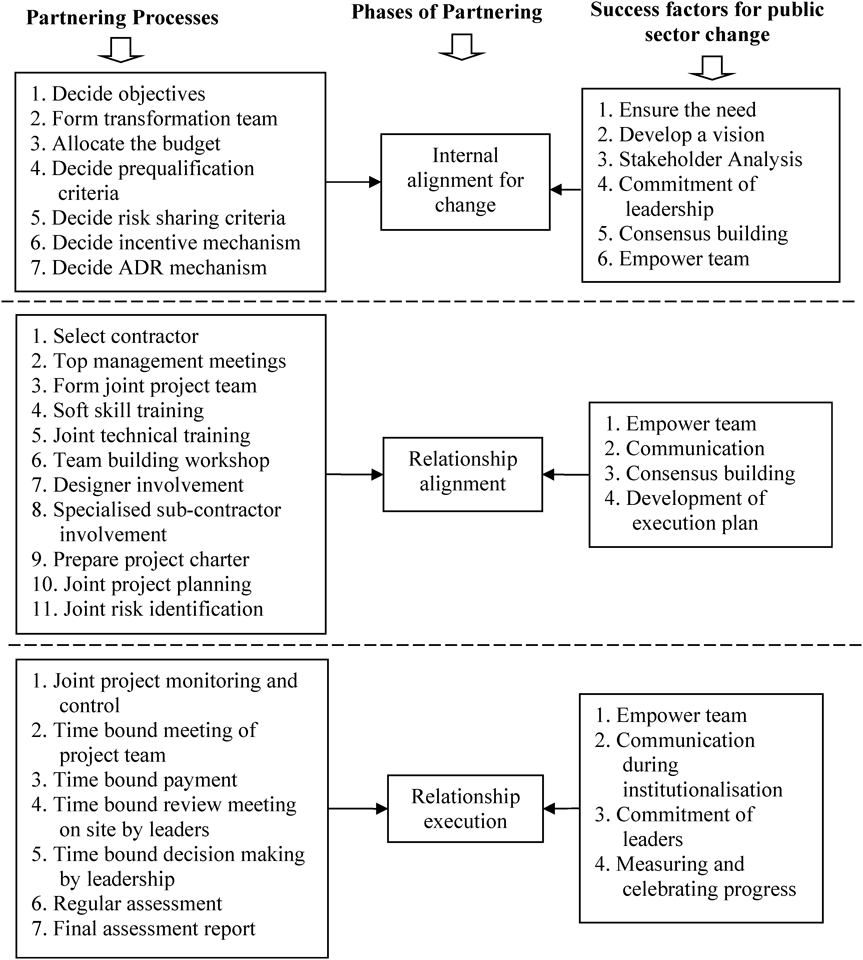
Figure 1 RC conceptual model (RCCM) for public sector construction organizations
| RC success factors | Cheng and Li (2002) | Chen and Chen (2007) | Chan et al. (2004) | Black, Akintoye and Fitzgerald (2000) | Ling et al. (2013b) | Kwan and Ofori (2001) | Bresnen and Marshall (2002) | Rahman and Kumara- swamy (2005) | Beach, Webster and Camp- bell (2005) | Love, Mistry and Davis (2010) | Jefferies, Brewer and Gajend- ran (2014) |
|---|---|---|---|---|---|---|---|---|---|---|---|
| Management commitment | √ | √ | √ | √ | √ | √ | √ | √ | √ | √ | |
| Risk /reward mechanism | √ | √ | √ | √ | √ | ||||||
| Mutual goals and objectives | √ | √ | √ | √ | √ | √ | √ | √ | √ | ||
| Trust | √ | √ | √ | √ | √ | √ | √ | √ | √ | ||
| Continuous evaluation | √ | √ | √ | √ | |||||||
| Open communication | √ | √ | √ | √ | √ | √ | √ | √ | √ | √ | |
| Conflict resolution | √ | √ | √ | √ | √ | √ | |||||
| Early involvement of contractor | √ | √ | √ | √ | |||||||
| Education/training/ learning climate | √ | √ | √ | √ | √ | ||||||
| Innovation | √ | √ | √ | ||||||||
| Long term commitment | √ | √ | √ | √ | √ | √ | √ | √ | |||
| Integrated team | √ | √ | √ | √ | √ | √ | √ | ||||
| Partnering experience | √ | ||||||||||
| Effective coordination | √ | √ | √ | ||||||||
| Continuous improvement | √ | √ | √ | √ | |||||||
| Adequate resources | √ | √ | √ | √ | |||||||
| Partner selection | √ | √ |
Research Method
This study has adopted qualitative research as its most preferred approach due to the descriptive nature of research questions and research objectives (Fellows and Liu, 2008). The study has therefore used multiple sources of evidence for research inquiry, comprising literature review and expert interviews, utilizing both secondary and primary data for research inquiry respectively. First, a comprehensive literature review through content analysis of secondary data sources such as journal articles and government reports related to relational contracting has been undertaken, to understand the philosophy of relational contracting and processes required for implementation. A qualitative data analysis software package has been used to store, organize, and analyse the literature review data using open and axial coding in content analysis as suggested by Miles, Huberman and Saldana (2013). Second, the experts’ interviews were conducted in two rounds.
A total of 36 experts took part in this study. Of these, 28 were top management representatives of four public sector construction organisations in India and the remaining 8 experts were top management representatives of contractor companies working with these public-sector construction organisations consistently. The first organisation is involved in construction of state highways, major district roads, bridges and governments official buildings. The second organisation is involved in construction of power plants and generation of power. The third organisation is involved in construction of housing, commercial and institutional complexes, water supply and sanitation projects for various central government organisations. The fourth organisation constructs railway routes, bridges, stations, residential and official buildings for its own department. The purpose of inclusion of top management from contractor was triangulation of information gathered from public sector top management. All the experts had industry experience varying from 25 to 35 years. Table 3 provides profiles of the experts. All the experts were contacted personally and were given information about the research work well in advance. Each interview lasted for about 45-120 minutes. All the interviews were recorded as transcripts. In the first round, open ended interviews were conducted with all experts to understand the extent of relational contracting processes being utilised by the Indian public-sector organisations under study. The phrases of the questions were “tell me about new project management strategies used” or “explain it with suitable example”. Findings from this primary data collected by way of these interviews and the secondary data collected from the published literature was utilised to develop a preliminary framework of relational contracting. This framework was further improved by inducting the success factors for change management in public sector organizations, which led to the formation of a conceptual model. Table 4 shows the integration of success factors for public sector change and relational contracting
This conceptual model was further evaluated in the second round of interviews with all the experts. This round of interviews was conducted to validate the framework and to get expert comments for further improvement. Therefore, all the interviews were focused interviews. Finally, validation of the findings was done using the technique of micro-interlocutor analysis suggested by Onwuegbuzie et al. (2009). The confirmation was done by checking the consensus and dissent views of each respondent on each strategy included in the framework for public sector relational contracting. The main purpose of micro-interlocutor analysis was to understand the extent to which the respondents suggested agreement on feasibility of each strategy. The strategies on which there was a disagreement were discarded from the model. The final explanation of the model was strengthened with the secondary evidence of public administrative literature. Table 4 also shows the validation of strategies in conceptual model.
Discussion
The conceptual model for implementing relational contracting in public sector construction organizations is discussed in following ten stages.
Ensuring the need of partnering and developing a vision statement
Hajnal (2004) suggested that before initiating any reforms in the public sector, it is essential to identify the forces of organisational change such as changes in the world economy, fiscal pressure, technological innovations and global business demand to ensure the need of change. Accordingly, top management will initiate change by drafting an appealing vision statement for the organization. This is generally seen as a crucial first step in the implementation of planned change management strategy. Moreover, top leaders can be expected to contribute to the implementation of change management strategy by providing intellectual stimulation through the formulation of challenging objectives and the stimulation of new ways of thinking. Generally, vision for the public-sector organisation depends on the agenda set by the Government. However most of the respondents (experts) in the present study agreed that project specific objectives can be set up by the top management. The objectives of the organization may be to bring technological innovation into the project, to complete the project within cost and time limits, to reduce the claims and disputes on site or to bring overall reforms in the working process of the organization. At this stage, the top management should also identify the core competencies and strengths of the organization along with its weaknesses. The top management will then be able to anticipate how the core competencies will align with the developed framework and how the weaknesses can be addressed.
Stakeholder analysis and consensus building
Poor government responsiveness is a major risk in countries like India (Jha and Devaya, 2008). Changes to promote partnering may invite resistance from both within the organisation or external forces, such as demands from stakeholders and governments’ policies (Abdulraheem et al., 2013). It may not be possible to arrive at a consensus, but it is advisable to inform staff so that management can buffer the subordinates from external pressures (Fernandez and Pitts, 2007). The public-sector organisation can also adopt innovative strategies to promote partnering by either informing the association of contractors through organization of seminars or by conducting demonstration projects. Mahalingam, Yadav and Varaprasad (2015) conducted a pilot project and proved that Building Information Modelling (BIM) and Lean Practices improved the decision making, planning and coordination in construction of metro stations of Chennai Metro Rail Project (India). In fact, one of the top-level managers suggested in the similar line that:
“Before initiating a large-scale reform throughout the organisation, it is always better to select a pilot project. It is easy to convince people for the pilot project.”
Forming and empowering team
Transformation team comprising of two or more leaders from the organisation or an external facilitator can play the role of change agent (Fernandez and Rainey, 2006). One of the Chief Engineers mentioned that:
“An internal change agent is likely to know the organisation people, task, and political situation better, which helps in interpreting the data and understanding the system better.”
This transformation team should be given adequate financial resources and authority to take appropriate decisions on time. Crane et al. (1997) mentioned that the cost could vary from 0.25% to 2% of the project cost. Furthermore, financial resources create opportunities for mangers to explore innovative methods for accomplishing organisational tasks (Fernandez and Pitts, 2007). In Indian projects, if resources of all the stakeholders organised properly as per their expertise, then teambuilding would be enhanced (Jha and Misra, 2007).
Initiating change to show commitment of leaders
Necessity of policy improvement in prequalification for contractor’s selection, incentive mechanism, improvement in risk sharing, and time bound alternate dispute resolution mechanism, has been agreed amongst the respondents. To introduce incentive mechanism in India, client’s top management need to change their attitude of why extra money should be paid to the contractor (Hasan and Jha, 2016). Moreover, it is a necessity of time bound decision making for accountability in public sector projects in India (Sawhney, Agnihotri and Paul, 2014). The respondents have highlighted the need to frame policies by the top management to demonstrate their commitment towards change in this direction. Indian construction sector is the highest consumer of natural resources and energy. Due to this, Indian construction industry is facing urgent pressure for environmental management and sustainability (Ahuja, Sawhney and Arif, 2017). Therefore, most of the chief engineers suggested that the prequalification criteria for contractor selection must be expanded by adding quality aspects, safety aspects and environmental aspects so that only those contractor companies who invest in capacity building will qualify for the job. Similarly, many respondents suggested inclusion of time bound dispute resolution mechanism to bring accountability in decision making across the hierarchy of bureaucracy. The inclusion of these changes in the contract document before announcing partnering will show the commitment of the top management for organisational changes towards effective partnering.
Communicating change and consensus building
The decision to adopt a partnering strategy needs to be communicated to the operational level employees of the contractor organization as well as those of the public-sector organization, as they are the catalysts for the innovation and the real change (Fernandez and Pitts, 2007). Traditional top down approach is most suitable for communicating change in public sector (Coram and Burnes, 2001) through techniques like education, facilitation, negotiation and coercion for consensus building (Barnard and Stoll, 2010). In Indian organisations, employees enjoy working with the freedom to express views and ideas. Good working culture in the organisation encourages employees to work with dedication which ultimately enhances the chance of success (Tripathi and Jha, 2018). Many managers stressed specifically the need for soft skill training to impart partnering culture. One of the managers commented that:
“It is necessary to remove the concept of ‘master and slave’ in public sector projects from the minds of employees. This attitude can be changed through soft skill training only.”
Forming joint project team
The joint project team consisting of employees working on site from both the contractor and client sides plays a key role in partnering. The transformation team should take responsibility for team building of this joint project team. This team needs to show concern for the other person’s ego and should have a sound understanding of psychology of people. They must communicate and coordinate with internal people as well as other department people (Jha and Iyer, 2006). One of the ways for team building could be to conduct a joint technical training program for the contractor and client. As most of the contractors are reluctant to invest in training, one of the general managers pointed out that:
“The public-sector organizations should take the responsibility of providing training to the contractor people by using their own organisational training centres. This will serve the dual purpose of training and team building.”
Developing an execution plan
Execution plan for involvement of junior members of the organisation should be addressed by the top management. Without their involvement it is difficult for the change to succeed. The joint project team should prepare the execution plan focusing on the aspects of project planning, risk identification and mitigation plan and project charter with the involvement of contractor’s designers and specialised sub-contractors. It also requires development of team spirit and receiving constructive inputs from all the project participants (Jha and Iyer, 2006). Similar practice has been reported by one of the deputy chief engineers;
“We conduct many meetings with the contractor in the pre-construction phase to reach a consensus in project scheduling, deciding payment milestones and field quality plan. This has resulted in avoiding any confusion and conflict during execution”.
Implementing the change
During the construction phase of the project, the joint project team put into practice the partnering philosophy. During this phase, the joint project team translates the plan on paper into action. In such cooperative contracts, monitoring officials work jointly to overcome obstacles and maintain relationships rather than enforcing rigid standards. The team must measure the deviation of goals in execution, report it to the transformation team and implement the necessary action to correct the deviations. The top management on both the sides should provide sufficient resources and tools to the joint project team to avoid compromise in accountability in case of insufficient resources for contract management (Girth, 2012). The transformation team has a very important role to play in this phase. The team needs to coordinate with all the parties; such as the joint project team, the consultants, the sub-contractors and the top management of both sides, by conducting regular meetings with them. Extra training sessions or team building workshops can be arranged in this phase if the transformation team observes a lack of communication and participation among the team members. Managers of the transformation team often need to balance the rigidity of rules and the flexibility of context, and the discretion allows for subjectivity in decision making based on the unique requirements of the situation (Girth, 2012).
Activities showing commitment of top management
In a highly bureaucratic public-sector organization, an organizational change may require the top-down activation of employees by top-management intervention (Voet, 2014). Top management support is indispensable for overcoming resistance to change, maintaining stakeholder commitment and managing difficulties (Jurisch et al., 2013). Achievement of this alignment relies on regular and effective communication between managers and employees, including holding regular meetings and informal discussions to ensure that the employees are kept informed of changing circumstances (Buick, Blackman and O’Donnell, 2015). This will also show the commitment of the top management for cooperative relationship development as well as improvement in the communication with lower teams. Similar opinion was shared by a technical director of one public sector.
“Our project cost is always high, and we work with multinational contractors. Looking at the technical complexity of our project and the cultural issues, anyone can foresee major disputes in our project. But in reality, we have very few unresolved issues in each project as most of the issues get resolved in our mandatory monthly review meetings conducted on site by our top management.”
Evaluating the performance
Public sector organizations should develop systems that support the measurement of progress towards organizational goals throughout the performance cycle of the project (Buick, Blackman and O’Donnell, 2015). For this purpose, all the experts significantly agreed on the strategy of preparing a final assessment report consisting of successes and barriers faced in completing the project. The final assessment report not only acts as a guide for the future projects but also aids in the self-motivation of the public-sector employees if they find their efforts reflected in the success of the project (Greasley, Watson and Patel, 2009). These reports also provide case studies for younger generation learning. In this regard one of the Chief Engineers mentioned that:
“It is required to publish failure studies also as they provide a rich learning material. But, extra care should be taken while publishing failure stories as anti-social elements may try to take benefit of it. They will try to fix the responsibility of failure on specific people which might adversely affect the morale of public sector employees.”
Conclusion
The paper aimed to seek an answer to the question “How to incorporate relational contracting into traditional procurement processes of Indian public-sector construction organisations?” This question directed the research to develop a model to implement the relational contracting in public sector organizations. It is pointed out that the implementation of relational contracting processes in public sector organisations should be treated as an organisational change management process. Therefore, the paper identified the success factors for this public sector organisational change. These success factors and the relational contracting processes have been integrated to develop a comprehensive framework to facilitate the successful implementation of relational contracting within the traditional procurement processes of Indian public-sector organizations. The possibility of implementation of the proposed conceptual framework is validated by top management authorities of four public sector organisations. The model highlighted prominent processes like the need to develop a vision for partnering, stakeholder analysis and consensus building among them, empowerment of operational level employees and their participation in the execution plan, time bound review meetings of top management on site to show commitment, resolve disputes and fast decision making along with publication of performance reports. Thus, the proposed framework will be useful to the top decision makers in public sector construction industry in India and other developing countries to adopt relational contracting philosophy as a planned organisational change model. This model is different from other models available in literature because success factors for RC are integrated with success factors of organisational change. Also, all the available models consider trust as pre-requisite for implementation of RC, but this model considers trust as an outcome of RC implementation in public sector. However, this research may have limitations of generalisation because the model validation is based on the interviews of only 36 experts. The findings of the study can be further validated through a larger sample of experts.
References
Abdulraheem, I., Mordi, C., Ojo, Y. and Ajonbadi, H., 2013. Outcomes of planned organisational change in the Nigerian public sector: Insights from the Nigerian higher education institutions. Economic Insights – Trends and Challenges, 2(1), pp.26-37.
Ahuja, R., Sawhney, A. and Arif, M., 2017. Driving lean and green project outcomes using BIM: A qualitative comparative analysis. International Journal of Sustainable Built Environment, 6, pp.69–80. https://doi.org/10.1016/j.ijsbe.2016.10.006
Anvuur, A.M. and Kumaraswamy, M.M., 2007. Conceptual model of partnering and alliancing. Journal of Construction Engineering and Management, 133(3), pp.225-34. https://doi.org/10.1061/(asce)0733-9364(2007)133:3(225)
Barnard, M. and Stoll, N., 2010. Organisational change management: A rapid literature review. Short Policy Report, University of Bristol, 10(1), pp.1-11.
Beach, R., Webster, M. and Campbell, K.M., 2005. An evaluation of partnership development in the construction industry. International journal of project management, 23(8), pp.611-21. https://doi.org/10.1016/j.ijproman.2005.04.001
Black, C., Akintoye, A. and Fitzgerald, E., 2000. An analysis of success factors and benefits of partnering in construction. International journal of project management, 18(6), pp.423-34. https://doi.org/10.1016/s0263-7863(99)00046-0
Bresnen, M. and Marshall, N., 2002. The engineering or evolution of co-operation? A tale of two partnering projects. International journal of project management, 20, pp.497-505. https://doi.org/10.1016/S0263-7863(01)00043-6
Buick, F., Blackman, D.A. and O’Donnell, M., 2015. Can enhanced performance management support public sector change? Journal of Organizational Change Management, 28(2), pp.271-81. https://doi.org/10.1108/JOCM-12-2013-0249
Chan, A.P.C., Chan, D.W.M., Chiang, Y.H., Tang, B.S., Chan, E.H.W. and Ho, K.S.K., 2004. Exploring critical success factors for partnering in construction projects. Journal of Construction Engineering and Management, 130(2), pp.188-98. https://doi.org/10.1061/(asce)0733-9364(2004)130:2(188)
Chan, A.P.C., Chan, D.W.M., Fan, L.C.N., Lam, P.T.I. and Yeung, J.F.Y., 2006. Partnering for construction excellence—A reality or myth? Building and Environment, 41(12), pp.1924–33. https://doi.org/10.1016/j.buildenv.2005.06.026
Chen, W.T. and Chen, T.-T., 2007. Critical success factors for construction partnering in Taiwan. International journal of project management, 25, pp.475-84. https://doi.org/10.1016/j.ijproman.2006.12.003
Cheng, E.W.L. and Li, H., 2002. Construction partnering process and associated critical success factors: Quantitative investigation. Journal of Management in Engineering, 18(4), pp.194-202. https://doi.org/10.1061/(asce)0742-597x(2002)18:4(194)
Cho, K., Hyun, C., Koo, K. and Hong, T., 2010. Partnering process model for public-sector fast-track design-build projects in Korea. Journal of Management in Engineering, 26(1), pp.19-29. https://doi.org/10.1061/(asce)0742-597x(2010)26:1(19)
CII, 1996. Model for partnering excellence The Construction Industry Institute, Partnering II Research Team, Research Summary 102-1, November 1996.
Cole, M.S., Harris, S.G. and Bernerth, J.B., 2006. Exploring the implications of vision, appropriateness, and execution of organizational change. Leadership & Organization Development Journal, 27(5), pp.352-67. https://doi.org/10.1108/01437730610677963
Coram, R. and Burnes, B., 2001. Managing organisational change in the public sector:Lessons from the privatisation of the Property Service Agency. The International Journal of Public Sector Management, 14(2), pp.94-110. https://doi.org/10.1108/09513550110387381
Crane, T.G., Felder, J.P., Thompson, P.J., Thompson, M.G. and Sanders, S.R., 1997. Partnering process model. Journal of Management in Engineering, 13(3), pp.57-63. https://doi.org/10.1061/(asce)0742-597x(1997)13:3(57)
Crowley, L.G. and Karim, M.A., 1995. Conceptual model of partnering. Journal of Management in Engineering, 11(5), pp.33-9. https://doi.org/10.1061/(ASCE)0742-597X(1995)11:5(33)
Doloi, H., Sawhney, A., Iyer, K.C. and Rentala, S., 2012. Analysing factors affecting delays in Indian construction projects. International journal of project management, 30, pp.479-89. https://doi.org/10.1016/j.ijproman.2011.10.004
Eriksson, P.E., 2010. Partnering: what is it, when should it be used, and how should it be implemented? Construction Management and Economics, 28, pp.905-17. https://doi.org/10.1080/01446190903536422
Fellows, R. and Liu, A., 2008. Research methods for construction. Oxford, UK: John Wiley and Sons Publications.
Fernandez, S. and Pitts, D.W., 2007. Under what conditions do public managers favor and pursue organizational change? The American Review of Public Administration, 37(3), pp.324-41. https://doi.org/10.1177/0275074006293467
Fernandez, S. and Rainey, H.G., 2006. Managing successful organizational change in the public sector. Public Administration Review, 66(2), pp.168-76. https://doi.org/10.1111/j.1540-6210.2006.00570.x
Girth, A.M., 2012. A closer look at contract accountability: Exploring the determinants of sanctions for unsatisfactory contract performance. Journal of Public Administration Research and Theory, 24, pp.317–48. https://doi.org/10.1093/jopart/mus033
Glagola, C.R. and Sheedy, W.M., 2002. Partnering on defense contracts. Journal of Construction Engineering and Management, 128(2), pp.127-38. https://doi.org/10.1061/(asce)0733-9364(2002)128:2(127)
Grajek, K.M., Gibson, G.E. and Tucker, R.L., 2000. Partnered project performance in Texas department of transportation. Journal of Infrastructure Systems, 6(2), pp.73-9. https://doi.org/10.1061/(asce)1076-0342(2000)6:2(73)
Greasley, K., Watson, P. and Patel, S., 2009. The impact of organisational change on public sector employees implementing the UK Government’s “Back to work” programme. Employee Relations, 31(4), pp.382-97. https://doi.org/10.1108/01425450910965432
Hajnal, G., 2004. Cultural determinants of new public management reforms: A comparative study. Society and Economy, 26(223-246). https://doi.org/10.1556/socec.26.2004.2-3.5
Hasan, A. and Jha, K.N., 2016. Acceptance of the incentive/disincentive contracting strategy in developing construction markets: Empirical study from India. Journal of Construction Engineering and Management, pp.1-9. https://doi.org/10.1061/(asce)co.1943-7862.0001048
Jefferies, M., Brewer, G.J. and Gajendran, T., 2014. Using a case study approach to identify critical success factors for alliance contracting. Engineering, Construction and Architectural Management Research News, 21(5), pp.465-80. https://doi.org/10.1108/ECAM-01-2012-0007
Jha, K.N. and Devaya, M.N., 2008. Modelling the risks faced by Indian construction companies assessing international projects. Construction Management and Economics, 26(4), pp.337-48. https://doi.org/10.1080/01446190801953281
Jha, K.N. and Iyer, C.K., 2006. What attributes should a project coordinator possess? Construction Management and Economics, 24(9), pp.977-88. https://doi.org/10.1080/01446190600781826
Jha, K.N. and Misra, S., 2007. Ranking and classification of construction coordination activities in Indian projects. Construction Management and Economics, 25(4), pp.409-21. https://doi.org/10.1080/01446190601083271
Jurisch, M.C., Ikas, C., Wolf, P. and Krcmar, H., 2013. Key differences of private and public sector business process change. e-Service Journal, 9(1), pp.3-27. https://doi.org/10.2979/eservicej.9.1.3
Kwan, A.Y. and Ofori, G., 2001. Chinese culture and successful implementation of partnering in Singapore’s construction industry. Construction Management and Economics, 19(6), pp.619-32. https://doi.org/10.1080/01446190110062087
Larson, E., 1997. Partnering on Construction Projects: A Study of the Relationship Between Partnering Activities and Project Success. IEEE Transactions on Engineering Management, 44(2), pp.188-95. https://doi.org/10.1109/17.584926
Li, H., Cheng, E.W.L., Love, P.E.D. and Irani, Z., 2001. Co-operative benchmarking: a tool for partnering excellence in construction. International journal of project management, 19(3), pp.171-9. https://doi.org/10.1016/s0263-7863(99)00033-2
Ling, F.Y.Y., Ke, Y., Kumaraswamy, M.M. and Wang, S.Q., 2013 b. Key relational contracting practices affecting performance of public construction projects in China. Journal of Construction Engineering and Management, 140(1), pp.1-12.
Ling, F.Y.Y., Ning, Y., Ke, Y. and Kumaraswamy, M.M., 2013 a. Modeling relational transaction and relationship quality among team members in public projects in Hong Kong. Automation in Construction, 36, pp.16–24. https://doi.org/10.1016/j.autcon.2013.08.006
Ling, F.Y.Y., Rahman, M.M. and Ng, T.L., 2006. Incorporating Contractual Incentives to Facilitate Relational Contracting. Journal of Professional Issues in Engineering Education and Practice, 132(1), pp.57–66. https://doi.org/10.1061/(asce)1052-3928(2006)132:1(57)
Ling, F.Y.Y. and Tran, P.Q., 2012. Effects of interpersonal relations on public sector construction contracts in Vietnam. Construction Management and Economics, 30(12), pp.1087-101.
Love, P.E.D., Mistry, D. and Davis, P.R., 2010. Price competitive alliance projects: Identification of success factors for public clients. Journal of Construction Engineering and Management, 136(9), pp.947–56. https://doi.org/10.1061/(ASCE)CO.1943-7862.0000208
Lu, S. and Yan, H., 2007. A model for evaluating the applicability of partnering in construction. International journal of project management, 25(2), pp.164-70. https://doi.org/10.1016/j.ijproman.2006.09.009
Mahalingam, A., Yadav, A.K. and Varaprasad, J., 2015. Investigating the role of lean practices in enabling BIM adoption: Evidence from two Indian Cases. Journal of Construction Engineering and Management, 141(7), pp.1-11. https://doi.org/10.1061/(asce)co.1943-7862.0000982
Manley, K., McFallan, S. and Kajewski, S., 2009. Relationship between Construction Firm Strategies and Innovation Outcomes. Journal of Construction Engineering and Management, 135(8), pp.764-71. https://doi.org/10.1061/(asce)co.1943-7862.0000030
Miles, M.B., Huberman, A.M. and Saldana, J., 2013. Qualitative data analysis: A methods sourcebook. London, UK: Sage Publications.
Ng, S.T., Rose, T.M., Mak, M. and Chen, S.E., 2002. Problematic issues associated with project partnering — the contractor perspective. International journal of project management, 20(6), pp.437-49. https://doi.org/10.1016/S0263-7863(01)00025-4
Nystro, J., 2008. A quasi-experimental evaluation of partnering. Construction Management and Economics, 26(6), pp.531-41. https://doi.org/10.1080/01446190802036144
Onwuegbuzie, A.J., Dickinson, W.B., Leech, N.L. and Zoran, A.G., 2009. A qualitative framework for collecting and analyzing data in focus group research. International Journal of Qualitative Methods, 8(3), pp.1-21. https://doi.org/10.1177/160940690900800301
Palaneeswaran, E., Kumaraswamy, M., Rahman, M. and Ng, T., 2003. Curing congenital construction industry disorders through relationally integrated supply chains. Building and Environment, 38, pp.571-82. https://doi.org/10.1016/s0360-1323(02)00188-9
Rahman, M.M. and Kumaraswamy, M.M., 2005. Relational selection for collaborative working arrangements. Journal of Construction Engineering and Management, 131(10), pp.1087–98. https://doi.org/10.1061/(ASCE)0733-9364(2005)131:10(1087)
Rahman, M.M. and Kumaraswamy, M.M., 2008. Relational contracting and teambuilding: Assessing potential contractual and noncontractual incentives. Journal of Management in Engineering, 24(1), pp.48–63. https://doi.org/10.1061/(ASCE)0742-597X(2008)24:1(48)
Rahman, M.M. and Kumaraswamy, M.M., 2012. Multicountry perspectives of relational contracting and integrated project teams. Journal of Construction Engineering and Management, 138(4), pp.469–80. https://doi.org/10.1061/(ASCE)CO.1943-7862.0000463
Robertson, P.J. and Seneviratne, S.J., 1995. Outcomes of planned organizational change in the public sector: A meta-analytic comparison to the private sector. Public Administration Review, 55(6), pp.547-58. https://doi.org/10.2307/3110346
Ruuska, I. and Teigland, R., 2009. Ensuring project success through collective competence and creative conflict in public–private partnerships – A case study of Bygga Villa, a Swedish triple helix e-government initiative. International journal of project management, 27, pp.323–34. https://doi.org/10.1016/j.ijproman.2008.02.007
Sawhney, A., Agnihotri, R. and Paul, V.K., 2014. Grand challenges for the Indian construction industry. Built Environment Project and Asset Management, 4(4), pp.317 - 34. https://doi.org/10.1108/BEPAM-10-2013-0055
Stewart, J. and Kringas, P., 2003. Change management: Strategy and values in six agencies from the Australian public service. Public Administration Review, 63(6), pp.675-88. https://doi.org/10.1111/1540-6210.00331
Tabish, S.Z.S. and Jha, K.N., 2011 a. Analyses and evaluation of irregularities in public procurement in India. Construction Management and Economics, 29, pp.261-74. https://doi.org/10.1080/01446193.2010.549138
Tang, W., Duffield, C.F. and Young, D.M., 2006. Partnering mechanism in construction: An empirical study on the Chinese construction industry. Journal of Construction Engineering and Management, 132(3), pp.217-29. https://doi.org/10.1061/(ASCE)0733-9364(2006)132:3(217)
Tripathi, K.K. and Jha, K.N., 2018. Determining success factors for a construction organization: A structural equation modeling approach. Journal of Management in Engineering, 34(1), pp.1-15. https://doi.org/10.1061/(ASCE)ME.1943-5479.0000569
Voet, J.v.d., 2014. The effectiveness and specificity of change management in a public organization: Transformational leadership and a bureaucratic organizational structure. European Management Journal, 32, pp.373–82. https://doi.org/10.1016/j.emj.2013.10.001
Voet, J.V.d., Kuipers, B.S. and Groeneveld, S., 2015. Implementing change in public organizations: The relationship between leadership and affective commitment to change in a public sector context. Public Management Review, 18(6), pp.842-65. https://doi.org/10.1080/14719037.2015.1045020
Wilson, R.A., Songer, A.D. and Diekmann, J., 1995. Partnering: more than a workshop, a catalyst for change. Journal of Management in Engineering, 11(5), pp.40-5. https://doi.org/10.1061/(ASCE)0742-597X(1995)11:5(40)
Wong, P.S.P., Cheung, S.O. and Ho, P.K.M., 2005. Contractor as Trust Initiator in Construction Partnering- Prisoner’s Dilemma Perspective. Journal of Construction Engineering and Management, 131(10), pp.1045–53. https://doi.org/10.1061/(ASCE)0733-9364(2005)131:10(1045)
Wright, B.E., Christensen, R.K. and Isett, K., 2011. Motivated to adapt? The role of public service motivation as employees face organizational change. 11th biennial Public Management Research Association Conference Syracuse, New York, pp.1-23.